Picard 2012 – with a South African perspective

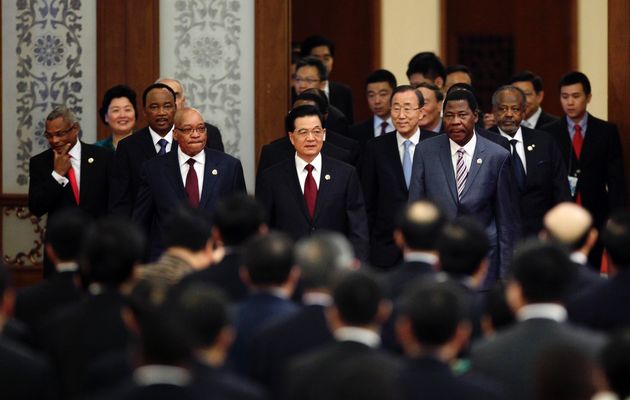
Over 230 delegates representing WCO Members, the academic world, international organizations, the private sector, donor organizations and other interested parties attended the 7th WCO Conference on the Partnership in Customs Academic Research and Development (PICARD) hosted by the University of Cadi Ayyad in partnership with Morocco Customs and the WCO in Marrakesh, Morocco from 25-27 September 2012.

The Conference was co-chaired by Prof. Michael Wolffgang, University of Münster, and Prof. M’barek Benchanaa and Prof. Abdullah Ait Ouahman from the University of Cadi Ayyad. The Conference focused on three main topics: The Impact of Regional Economic Integration and Preferential Trade Arrangements on Customs Services; Emerging and Evolving Risks; and Customs Strategic Human Resource Management.

The WCO PICARD Programme was officially launched in 2006 to strengthen co-operation between the WCO, universities, and Customs human resources entities such as Customs Academies. The programme’s objective is to provide a platform where stakeholders can co-operate, collaborate, and contribute to two main pillars: (1) Customs professionalism and (2) Customs-related research.

Key PICARD achievements include adopting the PICARD Professional Standards for operational and strategic Customs managers; holding six successful PICARD Conferences; and publishing many Customs-related research papers in the World Customs Journal. Moreover, a growing number of universities have obtained WCO recognition of their Customs-related academic curriculums.

The PICARD Conference has become an annual meeting place for Customs officers, Customs human resource professionals, and academics to network and exchange ideas on Customs professionalism and Customs-related research. It is an opportunity for Customs academies and the WCO Regional Training Centres to glean new ideas on human resource development. At each conference, research papers are presented; this year, papers will be presented on regional economic integration, emerging and evolving risks, and human resource management.

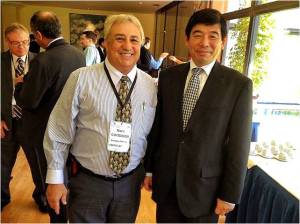
The dearth in Customs expertise has become an international phenomenon, and South Africa is no exception. Locally based training organisation, GMLS, has been working with the University of Kwazulu Natal, Durban and UCT in Cape Town and in Durban specifically it is expected after council of Higher education approval next year that we will be offering a full masters Degree in Customs for the first time in South Africa as a MCom Customs and Excise, says GMLS CEO Mark Goodger. GMLS is a WCO E learning trainer, an ICC accredited trainer and an approved TETA (Transport Education Training Authority Trainer).

Mark was invited as a guest speaker to this year’s Picard Conference. He explained that the WCO arranged presentations to  stimulate discussions and guidance required from the WCO in the future. Along with South Africa, presentations were also delivered by Finland, Canadian and Moroccan Customs training experts in the results of research and the status in SADC countries of recognised accredited training frameworks which can be utilized by Customs worldwide. Whilst Customs administrations are implementing the Revised Kyoto Convention and the SAFE Framework it is clear that trade will need to follow the direction of future compliance as Customs leads forward into the 21st century.

WCO receives gift of historical significance to Customs from Egypt

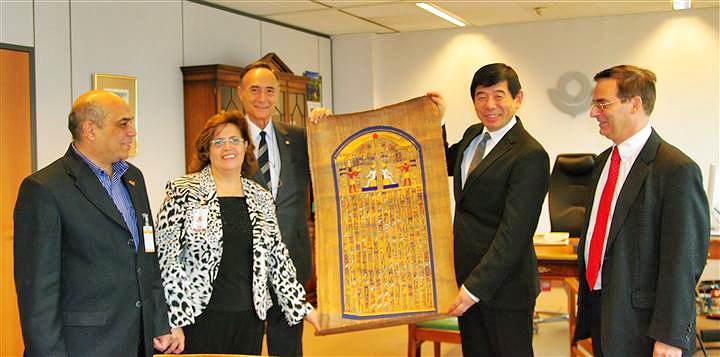
An Egyptian delegation to the WCO Harmonized System Committee, on behalf of the Director General of Egyptian Customs, Mohamed Elalhawy, presented the Secretary General of the WCO, Kunio Mikuriya, with a colour papyrus copy of the Customs tariff applied in Egypt during the time of the Pharaohs some 2000 years B.C. The original tablet is to be found in a museum in Egypt. You can view a photograph of the Egyptian tablet by clicking here!

The Secretary General thanked Egyptian Customs for this impressive gift full of significance which clearly illustrated the historic nature of Customs tariffs dating back more than 4000 years. He expressed the hope that one day he would be able to see the original stone tablet in Egypt. The papyrus will be displayed at WCO Headquarters. Source: http://www.wcoomd.org

Tornado hits Spain – double grounding off Valencia

A tornado struck a fairground in Gandia, Spain, knocking down a Ferris wheel, damaging several rides and causing a power outage at the site. The twister left 35 people injured. The fair was closed to the public when the tornado touched down, and all of those injured were fair workers, local media reported. Fifteen people were seriously hurt and treated on site, the website for Gandia’s town hall said. The tornado ripped roofs off buildings, uprooted trees and overturned a truck which landed on cars.

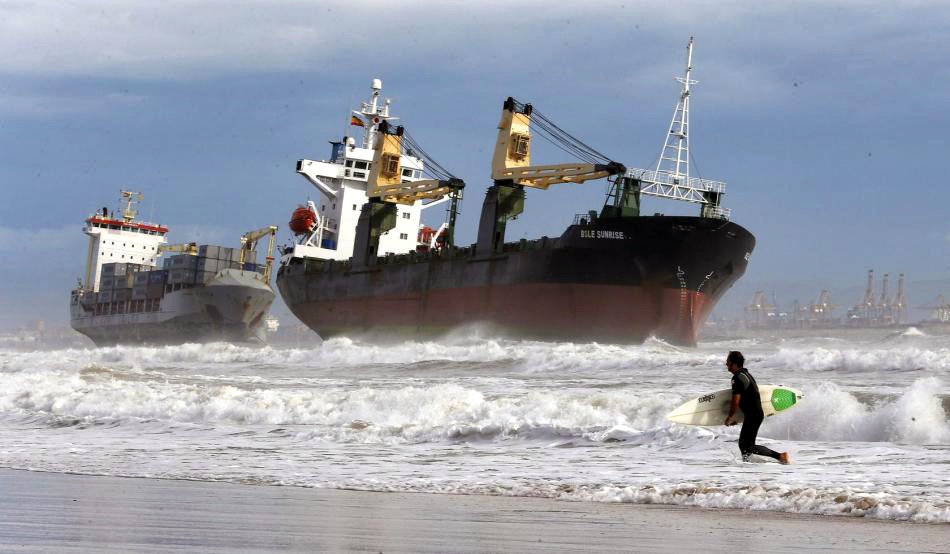
Further North on the Valencia coast, two large cargo ships ran aground as a result of the high winds and seas.

In the provinces of Murica, Almeria and Malaga, 10 people were killed when the inclement weather caused flash floods that swept away cars and bridges and flooded many villages.Source: Sign of the Times.net


Ugandan importers to boycott Mombasa

Ugandan importers say they intend avoiding using the Port of Mombasa in Kenya in favour of Tanzania’ Dar es Salaam in future, because of unresolved issues with the Kenyan taxman.

Some 600 containers destined for Uganda are being held at the Kenyan port following the introduction of a cash bond tax. The chairman of the Kampala Traders Association announced last week that the association had resolved to suspend using Mombasa in the interim, reports New Vision (Kampala).

In addition, importers say they will take legal action against the Kenya Revenue Authority (KRA) which has issued a directive instructing importers to lodge either a cash bond equivalent to the value of the imported goods or a bank guarantee to the same value. This must be deposited before the goods being imported can be cleared.

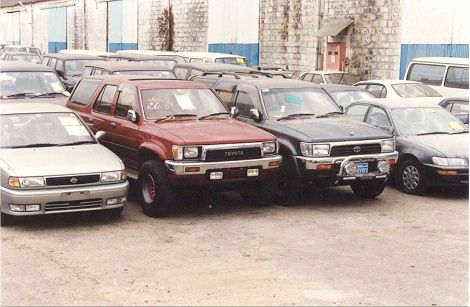
The directive has affected not only the 600 containers waiting at the port but imports of motor vehicles and sugar.

Uganda’s trade minister, Amelia Kyambadde said she had been informed by the Uganda business community that the KRA, under notice CUS/L&A/LEG/1 had made a unilateral decision on a requirement for a cash bond or bank guarantee on transit sugar and motor vehicles above 2000cc.

Ugandan authorities say the action by the KRA directive constitutes another non-tariff barrier imposed by Kenyan authorities on its transit cargo and contravenes East African Community Customs Union protocol and decisions reached by the Council of Ministers in March 2012 on removal of non-trade barriers in the community.

“If Kenya needs an instrument to regulate regional trade in sugar and other products, a cash bond is not the instrument to apply,” said Kyambadde. Sources: Ports.co.za / New Vision (Uganda).

Regional Blocs seek to remove Trade Barriers

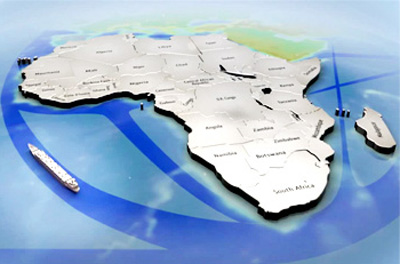
THREE regional economic communities (Recs) have taken the lead as Africa seeks to remove trade barriers by 2017. The establishment of a Continental Free Trade Area (CFTA) was endorsed by African Union leaders at a summit in January to boost intra-Africa trade. Sadc, Common Market for Eastern and Southern Africa (Comesa) and the East African Community (EAC) have combined forces to establish a tripartite FTA by 2014.

Willie Shumba, a senior programmes officer at Sadc, told participants attending the second Africa Trade Forum in Ethiopia last week that the tripartite FTA would address the issue of overlapping membership, which had made it a challenge to implement instruments such as a common currency. “…overlapping membership was becoming a challenge in the implementation of instruments, for example, common currency. The TFTA is meant to reduce the challenges,” he said.

Countries such as Zimbabwe, Tanzania and Kenya have memberships in two regional economic communities, a situation that analysts say would affect the integration agenda in terms of negotiations and policy co-ordination. The TFTA has 26 members made up of Sadc (15), Comesa (19) and EAC (5). The triumvirate contributes over 50% to the continent’s US$1 trillion Gross Domestic Product and more than half of Africa’s population. The TFTA focuses on the removal of tariffs and non-tariff barriers such as border delays, and seeks to liberalise trade in services and facilitation of trade and investment.

It would also facilitate movement of business people, as well as develop and implement joint infrastructure programmes. There are fears the continental FTAs would open up the economies of small countries and in the end, the removal of customs duty would negatively affect smaller economies’ revenue generating measures.

Zimbabwe is using a cash budgeting system and revenue from taxes, primarily to sustain the budget in the absence of budgetary support from co-operating partners. Finance minister Tendai Biti recently slashed the budget to US$3,6 billion from US$4 billion saying the revenue from diamonds had been underperforming, among other factors.

Experts said a fund should be set up to “compensate” economies that suffer from the FTA. Shumba said the Comesa-Sadc-EAC FTA would create a single market of over 500 million people, more than half of the continent’s estimated total population. He said new markets, suppliers and welfare gains would be created as a result of competition. Tariffs and barriers in the form of delays have been blamed for dragging down intra-African trade.

Stephen Karingi, director at UN Economic Commission for Africa, told a trade forum last week that trade facilitation, on top on the removal of barriers, would see intra-African trade doubling. “The costs of reducing remaining tariffs are not as high; such costs have been overstated. We should focus on trade facilitation,” he said.

“If you take 11% of formal trade as base and remove the remaining tariff, there will be improvement to 15%. If you do well in trade facilitation on top of removing barriers, intra-African trade will double,” Karingi said. He said improving on trade information would save 1,8% of transaction costs. If member states were to apply an advance ruling on trade classification, trade costs would be reduced by up to 3,7%.He said improvement of co-ordination among border agencies reduces trade costs by up to 2,4%.Karingi called for the establishment of one-stop border posts.

Participants at the trade forum resolved that the implementation of the FTA be an inclusive process involving all stakeholders.They were unanimous that a cost-benefit analysis should be undertaken on the CFTA to facilitate the buy-in of member states and stakeholders for the initiative. Source: allAfrica.com

Tobacco duty-free concessions changed

For ‘smoking’ travellers to Australia, please read up on the new duty-free concessions before you decide to stock up.

The reduced tobacco duty-free limit came into effect on 1 September 2012. It was announced in the 2012-13 Federal Budget that the duty-free concession on tobacco products would change.

Travellers aged 18 years or over can bring 50 cigarettes or 50 grams of cigars or tobacco products duty-free into Australia with you. All tobacco products in accompanied baggage are included in this category, regardless of where or how they were purchased.

Be aware that if you exceed Australia’s duty-free limits, duty and tax will apply on ALL items of that type (general goods, alcohol or tobacco), not just the goods over the limit. The general goods and alcohol duty-free concessions remain the same. Source: Australian Customs Service

Australia’s high court recently upheld the government’s decision to implement a law which requires cigarettes to be sold in olive green packets, with graphic images warning of the consequences of smoking. The law is to come into effect on 1 December 2012. The South African authorities appear to be following the same route and are currently ‘testing’ the concept of the olive green packets (what’s there to test?). Despite the obvious reaction of the Tobacco Inc. to the new law, it is not difficult to see that it will make anti-counterfeit enforcement even more difficult for authorities. Perhaps the UK liquor boys are ahead in their thinking – import liquor in bulk and bottle it in the UK, this way you’re in charge of the packaging and labelling. Health officials are definitely more concerned with health than profit.

Rwanda-DRC Border trade feels pinch from political stand-off

Spare a thought for the informal traders in this region. The terminology is also somewhat humorous, if not ‘offensive’ to an overly liberal mind – democratic South Africans in particular.

Trade along the Rwanda-DRC border is still going strong, although with some difficulty, despite the ongoing political tensions between the two neighbors.The Rwanda Focus visited Gisenyi, from where it has been reported that several Rwandan civilians who have attempted to cross into DRC for business have allegedly been arrested and tortured.

“You can’t go in there but if you insist, then be ready to die or to be tortured by the authorities in Congo,” said Safina Mukankusi, a cross-border trader. According to locals here, anyone with links to Rwanda in form of passport, looks or language is a target for the Congolese authorities. The irony is Gisenyi is full of Congolese civilians loaded with all sorts of merchandise bought from Rwandan markets which they then carry to the DRC.

It’s also here that massive petty smuggling takes place. “There are so many ‘fat’ women around here,” said a Rwandan customs official, explaining they are stuffed with several garments in which they then hide commodities such as alcohol and sell them on the Rwandan side at a profit. “Some make more than 20 trips per da,y often smuggling a single commodity per journey… but these are poor people who are looking for a meal from their petty deals,” the official revealed. From the proceeds from smuggled goods, the Congolese then buy food and all sorts of stuff which they take back home to sell.

With the current instability however, there’s a new development. “Many Congo-men are coming to sleep here at night and go back home during day for fear of attacks,” said Fidel, a resident of Gisenyi. He says most of them sleep on the streets while others have rented some cheap houses in which they spend the night, often in groups.

Looking at the people here, it’s quite hard to imagine that their country is home to some of the world’s most valuable minerals such as gold and diamonds. Bribes and other corrupt dealings are the quickest ways to get a service done according to Rwandan traders. “Once they know you have money, they will detain you until you part with some of it, it’s mostly those that don’t have anything who are tortured,” explained Laurent Makubu, who claims he has been detained but bribed the Congolese police with $15 to secure his freedom.

While the Congolese who cross to Rwanda report no harassment, it remains a mystery why their Rwandan counterparts are the target of mistreatment on the other side. As a result, most Rwandan traders say they have resorted to using Congolese middlemen to get goods from the DRC side but at a much higher cost as the middlemen charge for their service. Source: Rwanda Focus (Kigali)

Detector dog unit expanding its paw print across the country!

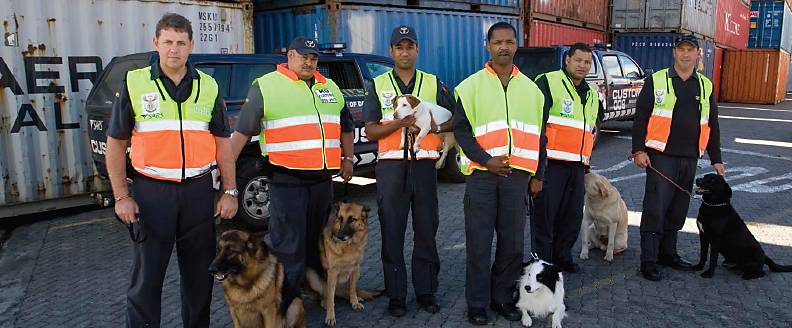
On a subject close to my heart. The National Detector Dog Unit of the South African Revenue Service (SARS) is getting a boost with more than 70 new dogs and handlers being trained to make up a number of new dog units around the country. Apart from filling a couple of current vacancies, the new recruits will form part of Detector Dog Units in Port Elizabeth, Zeerust, Mahamba, Vioolsdrift, Nakop, Maseru Bridge and an expanded Mpumalanga unit. All the additional units are expected to become operational in the first quarter of 2013.

“By next year, most of the major land, sea and air ports should have their own detector dog units (DDU),” said the senior manager of the DDU, Hugo Taljaard. “The ultimate aim is to have dog units at every port, with a total of 500 new handlers and dogs needed. However, this is a long-term (four-year) project, aimed at enhancing our non-intrusive capabilities at ports of entry to prevent cross-border smuggling.”

The SARS Detector Dog Unit has also been asked recently to assist with training in Namibia and Angola, following the assistance we gave the Mauritius Revenue Authority (MRA) to establish a Detector Dog capability. The DDU continues to see major successes countrywide, with a recent copper bust in the news last weekend.

Detector dog Umaga, an 18-month old German Shepherd, sniffed out 84kg of copper at the Beit Bridge border post during his first operation. Umaga recently completed his training as a copper sniffer dog. The copper was concealed in luggage in a trailer entering South Africa. Umaga is the second sniffer dog to be trained to sniff out copper. Milo, a five-year-old Labrador, has also already nosed out his first contraband copper. There has been an increase in the smuggling of copper wire across the border into South Africa, since copper has a much higher value here than in the other member states of the Southern African Development Community. The increase has meant that Customs has had to beef up its ability to detect contraband copper. The wire is usually concealed in compartments under trucks.

The Detector Dog Unit was the first in the world to train “dual application dogs”, Hugo explained. So instead of being trained or “imprinted” to detect only one scent, they are able to detect a combination of scents, e.g. narcotics and currency, tobacco and endangered species. Both Milo and Umaga are dual dogs and they can detect narcotics/tobacco and copper wire. The explosives detector dogs are the only dogs not dual trained due to the safety risk.

The dogs are an integral part of our Customs workforce and are seen as officers in their own right. They are therefore looked after with the utmost care and attention and are even provided with special reflector jackets, cooler jackets for the heat and dog shoes made to protect their feet from hot surfaces. Source: SARS Communications Division

Homeland Security’s “Pluto” sub designed to imitate narco subs

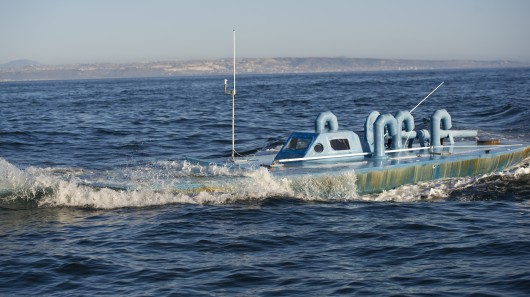
When someone mentions drug running, most people probably picture a person coming through an airport carrying a suitcase with a false bottom or with balloons stuffed up their nether regions. We don’t usually imagine things like submarines. Unfortunately, the South American drug cartels not only imagine them, but they build and operate them. To help combat these underwater smugglers, the Department of Homeland Security Science and Technology Directorate (S&T) is operating their own drug-running submarine called PLUTO to develop and test a new generation of detection equipment.

Named after the hard to detect (former) planet, PLUTO reproduces the characteristics of what are commonly called “narco subs.” When rumors of their existence began to circulate in the 1990s, narco subs were dismissed as something out of a James Bond film and nicknamed “Bigfoot” because everyone in drug enforcement heard about them, but no one had seen one. Then one was captured in 2006 by the U.S. Coast Guard in the Eastern Pacific Ocean.

Narco subs are not true submarines. Instead, they’re a form of semi-submersible or, to give them their official designation, self-propelled, semi-submersibles (SPSSs). They ride very low in the water with only about three inches (7.62 ) of freeboard above the waterline and are designed to give only a tiny radar profile. They also ride very rough and their crews of three or four have little to eat, bad air and no toilet facilities as well as sometimes having an armed guard as a supervisor.

The subs are also meant to be expendable at the end of a delivery “Drug-running is lucrative. It is cheaper to simply build another vessel than to run the risk of trying to get a vessel and its crew home,” said Tom Tomaiko of S&T’s Borders and Maritime Security Division.

PLUTO was built in 2008 and is home-ported at Eglin Air Force Base near Fort Walton Beach, Florida, where it is maintained by the Air Force’s 46th Test Squadron, though it operates in the Gulf of Mexico, and Atlantic and Pacific Oceans. Forty-five feet (13.71 m) long and running at a maximum speed of ten knots (11.52 mph/18.52 kph), though it only cruises at four to eight knots (4.60 mph/7.4 kph to 9.20 mph/14.81 kph), PLUTO can carry up to four crew, but usually only operates with one due to safety.

It’s used by the U.S. Coast Guard, Customs and Border Protection/Air and Marine (CBP/OAM), U.S. Navy, U.S. Air Force and other national agencies as a target submarine capable of mimicking a narco sub for the purpose of testing detection systems from ships, planes and even satellites at various angles and under different sea conditions.

Customs and Border Protection used PLUTO to test its Dash 8 maritime surveillance aircraft’s SeaVue radar to determine detection distances and aspect angles for optimal mission performance and the U.S. Navy tested its P-3 aircraft’s maritime surveillance radar system against the pseudo narco-sub.

PLUTO is only one part of an escalating war between drug cartels and law enforcement agencies. Recently, the cartels have started using true submarines that travel submerged, which means that PLUTO may now be fighting yesterday’s war.

According to Admiral James Stavridis, former Joint Commander for all U.S. forces in the Caribbean, Central and South America, “criminals are never going to wait for law enforcement to catch up. They are always extending the boundaries of imagination, and likewise, we must strive to push forward technology and invest in systems designed specifically to counter the semi-submersible. We need to be able to rapidly detect and interdict this new type of threat, both for its current effects via the drug trade, and – more troublingly – for its potential as a weapon in the hands of terrorists.” Source: Department of Homeland Security

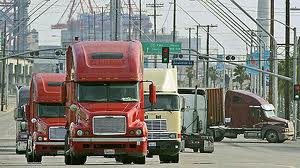
Foreign truckers will pay to use roads

Dare say the following will not go unnoticed by South African authorities. The bottom line in all of this is the question of effective enforcement.

News that the government intends to go ahead with plans to introduce a charging system for foreign truckers using UK roads has got the thumbs-up from the Road Haulage Association (RHA). “This is a happy day for road hauliers”, said RHA Chief Executive Geoff Dunning. “We have been campaigning for years to see a system introduced which will lessen the financial advantage currently enjoyed by our European neighbours.”

Foreign truck drivers will have to pay £10 a day to use British roads by 2015, under the new legislation. British truckers are used to paying special road charges of up to £13 a day on the continent, but their European counterparts pay nothing when they drive in the UK.

Announcing the plan, New Transport Secretary Patrick McLoughlin said: “These proposals will deliver a vital shot in the arm to the UK haulage industry. “It is simply not right that foreign lorries do not pay to use our roads, when our trucks invariably have to fork out when travelling to the continent.” It is estimated that 1.5m visits are made by foreign hauliers to the UK every year.

The new charge is expected to cost most drivers £1,000 a year. Dunning added: “This is not enough to give us a level playing field as regards the rest of Europe. But it is a good start and will help no end in beginning to prepare the ground.

“We are pleased that Mr McLoughlin has seen fit to bring forward this legislation so early in his tenure as Transport Minister; he is obviously very aware as to the important role played by UK hauliers in rebuilding the economy, increasing UK competitiveness and boosting growth.”

UK drivers will also have to pay the daily charge because of European laws, but it will be offset by a corresponding road tax cut. A bill setting out the plan will be published next month, with ministers expecting the new system to be introduced within the next two years. Source: Lloyds List

Exporters Blast ZIMRA and RBZ Red Tape


Zimbabwe‘s export procedures have come under severe criticism as they are said to be contributing to the country’s poor export performance. Local manufacturers have lamented delays in documents processing by the Zimbabwe Revenue Authority and the Reserve Bank of Zimbabwe, which they say is constraining the movement of goods into regional and international markets.

Latest official statistics show that the country’s trade deficit stands at around US$2,9 billion due to the underperformance of the export sector. Surface Investments executive director Mr Narottam Somani says although they have lodged complaints with ZIMRA over the issue there have been no positive outcome.

“The CD1 approval procedures and ZIMRA Bill of entry procedures are too lengthy and as such they spoil the whole momentum of exports. Government, ZIMRA and the RBZ need to appreciate the value of reducing period of these procedures. “We have engaged officials from ZIMRA and the RBZ over the need to file our CD1 and bill of entry forms online which will help reduce the time period to one day. They say that they appreciate our concerns but nothing has materialised,” he said. (Note for South African readers – CD1 refers to a ZIM exchange control document and not the SARS’ new electronic declaration form)

Surface Investments is the country’s largest multi-oilseed processing firm and it exports crude oil to Malawi and cotton linters, and cotton hulls to South Africa and Europe.

Both exporters and importers contend that the country’s export transit procedures have not improved significantly despite ZIMRA’s rollout from last year of the ASYCUDA World version 4.0.21 to over 14 of its stations. Implementation of the system was largely expected to expedite clearance procedures at the country’s border posts. ASYCUDA 2.3 was the earliest version to be introduced in Zimbabwe in 1992 and was upgraded to versions 2.5 and 2.7. ASYCUDA++ later came on board in the form of version 1.15 and 1.18. An expert in the field of transit procedures yesterday said improving these processes would take a wider regional approach.

“Transit operations of most countries in the region typically suffer from a number deficiencies such as lack of simplified and standardised customs procedures, documents and data processing that generally yield costly implications such as delays at border posts, opportunities for theft and corruption practices, and inflated transit transport costs.

“The key area that needs to be addressed therefore relate to regional harmonisation of transit procedures.” Source: The Herald (Harare)


Nigerian Customs Boss unveils new scanners

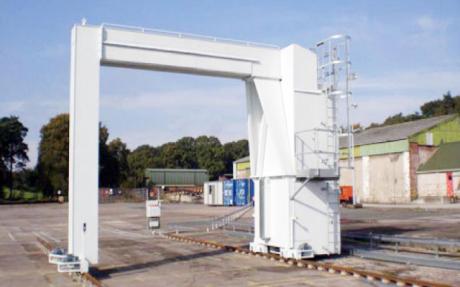
The Comptroller General, Nigerian Customs Service (NCS), Alhaji Inde Dikko Abdullahi, said that ports users would henceforth complete their business transactions within 24 hours. Speaking at the formal unveiling of the gantry scanner procured by Societe Generele Surveillance (SGS) Nigeria at Onne, Eleme Local Government Area, Rivers State, he said the new scanning facilities would boost the 48-hour target for clearance of goods at the ports, noting that it would complement government’s efforts toward reducing the cost of doing business at the ports.

Special training for a select team of 80 NCS officers has been concluded. The team is expected to take over services and operations in the Destination Inspection scheme as from January 1, 2013. The training covered all aspects of the DI activities being handled by SGS for NCS with emphasis on actual risk analysis and processing of the importer’s final document resulting in classification and valuation opinion.

Managing Director of SGS Scanning Nigeria Limited, Mr. Nigel Balchin, in his address at the occasion, said the mobile cargo scanners were capable of scanning about 34 trucks per hour as against 16 per hour by the fixed cargo scanners. Each had double tunnel that enabled it scan two trucks at the same time with equal image quality as the fixed scanner. “At SGS we are committed to quality service delivery. We are very glad to be part of this success story and we look forward to Nigeria Customs Service taking charge of the DI programme. The knowledge you have acquired is for the benefit of Nigeria Customs Service and ultimately that of the Nigerian economy. We wish you the best in your future endeavours”, he said.

The image quality of the relocatable gantry scanners is on par with a fixed scanner. Trucks remain stationary during scanning (the scanner moves on rails) unlike a fixed scanner where the truck is pulled through the scanner on a conveyor that’s more vulnerable to maintenance issues. The scanner is mounted above ground unlike a fixed scanner where one of the detectors is four metres underground. In addition, a relocatable gantry scanner can be re-deployed to an alternative site, in a relatively short time, in case of any expansion or new development.

SGS is one of the service providers contracted by the Federal Government to assist the NCS facilitate trade through risk management and use of non-intrusive inspection (x-ray cargo scanning) of imports routed through the nation’s air and sea ports as well as approved borders. The company is currently providing cargo scanning services in Bahrain, Cameroon, Haiti, Madagascar, Uruguay and has completed provision of scanning services in Gambia, Kosovo and Mexico.  Source: Leadership.ng

Kenyan importers to be penalised for delays

Nothing like giving stakeholders fair warning of impending fines. Given that the authorities appear to have agreed on ‘all details’ except the cost, lets hope the latter aspect does not come as a nasty surprise when the single window system becomes operational. One would think that price/cost would be one of the first criteria for consideration and approval, not the last.

The government plans to impose penalties on importers who fail or delay to lift their cargo from the port in Mombasa in the ongoing reforms to de-congest the port. Transport minister Amos Kimunya said this is part of the measures being drafted to ensure the port operations are not slowed down by deliberate delays by importers.

“This will encourage people to quickly remove their cargo from the port as soon as it cleared by the authorities” Kimunya told the KPA annual summit in Nairobi on Wednesday. He said this is aimed at reducing the 40 per cent extra cost to consumers, caused by inefficient flow of goods from ports of entry.

The penalties come ahead of the single window system which is expected to facilitate fast and easy flow of export and exports through a seamlessly interconnected platform. According to the chairman of Kenya Trade Network Agency Joseph Kibwana, the single window implementing agency, all the details of the project have been agreed on, except the cost.

Implementation of the first phase for sea and air manifest will start in June 2013 to be followed by the second and third phases in six months intervals. Source: The Star (Nairobi)

Is South Africa being screwed by China?

In recent days there’s been mutterings amongst several business commentators concerning the state of the South African manufacturing sector and its inability to compete in the local economy in the face of ‘so-called’ cheap imports. For once I heard some common sense instead of the usual WTO/economist waffle which normally just confuses people instead of shedding light on the inherent problems. What the Business Times article below suggests is that our prevailing job plight is self-induced and should not be blamed entirely on rogue elements alone. Under valuation and mis-declaration have and always will pose a challenge to any country. The blame has been placed on Customs not doing its job; yet, the problem appears to lie at the feet of policy makers who have made foolish decisions for which the country as whole now pays the price. 

The trouble began soon after 1994, when then Trade and Industry Minister, anxious to prove to the then rich and powerful, and sceptical, West what lovers of democracy and free markets they were, removed tariff protection on cheap imports against a considerable body of expert advice. And 12 years before we needed to, because the World Trade Organisation‘s predecessor, GATT, had given South Africa 12 years to modernise its manufacturing, improve its skills and prepare itself before lowering import tariffs.

At the time, Trade and Industry Minister and the government thought South Africa did not need a grace period. Leslie Boyd, then head of the Anglo-American industrial division, warned of the devastating consequences but to no avail. “They thought if they took the crutches away we’d become a free market economy and we’d be competitive,” says Stewart Jennings, chairman of the Manufacturing Circle which represents thousands of manufacturers in SA. “It was the most ridiculous thing you could ever imagine. Those of us in business know there is no free market in the world. Every country protects itself. We don’t. Here’s an economy without skills that just throws open the tariffs. We’re the country that’s whiter than white in terms of the WTO. Everybody else just abuses us.”

Business consultant Moeletsi Mbeki opines “[government] is too ideologically orientated, it operates from ideology rather than from practical expertise. This motivates our relationship with China. The Chinese can do no wrong.”

One of the worst mistakes they made, he believes, was to sign an agreement that gave the Chinese market economy status which it did not and does not deserve. The talk was that SA agreed to do this as compensation for imposing a three-year quota on Chinese textile imports. The effect on SA’s manufacturing sector has been devastating. “As a consequence of that agreement it is virtually impossible for us to get countervailing duties into China through ITAC [the International Trade Administration Commission which used to fall under the Department of Trade and Industry but is now under Ebrahim Patel‘s Department of Economic Development],” says Stewart Jennings. “We’ve battled to get dumping duties or safeguards against China. Most of the applications that have gone to ITAC have been kicked into touch.”

First, China starts with a currency that is 30% undervalued. It manipulates it, so any goods it exports to SA are 30% cheaper than they should be. On top of that there are all sorts of incentives for Chinese exporters. And then, as Jennings says, attempts by local manufacturers to defend themselves by applying for countervailing duties more often than not go nowhere.

Iraj Abedian of Pan African Investment and Research says the short answer to the question is yes, we are being screwed. “Not because the Chinese have been smart but because we’ve been snoozing and naïve.”

SA was so flattered to be asked to join the BRIC (Brazil, Russia, India, China) club of developing economies that it did not drive a hard enough bargain. “We were romanticising our relationship with China and celebrating the fact that China was inviting us to join BRIC. We took it as a form of political honeymoon without recognising its effect on manufacturing, without assessing our counter-strategy for safeguarding national interests in the form of jobs and tax revenue.” China needed SA to join BRIC at least as much as SA itself wanted to join, but SA failed to capitalise on this.

Executive director of the Manufacturing Circle, Coenraad Bezuidenhout, who has observed the effect at close quarters, thinks part of it is that “our guys find the prospect of dealing with China daunting. They feel we need China as a market for our raw materials more than China needs us.” He thinks this attitude reflects a worrying lack of professionalism on the part of those who are paid to battle for SA’s interests. “We should be leveraging our position with regard to our minerals and our access to African markets far more than we do when we deal with China.”  Source: Business Times

WTC developer says United and American airlines negligent

While American’s are accustomed to a period of mourning and remembrance over this time, it seems as though property mogul – Larry Silverstein – is more concerned with lost profits than the fate of a few thousand lost souls resulting from the 9/11 tragedy. Perhaps the US Airforce should be cited for not scrambling fighter jets quick enough to intercept the rogue planes. Moreover, why not cite the ‘negligent’ customs and immigration officials of the DHS for failing to intercept the rogue hijackers. A strange case of selective blame, indeed!

Most of the lawsuits arising from the hijacked plane attacks on the World Trade Center 11 years ago have been settled, but one demanding that United Airlines and American Airlines be held liable for loss of property and business could go to trial.

Two recent rulings by a federal judge in New York denying the airlines’ bid to dismiss the lawsuit over a narrow insurance dispute have opened the door to the entire case ending up in the hands of a jury. At issue is whether the two airlines and other defendants should pay additional damages to Larry Silverstein, the leaseholder of the World Trade Center property, beyond what he has already received from his own insurer.

Silverstein’s World Trade Center Properties blamed United, now United Continental Holdings Inc, and American Airlines, for breaches of security. The 2008 lawsuit also named aircraft manufacturer Boeing Co, the Massachusetts Port Authority, which manages Logan International Airport, and security companies.

The lawsuit claimed that negligence allowed hijackers to board two planes at the Boston airport and use them as missiles to destroy the 110-story twin towers and cause other buildings on the site in lower Manhattan to burn down. Before Sept. 11, the airlines and the security companies they hired oversaw security at airports and on planes. That responsibility now lies with the Transportation Security Administration, a government agency.

Silverstein is seeking $8.4 billion in damages for loss of property and lost business, even though U.S. District Judge Alvin Hellerstein has limited the amount to the $2.8 billion Silverstein paid for the leases. The lawsuit is among the last pieces of litigation resulting from the attacks of Sept. 11, 2001, which killed more than 3,000 people in New York, the Pentagon outside Washington, and Pennsylvania. Read the full article here! Source: Reuters.

Related articles