Maiden Voyage for 16,000 TEU French Giant

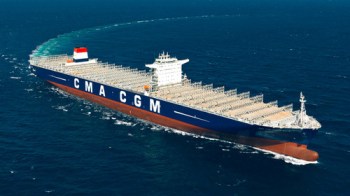
CMA CGM Marco Polo 16,000 TEU container ship

The world’s largest containership sailed on her maiden voyage with a first load of freight from Ningbo, China. The Marco Polo is at 16,000 TEU currently the biggest box carrier and is the first of a series of three similar dimension vessels that will all be named after great explorers. The delivery of the two next vessels is expected in 2013. This first voyage, w will be used partly to test the ship, the largest in service until Maersk’s 18,000teu Triple-E vessels start to be deployed next year.

Owned by French liner group CMA CGM she will be operated on the company’s French Asia Line service’s FAL 1 rotation where all the group’s largest vessels operate on a fixed-day, weekly connection between Central and South China, the main exporting zones of the country, and Northern Europe. The direct service to Southampton and to Hamburg offers European importers the fastest transit times of the market.

FAL1 is part of a global network of 8 CMA CGM services connecting Asia to Europe Atlantic, which the company claims to be the most thorough offer on the market, and which is based on 29 vessels of 11,400 to 16,000 TEUs. Nicolas Sartini, CMA CGM Group Senior Vice President Asia-Europe Lines, said of the latest offering:

“It is with great pride that the CMA CGM Group launches this new vessel, which is the largest in the world. It shows the expertise of the Group’s teams, who are able to handle not only the very technical piloting of the ship but also its commercial operations. Our entire network of 400 agencies all around the world is active to ensure the successful launching of this ship.

“The CMA CGM Marco Polo is going to join the FAL service, the backbone of the Group’s network of lines. This launching reinforces the Group’s strategy, which began 20 years ago, with the opening of its own offices in China, and continues today with 34 services going from China to Europe, to North and South America, to Australia and Africa, i.e. one departure every 5 hours. To this must also be added the 20 weekly services of our subsidiary Cheng Lie Navigation, the Intra-Asia specialist.”

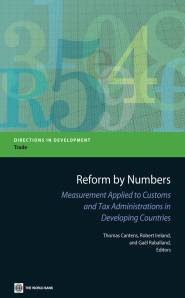
Reform by Numbers – a reference work on Customs reform

The word ‘reform’ is a constant in the daily life of a customs officer. No customs administration among the 177 members of the World Customs Organization has not had a reform program in progress or planned. This is ultimately quite normal.A new World Bank publication “Reform by Numbers” will no doubt appeal to customs and tax reform experts and change agents.

It was written in the context of new and innovative policies for customs and tax administration reform. Eight chapters describe how measurement and various quantification techniques may be used to fight against corruption, improve cross-border celerity, boost revenue collection, and optimize the use of public resources. More than presenting ‘best practices’ and due to the association of academics and practitioners, the case studies explore the conditions under which measurement has been introduced and the effects on the administrative structure, and its relations with the political authority and the users. By analyzing the introduction of measurement to counter corruption and improve revenue collection in Cameroon, two chapters describe to which extent the professional culture has changed and what effects have been noted or not on the public accountability of fiscal administrations. Two other chapters present experiments of uses of quantification to develop risk analysis in Cameroon and Senegal.

By using mirror analysis on the one hand and data mining on the other hand, these two examples highlight the importance of automated customs clearance systems which collect daily extensive data on users, commodities flows and officials. One chapter develops the idea of measuring smuggling to improve the use of human and material resources in Algeria and nurture the questioning on the adaptation of a legal framework to the social context of populations living near borders. Finally, two examples of measurement policies, in France and in South Korea, enlighten the diversity of measurement, the specificities of developing countries and the convergences between developing and developed countries on common stakes such as trade facilitation and better use of public funds.

The “gaming effect” is well known in literature about performance measurement and contracts performance, because there is a risk of reduced performance where targets do not apply, which is detrimental to the overall reform. It is crucial to keep in mind that, by themselves, indicators “provide an incomplete and inaccurate picture” and therefore cannot wholly capture the reality on the ground. Measurement indicators must be carefully chosen to ensure that knowledge is being uncovered.

Measurement, for purposes of reform, should not be “copied and pasted” from one country to another. Due consideration must be given to the varying aims of the customs service and the specific political, social, economic, and administrative conditions in the country.

Measurement applied to experimentation is also about how donors, experts, and national administrations work together. On the one hand, national administrations in developing countries ask for technical assistance, standards, and expertise that are based on experiences of developing countries and use experts from such countries.These requests encourage the dissemination of such models. On the other hand, reforms of customs or tax administrations are represented as semi-failures in terms of the initial expected outcomes set by donors and politicians – usually the end of a reform is the time when donors and local administrations become aware of the gaps of their own representations of success.

While scientific and academic in approach, lets hope it means more than just miserable experimentation in target countries.

The book is available for free reading online – www.scribd.com or you can purchase from amazon.com.

Ready for a cock-fight?

Brazil has taken the first legal step at the World Trade Organisation to challenge South Africa’s use of anti-dumping measures on shipments of Brazilian poultry meat, the global trade body said in a statement on Friday. Brazil has “requested consultations” with South Africa over South Africa’s accusation that Brazilian imports were “dumped”, or sold at an unfairly low price that damaged South Africa’s own poultry sales, the WTO said. If the consultations fail to resolve the issue, in 60 days’ time Brazil could ask the WTO to set up a panel to adjudicate.

The statement did not give any more details, but South Africa’s International Trade Administration Commission (ITAC) has imposed anti-dumping duties on frozen chickens and chicken meat imported from Brazil after investigating suspected dumping in 2008-2010. In 2010, Brazil accounted for 94.2% of South Africa’s total 26,916 tonnes of boneless chicken imports and 44.6% of the total 29,039 tonnes of whole chicken imports, ITAC’s investigation report said in January.

After calculating the extent of the unfair competition, South Africa put a provisional anti-dumping duty of 62.93% on whole chickens and 46.59% on boneless cuts from Brazil, except for boneless cuts from Aurora Alimentos, which would incur a duty of 6.26%.  The dispute is the first between Brazil and any African country and only the fourth brought against South Africa at the WTO.

All of the previous three cases, brought by India, Indonesia and Turkey, also concerned South Africa’s use of anti-dumping measures to protect its market from unwanted imports. None of those three disputes advanced to the panel stage. India and Turkey did not press their cases and Indonesia withdrew its challenge after South Africa withdrew its anti-dumping measures. Source: News24

Exposing the Illegal Rhino Horn Trade

Author and investigative journalist Julian Rademeyer has recently launched his book “Killing for Profit’ A terrifying true story of greed, corruption, depravity and ruthless criminal enterprise.

On the black markets of Southeast Asia, rhino horn is worth more than gold, cocaine and heroin. This is the story of a more than two-year-long investigation into a dangerous criminal underworld where merciless syndicates will stop at nothing to attain their prize. It is a tale of greed, folly and corruption, and of an increasingly desperate battle to save  rhinos – which have existed for more than 50 million years – from extinction.

Killing for Profit is a meticulous, devastating and revelatory account of one of the world’s most secretive trades. It exposes poachers, scoundrels, gangsters, conmen, mercenaries, killers, gun-runners,  diplomats, government officials and kingpins behind the slaughter. And it follows the bloody trail from the frontlines of the rhino wars in South Africa, Zimbabwe and Mozambique to the medicine markets of Vietnam and the lair of a wildlife-trafficking kingpin on the banks of the Mekong River in Laos …

For more information visit – http://killingforprofit.com/the-book/

To purchase the book online visit – Kalahari.com

Building hard and soft infrastructure to minimise regional costs

I post this article given it ties together many of the initiatives which I have described in previous articles. The appears to be an urgency to implement these initiatives, but the real question concerns the sub-continent’s ability to entrench the principles and maintain continuity. At regional fora its too easy for foreign ministers, trade practitioners and the various global and financial lobbies to wax lyrical on these subjects. True there is an enormous amount of interest and ‘money’ waiting to be ploughed into such programs, yet sovereign states battle with dwindling skills levels and expertise. Its going to take a lot more than talk and money to bring this about.

South Africa is championing an ambitious integration and development agenda in Southern Africa in an attempt to advance what Trade and Industry Minister Rob Davies describes as trade and customs cooperation within the Southern African Customs Union (SACU), the Southern African Development Community (SADC) and other regional trade organisations.

Central to pursuing this intra-regional trade aspiration are a series of mechanisms to combine market integration and liberalisation efforts with physical cross-border infrastructure and spatial-development initiatives. Also envisaged is greater policy coordination to advance regional industrial value chains. “Trade facilitation can be broadly construed as interventions that include the provision of hard and soft infrastructure to facilitate the movement of goods, services and people across borders, with SACU remaining the anchor for wider integration in the region,” Davies explains.

This approach is also receiving support from the US Agency for International Development (USAid), which recently hosted the Southern African Trade Facilitation Conference, held in Johannesburg.

Trade programme manager Rick Gurley says that virtually every study on trade in sub- Saharan Africa identifies time and cost factors of exporting and importing as the most significant constraints to regional trade potential. Limited progress has been made by SADC member States and SACU partners to tackle the factors undermining trade-based growth, limiting product diversification and increasing the price of consumer goods, including of foodstuffs. However, far more would need to be done to realise the full potential of intra-regional trade.

Regional Alliance
One high-profile effort currently under way is the Tripartite Free Trade Area (T-FTA), which seeks to facilitate greater trade and investment harmonisation across the three existing regional economic communities of the SADC, the Common Market of Eastern and Southern Africa and the East African Community.

The existing SADC FTA should be fully implemented by the end of the year, with almost all tariff lines traded duty-free and, if established, the T-FTA will intergrate the markets of 26 countries with a combined population of nearly 600-million people and a collective gross domestic product (GDP) of $1-trillion. At that size and scale, the market would be more attractive to investors and could launch the continent on a development trajectory, Davies avers. It could also form the basis for a later Africa-wide FTA and a market of some $2.6-trillion.

However, as things stand today, intra- regional trade remains constrained not merely by trade restrictions but by a lack of cross-border infrastructure, as well as poor coordination and information sharing among border management agencies such as immigration, customs, police and agriculture.Cross-national connectivity between the customs management systems is also rare, often requiring the identical re-entry of customs declarations data at both sides of the border, causing costly and frustrating delays.

USAid’s regional economic growth project, the Southern African Trade Hub, is a strong proponent of the introduction of several modern trade-facilitation tools throughout the SADC – a number of which have already been successfully pioneered. These tools, endorsed by the World Customs Organisation (WCO) Framework of Standards, which offers international best-practice guidelines, are aimed at tackling the high costs of exporting and importing goods to, from, and within Southern Africa, which has become a feature of regional trade and discouraged international investment.

Bringing up the Rear
A country’s competitiveness and the effec- tiveness of its trade facilitation regime are measured by its ranking on World Bank indices and, with the exception of Mozambique, Southern African States perform poorly – with most in the region settling into the lowest global quartile of between 136 and 164, out of a total of 183. “Our transaction costs in Africa across its borders are unacceptably high and inhibit trade by our partners in the private sector,” says WCO capacity building director Erich Kieck. “We need our States to develop good ideas and policies, but the true test lies in their ability to implement them,” he notes.

He adds that not only does trade facilitation require efficient customs-to-customs connectivity, but also demands effective customs-to-business engagement, adding that, while customs units are responsible for international trade administration, they are not responsible for international trade. “The private sector is the driver of economic activity and international trade, and government’s responsibility is to understand the challenges faced by the business community and develop symbiotic solutions,” Kieck notes.

Despite the establishment of regional trade agreements and regional economic communities in Southern Africa, many partner- ships have failed to deliver on their full potential to increase domestic competitiveness.

In a report, African Development Bank (AfDB) senior planning economist Habiba Ben Barka observes that, despite the continent’s positive GDP growth record – averaging 5.4% a year between 2005 and 2010 – it has failed to improve its trading position or integration into world markets. In 2009, Africa’s contribution to global trade stood at just under 3%, compared with nearly 6% for Latin America and a significant 28% for Asia.

“Since 2000, a new pattern of trade for the continent has begun to take centre stage, as Africa has witnessed an upsurge in its trade with the emerging Brazil, Russia, India and China economies. Overall, Africa is trading more today than in the past, but that trade is more with the outside world than internally,” says Ben Barka. She adds that while many African regional economic communities have made some progress in the area of trade facilitation, much greater effort is required to harmonise and integrate sub-regional markets.

To address enduring trade barriers, consensus among business, government and trade regulators appears to lean towards the adoption of one or a combination of five facilitation tools. These include the National Single Window (NSW), the One-Stop Border Post (OSBP), cloud-based Customs Connectivity, Coordinated Border Management (CBM) and Customs Modernisation Tools.

A National Single Window
NSWs connect trade-related stakeholders within a country through a single electronic-data information-exchange platform, related to cross-border trade, where parties involved in trade and transport lodge standardised trade-related information or documents to be submitted once at a single entry point to fulfil all import, export and transit-related regulatory requirements.Mauritius was the first SADC country to implement the NSW and consequently improved its ranking on the ‘Trading Across Borders Index’ to 21 – the highest in Africa. It was closely followed by Ghana and Mozambique, which have also reported strong improvements.

Developed in Singapore, the benefits of government adoption include the reduction of delays, the accelerated clearance and release of goods, predictable application, improved application of resources and improved transparency, with several countries reporting marked improvement in trade facilitation indicators following the NSW implementation.

In South Africa, the work on trade facili-tation is led by the South African Revenue Service (SARS), which focuses on building information technology (IT) connectivity among the SACU member States, and strengthen- ing risk-management and enforcement measures. However, SARS’ approach to the NSW concept remains cautious, Davies explains. “SARS has considered the viability of this option as a possible technological support for measures to facilitate regional trade, but considers that this would fall outside the scope of its current approach and priorities in the region,” he said.

One-Stop Border Posts
As reported by Engineering News in December last year, effective OSBPs integrate the data, processes and workflows of all relevant border agencies of one country with those of another, which culminates in a standardised operating model that is predictable, trans- parent and convenient. An OSBD success story in Southern Africa is the Chirundu border post, where a collaboration between the Zambia and Zimbabwe governments has culminated in a single structure, allowing officers from both States to operate at the same location, while conducting exit and entry procedures for both countries.

Launched in 2009, this OSBP model is a hybrid of total separation, joint border operations and shared facilities in a common control zone. Implementation of the model has reduced clearance times to less than 24 hours, significantly reduced fraudulent and illegal cross-border activity, enabled increased information sharing between border agencies and reduced the overall cost of export and import activities in the area.

Earlier this year, former South African Transport Minister Sibusisu Ndebele indicated that Cabinet was looking into establishing a mechanism that would bring all border entities under a single command and control structure to address the fragmentation in the country’s border operations, particularly at the high-traffic Beitbridge post between South Africa and Zimbabwe. “The ultimate vision is to create one-stop border operations to facilitate legitimate trade and travel across the borders,” he said.

Customs Connectivity and Data Exchange
Improved connectivity between customs limbs in sub-Saharan Africa has perhaps made the most indelible strides in the region, with improved IT connectivity between States identified as a priority by Sacu.

This includes customs-to-customs inter- connectivity, customs-to-business inter- connectivity and interconnectivity between customs and other government agencies. SACU members have agreed to pursue the automation and interconnectivity of their customs IT systems to enable the timely electronic exchange of data between administrations in respect of cross-border movement of goods. “As a consequence of this acquiescence, we have identified two existing bilateral connectivity programmes as pilot projects to assess SACU’s preferred connectivity approach, cloud computing between Botswana and Namibia and IT connectivity between South Africa and Swaziland,” says SACU deputy director for trade facilitation Yusuf Daya. He adds that a regional workshop was recently convened to explore business processes, functions, data clusters and the application of infrastructure at national level to improve and develop intra-regional links.

Coordinated Border Management
The SADC has been a strong proponent of CBM efforts in the region, which promotes coordination and cooperation among relevant authorities and agencies involved in, specifically, the protection of interests of the State at borders. “The union has drafted CBM guidelines for its members on implementation, based on international best practice, and has received indications of interest from several member States,” explains SADC Customs Unit senior programme officer Willie Shumba.He adds that CBM is a key objective of regional integration, enabling the transition from an FTA to a customs union and, eventually, to a common market, through effective controls of the internal borders.

Customs Modernisation
South Africa’s customs modernisation initiative is well advanced and came about following Sars’ accession to the WCO’s revised Kyoto Convention in 2004, which required customs agencies to make significant changes to it business and processing models. These changes included the introduction of simplified procedures, which would have fundamental effects on and benefits for trade and would require a modern IT solution.

Since its inception, the SARS Customs Modernisation Programme has gained tremendous momentum, with amendments to the Passenger Processing System and the replacement of SARS’s Manifest Acquittal System in the Automated Cargo Management system. Further adjustments were made to enable greater ease of movement of goods, faster turnaround times and cost savings, as well as increased efficiency for SARS. This phase included the introduction of an electronic case-management system, electronic submission of supporting documents, the centralisation of back-end processing in four hubs and an electronic release system and measures to enhance the flow of trucks through borders – in particular at the Lebombo and Beitbridge borders.

Proper Planning
AfDB’s Ben Barka warns that, prior to the implementation of any border improvement efforts by countries in Southern Africa, a thorough analysis and mapping of each agency’s existing procedures, mandate and operations should be undertaken.“Based on these findings, a new set of joint operational procedures need to be agreed upon by all involved agencies and must comply with the highest international standards,” she says.

Development coordination between States is essential, as the largest disparity among regional groupings, in terms of intra-regional trade, is clearly attributable to their differentiated levels of progress in various areas, including the removal of tariffs and non-tariff barriers, the freedom of movement of persons across borders and the development of efficient infrastructure. Source: Engineering News.
Swaziland accedes to the WCO RKC

Swaziland accedes to WCO RKC

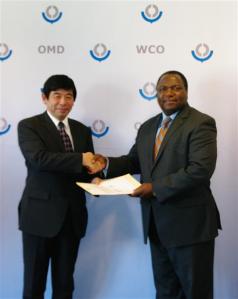
The Ambassador of the Kingdom of Swaziland, H.E. Joel Nhleko, deposited his country’s instrument of accession to the International Convention on the Simplification and Harmonization of Customs Procedures (Revised Kyoto Convention) with the World Customs Organization on 31 October 2012.

“The WCO is delighted that the number of Contracting Parties to the Revised Kyoto Convention continues to show an upward trend,” said WCO Secretary General, Kunio Mikuriya. “I would therefore strongly encourage other WCO Members to accede to this important Customs instrument as soon as possible,” he added.

Some of the Convention’s key elements include the application of simplified Customs procedures in a predictable and transparent environment, the maximum use of information technology, the utilization of risk management, a strong partnership with the trade and other stakeholders, and a readily accessible system of appeals.

Having entered into force on 3 February 2006, the Revised Kyoto Convention now has 84 Contracting Parties, and is regarded as a blueprint for effective and modern Customs procedures. Swaziland has been a Member of the WCO since 15 May 1981. Source: WCO

Global Tax Forum elects SARS Chief Legal Officer as Chair

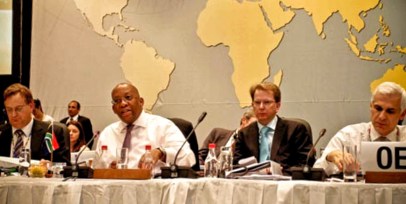
Kosie Louw, SARS (2nd from right) newly elected Chair of the Global Forum on Transparency and Exchange of Information for Tax Purposes.

SARS’s Chief Officer for Legal and Policy, Kosie Louw, was elected Chair of the Global Forum on Transparency and Exchange of Information for Tax Purposes at the organisation’s 5th meeting which was held in Cape Town last week. The appointment is for an initial two-year period from the beginning of 2013. Finance Minister Pravin Gordhan congratulated SARS and Kosie Louw on his election as chairperson of the Global Forum on behalf of the South African government.

“I am certain that the two years of South Africa’s chairmanship will be beneficial for the forum but also to the wider global tax administration community. South Africa, the first African chair of the forum, takes over the post of the forum chair from Australia,” Minister Gordhan said.

The position of forum chair is especially important because the forum’s current mandate expires in 2015, and it is during SA’s tenure that a decision must be made on the best way to take the work of the forum forward. SA’s tenure also coincides with very challenging times for tax administrations globally, especially when it comes to the exchange of information for tax purposes, the Minister said. The two-day Global Forum event, held on 26 and 27 October, was hosted by SARS and was attended by delegates from 81 jurisdictions and 11 international organisations.

The Global Forum was created by the OECD in 2000 to provide a forum for achieving and implementing high standards of transparency and exchange of information in a way that is equitable and permits fair competition between all jurisdictions, large and small, OECD and non-OECD. The principle that guides the Global Forum’s work is that all jurisdictions, regardless of their tax systems, should meet such standards in order for competition to take place on the basis of legitimate commercial considerations rather than on the basis of lack of transparency or lack of effective exchange of information for tax purposes.

The Cape Town meeting comes at an important juncture in the work of the Global Forum as it starts evaluating whether its members are actually exchanging information effectively. It is developing a ratings system based on a global consideration of members’ effectiveness at implementing the standard in practice.

The organisation is also looking at ways of refining governance and deliberating on its future direction. The importance of the work of the Global Forum in the region is highlighted by the increasing membership of African countries to 15, with Burkina Faso, Cameroon, Gabon, Tunisia and Uganda becoming the most recent members. This brings the Forum’s membership to 116.

South Africa has the largest and ever increasing tax treaty network in Africa and is seen as one of the most active jurisdictions in the work towards transparency and exchange of information. The South African Peer review report, which found South Africa’s legal framework and practices to be in accordance with the internationally agreed standard, was adopted by the Global Forum during this meeting. Source: SARSNews

Related articles

Singapore – megaport to double its TEU capacity

Singapore is relocating its transshipment port operations to Tuas in 10 years, a move that will add 65 million TEU in annual capacity, nearly doubling today’s capacity at local PSA terminals, announced Transport Minister Lui Tuck Yew. Consolidating transshipment operations at Tuas will bolster efficiency, economies of scale, eliminate inter-terminal transfers and result in cost savings and increased productivity.

Located close to the island’s industrial centre, Tuas is a new port development that can handle up to 65 million TEU annually, nearly double Singapore’s present capacity at PSA terminals. The first phase of Tuas is scheduled to open in 10 years, ahead of the 2027 expiration of the leases of Singapore city terminals at Tanjong Pagar, Keppel, and Pulau Brani, noted Dredging Today.

The recently completed Terminals 1 and 2 of Pasir Panjang will be merged in Tuas as well. But PSA Singapore will proceed with Phases 3 and 4, which will cover 250 hectares and add 15 new berths with a six kilometre quay.

The Pasir Panjang expansion, which is estimated to cost about US$3.5 billion, will increase PSA Singapore’s maximum draft from 16 to 18 metres to accommodate fully laden 18,000 TEUers now on order. By 2020, both phases will add an annual capacity of 15 million TEU, bringing the port total to 50 million TEU, but is still less than the additional Tuas planned capacity, which alone is estimated to handle 15 million TEU on completion. Source: www.seanews.com

Global union body seeks box weigh-ins before stacking rules change

Container weight misdeclarations will compromise safety if new rules are accepted to allow 10 per cent more cargo aboard ships in the 4,000- to 16,000-TEU range, says the International Transport Workers’ Federation (ITF).

The Lloyd’s Register liberalisation proposals to increase the stacking of boxes on board is backed by the forwarding lobby FIATA (Federation Internationale des Associations de Transitaires et Assimiles), but ITF port representative Albert Le Monnier says the measure is “absurd” without the verification of weights of laden containers before loading. “Look at the problem of misdeclaration we’re experiencing,” said Mr Le Monnier, former vice-president of Canada’s west coast section of the International Longshore and Warehouse Union (ILWU).

“As a rule, self regulation has a very poor record.” The World Shipping Council (WSC), the Baltic and Maritime Council (BIMCO) and International Chamber of Shipping (ICS) as well as the US, Denmark and the Netherlands are seeking verification of weight of loaded containers as a pre-loading condition for ships.

The practice needs to be shared or to be assigned to the shipper, consignor or consolidator through a system of roadside weigh bridges en route or have a weigh bridges at the terminal, said Mr Le Monnier, reported the London’s Loadstar.

The cost to the terminal operator would be passed on to carriers, then on to the shipper, and ultimately end up in a negligible consumer end-price, said Mr Le Monnier. It is essential, he said, that any weighing verification of loaded containers isn’t rushed through without careful thought by the IMO “correspondence group” due to report back by June 2013, ahead of the deadline for deliberation in September on the issue.

Stacking weights differently aboard could increase cargo 10 per cent for 18,000-TEU vessels allowing for operational flexibility, said the Lloyds Register marine director Tom Boardley. “These results indicate clearly that we will be able to allow much higher cargo weights and enable more operational flexibility – and to do this in safety,” he said. “The potential in cargo increase is considerable.” Source: http://www.seanews.com.tr

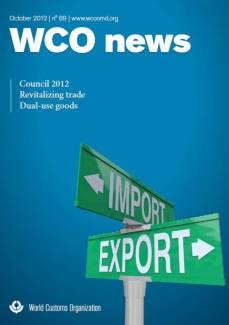
WCO News – October 2012 Edition

Treat yourself to news and views on Customs around the globe. As usual the WCO News does not disappoint. Content includes –

  • Highlights from the 2012 Council.
  • Latest developments in WCO areas of work: compliance, facilitation, capacity building and tariff and trade affairs.
  • Germany and the problem of “cheap whites”.
  • UK’s strategy to tackle tobacco smuggling.
  • The Chairperson of the Kimberley Process, Ambassador Gillian A. Milovanovic, sheds some light on the diamond trade and its “dark” side.
  • China’s Ambassador to the EU, H.E. Wu Hailong, provides his perspective on trade facilitation, as well as China’s initiatives in this domain.

Moreover, there are other interesting articles on informal fund transfer systems, dual-use goods, and transit control. For South African readers don’t miss the article penned by our Customs Counsellor in Brussels  Coffet Lebepe. His article provides an insight on South Africa’s preparations to combat illicit trade in tobacco products. Click here to download the WCO News! Source: The WCO

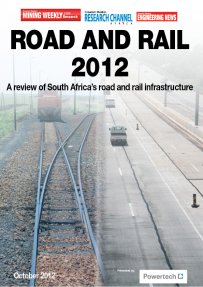
A review of South Africa’s road and rail infrastructure

Creamer Media have published 2012 Road and Rail – a comprehensive review and insight into South Africa’s road and rail transport infrastructure and network. This should be a must read for any serious investor and comes at a price just shy of R 2000,00. 

For the much of the six-and-a-half decades from 1910, South Africa’s rail sector was carefully nurtured and handsomely resourced by successive administrations. Growing competition from road was kept at bay by tough regulatory practices that ensured rail freight of a virtual monopoly.

From the mid-1970s, however, rail’s pre-eminent position in South Africa began to come under scrutiny. A series of National Transport Policy Studies reviewed worldwide trends in transport deregulation. The findings reinforced a growing belief that an overprotected rail industry and an over-regulated road-freight sector were detrimental to the overall South African economy. This was undoubtedly true – but as often happens in these matters, in the following decades, and indeed, right up to the recent present, the stick was then bent excessively in the opposite direction.

The net result is that, on the freight side, rail has massively lost market share to road over the past 20 to 25 years. Road transport has been allowed to grow, but without the implementation of an effective road transport quality system. This imbalance in the modal split has been a key contributing factor to high direct logistics costs in the economy. The disproportionate shift of freight to road has had many other perverse and costly impacts – the road freight industry (unlike Transnet Freight Rail) does not directly carry the cost of building and maintaining the public infrastructure it uses and this has resulted in an increase in road construction and maintenance costs, deteriorating road conditions, congestion problems and road collisions.

This report investigates South Africa’s road and rail infrastructure, including the country’s road and rail networks, maintenance and the challenges facing the sector, among others. For details as to the content of the report please click here! Source: Creamer Media

Nigeria Customs – Exiting the era of ‘contracted services’

Goodluck Jonathan addressing the WCO in June 2012

As the Nigeria Customs Service (NCS) gets set to assume all hitherto contracted services from the service providers come December 31, 2012, kudos must be given to the administration of President Goodluck Jonathan for the political will which has brought this to fruition. This is a highly significant development that should encourage other African nations to follow suit.

Over the years, the functions of the Customs administrations have evolved from revenue collection to include protection of industries, protection of citizens, trade facilitation as well as trade security and environmental issues and Customs administrations have continued to improve with the dynamism brought about by the evolving global world.

Therefore, if any country must rely on contracting core Customs services to private companies, then such a country should as well disband its Customs administration. What this means is that no one can ‘Captain’ a ship better than a ‘Captain’, even the best pilot in the world would fail woefully when saddled with sailing a ship.

This is because, whilst it is necessary to contract some of these services to the private sector, such services are usually treated by benefiting firms as mere business ventures and as such, create a situation where governments use such contracts to benefit close allies, even as organisations will go to the extremes to secure such contracts, primarily for profit making.

Having critically studied the scenario, the World Customs Organisation (WCO), summed up that such practice usually results in a situation where there will be no trust in the Customs frontline and post clearance capability. This has prompted the Organisation to, in recent years, develop several diagnostic studies and programmes aimed at championing broader international Customs capability with high benefits to governments of its member countries.

Findings have however, shown that governments may choose the private-sector to complement its resources and capabilities in which supporting operations ranging from printing Customs legislation and tariff to designing Customs websites, repairing and maintaining facilities and equipment and conducting research into specific topics may be outsourced to private companies.

Core Customs responsibilities were also, through contracts with a government, outsourced to private companies that conduct pre-shipment Inspection (PSI) or Destination Inspection (DI) activities. As their names suggest, PSI activities are conducted in exporting countries in order to verify the quality, quantity, price and classification of such exported goods, while DI activities are carried out in combination with scanning technology on imported goods in importing countries.

However, this option, according to the world Customs body, has been observed to be usually more cost effective than in-house operations for many reasons including the stimulation provided by competition in the private sector.

It is therefore time that such organisations which front themselves with the ‘be all’ systems in Customs tariff and valuation appraisal rather seek a more practical and benefit-delivering model than one which not only scams governments of service and inspection fees, but also offers no benefit to trade.

Some of them offer government free cargo scanning equipment in exchange for a lucrative inspection fee. None of this is based on risk management and mostly purely profit focussed. The concept forgoes most, if not all the modern Customs principles and standards promoted by the WCO.

Rather than this concept which adds no value to trade, the focus of government should be capacity building for Customs officers; and with a commitment to capacity building under the Dikko-led management, the NCS now has capable hands to take-over the running of all its functions, and thereby retaining capital flight.

It is worthy to note that PSI and DI is normally introduced to enhance Customs functions as a stop-gap measure while waiting for Customs reforms and modernisation.

According to the WTO, as at November 2011, at least 25 countries, most of which are in sub-Sahara Africa, had contracts with private inspection entities for PSI and DI of which Nigeria was one of them, but this would no longer be after 31st December, 2012, when Nigeria would exit from that category.

Furthermore, it is also important to note that the WCO position is that such contracted core Customs services should not be considered as a permanent substitute for the Customs administration, but only as a temporary measure.

As a consequence of critical assessments of the performance of inspection companies and inefficient capacity-building and training activities, many Customs administrations have exited these outsourcing contracts and the WCO, with its accumulated knowledge, is able to assist its members with the process of discontinuing these contracts.

Nonetheless, there are certain circumstances where the hiring of inspection companies could be justified because of lack of expertise as in the case of post-conflict reconstruction situation. However, in such cases, contracts with PSI, DI companies as service providers should be accompanied by an active exit plan strategy within the context of a capacity-building or Customs modernisation programme. Even the PSI companies are in this case, expected to work in compliance with the WTO agreement on PSI and relevant WTO’s recommendations.

When Abdullahi Dikko, on assumption of office as Comptroller-General of the Nigeria Customs Service in 2009, began a campaign for the modernisation of the NCS as captured in his six point agenda with more emphasis on capacity building and improved welfare, he was criticised for embarking on such a capital intensive venture by many, who then didn’t believe in his vision. But today, the result of the huge investment on capacity building is evident as the NCS, come December 31, 2012, would pride itself among the 21st century Customs administrations, measuring with its counterparts in developed countries, by taking over full control of all Customs operations.

There are arguments that the outsourcing of supporting functions to the private sector enables the Customs administration to focus their scarce resources on their functions, but this is no longer the case with the NCS.

Facts have shown a sharp rise in the resources of the Service due to an improved revenue collection. Monthly collection has risen from the inherited N30 billion to N90 billion. The increased revenue collection has made it possible for Customs officers to have a 100 per cent salary increase and even freeing more resources for the acquisition of quarters for officers and men, renovation of Customs barracks nationwide, provision of staff buses, uniforms and clinics in most commands.

This landmark achievements have been made successful with the full deployment of the NICIS platform for e-Customs declaration and processing, manifest submission, duty payment and final release. Records show that e-manifest processing which usually took seven days and above in 2009, is now been processed same day. Same goes for e-remittance processing. Same transformation has being noticed in the number of processed SGDs which has risen from an average of 367,897 in 2009 to about 526,604 currently.

Summarily, it must be noted that the scanning aspect of the Customs supply chain security paradigm contributed to the evolution from pre-shipment inspection to destination inspection. Traditionally, many developed countries, especially in Africa, employ companies from developed countries to do pre-shipment inspection of imports to Africa primarily for classification and valuation purposes.

The pressure to consider exports as well as imports and for national security contributed to the emergence of destination inspection companies, where the Customs controls are conducted in the African country. This has reduced the internal costs of such service companies and increased their incomes but has done little or nothing to reduce checks at the border or import points. Source: Leadership (Nigeria)

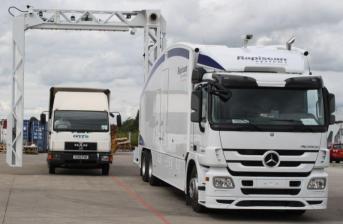
The Case for Screening-as-a-Service

In an interview with The Maritime Executive, Peter Kant, executive vice president for Rapiscan Systems informed that the primary business of a port is serving as a hub for water-borne commerce and all of the logistics that entails, with each port competing for the business of shippers and container operators. Every investment made by a port authority, from a crane to a dredge to a security checkpoint, must be based on how this activity will not only position the port to current customers, but how it will affect the attraction of future customers.

Increasingly, however, these investments are including more and more security needs, from container scanning equipment to operator training to security architectures. Security, and in particular security screening, is not the core business of a ports authority, but compliance with national and international guidelines demands that certain security standards be met, or losing customers will be the last of a port authority’s worries.

But even though security screening is an absolute necessity, many ports are looking to get out of the security game altogether. But will the departure from security make ports less secure…or could it actually enhance cargo scanning operations?

The Heavy Burden of Screening
As mentioned earlier, port authorities are not experts when it comes to security, especially a task as granular as cargo screening. It’s not just about a “mean guard and a magnet” when it comes to screening anymore, and this especially holds true to the world of maritime cargo. First, the right technology must be installed, a solution that can effectively analyze cargo for potential contraband or threats, both conventional and radioactive. Then, a port authority must determine the best location for the screening checkpoint, and oversee the construction of the location, both in terms of port impact and traffic optimization.

Next come the installation and calibration of the scanning technology, as well as the hiring and training of security operators. The authority must also establish a workflow for what happens when a container is flagged – what requires a manual inspection? Who approves such an operation? What remediation must take place after the fact?

The fact of the matter is, cargo scanning isn’t just about putting containers through an X-ray machine. It’s much, much more than that, and consumes enough time that establishing and running a checkpoint can adversely affect port business.

But there is an easier way to run cargo screening operations. Port authorities are experts in maritime commerce, so why shouldn’t they turn to experts in security screening to run cargo scanning operations?

Cargo Scanning-as-a-Service
Rather than trying to become cargo screening experts overnight, port authorities can take advantage of a major trend in the overall security world: security-screening-as-a-service. Essentially, port operators form a partnership with an experienced security screening solutions provider, tasking the provider, not the port, with the onus of establishing and running a cargo scanning checkpoint.

Other than the obvious benefit of freeing the port authority from the security logistics headache, why turn to cargo screening as a service? For one, 100 percent screening in the United States has not gone away…at least not yet. But even if the requirements on cargo entering the USA are loosened, port screening for contraband is not going to decrease – in this economic climate, governments want to ensure that everything that can be taxed is taxed. This is a nightmare scenario for port authorities to deal with, but one with which screening solutions provider are comfortable. With their experience in the field, these providers can find the right equipment and checkpoint set-up to be as thorough and detailed as needed when it comes to cargo scanning, ensuring that not only are potential threats detected, but any contraband can be swiftly dealt with by the appropriate authorities.

Going with an experienced screening partner can also add radiation detection capabilities, a growing problem in the world of maritime commerce. Radioactive materials, either improperly labeled or being shipped as contraband, can shut ports down for days and are impossible to detect via conventional cargo screening technologies. By utilizing screening-as-a-service, however, port authorities can place this additional burden on the solutions provider, which has the experience and the right capabilities to detect radiation alongside conventional contraband and threats.

Training of security operators is another headache that cargo scanning as a service eliminates for the port. The difference between a major international incident and millions of dollars in fines can hinge entirely on the competency of a security screening operator. Do port authorities really want to be responsible for the skills of these professionals, especially when it’s in a field far outside of their comfort zones?

With cargo scanning as a service, training falls into the lap of the solutions provider, a task with which they are well familiar. Because they have built, installed and maintained the security technologies selected, these organizations best understand how to train professionals on the ins-and-outs of analyzing scanned images and detecting potential threats and contraband.

The service also gives ports a major competitive advantage, as a well-designed, specially-staff cargo scanning checkpoint makes the entire security process far easier for customers to deal with. Throughput is often increased, meaning that cargo makes it to its end destination more quickly and with fewer roadblocks, a paramount concern for shippers everywhere. Even a few hours delay can be costly, especially when perishable goods like imported produce are involved.

The Real World
Perhaps most importantly, cargo-scanning-as-a-service is not a pipe dream or some theoretical solution for ports. It’s already in practice and being used by some of the largest customs and port operations in the world.

The Ports Authority of Puerto Rico, for example, utilizes cargo-screening-as-a-service from a customs perspective, ensuring that no contraband is entering the island through its major ports. By enlisting an outside, specialized security solutions provider, the Port has increased throughput without sacrificing the integrity of its customs or security operations.

The Mexican Customs Authority has also turned to a wide-ranging cargo-screening-as-a-service solution for their operations, both land-locked and maritime. The major project has just recently been undertaken, but ultimately the vast majority of Mexican ports will soon be turning to screening-as-a-service when it comes to cargo, freeing the ports to focus on the business, not contraband detection.

Detecting threats and contraband via maritime cargo is not going to get any easier. If anything, smugglers, criminals and terrorist organizations are becoming more and more clever when it comes to getting illicit goods, weapons and hazardous materials across national borders. Port authorities trying to stay one step ahead of these issues are in for a struggle, as other aspects of the port business suffer.

Keep the port operator’s attention where it belongs (on the port) and let specialized experts handle the cargo scanning burden. It’s proven, it works, and it’s the best way forward to maritime prosperity and safety. Source: The Maritime Executive

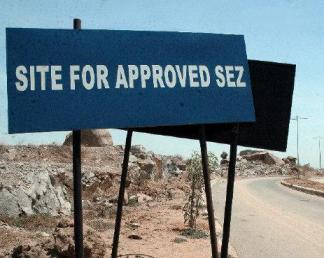
Special Missing Zones

Since the publication of the draft bill, there has been much comment on the advantages and disadvantages of the new Special Economic Zones (SEZ) policy and process in the country. Given the renewed emphasis in economic policy debates on industrial policy and regional integration in the wider Southern Africa context, the article “Special Missing Zones in South Africa’s Policy on Special Economic Zones“, published by Tralac, serves to add to the debate by introducing some hitherto neglected aspects pertinent to the debate on the subject.

A good companion to this article (and perhaps essential prior reading) is the CDE’s “Lessons for South Africa from international evidence and local experience” which I posted on 31 May 2012 (see link under related articles below). There has essentially been little movement on the subject, yet it is clear that South Africa is losing lucrative opportunities in the global warehousing and distribution business to its neighbours. Unless government acknowledges that it has to involve business in the creation of such SEZ’s, the white elephant syndrome which befell IDZs will no doubt plague the latest programme.