NRA/BURS – Customs Connectivity Passes Test

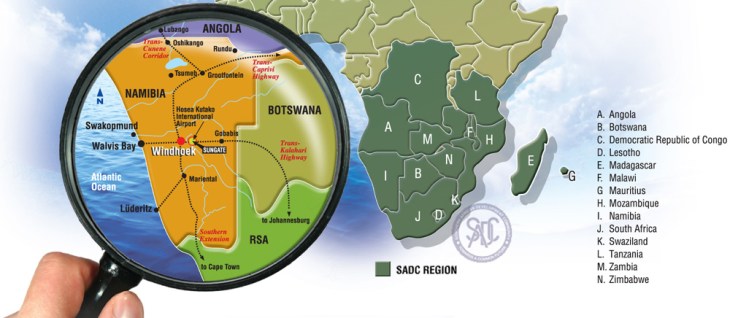
TKCThe first live demonstration of an end-to-end customs connectivity solution was successfully completed in Windhoek, Namibia on December 12, 2012. Customs Connectivity enables customs administrations from different countries to share information seamlessly and instantly across borders: reducing processing time and improving access to reliable, real-time trade statistics.


The demonstration was witnessed by the Commissioners of Botswana (BURS) and Namibia Customs (NRA), senior managers and operational teams. The demonstration involved moving information from an ASYCUDA++ entry in Botswana via the Cloud-based User Portal to an ASYCUDA++ entry in Namibia, and vice-versa from Namibia to Botswana. It demonstrated how clearing agents/traders would manage the flow of their information via the secure online User Portal.

The demonstration marked a “watershed moment” in turning Customs Connectivity into reality. The next steps for the pilot project include full system testing and documentation before end-user training commences. Full implementation is scheduled to take place during the first half of 2013.

Customs Connectivity offers countries in the region a historic opportunity to engage cutting-edge technology and modern tools to facilitate trade throughout Southern Africa, enhancing economic growth and promoting food security. The pilot project is being implemented by Botswana and Namibia, supported by the USAID Southern Africa Trade Hub. Source: SATH

Request – Perhaps some of the TKC clearing agents, NRA and BURS customs staff would like to comment on their experience thus far? 

Air-to-sea cost differential narrows

Multimodal Freight

Just to keep them on their toes – the following will undoubtedly play a factor in many customs administration’s risk management and intel systems.

Air freight rates slipped in December as the trade returned to business-as-usual following the volume boost of earlier hi-tech product launches, according to Drewry’s new monthly report, Sea & Air Shipper Insight. Drewry’s recently launched East-West Air Freight Price Index, a weighted average of air freight rates across 21 east-west trades, fell by 1.4 points from November to reach 110.8 in December, bringing to an end four consecutive months of gains in the index. “The waning effect of new hi-tech product launches on traffic demand was the primary contributor to declining rates from Asia into North America and Europe,” said Simon Heaney, research manager at Drewry. “Drewry expects pricing on routes out of Asia to decline further, though the impact will be softened by an uptick in demand levels in advance of Chinese New Year.”

Evidence of a tentative recovery in air freight demand comes in the form of a 2% year-on-year rise (the first such increase in 16 months) in November of worldwide semiconductor sales, a traditional bellwether for air cargo. Air cargo demand could also see a temporary boost at the expense of the ocean market. With ocean currently facing capacity issues such as the looming threat of strike action at US ports and carriers cancelling voyages, some shippers, particularly those wanting to move higher-value goods, might well be tempted to shift some cargo to the air. Demand growth for air cargo has lagged behind ocean, which Drewry believes is due to a combination of shippers having access to better IT systems, leaner inventory strategies and greater faith in liner service reliability, which has been improving steadily in the last year or so.

Recent issues in the ocean sector are testing that faith, although of course shippers that do switch to air freight will have to pay a considerable premium. East-west air freight rates and comparable ocean rates have almost mirrored their ups and downs since May 2012, with air prices showing a steeper upswing since October. However, the fall in air freight pricing and a corresponding rise in container shipping rates in December sent Drewry’s east-west air freight price multiplier down 1.3 points to 11.8. The multiplier measures the relationship between the cost of shipping by air relative to sea. “Air cargo is not a viable Plan B for all shippers,” said Heaney, “but for those moving expensive goods it remains a justifiable alternative, particularly at a time when the reliability of the ocean supply chain is threatened.”  Source: Lloyds List

IDZ – the ‘BS’ marketing approach continues

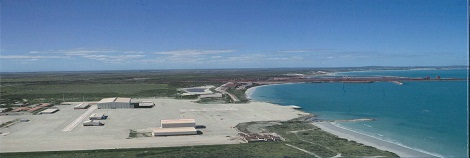
Saldanha Fabrication Centre, Port of Saldanha

Saldanha Fabrication Centre, Port of Saldanha

After all the negative criticism of the South African IDZ programme over the years, its remarkable that the latest offering situated at Saldanna Bay is plagued by the same misrepresentations as preceding zones. When will the IDZ Operators and their marketing/communication teams learn that the South African government does not provide ‘free ports’ within its IDZ programme. For that matter neither does the Special Economic Zone (SEZ) facility. Such statements are misleading and in effect only create confusion for investors.

Ports.co.za recently reported that, as a result of the sub-lessees failing to secure any business (lack of business benefits and government incentives?), the facility that was built as the Saldanha Fabrication Centre in 2007 is now to be converted into a multi-disciplinary facility to support the sectors of Oil & Gas; Petrochemicals; Renewable Energy Power; Desalination; Mineral Mining, Environmental & Chemical Industries.

This facility will be in the Customs Controlled Area (CCA) and will therefore enjoy ‘free-port’ status. The CCA will then be extended as the IDZ phases in the port’s hinterland come into being. Oh really?

KNM Grinaker-LTA will be retaining a certain area including the 25 metre high Bay 1 and Bay 2 workshops. This is intended to house equipment for the Oil & Gas majors which will require the height to be increased. Their work will be fabrication.

The facility has its own dedicated jetty, ideally for loading large diameter, heavy and long vessels, jackets and modules. KNM Grinaker-LTA Fabrication remains the sole local fabricator for the untapped market of pressure vessels above 100mm thicknesses.

The other areas, workshops, etc, are available for leasing on a long-term basis and the rental rates will be determined by the size of area required and the length of the lease. Saldanha Freight Services (SFS) are working with KNM Grinaker-LTA in searching for potential lessees. The screening of lessees will be intensive as the core activities must fit with the KNM Grinaker-LTA vision.

This facility is leased from and located in the Transnet National Port Authority (TNPA) zone designated primarily for the oil & gas sector. West of this facility (off-picture) is an area earmarked for a large graving dock, should such a dock be deemed sustainable in the long-term. East of the facility is open land also designated by TNPA for Oil & Gas developments.

This is the area where the Oil & Gas Base will be established. It will be linked to the shore-front with workshops and other facilities as well as deep-drafted quayside (berths) and lay-down areas suited to the maintenance & repair of vessels in the oil & gas industry.

The roads to the 4-berth multi-purpose terminal (MPT will be upgraded in the short-term to facilitate handing of imports & exports over this terminal. This land is available for leasing from TNPA and SFS is in a position to facilitate this for interested parties. These developments are planned for the 0-5 year and 6-10 year period commencing in 2013.

Pandora’s Box – Missiles in a shipping container

Artistic impression of the Club K Missile System

Artistic impression of the Club K Missile System

Critical Logistics, an informative blog, reported an interesting if not disturbing article on the development of a new weapon’s system which uses the ubiquity of shipping containers as it is housed in a 40-footer. It is known as the Club-K Container Missile System.

An article by concerned commentator, Lajos F. Szaszdi, (The Heritage Network) raises several valid concerns in his article “The Club-K: A Deadly “Pandora’s Box” of Cruise Missiles”, which are summarised in the following paragraphs.

[…] Fittingly, the marketing name given to the system is “Pandora’s Box.” The container-looking weapon system can be fired from a container ship, a train cart, or a container truck. By appearing externally as a simple container, the Club-K can be positioned covertly, ready to unleash a surprise attack, probably firing simultaneously from more than one container.

[…] Container ships carrying the Club-K system could be used to attack commercial shipping, particularly in choke points like the Straits of Hormuz and Malacca. These container ships would be acting like Germany’s auxiliary cruisers of the First and Second World Wars, which were armed merchant ships used for commerce raiding. Cargo ships armed with the Club-K could be equipped with Unmanned Aerial Vehicles to provide airborne Intelligence, Surveillance, Target Acquisition and Reconnaissance (ISTAR).

Even though use by Hezbollah is a possibility, the greatest potential threat could come from China, which reportedly was already interested in acquiring Club missiles for its submarines of the Type 041 Yuan class, the nuclear-powered Type 093 Shang class, and Russian-made Kilo class subs. China could load container ships with land-attack missiles, with E-Bombs for a surprise attack against Taiwan, and armed with nuclear warheads and E-Bombs to strike the port facilities used by the U.S. Navy in Singapore, the U.S. West Coast, the Panama Canal, etc. Chinese missiles could be launched from container trucks sent secretly to Mexico mixed with legitimate containers. India, another customer of the SS-N-27, could use the Club-K system against Pakistan or China as a first or second strike weapon. Iran could be another customer for the Club-K, once U.N. sanctions are lifted.

The Club-K is a highly destabilizing weapon system. Due to the nature of international trade, with millions of containers being shipped worldwide, transported by train and particularly by trucks, it would be very hard to detect, and an attack could happen at any time on any day without warning. The military and intelligence services of the U.S. and its allies must keep a close watch on this Pandora’s Box, to make sure it will never be opened in anger against them.

A promotional video of the system by (oddly named) manufacturer Concern Agat appears below. http://

For more details on the system visit their website – http://www.concern-agat.com/products/defense-products/81-concern-agat/189-club-k

Thinking Inside the Box

The fluid transition from sea to land

The fluid transition from sea to land

Here’s an interesting view on containers, presented by Alex Colas from Birkbeck University, USA. Colas highlights that containers have been fundamental drivers of global processes and have had an unprecedented effect on logistics and labour organisations. Moreover Colas demonstrates that containers as well as being transformative objects in themselves, have also transformed the way in which circulatory barriers have been overcome through seamless transitions from water to land. Containers are a worthy protagonist of material analysis in international systems and there is much room in academic discourse for the full story of the container to unfold. Herewith the link to the article Thinking Inside the Box, available on the blog – Geopolitics & Security.

Customs 2013 – the Year of Innovation

web_innovationWhile contemplating next year’s challenges and opportunities, I suppose it’s not a bad time to reflect on the WCO‘s theme for Customs Inc. in 2013. The Secretary General of the WCO, Kunio Mikuriya, is pleased to announce that 2013 will be dedicated to promoting innovation under the slogan “Innovation for Customs progress”. He believes that WCO Members and their partners will have the opportunity to promote innovative ideas and practices that they have implemented, new partnerships that they have developed, as well as creative solutions and technologies that they have adopted. Customs and its stakeholders are urged to be innovative and creative in taking forward the innovation theme in all its facets throughout 2013.

The Year of innovation will be launched on International Customs Day, celebrated annually by the global Customs community on 26 January in honour of the inaugural session of the Customs Co-operation Council (CCC) which took place on 26 January 1953.

Considering the age of the WCO (CCC), I thought the pictures below might conjure up some yesteryear profiles of male and female customs officers. These come from a book A Ladybird ‘Easy-Reading’ Book – ‘People at Work’ – The CUSTOMS OFFICER, which was around when I was a youngster in primary school. Needless to say, the content is perhaps meaningless where the period ‘gate-keeper’ approach to customs control has since been superseded by ‘automated risk management’, i.e. where a computer tells a customs officer what to search for, or what is suspicious or worthwhile expending energy on. Passenger processing has likewise seen a revolution in technology aids and controlled procedures. In many places it is the biometric reader which ‘facilitates’ expedited passenger/traveller processing. While verbal interrogation is still used it is merely a ‘level’ in the ‘layered’ approach in the modern customs risk management process. X-ray body scanners and drug-loo’s complete the customs officer’s enforcement toolkit. Yet, it still takes the ingenuity of a customs officer (and many instances his detector dog) to raise the ‘portcullis’ on crime.

This slideshow requires JavaScript.

2012 in review

The WordPress.com stats helper monkeys prepared a 2012 annual report for “What Happened to the Portcullis?“. A special thanks to everyone who has browsed regularly, commented or contributed to this blog. I am deeply grateful and appreciative! Mike

Here’s an excerpt:

4,329 films were submitted to the 2012 Cannes Film Festival. This blog had 52,000 views in 2012. If each view were a film, this blog would power 12 Film Festivals

Click here to see the complete report.

Is Google moving into box tracking?

container-trackingThe US Patent and Trademark Office has granted Internet search giant Google a patent on a system for securing, monitoring and tracking containers. According to United States Patent 8284045, it describes a two-way communication system, supported by an electronic bolt seal, a network gateway, a web-based platform, and a mobile device, that allows containers to be networked for the transfer of data. Shipping containers are networked for transferring data between the shipping containers. The shipping containers include sensors for detecting conditions associated with the shipping containers. The conditions sensed by any shipping container whether transported by rail or ship is transmitted from an ad hoc network, via a gateway configured for satellite or cellular communications for example, to a container-tracking application server or equivalent computer system. The computer system is remotely located to the shipping container for central compilation, analysis, and/or display of data regarding the shipping containers.

The system describes an environmental sensor that can travel with a product within a carrier’s logistics network. The environmental sensor being configured to sense an environmental condition capable of affecting the product to generate product environment data. The system includes a scanner configured to read product environment data from the environmental sensor. The system also includes a hub control unit configured to communicate with the scanner and receive the product environment data from the scanner and determines whether the product environment data transcends a limit of exposure of the product to an environmental condition. The hub control unit is also configured to generate a transporting instruction to redirect transport of the product to an alternate destination different from its original destination if the hub control unit determines that the product environment data indicates the environmental condition of the product has transcended the limit of exposure. What a mouthful! I dare say that there are people out there that can decipher the patent content and relate to its various diagrams. If you are interested in this topic, please visit the following link – http://www.archpatent.com/patents/8284045. Also visit the Patent Buddy for similar information. Hopefully as the business case for this patent unfolds things may become a bit more clearer – and perhaps a little sinister too for some!

Malaysian Customs Ivory Bust in pictures

1,500 pieces of tusks seized at the Royal Malaysian Customs were hidden in wooden crates, purpose-built to look like stacks of sawn timber! The following pictures illustrate the Malaysian Customs ivory bust in progress. Pictures courtesy of WWF Singapore (their Facebook Page) – . Also see full report at  http://www.traffic.org/home/2012/12/11/massive-african-ivory-seizure-in-malaysia.html.

Related articles

Massive Ivory Stash Seized In Malaysia


Malaysian Customs officers uncovered illegal ivory concealed within secret compartments in a shipment. (Getty Images)

Malaysian Customs officers uncovered illegal ivory concealed within secret compartments in a shipment. (Getty Images)

The Royal Malaysian Customs has received congratulatory messages from South Africa and the World Customs Organisation after thwarting one of the biggest ivory smuggling operations in recent memory. On Monday, Selangor Customs had seized 24 tonnes of elephant tusks and ivory worth US$20 million (RM60 million) in Port Klang from a China-bound ship that is believed to have sailed from Togo.

It is estimated that 750 elephants were killed to produce the quantum of tusks and ivory that was seized. To date, this is the biggest seizure of its kind in Malaysia. Confirming the seizure, Selangor Customs corporate communications chief Mohd Zhafri Johari explained:  “In the China market, ivory could fetch a price of approximately US$25,000 per kilogramme”.

Those arrested will be charged in court under Section 133(1)(a) of the Customs Act 1967 for false declaration and under the Convention for International Trade in Endangered Species of Wild Fauna and Flora. This international treaty was drawn up in 1973 to protect wildlife against over-exploitation and to prevent international profiteering which involved threatening of species.

Zhafri also noted that the smuggling of ivory through Port Klang was a rare occurrence prior to 2011. Since then, however, customs have made at least three major seizures. The seized ivory is now considered government property and will be destroyed upon completion of investigation and prosecution of the suspected parties. The 1,500-odd tusks were found in two containers. Although shipping documents listed the containers’ final destination as Port Klang, customs intelligence said the containers were planned to be sent to China. Source: Thesundaily.com

Comesa adopts IT system to boost trade in the region

Workers offload imported sugar at the port of Mombasa. Comesa has already gazetted transit goods routes, which have been geo-fenced and trucks following these routes will be monitored. Photo/File  Nation Media Group

Workers offload imported sugar at the port of Mombasa. Comesa has already gazetted transit goods routes, which have been geo-fenced and trucks following these routes will be monitored. Photo/File Nation Media Group

A new online system being implemented by the Common Market for Eastern and Southern Africa (Comesa) trading bloc is expected to cut down non-tariff barriers, reduce the cost of doing business and improve intra-regional trade.

The $1 million (Sh84 million) system – which is being developed by Comesa and funded by the European Union – could for instance cut transport costs by up to 40 per cent, Comesa secretary-general Sindiso Ngwenya said.

With three main modules – Transit Bonds, Risk Management and Cargo Tracking — the Comesa Virtual Trade Facilitation System (CVTFS) aims at integrating systems used by regional revenue authorities, transporters, shippers, clearing agents, ports and customs to provide real-time information and facilitate uninterrupted movement of goods across borders.

Besides tracking cargo from origin to destination, the system will facilitate management of transit bonds and capture electronic data contained in the customs seal and assign this information to customs offices at various transit points.

Comesa has already gazetted transit goods routes which have been geo-fenced and trucks following these routes will be monitored. In case seals are tampered with, owners will automatically be notified via Short Message Services (SMSs) or email. Owners who register their trucks with the system will display a ‘Comesa Transit’ plate on their vehicles.

Delays along the major transport corridors arising from lengthy procedures at weight control points and police road blocks within the region have been identified as major non-tariff barriers hindering trade.

Mr Charles Muita, a member of the team that worked on the system and who made the presentation, said they expected most of the countries where industry players do not have their own systems to quickly adopt CVTFS. “The system does not intend to replace the ones used by member countries but would integrate them to achieve a seamless flow of information and documentation,” Mr Ngwenya said during the sensitisation at the Mombasa Beach Hotel.

Truckers buy the fleet management system at Sh24,000 and pay an average of Sh2,000 management fee per month.“We are not interested in making money with the system and the initial cost of the gadget will be less than Sh12,000 and a monthly management fee of about $3 (Sh255),” explained Mr Ngwenya.

The sensitisation in Comesa member states aims at getting volunteers for a free pilot project that will run for three months starting next month. Source: Business Daily Africa.com

Africa – China’s Export Route to the U.S.?

AGOA_W1The Africa Growth and Opportunity Act intends to support African exports to US markets. It is helping savvy Chinese companies too. US-Africa trade received a boost with the signing of the African Growth and Opportunity Act (AGOA) back in May 2000, which enabled African countries to export over 4,000 products, including apparel, quota-free and duty-free to the US.

Geared to support the integration of African countries into global markets, AGOA has enjoyed broad cross-party support in a usually fraught US legislature – especially on issues of foreign trade – and has been renewed several times. Helping Africa, it seems, is something everyone can agree on.

But they might, unwittingly, have been helping China too. Research by Lorenzo Rotunno and colleagues at the Centre for the Study of African Economies, Oxford University, suggests that savvy Chinese companies have set up shop in Africa as a route to get their products into the US with all the AGOA benefits.

The entrepreneurs’ logic is impeccable. Not only could an Africa platform get them duty free access to US markets, they could also avoid heavy quotas on China’s exports to the US, imposed through previous protectionist measures by the rich world, such as the Multi-Fiber Agreement.

Because AGOA did not contain ‘rules of origin’ provisions, the door is wide open for such creative thinking. “Restrictive quotas on Chinese apparel exports in the US and preferential treatment for African exports resulted in quota-hopping transhipment from China to the US via AGOA countries” the researchers say.

Chinese and Taiwanese producers are now said to comprise the bulk of a textile “diaspora” in Lesotho, Madagascar and Kenya. In one Kenyan processing zone, 80% of the 34 garment plants had Asian owners. While some outfits doubtless have in-country assembly – and therefore generate jobs and incomes for Africans – a number are little more than transporting docks for foreign-sourced, fully assembled goods ready to go to their final destination, tax free.

Chinese entrepreneurs made no bones about it. In one survey, they gave ‘taking advantage of international trade agreements’ in their top five list of motives for investing and operating in Africa. Source: AllAfrica.com 

Beitbridge congestion – Travellers tear-gassed by SA police

border-lines

Zimbabwean Police are set to meet their South African counterparts following an incident in which the South African officers used tear gas to control travellers at their side of the border last Friday morning. The majority of the travellers were Zimbabweans, with others coming from countries north of the Zambezi.

The South African Police Services (SAPS) used tear smoke to control travellers at around 9am as the number of human traffic started increasing at Beitbridge Border Post.

No one was injured in the incident which lasted for about 15 minutes when people started showing their discontent with the slow way they were being cleared by immigration officials from that country.

Some travellers started jumping queues after they had spent between three and four hours waiting to gain passage into South Africa. Police officer commanding Beitbridge district Chief Superintendent Lawrence Chinhengo said yesterday that the incident was a great cause for concern.

“This was a very unfortunate incident. We are not happy with the method our counterparts used to control queues and have since communicated to them that we need to have an urgent bilateral meeting to iron out the issue. There are better ways to manage people rather than the tear smoke. It is of paramount importance that we meet and find better ways to control crowds during this festive season,” he said. Source: Bulawayo24.com

For more insight also read “Zim travellers stranded at border post” on zoutnet.co.za.

Outcome of Revision of ISO Seal Standard closes 23 December

High security bolt seal on Shipping_container.

High security bolt seal on Shipping container. (Photo credit: Wikipedia)

The International Seal Manufacturers Association has informed that ISO is conducting an up-or-down ballot on an important revision to ISO17712. The revision addresses the difficulties with implementing Clause 6 of ISO 17712:2000.

The essence of the revision is –

  • The revision removes the requirement for independent lab testing for tamper evidence.
  • The revision adds a mandatory requirement for development and approval of tamper evident improvement programs. The programs must pass independent audits in accordance with ISO 9001 and ISO 17712 Normative Annex A, “Seal manufacturers’ security-related practices.” Audits would review the results of any internal testing related to tamper-evident features.

The mandatory requirement applies to high security “H” seals, which are most relevant to marine containers. Indicative “I” and Security “S” seal participation is optional in this proposed amendment.

The ballot is for ISO FDIS 17712; a FDIS is a Final Draft International Standard. Ballots are cast by national standards bodies such as the American National Standards Institute (ANSI) and the British Standards Institute (BSI), “one nation, one vote”. Each national body determines its vote by its own procedures, usually based on a poll of its members. Since the ballot closes 23 December, we expect the results to be known early in January. 

Beit Bridge – ZIMRA and Immigration gear up for congestion

beitbridge

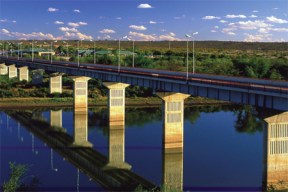
Beitbridge – crossing the Limpopo river

The Department of Immigration in Beitbridge has put in place mechanisms aimed at dealing with congestion at the country’s busiest border post in anticipation of an increase in the volume of traffic during the festive period. Assistant regional immigration manager in charge of Beitbridge Border Post, Mr Charles Gwede, said they have since held a series of meetings with key stakeholders and their South African counterparts to address congestion at the border.

“We have started preparing for the festive period in anticipation of a huge influx of travellers and all necessary strategies are now in place to help speed up the clearance of people during the festive period,” he said. “We are suspending leave and off-days for staff between 15 December and 16 January next year.

“As part of our decongestion drive we will scramble our shifts to maximise on manpower during the normal and extra peak days. In fact, starting from 15 December we expect a huge influx of travellers hence between 14 and 17 December, 21 and 24 December and 4 to 7 January, we will dissolve our shifts to ensure that we have more officers per shift who would effectively manage the queues and speed up the clearance process,” he said.

Mr Gwede said they were expecting 20 officers from other stations to beef up the local staff and ensure that all check points and counters were adequately manned. Beitbridge Border Post has a staff complement of 47 officers and support staff.

“As border stakeholders, we held several inter-border meetings with our South African counterparts to discuss and explore ways and strategies aimed at dealing with congestion during extra peak periods.

As part of their decongestion strategy, Mr Gwede said they would categorise travellers and create more counters to reduce queues. According to statistics, immigration officials at the border handled 73 825 travellers between Monday and Wednesday on both arrival and departure sides.

The Zimbabwe Revenue Authority (Zimra) spokesperson, Mr Canisio Mudzimu, said they would deploy relief officers to Beitbridge Border Post to beef up the local staff and help speed up the customs clearance process. “We are geared up in terms of facilitating the smooth movement of both human and vehicular traffic passing through Beitbridge Border Post during the festive season. We will deploy extra officers from less busy stations to Beitbridge Border Post during the festive period and to assist in border operations,” he said.

Beitbridge Border Post requires at least 247 customs officers to man it. The border post, which is the country’s busiest inland port of entry, has an establishment 141 officers. Mr Mudzimu said they would create separate traffic lanes to cater for tourists, returning residents, private motorists, commercial, buses and pedestrians to speed up the flow of traffic and reduce congestion.

Touts and bogus clearing agents continue to find their way into the customs yard where they would swindle unsuspecting travellers of their money under the guise of offering assistance. Beitbridge is the busiest inland port of entry in sub-Saharan Africa, which handles a huge volume of both human and vehicular traffic passing though daily. Commercial trucks destined for East and Central African countries such as Tanzania, the Democratic Republic of Congo and Zambia also pass through the border post.

On a normal day, the border handles between 6 000 and 8 000 travellers daily with the figures rising to 20 000 during the peak period. Source: Bulawayo24.com