Enforcement, Risk Management and Preferred Trade come together in the SACU Region

Enforcement, Risk Management and Preferred Trade come together in the SACU Region

Enforcement, Risk Management and Preferred Trade come together in the SACU Region

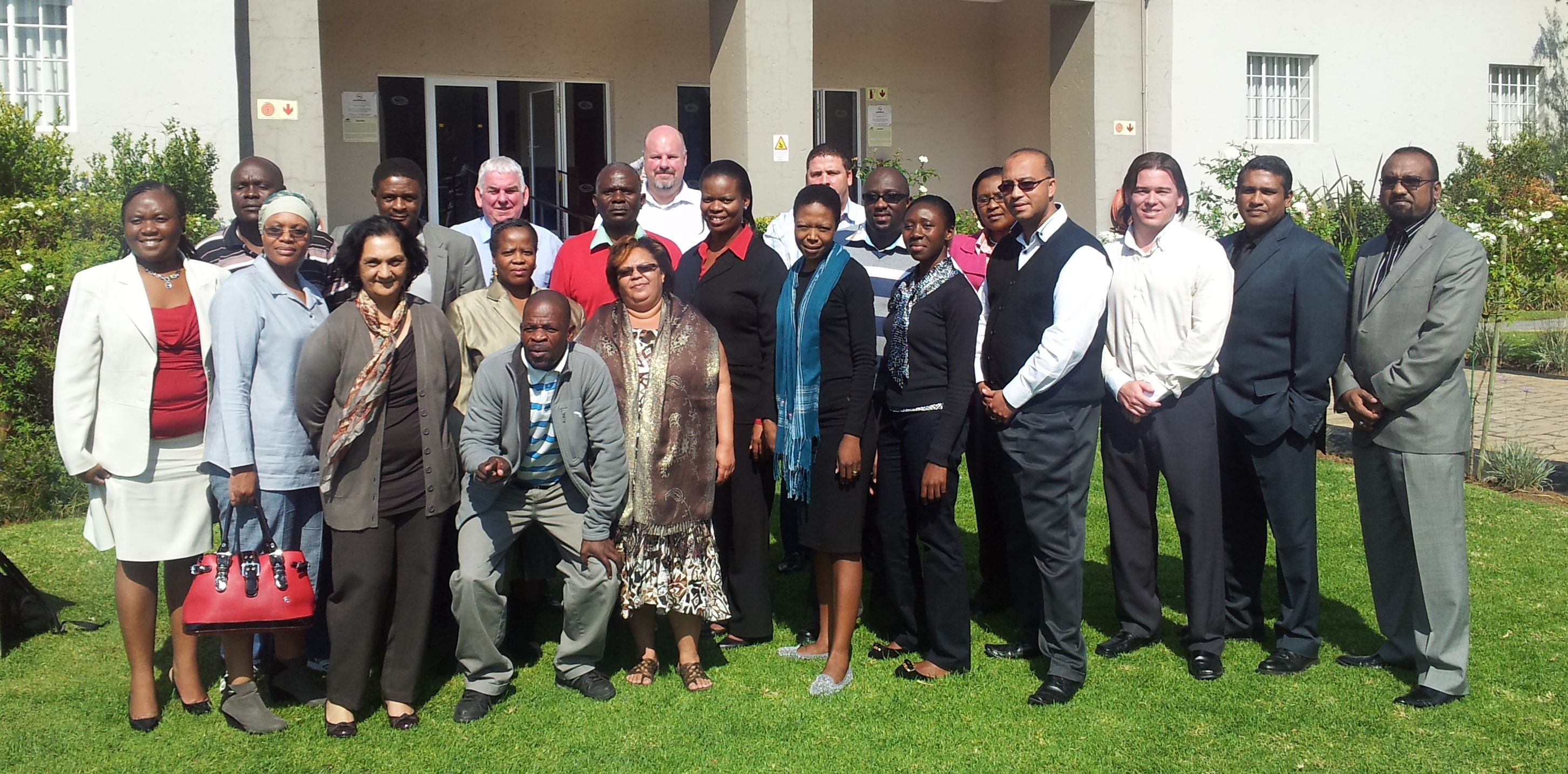
A WCO workshop on the topics of Enforcement, Risk Management and Preferred Trader was conducted in April in Johannesburg, South Africa, with the involvement of the WCO Secretariat, UK Customs and the member countries of the Southern African Customs Union – SACU (Botswana, Lesotho, Namibia, South Africa and Swaziland). Capacity Building in the mentioned areas in the SACU Region is part of the WCO Sub-Saharan Customs Capacity Building Programme financed by the Swedish Government through the Swedish International Development Cooperation Agency, SIDA.

An assessment including lessons learned was conducted concerning Operation Auto, targeted at second hand motor vehicles. This first ever regional enforcement operation in the 102 years of history of SACU presented good results as around 250 vehicles were seized by the Customs administrations. The Regional Intelligence Liaison Office contributed actively in the assessment process, ensuring that also future enforcement operations will benefit from the experiences gained.

The development of further risk management capacity is ongoing at the regional level and discussions were held concerning the establishment of common risk profiles. A number of high risk products have been identified and the formulation of profiles to engage illegal trade in these areas is ongoing.

Regarding the Preferred Trader program, progress can also be reported as SACU Members are approaching implementation at operational level. This project component fits very well with the risk management component as the latter is the foundation of the Preferred Trader approach. The process of selecting high compliant, low risk economic operators for the upcoming pilot scheme is well underway while capacity in verification and post clearance audit is being enhanced. A launch of (a pilot of) the regional Preferred Trade program is tentatively envisaged for the second half of 2013. Source: WCO

10 Downing Street accused of ‘caving in’ to cigarette lobby as plain packs put on hold

English: The Globe House, headquarters of Brit...

The Globe House, headquarters of British American Tobacco in London, as seen from River Thames (Photo Credit: Wikipedia

Anti-smoking campaigners have accused the UK government of caving in to pressure from the tobacco lobby and running scared of Ukip after plans to enforce the sale of cigarettes in plain packs failed to make it into the Queen’s speech. Minutes released by the Department of Health show that one of the industry’s leading players had told government officials that, if the move went through, it would source its packaging from abroad, resulting in “significant job losses.”

Cancer charities and health experts were expecting a bill to be introduced last week that would ban branded cigarette packaging, following a ban introduced in Australia last December. The plain packaging idea comes from Australia, the country where it was first tried out. Cigarettes there have to be in a drab olive-coloured packaging, and the brand name is in a uniform typeface. The packets are also adorned with graphic images of the effects of lung cancer.

At least one health minister had been briefing that the bill would be in the Queen’s speech. But the bill was apparently put on hold at the last minute with the government saying it would be a distraction from its main legislative priorities.

It has emerged that senior Department of Health officials held four key meetings with the industry’s leading players in January and February, when at least one of the tobacco giants spelled out to the government that its plan would result in thousands of jobs going abroad.

Department of Health minutes released last week reveal that Imperial Tobacco, British American Tobacco (BAT), Philip Morris International and Japan Tobacco International were each invited to make representations to the government, in which they attacked the plan and its impact on the UK economy.

Only the minutes of the meeting with Imperial have been released. They record that Imperial warned if plain packs were introduced it would source packaging from the Far East resulting “in significant job losses in the UK.” (Hmm….the Brits thought little of this when imposing new packaging and labelling for UK bulk-liquor imports from abroad, which will have similar consequential effects (job losses) on foreign economies. Rather hypocritical I would think!)

A tobacco giant, Imperial, also outlined how its packaging research and development department supported small and medium-sized enterprises in the UK and argued that standard packs would “result in some of these being put out of business”.

It added that the plan would boost the illicit trade in cigarettes, which already costs the Treasury £3bn in unpaid duty and VAT a year. And it noted that 70,000 UK jobs rely on the tobacco supply chain, implying some of these would be threatened if the illicit market continued to grow. When asked to hand over its assessment of the impact of the plan, Imperial refused, citing commercial sensitivity.

The decision to delay the introduction of plain packs is a major success for the tobacco lobby, which has run a ferocious campaign against the move. Cigarette makers fear that the loss of their branding will deprive them of their most powerful marketing weapon. The industry has backed a series of front campaign groups to make it appear that there is widespread opposition to the plan, a practice known in lobbying jargon as “astroturfing”. Many of the ideas were imported from Australia, where the tobacco giants fought a bitter but ultimately unsuccessful campaign to resist plain packs. Much of the Australian campaign was masterminded by the lobbying firm Crosby Textor, whose co-founder Lynton Crosby is spearheading the Tories’ 2015 election bid.

Crosby was federal director of the Liberal party in Australia when it accepted tobacco money. Crosby Textor in Australia was paid a retainer from BAT during the campaign against plain packs. Some anti-smoking campaigners are now questioning whether the decision to drop the plain packs bill was as a result of shifting allegiances at Westminster.

“It looks as if the noxious mix of right-wing Australian populism, as represented by Crosby and his lobbying firm, and English saloon bar reactionaries, as embodied by [Nigel] Farage and Ukip, may succeed in preventing this government from proceeding with standardised cigarette packs, despite their popularity with the public,” said Deborah Arnott, chief executive of the health charity Action on Smoking and Health. A Department of Health spokeswoman denied that tobacco lobbying had been a factor in the decision to pull the bill. “These minutes simply reflect what the tobacco company said at the meeting, not the government’s view,” she said. “The government has an open mind on this issue, and any decisions to take further action will be taken only after full consideration of the evidence and the consultation responses.” Source: The Guardian, UK
The trouble with Safety Sheets

The TT Club says that the abuse of safety data sheets (SDS) for cargo bookings is “uncomfortably frequent” leading to the view that shipping executives feel “surrounded by criminals”.

The following expose is no less pertinent to Customs risk-profilers.

A recent TT Club claim relating to a fire onboard a ship highlighted a number of issues. The insurance expert argues that differing global format standards and the ease of creating “viable” SDS are only serving to make cargo screening more difficult.

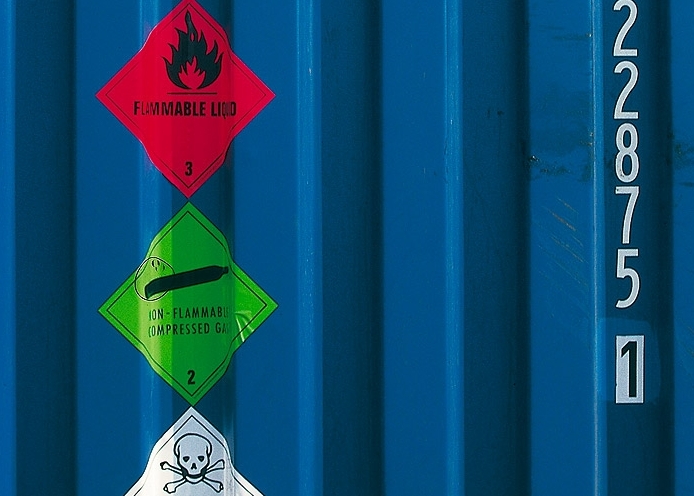
What’s really in the box asks the TT Club.  Photo: Port of Hamburg (Credit - Port Strategy)

What’s really in the box asks the TT Club. Photo: Port of Hamburg (Credit – Port Strategy)

In the claim, a cargo was booked, packed, declared and documented by a shipper as ‘Hookah burner (C.Tablets)’. When the ship caught fire at sea, significant costs were incurred by the ship because of mis-declared cargo, which was in fact activated carbon/charcoal.

Worryingly, when this was investigated further, the shipper had produced two safety data sheets – one was correct, but the other suggested that activated carbon was not considered to be a dangerous good.

TT Club argues that the situation is made far more difficult by the lack of consistency between the various governments about when SDS should be reviewed – Australia stipulates every five years, Canada every three and the EU Regulation recommends checking at “regular intervals”.

Peregrine Storrs-Fox, risk management director, TT Club, told Port Strategy: “We’ve identified two [problem]areas – firstly at the point of booking/contracting with a carrier and secondly post event. Conversations with a number of liner shipping companies confirm that the information given at the time of booking/contracting is frequently suspect. In one instance a single SDS had been presented for about 50 different cargoes over a period.”

Although this is an issue between shipper and carrier, which includes forwarders/logistics operators, there is wider issue here for port operators. During an incident, the port may be supplied with SDS in order to respond appropriately – so there is a risk associated with that too.

The advice to freight forwarders, operators and carriers from the Club is to “Be constantly vigilant and question anything that seems strange or suspicious”. The penalties for non-compliance can be severe. Source: PortStrategy.com

Nigeria to Change from FOB to CIF

Trade policy - a balancing actThe Federal Government of Nigeria is set to change its trade policy from the present Free on Board (FOB) to Cost, Insurance and Freight (CIF) which most countries across the world use because of its economic benefits, before the end of the year. FOB makes it mandatory for the buyer to determine who ships and insures the goods to his port of destination while the CIF ensures that the seller determines who ships and who insures the goods brought from him. Presently, goods bought from Nigeria are on FOB basis while Nigerian trade with other nations is on a CIF basis.

Disclosing the position of the federal government to Vanguard in Houston, Texas at the ongoing Offshore Technology Conference (OTC), Leke Oyewole, Special Adviser to President Goodluck Jonathan, said work has been completed on the document for a change in policy so as to help indigenous operators. (?)

The Economic Management Team (EMT) is to take a final look at the policy before returning it to the President for it to be signed into law.

Asked whether the policy would be reversed before the end of the year, the Special Adviser to the President said, ” I am hopeful, am very hopeful, but you also know that if today the President signs the policy into law, Nigerians would not begin by tomorrow. We need to give time sufficient enough for Nigerians to acquire vessels to begin to carry.”

He noted that the country presently “operates on FOB, in which case, as soon as we put cargo onboard the ship, foreign funds are released to Nigeria. When we go on CIF, it will mean waiting until delivery of cargo, before the money will come into Nigeria. There will be a gap, that gap most not be too wide otherwise it will hamper the national funding because we get most of our revenue from these products (petroleum products). Source: Vanguard, Lagos.

Home Affairs announces plans for Border Management Agency

safrica1Minister for Home Affairs, Naledi Pandor, in her recent budget debate  (click hyperlink to view full speech) to parliment, made brief allusion to the establishment of a Border Management Agency (BMA) in South Africa. The Agency will ensure coordination of and co-operation among the departments operating at South African points of entry and along our borders. The BMA will be led by the Department of Home Affairs and will involve SARS, SANDF, SAPS, Health and Agriculture. At present, focused attention is being paid to improving the management, capacity, and infrastructure at ports of entry. Last year over R110 million was allocated to ports of entry infrastructure via the Public Works budget. This year over R130 million is being made available in the DHA budget. A number of our ports of entry have been equipped with the enhanced movement control system (EMCS) while introducing the advanced passenger processing system (APP) for airlines. Source: Info.gov.za

How China’s Cheap Phones Make Their Way to Africa

The following article (forgive the length), comes courtesy of Think Africa Press. It details a fascinating story about one of Hong Kong’s most notorious buildings – “Chungking Mansions”. The down-market building situated on some of the world’s most expensive real estate is home to some of the best South Asian restaurants, several $20-a-night guesthouses, and a mall that at one point, sold a fifth of all the cell phones that ended up in sub-Saharan Africa.

Nathan Road is Hong Kong’s busiest shopping street. It is lined with skyscrapers and decorated with neon signs of every size, colour and shape. Most of the logos are familiar: McDonald’s, KFC, Samsung, Rolex, Carlsberg, 7-Eleven, Standard Chartered. This is Asia’s Times Square, a luminous roll call of the world’s biggest companies and products, a shrine to consumer culture in the modern world. Workers, tourists and others cram the neon shadows of the sidewalks, clutching engorged wallets and sleek plastic bags. The luxury goods in the shop fronts of polished glass and mood lighting beckon their business. Lots of money changes hands. Many shiny new items are purchased. This is the apotheosis of globalisation as we know it best: big companies, handsome profits, fancy boardrooms, high-flying executives, top quality goods. But this is not the globalisation I have come to Nathan Road to see. I know I am getting closer to my destination when an Asian gentleman outside a Rolex store approaches. “Want nice watch? Mister, nice Rolex for you? I give you best price.” Despite admiring his brazen attempts to shift fakes not a metre outside a shop displaying the genuine articles, I shrug him off and turn into a narrow passage that takes me to the heart of a building called – in Hong Kong’s typically optimistic style – Chungking Mansions. This three-towered utilitarian block is one of Hong Kong’s most notorious buildings. Unlikely as it may seem, it is one of the major drivers of Africa’s technological revolution. The building’s history is infamous. Erected in 1961 to fulfil Hong Kong’s insatiable need for low-cost housing, it soon turned into one of the most legendary stops on Asia’s hippy backpacker trail, thanks to the proliferation of tiny, cheap guesthouses on its upper floors, many of which are still operating. These cheap tourists enticed merchants of tacky goods, whose stalls swamped the building’s lower floors. In turn, this activity attracted illegal immigrants, drug dealers and prostitutes, turning Chungking into Hong Kong’s seediest underbelly; a place that locals avoided completely and even police feared to tread. In recent years, the place has cleaned up its act somewhat, but still offers the city’s cheapest accommodation. It is home to a large South Asian community (primarily Indians, Pakistanis and Bangladeshis) and plenty of cheap tat: luggage, souvenirs, fake football shirts, etc. But in the last decade or so, shopkeepers have introduced a new product which has kept Chungking Mansions ticking: the mobile phone. Continue reading →

Non-Tariff Barriers – SADC Secretariat requested to intervene in Mozambique

0b8a0ce6140c04b4f629a97cb5e8d8f34e69d4a1The SADC, COMESA and EAC Tripartite alliance has been urged by various Zimbabwean, Zambian and Malawian exporters to salvage a potential crippling situation occurring at Mozambique borders. This follows the recent implementation of a new transit bond guarantee system which in conjunction with the Single Window system is allegedly causing significant delays, including loss of business and spiralling demurrage for transit goods emanating from these landlocked countries, en route for export from various Mozambique ports, Beira in particular.

Complaint no. NTB-000-578 in terms of ‘Lengthy and costly customs clearance procedures’ was lodged and can be viewed in full on the Tripartite’s NTB portal. Amongst the various problems sited, the complainants request the following of Mozambique –

  • Mozambique Ministry of Finance is requested to get customs to consider a parallel system to run with the electronic single window programme to clear the backlog in Beira port now and also consider providing release against Report orders to reduce further downtime in port . This will be a stop-gap measure until the customs staff are well versed , fully trained and that the new system can work well.
  • Mozambique authorities to facilitate arrangements with Cornelder to consider waiving storage for this special situation or at least offer 75% credit on the bills due which I must say are now astronomical based on the days the cargo has stayed in port both imports and exports.
  • Mozambique authorities to facilitate arrangements with shipping lines to consider waiving completely the demurrage due on the empty containers or at least give say 15-21 more days grace period before demurrage starts accruing.
  • Mozambique authorities to facilitate arrangements that Mozambique customs get technical assistance to assist roll this new programme out without causing huge catastrophes like this.

Mozambique has acknowledged the complaint and expressed regret over the developments. Mozambique reported that the issue was receiving urgent attention and they would provide feed back shortly.

Port of Genoa Control Tower Collapses Following Ship Collision

Prized location is not always practical. An Italian-flagged cargo ship crashed into a control tower at the Italian port of Genoa late Tuesday night, causing it to collapse. The 30,217 DWT Jolly Nero, a containership/ro-ro owned by Genoa-based Ignazio Messina & Co., slammed into the control tower at about 11 p.m. local time. Part of the 50-metre tower is said to have fallen into the water when it was hit by the Jolly Nero as the vessel was leaving the port for Sicily.

BBC reports that 3 people have been killed and others are injured. The report says that 10 people were in the tower at the time of the accident. According to Reuters, harbour officials confirmed on local television that 3 people were killed and 6 others injured. As many as 10 more may be missing, the report said. Two of the dead are believed to be harbour officials and the third was a pilot, local Primocanale quoted officials as saying. The Jolly Nero was under the control of two pilots and was leaving the port when the accident occurred. All that was left of the control tower was the exterior staircase, tilted on its side. The tower itself, which was located on the very edge of  the quay, was either in the water or in a heap of wreckage on the dock. The pictures below bear testimony of the tragedy. Source: gCaptain.com. Picture credits: Reuters and various.

Giant Rubber Duck Arrives in Hong Kong

Today’s ship photos come to us via Hong Kong, where on May 2nd internationally renowned artist Florentijn Hofman’s Rubber Duck project made its way into the harbour. The duck measures 16.5 meters tall, easily dwarfing its escort tugs.

About the project from the Hofman’s website (because it makes more sense when he explains it): The Rubber Duck knows no frontiers, it doesn’t discriminate people and doesn’t have a political connotation. The friendly, floating Rubber Duck has healing properties: it can relieve mondial tensions as well as define them. The rubber duck is soft, friendly and suitable for all ages.

Since 2007, the duck has been making its way around the world and has already been seen in St. Nazaire, Sao Paulo, Auckland, Hasselt ,Osaka and Hiroshima, Sydney, Nürnberg, and Amsterdam, among other places. But Hofman’s art isn’t just limited to giant rubber ducks. He also has a Fat Monkey, Slow Slugs, and Mickey the Pig exhibits on display in cities throughout the world. The Rubber Duck will be in Hong Kong until June 9th.

Invisible Patterns – to thwart clothing counterfeiters

Invisible textile patternWondering whether the $50 Armani suit you bought in that alley in Hong Kong is the genuine article? Soon, there may be a definitive way of knowing. A new system has been developed, in which designer-specific invisible patterns can be woven into fabric. Professor Christian Müller, at Sweden’s Chalmers University of Technology, started by applying a special dye to a polyethylene thread. The dye absorbs visible light, but can be seen using a polarizing filter. The idea is that each designer would have their own unique pattern that would be woven into their garments, that people such as customs officials could see using simple equipment.

That’s all very well and good, but what would stop counterfeiters from just reading and then copying those patterns? A number of different types of the dye can be used, and they can be bonded not only to polyethylene, but also to a variety of other synthetic and natural fibres. Depending on the specific combination of dye and fibre types, the optical spectrum of the pattern is different. Unless the counterfeiters knew the secret combination used, they wouldn’t be able to copy the exact look of an existing pattern – it’s not unlike the technology presently used on some banknotes. According to Müller, it would be relatively easy and inexpensive for clothing companies to manufacture their own custom dyed threads for use in the system. Source and picture: gizmag.com

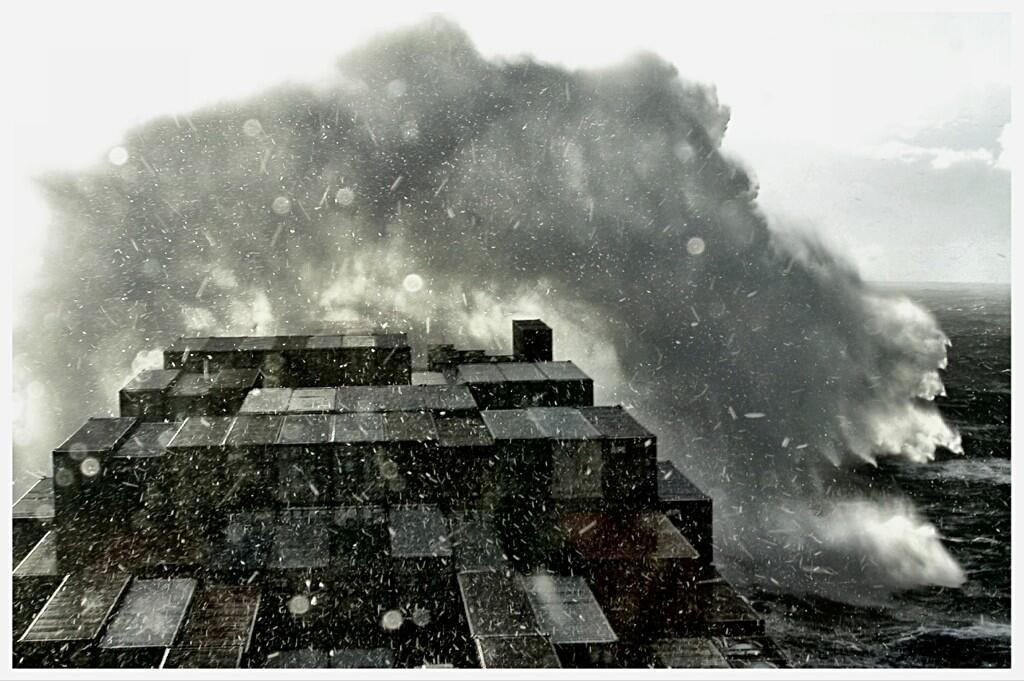
478477_489375474451177_1413654826_o“A good seafarer weathers the storm he cannot avoid, and avoids the storm he cannot weather.” – Captain Gaurav Lal.

Ambitious Port Plan for Walvis Bay


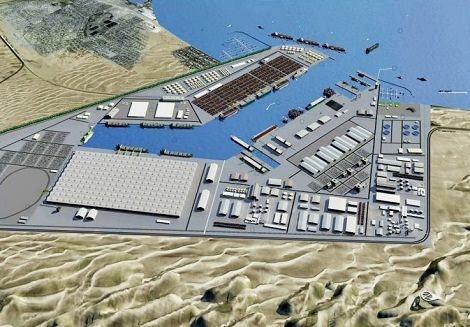
Computer-generated imagery of what the Walvis Bay North Port will look like when built. Image courtesy Namport.

Computer-generated imagery of what the Walvis Bay North Port will look like when built. Image courtesy Namport.

Far from simply developing a new container terminal, Namport could be bringing forward plans to build an ambitious new port at Walvis Bay to accommodate an expected increase in container and other traffic in the near future.

Originally intended as a long-term proposal for the Port of Walvis Bay, the plans may have to be brought forward and, coupled with finance that could come from China, the Namibian port is set to become a real rival for business in the southern and central African region.

According to reports in The Namib Times the cabinet has discussed and in principle given the go-ahead to create a new harbour on the northern side of the existing port. It said the new harbour is part of Namport’s strategy of positioning Walvis Bay as the premier port in the region. The plans will require dredging of a deep entrance channel and excavating the land to clear space for the new deepwater basin along with 10 kilometres of quayside for ships to berth.

If it was necessary to have proof that this development has the potential of shaking up the southern African region, it came in the form of a warning given yesterday by Transnet Chief Executive Brian Molefe at a community briefing session in Durban, in which he said, while justifying the need for the Durban dig-out port to go ahead, that if it was delayed or not built then Durban would lose out to other African ports. As an example he cited Walvis Bay where he said ambitious plans to build a large container port had been given the go-ahead. Source: Ports.co.za

SA identifies ten potential ‘special economic zones’

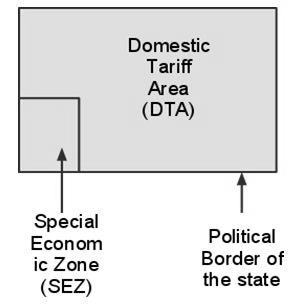
sez-figure-1The Minister of Trade and Industry, Dr Rob Davies says ten potential Special Economic Zones (SEZs) have been agreed upon with provinces. He told the Portfolio Committee on Trade and Industry in Parliament on Friday, that these potential SEZs must still go through a feasibility study to determine their viability. The Department of Trade and Industry was presenting the Special Economic Zones (SEZs) Bill to the Portfolio Committee.

The main objectives of the SEZ Bill, amongst others, are to provide for the designation, development, promotion, operation and management of Special Economic Zones; and to provide for the establishment of the Special Economic Zones Board. The SEZs are designed to promote socio-economic benefits and creation of decent work.

The purposes of the SEZs include facilitating creation of an industrial complex with strategic economic advantage for targeted investment and industries in manufacturing sector and tradable services. This will also focus on developing infrastructure to support development of targeted industrial activities and attracting foreign and domestic direct investment.

There are different categories of the SEZs that South Africa will make use of, namely:

  • A free port;
  • A free trade zone;
  • An industrial development zone; and
  • A sector development zone.

Hopefully Trade and Industry will clarify for both public and investors the differentiation between the four options. From a Customs and Tax perspective there could be divergent legal requirements, formalities and processes. The sooner that this can be finalised all the better for the various ‘zones’ to commence with their vigorous marketing campaigns.

Davies told the Committee that the Industrial Development Zones (IDZs) will continue to be one of the elements of the Special Economic Zones (SEZs). The IDZ programme was initiated in 2000 and four zones were designated, with three currently operational: Coega (Port Elizabeth), East London and Richards Bay. The IDZs including the current ones are types of the SEZs and once the new the Act is passed they will form part of the Special Economic Zone programme, according to the minister.

The existing industrial development zones (IDZs) were beginning to gain traction because of the way they were managed and promoted. He cited the example of the East London IDZ, which had a private sector investment of R600 million in 2009 compared to R4bn in 2012/2013.

Work under the current IDZ regulations include the Saldanha Bay which is about to be designated. The Saldanha Bay Feasibility Study published in October 2011, found that there was sufficient non-environmentally sensitive land upon which an IDZ development could take place. Total direct and indirect jobs are expected to amount to 4 492 in the first year, 8 094 in the second year, 7 274 in the third year, 10 132 in the fourth year and 14 922 in the fifth year. From the seventh year around 14 700 direct and indirect jobs would be sustained in the province as a result of the IDZ. Saldanha Bay is an ideal location for the development of an Oil & Gas and Marine Repair Cluster. The Port of Saldanha Bay is also competitively located between the oil and gas developments on the West Coast of Africa, as well as the recent gas finds on the East Coast of Africa.

The SEZ bill would provide a legal framework for the zones and for granting special incentives for businesses operating there such as duty free inputs. He said major areas of agreement had been reached between business‚ labour and community representatives in the National Economic Development and Labour Council. Labour wanted to have three Nedlac representatives on the 15 member SEZ boards and the department had agreed to this on condition they met the criteria in terms of qualifications and knowledge. Nine representatives would be from government and there would be three independent experts.

Business argued against municipalities having the right under the bill to propose SEZs as it said this was not their core business and they lacked the capacity for this. The department however decided to retain this clause‚ October said‚ because there were municipalities which did have this capacity and in any event the applications for SEZs would undergo rigorous evaluation.

The department also decided to go ahead with the idea of these SEZs being operated on a triple PPP basis (public private partnerships) even though labour disapproved of this on the grounds that it would be a form of private ownership. Sources: Engineering News & businessnews.howzit.msn.com

Mozambique Could Drive the Need for 35 More LNG Carriers

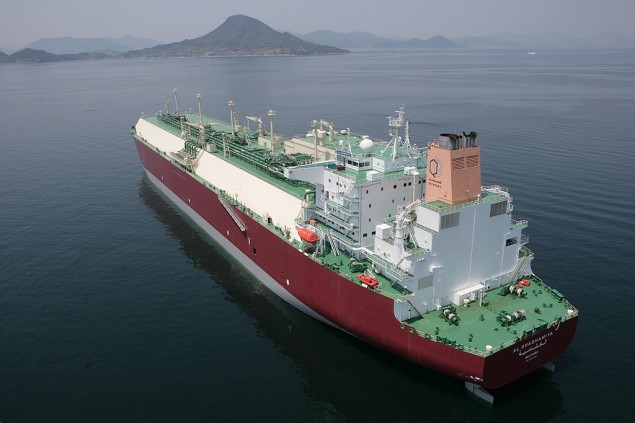
Image credit: Nakilat

Image credit: Nakilat

With soaring energy costs, Japan appears to have a pretty uniform goal, to invest as much as possible in other sources of energy and energy supply chains around the world. Many others like Qatar and Saudi Arabia are following suit and hedging themselves for what is turning out to be a reversal of their business model. Even the Louisiana Offshore Oil Port, which connects the world’s largest oil tankers with over half of the United States’ refining capacity is readjusting its business model for the changing flow of energy. With the eventual opening of the Liquefied Natural Gas (LNG) flood gates from the US however, coupled with Free Trade Agreements to places such as Japan, American energy firms and tax payers stand to cash in on the huge price gap that exists between the price of gas in the U.S. versus that which exists overseas.

At the moment, there’s a fairly good balance between supply and demand when it comes to the supply of ships and the demand for LNG product to be carried. Qatar, for example, uses 54 LNG carriers to transport their 77 million metric tons per year of LNG. Qatar also has a 70% stake in the Golden Pass LNG terminal in Texas. Additional exports from the US Gulf Coast will directly equal increased demand for more LNG carriers.

While regulators in the US trudge through the LNG export approval process, energy firms like Anadarko charge ahead with an ambitious LNG agenda offshore Mozambique in a field which was recently found to have at least 65 trillion cubic feet of recoverable reserves. Places like Mozambique, and offshore Israel, have the potential to really change the LNG marketplace given the sheer size of their fields and their proximity to the Asian and European markets respectively.

In Mozambique, two 5 million metric tons per annum (mtpa) LNG trains are currently under construction to support the huge conventional gas finds located 25 miles offshore. Their partners on the project include Mozambiquan state oil company, Empresa Nacional de Hidrocarbonetos, E.P., India’s state-owned Bharat PetroResources Ltd, Indian private equity firm Videocon Hydrocarbon Holdings, Ltd, Thailand’s PTT Exploration & Production, and Mitsui & Co. Considering the partners involved, their target market will predominantly be India and Japan. First LNG production is planned for 2018 and their plans are to eventually ramp up production to 50 million mtpa, or 2/3rds of the current production of Qatar.

What does that mean for LNG shipping? A lot more ships. To handle 50 million mtpa, upwards of 35 LNG carriers may be needed for transportation if you compare the ratio between Qatar’s fleet size and their total LNG exports. Source: gcaptain.com

Airport Cities – a view to a different trading environment for South Africa?

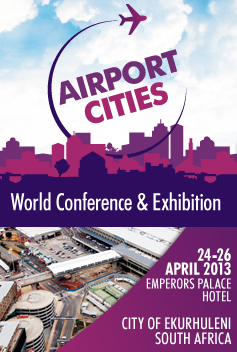
ace_skyscraper_237x352aerotropolisThis past week witnessed the first Airport Cities Convention in South Africa. It came at the timely announcement of the country’s first aerotropolis earmarked for development around Oliver Tambo International airport (ORTIA) and the surrounding industrial complex. While the City of Ekurhuleni gets prized possession of the ‘aerotropolis’ (in title) by virtue of the location of ORTIA, Johannesburg is set to benefit perhaps more greatly due to it being the epi-centre of South African commerce and trade. This represents significant ‘hinterland’ development which bodes well for future multi-modal transport and shipping activity for the Gauteng region and the country as a whole.

In support of government’s National Infrastructure Plan, is Strategic Integrated Project (SIPs) 2, otherwise known as the Durban-Free State-Gauteng logistics and industrial corridor. Infrastructure upgrades are already occurring to road and rail networks linking to the key cargo and distribution hub, City Deep. While the express purpose of an inland port, terminal or logistics hub is to provide relief for congested seaports, it likewise creates possibilities and opportunities to synergise with other transport forms. This serves to maximise capacity through integration offering local suppliers and foreign customers a host of trade, shipment and logistics options.

Foremost, an inland port is a hub designed to move international shipments more efficiently and effectively from maritime ports inland for distribution throughout the heartland. Think of the logistics of inbound freight as a barbell. At one end, inbound containers flood into a seaport, spreading across local storage facilities as they are unloaded. If they aren’t moved quickly enough from the port, they create a bottleneck that bogs down the entire distribution cycle as containers wait longer to get off ships, to get into warehouses, and to get back out and onto trucks and trains for final shipment. The Emergence of the Inland Port (credit: Jones, Lang, LaSalle)

In a world of increasing global integration, focussing more on global distribution of goods and services, it behoves our country to understand the dynamics of global trade and what in fact makes commerce tick. Today’s number 1 spot is not going to remain intact without continuous re-evaluation and innovation. It would indeed be arrogant (if not suicidal) of us to think that our current prominence and strength in the sub-saharan region will remain without innovation for the future. At the same time South Africa should welcome increased competition from its neighbours, both immediate as well as further north in Africa. The latest fDI 2013 Report indicates a decrease in foreign direct investment in South Africa (-5%) and Kenya (-9%), while at the same time a significant increase in foreign investment in Nigeria (+20%) and Egypt (+20%), respectively. True, the latter countries are far removed from South Africa’s immediate ‘playing field’, however do we fully understand the drivers which cause the named countries to attract FDI at such an increasing rate – are they capitalising somehow on our deficiencies, shortcomings, or lack of opportunism?

The National Infrastructure Plan can only be seen as a single cog in the machinery to keep South Africa competitive. And, while it is encouraging to witness these developments, a corresponding economic and commercial enterprise on both government and private sector is required to maximise these developments. Some smidgen of hope could lie in the Department of Trade and Industry’s economic principles which support Industrial Policy Action Plan (IPAP) and Special Economic Zones (SEZs), for example, however, several business commentators have already voiced concerns on exactly how these support the Infrastructure Plan. A further question lies in our country’s ability to facilitate trade, not only at our ports, but more importantly the ‘hinterland’ of our country and the neighbouring regions. Do our existing and future laws adequately provide for expeditious and facilitative procedures in the treatment of import and export goods? Are we sure that we are addressing all real and potential trade barriers?

Anyone desiring more information on the ‘aerotropolis’ concept should find some interest at the following websites – Aerotropolis.com, and the City of Ekurhuleni