What’s In Store for ACE?

ACE_image_csonLast week, the National Customs Brokers & Forwarders Association of America, Inc. (NCBFAA) hosted a conference in Baltimore, MD targeting software developers interested in obtaining more information about US Customs and Border Protection’s (CBP’s) Automated Commercial Environment (ACE) and upcoming technical changes related to the PGA Message Set, Entry Summary Edits, Automated Corrections/Cancellations and AES Re-Engineering/Manifest Baseline development. During the conference, CBP made two important announcements which were heard and noted first hand from an Integration Point representative. These two announcements included:

  • CBP announced that it plans to mandate the use of manifest and cargo release in ACE by December 31, 2015 and mandate the use of ACE by December 31, 2016. CBP also provided a tentative release schedule for seven deployments that will lead up to this mandate.  Each deployment will consist of one or two increments, and each increment will span over a period of twelve to thirteen weeks. On this road map, CBP announced some exciting functionalities to be released in the near future such as automated cancellation and/or correction of entries, integration of simplified entry with other modes of transport and certifying simplified entry through summary. In addition to the enhanced simplified entry process, CBP also gradually plans to include the validations that were not initially included in ACE entry summaries.
  • CBP is also working on the reengineering of AES and pilot programs of entry data collection for various Participating Government Agencies such as the US Environmental Protection Agency (EPA) and US Food Safety and Inspection Service (FSIS) and CBP plans to deploy this later on in 2013 and early in 2014.

Now there is relevance in all of this. It reinforces the growing importance of Customs’ focus on “cargo management”.  Far too much emphasis is placed on the goods declaration alone. This is not only short-sighted but demonstrates an ignorance of the global supply chain. Without the ‘cargo report’ (manifest) the goods declaration is little more than a testament of what is purported to have been imported and exported.

SA Ratifies the Sanitary and Phytosanitary Annex to the SADC Protocol On Trade

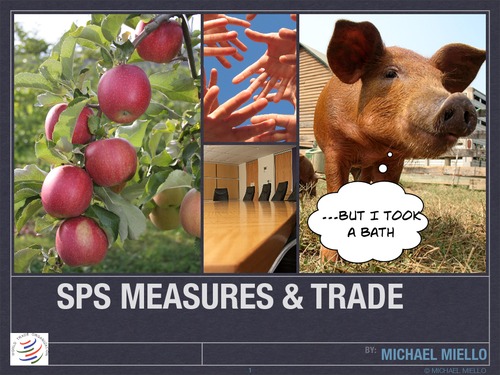
WTO-SPS-Measures-Presentation-Transcript-23698Cabinet approved South Africa’s ratification of the Sanitary and Phytosanitary (SPS) Annex to the Southern African Development Community‘s (SADC) Protocol on Trade and for this to be submitted to Parliament.

Agriculture is one of the key sectors in the SADC region due to the sector having the highest potential for growth in terms of export. SADC realises, however, that the sector can only grow significantly if producers are able to access markets for agricultural products. To facilitate market access and promote intra Africa trade it is critical that border trade policies, including SPS measures be harmonised in line with international standards and guidelines in the interest of improving the movement of goods and services in the region. (Read in more red tape)

The SADC Protocol on Trade to which SA has acceded, serves to promote regional cooperation and integration amongst member states for trade in goods and services within the region, including agricultural products.

Article 16 of the Protocol encourages member states to base their Sanitary and Phytosanitary (SPS) measures on international standards, guidelines and recommendations so as to harmonise SPS measures for plant health, animal health and food safety.

To give effect to the provisions of Article 16 of the Protocol, an SPS annex to the SADC Protocol on Trade was drafted and consequently adopted by the SADC Committee of Ministers of Trade (CMT), in July 2008.  Annex VIII to the SADC Protocol on Trade concerning SPS measures represents an enabling regional strategy to promote cooperation in SADC with regards to issues of food safety, plant health and animal health.

In addition, most SADC member states are also signatory members to the World Trade Organisation‘s Agreement on Sanitary and Phytosanitary measures (WTO-SPS) which places obligations on member states to ensure that the SPS measures they implement are least restrictive to trade, while being scientifically justifiable for the protection of human, animal or plant life and health.

The ratification and implementation of the SPS Annex will therefore facilitate improved mechanisms and institutional arrangements in conformity with obligations under the WTO-SPS agreement so as to minimise SPS related issues that impact the trade of agricultural and services trade within the region. Source: SA Government

Want to understand more on the WTO Agreement on Sanitary and Phytosanitary MeasuresClick here!


The Tobacco Industry at a Crossroads – The Decline of Cigarettes and the Rise of Alternatives

burning20cigarettesEuromonitor International’s latest global tobacco market research shows world cigarette volumes have been kept afloat only by China, as global economic uncertainty and increasing tobacco control continues to take its toll. No region experienced volume increases in 2012 apart from Asia Pacific while world cigarettes values, normally propelled by growing unit prices and consumer upgrading, also took a battering, growing by only the same amount as global illicit trade volumes.

With the industry debating the reduced risk credentials of non-combustible products such as electronic cigarettes and their classification, the industry finds itself at a crossroads, pursuing cigarette alternatives while maintaining its cash cow. But can cigarette alternatives deliver? Does the slowdown in cigarette values suggest pricing strength is over? What is happening to innovation and premiumisation?

Euromonitor International’s webinar will aim to answer these questions while setting the global tobacco market in context, reviewing overall performance by region alongside country case studies, related trends in duty-paid volume sales, smoking populations and illicit penetration. Click this link to register for the webinar. Market performance will be reviewed against legislative changes, manufacturer strategies, and trends in product innovation, with a view to what the industry can expect to 2017.  Source: Euromonitor International


Mozambique Customs gets a new DG

Guilherma Mambo presenting the Mozambique Single Electronic Window at the SADC ICT Conference, in Mauritius, 2012.

Guilherma Mambo presenting the Mozambique Single Electronic Window at the SADC ICT Conference, in Mauritius, 2012.

Guilherme Mambo has just been appointed Director General Mozambique Customs on the 10th May 2013. Until then he was Board Director of MCNet – Mozambique Community Network the PPP responsibly for implementation of Electronic Single Window for customs clearance in Mozambique where he were responsible for implementation and operations. In recent months he has lead Mozambique’s bi-lateral engagement on IT-Connectivity and Data Exchange with his counterparts at the South African Revenue Service (SARS).

For the past 10 years Mambo served as director IT Mozambique Customs and then for Mozambique Revenue Authority. On this role he participated in various modernization projects aimed at improving the business environment in Mozambique through improvement of public services particularly the complete organizational transformation of customs and internal tax areas.

Prior to working with customs and MRA, he worked in aviation industry and a UN lead project in Chechnya, Liberia, Angola were he was exposed multifaceted international experience.

As Director General – Mozambique Customs his responsibility is to manage the General Directorate of Customs (DGA) a paramilitary organization with around 2000 staff, one of the two major collectors of government revenue derived from external trade largely from customs duty, excise duty and the Value Added Tax (IVA).  DGA is also a law enforcement agency that undertakes the control of imports and exports for the protection of revenue to prevent evasion of duties and taxes and assists in the promotion of the community’s well-being to prevent the smuggling of controlled, prohibited and restricted goods (such as illicit narcotic drugs and firearms). The Director General heads the DGA and his assisted by three Deputy Director General each of one have a specific area of responsibility.

Importing and Exporting in the absence of Customs Registration

Import exportAs of May 10 2013 an amendment to the South African Customs and Excise Act (91/1964) published in Government Gazette 36433, concerns an increase to the threshold for importation and exportation in the absence of customs registration.

General Registration Code 70707070 may be used by a party that is not registered as an importer or exporter with the South African Revenue Service, but wishes to import or export goods, provided that the following requirements are met:

  • The goods have a value of less than R 50,000 per consignment, subject to a limitation of three such consignments per calendar year;
  • The goods are declared for home consumption (ie, consumption or use in South Africa) or temporary import or export;
  • The importer or exporter is a natural person located in South Africa; and
  • The importer or exporter states its identity number or taxpayer reference number on the customs declaration form.

Traders should not confuse the above with the withdrawal of the General Registration Code from use by importers and exporters at land borders, which occurred during the course of 2012. In this regard refer to Rule Amendment Government Gazette No. 35178

Single Electronic Window for New Zealand importers and exporters

Customs' JBMS will ultimately provide the Trade Single Window, through which importers and exporters can deal directly with government agencies, and Customs  and MPI can more ­effectively manage risks for goods crossing the border (credit: FTD Supply Chain Magazine)

Customs’ JBMS will ultimately provide the Trade Single Window, through which importers and exporters can deal directly with government agencies, and Customs
and MPI can more ­effectively manage risks for goods crossing the border (credit: FTD Supply Chain Magazine)

The Joint Border Management System (JBMS) programme is a replacement information system that will meet New Zealand’s future border management needs. Comprising a set of integrated information technology products, owned and hosted by Customs and jointly operated with the MPI, it will give Customs, MPI and industry better information and risk-assessment tools to protect New Zealand’s society, trade and biosecurity.

“An agile, effective and efficient border management system is essential for protecting New Zealand from economic, social and environmental harm, for maintaining and improving our international competitiveness, and for collecting over $9 billion a year of government revenue,” says Customs deputy comptroller Robert Lake. “We need a system that keeps us secure, can handle increasing numbers of people, goods and craft, and meets trading partners’ expectations of integrated systems.”

The JBMS will ultimately provide a single electronic point of contact – the Trade Single Window (TSW) – through which the import and export industry can deal directly with government agencies for customs and biosecurity requirements, and Customs and MPI can more effectively manage risks for goods crossing the border.

Companies will be able to submit a single application to both Customs and MPI to lodge import declarations. It’s faster and more efficient. And they can do so directly, not through a third party like they do now.”

The key functions of the Single Window were to have been progressively available to industry from April 2013, however, Customs said it would take three months longer than it originally anticipated for importers and exporters to experience any benefits from the initial $75 million investment in a new Joint Border Management computer system, JBMS.  IBM had been due to deliver the first tranche of JBMS, which is a joint initiative between Customs and the Primary Industries Ministry, last month. Customs deputy comptroller Robert Lake said the agencies had decided to push back the launch and deliver the project in stages. Click here for more details.

Risk management

Customs has taken a phased approach to designing and building the JBMS programme to ensure secure information management and to enable Customs to manage the risks of turning on a major new IT system. “Each stage – or tranche – will be thoroughly tested with industry until it is performing as expected. Industry will be able to migrate over to the new system over time. Our current systems will remain in place until the new system is fully proven,” Mr Lake adds.

Tranche 1 has been funded by the government and has been underway since July 2011. Costs of the JBMS are shared with industry, and cost recovery charges will start from 1 July.

“From April, the system will support border agencies to use shared information to work collaboratively in analysing travellers and goods. This will allow border agencies to target risk more accurately and will therefore provide greater consistency and certainty in the end-to-end border clearance process for all goods,” Mr Lake says.

In the second tranche, Customs plans to fully replace all background systems, and add further enhancements and the remaining business functions to the TSW. The second tranche is subject to further government approval and funding.

Trade Single Window

The TSW is one of the major components of the JBMS and will enable parties involved in international trade and transport to submit the craft and cargo clearance data that is required by New Zealand’s border agencies electronically, once, through one entry point. They will also be able to register themselves as users of the TSW, and maintain their own details.

As part of the first tranche, the TSW will include registration (of customers and users), most lodgements (craft and cargo clearances, such as import and export entries, and cargo reports), status enquiries and response functions. In the second tranche, Customs and MPI will investigate options for providing further functions, including remaining lodgements, a reference library, information updates, transaction history and other payments. Customs and MPI are also working on a plan to join up MPI’s animal products and plant export certification systems to the TSW.

“The TSW is expected to deliver significant benefits to importers, exporters and others in the international trade supply chain,” Mr Lake says. “These will include improved coordination of processes and earlier certainty of border agency requirements when advance data is provided. Compliant traders will be able to get their goods through the border with greater speed, consistency and certainty. However, the potential benefits for industry will depend on how individual participants use the information from the TSW to make their supply chains more effective and efficient.” The JBMS is expected to deliver significant benefits to the import and export industry over the next 10–15 years. Source: www.ftdmag.co.nz

For further information also visit New Zealand Customs website – Joint Border Management System (JBMS)


SADC launches National Customs Business Forums

The SADC Sub-Committee on Customs Cooperation (SCCC) emphasizes great importance in strengthening cooperation between Customs and the private sector in order to give Customs Administrations in the SADC region an opportunity to offer a more efficient and effective customs service to their clients. The overall purpose of Customs to business partnerships is to ensure a partnership and dialogue structure of key stakeholders in the trading chain that contributes to trade facilitation, improvements in customs operations and higher compliance by the trading community.

The SCCC during its 20th meeting made the recommendation to establish National Customs Business Forums (NCBF) in all SADC Member States. Recently National Customs Business forums were established and launched in Malawi (September 2012), Zambia (April 2013) and Namibia (May 2013).  The NCBFs are meant to facilitate a stronger partnership between Customs and business at national level, promoting a regular and results oriented dialogue, and taking action on existing challenges in the supply chain of goods.

The Zambia Customs to Business Forum (ZCBF) was launched on April 26th, 2013 by the Deputy Minister of Commerce Trade & Industry in the presence of Commissioner General of the Zambia Revenue Authority (ZRA), Commissioner Customs (ZRA) and several public sector and business representative organizations which are important players in the Trading chain. In his keynote address, the Minister said “As a minister responsible for trade, i am profoundly delighted at seeing such initiatives being brought to the fore as this will help in improving the ease of doing business in Zambia. Furthermore, it is important to state that such initiatives are in line with best practices as stipulated under both multilateral organisations namely; the World customs organisation and the World trade organisation”.

The Namibia Customs Business Forum was launched by the Finance Minister Saara Kuugongelwa-Amadhila on the 22nd May 2013 in Windhoek, Namibia. The forum is envisaged to become “a bi-annual dialogue forum that brings together public and private sector [actors] in the trading chain to continually assess and adopt measures that promote effective trade facilitation, as well as enhance customs operations and higher compliance,” a statement from the Finance Ministry says.

In May 2013, the SCCC endorsed a Private Sector involvement strategy which additionally recommends the establishment of a Regional Customs Business Forum (between Customs and its stakeholders) in a bid to facilitate the implementation of the SADC Protocol on Trade. Source: SADC Secretariat.

Global market research and business opportunities with Passport

Passport is a global market research database providing statistics, analysis, reports, surveys and breaking news on industries, countries and consumers worldwide. Passport connects market research to your company goals and annual planning, analyzing market context, competitor insight and future trends impacting businesses worldwide. And with 90% of our clients renewing every year, companies around the world rely on Passport to develop and expand business opportunities, answer critical tactical questions and influence strategic decision making.
Passport offers and examines:

  • Detailed analysis of consumer and industrial markets around the world across 781 cities, 210 countries, and 27 industries with historic data from 1997 and forecasts through 2020. Passport data is completely cross-country comparable.
  • Industry analysis across fast moving consumer goods and services, including market performance, market size, company and brand shares and profiles of leading companies and brands
  • Industrial makeup of the world’s largest economies, examining business to business economic influences and the forces behind strategy development, production and supply chains, economic modeling and forecasting, econometrics, data mining, scenario planning, urban economics and wealth distribution.
  • Data and analysis on consumer lifestyles, population trends, and socioeconomic analysis for every country, lifestyle and consumer type down to the city level
  • Timely commentary on factors influencing the global, regional and local business environment.
  • Surveys exploring consumer opinions, attitudes and behaviours.

Source: Euromonitor.com

EAC Way Ahead in African Trade Integration

English: Pascal Lamy.THE outgoing World Trade Organisation director general Pascal Lamy has rated the East African Community trading block as the most important in the African continent ahead of similar blocks in West and South Africa. He said EAC is three times more integrated than the West and South Africa.

“This region is a clear case that I think deserves a lot of attention…I have no doubt that this (EAC) will be the future,” Lamy said adding that the political goodwill from EAC leaders is the key distinguishing factor between EAC and other African trading blocks.

Lamy also described the African continent as the next growth frontier but added that some key bottlenecks such as not tarriff barriers, poor infrastructure and energy and corruption need to be addressed. The WTO boss cast doubt on the conclusion of crucial trade talks that can open international markets for African goods.

Kenya’s Mukhisa Kituyi tipped to lead UN trade agency

bd-MukhisaKituyiFormer Trade minister Mukhisa Kituyi is set to become the next head of the United Nations Conference on Trade and Development (UNCTAD), taking over from Thailand’s Supachai Panitchpakdi who beat him four years ago.

A statement posted Thursday at the UNCTAD’s website said UN Secretary-General Ban Ki-moon formally nominated Dr Kituyi to head the 194-country member body when Dr Panitchpakdi’s second four-year term ends in August.

If confirmed by the UN General Assembly, Dr Kituyi’s first four-year term as Secretary-General will start on September 1, putting Kenya at the zenith of global trade and investment policy advocacy. For a man widely celebrated for reigniting developing countries’ activism against perceived domination by rich nations during his term as Trade minister, the UNCTAD is likely to benefit immensely from Dr Kituyi’s experience.

The UN agency established in 1964 has a responsibility of promoting development-friendly integration of developing countries into the world economy by ensuring that domestic policies and international actions are mutually supportive in bringing about sustainable development. It is the UNCTAD that publishes the annual world investment reports which show that global investment capital has largely shun African countries except those with abundant natural resources such as minerals and oil.

As head of the UNCTAD secretariat, Dr Kituyi is expected to play up these concerns in his interaction with member Governments, UN agencies and regional commissions. He is also expected to popularise perfectives of poor nations in his interactions with governmental institutions, non-governmental organisations, the private sector, including trade and industry associations, research institutes and universities worldwide. Source: Business Daily Africa

Preparing ports for the future –

Siim Kallas - Europe’s ports must be better connected across the wider transport network.

Siim Kallas – Europe’s ports must be better connected across the wider transport network.

The following article featured in Port Stratetgy and penned by Siim Kallas, Vice-President of the European Commission in charge of transport policy, offers some sound views on how ports and regional networks ought to harmonise to ensure their competitiveness.

Europe’s prosperity has always been linked to sea trade and ports, which have great potential for sustaining growth in the years ahead. As gateways to the EU’s entire transport network, they are engines of economic development. And more cargo, cruise ships and ferries in our ports mean more jobs.

Europe depends heavily on its seaports, which handle 74% by volume of the goods exported or imported to the EU and from the rest of the world. Not only are they important for foreign trade and local growth, ports are the key for developing an integrated and sustainable transport system, as we work to get trucks off our saturated land transport corridors and make more use of short sea shipping.

Need to adapt

Even with only modest assumptions of economic growth, port cargo volumes are expected to rise by 57% by 2030, almost certainly causing congestion. In 20 years, Europe’s hundreds of seaports will face major challenges in performance, investment needs, sustainability, human resources and integration with port cities and regions.

So our ports need to adapt. Take the next generation of ultra-large vessels that carry 18,000 containers. Put onto trucks, these containers would stretch in a single line from Rotterdam to Paris. To accommodate them, ports need to provide the adequate depth, crane reach and shipyard space. There is also a growing need for gas carriers and gasification facilities.

Efficiency and performance vary a great deal around Europe. Many EU ports perform very well – take Rotterdam, Antwerp and Hamburg, which handle 20% of all goods. But not all ports offer the same high-level service. Port network connections and trade flows are well developed in northern Europe, but much less so the south.

A chain is only as strong as its weakest link: if a few ports do not perform well, it affects the sustainable functioning of Europe’s entire transport network and economy – which needs to recover and see long-term growth.

Preparing for the future

Ports must be prepared for the future. This means improving local connections to the wider road, rail and inland waterways networks; fully optimising services to make the best use of ports as they are now; and creating a business climate to attract the investments that are so badly needed if capacity is to expand, as it must do.

Unlike other transport sectors, there is almost no EU ports legislation, on access to services, financial transparency or charging for infrastructure use. Experience from the last 15 years shows that the market cannot solve the problem itself; the lack of equal competition conditions and restrictions to port market access are barriers to improving performance, attracting investments and creating jobs. We need to act.

Our proposal to review EU ports policy focuses on the ports of the trans-European Transport Network, which accounts for 96% of goods and 95% of passengers transiting through the EU ports system. Firstly, if ports are to adapt to new economic, industrial and social requirements, they must have a competitive and open business environment.

Freedom to provide services, with no discrimination, should be a general principle; although in cases of space constraints or public interest, the responsible port authority should ensure that decisions granting market access are transparent, proportionate and non-discriminatory. Transparency of public port financing should also be improved, to avoid distortions of competition and make clear where public money is going. This will encourage more private investors, who need long-term stability and legal certainty.

On charging for using infrastructure, where there is no uniform EU model, port authorities should be more autonomous and set charges themselves. But this must be done based on objective, non-discriminatory and transparent criteria. Ports should also be able to reduce charges for ships with better environmental performance.

Staying competitive

We also plan to help our ports stay competitive by cutting more red tape and administrative formalities to boost their efficiency even further. As in many other economic sectors, staffing needs in ports are changing rapidly and there is a growing need to attract port workers. Without a properly trained workforce and skilled people, ports cannot function. The Commission estimates that up to 165,000 new jobs will be created in ports by 2030.

Modern port services and a stable environment must also involve modern organisation of work and social provisions. Many countries have reformed and the benefits of doing so can be clearly seen. Experience in Member States which have implemented ports reforms show that open and proper discussions between the parties involved can make a real difference. So we want to give this a chance first, over three years, to see what can be achieved. If that does not produce results, we will have to consider taking action.

To stimulate resource-efficient growth and trade, Europe’s ports must be better connected across the wider transport network. They must make sure they are able to develop and respond to change. This is what the European Commission aims to achieve, for the long-term benefit of the ports sector, local business and the environment. Source: Portstrategy.com

WCO ICT Conference 2013 a resounding success!

WCO ICT Conference 2013 - Dubai

WCO ICT Conference 2013 – Dubai

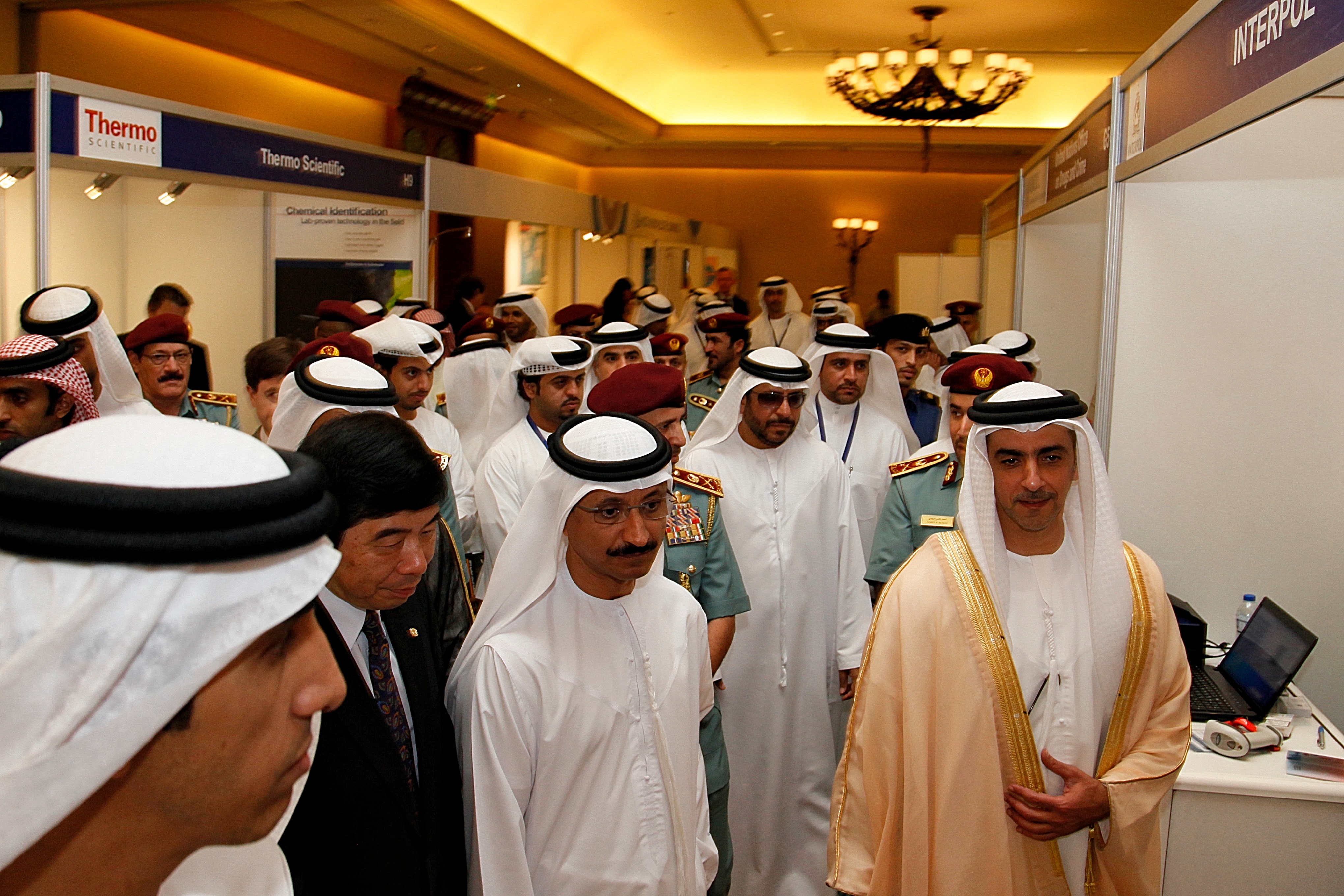
The 2013 WCO IT Conference & Exhibition was held in Dubai, United Arab Emirates (UAE), from 14 to 16 May 2013 and co-hosted by Dubai Customs. The Conference theme, “Effective Solutions for Coordinated Border Management”, attracted over 1,000 participants from 93 countries and 56 Customs administrations, including 14 Directors General of Customs, other governmental agencies and the private sector, who were actively involved in sharing available information technologies, lessons learned from experience, and future visions.

The Conference was opened in the presence of His Highness Sheikh Mohammed Bin Rashid al Maktoum, UAE Vice-President, Prime Minister and Ruler of Dubai, showing strong support for the innovative approach towards Customs modernization. In his opening speech, His Highness, Lieutenant General, Sheikh Saif Bin Zayed Al Nahyan, UAE Deputy Prime Minister and Minister of the Interior, welcomed the participants and stressed the importance of collaboration for effective, coordinated border management applying technology. Secretary General Kunio Mikuriya said that the contribution of Customs to economic competitiveness required better communication, cooperation, coordination and collaboration with other border agencies. In this connection, technology enabled coordinated border management, and the WCO had developed the Data Model with a standardized data set that met the requirements of border regulatory agencies. He also stressed the importance of partnership with the private sector in finding innovative solutions for IT applications, which was the objective of this Conference.

The participants enjoyed a series of panel sessions with high-level speakers from Customs, other governmental agencies, international organizations and the private sector, discussing various aspects of coordinated border management and effective solutions in applying technology. Dr. Anwar Mohammed Gargash, UAE Minister of State for Foreign Affairs, shared his country’s vision of trade facilitation through investment in infrastructure and technology, as well as consistent policy development, while honouring international obligations.

A very large number of service providers joined the Exhibition and Tech Talks to explain the latest innovations in information technology, and they listened to the needs of Customs and other border regulatory agencies in their efforts to work together to develop joint IT solutions. Source: WCO


Gmail to allow money to be sent as an attachment

Google will soon be rolling out a new feature that lets you attach money to Gmail messages

Google will soon be rolling out a new feature that lets you attach money to Gmail messages

While Customs Authorities are still challenged to address the question of cyber-trade and associate crime, Gmail makes it possible for you send all kinds of files as attachments. Now Google Wallet lets you pay for just about anything. Why not combine the two? That could have been the thinking by someone at Google, as the search giant is set to launch a payment system that’s the love child of Gmail and Google Wallet.

Pretty soon, U.S. Gmail users 18 and older (sorry, kiddies) will see a dollar sign icon among their Gmail attachment options. Click on the icon, select a dollar amount, and send it along. The recipient doesn’t have to have a Gmail address to take your money, but they’ll presumably need to have a Google Wallet account (or at least sign up for one to claim their money).

In fact, that might be one of Google’s motives here. Make it ridiculously easy to send money to your pals, and if they aren’t already in the Google ecosystem, this is a new way to reel them in. Let the rush to Google+ sign-up pages commence.

Google does also take a small cut from credit card payments – 2.9 percent per transaction, to be exact (with a minimum of $0.30). If you’re paying from your bank account or directly from your Google Wallet balance, then you’re off the hook. Receiving payments is free. Dare say this will cause some concern for Treasury and enforcement bodies?

The feature will be rolling out to U.S. Gmail users in “the next few months.” In the meantime, you can preview the feature in Google’s video below.  Source: Gmail Blog, Google via Engadget.

http://www.youtube.com/watch?feature=player_embedded&v=JA8m0JOoNYQ

Ethiopia Becomes World’s Fourth Largest Flower Exporter

Revenues from flower exports have grown from $27.9 million dollars in 2002-03 to $178.3 million dollars in 2010-11. Photo Chellelek Files

Revenues from flower exports have grown from $27.9 million dollars in 2002-03 to $178.3 million dollars in 2010-11. Photo Chellelek Files

Indian-owned firms in Ethiopia are making flowers the country’s third-largest export earner after coffee and khat, a kind of chewable cannabis. In the last five years, the Ethiopian floriculture industry has become the second largest flower exporter in Africa (after Kenya) and fourth largest flower exporter in the world. According to one estimate, the export value earned by the country is expected to rise up to $550 million by 2016.

Ethiopia has a comparative advantage in the production of roses, especially with favourable climate conditions and availability of labour. The Ethiopian Government also offered incentives to investors. Ethiopia has the ideal climate, appropriate conditions and stable, year-round temperature that can ensure better production and quality flowers. The region is acknowledged as one of the best flower growing areas. Source: india.nydailynews.com

Rwanda Customs Process Made Easier for Tax Compliant Traders

Headquarters of the Rwanda Revenue Authority

Headquarters of the Rwanda Revenue Authority

Thirteen companies, three of them Rwandan, last week signed a Memorandum of understanding with Rwanda Revenue Authority to be accorded preferential treatment when clearing their goods at customs. The Authorized Economic Operator (AEO) is a regional trade facilitation program recommended by the world customs organization to ease trade and customs clearance for tax compliant and prominent importers and exporters.

Delay in clearing goods at customs is one of the major impediments to smooth trading within the East African Community (EAC). It also contributes to making the EAC region one of the most expensive places to do business despite being the second most growing economy in the world. The AEO creates some kind of obstacle-free zone where traders in the import or export business, known to be complaint with customs requirements, are accorded special treatment to ease the process of clearing their goods while in transit.

The pilot project will see how the system works in reality and the beneficiaries have all been informed of their rights and which ports or borders to claim them from. Rwanda customs officials issue special identifiers to the beneficiaries to help them identify the benefiting traders once their goods appear at any of the designated custom points. These identifiers will be recognizable everywhere in the five partner states of the EAC where the beneficiaries will pass and claim their privileges as AEO.

The growth of global trade and increasing security threats to the international movement of goods have forced customs administrations to shift their focus more and more to securing the international trade flow and away from the traditional task of collecting customs duties.

Recognizing these developments, the World Customs Organization (WCO) drafted the WCO Framework of Standards to Secure and Facilitate global trade (SAFE). In the framework, several standards are included that can assist customs administrations in meeting these new challenges and developing an Authorized Economic Operator programme is a core part of SAFE. Source: AllAfrica.com