Botswana Dry Port to Become Operational This Week

Workers putting the final touches to the entrance to the Botswana dry port. [Photo - Floris Stenkamp]

Workers putting the final touches to the entrance to the Botswana dry port. [Photo – Floris Stenkamp]

The Botswana dry port in Walvis Bay is expected to be operational this week, Botswana Railways’ Commercial Manager Mthulusi Lotshe said last week. The dry port will cost N$60 million.

The Botswana dry port is constructed on land owned by NamPort. The facility would be used exclusively by Botswana Railways for handling both containerised and non-containerised cargoes for import and export to, or originating from this eastern neighbouring country.

Lotshe made the announcement during the Trans Kalahari Corridor (TKC) information session hosted by the Trans-Kalahari Corridor secretariat in Windhoek.

He said the objective of the dry port is to consolidate maritime goods into inter modal and long distance transport flows.

“The other objectives of the dry port include improving cargo processing through coordinated operations; facilitating collection and distribution of local, regional and international transport; and integrating Botswana and the Southern African Development Community region with the Walvis Bay port,” Lotshe said.

He said the port aims to strengthen multi-modal solutions and create opportunities for new services, as well as reduce total transport and logistics costs and journey time. Source: The Namibian

AS&E introduces ground-breaking imaging system

Mini Z, the handheld technology from American Science and Engineering (AS&E), has been designed to offer port security officials an innovative new tool to combat contraband and illicit substances on ships.

Hailed as the world’s first handheld Z backscatter imaging system, the Mini Z aims to provide security officials with the ability to screen ‘the hulls and bulkheads of suspected drug-running boats for contraband or narcotics’, according to a company press release.

The Mini Z boasts the ability to scan in places that other systems cannot reach, while being easy-to-use and offering advanced X-ray imaging to present a real-time picture of ship and vehicle contents.

The Mini Z system is a game-changer for law enforcement and border security officials who are constantly challenged to quickly and accurately detect potential threats in hard-to-reach environments.

For an interactive introduction to the MINI Z, click here

Source: AS&E

1st WCO East and Southern Africa Regional Research Conference held in Harare

WCOThe first World Customs Organization (WCO) East and Southern Africa (ESA) Research Conference took place in Harare, Zimbabwe on 4-5 June 2014. The event was organized by the WCO ESA Regional Office for Capacity Building (ROCB) and hosted by the Zimbabwe Revenue Authority. The United Kingdom’s Department for International Development (DFID) provided funding.

Opening remarks were delivered by Ms. Christine Msemburi, the Executive Director for the WCO ESA ROCB in Nairobi, Kenya; Mrs. Anna Mutobodzi, the Acting Commissioner General of the Zimbabwe Revenue Authority; Mr. Happias Kuzvinzwathe, Customs Commissioner of the Zimbabwe Revenue Authority; Mr. Robert Ireland, the Head of the WCO Research Unit in Brussels, Belgium; and Professor C. Hope Sadza, Founder and Founding Vice Chancellor of the Women’s University of Africa.

Following their selection in response to a Call for Papers, eight research papers were presented at the conference by representatives of Customs administrations, the private sector, and academia from the ESA region. The research focused on topics linked to trade facilitation, including information and communications technology (ICT), risk management, transit systems, measurement, and Customs-Business partnerships. The research papers will be consolidated and published in an e-book.

The work of the researchers was supervised by Mr. Creck Buyonge, Adjunct Associate Professor (Revenue & Customs) at the Centre for Customs & Excise Studies, University of Canberra, and Mr. Mark Goodger a lecturer at the University of KwaZulu-Natal (Durban) and the University of Cape Town.

Ms. Msemburi congratulated the researchers for their sustained efforts and contributions to building knowledge on Customs matters in the region. “We need to be ruthless and honest as we write about ourselves so that we build a factual body of knowledge in Customs for East & Southern Africa” said Ms. Msemburi.

Mr. Ireland commended Ms. Msemburi for her leadership in organizing the conference. “This successful event is another step forward for the global Customs community in conducting research through systematic inquiry and consideration of local conditions in order to better inform policy formulation and implementation” said Mr. Ireland. Source: WCO

Lesotho Revenue Authority to acquire two AS&E ZBV Mobile Screening Systems

AS&E's Cargo and vehicle screening system deployed in 55 countries

AS&E’s Cargo and vehicle screening system deployed in 55 countries

American Science and Engineering, Inc. (“AS&E”), has announced the receipt of an order for two ZBV® mobile screening systems from a new international customer, the Kingdom of Lesotho. The ZBV systems will screen vehicles and cargo for threats and trade fraud on its border with South Africa to facilitate trade and counter smuggling.

The Lesotho Revenue Authority (LRA) has launched a Customs Modernization Program aimed at simplifying border procedures while speeding up the inspection process. The ZBV systems, with its safe and effective technology, ease-of-use, and high-throughput capability will greatly support this initiative.

“We are delighted to have the opportunity to support the LRA in its Customs Modernization Program and to help secure the Kingdom of Lesotho,” said Chuck Dougherty, AS&E’s president and CEO. “The ZBV system has been proven effective for anti-smuggling programs, with one customer recently reporting a 54% increase in tobacco seizuresi in a four month period. With the ZBV system’s outstanding field reports, we continue to add new countries to our installed base in key geographic markets and expand our market penetration of Z Backscatter® technology in Africa.”

LRA spokesperson Mr. Pheello Mphana says, “The LRA is pleased to acquire this advanced technology to support our modernization process. Following our detailed examination of non-intrusive inspection systems, the ZBV provides the optimum solution to deploy on our borders to facilitate trade by reducing inspection delays and the cost of compliance, improve border control and detect illicit cross-border movement.”

The highly mobile ZBV® system screening system allows for immediate deployment and rapid inspection to reveal explosives, drugs, currency, alcohol, cigarettes and other organic threats or contraband. With over 730 systems sold to date, AS&E’s ZBV system is used by leading government agencies, border authorities, law enforcement, military organizations, and security agencies in more than 64 countries. Source: AS&E

X-Ray Security Screening – Technologies, Industry and Global Market – 2014-2020

X-Ray_CoverAgainst the backdrop of doom and gloom predictions by some managers in industry, Homeland Security Research Corporation analysts forecast a strong comeback of the X-ray security industry generating a solid 7% CAGR. The growth will be boosted by three main drivers:

  1. The expansion of the Asia Pacific secured facilities and aviation security markets
  2. The replacement of more than 40,000 outdated X-ray systems
  3. Despite a decade of R&D aiming at new baggage, luggage, cargo and mail screening technologies, there is no modality on the horizon that can competitively challenge the cost-performance of the X-ray based screening technologies.

According to HSRC’s report, “X-ray Security Screening: Technologies and Global Industry & Market – 2014-2020“, the global X-ray security screening industry revenues (including systems sales and aftersales service and upgrades) is forecasted to grow from $1.6 billion in 2013 to $2.6 billion by 2020.

With more than 690 pages, 254 tables and 324 figures, the new report is the most comprehensive review of the multibillion-dollar global X-ray security screening market, industry and technology trends published to date. The report analyzes each and every dollar of the industry revenues and provides data and analysis on 89 submarkets including submarket 2011-2013 data and 2014-2020 forecasts and analyses. The report addresses the “money trail” of each dollar spent via 5 viewpoints:

  • 5 geographical regions
  • 20 countries
  • 3 vertical markets
  • 4 application-technologies
  • System sales and aftersale revenues

The report analyzes the X-ray industry and technologies from several perspectives, including:

  • Current and pipeline technologies, such as single energy X-ray, dual energy X-ray, backscatter X-ray, multi-view X-ray and coherent X-ray
  • Competitive environment: 16 leading X-ray vendor profiles including their products, products description and prices. Companies include American Science and Engineering, Astrophysics Inc., Auto Clear, Eurologix Security, Gilardoni, L3 Communications , LIXI, Morpho Detection, Nuctech , Rapiscan Security Products, SAIC, Scanna Msc., Smiths Detection, Vidisco.
  • 20 countries airports: 1,195 airports with 2,352 million screened passengers (84% of global passengers). For each country, all the airports with over 100,000 annual screened passengers are presented including details on the number of screened passengers and the annual growth rate
  • Market & industry analysis: e.g., market drivers & inhibitors, X-ray security industry SWOT analysis
  • Business environment: e.g., competitive analysis.

Each new report from Homeland Security Research Corporation features more and more detailed analyses on this market. Of particular interest is the ‘country analysis’ which demonstrates just how refined this market is developing. All of this comes at a hefty price tag – starting at US$ 4,450 for a single user PDF!

South Africa ‘Still Weighing Up’ Rhino Horn Trade Proposal

Desert black rhinoceros, South Africa [Picture credit: africagreenmedia.co.za

Desert black rhinoceros, South Africa [Picture credit: africagreenmedia.co.za

South Africa has made no final proposal on legalising the global rhino horn trade as a way of reducing the level of rhino poaching in the country, the Department of Environmental Affairs said on Friday, rebutting recent media reports on the issue.

Last year, the Cabinet authorised the department to explore the possible legalisation of the rhino horn trade at the 17th conference of the parties (COP) to the Convention on International Trade in Endangered Species of Wild Fauna and Flora (CITES), which takes place in 2016.

However, the department said, “no final proposal has been compiled, or decision made, regarding the future legal trade in rhino horn as an additional intervention to reduce the levels of poaching”.

The department said it had appointed a panel of experts, chaired by the department’s Fundisile Mketeni, to assist the inter-ministerial committee tasked by the Cabinet with weighing up a proposal on the trade in rhino horn.

The panel had started its work and would, in the coming months, listen to all sides of the trade debate before submitting a set of recommendations to the committee.

South Africa’s proposal would be tabled at CITES in 2016, and would be based on sound research, uninfluenced by any individuals or groups seeking to make a profit or by any group opposed to the country’s sustainable usage policies, the department said.

“South Africa believes that the decision to table a proposal at the next CITES COP is timeous, and may be a step towards addressing the scourge. South Africa is however not in any way insinuating that the possible trade in rhino horns would be a panacea to the problem of poaching.”

South Africa, which is home to more than 80% of the world’s rhino population, has been facing an onslaught from poaching syndicates since 2008. Since the start of this year alone, 442 rhinos have been poached and 123 suspected poachers arrested in the country.

The department has taken a number of steps in response, including increasing the numbers of rangers in its parks, as well as improving regional and international collaboration with both rhino “range” and rhino horn “consumer” countries. Source: SAnews.gov.za

Mexico – Recognising WCO Policies and Standards in the wake of Organised Crime

Port of Lazaro Cardenas Mexico [www.puertolazarocardenas.com.mx]

Port of Lazaro Cardenas Mexico [www.puertolazarocardenas.com.mx]

At the beginning of May the Mexican authorities detained the 73,700 dwt Jian Hua with this following on from the earlier seizure of 119,000 tonnes of iron ore in storage at the port.

At the end of April the Mayor of Lazaro Cardenas was arrested and accused of kidnapping, extortion and links to organised crime and in November last year federal troops took over the security and customs functions at the port of Lazaro Cardenas and remain in charge today.

The main aim of these measures is to eradicate the influence of the violent criminal organisation the Knights Templar, whose base of operations is the south western state of Michoacan where the port of Lazaro Cardenas is located.

Knights Templar, through the corruption of customs and other officials, has been using the port of Lazaro Cardenas for the extensive import and export of illegal drugs. The iron cargoes are one of many ‘business diversifications’ by the cartel but as the Jian Hua shipment proves are illegal in that the documentation associated with this cargo showed production at a mine that is not yet authorised for legal operation.

For years the state of Michoacan has basically been lawless and the area around the port of Lazaro Cardenas has been a battleground between the various drug gangs with the Knights Templar being in ascendancy since 2010.

Since, however, the entry of federal agencies into the state, and notably the Mexican navy into the port of Lazaro Cardenas, the influence of Knights Templar has gone into severe decline. The cartel has basically lost control of its biggest business. They have also felt the wrath of a public uprising, the sharp end of which are armed vigilantes backed by federal forces.

The optimistic view is that the port of Lazaro Cardenas will become ‘clean’ again with the demise of Knights Templar and the arrangements it had with other drug cartels. The negative view is that another cartel will step into Knight Templar’s shoes and the port will again find itself under external control and home to illegal activities.

Short steps

The lesson here, as independent organisations such as Control Risks emphasise, is that it is a few relatively short steps before a major port gateway can be comprehensively penetrated by criminal organisations. The conditions that created an opening for Knights Templar are not unusual in Latin America in Control Risks’ view.

For these reasons, and many others associated with port efficiency, it is very important to have secure and professional agencies active in ports that are specialists in security and border management. It is also important to realise in this context that considerable assistance is available from external agencies such as the World Customs Organisation (WCO) to establish the proper controls and security checks. Further, that it is often only by the use of independent agencies or organisations that comprehensive experience and know-how can be deployed to achieve this – the arms’ length approach which can circumvent internal corruption.

If corrupt elements are in place there will inevitably be resistance to change but an external agency forcing the pace of change, based on global experience, will play a major part in overcoming such elements.

Taking the WCO as an example, among other things it functions as a forum for dialogue and exchange of experiences between national Customs delegates. The WCO offers its members a range of conventions and other international instruments, as well as technical assistance and training services provided either directly by the secretariat, or with its participation. The secretariat also actively supports its members in their endeavours to modernise and build capacity within their respective national Customs administrations.

The WCO’s efforts to combat fraudulent activities are also recognised internationally. The partnership approach championed by the WCO is one of the keys to building bridges between Customs administrations and all the stakeholders in the transport chain. Source: Port Strategy

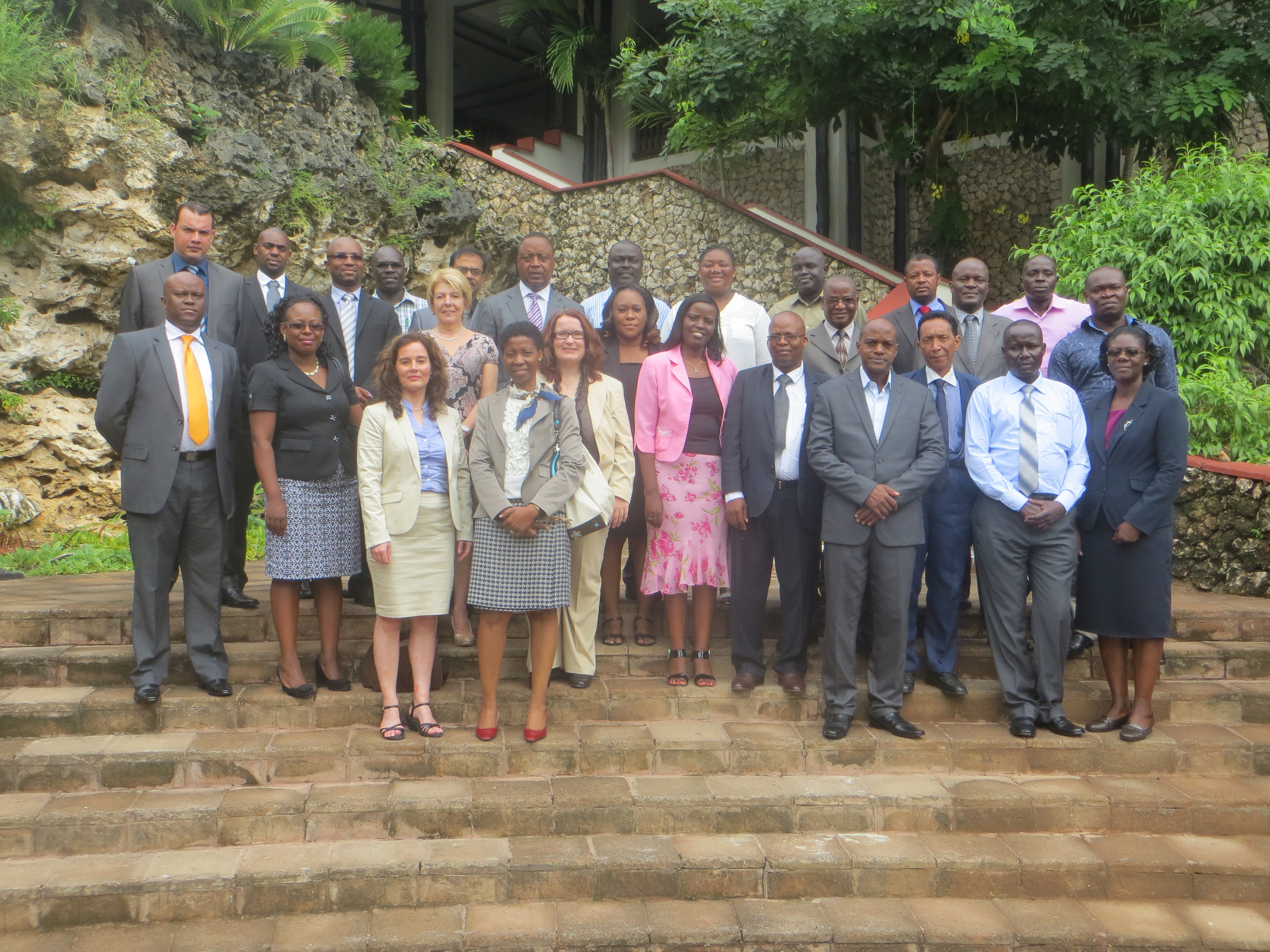
First WCO ESA Regional Workshop on Resource Mobilization

First WCO ESA Regional Workshop on Resource Mobilization

First WCO ESA Regional Workshop on Resource Mobilization

The WCO and the ESA Regional Office for Capacity Building (ROCB ESA), in cooperation with the Kenyan Revenue Authority, organized the first WCO ESA Regional Workshop on Resource Mobilization in Mombasa, Kenya from 19 to 23 May 2014. This workshop was one of the regional key activities in 2014 under the WCO-ESA Project ‘Building Trade Capacity through Customs Modernization in the East and Southern Africa” funded by the Finnish Government.

This workshop was also part of the ongoing efforts of the WCO and the ROCB ESA in supporting Customs Administrations to enhance engagement with development partners for their reform and modernization programmes. Previously, the WCO and the ROCB ESA had organized the first Regional Meeting on Donor Engagement in March 2012 in Mauritius, which provided Members in the ESA region with the opportunity to enhance their understanding of partnership with development partners. The workshop in Kenya was a follow-up on the event in 2012, enabling participating Members to address needs in the field of Resource Mobilization which are essential for subsequent Capacity Building / Customs Reform and Modernization processes at regional and national level. The workshop was facilitated by Ms. Heike Barczyk, WCO Deputy Director Capacity Building, Ms. Sigfridur Gunnlaugsdottir, WCO expert from Iceland Customs, and Ms. Riitta Passi, Project Manager within the Finnish-funded project.

A total of 25 participants from 17 ESA regional members took part in the workshop. Participants developed first draft business cases/project proposals that could in the future lead to potential real Capacity Building projects. Reflecting on the current Customs environment, the workshop equally addressed the WTO Agreement on Trade Facilitation (ATF), potential interest from development partners in supporting countries with its implementation and how to best reflect this in respective interaction with those partners including how to address the respective alignment in the different steps towards developing a written project proposal. The workshop is expected to further enhance the collaboration between Customs administrations and development partners for the successful implementation of Customs reform and modernization.

The WCO, the ROCB ESA and participating Members agreed to continue to work together in this regard. Source: WCO – article provided by Ms. Riitta Passi, Project Manager, Nairobi.

SAAFF names top young freight forwarder

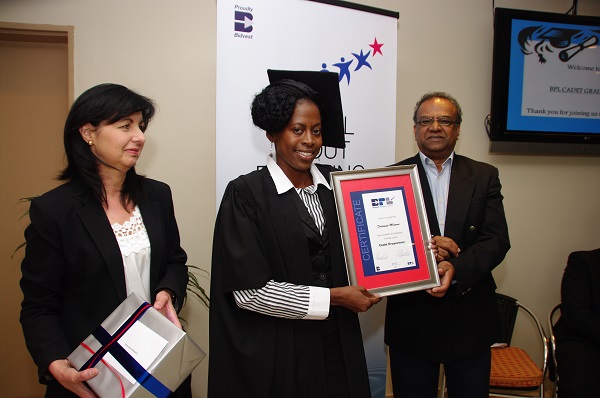
From-the-left-are-Maria-du-Preez-Fortunate-Mboweni-and-James-Reddy-from-Bidvest-Panalpina-LogisticsFortunate Mboweni of Bidvest Panalpina Logistics has been named South Africa’s Young International Freight Forwarder of the Year. According to David Logan, CEO at the South Africa Association of Freight Forwarders (SAAFF), the award was based on her submission on the challenges of super abnormal loads and the complexities associated with the handling of ultra-sensitive cargo.

Says Logan: “Mboweni wrote a well-researched paper on two topical subjects: the shipping of highly sensitive material and the management of project (large, abnormal) cargo. The delivery of work was of a high standard and she can be proud of her efforts, which, in my opinion, stands a good chance of winning-at least the RAME [Region Africa Middle East] round.”

“She will now write a dissertation in order to compete in the regional round of the competition, and if she is successful, will be entered as a global finalist into the ‘Final Four’, which will be decided in Istanbul at this year’s Fiata Global Congress.”

The competition was initiated by its lead sponsor, the TT Club, in 1999 and its objectives are the encouragement of training and development in the industry as well as the elevation of professional standards .

Entrants who are brave enough to take up the challenge are obliged to write a dissertation on a topic that is set by SAAFF. This topic allows the entrant to write about current and often challenging issues and to demonstrate their knowledge and expertise on export and import forwarding and clearing matters.

SAAFF’s judging panel carefully adjudicates each entry in order to identify a winner, whose name is then submitted as the candidate for the regional round. As the competition is supported by FIATA (The International Association of Freight Forwarding Associations), it is adjudicated globally through its regional structures, which under FIATA nomenclature is RAME.

The winner of this round then goes through to the finals comprising the three other regional winners and the global winner is announced at the FIATA Global Congress each year.

Logan concludes: “The status attached to this competition is enormous and reflects positively on both the individual and the company for whom they work. Naturally, only freight forwarders may enter.”

In 2012, SAAFF’s entrant, Daniel Terbille, won the global competition and Logan says they have faith in Mboweni doing well in this international event. Source: Trans World Africa

Thermal imaging technology for port security

Thermal imaging cameras produce high-quality video in challenging lighting conditions. [Picture: Pelco-Schneider Electric]

Thermal imaging cameras produce high-quality video in challenging lighting conditions. [Picture: Pelco-Schneider Electric]

Millions of tonnes of cargo and billions of Euros in goods value represent the activity of a small city with miles of perimeter fencing, uneven infrastructure, blind spots and ever-changing weather conditions. Port security is no small task yet increasingly, security operators are asked to assume more responsibilities with static, if not shrinking, budgets. As drivers of a global economy, the demands placed on port security continue to grow and with it, the challenges and complexity increase exponentially.

Unlike traditional retail, commercial, and many industrial applications, ports present unique security issues that must be anticipated and addressed. Typically, high security installations rely on a variety of solutions, including – and often heavily relying upon – video security and surveillance. The combination of legacy analogue and more modern IP-based video cameras, recording and video management systems, Physical Security Information Management (PSIM), analytics and more provide a digital extension of security personnel.

Once restricted to the military due to prohibitive cost, thermal imaging is an increasingly relied upon technology for an ever-growing array of security – as well as process and operations management applications. As price points have dropped, integration of thermal technology into today’s video security and surveillance camera systems has become more prevalent, providing a wealth of information and functionality previously unavailable.

Port security however is anything but typical. From miles of unguarded, unlit perimeters to ever-changing lighting and weather conditions, traditional video security has a difficult time providing the comprehensive intelligence demanded by such a high-security facility. For more details read the full article at Port Technology International, by clicking the hyperlink.

Mauritius orders military hardware for Customs, Police and Coast Guard

The Mauritius Coast Guard flagship MCGS Vigilant [www.defenceweb.co.za]

The Mauritius Coast Guard flagship MCGS Vigilant [www.defenceweb.co.za]

The island nation of Mauritius has ordered a 50 metre fast patrol vessel from India, as well as machineguns, ammunition, body armour and interceptor boats in a major re-equipment drive.

The government of Mauritius said the order for the $20.5 million fast patrol vessel for the Mauritius Police Force/Coast Guard was signed on May 7 in Port Louis by the Senior Chief Executive of the Prime Minister’s Office and the Chairman and Managing Director of Goa Shipyard Ltd, Shekhar Mital.

The fast patrol vessel will be 50.44 metres long with a speed of 35 knots. It will be used for defence and protection work, surveys, pollution control, coastal patrol, anti-smuggling, anti-poaching, search and rescue, fisheries protection and monitoring of foreign chartered trawlers, amongst other duties. On the same occasion, an addendum valued at $1.4 million was also signed for arms, ammunitions, bullet proof jackets and helmets and medium/heavy machine guns for 10 Interceptor boats.

The contract for the design, construction and delivery of these ten boats was signed on April 9 this year and is worth $6 million. The 14.5 metre long boats will have a cruising speed of 20 knots and a top speed of 35 knots. Furthermore, another contract for the design, construction and delivery of one additional interceptor boat for the Mauritius Revenue Authority (MRA), at a cost of $600 000, was also signed on May 7. This boat will be used by the MRA to carry out harbour/anchorage and coastal patrols. Source: www.defenceweb.co.za

Latest US container 100% scanning postponement predictable

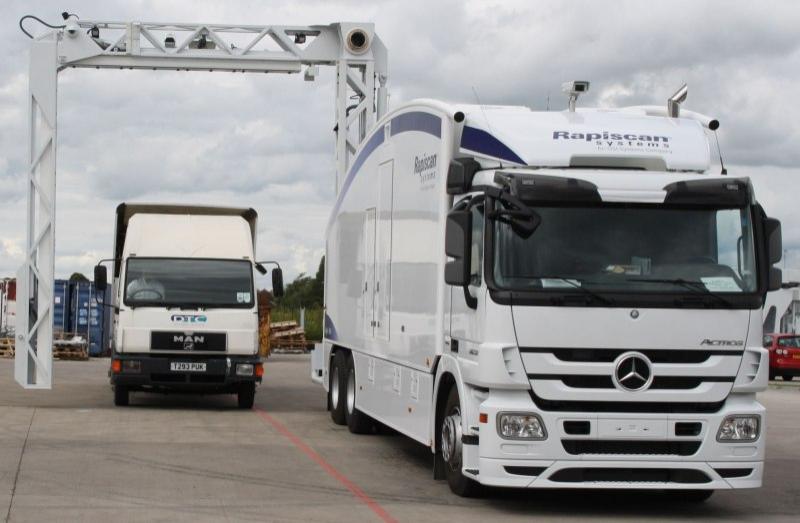
Rapiscan_m60UK freight forwarders have welcomed but are not surprised by the latest US postponement by two years of the implementation of new rules requiring all cargo containers entering the US to be security scanned prior to departure from overseas ports, with national association BIFA reiterating calls for the initiative to be abandoned.

Peter Quantrill, Director General of the British International Freight Association (BIFA), said it was “hardly surprising” to hear the recent news that the US had delayed the introduction of the new rules “amid questions over whether this is the best way to protect US ports”, calling the move “a healthy dose of common sense”.

Mr Quantrill commented: “As BIFA has said repeatedly, the Department of Homeland Security (DHS) has consistently underestimated the enormity of the task in hand relative to the costs both to the US government and foreign governments – as well as, importantly, the limited ability of contemporary screening technology to penetrate dense cargo, or large quantities of cargo in shipping containers.”

The deadline for implementation of 100% scanning of all inbound containers has already been delayed from 2012 to 1 July, 2014, and US Secretary for Homeland Security Jeh Johnson, who took over the role just six months ago, has now reportedly decided on another 24-month postponement.

BIFA’s comments follow the recent news of a letter from Thomas Carper, chairman of the US Senate Committee on Homeland Security and Governmental Affairs, which suggested that the use of systems available to scan containers would have a negative impact on trade capacity and the flow of cargo.

Quantrill adds: “Media reports suggest that the US Government now doubts whether it would be able to implement the mandate of 100% scanning, even in the long term, and it would appear that it now shares BIFA’s long-standing opinion that it is not the best use of taxpayer resources to meet the USA’s port security and homeland security needs.

“We have always said that expanding screening with available technology would slow the flow of commerce and drive up costs to consumers without bringing significant security benefits.”

He continued: “Whilst the latest news of a two-year delay appears to be a healthy dose of common sense at the US Department of Homeland Security, BIFA still believes that the US Government ought to take an even bolder step and repeal the original legislation.

“That would be the most appropriate way to address this flawed provision and allow the Department and the industry to continue to focus on real solutions, including strengthened risk-based management systems to address any security gaps that remain in global supply chains.”  Source: Lloyds Loading List

New CTU Code – IMO Approves Container Weight Verification Requirement

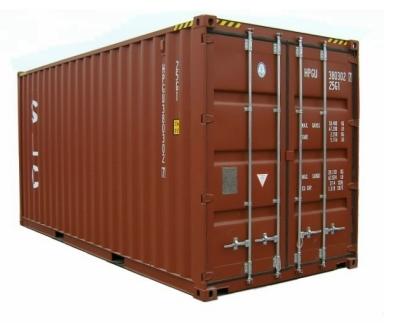
containerThe Maritime Safety Committee (MSC) of the IMO has approved changes to the Safety of Life at Sea (SOLAS) convention that will require verification of container weights as a condition for loading packed export containers aboard ships.

Misdeclared container weights have been a long-standing problem for the transportation industry and for governments as they present safety hazards for ships, their crews, and other cargo on board, workers in the port facilities handling containers, and on roads. Misdeclaration of container weights also gives rise to customs concerns. The approved changes to the convention will enter into force in July 2016 upon final adoption by the MSC in November 2014. In order to assist supply chain participants’ and SOLAS contracting governments’ implementation of the container weight verification requirement, MSC also issued a MSC Circular with implementation guidelines.

MSC also approved a new Code of Practice for the Packing of Cargo Transport Units (CTUs), including intermodal shipping containers. The new CTU Code, which will replace the current IMO/ILO/UNECE Guidelines for packing of CTU, has already been approved by the UNECE (United Nations Economic Commission for Europe) and will now go to the International Labour Organization (ILO) for approval. The CTU Code provides information and guidance to shippers, packers and other parties in the international supply chains for the safe packing, handling and transport of CTUs.

Of particular interest for regulatory authorities is Chapter 4 – “Chains of responsibility and information” which deals with the parties responsible for the provision of information and other security and regulatory requirements concerning containers as they are transported across the supply chain.

The World Shipping Council (WSC), whose members represent about 90 percent of global containership capacity, has been a leading advocate for the container weight verification requirements and has worked cooperatively with the IMO for over seven years to see them materialize. WSC has also participated in the group of experts that developed the new CTU Code.

“In taking these decisions, the IMO has demonstrated its continuing leadership in trying to ensure the safe transportation of cargo by the international shipping industry,” said WSC President & CEO, Chris Koch. “We congratulate the IMO Secretary General and the IMO member governments for developing and approving these measures that, when properly implemented and enforced, should provide for long-needed improvement to maritime safety. The SOLAS amendments and related implementation guidelines regarding container weight verification represent a collaborative effort that we were pleased to be a part of and we look forward to final adoption of the amendments in November 2014.”

The new CTU and supporting material can be accessed at the UNECE website here. Also See the World Shipping Councils webpage here for chronological information about the container weighing issue. Source: Maritime Executive

South African Port Handbook Launched

South African Port Hanbook [SAOGA]Following a successful SAOGA (South African Oil & Gas Alliance) has launched the second edition of the South African Port Handbook at the Offshore Technology Conference in Houston during the first week of May 2014. The book is available in a user-friendly .pdf format on the internet. To view the online version in an e-book format please click the hyperlink – SA Port Handbook. For a downloadable (.pdf) version of the book please visit SAOGA’s website.

Mobile Money Services across Africa and Middle East get a leg up

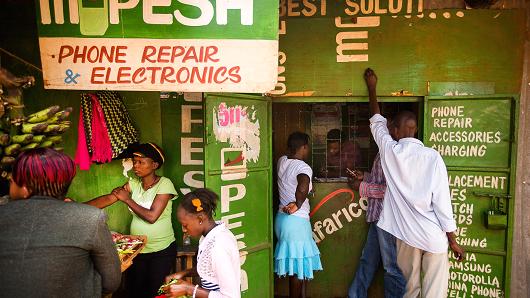
Residents transfer money using the M-Pesa banking service at a store in Nairobi, Kenya

Residents transfer money using the M-Pesa banking service at a store in Nairobi, Kenya

Nine mobile network operators across 48 countries in Africa and the Middle East have joined forces on the GSM Association’s Mobile Money Interoperability (MMI) program. The program aims to develop standards and implement convenient and affordable financial services across the regions, where many citizens have limited access to traditional banking services.

Mobile money transactions in Sub-Saharan Africa and the Middle East totaled US$5.7 billion last year, and more than a quarter of Kenya’s economy now flows through groundbreaking service M-Pesa – which has been adopted by 56 percent of Kenyans since its introduction by Vodafone and Safaricom in 2007 – without touching a bank account. (Comment: over time, me thinks cross-border enforcement authorities will scrutinise such schemes).

But while Kenya stands as an exemplar of mobile money, far ahead of even the US in usage of payments through a mobile phone, other countries have been much slower to adopt the model – thanks in part to regulatory challenges that hold back innovation. There’s hope that this MMI program will accelerate growth through collaborative development of best practice guidelines, regulatory support, performance benchmarks, and interoperability between services.

It could have widespread implications, as an estimated 1.7 billion people in lower to middle income countries own a mobile phone (primarily with prepaid credit), yet currently lack access to the financial services taken for granted in the developed world. Mobile money is now available in most developing markets, although the 2013 GSMA Mobile Money for the Unbanked State of the Industry report indicates that services tend to be limited outside of East Africa.

That’s where MMI comes in. The initiative is meant to connect mobile network operators with banks, governments, and other partners in a bid to allow access to more mobile financial services for a broader range of people. This would provide a means for them to take out insurance, invest in savings accounts, make and accept payments, and send money across borders.

Explosive growth in the field has seen mobile money accounts outnumber bank accounts in nine African markets, with 98 million registered and over 60 million active in Sub-Saharan Africa as of June 2013. Competition is also growing – 52 countries (36 of which are in Sub-Saharan Africa) have at least two mobile money services, and 27 of those have three or more. This could lead to accelerated innovation, but without interoperability it will devolve into a total mess.

Figure from the GSMA 2013 State of the Industry report on mobile money for the unbanked showing the number of registered and active mobile money accounts by region.

Most existing mobile money services act as closed-loop systems wherein electronic money must be converted to cash before it can be sent to someone on another mobile money service. But cooperation within and across regions should soon see these kinds of barriers disappear in favor of interconnected schemes that seamlessly (no doubt with some transaction fees) transfer funds from one service to another at the press of a button.

“Mobile money is a young industry, with over 80 percent of all deployments launched during or after 2010,” said GSMA Director General Anne Bouverot. It’s a field under rapid, enthusiastic, unparalleled growth, and it falls now on the signees of the Mobile Money Interoperability program to steer the ship to safe waters as mobile money races toward ubiquity across all of Africa and the Middle East. Source: GMSA

Related Articles