Big Data – Mining Vessel History to Combat Smuggling

For thousands of years, maritime authorities have relied on tip-offs, patrols, investigations and random inspections to find smuggled goods. Today they have a variety of additional methods at their disposal, and one of the most promising is also the most intuitive: looking at every vessel’s historical behavior.

Israeli firm Windward was founded to collect, vet and analyze AIS, along with a variety of other commercial data sources on maritime traffic. Just having access to the massive quantity of data that the world’s fleet generates is not sufficient: it could take weeks for a human operator to sift through the records of just a few hundred ships, and law enforcement agencies need actionable intelligence in real time.

This is where Windward excels. Its system uses proprietary algorithms to find specific ships that may be involved in illicit activity based on a number of “red flag” behaviors. Loitering just off of a village or an uninhabited bay may be a sign that a vessel is engaged in tendering goods or passengers from shore. Similarly, when a ship turns off its AIS transmitter or changes its AIS reporting name near smuggling hotspots, it may be taking on contraband. And a ship with a well-established trading pattern that suddenly heads to a troubled region may be engaged in a new (and not entirely legitimate) line of business.

These behaviors are obvious when Ami Daniel, Windward’s CEO and co-founder, walks through a few examples in a live presentation. The novel development isn’t the signal pattern – it is the fact that his firm can automatically find it, without knowing which ships to examine in advance. It doesn’t matter if a vessel is operated by a reputable company or a known North Korean front – Windward’s system analyzes records for the entire fleet, and if a vessel looks suspicious, it gets flagged.

A few cases illustrate the potential of this approach. In Windward’s best-known example, a Cyprus-flagged reefer with a history of trading between Northern Europe and West Africa headed to a port in Ukraine – well outside its normal pattern. It returned towards the Strait of Gibraltar, but before passing through to the Atlantic, it lingered off of Algeria and Morocco for 12 days. It turned its AIS on and off multiple times in busy shipping lanes during this loitering period. Windward notes that this region is at high risk for the smuggling of arms and narcotics.

After passing through the Strait of Gibraltar, the vessel headed north towards Scotland, where it arrived on January 14. It loitered again for half a day in a small bay off the isle of Islay – an area without a port for a 4,200 dwt ship. Windward’s system flagged this behavior as a potential sign of a smuggling drop-off, though it is also possible that the ship anchored up to wait out foul weather or to time its arrival.

This particular case made headlines in the UK when Windward told media that hundreds of vessels with suspicious records entered British waters in the first two months of 2017. The story was picked up by the Global Mail, Sky News and the Daily Record, and Scottish politicians called on the authorities to look into the matter: “This requires investigation, certainly by the police and, I suspect, by the security authorities to clarify what’s going on,” said member of Scottish Parliament Mike Russell.

These results capture attention, and Daniel says that the firm is marketing the system’s abilities to multiple government agencies. The kind of smuggling/trafficking behavior that it can identify is often associated with organized crime and the financing of terrorism, so it has a great deal of appeal for intelligence applications as well as maritime security / maritime domain awareness. He suggests that for now, commercial users (traders, brokers and others) are not a target market, nor does he foresee branching out into similar offerings for trucking or air freight. Windward does one thing well – very well – and Daniel expects that it will invest in its core strength for some time to come. Original article published in The Maritime Executive.

Belissima!

The South African Revenue Service (SARS) has seized a Ferrari that was smuggled into the country. The luxury vehicle worth an estimated R13.8m was stored at a warehouse in South Africa since 2014.

In February 2015, however, the vehicle’s owner submitted an export declaration to take the car to the Democratic Republic of Congo through Beitbridge border post. A day later, there was an attempt to have the vehicle returned to South Africa through the same border post.

The vehicle has been detained and a letter of intent has been issued to the owner in terms of the Promotion of Administrative Justice Act No 3 of 2000 to enable them to make representation to SARS.

Maersk and IBM in joint “blockchain” venture – future of the shipping industry?

International trading involves many participants all around the globe. These participants may not necessarily have the needed trust of all parties, especially at the initial stages, when newcomers join the trade. Blockchain can provide the needed trust to capture key transaction activities as immutable records, as well as storing and sharing encrypted legal and financial documents.

Visibility of transaction records and documents are tightly controlled by blockchain, permitting sharing only among entrusted and allowed parties. In this demo, IBM demonstrates how blockchain may support such an application.

The blockchain solution being built by the two companies is expected to be made available to the ocean shipping industry later this year, according to a joint statement from International Business Machines Corp and the container unit of A.P. Moller-Maersk. It would help manage and track the paper trail of tens of millions of shipping containers globally by digitizing the supply chain process from end to end.

This will enhance transparency and make the sharing of information among trading partners more secure.

When adopted at scale, the solution based on the Linux Foundation’s open source Hyperledger platform has the potential to save the industry billions of dollars, the companies said.

“Working closely with Maersk for years, we’ve long understood the challenges facing the supply chain and logistics industry and quickly recognized the opportunity for blockchain to provide massive savings when used broadly across the ocean shipping industry ecosystem,” said Bridget van Kralingen, senior vice president, industry platforms, at IBM.

IBM and Maersk intend to work with a network of shippers, freight forwarders, ocean carriers, ports and customs authorities to build the new global trade digitization product, the companies said.

The product is also designed to help reduce or eliminate fraud and errors and minimize the time products spend in the transit and shipping process.

For instance, Maersk found that in 2014, just a simple shipment of refrigerated goods from East Africa to Europe can go through nearly 30 people and organizations, including more than 200 different communications among them.

The new blockchain solution would enable the real-time exchange of original supply chain transactions and documents through a digital infrastructure that connects the participants within the network, according to IBM and Maersk. Source: Reuters

WCO – Study Report on E-Commerce

Screen Shot 2017-03-12 at 13.18.00The recent WCO publication of a Study Report on E-Commerce is based on a short survey answered by the Organization’s Members. The Report compiles Customs administrations’ practices as well as their ongoing and/or future initiatives related to the processing of cross-border low-value e-commerce.

Current practices, issues and challenges as well as initiatives and potential solutions are presented in each of the survey sections: Facilitation; Risk Management; Data Exchange/Cooperation with E-Commerce Operators; Control and Enforcement; Revenue Collection. Case studies are also widely used throughout the document to illustrate specific practices.

The survey was undertaken as part of the WCO Work Plan on Cross-Border E-Commerce aimed at addressing cross-cutting issues in relation to e-commerce and coming up with practical solutions for the facilitated clearance of low-value shipments, including appropriate duty/tax collection mechanisms and control procedures.

An overview of the WCO’s work so far, including tools, reports and interim recommendations issued by the WCO Working Group on E-Commerce (WGEC), as well as work to be completed in the future, is available here. Source: WCO

WCO – Strengthening Customs Business Partner Relationships in the SACU Region

CP Mission 16_01_465_ Successful Stakeholders Training

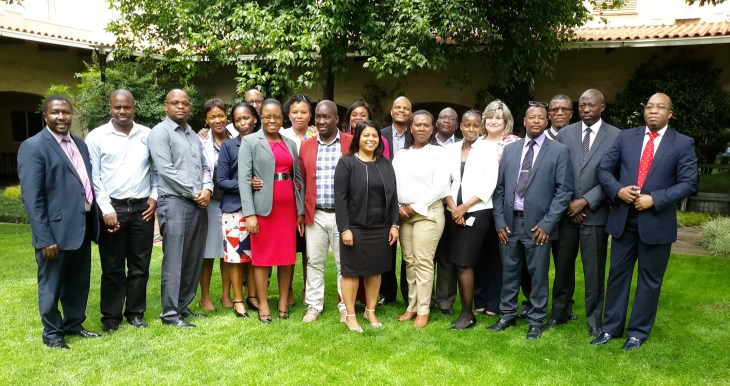
During November 2016, 16 Customs officers from SACU member administrations received training in the area of successful stakeholder consultation. The training was facilitated by Accredited WCO Experts from the SACU region. As a result of the workshop, participants drafted National Stakeholder Consultation action plans which outline the administration’s national effort in necessary interaction with key stakeholders. The action plans will be used to guide and improve cooperation with businesses in the implementation of the Preferred Trader Programme once they are approved by the Member administrations. Source: WCO

INTERPOL launches training programme on digital forensics in maritime investigations

INTERPOL has launched a training programme on the use of digital forensics on shipborne equipment to support maritime investigations with a workshop held in Portugal.

The three-day (6-8 February) workshop saw officers from INTERPOL and the Portuguese Maritime Police test the training course, which will aid future participants to identify and understand the purpose of the main electronic equipment found on vessels; determine which equipment could potentially contain data of interest for a criminal investigation; how to extract such data from the devices; and how to organize the data to best support an investigation.

Theoretical and hands-on classroom sessions were followed by practical exercises onboard several different types of vessels in the port of Aveiro. The training programme will assist police worldwide when conducting investigations with a maritime element, such as illegal fishing, maritime piracy, drug trafficking or human trafficking.

INTERPOL’s Environmental Security programme and Digital Forensics Laboratory conducted the workshop, with support from the Maritime Police local command and the Harbour Master’s Office in the port of Aveiro. Source: INTERPOL [Pictures courtesy: Interpol]

IRIS – WCO launches application to exploit open source information

Herewith a re-posting of an older blog article, fitting considering this years international Customs theme – Data Analysis.

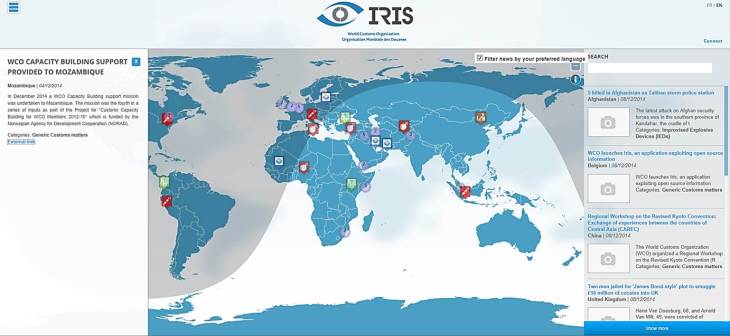
Open sources, such as the Internet, include a considerable amount of useful information for Customs purposes. For instance, such information can benefit Customs risk management through improved ana…

Source: IRIS – WCO launches application to exploit open source information

WCO News – February 2017 Edition

teaser_wconews_82

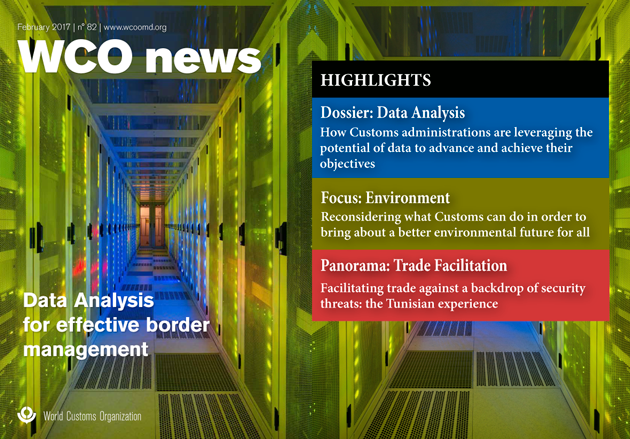
Predictably, the first edition of WCO News 2017 provides a spectrum of insight on this year’s Customs theme – “Data Analysis”. Here’s a preview:

  • Data analysis: seizing opportunities for effective border management – By Kunio Mikuriya, Secretary General, World Customs Organisation.
  • Data analysis for effective border management – the Canadian experience By Charles Slowey, Director General, Global Border Management and Data Analytics, Canada Border Services Agency.
  • Border management modernization in New Zealand forges ahead – By Murray Young, Chief Information Officer, New Zealand Customs Service.
  • Mirror analysis, a risk analysis support tool for Customs administrations – By Roger-Claver Victorien Gnogoue, Financial Services Director, Côte d’Ivoire Customs
  • Data analysis in risk management: Singapore Customs’ perspective – By Singapore Customs
  • API-PNR: an overview of the French system and the challenges faced – By Christophe Hypolite, PNR Mission, France
  • Developing data analyst skills: how the WCO contributes to expanding this specialized area of work By Tsendsuren Davaa, Ph.D., Professional Associate, Compliance and Facilitation Directorate, WCO
  • Cognitive computing for Customs agencies: improving compliance and facilitation by enabling Customs officers to make better decisions – By Stewart Jeacocke, Global Customs Expert, IBM, and Norbert Kouwenhoven, EU Customs Leader, IBM European Union Team

Nice to also see a contribution from one of SARS’ own titled “Customs and the environment: bringing about a better future for all” – By Roux Raath, Environmental Programme Manager, WCO. You can access and download the magazine by clicking here!

Trade Facilitation Agreement enters into force

wto-tfa-enters-into-force

Trade Facilitation Agreement, 22 February 2017.

A major milestone for the global trading system was reached on 22 February 2017 when the first multilateral deal concluded in the 21 year history of the World Trade Organization entered into force. In receiving four more ratifications for the Trade Facilitation Agreement (TFA), the WTO has obtained the two-thirds acceptance of the agreement from its 164 members needed to bring the TFA into force.

Rwanda, Oman, Chad and Jordan (pictured above) submitted their instruments of acceptance to WTO Director-General Roberto Azevêdo, bringing the total number of ratifications over the required threshold of 110. The entry into force of this agreement, which seeks to expedite the movement, release and clearance of goods across borders, launches a new phase for trade facilitation reforms all over the world and creates a significant boost for commerce and the multilateral trading system as a whole.

Full implementation of the TFA is forecast to slash members’ trade costs by an average of 14.3 per cent, with developing countries having the most to gain, according to a 2015 study carried out by WTO economists. The TFA is also likely to reduce the time needed to import goods by over a day and a half and to export goods by almost two days, representing a reduction of 47 per cent and 91 per cent respectively over the current average.

Implementing the TFA is also expected to help new firms export for the first time. Moreover, once the TFA is fully implemented, developing countries are predicted to increase the number of new products exported by as much as 20 per cent, with least developed countries (LDCs) likely to see an increase of up to 35 per cent, according to the WTO study.

At present, 10 out of 24 Members of East and Southern Africa (ESA) have ratified the TFA. These are; Mauritius, Botswana, Lesotho, Kenya, Zambia, Seychelles, Madagascar, Swaziland, Mozambique and Rwanda. So where to now South Africa?

OECD – Trade in Raw Materials

Australian Narcotics bust – the significance of NII

The Australian Border Force reports that four men have been arrested in Sydney and Melbourne for allegedly importing approximately 254kg of cocaine and 104kg of methyl-amphetamine into Australia.

Combined, the drugs had an estimated combined value in excess of $186 million.

An Australian Federal Police (AFP) investigation commenced in December 2016 after the Australian Border Force (ABF) targeted a cargo consignment containing mining equipment which had arrived in Melbourne from South Africa.

ABF officers at the Melbourne Container Examination Facility examined the consignment which included industrial mining equipment. X-ray images revealed anomalies within an iron ore extractor.

It will be alleged that a physical examination of the iron ore extractor by ABF officers led to the discovery of 358 1kg block packages of cocaine and methyl-amphetamine, concealed within the equipment among a load of activated charcoal.

On 19 December 2016, the AFP commenced a controlled delivery where the consignment was delivered from Melbourne to a storage facility in Sydney.

Three men were arrested after accessing the consignment in Sydney on Sunday, 5 February 2017.

During additional search warrants on Monday, 6 February, 2017 on the Central Coast of NSW, AFP officers also seized a large sum of cash in a compressed block of AUD$100 notes. The notes are currently the subject of further forensic analysis.

A fourth man was arrested in Melbourne on Wednesday, 8 February 2017.

A 47-year-old (Watanobbi) man and 75-year-old male South African citizen were charged with:

  • One count of attempt to import commercial quantities of border controlled drugs, pursuant to subsection 307.1 (1), by virtue of subsection 11.1 of the Criminal Code 1995 (Cth) and;
  • One count of attempt to possess a commercial quantity of border controlled drugs, pursuant to subsection 307.5 (1), by virtue of subsection 11.1 of the Criminal Code 1995 (Cth).

A 39-year-old (Doonside) man was charged with:

  • One count of attempt to possess commercial quantities of border controlled drugs, pursuant to subsection 307.5(1) by virtue of subsection 11.1 of the Criminal Code 1995 (Cth).

A 38-year-old (Roxburgh Park) man was charged with:

  • One count of import commercial quantities of border controlled drugs, pursuant to subsection 307.1 (1) of the Criminal Code 1995 (Cth).

The maximum penalty for these offences is life imprisonment.

AFP Commander John Beveridge said the AFP and its partners are committed to protecting the Australian community from the scourge of illicit drugs through targeted detection and disruption.

“The AFP will continue to work with its partner law enforcement agencies to disrupt all forms of drug importation attempts and target those who believe they are above the law,” Commander Beveridge said.

“These arrests send a strong message to criminals who choose to import harmful drugs into our community for their own profits – you will be caught, no matter how creative you believe your concealment method may be.”

ABF Regional Commander Victoria and Tasmania, James Watson, praised ABF officers at the Melbourne Container Examination Facility for the outstanding detection.

“Our officers have the expertise and technology to detect even the most sophisticated concealment. In this instance, our upgraded container x-ray technology has been able to penetrate through several layers of steel, machinery and coal/stones to identify these concealed packages.

“The success of this operation once again highlights how effectively Australia’s border and law enforcement agencies are working together to stop illicit drugs from entering our community, and how instrumental the ABF is in keeping these dangerous drugs off our streets.”

Three men appeared before Sydney Central Local Court on Monday, 6 February 2017 where they were remanded in custody.

A fourth man appeared before Melbourne Magistrates Court on Wednesday, 8 February 2017 where he was remanded in custody to re-appear on 10 February 2017 for a filing hearing. Source: Border.gov.au

ICD 2017 – Observing effective Border Management through ‘data analysis’

wco-icd2017As national Customs administrations and border agencies celebrate International Customs Day, no doubt showcasing their recent ICT endeavours, it is good to reflect not only on the available standards and tools which are becoming more available to Customs and Border Management Agencies.

The WCO spearheads and supports several initiatives aimed at fostering increased coperation and collaboration between member states under the banner of ‘Digital Customs’. In the post security era, throught is capacity building arm, the WCO champions global development of its Digital Customs concept and strategy. The WCO’s work programme in this regard covers a broad area of focus, for example:

  • to support the WTO Trade Facilitation Agreement,
  • the updating of related WCO instruments and tools,
  • ongoing promotion and maintainance of the WCO Data Model,
  • monitoring of new and emerging technological developments (3D printing, Big Data, Predictive Analytics, Drones and Blockchain),
  • promotion of e-services and apps,
  • exchange of information between stakeholders nationally and accross borders, and
  • promotion of the Single Window concept.

For most customs and border administrators, they have somewhere heard of, or to some extent are aware of the ‘buzz words’. The various chapters of the WCO through the working groups provide up-to-date developments in all facets on developments in the modern Customs operating and global trade environment. These are ably supported by several internal business organisations and umbrella associations adding credence to the developmental work and ultimately the standards, policies and guidelines published by the WCO.

In this modern era of uncertainty – global political and socio-economic risks – International Customs Day should be a combined celebration not only for Customs, but moreover, the associated supply chain industries and business intermediaries. If there was no trade in goods there would be no Customs or WCO. Without the providers of ‘big data’ there would be no need for data analysis. Without illicit activities there would be no need for expensive enforcement technology and equipment and the application of risk management.

Thanks to an imperfect and unequal world the WCO, through its association with the world’s customs authorities, big business and ICT service providers is able to develop a Digital Customs Maturity Model, which provides a road map for administrations from the least to most developed (mature rather). The pace and extent of maturity is undoubtedly determined by a country’s discipline and agility based on a clear strategy with the support and commitment of government and allied industries.Happy Customs Day!

7,500km Marathon Journey for Chinese Silk Road train

The UK’s Daily Mail  reports the arrival of a freight train in east London has marked a new era for the 2,000-year-old trading route. It is the first freight train service from China to the UK. The route known as the ‘Silk Road’ once helped bring a wealth of goods from China to Europe.

The train pulled in to Barking after an 18-day journey from Yiwu, a wholesale market town in the eastern Chinese province of Zhejiang. It had passed through Kazakhstan, Russia, Belarus, Poland, Germany, Belgium and France, finally crossing under the English Channel into Britain.

Laden with 68 twenty-foot equivalent containers, the train brought in a cargo of small commodities including household items, clothes, fabrics, bags, and suitcases.

The Silk Road Economic Belt and the 21st-century Maritime Silk Road, also known as The Belt and Road (abbreviated B&R), One Belt, One Road (abbreviated OBOR) or the Belt and Road Initiative is a development strategy and framework, proposed by Chinese paramount leader Xi Jinping that focuses on connectivity and cooperation among countries primarily between the People’s Republic of China and the rest of Eurasia, which consists of two main components, the land-based “Silk Road Economic Belt” (SREB) and oceangoing “Maritime Silk Road” (MSR). The strategy underlines China’s push to take a bigger role in global affairs, and its need for priority capacity cooperation in areas such as steel manufacturing. Wikipedia.

Ten containers were taken off at the German hub of Duisburg. The remainder arrived in London at Barking’s Eurohub freight terminal. The service is faster than sending goods by sea. Weekly trains will initially be run to assess demand.

A number of different locomotives and wagons were used as the former Soviet Union states have a larger rail gauge than the other countries involved. China Railway already has freight services to a number of European destinations, including Hamburg and Madrid.

They are part of China’s One Belt, One Road programme of reviving the ancient Silk Road trading routes to the West, initially created more than 2,000 years ago.

Run by Yiwu Timex Industrial Investment, the Yiwu-London freight service makes London the 15th European city to have a direct rail link with China after the 2013 unveiling of the ‘One Belt, One Road’ initiative by Chinese premier Xi Jinping.

UK Prime Minister Theresa May  said the relationship with China remains ‘golden’ as she seeks to bring in billions of dollars in Chinese investment as Britain prepares to leave the European Union. Read the full original Daily Mail article here!

WTO FTA – Just 4 more ratifications required…

WTO LogoThe WTO announced that the following countries have submitted their instruments of acceptance to the WTO Trade Facilitation Agreement (TFA):

  • 104. Ghana (4 January 2017)
  • 105. Mozambique (6 January 2017)
  • 106. St. Vincent and the Grenadines (9 January 2017)

Only four more ratifications from members are needed to bring the TFA into force. The TFA will enter into force once two-thirds of the WTO membership has formally accepted the Agreement.

Zim Revenue Scourge – porous borders lose millions

cigarettes

The Zimbabwe Herald suggests that Zimbabwe could be losing millions of dollars in unpaid taxes due to rampant smuggling of cigarettes into South Africa, investigations by this paper have revealed.Between 2014 and 2015, local customs officials seized nearly 2 500 cartons worth around $500 000 in taxes, according to the Zimbabwe Revenue Authority.

Figures from the South African side are staggering, showing a wide discrepancy in the value of confiscated contraband between the two neighbouring southern African countries.

The South African Revenue Service told The Herald Business that it had seized R87 million (US$6,2 million) worth of Zimbabwean cigarettes since 2014, or 95 million sticks.

This will likely be worth millions of dollars in evaded tax in Zimbabwe, but the ZIMRA director for legal and corporate services Ms Florence Jambwa said the figures were difficult to determine because smuggling was an underground trade.

South Africa, however, says it loses an estimated R40 million (US$2,9 million) to cigarette smuggling each year, on the average, more than half of it Zimbabwe-related.

And this is just from what is on public record. Customs officials from both countries admit the figures could be higher. Both are also greatly incapacitated to detect illegal trades quickly.

“It is difficult to measure the levels of smuggling as this is an underground activity mostly done through undesignated entry points,” said ZIMRA’s Jambwa, by email.

“The value of the potential loss cannot be easily ascertained,” she said, failing to provide an estimate.

Tax analyst Mr Tendai Mavhima said the figures from ZIMRA represent only a small portion of the actual amount of money Zimbabwe is losing to trafficking of cigarettes.

“The disparity in figures (ZIMRA and SARS figures) indicate there are problems in controls on either side, which may result in the revenue and tax losses from both countries being understated,” he said by telephone.

Zimbabwe is the world’s fifth largest producer of tobacco after China, the USA, Brazil and India.

The country produces flue-cured Virginia tobacco, considered to be of extremely high quality and flavour, according to a report on Zimbabwean tobacco companies by local stockbroking firm, IH Securities.

As such, Zimbabwean tobacco ends up in many top cigarette brands across the world, it says.

It is especially popular in China, the largest importer of Zimbabwean tobacco, and in South Africa, the country’s largest trading partner.

In South Africa, Zimbabwean cigarettes are on demand for two key reasons: high quality and affordability.

It costs just $1,50 for 20 sticks in Zimbabwe compared to $3,20 for the same number of sticks in South Africa, according to estimates by regional economic bloc, SADC.

The South African Revenue Service (SARS) said: “Cigarette clientele opt for cheaper cigarettes. The high supply and demand for illicit cigarettes creates the market for it.”

South Africa imposes very high taxes on cigarette imports – about 80 percent meaning many Zimbabwean dealers choose to export illegally.

SADC says illegal dealers supply nearly two thirds of the number of cigarettes smoked by South Africans.

In 2011 alone, at least 4 billion cigarettes smuggled into South Africa originated from Zimbabwe, it says.

The undeclared cigarettes are usually concealed in trucks, buses and other vehicles destined for South Africa by organised cartels, said Florence Jambwa of ZIMRA.

Sometimes the cargo is shipped at undesignated points on the porous border between the two countries. Source: Zimbabwe Herald