Tornado hits Spain – double grounding off Valencia

A tornado struck a fairground in Gandia, Spain, knocking down a Ferris wheel, damaging several rides and causing a power outage at the site. The twister left 35 people injured. The fair was closed to the public when the tornado touched down, and all of those injured were fair workers, local media reported. Fifteen people were seriously hurt and treated on site, the website for Gandia’s town hall said. The tornado ripped roofs off buildings, uprooted trees and overturned a truck which landed on cars.

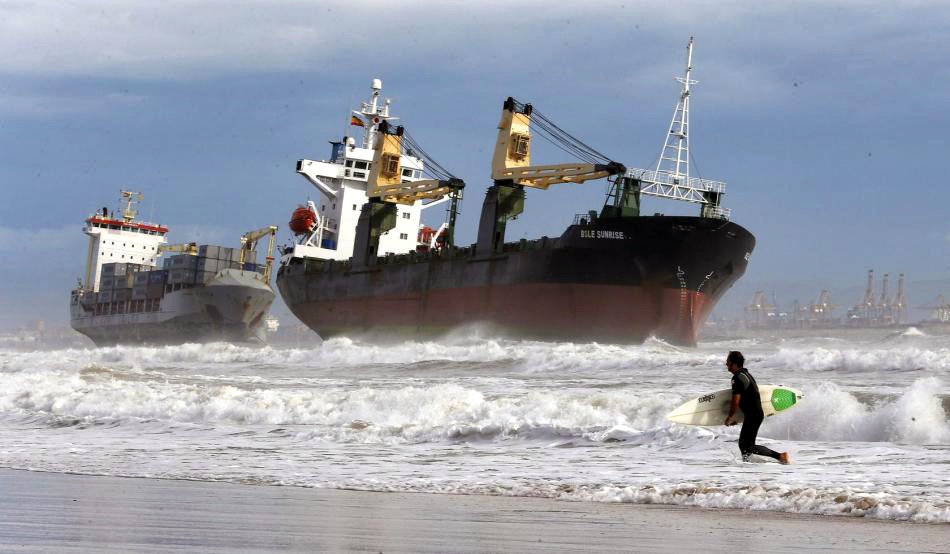
Further North on the Valencia coast, two large cargo ships ran aground as a result of the high winds and seas.

In the provinces of Murica, Almeria and Malaga, 10 people were killed when the inclement weather caused flash floods that swept away cars and bridges and flooded many villages.Source: Sign of the Times.net


WCO lauds NZ Customs for its capacity building assistance

The Secretary General of the World Customs Organization (WCO) commended New Zealand’s strong reputation for border management. During a recent visit by the WCO’s Secretary General, the NZ Customs Comptroller said that New Zealand takes its WCO responsibilities very seriously and works closely with the WCO to develop global standards for trade.This helps to ensure a stable trade environment for New Zealand businesses to operate in around the world.

The Secretary General, Kunio Mikuriya noted that the WCO is impressed with the capacity building assistance NZ Customs has given its Pacific neighbours, and enjoyed discussing New Zealand’s valuable contribution to the WCO, with Customs and the Minister of Customs, the Hon Maurice Williamson. The Pacific is an important region for New Zealand and NZ Customs has recently worked with the Cook Islands to introduce new technology and systems to improve border security to help facilitate legitimate trade and travel.

“New Zealand has been an influential member of the WCO, and has world leading expertise, particularly with its involvement in the development of a standardised data model for trade,” said Mr Mikuriya. In recent years NZ Customs has included the development of a standardised customs data model that will be used in the Joint Border Management System (JBMS). This data model is unique as it incorporates biosecurity and food related information, and means for the first time, one data message can contain all information that border agencies require. This will streamline border processes for clients who will use the Trade Single Window when it is introduced next year. Source: NZ Customs.

Tobacco Wars Heating Up

Australian courts this week threw out the bid by tobacco conglomerates to block government from introducing plain packaging for cigarettes. Tobacco product distributors operating in Namibia have been banking on a victory in the Australian courts to strengthen their arguments against similar plans by the Namibian government. Namibia Gazetted the Tobacco Products Control Act of 2010 that introduced plain packaging and ban the use of words such ‘mild’ or ‘light’ on cigarette boxes or any other tobacco products sold in Namibia.

The world’s biggest and the Namibian market leader in tobacco products, British American Tobacco (BAT) has been fighting the Act with serious threats to take the government to court if it dared to implement the Act. BAT has been citing the Australian court case as an example of how far it is prepared to go to fight the Namibian government over what it says is tantamount to expropriation of its trademarks properties. BAT also says plain packaging takes away its trade rights to freely communicate to consumers the nature of their lawful products on offer.

The Australian government’s victory now exposes BAT, along with Japan’s Tobacco International (JTI) and Imperial Tobacco to similar laws across the world. Britain, Canada, New Zealand, China, France, India, South Africa, Norway and Uruguay are already considering implementing the plain packaging measures. Southern Africa Customs Union (SACU) member states intend to adopt the generic Tobacco Products Control Act of South Africa that is in line with the World Health Organisation (WHO)’s pressure on the use of tobacco products, through the Framework Convention on Tobacco Control. BAT has been saying the proposed branding would exacerbate the illegal tobacco trade in Namibia where about 225 000 cigarettes are illegally sold every day.

BAT has a market share of about 85 percent of the Namibian tobacco market, selling just over 330 million cigarettes every year in the country. Namibians are said to smoke 75 000 packs of 20 cigarettes each per day or an equivalent of 1.5 million cigarettes each day. The court ruling in Australia makes Australia the first country in the world where cigarettes are sold in drab, olive coloured packets with graphic health warnings and no logos.

The Tobacco Products Control Act of 2010 also mandates the establishment of a fund from levies on sales of tobacco and other sources.The fund would partly use the money to pay for treatment of tobacco-related illnesses. The new proposed packaging features graphic pictures depicting the ill health associated with smoking. These range from stained teeth, throat cancer to damaged lungs and breast cancer with appropriate warnings underneath the picture. If the new legislation is implemented fully there would be a total blackout on advertising, promotion and any public relations activities around tobacco products or companies whose names are directly associated with tobacco products. Source: New Era, Namibia.

Saving the Rhino – a real story

Besides media reports and the many ramblings of law enforcement and environmental officials in the cause of protecting our fauna and flora, I received the following free e-book titled “Poached!” from a colleague. It details a story told by a veterinarian of a white rhino, callously mutilated by poachers and left alive with his horns and part of his face hacked off with pangas, and the good doctor’s quest to save the victim. Graphic pictures and an embedded video bring home to all the complete brutality of mankind. The book is published by Nikela – Helping People ~ Saving Wildlife and recommends widespread reading and distribution.

Public Office – a way to pillage the state?

The following article featured in the Business Day highlights the endemic problems of a moral-less society with an unbridled desire to attain wealth at all costs. True this is not just a South African problem, one just has to look at the corrupt activities of ‘politicians’ and ‘big western bankers’ to realise the despair that has  been wrought for so many unwitting citizens, many of whom face a future of utter misery. With so much talk of anti-corruption measures and witch-hunts against whistleblowers, the article provides a down-to-earth explanation as to what it means to hold public office.

The abuse of public power and the plundering of state resources have become so pervasive in SA that events such as these can no longer be regarded as isolated episodes of delinquent public officials, each acting individually. Instead they should rather be ascribed to a political culture born of a profound misconception of the very notion of public office, held by sizeable numbers of public office-bearers ranging from the highest echelons of the executive to junior police officers and public servants. This misconception causes office-bearers to act in a way that is diametrically opposed to what public office requires.

Public office bestows power and authority on the public office-bearer. It demands that citizens recognise and yield to the authority that accompanies it, be it the meagre authority of the junior public servant, the often intrusive authority of the policeman, or the far-reaching authority of the president or ministers. Public office commands respect by virtue of the power vesting in the public office-bearer and from the fact that public office-bearers do not act in their own interest but in pursuit of the public good. But the rewards that accompany the highest positions of public office extend much further. They are publicly applauded and venerated or placed in a position to receive these honours.

However, there is a stark flip side to the public office, which is as essential to public office-bearing as the power and rewards that come with it. This is that the authority and honour of public office are rooted in a profound sacrifice, requiring the office-bearer to sacrifice his private self for the sake of the public good. The higher the public office, the more drastic the sacrifice of the private self must be.

These two aspects are equally vital to public office: the power and the honour as well as the sacrifice of the office-bearer’s private self. The state is rooted in this two-pronged premise and its survival depends on it. Hence, public office does not turn the office-bearer into some magnified private person, entitling him to private gain that is beyond the reach of the ordinary private person. Public office-bearers must sacrifice the private self for the sake of, and in exchange for, public authority.

The occupant of public office discharges his responsibilities strictly in accordance with the prescribed script of the public office concerned; he must act lawfully in accordance with the precepts of the office in question. This is not to say that he must act mechanically, because the way in which public office is discharged may vary from mediocre to exceptionally virtuous, yet always within the confines of the script of the office concerned. Hence, the office-bearer may never act outside the powers inherent in the relevant public office as laid down in law, leaving no space for private detours beyond the ambit of the script.

But there is mounting evidence of a deviant culture that is causing public office in this country [South Africa] to be widely and profoundly misunderstood by many incumbents, identifying it with only its first aspect — its power and honours — yet ignoring and rejecting the second and equally essential aspect — the service to the public good and the sacrifice of the private self.

In fact, precisely the reverse seems to be identified with public office, namely that public office somehow entitles public office-bearers to exploit the power and authority of public office to achieve maximum private gain for the office-bearer — and to receive public accolades for these “successes”. When this occurs, the public office-bearer becomes the exact opposite of what he should be, namely a freebooter, a privateer, harming the public good and robbing the state. And when privateering increases as the evidence of a culture of abuse of public office for private gain is mounting, the gloomy prospects of a faltering state loom large. The larger the number of these privateers, the more the state descends into an assemblage of competing marauders rendering patronage to their own retinue with no regard for the rest, who have to fend for themselves while witnessing the unfortunate spectacle of the receding state. Article by: Koos Malan, professor of public law at the University of Pretoria – Business Day news paper July 2012.

The meaning of a Customs Broker

The following article comes from the 22 June 2011 issue of the American Shipper. It was written by the president of The National Customs Brokers & Forwarders Association of America (NCBFAA). I do believe that it is poignant for African’s to better understand what makes trade tick. It is particularly relevant in the South African context where certain service providers and consultants believe it is they that ‘turn the wheels of trade’ and that the ‘real’ end users are merely a consequence to push the ‘enter button’. While the ‘brokering industry’ has been tainted by criminal activities (in many cases ex-customs officials) there is a legitimacy to the continued existence for the trusted customs broker. The importance is even more pronounced today  where South African importers and exporters will soon face the brunt of the new Customs’ law – the need for skilled and experienced brokers should be an imperative within our local industry. So lets put ignorance aside and consider the article, below.

As a third generation customs broker, I know what it takes to enter goods into the commerce of the United States. As president of the National Customs Brokers and Forwarders Association of America, I know that the customs brokerage industry consists of thousands of individuals who work for small and large, old and new, struggling and successful companies for fees that do not reflect the true value of the service they provide.

It is unfortunate that some would say we “stubbornly stand in the way of progress.” The fact is that without the leadership of the brokerage industry and the NCBFAA, importers would still be taking their commercial invoices and bills of lading to the Customs House only to wait weeks for release and it would be impractical to conduct international business.

If you have never cleared goods entering the United States, I encourage you to try. It is naive to believe that all a broker does is push a couple of buttons and magically goods are released and delivered to your door.

To start, let’s look at the new Importer Security Filing (ISF). Pre-arrival shipment information that was considered unavailable three years ago is now given to U.S. Customs and Border Protection prior to loading for more than 90 percent of the goods heading by vessel to the United States. Customs brokers or freight forwarders receive and process practically all that information before transmitting it to CBP. What if you didn’t have access to the broker’s Automated Broker Interface system or the forwarder’s Automated Manifest System connection to transmit this data? How would you send the ISF? How would CBP receive it? Would every importer have to establish and maintain a CBP-compatible computer system? At what cost?

CBP Commissioner Alan Bersin has said that other agencies generate two of three import exams. In addition to myriad CBP regulations, there are numerous other regulations you must know to import successfully. Do you know the Food and Drug Administration rules? What about the Bio-Terrorism Act — did you research it yourself or hire another industry expert to figure out how this was going to impact your company? Then there are FDA product registrations and Prior Notice requirements and now the new Food Safety Act. Of course your broker can help with that. The U.S. Department of Agriculture, Environmental Protection Agency, Federal Communications Commission, Transportation Department — more than 20 agencies with requirements that must be met every time a shipment is presented for entry. Anti-dumping, free trade agreements, quota, denied parties, State Department, International Traffic in Arms Regulations, Office of Foreign Assets Control, etc. Can you imagine what would happen if your broker didn’t know about those things? How would your goods get cleared? Would your goods be detained or seized? What if multiple shipments were en route when the problem was identified? It is a good thing that you have somebody in your corner paying attention to this stuff.

I hear over and over how CBP wants to reduce the cost of importing. Let’s review the costs associated with importing: Freight ocean/air, duty and customs fees, broker fee and delivery fee. Freight we can’t control, duty is a given, Merchandise Processing Fees and other government fees we cannot control. There are exam fees, Vehicle and Cargo Inspection Systems exam fees, storage fees caused by exams, VACIS handling charges by some carriers and port facilities, trucking fees to get containers positioned for exams, and so on. A great number of these costs are a result of government security efforts. The broker fee averages about 0.1 percent of the cost of the imported goods, and then there is the truck fee plus a clean truck fee to pickup and deliver the goods. Hmm … what should be reduced?

“It is a good thing that you have somebody in your corner paying attention to this stuff.”

During the CBP Trade Symposium, the Consumer Product Safety Commission (CPSC) described a tip about two containers that might contain non-compliant goods so they worked with CBP to perform an intensive exam. Luckily the tip did not pan out and the goods were found to be compliant. “Disaster avoided!” What CPSC didn’t say or didn’t know was that the storage and handling costs associated with having two containers held for two weeks exceeded $4,000. There was also no mention about whether the goods were time sensitive. At most ports in the nation, if a government agency puts a hold on a shipment, the expenses do not go on hold. Demurrage and per diem costs accumulate daily. Who creates those extra costs? I suggest that those who want to reduce the cost of importing consider where the real costs are being accrued — it is not in the brokerage industry, which works very hard to help reduce the cost of importing. 

That leads to the discussion of using brokers as a “multiplier” to reach small and medium-size importers. That is, in fact, what brokers do for the thousands of importers who know their product but have limited knowledge of the importing process. We get the importer’s goods cleared through the maze of government regulation and delivered to them within days of arrival into the United States. Talk about a multiplier. The fact is that we do that for businesses of all sizes, from the biggest multinational corporations with multiple import divisions and thousands of different products to the start-up business with a single product. Moreover, we do it every day … routinely.

Let’s talk about the Automated Commercial Environment. Do you know why few brokers use ACE? The system doesn’t always work and you can’t use it to release a shipment into the commerce of the United States. While you can use ACE for certain entry related functions, to the extent that brokers do utilize ACE, they must maintain two operating systems and train their personnel to perform limited tasks in both systems. What a nightmare! Talk about inefficiency and the bloated cost of importing!

We would love to have ACE working as promised. For more than 10 years the brokerage industry has gone to Congress and asked for money for ACE development. Three billion dollars later, the system is a fraction of what was promised and we have been told it will have reduced functionality in many of the areas that are crucial to our businesses. Would you change to a new system if it was worse than the one you currently use? The answer is “no” and neither will we.

Two years ago, the NCBFAA gave CBP a white paper that outlined the minimum system requirements needed before we would encourage our members to make the switch. Once ACE development has met those minimum requirements, we will encourage our membership to transition to the new system. CBP understands exactly where we are on this and we continue to vigorously support ACE development. We are excited about the progress that Cindy Allen has made in her limited time as the ACE project leader. That gives us hope that this endless project will have value and will be completed before we all retire.

The brokerage industry is comprised of highly regulated, dedicated professionals who must pass a rigorous examination to become a licensed customs broker. Did you know the annual pass rate for this examination is less than 10 percent? That is a lower pass rate than the CPA exam, the attorney’s bar exam, doctor medical boards, or the insurance broker exam. Talk about tough. Five years ago, the NCBFAA developed a six-month certification program called the Certified Customs Specialist (CCS). At the outset of the program, licensed brokers who wanted to participate were grandfathered into the CCS program, but had to earn 20 units of continuing education annually. Interested parties who were not licensed customs brokers, brokers who missed the grandfathering, and anyone who simply wanted to learn more about the import process, could enroll in the CCS program. We encourage anyone with a desire to learn more about the importing process to take the CCS course. In our role as professionals we know that we must keep current with the regulatory changes and in an industry where change occurs daily, annual continuing education is important.

We appreciate the recognition that the brokers are the most knowledgeable and trade savvy individuals to effect positive change on their industry. We are the biggest supporters of ACE, ISF, Customs-Trade Partnership Against Terrorism and other government programs that are reasonable and improve trade facilitation. We make the highly complex, tightly regulated and difficult process of importing into the United States so easy that not only the biggest corporations can do it but also the smallest ones can do it just as well.

We welcome positive change but, yes, we are stubborn when promises made to us are not kept and the costs associated with short-sighted, ill-conceived programs are dumped on our industry and the trade.

There’s a lot more to customs brokerage than pushing a button. Licensed customs brokers handle more than 95 percent of the entries filed with CBP with the single goal of getting our customer’s goods entered into the commerce of the United States legally, quickly and as efficiently as possible. And we do it proudly, professionally and humbly.

Is this situation any different elsewhere worldwide?
KRA – Customs to be removed from revenue authority

The government has proposed a separation of the customs department from the Kenya Revenue Authority in a bid to facilitate faster movement of goods.

Despite efforts by the revenue body to reform its operations especially through technology the finance minister Njeru Githae proposed creation of an autonomous Customs Services body.

This comes as the country moves to fully implement the East Africa Common Market Protocol. “To realign the operations of our Customs with this Protocol and to mainstream its critical role of trade facilitation and border controls, the Kenya Revenue Authority will be rationalised with a view to establishing the Customs Services as an autonomous entity on its own,”said the minister in his budget speech yesterday.

He said the Government will soon commence a process to consolidate all existing cargo related standard enforcement agencies into one single entity expected to reduce bureaucratic inefficiency in cargo clearance.

Deloitte tax expert, Andrew Oduor lauded the move saying customs has been a very problematic area in the country with the systems inefficient. “it hoped that establishment of the autonomous entity is going to help streamline the operations and that is going to resolve this issues,” he said. Source: The Star (Nairobi)

Comment: In effect, this seems no more than a move to create an autonomous border management agency. Unfortunately consolidating various agencies is not going to make customs any more efficient. As seems to be the case elsewhere across the globe where this method of ‘consolidation’ has been introduced, deep-seated discontent has often arisen with the former ‘ areas of expertise’ of individual authorities being lost forever. What results is a mongrelised agency fit more for political expedience rather than improved ‘efficiency and facilitation’. Good luck anyway.

ZIMRA, Business to form Customs Forum

The Zimbabwe Revenue Authority (ZIMRA) is working in partnership with organised businesses associations in crafting a Memorandum of Understanding, creating the Zimbabwe Customs to Business Forum, an official has said. ZIMRA’s commissioner for customs and excise Mr Happias Kuzvinzwa said last week that the forum was a platform for his organisation and business to collaborate on issues of compliance, policy, capacity building, integrity and technical engagements. He was addressing delegates at the Shipping and Forwarding Agents’ Association of Zimbabwe 8th annual conference held in Beitbridge last week. Mr Kuzvinzwa said the interim steering committee was finalising the draft MoU and terms of reference.

“The forum is a prelude to the implementation of the authorised economic operator scheme. Membership of this forum is open to the businesses affiliated to recognised associations and shall be governed through a steering committee which is a higher committee, and standing committees which are lower committees chaired and constituted by both ZIMRA and business.

“The standing committees are organised in clusters for easy management of programmes. We expect all the concerned parties to sign the MoU soon upon its finalisation” he said.

Mr Kuzvinzwa added that in line with the SAFE framework of standards, ZIMRA would soon be plotting the authorised economic operators. He said the scheme sought to reward all compliant operators in the supply chain who meet the set criteria. He added that groundwork had been done and teams will be conducting stakeholder consultations and awareness workshops next month. “I would also want to urge the freight industry to embrace as a culture and operation ethos integrity, voluntary compliance, relevant competencies, and information technology.

“Missing these industry risks is being packed into the dustbin of history as you become irrelevant and classified as non-tariff barriers.” he said. Mr Kuzvinzwa added that ZIMRA was also in the process of putting in place a border agency single window through ASYCUDAworld. He said all border agencies would be connected to the workflow process through ASYCUDAworld to ensure that respective mandates are coordinated and streamlined.

“Discussions are at an advanced stage with other border agencies on the implementation of the single window and Beitbridge has been selected to pilot the programme with ZIMRA providing computer workstations at their respective offices,” he said.

Source: The Herald (Zimbabwe)

Open Borders and Integrated Supply Chains break down Global Trade Barriers

East Asian economies have recorded marked improvements in their ability to enable trade, while traditional frontrunners Singapore and Hong Kong retain a clear lead at the top of the global rankings, according to the Global Enabling Trade Report 2012, released today by the World Economic Forum.

The report, which is published every two years, also confirms strong showings for Europe’s major economies, with Finland and the United Kingdom both advancing six places to 6th and 11th, respectively, and Germany and France remaining stable at 13th and 20. Other large economies fare less well: the US continues its decline to 23rd, as does China (56th) and India (100th). Among emerging economies, Turkey (62nd) and Mexico (65th) remain stable while Chile (14th), Saudi Arabia (27th) and South Africa (63rd) climb in the ranking. ASEAN members Thailand (57th), Indonesia (58th) and the Philippines (72nd) also improve. Perhaps the proponents of OSBPs and a BMA in South Africa have not read this or have deeper insight into the matter.

As well as ranking nations’ trade openness, the report finds that traditional notions of trade are increasingly outdated as global value chains require new measurements, policies and cooperation. The report also finds that security, quality and trade can be mutually reinforcing through supply chain integrity efforts, but a knowledge gap in identifying buyers remains an important barrier. The biennial report, covering 132 economies worldwide, measures the abilities of economies to enable trade and highlights areas where improvements are most needed. A widely used reference, it helps countries integrate global value chains and companies with their investment decisions.

At the core of the report is the Enabling Trade Index, which measures institutions, policies and services facilitating the free flow of goods over borders and to destination. It breaks the enablers into four issue areas: market access, border administration, transport and communications infrastructure, and business environment. The Index uses a combination of data from publicly available sources, as well as the results of the Executive Opinion Survey, a comprehensive annual survey conducted by the World Economic Forum with its network of partner research institutes and business organizations in the countries included in the report. The 2012 results demonstrate that the ASEAN Trade in Goods Agreement has facilitated trade since its entry into force in 2010. This year, the report also directly captures the most important obstacles to exporting and importing in each country, and notes the strong links between import and export success. Source: AllAfrica.com / WEF

South Africa – Cyber thunder in the clouds

The following article is very pertinent to any organisation or group considering cloud computing. Soft-marketing tends to delude would-be users into believing they will have full control over their data, and as such, is fully secure. Even in the international Customs and Border Management space there is lots of talk on this subject, yet very little substance. Unfortunately, organisations and individuals are slaves to the technology they use which fashions not only their work ethic but attitudes as well. It is no longer true that technology is a ‘tool’. More time and money is spent these days on technology choice than on training and education. In fact technology is so important it influences law-making and business operations, rendering human discretion obsolete in many instances. Therefore it is imperative that organisations involve business and legal experts in their systems development. 

The recent spate of hackings and electronic security breaches serves to highlight the endemic threat and associated cost of cyber crime. Globally, organisations are forced to reconsider their cyber security measures as cyber criminals become more audacious and technologically innovative. Crimes can take place in both the physical and the electronic medium, with the possibility of technology infrastructure being used as both a “subject” and an “object” of a crime.

The criminal justice system faces a number of challenges in the successful prosecution of cyber crimes. While the Electronic Communications and Transactions Act of 2002 does create a framework for criminalising cyber crimes, including hacking, it does not provide any concrete preventative measures to combat cyber crime. The technical and often remote nature of cyber crimes, including multi-jurisdictional issues where cyber criminals are operating abroad, often prevents prosecutors from being able to present viable cases and bring cyber criminals to book.

Fortunately, the South African government has acknowledged that more proactive measures are required to address the scourge of cyber crime. Cabinet has recently approved a National Cyber Security Policy published by the Department of Communication. The policy creates, among other things, a platform for the creation of a number of structures that would be responsible for analysing and responding to the threat of cyber crime with the ultimate objective of mitigating the effects of cyber crime in South Africa. The State Security Agency has been tasked with responsibility and accountability for the implementation of cyber security measures. It is hoped that this policy and the measures it intends to implement results in the prevalence of cyber crime in South Africa being effectively addressed and countered. Organisations should, in addition to any measures being taken by government, continue to carefully assess their cyber security measures proactively, including by implementing robust systems, particularly in instances where personal data is processed (which includes the collection, recording, transferring or storing of such personal information). The Protection of Personal Information Bill requires the implementation of “appropriate” security safeguards where an individual’s personal information is processed. What will be considered appropriate will need to be determined on a case by case basis and with reference to steps taken in foreign jurisdictions, which may provide guidance in interpreting this requirement.

On account of the fact that there is no way to precisely document the far reaching effects of cyber crime, individuals, organisations and government must ensure that a more cautious and prudent approach is adopted to manage security in any electronic environment. Source: SAPA

America – shees verry beeeeg!

Publication of the latest USCBP Border Patrol Strategic Plan reflects and builds on the transformation of the United States’ relationships with Mexico and Canada, particularly in the areas of border management and security. The joint Declaration of Principles for the 21st-century border represents an enhanced and strengthened commitment to fundamentally restructure the way we manage our shared border. The depth and breadth of cooperation that occurs now between the United States and Mexico was unthinkable even a few years ago. Similarly, the Beyond the Border declaration between Canada and the United States has an equally significant potential in what is already our historically extraordinary relationship with Canada. These developments have created unprecedented opportunities with both Mexico and Canada, in which DHS and CBP will play a defining role, to improve our security and economic competitiveness – and CBP will play a defining role in taking advantage of those opportunities. The Border Patrol in turn is key to advancing CBP’s security agendas with Mexico and Canada, working with its law enforcement counterparts in each country to identify and mitigate threats.

The U.S. Border Patrol is a premier law enforcement organization, recognized around the world for expertise, capabilities, and professionalism. CBP’s officers and agents are the frontline, the guardians of the Nation’s borders. We honor and are proud of them, and we thank them for everything that they do to protect America and the American people. Source: CBP.gov

So there you have it – for a real dose of commercialized Customs and what it can do for the good folks in America, and anywhere else in the world for that matter, check out the strategic plan by clicking here! You’ll be forgiven if you thought you were reading an edition of Jane’s Defense & Security Intelligence & Analysis. Most customs and border management agencies around the world can only dream about such impressive kit! 

Related items

How to resolve regional transport problems?

The Freight-Intra Africa Trade Conference in Pretoria, this week, has featured several news articles in the local media, and no doubt some foreign tabloids as well. The Minister of Transport has cleared up the cause of the ills plaguing cross border and regional transport. At least we are now fully informed that [historical] design issues and operational inefficiencies at South Africa’s landborders, and Beit Bridge in particular, are the fundamental causes of under-performance in intra-Africa trade.

“In most cases, the delays at the borders are caused by operational inefficiencies, which result in the duplication of processes. This is a serious cost to the economies of the countries that conduct their trade through such border posts,” the Minister said.

One has to seriously question who advises the minister which leads to such statements, and whether or not these advisers have visited any land borders in recent months.

Now the remedy – Government has budgeted and approved R845-billion for infrastructure development over the medium-term, with a significant proportion, about R262-billion of this investment being earmarked for transport infrastructure and logistics projects. Can anyone question government’s commitment in this respect? Not really. However, the Minister was quick to point out government would resolve inefficiencies at the borders by establishing a mechanism that will bring all border entities under a single command and control structure to address the fragmentation in border operations. “The ultimate vision is to create one-stop border operations to facilitate legitimate trade and travel across the borders”.

The proliferation of border management agencies (integration of enforcement and regulatory authorities under one umbrella) – which has seen the demise of many customs administrations over the last decade – has not proven an effective vehicle to manage cross border travel and trade. It is difficult to see how facilitation procedures can co-exist under a command and control environment. What the situation does create is the opportunity to consolidate a budget for security expenditure. Various Sources: Engineering News, Business Live, Fin24.com and personal opinion.

Moving goods efficiently to inland cities – a case for inland container depots

Port of Agapa, NigeriaNearly one in three African countries is landlocked, accounting for 26% of the continent’s landmass, and 25% of the population, or more than 200 million people, indicating that current population growth trends, including the development of population megacities distant from coastal locations will become powerful drivers of inland markets.

At the 3rd Annual Africa Ports, Logistics & Supply Chain Conference, APM Terminals’ Director of Business Development and Infrastructure Investments for the Africa-Middle East Region, Reik Mueller stated that “Ports will compete to become preferred gateways to move goods efficiently to inland cities and landlocked countries” Mr. Meuller added that “The future prosperity of these nations depends on access to the global economy and new markets; high-growth markets need inland infrastructure and logistics capabilities along development corridors. The ports that can provide the best and most efficient connectivity to those Inland markets will be the winners”.

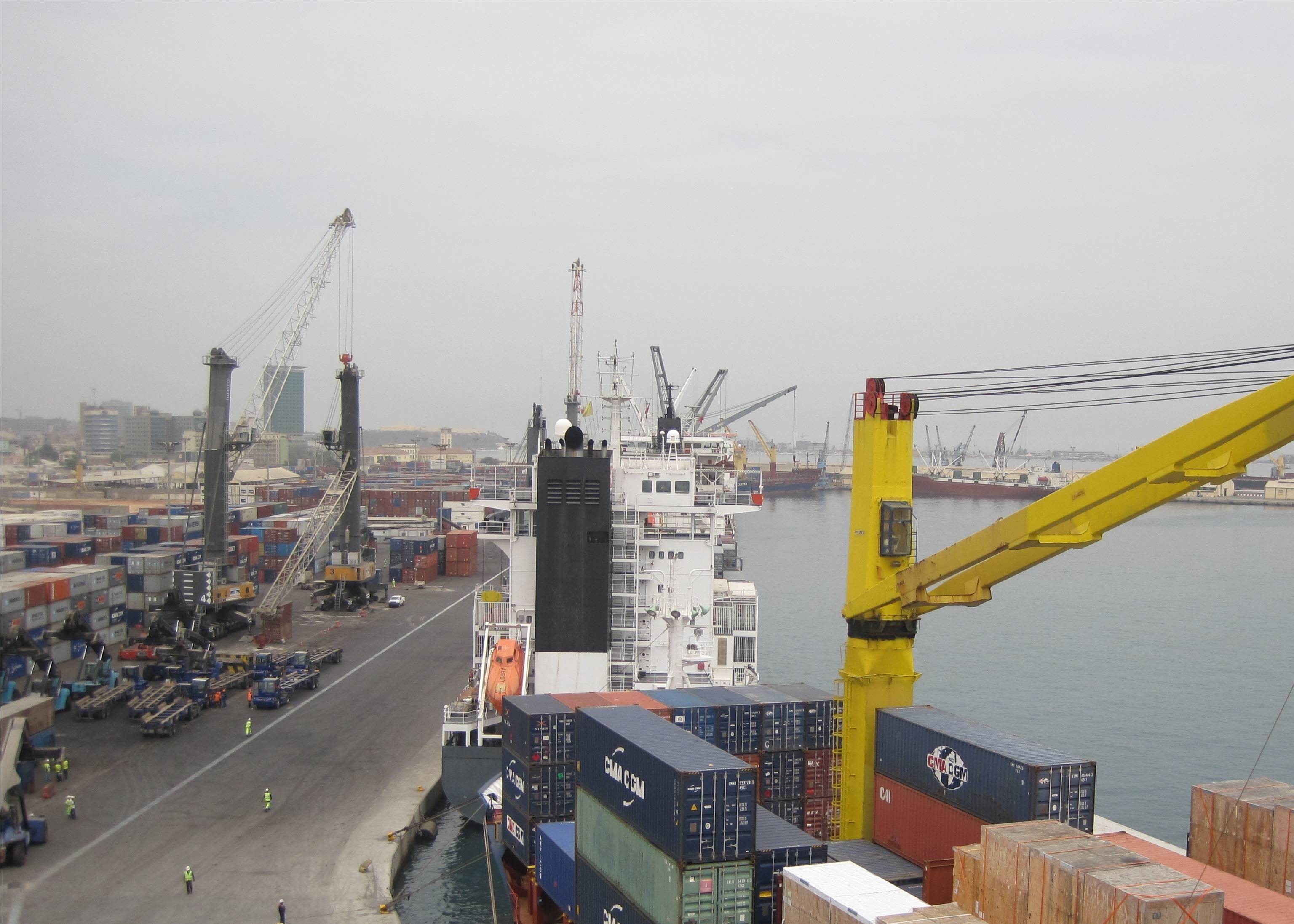
Citing the recent success in reducing port congestion through Inland Container Depots (ICDs) now in operation outside of the APM Terminals operated port of Luanda, Angola, the Meridian Port Services joint venture in Tema, Ghana, and the ICD which was opened four km from APM Terminals Apapa, the busiest container terminal in Nigeria and all of West Africa, Mr. Mueller made the case for integrated transportation solutions, “Importers are not going to wait for improved infrastructure; the cargo will simply move to other ports” said Mr. Mueller.

Mueller described a new model for transportation planning and development in West Africa in which port and terminal operations shift focus from “container lifts” toward “integrated container transport solutions. Dry ports and inland markets are the untapped, overlooked opportunity markets of the future in Africa”. Now ain’t this a contrast to views on the southern tip of the continent – the continent’s biggest port without efficient inland corridors and networks must jeopardize investor confidence not to mention export profitability.   Sources: DredgingToday.com, PortStrategy.com and Greenport.com.

Maersk pays US government $32m

Logo of A.P. Moller – Maersk Group

Maersk Line has agreed to pay an out of court settlement of US$31.9 million to the US government to resolve allegations that it submitted false claims for inflated shipping costs incurred during the transport of containerised cargo to support US troops in Afghanistan and Iraq.

The government claimed Maersk was allegedly billing in excess of the contractual rate to maintain the operation of refrigerated containers holding perishable cargo at a terminal in Karachi, Pakistan, and at US military bases in Afghanistan; billing excessive detention charges (or late fees) by failing to account for cargo transit times and a contractual grace period; billing for container delivery delays improperly attributed to the US government; billing for container GPS tracking and security services that were not provided, or only partially provided; and failing to credit the US government for rebates of container storage fees received by Maersk’s subcontractor at a Kuwaiti port.

Tony West, Assistant Attorney General for the Civil Division of the US Department of Justice said: “Our men and women in uniform overseas deserve the highest level of support provided by fair and honest contractors. As the Justice Department’s continuing efforts to fight procurement fraud demonstrate, those who put profits over the welfare of members of our military will pay a hefty price.”

In 2009, APL was fined $26.3 million by the US Department of Justice, and Agility is still fighting a claim for overcharging in 2010.

Makes you wonder – did they declare the correct cargo information on their manifest? I guess it really does not matter since the cargo was destined for Afghanistan and Pakistan in any event. Don’t believe these countries require advance manifest reporting just yet.

Source: ifw-net.com

Taiwan Customs expands e-seal initiative

Taiwan Customs together with its partner GS1 Taiwan has expanded the RFID initiative atthe country’s major ports to include active RFID. The Cargo Movement Security project launched in 2009 to investigate the use of an automated, RFID-based electronic seal (e-seal) system (see Taiwan Customs Officials Adopt RFID-enabled Container Seals), in an effort to eliminate the need for Taiwan Customs officers to escort containers from carrier yards to container terminals. Work on the project will continue through 2012, so that Taiwan Customs can upgrade the RFID e-seal system’s capabilities and fully extend it to import, export, transit and trans-shipment containers located at the island’s major ports.

The initial project involved EPC Gen 2 RFID; the team plans to add active RFID e-seal technology by the end of this year, for security management of in-land transportation. The Taiwanese government wants to leverage both active and passive RFID tags at all ports in Taiwan, in order to better ensure cargo and container safety, while reducing costs to logistics and shipping firms. E-seals incorporating active RFID technology and complying with the ISO 18185 e-seal standard will be used for the trans-shipment of containers between the country’s Keelung and Taipei harbors, as well as for air cargo at Taiwan Taoyuan International Airport, and at a terminal located outside the airport’s restricted area. In addition, GS1 Taiwan and the Taiwanese government have submitted a new RFID passive e-seal candidate standard to EPCglobal. Source: RFID Journal