Event – Role of the Private Sector in Support of the Trade Facilitation Agreement

international-trade1The role of the private sector in the implementation of the World Trade Organization’s (WTO) Trade Facilitation Agreement (TFA) will be the focus of the 2015 edition of the Global Facilitation Partnership for Transportation and Trade (GFP) meeting. With the world’s customs administrations currently identifying their respective TFA  implementation commitments and setting up National Trade Facilitation Committees, trade and logistics operators can learn how they can participate in such initiatives by attending these sessions.

The GFP meeting will be held at Palais des Nations, Geneva, on 22 April, and will be divided into three thematic sessions.

The first session, ‘Governments’ Priorities: Strategies for Fostering Private Sector Participation in the TFA Implementation Process’ will look at how governments are planning to implement the TFA.

It will focus on how the private sector is consulted and how an effective participation of the private sector can be facilitated to implement the Agreement.

The second session, ‘Priorities, Perspectives, and Expectations from the Private Sector on TFA Implementation’ will assess how the private sector – including large corporates and small and medium-sized enterprises – view TFA implementation. It will look at the potential benefits from a private-sector perspective, and how the sector can contribute to national and international initiatives to implement the agreement.

The third session, ‘International Organizations’ Co-ordination and Partnership for Supporting TFA Implementation’, will provide an opportunity to share information and experiences on how the TFA can be implemented with public-private partnerships in mind, as how national trade facilitation committees can better support this process.

ITC invites all interested stakeholders to join the GFP meeting at the Palais des Nations on 22 April from 9:00. Click here for link to online registration.

Source: International Trade Centre (Geneva)

US-India agreement to pave the way to implementation of the WTO “Bali Agreement” on trade facilitation?

India_USA-3The U.S. and India have reached an agreement that promises to pave the way toward global implementation of the WTO Trade Facilitation Agreement (TFA). The breakthrough agreement between India and the U.S. should now make it possible for member countries to begin implementing the requirements of the agreement, providing potentially significant financial benefits to businesses trading goods around the world as local customs procedures are streamlined. The target date for ratification of the agreement is 31 July 2015. Upon ratification by two-thirds of the membership, the agreement will enter into force for all WTO states. Member state will then begin the process of adopting conforming legislation.
The Trade Facilitation Agreement

Concluded in December 2013, the TFA is intended to streamline, and to some extent harmonize, customs clearance procedures around the world by imposing new multilateral disciplines on customs procedures in all member countries. The agreement imposes basic globally applicable principles for transparency, due process, and reasonableness in the development and implementation of customs clearance requirements across a broad spectrum of activities related to importing, exporting, and transiting of goods.

The U.S.-India agreement

While the specific details of the bilateral agreement are not publicly available at this time, a press release from the Office of the U.S. Trade Representative states that there are two key elements of the deal:

  • the U.S. and India agree that the multilateral TFA should be implemented without conditions, on the basis of a standard legal instrument for implementing new WTO agreements; and
  • the “peace clause” agreed upon by WTO members in December 2013, under which WTO members will refrain from initiating challenges to certain food security programs under the WTO dispute settlement process, will remain in place “until a permanent solution is found.”

Since announcement of the agreement last December, India has raised concerns that developing countries need greater assurances regarding their ability to maintain government agricultural buying programs and other farm subsidies until an agreement could be reached among WTO members on how to bring such programs into conformity with the body’s trade rules. The U.S. and India had previously disagreed on the form such assurances should take.

Under the new bilateral agreement, the U.S. and India will seek a General Council decision on the two key elements outlined above. A General Council decision will require the consensus of all WTO members. Source: Hogan Lovells International Trade Alert

WCO addresses the United Nations Conference on Landlocked Developing Countries

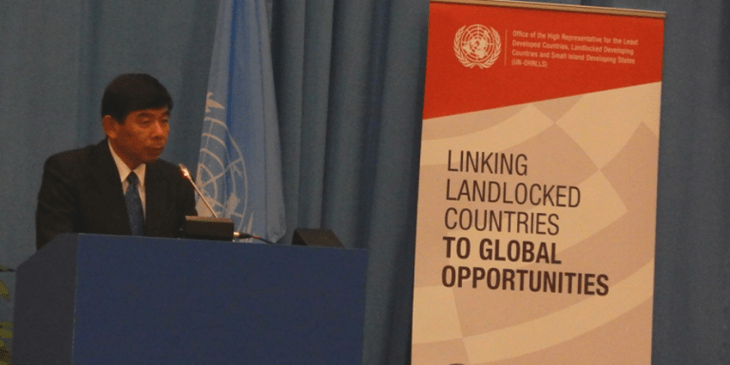
WCO Secretary General Kunio Mikuriya addressing delegates at the high-level opening ceremony of the ConferenceWCO Secretary General Kunio Mikuriya addressed delegates at the high-level opening ceremony of the United Nations Conference in Vienna on 3 November 2014.
The Conference aimed to seek a renewed political commitment to address the special needs of landlocked developing countries (LLDCs) and identify priorities, ways, and means to address them. This was the second Conference after the first one held in Almaty, Kazakhstan in 2003. The Conference takes place only once a decade and is an important milestone for formulating a focused, forward-looking and action-oriented development agenda for LLDCs for the next decade.

Secretary General Mikuriya made a statement together with other heads of international organizations, including Mr. Ban Ki-moon, Secretary-General of the United Nations, and Mr. Roberto Azevêdo, Director General of the World Trade Organization, and several heads of state, including President Heinz Fischer of Austria. In his remarks, he highlighted the importance for Customs administrations to establish an effective and efficient transit regime which is an essential element to promote regional economic integration and ensure economic growth of LLDCs.

He also used his speech to launch the WCO Transit Handbook that the Permanent Technical Committee finalized last week. Secretary General Mikuriya announced that the Transit Handbook would be formally published shortly after further editing and incorporating the outcomes of the Conference. He also described other WCO instruments that facilitate transit, including the Revised Kyoto Convention and the Time Release Study. He gave an assurance of enhanced delivery of technical assistance and capacity building for LLDCs through the Mercator Programme, a tailor-made assistance programme supported by a wealth of instruments and best practices, a network of accredited experts and a comprehensive donor engagement mechanism. Source: WCO

Related links

UK Forwarders object to New Air Cargo Surcharge

awb_welcomeIt is becoming more and more evident that every ‘automation’ project entails ‘more costs’. The benefits appear to lie in the ‘comfort’ of doing stuff at your keyboard. Much vaunted ‘cost-savings’ are a myth as technology encroaches every facet of global trading. The following is a fine example.

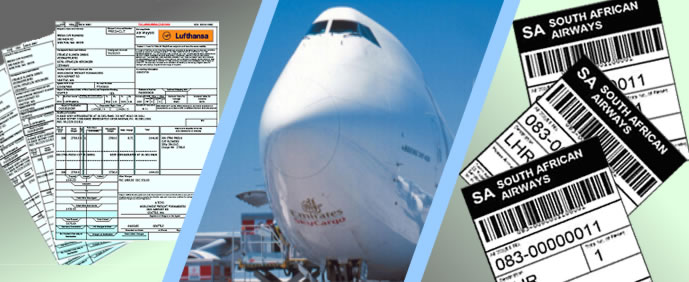
The trade association for UK freight forwarders and logistics service providers is encouraging its members to object to a Paper Air Waybill (AWB) Surcharge that airlines are planning for export AWBs that are not filed electronically. Robert Keen, director general of the British International Freight Association (Bifa), commented: “Bifa supports e-Commerce and e-Air Waybill implementation in the air cargo supply chain. However, we believe that implementation should create value for forwarders and airlines alike, and airlines need to recognise the costs that the originator of the information incurs to enter and transmit data.”

Keen continued: “Through our international body Fiata, Bifa will be voicing our objection to carriers that seek to apply yet another surcharge, and create yet another revenue stream, under the guise of supporting IATA’s – the airline industry body’s – e-Freight initiative, which aims to implement e-Freight worldwide.” Bifa is asking its members to join in the stand against the introduction of this surcharge by completing an online survey, which can be found here: http://www.surveygizmo.com/s3/1782849/Paper-AWB-Surcharge-Survey

The air freight sector missed IATA’s target last year of achieving 20% e-air waybill penetration “on feasible lanes”, achieving just 12%. The target for 2014 has been revised downwards to 22%, with a target for 45% e-AWB penetration by the end of 2015 and 80% by the end of 2016. IATA expects to see an acceleration of penetration levels this year, in part because of the introduction last year of the e-AWB Multilateral Agreement, to which around 70 airlines and more than 100 freight forwarders have now signed up.

But while there is increasing momentum among airlines and air cargo handlers, many forwarders remain unconvinced of the benefits. Chuck Zhao, process engineer project manager at US air cargo handler Consolidated Aviation Services (CAS), observes that only around 6% shipments out of the US are e-freight, largely because “those who cut the paper air waybills simply do not see the benefits of going paperless”.

Michael White, assistant director of cargo facilitation, security and standards for US air freight association Cargo Network Services (CNS) and regional manager of cargo for IATA, observed that there was a need for effective communication routes for the forwarders, especially small and medium-sized ones, to transmit their FWB & FHL messages – preferably a community system rather than via multiple airline portals. He said there was currently no community system in the US, but there were signs that companies are looking at that capability. Source: Lloydsloadinglist.com

WTO Trade Facilitation Agreement – Dead!

The World Trade Organisation headquarters in Geneva [AFP Photo]

The World Trade Organisation headquarters in Geneva [AFP Photo]

The World Trade Organization got a surprise setback on Thursday when India, pushing for concessions on agricultural stockpiling, vetoed plans for universal customs rules. The deal could have added $1 trillion and 21 million jobs to the world economy.

The July 31 deadline on the first proposal for major global economic reform in two decades – a series of customs procedures known as “trade facilitation” – left negotiators empty-handed after India refused to sign up to it.

India, with its large number of poor and new nationalist government, had demanded the exclusive right to subsidize and stockpile grains which is not permitted by WTO rules.

The WTO, experiencing what may be its worst setback in its 19-year history, reluctantly admitted defeat.

We have not been able to find a solution that would allow us to bridge that gap,” WTO Director-General Roberto Azevedo told negotiators in Geneva just hours before the deadline was set to lapse.

Some analysts are of the opinion the failure represents the beginning of a new era of trade deals, which will depend more on individual economies forging their own initiatives, as opposed to attempting to force global reform.

Today’s developments suggest that there is little hope for truly global trade talks to take place,” Jake Colvin at the National Foreign Trade Council, a leading US business group, told Reuters.

The vast majority of countries who understand the importance of modernizing trade rules and keeping their promises will have to pick up the pieces and figure out how to move forward.

Whether or not other countries will pick up the dropped ball and try to move forward despite the loss is not yet clear, but the present mood is noticeably downbeat.

We’re obviously sad and disappointed that a very small handful of countries were unwilling to keep their commitments from the December conference in Bali, and we agree with the Director-General that action has put this institution on very uncertain new ground,” US Ambassador to the WTO Michael Punke told reporters.

Meanwhile, there is speculation that some countries may decide to go ahead with the plan without India’s support.

However, Azevedo said that while the world’s largest economies had choices on how to respond to the failed talks, the poorest economies would suffer the brunt of the fallout.

If the system fails to function properly then the smallest nations will be the biggest losers,” he said. “It would be a tragic outcome for those economies – and therefore a tragic outcome for us all.

Source: Russia Today (contributed by V Singh)

Related articles

WTO launches new Trade Facilitation ‘Facility’

Azevêdo launches new WTO Facility [Photo: WTO]

Azevêdo launches new WTO Facility [Photo: WTO]

A new initiative unveiled at the WTO on 22 July 2014 will help developing countries and least-developed countries reap the benefits of the WTO’s new Trade Facilitation Agreement, which was agreed at the Bali Ministerial Conference in December 2013.

The new Facility will complement existing efforts by regional and multilateral agencies, bilateral donors, and other stakeholders to provide Trade Facilitation-related technical assistance and capacity-building support. It will act as a focal point for implementation efforts. It will become operational when the protocol to insert the Trade Facilitation Agreement into the existing regulatory framework is adopted by WTO Members. The functions of the Facility will include:

  • supporting LDCs and developing countries to assess their specific needs and identify possible development partners to help them meet those needs
  • ensuring the best possible conditions for the flow of information between donors and recipients through the creation of an information sharing platform for demand and supply of Trade Facilitation-related technical assistance
  • disseminating best practice in implementation of Trade Facilitation measures
  • providing support to find sources of implementation assistance, including formally requesting the Director-General to act as a facilitator in securing funds for specific project implementation
  • providing grants for the preparation of projects in circumstances where a Member has identified a potential donor but has been unable to develop a project for that donor’s consideration, and is unable to find funding from other sources to support the preparation of a project proposal
  • providing project implementation grants related to the implementation of Trade Facilitation Agreement provisions in circumstances where attempts to attract funding from other sources have failed. These grants will be limited to “soft infrastructure” projects, such as modernization of customs laws through consulting services, in-country workshops, or training of officials.

South Africa, on the other hand has warned of the concerns of developing countries being sidelined under a global trade deal, adding to fears India and some African states may block the landmark Bali agreement. South African Minister for Trade and Industry further intimated that the country would have no difficulty in implementing the trade facilitation agreement but said it would “go along with” the decisions made by its allies within the WTO. Source: WTO

Related articles

EAC – Business Leaders demand shift to New Trade Rules

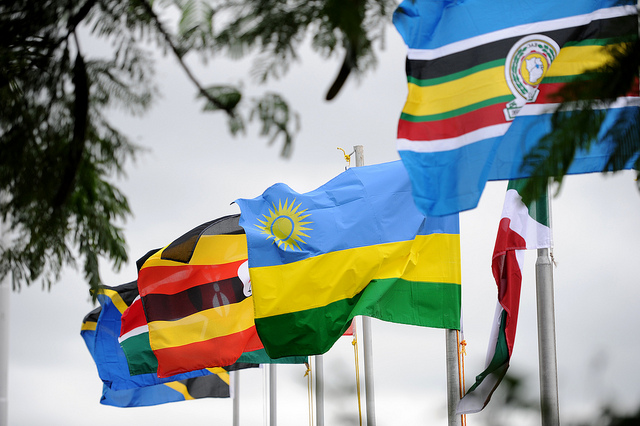
eabc-flagsThe East African Business Council, the umbrella body of the region’s private sector, has asked governments in the five-member East African Community (EAC) to expedite implementations of the new WTO trade facilitation agreement.

Council chairperson, Felix Mosha, made the appeal on Tuesday during a breakfast meeting with trade facilitation institutions and the business community in Arusha, Tanzania.

WTO members in December 2013 adopted the Agreement on Trade Facilitation during the Ninth Ministerial Conference in Bali, Indonesia after 10 years of negotiations. The Bali deal aims at boosting poor countries’ ability to trade and allow them more flexibility in food security. The agreed text is currently under review by legal experts and will come into force once two thirds of the 159-member World Trade Organisation accept it.

Trade and Industry minister, Francois Kanimba, told The New Times that implementation of the agreement cannot be done immediately because WTO is yet to give member countries the requisite legal implementation modalities.

“By July, we’ll have got it, so that the process can start,” Kanimba said. He added that Rwanda, after a recent self-assessment on how it stands on the implementation road map, realised most requirements had been attained.

Steps made in facilitating cross-border trade such as the ongoing EAC one-stop border posts, and the 2012 launch of the electronic single window system, were some of the steps taken by Rwanda.

Benefits

“Everything, by nature of trade facilitation is always good. The trade balance for Rwanda is negative and if the Bali agreement helps us improve, it will help us address our development challenges,” the minister said.

“Rwandan traders will also benefit as trade facilitation is about easing things for them. For example, improvements in communication will ease access to vital information they need in different member countries and this will enable many to conduct trade more efficiently.”

With the agreement, WTO members established a new legal framework that fills gaps in the existing General Agreement on Tariffs and Trade (GATT), in effect since in 1947. The new agreement stipulates obligations and provisions on special and differential treatment for developing and least developed country members as well as the provision of technical assistance and capacity building. Obligations include publication and access to trade related information, appeal procedures, simplification of trade procedures and goods clearance processes, agency cooperation, as well as cross-border customs cooperation.

Calling for the “swift” implementation the WTO Bali Agreement on Trade Facilitation, Mosaha said: “This will go a long way in lowering transaction costs, enhancing competitiveness of the businesses as well increasing intra EAC trade”.

Mosha said that while some progress had been made in ensuring free movement of goods, persons, labour, services and capital, challenges continued to constrain full realisation benefits from integration. Among them he cited 33 non-tariff barriers, non-recognition of the certificate of rules of origin, additional taxes and charges and lack of harmony in domestic tax regime such as excise duty, VAT and income taxes. Source: The New Times.

WCO Releases Online WTO/ATF Implementation Guideline

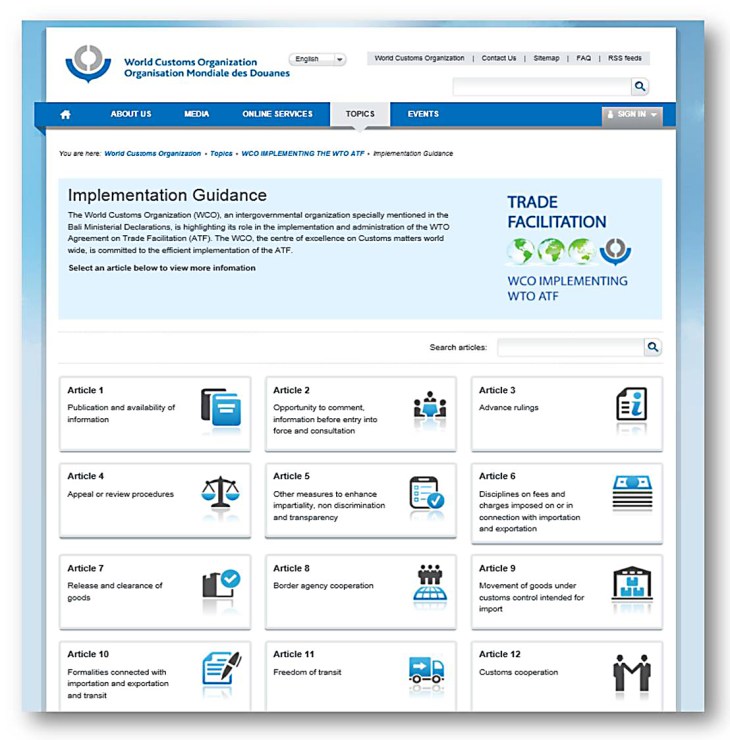
WCO Trade Facilitation Implementation Guidance 1The World Customs Organization (WCO) has launched on its website the WCO Implementation Guidance for the World Trade Organization (WTO) Agreement on Trade Facilitation (ATF) to support WCO Members in their efforts to implement the ATF.

The Guidance presents the importance of WCO instruments and tools such as the Revised Kyoto Convention for ATF implementation.

The Guidance contains the following categories of information for each ATF Article:

  • Overview
  • Text of ATF
  • Relevant RKC standards and RKC Guidelines
  • Other relevant WCO tools
  • Member practices
  • Performance indicators

The Guidance will be updated on a regular basis and a French version will be released shortly.

Source: WCO

Faster EAC Cargo Movement as Kenya Launches New Single Window System

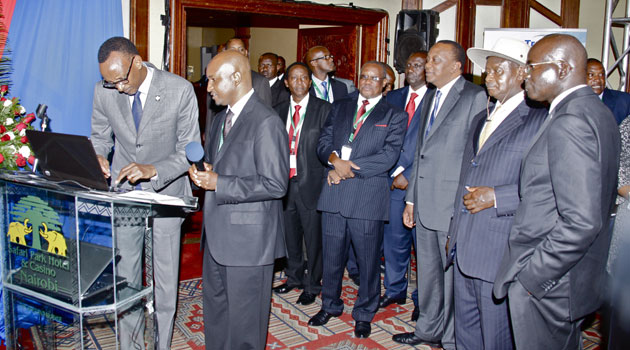
PAUL-KAGAME-WINDOW-SYSTEMPresident Paul Kagame yesterday launched Kenya National Electronic Single Window System seen as a major boost for regional trade since it will simplify clearance processes of goods.

The launch was part of the activities of the 5th Northern Corridor Integration Projects Summit held in Nairobi, and was attended by Presidents Kagame, Uhuru Kenyatta of Kenya and Yoweri Kaguta of Uganda, as well as the second vice president of Burundi and Tanzania’s prime minister.

Rwanda, Uganda and Kenya – which heavily rely on the Kenyan port of Mombasa – are spearheading a series of joint projects aimed at fast tracking regional development through joint infrastructure, trade and political and economic integration.

The use of Electronic Single Window System is expected to centralise trade services such as tracking of goods, custom clearance, and electronic payment including through mobile money.

The system will also integrate with Kenya Revenue Authority, making the clearance at Kenyan ports a lot faster and easier.

“I just want to reiterate how this is one of many important projects that the East African Community partner states have undertaken to deepen integration that we have been seeking, make business more efficient, and lower the cost of doing business as we move forward,” Kagame said at the launch.

Making tech tick

He reiterated Rwanda’s “continued active participation towards making integration a reality.” President Kenyatta and his deputy William Ruto described the Single Window System as yet another building bloc in the EAC integration process.

“Our ultimate vision should be to implement an EAC Regional Single Window platform. The benefits from this initiative may not be fully realised unless all of us in the region adopt National Single Window Systems.

“Our brothers in Rwanda are already implementing a Single Window System and similar efforts are underway in Tanzania and Uganda,” Kenyatta said.

The Kenyan leader said the technology will make it possible for traders to submit information about their goods to multiple government agencies in multiple locations, making business faster and more efficient.

After the launch of the Kenya National Electronic Single Window System, also known as Kenya TradeNet, the Heads of State and Government discussed the progress of several other projects under the Northern Corridor initiative. Source: AllAfrica.com

Implementing the WTO Agreement on Trade Facilitation

WTO Agreement on Trade Facilitation

Click on the image to download the Infogram

It is anticipated that most Customs and Border Authorities have at least one common item on their national capacity building agenda’s for 2014 – the Agreement on Trade Facilitation. Many countries, being members of the WCO, would have already acceded to a level of commitment to the Revised Kyoto Convention (RKC). This requires of them to introduce, at an agreed time, the principles of WCO standards and policies according to the level of their sovereign commitment.

The General Annex to the RKC is the bare minimum a country would be expected to implement in order to for it to be considered compliant with the RKC. From a trade perspective, this also indicates the extent to which your country’s leaders have committed itself towards ‘global integration’.

What the recent Trade Facilitation Agreement (ATF) in Bali does is bind member states to a compendium of requirements necessary for the enactment of certain conditions and obligations as set out in the various articles contained in the agreement. Countries should also note that certain of the ATF provisions include items under the Specific Annexes to the RKC. For a quick reference to see how the RKC and other WCO standards and conventions stack up to the ATF, refer to the WTO Trade Facilitation Toolkit by clicking the hyperlink.

In addition to this, the ATF also makes provision for ‘special and differential treatment’ in regard to developing and least developed countries (Refer to Section II to the WTO ATF).

In essence this allows those countries and opportunity of identifying their (capacity building) needs and setting themselves realistic targets for implementation and compliance to the ATF. To this end 3 Categories are identified for national states to consider in the event they are not at present in a position to accede to some or all of the ATF conditions.

The WCO has also prepared various tools which aim at assisting its members in assessing their national position in regard to the ATF. Members are likewise encouraged to regularly visit the WCO website for updates in this regard.

The following working papers are available from the WCO website and, for ease of access, are listed below together with their hyperlink to the WCO site –

Other related Trade Facilitation documentation can be found at the following link – WTO Trade Facilitation Negotiations

Text of the WTO Free Trade Agreement

WCO News – February 2014!

WCO News Feb 2014The theme of this edition is predictably about “communication”. For a change I was fortunate enough to receive a hard copy (print) version. Nonetheless, it is more accessible to the masses electronically via the WCO website. The Secretary General discusses the role of ‘communication’ in the dissemination of critical information whether it be via internet portals, social media and the evolving myriad of technology based trade facilitation tools. In this particular regard, the number of emerging countries registering their participation through customs-specific trade information portals and the adoption of electronic Single Window platforms is becoming common place.

The playing fields between the developed and under-developed world are beginning to be leveled so to speak. Harmonisation and standardization via computer systems is beginning to mature to an extent un-thought of just a few years back. While mainstream declaration processing engines will still be required to ‘crunch’ the vast volumes of customs transactional information, it is the era of ‘Apps’ which will prove to offer niche service offerings to the business community. For instance, many vendors offer HS tariff search and duty calculators. Some Customs and Border Administrations provide traders with transaction status notifications and other advice via SMS. Above all this, the Secretary General still emphasizes the importance of the human element — to make sure that communication remains a two-way process which fosters cooperation.

Featured articles include an overview of the WTO Agreement on Trade Facilitation. There are also several articles concerning communication strategy, business recovery and the role of Customs Brokers in the improvement of communication and cooperation. Read also about Single Window developments and a glimpse into the future of border technologies. Source: WCO

South Africa falls in 2014 global logistics rankings

jll_year_of_the_distribution_center_wide_imageSouth Africa has been ranked number 34 out of 160 countries in the World Bank’s 2014 Logistics Performance Index (LPI), which is topped by Germany, with Somalia ranked lowest. Africa’s largest economy remained the continent’s highest placed LPI participant, but South Africa’s position was well off its 2012 ranking of 23 and its position of 28 in 2010.

In February, the World Bank argued in a separate report on South Africa that the country’s high logistics costs and price distortions were an impediment to export competitiveness. That report noted, for instance, that South Africa’s port tariffs on containers were 360% above the global average in 2012, while on bulk commodities they were 19% to 43% below the global average. Similar commodity biases existed in the area of rail freight.

But the new report, titled ‘Connecting to Compete 2014: Trade Logistics in the Global Economy’, still clustered South Africa as an “over-performing non-high-income” economy along with Malaysia (25), China (28), Thailand (35), Vietnam (48) and India (54).

The report draws on data arising from a survey of more than 1 000 logistics professionals and bases its LPI rankings on a number of trade dimensions, such as customs performance, infrastructure quality, and timeliness of shipments. Besides China, South Arica also performed above its ‘Brics’ counterparts of Brazil (65),Russia (90) and India.

Germany was followed in the top 10 by other developed economies, namely Netherlands, Belgium, the UK, Singapore,Sweden, Norway, Luxembourg, the US and Japan. Among low-income countries, Malawi, Kenya and Rwanda showed the highest performance.

The report warns that the gap between the countries that perform best and worst in trade logistics remains large, despite a slow convergence since 2007. The gap persists, the study asserts, because of the complexity of logistics-related reforms and investment in developing countries. This, despite strong recognition that poor supply-chain efficiency is the main barrier to trade integration.

However, senior transport economist and founder of the LPI project Jean-François Arvis stresses that a country cannot improve through developing infrastructure, while failing to address border management and other supply-chain issues.

Logistics performance is strongly associated with the reliability of supply chains and the predictability of service delivery for producers and exporters, the report notes, adding that supply chains are only as strong as their weakest links. They are also becoming more and more complex, often spanning many countries while remaining critical to national competitiveness.

“It’s difficult to get everything right. The projects are more complicated, with many stakeholders, and there is no more low-hanging fruit,” Arvis argues.

The report also finds that low-income, middle-income and high-income countries will also need to adopt different strategies to improve their standings in logistics performance. “Comprehensive reforms and long-term commitments from policymakers and private stakeholders will be essential. Here, the LPI provides a unique reference to better understand key trade logistics impediments worldwide.” Source: Engineering News

Related articles

Time to modernise trade rules for digital era

digital-ownershipIn the past, nations with the best ships and ports were able to establish global trade leadership and the growth that came along with it. Today, global trade has gone digital.

In the digital economy software-enabled products and services such as cloud computing and data analytics are the key drivers of growth and competitiveness. In fact, the world now invests more than $3.7 trillion (R40 trillion) on information and communications technologies a year.

In South Africa, we spend $26 billion a year and the total for the Middle East/Africa region is $228bn. However, to maximise our return on that investment, it is important for policymakers to eliminate barriers that could inhibit the continued expansion of digital trade.

It is clear that software-driven technology is transforming every sector of the global economy. For example, thanks to unprecedented processing power and vast data storage capabilities, banks can detect and prevent fraud by analyzing large numbers of transactions; doctors are now able to study historical trends in medical records to find more effective treatments; and manufacturers can pinpoint the sources of delays in global supply chains.

Against the backdrop of this kind of innovation, any country that wants to compete in today’s international marketplace must have a comprehensive digital agenda at the core of its growth and development strategy. In addition to domestic initiatives such as investment in education and skills training, or development of information technology infrastructure, policymakers can succeed in laying the groundwork for broad-based growth in the digital age if they focus on three big priorities.

First, any bilateral or multilateral trade agreement needs to facilitate the growth of innovative services such as cloud computing. As part of this, there should be clear rules that allow information to move securely across borders and prevent governments from mandating where servers must be located except in very specific situations.

Second, to promote innovation and foreign investment, continued intellectual property protection is vital and the use of voluntary, market-led technology standards – instead of country-specific criteria that force firms to jump through different technical hoops every time they enter a new local market – should be encouraged.

Third, all governments should ensure there are level playing fields for all competitors so customers have access to the best products and services the world has to offer.

At the same time, disclosures about government surveillance programmes in the US and other countries have sparked a renewed focus on data protection and personal privacy. Those concerns are worthy of debate and careful reform. But it is critically important not to conflate separate issues: We can’t let national security concerns derail digital trade.

There is precedent for navigating periods of change such as this in the global trade arena. Policymakers stood at a similar inflection point in the 1980s when they recognised the keys to growth in the coming decades would be intellectual property, services and foreign direct investment.

With foresight and hard work, they updated trade rules in the Uruguay Round of multilateral negotiations to ensure commitments were in place to provide a check against protectionist impulses. Now, as governments pursue robust growth agendas for the digital economy, it is critical we modernise trade rules again. Source: The Software Alliance (South Africa).

UNCTAD and International Trade Centre forge deal to assist LDCs attain Trade Facilitation compliance

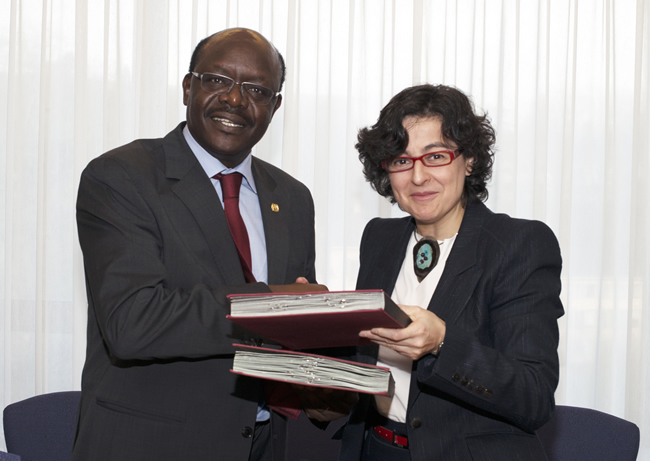
UNCTAD Secretary-General Mukhisa Kituyi (left) and the ITC"s Executive Director Arancha González, shake hands upon signing the Memorandum of Understanding. (UNCTAD)

UNCTAD Secretary-General Mukhisa Kituyi (left) and the ITC”s Executive Director Arancha González, shake hands upon signing the Memorandum of Understanding. (UNCTAD)

The United Nations Conference on Trade and Development (UNCTAD) and the International Trade Centre (ITC) have joined forces to assist developing countries in the implementation of the recent WTO Trade Facilitation Agreement reached in Bali, Indonesia. The two agencies signed a Memorandum of Understanding 4 March reaffirming this collaboration.

“The Trade Facilitation Agreement is a real opportunity for developing countries, but only if they can put its provisions into practice,” said Arancha González, ITC’s Executive Director.

“The two agencies complement each other very well and can offer meaningful support to developing countries together,” said UNCTAD Secretary-General Mukhisa Kituyi. UNCTAD already has a successful programme in building institutional capacity around effective trade facilitation, while ITC has experience in building the capacity of the private sector and increasing their export competitiveness”, he added.

The programme which the agencies will develop will focus particularly on Least Developed Countries.

Initially, the cooperation will concentrate on helping countries to identify and categorise the commitments under the Agreement in categories A, B and C and ensuring support for implementing the transparency provisions of the Agreement. These include ensuring better and easier access to information for traders; helping to develop advance rulings and rights of appeal legislation; facilitating greater predictability and reliability of procedures through simplified formalities and documentation and the use of international standards; and the adoption of single windows for traders.

“These are just some of the areas where the ITC and UNCTAD have identified clear needs in developing countries based on UNCTAD”s needs assessment programmes and the surveys undertaken by the ITC of its SME clients,” Mr. Kituyi said.

“In some cases we will need to ensure better cooperation between the public and private sector,” Ms. González said. “This is the ITC”s bread and butter: supporting a trade dialogue between business and policy makers.”

The collaboration between the two agencies is in response to a critical issue identified by developing countries in the lead-up to December’s WTO conference: whether there was enough financing and to support the necessary reforms, particularly in LDCs. This partnership will provide an opportunity to donors and other development partners to demonstrate their commitment to the implementation of global trade facilitation reform by working with UNCTAD and ITC. The agencies will collaborate with other organisations and the private sector to advance implementation of the WTO Trade Facilitation Agreement.

“The hope is that donors will see this collaborative venture between the ITC and UNCTAD, as an effective and efficient platform for helping developing countries, especially LDCs, to take advantage of the benefits an effective facilitating architecture can bring,” Mr. Kituyi said.

The private sector is also urged to explore ways that they can partner with the ITC and UNCTAD to provide their expertise to SMEs in developing countries. “Making the process of trade easier in developing countries is a plus for the global trade reality,” concluded Ms. Gonzalez, “It is a win-win situation”. Source: UNCTAD

What border barriers impede business ability?

ICCThe International Chamber of Commerce (ICC) has released the results of its survey ‘What border barriers impede business ability?’. The analyses highlights common impediments to cross border trading that can be taken into consideration when determining how barriers to trade can be reduced to stimulate global economic growth.

The ICC recognises that the survey results are neither statistically valid nor entirely representative of the hundreds of thousands of organizations that trade globally, the survey does much to reveal a set of common prerequisites – such as predictability, reliability and consistency – that international traders seek. The ICC concludes that there is a need for further capacity-building efforts, in particular education and availability of information for both traders and border control officials on the correct process to follow. The survey results illustrates the need for an effective customs-business dialogue at national level to find ways to lessen delays in trade processes and shorten release times, as called for by ICC.

The survey coincides with a number of international developments seeking to facilitate trade and simplify border procedures. These include the conclusion of a multilateral agreement on trade facilitation at the 9th Ministerial Conference of the World Trade Organization in December 2013 and the ongoing negotiations of the Trans-Pacific Partnership Agreement, the Trans-Atlantic Trade and Investment Partnership and the Regional Comprehensive Partnership Negotiations. Source: International Chamber of Commerce