Hong Kong Customs Moves Forward With E-Lock Plans

The Hong Kong Customs and Excise Department (C&ED) reports that RFID-based container locks can effectively improve the security, convenience and visibility of the customs process for cargo entering the airport. In November 2011, C&ED began testing three types of electronic locks (e-locks) in order to speed up the process of performing customs checks on containers filled with cargo. The solution, known as the Intermodal Transhipment Facilitation Scheme (ITFS), was implemented as a way to streamline the clearance of cargo passing through customs at Hong Kong International Airport for cargo destined for areas both domestic and outside of Hong Kong. The installation and consulting services were provided by the Hong Kong R&D Center for Logistics and Supply Chain Management Enabling Technologies (LSCM), according to Frank Tong, LSCM’s director of research and technology development.

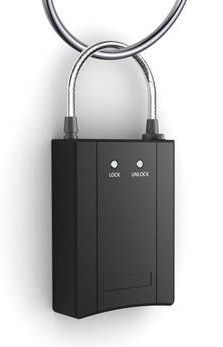
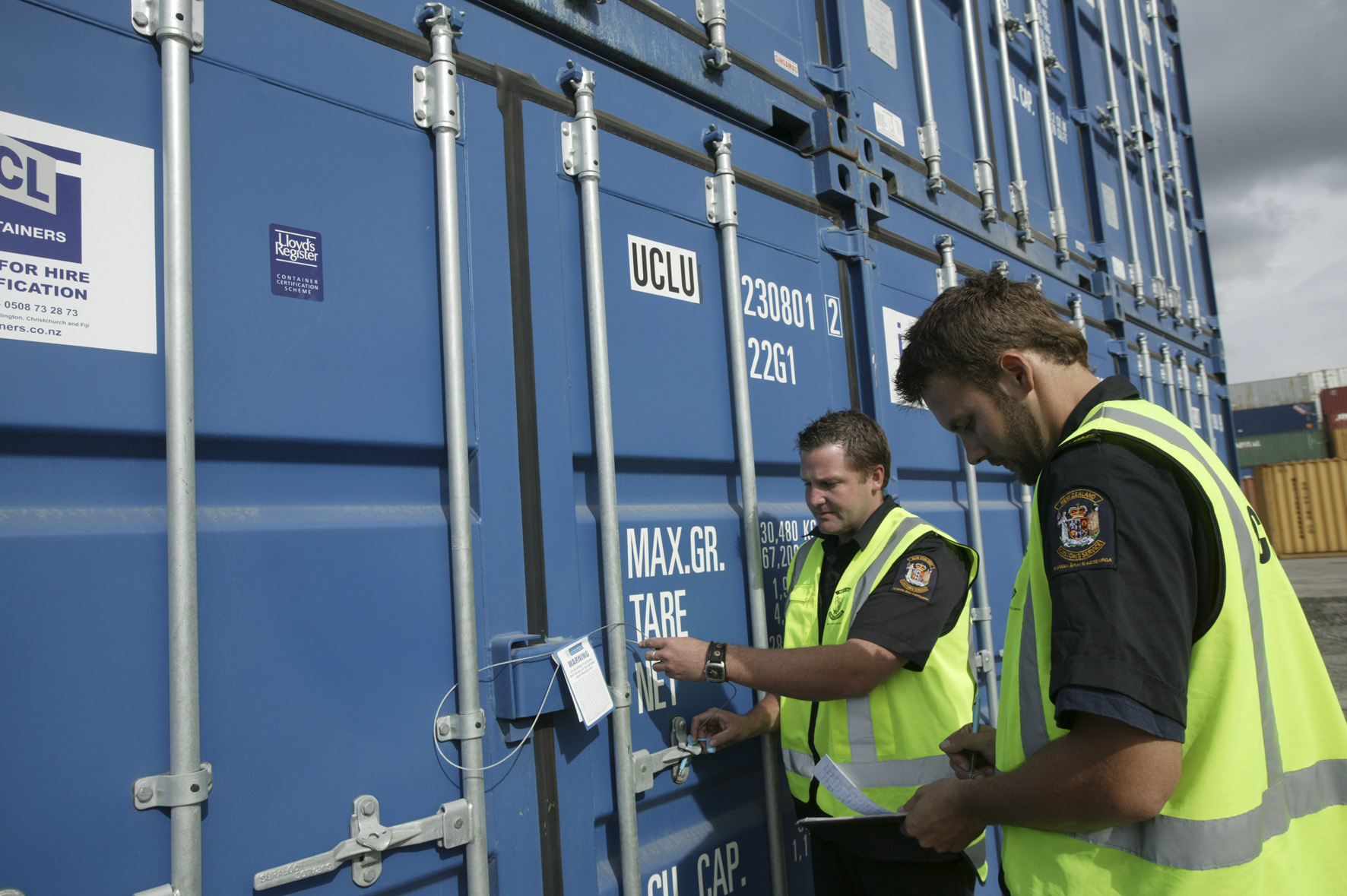
An electronic lock with an active RFID tag is being used to secure freight passing through
customs and Hong Kong International Airport, ensuring that the cargo remains tamper-free,
while also expediting the clearance process.

The Hong Kong C&ED estimates that the system reduces the amount of time required for clearing each container through customs, from two to three hours down to five minutes, since customs officials can now be assured that the containers have not been opened between their inspection at the border control point and their arrival at the airport. What’s more, the agency can now collect a digital record of where each container has been, along with when it was inspected.
Cargo is loaded into freight containers or directly onto trucks—such as those operated by United Parcel Service (UPS)—in Mainland China, and is then transported to a customs control point located at the border with Hong Kong, where C&ED officials inspect the cargo and clear it for entry into Hong Kong. Following that clearance, the shipment continues on to Hong Kong International Airport’s cargo terminal, where the goods are unloaded from the container or vehicle, and are placed into an air cargo container. Once this has occurred, the cargo is moved through another customs control point at the airport, where C&ED again inspects and approves or rejects its passage.

To speed up this process, the R&D Center implemented the use of an e-lock for the customs agency, consisting of a physical lock activated by a built-in active RFID tag, designed to receive a transmission from an RFID reader that allows the lock to be opened or closed. Three types of e-locks are currently being used, provided by three different vendors: Long Sun Logistics Development Ltd, CIMC Intelligent Technology Co. and CelluWare Research Laboratory. Each of the three products employs a different frequency—433 MHz, 315 MHz and 2.4 GHz—but all comply with the ISO 17712 standard for mechanical seals designed for freight containers.

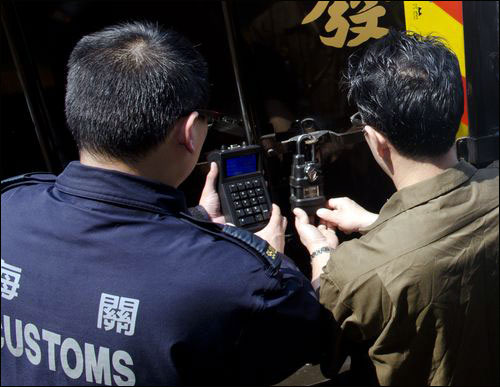
LSCM has installed fixed RFID readers (provided by the three e-lock vendors) at two border control points—Lok Ma Chau and Shenzhen Bay—as well as at Hong Kong International Airport. When a shipment first arrives at either border control point, C&ED’s staff attaches an e-lock, reads the ID number encoded on its built-in RFID tag via a handheld reader, and links that ID with the vehicle registration number of the truck transporting the container. The transporting company must pre-register each vehicle with the Hong Kong C&ED prior to its arrival; the truck’s ID number is listed in the agency’s database, and the customs official can confirm that the vehicle is, in fact, the one expected.

That data, along with the specific cargo being transported, is then stored on the Hong Kong C&ED’s integrated tracking software platform, developed by LSCM, which collects and processes the data and then displays it for customs officials when necessary. The system stores the e-lock ID number linked to the vehicle ID, and transmits instructions to the e-lock, along with a password, thereby causing it to lock. The device also requires a physical key, which remains in the driver’s possession. In this way, two actions must be completed before the container or vehicle can be unlocked: The e-lock must be electronically unlocked via a password from a customs official, and the driver must use a key to physically open the padlock.

The shipment is then transported approximately 42 kilometers (26 miles) to the airport. The e-lock comes with a built-in GPS device that tracks the vehicle’s location as it moves. In that way, the e-lock stores a record of where the vehicle has been. When the lock is later read at the airport, the back-end software compares the actual GPS data against the container’s expected route. The system can issue alerts in circumstances in which an e-lock is found to have lost a GPS signal, or, based on GPS data, the truck appears to have deviated from the intended route.

At Hong Kong International Airport, a C&ED official either selects the container for inspection, or simply instructs the system to issue an unlocking command with the matching password; the container is then brought to a site where the cargo is removed and then loaded onto an aircraft, says Steve Wai-chiu Chan, a C&ED special duties officer. If the container is selected for inspection, the e-lock remains locked. In this scenario, a truck driver would be instructed to await a C&ED officer, and would be unable to unlock the container without providing the proper password. The C&ED officer, upon arrival, would then use a handheld device to read the e-lock, instructing it to unlock by providing the necessary password.

LSCM installed a total of 38 readers at the two land border control points, five logistic hubs at the airport and a marine control point known as the Kwai Chung Customhouse, for items arriving by sea (at the Marine Cargo Terminal located at the airport). Altogether, by February of this year, 109 containers had been equipped with the e-lock device. An average of 100,000 consignments pass through the border daily, and the ITFS e-lock system is utilized for about 17 percent of that cargo.

The solution has enabled a faster customs clearance process, as well as providing a digital record of what was unlocked, and thus inspected, and when this occurred. The system also improves security, since only officers who know the proper password can access the container. Ultimately, Chan says, “it enhances the Hong Kong logistic industry’s competency and reinforces Hong Kong’s position as a world-class logistics hub.” Source: RFID Journal and a word of thanks to Andy Brown (Tenacent) for bringing the article to my attention.

America – shees verry beeeeg!

Publication of the latest USCBP Border Patrol Strategic Plan reflects and builds on the transformation of the United States’ relationships with Mexico and Canada, particularly in the areas of border management and security. The joint Declaration of Principles for the 21st-century border represents an enhanced and strengthened commitment to fundamentally restructure the way we manage our shared border. The depth and breadth of cooperation that occurs now between the United States and Mexico was unthinkable even a few years ago. Similarly, the Beyond the Border declaration between Canada and the United States has an equally significant potential in what is already our historically extraordinary relationship with Canada. These developments have created unprecedented opportunities with both Mexico and Canada, in which DHS and CBP will play a defining role, to improve our security and economic competitiveness – and CBP will play a defining role in taking advantage of those opportunities. The Border Patrol in turn is key to advancing CBP’s security agendas with Mexico and Canada, working with its law enforcement counterparts in each country to identify and mitigate threats.

The U.S. Border Patrol is a premier law enforcement organization, recognized around the world for expertise, capabilities, and professionalism. CBP’s officers and agents are the frontline, the guardians of the Nation’s borders. We honor and are proud of them, and we thank them for everything that they do to protect America and the American people. Source: CBP.gov

So there you have it – for a real dose of commercialized Customs and what it can do for the good folks in America, and anywhere else in the world for that matter, check out the strategic plan by clicking here! You’ll be forgiven if you thought you were reading an edition of Jane’s Defense & Security Intelligence & Analysis. Most customs and border management agencies around the world can only dream about such impressive kit! 

Related items

USCBP and EU sign C-TPAT Mutual Recognition

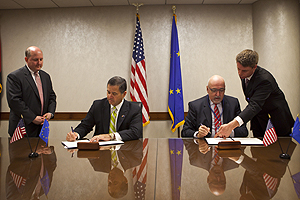
U.S. Customs and Border Protection (CBP) and the European Union (EU) signed today a Mutual Recognition Decision between CBP’s Customs-Trade Partnership Against Terrorism (C-TPAT) program and the EU’s Authorized Economic Operator (AEO) program.

U.S. Customs and Border Protection Acting Commissioner David V. Aguilar and European Union Taxation and Customs Union Directorate Director-General Heinz Zourek sign the Mutual Recognition Decision between CBP’s Customs-Trade Partnership Against Terrorism program and the EU’s Authorized Economic Operator Program.

CBP Acting Commissioner David V. Aguilar and Director-General Heinz Zourek, European Union Taxation and Customs Union Directorate (TAXUD) signed the decision, which recognizes compatibility between the EU and the U.S. cargo security programs.

“Today’s decision on the mutual recognition of the EU and U.S. trade partnership programmes is a win-win achievement: It will save time and money for trusted operators on both sides of the Atlantic while it will allow customs authorities to concentrate their resources on risky consignments and better facilitate legitimate trade,” said Director-General Zourek.

C-TPAT is a voluntary government-business initiative to build cooperative relationships that strengthen and improve overall international supply chain and U.S. border security. C-TPAT recognized that U.S. Customs and Border Protection can provide the highest level of cargo security only through close cooperation with the ultimate owners of the international supply chain such as importers, carriers, consolidators, licensed customs brokers, and manufacturers. Source: US CBP

Related article

Royal Malaysian Customs implements Smartag Solution

Smartag Solutions, a homegrown total radio frequency identification (RFID) solutions provider, will handle 1.3 million containers at all Royal Malaysian Customs (JDKM) checkpoints in Malaysia starting June.The company has entered into a two-year agreement with the government to implement and operate the Container Security and Trade Facilitation System using its RFID solutions at the JDKM checkpoints.

This is the first electronic and electrical Entry Point Project, under the 12 National Key Economic Areas to monitor containers and facilitate clearance within domestic ports and selected high volume routes. The enhancement of container security using the RFID track and trace system reduces the risk of terrorism, dangerous chemicals and contraband from reaching borders while increasing the efficiency of container movement through Customs checkpoints.

The system allows users to use the RFID seal to secure their containers when entering, leaving and moving within the country. Smartag Solutions is expected to handle 50 per cent of the total transactions at the Customs approved by JDKM, or 500,000 containers. Source: BTimes.com

Related articles

Where Does the Chain of Custody Begin?

Here follows an article, published by Dr. James Giermanski, an internationally renowned expert in container and supply chain security, international transportation and trade issues. It deals with a crucial but mostly forgotten/unknown aspect of international supply chains – who packed the cargo?

Tracking, tracing, and custody are all generally accepted concepts involving the control of movement. All these concepts have in their fundamental cognitive structure the idea of path, corridor, multiple parts, flow, and coordination.

However, what is often omitted or overlooked is the fundamental sine qua non core principle of “beginning”. What is the beginning of a chain of custody? This article focuses on this core concept and the role it plays as the beginning of the connective custody and control process. Specifically, it addresses the significance of cargo stuffing, the concept of authorized or trusted agent, the means of connectivity, the legal role of the authorized agent, and the consequences of a connected and visible supply chain.

Cargo stuffing

Establishing and maintaining cargo integrity begins with stuffing the container at origin. A chain of custody – chronological documentation or paper trail – involves “the movement and location of physical evidence from the time it is obtained until the time it is presented in court.” As in a criminal case comparison, a supply chain “chain of custody” needs three types of essential assertions:

  1. That the cargo is what it purports to be and in the quantity stated;
  2. That the cargo was in the continuous possession or control by the carrier who took charge of the cargo from the time it was loaded in the container at origin until the time it is delivered at final destination; and
  3. That there is evidence of the identify of each person or entity who had access to it during its movement, and that the cargo remained in the same condition from the moment it was sealed in the container for transfer to the carrier that controlled possession until the moment it released the cargo into the receipted custody of another.
Trusted partner

It is imperative that the initial point of a connectivity process begins at the beginning! Loading cannot take place without a human agent. The agent could be the company’s forklift driver, the dispatcher, the loading dock supervisor, or even an authorizing manager who has a specific duty to verify the cargo and its quantity. It could even be a third party hired by the shipper, for instance, companies that currently provide inspection services around the world.

Various Customs programs discuss, in one way or the other, the concept that supply chain security begins at “stuffing”: the Secure Export Scheme Program (New Zealand); the Partners in Protection Program (Canada); the Golden List Program (Jordan); the Authorized Economic Operator Program (Japan); the Authorized Economic Operator Program (Korea); the Secure Trade Partnership Plus Program (Singapore); and the Authorized Economic Operator.

Establishing ‘connectivity’

Maintaining connectivity depends on the security program, software and hardware utilized. While no system is 100% effective, and one cannot depend on technology alone, there are ‘off-the-shelf’ container security devices (CSDs) that provide connectivity through a sophisticated, comprehensive chain of custody system that begins with loading the container at origin, monitoring it, and reporting on its integrity at the end of the global supply chain path, i.e. at final destination.

CSDs can include the identity of the trusted agent verifying the cargo at loading and the agent’s counterpart at destination. Both parties are electronically connected by a unique identifier to the smart container system along with bill of lading or booking information, or data needed by Customs authorities. Therefore, when the CSD is activated, the accountable party becomes the initiating element in the smart container security system.

Consequences of chain of custody – standards, laws and litigation

If a smart container is opened at destination by an equally accountable person and cargo is missing, and there were no breaches detected, recorded or reported, the accountable person at origin can face either disciplinary, or worse, criminal action by appropriate authorities.

This ESI becomes a source of evidence, should legal action follow. The concept of custody and control from origin to destination also supports Incoterms 2010, a publication of the International Chamber of Commerce (ICC) which provides the playbook of international rules involving international sales of goods. These new terms now contain security requirements for the shipper, making a chain of custody system essential for compliance. There are also changes coming for shippers, consignees, and vessel carriers with respect to carriage of goods by sea: the new Rotterdam Rules.

According to the UN General Assembly, the Rotterdam Rules are a “…uniform and modern global legal regime governing the rights and obligations of stakeholders in the maritime transport industry under a single contract for door-to-door carriage” (cf. American Shipper). The new door-to-door liability places the vessel carrier directly in a chain of custody. Instead of the vessel carrier filing what the shipper said is in the container, the vessel carrier will be automatically and really responsible for knowing what is in the container.

What are the benefits?

The shipper, the consignee, the carrier, and control and regulatory authorities all benefit from a chain of custody system that begins with the loading of the container at origin. CSDs incorporating the identity of the trusted agent at stuffing would assist law enforcement officials to comply with international security and trade standards, solve transhipment problems, impair illegal access to the cargo conveyance, improve supply chain efficiencies, aid in securing hazardous materials and other dangerous cargo movement, reduce counterfeiting, eliminate the in-bond problem of unauthorized container access, and improve bottom line revenue generation for the firms using them. Source: Supply Chain Digest.

WCO/SACU – IT Connectivity and Data Exchange

WCO-SACU IT Interconnectivity and Data Exchange Conference

On the occasion of International Customs Day, in January earlier this year, the World Customs Organisation dedicated 2012 as the year “Connectivity”, which encapsulates people connectivity, institutional connectivity and information connectivity among the members of the global Customs community.

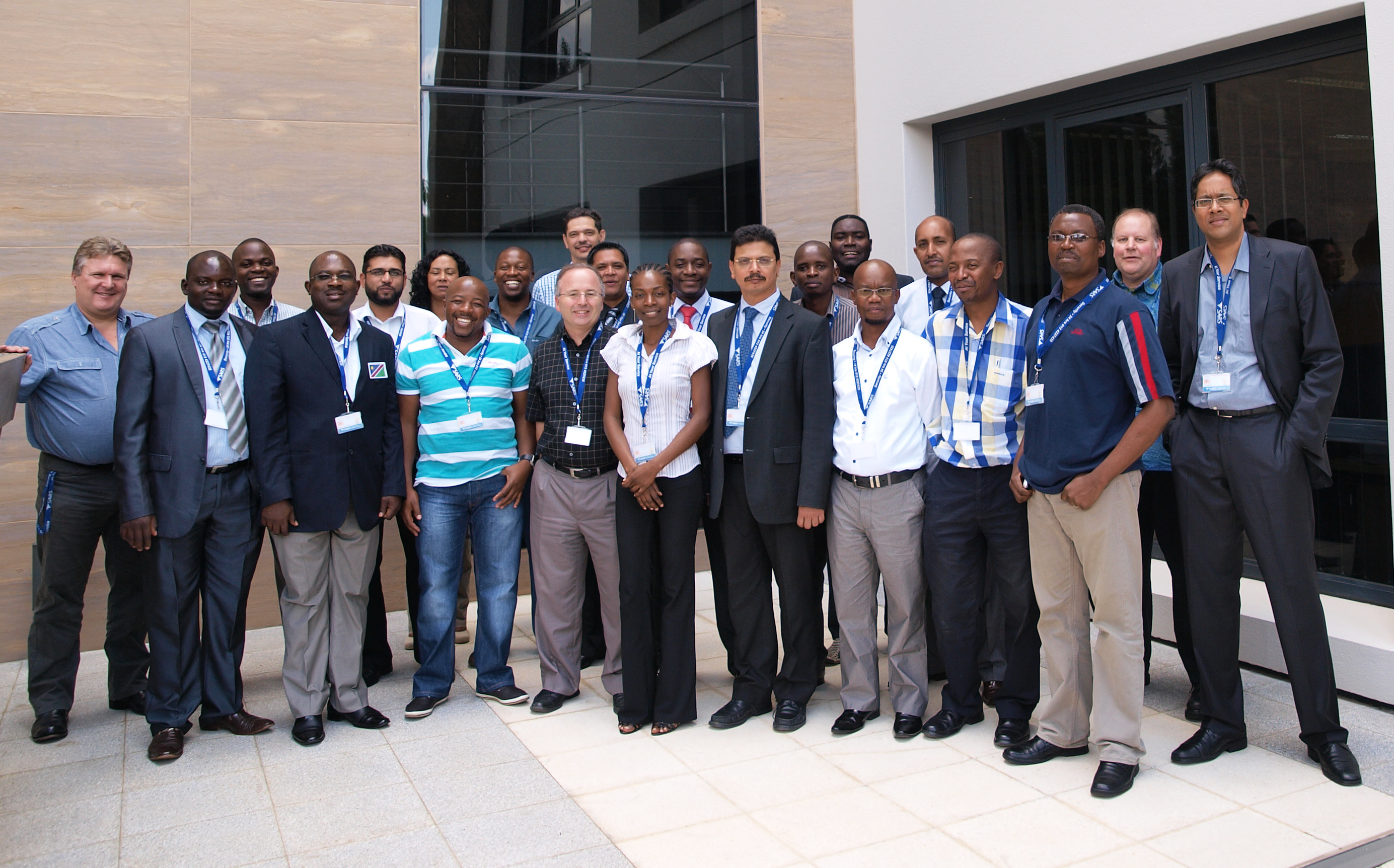
Over the last week and a half delegates from the WCO, SACU, UNCTAD, SADC and COMESA have been hosted at SARS, Pretoria to discuss and deliberate over an approach to implement ‘IT connectivity’ within the Southern African region. During the first week representatives from UNCTAD, SACU and SARS were briefed on important developments at the WCO on IT-Interconnectivity and Information Exchange. We were privileged to have Mr. Satya Prasad Sahu, Technical officer from the WCO – a leading expert in all matters of ICT in international customs matters – present the developments towards finalisation of a future international customs standard called “Globally Networked Customs” (GNC). It entails a structured approach that will enable customs authorities to formulate and document bilateral or regional ‘standards’ on a variety of Customs-to-Customs topics, for instance Authorised Economic Operators, Cross Border Information Exchange, Risk Management, etc. A representative from UNCTAD presented a synopsis of the proposed ‘cloud computing solution’ which the Trans Kalahari Corridor (TKC) plans to pilot between Namibia and Botswana along the TKC route in the next few months. During the course of this week, delegates , under the guidance of Satya, prepared a proposed approach for information exchange between members of the Southern African Customs Region. This document is based on the GNC Utility Block structure (defined by the ad Hoc Committee on Globally Networked Customs at the WCO) and served as the basis for discussion for Week 2.

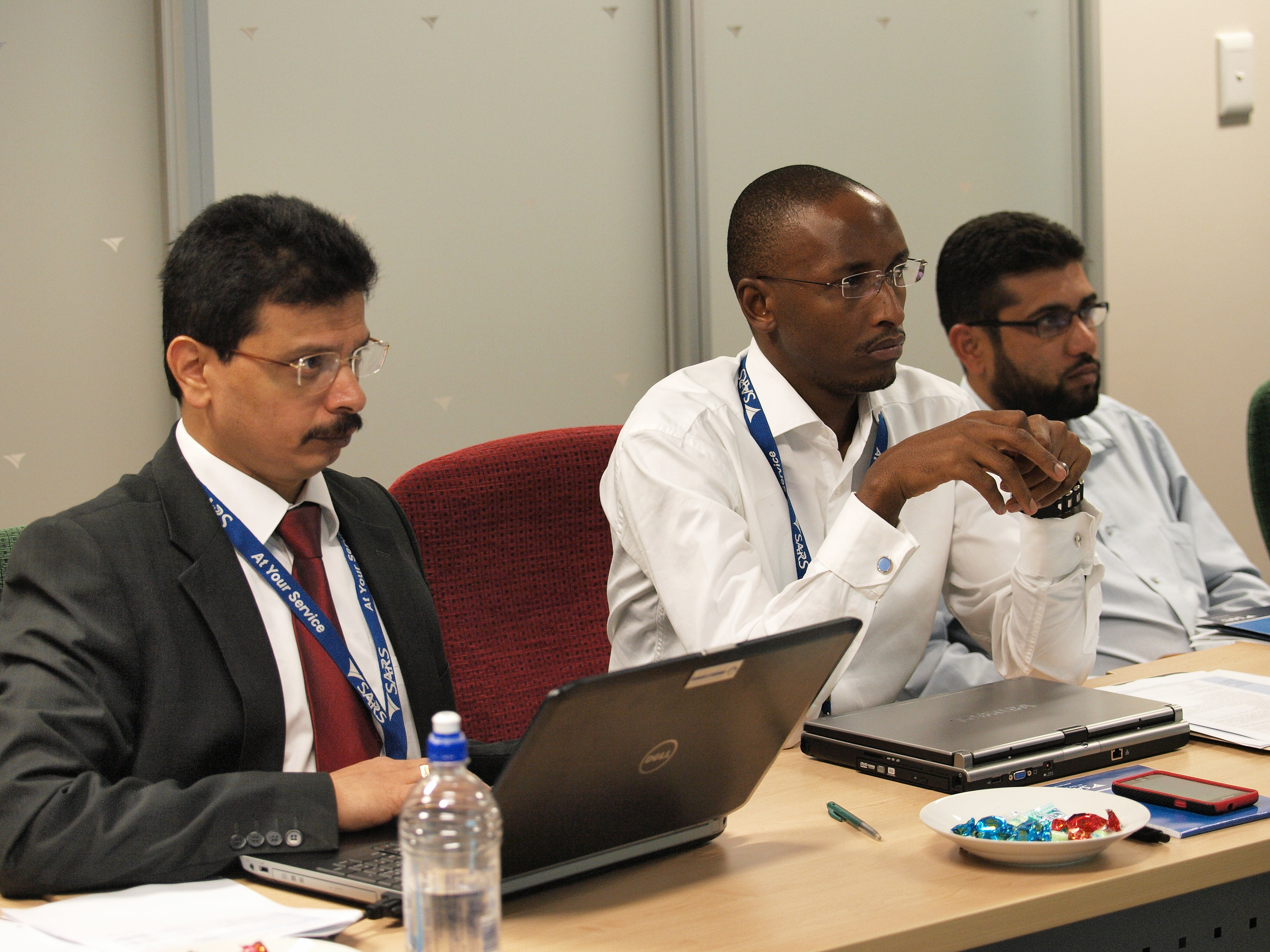
Mr. SP Sahu (WCO) and delegates from SACU SecretariatWeek 2 saw the arrival of customs and IT representatives from COMESA, SADC, UNCTAD, SACU as well as a delegation from Mozambique Customs. Mr. Sahu was invited to chair the session, given his vast experience on the subject matter as well as international experience in national and regional customs ICT programmes. Delegates were treated to various lectures on the GNC, a comprehensive overview of developments on ASYCUDA (Customs solution developed by UNCTAD), various updates from within the customs region – Botswana, Namibia, Lesotho, Swaziland, Mozambique and SARS. Beyers Theron informed delegates of ongoing developments of the SARS Customs Modernisation Programme as well as key implications for neighbouring countries. SARS presented a live demonstration of SARS’ Service Manager solution, navigating through all the functionality now available to SARS Customs officials. Of significant interest to all was the new iPod inspection tool. This technology is given prominent feature in the latest edition of WCO News.

A large portion of the week was, however, spent on deliberating the proposed scope and content of the draft Utility Block on Information Exchange in the Southern African Region. Significant progress was been made to attain first, a common understanding of the scope as well as the implications this has for participating countries. Delegates will return home with a product with which to create awareness and solicit support in their respective countries. Over the next few months SARS will engage both SACU and SADCOM (combined SADC and COMESA trading blocs) to establish firm commitments for information exchange with customs administrations in these regions. This conference is significant for SARS and South Africa as a whole as it provides a uniform, standardised and practical approach for engagement with other international trading partners. To view photographs of the conference please click here!

WCO News – February 2012 Edition

WCONews Edition February 2012Herewith a link to the latest edition of WCO News, providing a wealth of customs news and developments from across the globe. This edition focuses almost entirely on regional initiatives involving C-2-C information exchange. On pages 20 to 22 you’ll read about new developments emerging on customs inter-connectivity and information exchange in the Southern African Region. At this time, a conference lead by the WCO, involving representatives from UNCTAD, SACU, SADC and COMESA and SARS is taking place in Pretoria to establish a firm framework for introduction of customs information exchange. I will devote a dedicated article on these developments shortly, as this has implications for the business community as well. Also, don’t miss the feature on South Africa’s modernisation developments, pages 29 and 30. Besides the usual editorials this edition includes –

  • WCO Secretary General launches Year of Connectivity.
  • Evolving technology landscape and its impact on Customs.
  • Latest developments in Latin America, Southern Africa and Europe.
  • West Africa implements airport task forces to fight drug trafficking.
  • South Africa to roll out mobile Customs controls.
  • Operation “Short Circuit” successes and challenges.
  • WCO Tariff and Trade Affairs Directorate

SAD Story – Part 2

What is clear in regard to modern day business is the fact that ‘harmonisation’ in the international supply chain is essentially built around ‘data’. E-commerce has been around for decades, plagued by incompatibilities in messaging standards, and computer software, network and hardware architecture. However, one of the key inhibitors has been organisations and administrations having to adhere to domestic ‘dated’ legislation and so-called standard operating procedures – seemingly difficult to change, and worst of all suggesting that law has to adapt!

A lot has had to do with the means of information presentation (format) and conveyance (physical versus electronic) rather than the actual information itself. Standards such as the UN Layout key sought to standardise or align international trade and customs documentation with the view to simplifying cross-border trade and regulatory requirements. In other words, each international trade document being a logical ‘copy and augmentation’ of a preceding document.  This argument is still indeed valid. The generally accepted principle of Customs Administrations is to maximise its leverage of latent information in the supply chain and augment this with national (domestic) regulatory requirements – within a structured format.

The Single Administrative Document (SAD) was itself borne out of this need. The layout found acceptance with UNCTAD’s ASYCUDA which used it as a marketing tool (in the 1990’s) in promoting ‘What-You-See-Is-What-You-Get’ (WYSIWYG). It certainly provided a compelling argument for under-developed countries seeking first-time customs automation. Yet, the promise of compatibility with other systems and neighbouring customs administrations has not lived up to this promise.

Simultaneous to document harmonisation, we find development of the Customs data model, initially the work of the Group of 7 (G7) nations at the United Nations. Its mandate was to simplify and standardize Customs procedures Customs procedures. In 2002, the WCO took over this responsibility and after further refinement the G7 version became version 1 of the WCO Customs Data Model. Once more a logical progression lead to the inclusion of security and other government regulatory requirements. This has culminated in the recent release of WCO Data Model 3. Take note the word “Customs” is missing from the title, indicating that Version 3 gives effect to its culminating EDI message standard – Government Cross Border Regulatory (GOVCBR) message – an all inclusive message standard which proposes to accommodate ALL government regulatory reporting requirements.

Big deal! So what does this mean? The WCO’s intent behind GOVCBR is as follows –

  • Promoting safe and secure borders by establishing a common platform for regulatory data exchange enabling early sharing of information.
  • Helping co-operating export and import Customs to offer authorized traders end end-to to- end premium procedures and simple integrated treatment of the total transaction.
  • Contributing to rapid release.
  • Elimination redundant and repetitive data submitted by the carrier and the importer.
  • Reducing the amount of data required to be presented at time of release.
  • Reducing compliance costs.
  • Promoting greater Customs Co-operation.

Undertaking such development is no simple matter, although a decision in this direction is a no brainer! Over a decade’s work in the EDI space in South Africa is certainly not lost. Most of the trade’s electronic goods declaration and cargo reporting requirements remain intact, all be they require re-alignment to meet Data Model 3 standard. Over and above this, the matter of government regulatory requirements (permits, certificates, prohibitions and restrictions, letters of authority, etc.) will require more ‘political will’ to ensure that all authorities administering regulations over the importation and exportation of goods are brought into the ‘electronic space’. Some traction is already evident here largely thanks to ITAC and SA Reserve Bank willingness and capability to collaborate. In time all remaining authorities will be brought on board to ensure a true ‘paperless’ clearance process.

So, I digress somewhat from the discussion on the SAD. However, the bottom line for all customs and border authorities, traders and intermediaries is that ‘harmonisation’ of the supply chain operation follows the principal and secondary data required to administer ALL controls via a process of risk assessment, to facilitate release including any intervention required to ensure the compliance of import and export goods. As such even legislative requirements need to enable ‘harmonisation’ to occur otherwise we end up with a non-tariff barrier, uncertainty in decision-making, and a business community unable to capitalise on regional and international market opportunities. Positively, the draft SA Customs Control Bill makes abundant reference to reporting – of the electronic kind.

In Part 3, I will discuss regional ‘integration’ and the desire for end-to-end transit clearance harmonisation.

US launches National Strategy for Global Supply Chain Security

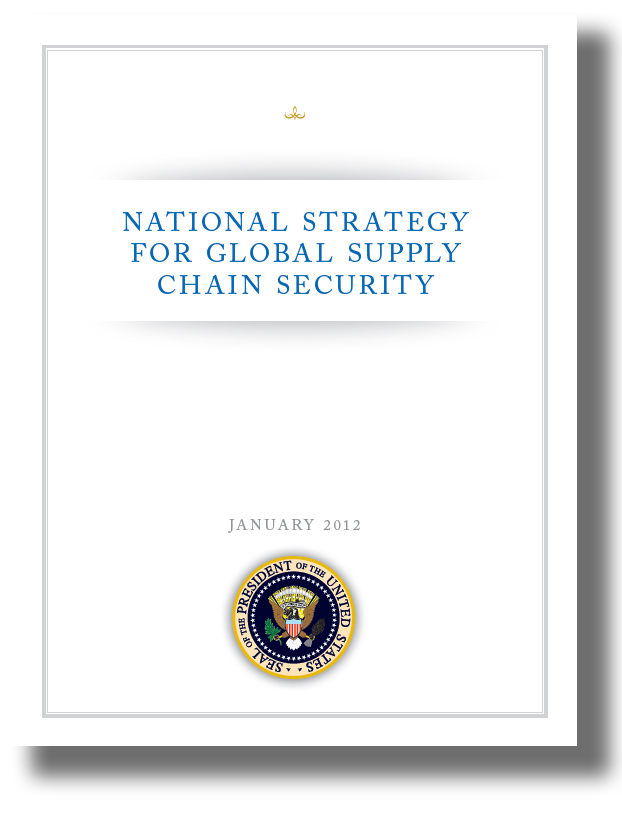
U.S. Secretary of Homeland Security Janet Napolitano unveiled  the Obama administration’s National Strategy for Global Supply Chain Security at the World Economic Forum in Davos, Switzerland yesterday (25 January). The Department of Homeland Security (DHS) is committed to facilitating legitimate trade and travel, while preventing terrorists from exploiting supply chains, protecting transportation systems from attacks and disruptions, and increasing the resilience of global supply chains.

The National Strategy for Global Supply Chain Security outlines clear goals to promote the efficient and secure movement of goods and foster a resilient supply chain system. It also provides guidance for the U.S. government and crucial domestic, international, public and private stakeholders who share a common interest in the security and resiliency of the global supply chain. (Why call it a “National” strategy when it impacts the international community?)

DHS works with leaders from global shipping companies and the International Air Transport Association (IATA) on developing preventative measures, including terrorism awareness training for employees and vetting personnel with access to cargo. Fulfilling a requirement of the 9/11 Act, 100 percent of high risk cargo on international flights bound for the United States is screened.

In addition, through the Container Security Initiative currently operational in over 50 foreign seaports in Europe, North, Central and South America, Africa, the Middle East, and throughout Asia, U.S. Customs and Border Protection helps our partner countries identify and screen U.S.-bound maritime containers before they reach the U.S..

Following the release of the National Strategy for Global Supply Chain Security, DHS and the Department of State will lead a six month engagement period with the international community and industry stakeholders to solicit feedback and specific recommendations on how to implement the Strategy in a cost-effective and collaborative manner. You can find the Strategy by clicking here! Also, for a summary of the strategy in presentation format, click here! We wait with bated breath to find out whats going to be new here, besides more onerous reporting requirements!

Source: US Press Secretary and The White House Blog.

New Zealand releases trade implementation guidelines for GOVCBR

New Zealand Customs ServiceThe New Zealand Customs Service has recently released draft guidelines for it’s Trade Single Window (TSW), which is currently under development. This will require all potential users to be able to send and receive electronic messages. The introduction of the TSW therefore means that organisations will need to submit lodgement messages that meet the WCO3 data model. Current message format for import entries, export entries, inward and outward cargo reports, will be accepted for 18 months after TSW is introduced (likely to be in the first quarter of 2013). However, following that 18-month period, all users of TSW will need to have adopted the new NZ WCO version 3 data model for messages.

New Zealand Customs expects that some users of TSW may adopt the new messages earlier to take advantage of the benefits, which include the ability to submit cargo manifest and Customs data in one message.To understand the new messages, a draft set of message implementation guidelines is now available for consultation and feedback from software developers and companies intending to use the TSW on the following draft messages:

  • Advance Notice of Arrival
  • Advance Notice of Departure
  • Cargo Report Export
  • Excise Declaration
  • Inward Cargo Report
  • Import Declaration
  • Outward Cargo Report
  • Border Agency Response Message.

Message implantation guidelines for the new export declaration is still be drafted, and will be made available as soon as possible.

Five main government agencies operate at the border – the Customs Service, the Ministry of Agriculture and Forestry, the Department of Labour, the Ministry of Transport, and the Department of Internal Affairs. With the participation of almost 20 other associated agencies, they work to prevent the traffic of prohibited goods and materials in and out of the country. They also collect government revenue, promote travel and trade, support New Zealand’s national interests, and uphold international laws and agreements. Now, as the border sector grows more complex and volumes of goods and travellers increase, a new era of inter-agency collaboration aims for more control, easier flows, and greater efficiency. Source – New Zealand Customs Service

Shortage of Helium – challenges for Cargo Security and potential contractual dilemma for Security Agencies

While the topic of non-intrusive detection equipment there has been much-a-do about the shortage of helium over the last 18 months, the impact this may have for existing investments in scanner and radiation detection equipment poses an even more ominous question, particularly those countries and agencies having already invested in US-based technology.

The demand for nuclear detectors exploded (if you’ll pardon the expression) from 8,000l/year to ten times that in 2008 due to increased efforts to stop nuclear proliferation and terrorism. But production of helium-3, a critical element in nuclear detection technology, has not kept pace and existing stockpiles are quickly dwindling. Alternatives are currently in the early stages of development and researchers have found several promising leads; when an alternative is found, current radiation detection equipment will have to be replaced with the new technology.

Helium-3 is a decay product of tritium, a heavy isotope of hydrogen used to enhance the yield of nuclear weapons, but whose production stopped in 1988. The half-life decay of tritium is about 12 years, and the U.S. supply for helium-3 is fed by harvesting the gas from dismantled or refurbished nuclear weapons. However, production of helium-3 hasn’t kept pace with the exponential demand sparked by the Sept. 11 attacks.

Projected demand for the non-radioactive gas in 2010 is said to be more than 76,000 litres per year, while U.S. production is a mere 8,000 litres annually, and U.S. total supply rests at less than 48,000 litres. This shortage wasn’t identified until a workshop put on by the Department of Energy’s Office of Nuclear Physics in August 2008. Between 2004 and 2008, about 25,000 litres of helium-3 annually was entering the U.S. from Russia. Right around the time of the August workshop, Russia decided it was “reserving its supplies for domestic use.

Helium-3 is primarily used in security applications as it is highly sensitive to the neutrons that are emitted by plutonium. Roughly 80 percent of helium-3 supplies are used for national security. Since 9/11 demand for radiation detectors increased sharply, however production failed to increase. The shortage is reported to severely effect even the handheld and backpack detectors used by the U.S. Coast Guard, Customs and Border Protection, and Transportation Security Administration. A representative of General Electric Energy, which manufactures radiation detectors, said, “Up to six different neutron-detection technologies may be required to replace helium-3 detectors” for its four main uses and “[a] drop-in replacement technology for helium-3 does not exist today.” When an acceptable alternative is found, current radiation detection equipment will have to be replaced with the new technology. In the meantime, industrial manufacturers of detection equipment have been diversifying their helium-3 sources and turning to recycling old helium-3 canisters.

In June 2011, however, General Electric (GE) did announce that it had introduced a new radiation detection solution using boron-10 (10B) to detect radiation in border security applications. These detectors are key components of radiation portal monitors used in a wide range of applications including screening at borders and in seaports. GE is the only company to date to manufacture an alternate neutron detection technology for deployment in radiation portal monitors.

It still needs to be seen how manufacturers will deal with their existing customers. Concerned Customs Administrations and Security Agencies should be reviewing the terms and conditions of their supply agreements in the meantime. Future acquisitions will no doubt look at Helium-3 based technology with sceptism unless they are uninformed.

Sources: WIRED, General Electric

Pre-shipment Inspection (PSI) – an antiquated approach

Recently, an organisation called Global Inspection Group (GIG) has advocated PSI – an import verification system – as a solution to counteract South Africa’s trade deficit. The article Import verification would outlaw customs fraud’ alludes to the apparent success of these mechanisms in other African states to support quality and import standards in those countries, respectively. Because South Africa has no verification of imports system ‘it is easy to systematically under-declare goods’, the article states. Furthermore, it mentions that a Finance ministry would benefit from such a system ensuring the collection of the correct duties. [Really? how naive].

South Africa is a free country, and it follows that organisations will go to extremes to secure a business foothold in the country. The question is – to what length and to what end? If any ministry of finance were to rely on a PSI company, it would first disband its customs department, because there is evidently no trust in its frontline and post clearance capability.  Most governments (if not all) are pretty much aware of the broader international customs developments championed by the WCO. In recent years, the WCO has developed several diagnostic studies and programmes – with the option of donor funding if required. There would therefore be no sense or credibility in a government that would persist in pursuance of PSI services for fiscal assurance.

Any trade practitioner and supply chain operator in South Africa will readily confirm the hectic ‘change’ programme which is being pursued under Customs Modernisation. These changes and their associated systematic innovations and efficiencies are by no means the result of government capitulating in the face of illegitimate trade. No, it’s a conscious decision to take responsibility for the problem, and together with the allied trade to improve the situation.

It is therefore high time that such organisations which front themselves with the ‘be-all and end-all’ systems in Customs’ tariff and valuation appraisal rather seek a more practical and benefit-delivering model than one which not only scams governments for service and inspection fees, but also offers no benefit to trade. Included are those BOT vehicles offering governments ‘free’ cargo scanning equipment in exchange for a lucrative inspection fee. None of this is based on risk management and is purely profit focussed. The concept forgoes most if not all, the modern customs principles and standards promoted by the WCO. The buzz word is ‘Capacity Building!’

The reality in all of this should be clear. No private sector entity can replace Customs. Outsourcing in any event would require government to set up a vehicle of its own to ‘ensure’ that the outsourcer is doing his job. If there is a dearth in knowledge and skills, then it is up to government to rectify the situation.  Source: FTW Print version.

Ports back campaign to weigh all export containers

The International Association of Ports and Harbours (IAPH) has joined the World Shipping Council (WSC) and International Chamber of Shipping (ICS) in urging the International Maritime Organization (IMO) to establish an international legal requirement that all loaded containers be weighed at the marine port facility before they are stowed aboard a vessel for export. In what has been a much publicized issue since 2008 in the maritime industry, much the same view is taken by customs administrations. Like many other changes in the supply chain, it is a lot easier said than done. Modern ports are designed and developed taking into account requirements for weight bridges, radiation portal monitors, networks to monitor vehicle and container movements in and around port precincts, and inland transportation routes. While the expense and budget for these are usually borne by the relevant port authority, would it not indeed be good if those responsible for the packing/stuffing of containers took it upon themselves to ensure the correct weight, quantity and content are properly declared?

Refer to the joint WSC/ICS paper on “Solving the Problem of Overweight Containers” as well as the ICS’s “Safe Transport of Containers by Sea”. Both are self explanatory and short enough so as not to be considered laborious. In the South African context the question of who packed the box is often unanswered given that a variety of entities could be involved in this activity. In some instances it could be a container depot operator or a freight forwarding and consolidation agent; depending on how ‘safety and compliant conscious’ the shipper wants to be. While it will still take some time before the entire supply chain becomes properly regulated and monitored, now’s the time for ‘operators’ to take stock of what might in future be a new standard. New standards mean more capital outlay with pass-on costs for which the shipper ultimately carries the can.

Insight behind the WCO Data Model

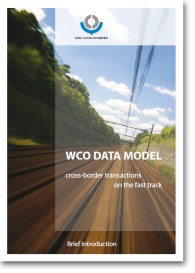
WCODMV3 Technical BrochureGovernments around the world have realized that rapid economic growth cannot be achieved in an environment where international trade processes are inefficient and cumbersome. Over the past two decades, serious attention has been devoted to the modernization of international trade and cross-border regulatory procedures. Countries have committed substantial resources to national projects in the areas of customs automation and Electronic Data Interchange (EDI) infrastructure.

Electronic ‘Single Window’ services delivery is now being demanded in several countries. Based on the principle of joined-up government services, the ‘Single Window’ environment has the potential to deliver transformational advantages to business by simplifying and unifying touch-points between members of the trade and the different government departments involved in cross-border regulatory procedures. In addition, new demands on supply chain security and facilitation have emerged, leading to the establishment of the WCO SAFE Framework of Standards.

This booklet provides a brief introduction to WCO Data Model Version 3.0. It explains the scope of the Model, its relationship with other international instruments such as the Revised Kyoto Convention, and its alignment with widely used international standards. The booklet is aimed at project leaders and Information Technology architects from Customs administrations and other cross-border regulatory agencies. The World Customs Organization hopes that this booklet will create a proper understanding of the value of the WCO Data Model as an indispensable instrument in projects that address modernization of regulatory agencies including Customs. Source: WCO.

Please visit: http://wcoomdpublications.org/data-model-3.html for pricing and conditions of online WCO Data Model usage and support. Available for Customs administrations and Trade Practitioners.

Related article

SARS “Trusted Trader” programme under the spotlight

With the implementation of the SARS Customs Modernization Program, accreditation has been revisited and SARS has taken a more robust approach.

South Africa is currently focusing on accreditation for customs procedures only. The Self-assessment Questionnaire was reworked and sent to a number of large importers, inviting them to participate in the “Preferred Trader Pilot Program.” Now more customs accreditation initiatives are underway.

In terms of a future focus on mutual recognition, bilateral discussion between EU and South Africa has commenced. The parties recently agreed to launch a customs project, financed under the Trade, Development and Cooperation Agreement (TDCA) facility, covering the implementation of the WCO SAFE Framework in South Africa. South Africa intends to align its Authorized Economic Operator (AEO) strategy with that of the EU to ensure that standards for both compliance and security match those of the EU.

The EU is South Africa’s main trading partner. The TDCA is the legal basis for relations between the EU and South Africa and provides the framework for cooperation in the social, economic, political and cultural field. Please click here for the full report – refer to  pages 32 -33 for South African AEO article. Source: Ernst & Young