Thick Borders – Thin Trade

It’s quite amazing the number of reports featured in various african media across the continent pushing the ‘free trade’ agenda. The incumbent governments on the other hand are naturally concerned with dwindling tax collections, while at the same time increasing incidents of graft, collusion, and corruption run rampant at the border. While the following article states the obvious, unfortunately, nowhere will you find or read a practical approach which deals with increased ‘automation’ at borders and the consequential re-distribution of ‘bodies’ to other forms of gainful employment. Its jobs that will be on the line. Few governments wish to taunt their electorates – non-essential jobs are a fact of life and are destined to stay if that is what will earn votes and a further term in power. Moreover, there is no question of removing internal borders with the emphasis on costly ‘One-Stop Border’ facilities. To some extent the international donor community won’t mind this as there’s at least some profit and influence in it for them.

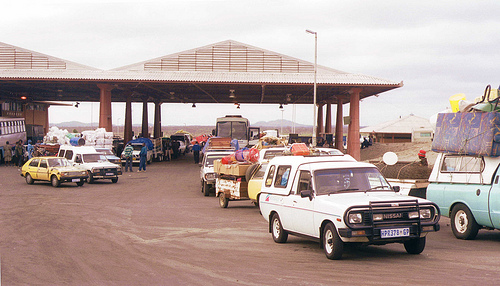
Poverty in Sub- Saharan Africa is a man-made phenomenon driven by internal warped policies and international trade systems. The continent cannot purport to seek to grow while it blocks the movement of goods and services through tariff regimes at the same time Tariff and non-tariff barriers contribute to inefficient delivery systems, epileptic cross-border trading and thriving of illicit/contraband goods.

This ultimately harms the local and regional economy. Delays at ports of delivery, different working hours and systems of control across the continent, unnecessary police roadblocks and poor infrastructure condemn countries to prisons of inter-regional and intra-regional trade poverty.

According to the United Nations Economic Commission for Africa, removal of internal trade barriers would lead to US$25 billion per year of intra-regional exports in Africa, an increase by 15,4 percent by 2022. Making African border points crossings more trade efficient would increase intra-regional trade by 22 percent come 2020. Trade barriers in East Africa Community alone increase the cost of doing business by 20 percent to 40 percent.

Such barriers include the number of roadblocks within each country, cross- border charges for trucks and weighing of transit vehicles on several points on highways. Kenya is grappling to reduce the number of its roadblocks from 36 to five and Tanzania from 30 to 15. Sub-Saharan Africa records an average port delay of 12 days compared to seven days in Latin America and less than four days in Europe. Africa is lagging behind!

In West Africa, Ghanaian exports to Nigeria are faced with informal payments and delays as the goods transit across the country borders whether there is proper documentation. In the Great Lakes Region, an exporter is faced with 17 agencies at the border between Rwanda and Democratic Republic of Congo each with a separate monetary charge sheet.

A South African retail chain Shoprite reportedly pays up to US$20 000 a week on permits to sell products in Zambia. Each Shoprite truck is accompanied with 1 600 documents in order to get its export loads across a Southern African Development Community border. Tariff and non-tariff barriers simply thicken the wall that traps Africans in economic poverty.

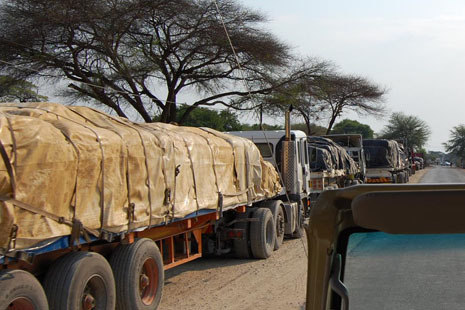
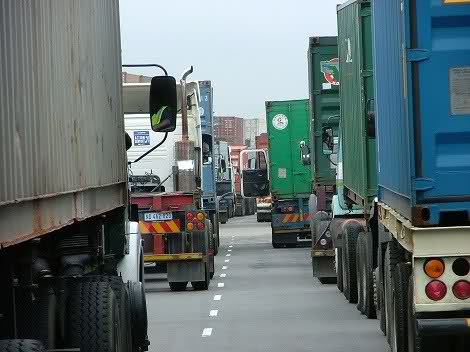
The new African Union chair should push for urgent steps to lower barriers to trade within Africa. Border control agencies need retraining and border country governments need to integrate their processes; long truck queues waiting to cross border points should not be used as an indicator of efficiency.

If it takes a loaded truck one hour to cover 100 kilometres; a four-hour wait at the border increases the distance to destination to another 400 kilometres. Increased distance impacts on the prices of goods at the retail end hence limiting access to products to majority of Africans. Limited access translates to less freedom of choice — similar to a locked up criminal prisoner.

With modern technology, goods should be declared at point of origin and point of receipt. Border points should simply have scanners to verify the content of containers. Protectionism, tariffs and non-tariff barriers within the continent sustains African market orientation towards former colonisers.

African entrepreneurs are subjected to longer travel schedules due to constant police checks and slow border processes. To fight poverty on the continent, African people would benefit from an African Union Summit that resolves to facilitate efficiency in movement of goods and services. Efficient delivery systems on the continent will tackle challenges of food insecurity, poor health care, conflicts and further promote diversified economies arising from competitive healthy trading amongst and between African nations.

Elimination of tariff and non-tariff barriers to trade will provide an opportunity for African entrepreneurs to adequately take their rightful places as relevant players in the global trade system. It is imperative that African countries re-orient their strategies to promote productivity by reviewing tariffs that hold back entrepreneurs from accessing the continent’s market. This calls for both a competitive spirit and a sense of integrated tariff and process compromise if the continent is to haul its population from poverty. Source: The Herald (Zimbabwe)

South Africa – Stalling Regional Integration

Yes, you’ll be forgiven if you thought this was some belated April-fools joke. South Africa has been accused of frustrating plans to create a regional customs union and instead preferring to bolster the South African Customs Union (Sacu), where it holds sway. 

A customs union is a trade agreement by which a group of countries charge a common set of tariffs to the rest of the world, while granting free trade among members. Regional Integration minister, Priscilla Misihairabwi-Mushonga, said there was a feeling that South Africa wanted to use Sacu as its basis to form a regional customs union, instead of working towards creating a new one.

“What we see is that South Africa wants to use Sacu as the basis for forming a regional customs union and sometimes, this is viewed as having a big brother mentality,” she said. Misihairabwi-Mushonga said, for this reason, negotiations towards a holistic Southern African Customs Union (Sadc) had not gone very far. Botswana, Lesotho, Namibia, Swaziland and South Africa make up Sacu, with the four countries having benefited by aligning themselves to South Africa, Africa’s largest economy. A Sadc customs union would involve the 15 countries of the region, instead of Sacu, which is considered narrow.

But Catherine Grant, the head of economic diplomacy at the South African Institute of International Affairs, reckons the smaller nations in Sacu, like Lesotho, may be opposed to Sacu morphing into a regional customs union. “This will be opposed by other Sacu members, not necessarily just South Africa, as this (Sacu) is not just a trade agreement, but involves a broader range of economic issues,” she said.

“Up to 60% of the Lesotho budget is Sacu revenue, so the vested issues, whether Sacu is the basis of a customs union, are not just South African.” Grant felt that it was impossible to expand Sacu in its current form, as it would cost South Africa too much and would dilute the resources that were meant for other projects.

The head of the trade and policy think-tank said instead, South Africa preferred to see the implementation of a free trade area (FTA) as a first step, since customs union negotiations were usually lengthy and time-consuming. “The preference is to first channel scarce resources to existing commitments and trying to make them as beneficial as possible,” she explained.

Grant said while South Africa was the dominant player in the region, hence engendering a feeling that it was imposing itself as the big brother, the country was actually holding back from taking a leading role and this cost the region.

“Sometimes South Africa holds back because they are conscious of not being a big brother and that could be detrimental to the region,” she explained. However, Grant said energies should be directed towards the conclusion of negotiations to set up the Tripartite Free Trade Area (TFTA), which includes the Common Market for East and Southern Africa, the East African Community and Sadc.

“The TFTA will resolve some of the overlapping issues that can be difficult to solve when it comes to a customs union,” she said. Since Zimbabwe adopted multicurrencies in 2009, there has been a call that the nation either join Sacu or push for the formation of a regional customs union. Zimbabwe remains wary of joining Sacu, as it fears for its economic independence, yet negotiations for a regional customs union are moving at a snail’s pace.

Sacu was established in 1910, making it the world’s oldest customs union. It consists of Botswana, Lesotho, Namibia, South Africa and Swaziland. Source: AllAfrica.com

Enhancing South Africa’s and Africa’s development through Regional and Continental Integration

Hardly a week goes by without some or other African politician waxing lyrical about continental integration, continental trade diversification, and a wholesome analysis of the ‘barriers’ which prevent the African continent  from reaching its full economic potential. No doubt I’m a bit biased in relaying the recent ‘public lecture’ of our deputy President Kgalema Motlanthe at the University of Finlandread the full speech here! Plenty of insight clearly delineating a plethora of barriers; yet, are we African’s so naive not to have identified these barriers before? Evidently yes.

In recent weeks, on the local front, we have learnt that One Stop Border Posts (OSBPs) is the solution to non-tariff barriers. This topic was drilled amongst the press till it got boring. The focus soon thereafter shifted to the implementation of a border management agency (BMA) – all of government under one roof – so simple. The reality is that there is no silver-bullet solution to African continental integration. Of this, affected business, Customs administrations and the international donor community is acutely aware. While the WTO and the multitude of trade lawyers will ‘yadder’ on about ‘diversification’ in trade, the reality is that Africa’s raw materials are even more sought after today than at an any time before. Certainly those countries which contain vast resources of oil and strategic minerals are about to reap the benefits. So why would African countries be concerned about diversification when the petro-dollars are rolling in? Perhaps greed or lack of foresight for the medium to long-term well-being of countries and their citizens? The fact remains, without homegrown industries producing goods from raw materials, most of  Africa’s eligible working class will continue to be employed by foreign mineral moguls or the public service.

Several customs and infrastructure solutions have over the last few years emerged with the usual credential of “WCO or WTO compliant”. Africa has been a guinea pig for many of these solutions – ‘experiments’ if you prefer. Literally millions of dollars are being spent every year trying out so-called ‘best-of-breed’ technology which users unfortunately accept without much questioning. The cart is being placed before the horse. Why? because the underlying route cause/s are not being identified, understood (sufficiently) and prioritized. Insofar as there exists no silver bullet solution, neither is there a single route cause in most cases. Unfortunately, donor aid often comes with its own pre-conceived outcomes which don’t necessarily tie in with those of the target country or the well-being of the continent.

While governments like to tout the ‘big-hitting’ projects, there are several ‘less exciting’ (technical) areas which countries can address to kick-start the process. One of these has even been recognised by the likes of the World Bank and OECD notwithstanding capital-intensive programs which promised much and have not delivered fully on their promise.  The issue at hand is the harmonisation of customs data. It might at first sound irrelevant or trivial, yet it is the key enabler for most Customs Modernisation initiatives. While there is still much anticipation in regard to the forthcoming deliberation and outcome of the WCO’s Globally Networked Customs (GNC) initiative at June’s WCO Policy Commission session in Brussels, there is significant support for this approach on the African continent. The momentum needs to be maintained.

 Related articles

WCO/SACU – IT Connectivity and Data Exchange

WCO-SACU IT Interconnectivity and Data Exchange Conference

On the occasion of International Customs Day, in January earlier this year, the World Customs Organisation dedicated 2012 as the year “Connectivity”, which encapsulates people connectivity, institutional connectivity and information connectivity among the members of the global Customs community.

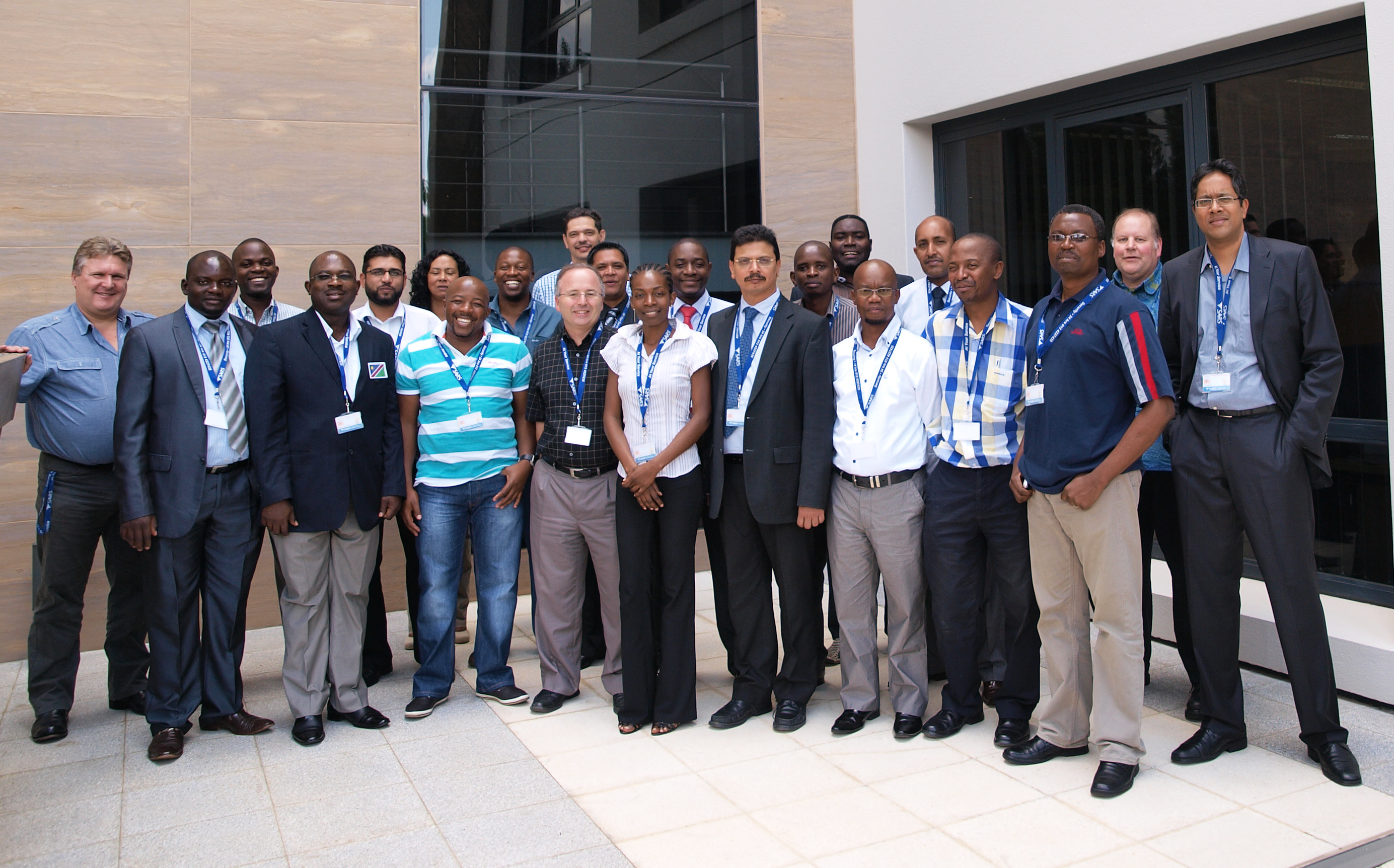
Over the last week and a half delegates from the WCO, SACU, UNCTAD, SADC and COMESA have been hosted at SARS, Pretoria to discuss and deliberate over an approach to implement ‘IT connectivity’ within the Southern African region. During the first week representatives from UNCTAD, SACU and SARS were briefed on important developments at the WCO on IT-Interconnectivity and Information Exchange. We were privileged to have Mr. Satya Prasad Sahu, Technical officer from the WCO – a leading expert in all matters of ICT in international customs matters – present the developments towards finalisation of a future international customs standard called “Globally Networked Customs” (GNC). It entails a structured approach that will enable customs authorities to formulate and document bilateral or regional ‘standards’ on a variety of Customs-to-Customs topics, for instance Authorised Economic Operators, Cross Border Information Exchange, Risk Management, etc. A representative from UNCTAD presented a synopsis of the proposed ‘cloud computing solution’ which the Trans Kalahari Corridor (TKC) plans to pilot between Namibia and Botswana along the TKC route in the next few months. During the course of this week, delegates , under the guidance of Satya, prepared a proposed approach for information exchange between members of the Southern African Customs Region. This document is based on the GNC Utility Block structure (defined by the ad Hoc Committee on Globally Networked Customs at the WCO) and served as the basis for discussion for Week 2.

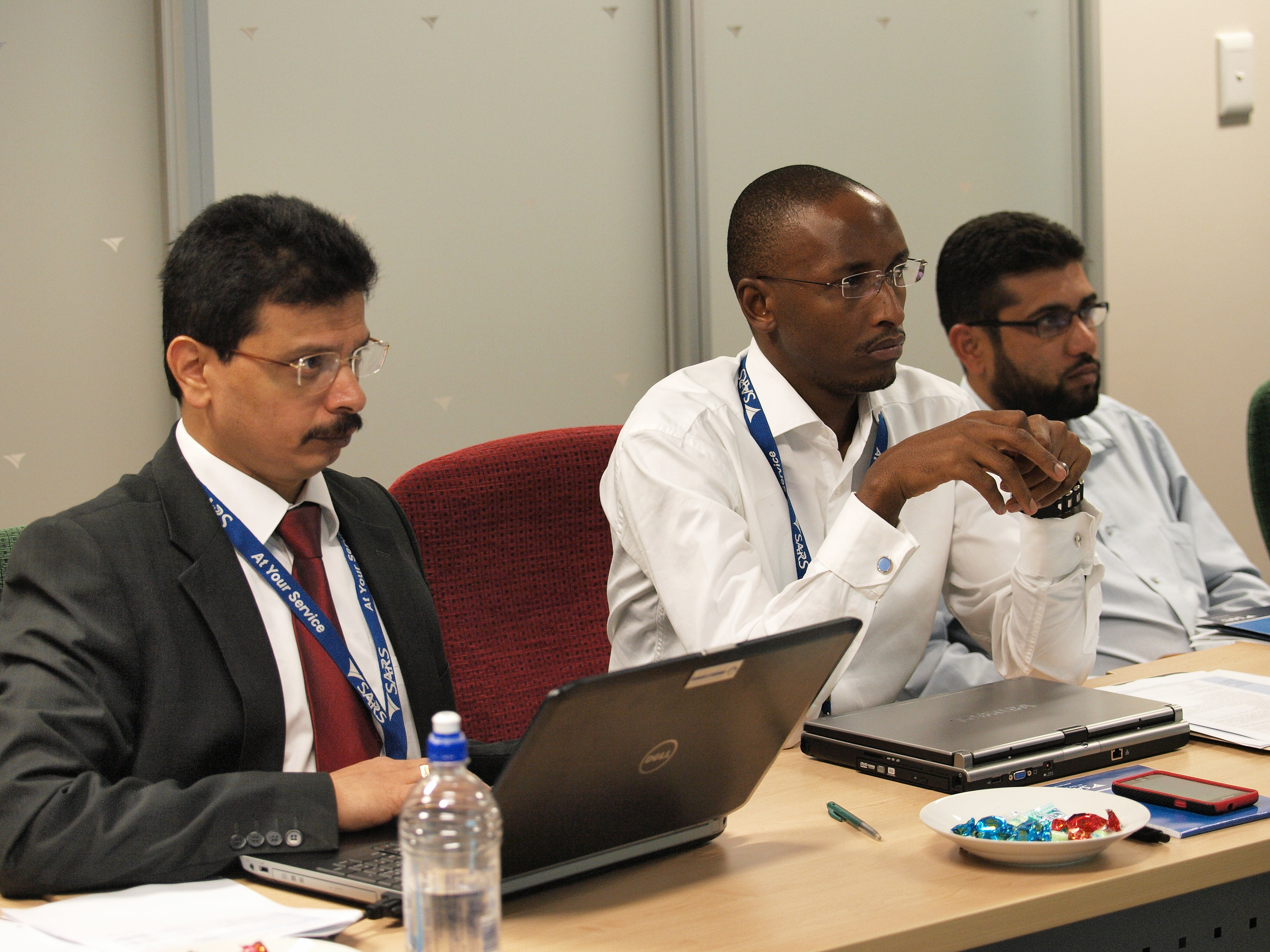
Mr. SP Sahu (WCO) and delegates from SACU SecretariatWeek 2 saw the arrival of customs and IT representatives from COMESA, SADC, UNCTAD, SACU as well as a delegation from Mozambique Customs. Mr. Sahu was invited to chair the session, given his vast experience on the subject matter as well as international experience in national and regional customs ICT programmes. Delegates were treated to various lectures on the GNC, a comprehensive overview of developments on ASYCUDA (Customs solution developed by UNCTAD), various updates from within the customs region – Botswana, Namibia, Lesotho, Swaziland, Mozambique and SARS. Beyers Theron informed delegates of ongoing developments of the SARS Customs Modernisation Programme as well as key implications for neighbouring countries. SARS presented a live demonstration of SARS’ Service Manager solution, navigating through all the functionality now available to SARS Customs officials. Of significant interest to all was the new iPod inspection tool. This technology is given prominent feature in the latest edition of WCO News.

A large portion of the week was, however, spent on deliberating the proposed scope and content of the draft Utility Block on Information Exchange in the Southern African Region. Significant progress was been made to attain first, a common understanding of the scope as well as the implications this has for participating countries. Delegates will return home with a product with which to create awareness and solicit support in their respective countries. Over the next few months SARS will engage both SACU and SADCOM (combined SADC and COMESA trading blocs) to establish firm commitments for information exchange with customs administrations in these regions. This conference is significant for SARS and South Africa as a whole as it provides a uniform, standardised and practical approach for engagement with other international trading partners. To view photographs of the conference please click here!

SACU now a liability – telling it as it is

Windhoek:  The century-old five-member Southern African Customs Union is a stumbling block to the region’s economic integration agenda and has become a liability whose continued existence is no longer sustainable, analysts say.  They add that SACU, which comprises Botswana, Lesotho, Namibia, Swaziland and South Africa (the major contributor to the revenue pool), can best serve the region if it is integrated into the Southern African Development Community.

The Southern Times understands that the dominant feeling in the South Africa and BLNS governments is that SACU’s structural weaknesses prohibit it from advancing long-term regional strategic interests.  South Africa doles out billions of rand to BLNS under a revenue sharing agreement.

However, authorities in South Africa realise that the wider SADC market offers greater economic and strategic interests than the SACU enclave. South Africa has also apparently realised that economically and politically, its interests are better advanced through SADC than SACU. 

These are some of the findings of a study by Dr Sehlare Makgetlaneng, the head of governance and democracy research at Pretoria-based think-tank, Africa Institute of South Africa (AISA).

The Southern Times is in possession of an advance copy of the 2011 study in which key decision-makers in member states voiced their opinions on the usefulness of SACU to regional integration, economic development within the BLNS and South Africa’s weakening interest in the customs union.

The AISA study raises pertinent questions on what BLNS would do if SACU were disbanded. The over-dependence on SACU revenue ‑ vis-à-vis BLNS’s failure to come up with viable alternative revenue sources, lack of manufacturing capacity and a captive market for South African products ‑ also raises pertinent questions on BLNS’s future economic strategies.

That SACU has failed to address strategic economic interests of BLNS is bluntly captured by Namibia’s deputy Trade and Industry Deputy Minister Tjekero Tweya.  He says, “Namibia has been insane for 21 years of independence without a production capacity to produce even a toothpick. The same reason why we import toothpicks from China is because we need them, so we need to work on our production capacity and improve ways of collecting revenue.”

AISA lauds Namibia for establishing strategic partnerships within SADC to advance its economic and political interests.

According to the study, South Africa’s view is that SACU does not serve the regional economic powerhouse’s interests and even without the arrangement, trade with BLNS will continue under the aegis of SADC. Pretoria regards Zimbabwe, Mozambique, Zambia, Malawi, the DRC and Angola as more strategic to its economic goals.

“SACU may become a liability in the advancement of South Africa’s interests in the region and the continent particularly if South Africa is not able to effectively and structurally transform it to serve the popular interests of the region,” the AISA study says.

SACU’s mission is to “serve as an engine for regional integration and development, industrial and economic diversification and expansion of intra-regional trade and investment” among other things. For SACU, the issue is its transformation into SADC. South Africa’s contribution to Southern African regional integration is best and effective through SADC, not SACU. SACU is largely a revenue sharing and trade facilitation organisation. It is not the organisation through which to advance Southern African regional integration,” the research says.

AISA dismisses long-held suggestions that SACU could be used as a platform to establish a SADC customs union.  The customs union’s structural weaknesses make it an undesirable model for regional integration.  The research points out that if other SADC members want to join SACU, they have to address their tariff schedules and international obligations under the World Trade Organisation.

SACU’s present revenue-sharing formula also presents a challenge to admitting new members.

AISA says the formula is structured for a win-win situation among members but does not encourage a win-win solution to problems inherent in the contribution to the revenue pool and the way the pool is shared.

“It is a zero sum game in terms of the way it is shared. It is a definite pool. If one member gets more, another member gets less. If two SADC members who trade more with other SACU members are admitted, their membership will have a significant revenue change within SACU. The revenue sharing formula is determined on the basis of SACU intra-trade,” AISA’s Makgetlaneng says.

The revenue sharing formula is the obstacle to admitting other SADC members into the bloc.  South Africa contributes 98 percent to the revenue pool, which is then shared according to intra-SACU trade or imports.  The more South Africa trades with its partners in the region and beyond, the more the revenue pool grows.

“BLNS import more from South Africa and when the distribution formula is applied these countries get the average of 90 percent of customs revenue. In other words, South Africa compensates them for buying more from itself.”

His sentiments dovetail with previous suggestions from South Africa to establish a development fund in which revenue is ring-fenced and used to finance infrastructural projects that benefit SADC.  The study says that this view is strongly opposed by Botswana and Namibia, which claim entitlement to SACU revenue and have argued that as independent nations, they should spend it as they wish.

But AISA argues that since South Africa has a trade surplus with BLNS, it sets the tariffs within the customs bloc, clearly depriving the BLNS policy room to determine tariffs.

“This study has proved that SACU currently serves as a stumbling block to Southern African regional integration. Its revenue-sharing formula is the obstacle to the admission of other SADC countries as its members. The position that it is bound to absorb other SADC countries and even COMESA countries as its members is opposed by SACU officials, scholars and researchers interviewed by the author.

“They maintain that it is not possible for SACU to absorb other SADC countries as its members. Their position is that BLNS are structurally opposed to the admission of other countries as SACU members. As SACU revenue sharing is currently structured, they (BLNS) have no material interests to see other countries joining SACU as members,” Makgetlaneng says.

AISA maintains that SACU’s interests do not serve the region’s long-term socio-political, economic and security interests and implores South Africa to oversee integration of the union into SADC.

“The reality that SADC takes primacy in terms of importance in Southern Africa is such that SACU cannot be sustained in the long-term. Preparations should be made for it to no longer serve as a sub-group within SADC. It should be integrated into SADC. South Africa should prepare itself for SACU’s integration into SADC. It should strategically and tactically ensure that SACU is integrated into SADC. This will be the qualitative step forward towards the reduction and elimination of the weak links in SADC’s chain driving regional integration,” AISA’s chief researcher, Makgetlaneng, suggests. Original source: Southern Times

Greetings for 2012

العربية: الخريطة الهجائية لأفريقيا English: Or...

As my leave break draws to a close I thought it opportune for ‘Africans’ to maintain a positive view on developments on the continent, not that international affairs elsewhere on the globe give any cause for joy. To this I append an article “Its time for Africa” that will hopefully reinforce sentiment in both government and trade quarters on the ‘attractive’ or ‘potential’ opportunities which our continent has to offer. I look forward to a new year of interesting times and challenges. Enjoy the read.

Free Trade talks to kick continent into the future

The first round of negotiations to establish a free trade area covering 27 countries in southern and east Africa will kick off on December 8, in Nairobi. It is envisaged that the negotiations will be completed in 36 months. (Really?)

The three trade blocs involved – the Southern African Development Community (SADC), the East African Community (EAC) and the Common Market for Eastern and Southern Africa (COMESA) – decided in October 2008 in Kampala to move towards a free trade agreement.

The intention is to boost intra-regional trade because the market will be much bigger, there will be more investment flows, enhanced competitiveness and the development of cross-regional infrastructure.

Industrialisation, making goods to sell instead of selling primary products, is a possible and also necessary spin-off. Competition with older established and also bigger emerging economies might be a stumbling block initially, but the huge new market may make it possible for locally manufactured goods to compete with those imported from outside the FTA.

Close to 600 million people live in the FTA with a gross domestic product of $1 trillion – suddenly we are boxing in the same weight division as China, India, Russia, Brazil, the US and the EU. Source: All Africa.com.

BriberyComment: Heard all of this before?  It could be hoped that some positive developments will materialise from more talkshops with promises to alleviate poverty and increase Africa’s slice of the international market. While the retail and telecommunications industries have made significant inroads into Africa, manufacturing remains a moot point. Does Africa have the political will to take risks? Removing internal border controls for instance are not high priority for sovereign governments. Neither for that matter is the question of the integrity of officials who man these borders. And, neither is the matter of removing one of the key contributors to cross border fraud – the “paper customs declaration”. Nonetheless, attempts are still being made to redress these ills. Recent developments within SACU indicate a genuine move towards customs-2-customs information exchange based on the ‘Customs Inter-connectivity’ concept. More on this shortly.

SADC Free Trade Area requires Integrated Border Management

At least two articles have surfaced within the last week calling for greater urgency towards the development of free trade areas in Africa. How much time, money and effort seem to be expended in futile trade discussions that – to the man in the street – are meaningless. One such article, appearing in the Freight & Trade Weekly (FTW) relates to a speech delivered by the South African Transport Minister imploring SADC members to fast-track an integrated border management framework to enable ‘free flow’ of trade in the region. Before pressurizing foreign countries to embrace such change it should at least be properly considered at home. For more than 15 years, South Africa has failed to implement any meaningful integrated border management of its own. Forget about the so-called economic protectionism amongst individual African countries. We have – on our own soil –an inter-departmental ‘protectionism’ which cares little for free flow of legitimate goods. Admittedly there are moves to ‘integrate’ certain frontline functions such as customs border control and immigration. This, however, still does not mitigate interference from other government agencies in tampering with ‘legitimate trade’. Each department seems hell-bent on enforcing its respective mandate regardless of consequential overlaps in activity, oblivious to the detrimental effect this has for legitimate trade. So what is ‘integrated border management’? In the context of a sovereign state it could imply one of two things:

  • A cooperative inter-departmental approach where ‘individual’ government departments perform combined interventions (according to their respective legal mandate) on people, cargo and conveyances according to a structured operational procedure and workflow; or
  • A Border Management Agency (being a single government entity) comprising the capacity to effect all immigration, customs and border control/security functions at ports of entry and exit.

Secondly, integrated border management at external borders can be further extended to include a streamlined import/export or entry/exit process to facilitate the movement of legitimate travellers, goods, and conveyances in a single transaction. This is described as a ‘one stop border’. A critical success factor here is the ability of two country’s border authorities to be able to co-locate with one another and affect a common clearance/passenger movement process. Theoretically these things are all easy to understand, but a whole lot more difficult to implement – more about this another time.

Therefore, before a successful SADC FTA can ever hope to materialise, the concept of proper risk-based inter-departmental control must be embedded and administered within a home country before attempting a bi- or multilateral initiative. The article “SADC must implement integrated border management” can be found on page 17, of the 28 October 2011 issue of the FTW.

Southern and Eastern Africa – Report non-tariff barriers online

An online mechanism is available for parties to report and monitor non-tariff barriers (NTBs) that have been encountered in SADC, Comesa and the EAC. Members of the public, including economic operators and academic researchers, can register as users on the website to submit and track complaints. After a complaint is submitted it is reviewed by the system administrator which will either accept or reject the complaint as a valid NTB. If it is valid the National Focal Point is assigned to resolve the complaint through bilateral consultations with the member state against which the complaint was reported.

Traders in the different member states, public and private sector, can also submit a written complaint to the National Focal Point of that state. Traders in South Africa, for instance, need to forward their complaint notification forms to either the Department of Trade and Industry [DTI – public sector focal point] or Business Unity South Africa [BUSA -private sector focal point] depending on the sector to which the trader belongs. The member states will then address the complaint through bilateral consultations.

Access the Online facility at URL: www.tradebarriers.org