SADC Customs Training Course on NTBs in cooperation with the WCO

SADC organizes a Customs Training of Trainers Course on NTBs in cooperation with the WCO [SADC]

SADC organizes a Customs Training of Trainers Course on NTBs in cooperation with the WCO [SADC]

The Southern African Development Community (SADC) organized a Training Course under its Customs Training of Trainers (TOT) Programme between 17 to 20 November 2014 at its Headquarters (Gaborone, Botswana). The training was conducted in collaboration with the World Customs Organization (WCO), the WCO Regional Office for Capacity Building (ROCB) for the Eastern and Southern Africa Region, and the Deutsche Gesellschaft für Internationale Zusammenarbeit (GIZ). Forty-two senior Customs officers from 13 of SADC’s 15 Member States, many of whom are active in their administrations’ training departments, participated in the Training Course.

The main objective of the TOT Programme is to provide technical and professional support, particularly in view of the contribution by Customs administrations to the consolidation of the SADC Free Trade Area and the successful implementation of the SADC Protocol on Trade. This will be achieved through the TOT Course on Non-Tariff Barriers (NTBs), which continue to be major stumbling blocks to trade in the region and many of which are Customs-related (or perceived as such). Participants who complete the Training Course will disseminate the knowledge gained, at national level, to relevant stakeholders including Customs officers from their own administrations.

Participants learnt the basic principles and definition of Non-Tariff Measures and NTBs, covering the World Trade Organization (WTO) Agreement on the Application of Sanitary and Phytosanitary Measures (SPS Agreement) and inter-regional initiatives such as the online NTB monitoring mechanism and national monitoring committees. They also gained an overview of the Agreement on Trade Facilitation (TFA) recently concluded under the auspices of the WTO. The WCO gave an introduction to its tools and instruments for applying trade facilitation measures and to the Revised Kyoto Convention (RKC). Particular emphasis was placed on the new Transit Handbook and the TFA Implementation Guidance.

The course was highly interactive and participants shared their views on the importance of global standards to facilitate regional integration and various trade facilitation measures. They discussed how they could promote Coordinated Border Management (CBM) and increase public-private dialogue at national and regional level. Source: WCO

The Single Customs Territory Experiences ‘IT-connectivity’ Startup Problems

EAC-logoSince July 2014, EAC revenue officers work together to facilitate trade within the community. Some improvements remain made; the Single Customs Territory (SCT) does present some advantages. Since the single customs territory is operational, clearing processes are established in the country of destination while the goods are still at the port of Dar es Salaam”, explains Leah Skauki, a SCT liaison officer at the Tanzania Revenue Authority (TRA).

Once the declaration is over, when custom duties and taxes are paid, TRA verifies the physical goods. “The office grants a notification testifying that the goods fulfil all requirements in order to get the exit note.” Within the new system, the number of weighbridges and non-tariff barriers are reduced because “truck drivers only have to show the documents which certify that the goods have undergone verification.”

Massoundi Mohamed Ben Ali, Administrative Director in Charge of Human Resources and Import – Export at the Bakhresa Grain Milling Burundi, is pleased with the new development. “Before the system was implemented, Bakhresa used to import 3800 Tonnes of wheat (40 trucks) and we were obliged to declare each truck with a different clearing agent. We now fill in one statement with one clearing agent. The procedures are done quickly with a small of amount of money”, he points out.

Clearing agents testify that the number of statement on the borders is reduced. “Before, transporters had to fill in a transit declaration (T1) on each border”, one of the clearing agents in the Dares Salaam port relates.

Aimable Nsabimana, a focal point of SCT in Dar es Salaam for the Burundi Revenue Authority, indicates that the computerised system they use is different in each country.”It is not easy to exchange data. We are forced to print documents for verification. And when the goods arrive in Tanzania, they are in the hands of the TRA which has its own software”, he notes.

Inter-connectivity of software would facilitate verification and avoid fraud. This opinion is shared by many clearing agents: “If we were interconnected, the Tanzanians would be able to easily access Burundian data and vice versa”, one of them says.

Léonce Niyonzima, programme and monitoring officer at OBR and the national coordinator of SCT, agrees that the lack of interconnectivity causes delays in the transmission of documents.

He says that all EAC countries should have been interconnected by June 2014, but due to technical problems Tanzania and Burundi still lag behind. “There is a technical committee responsible for monitoring and evaluation which will draw up the balance sheet of the challenges before ending the pilot stage at the end of this year.”

The Single Customs Territory is funded by Trademark East Africa with an amount of USD 450 thousand for the redeployment of staff, travel expenses, inspection and supervision, information technology, office equipment and assistance. Source: http://www.iwacu-burundi.org

What border barriers impede business ability?

ICCThe International Chamber of Commerce (ICC) has released the results of its survey ‘What border barriers impede business ability?’. The analyses highlights common impediments to cross border trading that can be taken into consideration when determining how barriers to trade can be reduced to stimulate global economic growth.

The ICC recognises that the survey results are neither statistically valid nor entirely representative of the hundreds of thousands of organizations that trade globally, the survey does much to reveal a set of common prerequisites – such as predictability, reliability and consistency – that international traders seek. The ICC concludes that there is a need for further capacity-building efforts, in particular education and availability of information for both traders and border control officials on the correct process to follow. The survey results illustrates the need for an effective customs-business dialogue at national level to find ways to lessen delays in trade processes and shorten release times, as called for by ICC.

The survey coincides with a number of international developments seeking to facilitate trade and simplify border procedures. These include the conclusion of a multilateral agreement on trade facilitation at the 9th Ministerial Conference of the World Trade Organization in December 2013 and the ongoing negotiations of the Trans-Pacific Partnership Agreement, the Trans-Atlantic Trade and Investment Partnership and the Regional Comprehensive Partnership Negotiations. Source: International Chamber of Commerce

SA Government to Prioritise and Pass Customs Bills

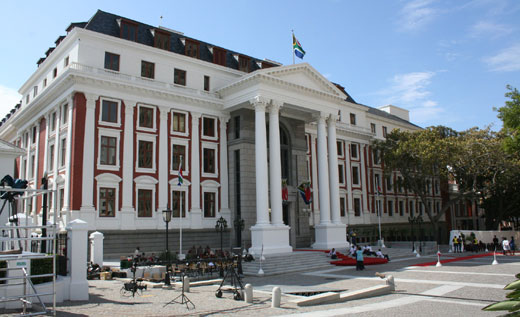
Parliment, Cape Town (Eye Witness News)

Parliament, Cape Town (Eye Witness News)

Government has decided to prioritise the passage of eight bills through Parliament. The bills deal with land restitution, labour relations, and customs and excise.

There are currently 42 bills before the National Assembly and the National Council of Provinces. With the fourth Parliament set to be dissolved ahead of looming general elections, Members of Parliament (MPs) are unlikely to deal with all 42 bills.

A statement just released by the ANC’s office in Parliament to the media states –

“The African National Congress in Parliament has taken note of the huge parliamentary workload which the institution has to process in the next few months before the expiry of the current five-year term of parliament. In terms of the Constitution, the current term of Parliament is set to end ahead of the 2014 national elections. The workload confronting the institution includes committee oversights, constituency programmes, adoption of committee reports, debates on the state of the nation address and the budget, and finalisation and adoption of Bills.”

“Currently, there are 24 Bills before the National Assembly (NA) and 18 currently before the National Council of Provinces (NCOP) – which is a total of 42 Bills the institution must pass before the elections. Our view is that all these Bills are important and therefore the institution should spare neither strength nor effort in ensuring they are processed qualitatively and thoroughly to ensure that they are converted into laws within the stipulated period. We are however alive to the possibility that not all these Bills may be passed in the next few remaining months of parliament.”

“We have therefore sought to prioritise the following Bills, which we believe Parliament should give special attention to ensure they are passed into laws. In terms of the rules of Parliament, Bills that are not passed within the current term of Parliament may be resuscitated in the next parliamentary term. This will be done for those Bills that might not be passed during this term.”

“In determining priority Bills, we have looked at criteria such as complexity, contentiousness, technicality, effect on provinces, and requirement for exhaustive consultation. [Three of the eight bills relate to Customs and Excise]

  1. Customs Control Bill of 2013 – The Customs Control Bill is intended to replace certain provisions of the Customs and Excise Act of 1964 relating to customs control of all means of transport, goods and persons entering or leaving South Africa. The Bills aims to ensure that taxes imposed by various other laws on imported or exported goods are collected and that various other laws regulating imports and exports of goods are complied with. To ensure effective implementation of customs control, the Bill provides for elaborate systems for customs processing of goods at places of entry and exit such as seaports, airports and land border posts;
  2. Customs Duty Bill of 2013 – The Customs Duty Bill is intended to replace certain provisions of the Customs and Excise Act of 1964 which relates to the imposition and collection of imports and export duties. The Bill primarily aims to provide for the levying, payment and recovery of import and export duties on goods imported or exported from South Africa. The Bill will be dealt with in terms of Section 77 of the Constitution; and
  3. Customs and Excise Amendment Bill of 2013 – The Customs and Excise Amendment Bill seeks to amend the provisions of the Customs and Excise Act of 1964 and to remove from the Act all the provisions that have now been incorporated into both the Customs Control Bill and the Customs Duty Bill. Essentially, because the Customs and Excise Amendment Act of 1964 strongly reflected rigidity reminiscent of the apartheid era controls, which are unsuitable to the current modern control systems, it has been split into both the Customs Control Bill and the Customs Duty Bill. The Customs and Excise Amendment Act of 1964 will for now be retained in an amended form for the continued administration of excise duties and relevant levies until it is completely replaced with a new law in future (i.e. Excise Duty Bill).”

Source: Excerpt of a press statement of the Office of the Chief Whip of the ANC, Parliament.

What Shoprite and Woolworths can tell us about Non-tariff Barriers

SAIIA PaperGauging from the title of this SAIIA report, it is the first time I ever saw the use of private sector entities as the vehicle for delivery. A nice and welcomed approach. While the report tends towards technical analysis, it does provide some sound thoughts on the extent of non-tariff barriers (NTBs) outside of the traditional barriers such as antidumping duties, quantitative restrictions, import levies. In fact the report focusses on licensing rules, import permits, standards as well  and customs procedures.These NTBs are likely to be less transparent but more prevalent and representative of the constraints Southern African traders face in selling merchandise across borders on a day-to-day basis.

It is interesting to see that corruption features in at least 3 out of the 4 NTBs by category identified by the private sector. While the quest for more automation at borders is definitely feasible, the question of limitation of human intervention at the border will undoubtedly be a stumbling block in many countries. It requires some political will to actually do something about the “rot” at borders. To access the report please visit the SAIIA website

The paper provides an overview of the incidence and impact of non-tariff barriers (NTBs) in the Southern African Development Community (SADC) region. The analysis draws on the growing body of literature on NTBs pertaining to regional trade in Southern and Eastern Africa, but importantly it supplements this with the experience of the private sector in the region. It reviews the current processes and achievements in addressing NTBs within Southern Africa. Practical measures are proposed to facilitate the removal of NTBs within Southern Africa, informed by the lessons from other regions. Source: South African Institute of International Affairs.

Border Management in Southern Africa: Lessons with respect to Policy and Institutional Reforms

The folk at Tralac have provided some welcomed insight to the challenges and the pains in regard to ‘regionalisation’. No doubt readers in Member States will be familiar with these issues but powerless within themselves to do anything due to conflict with national imperatives or agendas. Much of this is obvious, especially the ‘buzzwords’ – globally networked customs, one stop border post, single window, cloud computing, and the plethora of WCO standards, guidelines and principles – yet, the devil always lies in the details. While the academics have walked-the-talk, it remains to be seen if the continent’s governments have the commitment to talk-the-walk!

Regional integration is a key element of the African strategy to deal with problems of underdevelopment, small markets, a fragmented continent and the absence of economies of scale. The agreements concluded to anchor such inter-state arrangements cover mainly trade in goods; meaning that trade administration focuses primarily on the physical movement of merchandise across borders. The services aspects of cross-border trade are neglected. And there are specific local needs such as the wide-spread extent of informal trading across borders.

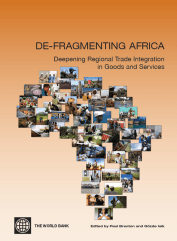
Defragmenting Africa WBThis state of affairs calls for specific governance and policy reforms. Effective border procedures and the identification of non-tariff barriers will bring major cost benefits and unlock huge opportunities for cross-border trade in Africa. The costs of trading remain high, which prevents potential exporters from competing in global and regional markets. The cross-border production networks which are a salient feature of development in especially East Asia have yet to materialise in Africa.

Policy makers have started paying more attention to trade-discouraging non-tariff barriers, but why does the overall picture still show little progress? The 2012 World Bank publication De-Fragmenting Africa – Deepening Regional Trade Integration in Goods and Services shows that one aspect needs to be singled out in particular:  that trade facilitation measures have become a key instrument to create a better trading environment.

The main messages of this WB study are:

  • Effective regional integration is more than simply removing tariffs – it is about addressing on-the-ground constraints that paralyze the daily operations of ordinary producers and traders.
  • This calls for regulatory reform and, equally important, for capacity building among the institutions that are charged with enforcing the regulations.
  • The integration agenda must cover services as well as goods……services are critical, job-creating inputs into the competitive edge of almost all other activities.
  • Simultaneous action is required at both the supra-national and national levels. Regional communities can provide the framework for reform, for example, by bringing together regulators to define harmonised standards or to agree on mutual      recognition of the qualification of professionals……. but responsibility for implementation lies with each member country.

African governments are still reluctant to implement the reforms needed to address these issues. They are sensitive about loss of ‘sovereign policy space’ and are not keen to establish supra-national institutions. They are also opposed to relaxing immigration controls. The result is that border control functions have been exercised along traditional lines and not with sufficient emphasis on trade facilitation benefits. This is changing but specific technical and governance issues remain unresolved, despite the fact that the improved border management entails various technical aspects which are not politically sensitive.

The required reforms involve domestic as well as regional dimensions. Regional integration is a continental priority but implementation is compounded by legal and institutional uncertainties and burdens caused by overlapping membership of Regional Economic Communities (RECs). The monitoring of compliance remains a specific challenge. Continue reading →

SACU’s Choice – ‘Common policy or irrelevance’

imagesCA31PQJGThe Minister of Trade and Industry, Dr Rob Davies briefed the Parliamentary Portfolio Committee on Trade and Industry regarding the progress on the implementation of the five-point plan in Cape Town. This is a work programme which was approved by the 2nd Southern Africa Customs Union (SACU) Summit convened by President Zuma in 2011 premised on the following pillars;

  1. Work programme on cross-border industrial development;
  2. Trade facilitation;
  3. Development of SACU institutions;
  4. Unified engagement in trade negotiations and
  5. The review of the revenue sharing arrangement.

The five-point plan emerged from realization by SACU Member States of a need to move SACU beyond an arrangement held together only by the common external tariffs and the revenue sharing arrangement to an integration project that promotes real economy development in the region.

Minister Davies noted that progress on the implementation of pillars of the five- point plan is uneven. SACU has registered good progress on trade facilitation and there is greater unity of purpose in negotiations with third parties (Economic Partnership Agreement (EPA), SACU-India and Tripartite Free Trade Area).

However, there is limited progress on the review of the revenue sharing arrangement and hence lack of adequate financial support for the implementation of cross-border industrial and infrastructure development projects. The SACU revenue pool is raised by South Africa from customs and excise duties. Mr Davies told MPs that in 2013-14 the total disbursement from the revenue pool would be about R70bn of which the BLNS countries would receive about R48bn. There is also lack of progress on the development of SACU institutions as a result of divergences in policy perspectives and priorities of Member States.

Enabling provisions provide for the establishment of National Bodies and a SACU Tariff Board. The SACU Tariff Board will make recommendations to Council on tariffs and trade remedies. Davies added that, until these institutions are established, functions are delegated to the International Trade Administration Commission (ITAC) in SA.

The minister warned that the lack of agreed policies would hinder effective decision-making on regional integration and industrialisation, which had made little progress since the 2011 summit convened by President Jacob Zuma. South Africa believes SACU needs to move “firmly towards a deeper development and integration”.

Minister Davies said SACU risked becoming “increasingly irrelevant” as an institution if it did not develop beyond operating a common external tariff, and a “highly redistributive” revenue-sharing arrangement. The lack of progress in developing new SACU institutions was primarily due to policy and priority differences among members. “Against this background South Africa needs to reassess how best to advance development and integration in SACU.”

Among the disagreements on tariff setting between South Africa and its neighbours highlighted by Mr Davies, was that South Africa saw tariffs as a tool of industrial policy while they regarded them as a means of raising revenue. For example, the other Sacu members wanted to include the revenue “lost” on import tariff rebates offered by South Africa into the revenue pool.

The pool provides these countries with a major source of their national budget. Rebates were seen as revenue foregone for which additional compensation should be sought. South Africa, on the other hand, argues that the rebates (for example on automotive imports) are part of its total tariff package and serve to attract investment and boost imports and therefore, contribute to expanding the revenue pool, not diminishing it.

He emphasised the development of a common approach on trade and industrial policy as the prerequisite for establishing effective SACU institutions in future.

He highlighted that a discussion on appropriate decision-making procedures on sensitive trade and industry matters that takes into account SACU-wide impacts is required. Source: The Department of Trade & Industry, and BD Live.

Port-to-Hinterland…gearing up for growth?

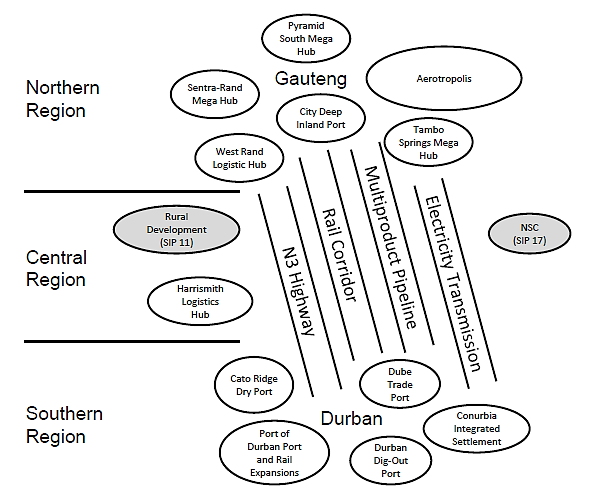
Proposed Durban-Free State-Gauteng Logistics and Industrial Corridor Plan (SIP2)

Proposed Durban-Free State-Gauteng Logistics and Industrial Corridor Plan (SIP2)

Notwithstanding on-going discontent amongst industry operators in regard to proposed legislative measures mandating customs clearance at first port of entry, the South African government (GCIS) reports that work has already commenced on a massive logistics corridor stretching between Durban and the central provinces of the Free State and Gauteng. Most of the projects that form part of the second Strategic Infrastructure Project (SIP 2), also known as the Durban-Free State-Johannesburg Logistics and Industrial Corridor, are still in the concept or pre-feasibility stage, but construction has already started on several projects.

These include:

  • the building of a R2,3 billion container terminal at City Deep
  • a R3,9 billion project to upgrade Pier 2 at the Port of Durban
  • R14,9 billion procurement of rolling stock for the rail line which will service the corridor.

Work has also started on the R250 million Harrismith logistics hub development to set up a fuel distribution depot, as well as on phase one of the new multi-product pipeline which will run between Johannesburg and Durban and transport petrol, diesel, jet fuel and gas.

The aim of these projects and others which form part of SIP 2, is to strengthen the logistics and transport corridor between South Africa’s main industrial hubs and to improve access to Durban’s export and import facilities. It is estimated that 135 000 jobs will be created in the construction of projects in the corridor. Once the projects are completed a further 85 000 jobs are expected to be created by those businesses that use the new facilities. Source: SA Government Information Service

Interested in more details regarding South Africa’s infrastructure development plan? Click here!

Uganda says it’s time to talk in Africa

Africa-mombasa-mct-aerial

Port of Mombasa (Credit – Port Strategy)

Not for the first time a landlocked country in Africa is attempting to have a say in a remote port operation which functions as a major gateway for its import and export trade. This time it is Uganda proposing that it has a say in the management of Kenya’s major port, the port of Mombasa. In the recent past it was Ethiopia attempting to secure a dedicated terminal in Djibouti.

The Ugandan initiative surfaced at a recent ‘Validation Workshop on Uganda’s Position on the Single Customs Territory for the East African Community. The Permanent Secretary Ministry of EAC Affairs, Edith Mwanje said that Uganda should have a say in the management of gateway ports because of “the many delays that negatively impacted trade”. Ugandan cargo accounts for the largest body of traffic handled by the port of Mombasa for the landlocked countries surrounding Kenya.

It is unlikely, of course, that any country will give up even partial control of a national asset to another country. It is akin to relinquishing sovereignty in the minds of countries owning port assets and being asked to participate in some form of power sharing. Djibouti fought hard to prevent Ethiopian Shipping Lines gaining control of dedicated terminal assets in the old port of Djibouti and won this battle. It is very unlikely that Kenya will even consider the idea of a foreign power participating in the management of its number one port.

It may, however, be a wise course of action for countries such as Djibouti and Kenya to consider establishing some sort of regular stakeholder dialogue. This is the path to a long and sustainable relationship as opposed to a short opportunistic one.

It is known, for example, that in the past Ethiopia has been frustrated by the high price of gateway container and general cargo operations in Djibouti and this has led to tensions. Since these days, however, Djibouti has put considerable effort into having a sensible dialogue with Ethiopia and this has matured into new projects such as the signing of an agreement with Ethiopia and Djibouti to build an oil pipeline that will reduce South Sudan’s dependence on crude shipments via neighbouring Sudan, and plans for a $2.6bn liquefied natural gas terminal in Djibouti, including a liquefaction plant and a pipeline, that will enable the export of 10m cubic meters of gas from Ethiopia to China annually from 2016.

Source and Picture credit: Portstrategy.com

Johburg Chamber to meet Parliment over Customs Bill

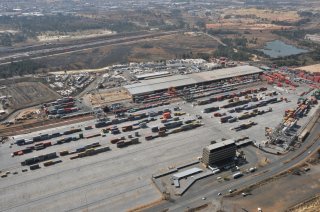
City Deep Container Terminal, Johannesburg

City Deep Container Terminal, Johannesburg

Online media company Engineering News reports that the Chamber of Commerce and Industry Johannesburg (JCCI) would take its objections of certain aspects of the recently tabled Customs Control Bill to Parliament and called on South African business and interested stakeholders to provide input as well.

The South African Revenue Services’ (Sars’) newly drafted Customs Control Bill, which, in conjunction with the Customs Duty Bill, would replace the current legislation governing customs operations, declared that all imported goods be cleared and released at first port of entry.

“The Customs Bill, cancelling the status of inland ports as a point of entry, will be before Parliament very soon, and only a short notice period for comment is expected,” JCCI former president Patrick Corbin said.

While all other comments and suggestions relating to the Bill were adequately dealt with, this remained the one disagreement that had not been satisfactorily resolved, he stated.

Corbin invited all parties to voice their concerns to ensure “all areas of impact and concern were captured”, adding further weight to the JCCI’s presentation. The implementation of the new Bill would directly impact the City Deep container terminal, which had been operating as an inland port for the past 35 years, alleviating pressure from the already-constrained coastal ports.

Despite customs officials assuring the chamber that the operations and facilities at City Deep/Kaserne would retain its licence as a container depot, Corbin stated that the Bill had failed to recognise the critical role City Deep played as an inland port and the impact it would have on the cost of doing business, the country’s road-to-rail ambitions, the coastal ports and ease of movement of goods nationally and to neighbouring countries.

“The authorities do not accept the fact that by moving the Customs release point back to the coast, a vessel manifest will terminate at the coastal port. There will not be the option of a multimodal Bill of Lading and seamless inland movements, as all boxes or the unpacked contents will remain at the coast until cleared and released by the line before being reconsigned,” he explained.

Citing potential challenges, Corbin said that only the containers cleared 72 hours prior to arrival would be allocated to rail transport and that those not cleared three days before arrival would be pushed onto road transport to prevent blocking and delaying rail operations.

This would also result in less rail capacity returning for export from Johannesburg, leading to increased volumes moving by road from City Deep to Durban.

He warned of the Durban port becoming heavily congested with uncleared containers, causing delays and potential penalties, while hampering berthing movements and upsetting shipping lines’ vessel schedules.

The release of the vessel manifest at the coastal port also placed increased risk on the shipping operators delivering cargo to Johannesburg following the clearance of goods at customs and required reconsignment at the country’s shores.

However, Transnet remained committed to investing R900-million for upgrading the City Deep terminal and the railway sidings, while Transnet CEO Brian Molefe had accepted the assurances from customs that “nothing would change and the boxes would still be able to move seamlessly once cleared”.

The Gauteng Department of Roads and Transport Department had allocated R122-million for the roadworks surrounding the inland port, while Gauteng MEC for Roads and Transport Dr Ismail Vadi said the department’s focus this year would narrow to the expansion and development opportunities at City Deep/Kaserne.

The department was also progressing well with the development of a second inland port, Tambo Springs Inland Port and Logistics Gateway, expected to be completed by 2017.

Vadi recently commented that the Gauteng Department of Roads and Transport, which was currently developing a terminal master plan for the project, would link the freight hub through road and rail transport to and from South Africa’s major freight routes and other freight hubs, including City Deep, which was about 33 km away.

The National Economic Development and Labour Council, under which the Bill had been drafted during a three-year development process, had agreed to fund an impact assessment study, led by Global Maritime Learning Solutions director Mark Goodger. The study was “close to completion” and would be presented alongside JCCI’s objections in Parliament. Source: Engineering News

Non-Tariff Barriers – SADC Secretariat requested to intervene in Mozambique

0b8a0ce6140c04b4f629a97cb5e8d8f34e69d4a1The SADC, COMESA and EAC Tripartite alliance has been urged by various Zimbabwean, Zambian and Malawian exporters to salvage a potential crippling situation occurring at Mozambique borders. This follows the recent implementation of a new transit bond guarantee system which in conjunction with the Single Window system is allegedly causing significant delays, including loss of business and spiralling demurrage for transit goods emanating from these landlocked countries, en route for export from various Mozambique ports, Beira in particular.

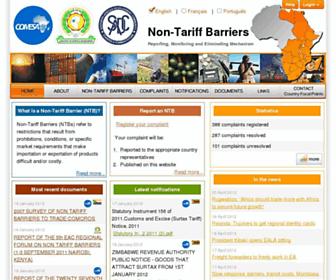
Complaint no. NTB-000-578 in terms of ‘Lengthy and costly customs clearance procedures’ was lodged and can be viewed in full on the Tripartite’s NTB portal. Amongst the various problems sited, the complainants request the following of Mozambique –

  • Mozambique Ministry of Finance is requested to get customs to consider a parallel system to run with the electronic single window programme to clear the backlog in Beira port now and also consider providing release against Report orders to reduce further downtime in port . This will be a stop-gap measure until the customs staff are well versed , fully trained and that the new system can work well.
  • Mozambique authorities to facilitate arrangements with Cornelder to consider waiving storage for this special situation or at least offer 75% credit on the bills due which I must say are now astronomical based on the days the cargo has stayed in port both imports and exports.
  • Mozambique authorities to facilitate arrangements with shipping lines to consider waiving completely the demurrage due on the empty containers or at least give say 15-21 more days grace period before demurrage starts accruing.
  • Mozambique authorities to facilitate arrangements that Mozambique customs get technical assistance to assist roll this new programme out without causing huge catastrophes like this.

Mozambique has acknowledged the complaint and expressed regret over the developments. Mozambique reported that the issue was receiving urgent attention and they would provide feed back shortly.

Why 2013 Is the Time to Adopt e-Invoicing

e-Invoicing INTTRA

Rod Agona, Managing Director, Electronic Invoicing, INTTRA explains three reasons why it is time for ocean carriers and shippers to say goodbye to paper. This follows the recent announcement by IATA on the introduction of its eAWB initiative.

In a digital age where a delay of seconds or one human error can be the cause of lost revenue, wasted resources or unhappy customers, good technology becomes critical to run a business.

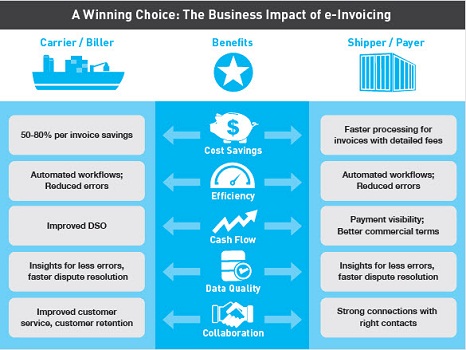
Twelve years after the ocean shipping industry adopted e-commerce tools that resulted in an average savings of $100,000 per year and hundreds of thousands of labor hours per week, the final step in the shipping process – invoicing and payment – are still catching up. Surprisingly, invoices are still largely processed by hand in the ocean shipping sector. Considered the most tedious and costly step in the shipping process, manual invoicing can take days to complete and is often riddled with disputes and errors. And the amount of time it takes to manage disputes is more than anyone is comfortable admitting – knowing each delayed payment impacts carrier cash flow and creates dissatisfied shipping customers.

With electronic invoicing (e-Invoicing), there is a potential 50-80 percent cost savings according to the E-Invoicing/E-Billing 2012 Report from the international e-billing firm, Billentis, and the payment process is significantly shortened with DSO (days sales outstanding) typically decreasing by up to 10 days. Error rates are also greatly reduced, and customer satisfaction increased.

Although e-Invoicing as a trend has picked up rapidly in government and commercial sectors in the past three years (growing at a rate of 20 percent last year, according to the Billentis report), many in the ocean shipping sector are just catching wind of the benefits. Popularity among players is expected to grow this year – both on the biller and payer sides. Three reasons for the industry’s recent e-Invoicing surge are:

1. Demand Is at a Record High

At least 81 percent of the world’s largest shippers are requesting electronic invoices from their carriers in 2013, says a 2012 global shipping study conducted by INTTRA, the world’s largest ocean shipping network. The demand to move away from paper invoicing has never been greater, with shippers claiming to be “ready now and actively seeking e-Invoicing from their business partners.”

2. Proven to Lower Costs and Speed Internal Operations

Shippers’ biggest complaints with paper invoicing are 1) managing disputes, 2) the time and costs required to process invoices, and 3) correcting invoice inaccuracies. e-Invoicing is proven to alleviate these concerns by streamlining the entire settlement process, improving accuracy, and reducing the costs and labor required to process manual invoices. Payers end up happier as a result, receiving faster and improved communications and lowering the true total cost of doing business. For carriers, e-Invoicing is proven to cut costs and improve cash flow and working capital – and investments are often gained back within six months.

Both shippers and carriers want a solution to better manage high-volume transactions. Imagine spending millions of dollars on a global SAP (or equivalent) rollout and still manually keying in a half-million invoices per year. There is a better way.

3. It May Soon Be Mandatory (if it isn’t already)

Shipping companies are trying to keep up with rapidly changing local and international trade regulations, and e-commerce shipping is the smart way to stay compliant. Countries like Mexico, Brazil, Norway, Sweden, Finland and Denmark have already made electronic invoicing mandatory for all business-to-government transactions. Most others in Europe, North America and Australia are increasingly adopting electronic invoicing due to its cost-saving benefits.

Companies that act today put themselves at a competitive advantage as they are able to put their savings back to work and redirect employees engaged in manual processing to higher value tasks.

Looking Forward – 2013 and Beyond

The tipping point for when a technology ‘best practice’ becomes a ‘must have’ is never clear-cut – until an industry struggles as much as ours has. Change is hard, but for an industry with few proven solutions to remove costs, e-Invoicing is a viable, must-have solution.

2013 is a critical year for the ocean shipping industry. It is expected to be a year of major change in the way carriers and shippers do business. Competition is growing fiercer, and the industry continues to consolidate. e-Invoicing is one way to cut costs and reallocate dollars to where they are needed most in today’s challenging environment. Source: Maritime-Executive.com

For information, visit http://www.inttra.com/e-invoicing.

City Deep Inland Terminal [port] to be hit hard by Customs Bill

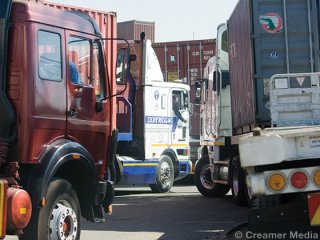
Trucks at Transnet Freight Rail's City Deep Terminal (Engineering News)

Trucks at Transnet Freight Rail’s City Deep Terminal (Engineering News)

Following up on last year’s meeting (click here!) of the minds, convened by the JCCI, a recent meeting in Johannesburg placed fresh emphasis on the dilemma which impending changes contemplated in Customs Draft Control Bill will have for the import and logistics industry in particular. The following report carried by Engineering News highlights trade’s concerns which are by no means light weight and should be addressed with some consideration before the Bills come into effect. Gauging from the content below, there is a clear disconnect between business and policy makers.

The closure of Johannesburg’s inland port seemed to be a “done deal” as Parliament deliberated the recently tabled Customs Control Bill that would leave the City Deep container depot invalid, Chamber of Commerce and Industry Johannesburg (JCCI) former president Patrick Corbin said on Friday.

The promulgation of the South African Revenue Services’ (Sars’) newly drafted Customs Control Bill, which, in conjunction with the Customs Duty Bill, would replace the current legislation governing customs operations, would have a far-reaching impact on the cost and efficiencies of doing business in South Africa and other fellow Southern African Customs Union (Sacu) countries, he added.

The Bill, which was the product of a three-year development process within the National Economic Development and Labour Council, declared that all imported goods be cleared and released at first port of entry. This was part of efforts by customs officials and government to root out any diversion and smuggling of goods, ensure greater control of goods moving across borders and eliminate risks to national security.

Speaking at the City Deep Forum, held at the JCCI’s offices in Johannesburg, Corbin noted, however, that City Deep had operated as an inland port for the past 35 years, easing the load on the country’s coastal ports, which were already strained to capacity. Despite customs officials assuring the chamber that the operations and facilities in City Deep/Kaserne would retain its licence as a container depot, he believed customs had failed to recognise the critical role City Deep had played in lowering the cost of business, easing the burden on South Africa’s ports and ensuring ease of movement of goods to neighbouring countries. As customs moved full responsibility of container clearances to the ports, port congestion, inefficiencies, shipping delays and costs would rise, and jobs would be lost and import rail volumes decreased, he noted.

Economist Mike Schussler added that the closure of the City Deep inland port operations would add costs, increase unreliability and induce “hassles”, as the Durban port did not have the capacity to handle the extra volumes and its productivity and efficiencies were “questionable” compared with other ports.

“The volume of containers going to overstay or being stopped for examination in City Deep [will] need to be handled by [the coastal] ports. If they can’t cope with the volume at the moment, how are they going to handle increased volumes,” Iprop director Dennis Trotter questioned. He noted that only the containers cleared 72 hours prior to arrival would be allocated to rail transport. Those not cleared three days before arrival would be pushed onto road transport to prevent blocking and delaying rail operations.

This, Schussler said, would also contribute – along with port tariffs and the cost of delays – to higher costs, as road transport was more expensive than rail.

He pointed out that South Africa was deemed third-highest globally in terms of transport pricing. It would also result in less rail capacity returning for export from Johannesburg, further leading to increased volumes moving by road from City Deep to Durban.

Sacu countries, such as Botswana, would also be burdened with higher costs as they relied on City Deep as an inland port. Trotter noted that the region would experience loss of revenue and resultant job losses. Over 50% of South Africa’s economy was located closer to Gauteng than the coastal ports. Johannesburg alone accounted for 34% of the economy, said Schussler, questioning the viability of removing the option of City Deep as a dry port.

However, unfazed by the impending regulations, Transnet continued to inject over R1-billion into expansion and development opportunities at City Deep/Kaserne. Corbin commented that Transnet had accepted the assurances from customs that “nothing would change and the boxes would still be able to move seamlessly once cleared.” The City of Johannesburg’s manager of transport planning Daisy Dwango said the State-owned freight group was ramping up to meet forecast demand of the City Deep/Kaserne depot.

The terminal’s capacity would be increased from the current 280 000 twenty-foot equivalent units (TEUs) a year, to 400 000 TEUs a year by 2016, increasing to 700 000 TEUs a year by 2019. Transnet aimed to eventually move to “overcapacity” of up to 1.2-million TEUs a year. Dwango said projections have indicated that by 2021, the City Deep/Kaserne terminals would handle between 900 000 and one-million TEUs a year. Source: Engineering News

Nigerian Trade Procedures – Customs, Freight Forwarders on a warpath

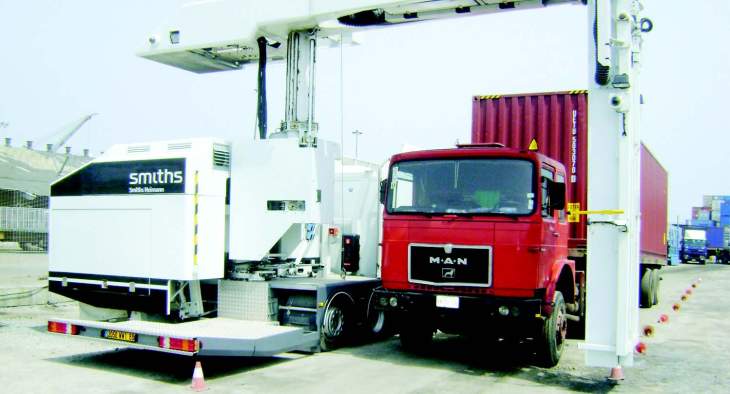
Mobile-scanner installed at Apapa Port as part of DI contract

Mobile-scanner installed at Apapa Port as part of DI contract

Destination Inspection takeover – it seems that all is not well. A stand-off between officers of the Nigeria Customs Service (NCS) and members of the freight forwarding community is festering over trade facilitation issues. The  long association between officials of the Nigeria Customs Service (NCS) and big time freight forwarders, including association leaders may have gone sour. THISDAY checks at the ports revealed that most leaders of freight forwarding associations are on the warpath with the Customs. The agents are aggrieved over what they described as high handedness on the implementation of trade policies by the Customs. They alleged that the Customs has in a bid to meet revenue targets embarked on measures that will force most traders who are mainly their clients out of business.

It is lead to believe that made some leaders of customs agents associations work against the Customs Service concerning the take-over of Destination Inspection from agencies handling the project. The Federal Government had extended the contracts of the Destination Inspection Agents (DIAs) by six months at a time that the Customs had prepared to take over the scheme. Customs had trained about 2000 officers for the scheme. The Service, it was gathered had also planned to inherit the scanning machines from the DIAs before the contract was extended. Indications are that the contracts may be further extended by more than one year at the expiration of six months. Since the extension was announced, many leaders of customs agents have not come out openly to condemn it.

Bone of Contention – When the NCS failed to introduce duty benchmark at the ports last year, the relationship between the it and freight forwarders has changed.Customs issues Debit Note (DN) to recover what is lost due in terms of under-valuation, this has often been abused as importers and their customs agents negotiate what to pay with some of the valuation officers responsible for this. So, the management of the Customs believed that the only way to address this problem was a duty benchmark which saves the importer. The idea of the benchmark was to check revenue losses as a result of under-valuation of goods coming into the country. However, the benchmark arrangement was dropped on the order of the Presidency. Since then, the Service has adopted other means to ensure that no revenue is lost, a development that has angered the clearing agents.

Duty Targets – With a revenue target of N1trillion last year, the Customs had worked hard to ensure that it meets its revenue target. The Service realised about N800bn. Freight forwarders are bitter that so many containers have been abandoned by their owners at the ports due to high-handedness by the Customs in terms of outrageous DNs on the goods. A member of National Association of Government Approved Freight Forwarders (NAGAFF) told THISDAY that the amount being issued as DN is such that many importers have been unable to pay. A top official of NAGAFF who did not want to be quoted said that it appears there is a grand plan by some officials of customs to frustrate some importers out of business by issuing outrageous DNs. “In some cases, the DN is such that the importer will be at total loss after clearing the goods. We have appealed to the management of the customs about this thing, but their officers have failed to come down on the value placed on these goods. Source: This Day (Nigeria)

EAC to punish Member States enforcing non-tariff barriers

Uganda, Malaba border crossing

Uganda, Malaba border crossing

The New Vision (Uganda) reports on a draft law which will punish countries that fail to implement agreed upon mechanisms to eliminate trade barriers has been submitted at the regional Parliament.

Jose Maciel, the TradeMark East Africa director of trade facilitation, noted that while most of the non-tariff barriers (NTBs), including road blocks and corruption have slightly declined, the proposed law in the East African Legislative Assembly, if enacted, would create the possibility of sanctions against stubborn states that do not enforce the check points. “It is important to give teeth to the system. We need to make it possible to impose sanctions for countries that do not eliminate NTBs,” said Maciel.

He was speaking at a Kenya Ports Authority (KPA) organised meeting with EAC media in Mombasa. TradeMark is a trade facilitating agency operating in the five states of East Africa. Maciel said non-tariff barriers like road blocks, which are easy to eradicate, are some of the biggest impediments to East Africa’s competitiveness.

States are not the only defaulting party to agreed upon positions on eliminating NTBs. P.J. Shah, a Mombasa entrepreneur, for instance notes that while Mombasa began 24-hour operations about three years ago, other agencies like banks and shipping lines are not operating 24 hours. The poor infrastructure such as rail and water systems, whose potential is yet to be optimised, also increase trade costs. Other NTBs include weighbridges and corrupt state enforcement agencies.

Regional trade experts and facilitation agencies such as Trade Mark East Africa agree that NTBs are known, and numerous researches have been done about them and their impact on trade. Although some efforts have been made to eradicate or reduce the salient ones such as road blocks, overall NTBs remain a major trade impediment.

Two thirds of goods are shipped in containers. TradeMark estimates that 20% of annual shipments face NTBs. TradeMark is also targeting to work with regional governments to harmonise 20 standards in a year, amongst the other efforts at making EAC more competitive.

During the Mombasa meeting, it was agreed that because sometimes there seems to be no communication between the different government agencies such as the Kenya Revenue Authority (KRA) and KPA, hinterland states suffer.

There should be a single authority that oversees them all and ensures enforcement. There are about 24 road blocks between Mombasa and Uganda’s border and another 21 in Uganda, four in Burundi and two in Rwanda. There are also 12 weighbridges in Kenya, five in Uganda and two in Rwanda.

“A well run efficient port can help shape economic growth and performance of the economy,” said Antony Hughes, a TradeMark official.

Mombasa handles about 20 million tonnes of cargo, 85% destined for Uganda and other hinterland states. Transit states always suffer the biggest brunt of NTBs and poor flow of information regarding imminent disruptions at the border. This was witnessed during the recent cash bond imposed by KRA that caught Uganda traders unaware, leading to massive clog ups of cargo and huge loss of value.

Comment: It appears that regional bodies such as the EAC are to get extraordinary powers to enforce rules over sovereign states. Would be interesting to learn whether these member states voted for such action, or if it is rather the ideal and persuasion of ‘foreign’ interests.