New drug analyser to save New Zealand Customs time and money

New Zealand Customs Minister Nicky Wagner says the introduction of a new state of the art drug analyser will free up hundreds of hours a year for more enforcement work at the border.

The handheld device, a Thermo Scientific FirstDefender RM, shoots a laser beam into an unknown substance, accurately identifying it in a matter of seconds.  Customs purchased it with money recovered under the Proceeds of Crime (Recovery) Act.

“The device will drastically reduce the number of substances that have to be sent away for expensive testing, with savings expected to pay for it in less than six months.

“Its effectiveness will allow Customs officers to spend at least 520 more hours each year on frontline border work because they can make decisions quickly on what investigative action, if any, is required.

In addition to the drug analyser, Customs is building a laboratory in Auckland to test unidentified chemical samples.

“The enhanced capability will help to achieve outcomes sought in the government’s Methamphetamine Action Plan and allow Customs to identify an increasing number of new psychoactive substances stopped at the border,” Ms Wagner says.

More than 11,000 substances can be identified almost instantly by the FirstDefender analyser.  It can penetrate through certain types of packaging, so opening a packet or bottle may not be necessary, which also means a safer working environment for officers. Source: New Zealand Customs (contributed by Mogen Reddy)

Accelerated Screening – Port of Rotterdam’s ability to scan cargo on trains moving at 35 mph

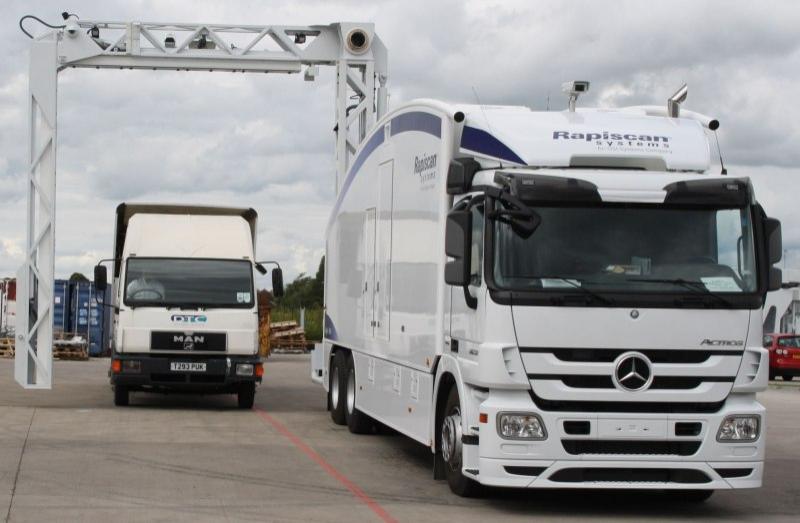
Picture1The days of halting trains and unloading contents for inspection appear to be over at the Dutch Port of Rotterdam, where trained operators can now use high-power X-ray scanners to produce clear, unambiguous imagery of densely packed cargo in trains moving at speeds up to 60 kilometers per hour (35 MPH).

Simultaneously, another group of operators located several miles away in a secure inspection office collect, analyze and evaluate the X-ray images for a wide range of potential threats, dangerous materials and contraband.

Because it all happens so swiftly — particularly as the containers are never unloaded or diverted individually to cargo inspection facilities — the speed of throughput increases exponentially. To be precise, Dutch Customs at the Port of Rotterdam can now inspect nearly two hundred thousand rail containers per year, or a single 40-foot container in eight-tenths of a second.

This is the future, or as in the case of Rotterdam, the present model of an enhanced global supply chain — ultra-high-speed rail throughput combined with ultra-accurate threat detection. This combination of speed and efficiency is an innovation that allows not only railways to be more secure, but the global supply chain as a whole.

Rail has long been an overlooked component of the modern supply chain, even though it is arguably one of the most important. Because of the nature of rail — with thousands of miles of unguarded track, often connecting countries — it has previously been challenging to screen and secure without causing a disruption to the supply chain. And while ports and airports typically get the lion’s share of technology innovation, all components need to be equally considered and secured to prevent interference and have a smoothly run supply chain.

For a long time, cost-minded operators have tended to view the security of rail cargo scanning and the efficiency of throughput as essentially two competing interests.

When minor security gains trigger major productivity losses — and when even small throughput disruptions can grind supply chains to a halt — it’s easy to see why rail lines have been relatively (and intentionally) under-served by global security improvement efforts.

As a result, one of the more popular rail security/efficiency compromises has been to implement a procedure for “small sample” screenings, by which only a small portion of each rail car or trainload is scanned for threats, dangerous materials, and contraband — providing a modicum of security without disrupting the core efficiency of the supply chain.

However, as malicious activities have become more prevalent and more sophisticated, “small sample” rail screenings have become increasingly insufficient. The United States Department of Homeland Security even instituted a 100% cargo-screening mandate at ports (though that mandate has since been retracted).

Accordingly, the industry has been eagerly seeking newer technology-based answers — ways to scan a larger portion of rail cargo without degrading throughput efficiency. The Dutch Customs’ solution meets higher inspection goals without detrimentally affecting the international supply chain.

Countless other customs and border agencies, companies, and national organizations are pursuing their own answers to similar and related security/efficiency challenges. For instance, rail operators worldwide are now experimenting with higher-energy X-rays for penetrating more densely packed freight cars. (When throughput lags, companies will attempt to condense their shipments into fewer cars, which can pose an obstacle for traditional X-ray scanners.)

In addition to the security factor, revenue is another motivator for government agencies to embrace this new cargo scanning technology. Customs enforcement of a freight rail (for international cargo lines) is extremely important to a country as contraband goods can cost governments hundreds of thousands of dollars in tax dollars. And smuggled contraband can also help fund organized crime and domestic terrorists, making it all the more important that rail lines not be overlooked when it comes to integrating cutting edge security.

In fact, a single malicious attack, occurring anywhere in the world, can devastate the global supply chain in its entirety, driving up prices and imposing major delays on manufacturers worldwide. By not being required to choose between 1) preventing extraordinary threats, and 2) maximizing the efficient of ordinary processes, the evolving technology can truly accelerate rail cargo screening and secure it too. Source: Rapiscan (Contributed by Andy Brown)

Rapiscan launches “Driverless” Cargo Inspection System

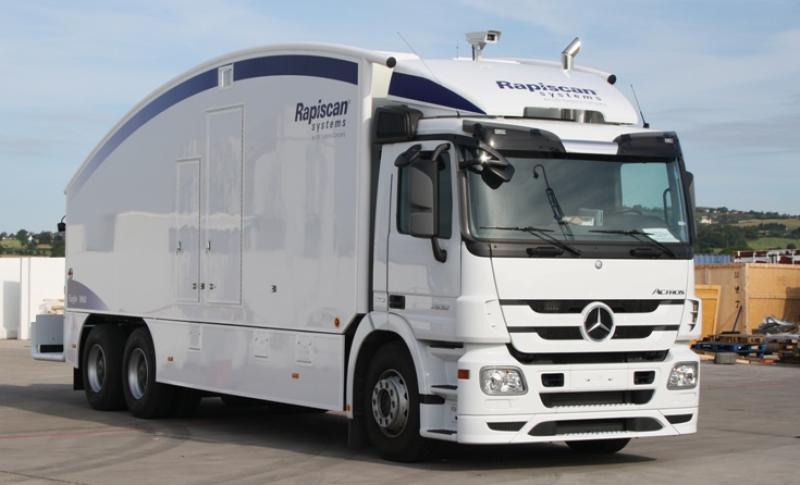
Rapiscan M60Rapiscan Systems has launched the new Driverless Eagle M60 cargo inspection system. It is a fully-automated vehicle screening system which can operate without the need of a driver and has been specifically designed to assist customs and border personnel in their detection of nuclear materials, explosives, weapons and contraband such as tobacco, alcohol and currency in trucks, cargo and containers.

Rapiscan’s driverless system requires no driver to be present during scanning, which the company says eradicates driver fatigue and driver work-shift changes; improves inspection rates and vehicle throughput; and removes risks associated with lone workers, health and safety incidents and potential human error. It can be driven on the road like a standard vehicle, allowing the unit to move between locations quickly and easily as required.

Once moved into position via a remote steering system, the M60 automatically detects two positional sensors — one placed at either end of the scan location. The positional sensors can be placed as far as 35 meters apart, allowing for oversized cargo or multiple units to be scanned in one pass.

As the scanning commences, additional sensors on the M60 make minor adjustments to the direction and position of the vehicle which ensures it consistently drives in a straight line between the two positional sensors. The system is designed not to deviate by more than 25mm from the center line.

The automated scan process is then monitored by a system operator who is housed in the M60’s onboard inspector’s office. This operator views the high resolution X-ray images produced by the system in real time.

Rapiscan was recently awarded two lucrative contracts for its vehicle and cargo inspection systems. On May 13, the company announced a $15 million order from an undisclosed Middle East customer. The order is for multiple Rapiscan Eagle M60 mobile inspection units, which the Driverless Eagle 360 is based on. This was followed by a $13 million order for an undisclosed “international customer,” again for Eagle inspection systems.

Rapiscan’s Eagle cargo and vehicle inspection systems are used by customs agencies, military organizations and homeland security operatives around the world. Eagle cargo and vehicle inspection systems use proprietary transmission X-ray technology that is able to penetrate well beyond the surface of a container or vehicle to provide comprehensive detection of threats.

A short film demonstrating the Driverless Eagle M60 in action can be seen here.

AS&E introduces ground-breaking imaging system

Mini Z, the handheld technology from American Science and Engineering (AS&E), has been designed to offer port security officials an innovative new tool to combat contraband and illicit substances on ships.

Hailed as the world’s first handheld Z backscatter imaging system, the Mini Z aims to provide security officials with the ability to screen ‘the hulls and bulkheads of suspected drug-running boats for contraband or narcotics’, according to a company press release.

The Mini Z boasts the ability to scan in places that other systems cannot reach, while being easy-to-use and offering advanced X-ray imaging to present a real-time picture of ship and vehicle contents.

The Mini Z system is a game-changer for law enforcement and border security officials who are constantly challenged to quickly and accurately detect potential threats in hard-to-reach environments.

For an interactive introduction to the MINI Z, click here

Source: AS&E

Lesotho Revenue Authority to acquire two AS&E ZBV Mobile Screening Systems

AS&E's Cargo and vehicle screening system deployed in 55 countries

AS&E’s Cargo and vehicle screening system deployed in 55 countries

American Science and Engineering, Inc. (“AS&E”), has announced the receipt of an order for two ZBV® mobile screening systems from a new international customer, the Kingdom of Lesotho. The ZBV systems will screen vehicles and cargo for threats and trade fraud on its border with South Africa to facilitate trade and counter smuggling.

The Lesotho Revenue Authority (LRA) has launched a Customs Modernization Program aimed at simplifying border procedures while speeding up the inspection process. The ZBV systems, with its safe and effective technology, ease-of-use, and high-throughput capability will greatly support this initiative.

“We are delighted to have the opportunity to support the LRA in its Customs Modernization Program and to help secure the Kingdom of Lesotho,” said Chuck Dougherty, AS&E’s president and CEO. “The ZBV system has been proven effective for anti-smuggling programs, with one customer recently reporting a 54% increase in tobacco seizuresi in a four month period. With the ZBV system’s outstanding field reports, we continue to add new countries to our installed base in key geographic markets and expand our market penetration of Z Backscatter® technology in Africa.”

LRA spokesperson Mr. Pheello Mphana says, “The LRA is pleased to acquire this advanced technology to support our modernization process. Following our detailed examination of non-intrusive inspection systems, the ZBV provides the optimum solution to deploy on our borders to facilitate trade by reducing inspection delays and the cost of compliance, improve border control and detect illicit cross-border movement.”

The highly mobile ZBV® system screening system allows for immediate deployment and rapid inspection to reveal explosives, drugs, currency, alcohol, cigarettes and other organic threats or contraband. With over 730 systems sold to date, AS&E’s ZBV system is used by leading government agencies, border authorities, law enforcement, military organizations, and security agencies in more than 64 countries. Source: AS&E

Latest US container 100% scanning postponement predictable

Rapiscan_m60UK freight forwarders have welcomed but are not surprised by the latest US postponement by two years of the implementation of new rules requiring all cargo containers entering the US to be security scanned prior to departure from overseas ports, with national association BIFA reiterating calls for the initiative to be abandoned.

Peter Quantrill, Director General of the British International Freight Association (BIFA), said it was “hardly surprising” to hear the recent news that the US had delayed the introduction of the new rules “amid questions over whether this is the best way to protect US ports”, calling the move “a healthy dose of common sense”.

Mr Quantrill commented: “As BIFA has said repeatedly, the Department of Homeland Security (DHS) has consistently underestimated the enormity of the task in hand relative to the costs both to the US government and foreign governments – as well as, importantly, the limited ability of contemporary screening technology to penetrate dense cargo, or large quantities of cargo in shipping containers.”

The deadline for implementation of 100% scanning of all inbound containers has already been delayed from 2012 to 1 July, 2014, and US Secretary for Homeland Security Jeh Johnson, who took over the role just six months ago, has now reportedly decided on another 24-month postponement.

BIFA’s comments follow the recent news of a letter from Thomas Carper, chairman of the US Senate Committee on Homeland Security and Governmental Affairs, which suggested that the use of systems available to scan containers would have a negative impact on trade capacity and the flow of cargo.

Quantrill adds: “Media reports suggest that the US Government now doubts whether it would be able to implement the mandate of 100% scanning, even in the long term, and it would appear that it now shares BIFA’s long-standing opinion that it is not the best use of taxpayer resources to meet the USA’s port security and homeland security needs.

“We have always said that expanding screening with available technology would slow the flow of commerce and drive up costs to consumers without bringing significant security benefits.”

He continued: “Whilst the latest news of a two-year delay appears to be a healthy dose of common sense at the US Department of Homeland Security, BIFA still believes that the US Government ought to take an even bolder step and repeal the original legislation.

“That would be the most appropriate way to address this flawed provision and allow the Department and the industry to continue to focus on real solutions, including strengthened risk-based management systems to address any security gaps that remain in global supply chains.”  Source: Lloyds Loading List

ZRA Border Scanners will increase revenue – Commissioner

ZRA scanner commissioned at Kazungula border post (Picture: mwebantu.com)

ZRA scanner commissioned at Kazungula border post (Picture: mwebantu.com)

Zambia Revenue Authority (ZRA) Commissioner General, Berlin Msiska, says the investment of scanners in borders will help yield additional revenue for government. And ZRA Commissioner for Customs, Dingani Banda, says the introduction of the scanner will enable the authority to take five minutes only to inspect a truck, not five hours as was the case in the past. Commissioning a non-intrusive inspection equipment or scanner at Chanida border on Tuesday, Msiska said the equipment would help in facilitating trade.

He said instead of carrying out several physical inspections as was the case previously, ZRA would now be using a scanner.

“Through the use the scanner, we might get possible concealment in the trucks, but what we now intend to do, which we have always done as ZRA is that where we find that goods are being smuggled into the country, we are going to take stern action against those in borders. This will include an aspect of prosecution. Now, we have also intensified operations inland in that we have established a mobile compliance unit to deal with the inland enforcement of certain smuggled commodities,” Msiska said.

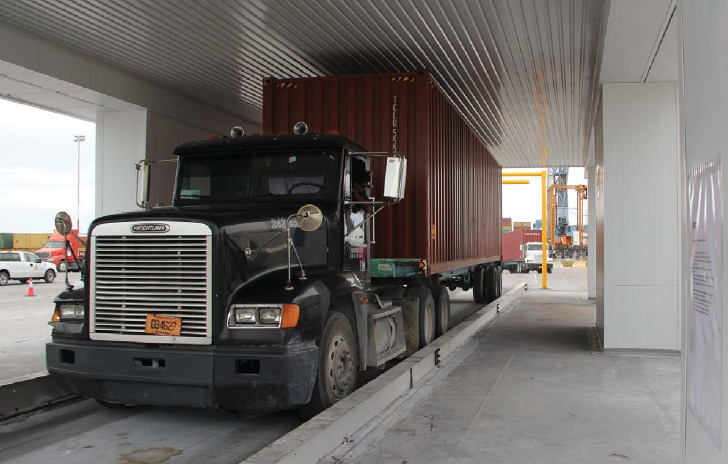
He said the scanner would also enable ZRA to carryout risk-based scanning services. He said the equipment would help expedite the process of clearing at the border. Msiska said the equipment whose total investment was US$5.2 million was set up by Nuctech, a Chinese firm.

And Banda said the implementation of the scanner at Chanida border would help ZRA in a number of ways. He said previously, if they suspected that a truck could be carrying goods that might require physical inspection, they would take an average of five hours to do the inspection.

“Now, with the scanning technology, it takes less five minutes for us to do a physical inspection of a truck and for a station like Chanida where we have an average of 40 to 50 trucks coming in and going out of the country on a daily basis, this will help us in terms of the turnaround in the inspection and it will enhance our inefficiencies,” Banda said.

He said ZRA already had similar infrastructure at Chirundu, Katimamulilo and Kazungula borders. Banda said ZRA was also expecting rail scanners at both Kapiri-Mposhi and Kasumbalesa. Comment – Seems like another ‘juicy’ deal for the Chinese – Nuctech?

He also said other scanners were under construction at Mwami and Nakonde borders. Chanida border post is the main gateway to neighbouring Mozambique. Source: The Post Online (Zambia)


Finance Ministry approves transition of destination inspection service from scanning providers to Nigeria Customs Service

NigerianCustoms-BadgeThis is a landmark and very brave decision by the Nigerian Government. All countries operating Build Operate Transfer (BOT) X-ray cargo scanning services should watch this development with interest.

Following the expiration of the Destination Inspection Contract Agreements between the Federal Government of Nigeria and Scanning Service Providers (SSPs), the President, Commander in Chief of the Armed Forces has directed the transition of Destination Inspection Service from contracted SSPs to the Nigeria Customs Service.

Accordingly, effective from 1st December 2013, Nigeria Customs Service has taken over full processing of all import transactions to Nigeria in accordance with the amended Import Guidelines of the Destination Inspection Scheme. Pursuant to this, all Scanning Service Providers (Cotecna, SGS and Global Scan) shall cease to approve new Form M, issue Risk Assessment Report (RAR) or perform Scanning operations for goods imported into Nigeria.

In international trade several destination countries require Pre-shipment inspection. Pre-shipment inspection, also called preshipment inspection or PSI, is a part of supply chain management and an important and reliable quality control method for checking goods’ quality while clients buy from the suppliers.

After ordering a number of articles, the buyer lets a third party control the ordered goods before they are dispatched to him. Normally an independent inspection company is assigned with the task of the PSI, as it is in the interest of the buyer that somebody not connected with the deal in any way verifies the amount and quality. This way the buyer makes sure, he gets the goods he paid for. Wikipedia

The SSPs shall handover all valid Form Ms and existing Valuation Database to the Nigeria Customs Service. However, the contract for provision of ICT infrastructural back up for the scheme currently being executed by Webb Fontaine is extended for a period of 18 months to ensure a smooth takeover by NCS.

As we enter this era, the Federal Ministry of Finance urges stakeholders and all Nigerians to give the Comptroller General of Customs and his team all the support necessary to manage a smooth and successful takeover. While no effort was spared in the build up to this process, we should all bear it in mind that transitions of this magnitude may throw up some implementation challenges. It will require the understanding of all Stakeholders to manage whatever initial challenges that may arise before the process fully stabilizes.

As part of the take-over plans, Help Desks and Dedicated Hotlines have been provided to enable Stakeholders and the general public channel complaints, observations and suggestions on the process to the Nigeria Customs Service. Help Desks are provided at Customs Headquarters, Abuja and other Commands across the Country. Such feedback can also be channeled directly through the following dedicated numbers: 09 4621597, 09 4621598 and 09 4621599.

The Ministry will like to convey the appreciation of Mr. President and all Nigerians to the Scanning Service Providers for services rendered to the Nation since the beginning of the Destination Inspection scheme in 2006.

Source: Businessnews.com.ng

Recent Happenings in the World of Customs Scanning

Herewith a collection of articles on customs non-intrusive inspection around the world. True to form, the acquisition and use of such technology is not without controversy of some sort.

Spanish Customs to use ‘Full-body See-through’ Scanner at Frontier
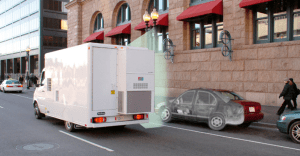
Backscatter Van

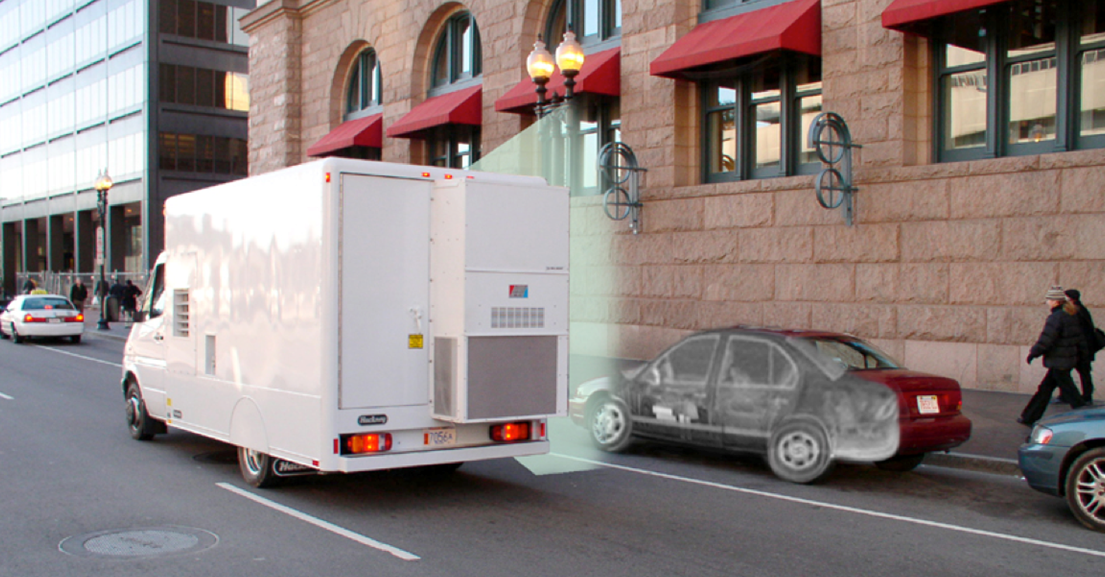
American Science and Engineering’s (AS&E) Z Backscatter Van

July 2013 – The Spanish Government is to deploy a ‘Mobile X-Ray Scanner’ at the frontier to detect cross-frontier smuggling of tobacco. A Panorama Investigation reveals the mobile X-ray scan technology mentioned is one installed and operated in a mobile vehicle (van) – it is system that is potentially dangerous!

These plans are said to be part of a strategy to crack-down on cigarette smuggling across the frontier, which they say is causing untoward damage to the Spanish economy. The regional special representative of ‘La Agencia Tributaria’ (Spanish Tax) Alberto García Valera, says he has found it necessary to spend money and invest heavily on new technologies to combat fraud and tax evasion in places like the Le Linea-Gibraltar Frontier.

‘La Agencia Tributaria’ purportedly placed an order with the American company American Science and Engineering (AS&E) for the delivery of this very sophisticated, hi-tech scan system known as the ZBV S-Class.

The ZBV or Z Backscatter Van, is a mobile X-ray vehicle screening system, it uses technology known as ‘Backscatter’ which provides a photo-like images of concealed objects, such as explosives, drugs, currency trade-fraud items and of course things like cigarettes, but the latter not exclusively so.

The ZBV X-Ray Scanning equipment is integrated into a standard van type vehicle, usually powered by a Mercedes or Chrysler engine. The ZBV creates a photo-like Z Backscatter images showing materials by directing a sweeping beam of X-rays at the object under examination, and then measuring and plotting the intensity of scattered X-rays…if you’re in your car, your body will get zapped by the X-Ray beams!

Read the full report by Panaorama (Gibralter) here!

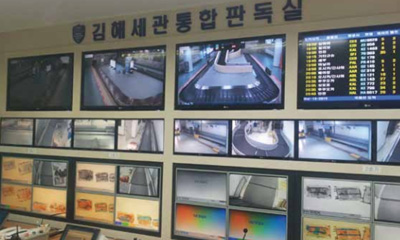
Axis Cams Integrated with X-ray Scanners Secure Korean Airport Customs
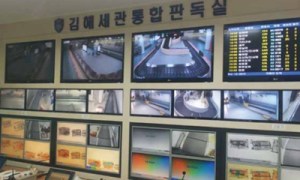
Korean Customs Integrated Control Room - Gimhae International Airport

Korean Customs Integrated Control Room – Gimhae International Airport

November 2013 – Korean Customs at Gimhae International Airport , Busan has introduced Axis network cameras and integrated it with the existing X-ray scanners for checked bags into one location. This has allowed Customs to manage its workforce more efficiently and enhance its monitoring capabilities through the “Choose and Focus” function.

An integrated X-ray viewing room has allowed Korean Custom’s management to divide the workforce into teams of two, and the accuracy of reading and individuals’ reading capabilities have been significantly improved. Since the reading staff has been grouped into teams, their level of fatigue has been reduced, and they can concentrate and read multiple X-ray scans at all times.

Network Cameras with panoramic function in each carousel monitor the CIQ customs, immigration and quarantine area that passengers must go through when departing or arriving. The cameras now permit Customs to accurately track and monitor travellers as they claim their baggage. All stages from Check-in of checked bags to their check-out are carefully recorded, resulting in disputes with travelers about lost or damaged bags can be smoothly resolved. The high-definition network cameras allow the entire route to be monitored for abnormal cargo. It is much easier to identify risks and monitor movement during incidents. Read the full report here! Source: asmag.com

Nigeria Customs takes inventory, evaluates scanning machines ahead of takeover

Nigeria Customs takes inventory, evaluates scanning machines ahead of takeover

Nigeria Customs takes inventory, evaluates scanning machines ahead of takeover

October 2013 – Nigeria Customs Service (NCS) has begun an inventory and evaluation of the scanning machines with a view to ascertaining the state of the machines ahead of the December 1, take over date.

In an exclusive interview with Vanguard at the Customs Headquarters in Abuja, service spokesman, Mr. Adewale Adeniyi, a Deputy Comptroller of Customs said that consultants and experts including the manufacturers of the scanners (Smith of France) were all brought to carry test of the machines.

Adeniyi also said that more than 500 of the newly recruited men and officers of the service will be deployed to both the information technology and scanning departments. He disclosed that in the course of evaluating the machines, it was discovered that maintenance of the scanners had been compromised.

He added that the development will not in any way stop the take over of the scanning machines by the Nigerian Customs Service. The Customs spokesman disclosed that the maintenance of the machines were sub-contracted to other consultants other than the manufacturers.

Adeniyi further disclosed that the integrity of the machines in terms of maintenance have been compromised. Source: www.energymixreport.com

Nicaragua – Fixed Rate to be Charged for Customs Scanning (Fail!)
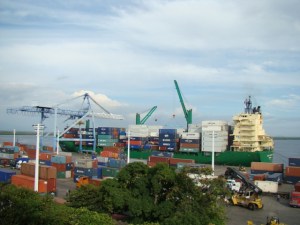
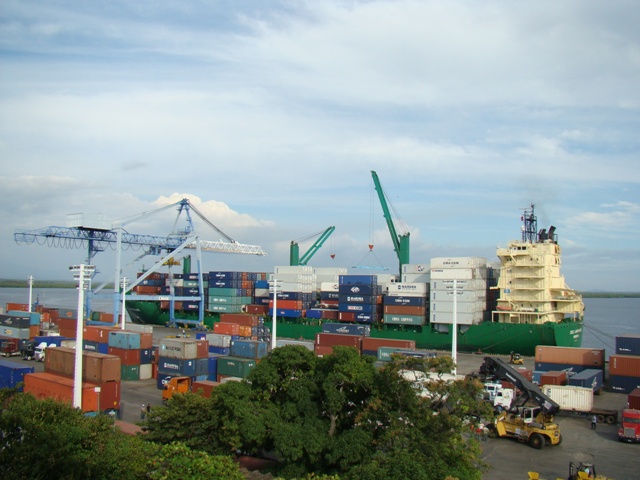
Port of Corinto, Nicaragua (Picture: Wikipedia)

Port of Corinto, Nicaragua (Picture: Wikipedia)

July 2013 – The government has recognized that it was a mistake charging for the scanner service based on the value of the cargo.

The presidential adviser for economic affairs, Bayardo Arce, believes the head of the Directorate General of Customs (DGA), Eddy Medrano, may have overstepped the mark in approving a contract with the company Alvimer Internacional y Compañía Limitada on the right to collect on the declared value of the goods that pass through the scanner system to be installed in the country’s customs offices.

“We have been made aware of this criterion of entrepreneurs and talked with President … and it is clear that a technical error was made,” the official, adding that the fee collected will be at a fixed rate as in the draft Law on Granting of Non Intrusive Inspection Services in National Security Border Controls, prior to the approval of Congress.

The concessionaire in charge of scanning services in Nicaraguan customs offices would recover its investment in 15 months and earn $220 million in the 15 year contract.

From all this money, 10% will go to the Directorate General of Customs (DGA). According to preliminary calculations made ​​by the Nicaraguan private sector, the company will invest about $22.4 million in the seven scanners to be installed in each of the seven Nicaragua customs offices, recovering its investment in just 15 months. Source: centralamericadata.com

The Scary New Technology of Iris Scanners

Picture: Ben Mortimer

Picture: Ben Mortimer

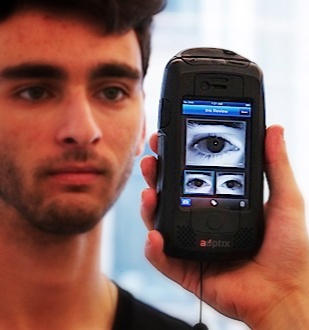
The technology of ‘Minority Report‘ is closer than you think, according to Russell Brandom writing in www.theverge.com.  A company called AOptix recently unveiled its latest creation, pitched as a game-changer in the world of iris recognition. In less grandiose terms, it’s basically an iPhone case for cops, providing military-grade biometric scanning on the move. The AOptix shell is built to provide everything an officer needs to process a suspect on the spot. There’s a fingerprint scanner on the back, the capacity for facial recognition, and the new guest at the party: an iris scanner. The camera’s a little tricky — you have to hold it a little less than a foot away, and keep it steady for a few seconds — but otherwise, using the Stratus is like taking pictures with a heavier, clunkier iPhone. Crucially, it’s small enough to hold with just one hand, so the officer using it can still reach for his gun.

The Stratus has only been on the market a few weeks, but AOptix is already pitching it for use at border crossings and in airport security. The US Department of Defense is interested too, and provided a $3 million grant for AOptix to develop the tech further. Once it’s normalized, scanning your iris could become as routine as swiping a credit card. “We really feel it’s going to be an inflection point in the biometrics industry,” AOptix marketing director Joey Pritikin told The Verge. “We can do business, we can conduct health care, we can go to disaster areas. This will really open up new markets.” After years of lurking in the margins, AOptix thinks iris scanning is ready for the big time.

Outside of the West, it’s already there. Hundreds of millions of Indians have already been iris-printed, along with thousands of Iraqi civilians and anyone who goes through customs regularly in Dubai. It’s the gold standard of a modern ID program, easier than fingerprinting and more stable than facial recognition. All you have to do is look at the camera and open your eyes. And unlike in retinal scans, the scanner doesn’t need to be up close. It’s just a photograph, taken in infrared, which in theory could work if taken from across the room.

If this sounds familiar, it’s probably because you saw something like it in Minority Report, where omnipresent eye-flashers identify everyone who walks through a public plaza, targeting ads at them and feeding the police information about their every move. Even Pritikin acknowledges the precedent, saying, “Tom Cruise did not do us any favors.” But within the industry, the product is less exotic, just the latest and best solution to the persistent problem of quick, reliable identification. What does the world look like when proving ID is as easy as taking a photograph? Like it or not, we’re about to find out.

Iris Scanner (Picture: Ben Mortimer)

Iris Scanner (Picture: Ben Mortimer)

If you find yourself flying into Dubai, you can see it in action. The city’s airport recently made the switch to an automated two-gate customs system, also made by AOptix. Scanning your passport opens the first gate; an iris print opens the second. Once the system is fully deployed, the company says it will bring wait times down from 49 minutes to 22 seconds. A private company called Clear is already trying this on an opt-in basis in the US. In exchange for a quick iris scan, their service will let you skip security in half a dozen American airports.

The bargain is simple enough: In exchange for one more biometric, you get to skip an hour in customs, or the indignity of a TSA checkpoint search. And as an ID technology, it simply works better. It’s less invasive, harder to fake (although still possible), and more effective at everything we want ID tech to be good at. Of course, that same effectiveness makes a Minority Report future all the more plausible.

For countries with national ID programs, this Orwellian scenario is already starting to play out. In collaboration with MorphoTrust, India has already iris-printed 350 million of its citizens as part of its national ID program, and they’re on track to scan all 1.2 billion. This year, Mexico will roll out the first iris-matched ID cards in the world as part of a $25 million program. In both cases, the ID will help stop fraud and provide poverty assistance, helping solve half a dozen urgent humanitarian issues at once. Despite these good intentions, this kind of mass identification has civil libertarians very worried.

“The concern is that biometrics will be used for the mass tracking of individuals,” according to Jay Stanley of the American Civil Liberties Union. “If that kind of ID system becomes routine and widespread, it turns us into a kind of checkpoint society.” Even in India, the system is still only used at police stations and government offices, but once the print is connected to a universal ID, it’s easy to imagine iris scans becoming as commonplace as pulling out a driver’s license.

For now, we’re left with less invasive devices like the Stratus, an iris camera aimed squarely at US law enforcement. The FBI is already building an iris system to track persons of interest, and it’s not hard to see them using a Stratus-like device to collect prints. Iris cameras haven’t landed in the hands of beat cops yet, but AOptix is trying its best to get them there. The path of the technology, from the military to local law enforcement, is almost complete. The only question is what it will look like when it gets here. Source: http://www.theverge.com


100% Scanning – Have all the Options been considered?

Port of Oakland - VertiTainer's  crane mounted scanner solution employs advanced passive scanning technology and sophisticated identification algorithms to detect and identify gamma and neutron sources in shipping containers as they are loaded or discharged from a container ship.

Port of Oakland – VertiTainer’s crane mounted scanner solution employs advanced passive scanning technology and sophisticated identification algorithms to detect and identify gamma and neutron sources in shipping containers as they are loaded or discharged from a container ship.

While the question of mandatory weighing of containers features high on the International Maritime Organisations’ (IMO) list of priorities, a recent post “Container Weighing – industry solution on the horizon“, reminded me of a solution which has been around for some time now, but for various reasons would appear to have been overlooked by authorities – or so it would appear. Readers and followers of this blog may well already have viewed the feature on VeriTainer’s gantry crane mounted radiation detection and identification system, called the VeriSpreader® – refer to the New generation NII technology page of this Blog.

The spreader is a device used for lifting containers and unitized cargo. The spreader used for containers has a locking mechanism at each corner that attaches the four corners of the container. A spreader can be used on a container crane, a straddle carrier and with any other machinery to lift containers. (Wikipedia)

The recent maritime disaster involving the breaking-in-half, and eventual sinking of the MOL Comfort gave rise to the question of overloaded container boxes. While government and international security-minded organisations have pursued methods to address breaches in the supply chain, it would seem that little ‘innovation’ has been applied to the problem – specifically in regard to minimizing the time and cost of routing containers via purpose-built inspection facilities.

At least three known radiation incidents have hit the headlines in recent times – namely Port of Genoa (2010), Port Elizabeth, New Jersey (Feb, 2013), and the most recent in the Port of Voltri (July, 2013). Each of these incidents warranted an emergency response from authorities with a consequential impact on Port Operations.  Unfortunately, advanced risk management systems and other security safeguards did not alert suspicion, allowing these ‘threats’ into the heart of the port, not to mention the radiation threat to port workers?

It could be argued that since the inception of government-led supply chain security, 2002 onwards, many of the world’s supply chains have built in ‘possible inspection’ into their export lead times. A trip to a purpose-built inspection facility will normally require diverting transport from its predestined journey to a land border crossing or seaport. Moreover, lack of predictability often causes delays with possible loss of business where ‘security’ measures delay the movement of cargo.

Several Customs and Border authorities have instituted ‘export-led’ compliance programmes which seek to create better regulatory awareness and expectation for shippers. While not without merit, these still impose an inherent cost to trade where in some instances, shipper’s are compelled to institute ISO-type security standards which for some require dedicated and skilled experts to entrench and maintain these throughout the organisation. So, while the development of increasing levels of compliance amongst supply chain operators will occur over time, what of government ‘Non-Intrusive’ inspection capability?

Port Technology International‘s Feb 2013 article – Future X-Ray Inspection Equipment to be based on Industry Standards – opined that “future developments in cargo screening are likely to follow a common innovation trajectory that is fostered by market needs and new technology, while being strengthened by existing intellectual property and evolving industry standards. Innovation is often perceived as a circular path beginning with customer needs that are identified by a technology developer. The developer then creates application technology in the form of products to meet those needs”.

Land and rail-based cargo screening technology has improved immensely over the last 10 years with improved safety (shielding), throughput (speed) and portability. Engineers have likewise realized the need to ‘fuse’ imaging and radiation threat detection technologies, all offering a more cost-effective package to the end-user. These are by and large the Customs and Border authorities worldwide who protect our territorial waters and ports. Yet, the approach remains ‘modality driven’ which has ensured a period of predictability for designers and manufacturers, not to mention their revenue streams. Given the container weighing – port radiation threats discussed earlier, perhaps it is time now for transport and enforcement authorities to consider technologies as developed by VeriTainer and Lasstec and define a specification for “100%” needs – could this be uniform? Not unlike Lasstec’s container-weighing solution that allows the weighing of containers during the loading cycle so not to disrupt the work flow, Veritainer’s VeriRAD solution uses a gantry crane ‘spreader’ to house its unique solution with specific emphasis to mitigate the threat of a ‘dirty bomb’.


100% Container Scanning in Ports – a solution on the horizon?

Decision Sciences maintains that 100% container scanning is possible without bringingcommerce to a crawl (Credit: Maritime Professional)

Decision Sciences maintains that 100% container scanning is possible without bringing
commerce to a crawl (Credit: Maritime Professional)

The following article published by Maritime Professional describes a new technology, already in use by a major terminal operator, which appears to put the requirement for 100% scanning of all inbound containers back on track. The article has been doing the rounds on a social media platform with some sceptism still being shared on its viability as a ‘100%’ scanning solution. All the same its always interesting to learn of new innovations. I guess the US Treasury has spent billions sponsoring these types of tech-development so as to vindicate its original threat to the rest of the world! (For the PDF version please click here!)

In July 2007, U.S. legislators passed a law requiring 100% scanning of U.S. bound containers at their last foreign ports by the year 2012. That federal requirement nearly died a quick death recently but has received a reprieve of sorts. Originally scheduled to take effect July 1, Homeland Security Secretary Janet Napolitano in May of 2012 notified Congress that she would use her authority under the 2007 law to delay implementation by two years. Napolitano said systems available to scan containers would result in a negative impact on trade capacity and the flow of cargo, and that some foreign ports do not have the physical characteristics needed to install such systems. If the last part was true then, however, it may not necessarily be the case now.

As reported in our 1Q 2012 edition of MarPro, pilot efforts were established at several foreign ports under the Secure Freight Initiative (SFI) targeting in-bound containers for weapons of mass destruction (WMD) prior to loading. Objections by trading partners surfaced and were confirmed by the Government Accounting Office (GAO).

In her testimony before the Senate Commerce, Science and Transportation Committee, DHS Secretary Janet Napolitano said in part, “DHS has learned a great deal from these pilots, but it has also encountered a number of steep challenges. Some of these issues relate to the limits on current technology. Technology doesn’t exist right now to effectively and automatically detect suspicious anomalies and cargo. This makes scanning difficult and time-consuming. …Therefore, DHS is compelled to seek the time extensions authorized by law with respect to the scanning provision.” At the time DHS’s Science & Technology Directorate (S&T) had already spent nearly $10 million on efforts to develop a container security device; to no avail.

New Technology: New Hope for Compliance
As the U.S. government continues to try to find a solution to its own scanning requirements, it also continues to fund testing when a promising solution comes to light. In September of last year, Decision Sciences International Corporation (DSIC), a provider of security and detection systems, announced that it was awarded a $2.7 million contract by the DHS Domestic Nuclear Detection Office (DNDO) for an Advanced Technology Demonstration (ATD) of its Multi-Mode Passive Detection System (MMPDS). Under the contract, DSIC supports government testing of MMPDS intended to evaluate the system’s effectiveness and readiness for transition to production. Before that, Decision Sciences was awarded another contract – this one worth $400,000 – by the U.S. Department of Defense to test muon tomography based scanning systems capable of detecting explosives. 

The Multi-Mode Passive Detection System – how it works
Based in Chantilly, VA, with a development/production facility in Poway, CA, DSIC and its 27 employees and contractors hope to bring together hardware and software development, systems integration and cutting edge science to improve the safety and security of global commerce. Based on patented technology invented by scientists at the Alamos National Laboratory, the Multi-Mode Passive Detection System (MMPDS) was developed with private sector investment and expertise. MMPDS is billed as a safe, effective and reliable automated scanning device for detecting unshielded to heavily shielded nuclear and radiological threats. In reality, and as MarPro found out during a focused site visit in Freeport, Bahamas, the system does so much more.

DSIC’s passive scanning technology uses naturally occurring cosmic ray muons to detect potential threats in cargo, vehicles and other conveyances. DSIC President and CEO Dr. Stanton D. Sloane explains, “Equipment can generally be classified into two main categories; active and passive. Active systems include x-ray and/or radiation technologies. In other words, they add some sort of radiation or energy to the environment. Our system is 100 percent passive; we don’t generate any additional energy. We simply use the existing cosmic ray ‘muons’ to do the scanning. When cosmic rays hit the upper atmosphere, they create showers of atomic particles. One of the particles is a muon. High in mass, muons travel at near the velocity of light. Because of this, muons penetrate materials … even very dense materials … readily.

Normal cosmic radiation is 5000 muons per minute and penetrates through lead, steel, concrete and just about anything else. Sloane adds, “That’s really the breakthrough technology. We have upper and lower detectors. As the muons go through the upper detector we calculate their trajectory. As they go through the bottom detector, we calculate their trajectory and we look for a change in that track. The angular change of the track is a function of the density of the material that the muons go through. The denser the material that the muons penetrate, the larger the angular change.”

Beyond the efficacy of the system is its vivid imagery of the inside of the container it is scanning. With x-ray machines, if something is found, the container must be taken to the side, analysis performed and delays to the container magnified. Not so with Decision Sciences technology: false positives are eliminated because the density of typical items – and the dangerous ones too – can be catalogued.

Continue reading →

X-Ray Scanners – WTO panel rules on EU-China dumping row

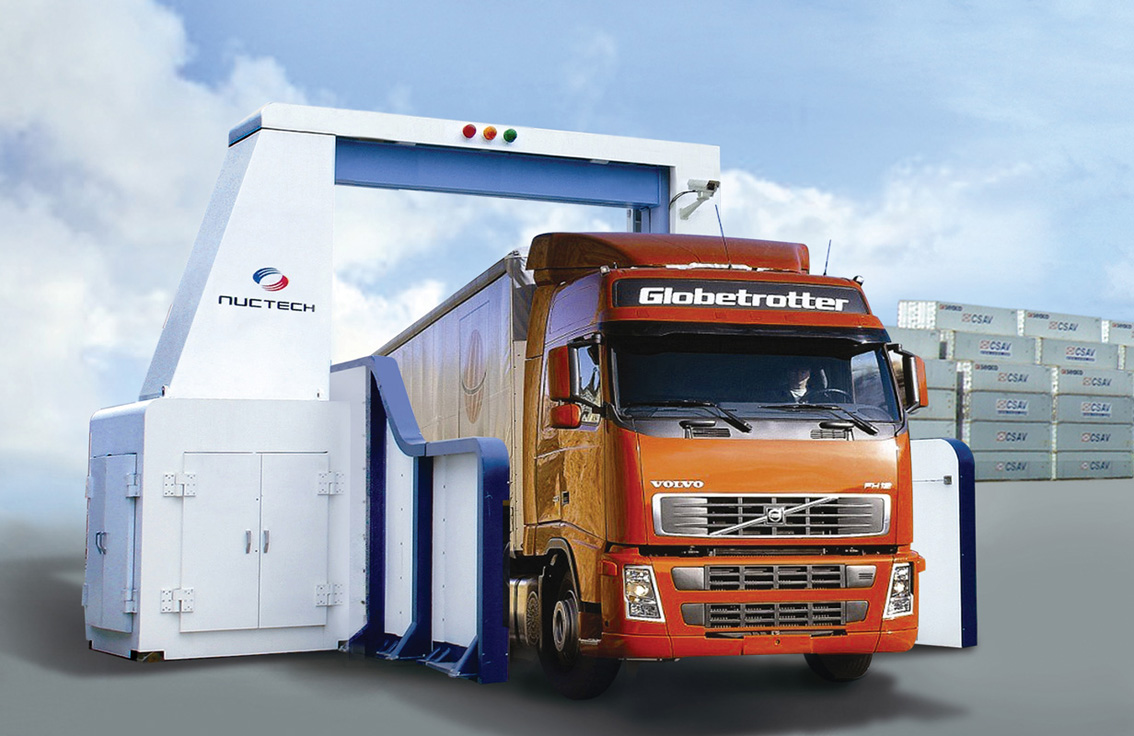
Nuctech Fast Scan Vehicle and Container inspection system

Nuctech Fast Scan Vehicle and Container inspection system

Part of the problem here is that the Chinese have a significant market share in this type of equipment. In a short period of 10 years they have outstripped some of the more fancied American and European players in this business. While the dispute in question raises ‘ethical’ questions of the Chinese, it does seem to be a matter of sour grapes.

China’s anti-dumping duties on imports of x-ray security scanners from the EU violated global trade rules, according to a WTO panel ruling that was issued yesterday. [WTO Dispute Settlement, DS425]

Brussels brought the dispute in July 2011 after Beijing imposed duties ranging from 33.5 to 71.8 percent on the x-ray scanners. (See Bridges Weekly, 25 January 2012) The EU exports approximately €70 million of these scanners to China annually.

China imposed the duties after the EU had applied anti-dumping duties on Chinese cargo scanners one year earlier, which some viewed at the time as a “tit-for-tat” move.

The panel report primarily focused on procedural issues in Beijing’s investigation, specifically regarding how China calculated the anti-dumping margin, loosely defined as the difference between the price – or cost – in the foreign market and the price in the importing domestic market.

Beijing included more expensive “high-energy” scanners – which do not “look remotely like” the cheaper scanners, according to the panel report – in calculating the average domestic price, even though only cheaper “low-energy” scanners were exported. The panel found that this price comparison was “not consistent with an objective examination of positive evidence” required under WTO rules.

The panel also found that Beijing did not comply with certain due process and transparency requirements before imposing the duties.

The panel did not rule with the EU on all points, however, noting that Brussels had not established that Beijing had acted inconsistently in certain other procedural matters.

“I expect China to remove the measures immediately,” EU Trade Commissioner Karel De Gucht said on Tuesday in response to the panel ruling. “I will not accept tit-for-tat retaliation against European companies through the misuse of trade defence instruments.”

Under WTO rules, both sides have 60 days to appeal the ruling. In a statement, China’s Ministry of Commerce indicated that they would make a serious assessment of the case and reserved the right to appeal.

Radiation Scare Disrupts Port Elizabeth

The Maher Terminal at Port Elizabeth has been cleared for danger after a radiation scare prompted a security response.

The Maher Terminal at Port Elizabeth has been cleared for danger after a radiation scare prompted a security response.

Misleading? No its Port Elizabeth – USA! Customs officials had suspicion about a shipping container that they were examining. An abnormally high radiation reading was detected, but CBP, FBI, the Port Authority of NY/NJ and other law enforcement officials initiated protocols to isolate and verify the source of the alarm.

According to New Jersey’s Star-Ledger, a Port Authority official said the container was filled with recycled paper, and a metal wire that bound the paper was the source of a positive reading for Caesium-137, a radioactive isotope formed during nuclear fission.

After review and confirmation from CBP’s Laboratories & Scientific Services, the container was deemed safe. The situation was resolved in less than two hours. Customs officials took control of the container and were moving it to a secure location.  Lengthy lines of trucks were at a standstill waiting to exit the port facility as the investigation was underway. At least 15 emergency response vehicles were on scene, along with various officers. Source: Maritime-Executive.com

Finding the best solution for 100% container weight verification

Bromma load verification sensing technology (www.bromma.com)

Bromma load verification sensing technology (www.bromma.com)

The International Association of Ports and Harbours (IAPH) has helped the container handling industry to put focused attention on the issue of container weight verification. The IAPH and the International Shipping Organization have called for near 100 per cent container weight verification as a standard industry ‘best practice’. IAPH has recognised the value of container weight verification for both safety and operational reasons. Accurate container weights can help guide critical plans regarding stowage, and verifiable load data also serves to ensure worker safety. Lifting containers within an acceptable weight range also prevents accelerated stress on the spreader, thus extending equipment life.

The issue that organisations such as IAPH and the World Shipping Council have raised is not merely an academic one, studies of container weight indicate that there is often significant variation between listed and actual container weight. The problem is a familiar one: not everyone tells the truth about their weight, as the consequences of inaccurate weight can include equipment damage in ports, injury to workers and collapsed container stacks, among others.

The question is ‘how’, not ‘should’?

The general consensus has grown that universal container weight verification is a worthy standard, the key question has quickly begun to shift from whether we should we have a universal requirement to how we can best implement this commitment. Along these lines three general approaches might be possible.

The container crane option

The first possible approach is to utilise container cranes to meet the weighing requirement. The advantage of weight verification by cranes is that weighing occurs during the normal course of handling operations. The disadvantage of a crane-based approach is that weighing accuracy is only approximately 90-95 per cent, and cranes cannot distinguish between the weights of two containers when lifting in twin-mode. Since many terminals load and unload container ships using twin-lift/twin-20 foot spreaders, the actual weight of each of these individual containers will remain in doubt if there is a reliance on container cranes to yield this data. Also, with the emergence of the mega-ship era, more and more terminals will be looking for productivity solutions that enable more containers to be handled in each lift cycle, and so twin-handling of 40 and 20 foot containers is likely to expand in the future, thus adding to the number of containers with an uncertain weight.

The weigh bridge option

A second option for terminals would be to meet the container weight requirement through the use of weigh bridges. Unfortunately, there are multiple weaknesses in this approach.Containers can be weighed from the weigh bridge, but driving every container onto a weigh bridge will obviously add another operational step, and slow productivity. It also requires, especially at larger and busier transhipment terminals, that considerable land and transit lanes be set aside for weighing activities. In addition, there are two weight variables on the weigh bridge – the variable weight of up to 300 litres of truck fuel and the weight of the driver. Further, as with a container crane, a weigh bridge cannot distinguish between the weights of two containers, and so the weight of each individual container will always be inexact. The only way to gain a precise weight is to weigh one container at a time, and to adjust for fuel weight and driver weight variables.

The spreader twist lock option

The third option is to ascertain container weight from the spreader twist locks. For container terminals, a spreader-based weighing approach has several key advantages. Firstly, weighing from the spreader twist locks yields much more accurate information, as container weight precision is greater than 99 per cent. Secondly, unlike weigh bridges or crane-based container weighing, spreaders weigh each container separately when operating in twin-lift mode. When a Bromma spreader lifts two 20 foot containers or two 40 foot containers at a time, the spreader can provide highly accurate data on the weight of each separate container, and without any of the variables (fuel, driver) associated with the weigh bridge approach.

In addition, with a spreader-based approach you weigh containers from the spreader twist locks without adding any extra operational steps or requiring any extra space or transit lanes. Terminals simply log container weights in the normal course of lifting operations – with a warning system alerting the terminal to overloaded and eccentric containers. Container weight verification during the normal course of terminal operations is a way to accomplish the weighing mission without impairing terminal productivity, and especially at busy transhipment terminals. To read the full report, Click Here!

Source: www.porttechnology.org