Customs Bill gets escape clause – fallback to old system

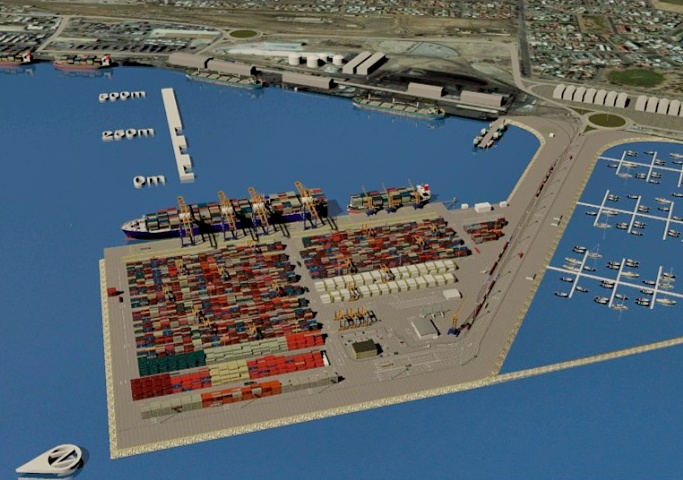
City Deep Container Terminal (Transport World Africa)

City Deep Container Terminal (Transport World Africa)

The controversial Customs Control Bill adopted by Parliament’s finance committee on Wednesday includes a “fallback” provision allowing for a return to the current customs control system should the new one fail.

A similar clause was included in the law that introduced value-added tax in 1991, allowing for a legal alternative to be implemented quickly if things do not work out as planned.

The committee also adopted the Customs Duty Bill and the Customs and Excise Amendment Bill as part of a total revamp by the South African Revenue Service (SARS) of the customs system. Visit this link for access to the Bills and submissions to the parliamentary committee.

The Customs Control Bill has been highly contentious as it will fundamentally change the way imported goods are cleared and released. The Democratic Alliance and Business Unity SA (Busa) opposed the original proposals on the grounds that doing away with manifests in the operations of City Deep would threaten the inland terminal in Johannesburg. SARS disputed this but nevertheless amended the bill.

Busa’s Laurraine Lotter yesterday welcomed the inclusion of the fallback clause but said she would have to see the details of the amendments introduced by SARS before commenting.

The fallback provision — which will automatically lapse five years after the effective date of the legislation — was included to be on the safe side, although SARS does not expect the proposed system to fail. It consulted widely on the bill, sought legal opinions about the legality of its amended proposals and ultimately secured the support of ship operators and agents, freight forwarders and Transnet for the amendments.

Implementation could be delayed by 12 months to allow the trade sufficient time to prepare.

SARS chief legal and policy officer Kosie Louw assured the committee this week the existence of City Deep would not be jeopardised. He urged adoption of the new system of customs control, saying the authorities needed more detailed information about incoming cargo to clamp down on fraud and illegal imports.

In terms of the bill, the submission by shipping lines of a manifest that provides only a general description of cargo will be replaced by a clearance declaration. This must contain information on the tariff, value and origin of the goods, and be submitted by the importer (which can be held accountable for its veracity) three calendar days before arrival at the first place of entry into South Africa.

Penalties will be levied only if the clearance is not submitted within three working days after the arrival of the goods. Containers will be provisionally released before arrival of the goods at the first place of entry and finally released at the first point of entry. To allow for seamless movement of goods, shipping lines will still issue multimodal contracts and through bills of lading.

“The revised proposal provides certainty and predictability to role players in the supply chain regarding the movement of goods,” Mr Louw said.

He said the new system would allow customs officials to undertake documentary inspections earlier, mitigating delays. High-risk containers would be identified before arrival, detained on arrival and held at the inland terminal for inspection. Containers with no risk would be able to move “seamlessly” to the inland terminals.

Mr Louw submitted that the objections to the proposal — that it would require traders to change their sale contracts; that sellers would be reluctant to sell under the new terms; that importers would be affected; that carriers would no longer issue a bill of lading to internal terminals; and that it would give rise to delays and congestion at ports — were found to lack foundation by international trade law expert Prof Sieg Eiselen and two advocates.

He said the proposed system would lay a solid and predictable framework for a modernised system of customs control that balanced the need for trade facilitation with the need to prevent imports of illicit goods. The current system was governed by an outdated, 1960s law. Source: Business Day

Related articles

South Africa Economic Update – Focus on Export Competitiveness

WB-South Africa-Export CompetitivenessThe report, South Africa Economic Update 5: Focus on Export Competitiveness, examines the performance of South Africa’s export firms against that of peers in other emerging markets— and analyzes the challenges. It assesses South Africa’s economic prospects in the context of the global economic environment and prospects.

With this Economic Update, we hope to enrich the on-going debate on growing a sector critical for South Africa’s economic growth. As with previous editions, this report is intended not to be prescriptive but to offer evidence-based analysis that will help bring South Africa’s policymakers, researchers, and export stakeholders closer to finding innovative and sustainable ways to grow the sector. The report highlights opportunities for growth, particularly with Sub-Saharan Africa being the largest market for non-mineral exports. It also explores strategic directions that can ignite export growth and help South Africa realize its goals of creating jobs and reducing poverty and inequality.

The report identifies three areas that present opportunities to promote the competitiveness and spur the growth in South Africa’s export sector:

  • Boosting domestic competition would increase efficiency and productivity. By opening local markets to domestic and foreign entry, South Africa would enable new, more productive firms to enter and place downward pressure on high markups. This would lower input costs and tip incentives in favor of exporting by reducing excess returns in domestic markets. Competition would also stimulate investment in innovation and, over time, condition the market to ensure that firms entering competitive global markets have reached the productivity threshold to support their survival and growth.
  • Alleviating infrastructure bottlenecks, especially in power, and removing distortions in access to and pricing of trade logistics in rail, port, and information and communication technologies would reduce overall domestic prices and further enhance competitiveness. It would be especially beneficial for small and medium-size exporters and non-traditional export sectors, which these costs tend to hit harder.
  • Promoting deeper regional integration in goods and services within Africa would generate the right conditions for the emergence of Factory Southern Africa, a regional value chain that could feed into global production networks. South Africa could play a central role in such a chain, leveraging the scale of the regional market, exploiting sources of comparative advantage across Africa to reduce production costs, and providing other countries in the region a  platform for reaching global markets. Progress on all three fronts would help catapult South Africa toward faster-growing exports, allowing it to realize the higher, more inclusive, job-intensive growth articulated in the National Development Plan.

Source: World Bank

Africa – Strange Deliveries by DHL in 2013

Gorilla-weekinbrief-bigAn unusual cargo list has been released by DHL Express Sub-Saharan Africa of their 2013 deliveries.

In Kenya live human eyes are transported frequently. Sumesh Rahavendra, head of marketing for DHL Express Sub-Saharan Africa, said: “The corneas have an extremely short lifespan and are therefore highly perishable, which possess a significant challenge to us.

“What adds to the complexity is the fact that the recipient is booked and prepped for surgery while the cornea is in transit.

“The successes of these deliveries rely on prior customs releases, dedicated delivery vehicles and a passionate team of certified international specialists on the ground.

“When there is no margin for error and the result could affect another person’s opportunity for sight, every stop is pulled out from pickup to delivery.”

Rahavendra continued: “One unique shipment to mention is a 32kg consignment of Haggis which was moved from the UK to Tanzania for an event.

“The Scottish delicacy was swiftly transported through Customs and delivered in time for the prestigious event.”

For conservation, there was a transport of butterfly larvae in Kenya. Rahavendra said: “Any delay in the transport process would result in the premature hatching of the butterflies, from which they would not have survived. Following a similar operational process as the transport of the corneas previously mentioned, another successful, yet another unique delivery was completed.”

Another astonishing delivery was 1.7 tons of fresh flowers sent from Johannesburg to Douala in Cameroon for a wedding.

This personal request came from a customer whose two sons were getting married on the same day,” said Rahavendra.

“Fast forward a few short hours, and a splendor of colour was delivered to the event in time for the all-important nuptials.”

Other strange and prompt delivery requests included transporting nine gorillas across two continents, a specific heart internal defibrillator, the Rugby World Cup Webb Ellis trophy, and a customer’s laundry from the UK to South Africa for dry cleaning!

Rahavendra said. “Although sometimes challenging and stressful, such requests certainly help bring a smile to our faces on a busy day.” Source: APO (African Press Organization)

SA Government to Prioritise and Pass Customs Bills

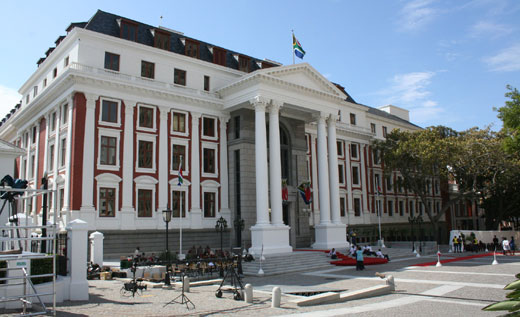
Parliment, Cape Town (Eye Witness News)

Parliament, Cape Town (Eye Witness News)

Government has decided to prioritise the passage of eight bills through Parliament. The bills deal with land restitution, labour relations, and customs and excise.

There are currently 42 bills before the National Assembly and the National Council of Provinces. With the fourth Parliament set to be dissolved ahead of looming general elections, Members of Parliament (MPs) are unlikely to deal with all 42 bills.

A statement just released by the ANC’s office in Parliament to the media states –

“The African National Congress in Parliament has taken note of the huge parliamentary workload which the institution has to process in the next few months before the expiry of the current five-year term of parliament. In terms of the Constitution, the current term of Parliament is set to end ahead of the 2014 national elections. The workload confronting the institution includes committee oversights, constituency programmes, adoption of committee reports, debates on the state of the nation address and the budget, and finalisation and adoption of Bills.”

“Currently, there are 24 Bills before the National Assembly (NA) and 18 currently before the National Council of Provinces (NCOP) – which is a total of 42 Bills the institution must pass before the elections. Our view is that all these Bills are important and therefore the institution should spare neither strength nor effort in ensuring they are processed qualitatively and thoroughly to ensure that they are converted into laws within the stipulated period. We are however alive to the possibility that not all these Bills may be passed in the next few remaining months of parliament.”

“We have therefore sought to prioritise the following Bills, which we believe Parliament should give special attention to ensure they are passed into laws. In terms of the rules of Parliament, Bills that are not passed within the current term of Parliament may be resuscitated in the next parliamentary term. This will be done for those Bills that might not be passed during this term.”

“In determining priority Bills, we have looked at criteria such as complexity, contentiousness, technicality, effect on provinces, and requirement for exhaustive consultation. [Three of the eight bills relate to Customs and Excise]

  1. Customs Control Bill of 2013 – The Customs Control Bill is intended to replace certain provisions of the Customs and Excise Act of 1964 relating to customs control of all means of transport, goods and persons entering or leaving South Africa. The Bills aims to ensure that taxes imposed by various other laws on imported or exported goods are collected and that various other laws regulating imports and exports of goods are complied with. To ensure effective implementation of customs control, the Bill provides for elaborate systems for customs processing of goods at places of entry and exit such as seaports, airports and land border posts;
  2. Customs Duty Bill of 2013 – The Customs Duty Bill is intended to replace certain provisions of the Customs and Excise Act of 1964 which relates to the imposition and collection of imports and export duties. The Bill primarily aims to provide for the levying, payment and recovery of import and export duties on goods imported or exported from South Africa. The Bill will be dealt with in terms of Section 77 of the Constitution; and
  3. Customs and Excise Amendment Bill of 2013 – The Customs and Excise Amendment Bill seeks to amend the provisions of the Customs and Excise Act of 1964 and to remove from the Act all the provisions that have now been incorporated into both the Customs Control Bill and the Customs Duty Bill. Essentially, because the Customs and Excise Amendment Act of 1964 strongly reflected rigidity reminiscent of the apartheid era controls, which are unsuitable to the current modern control systems, it has been split into both the Customs Control Bill and the Customs Duty Bill. The Customs and Excise Amendment Act of 1964 will for now be retained in an amended form for the continued administration of excise duties and relevant levies until it is completely replaced with a new law in future (i.e. Excise Duty Bill).”

Source: Excerpt of a press statement of the Office of the Chief Whip of the ANC, Parliament.

WCO to develop Implementation Tool for WTO ATF

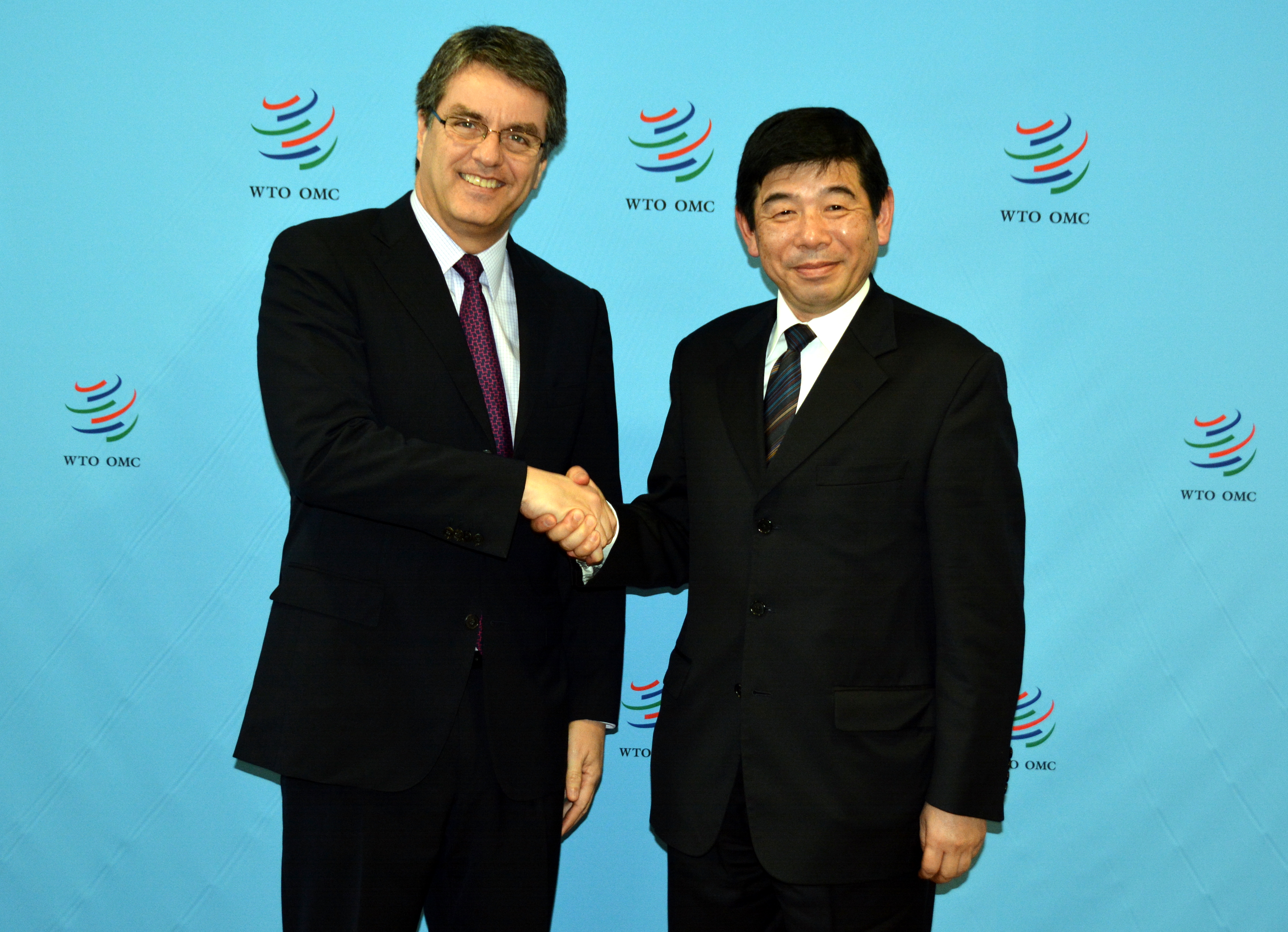
WCO and WTO leaders meet in Geneva (WCO)

WCO and WTO leaders meet in Geneva (WCO)

At the invitation of WTO Director General Roberto Azevedo, WCO Secretary General Kunio Mikuriya met with Mr. Azevedo at WTO headquarters in Geneva, Switzerland on 20 January 2014. They agreed that close cooperation between the two organizations is vital for successful implementation of the WTO Agreement on Trade Facilitation (ATF).

Secretary General Mikuriya emphasized the consistent and complementary nature between the ATF and the WCO Revised Kyoto Convention (RKC). He also described how the WCO Economic Competitiveness Package, that includes the RKC and all other Customs trade facilitation instruments, guidelines and best practices, will support implementation of ATF. Mr. Mikuriya also confirmed his readiness to involve other international organizations, development banks, donors and other stakeholders at a WCO forum to contribute to cooperation in support of the ATF.

Director General Azevedo was pleased to hear that the WCO was planning to publish an implementation tool to connect each provision of the ATF to WCO tools as well as a briefing document enabling Customs administrations to communicate with trade ministries. He expressed his willingness to leverage WCO expertise and experts for the WTO Preparatory Committee on Trade Facilitation as well as ATF needs assessment and implementation. Mr. Azevedo also suggested that the ATF provides another opportunity for the two organizations to enhance the good working relations that already exist in many areas beyond trade facilitation.

The two leaders also discussed how multilateral institutions could work on regional integration matters and agreed on the importance of adopting global standards and best practices to ensure connectivity at borders. Source: WCO

2014 – EU’s Revised Trade Rules to Assist Developing Countries

European-Commission-Logo-squareThe European Union’s rules determining which countries pay less or no duty when exporting to the 28 country trade bloc, and for which products, will change on 1 January 2014. The changes to the EU’s so-called “Generalised System of Preferences” (GSP) have been agreed with the European Parliament and the Council in October 2012 and are designed to focus help on developing countries most in need. The GSP scheme is seen as a powerful tool for economic development by providing the world’s poorest countries with preferential access to the EU’s market of 500 million consumers.

The new scheme will be focused on fewer beneficiaries (90 countries) to ensure more impact on countries most in need. At the same time, more support will be provided to countries which are serious about implementing international human rights, labour rights and environment and good governance conventions (“GSP+”).

The EU announced the new rules more than a year ago to allow companies enough time to understand the impact of the changes on their business and adapt. To make the transition even smoother for exporting companies, the Commission has prepared a practical GSP guide.

The guide explains in three steps what trade regime will apply after 1 January 2014 to a particular product shipped to the EU from any given country. It also provides information on the trade regime that will apply to goods arriving to the EU shortly after the New Year.

The changes in a nutshell:

  • 90 countries, out of the current 177 beneficiaries, will continue to benefit from the EU’s preferential tariff scheme.
  • 67 countries will benefit from other arrangements with a privileged access to the EU market, but will not be covered by the GSP anymore.
  • 20 countries will stop benefiting from preferential access to the EU. These countries are now high and upper-middle income countries and their exports will now enter the EU with a normal tariff applicable to all other developed countries.

For the finer details of the revised EU rules visit: http://europa.eu/rapid/press-release_MEMO-13-1187_en.htm?locale=en

SAAFF Accredited to Award FIATA Diploma

SAAFFFreight & Trade Weekly reports that the South African Association of Freight Forwarders (SAAFF) has been accredited to present and award the internationally recognised FIATA Higher Diploma in Supply Chain Management. “The industry  body was accredited following presentations to the FIATA Advisory Board on Vocational  Training at the FIATA Congress in Singapore at the end of October this year,” says Tony d’ Almeida, director at SAAFF responsible for education, training and development.

He said SAAFF was effectively one of only 14 professional bodies around the world accredited to offer this industry leading qualification. “SAAFF will be the custodian of the Higher Diploma which is pitched  at NQF level 7, two levels higher than the FIATA Diploma in Freight Forwarding which SAAFF is also entitled to award in South Africa, and which has already produced 22 graduates,” says d’Almeida. He notes that the minimum requirement for consideration for entry into this Higher Diploma is a relevant university degree, or a national diploma or the FIATA Diploma in Freight Forwarding.

“All accredited SAAFF  training providers may offer this  programme to suitably qualified students,” d’ Almeida states. He says this qualification is “very relevant” to the freight forwarding industry. “SAAFF therefore made the strategic decision to apply for accreditation to help alleviate the current critical shortage of skilled people who not only know the process of supply chain, but can also apply their expertise in innovative ways that add value to the entire process,” he says. D’ Almeida adds that aspects relating to global supply chains are constantly evolving, making it vital for every player to be at the forefront and fully aware of these trends.

“Added to this, the industry has to come to grips with rapidly evolving technology in our everyday business practices that is coming at frightening speed. Being able to ratify skills against global standards  and benchmarks brings enormous value to the business, the client and the individual,” he says. Source: Freight & Trade Weekly.

Walvis Bay Container Terminal – AfDB and Namibia sign loan agreement

NamPort ExpansionThe African Development Bank Group (AfDB) and Namibia on Friday, November 8, 2013 signed a ZAR 2.9 billion (US $338 million) sovereign guaranteed loan to the Nambian Ports Authority (Namport) to finance the construction of the new container terminal at Port of Walvis Bay and a UA 1.0 million grant (US $1.5 million) to the Government of Namibia for logistics and capacity building complementing the port project loan. The project was approved by the AfDB Group in July 2013.

The project is expected to enable Namport to triple the container-handling capacity at the Port of Walvis Bay from 350,000 TEUs to 1,050,000 TEUs per annum. It will also finance the purchase of up-to-date port equipment and the training of pilots and operators for the new terminal. The grant component will fund the preparation of the National Logistics Master Plan study, technical support and capacity-building for the Walvis Bay Corridor Group and training of freight forwarders.

According to the AfDB Director of Transport and ICT, Amadou Oumarou: “Through this project which potentially serves up to seven major economies in the SADC region, the Bank is assisting in the diversification and distribution of port facilities on the southwest coast of Africa, and provides the much-needed alternative for the region’s landlocked countries.”

The project will stimulate the development and upgrade of multimodal transport corridors linking the port to the hinterland while improving the country’s transport and logistics chains. It will also boost competition among the ports and transport corridors in the region with the ripple effect on reductions in transportation costs and increased economic growth.

The projected project outcomes include improvement in port efficiency and increase in cargo volumes by 70% in 2020 as a result of increased trade in the region. The benefits of the project will include among others, the stimulation of inter-regional trade and regional integration, private sector development, skills transfer and most importantly employment creation, leading to significant economic development and poverty reduction in Namibia, and the SADC region. Source: African Development Bank

Related articles

China hopes to dominate Africa by boosting trade via Indian Ocean

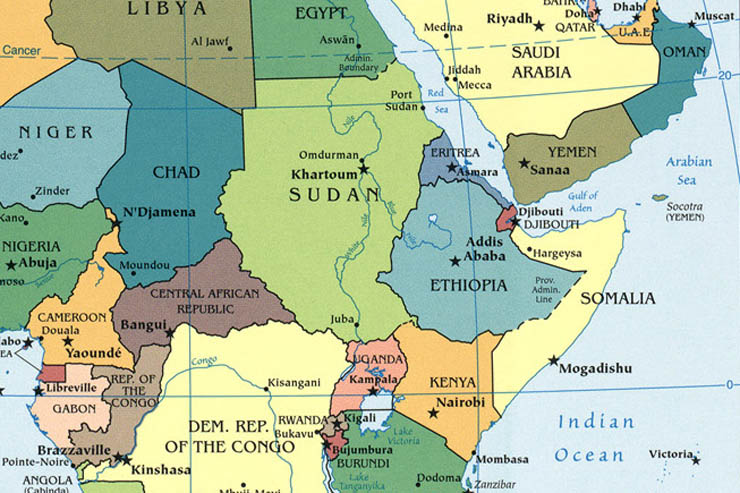
EastAfricaMapPeople’s Republic of China (PRC) officials are becoming increasingly apprehensive about the rise in the use of the westward corridor to export oil, diamonds, and rare minerals out of South Sudan and the Central African Republic via Cameroon. In other words, this creates a flow to Atlantic sea and air transportation routes, rather than routes eastward to Indian Ocean trade routes. Beijing is also concerned over the growing tension between Sudan and its neighbors – particularly South Sudan – because of the impact this might have on the PRC’s long-term designs to dominate Africa’s resources trade.

A key component of the Chinese long-term strategy has long been to converge all the flow of oil, gas, and minerals to a single export point on the shores of the Indian Ocean; that is, in the direction of China. This vision is getting closer to realization given the progress made toward beginning construction of the maritime complex in Lamu on the northern Kenyan shores of the Indian Ocean. The Lamu mega-port and adjacent industrial and transportation complexes are a major element of the Kenyan Government’s Vision 2030 initiative. Lamu is the key to the long-needed modernization of Kenya’s deteriorating infrastructure and boosting of economic output.

Although Nairobi keeps insisting that there will be international tenders for each and every phase of the Lamu project, the overall design in fact follows Beijing’s proposal, and Nairobi acknowledges that no international consortium has so far been able to remotely compete with the financial guarantees offered by official Beijing in support for proposals presented by Chinese entrants. This is because Beijing considers the Lamu mega-port and transportation complex to be the key to the PRC’s long term domination over African trade and resources.

The initial costs of the first phase of the Lamu project are estimated at $25.5-billion. The name of this first phase – the Lamu Port and New Transport Corridor Development to Southern Sudan and Ethiopia (LAPSSET) – points to the initial objectives. Significantly, the term used is “Southern Sudan” and not the state of South Sudan. When completed, the first phase of the Lamu complex will include a 32-berth port, three international airports, and a 1,500km railway line. As well, the Chinese plan oil pipelines from Juba in South Sudan, and from Addis Ababa via Moyale, Kenya, to converge into Kenya’s Eastern Province and end in a new huge oil refinery in Bargoni, near Lamu. The entire construction and pipelines will be supported by a 1,730km road network. In the longer term, the trans-African pipelines the Chinese plan on building from both Nigeria in the west and south-western Africa (most likely Angola) will also feed into the Lamu complex, thus giving the PRC effective control over the main hydrocarbon exports of Africa.

The strategic cooperation between Beijing and Khartoum constitutes the key to the Chinese confidence that their Sudanese allies be able to contain their Somali jihadist proxies so that the risk of terrorist attacks is minimal. Simply put, Beijing is ready to do anything just to ensure the flow of oil eastwards rather than westwards.

Ultimately, the significance of the Chinese long-term grand design for Africa can be best comprehended in the context of historic transformation in the grand strategy and polity of the PRC. Beijing has been arguing since the fall of the Soviet Union that the decline of the United States was also inevitable and that China was destined to rise as the global hegemon. Presently, Beijing is convinced that the time is ripe for delivering the coup de grace.

On October 13, 2013, the official Xinhua news agency published an official commentary stating that “it is perhaps a good time for the befuddled world to start considering building a de-Americanized world”. The commentary surveyed the “abuse” the entire world had suffered under US hegemony since World War II. The situation had only aggravated since the end of the Cold War, Xinhua argued. “Instead of honoring its duties as a responsible leading power, a self-serving Washington has abused its superpower status and introduced even more chaos into the world by shifting financial risks overseas.” To further its own unbridled ambitions, the US stoked “regional tensions amid territorial disputes, and fighting unwarranted wars under the cover of outright lies”, Xinhua explained.

The Xinhua commentary warned that with US society and economy collapsing, Washington was now tempted to intensify the abuse of the rest of the world in order to save the US. “Such alarming days when the destinies of others are in the hands of a hypocritical nation have to be terminated. A new world order should be put in place, according to which all nations, big or small, poor or rich, can have their key interests respected and protected on an equal footing.” Xinhua concluded by suggesting that the PRC, being inherently a developing country, is the rising power best suited to lead this global transformation and de-Americanization.

Beijing has long recognized that any confrontation with the US would inevitably lead to major economic crises, a series of conflicts world-wide and possibly a global war against the US. To sustain this global conflict, the PRC would need huge quantities of hydrocarbons, rare metals, other natural resources and even agricultural products; and these could only be secured for it as a result of a China-dominated Africa. Source: http://www.tralac.org 

IBSA Beware – Currency Sell-off

India’s currency plumbed record lows this week as investors withdrew money from emerging markets (Photo: Financial Times)

India’s currency plumbed record lows this week as investors withdrew money from emerging markets (Photo: Financial Times)

A not-so-sobering look into the immediate future of emerging market darlings who have lost their lustre as investors ponder life without US quantitative easing. Even more worrying considering the possible impact for IBSA countries.

India, 1991. Thailand and east Asia, 1997. Russia, 1998. Lehman Brothers, 2008. The eurozone from 2009. And now, perhaps, India and the emerging markets all over again.

Each financial crisis manifests itself in new places and different forms. Back in 2010, José Sócrates, who was struggling as Portugal’s prime minister to avert a humiliating international bailout, ruefully explained how he had just learned to use his mobile telephone for instant updates on European sovereign bond yields. It did him no good. Six months later he was gone and Portugal was asking for help from the International Monetary Fund.

This year it is the turn of Indian ministers and central bankers to stare glumly at the screens of their BlackBerrys and iPhones, although their preoccupation is the rate of the rupee against the dollar.

India’s currency plumbed successive record lows this week as investors decided en masse to withdraw money from emerging markets, especially those such as India with high current account deficits that are dependent on those same investors for funds. Black humour pervaded Twitter in India as the rupee passed the milestone of Rs65 to the dollar: “The rupee at 65 – time to retire”.

The trigger for market mayhem in Mumbai, Bangkok and Jakarta was the realisation that the Federal Reserve might – really, truly – soon begin to “taper” its generous, post-Lehman quantitative easing programme of bond-buying. That implies a stronger US economy, rising US interest rates and a preference among investors for US assets over high-risk emerging markets in Asia or Latin America.

The fuse igniting each financial explosion is inevitably different from the one before. Yet the underlying problems over the years are strikingly similar.

So are the three principal phases – including the hubris and the nemesis – of the economic tragedies they endure. No one who has examined the history of the nations that fell victim to previous financial crises should be shocked by the way the markets are treating India or Brazil today.

First comes complacency, usually generated by years of high economic growth and the feeling that the country’s success must be the result of the values, foresight and deft policy making of those in power and the increasing sophistication of those they govern. Sceptics who warn of impending doom are dismissed as “Cassandras” by those who forget not only their own fragilities but also the whole point about the Trojan prophetess: it was not that she was wrong about the future, it was that she was fated never to be believed.

So high was confidence only a few months ago in India – as in Thailand in the early 1990s – that economists predicted that the local currency would rise, not fall, against the dollar.

Indian gross domestic product growth had topped 10 per cent a year in 2010, and the overcrowded nation of 1.3bn was deemed to be profiting from a “demographic dividend” of tens of millions of young men and women entering the workforce. The Indian elephant was destined to overtake the Chinese dragon in terms of GDP growth as well as population size.

Deeply ingrained in the Indian system, says Pratap Bhanu Mehta, head of the Centre for Policy Research in New Delhi, was an “intellectual belief that there was some kind of force of nature propelling us to 9 per cent growth … almost of a sense of entitlement that led us to misread history”.

In the same way, the heady success of the southeast Asian tigers in the early 1990s had been attributed to “Asian values”, a delusional and now discredited school of thought that exempted its believers from the normal rules of economics and history because of their superior work ethic and collective spirit of endeavour.

The truth is more banal: the real cause of the expansion that precedes the typical financial crisis is usually a flood of cheap (or relatively cheap) credit, often from abroad.

Thai companies in the 1990s borrowed dollars short-term at low rates of interest and made long-term investments in property, industry and infrastructure at home, where they expected high returns in Thai baht, a currency that had long been held steady against the dollar.

The same happened in Spain and Portugal in the 2000s, although the low-interest loans that fuelled the unsustainable property boom were mostly north-to-south transfers within the eurozone and therefore in the same currency as the expected returns. Indeed, the euro was labelled “a deadly painkiller” because the use of a common currency hid the dangerous financial imbalances emerging in southern Europe and Ireland.

Phase Two of a financial crisis is the downfall itself. It is the moment when everyone realises the emperor is naked; to put it another way, the tide of easy money recedes for some reason, and suddenly the current account deficits, the poverty of investment returns and the fragility of indebted corporations and the banks that lent to them are exposed to view.

That is what has started happening over the past two weeks as investors take stock of the Fed’s likely “tapering”. And the fate of India – the rupee is one of the “Fragile Five”, according to Morgan Stanley, with the others being the currencies of Brazil, Indonesia, South Africa and Turkey – is particularly instructive. (Emphasis mine).

It is not that all of India’s economic fundamentals are bad. As Palaniappan Chidambaram, finance minister, said on Thursday, the public debt burden has actually fallen in the past six years to less than 70 per cent of GDP – but then the same was true of Spain as it entered its own grave economic crisis in 2009.

Like Spain, India has tolerated slack lending practices by quasi-official banks to finance the huge property and infrastructure projects of tycoons who may struggle to repay their loans.

Ominously, bad and restructured loans have more than doubled at Indian state banks in the past four years, reaching an alarming 11.7 per cent of total assets. According to Credit Suisse, combined gross debts at 10 of India’s biggest industrial conglomerates have risen 15 per cent in the past year to reach $102bn.

For those who take the long view, a more serious failing is that India has manifestly missed the kind of economic opportunity that comes along only once in an age.

Instead of welcoming investment with open arms and replacing China as the principal source of the world’s manufactured goods, India under Sonia Gandhi and the Congress party, long suspicious of business, has opted to enlarge the world’s biggest welfare state, subsidising everything from rice, fertiliser and cooking gas to housing and rural employment.

Former fans of her prime minister, Manmohan Singh – who as finance minister liberalised the economy, ended the corrupt “licence Raj” and extracted India from a severe balance of payments crisis with the help of an IMF loan – could only shake their heads when he boasted last week that no fewer than 810m Indians would be entitled to subsidised food under a new Food Security Bill.

The bill is a transparent attempt by Congress to improve its popularity ahead of the next general election, but the government’s critics are horrified at the idea of offering Indians more handouts rather than creating the conditions that would give them jobs and allow them to buy their own. The resulting strain on the budget may also worsen the risk of “stagflation”, a toxic mixture of economic stagnation and high inflation.

India’s annual growth rate has already halved in three years to about 5 per cent and could fall further towards the 3 per cent “Hindu rate of growth” for which the country was mocked in the 1980s.

If currency declines and balance-of-payments difficulties develop into a full-blown financial crisis in the coming months, India will be propelled unwillingly into the third and final phase of the trauma.

Phase Three is when ministers and central bank governors survey the wreckage of a once-vibrant economy and try to work out how to rebuild it.

It is traditional for those governments that survive, and for the ones replacing those that do not, to announce several false dawns and to see “green shoots” that turn out to be illusory.

It is hard when times are bad to impose financial discipline that would have been easier to apply before. Indian policy makers are already torn between the need to lower interest rates to boost growth and the necessity of raising them to protect the rupee and tackle inflation – the same kind of tension between austerity and easy money that has afflicted developed economies since 2008.

India’s underlying economy is nevertheless sound and its banks are safe, say Mr Chidambaram and other senior officials. There is therefore no need to contemplate asking for help from the IMF or anyone else.

Mr Sócrates said much the same in Lisbon three years ago. “Portugal doesn’t need any help,” he said, almost leaping from his chair. “We only need the understanding of the markets.” The markets did not understand, and Portugal did need the help.

Source – Victor Mallet of the Financial Times August 23, 2013
The Material Footprint of Nations and ‘True’ Material Cost of Development

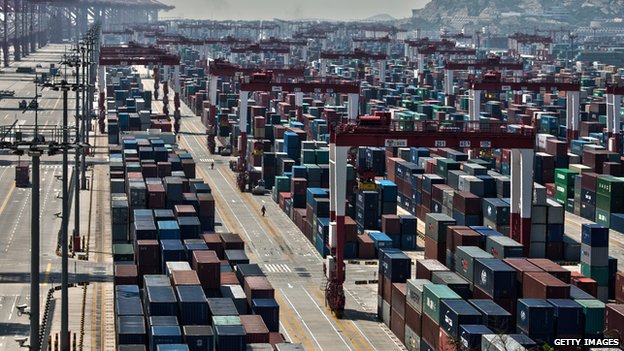
High Density Container Terminal  (Picture credit - Getty Images)

High Density Container Terminal (Picture credit – BBC News/Getty Images)

Thanks to the kind reader who passed me this story. BBC News Environment correspondent, Matt McGrath, reports that current methods of measuring the full material cost of imported goods are highly inaccurate. In a new study, researchers have found that three times as many raw materials are used to process and export traded goods than are used in their manufacture.

Richer countries who believe they have succeeded in developing sustainably are mistaken say the authors. The research has been published  (click hyperlink to access the report) in the Proceedings of the National Academy of Sciences.

Many developed nations believe they are on a path to sustainable development, as their economic growth has risen over the past 20 years but the level of raw materials they are consuming has declined.

According to  Dr Tommy Wiedmann University of New South Wales “We are saying there is something missing, if we only look at the one indicator we get the wrong information”. This new study indicates that these countries are not including the use of raw materials that never leave their country of origin.

The researchers used a new model that looked at metal ores, biomass, fossil fuels and construction materials to produce what they say is a more comprehensive picture of the “material footprint” of 186 countries over a 20 year period.

“The trade figure just looks at the physical amounts of material traded, but it doesn’t take into account the materials that are used to produce these goods that are traded – so for something like fertiliser, you need to mine phosphate rocks, you need machinery, so you need extra materials.”

In this analysis, the Chinese economy had the largest material footprint, twice as large as the US and four times that of Japan and India. The majority comes from construction minerals, reflecting the rapid industrialisation and urbanisation in China over the past 20 years.

The US is by far the largest importer of these primary resources when they are included in trade. Per capita, the picture is different, with the largest exporters of embodied raw materials being Australia and Chile.

According to the model, South Africa was the only country which had increased growth and decreased consumption of materials.

The researchers believe their analysis shows that the pressure on raw materials doesn’t necessarily decline as affluence grows. They argue that humanity is using natural materials at a level never seen before, with far-reaching environmental consequences.

They hope the new material footprint model will inform the sustainable management of resources such as water. The authors believe it could lead to fairer and more effective climate agreements.

“Countries could think about agreements where they help reduce the emissions at that point of material use,” said Dr Wiedmann. “That’s where it is cheapest to do, where it is most efficient, where it makes more sense.” Source: BBC News

China ‘VAT’ Syndrome – Uncertainty for International Forwarders

VAT-TAXGreg Knowler, of maritimeprofessional.com reports, “Whenever there is uncertainty in a particular trade, the container lines resolutely stick with the “shipper pays” principle. That’s understandable considering the state of the industry, but not exactly fair on their customers”.

For the last couple of decades shippers have been complaining that the host of extras they are charged – more than 100, according to the HK Shippers’ Council – should be built into the freight rates that are negotiated between them and the lines.

From this month [August 2013] there will be another charge levied – a six percent VAT charge on top of all charges payable in China, according to Lloyd’s List. Many of the major carriers have informed their customers, but the news has not been received with much enthusiasm.

China is changing its tax system from a turnover tax on companies’ gross revenue to a VAT, which is levied on the difference between a commodity’s pre-tax price and its cost of production.

Beijing rolled out a VAT pilot programme to test the market and iron out the bumps, starting in Shanghai in January last year. In September Beijing was included followed by a gradual nationwide rollout before the new system kicks in tomorrow.

But there is still major uncertainty in this new tax regime, and that is providing great consternation for shippers and the carriers. International shipping is not liable for VAT, so why should carriers impose a six percent VAT levy on customers, asks Sunny Ho of the HK Shippers’ Council.

The problem is that international container lines are not sure whether they are exempt from VAT or not. All the carriers have China offices and as that is where the billing of mainland shippers originates, so they fear Beijing may treat them as agents instead of international shipping services, which means their business will be eligible for the tax.

Maersk Line has decided to wait until mid-August before levying the six percent VAT on mainland charges to see how the situation unfolds. That is a welcome gesture and one that should be followed by all the international shipping lines.

With so much uncertainty surrounding the nationwide rollout of the new tax regime, how can carriers justify slapping customers with a VAT levy before the actual impact of that VAT can be measured?

It is a grasping approach that the lines instinctively default to when faced with the possibility of rising costs. It may serve to protect the bottom line, but it continues to reinforce the traditional unhealthy and antagonistic relationship between them and their customers.

The lines should wait until the costs of China’s VAT have been established and those costs should then be built into the freight rates. Surely that is the only reasonable approach. Source: www.maritimeprofessional.com

East African Single Customs Territory Will Cut Delays

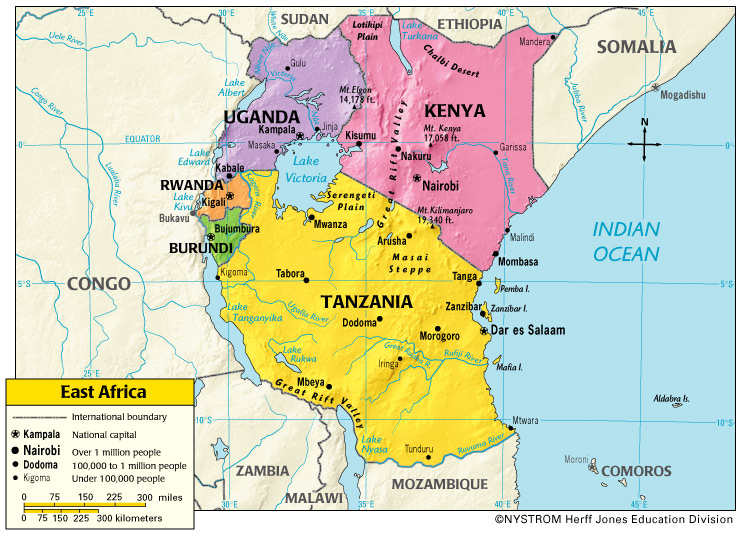
East%20Africa%20mapIn the spirit of stronger East African integration, the revenue authorities of Kenya, Uganda and Rwanda have started preparations for the implementation of a Single Customs Territory. The Commissioners’ General of the three East African countries deliberated on the mechanisms to operationalize the decisions of the heads of state who have continuously called for its fast tracking.

On June 25, 2013 at the Entebbe State House in Uganda, a Tripartite Summit involving the three heads of state issued a joint communiqué directing among other things the collection of customs duties by Uganda and Rwanda before goods are released from Mombasa. The leaders also agreed that traders with goods destined for warehousing should continue executing the general bond security.

During the meeting, the Commissioners’ General of the three countries put in place joint technical committees on ICT, Business Process, enforcement, change management, legal and human resource to discuss the implementation road map.

In a statement signed by the three Commissioners’ General, they said that the development of a Single Customs Territory will positively impact on the trading activities of the three countries as it will ensure that assessment and collection of taxes is done at the country of destination before cargo moves out of the port.

“As a result, the East African Community Customs Union will join the ranks of other Customs Union such as South African Customs Union and the European Union among others. Under this arrangement, restrictive regulations are eliminated as the corridor is now considered for customs purposes. For clarity, circulation of goods will happen with no or minimal border controls,” reads the statement in part.

Kenya said it would cut red tape holding up millions of dollars of imports into its landlocked neighbours Rwanda and Uganda, by letting the countries collect customs on goods as they arrive in its port at Mombasa. Goods can currently face long delays as agents process the paperwork to release cargoes from warehouses at east Africa’s biggest port, and later make separate arrangements to pay import duties at Kenya’s borders with Uganda and Rwanda.

Officials said the new system, due to be introduced in August, would clear inefficiencies and blockages seen as a major barrier to trade in the region. But clearing agents in Kenya said it could also cost thousands of jobs in warehouses, freight firms and almost 700 clearing and forwarding companies operating in the country.

Kenya, Uganda and Rwanda, together with Burundi and Tanzania, are members of the regional East African Community trade bloc, with a joint gross domestic product of $85 billion.

Kenyan tax officials said the new system would allow a “seamless flow of goods” and make it easier to stop goods getting through the system without customs payments. “Once cleared at the port, there will be no stoppages at borders and checkpoints along the corridor,” the Kenya Revenue Authority’s commissioner of customs, Beatrice Memo, told a news conference.

Under the system, Rwandan and Ugandan clearing agents and customs officials would be able to set up their own offices to clear cargo and collect taxes directly at the port. The Kenya International Freight and Warehousing Association said that meant up to half a million jobs could be lost to Uganda and Rwanda. “The Government has not consulted us … and we totally reject it,” said  Association chairman Boaz Makomere. Sources: East African Business Week (Kenya) & The New Vision (Uganda).

Hurdles before trans-border trade facilitation

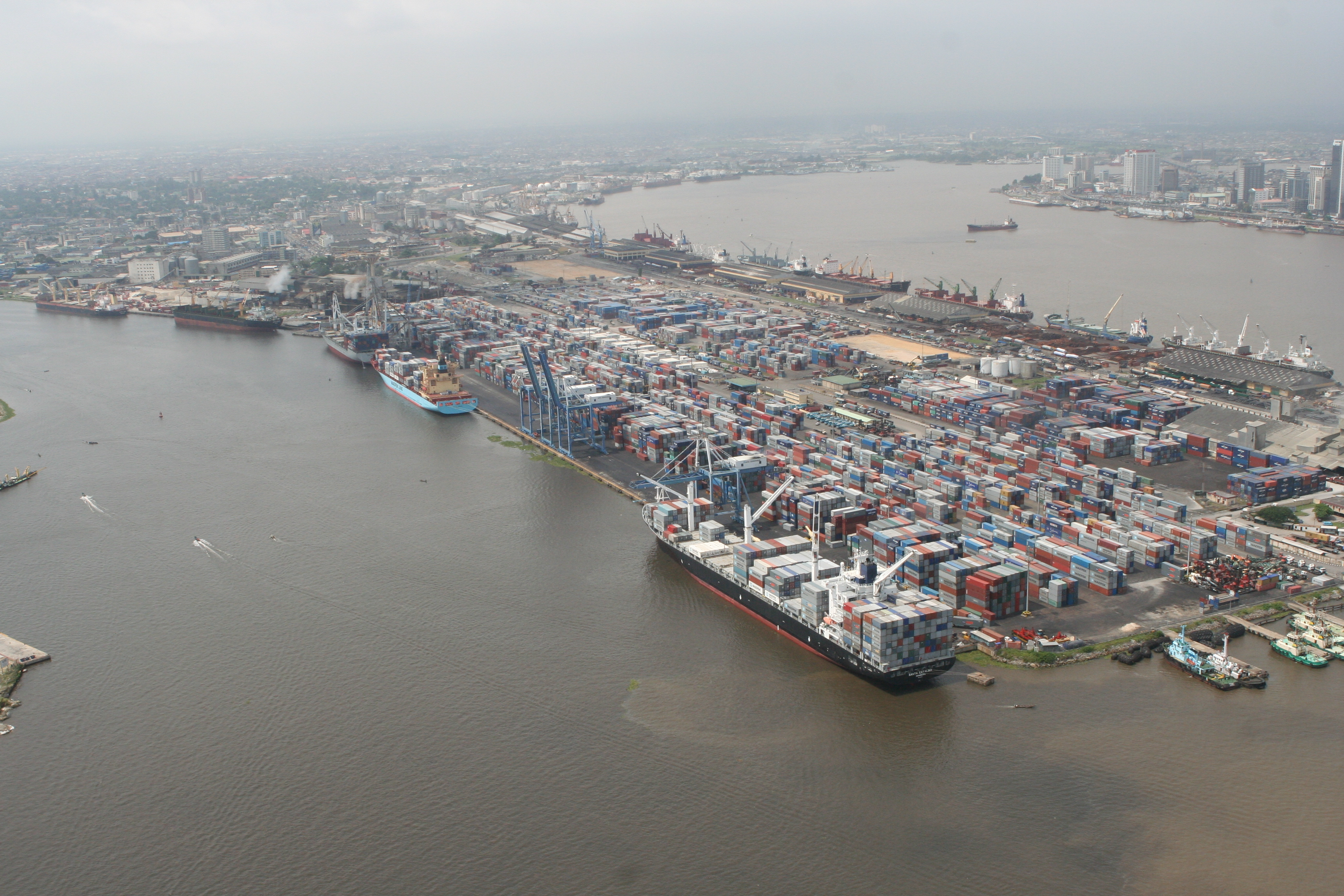
Port of Lagos, Nigeria

Port of Lagos, Nigeria

The following article, allbeit long, provides a good overview of trade facilitation developments in Nigeria. I doubt that there is a single country on the African continent that cannot draw some parallel experience contained in this article.

Trade across borders is not a new phenomenon. But the World Trade Organization is now championing the concept of trade facilitation among nations, which has been defined as simplication , harmonization, standardization and modernization of trade procedures.

Trade facilitation seeks to reduce trade transaction between businesses and government. This concept is receiving unprecedented attention globally and it is at the heart of numerous initiatives within the customs world.

The United Nations Centre for Trade facilitation and Electronic business (UN/CEFACT) in its recommendation No 4 of 1974, said trade facilitation programme ought to be guided by simplication, harmonization and standardization (of trade procedures) so that transaction becomes easier, quicker and more economical than before.

According to the body, there was need to eliminate duplication in formalities, process and procedures; align all national formalities, procedures operation and documentation with international conventions, standard and practices to develop international agreed format for practices, procedures, documentation and information in international trade.

Proponent of trade facilitation believed that if transaction cost in international trade is reduced, there could be creation of wealth, especially in developing countries where red-tapism and other procedural barriers to trade tend to be pronounced.

The organization for Economic Cooperation and Development (OECD) estimated recently that even one per cent reduction in such “hidden cost” would boost the global economy by $40 billion with most of these benefits going to the developing world. Trade facilitation therefore encourages, or perhaps requires countries to adopt means such as publishing their imports and export procedures, reducing the number of forms that importers and exporters are required to complete, allowing forms to be submitted on-line, and checking corruption at border post.

Nigeria, though a signatory to Kyoto 1974 and other convention on trade facilitation, is far from embracing the ideals of the global concept.

The president of the council of Managing Directors of Customs licensed Agents, Mr. Lucky Amiwero, said that although Nigeria was yet to comply with all the provisions of trade facilitation, it has the tools to facilitate international trade, such as the scanning machines and the e-platform.

“In Nigeria, the real cost of doing business is an impediment to trade facilitation. We have no good procedure for goods on transit to Niger and Chad. That has been taken over now by our neighboring countries. One of the key component of trade facilitation is charges which must be tied to services. We have shortcoming in that area. We are still working at cross purposes when other countries are busy harmonizing their import and export procedures”, he said.

In Nigeria, there is no one stop shop process for goods clearance as we have over 10 agencies superintending goods clearing procedure at the nation’s gateways.

“This is very bad and constitute hindrance to trade. The regulatory process is supposed to have been harmonized with other agencies to have a one stop procedures. Procedures are not published and not in line with WTO article which has to do with publication, regulation and administration of procedures. Our trading regime are expensive, our procedures are cumbersome. When others are simplifying and synchronizing their process of import and exports, our import and export procedures are lengthy. We have not been able to harmonise process and procedures and that is where we have a problem. If you still have to go through 100 per cent examination when we have the scanners, that is an impediment to trade,” Amiwero said; adding that the time spent to conclude business in Nigerian ports and border post is much higher than anywhere in the West African sub-region.

The level of corruption at the port border post is high and making them the most expensive business environment in Africa; as un-receipted charges far outweigh the official charges in the process of good clearing. Importers are still submitting hard documents instead of making use of e-devices, and going through the cumbersome process of clearing and receiving of consignments. Continue reading →

Customs and Nigeria’s Trade Hub Portal

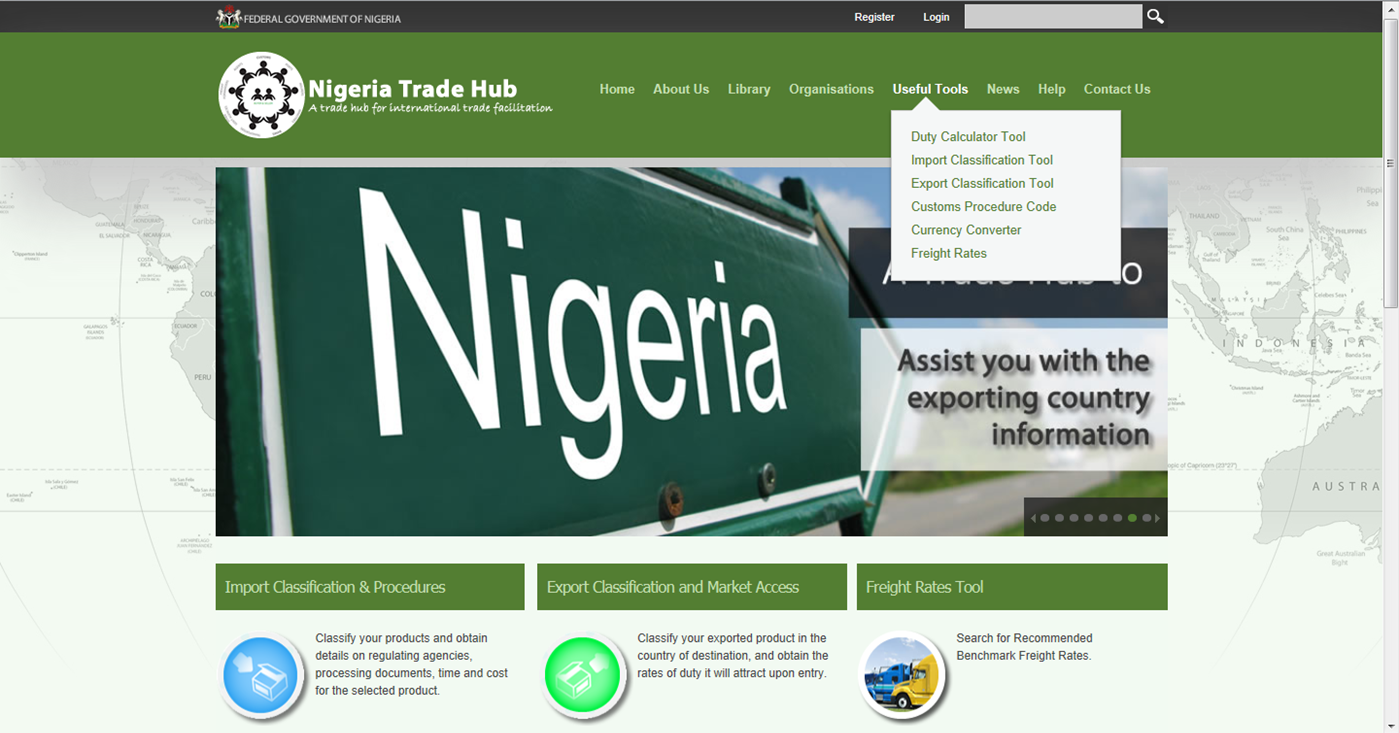
Nigeria Trade Hub 2Anyone familiar with the import and export business in Nigeria will recall how tedious the process used to be. It could take days or even weeks to complete due to ceaseless documentation that importers, exporters and their agents had to endure with the various regulatory agencies. Now, the Nigeria Customs Service (NCS) has developed a web-based application known as the Nigeria Trade Hub Portal, simplifying the entire process and providing information and guidance for international trade business processors in the areas of import, export and transit trade.

The www.nigeriatradehub.gov.ng portal, a non-restrictive and is an intuitive and interactive platform for classifying goods. Through it, trade processors are enabled to find exact Harmonised System Codes (HS Codes) required for related tariffs and duties.

This latest technology is expected to enhance compliance by traders and avail them the required information on tariff in areas like the prohibited items and taxes/levies due for payment upon importation. The application is also designed to touch on the aspect of trade facilitation such that trade processors can access information from all related government agencies. Guidelines and procedures for obtaining permits, licences and certificates of specified commodity and country of origin that a trade will require for business processing are also available on the portal.

The Nigeria Trade Hub portal allows traders to convert currencies to exchange rates set by the Central Bank of Nigeria (CBN) on a monthly basis, make payments, simulate tax and access the CPC Code. The application goes further to provide the tax and duties payable on any particular item, whilst presenting the user with the documents, i.e., the named permits or certificates required for the product, the issuing agency, the processing cost as well as the duration (no of days) for processing. This empowers the trader and provides them with sound information to assist them in competing on the international market.

A mobile Android App is also available on the Google Play store, and other platforms are to be rolled out soon. Source: Nigeria Trade Hub, Suleiman Uba Gaya and Valentina Minta (West Blue Consulting).