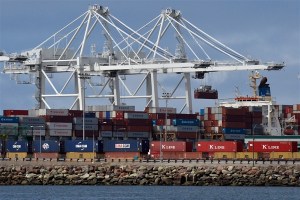
CBP Maritime Operations resume after hurricane ‘Sandy’

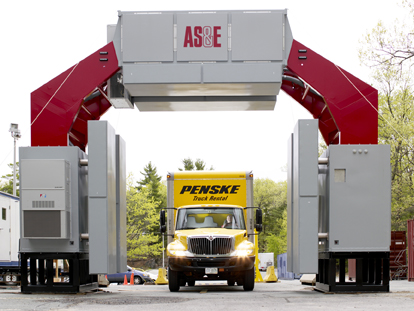
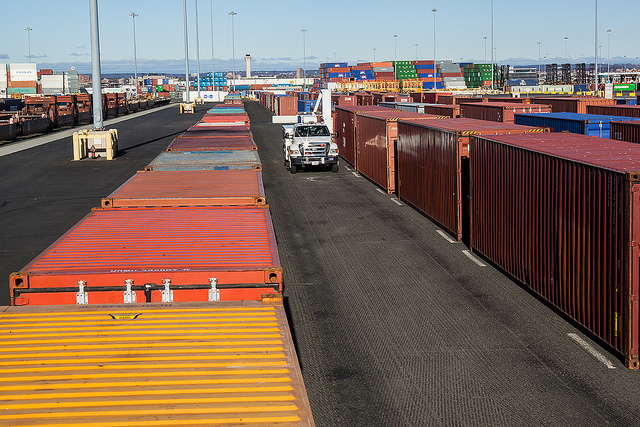
A U.S. Customs & Border Protection Mobile Radiation Portal Monitor (MRPM) drives down a row of containers checking them for radiation.The truck will drive down an entire row of containers, scan one side of them and then it will drive down and scan the other side of them.

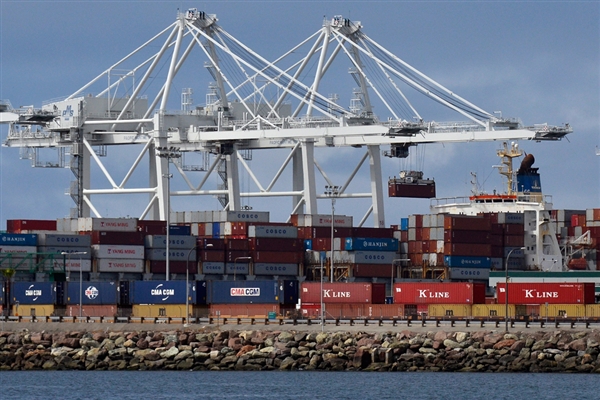
U.S. Customs and Border Protection’s maritime mission is now back on-line with today’s processing of cargo vessels and containers. “In the aftermath of Hurricane Sandy the people of New York and New Jersey have faced great adversity, the men and women of CBP have been with them each step of the way,” said Robert E. Perez, CBP’s Lead Field Coordinator for CBP in FEMA Region II. “Today’s processing of cargo ships into the Port of New York/Newark marks the next step in CBP restoring its maritime operations here in the greater New York City area and returning to business as usual.”

CBP personnel are on site today processing 161 expected international flights with approximately 31,500 passengers at JFK and 92 expected international flights with approximately 14,500 passengers at Newark International Airport.

To facilitate the flow of goods into the New York area, CBP officers conducted cargo container inspections this morning at the Port of New York/Newark for the first time since Hurricane Sandy battered the New York/New Jersey area. CBP import and entry specialists were back to work as soon as their facility opened last week, processing merchandise to help facilitate the flow of much needed supplies and supporting the United States economy.

CBP worked very closely with the U. S. Coast Guard and the NY/NJ Port Authority to lift waterway restrictions and open marine terminals to cargo vessels. Officers were on site and ready to process shipments as soon as cargo was off loaded. CBP deployed officers to JFK and Newark Liberty International Airport from other parts of the country to assist with the processing of international passengers. Source: FEMA

Dynamic X-Ray imaging – detecting objects or living creatures

The conventional image (left) and the dynamic image (right) of a pack of rice containing mealworm larvae

The conventional image (left) and the dynamic image (right) of a pack of rice containing mealworm larvae

X-ray inspection systems are a standard feature in many ports. These X-ray systems have the unique ability to non-destructively image the contents of entire cargo containers in just a few seconds. It is a difficult task, however, to identify what is in the container based on the obtained X-ray images. The superposition of two images with different contrasts – like in dual-energy X-ray imaging – can enhance the effectiveness of the detection. A novel X-ray imaging technology now introduces an entirely new type of contrast based on movement. This technology can be combined with existing single-energy and dual-energy X-ray imaging methods, opening new possibilities in port security applications.

One important application of the dynamic imaging technology could be finding stowaway pests in the cargo. Stowaway pests travel hidden within transported goods and may damage the cargo while being shipped. In addition to this, potentially invasive species often travel as stowaway pests and arrive to new territories unnoticed. Although better part of these exotics are harmless, approximately 20 to 30 percent of the introduced species are pests and cause major environmental and economic problems. Read the full article here! Source: Porttechnology.com

Cargo Crime – Security and Theft Prevention

A must read for Supply Chain practitioners. Cargo crime—including theft, fraud, and the passage of contraband through commercial shipping lanes—poses an enormous threat to security and the economy.

By understanding the current methods and operations of those who attack the supply chain, industry professionals can design effective security plans and law enforcement can properly investigate these crimes.

Cargo Crime: Security and Theft Prevention is drawn from the author’s (John J. Coughlin) personal experiences as a law enforcement detective and supervisor and as a regional security manager for a large multi-modal transportation and logistics company.

The book reviews emerging trends, identifies criminal tactics, discusses law enforcement response to cargo theft, and presents best practices to help businesses avoid victimization by cargo thieves. Topics include:

  • The various modes of freight transportation and the differences in cargo crime activity in each mode.
  • Methods of operation used by organized crime syndicates and narcotic smugglers.
  • The effective use of public and private information-sharing partnerships to thwart criminal activities.
  • Known profiles consistent in over 90 percent of contraband shipments.

The book features the following key aspects:

  • Identifies current methods of operation being used by organized and opportunistic criminals who target the supply chain.
  • Discusses current law enforcement efforts and response to cargo theft.
  • Examines the various modes of freight transportation and the differences in cargo crime activity in each mode.
  • Outlines best practices for industry practitioners to prevent being victimized by cargo thieves.
  • Addresses industry and law enforcement public/private partnerships for sharing information, educating law enforcement, and circumventing the cargo theft issue.

Cargo crime is a critical concern of freight transportation operators, manufacturers, shippers, insurers, law enforcement, and consumers. This book arms professionals charged with protecting the supply chain with essential information that can help them investigate and uncover criminal activity and develop a first class cargo security program. Available for purchase from http://www.crcpress.com.

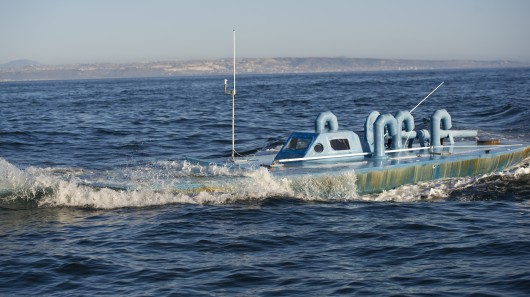
Homeland Security’s “Pluto” sub designed to imitate narco subs

When someone mentions drug running, most people probably picture a person coming through an airport carrying a suitcase with a false bottom or with balloons stuffed up their nether regions. We don’t usually imagine things like submarines. Unfortunately, the South American drug cartels not only imagine them, but they build and operate them. To help combat these underwater smugglers, the Department of Homeland Security Science and Technology Directorate (S&T) is operating their own drug-running submarine called PLUTO to develop and test a new generation of detection equipment.

Named after the hard to detect (former) planet, PLUTO reproduces the characteristics of what are commonly called “narco subs.” When rumors of their existence began to circulate in the 1990s, narco subs were dismissed as something out of a James Bond film and nicknamed “Bigfoot” because everyone in drug enforcement heard about them, but no one had seen one. Then one was captured in 2006 by the U.S. Coast Guard in the Eastern Pacific Ocean.

Narco subs are not true submarines. Instead, they’re a form of semi-submersible or, to give them their official designation, self-propelled, semi-submersibles (SPSSs). They ride very low in the water with only about three inches (7.62 ) of freeboard above the waterline and are designed to give only a tiny radar profile. They also ride very rough and their crews of three or four have little to eat, bad air and no toilet facilities as well as sometimes having an armed guard as a supervisor.

The subs are also meant to be expendable at the end of a delivery “Drug-running is lucrative. It is cheaper to simply build another vessel than to run the risk of trying to get a vessel and its crew home,” said Tom Tomaiko of S&T’s Borders and Maritime Security Division.

PLUTO was built in 2008 and is home-ported at Eglin Air Force Base near Fort Walton Beach, Florida, where it is maintained by the Air Force’s 46th Test Squadron, though it operates in the Gulf of Mexico, and Atlantic and Pacific Oceans. Forty-five feet (13.71 m) long and running at a maximum speed of ten knots (11.52 mph/18.52 kph), though it only cruises at four to eight knots (4.60 mph/7.4 kph to 9.20 mph/14.81 kph), PLUTO can carry up to four crew, but usually only operates with one due to safety.

It’s used by the U.S. Coast Guard, Customs and Border Protection/Air and Marine (CBP/OAM), U.S. Navy, U.S. Air Force and other national agencies as a target submarine capable of mimicking a narco sub for the purpose of testing detection systems from ships, planes and even satellites at various angles and under different sea conditions.

Customs and Border Protection used PLUTO to test its Dash 8 maritime surveillance aircraft’s SeaVue radar to determine detection distances and aspect angles for optimal mission performance and the U.S. Navy tested its P-3 aircraft’s maritime surveillance radar system against the pseudo narco-sub.

PLUTO is only one part of an escalating war between drug cartels and law enforcement agencies. Recently, the cartels have started using true submarines that travel submerged, which means that PLUTO may now be fighting yesterday’s war.

According to Admiral James Stavridis, former Joint Commander for all U.S. forces in the Caribbean, Central and South America, “criminals are never going to wait for law enforcement to catch up. They are always extending the boundaries of imagination, and likewise, we must strive to push forward technology and invest in systems designed specifically to counter the semi-submersible. We need to be able to rapidly detect and interdict this new type of threat, both for its current effects via the drug trade, and – more troublingly – for its potential as a weapon in the hands of terrorists.” Source: Department of Homeland Security

WTC developer says United and American airlines negligent

While American’s are accustomed to a period of mourning and remembrance over this time, it seems as though property mogul – Larry Silverstein – is more concerned with lost profits than the fate of a few thousand lost souls resulting from the 9/11 tragedy. Perhaps the US Airforce should be cited for not scrambling fighter jets quick enough to intercept the rogue planes. Moreover, why not cite the ‘negligent’ customs and immigration officials of the DHS for failing to intercept the rogue hijackers. A strange case of selective blame, indeed!

Most of the lawsuits arising from the hijacked plane attacks on the World Trade Center 11 years ago have been settled, but one demanding that United Airlines and American Airlines be held liable for loss of property and business could go to trial.

Two recent rulings by a federal judge in New York denying the airlines’ bid to dismiss the lawsuit over a narrow insurance dispute have opened the door to the entire case ending up in the hands of a jury. At issue is whether the two airlines and other defendants should pay additional damages to Larry Silverstein, the leaseholder of the World Trade Center property, beyond what he has already received from his own insurer.

Silverstein’s World Trade Center Properties blamed United, now United Continental Holdings Inc, and American Airlines, for breaches of security. The 2008 lawsuit also named aircraft manufacturer Boeing Co, the Massachusetts Port Authority, which manages Logan International Airport, and security companies.

The lawsuit claimed that negligence allowed hijackers to board two planes at the Boston airport and use them as missiles to destroy the 110-story twin towers and cause other buildings on the site in lower Manhattan to burn down. Before Sept. 11, the airlines and the security companies they hired oversaw security at airports and on planes. That responsibility now lies with the Transportation Security Administration, a government agency.

Silverstein is seeking $8.4 billion in damages for loss of property and lost business, even though U.S. District Judge Alvin Hellerstein has limited the amount to the $2.8 billion Silverstein paid for the leases. The lawsuit is among the last pieces of litigation resulting from the attacks of Sept. 11, 2001, which killed more than 3,000 people in New York, the Pentagon outside Washington, and Pennsylvania. Read the full article here! Source: Reuters.

Related articles

US Customs – $100 million customs fraud uncovered


The article below has been doing the rounds over various social media the last few days. The ‘standout’ issue for me is the fact that such an alleged crime occurred in the USA. With the focus of the customs world nowadays so much on the anti-terror campaign, could it be that one of the single biggest enforcement agencies in the world is not as sharp on traditional customs fraud activities? With the boundless focus on ‘safety and security’ it often seems as though the traditional customs crimes have given way to ‘globally networked syndicates’ using every means of technology to by-pass sovereign authorities. Yet, when you read the brief below, it all boils down to the human factor. To what extent the outcome of this case will attest to the Customs and Border Protection Agency’s risk management capability and moreover the extent to which such campaigns as CT-PAT really give the agency the edge in better ‘knowing’ its customers remains to be seen. A successful border agency must still do the basic things right, as dated as they may seem in the modern world. This case therefore proves how important it is for any national customs and border management agencies to invest in customs-skills training with lesser emphasis on the technology side of things. It is so unfortunate that most countries see Customs Capacity Building as an investment in technology. At this rate with no investment in customs technique, who is going to be able to properly interpret risk indicators if all the agency employs are statisticians and university post-graduates?

SAN DIEGO, CA – A complaint charging eight individuals and three corporations with operating a ring that illegally imported hundreds of millions of dollars in foreign goods into the United States though the Long Beach Port-of-Entry and evaded millions of dollars in import taxes was unsealed today, announced United States Attorney for the Southern District of California Laura E. Duffy.

According to the complaint, the defendants’ scheme focused on purchasing large, commercial quantities of foreign-made goods and importing them without paying import taxes or A Customs duties. As alleged in the charging documents, wholesalers in the United States would procure commercial shipments of, among other things, Chinese-made apparel and Indian-made cigarettes, and arrange for them to be shipped by ocean container to the Port of Long Beach, California. Before the goods entered   States, the defendants generated paperwork and database entries indicating that the goods were not intended to enter the commerce of the United States, but instead would be transshipped “in-bond” to another country, such as Mexico.

As noted in the complaint, this in-bond process is a routine feature of international trade. Goods that travel in-bond through the territory of the United States do not formally enter the commerce of the United States, and so are not subject to Customs duties.By claiming that the goods would be transshipped in-bond to another country, the defendants falsely represented that no Customs duties applied.

According to the complaint, instead of completing the in-bond transshipment, the defendants would hire truck drivers to haul the shipments to warehouses throughout Southern California. After generating the false paperwork and database entries, the goods would then be diverted back to Los Angeles and other destinations for shipment throughout the United States. As the conspirators had now effectively imported the goods tax-free, they could in turn sell more merchandise at cheaper prices and reap greater profits than their law-abiding competitors, including domestic American manufacturers of the same goods.

The complaint alleges that in addition to harming lawful domestic businesses, the defendants deprived the United States of the Customs duties that it was owed on these diverted shipments. To date, the government has already identified more than 90 commercial shipments of Chinese-made apparel, foreign-made cigarettes and other goods that were illegally imported in this manner. Altogether, these shipments were worth at least $100 million and resulted in more than $10 million in lost Customs duties, taxes and other revenue.

According to United States Attorney Duffy, “The charges announced today underscores our commitment to ensure that no one exploits the import process for personal gain. Not only does such illegal conduct present a significant danger to the American people, but it deprives law-abiding companies of a level playing field resulting in the potential loss ofbillions of dollars in revenue.”

“This investigation pulled back the curtain on a potentially costly fraud scheme operating in one of the world’sbusiest commercial centers,” said ICE Director John Morton. “Instead, HSI, aided by our law enforcement partners, exposed and dismantled this criminal ring and now those responsible will be held accountable.”
“Every day, U.S. Customs and Border Protection officials work to protect the U.S. and interdict fraudulent goods from entering the country. I commend the work of our officers for their instinct and diligence, and recognize the seamless coordination across government agencies,” said David V. Aguilar, Acting Commissioner, U.S. Customs and Border Protection. “Joint efforts such as this are crucial to maintaining our nation’seconomic security and competitiveness.”

“The FDA-Office of Criminal Investigations is fully committed to investigating and supporting the prosecution of those who may endanger the public’s health and safety by importing unsafe and potentially life-threatening products. We commend the U.S.Attorney’s Office in the Southern District of California for their diligence,”said Lisa Malinowski, Acting Special Agent in Charge, U.S. Food and Drug Administration’s Office of Criminal Investigations, Los Angeles Field Office. As alleged in the complaint,defendant Gerardo Chavez is President of the San Diego Customs Brokers Association and a licensed Customs broker. Using his Customs license, Chavez, his employees and his companies—including defendants Tecate Logistics, LLC and International Trade Consultants, LLC—generated the fraudulent Customs paperwork that was integral to the scheme. Similarly, Chavez and his companies would make false entries into Customs databases, in order to create the false appearance that in-bond shipments of foreign-made goods had been lawfully transshipped to Mexico. As part of this effort, Chavez, Joel Varela and others would also forge official Customs markings to make it appear as if a United States Customs official had certified various shipments as having been transshipped to Mexico.

Charging documents also allege that Chavez had several dedicated customers who were part of the conspiracy. For example, defendant Sunil Mirwani, a citizen of the United Kingdom, received dozens of shipments of illegally imported Chinese-made apparel at warehouses throughout the Los Angeles area. Mirwani marketed and sold the apparel using hiscompany, defendant M Trade Inc. Similarly, defendant Rene Trahin and other co-conspirators distributed various shipments of illegally imported “gray market” cigarettes ranging from Indian-made to German-made brands to warehouses, self-storage areas and a residence in San Diego, Los Angeles and parts between.

The complaint alleges that the defendants also imported produce infected by Salmonella Agona. Often called simply “Salmonella,” this pathogen is a potentially life-threatening infectious bacteria. On one occasion, after a shipment of nopal cactus (also known as prickly pear) tested positive for Salmonella,co-conspirator changed the description of the nopal cactus’ grower for subsequent shipments, for the purpose of evading future Food and Drug Administration (“FDA”) inspections. Similarly, defendant Elizabeth Sandoval and Varela conspired to import Mexican snack foods that were mislabeled and adulterated with a prohibited dye. The remaining defendants named in the complaint are employees and agents of Customs brokers, wholesalers and transport companies who are alleged to have knowingly aided the conspiracy.

This case is being prosecuted in federal court in San Diego by Assistant United States Attorney Timothy C. Perry and is being investigated by the Department of Homeland Security, Immigration and Customs Enforcement Homeland Security Investigations, and United States Customs and Border Protection, the Internal Revenue Service, the Food and Drug Administration, and the Alcohol and Tobacco Tax and Trade Bureau. A complaint is a formal charging document and defendants are presumed innocent until the Government meets its burden in court of proving guilt beyond a reasonable doubt. Source: US Department of Justice

 

Homeland Security’s App for Smartphones and PC’s

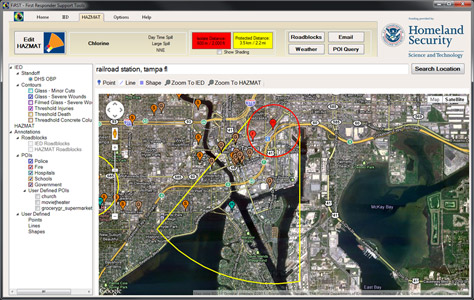
The U.S. Department of Homeland Security‘s Science and Technology Directorate and its public and private sector partners have developed a must-have “app”: the First Responder Support Tools (FiRST) for computers and smartphones.

At approximately 6:30 pm on Saturday, May 1, 2010, a smoking SUV in Times Square was reported by alert street vendors. Acting quickly, NYPD evacuated vast stretches on 7th and 8th Avenues, including Broadway theatres and several other buildings and hotels in the area. The entire area was barricaded. Times Square on a Saturday evening before the shows is teaming with people, and the terrorist knew that. The bomb failed, but had it detonated, it would have killed and wounded many, according to NYPD.

In the first chaotic moments after suspicion of a bomb threat, first responders have a myriad of questions, assessments, and decisions to make, all at once, and all the while the scene could be changing rapidly. Is the bomb real? How large is the potential blast radius? Where will we evacuate people? Are there any critical infrastructure or special-needs population centers in the vicinity? Any schools, hospitals nearby? What roads should be closed? Which roads should stay open for evacuees? And on and on….What if they could get all this information in one place?

Now they can: The U.S. Department of Homeland Security’s (DHS) Science and Technology Directorate (S&T) and its public and private sector partners have developed a must-have “app”: the First Responder Support Tools (FiRST) for computers and smartphones.

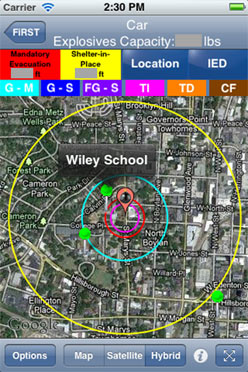
Users start by entering what they know about the (possible) bomb, including its geographical location. The app will then advise them on factors such as the distance around the bomb that should be cordoned off, the best locations for road blocks, what buildings should be evacuated or serve as shelter sites, and what some of the local “areas of concern” are – places such as schools, for instance, or other areas where large numbers of people are at risk. It will also estimate what to expect in the way of structural damage and injuries, should the bomb go off.

Because no two bomb threat scenarios are identical, there are many opportunities for users to provide information on their own unique situation, so the output of the app will be custom-tailored to them. Maps of the area can then be labelled by the user, and shared by email with other personnel.

The app can also be used in the event of toxic substance spills, as it includes information on the handling of over 3,000 hazardous materials. Using its weather feature, users can additionally determine the likely route that airborne substances will be carried by prevailing winds, and then warn or evacuate people accordingly. FiRST works on iOS and Android devices, along with PCs. It is available to first responders only, at a price of US$12 for the mobile version, or $100 for the desktop. Source: U.S. Department of Homeland Security and gizmag.com

Dumb, dumber’er, or just plain downright stubborn?

A US statutory requirement to scan all incoming containers at foreign ports will take effect at the beginning of July, a date thrown into sharp relief as the House of Representatives homeland security committee approved a revamped bill that retains the clause.

The draft bill gave the industry minor cause for cheer for unrelated reasons, as it will postpone the requirement for workers to renew their transportation worker identification cards in the absence of Department of Homeland Security regulations on biometric card readers. But the 100% scanning requirement has proved its resilience yet again.

Since 2006 shippers, spearheaded by associations that include the National Retail Federation, have been campaigning to get the requirement eliminated on grounds that it is impractical and costly and could trigger foreign government retaliation against cargoes originating from the US. US homeland security secretary Janet Napolitano has pointed out the impracticality of the law and proposed a two-year postponement.

These calls went unheeded in the house, as the homeland security committee on Wednesday approved the Securing Maritime Activities through Risk-based Targeting for Port Security Act, known as the Smart Port Security Act. The Smart Port Security Act reauthorises the Security and Accountability for Every Port Act, known as the Safe Port Act, which became law in 2007.

The Safe Port Act implements the 9/11 Commission’s recommendations, including the contentious provision that all US-bound containers will be scanned at origin from July 2012. A fig leaf in the Safe Port Act allows the homeland security secretary to grant waivers to individual ports, under conditions that are somewhat vague. Last year, a Safe port reauthorisation draft in the Senate proposed a broad waiver of the 100% scanning requirement.

With the clock now ticking to July 1, shippers were particularly anxious to get the house bill to remove the 100% scanning clause permanently.

The homeland security committee passed a version that allows DHS to recognise other countries’ trusted shipper programmes and allows the US Coast Guard to recognise other governments’ port security threat assessments, but stops short of jettisoning the 100% scanning clause.

Republican congresswoman Candice Miller, chair of the subcommittee on border and maritime security, hailed the new bill, saying: “Securing our waterways is an essential component of a layered approach to security.

“This bill enhances risk-based security measures overseas before the threat reaches our shores, emphasising a stronger collaborative environment between customs and border protection and the US Coast Guard in sharing port security duties and leveraging the maritime security work of our trusted allies.”

Comment: Huh!, to whom does this refer? Such a statement flies in the face of its own C-TPAT program and bilateral overtures with foreign ports (supposedly based on risk). Perhaps its time for the ‘trusted allies’ to deport CSI teams who have not necessarily endeared themselves to their respective host nations.

Source: Lloydslist.com

X-Ray Security Screening – Technologies & Global Market Outlook

Over the next five years, Homeland Security Research Corporation analysts forecast a growth at a CAGR of 10% of the global X-ray screening market, led by a dramatic expansion of the Chinese civil aviation (two out of three new airport projects are in mainland China) and internal security funding. Other key markets are terror-troubled India and the replacement market of the US and Europe.

Despite years of cutting edge weapon and explosives screening technologies RDT&E, there is no competitive modality on the horizon which challenges the cost-performance of 2D X-ray screening technologies. The global X-ray security screening market (including systems sales, service, and upgrades) is forecast to grow from $1.2 billion in 2011 to $1.9 billion by 2016.

The new report is the most comprehensive review of the multibillion dollar global X-ray security screening market available today. It analyses and forecasts the market by application, by geography and by business transaction. The report, segmented into 50 submarkets, offers for each submarket 2010-2011 data and 2012-2016 forecasts and analysis. In more than 300 pages, 90 tables and 150 figures, the report analyses and projects the 2012-2016 market and technologies from several perspectives, including:

  • Market forecast by application: Air cargo, Airport-cabin baggage, Secured facilities, Postal items, Supply chain cargo and People screening AIT
  • National and regional markets
  • X-Ray Technologies: conventional, backscatter, multi-view, coherent and dual energy x-ray
  • Systems sales, post warranty service and upgrade markets
  • Competitive environment: 16 leading vendors and their products
  • Market analysis: e.g., market drivers & inhibitors, SWOT analysis
  • Business environment: e.g., competitive analysis
  • Current and pipeline technologies

Source: Homeland Security Research Corporation

America – shees verry beeeeg!

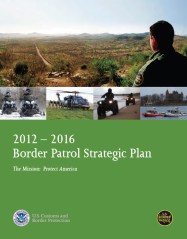
Publication of the latest USCBP Border Patrol Strategic Plan reflects and builds on the transformation of the United States’ relationships with Mexico and Canada, particularly in the areas of border management and security. The joint Declaration of Principles for the 21st-century border represents an enhanced and strengthened commitment to fundamentally restructure the way we manage our shared border. The depth and breadth of cooperation that occurs now between the United States and Mexico was unthinkable even a few years ago. Similarly, the Beyond the Border declaration between Canada and the United States has an equally significant potential in what is already our historically extraordinary relationship with Canada. These developments have created unprecedented opportunities with both Mexico and Canada, in which DHS and CBP will play a defining role, to improve our security and economic competitiveness – and CBP will play a defining role in taking advantage of those opportunities. The Border Patrol in turn is key to advancing CBP’s security agendas with Mexico and Canada, working with its law enforcement counterparts in each country to identify and mitigate threats.

The U.S. Border Patrol is a premier law enforcement organization, recognized around the world for expertise, capabilities, and professionalism. CBP’s officers and agents are the frontline, the guardians of the Nation’s borders. We honor and are proud of them, and we thank them for everything that they do to protect America and the American people. Source: CBP.gov

So there you have it – for a real dose of commercialized Customs and what it can do for the good folks in America, and anywhere else in the world for that matter, check out the strategic plan by clicking here! You’ll be forgiven if you thought you were reading an edition of Jane’s Defense & Security Intelligence & Analysis. Most customs and border management agencies around the world can only dream about such impressive kit! 

Related items

Prototype gun which can peek through walls

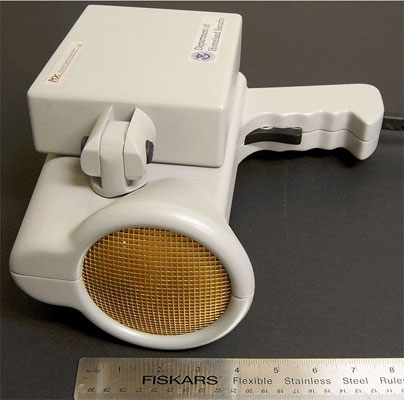
Believe it or not, devices used to see through walls are far from revolutionary. Reportedly, Physical Optics Corporation has concocted a prototype gun that utilizes the same method of viewing that a lobster does to see what’s ahead in murky waters. The LEXID (Lobster Eye X-ray Imaging Device) functions by “radiating objects with tiny amounts of X-ray energy,” subsequently allowing its user to see behind steel, wood or concrete. According to David Throckmorton, a project manager in Homeland Security’s Science and Technology division, the resulting images are beamed on a small screen and aren’t exactly drool-worthy, but they do allow one to make out a stash of weapons or a crouching enemy.

The price is unknown as it’s still a prototype, but the creators hope to make it cheap enough for exterminators and contractors to purchase and use. Note, the capability of seeing through walls is not necessarily just for use on weapons. It’s got some useful commercial applications such as pest control, where it can be built into a gun for shooting pesticide instead of a bullet. For the Customs and Border official, no doubt, there are equally varying applications of use. One could just imagine students getting into all sorts of trouble if one of these floated into the locker room.

US Customs – Testing new way to decrease border dwell-time for travellers

In an ongoing effort to reduce wait times at the International Bridge, U.S. Customs and Border Protection Office of Field Operations will pilot a project to bring vehicles to the inspection booths in less time.
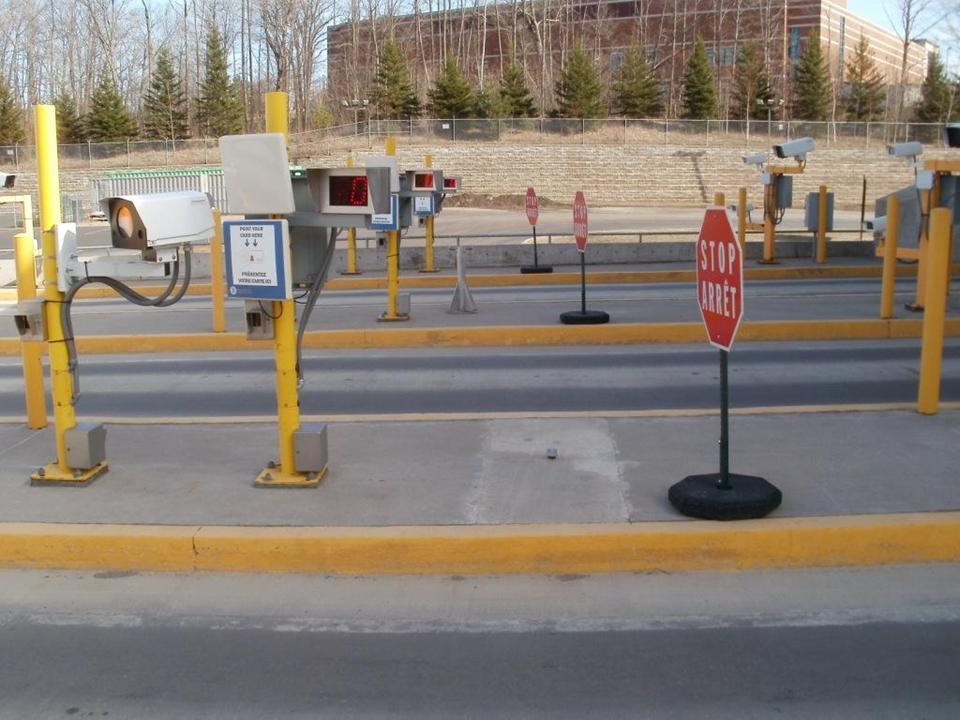
The stop signs will be placed in all three upper lanes and will shorten the “pull up” distance to the booth. This allows vehicles to queue up quicker. “Efficacy in movement is paramount to this project’s success. We are always trying to improve the flow of legitimate traffic while enforcing the laws of the United States,” said Patrick Wilson, CBP Sault Ste. Marie Assistant Port Director.

The Sault Ste Marie port of entry has a unique design that separates commercial traffic from car traffic, creating an upper and lower plaza. The focus of this project will be on the upper plaza only and will not affect the flow of traffic on the lower plaza.

Stop signs will be placed in all three upper lanes beginning Friday, April 20. The stop signs will shorten the “pull up” distance to the booth. This allows vehicles to queue up quicker. The stop signs will be placed near Radio Frequency Identification readers where the traveling public can display their Western Hemisphere Travel Initiative RFID-enabled document to pre-populate the officer’s computer screens.

CBP is testing the theory that they can process more travelers each hour by reducing the amount of time it takes each vehicle to get to the inspecting officer. This pilot project will incorporate a two-stop sign process. Upon entering the upper plaza, vehicles will be required to stop at the first existing stop sign. As the vehicle ahead clears, travelers will move to the next new stop sign and present their ID to the RFID reader. Once the vehicle at the inspection booth clears, travelers will proceed to the inspection booth.

Vehicles with trailers/campers are asked to use the lower plaza lanes so as not to impede the functionality of installed equipment. LED signage will be adjusted to notify motorists of this change.

CBP officers will direct traffic periodically during this project to help educate travelers on this new process. “We continue to look for efficiencies in our processes to improve the border crossing experience. If we can save a couple of seconds of inspection time per vehicle, the time savings should reduce each traveler’s wait,” said Assistant Port Director Wilson. Source: http://www.cbp.com

Financial pinch affects CBP’s modernisation and developmental capacity

The US Bureau for Customs and Border Protection  has money to run commercial trade processing system (ACE) but not expand it. Customs and Border Protection has US $140 million to operate and maintain a commercial trade processing system, but there’s no money in the 2012 budget to further develop the program. The lack of development money, particularly for the simplified entry process, has caused concern amongst business community members. Simplified entry is something that Customs and the trade community are looking for to further automate import processing and lower transaction costs. Source: USCBP

CBP – An ode in modesty

There’s nothing like beating the breast and extolling the homeland’s unselfish generosity for the benefit of mankind, or am I being facetious? Today’s post on the US Customs and Border Protection‘s website titled “CBP Leads World Customs Organization on Natural Disaster Responsiveness” , is a case in point. The reader is left in no doubt as to who was responsible for recent developments that provide for a Customs role in natural disasters. I read with interest New Zealand Customs‘ role in the Christchurch earthquakes last year – very understated and with empathy for the survivors. The WCO consists over 177 affiliated customs administrations / border agencies each of whom make some form of contribution to it’s various committees and resulting accords or standards. So what if CBP made a major contribution, its a cheap shot to boast at the expense of others who might also have contributed, if not to the same extent. Read the article here!

US launches National Strategy for Global Supply Chain Security

U.S. Secretary of Homeland Security Janet Napolitano unveiled  the Obama administration’s National Strategy for Global Supply Chain Security at the World Economic Forum in Davos, Switzerland yesterday (25 January). The Department of Homeland Security (DHS) is committed to facilitating legitimate trade and travel, while preventing terrorists from exploiting supply chains, protecting transportation systems from attacks and disruptions, and increasing the resilience of global supply chains.

The National Strategy for Global Supply Chain Security outlines clear goals to promote the efficient and secure movement of goods and foster a resilient supply chain system. It also provides guidance for the U.S. government and crucial domestic, international, public and private stakeholders who share a common interest in the security and resiliency of the global supply chain. (Why call it a “National” strategy when it impacts the international community?)

DHS works with leaders from global shipping companies and the International Air Transport Association (IATA) on developing preventative measures, including terrorism awareness training for employees and vetting personnel with access to cargo. Fulfilling a requirement of the 9/11 Act, 100 percent of high risk cargo on international flights bound for the United States is screened.

In addition, through the Container Security Initiative currently operational in over 50 foreign seaports in Europe, North, Central and South America, Africa, the Middle East, and throughout Asia, U.S. Customs and Border Protection helps our partner countries identify and screen U.S.-bound maritime containers before they reach the U.S..

Following the release of the National Strategy for Global Supply Chain Security, DHS and the Department of State will lead a six month engagement period with the international community and industry stakeholders to solicit feedback and specific recommendations on how to implement the Strategy in a cost-effective and collaborative manner. You can find the Strategy by clicking here! Also, for a summary of the strategy in presentation format, click here! We wait with bated breath to find out whats going to be new here, besides more onerous reporting requirements!

Source: US Press Secretary and The White House Blog.