SA Wine exports increase by more than 20 perent over four years

SA WineWhile commodity prices tanked and unemployment rose during South Africa’s worst ever drought over the last few months, wine making increased.

What’s more, South African wine exports were up a further five percent in 2015 and the industry is expecting even more growth in 2016 as South African wine continues to find new markets around the world.

While almost every farming industry is struggling in South Africa, the wine industry is going through “one of its most exciting phases in history” according to Roland Peens, director of wine retailer Winecellar.co.za.


The country is the seventh largest producer of wine in the world and for the 12 months preceding June 2015, wine production was at 959 million liters, with 423 million liters sold for export and 395 million liters sold domestically.

Not only is South Africa producing some fantastic wines, but the struggling rand is actually helping wineries as it offers a lucrative export market. The UK is by far the biggest receiver of South African wines with 109 million liters exported here. Germany is second with 79 million while Sweden, France, Netherlands and Denmark all take between 20 to 25 million litres of South African wine.

Canada (18 million litres), USA (11 million liters), Belgium and China (9 million litres each) and Japan and Switzerland (6 million litres each) make up the other big export markets.
Source: www.thesouthafrican.com

Transnet Seeks Private Sector Participation for new Inland Terminal

Tambo SpringsSouth Africa’s freight and logistics company Transnet this week launched its massive drive to bring private sector operators into the country’s freight system.

The company has issued a request for proposals inviting suitably qualified global logistics service providers to design, build, operate, maintain and eventually hand over its proposed inland container terminal in Tambo Springs, East of Johannesburg – a 630ha site located on land originally known as Tamboekiesfontein farm.

The concession will be over a 20-year period and will be Transnet’s biggest private sector participation project to date.

The proposed terminal is in line with Transnet’s drive to migrate rail friendly cargo off the country’s road network.

The terminal is expected to be in operation by 2019 and will have an initial capacity of 144 000 TEUs per annum, with an option to ramp it up to 560 000 TEUs, depending on demand.

The project entails the following:

  • Arrival and departure yard for handling cargo trains
  • Terminal infrastructure;
  • Terminal equipment;
  • Stacking area;
  • Warehousing space
  • Distribution centre
  • Inland Reefer facilities

Transnet Freight Rail will be responsible for the operation of the arrival and departure yard required to service the terminal.

The operator will be responsible for loading and offloading of containers and marketing of the facility. The winning bidder is expected to introduce new entrants – particularly black players – must have demonstrated technical expertise, a minimum of level 4 BBBEE status with a commitment to reach level 2 by the third year of operation.

Transnet currently operates 5 inland terminals in Gauteng, including the City Deep Container Terminal in Johannesburg, Africa’s largest inland port.

The proposed terminal is an integral part of the Presidential Infrastructure Co-ordinating Committee’s SIP 2, aimed at unlocking the country’s industrial development while boosting export capability. It is designed to complement Transnet’s container-handling capacity in the province.

This is the culmination of years of hard work and a demonstration of cooperative governance between Transnet, representing the national competence, and both the Gauteng Provincial Government and the Ekurhuleni Municipality.

The Tambo Springs terminal is one of three mega terminals that Transnet is planning to build in Gauteng over the next 20 years. It will be located in Ekurhuleni along the N3, just off the Natal Corridor.

The project is expected to create 50 000 jobs, and has stringent requirements for supplier development and skills transfer. Source: Transnet

Walvis Bay rail upgrade ready to service new container terminal

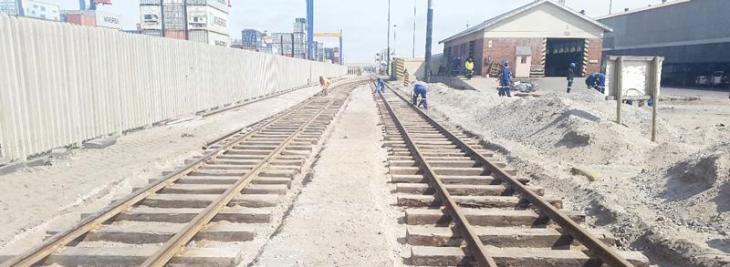
Namport-rail-upgradeThe Namibian Ports Authority has completed the upgrade of all railway infrastructure at the Port of Walvis Bay at a cost of N$20M (US$1.3M)

The work was included in Namports maintenance programme in 2010, but is now part of wider plans to upgrade facilities at Walvis Bay in preparation for the completion of the new container terminal.

A total of 4.5kms of track inside the port and the section of railway running from the city into the port have been replaced using material that can cope with heavier loads.

A spokesperson for Namport said: “Although the project was of relatively low value, its execution was complex as we had to ensure minimum operational interruption to the track, which is in daily use.”

The new container terminal is being constructed on 40-ha of reclaimed land and will add 700,000 TEU of annual handling capacity to the existing 350,000 TEU. Walvis Bay is already attracting bigger ships and recently handled its biggest ever container vessel the CMA CGM DANUBE, a 112,580 dwt vessel with a nominal intake of 9200 TEU.

A statement from Namports read: “The visit of CMA CGM DANUBE complements our port expansion project, which accommodates greater carrying capacity. Following the completion of the port expansion project vessels such as this will be accommodated at the new container terminal.”

The Walvis Bay Corridor Group, which was set up to promote the use of the port among neighbouring states, is keen to improve ancillary infrastructure at Walvis Bay to make the most of the new terminal.

Namport manager for corporate communication Taná Pesat said: “The benefits are our safe and secure corridors to and from landlocked SADC markets. The frequency of direct ship calls and flexibility of doing business with ease.”

However, the plot of land at the port given to Zimbabwe in 2009 for the construction of a dedicated dry port has still not been developed. Source: World Cargo News

Bumper year for Kenya-destined FDI

Kenya_flag_mapfDi Markets that even without the data for December, it is already clear that Kenya enjoyed a major increase in inward investment in 2015 when compared with 2014.

Greenfield investment monitor fDi Markets has tracked a bumper year for Kenya-destined FDI. Excluding retail, the monitor has recorded 78 projects between January and November 2015, a 36.84% increase compared with the whole of 2014. FDI entering Kenya during the 11 months of 2015 (for which data is available) has already surpassed that recorded for 2013, the previous multi-year high. fDi Markets is set to record 2015 as witnessing the highest number of inward FDI projects for Kenya since the it commenced tracking data in 2003.

fDi Markets has tracked the upward trend as beginning in 2007, with FDI levels increasing year on year between then and 2011. In the period between 2011 and 2014 a period of consolidation occurred in which inward investment fluctuated, with decreases recorded in 2012 and 2014. Between 2007 and 2015, fDi Markets has tracked a 766.66% increase in project numbers and a total capital investment of $14.04bn.

Kenya’s FDI resurgence in 2015 is further illustrated when compared with the rest of Africa. During 2015, Kenya attracted 12.58% of all FDI entering Africa, with only South Africa, a long-time powerhouse, attracting more, with 17.1%. This is further compounded by Nairobi attracting the most FDI on the continent at city level in 2015, beating Johannesburg, which has held this accolade since 2010.

With December’s data still to be recorded, Kenya is set to surpass previous years as a favoured destination for investment in Africa. With the implementation of proactive FDI legislation scheduled to be ratified during 2016 by Kenya’s government, further consolidation in 2016 is unlikely. Source: fDiMarkets

Is the Latest FTA Another Booby Prize for Africa?

COMESA-SADC-EAC-TripartiteAround 2008, most Southern African countries began to realise that the great ambition found on the SADC website at that time of moving from a SADC free trade area to a customs union by 2012 was not going to happen.

The SADC website had a very EU-like regional integration agenda.

This is not surprising given that the great sugar daddy in Brussels basically funds the entire organisation. SADC wanted to replicate the EU linear model – first a free trade area where the countries trade freely among themselves; then a customs union where the members agree to a common tariff; and then a common market where all goods, services, capital and labour flow freely. Finally, SADC was to complete the copy of the EU by creating a monetary union.

This flattering imitation of the EU was obvious – the Brussels paymaster pays and we all happily follow their model into Kwame Nkrumah’s vision of a united Africa. But the ugly problem was, as ever, African history.

The less than subtle British also wanted a customs union in Africa. So, in 1910 they just created one – the Southern African Customs Union (SACU), which, like the proverbial bicycle without any pedals, still manages to stand because it is padded with money.

When the British implemented SACU after the Anglo-Boer War, there was no need for polite and time consuming subtleties of contemporary African consensus building. The Union of South Africa and the British high commissioner signed on behalf of the protectorates of Basutoland, Bechuanaland and Swaziland – not a black person in sight unless they were serving the tea.

Almost a century later those who designed the EU-like agenda for SADC’s integration conveniently forgot their history and somehow assumed that a customs union could be readily grafted on the SADC free trade area which was already in existence.

But there cannot be two external tariffs and, therefore, either SACU or SADC as a customs union had to go. And the difficulty that SADC faced with creating a customs union is that no one is ready to sacrifice national interests for a broader common good.

Free trade areas are relatively easy, they can be easily fudged, but customs unions are hard work because all the countries that are members have to agree to the external tariff.

In the meantime, the apartheid regime in Pretoria realised that it desperately needed to buy friends and influence enemies and so in 1969 it changed SACU from a regular customs union to one where the share of revenue from customs was derived from share of regional trade.

Normally, customs unions divide the revenue poll based on what economists call the ‘destination principle’. This meant that countries get the revenue depending on what imports were destined for that country. So if 5% of imports were destined for, say, Botswana, it would get 5% of the revenue.

But the SACU formula was purposely designed by South Africa to make the BLS (Botswana, Lesotho and Swaziland as members) completely dependent upon transfers from Pretoria by basing the formula on the share of intra-SACU trade and not external trade.

The oddity was that with the end of apartheid, things actually got even worse after the 2002 SACU re-negotiations because Pretoria agreed to a formula that made Botswana, Lesotho, Swaziland and newly independent Namibia get their share of customs revenue from SACU based on the share of intra-SACU imports.

SA imports almost nothing from SACU countries and the BLNS countries import almost everything from SA and so they get a huge amount of revenue. Many officials in Pretoria deeply resent the subsidies in SACU.

When the other SADC members saw how much money the BLNS countries were getting from Sacu, whenever the issue of a SADC customs union came up their response was – ‘me too please, we want the same formula!’

So, a SADC customs union would have eaten into the massive transfers (about N$20 billion per year) that Namibia and the rest of the BLNS states get each year from Pretoria and there was no way they were going to agree, and so the SADC customs union was not a realistic possibility.

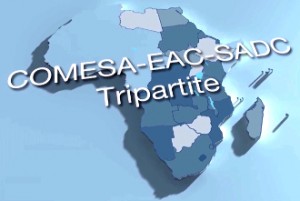
After the obvious end of the SADC negotiations for a customs union, African negotiators began to look around for something that would keep them off the unemployment lines. The infamous African ‘spaghetti junction’ of the East African Community, Comesa and SADC with its overlapping membership became the next target. If you can’t form a customs union then just get a bigger FTA (free trade area).

Now this year, finally, an FTA has been signed but it has also been fudged. Few really want to give the highly competitive Egyptian producers free trade access to their African markets.

Ostensibly, we are moving to negotiate a continental free trade area which will finally begin the process of fulfilling of Nkrumah’s dream of a united Africa. But instead, what we have is Cecil John Rhodes’s dream of a market from Cape to Cairo – almost; no deepening of the African economic relationship into a customs union; just a widening to the north and west.

Free trade areas are a nice step forward but they normally require no real sacrifice of economic interests.

Europeans are guilty of many cruelties in Africa but none so absurd or spiteful as the ridiculous lines they drew on the map of the African continent in 1884 at the Berlin Conference when they divided up the continent. The Belgian barbarism in the Congo may fade from human memory and the wounds of apartheid may heal over time but African leaders will struggle to completely eliminate those economic and political lines from the map of Africa.

It is those lines and some petty “sovereign” economic interests that are the main reason why a billion dynamic people in Africa with such incredible natural resources continue to live in poverty. The Namibian (An opinion piece by Roman Grynberg, professor of economics at the University of Namibia.)
Rwanda banks on special economic zones to attract investors

Rwanda - WikipediaRwanda is wooing investors to invest in the country through building special economic zones. The Rwanda Special Economic Zones (SEZs) is a programme within the Rwanda Development Board that is designed to address domestic private sector constraints such as availability of industrial and commercial land, availability and the cost of energy, limited transport linkages, and market access among others.
Francois Kanimba, Rwandan minister of trade and industry told Xinhua on Sunday that the country was ripe for investments especially in manufacturing, service industry, tourism and hospitality, skills development among others.

“We are planning to construct SEZs economic zones across the country where investors will have the opportunity to explore the untapped potentials in Rwanda,” he said.

Kanimba said that Rwanda’s business environment is secure and the cost of doing business is friendly and the World Bank’s doing business reports have for several occasions ranked Rwanda among fastest growing economies in world that have eased the cost of doing business.

The small East African nation has so far constructed Kigali Special Economic Zone (KSEZ) located in Gasabo District within the country’s capital Kigali with phase one and two occupying 98 and 178 hectares of land respectively.

The government is now planning for phase three, which is expected to occupy 134 hectares. Phases one and two of the zone cover a surface area of 277 hectares while the third phase will cover approximately 134 hectares.

The trade zone is well equipped with tarmac roads, water and electricity rollout in all designated plots and a waste water treatment plant.

Kanimba continued that the commercial zones are designed to provide investors with industrial and commercial land, improve availability of electricity and transport linkages.

Official data show last year Rwanda attracted 500 million U.S dollars worth of investments and the government is targeting to double the investments in 2015.

According to 2014 World Bank’s Doing Business ranking, Rwanda was ranked 46 out of 189 economies surveyed globally registering improvements in the ease of obtaining construction permits, getting electricity and getting credit. Source: http://www.xinhuanet.com

Shanghai’s FTZ plans to improve customs service

A man, right, speaks to a motorbike taxi driver in front of the gate to China (Shanghai) Pilot Free Trade Zone's Pudong free trade zone in Shanghai, China, on Thursday, Oct. 24, 2013. The area is a testing ground for free-market policies that Premier Li Keqiang has signaled he may later implement more broadly in the world's second-largest economy. Photographer: Tomohiro Ohsumi/Bloomberg via Getty Images

Pilot Free Trade Zone’s Pudong free trade zone in Shanghai, China. Photographer: Tomohiro Ohsumi/Bloomberg via Getty Images

Shanghai’s pilot free trade zone unveiled several measures aimed at improving customs services for high-technology companies in the zone.

An air cargo service center will be set up in Zhangjiang High-Tech Park to provide one-stop customs services including delivery of import manifest, customs declaration and customs inspection, Shanghai Customs said yesterday.

The center will cut customs clearance time to six to eight hours from at least two working days previously.

Customs formalities for imports of reagents, samples and equipment by high-tech companies, bio-pharmaceutical firms and microelectronics manufacturers will be streamlined, benefiting about 900 companies in Zhangjiang and neighboring areas, it said. Customs has also pledged to cut the threshold for small and medium-sized firms to offer offshore outsourcing services and encourage clusters of advanced manufacturing such as aircraft and new-energy vehicles in the FTZ.

Other measures include introducing customized customs services for high-tech companies, setting up bonded warehouses for small businesses and strengthening intellectual property protection.

“These new measures are market-oriented and based on enterprises’ need, and aim to tackle actual problems and boost trade facilitation,” said Zheng Jugang, vice director of Shanghai Customs.

Also yesterday, customs unveiled another eight measures to simplify customs clearance process and boost trade facilitation for all FTZ-based enterprises. They include trading of bonded commodities in the zone and simpler customs procedures for imports of art supplies.

In the first five months of this year, trade in the FTZ totaled 287.1 billion yuan (US$46.3 billion), accounting for 26 percent of the city’s total.

Mozambique – conditions ideal for ‘Chinese model’ of Special Economic Zones

Maputo1Mozambique has the necessary conditions to successfully adopt the Chinese model of Special Economic Zones, which helped to boost the Chinese economy, according to researchers Fernanda Ilhéu and Hao Zhang.
In the study “The Role of Special Economic Zones in Developing African Countries and Chinese Foreign Direct Investment (refer to link below),” researchers from the Lisbon School of Economics and Management noted that over 35 years, the Special Economic Zones have had “a decisive role in the development of places like Shenzhen, Zhuhai, Xiamen, Shantou, Hainan and Shanghai, and that African countries can leverage this experience.

In 2006, the Forum on China-Africa Cooperation gave “significant priority” to creating up to 50 SEZs abroad, which are being implemented, with US$700 million invested by Chinese companies in 16 EEZ, according to information from China’s Trade Ministry.

Increasingly focused on business abroad, China needs raw materials and African markets to which to export its products, but can also benefit from shifting some of its industries to Africa, as the cost of Chinese labour increases.

The approach to Africa has involved through loans and financing for the construction of infrastructure, and “the development of African countries requires China’s increasing involvement,” including “collaborating in the development of SEZs,” the authors argue.

Regarding Portuguese-speaking countries, the average annual growth of trade between 2002 and 2012 totals 37 percent, turning China into the largest trading partner and largest export market for those countries.

The relationship has proved to be “dynamic in both directions,” they added, with hundreds of companies from Portuguese-speaking countries operating in China and Chinese investment in those countries of around US$30 billion, according to China’s Trade Ministry.

As for the SEZ, the two researchers focused their attention on the Mozambican Manga-Mungassa (Beira, Sofala province) SEZ, established in May 2012, under the management of China’s Dingsheng International Investment Company (Sogecoa Group), which has plans to invest close to US$500 million.

Nearing completion, the first phase includes the construction of warehouse units, followed by the “operational” phase, with construction of additional infrastructure such as hotels and housing, and finally the free industrial zone, where high tech units will be installed.

“In terms of knowledge transfer, Mozambique has made active steps in learning from the experience of Chinese SEZs and using this model to attract foreign investment,” they said.

In 2012 the Mozambican government created the Office for Economic Areas with Accelerated Development (Gazeda) that in addition to Manga-Mungassa, is responsible for the projects of the Belulane Industrial Park, the Locone and Minheuene Free Industrial Zones and the Crusse and Jamali integrated park.

On 6 May, 2014 the Mozambican government approved the establishment of the Mocuba SEZ, a sign of the “determination to create more conditions and to look for more opportunities and economic measures to create jobs and generate wealth,” in the country, the study said.

According to the authors, Mozambique has a strategic location, the ability to attract investment through the diaspora, as well as its model of economic growth and development in its favour, although there remain difficulties in infrastructure and technological development.

“The Chinese SEZ model can be successfully applied to the Manga-Mungassa area,” they concluded. Source: macauhub / MZ

Related articles

China plans a New Hong Kong City

NanshaChina is planning to build a second Hong Kong city in Nansha, a district in southern China’s Guangdong province.
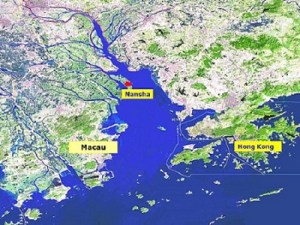
Preliminary plans indicate a city of around 100 square kilometres will be built to help alleviate the development problems currently experienced by Hong Kong due to land shortages, protests and environmental concerns. Hong Kong has an area of about 1,100 square kilometres and currently houses over seven million people.

The new city is expected to be developed into an international shipping hub. Its commercial importance will be boosted by the Guangdong free trade zone which was approved late last year. This zone will cover around 116 square kilometres.

China’s Xinhua news agency said the zone will deepen cooperation between Hong Kong and Macau which lies on the western side of the Pearl River Delta, across from Hong Kong. Nansha faces the sea and is 38 nautical miles from Hong Kong and 41 nautical miles from Macau. In December 2013, Nansha Port hit the record of 10 million teu since it was open in 2004.

Local media reports that the new city could be completed by 2020. It is expected to have a GDP of $64 billion. Source: Maritime Executive

China’s Second Continent – the new colonisation of Africa

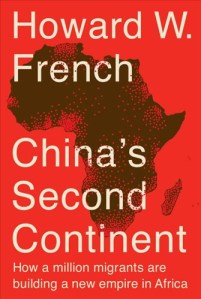
chinas-second-continent-howard-frenchFormer US Diplomat Brooks Spector takes a look at this important book (Daily Maverick) that should be on every economic policy maker’s reading list. Howard French’s China’s Second Continent, offers a very different – and provocative – perspective on China’s economic future, with special attention on Africa. Building on years of experience in both China and Africa, and following months of personal inquiry across the continent to search for answers to the questions of what China really wants in Africa, and how it is going to get there, French has effectively turned these questions on their head.
Instead of writing about China’s international economic policies in the language of the think tanks, of Wall Street and The City, or government councils in Whitehall or Washington, French has focused instead on what a million individual Chinese have done – or are now doing – throughout Africa, almost without regard to what the Chinese government may have planned or been thinking. In tackling the topic through this optic, French has given this vast Chinese movement into and across Africa crucial human dimensions. For the full review please visit this hyperlink. China’s Second Continent is available in hardcopy and electronic publication from online book stores. Source: Daily Maverick

High Court Stops Kenyan Mega-Port

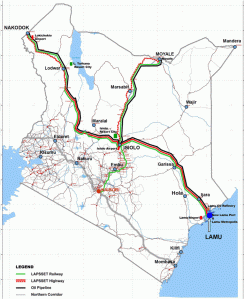
LAPSSETKenya’s high court on Friday ordered a halt to the long-delayed development of a mega-port on the country’s northern coast for at least two weeks to allow a lawsuit lodged by local landowners over compensation to move forward.

The $25.5 billion project, known as the Lamu Port-South Sudan-Ethiopia Transport (LAPSSET) project, would eventually link landlocked countries South Sudan and Ethiopia to the Indian Ocean via Kenya and include a port, new roads, a railway and a pipeline.

The LAPSSET project involves the development of a new transport corridor from the new port of Lamu through Garissa, Isiolo, Mararal, Lodwar and Lokichoggio to branch at Isiolo to Ethiopia and Southern Sudan. It will comprise of a new road network, a railway line, oil refinery at Lamu, oil pipeline, Isiolo and Lamu Airports and a free port at Lamu (Manda Bay) in addition to resort cities at the coast and in Isiolo. It will be the backbone for opening up Northern Kenya and integrating it into the national economy.

It was first conceived in the 1970s but has been gaining traction after commercial oil finds in Uganda and Kenya.

Judge Oscar Angote suspended the project and said the land compensation case would be heard on 8 December 2014. Source: Maritime Executive

First Special Economic Zones on the way

manufacturing-gear-wheelsThe roll-out of special economic zones is under way, with the first two in KwaZulu-Natal and the Free State to be proclaimed shortly, Trade and Industry Minister Rob Davies said on Wednesday.
The Dube trade port and the Tshiame industrial development zone in Harrismith would both be transformed into special economic zones as soon as the regulatory framework had been established, which the minister said would take place within the next 100 days.

The regulations and guidelines would be finalised. The special economics zones board would be established, as would a one-stop-shop for fast-tracked support to investors.

The Dube trade port industrial development zone will specialise in high-value, niche agricultural and horticultural products, as well as manufacturing and value-addition for the automotive, electronics and clothing industries.

The Tshiame industrial development zone at Maluti-a-Phofung near Harrismith in the Free State will focus on automotive, clothing and agro-processing activities.

The Department of Trade and Industry is evaluating the feasibility of special economic zones focusing on the beneficiation and value-addition of platinum in Limpopo and North West. These zones would be used to encourage investors in beneficiation to locate their plants close to the mineral deposits.

Opportunities to partner with international producers of fuel cells are available, and have the potential for South Africa to become an established hub for the production of fuel-cell components. The Dti opines that this would be a very significant development because fuel cells are new technology used for back-up power generation in telecommunication masts, base-load power generation in rural areas, and fuel-cell passenger vehicles. The technology is fast becoming the subject of intense international competition for investment and is also a technology well suited to South Africa’s comparative advantage in platinum mineral resources.

The department is also assessing the feasibility of a solar industrial development zone in Upington in the Northern Cape.

The Saldanha Bay industrial development zone was well positioned to become a hub for oil, gas and marine repair, engineering and logistics. An application to operate as a Customs Control Area to service the West and East African offshore oil and gas industry is being finalised. To date 18 companies, nine local and nine foreign, have signed nonbinding expressions of interest.

The Coega, Richards Bay and East London industrial development zones had together generated R3.4bn in investments and created more than 67,000 direct and indirect jobs. A number of new investments worth several billion rand were also under negotiation. Source: BDlive.co.za

Tanzania’s Bagamoyo $11bn megaport to get flying start

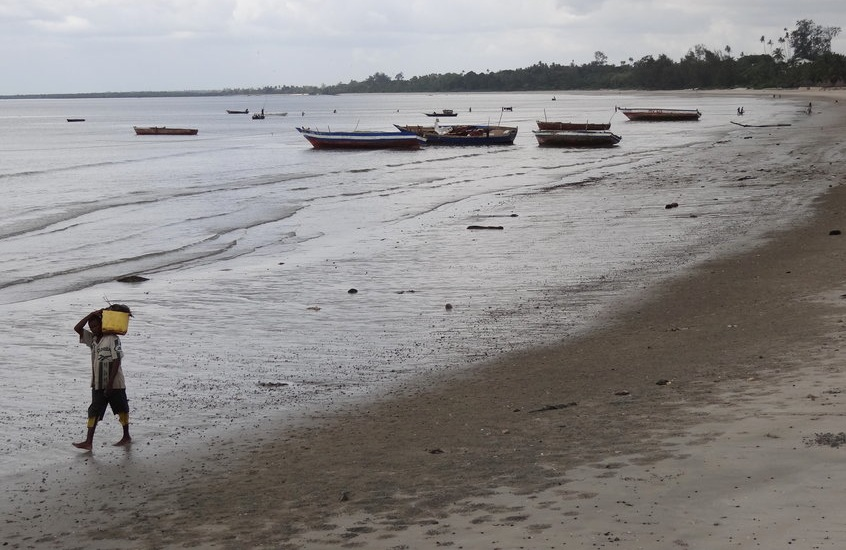
BagamoyoThe government of Tanzania has announced that successful negotiation with Chinese officials will allow work to start on the $11bn Bagamoyo megaport this year, rather than January 2015, as originally scheduled.

The port is to be developed by China Merchants Holdings International, the world largest independent port operators. In the first phase of work, the quay, the container yards, the cargo terminals and all dredging work will be completed by 2017.

These facilities will then be expanded in stages over a period of 30 years, to give an eventual capacity of 20 million containers a year. This is likely to make the port the largest on the east coast of Africa, with a capability to handle roll on, roll off ships and container vessels with a 10,000 TEU capacity (these is, “new Panamax” ships that are too large to fit in the Panama Canal).

Underwriting the development is the discovery of some 200 trillion cubic feet of natural gas, which is going to make the country a leading exporter over the next decade.

Bagamoyo is seen as a Tanzania’s trump card in the sharpening struggle with other east African companies for foreign investment, export markets, industrial development and business from landlocked countries in the interior.

In particular, Tanzania is competing with the Kenyan port of Mombasa for investment and the handling of exports from Uganda, Burundi, Zambia and Rwanda. Although it looks to be in the lead in terms of port infrastructure, Kenya has taken the lead in the development of effective rail links, and Mozambique is closer to bringing its liquid natural gas deposits to market.

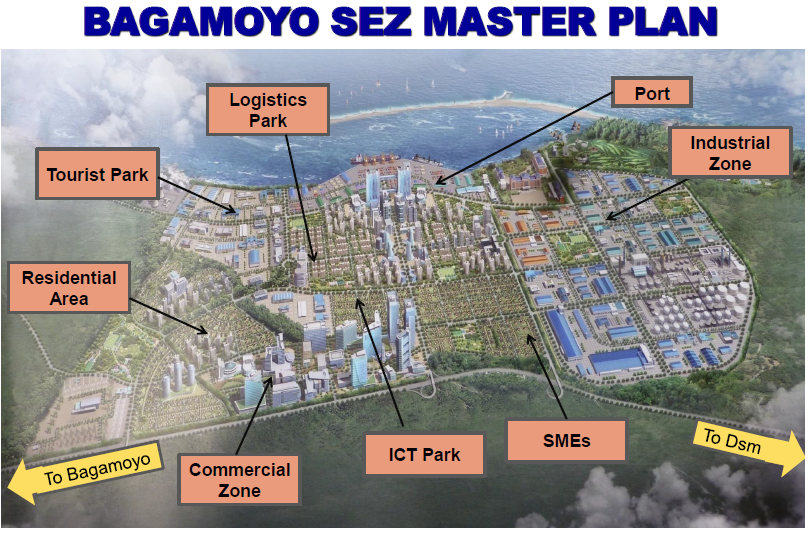
When completed, the port will cover about 800 hectares. Around it will be a 1,700 hectare special economic zone. The intention is to encourage set up industries that process or refine Tanzania’s raw materials, such as coffee roasting or ore processing, thereby capturing more of the value chain.

Adelhelm Meru, the director general of the Export Processing Zones Authority, which will be in charge of the zone, told journalists in Dar es Salaam recently that he wanted to attract “industries specialising in value-addition of agricultural products” which he said had been a leading area of investment under the EPZA for the past six years. He said about 55% of industries established under the EPZA dealt in agricultural and textile processing.

The zone is expected to be fully developed by 2024. Source: Global Contruction Review

Port Expansion Africa 2014 – increasing capacity of East African Ports

Artist's impression of the Bagamoyo SEZ Masterplan - Source: http://www.ansaf.or.tz/Investment%20...0(%20EPZA).pdf

Artist’s impression of the Bagamoyo Port and SEZ Masterplan – Source: http://www.ansaf.or.tz/Investment%20…0(%20EPZA).pdf

Growing volumes of cargo at all African ports has forced port authorities and operators to increase capacity, analyse operations to increase efficiency, and employ measures to allow bigger ships into their ports. The East Africa Region has various projects underway. The new Lamu Port in Kenya costing $5.3 billion (Reuters.com) and the Bagamoyo port in Tanzania costing $11 billion (The East African) are examples of countries preparing for the ever-growing port capacity needs. When completed in 2017, Bagamoyo will become the biggest container terminal in Africa: with a planned cargo of 20 million TEU a year; it will be 20 times larger than the port at Dar-es- Salaam and likely to rank in the top 10 terminals in the world in terms of volume capacity.

Reconfiguring port layout, and increasing berths at existing ports and conducting dredging more often, have been other strategies that numerous ports have employed to meet this need. Port of Maputo will be undertaking dredging to increase its channel depth from 11 meters to 14 meters this year, to allow larger vessels entry (Dredgingtoday.com). Tanzania will invest $523 million for new berths 13 and 14 to more than double its container capacity at Dar es Salaam Port (Tradeinvestafrica.com).

Source: portexpansioneastafrica.com

Related articles

Special Economic Zones roll-out

SEZ-economist.comThe roll-out of special economic zones is under way, with the first two in KwaZulu-Natal and the Free State to be proclaimed shortly, Trade and Industry Minister Rob Davies said yesterday.

The Dube trade port and the Tshiame industrial development zone in Harrismith would both be transformed into special economic zones as soon as the regulatory framework had been established, which the minister said would take place within the next 100 days.

The regulations and guidelines would be finalised. The special economics zones board would be established, as would a one-stop-shop for fast-tracked support to investors.

The Dube trade port industrial development zone will specialise in high-value, niche agricultural and horticultural products, as well as manufacturing and value-addition for the automotive, electronics and clothing industries.

The Tshiame industrial development zone at Maluti-a-Phofung near Harrismith in the Free State will focus on automotive, clothing and agro-processing activities.

Mr Davies said the department was evaluating the feasibility of special economic zones focusing on the beneficiation and value-addition of platinum in Limpopo and North West. These zones would be used to encourage investors in beneficiation to locate their plants close to the mineral deposits.

“What we know is that significant opportunities to partner with international producers of fuel cells are available, and that these partnerships have the potential for SA to become an established hub for the production of fuel-cell components,” Mr Davies said.

“This would be a very significant development because fuel cells are new technology used for back-up power generation in telecommunication masts, base-load power generation in rural areas, and fuelcell passenger vehicles.

“This technology is fast becoming the subject of intense international competition for investment and is also a technology well suited to SA’s comparative advantage in platinum mineral resources.”

The department was assessing the feasibility of a solar industrial development zone in Upington in the Northern Cape.

“We have no doubt the support available through the special economic zones programme will lead to increased investment by the private sector and contribute to building new economic infrastructure in provinces,” the minister said.

The Saldanha Bay industrial development zone was well positioned to become a hub for oil, gas and marine repair, engineering and logistics. “An application to operate as a Customs Control Area to service the West and East African offshore oil and gas industry is being finalised. To date 18 companies, nine local and nine foreign, have signed nonbinding expressions of interest.”

The Coega, Richards Bay and East London industrial development zones had together generated R3.4bn in investments and created more than 67,000 direct and indirect jobs. A number of new investments worth several billion rand were also under negotiation. Source: SAnews.gov.za