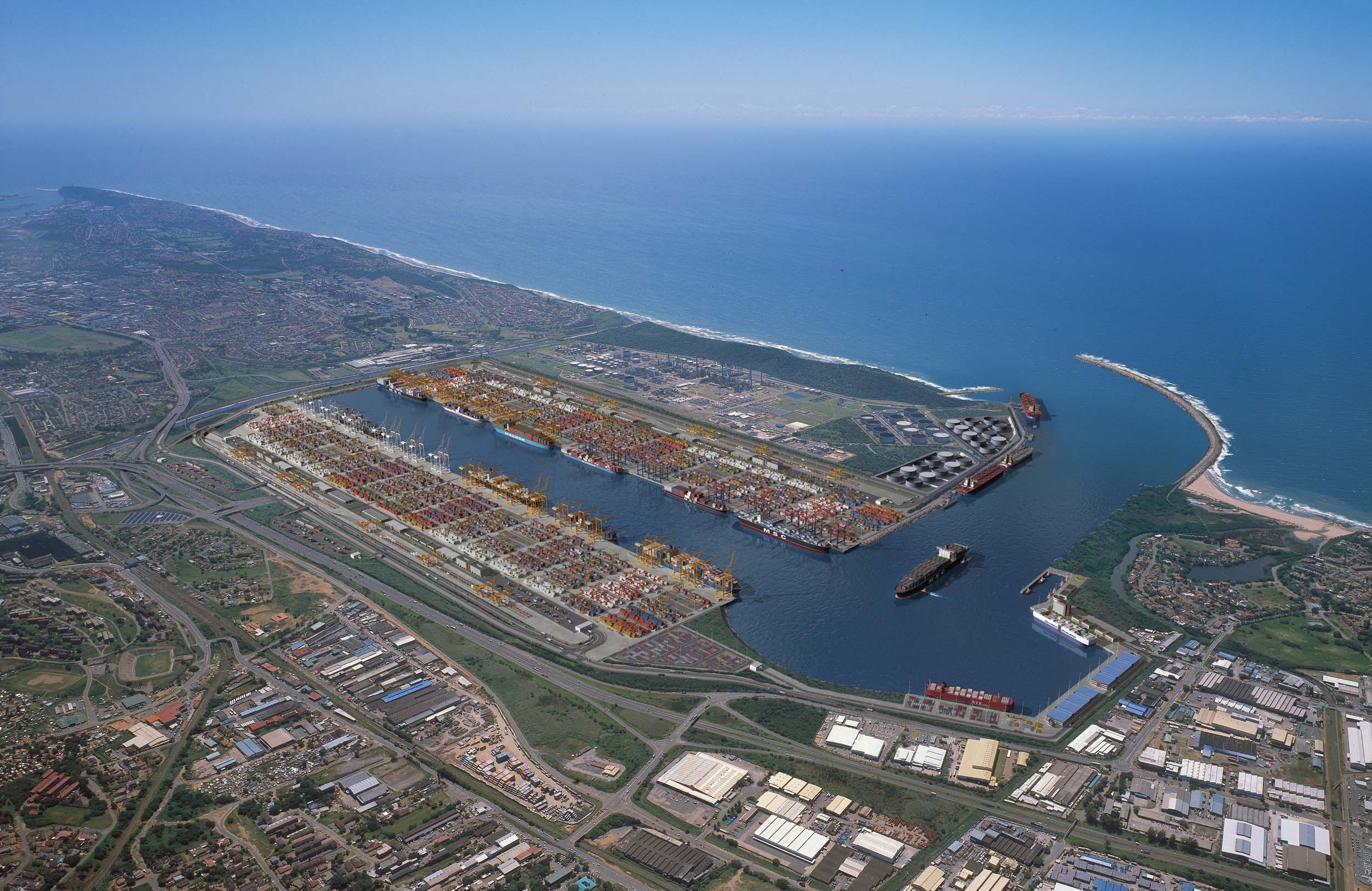
Corruption at Durban Harbour – the plot thickens

With reference to an earlier post “Trade costs and corruption in Ports of Durban and Maputo” (March 2012) the following article ‘Hawks probe Khulubuse Zuma’s pal’ published by the Daily News (Durban) suggests more sinister individuals involved in the scam which saw a policeman being gunned down at his home and no less than 10 SARS officials placed on suspension. A web of intrigue indeed.

A wealthy South Africa-based Taiwanese businessman and former business associate of Khulubuse Zuma, a nephew of President Zuma, is being probed for alleged links to a multibillion-rand racket at Durban Harbour. In June the Hawks in KwaZulu-Natal secured a warrant of arrest for Jen Chih “Robert” Huang, CEO of Johannesburg-based company, Mpisi 74, when investigators from the elite unit also raided Huang’s business in Bedfordview, and his home.

Huang, a convicted murderer, was in Hong Kong on business when the warrant was issued, and it has not been executed after he side-stepped the Hawks by directly approaching the National Prosecuting Authority (NPA) to make representations as to why he should not be arrested. The businessman, part of a delegation that accompanied President Zuma on a state visit to China in 2010, is wanted on multiple counts of alleged corruption.

According to Daily News, Huang denied having any links to alleged illegal activity at the harbour, and referred all queries to his attorney. “I have been out of the country. “Speak to my attorney in Durban. He is handling all matters related to my company.” His attorney, Quintus van der Merwe, confirmed representations had been made to the State, but declined to comment further.

The warrant for Huang’s arrest came weeks after a former South African Revenue Service (Sars) anti-corruption task team member, Etienne Kellerman, was arrested on 80 counts of alleged corruption. Kellerman, 42, is suspected of receiving substantial benefits for allegedly allowing contraband through the harbour. The Daily News broke the story when Kellerman was arrested in April this year after a three-year covert investigation. An international syndicate that was allegedly bribing customs and police officials to allow in container-loads of contraband, was also exposed by the Hawks.

Sars spokesman, Adrian Lackay, told the Daily News that following the joint investigation with police over several months into the existence of a criminal syndicate operating at Durban Harbour, 10 Sars employees had been suspended. “Their suspensions follow the arrests of other suspects outside of Sars. These employees were suspended over a three-week period following the arrest of Kellerman on charges related to fraud, theft and misconduct,” he said.

“The 10 employees remain suspended pending the outcome of an internal investigation into alleged involvement with clearing agents.” Over the past two years, during this investigation, police seized more than R1 billion worth of counterfeit goods and contraband. The alleged corrupt Sars and police officials are believed to be working in teams between KZN and Gauteng. They are allegedly paid bribes of up to R30 000 for each container allowed to pass through customs undetected. Big name international companies, mainly from China, are also being investigated. Kellerman has pleaded not guilty and is on R100 000 bail.

According to its website – before it was removedMpisi 74 is a massive concern, offering a range of services, including import, export, forwarding, warehousing, cellphone telecommunication and machinery, as well as vehicle manufacturing. Just days after Huang was contacted by the Daily News, the website was taken down.It had even boasted pictures of the president’s nephew, Khulubuse Zuma, with the Taiwanese businessman at the company’s headquarters in Bedfordview, on December 9, 2009. The Mail and Guardian, in January, described Huang as the influential middleman in deals between Chinese companies and Khulubuse Zuma. It said Huang was also instrumental in introducing Chinese vehicle manufacturer, Dong Feng Motor Corp, to Khulubuse Zuma, who at one point was the “chairman” of Mpisi.The report said that in 2010, Dong Feng announced a joint venture with Khulubuse Zuma and Huang to distribute its products in South Africa and the rest of the continent.In 1998, Huang was convicted of the murder of a Taiwanese businessman, Ching-Ho Kao, who was found shot dead in March 1996, in the Free State. His body was set alight. The trial began in the Bloemfontein High Court in November 1997. The indictment claimed the motive for the murder was that Kao’s family owed Huang money. Huang was sentenced to an effective 12 years in prison. But, through remission of sentence, he was released in 2003 and set up Mpisi 74.

Source: Daily News (Durban)

Related Articles

Revisiting the national transit procedure – Part 1

FTW Online last week ran an interesting article in response to a proposed change in Customs’ policy concerning the national transit movement of containers from coastal ports to inland container terminals and depots. In February 2011, I ran an article Customs Bill – Poser for Cargo Carriers, Handlers and Reporters alluding to some of the challenges posed by this approach. The following article goes a step further, providing a trade reaction which prompts a valid question concerning the practicality and viability of the proposed change given logistical concerns. I believe that there is sufficient merit in the issues being raised which must prompt closer collaboration between the South African Revenue Service and trade entities. For now it is sufficient to present the context of the argument – for which purpose the full text of the FTW article is presented below. In Part 2, I will follow-up with SARS’ response (published in this week’s edition of the FTW) and elaborate on both view points; as well as consider the matter  on ‘raw’ analysis of the ‘cargo’ and ‘goods declaration’ elements which influence this matter. Furthermore, one needs to consider in more detail what the Revised Kyoto Convention has to say on the matter, as well as how other global agencies are dealing and treating the matter of ‘security versus facilitation’.

Customs’ determination to have all goods cleared at the coast does not bode well for the South African trade environment, Pat Corbin, past president of the Johannesburg Chamber of Commerce and Industry (JCCI), said. Speaking at the Transport forum in Johannesburg Corbin said the Customs Bills have been on the cards for several years now and while consensus had been reached on most issues in the Nedlac process, the determination of Customs to not allow for any clearing to take place at inland ports will only add more pressure to the already overburdened ports in the country. “Customs maintains that despite the changes they propose it will be business as usual. We disagree. We have severe reservations about their intention to terminate vessel manifests at the coastal ports in all cases and have called for further research to be undertaken in this regard,” said Corbin. “By terminating the manifest at the coast it has severe ramifications for moving goods from road to rail. International experience has shown when you have an inland port and you have an adequate rail service where the vessel manifest only terminates at the inland port, up to 80% of the boxes for inland regions are put on rail while only 12% land on rail if the manifest terminates at the coastal port.” Corbin said the congestion at both the port and on the road would continue and have an adverse impact on quick trade flows. “It also raises issues around the levels of custom security and control at inland ports and then the general implications on the modernisation project.” According to Corbin, government’s continued response has been that no provision exists for inland ports and that goods must be cleared at the first port of entry. “They maintain that it is about controlling goods moving across our borders and thus the requirement that all goods must be cleared at the first port of entry. The security of the supply chain plays an important role to avoid diversion or smuggling of goods,” said Corbin. “Government says that the policy change will not clog up the ports or prohibit the seamless movement of trade. Labour organizations and unions seem to agree with them.” But, Corbin said, the Johannesburg Chamber of Commerce differs and is worried about the ramifications of this dramatic change to the 35-year-old option of clearing goods at an inland port or terminal. “With this policy change all containers will have to be reconsigned after not only Customs clearance on copy documents but also critically, completion of shipping lines’ requirements ie, payment of freight, original bill of lading presentation and receiving delivery instructions prior to their issuing a delivery order.” Corbin said the issue had been addressed directly with Transnet CEO Brian Molefe on two occasions, but that he had said he accepted Customs’ assurance that nothing would change and the boxes would still be able to move seamlessly once cleared. “It is not understood that the manifest will terminate at the coast where all boxes will dwell until they can be reconsigned,” said Corbin. Source: FTW Online – “New Customs Bill ruling will put pressure on port efficiency.”

Durban awaiting arrival of 11, 660 TEU container ship

Ports.co.za reports that  the largest ever container ship to enter a South African port on 1 July 2012 to work cargo will arrive in the Port of Durban, vindicating the recent widening and deepening of the harbour entrance.

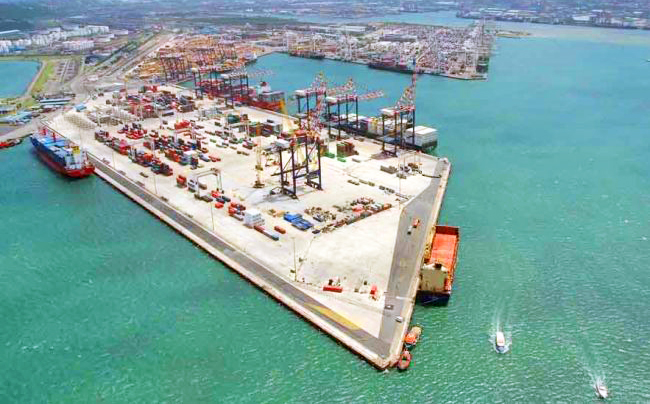
The ship is the MSC SOLA (131,771-gt, built 2008) which is arriving from Port Louis and the Far East. Although she will not be fully laden the arrival of the 364 metre long ship becomes another justification for the recent harbour entrance channel project, which saw it widened by an additional 100m to a minimum width of 222m and deepened to a working draught of -16.5m. Once work on deepening at least one of the container terminal berths on Pier 2 has been completed ships of this size will be able to arrive or sail fully laden.

A study in Corruption and Firm Behavior

Extensive literature argues that reducing trade costs can substantially increase income and improve welfare in trading countries, particularly in the developing world where these costs are highest. In 2007, a shipping a container from a firm located in the main city of the average country in Sub-Saharan Africa was still twice as expensive, and six times more time-consuming, than shipping it from the US. It was also twice as expensive and just as time-consuming as shipping a similar container from India or Brazil, according to the World Bank. As a result, a significant portion of international aid efforts has in recent years been channeled to reducing trade costs and improving logistics in the developing world. Evidence is growing on how corruption in transport networks can significantly increase the cost of moving goods across borders.

A recent paper “Corruption and Firm Behaviour” investigates how different types of corruption affect company behavior. Firms can face two types of corruption when seeking a public service: cost-reducing, “collusive” corruption and cost-increasing “coercive” corruption. Using an original and unusually rich dataset on bribe payments at ports matched to firm-level data, the authors observe how firms respond to each type of corruption by adjusting their shipping and sourcing strategies. Cost-reducing “collusive” corruption is associated with higher usage of the corrupt port, while cost-increasing “coercive” corruption is associated with reduced demand for port services. Data suggests that firms respond to the opportunities and challenges created by different types of corruption, organizing production in a way that increases or decreases demand for the public service. This can have important implications for how we identify and measure the overall impact of corruption on economic activity. The data further allows us to understand the bribe setting behavior of different types of public officials with implications for the design of anti-corruption strategies.

In our setup, firms have the choice to ship through two ports: Maputo in Mozambique, and Durban in South Africa. The majority of firms in our sample are equidistant to both ports while a subset of firms will be significantly closer to the more corrupt port of Maputo. Survey data revealed that the choice of port is driven primarily by the interaction between transport and corruption costs at each port. Transport costs are linear to the distance between each rm and the ports, while corruption costs are determined by the type of product the firm ships. Our main measure of the distortion caused by corruption is how rms shipping products that are more vulnerable to corruption will opt to go the long way around to avoid a closer, but more corrupt port. We also nd suggestive correlations between the level and type of corruption rms face at each port, which directly affects the cost of using port services, and firms’ decision to source inputs from domestic or international markets.

Source: Corruption and Firm Behavior (December 2011) by Sandra Sequeira and Simeon Djankov.

Related articles

Trade costs and corruption in Ports of Durban and Maputo

Recent years have brought an increased awareness of the importance of trade costs in hindering trade, particularly in the developing world where these costs are highest, says a report in the latest edition of Port Technology. The most salient type of trade costs have often been tariff duties and costs associated with the physical transportation of goods. As a result, several countries embarked on extensive programmes of tariff liberalisation and a significant portion of aid effort was channelled to investments in hard transport infrastructure, such as rebuilding railways and ports (the World Bank alone devotes more than 20 percent of its budget to transport infrastructure projects worldwide).

More recently, new light has been cast on the importance of a different type of trade cost: the cost imposed by the soft infrastructure of transport, defined as the bureaucratic infrastructure handling the movement of goods across borders. While there are many possible sources of inefficiencies stemming from the soft infrastructure of transport, recent research is beginning to document the role played by corruption in transport bureaucracies in driving trade costs. This article provides an overview of this research.

Research into corruption

Corruption can take many forms and emerge in many different phases of the process of clearing goods across borders. Sequeira and Djankov (2011) documented in great detail the ways in which port corruption emerges in Durban and Maputo in Southern Africa – this report is featured in my next post. This research was based on a unique dataset of directly observed bribe payments to each port bureaucracy for a random sample of 1,300 shipments.

The study began by defining two broad categories of port officials that differed in their administrative authority and in their discretion to stop cargo and generate opportunities for bribe extraction: customs officials and port operators. In principle, customs officials hold greater discretionary power to extract bribes than regular port operators, given their broader bureaucratic mandate and the fact that they can access full information on each shipment, and each shipper, at all times. Customs officials possess discretionary power to singlehandedly decide which cargo to stop and whether to reassess the classification of goods for tariff purposes, validate reported prices of goods, or request additional documentation from the shipper.

Regular port operators, on the other hand, have a narrower mandate to move or protect cargo on the docks, and at times even lack access to the cargo’s documentation specifying the value of the cargo and the client firm. This category of officials includes those receiving bribes to adjust reefer temperatures for refrigerated cargo stationed at the port; port gate officials who determine the acceptance of late cargo arrivals; stevedores who auction off forklifts and equipment on the docks; document clerks who stamp import, export and transit documentation for submission to customs; port security who oversee high value cargo vulnerable to theft; shipping planners who auction off priority slots in shipping vessels, and scanner agents who move cargo through non- intrusive scanning technology.

The organisational structure of each port created different opportunities for each type of port official to extract bribes: the high extractive types -customs agents- or the low extractive types -port operators. These opportunities were determined by the extent of face to face interactions between customs officials and clearing agents, the type of management overseeing port operations, and the time horizons of each type of official.

Durban and Maputo

In Durban, direct interaction between clearing agents and customs’ agents was kept to a minimum since all clearance documentation was processed online. In contrast, all clearance documentation was submitted in person by the clearing agent in the Port of Maputo. The close interaction between clearing agents and customs officials in Maputo created more opportunities for corrupt behaviour to emerge in customs relative to Durban.

In Maputo, port operators were privately managed but in Durban, most terminals (for containerised cargo) were under public control, with very lax monitoring and punishment strategies for those engaging in corrupt behaviour. Private management in Maputo was associated with fewer opportunities for bribe payments due to better monitoring and stricter punishment for misconduct. As a result, the organisational features of each bureaucracy determined that the high extractive types in customs had more opportunities to extract bribes in Maputo, while the low extractive types in port operations had more opportunities to extract bribes in Durban. While corruption levels were high in both ports, bribes were higher and more frequent in Maputo relative to Durban.

Finally, port officials with opportunities to extract bribes at each port differed in their time horizons. Customs in Maputo adopted a policy of frequently rotating agents across different terminals and ports, and since bribes varied significantly by the type of terminal at the port, customs agents were aware of the risk of being assigned to terminals with lower levels of extractive potential. On the other hand, port operators in Durban had extended time horizons given the stable support received from dock workers’ unions. Customs officials were therefore the high extractive types with the shortest time horizons, the broadest bureaucratic mandates and more opportunities to interact face to face with clearing agents. As a result, they extracted higher and more frequent bribes, relative to port operators in Durban (the low extractive types) who had longer time horizons and narrower bureaucratic mandates. Source: Port Technology.

Durban – Harbour mafia busted!

A 3-year covert investigation into a multi-billion rand racket at the Durban harbour has exposed an international mafia, allegedly bribing customs and police officials to allow in container-loads of contraband.

This week, a former Sars customs official was taken by surprise when Hawks and Sars investigators swooped on his Umbilo home and arrested him on 80 counts of alleged corruption. Etienne Kellerman, 47, a former Sars anti-corruption task team member, appeared in the Durban Regional Court on Tuesday. He was released on R100 000 bail and the matter was adjourned to next week. Kellerman is suspected of receiving substantial benefits for allowing contraband through. It is alleged that Sars lost millions of rand in revenue as a result. He resigned from Sars three years ago, days after he was quizzed by Sars investigators about his alleged role in the racket. His job had been to profile and identify high risk companies and containers entering the country.

A further seven Sars officials from Durban and Johannesburg were suspended for their alleged roles in the smuggling racket. Hawks investigator and project manager of this undercover operation, Colonel Brian Dafel, said that in coming weeks they would swoop on 100 more suspects in the country, including Sars officials, police and syndicate members, on charges ranging from racketeering, corruption, money laundering, extortion, murder and attempted murder.

Warrant Officer - Johan NortjeHe said the investigation was triggered by informers who tipped them off about the alleged crooked activities and racketeering at the harbour. The undercover investigation was a joint operation by the Hawks, Sars, independent law enforcement agencies and other key role players, Dafel said. He said they were also closing in on suspects believed to have ordered the hit on Warrant Officer Johan Nortjé, an officer in the police’s protection security service. He was responsible for investigating smuggling of goods and drugs through Durban harbour. A hit was allegedly ordered on his life days after he made a R100m counterfeit bust at the harbour. Nortjé was gunned down outside his Montclair home on January 17 last year, 10 days after he had made the bust.

“Nortjé was one of the few honest cops. He was aware of the container racket and was determined to expose it. He was killed because he was hampering the operation of the syndicate members,” Dafel said.

“This is a very dangerous investigation that involves extremely high levels of corruption. “Durban harbour is the biggest port authority that handles 40 percent of the containers nationally. In the past two years, during this investigation, we have seized over R1 billion worth of counterfeit goods and contraband.” He said that several witnesses had been placed in witness protection programmes as they feared for their lives. “People’s lives have been threatened and hits have been ordered. But, none of this will deter this investigation.

Dafel told the Daily News that investigations had revealed that certain SARS and police officials were working in teams between KZN and Gauteng. “This could not be done alone. They worked in groups, including those who cleared the documentation to those who inspected the containers and gave them the final clearance.

Thousands of containers pass through the harbour daily and it is impossible to check each and every one. That is how the counterfeit goods and contraband got through so easily. The syndicate members also communicate through cellphones making it a very smooth operation. He said every member of the syndicate was paid for his or her role in allowing the illegal goods through. The potential value of the illegal commodities was between R10 and R20 million for each container. The international mafia pays bribes of up to R30 000 per container that is allowed to pass through customs undetected. It is reported that one of the biggest problems is the clearing agents who work in cahoots with the police and syndicate members.

Dafel said many of the SARS and SAPS officials who were being investigated stood accused of allowing counterfeit goods or contraband to enter the country illegally, or under-evaluating containers. Since the investigation started, much stricter measures are in place at the harbour making it difficult to smuggle goods into the country. “We have closed the gap significantly for any form of corruption to take place. Also, staff know that they will be arrested and charged if they break the law,” Dafel said.

He said they were also working closely with people abroad and international law enforcement agencies to close in on the racketeers. “There are big name international companies, mainly from China, that are also being investigated. In fact, the goods imported from China are the biggest problem.” Source: Daily News E-edition

Related articles

Vetch’s Pier – a relic of floored planning

With recent developments regarding the proposed Durban dug-out port, a colleague of mine shared this gem of an article.

Vetch’s pier (Durban, South Africa) has redeemed itself by becoming a marine sanctuary. Historically, however, it is an expensive relic, a monument to flawed planning, poor workmanship and economic frustration.

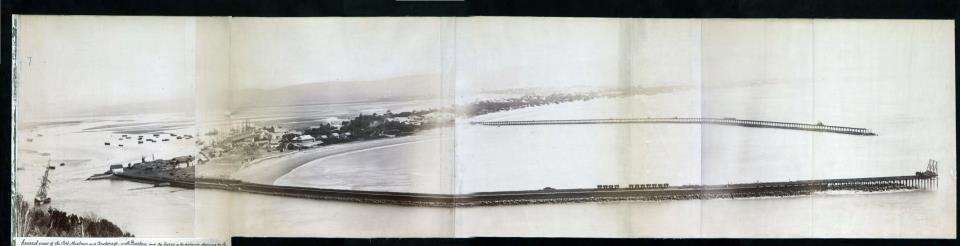
Although potentially a major seaport, Durban’s bay was little more than an inaccessible lagoon before dredging and the construction of the north and south piers over a century ago unlocked its real worth. Nature guarded its entrance in the form of shifting sandbanks which made access to the safety of the inner harbor unpredictable and hazardous. As a result entry was restricted to small vessels drawing less than three metres of water. All other shipping had to anchor offshore and endure the extremes of wind and sea. Not surprisingly 66 ships were blown ashore on Durban’s beachfront between 1845 and 1885.

It was obvious from the outset to the British settlers that Natal’s economic prospects depended on the development of Durban harbour. For almost 50 years from 1850 the ‘harbour issue’ was the hardy annual of Natal politics and the correspondence columns of newspapers. Various plans were put forward, that of Captain James Vetch gaining the approval of Governor John Scott in 1857. Vetch, an engineer attached to the Admiralty in London, never actually visited Durban, yet he produced a report and plan to improve the harbour. Despite misgivings, it was rushed through the Natal legislature in October 1859 along with its hefty price tag -£165,000.

Vetch’s solution was to enclose the natural entrance to the harbour by means of two breakwaters, one curving northwards from the base of the Bluff headland and the other curving southwards from present day Ushaka beach. Besides the engineering challenge which that posed, Vetch’s plan ignored the prevailing wind an ocean current directions. But in August 1861 when construction of the northern breakwater commenced, such concerns were lost amidst the optimism of a growing economy and the belief that Vetch’s plan would resolve the frustrations of navigating the entrance to the harbour. A comment in the Natal Mercury on 13 July 1861 summed up the buoyant mood of colonists when it stated that Vetch’s plan would herald ‘new circumstances and be the scene of a busy, all pervading and prosperous industry.

The site engineer, George Abernethy, encountered difficulties with Vetch’s plan from the outset. The method of construction was impractical: sections of wooden framework filled with rubble simply collapsed in the surf, moreover, the contractor, Thomas Jackson, lacked the capacity to carry out the construction. Early in 1863 it was apparent that the six year project was stalled. Yet £90,000 of the budgeted £165,000 had been spent while less than ten percent of the work had been completed. Financial reasons and poor construction methods saw  Vetch’s pier abandoned in 1864. In time the ocean reduced it to what it is today. Both in design and placement, the small craft harbour now being proposed ignores the same natural forces that made Vetch’s plan impractical. Besides, it specifically ignores the pounding effects of the cyclone swells which emanate occasionally from the Mozambique channel.

In May 1864 a furious Natal Legislative Council demanded a detailed report on the Vetch project. In June the contractor walked off the job and left Natal. The Report tabled in August proved an embarrassing indictment. It found that no oversight had been exercised by Treasury officials on certificates for amounts payable and that the contractor had received payments in excess to that which he was entitled. It was also noted that freight for some materials had been paid for twice; that material had been ordered which was in excess of actual needs. To top it all, £113,500 or 70 percent of the allocated budget, had been spent on a project that was scarcely 20 percent complete and the problem of accessing Durban harbour was no closer to resolution.

Far from invigorating Natal’s economy, the submerged finger of an incomplete pier named after its designer, Captain Vetch, proved a drain on the colonial treasury for years to come, interest on the loan for the project amounting to about 17 percent of total revenue. A project born out of economic frustration left a legacy of even greater economic frustration. Until the 1880s Durban harbour languished having gained a reputation as a port of high charges and long delays. But from 1886 when dredging operations began, followed by extension of the breakwaters, the depth of the entrance channel improved. By 1892 it averaged over four metres allowing larger ships to cross the bar.

But the way forward was dogged by controversy. Two camps developed: one which saw the solution in dredging, the other in the extension of the north pier. So great was the agitation that it led to the fall of the government of Harry Escombe in October 1897. Ultimately, a combination of the scour facilitated by the north and south piers and the effects of dredging resolved access to Durban harbour. In 1904, the Armadale Castle, drawing 6,7 metres of water, became the first mail-steamer to enter the port.

Although incomplete and a non-starter, the remains of Vetch’s pier should serve as a reminder of the power of the ocean and the need for fearless scrutiny of public projects. Source: Duncan Du Bois (Ward Councillor) and Facts About Durban

New Durban dug-out Port – tenders released

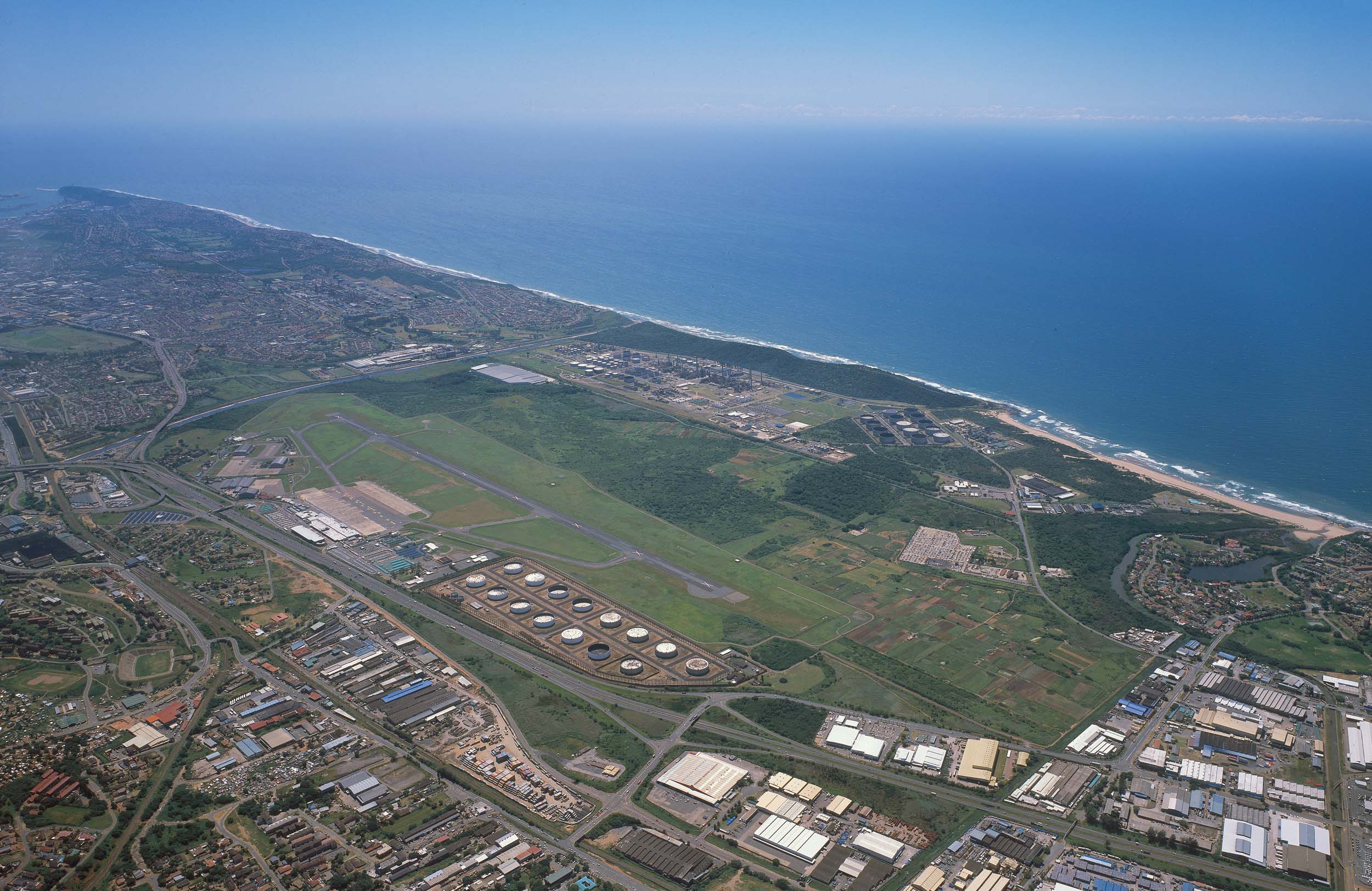
State-owned freight logistics group Transnet has followed up its recent R1.8-billion purchase of the old Durban International Airport site, in KwaZulu-Natal, with the release of a number of separate tenders in support of its proposal to develop, in phases, a new dig-out port on the property.

The first phase, which was currently scheduled for completion in 2019, was expected to require an initial investment of R50-billion, with the balance of the project to be completed by 2037.

The first request for proposals (RFP) relates to the appointment of a transaction adviser for the project. The adviser will provide technical assistance relating to the establishment of a business model for the development of the harbour.

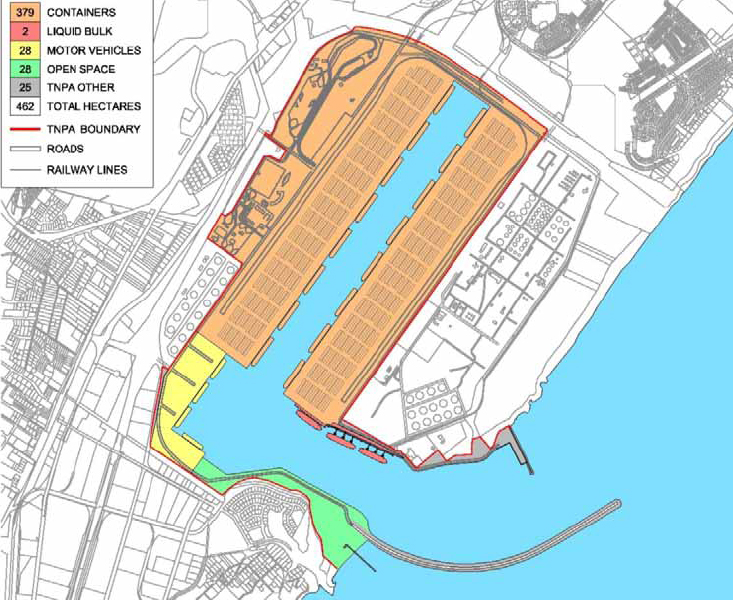
Transnet currently envisages a phased development of a facility comprising 16 container berths, five automotive berths and four liquid bulk berths. Its high-level infrastructure plan indicated that the container terminals would have the collective capacity to handle 9.6-million twenty-foot equivalent units, or TEUs, once all four phases were completed. That, the group argued, would be sufficient to address South Africa’s container capacity requirements to 2040.

The transaction adviser would be expected to complement and supplement the work, resources and expertise that Transnet had dedicated to the project internally. The consultant was expected to cover the legal, financial, environmental, economic and technical aspects of the proposed development. In order to facilitate the opportunity for financial planning and policy engagement, it is necessary to complete the assignment within an 18-month period.

The second RFP invites consultants to conduct conceptual and prefeasibility studies for the development . Transnet will employ a four-stage project lifecycle process for its capital expansion projects, with the two front-end loading (FEL) studies making up the first two stages. FEL implies upfront planning and engineering in order to reduce, as much as possible, the risk of scope creep and to ensure financial accuracy for the project. The FEL-1, or conceptual study, is scheduled to be completed by the end of March 2013, while the FEL-2 study should be finalised by the end of March 2014. Source: Creamer Media

Cargo Dwell Time in Durban

An acquaintance in the forwarding industry brought this working paper to my attention. Titled “Cargo Dwell Time in Durban“, it is very useful reading for logistics operators, Customs and government agencies, and policy makers. The object of the working paper attempts to identify the main reasons why cargo dwell time in Durban port has dramatically reduced in the past decade to a current average of between 3 and 4 days. A major customs reform; changes in port storage tariffs coupled with strict enforcement; massive investments in infrastructure and equipment; and changing customer behavior through contractualization between the port operator and shipping lines or between customs, importers, and brokers have all played a major role. The main lesson for Sub-Saharan Africa that can be drawn from Durban is that cargo dwell time is mainly a function of the characteristics of the private sector, but it is the onus of public sector players, such as customs and the port authority, to put pressure on the private sector to make more efficient use of the port and reduce cargo dwell time. The Working Paper is the product of the World Bank’s Africa Region, Transport Unit, being part of a larger effort  to provide open access to its research and make a contribution to development policy discussions around the world. Policy Research Working Papers are also posted on the Web at http://econ.worldbank.org

Related articles

TPT’s Pre-advice for Export Containers

Durban Container TerminalIt has been enquired by some whether or not Transnet‘s Pre-Advice for Export Container’s initiative is aligned with SARS Customs Modernisation. First of all its important to delineate the process and requirement. Transnet Port Terminal’s Pre-Advice is an electronic exchange (COPARN) between the carrier and TPT. As such it is an arrangement which satisfies the Terminal’s advance reporting requirements of impending export container delivery to a container terminal. In time it will feed Customs’ gate-in reporting requirements.

From a Customs perspective, this initiative is an important development which fills another piece of the supply chain puzzle. As such it is not in contradiction to anything planned for by SARS – rather its somewhat ahead of Customs at this point in time. It is just not possible to synchronise inter-departmental and inter-company project developments. Each has its own financial/procurement cycles and operational deliverables, and in certain cases legal prescription. At the same time it is true that supply chain operators bear the brunt of untimely and non-coordinated initiatives. Nonetheless, they are important while at the same time vital for the country’s future economic growth and stability.

Durban Dugout – more about Transnet’s thought process

Durban DugoutWhile the ‘bean counters’ at ACSA and Transnet continue to finalise the sale of the old Durban airport, its good to  understand  Transnet’s alternative options in so far as port expansion on the eastern seaboard is concerned. I came across the following document which not only details the current ‘dugout site’, but also includes designs for an equally  impressive container terminal at Richards bay.  Click here!

Durban Dig-out Port agreement soon!

An impending agreement between Transnet and the Airports Company SA (ACSA) over the price to be paid for the site of the old Durban International Airport can be expected by the end of September 2011. The agreement will allow Transnet to secure the strategic piece of land on the southern side of Durban for building a new deepwater container port.

While there is common agreement that the land should be secured for a new port which would be built when the time was right – estimates suggest that it will be required before 2020, Transnet and ACSA were reported to be at odds over the amount that the old airport site of 620ha is worth. ACSA was initially asking for at least R3 billion but is understood to have come down to R2 billion. Transnet was prepared to pay around R1 billion. Source: SA Ports.

Durban’s Dugout Port Proposal – Reality or Pipe Dream?

Airport Site Overall 1I received these pictures in an e-mail today. 15 minutes of surfing (the web kind) reveals plans by Transnet to procure the old Durban International Airport site from ACSA and dugout a new port to meet future demand and ensure that Durban remains Africa’s busiest port. Point of correction, Durban Harbour seeded this title to Port Said in Egypt a few years ago, so it would appear someone has a grandiose plan to bring about a mega development which is all honesty is ludicrous given the under-utilisation of Port of Ngqura (Coega) and its adjacent ‘white elephant’, the Coega Industrial Development Zone (IDZ). Government realised after 10 years that Coega was not a great strategic investment. Current levels of activity at  Ngqura are due largely to volumes since diverted from Port Elizabeth container terminal and some new transhipment activity. As long as South African high port charges, piracy up the east coast of Africa and the efficiency of the Suez Canal persist, it is highly unlikely that the shipping conferences are going to increase their traffic around the southern tip of Africa.

Airport Site Overall 2The dugout development cost is estimated at R50 billion, with a further R100 billion to be spent on infrastructure and inland logistics. Was FIFA 2010 not sufficient warning on over-capitalisation with limited return? Unless our ports and inland logistics pipelines begin offering significant advantages over Namport, Maputo and Beira, developments such as the old Durban airport will never realise its fullest potential. It has to be admitted that the concept is brilliant and awe inspiring, but realisation of such is but a daunting pipe dream, me thinks! Transnet chairman Mafika Mkwanazi, is most optimistic insisting that the project will happen with development needing to commence in 2015 to be ready for 2019. I would like to share in this optimism but not at the expense of the taxpayer. Source: IOLProperty.co.za