World Bank – Developing Countries Bear More Trade Costs

fair-trade-virtues-of-free-trade-image2A  new database developed jointly by the United Nations Economic and Social Commission for Asia and the Pacific (ESCAP) and the World Bank has revealed that trade costs fall disproportionately on developing countries. This is despite the fact that the international economy has integrated considerably in recent decades.

Disclosing this in a statement issued yesterday, the World Bank  said the study noted that “although developing countries were becoming more integrated into the world trading system in an absolute sense, they are starting from a higher baseline and their relative position is deteriorating because the rest of the world is moving more quickly.”

The bank explained that the new Trade Costs database uses an innovative method to estimate trade costs in agriculture and manufactured goods, opening new analytical possibilities for policymakers and researchers interested in trade integration.

“According to the research, trade costs are influenced to varying degrees by distance and transport costs, tariff and non-tariff measures, and logistics. The new data, which cover the time period 1995-2010, stress the importance of supply chains and connectivity constraints in explaining the higher costs and lower levels of trade integration observed in developing countries.

“One of the key findings triggered by the database is that two areas amenable to policy interventions—maritime transport connectivity and logistics performance—are very important determinants of bilateral trade costs, with an effect comparable to that of geographical distance.”

Ravi Ratnayake, Director of ESCAP’s Trade and Investment Division, which partnered with the World Bank on the project, said, “Technological factors are responsible for a significant share of the differences in trade costs around the world. From a policy perspective, reforms in areas such as infrastructure, core trade-related services sectors, and private sector development can thus have significant benefits for countries in terms of lowering trade costs.”

The global database shows the pattern of trade costs across countries and through time by offering a comparison of pairs of countries, and an identification of those trade costs that are high. As such, the data set can be used to examine the policy factors and “natural” factors that contribute to the levels of trade costs observed around the world. One telling trend: for upper middle income countries, it is easier to trade with high income countries than among themselves. Source: Leadership (Nigeria)

CUSTOMS Info – New Regulatory Screening Data

cigdm_newlogoCUSTOMS Info (Ci) now offers import regulations by HTS code for 220 countries. This data will help Trade Professionals to screen items shipped across borders for importation restrictions and requirements from each country.

This data can be used for automating red flags by HS code. Once a flag is obtained, users may research the regulations under the GistNet tab in CUSTOMS Info’s subscription site or on their own. “We are excited about this new data set because it is new and bound to get more detailed,” Ron Lackey, President of CUSTOMS Info.

For a sample file of this data that includes Chapters 28 & 38 of the Harmonized Schedule, visit: http://www.customsinfo.com/download-a-free-sample-of-new-regulatory-content/. (You will find South African customs regulatory reference detail here as well)

Ci provides the world’s most comprehensive trade data repository delivered via web-based subscription, API web services or as data to populate any GTM or Landed Cost application. Ci is the largest provider of duty and tax content for international e-commerce with hundreds of e-commerce sites utilizing our data to provide accurate landed cost information.

New screening system to stop Customs queues at Mumbai airport

India customs_SnapseedIn a bid to make security checks less frazzling for international fliers after their arrival in the city, the Mumbai airport Customs have adopted an advanced in-line screening system to avoid inconveniencing commuters in the green channel. Installed two weeks ago, the system will also help improve screening procedure.

Earlier, every single item of luggage was screened at the Customs exit points, which led to long queues where passengers had to wait for hours before they could exit. With the new advanced screening system installed at the starting point of conveyor belts, the luggage will be screened before it is put on the belt from where the passenger picks it up and walks through the green channel.

“Earlier, there used to be a huge queue at the Customs checkpoints as each and every bag was screened there, and if anything was found to be suspicious, the screening for the following bags was stalled, putting other passengers on hold. With the new system, a foolproof screening would be done before the baggage makes it to the conveyor belt,” said a Mumbai airport Customs official, on the condition of anonymity.

“During screening, if any suspicious or undeclared items are found, the baggage would be marked and put on the conveyor belt. The Customs officer inspecting the luggage would pick it up to ensure that duty fine is imposed or appropriate action is taken,” the official said.

Apart from this, the new system would also be able to screen items concealed in packing, which were not detected by the earlier system and needed a manual check.

Officials further revealed that the Customs department is expecting ISO certification, one of the reasons why the new system was adopted. Apart from this, the Customs have also appointed a nodal agency to take feedback from passengers about the new system. Additional Commissioner Mahendra Pal (Air Intelligence Unit), Mumbai airport Customs, said, “We have adopted a new system which would reduce passenger inconvenience and help make screening better.” Source: www.ndtv.com

Transgenic tobacco – an inexpensive cure for rabies?

New research has found that tobacco plants can be genetically modified to produce antibodies against the rabies virus. (Source - Gizmag.com)

New research has found that tobacco plants can be genetically modified to produce antibodies against the rabies virus. (Source – Gizmag.com)

We are familiar with the tobacco plant being harvested to create products that damage our health, but a new study from the Hotung Molecular Immunology Unit at St George’s University in London has shown that tobacco plants can be genetically modified to produce rabies antibodies. It’s hoped that the research will deliver a safe, inexpensive way of treating rabies in developing countries.

If untreated, rabies can infect the central nervous system and lead to death. According to the World Health Organization, rabies occurs in more than 150 countries and territories around the world, killing 55,000 people every year, mostly in Asia and Africa. Treating it with human rabies immunoglobulin (HRIG) is expensive, a factor which the St George’s researchers believe can be addressed using this new approach.

The new study involved “humanizing” the genetic sequences for the murine monoclonal antibody – an antibody found in rodents that has been found to immunize against rabies – so that it could be tolerated by people. The tobacco plant was then turned into a “production platform” to carry the antibody.

The antibody produced from the genetically altered (or transgenic) plants was then investigated for its impact on rabies. It was found to be effective in treating a broad range of rabies viruses by preventing the virus from attaching itself to nerve endings around the bite, which stops it from traveling to the brain through the nerves.

“An untreated rabies infection is nearly 100 per cent fatal and is usually seen as a death sentence,” says St George’s PhD researcher Leonard Both. “Producing an inexpensive antibody in transgenic plants opens the prospect of adequate rabies prevention for low-income families in developing countries.”

The findings could lead to further research involving other plants, although tobacco remains an attractive proposition as it is not a food crop. The study was recently published in The FASEB JournalSource: St George’s University

While health advocates and tree huggers will be delighted with this development, it will hardly generate sufficient opportunity for ‘real’ tobacco farmers. Secondly (and most importantly), those governments who are pushing for stringent tobacco legislation need to realise that their ‘cash crop’ and revenue income by-product is about to dry up…..how else are they going to extort much-needed tax revenues?

Chinese Imports surge – outpace Exports

Port of Shanghai

Port of Shanghai

China’s exports rose 25 percent in January from a year earlier while imports increased 28.8 percent, resulting in a trade surplus of $29.15 billion, the customs administration said today in Beijing.

The growth in overseas shipments compares with the median estimate in a Bloomberg News survey for a 17.5 percent expansion and a 14.1 percent increase the previous month.

The gain in imports compares with the median estimate for a 23.5 percent jump and a 6 percent increase in December. The trade surplus compared with the median projection for $24.7 billion and a $27.1 billion excess a year ago.

The Chinese customs administration last month defended the quality of its trade data after analysts at Australia & New Zealand Banking Group Ltd. and UBS AG said it may fail to capture the true picture of imports and exports.

Trade data in the first two months of the year is distorted by the timing of the Lunar New Year holiday, which fell in January in 2012 and is in early February this year, making the figures tough to interpret, according to economists including Louis Kuijs, chief China economist at Royal Bank of Scotland Plc in Hong Kong. Source: Bloomberg

Belissima!

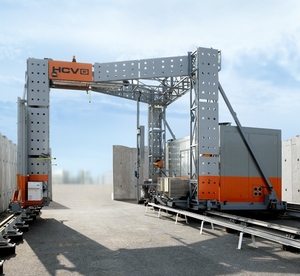
HCVG Inspection System - Smiths Detection

HCVG Inspection System – Smiths Detection

Smiths Detection has announced a €19m contract with the Italian Customs Agency to supply high-energy X-ray cargo scanners for deployment at six major ports including Naples, Genoa and Bari. According to Smith’s – “We have worked closely with Italian customs for many years, not only supplying detection systems but also providing the highest standard of after-market service. This latest contract underlines the continuing success of our customer-driven approach.”

The HCVG inspection systems, which can detect contraband, narcotics and weapons, will also be used for confirming cargo details to ensure customs and excise duty and trade taxes are in order. Click here for more technical details of the HCVG inspection system 

Able to inspect up to 20 containers, trucks or vans an hour, the gantry-mounted scanners can penetrate steel 330mm thick. A detailed X-ray image, which features organic and inorganic material discrimination using viZual imaging software, is produced by a single scan of the load.

Smiths Detection offers advanced security solutions in civil and military markets worldwide, developing and manufacturing government-regulated technology products that help detect and identify explosives, chemical and biological agents, radiological and nuclear threats, weapons, narcotics and contraband. It is part of Smiths Group, a global leader in applying integrated, advanced technologies to markets in threat and contraband detection, energy, medical devices, communications and engineered components. Smiths Group employs around 23,000 people in more than 50 countries. Source: Business Wire

SARS – Modernisation milestone materialising

Interfront logo2

Its been some time since I’ve penned an article on the South African Customs Modernisation Programme. Aside from it being the SA Revenue Service’s prerogative to communicate and publish notice of its internal developments and plans, some caution always needs to be exercised observing bureaucratic protocol, ensuring that the official message is forthcoming from SARS. Given the widespread interest in the programme as well as the development of the Interfront [formerly Tatis] integrated customs border management solution (iCBMs) as a wholly owned development of South Africa, I think it not out of place to inform the public interest on this matter. Readership of this blog has an extensive global following and a specific interest in Interfront developments.

Unlike ASYCUDA, Sofix, e-Biscus, and a host of other integrated Customs-tailored business solution offerings, Interfront’s solution for SARS will not include a client user frontend. In other words, the Interfront system (iCBMs) will essentially drive declaration backend processing. This comprises a fully integrated declaration validation and processing engine, supported by a sophisticated tariff engine and duty calculator; the latter offering future web-based services for customs users. In order to compliment the SARS corporate and standardised user interface approach, the iCBMs interfaces with SARS’s revenue accounting, trader registration, risk management, and case management workflow systems. Not only does this leverage cost savings and efficiencies, but ensures a unified ‘workspace’ for all of SARS employees.

Much of the Interfront technology is therefore hidden to the customs user, with traders experiencing an identical interface with SARS Customs, as it does today. From the outset of the Customs Modernisation Programme (July 2010), the approach has followed pragmatic migration of customs electronic clearance processing – across its 30 odd legacy systems – towards an integrated clearance process that could mimic the functionality featured on the new iCBMs. The modern technology and scalability of Interfront offers the ability and agility to enhance service levels and efficiencies to another level. At the same time, operational policies and procedures have been modernised with the aim and intent of meeting the requirements contained in Customs new Control and Duty Bills.

Much of the ‘change’ experienced by both customs officers and the trade over the last 2 years has prepared the country for the eventual migration to the new system. These have been significant, and at times painful changes, not without anxiety and apprehension. Over the last 6 months an even more painstaking and taxing effort has been expended by the Customs Modernisation Team, Interfront and other service providers in addressing a seamless harmonisation and switchover of customs business from disparate legacy systems to a new customs technology platform. The “Parallel Run” has witnessed the daily comparison of customs clearance data between the old and new systems, identification and logging of disparities (bugs), modification of the two environments to ensure the same result is achieved. This has not been an easy and simple process, as any country having undergone a system switchover can attest to.

This month, February 2013, service providers to the customs industry are readying their resources to commence user testing. This implies that service providers (computer bureaus) will engage their clients to prepare test cases for submission to customs to test the new Interfront process. Given that Customs legacy systems and Interfront have been synchronised to a high level of compatibility, the process for traders should not reveal much difference to what they have experienced over the period of modernisation over the last 2 years. One area of note will be the structure and content of Customs Response messages. Traders will have to familiarise themselves and test their interpretation of these messages to ensure they perform or respond appropriately to the instructions.

Satya Prasad Sahu - Technical Officer at the WCO provided members of SACU, SADC and the EAC comprehensive guidelines for the development of the GNC Utility Block concept in Africa (February 2012)

Satya Prasad Sahu – Senior Technical Officer at the WCO provided members of SACU, SADC and the EAC comprehensive guidelines for the development of the GNC Utility Block concept in Africa (February 2012)

In terms of compliance and compatibility with international developments, the new iCBMs is engineered on the WCO Data Model. All relevant simplification processes as exemplified in the Revise Kyoto Convention are likewise factored into its design, although not all of these will be immediately available with the initial rollout. Introduction of the new Customs Control and Duty Acts will require these principles to be fully functional and operational, however.

The WCO Data Model is the pivotal design component around which most of the new system’s business and validation rules are centred. This in itself is a major achievement as it bodes well for all future ‘cross border’, customs-2-customs connectivity initiatives. In this regard SARS is well advanced in bilateral and multilateral projects with key trading partners, for example IBSA (cross-global trilateral initiative), and in Africa, we are working with SACU, SADC, COMESA and the EAC to bring about regional customs connectivity. On a bilateral basis, initiatives with Swaziland, Mozambique and Zimbabwe are developing nicely. A significant contributor to cross border/cross global customs connectivity is undoubtedly the excellent work brought about by the dedicated members of the WCO’s Globally Networked Customs adhoc workgroup. In June last year, the WCOs policy Commission unanimously endorsed the GNC architecture and Utility Block approach. African customs connectivity efforts have likewise adopted this model which ensures harmonisation and uniformity in approach, legal dispensation, data exchange, risk management and procedure. The WCO moreover plays a overseeing role in many of these GNC and capacity building initiatives across the globe – this assists greatly in sharing and learning of experiences.

I would think that the above should be sufficient to wet the appetites of customs practitioners, traders, ICT technocrats, and perhaps even legislators and bureaucrats on developments in South Africa. Subsequent to the launch of Interfront SARS will make its ideas and strategy relating to forthcoming initiatives known to trade and the business community. A Year of Innovation? Yes, and hopefully a happy tale that will bode well for the South African trade and supply chain logistics community, and some good fortune for Interfront in its business development in the region and beyond!

China fancies Mozambique exotic timbers

China is the biggest recipient of Mozambique timber

China is the biggest recipient of Mozambique timber

Mozambique news agency AIM reported last week that the Mozambican customs service has seized 30 containers full of logs that were about to be exported illegally to China through the port of Maputo.

The report said that the seizures began on 16 January in the town of Marracuene about 30 kilometres north of Maputo, where Customs located ten containers, each measuring 15 cubic metres, in a yard belonging to the Chinese firm Heng Yi.

As the investigations continued, the authorities discovered a further 20 containers already in the port waiting to be loaded onto a ship heading for China.

The containers in the Heng Yi yard contained mondzo, a species classified as a first grade hardwood, which cannot be exported without processing. Yet the mondzo logs had been packed into the containers without any inspection by the relevant authorities.

China is the biggest consumer of timber from Mozambique accounting for 85 percent of the 430,000 cubic metres of logs to leave the African country between 2000 and 2010, according to a study from the Mozambican Environmental Research Agency.

The study, cited by Mozambican daily newspaper Notícias also said that the value of wood exports to China in the period had risen from US$8 million to US$100 million between 2001 and 2010.

Mozambican wood is exported to China, South Africa, Germany, Japan, France, Mauritius, Malaysia, Thailand, Tanzania, Portugal, Israel, Vietnam, Singapore, Turkey, Zimbabwe, Botswana, Croatia, Namibia, Dubai, India, Pakistan, the United States, Reunion Islands, and Italy.

Last week the containers in the port were still being unpacked to check exactly what types of wood they contain. Staff of the Mozambican Tax Authority (AT) said that the origin of the logs is still unclear, but their nature and diameter indicate that they came from the forests of Nampula and Zambezia provinces, or possibly from the northern part of Gaza.

China is the largest consumer of Mozambican timber, and the Chinese market accounted for 85 percent of the 430,000 cubic metres of logs that left Mozambique, much of it illegally, between 2000 and 2010, according to a report from the Environmental Investigation Agency, a London-based NGO that works to fight environmental crimes. Source – AIM

For those interested in this story, a followup report from the Principal Officer, Port of Ngqura can be found at www.ports.co.za under the heading ‘Portwatch: News from around the ports‘.

Beit Bridge afloat!

I received the following pictures purportedly of traffic under siege at the Beit Bridge border post 6 days ago. Normally its the sweltering heat which man and truck have to contend with. The pictures suggest severe flooding creating anxious moments for transporter and pedestrian alike. According to the Zimbabwe Herald, authorities closed the border to traffic after the Limpopo River flooded leaving the new Limpopo Bridge inaccessible.

WCO announces the passing of Bill Nolle – proponent of the WCO Data Model

Australian Customs hosted visits from three international experts on trade data harmonisation - Bill Nolle, Dietmar Jost and Eric Sunstrum.

Australian Customs hosted visits from three international experts on trade data harmonisation – Bill Nolle, flanked by Dietmar Jost and Eric Sunstrum of the WCO.

It is with sadness we [WCO] learnt that our former colleague, the former Chairperson of the DMPT passed away on 29 December 2012 after a brief period of illness. He was fighting a very aggressive cancer.

Bill Nolle was a fabulous contributor to our [WCO] area of work and he has left his imprint in many aspects of our work at the Data Model Project Team and the Information Management Sub Committee. Version 3.0 of the WCO Data Model owes its richness and quality thanks to Bill’s splendid contribution. Bill authored the WCO Single Window Data Harmonization Guidelines/ UN/CEFACT Recommendation 34.  We [WCO] owe it to Bill the methodology of Gather-Define-Analyze-Reconcile for data simplification and harmonization. Bill brought passion to his work. His speeches and interventions were always intense and engaging and he will be missed in his professional environment.

His legacy includes an eLearning module in which you can hear him explain how data harmonization was carried out in Jordan. The module remains a favorite for the professional users and trainers alike.

Bill retired from US Customs and Border Protection where he worked for 30 years. He and his wife moved to the Outer Banks from Frederick, MD in 2009, to be near the beach that he loved. At the time of his death he was employed by Nathan Associates Incorporated and Crown Agents as a consultant. Bill travelled extensively during his tenures with US Customs and Border Protection, Nathan Incorporated, and Crown Agents, making friends on each continent in the world.

The following obituary was posted by a colleague in Jordan –

Bill has been a breath of fresh air that visited our country (Jordan), every once in a while as Customs Consultant. He was an inspiration and a driving force to all,  giving advice when needed, and always willing to help. A proud husband, father and (Opa), that we felt his family was our own, Not to forget, a professional Pita Bread baker,  we were hoping to someday try. One would think, God loved him so,  and wanted him closer more. Bill will always be in our hearts,  a father figure, a teacher, and a colleague holding one of the greatest hearts I’ve known. My deepest condolences to his loving family, and may he rest in peace.   Posted by: Juliette Najjar – Amman – Jordan – Friend / Colleague   Jan 17, 2013.

Sources: WCO, Gallup Funeral Services, and www.tributes.com

Beitbridge handles half a million travellers over festive season

The queues at Beit Bridge

The queues at Beit Bridge

Beitbridge Border Post recorded a sharp increase in the number of travellers who passed through during the festive season with statistics indicating that 524 511 people passed through the port of entry between 14 December last year and 7 January this year compared to 392 660 during the same period the previous year. The assistant regional immigration manager in charge of Beitbridge Border Post, Mr Charles Gwede, said they handled  229 023 travellers on the exit side, an 11 percent increase compared to the last festive season when 202 348 people left the country.

On the arrivals side, 295 488 travellers entered the country, a 35 percent surge compared to the last festive season when immigration officials handled 190 312 travellers. The highest number of travellers on the entry side was recorded on 23 December when 42 435 people entered the country through the country’s busiest port of entry. On the departure side, the highest number was recorded on 3 January when 22 625 people left the country.

“This festive season between 14 December and 7 January, we handled 524 511 travellers, marking a 25 percent increase in the number of people who passed through Beitbridge during the festive season compared to the previous year when we handled 392 660 travellers,” said Gwede. Most of the travellers that they handled were Zimbabweans working in South Africa commonly known as injiva, who had visited home for the Christmas holidays. He attributed the increase in the number of travellers to the South African documentation exercise, which saw many Zimbabweans working in that country acquiring permits.

Many of Zimbabweans staying and working in South Africa are now documented after they acquired authentic permits during the regularisation exercise in that country hence they could now travel freely. The documents also enabled them to drive foreign registered vehicles, which is another factor that resulted in an increase in the volume of vehicular traffic during this festive period compared to the previous years. The South African government embarked on the process of documenting Zimbabweans illegally staying in that country between 5 May 2009 and 31 July 2010 during which over 275 000 applications from Zimbabweans were processed while several others were turned down and some are still pending. Source: The Chronical, Zimbabwe

Systematic corruption found at Brazilian ports

Brazilian ports have been tarnished by corruption

Brazilian ports have been tarnished by corruption

An investigation by Brazil’s federal police has uncovered endemic corruption at ports in Rio, Itaguai, Vitória and Santos, with claims of bribes paid to employees of the Inland Revenue Service and to Customs brokers as a means of expediting the entry of illegal goods.

While the detail of the investigations has not been made public, it is clear that 13 people have been indicted, of which four are businessmen. Politicians may be implicated, too.

Investigations, which first started in the Port of Vitória in 2009, have so far led to six cases being sent to the Federal Court in Rio and Espirito Santo. These involve auditors being asked to delete information from a database, the deliberate falsification of information and turning a blind eye in respect of the importation of explosives. All of the companies implicated in the various prosecutions deny any illegal activity took place. Source: Portstrategy.com

Corruption persists at Customs and Border Protection

A CBP vehicle patrols the border in Arizona in 2010. (Matt York/AP file photo)

A CBP vehicle patrols the border in Arizona in 2010. (Matt York/AP file photo)

Nearly 150 Customs and Border Protection officers were arrested or indicted for corruption over the last eight years, a new report has found. A majority of the officers were stationed along the Southwest border, the Government Accountability Office determined. An additional 2,170 were arrested for misconduct in the same time period. GAO cited CBP’s lack of review and oversight of its employees and monitoring processes as complicit in allowing corruption to fester within the agency. (Readers please bear in mind that CBP has over 50,000 members)

Incidents of corruption included fraud, harboring aliens, selling immigration documents and allowing loads of narcotics through a port or checkpoint. Of the 144 corruption incidents, 103 — more than 70 percent — were considered “mission-compromising.” CBP even reported some instances of “infiltrators” seeking and gaining employment at the agency for the sole purpose of engaging in mission-compromising activity. For example, an officer stationed in El Paso, Texas, was arrested in 2007 for conspiring to import 5,000 pounds of marijuana each month into the United States. Less than 1 percent of arrests for misconduct, however, were related to CBP’s mission.

GAO recommended CBP — part of the Homeland Security Department — better track which pre-employment screens assist in identifying unacceptable job applicants. CBP currently conducts background investigations and polygraph examinations for potential hires, but does not monitor which tactics are the most effective. GAO also suggested CBP assess the feasibility of expanding the polygraph program to include occasional tests for current employees. Additionally, the auditors said the agency should improve the quality assurance of its screenings and set a timetable to complete a comprehensive employee-integrity strategy. CBP concurred with all of GAO’s recommendations, saying while an overwhelming majority of its employees are honest and hardworking, there is little room for error. “Any act of employee corruption interferes with the agency’s mission to secure the nation’s borders against all threats and facilitate legitimate travel and trade,” Jim Crumpacker, DHS’ chief liaison to GAO, wrote in a letter to the auditors. Source: www.govexec.com

NRA/BURS – Customs Connectivity Passes Test

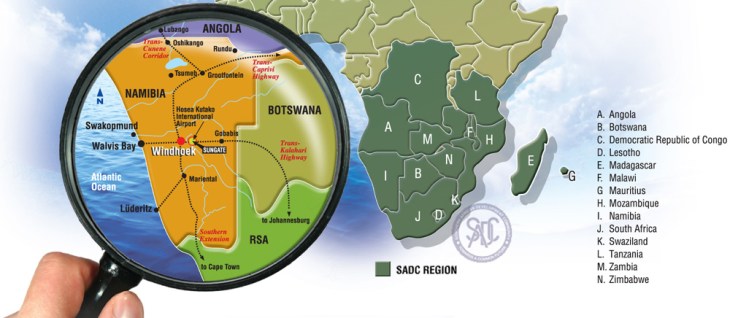
TKCThe first live demonstration of an end-to-end customs connectivity solution was successfully completed in Windhoek, Namibia on December 12, 2012. Customs Connectivity enables customs administrations from different countries to share information seamlessly and instantly across borders: reducing processing time and improving access to reliable, real-time trade statistics.

The demonstration was witnessed by the Commissioners of Botswana (BURS) and Namibia Customs (NRA), senior managers and operational teams. The demonstration involved moving information from an ASYCUDA++ entry in Botswana via the Cloud-based User Portal to an ASYCUDA++ entry in Namibia, and vice-versa from Namibia to Botswana. It demonstrated how clearing agents/traders would manage the flow of their information via the secure online User Portal.

The demonstration marked a “watershed moment” in turning Customs Connectivity into reality. The next steps for the pilot project include full system testing and documentation before end-user training commences. Full implementation is scheduled to take place during the first half of 2013.

Customs Connectivity offers countries in the region a historic opportunity to engage cutting-edge technology and modern tools to facilitate trade throughout Southern Africa, enhancing economic growth and promoting food security. The pilot project is being implemented by Botswana and Namibia, supported by the USAID Southern Africa Trade Hub. Source: SATH

Request – Perhaps some of the TKC clearing agents, NRA and BURS customs staff would like to comment on their experience thus far?