Business Guide for Developing Countries – WTO Trade Facilitation Agreement

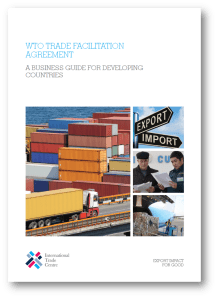
Picture2The International Trade Centre has prepared a guide to help businesses take advantage of the WTO Trade Facilitation Agreement. The agreement simplifies customs procedures, allowing businesses to become more competitive. This jargon-free guide explains the provisions with a focus on what businesses need to know to take advantage of the agreement. It will also help policy makers identify their needs for technical assistance to implement and monitor it. To download the guide – click the following link: http://www.intracen.org/wto-trade-facilitation-agreement-business-guide-for-developing-countries/.

For instance, the guide explains how the article on ‘Advance rulings’ aims to address problems with inconsistent classification of goods by customs officials and the uncertainty it creates for traders. ‘Advance rulings are binding decisions by customs…on the classification and origin of the goods in preparation for importation or exportation. Advance rulings facilitate the declaration and consequently the release and clearance process, as the classification has already been determined in the advance ruling and is binding to all customs officers for a period of time,’ the guide explains. It goes on to list in jargon-free language the obligations and the procedure imposed on customs authorities related to advance rulings.

Reducing the on-the-spot decision making authority of individual customs agents thanks to advance rulings will also reduce bribery, the guide says. Corruption continues to be a key problem for developing-country exporters, who identified it as a major constraint on exports in a recent survey conducted by ITC.

The last chapter of the guide describes how the agreement will be implemented, including the special and differential treatment provisions that developing countries may invoke. Developing countries will be able to link the implementation of the commitments to technical assistance and support from donors. WTO member states will have to explicitly apply for delays for each commitment, which will need to be approved by the WTO and the implementation schedule published.

Source: International Trade Centre

What Does the WCO think of the WTO Trade Facilitation Agreement?

The Dublin Resolution, which was issued at the conclusion of the Policy Commission meeting in Dublin, Ireland on 11 December 2013, welcomes the WTO Agreement On Trade Facilitation (the “Trade Facilitation Agreement”), as embodied in the Bali Package’s Ministerial Decision, adopted at the WTO’s Ninth Ministerial Conference in Bali, Indonesia from 3 to 7 December 2013, under the framework of the Doha Development Agenda.

The Dublin Resolution emphasises the commitment of the WCO to the efficient implementation of the Trade Facilitation Agreement.

The WCO Secretary General, Kunio Mikuriya, said that he was very pleased with the timely and affirmative action of Policy Commission, which reflects the determination to drive forward the global Customs trade facilitation agenda.

Posted by Simon Lester for http://worldtradelaw.typepad.com


Mauritius – Customs Training of Trainers Course on SADC Rules Of Origin

The SADC Rules of Origin are the cornerstone of the SADC intra-trade and serve to prevent non-SADC members benefiting from preferential tariffs. The determination of the eligibility of products to SADC origin and the granting of preferential tariffs to goods originating in the Member States is an important process in the implementation of the SADC Protocol on Trade and regional integration. Annex I of the SADC Protocol on Trade provide that goods shall be accepted as eligible for preferential treatment within the SADC market if they originate in the member States, and the qualification of such products shall be as provided in Appendix I of Annex I of the Protocol on Trade.

The 2nd Customs Training of Trainer Course was held on the SADC Rules of Origin at the World Customs Organization (WCO) Multilingual Regional Training Centre, Mauritius Revenue Authority from the 25th -30th November 2013. The objective of the training course is to establish a pool of trainers on the SADC Rules of Origin who can provide guidance and train on the subject at national level to Customs officials and relevant Stakeholders.

During his opening address, Mr Sudamo Lall, Director General of the Mauritius Revenue Authority, laid emphasis on the critical importance of the ‘Rules of Origin’ as it has ‘great impact on the duties to be collected, as businesses increasingly locate the different stages of their activities in a way that optimizes their value-addition chain’. On the other hand Mr James Lenaghan Director Customs mentioned that ‘the Rules of Origin in any Free Trade Area are of prime importance as they serve to determine which goods can benefit from preferential tariffs. This enables member states of a particular Free Trade Area to benefit from the tariffs advantages inherent to the Protocol of trade agreed within that Free Trade Area. Since Customs is the controlling agency for preferential origin, it is vital that our officers are trained to correctly apply the SADC Rules of Origin’.

During their short visit at the training workshop, the Executive Secretary ,Dr Stergomena Tax and the WCO Secretary General, Mr Kunio Mukiriya addressed the group on the importance of rules of origin as the basis for regional integration. Dr. Tax also urged the participants from all SADC Member States to cascade the knowledge gained at the Centre to their respective countries.

The SADC Customs Training of Trainers programme is being implemented in collaboration with the World Customs Organization (WCO), the Regional Office for Capacity Building (ROCB), the WCO Regional Training Centres and GIZ (Deutsche Gesellschaft für Internationale Zusammenarbeit (GIZ). Source: SADC Secretariat

Mauritius Revenue Authority – Launch of the WCO Multilingual Regional Training Centre

This slideshow requires JavaScript.

The SADC region is now equipped with a third World Customs Organization accredited Regional Training Centre in addition to the South African and Zimbabwean Regional Training Centre. The Regional Training Centres are excellent platforms for Customs to advance capacity building and to share information and best practices.

The Mauritius Revenue Authority (MRA) has been selected by the WCO to host the RTC as part of the WCO initiative to optimise resources in the region and in line with government’s objective of making of Mauritius a Knowledge Hub. The RTC represents the 25 of its kind adding to the existing Centres across the world and is the fourth one in the WCO ESA region.

The Centre will enable the WCO achieve its mission of enhancing Customs administrations in the WCO ESA region thereby helping these Customs administrations to make an important contribution to the development of international trade and to the socio-economic well-being of their country.

Under the WCO strategy the RTC has four main objectives namely: development of regionally relevant training; maintenance of specialist trainer pools; provision of specialist training at a regional level; and development and support of the WCO’s blended learning programme. Moreover, it has as task to develop and maintain annual training plans and work in partnership with the private sector to maintain effective relationships between Customs and economic operators as well as assist Member countries in their training needs.

The Mauritius RTC is equipped with English, French and Portuguese language facilities as well as an e-learning platform. The Vice-Prime Minister and Minister of Finance and Economic Development, Mr. Xavier Luc Duval, formally opened the RTC on the 25th November 2013. In his opening address, Secretary General Mikuriya commended the leadership and continued engagement of Mauritius, previously as WCO Vice-Chair for the East and Southern Africa (ESA) Region from 2011 to 2013, and now as host of an RTC. He hoped that this RTC would serve to share knowledge and strengthen the human resource network for Customs cooperation and regional integration.


WCO Classification Decisions (2013)

RACThe World Customs Organisation (WCO) has published the classification decisions taken at the last Session of the Harmonized System Committee (52nd Session) in September 2013 : the Classification Rulings, the Amendments to the Explanatory Notes and to the Compendium of Classification Opinions. You can locate the decisions via the following links:

Classification Rulings – HS Committee 52nd Session

Amendments to the Compendium of Classification Opinions – HS Committee 52nd Session

Amendments to the Harmonized System Explanatory Notes  – HS Committee 52nd Session

Source: WCO


UNCTAD – LDCs face challenges in reaping benefits from Cloud Computing

Picture1There is nothing nebulous about the “cloud”, especially as it applies to developing countries, a new UNCTAD report says. For businesses and governments in poorer nations to benefit from cloud computing’s increasingly rapid and more flexible supply of digitized information – the sort of thing that enables online marketers to rapidly scale up their information systems in tune with fluctuations in demand – massive, down-to-earth data processing hardware is required. Also needed is extensive broadband infrastructure, as well as laws and regulations that encourage the investment needed to pay for advanced information and communication technology (ICT) facilities and to protect users of cloud services.

UNCTAD’s Information Economy Report 2013, subtitled The Cloud Economy and Developing Countries, was released on 3 December 2013.

Referring to cloud computing, United Nations Secretary-General Ban Ki-moon states in the preface to the report: “This has considerable potential for economic and social development, in particular for our efforts to achieve the Millennium Development Goals and to define a bold agenda for a prosperous, sustainable and equitable future.”

The report shows that cloud computing offers the potential for enhanced efficiency. For example, cloud provisioning may enable small enterprises to outsource some of the information technology (IT) skills that they would otherwise have to provide internally. Companies can benefit from greater storage and computing capacity, as well as the expertise of cloud service providers in areas such as IT management and security.

But the study notes that options for cloud adoption in low- and middle-income countries look very different from those in more advanced countries. While free cloud services such as webmail and online social networks are already widely used in developing nations, the scope for cloud adoption in low- and middle-income economies is much smaller than it is in more advanced economies. In fact, the gap in availability of cloud-related infrastructure between developed and developing countries keeps widening. Access to affordable broadband Internet is still far from satisfactory in developing nations, especially in the least developed countries (LDCs). In addition, most low-income countries rely on mobile broadband networks that are characterized by low speed and high latency and therefore not ideal for cloud service provision.

The report recommends that governments “welcome the cloud but tread carefully”. Within the limits of their resources, infrastructure such as costly data centres must be constructed; at present, developed economies account for as much as 85 per cent of all data centres offering co-location services.

The cloud’s pros and cons

In simple terms, cloud computing enables users to access a scalable and elastic pool of data storage and computing resources, as and when required. Rather than being an amorphous phenomenon in the sky, cloud computing is anchored on the ground by the combination of the physical hardware, networks, storage, services and interfaces that are needed to deliver computing as a service.

The shift towards the cloud has been enabled by massively enhanced processing power and data storage, and higher transmission speeds. For example, some central processing units today are 4,000 times faster than their equivalents from four decades ago, and consumer broadband packages are almost 36,000 times faster than the dial-up connections used when Internet browsers were introduced in 1993.

The potential advantages of cloud computing include reduced costs for in-house equipment and IT management, enhanced elasticity of storage/processing capacity as required by demand, greater flexibility and mobility of access to data and services, immediate and cost-free upgrading of software, and enhanced reliability and security of data management and services.

But there are also potential costs or risks associated with cloud solutions. The UNCTAD report mentions costs of communications (to telecom operators/Internet service providers) and for migration and integration of new cloud services into companies’ existing business processes, reduced control over data and applications, data security and privacy concerns, risks of services being inaccessible to targeted users, and risks of “lock-in” with providers in uncompetitive cloud markets.

Policymakers should waste no time in exploring how the cloud computing trend may affect their economies and societies, UNCTAD recommends. Countries need to assess carefully how best to reap gains from this latest stage in the evolving information economy. In principle, UNCTAD sees no general case for government policy and regulation to discourage migration towards the cloud. Rather, governments should seek to create an enabling framework for firms and organizations that wish to migrate data and services to the cloud, so that they can do so easily and safely. But government policies should be based on a careful assessment of the pros and cons of cloud solutions, and should recognize the diversity of business models and services available. The report underlines that there are multiple ways of making use of cloud technology, including public, private or hybrid clouds, at national, regional and global levels. Source: UNCTAD

WTO Bali – Trade Facilitation Agreement

WTO-globalvoices_org__au_The draft text relating to the outcome on a Trade Facilitation Agreement at 9th Ministerial Conference of the WTO can be located here!   It reveals some significant impact and far-reaching implications for the Customs administrations, but to a great extent it will probably be welcomed by the world’s trading community. In the South African context, readers may find Article 11 on “Freedom of Transit” extremely interesting, if not controversial by some members of the establishment. In essence it’s all about being transparent! Source: World Trade Organisation.

Finance Ministry approves transition of destination inspection service from scanning providers to Nigeria Customs Service

NigerianCustoms-BadgeThis is a landmark and very brave decision by the Nigerian Government. All countries operating Build Operate Transfer (BOT) X-ray cargo scanning services should watch this development with interest.

Following the expiration of the Destination Inspection Contract Agreements between the Federal Government of Nigeria and Scanning Service Providers (SSPs), the President, Commander in Chief of the Armed Forces has directed the transition of Destination Inspection Service from contracted SSPs to the Nigeria Customs Service.

Accordingly, effective from 1st December 2013, Nigeria Customs Service has taken over full processing of all import transactions to Nigeria in accordance with the amended Import Guidelines of the Destination Inspection Scheme. Pursuant to this, all Scanning Service Providers (Cotecna, SGS and Global Scan) shall cease to approve new Form M, issue Risk Assessment Report (RAR) or perform Scanning operations for goods imported into Nigeria.

In international trade several destination countries require Pre-shipment inspection. Pre-shipment inspection, also called preshipment inspection or PSI, is a part of supply chain management and an important and reliable quality control method for checking goods’ quality while clients buy from the suppliers.

After ordering a number of articles, the buyer lets a third party control the ordered goods before they are dispatched to him. Normally an independent inspection company is assigned with the task of the PSI, as it is in the interest of the buyer that somebody not connected with the deal in any way verifies the amount and quality. This way the buyer makes sure, he gets the goods he paid for. Wikipedia

The SSPs shall handover all valid Form Ms and existing Valuation Database to the Nigeria Customs Service. However, the contract for provision of ICT infrastructural back up for the scheme currently being executed by Webb Fontaine is extended for a period of 18 months to ensure a smooth takeover by NCS.

As we enter this era, the Federal Ministry of Finance urges stakeholders and all Nigerians to give the Comptroller General of Customs and his team all the support necessary to manage a smooth and successful takeover. While no effort was spared in the build up to this process, we should all bear it in mind that transitions of this magnitude may throw up some implementation challenges. It will require the understanding of all Stakeholders to manage whatever initial challenges that may arise before the process fully stabilizes.

As part of the take-over plans, Help Desks and Dedicated Hotlines have been provided to enable Stakeholders and the general public channel complaints, observations and suggestions on the process to the Nigeria Customs Service. Help Desks are provided at Customs Headquarters, Abuja and other Commands across the Country. Such feedback can also be channeled directly through the following dedicated numbers: 09 4621597, 09 4621598 and 09 4621599.

The Ministry will like to convey the appreciation of Mr. President and all Nigerians to the Scanning Service Providers for services rendered to the Nation since the beginning of the Destination Inspection scheme in 2006.

Source: Businessnews.com.ng

SACU – the Day of Reckoning has Arrived

South Africa has been courting major player Botswana’s support for changes to SACU.

South Africa has been courting major player Botswana’s support for changes to SACU. (Mail & Guardian)

The Mail & Guardian reveals that South Africa has requested an urgent meeting with members of the Southern African Customs Union (SACU) for as early as ­February next year in what could be a make-or-break conference for the struggling union.

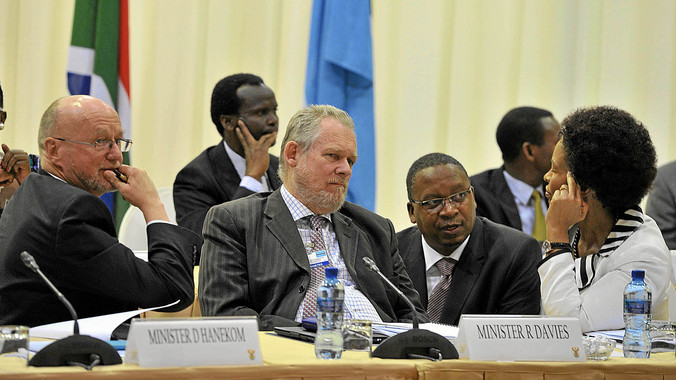
In July this year, a clearly frustrated Trade and Industry Minister Rob Davies told Parliament that there had been little progress on a 2011 agreement intended to advance the region’s development integration, and it was stifling its real ­economic development.

South Africa’s payments to SACU currently amount to R48.3-billion annually – a substantial amount, considering the budget deficit is presently R146.9-billion, an estimated 4.5% of gross domestic product.

In the past, South Africa has had some room to reposition itself, but as Finance Minister Pravin Gordhan has pointed out, the South African fiscus has come under a lot of pressure as a result of factors such as the global slowdown, reduction in demand from countries such as China for commodities, and reduced demand from trade partners such as the European Union.

South Africa, which according to research data, last year contributed 1.26% of its GDP, or about 98% of the pool of customs and excise duties that are shared between union countries including Swaziland, Botswana, Lesotho and Namibia, wants a percentage of this money to be set aside for regional and industrial development.

The four countries receive 55% of the proceeds, and are greatly dependent on this money, which makes up between 25% and 60% of their budget revenue. South Africa has very little direct benefit, except when it comes to exporting to these countries. It receives few imports.

Changing the revenue-sharing arrangement

Efforts to change the revenue-sharing arrangement so that money can be set aside for regional development would result in less money going into the coffers of these countries.

It would also mean that a portion of the revenue that South Africa’s SACU partners now receive with no strings attached would in future include restrictions on how it is spent.

A source close to the department said adjustments to the revenue-sharing arrangement and the promotion of regional and industrial development were issues on which the South African government was not willing to budge.

So seriously is South Africa viewing the lack of progress on the 2011 agreement, a document prepared for Cabinet discussion includes pulling out of SACU as one of its options, a source told the Mail & Guardian.

This could not be confirmed by the government, but two senior sources said South Africa was very aware of the dependence of its neighbours on income from the customs union, in particular Swaziland and Lesotho, and the impact its collapse could have on these economies.

Professor Jannie Rossouw of the University of South Africa’s department of economics believes a new revenue-sharing arrangement is essential for the long-term sustainability of SACU countries.

South Africa’s contribution

He also said that South Africa’s contribution as it presently stands should be recognised as development aid and treated as such by the international community.

Between 2002 and 2013, total transfers amounted to 0.92% of South Africa’s GDP, which exceeds the international benchmark of 0.7% set by the Organisation for Economic Co-operation and Development, he said in his research.

“It is noteworthy that South Africa transfers nearly all customs collections to SACU countries. Total collection since 2002 amounted to about R249-billion, while transfers to SACU were about R242-billion,” Rossouw said. The South African Revenue Service (SARS) recognises that inclusion of trade with Sacu would have a substantial impact on South Africa’s ­official trade balance.

South Africa’s total trade deficit for 2012 was R116.9-billion and, according to SARS, had trade with the union been included, it would have been much reduced to R34.6-billion.

South Africa has budgeted to increase its allocation to SACU from R42.3-billion in the 2012-2013 financial year to R43.3-billion this financial year and in the 2014/2015 financial year.

In 2002, the SACU agreement was modified to include higher allocations for the most vulnerable countries, Swaziland and Lesotho, and it established a council of ministers, which introduced a requirement for key issues to be decided jointly. In 2011, a summit was convened by President Jacob Zuma in which a five-point plan was established to advance regional integration.

Review of the revenue-sharing arrangement

This involved a review of the revenue-sharing arrangement; prioritising regional cross-border industrial development; making cross-border trade easier; developing SACU ­institutions such as the National Bodies (entrusted with receiving requests for tariff changes) and a SACU tariff board that would eventually take over the functions of South Africa’s International Trade Administration Commission (ITAC); and the development of a unified approach to trade negotiations with third parties.

Davies told Parliament that there had been little progress in the past three years on these five issues.

Xavier Carim, the director general of the international trade division of the department of trade and industry, said there had been positive developments regarding agreements on trade negotiations, such as those with the European Union and India on trade, and progress had been made on the development of SACU institutions, but progress was slow on the other issues.

Davies told Parliament it was difficult to develop common policy among countries that varied dramatically in economic size, ­population and levels of economic, legislative and institutional development.

He cited differences over approaches to tariff settings as an example.

“South Africa views tariffs as tools of industrial policy, while for other countries tariffs are viewed as a source of revenue,” Davies said.

A proposal that cause all the problem

“A key problem that led to differences was the proposal by one member for lower tariffs to import goods from global sources that were cheapest, which ultimately undermined the industry of another member. This was primarily an issue of countries who viewed themselves as consumers rather than producers.”

The South African government is trying diplomacy as its first option. A senior government source said issues around SACU made up a large part of talks last week between Botswana and South Africa on the establishment of co-operative agreements on trade, transport and border co-operation.

Catherine Grant of the South African Institute of International Affairs said Botswana had long been considered the leader of the four countries. It would make sense for South Africa to bring Botswana on board before the meeting.

Grant said the SACU agreement needed to be re-examined and modernised.

“There needs to be a review of the revenue-sharing formula that is less opaque and is easier to understand. The present system is complicated, making it hard to work out exactly how much countries are getting. It’s clear that Rob Davies feels hamstrung by SACU and has done for some time, because decisions cannot be made without the agreement of all five members, who have different needs and requirements.”

The trade balance is one of the elements that resulted in South Africa’s current account, which has recorded significant deficits in recent months, coming in as high as 6.5% of GDP in the second quarter of 2013.

Trade between South Africa and SACU has always been recorded, but for historical reasons it has been kept separate from official international trade statistics. Source: Mail & Guradian
 

Recent Happenings in the World of Customs Scanning

Herewith a collection of articles on customs non-intrusive inspection around the world. True to form, the acquisition and use of such technology is not without controversy of some sort.

Spanish Customs to use ‘Full-body See-through’ Scanner at Frontier

Backscatter Van

American Science and Engineering’s (AS&E) Z Backscatter Van

July 2013 – The Spanish Government is to deploy a ‘Mobile X-Ray Scanner’ at the frontier to detect cross-frontier smuggling of tobacco. A Panorama Investigation reveals the mobile X-ray scan technology mentioned is one installed and operated in a mobile vehicle (van) – it is system that is potentially dangerous!

These plans are said to be part of a strategy to crack-down on cigarette smuggling across the frontier, which they say is causing untoward damage to the Spanish economy. The regional special representative of ‘La Agencia Tributaria’ (Spanish Tax) Alberto García Valera, says he has found it necessary to spend money and invest heavily on new technologies to combat fraud and tax evasion in places like the Le Linea-Gibraltar Frontier.

‘La Agencia Tributaria’ purportedly placed an order with the American company American Science and Engineering (AS&E) for the delivery of this very sophisticated, hi-tech scan system known as the ZBV S-Class.

The ZBV or Z Backscatter Van, is a mobile X-ray vehicle screening system, it uses technology known as ‘Backscatter’ which provides a photo-like images of concealed objects, such as explosives, drugs, currency trade-fraud items and of course things like cigarettes, but the latter not exclusively so.

The ZBV X-Ray Scanning equipment is integrated into a standard van type vehicle, usually powered by a Mercedes or Chrysler engine. The ZBV creates a photo-like Z Backscatter images showing materials by directing a sweeping beam of X-rays at the object under examination, and then measuring and plotting the intensity of scattered X-rays…if you’re in your car, your body will get zapped by the X-Ray beams!

Read the full report by Panaorama (Gibralter) here!

Axis Cams Integrated with X-ray Scanners Secure Korean Airport Customs

Korean Customs Integrated Control Room - Gimhae International Airport

Korean Customs Integrated Control Room – Gimhae International Airport

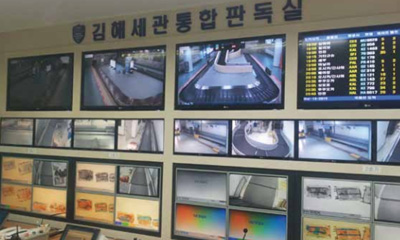
November 2013 – Korean Customs at Gimhae International Airport , Busan has introduced Axis network cameras and integrated it with the existing X-ray scanners for checked bags into one location. This has allowed Customs to manage its workforce more efficiently and enhance its monitoring capabilities through the “Choose and Focus” function.

An integrated X-ray viewing room has allowed Korean Custom’s management to divide the workforce into teams of two, and the accuracy of reading and individuals’ reading capabilities have been significantly improved. Since the reading staff has been grouped into teams, their level of fatigue has been reduced, and they can concentrate and read multiple X-ray scans at all times.

Network Cameras with panoramic function in each carousel monitor the CIQ customs, immigration and quarantine area that passengers must go through when departing or arriving. The cameras now permit Customs to accurately track and monitor travellers as they claim their baggage. All stages from Check-in of checked bags to their check-out are carefully recorded, resulting in disputes with travelers about lost or damaged bags can be smoothly resolved. The high-definition network cameras allow the entire route to be monitored for abnormal cargo. It is much easier to identify risks and monitor movement during incidents. Read the full report here! Source: asmag.com

Nigeria Customs takes inventory, evaluates scanning machines ahead of takeover

Nigeria Customs takes inventory, evaluates scanning machines ahead of takeover

Nigeria Customs takes inventory, evaluates scanning machines ahead of takeover

October 2013 – Nigeria Customs Service (NCS) has begun an inventory and evaluation of the scanning machines with a view to ascertaining the state of the machines ahead of the December 1, take over date.

In an exclusive interview with Vanguard at the Customs Headquarters in Abuja, service spokesman, Mr. Adewale Adeniyi, a Deputy Comptroller of Customs said that consultants and experts including the manufacturers of the scanners (Smith of France) were all brought to carry test of the machines.

Adeniyi also said that more than 500 of the newly recruited men and officers of the service will be deployed to both the information technology and scanning departments. He disclosed that in the course of evaluating the machines, it was discovered that maintenance of the scanners had been compromised.

He added that the development will not in any way stop the take over of the scanning machines by the Nigerian Customs Service. The Customs spokesman disclosed that the maintenance of the machines were sub-contracted to other consultants other than the manufacturers.

Adeniyi further disclosed that the integrity of the machines in terms of maintenance have been compromised. Source: www.energymixreport.com

Nicaragua – Fixed Rate to be Charged for Customs Scanning (Fail!)

Port of Corinto, Nicaragua (Picture: Wikipedia)

Port of Corinto, Nicaragua (Picture: Wikipedia)

July 2013 – The government has recognized that it was a mistake charging for the scanner service based on the value of the cargo.

The presidential adviser for economic affairs, Bayardo Arce, believes the head of the Directorate General of Customs (DGA), Eddy Medrano, may have overstepped the mark in approving a contract with the company Alvimer Internacional y Compañía Limitada on the right to collect on the declared value of the goods that pass through the scanner system to be installed in the country’s customs offices.

“We have been made aware of this criterion of entrepreneurs and talked with President … and it is clear that a technical error was made,” the official, adding that the fee collected will be at a fixed rate as in the draft Law on Granting of Non Intrusive Inspection Services in National Security Border Controls, prior to the approval of Congress.

The concessionaire in charge of scanning services in Nicaraguan customs offices would recover its investment in 15 months and earn $220 million in the 15 year contract.

From all this money, 10% will go to the Directorate General of Customs (DGA). According to preliminary calculations made ​​by the Nicaraguan private sector, the company will invest about $22.4 million in the seven scanners to be installed in each of the seven Nicaragua customs offices, recovering its investment in just 15 months. Source: centralamericadata.com

The Scary New Technology of Iris Scanners

Picture: Ben Mortimer

Picture: Ben Mortimer

The technology of ‘Minority Report‘ is closer than you think, according to Russell Brandom writing in www.theverge.com.  A company called AOptix recently unveiled its latest creation, pitched as a game-changer in the world of iris recognition. In less grandiose terms, it’s basically an iPhone case for cops, providing military-grade biometric scanning on the move. The AOptix shell is built to provide everything an officer needs to process a suspect on the spot. There’s a fingerprint scanner on the back, the capacity for facial recognition, and the new guest at the party: an iris scanner. The camera’s a little tricky — you have to hold it a little less than a foot away, and keep it steady for a few seconds — but otherwise, using the Stratus is like taking pictures with a heavier, clunkier iPhone. Crucially, it’s small enough to hold with just one hand, so the officer using it can still reach for his gun.

The Stratus has only been on the market a few weeks, but AOptix is already pitching it for use at border crossings and in airport security. The US Department of Defense is interested too, and provided a $3 million grant for AOptix to develop the tech further. Once it’s normalized, scanning your iris could become as routine as swiping a credit card. “We really feel it’s going to be an inflection point in the biometrics industry,” AOptix marketing director Joey Pritikin told The Verge. “We can do business, we can conduct health care, we can go to disaster areas. This will really open up new markets.” After years of lurking in the margins, AOptix thinks iris scanning is ready for the big time.

Outside of the West, it’s already there. Hundreds of millions of Indians have already been iris-printed, along with thousands of Iraqi civilians and anyone who goes through customs regularly in Dubai. It’s the gold standard of a modern ID program, easier than fingerprinting and more stable than facial recognition. All you have to do is look at the camera and open your eyes. And unlike in retinal scans, the scanner doesn’t need to be up close. It’s just a photograph, taken in infrared, which in theory could work if taken from across the room.

If this sounds familiar, it’s probably because you saw something like it in Minority Report, where omnipresent eye-flashers identify everyone who walks through a public plaza, targeting ads at them and feeding the police information about their every move. Even Pritikin acknowledges the precedent, saying, “Tom Cruise did not do us any favors.” But within the industry, the product is less exotic, just the latest and best solution to the persistent problem of quick, reliable identification. What does the world look like when proving ID is as easy as taking a photograph? Like it or not, we’re about to find out.

Iris Scanner (Picture: Ben Mortimer)

Iris Scanner (Picture: Ben Mortimer)

If you find yourself flying into Dubai, you can see it in action. The city’s airport recently made the switch to an automated two-gate customs system, also made by AOptix. Scanning your passport opens the first gate; an iris print opens the second. Once the system is fully deployed, the company says it will bring wait times down from 49 minutes to 22 seconds. A private company called Clear is already trying this on an opt-in basis in the US. In exchange for a quick iris scan, their service will let you skip security in half a dozen American airports.

The bargain is simple enough: In exchange for one more biometric, you get to skip an hour in customs, or the indignity of a TSA checkpoint search. And as an ID technology, it simply works better. It’s less invasive, harder to fake (although still possible), and more effective at everything we want ID tech to be good at. Of course, that same effectiveness makes a Minority Report future all the more plausible.

For countries with national ID programs, this Orwellian scenario is already starting to play out. In collaboration with MorphoTrust, India has already iris-printed 350 million of its citizens as part of its national ID program, and they’re on track to scan all 1.2 billion. This year, Mexico will roll out the first iris-matched ID cards in the world as part of a $25 million program. In both cases, the ID will help stop fraud and provide poverty assistance, helping solve half a dozen urgent humanitarian issues at once. Despite these good intentions, this kind of mass identification has civil libertarians very worried.

“The concern is that biometrics will be used for the mass tracking of individuals,” according to Jay Stanley of the American Civil Liberties Union. “If that kind of ID system becomes routine and widespread, it turns us into a kind of checkpoint society.” Even in India, the system is still only used at police stations and government offices, but once the print is connected to a universal ID, it’s easy to imagine iris scans becoming as commonplace as pulling out a driver’s license.

For now, we’re left with less invasive devices like the Stratus, an iris camera aimed squarely at US law enforcement. The FBI is already building an iris system to track persons of interest, and it’s not hard to see them using a Stratus-like device to collect prints. Iris cameras haven’t landed in the hands of beat cops yet, but AOptix is trying its best to get them there. The path of the technology, from the military to local law enforcement, is almost complete. The only question is what it will look like when it gets here. Source: http://www.theverge.com


Experts Caution Against Rush into Trade Facilitation Agreement

Bali 2013A rather lengthy article published by Third World Network, but entirely relevant to trade practitioners and international supply chain operators who may desire a layman’s understanding of the issues and challenges presented by the WTO’s proposed agreement on ‘Trade Facilitation’. I have omitted a fair amount of the legal and technical references, so if you wish to read the full unabridged version please click here! If you are even more interested in the subject, take a look through the publications available via Google Scholar.

A group of eminent trade experts from developing countries has advised developing countries to be very cautious and not be rushed into an agreement on trade facilitation (TF) by the Bali WTO Ministerial Conference, given the current internal imbalance in the proposed agreement as well as the serious implementation challenges it poses.

“While it may be beneficial for a country to improve its trade facilitation, this should be done in a manner that suits each country, rather than through international rules which require binding obligations subject to the dispute settlement mechanism and possible sanctions when the financial and technical assistance as well as capacity-building requirements for implementing new obligations are not adequately addressed.”

This recommendation is in a report by the Geneva-based South Centre. The report, “WTO Negotiations on Trade Facilitation: Development Perspectives”, has been drawn up from discussions at two expert group meetings organised by the Centre.

Noting that an agreement on trade facilitation has been proposed as an outcome from the Bali WTO Ministerial Conference, the South Centre report said that the trade facilitation negotiations have been focused on measures and policies intended for the simplification, harmonization and standardization of border procedures.

“They do not address the priorities for increasing and facilitating trade, particularly exports by developing countries, which would include enhancing infrastructure, building productive and trade capacity, marketing networks, and enhancing inter-regional trade. Nor do they include commitments to strengthen or effectively implement the special and differential treatment (SDT) provisions in the WTO system”.

The negotiations process and content thus far indicate that such a trade facilitation agreement would lead mainly to facilitation of imports by the countries that upgrade their facilities under the proposed agreement. Expansion of exports from countries require a different type of facilitation, one involving improved supply capacity and access to developed countries’ markets.

Some developing countries, especially those with weaker export capability, have thus expressed concerns that the new obligations, especially if they are legally binding, would result in higher imports without corresponding higher exports, which could have an adverse effect on their trade balance, and which would therefore require other measures or decisions (to be taken in the Bali Ministerial) outside of the trade facilitation issue to improve export opportunities in order to be a counter-balance to this effect.

According to the report, another major concern voiced by the developing countries is that the proposed agreement is to be legally binding and subject to the WTO’s dispute settlement system. This makes it even more important that the special and differential treatment provisions for developing countries should be clear, strong and adequate enough. The negotiations have been on two components of the TF: Section I on the obligations and Section II on special and differentiated treatment (SDT), technical and financial assistance and capacity building for developing countries.

Most developing countries, and more so the poorer ones, have priorities in public spending, especially health care, education and poverty eradication. Improving trade facilitation has to compete with these other priorities and may not rank as high on the national agenda. If funds have to be diverted to meet the new trade facilitation obligations, it should not be at the expense of the other development priorities.

“Therefore, it is important that, if an agreement on trade facilitation were adopted, sufficient financing is provided to developing countries to meet their obligations, so as not to be at the expense of social development,” the report stressed.

The report goes on to highlight the main issues of concern for a large number of developing countries on the trade facilitation issue. It said that many developing countries have legitimate concerns that they would have increased net imports, adversely affecting their trade balance. While the trade facilitation agreement is presented as an initiative that reduces trade costs and boosts trade, benefits have been mainly calculated at the aggregate level.

Improvements in clearance of goods at the border will increase the inflow of goods. This increase in imports may benefit users of the imported goods, and increase the export opportunities of those countries that have the export capacity.

However, the report noted, poorer countries that do not have adequate production and export capability may not be able to take advantage of the opportunities afforded by trade facilitation (in their export markets).

“There is concern that countries that are net importers may experience an increase in their imports, without a corresponding increase in their exports, thus resulting in a worsening of their trade balance.”

Many of the articles under negotiations (such as the articles on ‘authorized operators’ and ‘expedited shipments’) are biased towards bigger traders that can present a financial guarantee or proof of control over the security of their supply chains. There is also the possibility that lower import costs could adversely affect those producing for the local markets.

“The draft rules being negotiated, mainly drawn up by major developed countries, do not allow for a balanced outcome of a potential trade facilitation agreement,” the report asserted.

New rules under Section I are mandatory with very limited flexibilities that could allow for Members’ discretion in implementation. The special and differential treatment under section II has been progressively diluted during the course of the negotiations. Furthermore, while the obligations in Section I are legally binding, including for developing countries, developed countries are not accepting binding rules on their obligation to provide technical and financial assistance and capacity building to developing countries.

The trade facilitation agreement would be a binding agreement and subject to WTO dispute settlement. The negotiating text is based on mandatory language in most provisions, which includes limited and uncertain flexibilities in some parts.

Therefore, if a Member fails to fully implement the agreement it might be subject to a dispute case under the WTO DSU (Dispute Settlement Understanding) and to trade sanctions for non-compliance.

“Many of the proposed rules under negotiations are over-prescriptive and could intrude on national policy and undermine the regulatory capacities and space of WTO Member States. The negotiating text in several areas contains undefined and vague legal terminology as well as ‘necessity tests’, beyond what the present GATT articles require.”

Continue reading →

SARS – SA trade statistics will in future include trade data with BLNS countries

Import exportThe Minister of Finance has approved that South Africa’s trade statistics will in future include data in respect of trade with Botswana, Lesotho, Namibia and Swaziland (BLNS countries).

BLNS country-trade statistics have previously not been included in the trade statistics. This arose historically because of the free flow of trade from a customs duty point of view within the Southern African Customs Union (SACU).

BLNS merchandise trade however, has a material impact on South Africa’s trade balance. South Africa exported R103.8bn to and imported R21.5bn from BLNS countries. In the last full year (2012) this resulted in a positive trade balance of R82.3bn for trade with BLNS countries.

South Africa’s total trade deficit for 2012 was R116.9bn. Had the BLNS trade data been included, the deficit would have been R34.6bn.

The view is therefore that direct trade within the BLNS countries should be included in the calculation of the monthly trade statistics to provide a more accurate reflection of South Africa’s trade.

Furthermore, SARS’s customs modernisation programme has resulted in its systems moving to new technologically enhanced platforms that enabled better electronic capturing of trade data that was previously done manually. The modernised system greatly improves the accuracy of trade data and allows the reporting and analysis of trade data to be done in real-time.

SARS worked very closely with the National Treasury (NT) and the South Africa Reserve Bank (SARB) in preparing the trade statistics that includes trade with the BLNS countries.

The SARB has welcomed the revision of the trade statistics “as valuable additions to building block data used to compile South Africa’s balance of payments.”

“While the Bank has always included estimates of the trade between South Africa and this group of countries in its compilation of South Africa’s overall imports and exports, the new building block data will be incorporated in the balance of payments, leading to improved measurement. Previously published statistics will also be revised. The revised balance of payments data for South Africa will be finalised in the next few weeks and published in the Bank’s Quarterly Bulletin, due to be released on 3 December 2013,” the SARB said in a statement.

Although SARS is confident as to the accuracy of the BLNS trade numbers, it is SARS’s intention to approach the United Nations to review the treatment of South Africa’s trade data that will now include BLNS trade numbers.

In addition to the inclusion of the BLNS trade figures, SARS is also contemplating certain other revisions to improve the reporting of trade statistics in the future. Some of these include the following:

  • publishing of imports on both a Free On Board (FOB) and a Cost Insurance Freight (CIF) basis to align it with UN principles,
  • compiling statistics on the date when the goods are actually released into or from South Africa’s economy, rather than using the date on which the goods entered the customs’ system for ultimate release from or into the SA economy, and
  • publishing gold exports as recorded on the SARS system reflecting the physical export movement of gold as opposed to the current practice of reporting the SARB gold export data on the IMF change of ownership basis.
  • These changes will however, only be finalised and implemented after consultation with international experts and other relevant stakeholders.

For more details visit sars.gov.za


Consitutional Court confirms invalidity of certain Sections to the Customs Act

ConCourtThe Constitutional Court (South Africa) handed down judgment in the Gaertner & Orion Cold Storage matter today on the unconstitutionality of certain parts of section 4 of the Customs and Excise Act, 1964.

Section 4(4)-(6) had been challenged in the Western Cape High Court in April 2013 and the matter was taken to the Constitutional Court to be challenged further.

The issue before Court was that SARS conducted a search in terms of section 4 at the third applicant’s premises (Orion Cold Storage (OCS)) and at the house of Mr Gaertner, a director of OCS.

The Act does not require SARS officials to obtain a warrant before a search is conducted and the Applicants launched the proceedings in the High Court in which they sought, and were granted, orders declaring parts of section 4 unconstitutional to the extent that they permit targeted non-routine searches without judicial warrant.

The Applicants argued in the Constitutional Court that section 4 is over broad in that it allows for non-routine or targeted searches by SARS without a warrant.

Briefly, the Constitutional Court order provides that –

  • The declaration of constitutional invalidity of sections 4(4)(a)(i)-(ii), 4(4)(b), 4(5) and 4(6) of the Customs and Excise Act 91 of 1964 made by the Western Cape High Court, Cape Town is confirmed.
  • The declaration of invalidity is however not retrospective.
  • The order is suspended for six months to afford the Legislature an opportunity to cure the invalidity.
  • The Constitutional Court also instructed that during the period of suspension, section 4(4) of the Customs and Excise Act must be applied in accordance with alternative wording.

To access the Constitutional Court judgement (November 2013), Click Here!

To access the Western Cape High Court judgement (April 2013), Click Here!

Parliament Postpones Customs Bills

Thaba Mufamadi, chairman of Parliament’s finance committee. Picture - Financial Mail

Thaba Mufamadi, chairman of Parliament’s finance committee. Picture – Financial Mail

Parliment’s standing committee on finance (SCoF) has decided to postpone its deliberations on two draft customs-related bills until next year to allow importers and the freight-forwarding industry more time to comment on the proposals which threaten the status of City Deep as an inland port. This followed an appeal by the South African Association of Freight Forwarders that it had had insufficient time to consider the substantially revised draft Customs Control Bill and Customs Duty Bill, which required that imported goods would have to be cleared at the first point of entry.

The association, supported by a range of other business organisations, including the Johannesburg Chamber of Commerce and Industry, warned that the bills could be challenged on constitutional grounds if the process of consultation was deficient. All political parties supported the proposal by finance committee chairman Thaba Mufamadi on Wednesday that the deliberations on the bills be postponed until next year. He instructed stakeholders to make their submissions to the South African Revenue Service (SARS) by December 15.

Mr Mufamadi also took cognisance of concerns raised by Business Unity South Africa that parliamentary processes did not allow sufficient time to comment, for example, on the medium-term budget policy statement. Industry has warned of port delays and trade disruption if the proposals were to be adopted. The Customs Control Bill proposes that goods be cleared at the first port of entry into South Africa. This will mean that inland ports such as City Deep in Johannesburg would no longer be designated places of entry or exit for customs purposes. In the past, containerised cargo could move directly to inland ports on arrival in the country under cover of a manifest. A new declaration — of the nature, value, origin and duty payable on the goods — would replace the manifests.

SARS said these did not provide sufficient information to undertake a risk assessment. Another bone of contention for industry was the “extremely severe” penalties proposed in the draft Customs Duty Bill. Following the uproar about the proposals SARS offered a compromise earlier this week as a way out of the impasse. Instead of a clearance at the port of entry, a mandatory advance customs clearance of the goods three days before their arrival at the first port of entry would be required. Goods consigned to inland terminals such as City Deep would be released conditionally. The system would be tested for the whole of next year to iron out any problems.

An alternative option would be for the goods to undergo a lesser form of clearance at the first point of entry. This would still entail providing customs authorities with the same level of information on the tariff, value and origin of goods, which would be submitted by electronic data interchange. The importer would be held accountable for the information that was provided. SARS official Kosie Louw said that because this document would not have the formal status of a clearance certificate, it would not disrupt existing legal contractual arrangements, as claimed. The goods would still move CIF (cost insurance and freight) from the port to City Deep. SARS has also proposed softening the penalty provisions so that errors not resulting in any prejudice to customs revenue will be subject to penalties only after three warnings. These penalties will be discretionary and applied leniently in the first 12 months of the bill coming into force to allow business time to properly prepare for the change. An appeal process has been included. Source: Business Day Live.