New Philippines Customs Chief Cracks Down on Corruption

To fix the Bureau of Customs, President Benigno S. Aquino III needed a numbers guy, someone who could make sense of the thousands of shipments and billions of pesos passing daily through the Philippines’ ports. He turned to John P. Sevilla. Three months after taking over as commissioner in December, Mr. Sevilla told The Wall Street Journal he had been “shocked” by the Bureau’s failure to analyze the rich data it received, information that held vital clues to its endemic corruption problems.

“I’m amazed that nobody bothered to put the data together until about a month ago,” Mr. Sevilla said. “But we found out that we open up less than 1% of [shipping] containers, but of the containers that we open, 90% have problems.”

He was also incredulous that Customs lacked a single reference source to help examiners make complex calculations about duties and fees incurred by traders. One is now being compiled, Mr. Sevilla said, “to make it easier for people to do their jobs…so that they have no excuse” for undercharging importers, a common practice rewarded with illegal payments.

Customs is tasked with collecting revenue at the nation’s 17 major and 43 minor ports. But it has a history of missing targets: It pulled in 304.5 billion pesos ($6.8 billion) in 2013 — over a fifth of all government revenue, but still 35 billion shy of its goal. The under-invoicing of traded goods has cost the country $23 billion in lost tax revenue since 1990, according to a February report by Global Financial Integrity, a U.S. research firm. The Aquino administration’s keynote policy of improving governance thus made Customs a prime target for reform. A far-reaching overhaul was ordered last October, and Mr. Sevilla, a former finance undersecretary, was parachuted in soon after.

Before entering government in 2006, Mr. Sevilla held directorships at investment bank Goldman Sachs and ratings agency Standard & Poor’s, having earned degrees at Cornell and Princeton. His boss, Finance Secretary Cesar Purisima, hailed him as the right person to untangle the mess, “someone who is results-oriented.”

Not everyone was convinced: In January, Senate Minority Leader Juan Ponce Enrile said Mr. Sevilla was “in the dark” about how turn Customs around. Undeterred, the studious-looking commissioner has spent the last three months poring over reams of customs data in which the dealings of smugglers and corrupt officials have long lain hidden.

All import-export transactions were now being published online for public scrutiny, Mr. Sevilla said, “I think we’ve turned from being the most secretive government agency to being by far the most transparent.”

At the Port of Manila, one of three ports in the capital, importers and brokers crowded around glass service windows, an innovation from before Mr. Sevilla’s time designed to block access to officials and make them harder to bribe. Inside, on computers surrounded by mountains of paperwork in what remains a semi-automated operation, customs examiners placed their electronic signature on each shipment after calculating the requisite duties and fees.

The electronic signature system also predates Mr. Sevilla. The difference now, he said, is that he is actively policing it, cross-referencing signatures against undervalued shipments, and punishing the officials responsible. He said the threat of being caught was critical when front-line staff are offered bribes equivalent to their monthly salaries “a couple of times a day.”

Likewise, the credible threat that your container might be physically inspected is the best deterrent against false import declaration, Mr. Sevilla argued. But with 18,000 containers piled up at Manila International Container Port alone, the challenge is to open the right ones.

The Bureau has 3,600 staff, but aims to hire nearly 3,000 more, partly to increase the inspection rate. Around a fifth of shipments are flagged for further examination. Some of these are X-rayed and, if necessary, physically inspected.

Mr. Sevilla said he is seeking an extra 250 million pesos for more inspections after figuring out that Customs collects an average of 125,000 pesos per opened container, against a cost of 10,000 pesos for conducting the inspection — making the process “a no-brainer.”

The Bureau also regularly auctions off seized items to further boost revenues. At one such auction in mid-February, buyers snapped up everything from a smuggled Harley Davidson to batches of animal feed. Other illegal shipments are sent straight back to their point of origin, such as the 50 containers of rotting garbage — declared as “recyclable plastic” -from Canada last month.

The new regime is already producing results, Mr. Sevilla said, citing a 19.3% year-over-year increase in collections to 81.3 billion pesos in November to January. Further improvements will be needed: Customs has been tasked with collecting 408.1 billion pesos this year, far more than it has ever managed before. The true test of the Bureau’s progress under Mr. Sevilla will lie, fittingly, in the numbers. Source: The Wall Street Journal

Angola’s new customs tariff expected to increase tax revenues

National Customs building in Luanda. [Photo - Lino Guimarães.]

National Customs building in Luanda. [Photo – Lino Guimarães.]

Angola’s new customs tariff, which came into effect on 1 March, is expected to increase tax revenues by around 23 billion kwanzas per year, according to Angolan news agency Angop.

Citing official figures, the agency said that the figure was a 10 percent increase on customs taxes provided by the previous tariff list, which came into effect in 2007.

The director of the Tariff and Trade department of the Angolan National Customs Service said recently that of a total of 6,651 products on the new tariff list, 2,942 are free from taxes and 1,150 products had their tariff reduced to 2 percent.

On the 2007 tariff list there were 2.576 tax-free products and 914 charged at a rate of 2 percent, of a total 6,011 products.

Amongst the items that can no longer enter the country, according to the new tariff list, are home-made medications, goods that breach copyright and industrial copyright and pornography.

The new customs tariff, which will be in place until 2017, is intended to improve circulation of Angolan goods and encourage exports. Source: macauhub

Customs reform in Nigeria continues after the termination of the Destination Inspection service

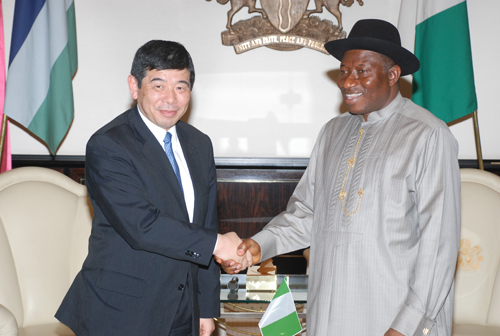
Secretary General Mikuriya during a courtesy visit paid to the President of the Republic of Nigeria, Mr. Goodluck Jonathan (WCO)

Secretary General Mikuriya during a courtesy visit paid to the President of the Republic of Nigeria, Mr. Goodluck Jonathan (WCO)

At the invitation of the Comptroller-General of the Nigeria Customs Service (NCS), Mr. Abdullahi Dikko Inde, the WCO Secretary General Kunio Mikuriya visited Nigeria on 17 and 18 February 2014 to observe Customs transformation activities after the termination of Destination Inspection contracts on 1 December 2013.

In Lagos, the Secretary General went to Apapa Port, Nigeria’s major port, to see Customs operations and also to visit the Customs Training Centre for a mentorship talk with young officers: the NCS has recruited many recent university graduates and trained them in computer and other necessary skills.

Secretary General Mikuriya also presided over a Stakeholder Forum to interact with the private sector. The business community were supportive of the ongoing Customs transformation programme that was enhanced by an improved communication strategy for Customs, the use of information technology – the Nigeria Trade Hub – and the implementation of modern Customs methods, such as risk management.

The private sector also suggested better use of a database for risk management purposes, including valuation, and expressed their hope for the introduction of coordinated border management and a Single Window to simplify the multiplicity of regulations and inspections at borders.

The Secretary General also travelled to Abuja, Nigeria’s capital city, and was joined by three heads of Customs from neighbouring countries, namely Benin, Ghana and Niger, who wanted to learn from NCS’s experience and obtain Nigeria’s support, as well as that of the WCO, for terminating contracts with inspection companies in order to regain ownership of core Customs functions.

The Secretary General also paid a courtesy visit to the President of the Republic, Mr. Goodluck Jonathan.  As a former Customs official early in his career, the President talked fondly of his visit to the WCO to attend the 2012 Council Sessions and particularly noted the WCO’s strong and inspirational leadership. He also acknowledged the economic and social contribution of Customs to the nation, and promised to continue to support Customs reform in Nigeria and provide guidance and influence at the regional level. Source: WCO

WCO expert provides Customs Valuation training assistance

WCO expert Ian Cremer (centre, back row) with SARS staff involved in valuation training project.

WCO expert Ian Cremer (centre, back row) with SARS staff involved in valuation training project.

The SARS Academy is reviewing and packaging its training material so as to align its curriculum to international standards. It has embarked on a process of benchmarking its training material, kick-starting the process in the School of Customs and Excise.

WCO facilitator Ian Cremer recently visited the Academy at Waterkloof House in Pretoria to provide assistance with the strengthening of their valuation training programme. A group of trainers, curriculum developers and valuation specialists from business worked with the WCO valuation expert in the development of the new training material.

Training modules will be developed at the following levels: Basic, Intermediate and Advanced, and will be aligned to the WCO’s own valuation training modules.

Further work will now be conducted on developing a delivery strategy. This will ensure that key staff are trained to the necessary level and are able to conduct their duties in a professional level, meeting the dual requirements of fair and efficient revenue collection and the facilitation of compliant trade. Source: SARS

Custom’s Detector Dog Unit boosted by 52 new teams

SARS Customs North West Detector Dog Unit handlers. [SARS]

SARS Customs North West Detector Dog Unit handlers. [SARS]

Fifty two dogs and handlers were trained and deployed in the first phase of the SARS Customs Detector Dog Unit’s (DDU) capacity building programme. Trainees were for units from Limpopo, North West and Mpumulanga, Or Tambo International Airport and Durban. “This figure includes new dog handlers, replacement of old or sick dogs and refresher training of dogs not up to the required working standard, explained Hugo Taljaard, the senior manager of Custom’s Detector Dog Unit.

There are now 90 regionally based detector dogs and handlers deployed in the country. Most dogs are dual trained to detect different substances and /or goods. They have the capacity to detect the following substances/goods hidden in vehicles, vessels, aircraft, cargo, containers, mail, rail, luggage and buildings:

  • Explosives, firearms and ammunition
  • Narcotics (Mandrax, heroin, crystal meth, cocaine, cannabis and Ecstasy)
  • Endangered species (Rhino horn, ivory, wet / dry abalone, crayfish and lion bones)
  • Currency
  • DVDs
  • Copper wire
  • Tobacco products
  • Cell phones.

At the end of phase 1, which ran from April 2013 to January 2014, a ceremony was held in Zeerust to hand out certificates to the members of the newly-formed North West Detector Dog Unit.

“The commitment, passion and drive of the trainees must be acknowledged as this contributed to the successful training of the new handlers and dogs. The teams performed extremely well, achieving pass rates ranging from between 92% to 99.80% and this could only be achieved with positive team work and the drive to go the extra mile and make a difference. The teams proved their commitment in playing an impactful role in the prevention of smuggling,” Hugo said.

The cooperation between different government agencies also played a major role in the successful training and operational deployment of the Customs dogs and handlers during Phase 1 and will continue during Phase 2 and 3, he added.

Phase 2 of the programme is planned to get underway on 7 April 2014 with the establishment of three new units – at Port Elizabeth, Ladybrand and Ermelo.

The DDU has been a major success story for SARS in recent years, providing expert training to several Customs and Border agencies in the region. The topic has also invoked significant interest amongst readers and followers of this blog. It needs to be stressed, however, that the recruitment and deployment of dog trainers in SARS is currently all achieved through training and up-skilling of officers within the organisation. No external recruitment drives have occurred. The nature and extent of Customs Modernisation places SARS in the fortunate position of being able to redeploy staff to specialised roles such as the DDU.

Source: SARS

Former South African President Mbeki visits WCO to discuss the role of Customs in Africa

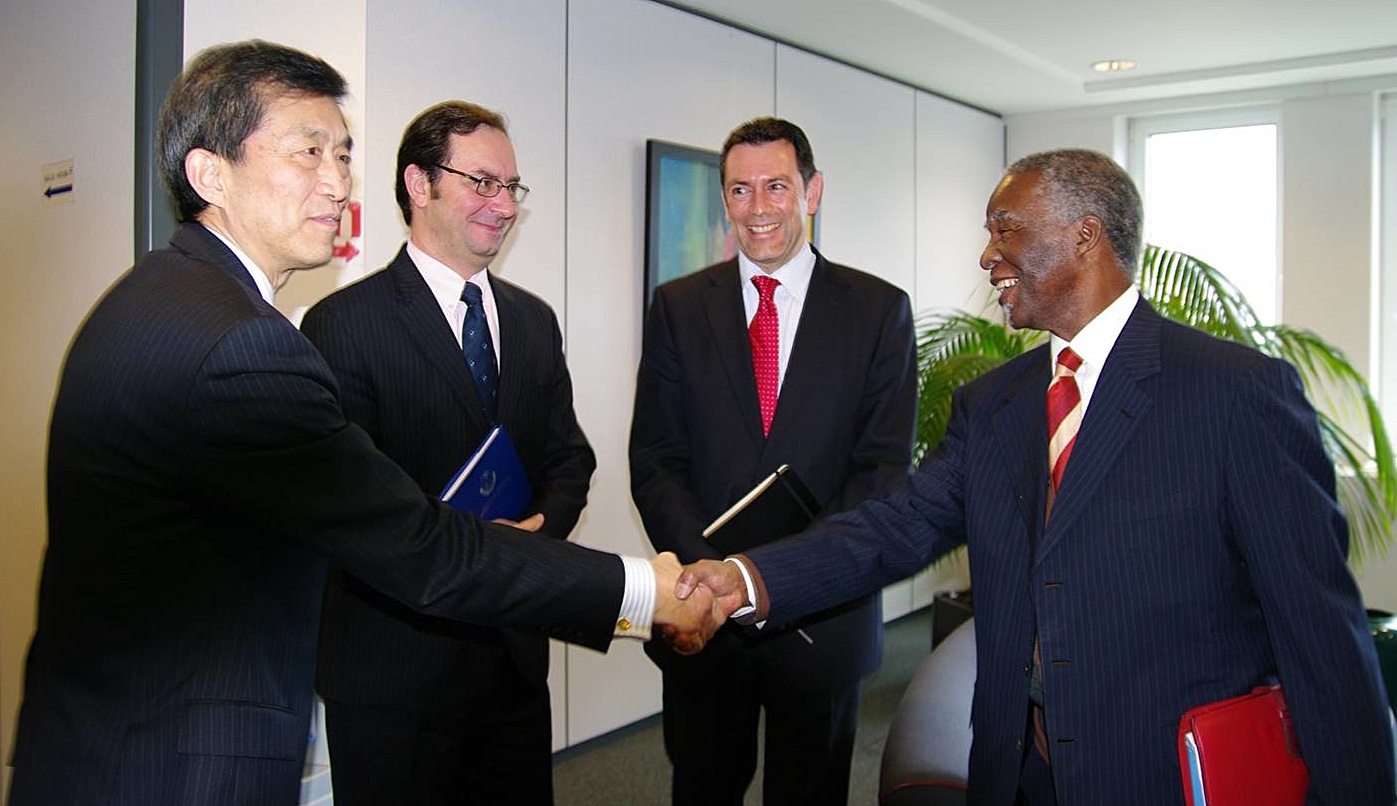
Senior WCO Management welcoming former South African President Thabo Mbeki, who is Chair of the High Level Panel on Illicit Financial Flows from Africa (WCO)

Senior WCO Management welcoming former South African President Thabo Mbeki, who is Chair of the High Level Panel on Illicit Financial Flows from Africa (WCO)

Members of the High Level Panel on Illicit Financial Flows from Africa, headed by former South African President Thabo Mbeki, visited WCO Headquarters on 11 February 2014 to obtain input for their report and recommendations to African countries in order to harness Africa’s hidden resources for development.

Secretary General Kunio Mikuriya explained the problems posed by cash couriers and trade-based money laundering (under-invoicing, over-invoicing, etc.) which had become major risk factors in Africa over the past decade as the continent had experienced economic growth largely based on the mining of its abundant natural resources. The Secretary General also referred to the need for countries to prioritize their policy regarding illicit financial flows and to provide adequate resources and a legal framework for Customs to establish controls in respect of free trade zones, thus enabling the Customs community to combat illicit trade and financial flows.

The discussion also covered, more broadly, the contribution of Customs to economic and social development in Africa, including regional economic integration. Mr. Mbeki and the High Level Panel members acknowledged the crucial part that Customs plays in improving the business climate by ensuring connectivity at borders, evidenced by the recent WTO Agreement on Trade Facilitation, as well as the role of Customs in ensuring transparency and security of the supply chain. They also appreciated the WCO approach of ownership-based capacity building which needed to be backed up by high-level political commitment. Source: WCO

Related articles

EAC Single Customs Territory launch postponed to June

Presidents Uhuru Kenyatta (Kenya), Paul Kagame (Rwanda) and Yoweri Museveni after the trilateral talks in Entebbe, Uganda. President Jakaya Kikwete of Tanzania and Pierre Nkurunziza of Burundi stayed out of the loop of the third infrastructure summit in Kigali, Rwanda on Monday. [Photo/PPS]

Presidents Uhuru Kenyatta (Kenya), Paul Kagame (Rwanda) and Yoweri Museveni after the trilateral talks in Entebbe, Uganda. President Jakaya Kikwete of Tanzania and Pierre Nkurunziza of Burundi stayed out of the loop of the third infrastructure summit in Kigali, Rwanda on Monday. [Photo/PPS]

Kenya, Uganda and Rwanda have postponed the single customs territory (SCT) roll-out, giving Burundi and Tanzania more time to prepare for the shift.

East Africa Community (EAC) secretariat custom officer Ally Alexander told the committee on Communication, Trade and Investment in Mombasa that the implementation of the model would begin in June.

“We are looking at reducing the costs and number of days to clear the cargo from Mombasa to Kampala to take three days instead of the previous 18 days,” Mr Alexander said.

The SCT was initially planned to begin in January with the three countries moving their revenue staff to common entry and exit points to begin goods clearance. But Tanzania and Burundi protested their exclusion in the arrangement after Kenya announced in January that it was ready to start accommodating revenue officials from the two landlocked states in Mombasa, prompting the three States to go slow on their plans.

On Monday, Mr Alexander told East African Legislative Assembly that SCT would reduce the cost of doing business and bring efficiency in trade. He said for exports within the region, a single regional bond for cargo would be issued to cater for goods from the port of Mombasa to different destinations.

An electronic cargo tracking system would also be used to avoid diversion of goods into the transit market. Under the model, goods will be checked by a single agency on compliance to regional standards and instruments.

“We want to avoid agencies replicating checking on standards, when it is done once this will not be repeated,” he said.

Mr Alexander said goods would be released upon confirmation that taxes have been paid and customs procedures fulfilled.

However goods heading to the Democratic Republic of Congo which is not a member of EAC will be cleared on a transit basis.

The establishment of SCT has raised concerns among stakeholders, key among them the registration of clearing agents and job losses. Kenya Revenue Authority deputy commissioner customs Nicholas Kinoti said the concerns would be addressed through legislations. Source: http://www.businessdailyafrica.com

Customs Bill gets escape clause – fallback to old system

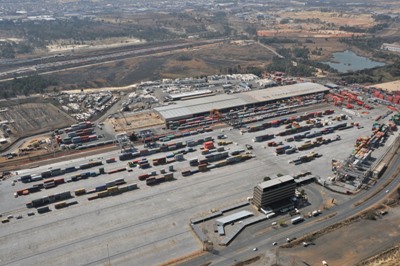
City Deep Container Terminal (Transport World Africa)

City Deep Container Terminal (Transport World Africa)

The controversial Customs Control Bill adopted by Parliament’s finance committee on Wednesday includes a “fallback” provision allowing for a return to the current customs control system should the new one fail.

A similar clause was included in the law that introduced value-added tax in 1991, allowing for a legal alternative to be implemented quickly if things do not work out as planned.

The committee also adopted the Customs Duty Bill and the Customs and Excise Amendment Bill as part of a total revamp by the South African Revenue Service (SARS) of the customs system. Visit this link for access to the Bills and submissions to the parliamentary committee.

The Customs Control Bill has been highly contentious as it will fundamentally change the way imported goods are cleared and released. The Democratic Alliance and Business Unity SA (Busa) opposed the original proposals on the grounds that doing away with manifests in the operations of City Deep would threaten the inland terminal in Johannesburg. SARS disputed this but nevertheless amended the bill.

Busa’s Laurraine Lotter yesterday welcomed the inclusion of the fallback clause but said she would have to see the details of the amendments introduced by SARS before commenting.

The fallback provision — which will automatically lapse five years after the effective date of the legislation — was included to be on the safe side, although SARS does not expect the proposed system to fail. It consulted widely on the bill, sought legal opinions about the legality of its amended proposals and ultimately secured the support of ship operators and agents, freight forwarders and Transnet for the amendments.

Implementation could be delayed by 12 months to allow the trade sufficient time to prepare.

SARS chief legal and policy officer Kosie Louw assured the committee this week the existence of City Deep would not be jeopardised. He urged adoption of the new system of customs control, saying the authorities needed more detailed information about incoming cargo to clamp down on fraud and illegal imports.

In terms of the bill, the submission by shipping lines of a manifest that provides only a general description of cargo will be replaced by a clearance declaration. This must contain information on the tariff, value and origin of the goods, and be submitted by the importer (which can be held accountable for its veracity) three calendar days before arrival at the first place of entry into South Africa.

Penalties will be levied only if the clearance is not submitted within three working days after the arrival of the goods. Containers will be provisionally released before arrival of the goods at the first place of entry and finally released at the first point of entry. To allow for seamless movement of goods, shipping lines will still issue multimodal contracts and through bills of lading.

“The revised proposal provides certainty and predictability to role players in the supply chain regarding the movement of goods,” Mr Louw said.

He said the new system would allow customs officials to undertake documentary inspections earlier, mitigating delays. High-risk containers would be identified before arrival, detained on arrival and held at the inland terminal for inspection. Containers with no risk would be able to move “seamlessly” to the inland terminals.

Mr Louw submitted that the objections to the proposal — that it would require traders to change their sale contracts; that sellers would be reluctant to sell under the new terms; that importers would be affected; that carriers would no longer issue a bill of lading to internal terminals; and that it would give rise to delays and congestion at ports — were found to lack foundation by international trade law expert Prof Sieg Eiselen and two advocates.

He said the proposed system would lay a solid and predictable framework for a modernised system of customs control that balanced the need for trade facilitation with the need to prevent imports of illicit goods. The current system was governed by an outdated, 1960s law. Source: Business Day

Related articles

SA Government to Prioritise and Pass Customs Bills

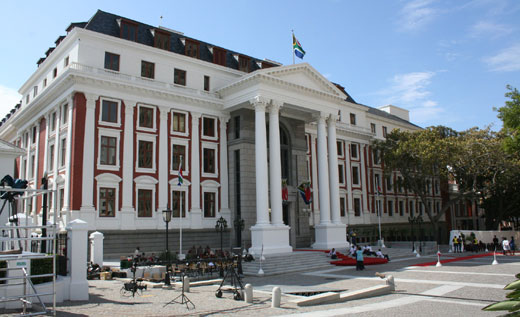
Parliment, Cape Town (Eye Witness News)

Parliament, Cape Town (Eye Witness News)

Government has decided to prioritise the passage of eight bills through Parliament. The bills deal with land restitution, labour relations, and customs and excise.

There are currently 42 bills before the National Assembly and the National Council of Provinces. With the fourth Parliament set to be dissolved ahead of looming general elections, Members of Parliament (MPs) are unlikely to deal with all 42 bills.

A statement just released by the ANC’s office in Parliament to the media states –

“The African National Congress in Parliament has taken note of the huge parliamentary workload which the institution has to process in the next few months before the expiry of the current five-year term of parliament. In terms of the Constitution, the current term of Parliament is set to end ahead of the 2014 national elections. The workload confronting the institution includes committee oversights, constituency programmes, adoption of committee reports, debates on the state of the nation address and the budget, and finalisation and adoption of Bills.”

“Currently, there are 24 Bills before the National Assembly (NA) and 18 currently before the National Council of Provinces (NCOP) – which is a total of 42 Bills the institution must pass before the elections. Our view is that all these Bills are important and therefore the institution should spare neither strength nor effort in ensuring they are processed qualitatively and thoroughly to ensure that they are converted into laws within the stipulated period. We are however alive to the possibility that not all these Bills may be passed in the next few remaining months of parliament.”

“We have therefore sought to prioritise the following Bills, which we believe Parliament should give special attention to ensure they are passed into laws. In terms of the rules of Parliament, Bills that are not passed within the current term of Parliament may be resuscitated in the next parliamentary term. This will be done for those Bills that might not be passed during this term.”

“In determining priority Bills, we have looked at criteria such as complexity, contentiousness, technicality, effect on provinces, and requirement for exhaustive consultation. [Three of the eight bills relate to Customs and Excise]

  1. Customs Control Bill of 2013 – The Customs Control Bill is intended to replace certain provisions of the Customs and Excise Act of 1964 relating to customs control of all means of transport, goods and persons entering or leaving South Africa. The Bills aims to ensure that taxes imposed by various other laws on imported or exported goods are collected and that various other laws regulating imports and exports of goods are complied with. To ensure effective implementation of customs control, the Bill provides for elaborate systems for customs processing of goods at places of entry and exit such as seaports, airports and land border posts;
  2. Customs Duty Bill of 2013 – The Customs Duty Bill is intended to replace certain provisions of the Customs and Excise Act of 1964 which relates to the imposition and collection of imports and export duties. The Bill primarily aims to provide for the levying, payment and recovery of import and export duties on goods imported or exported from South Africa. The Bill will be dealt with in terms of Section 77 of the Constitution; and
  3. Customs and Excise Amendment Bill of 2013 – The Customs and Excise Amendment Bill seeks to amend the provisions of the Customs and Excise Act of 1964 and to remove from the Act all the provisions that have now been incorporated into both the Customs Control Bill and the Customs Duty Bill. Essentially, because the Customs and Excise Amendment Act of 1964 strongly reflected rigidity reminiscent of the apartheid era controls, which are unsuitable to the current modern control systems, it has been split into both the Customs Control Bill and the Customs Duty Bill. The Customs and Excise Amendment Act of 1964 will for now be retained in an amended form for the continued administration of excise duties and relevant levies until it is completely replaced with a new law in future (i.e. Excise Duty Bill).”

Source: Excerpt of a press statement of the Office of the Chief Whip of the ANC, Parliament.

Landmark East and Southern African Customs forum focuses on modernisation

WCO ESA_Snapseed

Participants from all 24 members of the WCO’s Eastern and South African region attended the forum. [SARS]

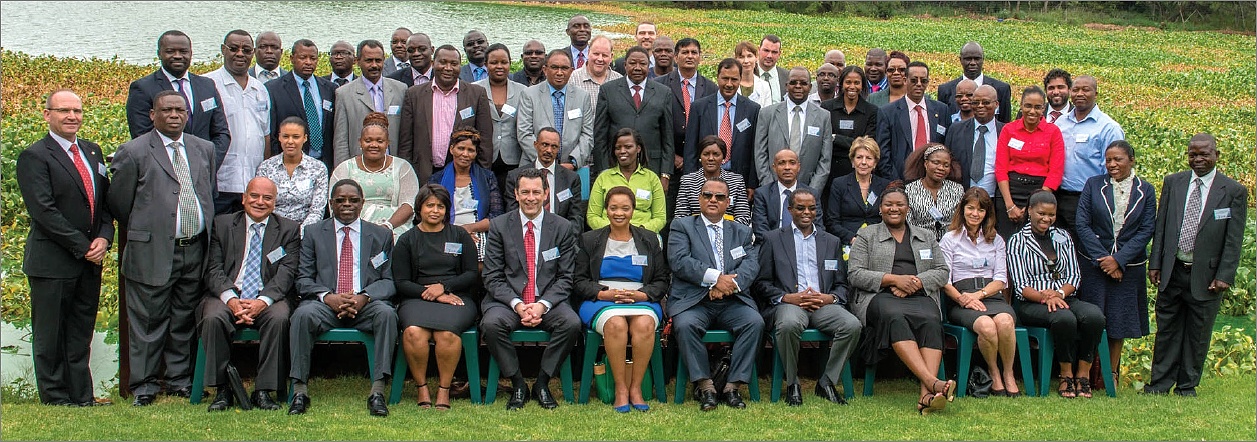
Customs officials from 24 eastern and southern African countries met in Pretoria this week to share knowledge and experience with regard to the successful modernisation of Customs administrations.

Opening the three-day forum, Erich Kieck, the World Customs Organisation’s Director for Capacity Building hailed it as a record breaking event.

“This is the first forum where all 24 members of the Eastern and Southern African region (ESA) of the WCO were all in attendance,” he noted. Also attending were officials from the WCO, SACU, the African Development Bank, Finland, the East African Community and the UK’s Department for International Development (DFID).

Michael Keen in the 2003 publication “Changing Customs: Challenges and Strategies for the Reform of Customs Administrations” said – “the point of modernisation is to reduce impediments to trade – manifested in the costs of both administration incurred by government and compliance incurred by business – to the minimum consistent with the policy objectives that the customs administration is called on to implement, ensuring that the rules of the trade game are enforced with minimum further disruption”

The three-day event witnessed several case studies on Customs modernisation in the region, interspersed with robust discussion amongst members. The conference also received a keynote addressed by Mr. Xavier Carim, SA Representative to World Trade Organisation (WTO), which provided first hand insight to delegates on recent events at Bali and more specifically the WTO’s Agreement on Trade Facilitation.

The WCO’s Capacity Building Directorate will be publishing a compendium of case studies on Customs Modernisation in the ESA region during the course of 2014.

WCO ESA members – Angola, Botswana, Burundi, Comoros, Djibouti, Eritrea, Ethiopia, Kenya, Lesotho, Madagascar, Malawi, Mauritius, Mozambique, Namibia, Rwanda, Seychelles, Somalia, South Sudan, Swaziland, South Africa, Tanzania, Uganda, Zambia and Zimbabwe.

This slideshow requires JavaScript.

Source: SARS

Message from the WCO – International Customs Day 26 January 2014

WCO_background image POSTER_CommunicationThis year’s International Customs Day heralds the launch of the WCO Year of Communication, a year in which we, as a Customs community, move to further enhance our communication strategies and worldwide outreach programmes.

Under the slogan “Communication: sharing information for better cooperation,” we are signaling our aspiration to do more at the national, regional and international level to raise awareness of the vital role Customs plays in international trade, economic prosperity and social development.

Communication is a sharing process which fosters cooperation, and as Customs is at the centre of a network of relations, developing a sound internal and external communication strategy promotes transparency, facilitates dialogue, builds trust and ensures mutual understanding.

With our unique expertise, Customs has made great strides over recent years in achieving better visibility with national governments, international organizations, the business sector, the donor community, development banks and other international trade stakeholders.

Good communication practices by WCO Members are abundant: national Customs websites, specialized magazines, media outreach and social networks are trailblazing the way towards greater awareness of the contribution of Customs to a more resilient trade environment.

Complementing these efforts, the WCO Secretariat also has a number of communications tools to help get the word out, including the Organization’s new dynamic website, its popular and insightful WCO News magazine and our growing online social media presence.

Just as important, is the WCO’s efforts to engage as many Presidents, Ministers, leaders and international policy makers as possible in order to defend Customs’ interests, further raise its profile and create better awareness of the opportunities and challenges it faces.

It is equally imperative that we also focus on how we communicate with our stakeholders and partners, how we listen to their feedback and how we decide to respond, as this will encourage stronger support for the work we do and ensure greater buy-in to WCO strategies.

In fact, communication is a two-way process by which information and knowledge are exchanged and shared between individuals – it is not only about sending a message or passing on information, it is also about exploring, discovering, researching and generating knowledge.

As in previous years, I am fully convinced that Customs administrations and the greater Customs community will rise to the occasion, committed to actively taking the communication theme forward and thereby ensuring the success of the WCO Year of Communication.

Wishing you all a joyful International Customs Day!

Kunio Mikuriya Secretary General

Communication: Sharing Information for Better Communication

WCO Customs Theme 2014Following a theme of logical progression over the past few years, the WCO has introduced “Communication” as this year’s theme for the 170+ Customs Administrations around the world. Last year’s theme “Innovation” set the platform for the introduction of innovative ideas and business practices, new partnerships, as well as new solutions and technologies.

While still very much in its infancy, the WCO’s Globally Networked Customs (GNC) philosophy will undoubtedly gain more and more traction as administrations iron out their national and regional aspirations and objectives.

The recent agreement on Trade Facilitation at the WTO’s conference in Bali adds further credence to the importance of the principles of the Revised Kyoto Convention (RKC). For the first time we see an attempt to fuse customs principles into a package of binding requirements.

Now, more than ever, Customs needs to work ‘collaboratively’ with all stakeholders.

With Customs and Border Agencies etching out new legal requirements, as well as organisational structures and plans, trade practitioners will likewise have to keep a watchful eye on these developments. Sometimes, not necessarily just for their own needs and obligations in their domestic markets, traders need to ensure that they keep apace with ‘destination’ Customs requirements which in these modern times are all too frequent. By opening its door to the business community, the WCO plays an ever-increasing overarching role in providing the private sector a ‘window’ to its thinking and ideology.

Philippine Customs Launches Transparency Portal

bocBigLogoBureau of Customs (BOC) unveiled a new website called “Customs ng Bayan” (Customs of the Nation) as part of newly-appointed Customs Commissioner John Phillip Sevilla’s initiatives to “uproot” the agency from its long history of institutionalised corruption.  “We are publishing reports of almost every importation into the Philippines in December 2013. Going forward, we intend to publish this list every month,” Sevilla said in an official statement.

Each item in the list represents a specific quantity (measured by weight) of a specific item that was imported by a specific importer on a specific day. The list – 88,006 items in December 2013 alone – is organised by major product groups, using the Harmonised Standard (HS) Code classification system.

“For each item, we include information such as a description of the item imported, its HS code number and standard HS code description, what country the item came from, its value and the amount of duties and taxes collected on that item.”

The Bureau of Customs, for the past years, has been one of the country’s most prominent faces of corruption in the government. According to Sevilla, all of that is about to change as they make drastic shifts in leadership, personnel and processes. In particular, he highlighted the importance of leveraging ICT to support the administration’s reform agenda.

“We need to improve the capacity of our IT systems to comply with needed reforms,” he said, adding that the Bureau is now studying the feasibility of implementing a single IT platform for all transactions, which involves improving the planned Php 442.3 million (US$9.8 million) National Single Window (NSW) project.

The NSW will facilitate trade through efficiencies in the Customs and authorisation processes. It will allow single submission and accelerated processing of applications for licenses, permits and other authorisations required prior to undertaking a trade transaction.Source: www.futuregov.asia

Related Articles

Transit – Addressing the plight of Landlocked Countries

AmatiThirty-one countries belong currently to the Group of Landlocked Developing Countries: 15 are located in Africa, 12 in Asia, 2 in Latin America and 2 in Central and Eastern Europe. The lack of territorial access to the sea poses persistent challenges to growth and development of these countries and has been the main factor hindering their ability to better integrate in the global trading system. The transit of export and import goods through the territory of at least one neighboring State and the frequent change of mode of transport result in high transaction costs and reduced international competitiveness.

For more details on LLDCs visit – Landlocked Developing Countries (LLDCs)

The 2003 Almaty Programme of Action highlighted the link between the ability of LLDCs to harness their trade potential and the state of the transport infrastructure and the efficiency of trade facilitation measures in neighboring transit countries and called for international support in favor of LLDCs. The United Nations General Assembly in its resolution 66/214 of 22 December 2011 and resolution 67/222 of 3 April 2013 decided to hold a Comprehensive Ten-Year Review Conference of the Almaty Programme of Action in 2014 with a view to formulating and adopting a renewed development partnership framework for LLDCs for the next decade.

It is expected that the ten-year review will provide an opportunity for: (i) assessing progress made in establishing efficient transit transport systems in landlocked developing countries since the adoption of APoA in August 2003, and particularly after the midterm review of 2008; and (ii) agreeing on actions needed to sustain achievements and address challenges in overcoming the special problems of landlocked developing countries around the world.

It would appear that this programme very much supports the creation of inland ports connected to the seaports by means of secure and bonded facilities – within the ambit international law, i.e. WTO (Trade Facilitation Agreement) and the WCO (Revised Kyoto Convention). The question arises as to whether an inland port located in Botswana, Zimbabwe or any adjoining country be able to demand such rights where a ‘corridor’ country or country providing international seaport access to LLDCs does not observe or accept international transit principles?

Related articles

Mugabe family linked to illicit SA cigarette trade

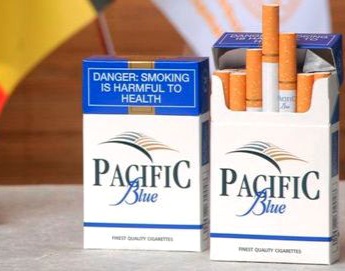
Pacific Blue_SnapseedRelatives of President Robert Mugabe are being linked to illegal tobacco smuggling networks suspected of bringing more than $48 million in contraband through South Africa’s borders, reports NewZimbabwe.com.

Harare-based Savanna Tobacco is owned by a prominent Zimbabwean businessman, Adam Molai, who is married to Sandra Mugabe, one of Mugabe’s nieces. Molai has previously worked with Sandra as co-director of the Zimbabwe Tobacco Growing Company. Savanna has allegedly moved tons of illegal tobacco into South Africa.

The company’s main brand, Pacific cigarettes, has been found in concealed consignments by police in South Africa and abroad, according to two private investigators who track tobacco busts and work for the industry to counter the trade in illicit tobacco. The products have been linked to a huge tobacco smuggling operation whose base in South Africa was shut down in 2010 by the South African Revenue Service (SARS), which is engaged in a crackdown on the country’s illegal tobacco markets.

Images taken at the scene of two busts in South Africa and one in Zimbabwe show the extent of the smuggling operation. SARS has refused to confirm or deny whether it is investigating Savanna, citing the confidentiality requirements of the Tax Administration Act.

The frequency of the busts, the methods used and the quantities of illegal Pacific cigarettes found have led sources close to the investigations to claim that Savanna has been centrally involved for at least four years. It also increases suspicions that Zimbabwe is using smuggling to keep its economy afloat. Mugabe has openly supported Savanna. A year ago, he accused rival British American Tobacco (BAT) of spying on Savanna and hijacking its trucks. “If this is what you are doing in order to kill competition and you do it in a bad way, somebody will answer for it,” Mugabe warned.

Boxes of cigarettes that can be made for as little as R1.50 are easy to slip into the local market to avoid the R13 tax a box. Whereas popular brands of cigarettes can retail at R35 a pack, illegal cigarettes sell for between R4 and R12 a pack. With margins approaching 1000%, the illicit trade has become one of the largest elements in organised crime in South Africa.

According to research commissioned by the Tobacco Institute of South Africa, which is predominantly funded by BAT, 9.5billion illegal cigarettes with a street value of about R4-billion were smoked locally last year.

Savanna has captured almost 10% of this market, according to the institute, with about 700 million of its illegal cigarettes smoked last year. Pacific’s illegal cigarettes are sold mostly on the streets of Cape Town.

In one of the biggest busts in October, 1.6million Pacific cigarettes were found hidden on a train in Plumtree. Pacific cigarettes have also been seized at the Beitbridge border post near Musina and in Boksburg, on the East Rand, during busts in November. Trucks were found carrying Pacific cigarettes in concealed compartments.

This month, a consignment of Pacific cigarettes was found hidden behind electronic goods on a truck in the Western Cape. Similar busts have been made in Mozambique and at a border post between Zambia and Namibia, according to private investigators.

Evidence from the Plumtree train bust showed that the smuggling route had its origin as Savanna’s factory in Zimbabwe and South Africa’s black market as its destination. In the Plumtree bust on October 12, Zimbabwean police confiscated 40 tons of illicit Pacific cigarettes that had come from Bulawayo. The train was said to be carrying gum poles.

Records reveal that between September 2012 and August 2013 at least 23 shipments with 44 wagons of “gum poles” had followed the same route. A number of these consignments appear to have arrived at the South African business PFC Integration. According to an investigator who has studied the operation, PFC is “not into the gum pole business at all”.