South Africa severely affected by commodity trade misinvoicing

Raw-gold-619x413Global Trade Review reports that trade mis-invoicing is costing some developing countries two-thirds of the value of certain commodity exports.

New data gleaned from two decades of export figures emphasises the tens of billions of dollars being lost from the global economy to the under-invoicing of commodities from Africa and South America.

Between 2000 and 2014, 67% of the value of total gold exports were lost from South Africa through under-invoicing – when an invoice states a price as a lower value than is actually being paid.

Also read Maya Forestater’s blog post Misinvoicing or misunderstanding? for an alternative explanation regarding the UN’s claims in its recent report Trade Misinvoicing in Primary Commodities in Developing Countries.

This is often done to avoid paying taxes and is one of the most common methods of trade-based money laundering. The total loss in this particular commodity export amounts to US$78.2bn. More than half of this is lost on the trade of gold between South Africa and India.

From 1996 to 2014, the mis-invoicing of oil exports from Nigeria to the US was worth US$69.8bn. This is the equivalent value of one-quarter of all oil exports to the US.

The data from the UN Conference on Trade and Development (UNCTAD) shows that in the 20 years from 1995, more than half of Zambia’s total copper exports fell victim to misinvoicing, with US$28.9bn-worth not showing up on the books of Switzerland, the primary market.

From 1990 to 2014, Chile lost US$16bn in potential taxable revenue in the copper trade to the Netherlands, while the Netherlands did not record US$5bn in cocoa exports from Côte d’Ivoire between 1995 and 2015.

This is the first large-scale analyses of under-invoicing for specific commodities and countries,  despite the fact that the practice has been so rife for decades.

More awareness has been raised to the practice in recent years – in no small part due to the work done by not-for-profit organisations such as Global Financial Integrity (GFI) – but the lack of resources allocated to its eradication in much of the world, coupled with the culpability of many officials around the world, means that little progress has been made.

There is still no global standard against trade-based money laundering as there is against, for instance, sanctions breaching. The fact that it pre-dates most formal financial systems also means that any measures taken to stop it are difficult to enforce.

“When we talk about illicit financial flows we’re always talking about curtailing it, because there’s not going to be any situation in which any set of policies is going to entirely limit criminal behaviour. We have many, many laws on the books and folks break them all the time. But if you can make it as difficult as possible for folks to engage in this kind of thing, you’re doing what you’re supposed to do it,” Liz Confalone, policy counsel at GFI tells GTR.

The report also brings to attention the practice of over-invoicing – whereby the price of a good is fraudulently increased, allowing the exit of illegal money from an economy. Often, this money is connected to the narcotics trade, or to other criminal activity.

The UNCTAD report reads: “Puzzling results also emerge at the trading partner level. Trade with the Netherlands presents a peculiar case, with systematic and substantial export over-invoicing. It appears that primary commodities exported to the Netherlands never dock in the Netherlands.

“The question is whether this is the outcome of smuggling or incorrect reporting of the residence of the buyers. Answering this question may require an investigation at the company level.”

The authors call on a three-pronged attack on trade mis-invoicing, encompassing greater government scrutiny of particular commodity sales, an improvement in trade statistics and greater transparency in certain jurisdictions.

They write: “The results from this study highlight the need for an investigation into the role of transnational corporations involved in the exploitation, export and import of commodities, as well as the role of secrecy jurisdictions in facilitating trade mis-invoicing.

“Such an investigation may shed light on the mechanisms of export over-invoicing and import smuggling. Enhanced transparency in global trade is indispensable, especially through co-ordinated enforcement of the rules on country-by-country reporting by TNCs at the global level.”

Speaking to GTR recently, Jolyon Ellwood-Russell, a Hong Kong-based trade finance partner at law firm Simmons & Simmons, called for more joined-up thinking on an intergovernmental level if the problem is to be tackled.

Praising moves by the Hong Kong Monetary Authority and the Monetary Authority of Singapore to clamp down on trade-based money laundering, he said: “The issue is that the techniques and methods are very complex and don’t necessarily fit into those existing countermeasure programmes. Both banks and regulators could probably benefit from a better understanding of trade finance structures and how they are used in trade-based money laundering.” Source: Global Trade Review
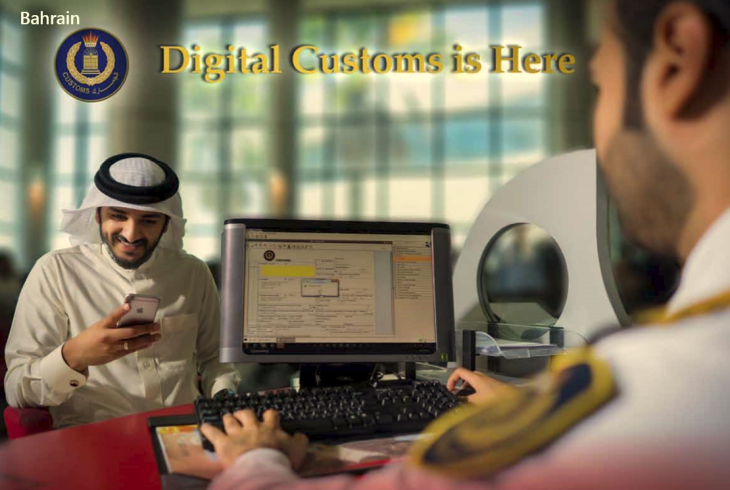
WCO Photo Competition 2016 Winner – Bahrain

WCO Photo Competion 2016 Winner - Bahrain

U.S. Customs to ask travelers for their social media accounts

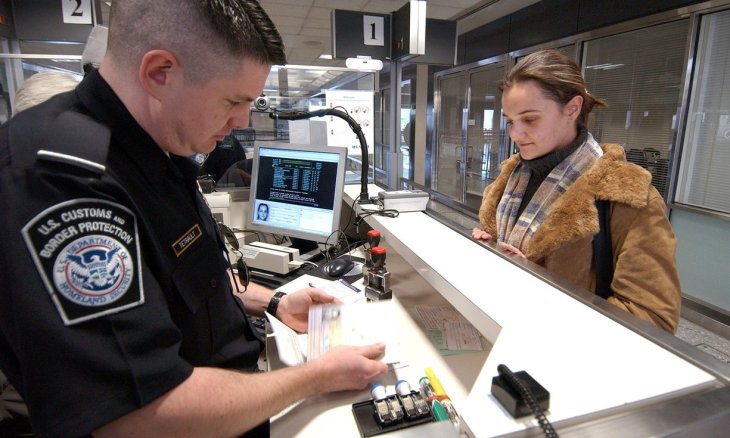
USCBPThe US government is proposing making social media accounts part of the visa screening process for entry into the country.

US Customs and Border Protection’s proposed change would add a line on both the online and paper forms of the visa application form that visitors to the US must fill out if they do not have a visa and are planning on staying for up to 90 days.

The following question would be added to both the Electronic System for Travel Authorization (Esta) and I-94W forms: “Please enter information associated with your online presence—Provider/Platform—Social media identifier.”

The information will be optional, for now, but the proposed change published by the US Federal Register states that “collecting social media data will enhance the existing investigative process and provide Department of Homeland Security (DHS) greater clarity and visibility to possible nefarious activity and connections by providing an additional tool set which analysts and investigators may use to better analyze and investigate the case.”

The proposal is currently under consultation, with US government taking comments until 22 August.

The change forms part of the plan by the US DHS to scrutinise social media activity of visa applicants and those wishing to enter the country, following the San Bernardino killings in California, in which social media profiles formed part of the investigations along with an iPhone 5C.

Current DHS pilot programmes are being kept under wraps but are said to scan a limited amount of social media posts.

The pilot programmes currently used by DHS do not sweep up all social media posts, though government officials have kept details of the programmes closely held, as they do not want to reveal the precise process they use to try and identify potential threats.

It’s unclear if or how the DHS would verify information written on a form before hitting border control, leaving the possibility of false information being put down, and while the information may be optional, it will likely be difficult to discern what is and isn’t required on the form.

The US government approves around 10m visa applications a year and had 77.5 million foreign visitors in 2015. Collecting social media accounts for all visitors could produce one of the largest government-controlled databases of its kind almost overnight. Source: Customstoday

ZIMRA Warehouse Burns Amid Protests

Zimbabweans protesting against restrictions on imports of basic goods from South Africa have forced the closure of the border post between Zimbabwe and South Africa on Friday.

On June 17, the Zimbabwean government said that it was suspending imports of products including bottled water, furniture, building materials, steel products, cereals, potato crisps and dairy products, most of which arrive from South Africa. A Statutory Instrument No. 64 of 2016 which effectively tightens the screws on the import of these products is purportedly intended to target businesses and not ordinary travellers buying goods for personal consumption. However, Zimbabwean Revenue Authority (ZIMRA) officials continued to demand permits and confiscate the listed goods, sparking the chaos.

A warehouse owned by ZIMRA for the storing of illicit goods seized from people crossing the border was set alight by the protesters on Friday, 1 July 2016.

More than 85% of working age Zimbabweans have no formal job and many make a living by buying goods in South Africa to sell in Zimbabwe. Source: New Zimbabwean/ Reuters.

WCO News – June 2016

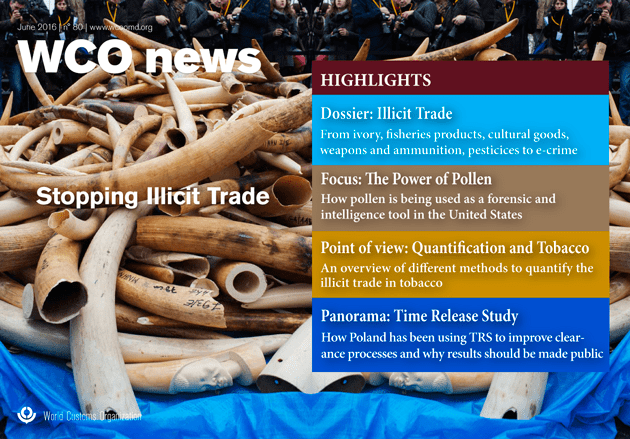
WCO News June 2016 (1)The WCO has published the 80th edition of WCO News, the Organization’s flagship magazine aimed at the global Customs community.

This edition features a special dossier on illicit trade which gathers together articles focusing on the trafficking in various commodities such as cultural goods, small arms, fisheries products and pesticides, as well as articles highlighting the tools and technologies that can contribute to enhancing Customs enforcement capabilities.

Readers will also benefit from articles on how pollen analysis (palynology) has become an essential Customs forensic and intelligence tool in the United States, the challenges in accurately quantifying the illicit trade in tobacco, and why publishing time release study results is advantageous. Source: WCO

BMA – to be first order of business when Parliment re-opens

Lebombo+border+postA “Unified border guard and authority” will be one of the first orders of business when Parliament opens for the third quarter of the year.

On the agenda for the portfolio committee on home affairs is “processing the Border Management Authority Bill — which‚ a statement noted‚ is a modified name as “the authority was called the agency in the former draft of the bill”‚ it said at the weekend.

It was necessitated by “inefficiencies resulting from having many government departments co-ordinating, and often duplicating, the securing of SA’s land‚ sea and air borders,” which “have contributed to the porous 5,244km border”.

“The bill and related authority aim to centralise the border-related responsibilities of‚ amongst others‚ the Department of Home Affairs‚ the South African National Defence Force and Police Service‚ Customs of the South African Revenue Service as well as aspects of the Departments of Agriculture‚ Environment and Health‚” the committee said in the statement.

After briefings‚ public hearings and written submissions‚ it is “likely to be finalised in the last quarter of 2016 or early in 2017”.

Also on the committee’s plate is “reliable higher bandwidth network services” needed by the Department of Home Affairs “to facilitate the expanded roll-out of technology-driven service delivery improvements”.

“These include paperless applications for more secure smart identification cards and passports as well as online visa and permits processes. The Department of Home Affairs has experienced challenges with the network services provided by the State Information Technology Agency and is in the process of seeking alternatives.” Source: Buisness Day Live

EU – UCC strengthens the case for AEO

AEO-LogoHere follows an appreciation of AEO within the context of the EU. According to KGH customs consultancy services, being an Authorised Economic Operator (AEO) already entails advantages for companies that have invested in doing the work to gain the AEO certification. With the new Union Customs Code (UCC), companies with an AEO permit will be able to gain additional advantages leading to more predictable and efficient logistics flows as well as an increased competitive edge.
Centralised clearance (being able to clear all customs declarations from one central location in the EU) and self-assessment (self-declaration of custom fees, similar to VAT reporting) are two new possibilities under UCC that will be implemented towards the end of the initial UCC implementation period from 1 May 2016 to 31 December 2020. To take advantage of these, AEO will be a prerequisite. AEO-ready businesses will therefore be well positioned to take advantage of these new possibilities when they become available.

Direct AEO benefits, including fewer physical and document-based controls, pre-notification in case of controls, easier access to customs simplifications and other customs authorisations, as well as access to mutual recognition with third countries, will continue to apply under UCC. The same is true of the soft benefits, such as better cross-functional communication and cooperation, improved customs knowledge and better risk management, which often outweigh the direct benefits as detailed by customs authorities.

With the UCC, AEO becomes a permit (authorisation) and all AEO certifications will have to be reviewed in line with the new UCC guidelines. Much is recognisable from before, but there is an additional competency requirement that is realised through either experience and/or professional qualifications. There is also likely to be more focus on ensuring that AEO applicants have robust routines that reflect their business, and that those routines are known in the business and used on a day-to-day basis.

Ever since the Authorised Economic Operator (AEO) certification was launched in 2008, many companies have been trying to evaluate whether to go for AEO or not. What are the benefits? How long does it take to become certified? Can we do it ourselves or do we need some help? What do we really gain by being AEO? This has sometimes stopped companies taking active steps to get ready for AEO.

Furthermore, some AEO-certified companies have felt that they have been exposed to more controls after AEO certification than before. In other instances the initial certification was fairly easy to achieve, but it then proved much harder to retain at a subsequent audit because routines were not being kept up to date or there had been insufficient internal controls and reviews performed in the business.

Our experience shows that companies that did a thorough job at the time of certification and that also afterwards had a genuine focus on maintaining knowledge, following routines and updating documentation as and when appropriate, have been able to benefit from improved customs management to a greater extent than they first envisaged.

KGH opines there are six situations where being AEO could be beneficial for a company:

  • Freight forwarder serving customers with logistics flows to and from the EU.
  • Strong business links with countries where the EU either has mutual recognition or is likely to have it in the not too distant future.
  • Businesses with many permits that will be reconsidered as part of the transition to UCC, where being AEO may facilitate the reconsideration process for other customs permits.
  • Large customs guarantee, which may be able to be reduced as a result of being an AEO.
  • Interested in centralised clearance and self-assessment that will be introduced towards the end of the UCC implementation period.
  • Interested in raising customs knowledge in a business, in order to better manage risks and be able to take advantage of business opportunities connected with international trade.

Here AEO can also be seen as a seal of quality. Source: kghcustoms.com

New WCO Study Report on Customs Brokers

WCO Study Report on Customs BrokersThe WCO has just published a newly developed Study Report on Customs Brokers. The Study Report provides a general background and overview of Customs Brokers’ role in the international supply chain together with some suggested policy and organisational considerations on Customs Brokers regime and a model checklist for licensing/regulating brokers.
Additionally, the Report provides a range of cooperation opportunities between Customs and Brokers including the joint capacity building.

Customs administrations, Brokers, and Brokers Associations are encouraged to make maximum use of the Study Report as a reference/guideline, where needed, in establishing and/or maintaining/adjusting Brokers regime, keeping in view their national circumstances and specificities.

The Study Report on Customs Brokers is available via the following link: Click here

Source: WCO

3D-printed fake seals being used to mask cargo thefts

Cargo thieves have used 3D printers to make fake security seals to hide when a shipment has been compromised.

In some cases the cloned seals are so ingenious they even match the identification numbers on the original, according to third-party logistics organisation SpedLogSwiss, which reports an incident in which the scam was used in the theft of a pharmaceutical shipment.

In 3D printing, three-dimensional work pieces are built up in layers on relatively cheap devices. This construction is done by computer control of one or more liquid or solid materials. Typical materials are synthetic resins, plastics, ceramics and metals. This new technology opens up new possibilities in the manufacture of products. The advantages of this technology have now been discovered by organized crime.

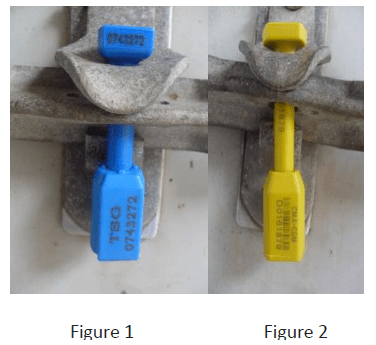
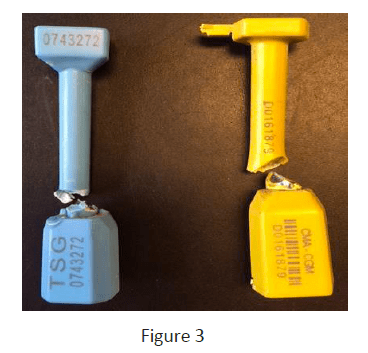
A victim of seal counterfeiting has provided the following images to raise the awareness of other freight forwarders and shippers. In the below incident, a shipment of pharmaceutical goods loaded in a container was sealed with an intact shipper seal (Figure 1) and a seal from the shipping transport company was also applied to the container (Figure 2):


Security seals

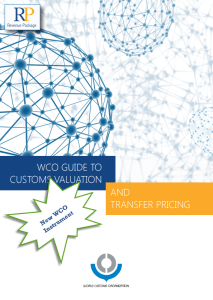
Upon arrival of the container at the end customer dock, the seals were removed and the container opened. It was then found that most of the load had been stolen in transit. The original seals had been removed during transport, the goods were removed, and the container was resealed with new, but fake seals. (Figure 3)

Security seals1

“The advantages of this technology have already been discovered by the organized crime,” says SpedLogSwiss, which notes that some 3D printers can prepare the fake seals in as little as 10 minutes.

The organization has issued a circular describing the incident in order to raise awareness of the issue.

According to freight security specialist Freightwatch International, there were just over 500 thefts in the Europe, Middle East and Africa (EMEA) in the second quarter of 2015.

Belgium, Germany, the Netherlands, France, the UK, Austria, South Africa, Spain and Russia topped the list of countries affected, with electronics, clothing and accessories, food and drink the most stolen product categories. Source: www.securingindustry.com

New WCO Instrument on Transfer Pricing and Customs Valuation

New WCO InstrumentAn important new instrument was finalised at the 42nd Session of the Technical Committee on Customs Valuation which took place in Brussels from 18 to 22 April 2016 under the Chairmanship of Ms. Yuliya Gulis of the United States.
The instrument contains a case study illustrating a scenario where Customs took into account transfer pricing information in the course of verifying the Customs value.

The WTO Valuation Agreement sets out the methodology for establishing the Customs value, used as the basis for calculating Customs duties. The Agreement foresees that Customs may examine transactions between related parties where they have doubts that the price has been influenced by the relationship.

The Organisation for Economic Cooperation and Development (OECD) has developed Guidelines for establishing the transfer price, that is the price for goods and services sold between controlled or related legal entities, in order to determine business profit taxes where businesses are related.

Over recent years, the similar objectives but different methodologies of transfer pricing and Customs valuation have been noted, and it has been recognised that business documentation developed for transfer pricing purposes may contain useful information for Customs. An earlier instrument of the Technical Committee, Commentary 23.1, confirmed this principle.

The new case study provides an example of Customs making use of transfer pricing information based on the transactional net margin method. On the basis of this information, Customs accepted that the sale price in question had not been influenced by the relationship.

The OECD has provided valuable input to the Technical Committee discussions in the development of the new instrument which provides helpful guidance to both Customs administrations and the business community.

Both the WCO and the OECD advocate closer cooperation between Customs and tax administrations in order to strengthen governments’ ability to identify the correct tax and duties legally due and enhance trade facilitation for the compliant business sector.

WCO Secretary General, Mr. Kunio Mikuriya, has congratulated the Technical Committee on the work achieved : “This new instrument is an important step for the WCO and demonstrates its relevance by providing guidance on the management of Customs valuation in an increasingly complex trade landscape, whilst maintaining consistency and strengthening cooperation with Tax authorities.”

The case study (Case Study 14.1) will be made available in the WCO Valuation Compendium, subject to approval by the WCO Council in July 2016.

Further information on this topic can be found in the WCO Guide to Customs Valuation and Transfer Pricing, available via this link

UNODC-WCO Container Control Programme – 2015 Annual Report online

Container Control ProgrammeThe year 2015 has been the most active one ever for this joint WCO – UNODC initiative, which tackles illicit trade in containerized transport.

A number of new countries joined the Container Control Programme (CCP), more than 130 training events, private sector meetings and study visits were implemented and significant seizures of drugs, counterfeit goods, cigarettes etc. were made by the Port Control Units established in the framework of this programme.

The 2015 CCP Annual Report also contains interviews with the Directors General of Georgia and Azerbaijan Customs as well as several statements by Customs’ and Private Sector stakeholders. Source: WCO

Walvis Bay rail upgrade ready to service new container terminal

Namport-rail-upgradeThe Namibian Ports Authority has completed the upgrade of all railway infrastructure at the Port of Walvis Bay at a cost of N$20M (US$1.3M)
The work was included in Namports maintenance programme in 2010, but is now part of wider plans to upgrade facilities at Walvis Bay in preparation for the completion of the new container terminal.

A total of 4.5kms of track inside the port and the section of railway running from the city into the port have been replaced using material that can cope with heavier loads.

A spokesperson for Namport said: “Although the project was of relatively low value, its execution was complex as we had to ensure minimum operational interruption to the track, which is in daily use.”

The new container terminal is being constructed on 40-ha of reclaimed land and will add 700,000 TEU of annual handling capacity to the existing 350,000 TEU. Walvis Bay is already attracting bigger ships and recently handled its biggest ever container vessel the CMA CGM DANUBE, a 112,580 dwt vessel with a nominal intake of 9200 TEU.

A statement from Namports read: “The visit of CMA CGM DANUBE complements our port expansion project, which accommodates greater carrying capacity. Following the completion of the port expansion project vessels such as this will be accommodated at the new container terminal.”

The Walvis Bay Corridor Group, which was set up to promote the use of the port among neighbouring states, is keen to improve ancillary infrastructure at Walvis Bay to make the most of the new terminal.

Namport manager for corporate communication Taná Pesat said: “The benefits are our safe and secure corridors to and from landlocked SADC markets. The frequency of direct ship calls and flexibility of doing business with ease.”

However, the plot of land at the port given to Zimbabwe in 2009 for the construction of a dedicated dry port has still not been developed. Source: World Cargo News

WCO Regional Workshop on Coordinated Border Management, Single Window and the Data Model

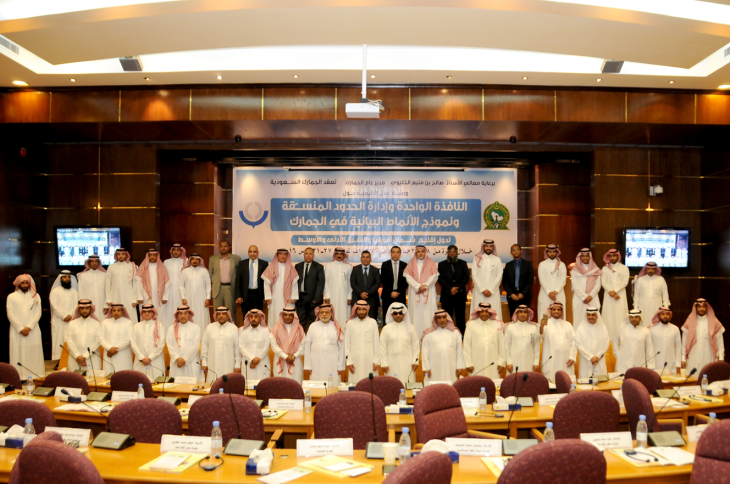
Wco CBM & Single Window WorkshopThe World Customs Organization (WCO), with the financial support of the Customs Administration of Saudi Arabia, successfully held a Regional Workshop on Coordinated Border Management (CBM), Single Window and the WCO Data Model in Riyadh, Saudi Arabia from 27 to 31 March 2016. Thirty seven middle management officials of the Customs Administrations from the MENA Region, namely Saudi Arabia, Egypt, Lebanon, Jordan, Morocco, Tunisia, Sudan, Bahrain and the United Arab Emirates participated in the Workshop. In addition, twelve officials of Customs’ Partner Agencies and two representatives from the private sector attended the event.
Mr. Abdulah AlMogehem, the Deputy Director General of the Customs Administration of Saudi Arabia in his opening remarks highlighted the importance of Single Window development by governments to simplify cross-border trade regulatory procedures which will reduce inefficiency and redundancy of border management processes.

The event highlighted the importance of CBM principles as the basis for the development of a Single Window Environment to enable coordination and cooperation between all relevant government agencies involved in border management. The Workshop also focused on the importance of strategic planning and formal governance structures in establishing a Single Window Environment. SA Revenue Service’s Intikhab Shaik incidentally facilitated the session and discussion on Single Window.

Other important topics included Business Process Re-engineering as well as Data Harmonization, using the WCO Data Model as the inter-operability framework to lay the foundation for CBM and Single Window. Source: WCO

Dutch Customs awards Rotterdam World Gateway AEO Certification

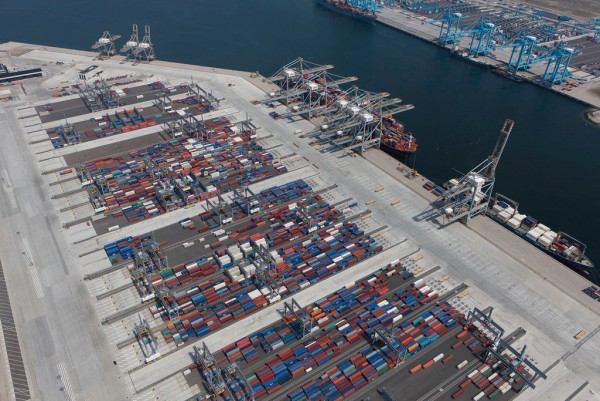
RWG-terminalRotterdam World Gateway says it is the first deep sea container terminal with minimal customs presence in the European Union. Ronald Lugthart, Managing Director of Rotterdam World Gateway,has received the definitive customs permit and AEO certificate for RWG, handed over by Anneke van den Breemer, Regional Director of customs at the port of Rotterdam.

Lugthart said: “Due to the high degree of automation at RWG, the introduction of a 100% pre-announcement procedure for containers and cargo via Portbase and the implementation of simplified customs procedures, over 95% of the administrative process is now completely digitised.

“This means that the administrative process can operate independently of the logistic process at the terminal, enabling fast and reliable handling.”Anneke van den Breemer commented: “As Dutch customs, our goal is to minimise any disruption to the logistic process caused by the required customs formalities. RWG and customs have recently been collaborating intensively.

“At the RWG terminal, optimal use is now being made of the simplified customs procedures. This is in the best interest of all parties: not just of the terminal and customs, but of freight forwarders and hauliers as well.”

By applying these simplified customs procedures, RWG is able to implement a fully automated gate process for road hauliers. This has great benefits for hauliers because no physical customs handling has to take place at the RWG terminal and thus no stop has to be made.

RWG adds that it is the first terminal in the port of Rotterdam to act as an Authorised Consignee, which means the customs transit will be automatically ended upon arrival at the terminal. This gives parties involved extra assurance that this transit has been cleared properly.

In addition to simplified customs procedures, constructive cooperation between customs and RWG has resulted in the establishment of a new scanning facility that is fully integrated into the terminal’s automated logistic process and operates 24/7.

Furthermore, nuclear radiation detection takes place for all truck and rail handling, and a high percentage of the containers arriving and departing by barge will be inspected as well.  Source: WorldCargoNews

ZIMRA – : Challenges to New Clearance Regulations

ZIMRAaaaaaaaThe implementation of the Government’s new pre-shipment regulations under the Consignment Based Conformity Assessment (CBCA) programme (essentially a fancy term for plain old pre-shipment inspection – who they trying to fool?) took off with host of challenges last Tuesday. The new regulations that were gazetted into law on 18 December last year and requires that goods be tested for conformity with required standards prior importation into Zimbabwe, went into operation on 1 March.

Government introduced the programme with the view to reduce hazardous and substandard imported products and improve customs duty collection. Bureau Veritas has been appointed by the Ministry of Industry and Commerce for the verification and the assessment of conformity of goods in exporting countries.

The new developments have seen cargo piling up on the South African side of the border with most importers failing to produce the required transitional certificate of conformity. The Shipping and Forwarding Agents Association of Zimbabwe (SFAAZ) chief executive officer, Mr Joseph Musariri, called on the government to waive the implementation of the CBCA on goods that were shipped before it became operational.

“You will note that the Zimbabwe Revenue Authority (Zimra) has failed to enforce the regulations since 18 December last year only to try and implement it this week (last week) and that has resulted in a chaotic situation.

“It is sad that cargo is piling up at Beitbridge border post where most importers are having challenges in acquiring the transitional CBCA certificates,” he said.

Mr Musariri said the government introduced the idea on 27 July last year but could not implement it since there was no legislation to that effect.

He said under the new dispensation all products regulated by the Ministry of Industry and Commerce of Zimbabwe exported into Zimbabwe must be accompanied by a CBCA certificate.

“The categories of goods regulated under the programme include the following: food and agriculture, building and civil engineering, petroleum and fuels , packaging material, electrical/electronic products, body care, automotive and transportation , clothing and textile and toys,” he said.

Mr Musariri said Zimra was now refusing to clear goods without the CBCA certificate and requesting for the conformity certificates.

“They are telling those importers to contact the nearest offices for Bureau Veritas for inspections and issuance of the requisite certificates.

“Locally destined cargo which is being shipped from various overseas markets is the worst affected and importers are incurring daily demurrage expenses of between $250 and $5000.

“In some cases duties had been paid to Zimra but now they are singing a different song,” he said.

The Minister of Industry and Commerce, Mr Mike Bimha, could not be reached for comment.

Bureau VERITAS liaison officer for Zimbabwe, Mr Tendai Malunga, said his organisation was ready for the implementation of the CBCA programme.

“We have trained various stakeholders on the new programme and are ready to roll.

“Furthermore we have hired more staff in most countries to conduct inspections and various conformity tests on the various countries exporting goods to Zimbabwe,” he said.
Source: The Herald (Zimbabwe)