Nigeria – Who’s afraid of new Customs Law?

English: Ngozi Okonjo-Iweala, Managing Directo...

English: Ngozi Okonjo-Iweala, Managing Director, World Bank, Washington DC; Global Agenda Council on Corruption, is captured during the session ‘Zero Option for Corruption’ in the Congress Centre of the Annual Meeting 2010 of the World Economic Forum in Davos, Switzerland. (Photo credit: Wikipedia)

Not a few people raised eyebrows at one session of a senate committee when the Minister of Finance, Dr Ngozi Okonjo-Iweala, intervened during proceedings. Unlike most public hearings in the National Assembly, the particular one conducted by the Finance Committee of the Senate on the new Customs Bill was historic. Everyone agreed that the bill, which seeks to repeal the pre-independence Act, was timely. The dominant argument was that the roles and responsibilities of the Department of Customs and Excise have changed and required legislation to accommodate those changes.

From a modest outfit collecting taxes and royalties on coastal trading activities, the Department has evolved to become a large organisation employing over 20,000 Nigerians, with responsibilities cutting across revenue collection, border protection, public health and trade facilitation. The new law is to take account of the realities of the 21st century. Provisions were therefore made for electronic processes of Customs clearance, use of non-intrusive intervention methods to enforce controls and adherence with global best practice in customs operations.

However, Dr Okonjo-Iweala , who by virtue of her position is the Chairman of the Nigeria Customs Service Board raised dust when she expressed concerns over the powers of Mr President and the Minister of Finance as contained in the new Bill. Committee members were astonished when she appeared to labour to sound modest in kicking against the provisions which she complained ‘whittled down the powers of Mr President and the Minister over Customs’.

Another dissenting voice came from the Director of Budget in the Ministry, Dr Bright Okogwu, who argued that Customs should not be funded up to the tune of 2.5 % of Value on Board (FOB)’ as provided under Section 18 of the new Bill, although his earlier view appeared to support to the canvassed by Central Bank of Nigeria on the matter.

It is a fact that many Nigerians were not opportune to read the bill before the hearing. My interest in it followed claim of the possibility of creating a Customs outfit that would be too powerful to be under the thumb of the president or the minister of finance.

On the contrary, the bill does seek a stronger Board capable of enunciating policies devoid of bureaucratic bottlenecks. The bill still allows the minister enormous powers as chairman of the Board with the power to appoint some of its members.

But the notion that the bill strips the president of certain powers gave added impetus to the public hearing; Mrs Okonjo-Iweala was clearly agitated. But try as they could, no one could pinpoint the sections which allegedly render the President powerless over Customs matters.

The major omission in the existing legislations put up for repeal is the Customs, Excise Tariff, etc. (Consolidation) Act Cap C.49 of 1995. Perhaps the hullabaloo about the powers of Mr President stems from the erroneous impression that all the previous Acts relating to Customs matters were being repealed. Section 13of this Act is emphatic about the powers on the much-hyped waivers and concessions. The section vested on the president the power to impose, vary or remove any import or excise duty on goods that are liable to payment of such charges. This provision is still extant.

Opposition to Sections 42 and 43 which sought to prohibit by law the future use of Pre-shipment and Destination Inspection service providers was a source of disappointment to most Nigerians. Leading the pack of opposition was the Central Bank of Nigeria with the argument that the provision ‘ties government hands ‘, if such service is found necessary in the future.

Customs position throughout the hearing was to express readiness to take over its statutory roles. If there was any doubt about Customs ability, the CBN and the Finance Ministry, both supervisory organs of the destination Inspection should be held responsible for the orchestrated effort to perpetrate or institutionalise self-gratifying contracts.

All said and done, Nigerians are patiently waiting for the senators to do what is right and ignore sentiments associated with the various positions canvassed during the hearing. It should not be about muscle flexing of who wields what powers as was witnessed during the hearing. Nor should it be about the office holders, since the Service will outlive the current actors involved. It is about building a strong institution that can stand the test of time. Source: The Daily Trust (Nigeria)

Related articles

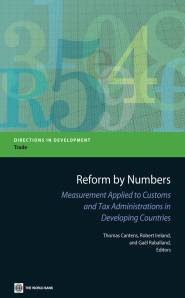
Reform by Numbers – a reference work on Customs reform

The word ‘reform’ is a constant in the daily life of a customs officer. No customs administration among the 177 members of the World Customs Organization has not had a reform program in progress or planned. This is ultimately quite normal.A new World Bank publication “Reform by Numbers” will no doubt appeal to customs and tax reform experts and change agents.

It was written in the context of new and innovative policies for customs and tax administration reform. Eight chapters describe how measurement and various quantification techniques may be used to fight against corruption, improve cross-border celerity, boost revenue collection, and optimize the use of public resources. More than presenting ‘best practices’ and due to the association of academics and practitioners, the case studies explore the conditions under which measurement has been introduced and the effects on the administrative structure, and its relations with the political authority and the users. By analyzing the introduction of measurement to counter corruption and improve revenue collection in Cameroon, two chapters describe to which extent the professional culture has changed and what effects have been noted or not on the public accountability of fiscal administrations. Two other chapters present experiments of uses of quantification to develop risk analysis in Cameroon and Senegal.

By using mirror analysis on the one hand and data mining on the other hand, these two examples highlight the importance of automated customs clearance systems which collect daily extensive data on users, commodities flows and officials. One chapter develops the idea of measuring smuggling to improve the use of human and material resources in Algeria and nurture the questioning on the adaptation of a legal framework to the social context of populations living near borders. Finally, two examples of measurement policies, in France and in South Korea, enlighten the diversity of measurement, the specificities of developing countries and the convergences between developing and developed countries on common stakes such as trade facilitation and better use of public funds.

The “gaming effect” is well known in literature about performance measurement and contracts performance, because there is a risk of reduced performance where targets do not apply, which is detrimental to the overall reform. It is crucial to keep in mind that, by themselves, indicators “provide an incomplete and inaccurate picture” and therefore cannot wholly capture the reality on the ground. Measurement indicators must be carefully chosen to ensure that knowledge is being uncovered.

Measurement, for purposes of reform, should not be “copied and pasted” from one country to another. Due consideration must be given to the varying aims of the customs service and the specific political, social, economic, and administrative conditions in the country.

Measurement applied to experimentation is also about how donors, experts, and national administrations work together. On the one hand, national administrations in developing countries ask for technical assistance, standards, and expertise that are based on experiences of developing countries and use experts from such countries.These requests encourage the dissemination of such models. On the other hand, reforms of customs or tax administrations are represented as semi-failures in terms of the initial expected outcomes set by donors and politicians – usually the end of a reform is the time when donors and local administrations become aware of the gaps of their own representations of success.

While scientific and academic in approach, lets hope it means more than just miserable experimentation in target countries.

The book is available for free reading online – www.scribd.com or you can purchase from amazon.com.

Building hard and soft infrastructure to minimise regional costs

I post this article given it ties together many of the initiatives which I have described in previous articles. The appears to be an urgency to implement these initiatives, but the real question concerns the sub-continent’s ability to entrench the principles and maintain continuity. At regional fora its too easy for foreign ministers, trade practitioners and the various global and financial lobbies to wax lyrical on these subjects. True there is an enormous amount of interest and ‘money’ waiting to be ploughed into such programs, yet sovereign states battle with dwindling skills levels and expertise. Its going to take a lot more than talk and money to bring this about.

South Africa is championing an ambitious integration and development agenda in Southern Africa in an attempt to advance what Trade and Industry Minister Rob Davies describes as trade and customs cooperation within the Southern African Customs Union (SACU), the Southern African Development Community (SADC) and other regional trade organisations.

Central to pursuing this intra-regional trade aspiration are a series of mechanisms to combine market integration and liberalisation efforts with physical cross-border infrastructure and spatial-development initiatives. Also envisaged is greater policy coordination to advance regional industrial value chains. “Trade facilitation can be broadly construed as interventions that include the provision of hard and soft infrastructure to facilitate the movement of goods, services and people across borders, with SACU remaining the anchor for wider integration in the region,” Davies explains.

This approach is also receiving support from the US Agency for International Development (USAid), which recently hosted the Southern African Trade Facilitation Conference, held in Johannesburg.

Trade programme manager Rick Gurley says that virtually every study on trade in sub- Saharan Africa identifies time and cost factors of exporting and importing as the most significant constraints to regional trade potential. Limited progress has been made by SADC member States and SACU partners to tackle the factors undermining trade-based growth, limiting product diversification and increasing the price of consumer goods, including of foodstuffs. However, far more would need to be done to realise the full potential of intra-regional trade.

Regional Alliance
One high-profile effort currently under way is the Tripartite Free Trade Area (T-FTA), which seeks to facilitate greater trade and investment harmonisation across the three existing regional economic communities of the SADC, the Common Market of Eastern and Southern Africa and the East African Community.

The existing SADC FTA should be fully implemented by the end of the year, with almost all tariff lines traded duty-free and, if established, the T-FTA will intergrate the markets of 26 countries with a combined population of nearly 600-million people and a collective gross domestic product (GDP) of $1-trillion. At that size and scale, the market would be more attractive to investors and could launch the continent on a development trajectory, Davies avers. It could also form the basis for a later Africa-wide FTA and a market of some $2.6-trillion.

However, as things stand today, intra- regional trade remains constrained not merely by trade restrictions but by a lack of cross-border infrastructure, as well as poor coordination and information sharing among border management agencies such as immigration, customs, police and agriculture.Cross-national connectivity between the customs management systems is also rare, often requiring the identical re-entry of customs declarations data at both sides of the border, causing costly and frustrating delays.

USAid’s regional economic growth project, the Southern African Trade Hub, is a strong proponent of the introduction of several modern trade-facilitation tools throughout the SADC – a number of which have already been successfully pioneered. These tools, endorsed by the World Customs Organisation (WCO) Framework of Standards, which offers international best-practice guidelines, are aimed at tackling the high costs of exporting and importing goods to, from, and within Southern Africa, which has become a feature of regional trade and discouraged international investment.

Bringing up the Rear
A country’s competitiveness and the effec- tiveness of its trade facilitation regime are measured by its ranking on World Bank indices and, with the exception of Mozambique, Southern African States perform poorly – with most in the region settling into the lowest global quartile of between 136 and 164, out of a total of 183. “Our transaction costs in Africa across its borders are unacceptably high and inhibit trade by our partners in the private sector,” says WCO capacity building director Erich Kieck. “We need our States to develop good ideas and policies, but the true test lies in their ability to implement them,” he notes.

He adds that not only does trade facilitation require efficient customs-to-customs connectivity, but also demands effective customs-to-business engagement, adding that, while customs units are responsible for international trade administration, they are not responsible for international trade. “The private sector is the driver of economic activity and international trade, and government’s responsibility is to understand the challenges faced by the business community and develop symbiotic solutions,” Kieck notes.

Despite the establishment of regional trade agreements and regional economic communities in Southern Africa, many partner- ships have failed to deliver on their full potential to increase domestic competitiveness.

In a report, African Development Bank (AfDB) senior planning economist Habiba Ben Barka observes that, despite the continent’s positive GDP growth record – averaging 5.4% a year between 2005 and 2010 – it has failed to improve its trading position or integration into world markets. In 2009, Africa’s contribution to global trade stood at just under 3%, compared with nearly 6% for Latin America and a significant 28% for Asia.

“Since 2000, a new pattern of trade for the continent has begun to take centre stage, as Africa has witnessed an upsurge in its trade with the emerging Brazil, Russia, India and China economies. Overall, Africa is trading more today than in the past, but that trade is more with the outside world than internally,” says Ben Barka. She adds that while many African regional economic communities have made some progress in the area of trade facilitation, much greater effort is required to harmonise and integrate sub-regional markets.

To address enduring trade barriers, consensus among business, government and trade regulators appears to lean towards the adoption of one or a combination of five facilitation tools. These include the National Single Window (NSW), the One-Stop Border Post (OSBP), cloud-based Customs Connectivity, Coordinated Border Management (CBM) and Customs Modernisation Tools.

A National Single Window
NSWs connect trade-related stakeholders within a country through a single electronic-data information-exchange platform, related to cross-border trade, where parties involved in trade and transport lodge standardised trade-related information or documents to be submitted once at a single entry point to fulfil all import, export and transit-related regulatory requirements.Mauritius was the first SADC country to implement the NSW and consequently improved its ranking on the ‘Trading Across Borders Index’ to 21 – the highest in Africa. It was closely followed by Ghana and Mozambique, which have also reported strong improvements.

Developed in Singapore, the benefits of government adoption include the reduction of delays, the accelerated clearance and release of goods, predictable application, improved application of resources and improved transparency, with several countries reporting marked improvement in trade facilitation indicators following the NSW implementation.

In South Africa, the work on trade facili-tation is led by the South African Revenue Service (SARS), which focuses on building information technology (IT) connectivity among the SACU member States, and strengthen- ing risk-management and enforcement measures. However, SARS’ approach to the NSW concept remains cautious, Davies explains. “SARS has considered the viability of this option as a possible technological support for measures to facilitate regional trade, but considers that this would fall outside the scope of its current approach and priorities in the region,” he said.

One-Stop Border Posts
As reported by Engineering News in December last year, effective OSBPs integrate the data, processes and workflows of all relevant border agencies of one country with those of another, which culminates in a standardised operating model that is predictable, trans- parent and convenient. An OSBD success story in Southern Africa is the Chirundu border post, where a collaboration between the Zambia and Zimbabwe governments has culminated in a single structure, allowing officers from both States to operate at the same location, while conducting exit and entry procedures for both countries.

Launched in 2009, this OSBP model is a hybrid of total separation, joint border operations and shared facilities in a common control zone. Implementation of the model has reduced clearance times to less than 24 hours, significantly reduced fraudulent and illegal cross-border activity, enabled increased information sharing between border agencies and reduced the overall cost of export and import activities in the area.

Earlier this year, former South African Transport Minister Sibusisu Ndebele indicated that Cabinet was looking into establishing a mechanism that would bring all border entities under a single command and control structure to address the fragmentation in the country’s border operations, particularly at the high-traffic Beitbridge post between South Africa and Zimbabwe. “The ultimate vision is to create one-stop border operations to facilitate legitimate trade and travel across the borders,” he said.

Customs Connectivity and Data Exchange
Improved connectivity between customs limbs in sub-Saharan Africa has perhaps made the most indelible strides in the region, with improved IT connectivity between States identified as a priority by Sacu.

This includes customs-to-customs inter- connectivity, customs-to-business inter- connectivity and interconnectivity between customs and other government agencies. SACU members have agreed to pursue the automation and interconnectivity of their customs IT systems to enable the timely electronic exchange of data between administrations in respect of cross-border movement of goods. “As a consequence of this acquiescence, we have identified two existing bilateral connectivity programmes as pilot projects to assess SACU’s preferred connectivity approach, cloud computing between Botswana and Namibia and IT connectivity between South Africa and Swaziland,” says SACU deputy director for trade facilitation Yusuf Daya. He adds that a regional workshop was recently convened to explore business processes, functions, data clusters and the application of infrastructure at national level to improve and develop intra-regional links.

Coordinated Border Management
The SADC has been a strong proponent of CBM efforts in the region, which promotes coordination and cooperation among relevant authorities and agencies involved in, specifically, the protection of interests of the State at borders. “The union has drafted CBM guidelines for its members on implementation, based on international best practice, and has received indications of interest from several member States,” explains SADC Customs Unit senior programme officer Willie Shumba.He adds that CBM is a key objective of regional integration, enabling the transition from an FTA to a customs union and, eventually, to a common market, through effective controls of the internal borders.

Customs Modernisation
South Africa’s customs modernisation initiative is well advanced and came about following Sars’ accession to the WCO’s revised Kyoto Convention in 2004, which required customs agencies to make significant changes to it business and processing models. These changes included the introduction of simplified procedures, which would have fundamental effects on and benefits for trade and would require a modern IT solution.

Since its inception, the SARS Customs Modernisation Programme has gained tremendous momentum, with amendments to the Passenger Processing System and the replacement of SARS’s Manifest Acquittal System in the Automated Cargo Management system. Further adjustments were made to enable greater ease of movement of goods, faster turnaround times and cost savings, as well as increased efficiency for SARS. This phase included the introduction of an electronic case-management system, electronic submission of supporting documents, the centralisation of back-end processing in four hubs and an electronic release system and measures to enhance the flow of trucks through borders – in particular at the Lebombo and Beitbridge borders.

Proper Planning
AfDB’s Ben Barka warns that, prior to the implementation of any border improvement efforts by countries in Southern Africa, a thorough analysis and mapping of each agency’s existing procedures, mandate and operations should be undertaken.“Based on these findings, a new set of joint operational procedures need to be agreed upon by all involved agencies and must comply with the highest international standards,” she says.

Development coordination between States is essential, as the largest disparity among regional groupings, in terms of intra-regional trade, is clearly attributable to their differentiated levels of progress in various areas, including the removal of tariffs and non-tariff barriers, the freedom of movement of persons across borders and the development of efficient infrastructure. Source: Engineering News.

Nigeria Customs – Exiting the era of ‘contracted services’

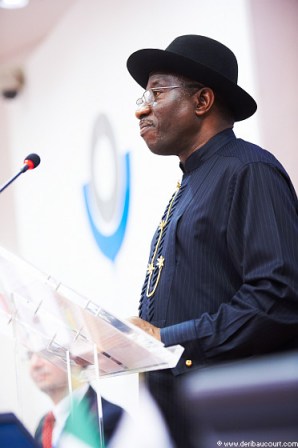
Goodluck Jonathan addressing the WCO in June 2012

As the Nigeria Customs Service (NCS) gets set to assume all hitherto contracted services from the service providers come December 31, 2012, kudos must be given to the administration of President Goodluck Jonathan for the political will which has brought this to fruition. This is a highly significant development that should encourage other African nations to follow suit.

Over the years, the functions of the Customs administrations have evolved from revenue collection to include protection of industries, protection of citizens, trade facilitation as well as trade security and environmental issues and Customs administrations have continued to improve with the dynamism brought about by the evolving global world.

Therefore, if any country must rely on contracting core Customs services to private companies, then such a country should as well disband its Customs administration. What this means is that no one can ‘Captain’ a ship better than a ‘Captain’, even the best pilot in the world would fail woefully when saddled with sailing a ship.

This is because, whilst it is necessary to contract some of these services to the private sector, such services are usually treated by benefiting firms as mere business ventures and as such, create a situation where governments use such contracts to benefit close allies, even as organisations will go to the extremes to secure such contracts, primarily for profit making.

Having critically studied the scenario, the World Customs Organisation (WCO), summed up that such practice usually results in a situation where there will be no trust in the Customs frontline and post clearance capability. This has prompted the Organisation to, in recent years, develop several diagnostic studies and programmes aimed at championing broader international Customs capability with high benefits to governments of its member countries.

Findings have however, shown that governments may choose the private-sector to complement its resources and capabilities in which supporting operations ranging from printing Customs legislation and tariff to designing Customs websites, repairing and maintaining facilities and equipment and conducting research into specific topics may be outsourced to private companies.

Core Customs responsibilities were also, through contracts with a government, outsourced to private companies that conduct pre-shipment Inspection (PSI) or Destination Inspection (DI) activities. As their names suggest, PSI activities are conducted in exporting countries in order to verify the quality, quantity, price and classification of such exported goods, while DI activities are carried out in combination with scanning technology on imported goods in importing countries.

However, this option, according to the world Customs body, has been observed to be usually more cost effective than in-house operations for many reasons including the stimulation provided by competition in the private sector.

It is therefore time that such organisations which front themselves with the ‘be all’ systems in Customs tariff and valuation appraisal rather seek a more practical and benefit-delivering model than one which not only scams governments of service and inspection fees, but also offers no benefit to trade.

Some of them offer government free cargo scanning equipment in exchange for a lucrative inspection fee. None of this is based on risk management and mostly purely profit focussed. The concept forgoes most, if not all the modern Customs principles and standards promoted by the WCO.

Rather than this concept which adds no value to trade, the focus of government should be capacity building for Customs officers; and with a commitment to capacity building under the Dikko-led management, the NCS now has capable hands to take-over the running of all its functions, and thereby retaining capital flight.

It is worthy to note that PSI and DI is normally introduced to enhance Customs functions as a stop-gap measure while waiting for Customs reforms and modernisation.

According to the WTO, as at November 2011, at least 25 countries, most of which are in sub-Sahara Africa, had contracts with private inspection entities for PSI and DI of which Nigeria was one of them, but this would no longer be after 31st December, 2012, when Nigeria would exit from that category.

Furthermore, it is also important to note that the WCO position is that such contracted core Customs services should not be considered as a permanent substitute for the Customs administration, but only as a temporary measure.

As a consequence of critical assessments of the performance of inspection companies and inefficient capacity-building and training activities, many Customs administrations have exited these outsourcing contracts and the WCO, with its accumulated knowledge, is able to assist its members with the process of discontinuing these contracts.

Nonetheless, there are certain circumstances where the hiring of inspection companies could be justified because of lack of expertise as in the case of post-conflict reconstruction situation. However, in such cases, contracts with PSI, DI companies as service providers should be accompanied by an active exit plan strategy within the context of a capacity-building or Customs modernisation programme. Even the PSI companies are in this case, expected to work in compliance with the WTO agreement on PSI and relevant WTO’s recommendations.

When Abdullahi Dikko, on assumption of office as Comptroller-General of the Nigeria Customs Service in 2009, began a campaign for the modernisation of the NCS as captured in his six point agenda with more emphasis on capacity building and improved welfare, he was criticised for embarking on such a capital intensive venture by many, who then didn’t believe in his vision. But today, the result of the huge investment on capacity building is evident as the NCS, come December 31, 2012, would pride itself among the 21st century Customs administrations, measuring with its counterparts in developed countries, by taking over full control of all Customs operations.

There are arguments that the outsourcing of supporting functions to the private sector enables the Customs administration to focus their scarce resources on their functions, but this is no longer the case with the NCS.

Facts have shown a sharp rise in the resources of the Service due to an improved revenue collection. Monthly collection has risen from the inherited N30 billion to N90 billion. The increased revenue collection has made it possible for Customs officers to have a 100 per cent salary increase and even freeing more resources for the acquisition of quarters for officers and men, renovation of Customs barracks nationwide, provision of staff buses, uniforms and clinics in most commands.

This landmark achievements have been made successful with the full deployment of the NICIS platform for e-Customs declaration and processing, manifest submission, duty payment and final release. Records show that e-manifest processing which usually took seven days and above in 2009, is now been processed same day. Same goes for e-remittance processing. Same transformation has being noticed in the number of processed SGDs which has risen from an average of 367,897 in 2009 to about 526,604 currently.

Summarily, it must be noted that the scanning aspect of the Customs supply chain security paradigm contributed to the evolution from pre-shipment inspection to destination inspection. Traditionally, many developed countries, especially in Africa, employ companies from developed countries to do pre-shipment inspection of imports to Africa primarily for classification and valuation purposes.

The pressure to consider exports as well as imports and for national security contributed to the emergence of destination inspection companies, where the Customs controls are conducted in the African country. This has reduced the internal costs of such service companies and increased their incomes but has done little or nothing to reduce checks at the border or import points. Source: Leadership (Nigeria)

Customs Modernisation – positive impact on Doing Business in South Africa!

South Africa ranks 39th out of 185 countries surveyed in the latest International Finance Corporation (IFC)-World Bank ‘Doing Business’ report, which was published on Tuesday.Last year, South Africa ranked 35 out of 183 countries assessed.

The country is placed above Qatar and below Israel in the Doing Business 2013 report, which covers issues such as starting a business, dealing with construction permits, getting electricity, registering property, accessing credit, protecting investors, paying taxes, trading across borders, enforcing contracts and resolving insolvency.

Singapore remains at the top of the ease-of-doing-business ranking for the seventh consecutive year, followed by Hong Kong and New Zealand. Poland improved the most in making it easier to do business, by implementing four regulatory reforms in the past year.

South Africa led the pack in terms of improving in the ease of trading across borders through its customs modernisation programme, which reduced the time, cost and documents required for international trade. “We hope that through the streamlining of procedures, we will see the growth of commerce in the country,” said coauthor of the report Santiago Croci Downes.

The Doing Business 2013 report stated that improvements in South Africa have effects throughout Southern Africa. “Since overseas goods to and from Botswana, Lesotho, Swaziland and Zimbabwe transit through South Africa, traders in these economies are also enjoying the benefits,” it stated.

Another 21 economies also implemented reforms aimed at making it easier to trade across borders in the past year. Trading across borders remains the easiest in Singapore, while it is the most difficult in Uzbekistan.

Out of the 185 economies assessed in the 2013 report, South Africa ranked 53rd for starting a business, 39th for dealing with construction permits, 79th for registering property, 10th for protecting investors, 32nd for paying taxes, 82nd for enforcing contracts and 84th for resolving insolvency.

The country ranked low, at 150, for ease of access to electricity, while it tied at the top with the UK and Malaysia for ease of access to credit. Croci Downes added that it was still too early to tell whether the recent labour unrest in the mining and transport industries would have an impact on South Africa’s ranking or on foreign direct investment .

Meanwhile, the IFC and World Bank reported that of the 50 economies making the most improvement in business regulation for domestic firms since 2005, 17 were in sub-Saharan Africa.

From June 2011 to June 2012, 28 of 46 governments in sub-Saharan Africa implemented at least one regulatory reform making it easier to do business – a total of 44 reforms.

Mauritius and South Africa were the only African economies among the top 40 in the global ranking. World Bank global indicators and analysis director Augusto Lopez-Claros said Doing Business was about smart business regulations, not necessarily fewer regulations. “We are very encouraged that so many economies in Africa are among the 50 that have made the most improvement since 2005 as captured by the Doing Business indicators.”

IFC human resources director Oumar Seydi added that lower costs of business registrations encouraged entrepreneurship, while simpler business registrations translated to greater employment opportunities in the formal sector.

“Business reforms in Africa will continue to have a strong impact on geopolitical stability. We encourage governments to go beyond their rankings. Ranking does matter, and competition is important, but that is not all that counts. What truly matters is how reforms are positively impacting growing economies,” he said.

African economies that have improved the most since 2005 include Rwanda, Burkina Faso, Mali, Sierra Leone, Ghana, Burundi, Guinea-Bissau, Senegal, Angola, Mauritius, Madagascar, Mozambique, Côte d’Ivoire, Togo, Niger, Nigeria, and São Tomé and Príncipe. Source: http://www.polity.org.za

Regional Blocs seek to remove Trade Barriers

THREE regional economic communities (Recs) have taken the lead as Africa seeks to remove trade barriers by 2017. The establishment of a Continental Free Trade Area (CFTA) was endorsed by African Union leaders at a summit in January to boost intra-Africa trade. Sadc, Common Market for Eastern and Southern Africa (Comesa) and the East African Community (EAC) have combined forces to establish a tripartite FTA by 2014.

Willie Shumba, a senior programmes officer at Sadc, told participants attending the second Africa Trade Forum in Ethiopia last week that the tripartite FTA would address the issue of overlapping membership, which had made it a challenge to implement instruments such as a common currency. “…overlapping membership was becoming a challenge in the implementation of instruments, for example, common currency. The TFTA is meant to reduce the challenges,” he said.

Countries such as Zimbabwe, Tanzania and Kenya have memberships in two regional economic communities, a situation that analysts say would affect the integration agenda in terms of negotiations and policy co-ordination. The TFTA has 26 members made up of Sadc (15), Comesa (19) and EAC (5). The triumvirate contributes over 50% to the continent’s US$1 trillion Gross Domestic Product and more than half of Africa’s population. The TFTA focuses on the removal of tariffs and non-tariff barriers such as border delays, and seeks to liberalise trade in services and facilitation of trade and investment.

It would also facilitate movement of business people, as well as develop and implement joint infrastructure programmes. There are fears the continental FTAs would open up the economies of small countries and in the end, the removal of customs duty would negatively affect smaller economies’ revenue generating measures.

Zimbabwe is using a cash budgeting system and revenue from taxes, primarily to sustain the budget in the absence of budgetary support from co-operating partners. Finance minister Tendai Biti recently slashed the budget to US$3,6 billion from US$4 billion saying the revenue from diamonds had been underperforming, among other factors.

Experts said a fund should be set up to “compensate” economies that suffer from the FTA. Shumba said the Comesa-Sadc-EAC FTA would create a single market of over 500 million people, more than half of the continent’s estimated total population. He said new markets, suppliers and welfare gains would be created as a result of competition. Tariffs and barriers in the form of delays have been blamed for dragging down intra-African trade.

Stephen Karingi, director at UN Economic Commission for Africa, told a trade forum last week that trade facilitation, on top on the removal of barriers, would see intra-African trade doubling. “The costs of reducing remaining tariffs are not as high; such costs have been overstated. We should focus on trade facilitation,” he said.

“If you take 11% of formal trade as base and remove the remaining tariff, there will be improvement to 15%. If you do well in trade facilitation on top of removing barriers, intra-African trade will double,” Karingi said. He said improving on trade information would save 1,8% of transaction costs. If member states were to apply an advance ruling on trade classification, trade costs would be reduced by up to 3,7%.He said improvement of co-ordination among border agencies reduces trade costs by up to 2,4%.Karingi called for the establishment of one-stop border posts.

Participants at the trade forum resolved that the implementation of the FTA be an inclusive process involving all stakeholders.They were unanimous that a cost-benefit analysis should be undertaken on the CFTA to facilitate the buy-in of member states and stakeholders for the initiative. Source: allAfrica.com

Exporters Blast ZIMRA and RBZ Red Tape


Zimbabwe‘s export procedures have come under severe criticism as they are said to be contributing to the country’s poor export performance. Local manufacturers have lamented delays in documents processing by the Zimbabwe Revenue Authority and the Reserve Bank of Zimbabwe, which they say is constraining the movement of goods into regional and international markets.

Latest official statistics show that the country’s trade deficit stands at around US$2,9 billion due to the underperformance of the export sector. Surface Investments executive director Mr Narottam Somani says although they have lodged complaints with ZIMRA over the issue there have been no positive outcome.

“The CD1 approval procedures and ZIMRA Bill of entry procedures are too lengthy and as such they spoil the whole momentum of exports. Government, ZIMRA and the RBZ need to appreciate the value of reducing period of these procedures. “We have engaged officials from ZIMRA and the RBZ over the need to file our CD1 and bill of entry forms online which will help reduce the time period to one day. They say that they appreciate our concerns but nothing has materialised,” he said. (Note for South African readers – CD1 refers to a ZIM exchange control document and not the SARS’ new electronic declaration form)

Surface Investments is the country’s largest multi-oilseed processing firm and it exports crude oil to Malawi and cotton linters, and cotton hulls to South Africa and Europe.

Both exporters and importers contend that the country’s export transit procedures have not improved significantly despite ZIMRA’s rollout from last year of the ASYCUDA World version 4.0.21 to over 14 of its stations. Implementation of the system was largely expected to expedite clearance procedures at the country’s border posts. ASYCUDA 2.3 was the earliest version to be introduced in Zimbabwe in 1992 and was upgraded to versions 2.5 and 2.7. ASYCUDA++ later came on board in the form of version 1.15 and 1.18. An expert in the field of transit procedures yesterday said improving these processes would take a wider regional approach.

“Transit operations of most countries in the region typically suffer from a number deficiencies such as lack of simplified and standardised customs procedures, documents and data processing that generally yield costly implications such as delays at border posts, opportunities for theft and corruption practices, and inflated transit transport costs.

“The key area that needs to be addressed therefore relate to regional harmonisation of transit procedures.” Source: The Herald (Harare)


Customs Modernisation – some benefits in the offing


Its been a while since I penned some comment on the customs modernisation programme in South Africa. Amongst the anxiety and confusion there are a few genuine ‘nuggets’ which I would hope will not go unnoticed by the business community. With stakes high in the area of business opportunity and competitiveness, such ‘nuggets’ must be adopted and utilised to their fullest extent. Lets consider two such facilities.

The widespread implementation and adoption of electronic customs clearance has allowed brokers to file declarations for any customs port from the comfort of their desks. Brokers can now consider centralised operations especially for customs clearance purposes. Likewise the withdrawal of the annoying goodwill bond should also come as a welcome decision. Hopefully this may translate into cost-savings over time.

As of 11 August 2012, the business community will also be glad to learn that imported goods which do not fully meet all national regulatory requirements can be entered into bond on a warehouse for export (WE) basis. While this may not sound like anything new, the provisions which come into effect, will accord the identical treatment of such goods as if they were being entered for warehousing. In short the new provisions will allow more flexibility with the ability to re-warehouse WE goods; the ability to change ownership on WE goods; and the ability to declare WE goods for another customs procedure.These provisions can be considered a relaxing of the original approach which mandated compulsory exportation. All government regulatory requirements (i.e. permits, certificates, etc.) will however be strictly enforced upon clearance of WE goods for home use or another customs procedure. The apparent relaxation forms part of ongoing alignment of customs procedures with the Customs Control Bills, which are in the process of finalisation.

For those who have enquired about the followup to the national transit procedure, I have not forgotten about it. The ‘touchy’ nature of the subject requires a mature and fair response. Please bear with me.


Mozambique – Single Window and other Customs developments

The Single Electronic Window (JUE) is a modern system of clearance of goods. After the revision of the whole legislation to allow the implementation of the JUE, the pilot project began in September 2011 in the port of Maputo. Here follows an interview with Kekobad Patel, the President of the Working Group On Tax Policy, Customs and International Trade of the CTA.

What was the adherence of international traders?

“We hoped more adherence of all concerned traders, unfortunately, very few participated in the pilot phase. During this period, both systems (manual and electronic) coexisted. There is always some resistance to change.”

When did the use of the JUE become mandatory?

“The use of JUE became mandatory on April 9, 2012 in the port of Maputo,on April 23 in the port of Beira, early May in the port of Nacala. The city of Tete is now also covered by the system because of the current requirements due to the establishment of large enterprises in the region.”

How many organizations have used the JUE?

“Since its entry into force until 15th of June 2012, over 7,000 import entries were submitted. We still do not deal with export declarations, transit, or special arrangements. These processes are handled manually.”

What are the next areas to be covered by the JUE?

“The second phase will begin in July 2012 and will focus on automotive, multi-modal and road terminals in Maputo, as well as the land borders of Goba, Namaacha (Swaziland) and Ressano Garcia (South Africa) that have received the equipment to begin operations. At the end of the year, the port of Pemba and the land borders of the province of Manica and Tete will be also covered. It will also be possible to treat the other procedures for export and transit. This is crucial, given the geographical location of Mozambique and its relations with the countries of the hinterland. Meanwhile, three Ministries will be electronically linked to award the import licenses: the ministries of Health, Industry and Commerce, and Agriculture. We should not forget that banks are also involved in the JUE. The BCI bank has supported the JUE since the pilot phase. Other banks have joined in recent months: Millenium BIM, Mozabanco and Standard Bank. We expect the membership of other banks.”

What is the biggest challenge of the JUE?

“The implementation of the JUE has led to a change of mentality: “paperless” in the country: less buffer, less paper. The government itself is also involved in the process of e-taxation that ensures that taxpayers should pay their taxes electronically. We still have problems to solve. For example, when a ministry inspects companies, papers are asked for… We need to think about alternatives. The castle must be built stone by stone to ensure it is strong and other sectors such as the public one and banking, are also involved.We believe that the entry into force of the JUE shows how to modernize the country.”

Is the JUE to eliminate the clearing agents?

“The law allows companies to make their own clearance process, but many of them are not prepared. In other countries such as Singapore, the most advanced country in terms of customs, clearing agents continue to exercise thanks to their perfect knowledge of the system.” Source: allAfrica.com

Other news – Mozambique accedes to the WCO’s Revised Kyoto Convention

On 11 July 2012, the Embassy of the Republic of Mozambique to Belgium deposited Mozambique’s instrument of accession to the International Convention on the Simplification and Harmonization of Customs Procedures (Revised Kyoto Convention) with the World Customs Organization. The Convention is regarded as a blueprint for effective and modern Customs procedures, and will enter into force in Mozambique on 11 October 2012. Mozambique becomes the 82nd signatory to the Convention. Some of the Convention’s key elements include the application of simplified Customs procedures in a predictable and transparent environment, the maximum use of information technology, the utilization of risk management, a strong partnership with the trade and other stakeholders, and a readily accessible system of appeals. Will be interesting to see how Mozambique Customs treats the national transit procedure?

WCO News – 60 year Anniversary Edition

The Organization is celebrating its 60th anniversary, an occasion which gives the global Customs community the chance to reflect on where the WCO began, where it is now, and where it hopes to go in the future. This issue highlights some of the WCO’s milestones past and present, we take a brief look at the WCO’s historical beginnings and subsequent development, follow one man’s forty year Customs journey, look at the history of containerization: the box that changed the world, and even step back to 1969 when the Apollo 11 touched down on the surface of the moon. In this dossier, not only does the WCO look back with pride, but also looks forward with optimism, conscious of the fact that the WCO has served the global Customs community with dedication for sixty years, and will continue doing so to ensure that Customs administrations remain well-positioned to deliver effective and efficient services around the world. Also in this issue –

  • Doorless containers now a reality,
  • US/EU mutual recognition programme,
  • New guidelines included in WCO Revenue Package,
  • Globally Networked Customs,
  • GS1 and the WCO,
  • Algeria Customs and performance management,
  • Georgia’s success in rooting out corruption,
  • Hong Kong moves forward with its e-Lock plans.

Source: http://www.wcoomd.org

Politicians – they’re all the same

A strong and informed opposition is always healthy, so the exponents of the modern democracy continually advocate. Well if the speech of the Democratic Alliance‘s shadow minister on trade and industry, Dr. Wilmot James,  to the House of Commons in London is anything to go by, is just a case of “same old, same old“, filled with cliches and boring statistics scrounged from publications such as Doingbuisness.org. Furthermore, it illustrates why poor legislation comes about, in many cases uncontested unless it touches a political nerve.

The speech concludes with a set policy proposals that will form part of the official opposition’s manifesto for the 2014 elections. Read the full speech here! To what extent the opposition has canvassed the real import/export community is questionable, and reveals a level of understanding that is ‘uninformed’ at best. I’m not impressed and totally uninspired.

Revisiting the national transit procedure – Part 1

FTW Online last week ran an interesting article in response to a proposed change in Customs’ policy concerning the national transit movement of containers from coastal ports to inland container terminals and depots. In February 2011, I ran an article Customs Bill – Poser for Cargo Carriers, Handlers and Reporters alluding to some of the challenges posed by this approach. The following article goes a step further, providing a trade reaction which prompts a valid question concerning the practicality and viability of the proposed change given logistical concerns. I believe that there is sufficient merit in the issues being raised which must prompt closer collaboration between the South African Revenue Service and trade entities. For now it is sufficient to present the context of the argument – for which purpose the full text of the FTW article is presented below. In Part 2, I will follow-up with SARS’ response (published in this week’s edition of the FTW) and elaborate on both view points; as well as consider the matter  on ‘raw’ analysis of the ‘cargo’ and ‘goods declaration’ elements which influence this matter. Furthermore, one needs to consider in more detail what the Revised Kyoto Convention has to say on the matter, as well as how other global agencies are dealing and treating the matter of ‘security versus facilitation’.

Customs’ determination to have all goods cleared at the coast does not bode well for the South African trade environment, Pat Corbin, past president of the Johannesburg Chamber of Commerce and Industry (JCCI), said. Speaking at the Transport forum in Johannesburg Corbin said the Customs Bills have been on the cards for several years now and while consensus had been reached on most issues in the Nedlac process, the determination of Customs to not allow for any clearing to take place at inland ports will only add more pressure to the already overburdened ports in the country. “Customs maintains that despite the changes they propose it will be business as usual. We disagree. We have severe reservations about their intention to terminate vessel manifests at the coastal ports in all cases and have called for further research to be undertaken in this regard,” said Corbin. “By terminating the manifest at the coast it has severe ramifications for moving goods from road to rail. International experience has shown when you have an inland port and you have an adequate rail service where the vessel manifest only terminates at the inland port, up to 80% of the boxes for inland regions are put on rail while only 12% land on rail if the manifest terminates at the coastal port.” Corbin said the congestion at both the port and on the road would continue and have an adverse impact on quick trade flows. “It also raises issues around the levels of custom security and control at inland ports and then the general implications on the modernisation project.” According to Corbin, government’s continued response has been that no provision exists for inland ports and that goods must be cleared at the first port of entry. “They maintain that it is about controlling goods moving across our borders and thus the requirement that all goods must be cleared at the first port of entry. The security of the supply chain plays an important role to avoid diversion or smuggling of goods,” said Corbin. “Government says that the policy change will not clog up the ports or prohibit the seamless movement of trade. Labour organizations and unions seem to agree with them.” But, Corbin said, the Johannesburg Chamber of Commerce differs and is worried about the ramifications of this dramatic change to the 35-year-old option of clearing goods at an inland port or terminal. “With this policy change all containers will have to be reconsigned after not only Customs clearance on copy documents but also critically, completion of shipping lines’ requirements ie, payment of freight, original bill of lading presentation and receiving delivery instructions prior to their issuing a delivery order.” Corbin said the issue had been addressed directly with Transnet CEO Brian Molefe on two occasions, but that he had said he accepted Customs’ assurance that nothing would change and the boxes would still be able to move seamlessly once cleared. “It is not understood that the manifest will terminate at the coast where all boxes will dwell until they can be reconsigned,” said Corbin. Source: FTW Online – “New Customs Bill ruling will put pressure on port efficiency.”

News from Angola

SEZ for Cunene Province

The government of Cunene province in southern Angola, has chosen the border town of Calueque, in Ombadja municipality, to set up the province’s Special Economic Zone (ZEE), the province’s governor, António Didalelwa said in Ondjiva speaking to Angolan news agency Angop. At the end of a meeting of the provincial government, the governor said that Calueque had been chosen due to its potential to drive agri-livestock activities based on the Cunene River’s hyrodgraphic basin and the Calueque hydroelectric facility. Its proximity to Namibia, its conditions in terms of available electricity and water, as well as access roads make it possible to set up economic and administrative facilities in order to drive production and job creation. The entities that attended the provincial government meeting concluded that the existing conditions at the new ZEE would attract investments and drive production by installing factories, retail and services areas. This follows last year’s fomalisation of the Luanda-Bengo Special Economic Zone (SEZ) between the towns of Viana and Cacuaco in Luanda province and the towns of Icolo-e-Bengo, Dande, Ambriz and Namboangongo in Bengo province. Watch a short video on the Luanda-Bengo ZEE here! Source: Macauhub.com.

Customs Modernisation

The Programme to Expand and Modernise Customs Services (PEMA) in Angola, which began in 2002 and officially ended Monday 21 May, cost US$315.5 million, Angolan weekly newspaper Expansão reported. The newspaper added that in a 10-year period the PEMA had led to US$17.7 billion going to the State’s coffers and thus the cost of the programme was just 1.8 percent of the revenues that it had made possible.

During the ceremony to mark the end of a partnership with Crown Agents, a UK company that specialises in modernising public services, the assistant director general of the National Customs Service, Maria da Conceição Matos, said that whilst the programme was being implemented customs revenues had increased steadily and significantly. Matos said that the Programme for Expansion and Modernisation of Customs Services had reformed the institution structurally across the whole of Angola, based on international best practices for the customs sector.Source: Macauhub.com.

Interfront – Customs know-how and software

Forgive my exuberance and national pride, for one minute. After some years of intense re-organisation and strategization a new dynamic organization is set to spearhead ICT development in the Customs and Border Management industry. Many will know it by its previous name TATIS or TATIScms. The Cape Town based IT outfit is responsible for the intuitive customs software solution which currently operates in Luxembourg Customs. Let it be known that this is one tough space to operate and succeed in.

Africa, in particular, has  suffered the stigma of UN and World Bank ‘freebies’ by way of customs automated solutions – designed and developed by the west, on western philosophy with little concern for the longer term sustainability and development on the African continent. Before the emergence of commercial Windows-based software, African states (and most developing countries for that matter) had little option but to adopt ASYCUDA. The French colonies in the main sought franco-developed SOFIX. Bull Computers were particularly strong in this space and received great support from the French government in their ventures.

Just as the ‘power’ of the west is waning under financial and political turmoil, so developmental states and economies are looking to their own resources and expertise to fulfil their needs and destinies. A similar phenomenon occurred in the border and port control security space during the first decade of the 21st century, where the Chinese have virtually stolen international market share in NII (Cargo scanning) equipment.  Therefore the emergence of InterFront on the Customs ICT scene is both unique and timely. For more details on the new company and its partners, solutions and expertise please visit their website: http://www.interfront.co.za. Also read their corporate and product profile brochure – click here!

This week, Interfront are show-casing their solution and expertise at the WCO‘s 2012 ICT Conference in Tallinn, Estonia. With the international customs and border management relatively young and seeking stability, Interfront have a great opportunity to develop a regional and international footprint. SARS, in particular, looks forward to its new integrated customs solution; setting a new bench mark in global customs processing.

2012 WCO IT Conference and Exhibition opens in Estonia

The World Customs Organization (WCO) announced the successful opening of its 2012 IT Conference and Exhibition in Tallinn, Estonia which will run from 6-8 June 2012 with the theme: ” IT Transforms Core Business for Customs and its Stakeholders”.

The VIP opening ceremony included a special video welcoming speech by the President of the Republic of Estonia, H.E. Toomas Hendrik Ilves, and addresses by the Secretary General of the WCO, Kunio Mikuriya, and the Director General of the Estonian Tax and Customs Board, Marek Helm, co-hosts of the event.

This 11th WCO IT Conference and Exhibition which dates back to 2002 is the most important IT event on the international Customs calendar, allowing senior Customs executives from over 100 countries to meet with top trade representatives and solution providers in order to consider today’s business challenges as well as modern IT developments.

Gathering over 500 delegates together, the 2012 Conference will focus on “the Customs administration of the future” and includes a wide range of leading speakers from the Government and private sectors who will expand on the main theme of the event.

A dynamic IT exhibition complements the Conference, enabling various global systems aimed at maximum effectiveness and efficiency in modern Customs innovation to be displayed and demonstrated to participants.Source: WCO