Time to pull the plug on SACU?

SACU logoPeter Fabricus, Foreign Editor, Independent Newspapers through the Institute of Security Studies writes an insightful and balanced article on the history and current state of the Southern African Customs Union (SACU).

The formula that determines how the customs and excise revenues gathered in the Southern African Customs Union (SACU) are distributed among its members looks, to a layperson, dauntingly complex. But this formula has had an enormous impact on the economic and even political development of the five SACU member states; South Africa, Botswana, Lesotho, Namibia and Swaziland.

The impact has arguably been greatest on South Africa’s neighbours, the four smaller member states that are often referred to simply as the BLNS. But it has also had an impact on South Africa.

SACU was founded in 1910, the year the Union of South Africa came into existence, and is the oldest surviving customs union in the world. Originally it distributed customs revenue from the common external trade tariffs in proportion to each country’s trade..

So, South Africa received nearly 99%. Surprisingly, South Africa’s apartheid government radically revised the revenue-sharing formula (RSF) in 1969 after Botswana, Lesotho and Swaziland had become independent. This gave each of the BLS members first 142% and later 177% of their revenue dues, calculated on both external and intra-SACU imports, with South Africa receiving only what was left. But this apparent economic generosity from Pretoria almost certainly masked a political intention to keep its neighbours dependent and in its fold, as the rest of the world was increasingly turning against it.

However, as Roman Grynberg and Masedi Motswapong of the Botswana Institute for Development Policy Analysis pointed out in their paper, SACU Revenue Sharing Formula: The History of An Equation, the 1969 formula became increasingly unviable for South Africa as it had been de-linked from the common revenue pool. This threatened to burden Pretoria with a commitment to pay out to the BLS states more than the total amount in the pool.

The African National Congress government saw the dangers when it took office in 1994 and soon began negotiations with the BLNS states for a new formula. That was agreed in 2002 and implemented in 2004. But although the 2002 RSF eliminated the risk that the payouts to the BLNS might exceed the whole revenue pool, it actually increased the share of the pool accruing to the BLNS at the expense of South Africa – as Grynberg and Motswapong also observe.

The new RSF was based on three separate components. The first divided the customs revenue pool proportional to each member state’s share of intra-SACU imports. Because of the growing imports of the BLNS states from the ever-mightier South Africa, this meant most of the common customs pool went to the BLNS. This proportion is increasing – but never to more than the entire pool.

The second component of the RSF divided 85% of the pool of excise duties (the taxes on domestic production) in direct proportion to the share of the gross domestic product (GDP) of each of the SACU members. The remaining 15% of the excise duties became a development component, distributed in inverse proportion to the GDP per capita of each member. So the poorest members of SACU would receive a disproportionate share of this element of the excise.

Over the years the BLNS countries have grown increasingly dependent on the SACU revenue. It now funds 50% of Swaziland’s entire government revenue, 44% of Lesotho’s, 35% of Namibia’s and 30% of Botswana’s. Because of its own growing fiscal constraints, Pretoria launched a review of the formula in 2010. But this review got bogged down over major disagreements and seems to have gone nowhere.

In his budget speech this month, Finance Minister Nhlanhla Nene raised the issue again, calling for a ‘revised and improved revenue-sharing arrangement,’ and Parliament’s two finance committees examined it. National Treasury spokesperson Jabulani Sikhakhane told ISS Today that while efforts to reform the SACU formula are ongoing, ‘progress has unfortunately been arduously slow.’

Budget documents show that in 2014-15, South Africa paid out some R51.7 billion to the BNLS countries out of a total estimated revenue pool of R80 billion, and was projected to pay out R51 billion again in 2015-16. Kyle Mandy, a PricewaterhouseCoopers technical tax expert, told Parliament’s two finance committees last week that South Africa was paying about R30 billion a year more than it would otherwise under the SACU RSF. He said South Africa contributed about 97% of the customs revenue pool and received only about 17% of it.

The R51.7 billion payout to the BLNS this year represents about 5% of South Africa’s total of R979 billion in tax revenue, a substantial ‘subsidisation’ that was no longer affordable at a time of growing fiscal constraint, which had forced Nene to increase taxes, Mandy said.

He noted that the SACU revenue had allowed all but Namibia of the BLNS countries to set their taxes below South Africa’s. ‘This means South Africa is subsidising the BLS countries to compete with South Africa for investment with their more attractive taxes,’ he said in an interview.

‘This is not sustainable for anyone. It locks the BLNS countries into dependency on South Africa. They have neglected their own fiscal systems. But the moment that the revenue fluctuates, [as Nene’s budget predicted it would in 2016-17, dropping to R36.5 million], it puts them in a difficult position. When South Africa sneezes, they catch flu.’

But what to do about this? Some, like political analyst Mzukisi Qobo, have called for a total overhaul of the SACU agreement, which would make explicit that SACU is a disguised South African development project. The development aid would become transparent and could be tied to conditions such as democratic government.

That is on the face of it an attractive solution, offering the opportunity of leveraging democracy in Swaziland, in particular, by placing a conditional foot on its lifeline of SACU revenues. But Grynberg warns that a sudden withdrawal of the vital direct budgetary support which SACU customs and excise revenues provides, could implode both Swaziland and Lesotho and provoke economic crises in Namibia and even Botswana.

He also points out that the RSF is not plain charity by South Africa to its smaller neighbours. The formula has essentially just compensated them for the cost-raising and polarising effects of SACU – that the BLNS countries have generally had to pay more for imported goods over the years than they would have otherwise done because of import tariffs designed to protect South African industries; and because the duty-free trade within SACU has tended to attract investment to larger South Africa.

Meanwhile, South Africa has benefitted from a ready market for its much larger manufacturing machine. Grynberg wrote in a more recent article for the Botswana journal, Mmegi, that the South African government was thinking of pulling out of SACU because it couldn’t get its way in the negotiations to revise the RSF; and because the 2005 Southern African Development Community Free Trade Agreement now gave it duty-free access to the BLNS countries without the need to pay the re-distributive SACU customs revenues.

It was only President Jacob Zuma who was preventing this, because he didn’t want to go down in history ‘as the man who crippled the Namibian and Botswana economies and created two more “Zimbabwes” – i.e. Swaziland and Lesotho – right on the country’s border.’ Pretoria’s decision had turned SACU into a ‘dead man walking, just waiting for someone to pull the switch and end its life.’

Grynberg strongly advised the BLNS to prevent this by accepting that the political reality that underpinned the RSF of SACU no longer existed. He says that it should be transformed into a purely development community without the formula, but with mutually agreed spending on development – mainly in the BLNS. He suggested, though, that this radical change would take at least 10 to 15 years to phase in.

All very well. But isn’t that what SADC is supposed to be already? Which suggests that it might be time to take the 105-year-old dead man off life support.

Source: Institute of Secutity Studies (ISS)

Related articles

Its Annual Budget time – Tobacco, Tax and the Black Market

Cigarettes+XXX+smokingThe nation awaits the 2015 Budget Speech with trepidation to know if income taxes will rise. But there is unanimous certainty there will, as per usual, be an increase in ‘Specific Excise Duties’. The only question is by how much? Taxation of cigarettes and tobacco products appears to be the path of least resistance for tax-collectors. It receives little backlash from the wider public (unlike e-tolls) and even support in some quarters.

The imposition of the so-called “sin taxes” on cigarettes and liquor products, in addition to generating significant fiscal revenues, does serve an economic purpose. Unlike normal goods and “necessity” products, cigarettes are not an essential good which people need to survive. As far back as the 1700s, Adam Smith averred “Sugar, rum, and tobacco, are commodities which are nowhere necessaries of life … are therefore extremely proper subjects of taxation.” Again, the notion of the importance of tobacco to the fiscal basket is exemplified in utmost simplicity and honesty – if a politician, or an emperor in this case can be believed –

This vice brings in one hundred million francs in taxes every year. I will certainly forbid it at once – as soon as you can name a virtue that brings in as much revenue [Napoleon III (1800s) – reply when asked to ban smoking]

Despite all the furore over public health and governments efforts to decrease the demand for cigarettes, South Africa is no different to other nations – annual tobacco revenues to the state coffers amounts to around R10 Billion! Another round of sin tax increases in the upcoming budget appears inevitable, and these increases are spawning a range of unintended (but not unexpected) consequences – the illicit trade. Source: Polity.org / DNA Economics.

ZIM Police struggle to bust cigarette racket

CigarettesAn intricate web of smugglers, which reportedly involves manufacturers and middlemen, has been illegally carting cigarettes worth millions of dollars out of the country over the years, prejudicing the treasury of vital revenue.

Cigarette manufacturer, Savanna, has been fingered as one of the main culprits, while multinationals like BAT have also been mentioned in the illicit cross-border trade, mainly to South Africa.

Commonly smuggled brands include Remington Gold, Madison, Sevilles, Magazine Blue, Chelsea and Pacific Blue, manufactured by Savanna – which consistently denies smuggling.

A senior police sokesperson said “Even though we don’t always talk about it, we have managed to make significant arrests and the cases have been taken to court. The arrests include smuggling attempts at undesignated spots along the border and through official exit points such as Beitbridge”

A senior customs official told The Zimbabwean that cigarette smuggling, particularly through Beitbridge and Plumtree border posts, was difficult to arrest because of corruption.

“Policing at the border posts involves several agencies, namely the police, CIO (Central Intelligence Organisation), customs and special deployments from ZIMRA (Zimbabwe Revenue Authority). The problem is that these officers work in collaboration with the smugglers and haulage trucks and other containers carrying the cigarettes are cleared without proper checking. Hefty bribes are involved and the money is too tempting to resist,” said the customs official.

“You would be amazed how wealthy these officers have become. They have bought houses, luxury cars and send their children to expensive schools – yet their regular salaries are so low,” he added.

Immigration and customs officials, who also constantly liaise with their South African and Botswana counterparts and meet physically regularly, pretend to be checking the containers but clear them without completing the task, and know what the trucks and other carriers would be ferrying.

ZIMRA has four scanners for detecting contraband and an anti-smuggling team that also uses sniffer dogs, in addition to guard soldiers posted between the Zimbabwean and South African borders.

There are about 15 regular roadblocks along the Harare-Beitbridge road and 10 between Bulawayo and Plumtree that search trucks, buses and private cars. Despite this, the smuggling continues because of the collusion among the officials, said the source.

In early January, the Ferret team, a joint operation involving Zimbabwean and South African officers, intercepted a truckload of 790 Remington Gold cigarettes worth an estimated $119,000 destined for South Africa along the Masvingo-Beitbridge road. The smugglers were caught and arrested while offloading the cartons into small trucks. Source: The Zimbabwean

Important Implications of the WTO TFA on Landlocked Countries

WTO TFA implications for LLDCBackground

The Almaty Programme of Action (APoA): Addressing the Special Needs of Landlocked Developing Countries within a New Global Framework for Transit Transport Cooperation for Landlocked and Transit Developing Countries was adopted in 2003 as a response to the growing recognition by the international community of the special needs and challenges faced by the LLDCs. The Programme of Action emphasised five priority policy areas that landlocked and transit countries need to address to resolve the access problems of LLDCs: Transit policy and regulatory frameworks; Infrastructure development; International trade and trade facilitation; International support measures, and Implementation and review.

As one of the priority areas of the APoA, international trade and trade facilitation (streamlining customs and other border procedures) has taken on renewed focus, especially in light of the WTO Bali Ministerial Conference in December 2013, at which WTO members reached consensus on a Trade Facilitation Agreement, as part of the wider ‘Bali package’. As the end of the first ten years of the APoA is drawing to a close, the General Assembly of the United Nations decided to hold a comprehensive Ten-Year Review Conference of the APoA in 2014.

WCO TFA and Landlocked Countries

The WTO Trade Facilitation Agreement sets out commitments that promote clear rules and procedures, many of which are of particular interest to LLDCs. The three most important provisions for LLDCs are Articles 11, 10,and 8. The first one deals specifically with freedom of transit, the second sets out obligations in relation to trade procedures including transit, and the third requires WTO members to cooperate with other members with which they share a common border.

Other TFA provisions of interest to the LLDCs include Articles 1-5 which addresses Publication and Transparency, including the availability of information; Article 2 which provides specific guidance on Consultations before Entry into Force; Article 6, which sets out Disciplines on Fees and Charges imposed on or in Connection with Import and Export and Article 7 which provides rules on Release and Clearance of Goods, including Trade Facilitation Measures for Authorised Operators. In the new Agreement, the obligations take three forms: Binding, Best Endeavour, or a Combination of both.

The TFA presents an opportunity for LLDCs to upgrade their systems, infrastructure and procedures as the Agreement encourages national trade facilitation improvements. Policymakers should therefore ensure that trade facilitation is included in national development plans given the cross cutting nature of trade facilitation. Using this approach, LLDCs will increase their ability to access resources tied to different funding windows, for example, assistance for general trade policy and regulations.

There are 16 Landlocked countries in Africa, which signifies the importance of the WTO TFA and its consequential impact on regional trade groupings.

The WTO TFA is an innovative agreement as it will provide capacity building to developing countries to allow them to undertake the implementation of the agreement where necessary. The Agreement addresses concerns about the implementation costs and capacity building constraints in developing and least developed countries that would be required to implement these rules. The Agreement allows each LLDC to design its TFA implementation plan and choose a timetable of compliance in accordance with its needs, capabilities and confirmed funding and technical assistance from development partners. Further, guidance is provided to WTO members on the domestic institutional arrangements that should be established to maximise the resources to be made available by donors, as well as the structures and systems that should be adhered to at the WTO Secretariat itself to ensure that the process of accessing TFA implementation support is transparent and inclusive.

It is essential to note that the Agreement specifies a strict national approach to implementation and makes no provision to resolve the issues which are closest to LLDCs interests, such as regional economic corridors, which fall outside the purview of the WTO’s multilateral disciplines. Despite this shortcoming, LLDCs will benefit from deepening their links and their involvement in fora supported by the development banks and bilateral agencies which fund these regional programmes. This will ensure that their interests are adequately reflected in the design of development plans for regional infrastructure improvements, regulatory reforms, technical assistance and capacity building.

Although the language of the TFA is legally binding in relation to some key aspects of freedom of transit, it has one important proviso. If an LLDC developing country neighbour denotes freedom of transit as a Category C obligation, it will only become justiciable and fully legally binding after the expiration of the transition date determined by that country and the delivery of suitable technical assistance by donors. Against this background, an optimal outcome for LLDCs would be that as many transit countries as possible register freedom of transit as a Category A obligation, as this would come into force immediately.

Read the full preparatory report on the Implications of the WTO ATF on Landlocked Developing Countries, available on the United Nations Conference on Landlocked Developing Countries website.

Related articles

High Court Stops Kenyan Mega-Port

LAPSSETKenya’s high court on Friday ordered a halt to the long-delayed development of a mega-port on the country’s northern coast for at least two weeks to allow a lawsuit lodged by local landowners over compensation to move forward.

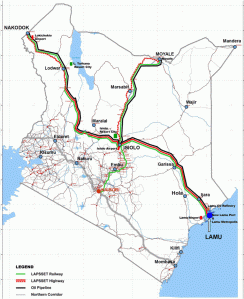
The $25.5 billion project, known as the Lamu Port-South Sudan-Ethiopia Transport (LAPSSET) project, would eventually link landlocked countries South Sudan and Ethiopia to the Indian Ocean via Kenya and include a port, new roads, a railway and a pipeline.

The LAPSSET project involves the development of a new transport corridor from the new port of Lamu through Garissa, Isiolo, Mararal, Lodwar and Lokichoggio to branch at Isiolo to Ethiopia and Southern Sudan. It will comprise of a new road network, a railway line, oil refinery at Lamu, oil pipeline, Isiolo and Lamu Airports and a free port at Lamu (Manda Bay) in addition to resort cities at the coast and in Isiolo. It will be the backbone for opening up Northern Kenya and integrating it into the national economy.

It was first conceived in the 1970s but has been gaining traction after commercial oil finds in Uganda and Kenya.

Judge Oscar Angote suspended the project and said the land compensation case would be heard on 8 December 2014. Source: Maritime Executive

Truck Explosion at Kasumbalesa Border Post

There are unconfirmed reports of five drivers burnt to death at the Kasumbalesa border post in Zambia. According to a report from FESARTA the incident occurred at around 17:00 Zambian time on Monday, 24 November. To watch the Truck inferno which killed two Zimbabweans (Video) – click here!

Two Zimbabwean truckers are believed to be among the four dead at Kasumbalesa Border Post, linking Zambia and the Democratic Republic of Congo

Unconfirmed reports allege a petrol tanker was leaking and the petrol spread to an area where drivers were cooking. In the ensuring fire and explosion unconfirmed reports allege a 100 trucks were affected.

The area does not have a dedicated fire department and unconfirmed reports claim the fire lasted until the early hours of Tuesday, 25 November.

It is unknown how many drivers were injured in this explosion.Source & pictures: Glen Tancott, TransportWorldAfrica

Update! FESARTA update on fire in Kasumbalesa DCDG (Transport World Africa)

Zimbabwe – Sharp Decline in Vehicle Imports

carsBeitbridge border post is experiencing a significant decline in volumes of imported used cars following a 20 percent increase in excise duty which took effect on November 1. “We are processing documents for less than 40 vehicles per day compared to the previous month when we would deal with over 150 cars,” said a ZIMRA official.

Investigations by The Herald indicate that before the new duty regime, ZIMRA was making over $100 000 on car imports at Manica transit shed a day, but the figure has declined to around $30 000. A modest vehicle costs between $3 000 and $4 000 at dealerships on the South African side of the border and attracts import duty of the same amount.

Before the introduction of the new regulations, zimra officials were clearing around 170 vehicle imports a day as dealers rushed to beat the November 1 deadline.

Finance and Economic Development Minister Patrick Chinamasa recently announced an increase in customs duty on single cab vehicles with a payload of more than 800kg from 20 percent to 40 percent. Buses with a 26-passenger carrying capacity and above will pay 40 percent from zero duty, while duty for double cab trucks was reviewed from 40 to 60 percent. Vehicles with an engine capacity below 1 500cc had their duty increased from 25 to 40 percent.

Customs duty for vehicles with engine capacity above 1500cc remains at 86 percent, inclusive of VAT and surtax. The new development has seen the Zimbabwe Revenue Authority processing fewer vehicles at Manica transit shed in Beitbridge. Vehicle dealers at the South African border said they were struggling to sell five cars a day. Major car dealers include Quest Royal, Wright Cars, Car Cade, Murree Motors, Noble Motors and KDG. Cars with small engines such as the Nissan March, Honda Fit, Toyota Vitz, Toyota Corolla, Toyota Raum and FunCargo were on high demand before the new duty regime. Source: The Herald

Second bridge over the Zambezi River opens in Mozambique

The second bridge over the Zambezi River in Tete, which is 715 metres long and was built by a consortium of Portuguese companies, was inaugurated Wednesday, after construction began in 2011. The bridge, which connects the city of Tete to the Moatize district, which has the largest deposits of coal in Mozambique, was completed last October.

The new bridge is an integrant part of the National Road EN103, which is the main connection between Mozambique and Zimbabwe, and allows the connection of Malawi and Zambia with the Beira Port. The National Road EN103 assumes itself as the main axis connecting north-south, linking South Africa to Malawi / Zambia.

The bridge as a whole is composed by the bridge itself which crosses the Zambezi riverbed, and an access viaduct to access the bridge from the south side.

The work, costing 105 million euros, was executed by a Portuguese consortium of contractors made up of Mota-Engil, Soares da Costa and Opway and, as well as the bridge, overpass and access roads, included rebuilding 260 kilometres of roads linking Tete to the borders with Malawi and Zimbabwe.

As part of the “New Tete Bridge and Roads” concession the project was designed for movement of heavy vehicles that currently cross the Samora Machel bridge, relieving pressure on the bridge, also on the Zambezi River, which was built over 50 years ago.

The new bridge is named Kassuende in honour of a place in the district of Marávia that between 1968 and 1974 was a logistics base in Mozambique’s armed liberation struggle. Source: Macauhub & Betar.pt

WCO addresses the United Nations Conference on Landlocked Developing Countries

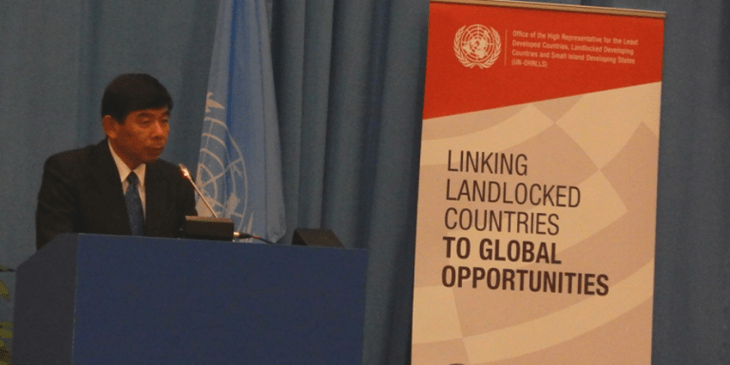
WCO Secretary General Kunio Mikuriya addressing delegates at the high-level opening ceremony of the ConferenceWCO Secretary General Kunio Mikuriya addressed delegates at the high-level opening ceremony of the United Nations Conference in Vienna on 3 November 2014.

The Conference aimed to seek a renewed political commitment to address the special needs of landlocked developing countries (LLDCs) and identify priorities, ways, and means to address them. This was the second Conference after the first one held in Almaty, Kazakhstan in 2003. The Conference takes place only once a decade and is an important milestone for formulating a focused, forward-looking and action-oriented development agenda for LLDCs for the next decade.

Secretary General Mikuriya made a statement together with other heads of international organizations, including Mr. Ban Ki-moon, Secretary-General of the United Nations, and Mr. Roberto Azevêdo, Director General of the World Trade Organization, and several heads of state, including President Heinz Fischer of Austria. In his remarks, he highlighted the importance for Customs administrations to establish an effective and efficient transit regime which is an essential element to promote regional economic integration and ensure economic growth of LLDCs.

He also used his speech to launch the WCO Transit Handbook that the Permanent Technical Committee finalized last week. Secretary General Mikuriya announced that the Transit Handbook would be formally published shortly after further editing and incorporating the outcomes of the Conference. He also described other WCO instruments that facilitate transit, including the Revised Kyoto Convention and the Time Release Study. He gave an assurance of enhanced delivery of technical assistance and capacity building for LLDCs through the Mercator Programme, a tailor-made assistance programme supported by a wealth of instruments and best practices, a network of accredited experts and a comprehensive donor engagement mechanism. Source: WCO

Related links

The Single Customs Territory Experiences ‘IT-connectivity’ Startup Problems

EAC-logoSince July 2014, EAC revenue officers work together to facilitate trade within the community. Some improvements remain made; the Single Customs Territory (SCT) does present some advantages. Since the single customs territory is operational, clearing processes are established in the country of destination while the goods are still at the port of Dar es Salaam”, explains Leah Skauki, a SCT liaison officer at the Tanzania Revenue Authority (TRA).

Once the declaration is over, when custom duties and taxes are paid, TRA verifies the physical goods. “The office grants a notification testifying that the goods fulfil all requirements in order to get the exit note.” Within the new system, the number of weighbridges and non-tariff barriers are reduced because “truck drivers only have to show the documents which certify that the goods have undergone verification.”

Massoundi Mohamed Ben Ali, Administrative Director in Charge of Human Resources and Import – Export at the Bakhresa Grain Milling Burundi, is pleased with the new development. “Before the system was implemented, Bakhresa used to import 3800 Tonnes of wheat (40 trucks) and we were obliged to declare each truck with a different clearing agent. We now fill in one statement with one clearing agent. The procedures are done quickly with a small of amount of money”, he points out.

Clearing agents testify that the number of statement on the borders is reduced. “Before, transporters had to fill in a transit declaration (T1) on each border”, one of the clearing agents in the Dares Salaam port relates.

Aimable Nsabimana, a focal point of SCT in Dar es Salaam for the Burundi Revenue Authority, indicates that the computerised system they use is different in each country.”It is not easy to exchange data. We are forced to print documents for verification. And when the goods arrive in Tanzania, they are in the hands of the TRA which has its own software”, he notes.

Inter-connectivity of software would facilitate verification and avoid fraud. This opinion is shared by many clearing agents: “If we were interconnected, the Tanzanians would be able to easily access Burundian data and vice versa”, one of them says.

Léonce Niyonzima, programme and monitoring officer at OBR and the national coordinator of SCT, agrees that the lack of interconnectivity causes delays in the transmission of documents.

He says that all EAC countries should have been interconnected by June 2014, but due to technical problems Tanzania and Burundi still lag behind. “There is a technical committee responsible for monitoring and evaluation which will draw up the balance sheet of the challenges before ending the pilot stage at the end of this year.”

The Single Customs Territory is funded by Trademark East Africa with an amount of USD 450 thousand for the redeployment of staff, travel expenses, inspection and supervision, information technology, office equipment and assistance. Source: http://www.iwacu-burundi.org

Surge in Car Imports at ZIM/RSA Border as Dealers Panic

The Herald - Surge in new car imports between ZIM-RSAThere is a drastic increase in motor vehicle imports through Beitbridge border post as dealers are rushing to buy cars before the proposed 20 percent customs duty increase on imported motor vehicles comes into effect on November 1.
Finance and Economic Development Minister Patrick Chinamasa announced recently the Government intendeds to increase duty of motor vehicles which he said contributed 10 percent of the import bill in the first half of this year.

He proposed an increase in customs duty on single cab of a payload more than 800kgs from 20% to 40%, buses of carrying capacity of 26 passengers and above from 0% to 40%, double cab trucks from 40% to 60%, and passenger motor vehicles of engine capacity below 1500cc from 25% to 40%.

Customs duty for vehicles with engines above 1500cc has not been changed from 86 percent inclusive of VAT and Surtax. The development has raised anxiety among most Zimbabweans who are now rushing to buy second hand cars from Japan some of which come through South Africa.

Zimbabwe Revenue Authority (Zimra) is processing an average of 170 car imports at the border post per day since the beginning of October. Prior to the announcement Zimra used to process between 60 and 70 car imports per day. ZIMRA officers at the border said in separate interview yesterday that they were battling to clear the vehicles at Manica Transit Shed where 300 new cars arrive per day.

“We used to get 100 to 150 cars per day , but now the number has doubled and is ever increasing,” said one of the officers.

A sales manager at Wright Cars on the South African border, Mr Clemence Mabidi said the demand of cars with small engines such as Nissan March, Honda Fit, Toyota Vitz, Toyota Corolla, Toyota Raum and Fun Cargo had increased.

“We used to sell around 20 cars per day but now the number has increased to 40 and we have a backlog in deliveries to Zimbabwe.

“We are now hiring other car carriers to take the vehicles across the border,” he said.

Mr Mabidi said even the small car dealers who used to sell between 5 and 10 cars per day were now selling up to 20 vehicles. Some dealers have also reduced prices while others are increasing the prices because of the demand. A modest vehicle costs between $2500 and $3000 at these dealerships. Source: The Herald

Maputo Corridor “held ransom” by new RSA Immigration border crossing requirements

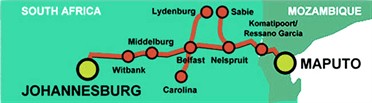
maputo_corridorSouth African authorities implemented legislation requiring all travellers from Mozambique to prove they hold enough funds to cover their visit, either by showing R3000 minimum or by providing a credit card with a bank statement, the Maputo Corridor Logistics Initiative (MCLI) said in a statement today. This led to considerable delays for freight, tourists, business and informal traders, which was worsened when a riot and blockade broke out at the Lebombo/Ressano Garcia border post.

Following the blockade the requirements were withdrawn, allowing traffic to pass through the border.

In their statement the MCLI declared they will directly contact the Minister of Home Affairs to settle the issue. “This requirement takes us back to the pre 2005 era where similar requirements were implemented”, the statement says, “and [it] is in direct conflict with the regional integration policy of SADC which expressly seeks to promote the ease of movement of people and goods through our borders.”

The statement calls the implementation for this legislation discriminatory towards informal traders who move through the border on a daily basis, and warns the long term impact on the region’s economy could be “dire”. Source: Club of Mozambique

EAC – Business Leaders demand shift to New Trade Rules

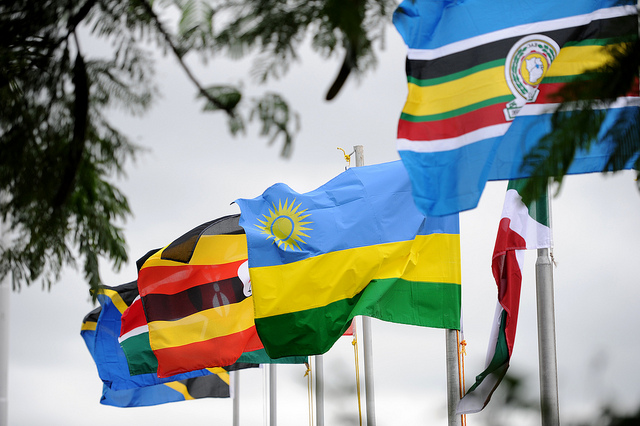
eabc-flagsThe East African Business Council, the umbrella body of the region’s private sector, has asked governments in the five-member East African Community (EAC) to expedite implementations of the new WTO trade facilitation agreement.

Council chairperson, Felix Mosha, made the appeal on Tuesday during a breakfast meeting with trade facilitation institutions and the business community in Arusha, Tanzania.

WTO members in December 2013 adopted the Agreement on Trade Facilitation during the Ninth Ministerial Conference in Bali, Indonesia after 10 years of negotiations. The Bali deal aims at boosting poor countries’ ability to trade and allow them more flexibility in food security. The agreed text is currently under review by legal experts and will come into force once two thirds of the 159-member World Trade Organisation accept it.

Trade and Industry minister, Francois Kanimba, told The New Times that implementation of the agreement cannot be done immediately because WTO is yet to give member countries the requisite legal implementation modalities.

“By July, we’ll have got it, so that the process can start,” Kanimba said. He added that Rwanda, after a recent self-assessment on how it stands on the implementation road map, realised most requirements had been attained.

Steps made in facilitating cross-border trade such as the ongoing EAC one-stop border posts, and the 2012 launch of the electronic single window system, were some of the steps taken by Rwanda.

Benefits

“Everything, by nature of trade facilitation is always good. The trade balance for Rwanda is negative and if the Bali agreement helps us improve, it will help us address our development challenges,” the minister said.

“Rwandan traders will also benefit as trade facilitation is about easing things for them. For example, improvements in communication will ease access to vital information they need in different member countries and this will enable many to conduct trade more efficiently.”

With the agreement, WTO members established a new legal framework that fills gaps in the existing General Agreement on Tariffs and Trade (GATT), in effect since in 1947. The new agreement stipulates obligations and provisions on special and differential treatment for developing and least developed country members as well as the provision of technical assistance and capacity building. Obligations include publication and access to trade related information, appeal procedures, simplification of trade procedures and goods clearance processes, agency cooperation, as well as cross-border customs cooperation.

Calling for the “swift” implementation the WTO Bali Agreement on Trade Facilitation, Mosaha said: “This will go a long way in lowering transaction costs, enhancing competitiveness of the businesses as well increasing intra EAC trade”.

Mosha said that while some progress had been made in ensuring free movement of goods, persons, labour, services and capital, challenges continued to constrain full realisation benefits from integration. Among them he cited 33 non-tariff barriers, non-recognition of the certificate of rules of origin, additional taxes and charges and lack of harmony in domestic tax regime such as excise duty, VAT and income taxes. Source: The New Times.

Heads of Customs Governing Council Meeting for the ESA Region

Heads of Customs Governing Council for the ESA Region with WCO Secretary General Kunio Mikuriya

Heads of Customs Governing Council for the ESA Region with WCO Secretary General Kunio Mikuriya

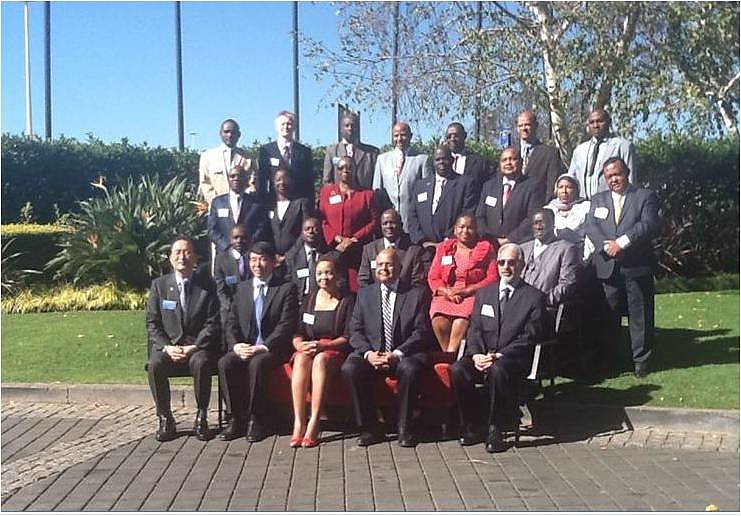
At the invitation of the Vice-Chair of the East and Southern Africa (ESA) Region, Mrs. Agnes Katsonga Phiri, Commissioner of Customs and Excise, Malawi, the Secretary General, Mr. Kunio Mikuriya attended the 19th Meeting of the Heads of Customs Governing Council ESA Region, on 15 and 16 May 2014. The meeting was hosted by the South African Revenue Service (SARS) in Johannesburg.

The Commissioner of SARS, Mr. Ivan Pillay welcomed delegates from the Members of the Region on the 20th Anniversary of democracy in South Africa, a period during which much had been achieved. He highlighted the importance of the WTO Agreement and its impact on Customs and the growth in African trade.

Addressing the Governing Council, the Minister of Finance, Mr. Pravin Gordhan emphasized the evolving role of Customs in a changing and challenging environment. The continued growth of economic activity in Africa required innovative Customs procedures to secure and facilitate trade, particularly in the context of regional integration. The WTO Agreement on Trade Facilitation (ATF) offered a golden opportunity as Customs would have a central role in its implementation. Customs must continue to enhance its operational capacity by increased automation, embracing other agencies and harmonization and simplification of procedures. The importance of Capacity Building was emphasized.

Secretary General Kunio Mikuriya gave a comprehensive report on recent WCO activities. He referred to the many developments on the WTO ATF agenda. The WCO had established a web tool dedicated to this topic, including an analysis of the ATF Articles and relevant WCO instruments with a self assessment aspect. Mr. Mikuriya recalled that the WCO theme for this year is “Communication” and asked all Members and agencies present to ensure that all were aware of each other’s activities.

Secretary General Mikuriya also met with the Minister of Finance, Mr Pravin Gordhan, to discuss a number of issues of mutual interest including implementation of the ATF, information exchange and the evolving role of Customs. The Governing Council discussed the way forward as regards ATF implementation, and expectations of trade input to WCO activities. Source: WCO

New Publication – Africa Corridors Handbook

Africa_Road_Corridors_HandbookAs countries across Africa gear themselves towards growing and stimulating inter-regional trade, the transport corridors being developed across the continent are important passageways for the movement of freight.

Though the growth and development of rail across Africa is in the pipeline over 80 percent of all freight being transported is on road.

Transporting goods on trucks is an expensive business. Africa can be challenging at the best of times due to non-tariff barriers even though governments across the continent are trying to make it easier for the flow of goods from one country to another.

The logistics of transporting freight can be a harrowing and expensive exercise.Especially if a transport manager is not armed with key and pertinent information – regarding the route, border posts, costs, relevant documentation required at borders, waiting times at the border posts, location of wellness centres,road conditions and where the tolls and weighbridges are situated.

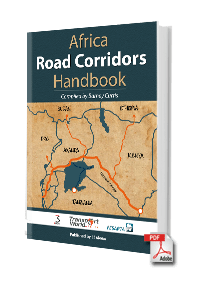
3S Media in association with FESARTA have released the Africa Corridors Handbook which gives transport and logistics managers all the key information they need before drivers embark on a journey.

Having the correct information on hand is critical for every transport operator that is moving freight across Africa and now it is available in one concise handbook. Click the following hyperlink to purchase the book.