New CTU Code – IMO Approves Container Weight Verification Requirement

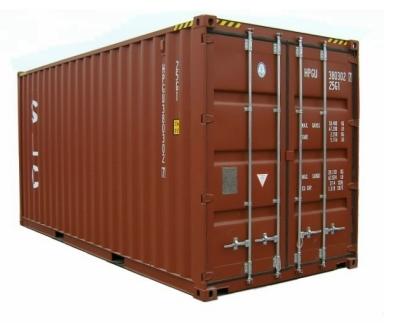
containerThe Maritime Safety Committee (MSC) of the IMO has approved changes to the Safety of Life at Sea (SOLAS) convention that will require verification of container weights as a condition for loading packed export containers aboard ships.

Misdeclared container weights have been a long-standing problem for the transportation industry and for governments as they present safety hazards for ships, their crews, and other cargo on board, workers in the port facilities handling containers, and on roads. Misdeclaration of container weights also gives rise to customs concerns. The approved changes to the convention will enter into force in July 2016 upon final adoption by the MSC in November 2014. In order to assist supply chain participants’ and SOLAS contracting governments’ implementation of the container weight verification requirement, MSC also issued a MSC Circular with implementation guidelines.

MSC also approved a new Code of Practice for the Packing of Cargo Transport Units (CTUs), including intermodal shipping containers. The new CTU Code, which will replace the current IMO/ILO/UNECE Guidelines for packing of CTU, has already been approved by the UNECE (United Nations Economic Commission for Europe) and will now go to the International Labour Organization (ILO) for approval. The CTU Code provides information and guidance to shippers, packers and other parties in the international supply chains for the safe packing, handling and transport of CTUs.

Of particular interest for regulatory authorities is Chapter 4 – “Chains of responsibility and information” which deals with the parties responsible for the provision of information and other security and regulatory requirements concerning containers as they are transported across the supply chain.

The World Shipping Council (WSC), whose members represent about 90 percent of global containership capacity, has been a leading advocate for the container weight verification requirements and has worked cooperatively with the IMO for over seven years to see them materialize. WSC has also participated in the group of experts that developed the new CTU Code.

“In taking these decisions, the IMO has demonstrated its continuing leadership in trying to ensure the safe transportation of cargo by the international shipping industry,” said WSC President & CEO, Chris Koch. “We congratulate the IMO Secretary General and the IMO member governments for developing and approving these measures that, when properly implemented and enforced, should provide for long-needed improvement to maritime safety. The SOLAS amendments and related implementation guidelines regarding container weight verification represent a collaborative effort that we were pleased to be a part of and we look forward to final adoption of the amendments in November 2014.”

The new CTU and supporting material can be accessed at the UNECE website here. Also See the World Shipping Councils webpage here for chronological information about the container weighing issue. Source: Maritime Executive
Preparing for legislation on verification of container weights

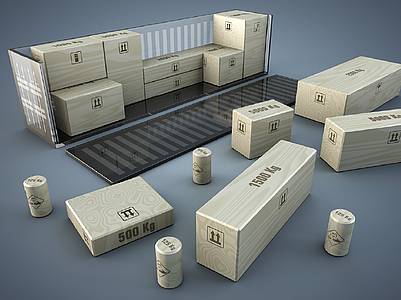
High quality 3D render shipping container during transportPort Technology International – The work by the Maritime Safety Committee (MSC), within the auspices of the International Maritime Organization (IMO), on the verification of container weights prior to loading on to a ship is progressing. Currently, expectations are that legislation will come into force in 2017 at the latest, and possibly in 2016.

Many terminal operators are concerned about how to comply with the upcoming legislation, and how it will impact on logistic flows in terminals.

One of the challenges facing terminals is how to weigh containers with little or no impact on operations. Transferring containers to separate weighing stations will affect productivity. Terminals are likely to need additional space and transportation capacity to cope effectively.

Solutions that weigh containers as part of existing logistic flows and operations will therefore deliver significant advantages for terminal operators.

Weighing alternatives

This article outlines technologies that are available for managing weighing or verifying weight. It should be noted that requirements for weight accuracy is not included in the current draft text from the IMO and will likely put further constraints on available options. The discussion here indicates what level of accuracy can be expected from the various options available.

Three different types of weighing or load measurement devices will be discussed: commonly available weigh bridges; load sensing devices in cranes and other lifting equipment and load sensing devices fitted to, or integrated into spreader twistlocks.

Weigh bridges

The first system that comes to mind when looking at weighing a container is the weigh bridge. Weigh bridges are a longestablished and recognised technology to measure the weight of a vehicle. When the weight of the container being carried by a vehicle is of interest, the tare weight of the vehicle must be deducted. The measuring accuracy of the weigh bridge is very high but the tare weight deduction process either introduces additional inaccuracies or becomes complicated and time consuming.

If a standard vehicle tare weight is used, the inaccuracy comes from such things as variations in fuel level, driver weight and the weight of miscellaneous materials also loaded in the vehicle. These may seem like minor aspects when considering a truck carrying a 40ft container, but it easily adds up to a few hundred kilos, thereby significantly affecting the accuracy of the container weighing process. The alternative to using a standard tare weight is to include weighing of the unloaded vehicle in the process. This will give an accurate vehicle tare weight and ultimately, an accurate container weight, but it adds steps to the process which takes time and uses terminal resources.

Using weigh bridges to weigh containers is likely to result in changes to the internal logistics of most existing terminals. All containers entering terminals by road would have to pass through the weighing station. The most critical factor in this scenario would be to have sufficient weigh bridges to avoid the bottlenecks and resulting congestion.

Containers arriving by train or sea (for transhipment) would have to be sent to a weighing station, a step which is uncommon in terminal logistics today. This additional step would tie transporting vehicles to specific containers for longer periods of time ultimately resulting in additional resources being needed to handle the same container volumes. Sufficient resources in terms of weigh bridges and transportation space therefore need to be allocated to avoid congestion
and delays.

Another situation which would require a specific process to be in place is where vehicles arrive at the terminal gate with two twenty-foot containers loaded. Weigh bridges can only determine combined weight. Because containers have to be weighed separately, this would imply a relatively complicated process involving not only the truck carrying the equipment but also terminal resources to facilitate the loading and unloading of the containers.

Load sensing devices in cranes or other lifting equipment

The second type of load measuring device is, in effect, several devices with common features. This group includes load sensors and devices on ship-to-shore (STS) cranes; rubber-tyred gantry (RTG) cranes; railmounted gantry (RMG) cranes; mobile harbour cranes; reach stackers; straddle carriers and so on. Most of the load sensing devices in this group are used for safety and/or stability systems, but the information is available to provide weight information with some limitations as outlined below.

The biggest question mark related to these systems is accuracy. Will the accuracy of these systems meet the requirements to come? The answer is most probably no, but until the requirements are defined, this option should be mentioned. Sensors in these devices are typically fitted to rope and chain anchors, in trollies or on booms. Distance from the container, and the dynamic effect this introduces adds to inaccuracy. These systems will typically have a measuring accuracy of plus or minus five percent. Source: Port Technology International

Protecting U.S.-Bound Container Cargoes

Securing US Cargo - Infographic by Journal of Commerce (Click to enlarge)

Securing US Cargo – Infographic by Journal of Commerce (Click to enlarge)

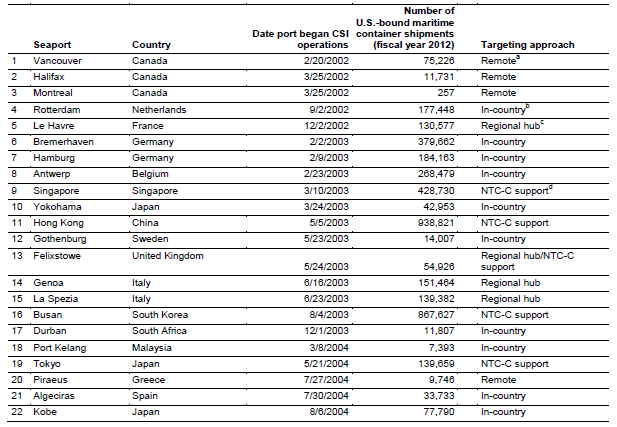
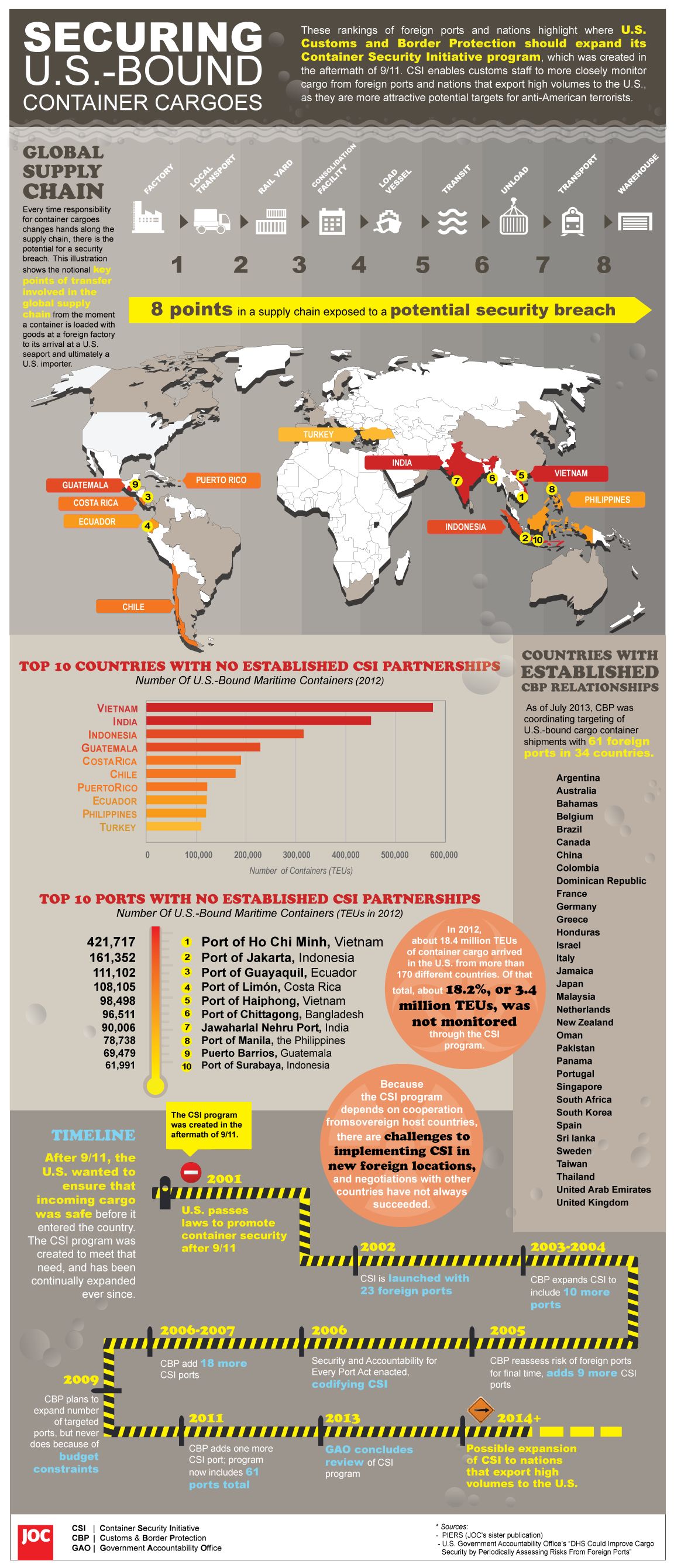
The Journal of Commerce provides a very useful infographic on the U.S. Customs and Border Protection’s efforts and initiatives in securing US – cargoes from foreign ports. While the Container Security Initiative (CSI) was one of the very first post 9/11 security initiatives it has since been supported by a number of other partnership programs involving other customs agencies and the US trade community. These have spawned many of the policies and guidelines being adopted by Customs agencies around the world where the WCO has ‘formulated’ and ‘standardised’ such requirements for broader international use, in conjunction with capacity building programs.

The U.S. Government Accountability Office has published a report, “DHS Could Improve Cargo Security by Periodically Assessing Risks From Foreign Ports,” recommending that U.S. Customs and Border Protection should continually update and expand its Container Security Initiative.

Since Sept. 11, 2001, CBP has taken steps to reduce vulnerabilities associated with U.S.-bound cargo container shipments by placing customs officials at foreign seaports to determine whether U.S.-bound shipments from those ports pose a risk of containing weapons of mass destruction or other terrorist contraband. While cargo from foreign ports and ships is critical to the U.S. economy, it can also be exploited by terrorists.

When CSI was launched in 2002, CBP initially selected 23 CSI ports largely on the basis of the volume of U.S.-bound container cargo, but it increased the number of risk factors in selected additional ports as it expanded the CSI program beginning in 2003. Through 2007, CBP added 35 ports to the CSI program based on additional criteria, such as strategic threat factors and diplomatic or political considerations. As of July 2013, CBP was coordinating targeting of U.S.-bound cargo container shipments with 61 foreign ports in 34 countries.

Cargo shipment data from PIERS, JOC’s sister publication, supports the GAO’s view that the U.S. needs to update and expand CSI in order to continue effectively monitoring incoming cargo. In particular, it appears the U.S. should form new CSI partnerships with Vietnam and India, which are the Top 2 exporters to the U.S. with no established CSI partnerships.

Although Vietnam is “relatively stable” in terms of its government, it is geographically close to Laos and Cambodia, and is therefore risky because of transshipment issues, according to Susan Kohn Ross, an attorney with Mitchell Silberberg & Knupp in Los Angeles. She also noted there has been a trend of manufacturers moving from China to Vietnam recently, as labor has become more expensive in China, resulting in more Vietnamese exports to the U.S.

Meanwhile, local uprisings in India recently have increased the country’s vulnerabilities to terrorist plans, despite the nation’s stable government, Ross said. India’s proximity to Pakistan also exposes it to terrorist groups, such as al-Qaida and the Taliban, and because Pakistan already has an established CSI partnership, terrorists might find it easier to smuggle cargo via India, she explained.

Conversely, if budgetary constraints ever force the CSI program to condense its monitoring, then CSI partnerships could perhaps be downgraded or eliminated entirely with the governments of Jamaica, Oman and Greece, which are the smallest exporters to the U.S. with established CSI connections, according to PIERS.

However, expanding and even contracting the CSI program present challenges. For example, CBP officials said in the GAO report that it is difficult to close CSI ports because removing the program from a country might negatively affect U.S. relations with the host government.

Furthermore, implementing a CSI partnership in a country exposes jurisdictional issues and regulatory differences, Ross said. For instance, the U.S. considers drugs to be a national security issue, but that’s not always the case in other countries, so prioritization of monitoring has to be worked out. Issues like which nation should pay for customs officers to be trained, or who should fix scanning equipment when it breaks, also must be resolved.

Ross further explained that it is “highly unlikely” that the federal government will ever expand CSI to cover 100 percent of all U.S. imports, an idea that CBP considered in 2009, but never implemented because of budget constraints. She said that scanning equipment is not advanced enough to expeditiously monitor all U.S.-bound cargo, and not all countries would even be willing to put CSI in place anyway.

Ultimately, nothing is foolproof, and if terrorists really wanted to wreak havoc on the U.S., they could probably more easily attack the U.S. through its borders, via Canada and Mexico, Ross said. However, CSI acts as an important deterrent, limiting the number of chances a terrorist has to harm to the U.S. Source: www.joc.com

CBP Agrees to Update Risk Assessments at Foreign Ports

US Customs CSI Inspection in the Port of Durban, South Africa

US Customs CSI Inspection in the Port of Durban, South Africa

Customs and Border Protection (CBP) has not assessed risks at select foreign ports with U.S.-bound shipments since 2005, part of a string of failures that has left key ports without a CBP presence, the Government Accountability Office says. (Hmm, never mind the impact caused to Customs administration in the host countries……)

In examining CBP’s Container Security Initiative program, GAO found that the agency developed a model for ranking additional seaports according to risk in 2009, but never implemented it because of budget cuts, according to the report.

GAO applied that risk model to 2012 cargo shipment data and found that the CSI program had no presence at about half the ports CSP found high risk. Meanwhile, 20 percent of existing CSI program ports were at lower-risk locations, according to the findings (.pdf).

Although GAO acknowledged host countries are not always willing to accommodate a CSI presence, and that removal of a CSI presence can negatively affect diplomatic relations, auditors said periodic assessments of cargo shipped from foreign ports could help CBP better guard against terror-related shipments.

Although there have been no known incidents of cargo containers being used to transport WMD, the maritime supply chain remains vulnerable to attacks. We recognize that it may not be possible to include all of the higher-risk ports in CSI because CSI requires the cooperation of sovereign foreign governments.

To better ensure the effectiveness of the CSI program, GAO recommends that the Secretary of Homeland Security direct the Commissioner of U.S. Customs and Border Protection to periodically assess the supply chain security risks from all foreign ports that ship cargo to the United States and use the results of these risk assessments to (1) inform any future expansion of CSI to additional locations and (2) determine whether changes need to be made to existing CSI ports and make adjustments as appropriate and feasible.

Such assessments “would help ensure that CBP is allocating its resources to provide the greatest possible coverage of high-risk cargo to best mitigate the risk of importing weapons of mass destruction or other terrorist contraband into the United States through the maritime supply chain,” GAO said.

The Department of Homeland Security (DHS) concurred with the recommendation and said CBP would complete its first assessment by Aug. 12, 2014. To access or download the GAO Report on CSI, Click Here! Source: US Government Accounting Office

Foreign Ports That CBP Coordinates with Regarding Maritime Container Shipment Examinations, as of July 2013

Foreign Ports That CBP Coordinates with Regarding Maritime Container Shipment Examinations, as of July 2013 (Table: GAO)


CINS reveals cargo mis-declaration and packing issues

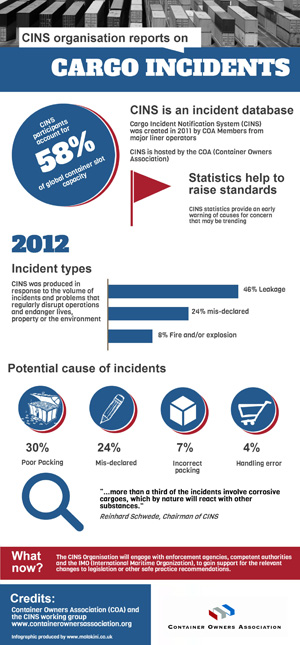
CINS Cargo Incident Visual GraphicPoor or incorrect packing accounts for 37 per cent of cargo incidents in the supply chain, according to data released by the Cargo Incident Notification System (CINS).

And 24 per cent of incidents cases are due to mis-declaration of the cargo, it found. The organisation is managed by the Container Owners Association (COA), and was set up by members from five of the COA’s top 20 liner operators; CMA CGM, Evergreen Line, Hapag-Lloyd, Maersk Line and the Mediterranean Shipping Company.

It was created to capture key data, after an increase in incidents that regularly disrupt operations and endanger lives, property or the environment.

CINS’ analysis revealed that 80 per cent of substances involved in cargo incidents are dangerous goods, with half relating to leakage and a further quarter announced mis-declared.

It also showed that incidents relating to mis-declared cargo have increased significantly within the first four months of 2013, compared to the previous 18 months, which the company says has led it to aspire to identify ways to make the supply chain safer.

“We have identified that 24 per cent of all incidents involve mis-declaration and this is probably the first time that this ‘iceberg’ risk has been quantified, said Reinhard Schwede, chairman of CINS.

“Poor or incorrect packaging are persistent causes, accounting for almost 40 per cent of incidents over nearly two years. This is all the more concerning when we recognise that more than a third of the incidents involve corrosive cargoes, which by nature will react with other substances.

“With these findings, the CINS Organisation will engage with enforcement agencies, competent authorities and the IMO to gain support for the relevant changes to legislation or other safe practice recommendations.” Source: Container Owner Association

100% Scanning – Have all the Options been considered?

Port of Oakland - VertiTainer's  crane mounted scanner solution employs advanced passive scanning technology and sophisticated identification algorithms to detect and identify gamma and neutron sources in shipping containers as they are loaded or discharged from a container ship.

Port of Oakland – VertiTainer’s crane mounted scanner solution employs advanced passive scanning technology and sophisticated identification algorithms to detect and identify gamma and neutron sources in shipping containers as they are loaded or discharged from a container ship.

While the question of mandatory weighing of containers features high on the International Maritime Organisations’ (IMO) list of priorities, a recent post “Container Weighing – industry solution on the horizon“, reminded me of a solution which has been around for some time now, but for various reasons would appear to have been overlooked by authorities – or so it would appear. Readers and followers of this blog may well already have viewed the feature on VeriTainer’s gantry crane mounted radiation detection and identification system, called the VeriSpreader® – refer to the New generation NII technology page of this Blog.

The spreader is a device used for lifting containers and unitized cargo. The spreader used for containers has a locking mechanism at each corner that attaches the four corners of the container. A spreader can be used on a container crane, a straddle carrier and with any other machinery to lift containers. (Wikipedia)

The recent maritime disaster involving the breaking-in-half, and eventual sinking of the MOL Comfort gave rise to the question of overloaded container boxes. While government and international security-minded organisations have pursued methods to address breaches in the supply chain, it would seem that little ‘innovation’ has been applied to the problem – specifically in regard to minimizing the time and cost of routing containers via purpose-built inspection facilities.

At least three known radiation incidents have hit the headlines in recent times – namely Port of Genoa (2010), Port Elizabeth, New Jersey (Feb, 2013), and the most recent in the Port of Voltri (July, 2013). Each of these incidents warranted an emergency response from authorities with a consequential impact on Port Operations.  Unfortunately, advanced risk management systems and other security safeguards did not alert suspicion, allowing these ‘threats’ into the heart of the port, not to mention the radiation threat to port workers?

It could be argued that since the inception of government-led supply chain security, 2002 onwards, many of the world’s supply chains have built in ‘possible inspection’ into their export lead times. A trip to a purpose-built inspection facility will normally require diverting transport from its predestined journey to a land border crossing or seaport. Moreover, lack of predictability often causes delays with possible loss of business where ‘security’ measures delay the movement of cargo.

Several Customs and Border authorities have instituted ‘export-led’ compliance programmes which seek to create better regulatory awareness and expectation for shippers. While not without merit, these still impose an inherent cost to trade where in some instances, shipper’s are compelled to institute ISO-type security standards which for some require dedicated and skilled experts to entrench and maintain these throughout the organisation. So, while the development of increasing levels of compliance amongst supply chain operators will occur over time, what of government ‘Non-Intrusive’ inspection capability?

Port Technology International‘s Feb 2013 article – Future X-Ray Inspection Equipment to be based on Industry Standards – opined that “future developments in cargo screening are likely to follow a common innovation trajectory that is fostered by market needs and new technology, while being strengthened by existing intellectual property and evolving industry standards. Innovation is often perceived as a circular path beginning with customer needs that are identified by a technology developer. The developer then creates application technology in the form of products to meet those needs”.

Land and rail-based cargo screening technology has improved immensely over the last 10 years with improved safety (shielding), throughput (speed) and portability. Engineers have likewise realized the need to ‘fuse’ imaging and radiation threat detection technologies, all offering a more cost-effective package to the end-user. These are by and large the Customs and Border authorities worldwide who protect our territorial waters and ports. Yet, the approach remains ‘modality driven’ which has ensured a period of predictability for designers and manufacturers, not to mention their revenue streams. Given the container weighing – port radiation threats discussed earlier, perhaps it is time now for transport and enforcement authorities to consider technologies as developed by VeriTainer and Lasstec and define a specification for “100%” needs – could this be uniform? Not unlike Lasstec’s container-weighing solution that allows the weighing of containers during the loading cycle so not to disrupt the work flow, Veritainer’s VeriRAD solution uses a gantry crane ‘spreader’ to house its unique solution with specific emphasis to mitigate the threat of a ‘dirty bomb’.


A South African RFID/GPS cross-border logistics and customs solution

Inefficiency of road freight transport is one of the primary factors that hamper the economy of sub-Saharan Africa. Long delays experienced at border posts are the single biggest contributor towards the slow average movement of freight. Cross-border operations are complicated by the conflicting security objectives of customs and border authorities versus efficiency objectives of transport operators. It furthermore suffers from illegal practices involving truck drivers and border officials. In theory the efficiency of cross-border operations can be improved based on the availability of more accurate and complete information – the latter will be possible if different stakeholders can exchange data between currently isolated systems.

Cross-border trade basically comprises 3 distinct but interlinked layers –

An information layer – in which various trade documentation (purchase order, invoice), cargo and conveyance information (packing list, manifest), customs and government regulatory data (declaration, permits) are exchanged between various supply chain entities and the customs authority. These primarily attest to the legal ownership, contract of carriage, reporting and compliance with customs and other regulatory authority formalities (export and import), and delivery at destination.

A logistics layer – for the collection, consolidation, sealing and conveyance of physical cargo from point of despatch via at least two customs control points (export and import), to deconsolidation and delivery at point of destination.

A financial layer – which refers to the monetary exchange flow from buyer (importer) to seller (exporter) according to the terms and conditions of the sale (INCOTERMS). Hmm… no, this does not include ‘bribe’ money.

All three layers are inter-linked and prone to risk at any point of a given transaction. There is also no silver bullet solution to secure supply chains. Moreover, it is a fallacy that Customs and Border Agencies will ever conquer cross-border crime – simply because there are too many angles to monitor. Furthermore, in order to set up cross—border information exchange and joint enforcement operations it is both legally and politically time-consuming. Criminal elements are not hampered by these ‘institutions’, they simply spot the gaps and forge ahead.

One of the areas requiring customs attention is that of chain of custody. In short this implies the formal adoption of the World Customs Organisation’s SAFE Framework principles. Each party with data that needs to be filed with the government for Customs and security screening purposes has responsibilities. Those responsibilities include –

  • Protecting the physical goods from tampering, theft, and damage.
  • Providing appropriate information to government authorities in a timely and accurate manner for security screening purposes.
  • Protecting the information related to the goods from tampering and unauthorized access. This responsibility applies equally to times before, during and after having custody of the goods.

Tenacent RFID Tag

Tenacent RFID Tag

Security seals are an integral part of the chain of custody. The proper grade and application of the security seal is addressed below. Security seals should be inspected by the receiving party at each change of custody for a cargo-laden container. Inspecting a seal requires visual check for signs of tampering, comparison of the seal’s identification number with the cargo documentation, and noting the inspection in the appropriate documentation. More recently the emergence of certain e-seals and container security devices (CSDs) contribute even further to minimizing the amount of ‘physical’ verification required, as they are able to electronically notify the owner of the goods or government authority in the event of an incidence of tampering.

White Paper - GPS-RFID systems for cross-border management of freight consignments

White Paper – GPS-RFID systems for cross-border management of freight consignments

A group of South African specialist engineers have been working closely with transport authorities, logistics specialists, defense experts and customs authorities across the globe. Their e-seal is patented in no less than 16 high volume countries. It is produced in Singapore, China and Indonesia depending on politics, free-trade agreements and demand. May move some to Brazil and US in time. Proof of concept (POC) initiatives are currently underway in Brazil for rail cargo, US Marine Corps for their p-RFID program and other Department of Defense divisions in the USA, and will shortly be included in one of the GSA agreements making it available to any government department in the US. Further adrift, the e-seal is also currently enjoying interest in Guatemala, Mexico, Canada, Panama, Jordan, Italy, Spain, and Malaysia. Here, in South Africa, a POC was conducted at the 1st autogate at Durban Container Terminal, funded by the North West University, and overseen with successfully achieved objectives by Transnet Port Terminals. For technical details of the RFID seal, click here!

With much anticipated success abroad, how much support will this product attain in the local and sub-Saharan African scene? Government authorities, as well as logistics and supply chain operators are therefore encouraged to study the enclosed ‘white paper’ – Click Here!. It firstly quantifies the size of the problem and estimates the potential economic benefits that will be created by improved cross-border operations. It then proposes a combined GPS/RFID system that can provide the required level of visibility to support improved operational management, resulting in a simultaneous increase in the security and efficiency of cross-border freight operations. A brief cost-benefits analysis is performed to show that the expected benefits from such a system will by far exceed the costs of implementation. Source: Tenacent & iPico

TT Club – Container packing standards must be improved

TT ClubThe TT Club, has called for higher levels of training to maintain and improve the expertise of those employed by shippers, consolidators, warehouses and depots to pack containers properly.

The insurance organisation said it is no surprise that the correct packing of containers is high on the agenda for industry bodies, regulators and insurers, as the consequences of unsafe and badly secured cargo are serious. According to freight transport insurer TT Club’s claims, some 65 per cent feature cargo loss or damage, of which over one-third result from poor packing.

It is timely that TT Club and Exis Technologies have come together to develop CTUpack e-learning, an online training tool for those involved in the loading and unloading of containers or Cargo Transport Units.

Designed and produced by Exis Technologies on the initiative of the TT Club, and with its financial investment, the CTUpack e-learning(tm) course is aligned with IMO/ILO/UN ECE guidelines for packing containers. Beginning with the foundation course, which will be launched later this year, it will comprise modules that include topics such as cargo or transport and elements equivalent to lessons, covering areas like forces and stresses.

In future the course will evolve to reflect developments and updates to the ILO guidelines and there is a capacity for additional modules to incorporate cargo specific and more advanced training elements. Source: Seanews.com

Ready for Another 24-Hour Rule?

logoLast month (May 2013), the Nippon Automated Cargo and Port Consolidated System (NACCS) released an updated version of guidelines for filing under the Japan 24-hour rule. As the main system for the online processing and procedures related to the new 24-hour rule, NACCS has been updating the guidelines and holding informational sessions across Europe, North America and China since early 2013.

Scheduled to go into force March 2014, Japan Customs and NACCS is encouraging shippers to begin looking at requirements and working towards compliance now. Penalties include Do Not Loads (DNLs) and fines up to 500 thousand JPY.

The NACCS has provided several good resources for the trade to use in familiarizing themselves with the Japan 24-hour Rule:

Therefore, South African shippers, exporters, and carriers of goods to Japan have a few more months to get their systems and processes in order to meet Japanese advance reporting requirements. For those already meeting US, Canadian and EU advance manifest reporting requirements this should not pose too much of a problem.

Source: Integrationpoint.com

CBP initiation date for liquidated damages for 10+2 non-compliance

isfU.S. Customs and Border Protection (CBP) has announced that on July 9, 2013, it will begin full enforcement of Importer Security Filing (ISF or 10+2), and will start issuing liquidated damages against ISF importers and carriers for ISF non-compliance.

According to the CBP release, “in order to achieve the most compliance with the least disruption to the trade and to domestic port operations, it has been applying a “measured and commonsense approach” to Importer Security Filing (ISF or 10+2) enforcement.

The Importer Security Filing (ISF) system—also referred to as the “10+2” data elements—requires both importers and carriers to transmit certain information to CBP regarding inbound ocean cargo 24 hours prior to lading that cargo at foreign ports. These rules are intended to satisfy certain requirements under the Security Accountability for Every (SAFE) Port Act of 2006 and the Trade Act of 2002, as amended by the Maritime Transportation Security Act of 2002.

Under the ISF, the following 10 data elements are required from the importer:

  1. Manufacturer (or supplier) name and address
  2. Seller (or owner) name and address
  3. Buyer (or owner) name and address
  4. Ship-to name and address
  5. Container stuffing location
  6. Consolidator (stuffer) name and address
  7. Importer of record number/foreign trade zone applicant identification number
  8. Consignee number(s)
  9. Country of origin
  10. Commodity Harmonized Tariff Schedule number

From the carrier, 2 data elements are required:

  1. Vessel stow plan
  2. Container status messages

Source: CBP.gov

Weighing Cargo at the source

IMG_39671-210x140Worldcargo news.com reports that a recent truck weighing deal in the UK provides food for thought in the run-up to IMO DSC/18 in September 2013.

Central Weighing, part of Avery Weigh-Tronix, has supplied a cost-effective weighing solution to help Balfour Beatty avoid overloading on its fleet of 3000 light commercial vehicles and 1000 heavy commercial vehicles, which are located at numerous and very often temporary sites across the UK.

Balfour Beatty operates a large and diverse fleet of commercial vehicles in the UK ranging from small vans to 44t artics. The plant, tools, equipment and materials carried vary widely depending on the project or contract being serviced.

“With such a wide variety of loads being transported, it is essential that the vehicles can be weighed accurately and efficiently, to ensure safety and comply with road transport legislation,” stated Central Weighing. “Installing a weighbridge at each location was not financially feasible, so Central Weighing’s solution was implemented to supply 10 portable dynamic weighbridges.”

As discussed on numerous occasions in WorldCargo News, where the shipping line requires container weights to be verified by physical weighing of the container, the ideal location from an overall supply chain perspective is the shipper’s or export packer’s container stuffing point. This provides:

  • the earliest possible notice of discrepancy with the declared weight, and hence the most time for the ship planner to adjust the loading plan.
  • confirmation of legality for road shipment in terms of gross truck mass and axle loads. Inland transportation is outwith IMO’s remit, but this point is clearly very important in terms of road safety. It is not acceptable for shipping lines employing hauliers in a carrier haulage move to ignore it and focus exclusively on the integrity of their loading plans.

Of course, most shippers do not have container lifting equipment, but container chassis could easily be fitted with load cells measuring the weight and distribution as the container is stuffed at the loading dock, or the whole rig could be driven onto portable weighbridges/mats shortly after the container is loaded. If Balfour Beatty can do it, why can’t shipping lines or their contracted road hauliers?

If the truck is shown to be overloaded in terms of gross mass and/or individual axle loads, the container will have to be stripped and restuffed, leading to dispatch delays. Since gate “slot” times and reception “cut off” times are so tight, something has got to give. Don’t expect a truck with a three-hour window between departure from, say, Daventry and arrival in Felixstowe to make it in one hour!

Both container weighing and packing are being discussed in special workshops at next week’s TOC CSC Europe conference in Rotterdam, and these points need to be aired.

Sounds like the kind of discussion and development to be followed by Transport (including Port) and Customs authorities alike. Perhaps the MOL COMFORT tragedy will lend some importance (interest) to this debate.

Source: World Cargo News

The trouble with Safety Sheets

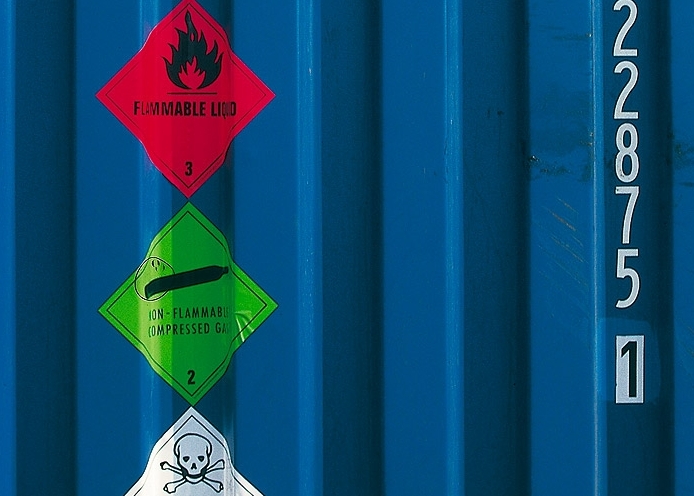
The TT Club says that the abuse of safety data sheets (SDS) for cargo bookings is “uncomfortably frequent” leading to the view that shipping executives feel “surrounded by criminals”.

The following expose is no less pertinent to Customs risk-profilers.

A recent TT Club claim relating to a fire onboard a ship highlighted a number of issues. The insurance expert argues that differing global format standards and the ease of creating “viable” SDS are only serving to make cargo screening more difficult.

What’s really in the box asks the TT Club.  Photo: Port of Hamburg (Credit - Port Strategy)

What’s really in the box asks the TT Club. Photo: Port of Hamburg (Credit – Port Strategy)

In the claim, a cargo was booked, packed, declared and documented by a shipper as ‘Hookah burner (C.Tablets)’. When the ship caught fire at sea, significant costs were incurred by the ship because of mis-declared cargo, which was in fact activated carbon/charcoal.

Worryingly, when this was investigated further, the shipper had produced two safety data sheets – one was correct, but the other suggested that activated carbon was not considered to be a dangerous good.

TT Club argues that the situation is made far more difficult by the lack of consistency between the various governments about when SDS should be reviewed – Australia stipulates every five years, Canada every three and the EU Regulation recommends checking at “regular intervals”.

Peregrine Storrs-Fox, risk management director, TT Club, told Port Strategy: “We’ve identified two [problem]areas – firstly at the point of booking/contracting with a carrier and secondly post event. Conversations with a number of liner shipping companies confirm that the information given at the time of booking/contracting is frequently suspect. In one instance a single SDS had been presented for about 50 different cargoes over a period.”

Although this is an issue between shipper and carrier, which includes forwarders/logistics operators, there is wider issue here for port operators. During an incident, the port may be supplied with SDS in order to respond appropriately – so there is a risk associated with that too.

The advice to freight forwarders, operators and carriers from the Club is to “Be constantly vigilant and question anything that seems strange or suspicious”. The penalties for non-compliance can be severe. Source: PortStrategy.com

City Deep Inland Terminal [port] to be hit hard by Customs Bill

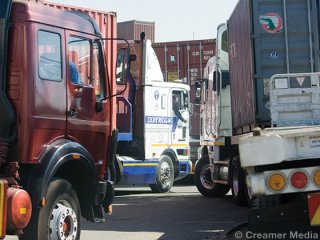
Trucks at Transnet Freight Rail's City Deep Terminal (Engineering News)

Trucks at Transnet Freight Rail’s City Deep Terminal (Engineering News)

Following up on last year’s meeting (click here!) of the minds, convened by the JCCI, a recent meeting in Johannesburg placed fresh emphasis on the dilemma which impending changes contemplated in Customs Draft Control Bill will have for the import and logistics industry in particular. The following report carried by Engineering News highlights trade’s concerns which are by no means light weight and should be addressed with some consideration before the Bills come into effect. Gauging from the content below, there is a clear disconnect between business and policy makers.

The closure of Johannesburg’s inland port seemed to be a “done deal” as Parliament deliberated the recently tabled Customs Control Bill that would leave the City Deep container depot invalid, Chamber of Commerce and Industry Johannesburg (JCCI) former president Patrick Corbin said on Friday.

The promulgation of the South African Revenue Services’ (Sars’) newly drafted Customs Control Bill, which, in conjunction with the Customs Duty Bill, would replace the current legislation governing customs operations, would have a far-reaching impact on the cost and efficiencies of doing business in South Africa and other fellow Southern African Customs Union (Sacu) countries, he added.

The Bill, which was the product of a three-year development process within the National Economic Development and Labour Council, declared that all imported goods be cleared and released at first port of entry. This was part of efforts by customs officials and government to root out any diversion and smuggling of goods, ensure greater control of goods moving across borders and eliminate risks to national security.

Speaking at the City Deep Forum, held at the JCCI’s offices in Johannesburg, Corbin noted, however, that City Deep had operated as an inland port for the past 35 years, easing the load on the country’s coastal ports, which were already strained to capacity. Despite customs officials assuring the chamber that the operations and facilities in City Deep/Kaserne would retain its licence as a container depot, he believed customs had failed to recognise the critical role City Deep had played in lowering the cost of business, easing the burden on South Africa’s ports and ensuring ease of movement of goods to neighbouring countries. As customs moved full responsibility of container clearances to the ports, port congestion, inefficiencies, shipping delays and costs would rise, and jobs would be lost and import rail volumes decreased, he noted.

Economist Mike Schussler added that the closure of the City Deep inland port operations would add costs, increase unreliability and induce “hassles”, as the Durban port did not have the capacity to handle the extra volumes and its productivity and efficiencies were “questionable” compared with other ports.

“The volume of containers going to overstay or being stopped for examination in City Deep [will] need to be handled by [the coastal] ports. If they can’t cope with the volume at the moment, how are they going to handle increased volumes,” Iprop director Dennis Trotter questioned. He noted that only the containers cleared 72 hours prior to arrival would be allocated to rail transport. Those not cleared three days before arrival would be pushed onto road transport to prevent blocking and delaying rail operations.

This, Schussler said, would also contribute – along with port tariffs and the cost of delays – to higher costs, as road transport was more expensive than rail.

He pointed out that South Africa was deemed third-highest globally in terms of transport pricing. It would also result in less rail capacity returning for export from Johannesburg, further leading to increased volumes moving by road from City Deep to Durban.

Sacu countries, such as Botswana, would also be burdened with higher costs as they relied on City Deep as an inland port. Trotter noted that the region would experience loss of revenue and resultant job losses. Over 50% of South Africa’s economy was located closer to Gauteng than the coastal ports. Johannesburg alone accounted for 34% of the economy, said Schussler, questioning the viability of removing the option of City Deep as a dry port.

However, unfazed by the impending regulations, Transnet continued to inject over R1-billion into expansion and development opportunities at City Deep/Kaserne. Corbin commented that Transnet had accepted the assurances from customs that “nothing would change and the boxes would still be able to move seamlessly once cleared.” The City of Johannesburg’s manager of transport planning Daisy Dwango said the State-owned freight group was ramping up to meet forecast demand of the City Deep/Kaserne depot.

The terminal’s capacity would be increased from the current 280 000 twenty-foot equivalent units (TEUs) a year, to 400 000 TEUs a year by 2016, increasing to 700 000 TEUs a year by 2019. Transnet aimed to eventually move to “overcapacity” of up to 1.2-million TEUs a year. Dwango said projections have indicated that by 2021, the City Deep/Kaserne terminals would handle between 900 000 and one-million TEUs a year. Source: Engineering News

Radiation Scare Disrupts Port Elizabeth

The Maher Terminal at Port Elizabeth has been cleared for danger after a radiation scare prompted a security response.

The Maher Terminal at Port Elizabeth has been cleared for danger after a radiation scare prompted a security response.

Misleading? No its Port Elizabeth – USA! Customs officials had suspicion about a shipping container that they were examining. An abnormally high radiation reading was detected, but CBP, FBI, the Port Authority of NY/NJ and other law enforcement officials initiated protocols to isolate and verify the source of the alarm.

According to New Jersey’s Star-Ledger, a Port Authority official said the container was filled with recycled paper, and a metal wire that bound the paper was the source of a positive reading for Caesium-137, a radioactive isotope formed during nuclear fission.

After review and confirmation from CBP’s Laboratories & Scientific Services, the container was deemed safe. The situation was resolved in less than two hours. Customs officials took control of the container and were moving it to a secure location.  Lengthy lines of trucks were at a standstill waiting to exit the port facility as the investigation was underway. At least 15 emergency response vehicles were on scene, along with various officers. Source: Maritime-Executive.com

Pandora’s Box – Missiles in a shipping container

Artistic impression of the Club K Missile System

Artistic impression of the Club K Missile System

Critical Logistics, an informative blog, reported an interesting if not disturbing article on the development of a new weapon’s system which uses the ubiquity of shipping containers as it is housed in a 40-footer. It is known as the Club-K Container Missile System.

An article by concerned commentator, Lajos F. Szaszdi, (The Heritage Network) raises several valid concerns in his article “The Club-K: A Deadly “Pandora’s Box” of Cruise Missiles”, which are summarised in the following paragraphs.

[…] Fittingly, the marketing name given to the system is “Pandora’s Box.” The container-looking weapon system can be fired from a container ship, a train cart, or a container truck. By appearing externally as a simple container, the Club-K can be positioned covertly, ready to unleash a surprise attack, probably firing simultaneously from more than one container.

[…] Container ships carrying the Club-K system could be used to attack commercial shipping, particularly in choke points like the Straits of Hormuz and Malacca. These container ships would be acting like Germany’s auxiliary cruisers of the First and Second World Wars, which were armed merchant ships used for commerce raiding. Cargo ships armed with the Club-K could be equipped with Unmanned Aerial Vehicles to provide airborne Intelligence, Surveillance, Target Acquisition and Reconnaissance (ISTAR).

Even though use by Hezbollah is a possibility, the greatest potential threat could come from China, which reportedly was already interested in acquiring Club missiles for its submarines of the Type 041 Yuan class, the nuclear-powered Type 093 Shang class, and Russian-made Kilo class subs. China could load container ships with land-attack missiles, with E-Bombs for a surprise attack against Taiwan, and armed with nuclear warheads and E-Bombs to strike the port facilities used by the U.S. Navy in Singapore, the U.S. West Coast, the Panama Canal, etc. Chinese missiles could be launched from container trucks sent secretly to Mexico mixed with legitimate containers. India, another customer of the SS-N-27, could use the Club-K system against Pakistan or China as a first or second strike weapon. Iran could be another customer for the Club-K, once U.N. sanctions are lifted.

The Club-K is a highly destabilizing weapon system. Due to the nature of international trade, with millions of containers being shipped worldwide, transported by train and particularly by trucks, it would be very hard to detect, and an attack could happen at any time on any day without warning. The military and intelligence services of the U.S. and its allies must keep a close watch on this Pandora’s Box, to make sure it will never be opened in anger against them.

A promotional video of the system by (oddly named) manufacturer Concern Agat appears below. http://

For more details on the system visit their website – http://www.concern-agat.com/products/defense-products/81-concern-agat/189-club-k