Capacity Building in SADC

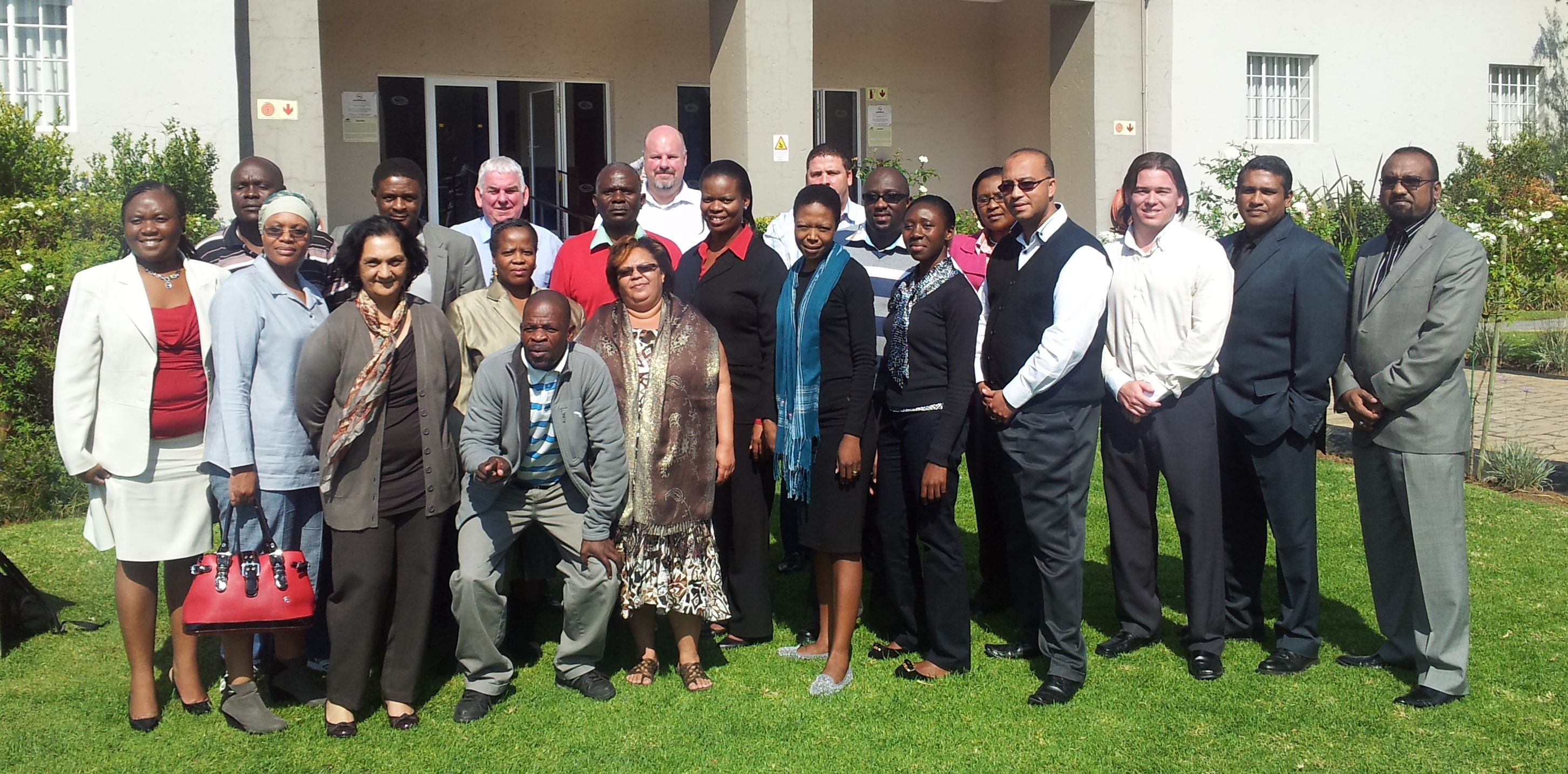
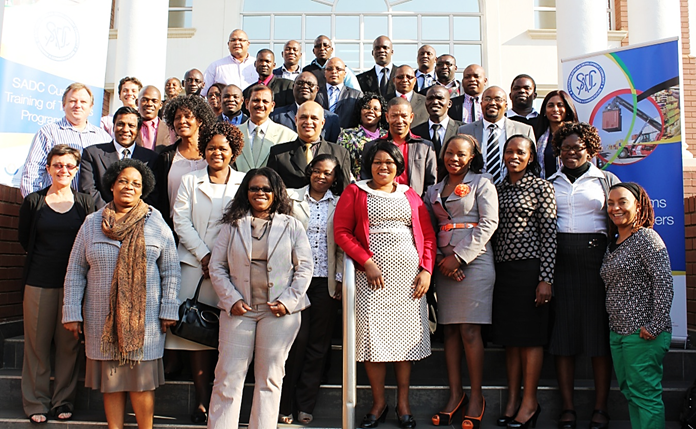
Participants in the Customs Training of Trainers Programme at SARS Academy, Pretoria, South Africa

Participants in the Customs Training of Trainers Programme at SARS Academy, Pretoria, South Africa (Picture: SADC)

The SADC Customs Training of Trainers Programme 2013-2015 was initiated recently from 26-30 August 2013 on ‘Communication and Facilitation Skills’ at the South African Revenue Service (SARS) Academy, Pretoria, South Africa. The objective of the training was to give the trainers the necessary skills and expertise to teach Customs officials and stakeholders in an effective and professional way.  The training was attended by forty (40) participants from 14 SADC Member States.

The SADC Customs Training of Trainers Programme 2013-2015 was approved by the Sub Committee on Customs Cooperation (SCCC) in May 2013. The main objective of the programme is to provide technical and professional support to the implementation of the SADC Protocol on Trade, particularly in view of the contribution of Customs Administrations to the successful implementation and consolidation of the SADC FTA. It is therefore meant to support implementation of agreed instruments and programmes under the SADC Protocol on Trade.

The programme is being in collaboration with the World Customs Organization (WCO), the Regional Office for Capacity Building (ROCB),the Regional Training Centres and GIZ. The first Customs technical training under this programme will be on the SADC Rules of Origin in November 2013 with the objective to establish a poll of trainers on the subject in the region. Source: SADC Secretariat

Border Management in Southern Africa: Lessons with respect to Policy and Institutional Reforms

The folk at Tralac have provided some welcomed insight to the challenges and the pains in regard to ‘regionalisation’. No doubt readers in Member States will be familiar with these issues but powerless within themselves to do anything due to conflict with national imperatives or agendas. Much of this is obvious, especially the ‘buzzwords’ – globally networked customs, one stop border post, single window, cloud computing, and the plethora of WCO standards, guidelines and principles – yet, the devil always lies in the details. While the academics have walked-the-talk, it remains to be seen if the continent’s governments have the commitment to talk-the-walk!

Regional integration is a key element of the African strategy to deal with problems of underdevelopment, small markets, a fragmented continent and the absence of economies of scale. The agreements concluded to anchor such inter-state arrangements cover mainly trade in goods; meaning that trade administration focuses primarily on the physical movement of merchandise across borders. The services aspects of cross-border trade are neglected. And there are specific local needs such as the wide-spread extent of informal trading across borders.

Defragmenting Africa WBThis state of affairs calls for specific governance and policy reforms. Effective border procedures and the identification of non-tariff barriers will bring major cost benefits and unlock huge opportunities for cross-border trade in Africa. The costs of trading remain high, which prevents potential exporters from competing in global and regional markets. The cross-border production networks which are a salient feature of development in especially East Asia have yet to materialise in Africa.

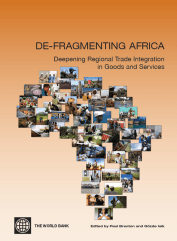
Policy makers have started paying more attention to trade-discouraging non-tariff barriers, but why does the overall picture still show little progress? The 2012 World Bank publication De-Fragmenting Africa – Deepening Regional Trade Integration in Goods and Services shows that one aspect needs to be singled out in particular:  that trade facilitation measures have become a key instrument to create a better trading environment.

The main messages of this WB study are:

  • Effective regional integration is more than simply removing tariffs – it is about addressing on-the-ground constraints that paralyze the daily operations of ordinary producers and traders.
  • This calls for regulatory reform and, equally important, for capacity building among the institutions that are charged with enforcing the regulations.
  • The integration agenda must cover services as well as goods……services are critical, job-creating inputs into the competitive edge of almost all other activities.
  • Simultaneous action is required at both the supra-national and national levels. Regional communities can provide the framework for reform, for example, by bringing together regulators to define harmonised standards or to agree on mutual      recognition of the qualification of professionals……. but responsibility for implementation lies with each member country.

African governments are still reluctant to implement the reforms needed to address these issues. They are sensitive about loss of ‘sovereign policy space’ and are not keen to establish supra-national institutions. They are also opposed to relaxing immigration controls. The result is that border control functions have been exercised along traditional lines and not with sufficient emphasis on trade facilitation benefits. This is changing but specific technical and governance issues remain unresolved, despite the fact that the improved border management entails various technical aspects which are not politically sensitive.

The required reforms involve domestic as well as regional dimensions. Regional integration is a continental priority but implementation is compounded by legal and institutional uncertainties and burdens caused by overlapping membership of Regional Economic Communities (RECs). The monitoring of compliance remains a specific challenge. Continue reading →

Enforcement, Risk Management and Preferred Trade come together in the SACU Region

Enforcement, Risk Management and Preferred Trade come together in the SACU Region

Enforcement, Risk Management and Preferred Trade come together in the SACU Region

A WCO workshop on the topics of Enforcement, Risk Management and Preferred Trader was conducted in April in Johannesburg, South Africa, with the involvement of the WCO Secretariat, UK Customs and the member countries of the Southern African Customs Union – SACU (Botswana, Lesotho, Namibia, South Africa and Swaziland). Capacity Building in the mentioned areas in the SACU Region is part of the WCO Sub-Saharan Customs Capacity Building Programme financed by the Swedish Government through the Swedish International Development Cooperation Agency, SIDA.

An assessment including lessons learned was conducted concerning Operation Auto, targeted at second hand motor vehicles. This first ever regional enforcement operation in the 102 years of history of SACU presented good results as around 250 vehicles were seized by the Customs administrations. The Regional Intelligence Liaison Office contributed actively in the assessment process, ensuring that also future enforcement operations will benefit from the experiences gained.

The development of further risk management capacity is ongoing at the regional level and discussions were held concerning the establishment of common risk profiles. A number of high risk products have been identified and the formulation of profiles to engage illegal trade in these areas is ongoing.

Regarding the Preferred Trader program, progress can also be reported as SACU Members are approaching implementation at operational level. This project component fits very well with the risk management component as the latter is the foundation of the Preferred Trader approach. The process of selecting high compliant, low risk economic operators for the upcoming pilot scheme is well underway while capacity in verification and post clearance audit is being enhanced. A launch of (a pilot of) the regional Preferred Trade program is tentatively envisaged for the second half of 2013. Source: WCO

Home Affairs announces plans for Border Management Agency

safrica1Minister for Home Affairs, Naledi Pandor, in her recent budget debate  (click hyperlink to view full speech) to parliment, made brief allusion to the establishment of a Border Management Agency (BMA) in South Africa. The Agency will ensure coordination of and co-operation among the departments operating at South African points of entry and along our borders. The BMA will be led by the Department of Home Affairs and will involve SARS, SANDF, SAPS, Health and Agriculture. At present, focused attention is being paid to improving the management, capacity, and infrastructure at ports of entry. Last year over R110 million was allocated to ports of entry infrastructure via the Public Works budget. This year over R130 million is being made available in the DHA budget. A number of our ports of entry have been equipped with the enhanced movement control system (EMCS) while introducing the advanced passenger processing system (APP) for airlines. Source: Info.gov.za

Ambitious Port Plan for Walvis Bay


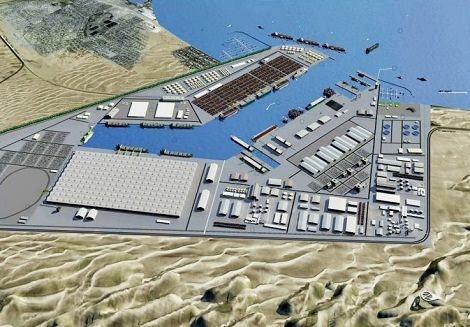
Computer-generated imagery of what the Walvis Bay North Port will look like when built. Image courtesy Namport.

Computer-generated imagery of what the Walvis Bay North Port will look like when built. Image courtesy Namport.

Far from simply developing a new container terminal, Namport could be bringing forward plans to build an ambitious new port at Walvis Bay to accommodate an expected increase in container and other traffic in the near future.

Originally intended as a long-term proposal for the Port of Walvis Bay, the plans may have to be brought forward and, coupled with finance that could come from China, the Namibian port is set to become a real rival for business in the southern and central African region.

According to reports in The Namib Times the cabinet has discussed and in principle given the go-ahead to create a new harbour on the northern side of the existing port. It said the new harbour is part of Namport’s strategy of positioning Walvis Bay as the premier port in the region. The plans will require dredging of a deep entrance channel and excavating the land to clear space for the new deepwater basin along with 10 kilometres of quayside for ships to berth.

If it was necessary to have proof that this development has the potential of shaking up the southern African region, it came in the form of a warning given yesterday by Transnet Chief Executive Brian Molefe at a community briefing session in Durban, in which he said, while justifying the need for the Durban dig-out port to go ahead, that if it was delayed or not built then Durban would lose out to other African ports. As an example he cited Walvis Bay where he said ambitious plans to build a large container port had been given the go-ahead. Source: Ports.co.za

Airport Cities – a view to a different trading environment for South Africa?

ace_skyscraper_237x352aerotropolisThis past week witnessed the first Airport Cities Convention in South Africa. It came at the timely announcement of the country’s first aerotropolis earmarked for development around Oliver Tambo International airport (ORTIA) and the surrounding industrial complex. While the City of Ekurhuleni gets prized possession of the ‘aerotropolis’ (in title) by virtue of the location of ORTIA, Johannesburg is set to benefit perhaps more greatly due to it being the epi-centre of South African commerce and trade. This represents significant ‘hinterland’ development which bodes well for future multi-modal transport and shipping activity for the Gauteng region and the country as a whole.

In support of government’s National Infrastructure Plan, is Strategic Integrated Project (SIPs) 2, otherwise known as the Durban-Free State-Gauteng logistics and industrial corridor. Infrastructure upgrades are already occurring to road and rail networks linking to the key cargo and distribution hub, City Deep. While the express purpose of an inland port, terminal or logistics hub is to provide relief for congested seaports, it likewise creates possibilities and opportunities to synergise with other transport forms. This serves to maximise capacity through integration offering local suppliers and foreign customers a host of trade, shipment and logistics options.

Foremost, an inland port is a hub designed to move international shipments more efficiently and effectively from maritime ports inland for distribution throughout the heartland. Think of the logistics of inbound freight as a barbell. At one end, inbound containers flood into a seaport, spreading across local storage facilities as they are unloaded. If they aren’t moved quickly enough from the port, they create a bottleneck that bogs down the entire distribution cycle as containers wait longer to get off ships, to get into warehouses, and to get back out and onto trucks and trains for final shipment. The Emergence of the Inland Port (credit: Jones, Lang, LaSalle)

In a world of increasing global integration, focussing more on global distribution of goods and services, it behoves our country to understand the dynamics of global trade and what in fact makes commerce tick. Today’s number 1 spot is not going to remain intact without continuous re-evaluation and innovation. It would indeed be arrogant (if not suicidal) of us to think that our current prominence and strength in the sub-saharan region will remain without innovation for the future. At the same time South Africa should welcome increased competition from its neighbours, both immediate as well as further north in Africa. The latest fDI 2013 Report indicates a decrease in foreign direct investment in South Africa (-5%) and Kenya (-9%), while at the same time a significant increase in foreign investment in Nigeria (+20%) and Egypt (+20%), respectively. True, the latter countries are far removed from South Africa’s immediate ‘playing field’, however do we fully understand the drivers which cause the named countries to attract FDI at such an increasing rate – are they capitalising somehow on our deficiencies, shortcomings, or lack of opportunism?

The National Infrastructure Plan can only be seen as a single cog in the machinery to keep South Africa competitive. And, while it is encouraging to witness these developments, a corresponding economic and commercial enterprise on both government and private sector is required to maximise these developments. Some smidgen of hope could lie in the Department of Trade and Industry’s economic principles which support Industrial Policy Action Plan (IPAP) and Special Economic Zones (SEZs), for example, however, several business commentators have already voiced concerns on exactly how these support the Infrastructure Plan. A further question lies in our country’s ability to facilitate trade, not only at our ports, but more importantly the ‘hinterland’ of our country and the neighbouring regions. Do our existing and future laws adequately provide for expeditious and facilitative procedures in the treatment of import and export goods? Are we sure that we are addressing all real and potential trade barriers?

Anyone desiring more information on the ‘aerotropolis’ concept should find some interest at the following websites – Aerotropolis.com, and the City of Ekurhuleni

Shrinking Pool of Port Talent

The supply of proven port executives is drying up. Credit: Off beat Mum

The supply of proven port executives is drying up. Credit: Off beat Mum

Indeed the pool of experienced business expertise is in short supply and dwindling towards extinction. The following article published by Port Strategy reveals a pattern not only affecting employment trends in the international port business, but one which exists in just about every other industry of the international supply chain, the Customs included.

Successive years of hammering home the crewing ‘crisis’ message have firmly ingrained the matter on our minds: red alert, a dearth of qualified seafarers is about to bring the industry to its knees. However, that record has been re-played for at least the last two decades and the anticipated crisis has yet to materialise.

But there is a more pressing employment crisis in our very own backyard, if recruitment specialists are to be believed. With the growth of terminals coming on a pace, there is a demand for C-level executives with a proven track record in bringing start-ups to life. However, by definition this is a very select pool of individuals and these individuals can only be stretched so far.

Years ago, the industry would have handled CVs with regular eighteen month hops to pastures new with extreme caution: ‘a lack of commitment’… ‘ambition over loyalty’… ‘chasing the buck rather than the ambitions of the job’. Yet now, browse some port chief executive profiles and eighteen months could be considered a long term commitment as these sought after individuals jump from one top hot seat to the next to bring terminals up to speed in a matter of months rather than years.

Many are very successful, so perhaps I shouldn’t knock their career drivers. However, the whole exercise demonstrates how very reliant we are as an industry on an elite group of port positioning gurus.

With global container port throughput expected to grow by an average of around 7.5% a year over the next six years, how are we going to find the top brass to steer these terminals on the right course?

A specialist recruitment head-hunter recently confirmed to me that we are facing a challenge. It is already difficult to find the right people for positions that can often be in inhospitable environments, expecting them to uproot family and move lock, stock to a new country and culture.

And if we can find enough of these magic-makers, is the industry willing to pay for their worth? In a word, no, my recruitment colleague tells me. This is simple economics: the pot of suitable candidates contracts, the salary they can command goes up.

Port authorities and global operators need to wise up to the fact that not only is it becoming increasingly difficult to source talent – with no sign of improvement any time soon – but they will need to dig deeper if they want to win over that talent before another operator sweeps them off the available list. Source: Portstrategy.com

Nigerian Customs Develops Trade Facilitation Portal

NigerianCustoms-BadgeAs part of plans to consolidate on its modernisation efforts for eventual take-over from the service providers at the expiration of the extended contract by June 2013, the Nigeria Customs Service (NCS) says it has developed a web-based application to provide information and guidance for international trade business processors in the areas of import, export and transit trade.

The portal is a non-restrictive online medium and an intuitive and interactive platform for classifying goods, a statement from the Customs spokesman, Wale Adeniyi said yesterday. The portal was developed by the service’s technical partners, nominated officers as well as other stakeholders, it said.

Through the platform, trade processors are enabled to find exact Harmonized System Codes (HS Codes) required for related tariffs and duties. It is expected that the platform will enhance compliance by traders and avail them the required information on tariff, prohibited items as well as taxes/levies due for payment upon importation.

Adeniyi explained also that the application has been designed to boost trade facilitation by granting trade processors access to information from all related government agencies. “Guidelines and procedures for obtaining permits, licences and certificates of specified commodity and country of origin that a trade will require for business processing is available on the portal,”he said. He added that the portal further allows traders to convert currencies to exchange rates set by the Central Bank of Nigeria on a monthly basis, make payments and simulate tax. Source: The Daily Trust

First BRICS Heads of Customs Meeting

Delegates who attended the first BRICS Customs Heads of Customs Meeting [SARS]

Delegates who attended the first BRICS Customs Heads of Customs Meeting [SARS]

At a meeting hosted by the Commissioner near Bela Bela, South Africa from 7 to 8 March 2013, delegations from the Customs Administrations of Brazil, Russia, India, China and South Africa (BRICS) met for the first time. The BRICS Customs administrations exchanged experience and ideas in a spirit of openness so as to identify areas for cooperation so that they can most effectively and efficiently facilitate legitimate trade and combat illicit trade and Customs fraud. From 27 to 28 March, South Africa will also host the BRICS Summit in Durban, to be attended by various Ministers and the BRICS Heads of State.

Key points of discussion, focus and future cooperation –

Customs cooperation
The Heads of Customs committed themselves to consolidating and building on the cooperation that has already been established so that they can collectively curb Customs offences, safeguard the international supply chain and achieve effective enforcement of Customs legislation, while facilitating legitimate trade,both among BRICS countries and also globally.

Capacity building
As part of their cooperation to build Customs capacity in relation to human resources, technologies and procedures,the administrations would look into various practical and innovative solutions and endeavour to share their resources, knowledge and best practices with each other.

Cooperation at multilateral forums
A BRICS Customs mechanism will be established, including attachés networks based in Brussels and other strategic places, to identify issues of common interest, develop common responses and ensure regular engagement and interaction, including before important multilateral meetings.

Customs Mutual Administrative Assistance and the Exchange of Customs Information
The administrations also agreed to ensure that there is an enabling legal basis between them to support intra-BRICS Customs mutual administrative assistance and the exchange of Customs information. Such assistance and exchange will assist in combating illicit trade and protecting revenues and societies.

Facilitation of legitimate trade between BRICS countries
To further facilitate trade and reduce the Customs administrative burden on both trade and the administrations themselves, the administrations will exchange information in various areas of common interest and concern, including on the simplification of Customs procedures and the use of modern technologies and techniques.

The administrations will also work towards possible solutions for achieving mutual recognition of Customs controls and of trader management programs aligned to the Authorised Economic Operator (AEO) concept of the World Customs Organization (WCO), establishing Customs interconnectivity and supporting the WCO’s work on developing the Globally Networked Customs (GNC) model.

Opportunities for enforcement cooperation will also be explored, including possible joint actions, information sharing and other enforcement assistance. The use of international instruments developed by the WCO, including Conventions, Recommendations, Decisions and Declarations that support Customs trade facilitation, compliance and enforcement will be actively promoted.

Governance issues
A Governance Framework aligned to the overall BRICS commitments will be established. An annual BRICS Customs Heads meeting has been proposed whose deliberations would be informed to other BRICS forums, including in particular the Summit. Such a BRICS Customs Heads Meeting would be supported by a Customs working group under the guidance of the BRICS Heads of Customs. Source: SARS

WCO News – Innovation for Customs Progress

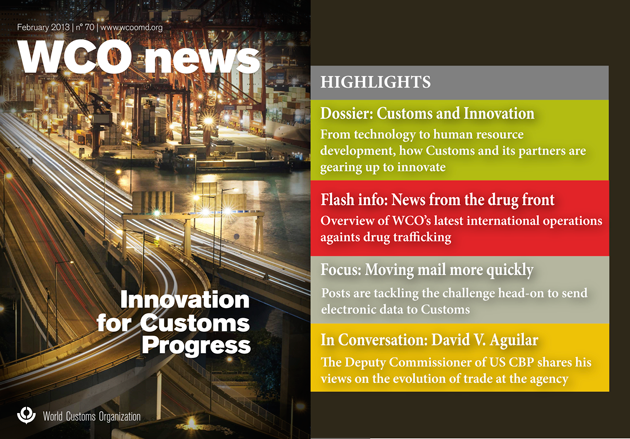
WCO News - No.70 February 2013No introduction needed here. This Edition of WCO News focusses on innovation with a collection of articles from around the globe. In addition to the highlights listed above, check out what’s happening in the world of Non-Intrusive Inspection.

  • Serbian Customs showcases its new Command and Control centre and anti-smuggling capability demonstrating efficient distribution of information between its head quarters and border-crossings and use of mobile X-ray scanners.
  • Dutch Customs discusses its foray into the unique territory of rail scanning, having recently acquired the worlds fastest X-ray rail scanner.
  • The head of Rapiscan Systems presents the changing requirements of customs cargo screening, particularly the emergence of ‘fused technologies’ that maximise the capabilities of non-intrusive detection and material discrimination.

Singapore Customs leads the way in the exploration and promotion of ‘green’ technologies having facilitated two R&D projects on eco-friendly vehicles.

Certificates of origin also feature. As part of its commitment to further facilitate trade by strengthening origin compliance through innovative thinking, the International Chamber of Commerce World Chambers Federation (ICC WCF) recently created an international certificate of origin certification and accreditation chain which will, as a first step, concentrate on non-preferential certificates of origin (COs) – the most common certificates issued by Chambers, and the only ones Chambers are authorized to issue in most countries. Learn how they intend to implement the Certificate of Origin (CO)  certification and accreditation chain scheme and what the underlying benefits are.

Also, learn how the EU proposes to strengthen supply chain security. Click Here! to access the magazine.

Dead Aid

Dead Aid - Dambisa MoyoFollowing my recent post – Want to Help? Shut up and listen! – I thought it appropriate to share a link to the referenced book “Dead Aid” by Zambian born economist Dambisa Moyo.

In Dead Aid, Dambisa Moyo describes the state of postwar development policy in Africa today and unflinchingly confronts one of the greatest myths of our time: that billions of dollars in aid sent from wealthy countries to developing African nations has helped to reduce poverty and increase growth. In the past fifty years, more than $1 trillion in development-related aid has been transferred from rich countries to Africa. Has this assistance improved the lives of Africans? No. In fact, across the continent, the recipients of this aid are not better off as a result of it, but worse—much worse.

In fact, poverty levels continue to escalate and growth rates have steadily declined—and millions continue to suffer. Provocatively drawing a sharp contrast between African countries that have rejected the aid route and prospered and others that have become aid-dependent and seen poverty increase, Moyo illuminates the way in which overreliance on aid has trapped developing nations in a vicious circle of aid dependency, corruption, market distortion, and further poverty, leaving them with nothing but the “need” for more aid.

Debunking the current model of international aid, Moyo offers a bold new road map for financing development of the world’s poorest countries that guarantees economic growth and a significant decline in poverty—without reliance on foreign aid or aid-related assistance. Dead Aid is an unsettling yet optimistic work, a powerful challenge to the assumptions and arguments that support a profoundly misguided development policy in Africa. And it is a clarion call to a new, more hopeful vision of how to address the desperate poverty that plagues millions. Source: www.dambisamoyo.com

Want to help? Shut up and listen!

The subject of “Aid” is perhaps the hottest topic on the African continent, but for a variety of reasons. I came across the following video clip which I believe hits the nail on the head when it comes to international donor aid. No doubt there will be many out there who will denounce the presenter, Ernest Sirolli’s message, but as an African myself I can attest to the many examples of wasted opportunity and bullying which has occurred and continues (till this day) by NGO’s who believe they know better than any what is good for this continent. Thanks to the egotism of most politicians it is easy for such NGO’s to bulldoze their way into lucrative contracts which in most instances never see the light of day, or are so poorly implemented by outsiders, that the target country inevitably has to start all over again at its own cost. Anglo-Saxon involvement and meddling is a particular case in point … brazenly advancing the argument of ‘saving Africa from the Africans!’ I have experienced this several times in the last 15 years. Africa to donors has become little more than a box of Lego – where handpicked consultants experiment – upending all the coloured blocks and after 5 years or more leave a pile of blocks in no better arrangement than what they found when they first arrived. Sadly, the ‘developed nations’ have gotten the whole world into a financial mess and, now more than ever, will apply pressure on African governments into newer and more lucrative deals, because there are no more opportunities in their own back yards. The methods are the same, even the players are the same, just the stakes are now higher. Why, because China and the East are now the new ‘trading partners’ with a bit more bargaining power. Enjoy the video!

About the speaker

Ernesto Sirolli is a noted authority in the field of sustainable economic development and is the Founder of the Sirolli Institute, an international non-profit organization that teaches community leaders how to establish and maintain Enterprise Facilitation projects in their community. The Institute is now training communities in the USA, Canada, Australia, England and Scotland.

In 1985, he pioneered in Esperance, a small rural community in Western Australia, a unique economic development approach based on harnessing the passion, determination, intelligence, and resourcefulness of the local people. The striking results of “The Esperance Experience” have prompted more than 250 communities around the world to adopt responsive, person-centered approaches to local economic development similar to the Enterprise Facilitation® model pioneered in Esperance. Source: TED.com

Related Article

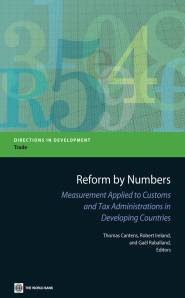
Reform by Numbers – a reference work on Customs reform

The word ‘reform’ is a constant in the daily life of a customs officer. No customs administration among the 177 members of the World Customs Organization has not had a reform program in progress or planned. This is ultimately quite normal.A new World Bank publication “Reform by Numbers” will no doubt appeal to customs and tax reform experts and change agents.

It was written in the context of new and innovative policies for customs and tax administration reform. Eight chapters describe how measurement and various quantification techniques may be used to fight against corruption, improve cross-border celerity, boost revenue collection, and optimize the use of public resources. More than presenting ‘best practices’ and due to the association of academics and practitioners, the case studies explore the conditions under which measurement has been introduced and the effects on the administrative structure, and its relations with the political authority and the users. By analyzing the introduction of measurement to counter corruption and improve revenue collection in Cameroon, two chapters describe to which extent the professional culture has changed and what effects have been noted or not on the public accountability of fiscal administrations. Two other chapters present experiments of uses of quantification to develop risk analysis in Cameroon and Senegal.

By using mirror analysis on the one hand and data mining on the other hand, these two examples highlight the importance of automated customs clearance systems which collect daily extensive data on users, commodities flows and officials. One chapter develops the idea of measuring smuggling to improve the use of human and material resources in Algeria and nurture the questioning on the adaptation of a legal framework to the social context of populations living near borders. Finally, two examples of measurement policies, in France and in South Korea, enlighten the diversity of measurement, the specificities of developing countries and the convergences between developing and developed countries on common stakes such as trade facilitation and better use of public funds.

The “gaming effect” is well known in literature about performance measurement and contracts performance, because there is a risk of reduced performance where targets do not apply, which is detrimental to the overall reform. It is crucial to keep in mind that, by themselves, indicators “provide an incomplete and inaccurate picture” and therefore cannot wholly capture the reality on the ground. Measurement indicators must be carefully chosen to ensure that knowledge is being uncovered.

Measurement, for purposes of reform, should not be “copied and pasted” from one country to another. Due consideration must be given to the varying aims of the customs service and the specific political, social, economic, and administrative conditions in the country.

Measurement applied to experimentation is also about how donors, experts, and national administrations work together. On the one hand, national administrations in developing countries ask for technical assistance, standards, and expertise that are based on experiences of developing countries and use experts from such countries.These requests encourage the dissemination of such models. On the other hand, reforms of customs or tax administrations are represented as semi-failures in terms of the initial expected outcomes set by donors and politicians – usually the end of a reform is the time when donors and local administrations become aware of the gaps of their own representations of success.

While scientific and academic in approach, lets hope it means more than just miserable experimentation in target countries.

The book is available for free reading online – www.scribd.com or you can purchase from amazon.com.

Building hard and soft infrastructure to minimise regional costs

I post this article given it ties together many of the initiatives which I have described in previous articles. The appears to be an urgency to implement these initiatives, but the real question concerns the sub-continent’s ability to entrench the principles and maintain continuity. At regional fora its too easy for foreign ministers, trade practitioners and the various global and financial lobbies to wax lyrical on these subjects. True there is an enormous amount of interest and ‘money’ waiting to be ploughed into such programs, yet sovereign states battle with dwindling skills levels and expertise. Its going to take a lot more than talk and money to bring this about.

South Africa is championing an ambitious integration and development agenda in Southern Africa in an attempt to advance what Trade and Industry Minister Rob Davies describes as trade and customs cooperation within the Southern African Customs Union (SACU), the Southern African Development Community (SADC) and other regional trade organisations.

Central to pursuing this intra-regional trade aspiration are a series of mechanisms to combine market integration and liberalisation efforts with physical cross-border infrastructure and spatial-development initiatives. Also envisaged is greater policy coordination to advance regional industrial value chains. “Trade facilitation can be broadly construed as interventions that include the provision of hard and soft infrastructure to facilitate the movement of goods, services and people across borders, with SACU remaining the anchor for wider integration in the region,” Davies explains.

This approach is also receiving support from the US Agency for International Development (USAid), which recently hosted the Southern African Trade Facilitation Conference, held in Johannesburg.

Trade programme manager Rick Gurley says that virtually every study on trade in sub- Saharan Africa identifies time and cost factors of exporting and importing as the most significant constraints to regional trade potential. Limited progress has been made by SADC member States and SACU partners to tackle the factors undermining trade-based growth, limiting product diversification and increasing the price of consumer goods, including of foodstuffs. However, far more would need to be done to realise the full potential of intra-regional trade.

Regional Alliance
One high-profile effort currently under way is the Tripartite Free Trade Area (T-FTA), which seeks to facilitate greater trade and investment harmonisation across the three existing regional economic communities of the SADC, the Common Market of Eastern and Southern Africa and the East African Community.

The existing SADC FTA should be fully implemented by the end of the year, with almost all tariff lines traded duty-free and, if established, the T-FTA will intergrate the markets of 26 countries with a combined population of nearly 600-million people and a collective gross domestic product (GDP) of $1-trillion. At that size and scale, the market would be more attractive to investors and could launch the continent on a development trajectory, Davies avers. It could also form the basis for a later Africa-wide FTA and a market of some $2.6-trillion.

However, as things stand today, intra- regional trade remains constrained not merely by trade restrictions but by a lack of cross-border infrastructure, as well as poor coordination and information sharing among border management agencies such as immigration, customs, police and agriculture.Cross-national connectivity between the customs management systems is also rare, often requiring the identical re-entry of customs declarations data at both sides of the border, causing costly and frustrating delays.

USAid’s regional economic growth project, the Southern African Trade Hub, is a strong proponent of the introduction of several modern trade-facilitation tools throughout the SADC – a number of which have already been successfully pioneered. These tools, endorsed by the World Customs Organisation (WCO) Framework of Standards, which offers international best-practice guidelines, are aimed at tackling the high costs of exporting and importing goods to, from, and within Southern Africa, which has become a feature of regional trade and discouraged international investment.

Bringing up the Rear
A country’s competitiveness and the effec- tiveness of its trade facilitation regime are measured by its ranking on World Bank indices and, with the exception of Mozambique, Southern African States perform poorly – with most in the region settling into the lowest global quartile of between 136 and 164, out of a total of 183. “Our transaction costs in Africa across its borders are unacceptably high and inhibit trade by our partners in the private sector,” says WCO capacity building director Erich Kieck. “We need our States to develop good ideas and policies, but the true test lies in their ability to implement them,” he notes.

He adds that not only does trade facilitation require efficient customs-to-customs connectivity, but also demands effective customs-to-business engagement, adding that, while customs units are responsible for international trade administration, they are not responsible for international trade. “The private sector is the driver of economic activity and international trade, and government’s responsibility is to understand the challenges faced by the business community and develop symbiotic solutions,” Kieck notes.

Despite the establishment of regional trade agreements and regional economic communities in Southern Africa, many partner- ships have failed to deliver on their full potential to increase domestic competitiveness.

In a report, African Development Bank (AfDB) senior planning economist Habiba Ben Barka observes that, despite the continent’s positive GDP growth record – averaging 5.4% a year between 2005 and 2010 – it has failed to improve its trading position or integration into world markets. In 2009, Africa’s contribution to global trade stood at just under 3%, compared with nearly 6% for Latin America and a significant 28% for Asia.

“Since 2000, a new pattern of trade for the continent has begun to take centre stage, as Africa has witnessed an upsurge in its trade with the emerging Brazil, Russia, India and China economies. Overall, Africa is trading more today than in the past, but that trade is more with the outside world than internally,” says Ben Barka. She adds that while many African regional economic communities have made some progress in the area of trade facilitation, much greater effort is required to harmonise and integrate sub-regional markets.

To address enduring trade barriers, consensus among business, government and trade regulators appears to lean towards the adoption of one or a combination of five facilitation tools. These include the National Single Window (NSW), the One-Stop Border Post (OSBP), cloud-based Customs Connectivity, Coordinated Border Management (CBM) and Customs Modernisation Tools.

A National Single Window
NSWs connect trade-related stakeholders within a country through a single electronic-data information-exchange platform, related to cross-border trade, where parties involved in trade and transport lodge standardised trade-related information or documents to be submitted once at a single entry point to fulfil all import, export and transit-related regulatory requirements.Mauritius was the first SADC country to implement the NSW and consequently improved its ranking on the ‘Trading Across Borders Index’ to 21 – the highest in Africa. It was closely followed by Ghana and Mozambique, which have also reported strong improvements.

Developed in Singapore, the benefits of government adoption include the reduction of delays, the accelerated clearance and release of goods, predictable application, improved application of resources and improved transparency, with several countries reporting marked improvement in trade facilitation indicators following the NSW implementation.

In South Africa, the work on trade facili-tation is led by the South African Revenue Service (SARS), which focuses on building information technology (IT) connectivity among the SACU member States, and strengthen- ing risk-management and enforcement measures. However, SARS’ approach to the NSW concept remains cautious, Davies explains. “SARS has considered the viability of this option as a possible technological support for measures to facilitate regional trade, but considers that this would fall outside the scope of its current approach and priorities in the region,” he said.

One-Stop Border Posts
As reported by Engineering News in December last year, effective OSBPs integrate the data, processes and workflows of all relevant border agencies of one country with those of another, which culminates in a standardised operating model that is predictable, trans- parent and convenient. An OSBD success story in Southern Africa is the Chirundu border post, where a collaboration between the Zambia and Zimbabwe governments has culminated in a single structure, allowing officers from both States to operate at the same location, while conducting exit and entry procedures for both countries.

Launched in 2009, this OSBP model is a hybrid of total separation, joint border operations and shared facilities in a common control zone. Implementation of the model has reduced clearance times to less than 24 hours, significantly reduced fraudulent and illegal cross-border activity, enabled increased information sharing between border agencies and reduced the overall cost of export and import activities in the area.

Earlier this year, former South African Transport Minister Sibusisu Ndebele indicated that Cabinet was looking into establishing a mechanism that would bring all border entities under a single command and control structure to address the fragmentation in the country’s border operations, particularly at the high-traffic Beitbridge post between South Africa and Zimbabwe. “The ultimate vision is to create one-stop border operations to facilitate legitimate trade and travel across the borders,” he said.

Customs Connectivity and Data Exchange
Improved connectivity between customs limbs in sub-Saharan Africa has perhaps made the most indelible strides in the region, with improved IT connectivity between States identified as a priority by Sacu.

This includes customs-to-customs inter- connectivity, customs-to-business inter- connectivity and interconnectivity between customs and other government agencies. SACU members have agreed to pursue the automation and interconnectivity of their customs IT systems to enable the timely electronic exchange of data between administrations in respect of cross-border movement of goods. “As a consequence of this acquiescence, we have identified two existing bilateral connectivity programmes as pilot projects to assess SACU’s preferred connectivity approach, cloud computing between Botswana and Namibia and IT connectivity between South Africa and Swaziland,” says SACU deputy director for trade facilitation Yusuf Daya. He adds that a regional workshop was recently convened to explore business processes, functions, data clusters and the application of infrastructure at national level to improve and develop intra-regional links.

Coordinated Border Management
The SADC has been a strong proponent of CBM efforts in the region, which promotes coordination and cooperation among relevant authorities and agencies involved in, specifically, the protection of interests of the State at borders. “The union has drafted CBM guidelines for its members on implementation, based on international best practice, and has received indications of interest from several member States,” explains SADC Customs Unit senior programme officer Willie Shumba.He adds that CBM is a key objective of regional integration, enabling the transition from an FTA to a customs union and, eventually, to a common market, through effective controls of the internal borders.

Customs Modernisation
South Africa’s customs modernisation initiative is well advanced and came about following Sars’ accession to the WCO’s revised Kyoto Convention in 2004, which required customs agencies to make significant changes to it business and processing models. These changes included the introduction of simplified procedures, which would have fundamental effects on and benefits for trade and would require a modern IT solution.

Since its inception, the SARS Customs Modernisation Programme has gained tremendous momentum, with amendments to the Passenger Processing System and the replacement of SARS’s Manifest Acquittal System in the Automated Cargo Management system. Further adjustments were made to enable greater ease of movement of goods, faster turnaround times and cost savings, as well as increased efficiency for SARS. This phase included the introduction of an electronic case-management system, electronic submission of supporting documents, the centralisation of back-end processing in four hubs and an electronic release system and measures to enhance the flow of trucks through borders – in particular at the Lebombo and Beitbridge borders.

Proper Planning
AfDB’s Ben Barka warns that, prior to the implementation of any border improvement efforts by countries in Southern Africa, a thorough analysis and mapping of each agency’s existing procedures, mandate and operations should be undertaken.“Based on these findings, a new set of joint operational procedures need to be agreed upon by all involved agencies and must comply with the highest international standards,” she says.

Development coordination between States is essential, as the largest disparity among regional groupings, in terms of intra-regional trade, is clearly attributable to their differentiated levels of progress in various areas, including the removal of tariffs and non-tariff barriers, the freedom of movement of persons across borders and the development of efficient infrastructure. Source: Engineering News.
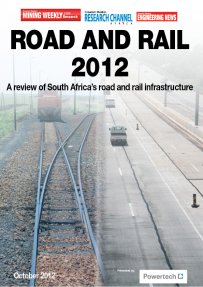
A review of South Africa’s road and rail infrastructure

Creamer Media have published 2012 Road and Rail – a comprehensive review and insight into South Africa’s road and rail transport infrastructure and network. This should be a must read for any serious investor and comes at a price just shy of R 2000,00. 

For the much of the six-and-a-half decades from 1910, South Africa’s rail sector was carefully nurtured and handsomely resourced by successive administrations. Growing competition from road was kept at bay by tough regulatory practices that ensured rail freight of a virtual monopoly.

From the mid-1970s, however, rail’s pre-eminent position in South Africa began to come under scrutiny. A series of National Transport Policy Studies reviewed worldwide trends in transport deregulation. The findings reinforced a growing belief that an overprotected rail industry and an over-regulated road-freight sector were detrimental to the overall South African economy. This was undoubtedly true – but as often happens in these matters, in the following decades, and indeed, right up to the recent present, the stick was then bent excessively in the opposite direction.

The net result is that, on the freight side, rail has massively lost market share to road over the past 20 to 25 years. Road transport has been allowed to grow, but without the implementation of an effective road transport quality system. This imbalance in the modal split has been a key contributing factor to high direct logistics costs in the economy. The disproportionate shift of freight to road has had many other perverse and costly impacts – the road freight industry (unlike Transnet Freight Rail) does not directly carry the cost of building and maintaining the public infrastructure it uses and this has resulted in an increase in road construction and maintenance costs, deteriorating road conditions, congestion problems and road collisions.

This report investigates South Africa’s road and rail infrastructure, including the country’s road and rail networks, maintenance and the challenges facing the sector, among others. For details as to the content of the report please click here! Source: Creamer Media