France – Customs in High School Education

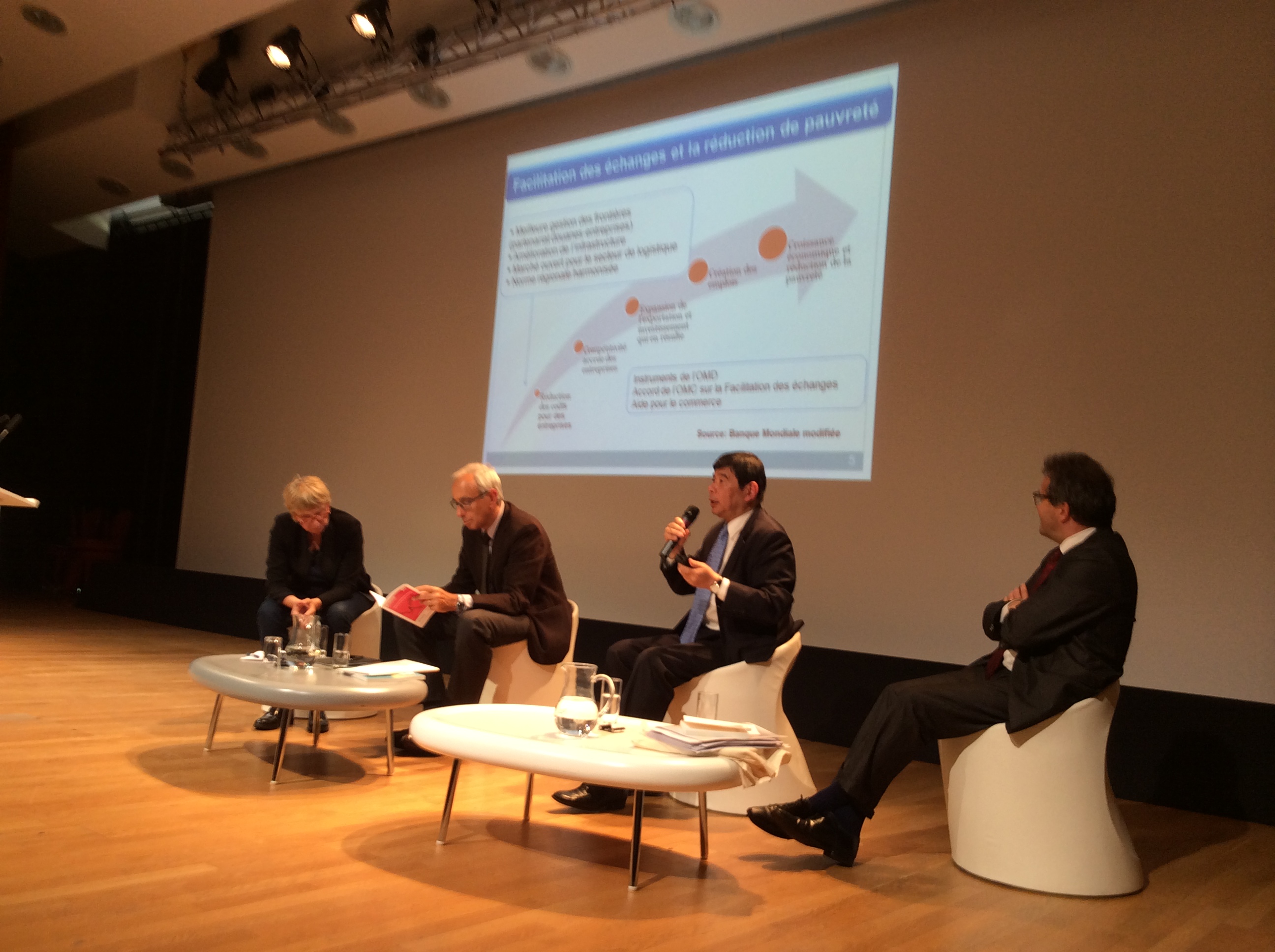
20140827%20154452At the invitation of the “Institut de l’Entreprise” in the framework of its programme “Entretiens Enseignants-Entreprises”, WCO Secretary General Kunio Mikuriya spoke at the Summer University’s conference entitled “La croissance en question(s)” (growth into question(s)) in the Veolia Campus, Jouy-le-Moutier, France on 27 August 2014.
Supported by the French ministry of Education and the Council of Economic Analysis, this forum gives the opportunity to high school teachers in economics and social sciences to exchange views with the business world. It also provides them with an opportunity to update their knowledge on current economic issues benefiting from the attendance of renowned economists and prominent business leaders.

260 High school teachers participated in the event and listened to a panel session on poverty reduction during which Secretary General Mikuriya explained the contribution of Customs through enhancing connectivity at the borders to secure and facilitate global supply chain. They were eager to understand how the WCO and Customs could play a significant role in trade facilitation to convey the messages to their classrooms. Source: WCO

First WCO ESA Regional Workshop on Resource Mobilization

First WCO ESA Regional Workshop on Resource Mobilization

First WCO ESA Regional Workshop on Resource Mobilization

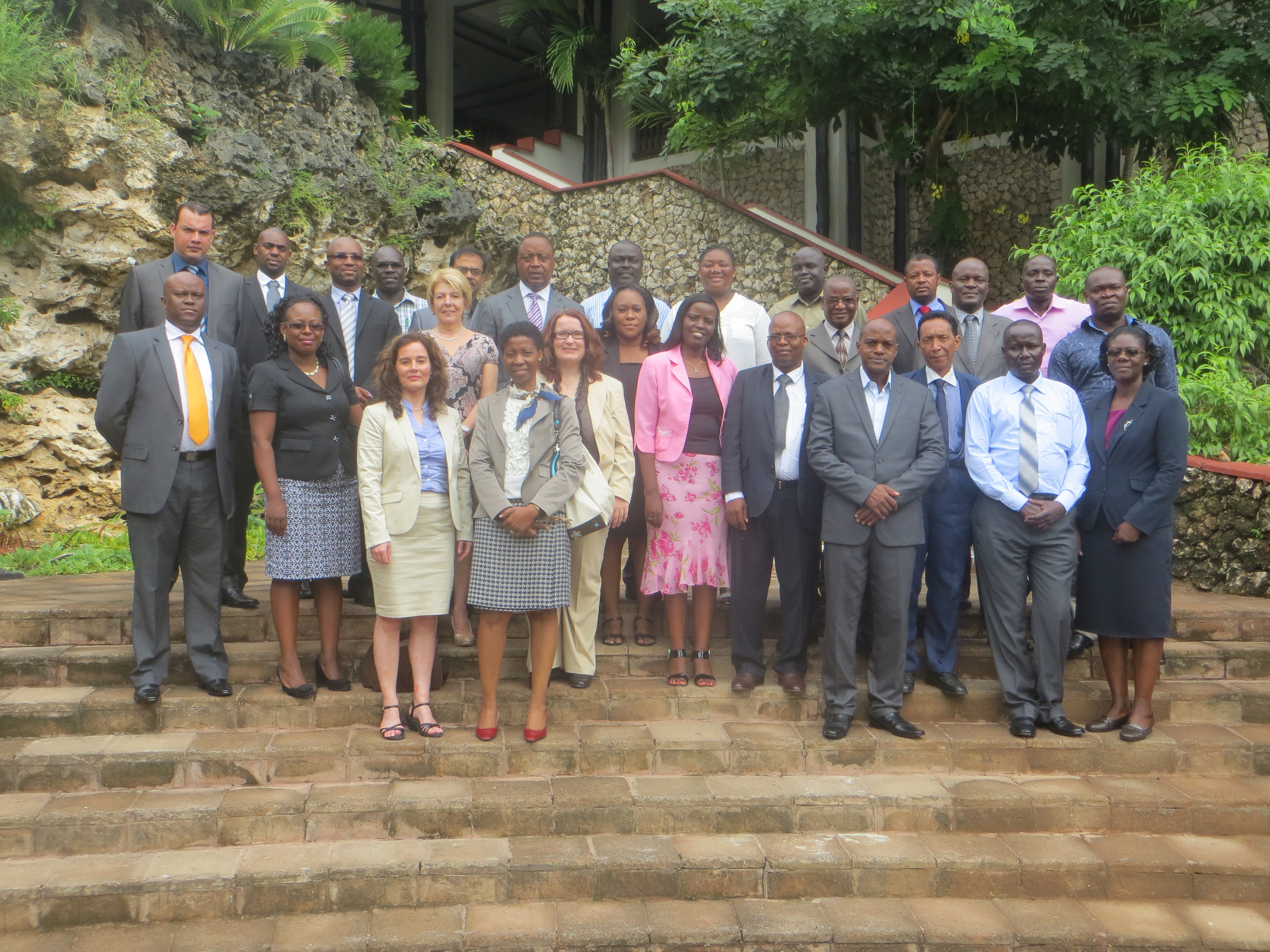
The WCO and the ESA Regional Office for Capacity Building (ROCB ESA), in cooperation with the Kenyan Revenue Authority, organized the first WCO ESA Regional Workshop on Resource Mobilization in Mombasa, Kenya from 19 to 23 May 2014. This workshop was one of the regional key activities in 2014 under the WCO-ESA Project ‘Building Trade Capacity through Customs Modernization in the East and Southern Africa” funded by the Finnish Government.

This workshop was also part of the ongoing efforts of the WCO and the ROCB ESA in supporting Customs Administrations to enhance engagement with development partners for their reform and modernization programmes. Previously, the WCO and the ROCB ESA had organized the first Regional Meeting on Donor Engagement in March 2012 in Mauritius, which provided Members in the ESA region with the opportunity to enhance their understanding of partnership with development partners. The workshop in Kenya was a follow-up on the event in 2012, enabling participating Members to address needs in the field of Resource Mobilization which are essential for subsequent Capacity Building / Customs Reform and Modernization processes at regional and national level. The workshop was facilitated by Ms. Heike Barczyk, WCO Deputy Director Capacity Building, Ms. Sigfridur Gunnlaugsdottir, WCO expert from Iceland Customs, and Ms. Riitta Passi, Project Manager within the Finnish-funded project.

A total of 25 participants from 17 ESA regional members took part in the workshop. Participants developed first draft business cases/project proposals that could in the future lead to potential real Capacity Building projects. Reflecting on the current Customs environment, the workshop equally addressed the WTO Agreement on Trade Facilitation (ATF), potential interest from development partners in supporting countries with its implementation and how to best reflect this in respective interaction with those partners including how to address the respective alignment in the different steps towards developing a written project proposal. The workshop is expected to further enhance the collaboration between Customs administrations and development partners for the successful implementation of Customs reform and modernization.

The WCO, the ROCB ESA and participating Members agreed to continue to work together in this regard. Source: WCO – article provided by Ms. Riitta Passi, Project Manager, Nairobi.

Communication: Sharing Information for Better Communication

WCO Customs Theme 2014Following a theme of logical progression over the past few years, the WCO has introduced “Communication” as this year’s theme for the 170+ Customs Administrations around the world. Last year’s theme “Innovation” set the platform for the introduction of innovative ideas and business practices, new partnerships, as well as new solutions and technologies.

While still very much in its infancy, the WCO’s Globally Networked Customs (GNC) philosophy will undoubtedly gain more and more traction as administrations iron out their national and regional aspirations and objectives.

The recent agreement on Trade Facilitation at the WTO’s conference in Bali adds further credence to the importance of the principles of the Revised Kyoto Convention (RKC). For the first time we see an attempt to fuse customs principles into a package of binding requirements.

Now, more than ever, Customs needs to work ‘collaboratively’ with all stakeholders.

With Customs and Border Agencies etching out new legal requirements, as well as organisational structures and plans, trade practitioners will likewise have to keep a watchful eye on these developments. Sometimes, not necessarily just for their own needs and obligations in their domestic markets, traders need to ensure that they keep apace with ‘destination’ Customs requirements which in these modern times are all too frequent. By opening its door to the business community, the WCO plays an ever-increasing overarching role in providing the private sector a ‘window’ to its thinking and ideology.

Transit – Addressing the plight of Landlocked Countries

AmatiThirty-one countries belong currently to the Group of Landlocked Developing Countries: 15 are located in Africa, 12 in Asia, 2 in Latin America and 2 in Central and Eastern Europe. The lack of territorial access to the sea poses persistent challenges to growth and development of these countries and has been the main factor hindering their ability to better integrate in the global trading system. The transit of export and import goods through the territory of at least one neighboring State and the frequent change of mode of transport result in high transaction costs and reduced international competitiveness.

For more details on LLDCs visit – Landlocked Developing Countries (LLDCs)

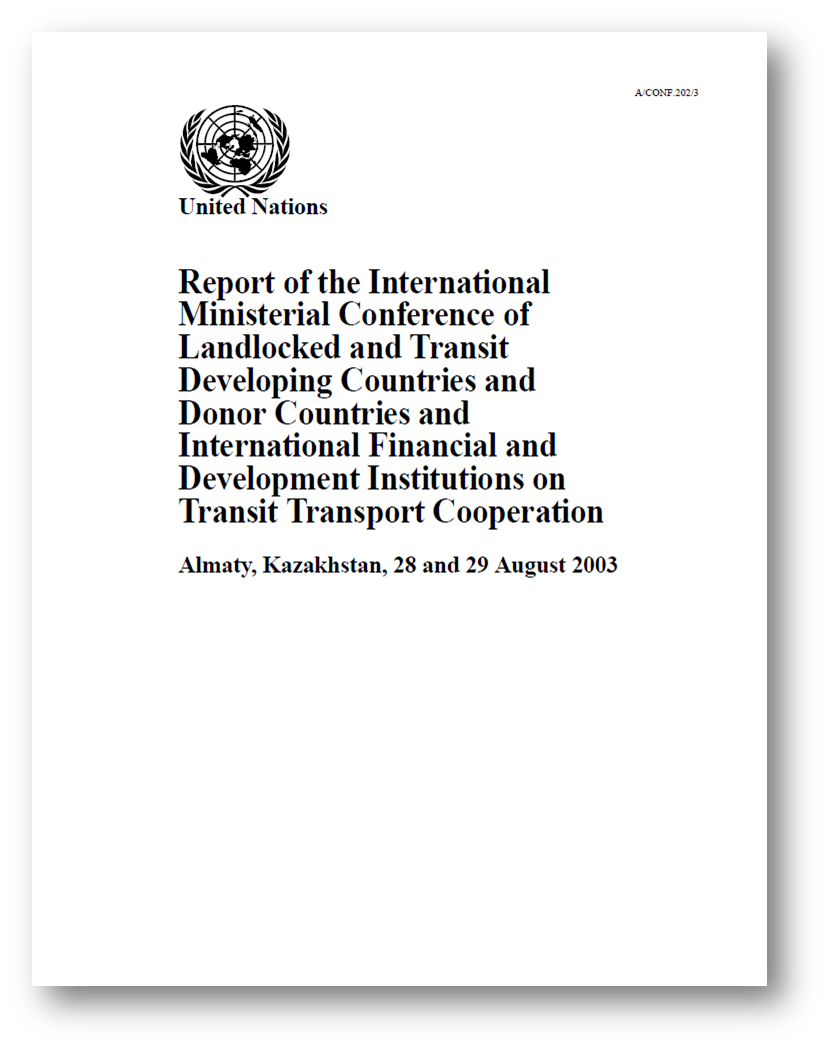
The 2003 Almaty Programme of Action highlighted the link between the ability of LLDCs to harness their trade potential and the state of the transport infrastructure and the efficiency of trade facilitation measures in neighboring transit countries and called for international support in favor of LLDCs. The United Nations General Assembly in its resolution 66/214 of 22 December 2011 and resolution 67/222 of 3 April 2013 decided to hold a Comprehensive Ten-Year Review Conference of the Almaty Programme of Action in 2014 with a view to formulating and adopting a renewed development partnership framework for LLDCs for the next decade.

It is expected that the ten-year review will provide an opportunity for: (i) assessing progress made in establishing efficient transit transport systems in landlocked developing countries since the adoption of APoA in August 2003, and particularly after the midterm review of 2008; and (ii) agreeing on actions needed to sustain achievements and address challenges in overcoming the special problems of landlocked developing countries around the world.

It would appear that this programme very much supports the creation of inland ports connected to the seaports by means of secure and bonded facilities – within the ambit international law, i.e. WTO (Trade Facilitation Agreement) and the WCO (Revised Kyoto Convention). The question arises as to whether an inland port located in Botswana, Zimbabwe or any adjoining country be able to demand such rights where a ‘corridor’ country or country providing international seaport access to LLDCs does not observe or accept international transit principles?

Related articles

Business Guide for Developing Countries – WTO Trade Facilitation Agreement

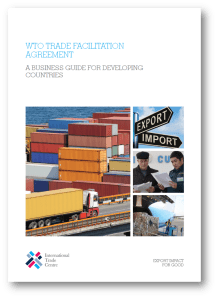
Picture2The International Trade Centre has prepared a guide to help businesses take advantage of the WTO Trade Facilitation Agreement. The agreement simplifies customs procedures, allowing businesses to become more competitive. This jargon-free guide explains the provisions with a focus on what businesses need to know to take advantage of the agreement. It will also help policy makers identify their needs for technical assistance to implement and monitor it. To download the guide – click the following link: http://www.intracen.org/wto-trade-facilitation-agreement-business-guide-for-developing-countries/.

For instance, the guide explains how the article on ‘Advance rulings’ aims to address problems with inconsistent classification of goods by customs officials and the uncertainty it creates for traders. ‘Advance rulings are binding decisions by customs…on the classification and origin of the goods in preparation for importation or exportation. Advance rulings facilitate the declaration and consequently the release and clearance process, as the classification has already been determined in the advance ruling and is binding to all customs officers for a period of time,’ the guide explains. It goes on to list in jargon-free language the obligations and the procedure imposed on customs authorities related to advance rulings.

Reducing the on-the-spot decision making authority of individual customs agents thanks to advance rulings will also reduce bribery, the guide says. Corruption continues to be a key problem for developing-country exporters, who identified it as a major constraint on exports in a recent survey conducted by ITC.

The last chapter of the guide describes how the agreement will be implemented, including the special and differential treatment provisions that developing countries may invoke. Developing countries will be able to link the implementation of the commitments to technical assistance and support from donors. WTO member states will have to explicitly apply for delays for each commitment, which will need to be approved by the WTO and the implementation schedule published.

Source: International Trade Centre

What Does the WCO think of the WTO Trade Facilitation Agreement?

The Dublin Resolution, which was issued at the conclusion of the Policy Commission meeting in Dublin, Ireland on 11 December 2013, welcomes the WTO Agreement On Trade Facilitation (the “Trade Facilitation Agreement”), as embodied in the Bali Package’s Ministerial Decision, adopted at the WTO’s Ninth Ministerial Conference in Bali, Indonesia from 3 to 7 December 2013, under the framework of the Doha Development Agenda.

The Dublin Resolution emphasises the commitment of the WCO to the efficient implementation of the Trade Facilitation Agreement.

The WCO Secretary General, Kunio Mikuriya, said that he was very pleased with the timely and affirmative action of Policy Commission, which reflects the determination to drive forward the global Customs trade facilitation agenda.

Posted by Simon Lester for http://worldtradelaw.typepad.com


WTO Bali – Trade Facilitation Agreement

WTO-globalvoices_org__au_The draft text relating to the outcome on a Trade Facilitation Agreement at 9th Ministerial Conference of the WTO can be located here!   It reveals some significant impact and far-reaching implications for the Customs administrations, but to a great extent it will probably be welcomed by the world’s trading community. In the South African context, readers may find Article 11 on “Freedom of Transit” extremely interesting, if not controversial by some members of the establishment. In essence it’s all about being transparent! Source: World Trade Organisation.

Experts Caution Against Rush into Trade Facilitation Agreement

Bali 2013A rather lengthy article published by Third World Network, but entirely relevant to trade practitioners and international supply chain operators who may desire a layman’s understanding of the issues and challenges presented by the WTO’s proposed agreement on ‘Trade Facilitation’. I have omitted a fair amount of the legal and technical references, so if you wish to read the full unabridged version please click here! If you are even more interested in the subject, take a look through the publications available via Google Scholar.

A group of eminent trade experts from developing countries has advised developing countries to be very cautious and not be rushed into an agreement on trade facilitation (TF) by the Bali WTO Ministerial Conference, given the current internal imbalance in the proposed agreement as well as the serious implementation challenges it poses.

“While it may be beneficial for a country to improve its trade facilitation, this should be done in a manner that suits each country, rather than through international rules which require binding obligations subject to the dispute settlement mechanism and possible sanctions when the financial and technical assistance as well as capacity-building requirements for implementing new obligations are not adequately addressed.”

This recommendation is in a report by the Geneva-based South Centre. The report, “WTO Negotiations on Trade Facilitation: Development Perspectives”, has been drawn up from discussions at two expert group meetings organised by the Centre.

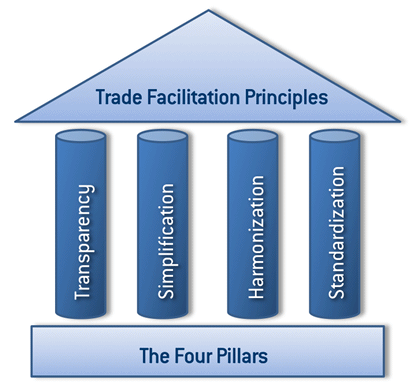
Noting that an agreement on trade facilitation has been proposed as an outcome from the Bali WTO Ministerial Conference, the South Centre report said that the trade facilitation negotiations have been focused on measures and policies intended for the simplification, harmonization and standardization of border procedures.

“They do not address the priorities for increasing and facilitating trade, particularly exports by developing countries, which would include enhancing infrastructure, building productive and trade capacity, marketing networks, and enhancing inter-regional trade. Nor do they include commitments to strengthen or effectively implement the special and differential treatment (SDT) provisions in the WTO system”.

The negotiations process and content thus far indicate that such a trade facilitation agreement would lead mainly to facilitation of imports by the countries that upgrade their facilities under the proposed agreement. Expansion of exports from countries require a different type of facilitation, one involving improved supply capacity and access to developed countries’ markets.

Some developing countries, especially those with weaker export capability, have thus expressed concerns that the new obligations, especially if they are legally binding, would result in higher imports without corresponding higher exports, which could have an adverse effect on their trade balance, and which would therefore require other measures or decisions (to be taken in the Bali Ministerial) outside of the trade facilitation issue to improve export opportunities in order to be a counter-balance to this effect.

According to the report, another major concern voiced by the developing countries is that the proposed agreement is to be legally binding and subject to the WTO’s dispute settlement system. This makes it even more important that the special and differential treatment provisions for developing countries should be clear, strong and adequate enough. The negotiations have been on two components of the TF: Section I on the obligations and Section II on special and differentiated treatment (SDT), technical and financial assistance and capacity building for developing countries.

Most developing countries, and more so the poorer ones, have priorities in public spending, especially health care, education and poverty eradication. Improving trade facilitation has to compete with these other priorities and may not rank as high on the national agenda. If funds have to be diverted to meet the new trade facilitation obligations, it should not be at the expense of the other development priorities.

“Therefore, it is important that, if an agreement on trade facilitation were adopted, sufficient financing is provided to developing countries to meet their obligations, so as not to be at the expense of social development,” the report stressed.

The report goes on to highlight the main issues of concern for a large number of developing countries on the trade facilitation issue. It said that many developing countries have legitimate concerns that they would have increased net imports, adversely affecting their trade balance. While the trade facilitation agreement is presented as an initiative that reduces trade costs and boosts trade, benefits have been mainly calculated at the aggregate level.

Improvements in clearance of goods at the border will increase the inflow of goods. This increase in imports may benefit users of the imported goods, and increase the export opportunities of those countries that have the export capacity.

However, the report noted, poorer countries that do not have adequate production and export capability may not be able to take advantage of the opportunities afforded by trade facilitation (in their export markets).

“There is concern that countries that are net importers may experience an increase in their imports, without a corresponding increase in their exports, thus resulting in a worsening of their trade balance.”

Many of the articles under negotiations (such as the articles on ‘authorized operators’ and ‘expedited shipments’) are biased towards bigger traders that can present a financial guarantee or proof of control over the security of their supply chains. There is also the possibility that lower import costs could adversely affect those producing for the local markets.

“The draft rules being negotiated, mainly drawn up by major developed countries, do not allow for a balanced outcome of a potential trade facilitation agreement,” the report asserted.

New rules under Section I are mandatory with very limited flexibilities that could allow for Members’ discretion in implementation. The special and differential treatment under section II has been progressively diluted during the course of the negotiations. Furthermore, while the obligations in Section I are legally binding, including for developing countries, developed countries are not accepting binding rules on their obligation to provide technical and financial assistance and capacity building to developing countries.

The trade facilitation agreement would be a binding agreement and subject to WTO dispute settlement. The negotiating text is based on mandatory language in most provisions, which includes limited and uncertain flexibilities in some parts.

Therefore, if a Member fails to fully implement the agreement it might be subject to a dispute case under the WTO DSU (Dispute Settlement Understanding) and to trade sanctions for non-compliance.

“Many of the proposed rules under negotiations are over-prescriptive and could intrude on national policy and undermine the regulatory capacities and space of WTO Member States. The negotiating text in several areas contains undefined and vague legal terminology as well as ‘necessity tests’, beyond what the present GATT articles require.”

Continue reading →

India Seeks Binding Trade Facilitation Agreement and Mandatory Exchange of Customs Information

TFPrinciples tfig.unece.org

India has proposed changes in the trade facilitation agreement to address the concerns of developing countries in the proposal that tops the agenda of the WTO‘s Bali ministerial scheduled for early December.

The trade facilitation agreement aims to smoothen cross-border trade by removing red tape, improving infrastructure and harmonising Customs procedures. Seen as the developed countries’ agenda, the emerging economies have sought relaxations in the legally binding clauses like clearing shipments within three hours.

“We have informed WTO that there needs to be some restriction on the scope of expediting shipment, and should be only limited to air cargo and that too very urgent ones,” a commerce department official told ET.

The country should also be allowed to restrict it to courier services, as the ones very urgent. WTO has subsequently agreed to relax the clause to make expediting shipments within six hours or as rapidly as possible instead of three hours.

Negotiators from 159 countries have held several rounds of talks since September in Geneva to forge a consensus on the multilateral agreement.

Although talks started in 2001 in Doha, lack of consensus between the developed and developing countries has lead to an impasse.

The ninth ministerial round in Bali is being seen as the last attempt to renew the global trade agreement agenda by focusing on the low hanging fruit such as trade facilitation.

India’s commerce & industry minister Anand Sharma told WTO director-general Roberto Axevedo during his Delhi visit in October that India was in support of the trade facilitation agreement, “but needs a balance in the pact”.

India along with other developing countries had raised objection to the clause, which calls for a sufficient time gap between the announcement of change in tariff to its coming into effect. This would be against India’s constitution, since most of the budget announcements related to tariffs come into effect within 24 hours. “We cannot change our constitution for WTO,” said the official, adding that India has submitted an alternative proposal to this effect, wherein, budget-related announcement should be kept out of this clause since they need to become applicable immediately. “Deliberations are still on, we need to be given flexibility,” he added.

Besides, India has sought a binding agreement on Customs cooperation under trade facilitation, which will ensure mandatory exchange of information between Customs administrations (on request) so as to prevent under-invoicing, overvaluation, tax evasion and illicit capital flows.

However, the developed countries want to agree to it only on ‘best endeavour basis’. “It is important for us, and has been on the table for over 20 year. It is only for cross checking, as information is available at both ends. However, developed countries are putting in so many conditions, confidentiality laws, secrecy. So, we are not sure in what form it will finally look like,” said the official.

India has also been pushing for a binding technical and financial assistance by the developed countries to the developing countries to accept TF agreement. Source: Economic Times (India)

SACU’s Choice – ‘Common policy or irrelevance’

imagesCA31PQJGThe Minister of Trade and Industry, Dr Rob Davies briefed the Parliamentary Portfolio Committee on Trade and Industry regarding the progress on the implementation of the five-point plan in Cape Town. This is a work programme which was approved by the 2nd Southern Africa Customs Union (SACU) Summit convened by President Zuma in 2011 premised on the following pillars;

  1. Work programme on cross-border industrial development;
  2. Trade facilitation;
  3. Development of SACU institutions;
  4. Unified engagement in trade negotiations and
  5. The review of the revenue sharing arrangement.

The five-point plan emerged from realization by SACU Member States of a need to move SACU beyond an arrangement held together only by the common external tariffs and the revenue sharing arrangement to an integration project that promotes real economy development in the region.

Minister Davies noted that progress on the implementation of pillars of the five- point plan is uneven. SACU has registered good progress on trade facilitation and there is greater unity of purpose in negotiations with third parties (Economic Partnership Agreement (EPA), SACU-India and Tripartite Free Trade Area).

However, there is limited progress on the review of the revenue sharing arrangement and hence lack of adequate financial support for the implementation of cross-border industrial and infrastructure development projects. The SACU revenue pool is raised by South Africa from customs and excise duties. Mr Davies told MPs that in 2013-14 the total disbursement from the revenue pool would be about R70bn of which the BLNS countries would receive about R48bn. There is also lack of progress on the development of SACU institutions as a result of divergences in policy perspectives and priorities of Member States.

Enabling provisions provide for the establishment of National Bodies and a SACU Tariff Board. The SACU Tariff Board will make recommendations to Council on tariffs and trade remedies. Davies added that, until these institutions are established, functions are delegated to the International Trade Administration Commission (ITAC) in SA.

The minister warned that the lack of agreed policies would hinder effective decision-making on regional integration and industrialisation, which had made little progress since the 2011 summit convened by President Jacob Zuma. South Africa believes SACU needs to move “firmly towards a deeper development and integration”.

Minister Davies said SACU risked becoming “increasingly irrelevant” as an institution if it did not develop beyond operating a common external tariff, and a “highly redistributive” revenue-sharing arrangement. The lack of progress in developing new SACU institutions was primarily due to policy and priority differences among members. “Against this background South Africa needs to reassess how best to advance development and integration in SACU.”

Among the disagreements on tariff setting between South Africa and its neighbours highlighted by Mr Davies, was that South Africa saw tariffs as a tool of industrial policy while they regarded them as a means of raising revenue. For example, the other Sacu members wanted to include the revenue “lost” on import tariff rebates offered by South Africa into the revenue pool.

The pool provides these countries with a major source of their national budget. Rebates were seen as revenue foregone for which additional compensation should be sought. South Africa, on the other hand, argues that the rebates (for example on automotive imports) are part of its total tariff package and serve to attract investment and boost imports and therefore, contribute to expanding the revenue pool, not diminishing it.

He emphasised the development of a common approach on trade and industrial policy as the prerequisite for establishing effective SACU institutions in future.

He highlighted that a discussion on appropriate decision-making procedures on sensitive trade and industry matters that takes into account SACU-wide impacts is required. Source: The Department of Trade & Industry, and BD Live.

Hurdles before trans-border trade facilitation

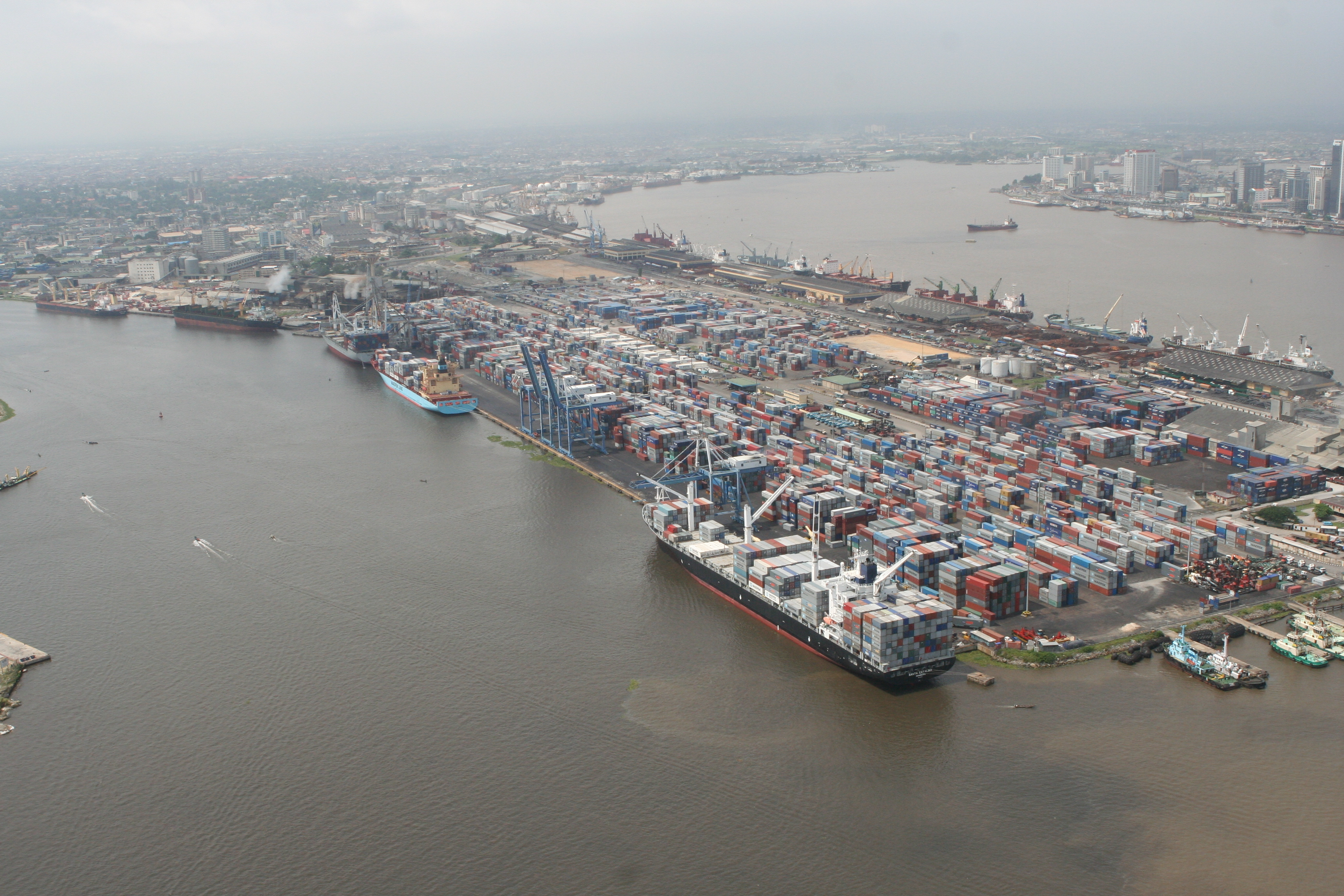
Port of Lagos, Nigeria

Port of Lagos, Nigeria

The following article, allbeit long, provides a good overview of trade facilitation developments in Nigeria. I doubt that there is a single country on the African continent that cannot draw some parallel experience contained in this article.

Trade across borders is not a new phenomenon. But the World Trade Organization is now championing the concept of trade facilitation among nations, which has been defined as simplication , harmonization, standardization and modernization of trade procedures.

Trade facilitation seeks to reduce trade transaction between businesses and government. This concept is receiving unprecedented attention globally and it is at the heart of numerous initiatives within the customs world.

The United Nations Centre for Trade facilitation and Electronic business (UN/CEFACT) in its recommendation No 4 of 1974, said trade facilitation programme ought to be guided by simplication, harmonization and standardization (of trade procedures) so that transaction becomes easier, quicker and more economical than before.

According to the body, there was need to eliminate duplication in formalities, process and procedures; align all national formalities, procedures operation and documentation with international conventions, standard and practices to develop international agreed format for practices, procedures, documentation and information in international trade.

Proponent of trade facilitation believed that if transaction cost in international trade is reduced, there could be creation of wealth, especially in developing countries where red-tapism and other procedural barriers to trade tend to be pronounced.

The organization for Economic Cooperation and Development (OECD) estimated recently that even one per cent reduction in such “hidden cost” would boost the global economy by $40 billion with most of these benefits going to the developing world. Trade facilitation therefore encourages, or perhaps requires countries to adopt means such as publishing their imports and export procedures, reducing the number of forms that importers and exporters are required to complete, allowing forms to be submitted on-line, and checking corruption at border post.

Nigeria, though a signatory to Kyoto 1974 and other convention on trade facilitation, is far from embracing the ideals of the global concept.

The president of the council of Managing Directors of Customs licensed Agents, Mr. Lucky Amiwero, said that although Nigeria was yet to comply with all the provisions of trade facilitation, it has the tools to facilitate international trade, such as the scanning machines and the e-platform.

“In Nigeria, the real cost of doing business is an impediment to trade facilitation. We have no good procedure for goods on transit to Niger and Chad. That has been taken over now by our neighboring countries. One of the key component of trade facilitation is charges which must be tied to services. We have shortcoming in that area. We are still working at cross purposes when other countries are busy harmonizing their import and export procedures”, he said.

In Nigeria, there is no one stop shop process for goods clearance as we have over 10 agencies superintending goods clearing procedure at the nation’s gateways.

“This is very bad and constitute hindrance to trade. The regulatory process is supposed to have been harmonized with other agencies to have a one stop procedures. Procedures are not published and not in line with WTO article which has to do with publication, regulation and administration of procedures. Our trading regime are expensive, our procedures are cumbersome. When others are simplifying and synchronizing their process of import and exports, our import and export procedures are lengthy. We have not been able to harmonise process and procedures and that is where we have a problem. If you still have to go through 100 per cent examination when we have the scanners, that is an impediment to trade,” Amiwero said; adding that the time spent to conclude business in Nigerian ports and border post is much higher than anywhere in the West African sub-region.

The level of corruption at the port border post is high and making them the most expensive business environment in Africa; as un-receipted charges far outweigh the official charges in the process of good clearing. Importers are still submitting hard documents instead of making use of e-devices, and going through the cumbersome process of clearing and receiving of consignments. Continue reading →

Nigerian Trade Procedures – Customs, Freight Forwarders on a warpath

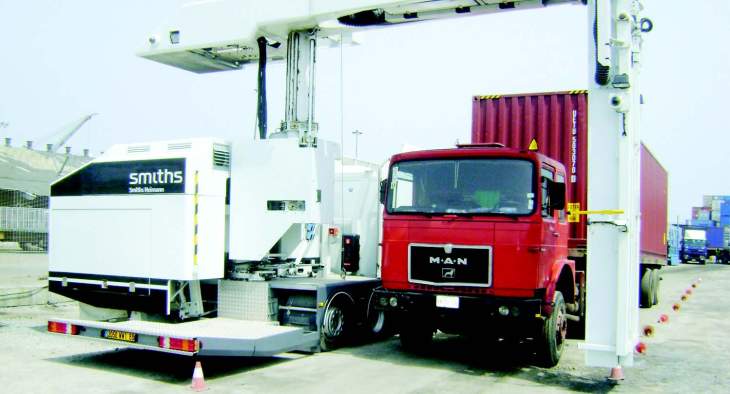
Mobile-scanner installed at Apapa Port as part of DI contract

Mobile-scanner installed at Apapa Port as part of DI contract

Destination Inspection takeover – it seems that all is not well. A stand-off between officers of the Nigeria Customs Service (NCS) and members of the freight forwarding community is festering over trade facilitation issues. The  long association between officials of the Nigeria Customs Service (NCS) and big time freight forwarders, including association leaders may have gone sour. THISDAY checks at the ports revealed that most leaders of freight forwarding associations are on the warpath with the Customs. The agents are aggrieved over what they described as high handedness on the implementation of trade policies by the Customs. They alleged that the Customs has in a bid to meet revenue targets embarked on measures that will force most traders who are mainly their clients out of business.

It is lead to believe that made some leaders of customs agents associations work against the Customs Service concerning the take-over of Destination Inspection from agencies handling the project. The Federal Government had extended the contracts of the Destination Inspection Agents (DIAs) by six months at a time that the Customs had prepared to take over the scheme. Customs had trained about 2000 officers for the scheme. The Service, it was gathered had also planned to inherit the scanning machines from the DIAs before the contract was extended. Indications are that the contracts may be further extended by more than one year at the expiration of six months. Since the extension was announced, many leaders of customs agents have not come out openly to condemn it.

Bone of Contention – When the NCS failed to introduce duty benchmark at the ports last year, the relationship between the it and freight forwarders has changed.Customs issues Debit Note (DN) to recover what is lost due in terms of under-valuation, this has often been abused as importers and their customs agents negotiate what to pay with some of the valuation officers responsible for this. So, the management of the Customs believed that the only way to address this problem was a duty benchmark which saves the importer. The idea of the benchmark was to check revenue losses as a result of under-valuation of goods coming into the country. However, the benchmark arrangement was dropped on the order of the Presidency. Since then, the Service has adopted other means to ensure that no revenue is lost, a development that has angered the clearing agents.

Duty Targets – With a revenue target of N1trillion last year, the Customs had worked hard to ensure that it meets its revenue target. The Service realised about N800bn. Freight forwarders are bitter that so many containers have been abandoned by their owners at the ports due to high-handedness by the Customs in terms of outrageous DNs on the goods. A member of National Association of Government Approved Freight Forwarders (NAGAFF) told THISDAY that the amount being issued as DN is such that many importers have been unable to pay. A top official of NAGAFF who did not want to be quoted said that it appears there is a grand plan by some officials of customs to frustrate some importers out of business by issuing outrageous DNs. “In some cases, the DN is such that the importer will be at total loss after clearing the goods. We have appealed to the management of the customs about this thing, but their officers have failed to come down on the value placed on these goods. Source: This Day (Nigeria)

Nigerian Customs to host Single Window Feasibility Conference

Single-Window-SystemThe Nigeria Customs Service (NCS) has concluded plans to hold a conference on Single Window feasibility study findings where the national single window roadmap, implementation plan and key recommendations will be analysed.

The conference will occur in Lagos from 11 to 12 December, 2012, during which organisational, financial and cost benefit analysis for the proposed single window solution will also be analysed. The conference will address issues in areas such as business process, data harmonisation, ICT readiness of stakeholders, legislation, stakeholder relations and change management.

Feedback from all stakeholders is also expected to be collected and validated at the forum for the conclusion of the feasibility study. Furthermore, the conference is designed for policy makers, government officials, business managers, analysts, service providers, representatives of international agencies working in the field of trade facilitation, members of the academia as well as experts in trade and e-business. Source: Leadership (Abuja)

EAC to punish Member States enforcing non-tariff barriers

Uganda, Malaba border crossing

Uganda, Malaba border crossing

The New Vision (Uganda) reports on a draft law which will punish countries that fail to implement agreed upon mechanisms to eliminate trade barriers has been submitted at the regional Parliament.

Jose Maciel, the TradeMark East Africa director of trade facilitation, noted that while most of the non-tariff barriers (NTBs), including road blocks and corruption have slightly declined, the proposed law in the East African Legislative Assembly, if enacted, would create the possibility of sanctions against stubborn states that do not enforce the check points. “It is important to give teeth to the system. We need to make it possible to impose sanctions for countries that do not eliminate NTBs,” said Maciel.

He was speaking at a Kenya Ports Authority (KPA) organised meeting with EAC media in Mombasa. TradeMark is a trade facilitating agency operating in the five states of East Africa. Maciel said non-tariff barriers like road blocks, which are easy to eradicate, are some of the biggest impediments to East Africa’s competitiveness.

States are not the only defaulting party to agreed upon positions on eliminating NTBs. P.J. Shah, a Mombasa entrepreneur, for instance notes that while Mombasa began 24-hour operations about three years ago, other agencies like banks and shipping lines are not operating 24 hours. The poor infrastructure such as rail and water systems, whose potential is yet to be optimised, also increase trade costs. Other NTBs include weighbridges and corrupt state enforcement agencies.

Regional trade experts and facilitation agencies such as Trade Mark East Africa agree that NTBs are known, and numerous researches have been done about them and their impact on trade. Although some efforts have been made to eradicate or reduce the salient ones such as road blocks, overall NTBs remain a major trade impediment.

Two thirds of goods are shipped in containers. TradeMark estimates that 20% of annual shipments face NTBs. TradeMark is also targeting to work with regional governments to harmonise 20 standards in a year, amongst the other efforts at making EAC more competitive.

During the Mombasa meeting, it was agreed that because sometimes there seems to be no communication between the different government agencies such as the Kenya Revenue Authority (KRA) and KPA, hinterland states suffer.

There should be a single authority that oversees them all and ensures enforcement. There are about 24 road blocks between Mombasa and Uganda’s border and another 21 in Uganda, four in Burundi and two in Rwanda. There are also 12 weighbridges in Kenya, five in Uganda and two in Rwanda.

“A well run efficient port can help shape economic growth and performance of the economy,” said Antony Hughes, a TradeMark official.

Mombasa handles about 20 million tonnes of cargo, 85% destined for Uganda and other hinterland states. Transit states always suffer the biggest brunt of NTBs and poor flow of information regarding imminent disruptions at the border. This was witnessed during the recent cash bond imposed by KRA that caught Uganda traders unaware, leading to massive clog ups of cargo and huge loss of value.

Comment: It appears that regional bodies such as the EAC are to get extraordinary powers to enforce rules over sovereign states. Would be interesting to learn whether these member states voted for such action, or if it is rather the ideal and persuasion of ‘foreign’ interests.

Building hard and soft infrastructure to minimise regional costs

I post this article given it ties together many of the initiatives which I have described in previous articles. The appears to be an urgency to implement these initiatives, but the real question concerns the sub-continent’s ability to entrench the principles and maintain continuity. At regional fora its too easy for foreign ministers, trade practitioners and the various global and financial lobbies to wax lyrical on these subjects. True there is an enormous amount of interest and ‘money’ waiting to be ploughed into such programs, yet sovereign states battle with dwindling skills levels and expertise. Its going to take a lot more than talk and money to bring this about.

South Africa is championing an ambitious integration and development agenda in Southern Africa in an attempt to advance what Trade and Industry Minister Rob Davies describes as trade and customs cooperation within the Southern African Customs Union (SACU), the Southern African Development Community (SADC) and other regional trade organisations.

Central to pursuing this intra-regional trade aspiration are a series of mechanisms to combine market integration and liberalisation efforts with physical cross-border infrastructure and spatial-development initiatives. Also envisaged is greater policy coordination to advance regional industrial value chains. “Trade facilitation can be broadly construed as interventions that include the provision of hard and soft infrastructure to facilitate the movement of goods, services and people across borders, with SACU remaining the anchor for wider integration in the region,” Davies explains.

This approach is also receiving support from the US Agency for International Development (USAid), which recently hosted the Southern African Trade Facilitation Conference, held in Johannesburg.

Trade programme manager Rick Gurley says that virtually every study on trade in sub- Saharan Africa identifies time and cost factors of exporting and importing as the most significant constraints to regional trade potential. Limited progress has been made by SADC member States and SACU partners to tackle the factors undermining trade-based growth, limiting product diversification and increasing the price of consumer goods, including of foodstuffs. However, far more would need to be done to realise the full potential of intra-regional trade.

Regional Alliance
One high-profile effort currently under way is the Tripartite Free Trade Area (T-FTA), which seeks to facilitate greater trade and investment harmonisation across the three existing regional economic communities of the SADC, the Common Market of Eastern and Southern Africa and the East African Community.

The existing SADC FTA should be fully implemented by the end of the year, with almost all tariff lines traded duty-free and, if established, the T-FTA will intergrate the markets of 26 countries with a combined population of nearly 600-million people and a collective gross domestic product (GDP) of $1-trillion. At that size and scale, the market would be more attractive to investors and could launch the continent on a development trajectory, Davies avers. It could also form the basis for a later Africa-wide FTA and a market of some $2.6-trillion.

However, as things stand today, intra- regional trade remains constrained not merely by trade restrictions but by a lack of cross-border infrastructure, as well as poor coordination and information sharing among border management agencies such as immigration, customs, police and agriculture.Cross-national connectivity between the customs management systems is also rare, often requiring the identical re-entry of customs declarations data at both sides of the border, causing costly and frustrating delays.

USAid’s regional economic growth project, the Southern African Trade Hub, is a strong proponent of the introduction of several modern trade-facilitation tools throughout the SADC – a number of which have already been successfully pioneered. These tools, endorsed by the World Customs Organisation (WCO) Framework of Standards, which offers international best-practice guidelines, are aimed at tackling the high costs of exporting and importing goods to, from, and within Southern Africa, which has become a feature of regional trade and discouraged international investment.

Bringing up the Rear
A country’s competitiveness and the effec- tiveness of its trade facilitation regime are measured by its ranking on World Bank indices and, with the exception of Mozambique, Southern African States perform poorly – with most in the region settling into the lowest global quartile of between 136 and 164, out of a total of 183. “Our transaction costs in Africa across its borders are unacceptably high and inhibit trade by our partners in the private sector,” says WCO capacity building director Erich Kieck. “We need our States to develop good ideas and policies, but the true test lies in their ability to implement them,” he notes.

He adds that not only does trade facilitation require efficient customs-to-customs connectivity, but also demands effective customs-to-business engagement, adding that, while customs units are responsible for international trade administration, they are not responsible for international trade. “The private sector is the driver of economic activity and international trade, and government’s responsibility is to understand the challenges faced by the business community and develop symbiotic solutions,” Kieck notes.

Despite the establishment of regional trade agreements and regional economic communities in Southern Africa, many partner- ships have failed to deliver on their full potential to increase domestic competitiveness.

In a report, African Development Bank (AfDB) senior planning economist Habiba Ben Barka observes that, despite the continent’s positive GDP growth record – averaging 5.4% a year between 2005 and 2010 – it has failed to improve its trading position or integration into world markets. In 2009, Africa’s contribution to global trade stood at just under 3%, compared with nearly 6% for Latin America and a significant 28% for Asia.

“Since 2000, a new pattern of trade for the continent has begun to take centre stage, as Africa has witnessed an upsurge in its trade with the emerging Brazil, Russia, India and China economies. Overall, Africa is trading more today than in the past, but that trade is more with the outside world than internally,” says Ben Barka. She adds that while many African regional economic communities have made some progress in the area of trade facilitation, much greater effort is required to harmonise and integrate sub-regional markets.

To address enduring trade barriers, consensus among business, government and trade regulators appears to lean towards the adoption of one or a combination of five facilitation tools. These include the National Single Window (NSW), the One-Stop Border Post (OSBP), cloud-based Customs Connectivity, Coordinated Border Management (CBM) and Customs Modernisation Tools.

A National Single Window
NSWs connect trade-related stakeholders within a country through a single electronic-data information-exchange platform, related to cross-border trade, where parties involved in trade and transport lodge standardised trade-related information or documents to be submitted once at a single entry point to fulfil all import, export and transit-related regulatory requirements.Mauritius was the first SADC country to implement the NSW and consequently improved its ranking on the ‘Trading Across Borders Index’ to 21 – the highest in Africa. It was closely followed by Ghana and Mozambique, which have also reported strong improvements.

Developed in Singapore, the benefits of government adoption include the reduction of delays, the accelerated clearance and release of goods, predictable application, improved application of resources and improved transparency, with several countries reporting marked improvement in trade facilitation indicators following the NSW implementation.

In South Africa, the work on trade facili-tation is led by the South African Revenue Service (SARS), which focuses on building information technology (IT) connectivity among the SACU member States, and strengthen- ing risk-management and enforcement measures. However, SARS’ approach to the NSW concept remains cautious, Davies explains. “SARS has considered the viability of this option as a possible technological support for measures to facilitate regional trade, but considers that this would fall outside the scope of its current approach and priorities in the region,” he said.

One-Stop Border Posts
As reported by Engineering News in December last year, effective OSBPs integrate the data, processes and workflows of all relevant border agencies of one country with those of another, which culminates in a standardised operating model that is predictable, trans- parent and convenient. An OSBD success story in Southern Africa is the Chirundu border post, where a collaboration between the Zambia and Zimbabwe governments has culminated in a single structure, allowing officers from both States to operate at the same location, while conducting exit and entry procedures for both countries.

Launched in 2009, this OSBP model is a hybrid of total separation, joint border operations and shared facilities in a common control zone. Implementation of the model has reduced clearance times to less than 24 hours, significantly reduced fraudulent and illegal cross-border activity, enabled increased information sharing between border agencies and reduced the overall cost of export and import activities in the area.

Earlier this year, former South African Transport Minister Sibusisu Ndebele indicated that Cabinet was looking into establishing a mechanism that would bring all border entities under a single command and control structure to address the fragmentation in the country’s border operations, particularly at the high-traffic Beitbridge post between South Africa and Zimbabwe. “The ultimate vision is to create one-stop border operations to facilitate legitimate trade and travel across the borders,” he said.

Customs Connectivity and Data Exchange
Improved connectivity between customs limbs in sub-Saharan Africa has perhaps made the most indelible strides in the region, with improved IT connectivity between States identified as a priority by Sacu.

This includes customs-to-customs inter- connectivity, customs-to-business inter- connectivity and interconnectivity between customs and other government agencies. SACU members have agreed to pursue the automation and interconnectivity of their customs IT systems to enable the timely electronic exchange of data between administrations in respect of cross-border movement of goods. “As a consequence of this acquiescence, we have identified two existing bilateral connectivity programmes as pilot projects to assess SACU’s preferred connectivity approach, cloud computing between Botswana and Namibia and IT connectivity between South Africa and Swaziland,” says SACU deputy director for trade facilitation Yusuf Daya. He adds that a regional workshop was recently convened to explore business processes, functions, data clusters and the application of infrastructure at national level to improve and develop intra-regional links.

Coordinated Border Management
The SADC has been a strong proponent of CBM efforts in the region, which promotes coordination and cooperation among relevant authorities and agencies involved in, specifically, the protection of interests of the State at borders. “The union has drafted CBM guidelines for its members on implementation, based on international best practice, and has received indications of interest from several member States,” explains SADC Customs Unit senior programme officer Willie Shumba.He adds that CBM is a key objective of regional integration, enabling the transition from an FTA to a customs union and, eventually, to a common market, through effective controls of the internal borders.

Customs Modernisation
South Africa’s customs modernisation initiative is well advanced and came about following Sars’ accession to the WCO’s revised Kyoto Convention in 2004, which required customs agencies to make significant changes to it business and processing models. These changes included the introduction of simplified procedures, which would have fundamental effects on and benefits for trade and would require a modern IT solution.

Since its inception, the SARS Customs Modernisation Programme has gained tremendous momentum, with amendments to the Passenger Processing System and the replacement of SARS’s Manifest Acquittal System in the Automated Cargo Management system. Further adjustments were made to enable greater ease of movement of goods, faster turnaround times and cost savings, as well as increased efficiency for SARS. This phase included the introduction of an electronic case-management system, electronic submission of supporting documents, the centralisation of back-end processing in four hubs and an electronic release system and measures to enhance the flow of trucks through borders – in particular at the Lebombo and Beitbridge borders.

Proper Planning
AfDB’s Ben Barka warns that, prior to the implementation of any border improvement efforts by countries in Southern Africa, a thorough analysis and mapping of each agency’s existing procedures, mandate and operations should be undertaken.“Based on these findings, a new set of joint operational procedures need to be agreed upon by all involved agencies and must comply with the highest international standards,” she says.

Development coordination between States is essential, as the largest disparity among regional groupings, in terms of intra-regional trade, is clearly attributable to their differentiated levels of progress in various areas, including the removal of tariffs and non-tariff barriers, the freedom of movement of persons across borders and the development of efficient infrastructure. Source: Engineering News.