Tobacco in South Africa

smoke-cigaretteCigarette volume sales increase in 2011 – Retail volume sales grew by 1% in 2011, following declines throughout the review period. Retail value sales grew significantly due to a general price increase to cater for taxation increases, as well as rising production costs for manufacturers.

Porous borders continue to influence the growth of illicit cigarette sales – Volume sales of illicit cigarettes continued to grow during 2011, despite efforts by the police and tobacco industry stakeholders to combat illicit trade. Porous borders have been identified as the key factor behind the rise in the amount of illegal cigarettes being smuggled into the country. The Beitbridge border post between South Africa and Zimbabwe was identified as the main point of entry for illicit cigarettes from Zimbabwe.

High import duties restrict the growth of the cigars category – The performance of the cigars category remains suppressed due to high import duties on all cigars. The unit price on most cigars increased significantly in 2011 to accommodate import duty increases. Local distributors were reluctant to import new cigar brands due to a low turnover for existing brands. Consumption of cigars declined in 2011 due to higher unit prices for leading brands, with only festive seasons seeing some respite.

Consumers continue to favour buying tobacco products from supermarkets – The supermarkets channel remains the major point of access for most tobacco products in South Africa. Supermarkets tend to sell tobacco products at relatively low profit margins when contrasted with other channels, such as tobacco specialists. With the rising cost of living, smokers still prefer to use supermarkets to buy tobacco products due to the lower prices.

Retail volume sales expected to decline over the forecast period – Slower but relatively stable growth is expected for retail plus illicit volume sales over the forecast period, however retail sales alone are expected to decline. Category performance is expected to be restricted by legislative restrictions, such as a ban on the advertising of tobacco products in any way other than at points of sale. The Government of South Africa is also considering a total ban on the display of tobacco products at points of sale. Thus, retail volumes are expected to decline, while illicit sales will continue to rise during the forecast period.

For a meagre sum of US$1,900 why not purchase the full report Discover the latest market trends and uncover sources of future market growth for the Tobacco industry in South Africa with research from Euromonitor‘s team of in-country analysts. Find hidden opportunities in the most current research data available, understand competitive threats with detailed market analysis, and plan your corporate strategy with expert qualitative analysis and growth projections. If you’re in the Tobacco industry in South Africa, this research will save time and money, empowering informed, profitable decisions – so the blah says.

Source: Euromonitor.com

Transgenic tobacco – an inexpensive cure for rabies?

New research has found that tobacco plants can be genetically modified to produce antibodies against the rabies virus. (Source - Gizmag.com)

New research has found that tobacco plants can be genetically modified to produce antibodies against the rabies virus. (Source – Gizmag.com)

We are familiar with the tobacco plant being harvested to create products that damage our health, but a new study from the Hotung Molecular Immunology Unit at St George’s University in London has shown that tobacco plants can be genetically modified to produce rabies antibodies. It’s hoped that the research will deliver a safe, inexpensive way of treating rabies in developing countries.

If untreated, rabies can infect the central nervous system and lead to death. According to the World Health Organization, rabies occurs in more than 150 countries and territories around the world, killing 55,000 people every year, mostly in Asia and Africa. Treating it with human rabies immunoglobulin (HRIG) is expensive, a factor which the St George’s researchers believe can be addressed using this new approach.

The new study involved “humanizing” the genetic sequences for the murine monoclonal antibody – an antibody found in rodents that has been found to immunize against rabies – so that it could be tolerated by people. The tobacco plant was then turned into a “production platform” to carry the antibody.

The antibody produced from the genetically altered (or transgenic) plants was then investigated for its impact on rabies. It was found to be effective in treating a broad range of rabies viruses by preventing the virus from attaching itself to nerve endings around the bite, which stops it from traveling to the brain through the nerves.

“An untreated rabies infection is nearly 100 per cent fatal and is usually seen as a death sentence,” says St George’s PhD researcher Leonard Both. “Producing an inexpensive antibody in transgenic plants opens the prospect of adequate rabies prevention for low-income families in developing countries.”

The findings could lead to further research involving other plants, although tobacco remains an attractive proposition as it is not a food crop. The study was recently published in The FASEB JournalSource: St George’s University

While health advocates and tree huggers will be delighted with this development, it will hardly generate sufficient opportunity for ‘real’ tobacco farmers. Secondly (and most importantly), those governments who are pushing for stringent tobacco legislation need to realise that their ‘cash crop’ and revenue income by-product is about to dry up…..how else are they going to extort much-needed tax revenues?

Hijackers bleed cigarette exporters

While the world’s health authorities rally for legislation outlawing or at least curbing tobacco abuse, it seems there is a world of intrigue deep in the heart of the tobacco trade. 

Zimbabwe is investigating possible industrial espionage amid reports that South African tobacco firms are hiring hijackers to pounce on export cigarette consignments in transit to that country. In the past year or so, indigenous producers exporting to South Africa lost an estimated R100 million worth of cigarettes to armed robbery syndicates. Among the affected companies are Kingdom, Savanna Tobacco, Breco (Fodya), Cutrag, Trednet and Chelsea.

Savanna Tobacco has confirmed losing cigarettes worth over R18 million through hijackings and robberies while their warehouse in SA has been broken into several times. Only British American Tobacco Company has been spared. At least eight Zimbabweans were arrested at Savanna Tobacco in Harare on suspected espionage. Cosygene Dekeya, a former army military intelligence operative and Edmore Muronzerei appeared in court last week.

Investigations by The Herald showed that the Tobacco Institute of South Africa contracted a security firm, Forensic Security Service, to monitor Zimbabwean cigarette manufacturers, whose brands are giving their South African counterparts stiff competition. Stephen Botha, a former apartheid military supremo owns Forensic Security Services, the company that allegedly recruited spies within the workforce of Zimbabwean cigarette manufacturers. The spies allegedly supply consignment export details, enabling the cartel to track, intercept and hijack. FSS is said to have engaged a local business mogul (name supplied) who owns one of the largest courier service companies to co-ordinate the spies and their payments. The mogul’s trucks have also been hijacked in what might turn out to be inside jobs. Local (Zimbabwean) companies now suspect BAT of being behind the formation of TISA, which has since been regionalised.

Savanna Tobacco executive chairman Mr Adam Molai said it was shocking that South Africans were infiltrating local security organisations to commit economic crimes and bleed the economy. “It is deplorable, you cannot have foreign agencies working for our competitors to distabilise our operations in Zimbabwe. We hope our authorities will ensure that issues of this nature are dealt with accordingly,” said Mr Molai.

Trednet administrative manager Mr Graham Acutt said his company had reduced production by 70 percent. “We are aware of the under cover operations for quite some time now. This is tantamount to industrial espionage and it is highly illegal and frowned upon the world over. Imagine people spying on you and following your consignment. It becomes sensitive and clients will stop buying your product,” he said.

Mr Acutt said he was aware that police were investigating and he was willing to assist as much as he could. “We need more help from the authorities in Zimbabwe to investigate those who are actually behind this. We will assist where we can. This espionage has compromised our ability to export and obviously to earn foreign currency for the country,” he said.

Breco, which is now trading as Fodya said their market intelligence has over time indicated that there were clandestine activities being undertaken by some organisations to disrupt their business. “We understand most companies in this industry experienced this form of activity in one form or another,” said Breco in an e-mail to The Herald. “What is most alarming is that some of the organisations involved in these activities are externally-based and being assisted by local Zimbabweans. If the activities of these institutions or organisations are the real basis for our reduced capacity, then it is illegal,” it said. Source: The Herald (Zimbabwe)

Tobacco duty-free concessions changed

For ‘smoking’ travellers to Australia, please read up on the new duty-free concessions before you decide to stock up.

The reduced tobacco duty-free limit came into effect on 1 September 2012. It was announced in the 2012-13 Federal Budget that the duty-free concession on tobacco products would change.

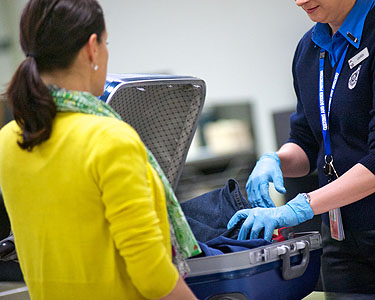
Travellers aged 18 years or over can bring 50 cigarettes or 50 grams of cigars or tobacco products duty-free into Australia with you. All tobacco products in accompanied baggage are included in this category, regardless of where or how they were purchased.

Be aware that if you exceed Australia’s duty-free limits, duty and tax will apply on ALL items of that type (general goods, alcohol or tobacco), not just the goods over the limit. The general goods and alcohol duty-free concessions remain the same. Source: Australian Customs Service

Australia’s high court recently upheld the government’s decision to implement a law which requires cigarettes to be sold in olive green packets, with graphic images warning of the consequences of smoking. The law is to come into effect on 1 December 2012. The South African authorities appear to be following the same route and are currently ‘testing’ the concept of the olive green packets (what’s there to test?). Despite the obvious reaction of the Tobacco Inc. to the new law, it is not difficult to see that it will make anti-counterfeit enforcement even more difficult for authorities. Perhaps the UK liquor boys are ahead in their thinking – import liquor in bulk and bottle it in the UK, this way you’re in charge of the packaging and labelling. Health officials are definitely more concerned with health than profit.

WHO Tobacco Proposal – Threatened farmers slam ‘outreagous recommendations’

FTW Online recently reported that representatives of hundreds of thousands of African tobacco farmers are gathering at the International Tobacco Growers Association Africa Regional Meeting this week to discuss what they see as outrageous recommendations being developed by international regulators that they believe would destroy their livelihoods.

Farmer leaders attending the meeting from Kenya, Malawi, South Africa, Tanzania, Zambia, and Zimbabwe will focus on the recommendations provided by the Framework Convention on Tobacco Control (FCTC) working group on Articles 17 & 18. The FCTC originally recommended that governments of these countries should help tobacco farmers find viable economic alternative crops, assuming that tobacco demand will decline.

Very little research on alternative, economically viable crops has been undertaken and as the group recognizes, any future research will require lengthy time trials. “However, the FCTC has now put forward unreasonable and absurd measures to phase out tobacco production, without offering the vast African farming community any viable fall-back solutions,” the farmers claim.

Numerous countries, such as Malawi, Zimbabwe, Zambia and Tanzania now face the prospect of seeing millions of jobs lost and a huge decline in the export of tobacco. Tobacco cultivation is critical for the economy in these countries and one of the few agricultural activities to have remained buoyant during the recent worldwide economic crisis. The latest guidelines drafted by bureaucrats in Geneva threaten to undo that for no clear benefit.

“These guidelines are just plain wrong whichever way you look at them. Nobody has explained to me how banning some cigarette products and ignoring others will have any benefit for people’s health,” said Roger Quarles, President of the International Tobacco Growers Association (ITGA). “It will just be a disaster for those growers who grow leaf for traditional blended products.” The ITGA represents more than thirty million tobacco growers across Africa, Asia, Europe, North America and South America. “We call on governments all over the world to support growers by adopting a common sense approach and discarding these irrational and potentially economically devastating guidelines.”

The Case of Malawi

The association says switching from tobacco in Malawi to other crops is unrealistic as it would require huge investments, pointing out that tobacco is by far cheaper to produce and benefits more people than most of the next best alternatives. “For example, investment required for a farmer in Malawi to grow two hectares of flowers is equivalent to the investment required to grow 1 000 hectares of burley tobacco. The difference is that 1 000 hectares of burley tobacco provides a livelihood for 500 farmers. So, given that the average farmer in Malawi only has two hectares at his disposal, switching to flowers is simply unrealistic”.

ITGA says one crop that has been recognised as being more profitable than tobacco in Malawi and other tobacco-growing countries is paprika. But the association says world demand for paprika is only 120 000 tonnes. “A single country like Zimbabwe could cope with this demand but the result would be overproduction of paprika and the impact on exiting paprika growers would be catastrophic,” it says. The association also argues that a farmer that grows burley tobacco cannot switch to Virginia tobacco because Virginia tobacco has an industrial curing process requiring huge investment and needs a much greater area than burley “in order to be profitable.”

Tobacco is Malawi’s most important cash crop, accounting for nearly 60 percent of total export earnings and makes up 13 percent of the country’s gross domestic product (GDP). It is also the single largest employer, with more than two million people directly or indirectly relying on the crop. With such an influence, paralysing the industry could cripple the economy in a way that may take the country decades to recover. Sources: FTW Online, TIMSA, and Buisness Wire.

 Related articles

African countries top tobacco exports

African countries have taken up a combined 43 percent of tobacco exports with South Africa topping the list, the Tobacco Industry and Marketing Board has said. This is an increase from the same period last year when African countries consumed only 18 percent of the total exports. Latest statistics from TIMB show that current seasonal tobacco exports to the Far East rose by 4 percent from last season’s 26 percent.

The increase in exports has been attributed to improved exports in China. The Middle East, which used to take more than 15 percent of total tobacco exports, made a huge slump to 2 percent in March this year.According to TIMB, this is a result of an 81 percent decrease in exports to the region. United Arab Emirates is the major player in the region with current monthly imports pegged at 133 000kgs.The UAE consumes cutrag tobacco, which has firmed up both in volume and price over the past two years.

Exports to the European Union have decreased from 36 percent to 18 percent. As at April 13, South Africa had imported 2,4 million kg of tobacco worth US$7,5 million from Zimbabwe at an average price of US$3,16 per kg followed by China which bought 2,3million kg at US$US$6,35 per kg and Belgium 1,6million kg at US$1,43 per kg.

Hong Kong was offering the highest price buying 415 800 kg of tobacco at US$6,70 per kg.Countries also offering high prices were Poland US$6,62 per kg, and Azerbaijan which bought 19 800kg at US$6 per kg. Zimbabwe exports tobacco to African countries which include Mozambique, Angola, Kenya, Congo, Malawi, Tanzania and Lesotho.

Tobacco stocks on hand are expected to go up as a result of increased stocks from the current crop.Flue cured tobacco imports remained stagnant at 515 152kg at an average price of US$2,70 per kg.

However, seasonal import permits issued increased to almost 12 million kgs as a result of authorisation granted to import 11 million kgs of tobacco. Tobacco production has been on the increase due to the favourable prices being offered on the market. The land reform programme has also contributed towards the increase in production with more than 80 percent of tobacco producers coming from the A1 and small-scale sectors. Source: The Herald (Zimbabwe).

For related information visit: All you need to know about Tobacco

What is the Framework Convention on Tobacco Control?

The trade in tobacco products is long recognised for its links to the criminal underground and illicit goods.Notwithstanding the efforts of health bodies, it seems that the ‘habit’ is on the increase, and so too is the trade in illicit tobacco products. Enforcement officers will find the Draft protocol to eliminate illicit trade in tobacco products of interest to their profession.

The Framework Convention on Tobacco Control (FCTC) is the world’s first global public health treaty. It is also the first treaty negotiated under the auspices of the World Health Organization (WHO). The treaty entered into force in February 2005. It was signed by 168 of the 192 WHO member states and more than 170 WHO member states have become parties to the convention. List of signatories and parties to the WHO FCTC.

The FCTC provides an internationally co-ordinated response to combating the tobacco epidemic, and sets out specific steps for governments addressing tobacco use, including to:
•    Adopt tax and price measures to reduce tobacco consumption;
•    Ban tobacco advertising, promotion and sponsorship;
•    Create smoke-free work and public spaces;
•    Put prominent health warnings on tobacco packages;
•    Combat illicit trade in tobacco products.