Namport container terminal takes shape

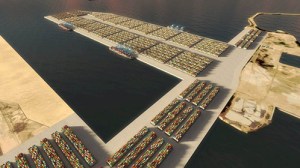
namport-expansionConstruction of the N$3 billion container terminal at Walvis Bay is taking shape with over 1.5 million cubic metres of land reclaimed from the Atlantic Ocean. China Harbour Engineering Company (CHEC), which is constructing the terminal, says the work is on schedule for completion in 2017.

“We understand the importance of the project not only for Namibia but for Africa as a continent and therefore we are fully committed to deliver a state-of-the-art project at the end,” said CHEC’s acting project manager, Feng Yuan Fei.

The expansion includes the construction of a modern container terminal, adding 600m of quay length to the existing 1500m and 650 000 TEU (twenty-foot equivalent unit) per annum capacity to the existing 350 000 TEU. The Namibia Port Authority (Namport) port engineer, Elzevir Gelderbloem, said Namport is happy with the progress made so far.

“It took us nine years to get to the construction phase of the project. Such projects take time to implement and we hope our next projects will be much quicker. However, we have no dry land to expand as the harbour is completely boxed in by the town, but with the current project we are creating more land in water. This type of expansion is unique and feasible for a container terminal.

“It’s the kind of construction that has never been used in the country but will improve our port services at least until 2020 when we will have to undergo the same process again,” he said.

Reclamation of the land is scheduled for completion in February next year, after which the next phase is to complete the quay walls by April and then the construction of revetment by August in the same year. Erection of revetment involves the layering of different rock such as armour core rock, mixed filter layer, geotextile, and crushed stone layers to create a wall around the reclaimed land. More than 400 000 cubic metres of rock will be needed for revetment.

Feng said he was confident they would comfortably meet the deadline to complete the revetment in August next year. “We also created a sandbag cofferdam, which prevents the dredged material and muddy water from overflowing during the process of reclamation,” he said. Source: New Era newspaper

New Singapore Mega Port Will Have 20 Deep Water Berths

TArtist's Illustration -DEME Grouphe Maritime and Port Authority of Singapore (MPA) has signed a milestone contract for the construction of the first phase of a new $1.82 billion mega port in Singapore.

The contract was awarded to a joint venture between the Dredging International Asia Pacific Ltd., a subsidiary of Belgium’s DEME Group, and South Korea’s Daelim.

The project, formally known as the Tuas Terminal Phase 1 Reclamation, Wharf Construction and Dredging Project, entails the construction of a new port terminal with 20 deep-water berths having a total capacity of 20 million twenty-foot equivalent units (TEUs) per annum. The Joint Venture will be responsible for the construction of an 8.6-kilometer quay wall and its foundation, the dredging of the fairway and basins, as well as the reclamation of 294 hectares of new land.

This major project is expected to complete within six years, and has been awarded to the Joint Venture for a Contract value of SGD 2.42 billion (or approximately US $1.82 billion).

Beginning in 2030, the Government of Singapore will start to consolidate its container port facilities at Tuas. New technology will be introduced at the greenfield site to create a hypermodern, innovative and largely automated logistics hub. The consolidation will also free up existing port land near the city centre for future urban redevelopment.

The Tuas Terminal Project is anticipated to ensure that Singapore’s leading global hub port continues to have sufficient capacity in the long term to meet industry demand.

Singapore ranks as the world’s second busiest container port handling 33.9 million 20-foot containers in 2014, according to the MPA. The Port of Shanghai ranks as number 1 with 35.2 million TEU in 2014. Source: Gcaptain.com

Port of Shanghai – extends its lead as world’s busiest container port

Port of Shanghai, China [Picture: DaliyMail.co.uk]

Port of Shanghai, China [Picture: DaliyMail.co.uk]

Shanghai retained its title as the world’s busiest container port for a fifth consecutive year after widening the gap with its closest rival Singapore.

Singapore handled 33.9 million 20-foot containers last year, according to a statement posted on the Maritime & Port Authority of Singapore’s website dated Jan. 16. Last month, Shanghai said it expects to process about 35.2 million boxes in 2014. A year before, the gap between the two ports was about 1 million boxes.

Shanghai, Shenzhen and other ports in China are dominating the global container-shipping market while the facility in Ningbo overtook South Korea’s Busan last year as the world’s fifth-busiest harbor. Seven of the world’s 10 top container ports were in China in 2013, with Hong Kong coming in fourth.

Shipping companies are adding larger container ships to meet demand as economic growth helped consumers to spend more money on clothes and food. Global trade last year probably grew 3.8 percent, according to the International Monetary Fund.

Global containerized trade reached 124 million boxes in the first 11 months of 2014, an increase of 4.3 percent from 118.9 million a year ago, according to Container Trade Statistics Ltd.

Geneva-based Mediterranean Shipping Co., the world’s second-largest container shipping company, currently operates the biggest vessel that can carry 19,224 boxes between Asia and Europe. Last year, China Shipping Container Lines Co. launched a ship that could carry about 19,100 containers. Source: Bloomberg/GCaptain

Unusual Container Weight Fraud Uncovered

containerThe International Maritime Bureau has been alerted to a fraud involving a shipping container’s weight and size that is atypical of what one might out of a container weight fraud case; the tare weight, or unladen weight of the container itself was unrealistically falsified and much higher than the actual, correct weight of the container.

The IMB reports that the incident concerned a container of aluminium scrap in which the information outside the box was tampered with to show false weight and size. The fraud was uncovered by an IMB member after being notified of a significant weight shortage on the container, which arrived in the Far East from the Middle East.

During the investigation, the IMB member noted that the tare weight of the container, as shown on its door – and used by the shipper – was 3,680kg, while the cube, also shown on the door, was 2,700 cubic feet. While the numbers displayed were entirely acceptable for a 40 foot container, the box in question was a 20 foot one, according to the IMB. The shipper has since confirmed that the correct tare weight for the container should have been 2,200kg, much lower than what was declared.

An examination of the photos taken when the container was loaded revealed that the part of the door on which the figures were displayed was a slightly different color, which leads to the conclusion that the door had been repainted at some point, and the new, false figures were added after that. The IMB notes is not known when this was done and it is unlikely to be an isolated case.

The IMB says it has not come across a case before where a container has been repainted with incorrect weight and size information that in hindsight clearly cannot be correct for a 20 foot container, however it does have knowledge of a case where a label was placed over the container number of a stolen container to disguise the theft. The IMB says that this would be a more logical deception since carriers tend to focus on the container numbers themselves, and rely on the shipper to provide any other information required.

The IMB asks that others who detect similar container information tampering to report it so that it can attempt to establish a pattern that might indicate who is responsible and can issue suitable warnings to the industry if it proves widespread in the future.

Apart from being a fraud, mis-declaring the weight of containers can also pose a danger to the vessel and crew, as mis-declared container weights remains a contributing factor to incidents involving containers lost at sea.

This month, the International Maritime Organization’s Maritime Safety Committee is scheduled to adopt amendments to the International Convention for the Safety of Life at Sea chapter VI to require mandatory verification of the gross mass of containers, either by weighing the packed container or by weighing all packages and cargo items and adding the tare mass, in turn boosting the safety of container ships and crew.

The IMB stresses that in this case, the container owner has denied responsibility and the IMB member doubts its supplier was involved. Source: emaritimeexchange.com

Container traffic to hit 1 billion TEU in 2020

-Dinesh Sharma, senior research manager at Drewry Maritime Advisors, says that global container throughput would rise between 5% and 5.5% a year up to the end of the decade. Speaking at a Ports & Terminals seminar in London, he cited ports in Africa and northern China as registering the strongest growth.

In his outlook, Sharma projected a 2020 global throughput volume of at least 1 billion TEU, up from 623 million TEU in 2013, with Asia accounting for 65% (650 million TEU) and transhipment traffic 32% (320 million TEU) of the total. This, he explained would compare with shares of 56% and 22.5% (140 million TEU), respectively, in 2013.

Within Asia, Sharma argued that China would become increasingly significant over the next seven years, citing that the country’s share of global container-handling activity would rise from 30% in 2013 to 40% in 2014. In 2000, China’s ports processed just 16% of a world total of 235 million TEU, a figure that reveals the spectacular growth that has occurred in the Asian country since it joined the World Trade Organisation in November 2001.
In a further assessment of the future, Sharma said the percentage of empty boxes handled would not change and would remain at about the 20% (200 million TEU) level in 2020.
Other interesting facts presented by the analyst showed that 22,000 TEU-sized ships would be in operation in 2020, the world population of super post panamax cranes would number over 2,000 units, compared with 1,160 units in service in 2013, and that the leading four global terminal operating companies would control an estimated 41% of all containers handled. Source: World Cargo News

Tanzania’s Bagamoyo $11bn megaport to get flying start

BagamoyoThe government of Tanzania has announced that successful negotiation with Chinese officials will allow work to start on the $11bn Bagamoyo megaport this year, rather than January 2015, as originally scheduled.

The port is to be developed by China Merchants Holdings International, the world largest independent port operators. In the first phase of work, the quay, the container yards, the cargo terminals and all dredging work will be completed by 2017.

These facilities will then be expanded in stages over a period of 30 years, to give an eventual capacity of 20 million containers a year. This is likely to make the port the largest on the east coast of Africa, with a capability to handle roll on, roll off ships and container vessels with a 10,000 TEU capacity (these is, “new Panamax” ships that are too large to fit in the Panama Canal).

Underwriting the development is the discovery of some 200 trillion cubic feet of natural gas, which is going to make the country a leading exporter over the next decade.

Bagamoyo is seen as a Tanzania’s trump card in the sharpening struggle with other east African companies for foreign investment, export markets, industrial development and business from landlocked countries in the interior.

In particular, Tanzania is competing with the Kenyan port of Mombasa for investment and the handling of exports from Uganda, Burundi, Zambia and Rwanda. Although it looks to be in the lead in terms of port infrastructure, Kenya has taken the lead in the development of effective rail links, and Mozambique is closer to bringing its liquid natural gas deposits to market.

When completed, the port will cover about 800 hectares. Around it will be a 1,700 hectare special economic zone. The intention is to encourage set up industries that process or refine Tanzania’s raw materials, such as coffee roasting or ore processing, thereby capturing more of the value chain.

Adelhelm Meru, the director general of the Export Processing Zones Authority, which will be in charge of the zone, told journalists in Dar es Salaam recently that he wanted to attract “industries specialising in value-addition of agricultural products” which he said had been a leading area of investment under the EPZA for the past six years. He said about 55% of industries established under the EPZA dealt in agricultural and textile processing.

The zone is expected to be fully developed by 2024. Source: Global Contruction Review

Global container ports could handle 840m TEU a year by 2018

singapore-port

Port of Singapore

Projected throughput four years from now compares with 642m teu in 2013 and 674m teu projected for this year. The 2018 projection is double the 2004 throughput figure of 363m teu.

The combination of faster traffic growth and strong profit levels is attracting aggressive new players to enter the container terminal-operator business , according to the 11th Global Container Terminal Operators Annual Review and Forecast report published by shipping consultancy Drewry. It says Africa and Greater China are the regions that will see the most rapid growth.

Overall , growth rates are expected to average an annual 5.6% in the five years to 2018, compared with 3.4% in 2013. That will boost average terminal utilisation from 67% today to 75% in 2018, Drewry forecasts.

“The sector’s strong financial performance and accelerating growth is encouraging new market entrants and renewed merger and acquisition activity in the container ports sector,” said Neil Davidson, senior analyst in Drewry’s ports and terminals practice. “Financial investors are particularly active at present, attracted by typical ebitda margins of between 20% and 45%.”

Drewry has also added two companies to its league table of 24 terminal operators it considers to be global. Both China Merchants Holdings International and Bolloré Group have been growing aggressively. In the case of CMHI further acquisitions are particularly likely. Other operators, such as Gulftainer and Yilport are also expanding rapidly and are challenging for inclusion in Drewry’s league table.

The composition of the top five players, when measured on an equity teu throughput basis, has changed little from last year, except new entrant CMHI which is now in fifth place. PSA again heads the table, by virtue of its scale and 20% stake in Hutchison Port Holdings which comes second. APM Terminals is third, followed by DP World.

Drewry said that by 2018, it expects both HPH and APM Terminals to be vying closely for the top spot in terms of capacity deployed. Most portfolio expansion will be through greenfield or brownfield terminals in emerging markets, led by APM Terminals, International Container Terminal Services, HPH and DP World. “All port and terminal operators are experiencing a number of key industry trends, some of which have wide ramifications,” said Mr Davidson. “The most important trends are deployment of ever-larger containerships, expansion of shipping-line alliances, financial pressures on shipping lines, rapidly emerging international terminal operators and owners, financial investor churn, as well as the gathering pace of terminal automation.” Source: Lloydslist.com

Triple-E Leaves Port of Algeciras with World Record Load

Triple-E-full-loaded

MV Mary Maersk departed Algeciras, Spain fully laden [Gcaptain.com]

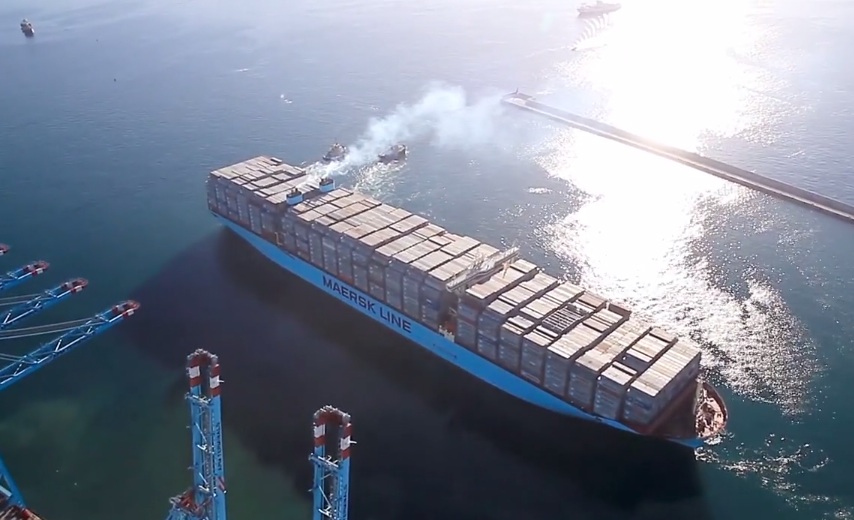
On July 21, 2014, the MV Mary Maersk departed Algeciras, Spain with a world record 17,603 twenty-foot equivalent units (TEU), the most TEU’s ever loaded onto a single vessel.

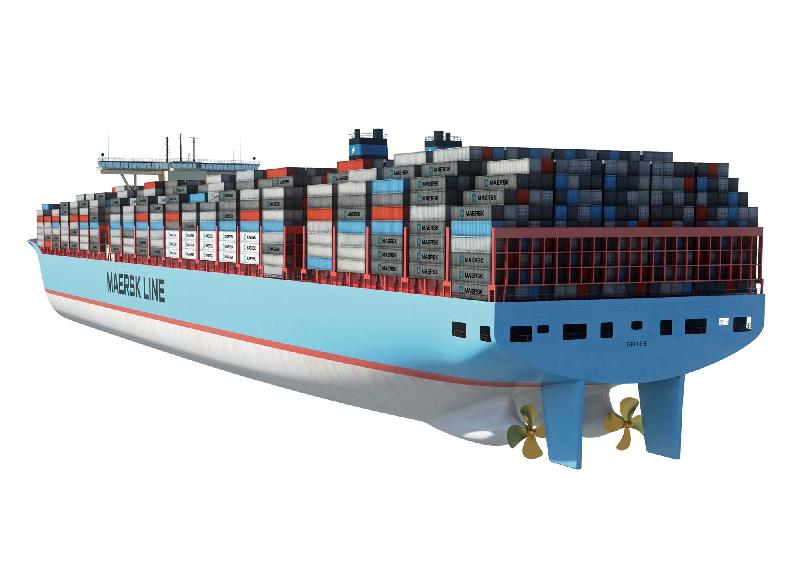
MV Mary Mearsk is the third vessel in Maersk Line’s Triple-E class, which have nominal capacity of 18,270 TEU, although port restrictions have prevented the vessels from reaching full capacity.

“Algeciras has been preparing for full utilisation of the Triple-E for more than a year,” says Carlos Arias, head of the South Europe Liner Operations Cluster. “This included the upgrading of four existing cranes and the arrival of four new Triple-E cranes.”

After departing Algeciras, the vessel was bound for Tanjung Pelepas, Malaysia, which included a trip through the Suez Canal. Arias added that similar upgrades needed to be made at the port of Tanjung Pelepas, and this was the first occasion where both ends were ready. Source: Gcaptain.com

Durban dig-out port plan likely to be delayed

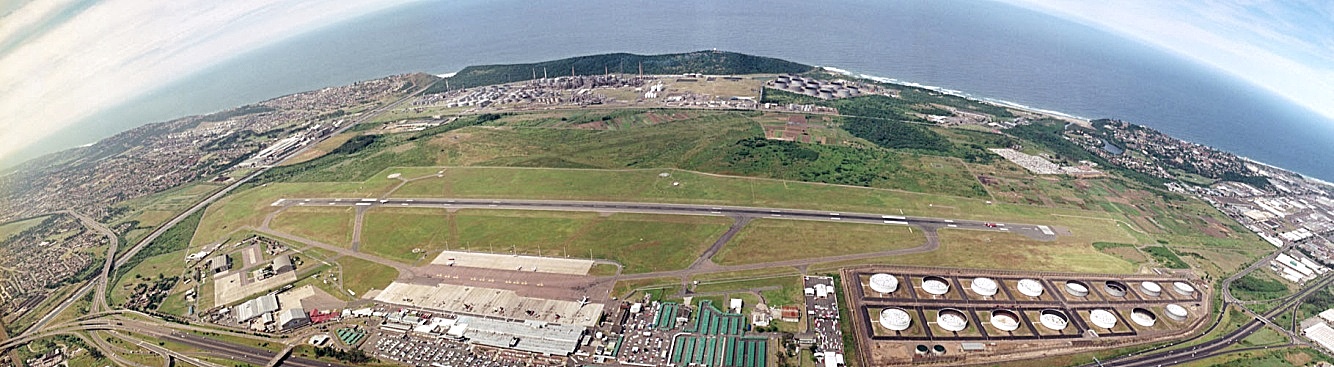
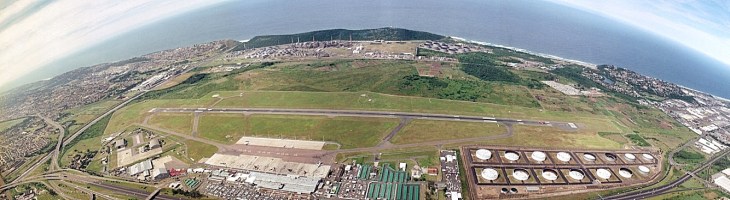
Old Durban airport - site for new Dig Out Port (Picture credit: ACSA)

Old Durban airport – site for new Dig Out Port (Picture credit: ACSA)

The first phase of Durban’s dig-out port, which was expected to generate hundreds of jobs and turn the city into the shipping hub of Africa, would not be ready by 2020 as planned, and the current harbour might have to be expanded to provide a short-term solution. This emerged at a KZN Freight Task Group meeting recently where Transnet dig-out port programme director Marc Descoins admitted that a new completion date was being investigated.

‘The actual start date of the new port is uncertain as we are still in the early design phase,’ Descoins said last night. Technical issues, such as the requirements for the construction of a new single buoy mooring to replace the existing one, were affecting timelines. Other factors affecting the development were being re-examined, but Descoins did not give further reasons for the delay.

Transnet was still tracking demand forecasts to ensure that capacity creation was aligned to demand, he said. Nevertheless it had other plans for port expansion to ensure capacity met this demand. If an alternative could be found to expand the capacity of the port, the dig-out port project at the old airport site could be set back by a few years, he said.

However, a previously discussed option – the expansion of the current port into the Bayhead area – was ruled out by Descoins, as complex problems involved in developing the area as an additional container terminal would take at least 15 years to resolve. Engineering and technical businesses in Bayhead did not appear shocked at the news yesterday, saying they knew expansion in the area would not happen.

One of the most seriously considered – and quickest – options would be for the container terminal on Pier 1 to be expanded in the direction of Salisbury Island. This would also provide Durban with increased container capacity. A decision on this could be made soon, but if this option was decided on, the dig-out port might be even further delayed as Transnet would not develop both projects and create unnecessary capacity in the short term.

However, the dig-out port project would not be cancelled, and preparations at the old airport site would continue, Descoins said. Transnet had warned that without the dig-out port Durban would not be able to meet medium- and long-term shipping capacity demand. The project would increase the volume of container trade at the Port of Durban from the current 2.69 million twenty-foot equivalent units (TEUs) to between 9 million and 12 million TEUs over 30 years.

Durban was also the first choice for a port upgrade because of its good infrastructure, although the road and rail systems need to be considerably upgraded. Completion of the feasibility study was scheduled for the end of 2015 followed by a four-year construction phase. The first ships were expected to come into the port in 2020. For this to have been achieved groundwork would have had to begin by the end of 2016. Transnet bought the old airport land in 2012 for R1.85 billion. Building the port was expected to cost R75bn to R100bn over the next 30 years.

Desmond D’Sa, chairman of the South Durban Community Environmental Alliance, was pleased with the delay, but said the project should be abandoned.

‘Why do we even need another port? It is only going to become another white elephant like the Coega Industrial Development Zone in the Eastern Cape.

‘This is all about people with big pockets, and the extra time will only allow corruption.’

Durban Chamber of Commerce and Industry chief executive Andrew Layman said imports and exports from the harbour were not accelerating as much as expected.

‘This is reflected in the international trading market. South Africa is not the flavour of the month.’

There had always been plans for expansion of the current harbour, he said.

‘This is because ships are bigger these days – it needs to be deepened and widened. So I don’t think it is a case of one or the other.

‘The need for the dig-out port is not as imminent as originally thought, and money is probably not as readily available either.’

Layman said it was not ‘a train smash’ as jobs had not been created yet, but it was unfortunate that job creation would be delayed.

‘It is understandable that it would be further delayed in the current climate.

‘It would be pre-emptive to start construction as the system still needs a lot of work, such as our tariffs, which are higher than most ports around the world, and our service delivery.’ Source: The Mercury

Related articles
Accelerated Screening – Port of Rotterdam’s ability to scan cargo on trains moving at 35 mph

Picture1The days of halting trains and unloading contents for inspection appear to be over at the Dutch Port of Rotterdam, where trained operators can now use high-power X-ray scanners to produce clear, unambiguous imagery of densely packed cargo in trains moving at speeds up to 60 kilometers per hour (35 MPH).

Simultaneously, another group of operators located several miles away in a secure inspection office collect, analyze and evaluate the X-ray images for a wide range of potential threats, dangerous materials and contraband.

Because it all happens so swiftly — particularly as the containers are never unloaded or diverted individually to cargo inspection facilities — the speed of throughput increases exponentially. To be precise, Dutch Customs at the Port of Rotterdam can now inspect nearly two hundred thousand rail containers per year, or a single 40-foot container in eight-tenths of a second.

This is the future, or as in the case of Rotterdam, the present model of an enhanced global supply chain — ultra-high-speed rail throughput combined with ultra-accurate threat detection. This combination of speed and efficiency is an innovation that allows not only railways to be more secure, but the global supply chain as a whole.

Rail has long been an overlooked component of the modern supply chain, even though it is arguably one of the most important. Because of the nature of rail — with thousands of miles of unguarded track, often connecting countries — it has previously been challenging to screen and secure without causing a disruption to the supply chain. And while ports and airports typically get the lion’s share of technology innovation, all components need to be equally considered and secured to prevent interference and have a smoothly run supply chain.

For a long time, cost-minded operators have tended to view the security of rail cargo scanning and the efficiency of throughput as essentially two competing interests.

When minor security gains trigger major productivity losses — and when even small throughput disruptions can grind supply chains to a halt — it’s easy to see why rail lines have been relatively (and intentionally) under-served by global security improvement efforts.

As a result, one of the more popular rail security/efficiency compromises has been to implement a procedure for “small sample” screenings, by which only a small portion of each rail car or trainload is scanned for threats, dangerous materials, and contraband — providing a modicum of security without disrupting the core efficiency of the supply chain.

However, as malicious activities have become more prevalent and more sophisticated, “small sample” rail screenings have become increasingly insufficient. The United States Department of Homeland Security even instituted a 100% cargo-screening mandate at ports (though that mandate has since been retracted).

Accordingly, the industry has been eagerly seeking newer technology-based answers — ways to scan a larger portion of rail cargo without degrading throughput efficiency. The Dutch Customs’ solution meets higher inspection goals without detrimentally affecting the international supply chain.

Countless other customs and border agencies, companies, and national organizations are pursuing their own answers to similar and related security/efficiency challenges. For instance, rail operators worldwide are now experimenting with higher-energy X-rays for penetrating more densely packed freight cars. (When throughput lags, companies will attempt to condense their shipments into fewer cars, which can pose an obstacle for traditional X-ray scanners.)

In addition to the security factor, revenue is another motivator for government agencies to embrace this new cargo scanning technology. Customs enforcement of a freight rail (for international cargo lines) is extremely important to a country as contraband goods can cost governments hundreds of thousands of dollars in tax dollars. And smuggled contraband can also help fund organized crime and domestic terrorists, making it all the more important that rail lines not be overlooked when it comes to integrating cutting edge security.

In fact, a single malicious attack, occurring anywhere in the world, can devastate the global supply chain in its entirety, driving up prices and imposing major delays on manufacturers worldwide. By not being required to choose between 1) preventing extraordinary threats, and 2) maximizing the efficient of ordinary processes, the evolving technology can truly accelerate rail cargo screening and secure it too. Source: Rapiscan (Contributed by Andy Brown)

Dawn of a new era – 24,000 TEU container ships

5_triple-eFormer Head of Germanischer Lloyd and one of the first in the world to predict the arrival of 18,000 TEU ships, anticipates that container ships will eventually exceed 400m in length and will go beyond 19,000 TEU. “There is no technical limitation,” said Dr. Klein . But first, the ports need to be ready to handle the next generation of container ships. Although ship designers have been talking about vessels with a capacity up to 24,000 TEU, indications are that shipping lines were not looking beyond 19,000 TEU vessels as at present.

According to Ocean Shipping Consultants (OSC), a British firm of shipping consultants, preparations for 24,000-TEU sized ships are already underway and the first could be on the building blocks as early as 2016. Ships of this capacity, which is 5,000 TEU bigger than the Triple-E class, would be 430m in length and 62m in width but with a draught not exceeding 16m. OSC says that technical feasibility studies show that at-sea costs for a 24,000 TEU vessel would be 23.1% lower than that of a 12,500 TEU vessel and 17.4% lower than that of a 16,000 TEU vessel.

As reported by Ports & Ships, the appearance of these supersized ships will herald a surge in transshipment activity, which will have a detrimental effect on port terminal operators and ports alike which would have to cope with sudden increases in container activity. This would compound onto road and rail activity as well, placing further burdens on already creaking logistical systems. According to Transnet capital projects Marc Descoins, project director for the new Durban Dig Out Port, calculations that include ships of up to 22,000-TEU capacity have been factored in.

“Ships of this capacity won’t immediately be coming to South African ports,” he told Ports & Ships this week, adding that in consultation with Drewry, Transnet was advised that eventually the Triple-E class would cascade down onto North-South routes and that it would be wise to factor these in. “Our planning includes the likelihood that eventually ships of up to 22,000-TEU can be expected, so the new port will cater for this.”

Further afield – Remote-controlled ships: Can they be the future? Visualise a cargo ship with no crew and no bridge, operated remotely by a captain from a cabin on dry land. It could happen within a decade, believes the Vice President of Innovation in Marine Engineering and Technology at Rolls-Royce Holdings LLC. The technology solutions aren’t in place yet, but all the pieces are there. It is a matter of developing the technology and putting it together into systems. Rolls-Royce has been working on designs for remote-controlled cargo vessels as a first step toward overcoming widespread industry scepticism.

The European Union is funding a $ 4.8 million research project to study the feasibility of a ship operating autonomously until it nears port and a crew is taken aboard. The project, Maritime Unmanned Navigation through Intelligence in Networks, has the acronym MUNIN. In Nordic mythology, Munin was the raven sent out daily to fly around the world to gather information or the God Odin. For now though, remote-controlled cargo ships remain for beyond the horizon, unmanned ships may be technically possible, but they don’t fit a legal and regulatory environment that’s taken centuries to develop and would take years to change. Source: Ports & Ships and the Financial Times

New CTU Code – IMO Approves Container Weight Verification Requirement

containerThe Maritime Safety Committee (MSC) of the IMO has approved changes to the Safety of Life at Sea (SOLAS) convention that will require verification of container weights as a condition for loading packed export containers aboard ships.

Misdeclared container weights have been a long-standing problem for the transportation industry and for governments as they present safety hazards for ships, their crews, and other cargo on board, workers in the port facilities handling containers, and on roads. Misdeclaration of container weights also gives rise to customs concerns. The approved changes to the convention will enter into force in July 2016 upon final adoption by the MSC in November 2014. In order to assist supply chain participants’ and SOLAS contracting governments’ implementation of the container weight verification requirement, MSC also issued a MSC Circular with implementation guidelines.

MSC also approved a new Code of Practice for the Packing of Cargo Transport Units (CTUs), including intermodal shipping containers. The new CTU Code, which will replace the current IMO/ILO/UNECE Guidelines for packing of CTU, has already been approved by the UNECE (United Nations Economic Commission for Europe) and will now go to the International Labour Organization (ILO) for approval. The CTU Code provides information and guidance to shippers, packers and other parties in the international supply chains for the safe packing, handling and transport of CTUs.

Of particular interest for regulatory authorities is Chapter 4 – “Chains of responsibility and information” which deals with the parties responsible for the provision of information and other security and regulatory requirements concerning containers as they are transported across the supply chain.

The World Shipping Council (WSC), whose members represent about 90 percent of global containership capacity, has been a leading advocate for the container weight verification requirements and has worked cooperatively with the IMO for over seven years to see them materialize. WSC has also participated in the group of experts that developed the new CTU Code.

“In taking these decisions, the IMO has demonstrated its continuing leadership in trying to ensure the safe transportation of cargo by the international shipping industry,” said WSC President & CEO, Chris Koch. “We congratulate the IMO Secretary General and the IMO member governments for developing and approving these measures that, when properly implemented and enforced, should provide for long-needed improvement to maritime safety. The SOLAS amendments and related implementation guidelines regarding container weight verification represent a collaborative effort that we were pleased to be a part of and we look forward to final adoption of the amendments in November 2014.”

The new CTU and supporting material can be accessed at the UNECE website here. Also See the World Shipping Councils webpage here for chronological information about the container weighing issue. Source: Maritime Executive

19,000 TEU boxships – thats the capacity for now say Ship Owners

According to observers, some of the ships that appear in the table above (Alphaliner) with a flow rate of 19 official thousand TEUs could  in fact could also load a thousand more. [http://www.lagazzettamarittima.it/]

According to observers, some of the ships that appear in the table above (Alphaliner) with a flow rate of 19 official thousand TEUs could in fact could also load a thousand more. [http://www.lagazzettamarittima.it/]

Containership capacity growth appears to have reached a plateau for now, with no owners or operators looking to go beyond 19,000 teu. Nevertheless, technical experts expect larger containerships to eventually enter service, once infrastructure constraints have been overcome.

At the moment, though, the biggest ships in the pipeline are for China Shipping, with CSCL Globe due for delivery in November reported to have a nominal capacity of 19,000 teu. United Arab Shipping Co has 18,800 teu vessels on order; Mediterranean Shipping Co will soon be receiving 18,400 teu ships, while Maersk’s Triple-Es have a nominal intake of 18,270 teu. CMA CGM has recently upgraded ships on order, which will now be around 17,800 teu. What they all have in common is their length, just under 400 m, which is regarded as the practical maximum for now, according to Marcus Ihms, containership expert at classification society DNV GL.

Beam is another potential limiting factor, with cranes needed to handle broader ships, and the greater rolling forces of a very wide vessel making it inadvisable to load cargo on deck. Where designers can obtain additional capacity within those limitations is through the siting of the engine room or accommodation block. Moving the engine room, for example, can create as much as 250 teu of extra cargo space.

What is clear, he told the Containerisation International-Lloyd’s List Global Liner Shipping conference in Hamburg, are the economies of scale of the larger ships that are now being delivered. The slot costs of, say, a 21,000 teu ship, are as much as 10% lower than for a 14,000 teu vessel.

An 18,000 teu ship would still have cheaper slot costs than a 14,000 teu vessel even at 90% rather than 100% utilisation. Although ship designers have been talking about vessels of up to 24,000 teu, Mr Ihms told delegates that no carriers were thought to be looking beyond 19,000 teu right now.

However, ships of more than 400 m have been built in the past, most notably the 564,650 dwt ultra large crude carrier Jahre Viking, which was 458 m long. ER Schiffahrt chief executive Hermann Klein told Containerisation International that he expected ship sizes to continue growing, albeit not as rapidly as in recent years Dr Klein, the former head of Germanischer Lloyd and one of the first in the world to predict the arrival of 18,000 teu ships, anticipates that containerships will eventually exceed 400 m in length and so go beyond 19,000 teu. “There is no technical limitation,” he said.

But first, the ports need to be ready to handle the next generation of containerships. That will require larger cranes, dredging, higher bridges in some cases, and other infrastructure investments. Source: Lloydsloadinglist.com

Port of Santos’ new 1.2 million TEU capacity container terminal

A gala ceremony was held last week to celebrate the official opening of BTP in Santos, Brazil, last week. (Image: APM Terminals)

A gala ceremony was held last week to celebrate the official opening of BTP in Santos, Brazil, last week. (Image: APM Terminals)

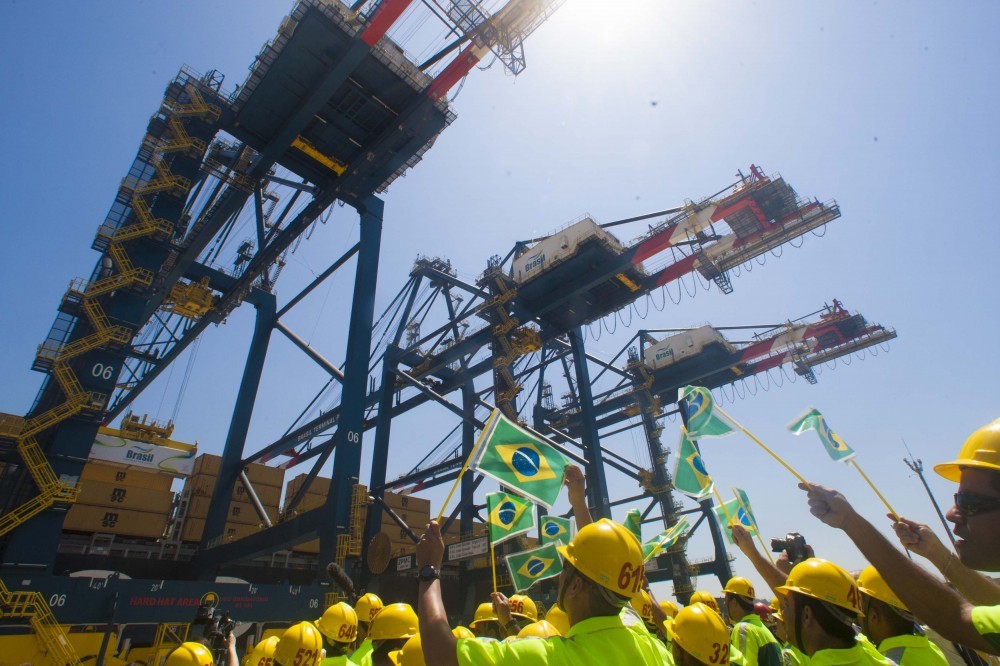
“Another BRIC in the Wall” – Brasil Terminal Portuário (BTP) was officially opened last week with a gala ceremony held at the Port of Santos’ new 1.2 million TEU capacity container terminal.

The development of BTP began back in 2007, with APM Terminals acquiring a 50 percent share from Terminal Investment Limited (TIL) in 2010. APM Terminals will operate the terminal alongside TIL for a 20-year period, whilst investing over US$20 billion into the project during this time span.

Although fully equipped and operational since March, commercial operations at BTP could not commence until the terminal was issued International Ship and Port Facility Security (ISPS) Certification in April, and granted an operating license from the Brazilian Institute of Environmental and Renewable Natural resources in July.

The first commercial vessel call took place in August, and with scheduled dredging having been completed in October, BTP has become fully operational with 1,108 metres of quay and a 15 metre depth, capable of serving three 9,200 TEU capacity vessel calls simultaneously.

The Port of Santos, the busiest container port in South America, handled 3 million TEU during the 2012 calendar year. Source: Port Technology International