Dry Ports – their growing role in international trade

Transnet Freight Rail

With rapid regional development of African port infrastructure and regional road corridors, the importance of inland multi-modal hubs is gaining traction. Increasing inter-African port competitiveness, with some countries happy to liberalize their economic trade engagements for increased foreign direct investment will put pressure on traditional emerging economies. In recent weeks there have been several public utterances concerning South Africa’s perceived demise as the ‘gateway to Africa’.

“If a gateway is supposed to be a transmission belt between global and regional markets and production facilities, the question should be whether South Africa can use its physical and material infrastructure to fulfil a connecting function between Africa and the rest of the world”, says Peter Draper senior fellow at the South African Institute for International Affairs. 

Global player General Electric recently chose Nairobi as its sub-Saharan hub – following companies like Coca Cola, Nestle and Heineken – and it based its decision partly, say trade academics, on South Africa’s unpredictable policy environment. With the rehabilitation of the East and West Coasts of Africa, some of it by resource companies needing to find more convenient export routes, trade patterns are starting to change in the region. In time, it is likely that Durban will be just one more port handling regional trade, rather than the main one.

A dry port is generally a rail terminal situated in an inland location with rail connections to one or more container seaports. Container freight trains run excursions between the seaports and the dry port, on a service timetable that is integrated with the schedules of the container ships arriving at the seaport.

Seaports have grown larger as world trade has increased, and they now lack space to expand and are restricted by congestion on the various routes into the port. While the access to the port from the sea may be highly efficient, with radar-guided systems for tracking the ships and sophisticated ship-to-shore facilities for speedy loading and unloading, land routes out of the seaport can be slow and congested.

The road and rail links are often too congested and inadequate to deal with the traffic from the port. This problem can be eased by a dry port consisting of rail and multi-modal terminals situated inland from the seaport.

In many instances, particularly in South Africa, port facilities are in close proximity to the center of the city, because historically the city grew up around the port. This means that road traffic both to and from the port has to make a circuit through the city along congested motorways or smaller roads. This problem can partially be overcome by the more efficient use of existing rail links to move the freight from the quayside to an inland dry port. The last two decades saw a decline in the ability of the rail service to meet increasing dry port to seaport needs. Over utilization of road transport not only deteriorates the roads but causes significant bottlenecks at sea port terminals.

The infrastructure available at the dry port is similar to that of a seaport in terms of the logistics and the facilities for importers and exporters. The dry port is equipped to handle cargo and transfer freight to warehouses or open storage.

Development of dry ports has become possible owing to the increase in multi-modal transit of goods utilising road, rail and sea. This in turn has become increasingly common due to the spread of containerisation which has facilitated the quick transfer of freight from sea to rail or from rail to road. Dry ports can therefore play an important part in ensuring the efficient transit of goods from a factory in their country of origin to a retail distribution point in the country of destination. Source: AllAfrica.com

Who Will Be Africa’s Brazil?

Will there ever be an “African Brazil”? Who will that be? Angola? Congo? Ethiopia? Nigeria? South Africa? Flip that question: what will it take for an African country to become a new Brazil? A lot. First, it will take governments that do not spend or borrow too much, and independent central banks that keep inflation low. That is, the first order of business is a stable “macroeconomic framework.” Brazil managed to do that, but only after decades of rampant inflation and financial crises. Many African countries are making progress in that direction, but none is quite there. Read this objective review by Marcelo Giugale, World Bank’s Director of Economic Policy and Poverty Reduction Programs for Africa. Source: The Huffington Post

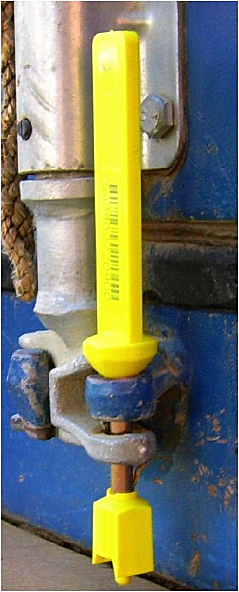
Advancing the argument for sealing cargo and tracking conveyances

South African Customs law provides for a seal integrity regime. This consists in provisions for the sealing of containerised sea cargo as well as sealable vehicles and trailers. These requirements have, however, not been formally introduced into operation due to the non-availability (until recently) of internal systems and cross-functional procedures that would link seal integrity to known entities. To explain this in more layman’s terms, it is little use implementing an onerous cargo sealing program without systems to perform risk assessment, validation of trader profiles and information exchange. It’s  like implementing non-intrusive inspection (X-ray scanning) equipment without backward integration into the Customs Risk Management  and Inspection environment and systems. It has often been stated that a customs or border security programme is a layered approach based on risk mitigation. None of the individual elements will necessarily address risk, and automation alone will likewise not accomplish the objective for safe and secure supply chains. Moreover, neither will measures adopted by Customs or the Border Agency succeed without due and necessary compliance on the part of entities operating the supply chain. It therefore requires a holistic strategy of people, policy, process and technology.

In the African context, it is surmised that the business rationale will be best accomplished with a dual approach on IT connectivity and information exchange. Under the political speak there are active attempts within SACU, SADC, COMESA and the EAC to establish electronic networks to facilitate and safeguard transit goods. Several African states are landlocked and are not readily accessible, some requiring multiple transit trips through countries from international discharge in the continent to place of final destination. National laws of each individual country in most instances provide obstacles to carriers achieving cost effective means in delivering cargoes. Over and above the laws, there exists (regrettably) the need to ‘grease palms’ without which safe passage in some instances  will not be granted. Notwithstanding the existence of customs unions and free trade areas, internal borders remain the biggest obstacle to facilitation.

Several African logistics operators already implement track and trace technology in the vehicle and long-haul fleets. This has the dual purpose of safeguarding their assets as well as the cargoes of their clients which they convey. Since 9/11, a few customs administrations have formally adopted ISO PAS 17712 within their legislation to regulate the use of high security seals amongst cargo handlers and carriers. In most cases this mandates the use of high security ‘mechanical’ bolt seals. However, evidence suggests there is a growing trend to adopt electronic seals. Taiwan Customs for one has gone a significant way in this regard. Through technological advances and increased commercial adoption of Radio Frequency Identification (RFID) technology the costs are reducing significantly to warrant serious consideration as both a viable and cost-effective customs ‘control’ measure.

Supply chain custody using RFID as an identifier and physical security audit component – as provided for in ISO 17712 – is characterized by the following:

  • it uniquely identifies seals and associates them with the trader.
  • the seal’s unique identity and memory space can be used to write a digital signature, unique to a trader on the seal, and associating that seal with a customs declaration.
  • using customs trader registration/licensing information, together with infrastructure to read seal information at specified intervals along a route to create a ‘bread-crumb’ audit trail of the integrity of the cargo and conveyance.
  • using existing fleet management units installed in trucks to monitor seal integrity along the high risk legs of a cargo’s transit.
  • record the seal’s destruction at point of destination.

Looking forward to the future, it is not implausible for customs and border authorities to consider the use of RFID:

  • as a common token between autonomous customs systems.
  • to verify and audit that non-intrusion inspections have taken place en-route, and write that occurrence to the seal’s memory with the use of an updated digital signature issued to the customs inspection facility.
  • to create a date and time stamp of the cargo’s transit for compliance and profile classification – to confirm that transit goods have actually left the country as well as confirm arrival at destination (to prevent round tripping).
  • Lastly to archive a history of carrier’s activities for forensic and/or trend analysis.
This is a topic which certainly deserves more exposure in line with current regional developments on IT-connectivity and information exchange. A special word of thanks to Andy Brown for his contribution and insight to this post.
Related articles

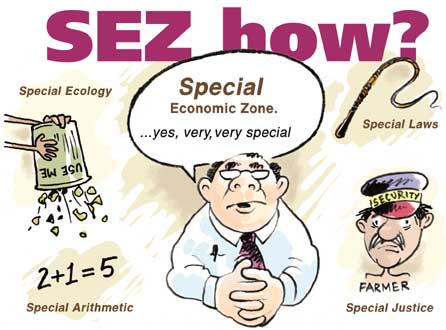
Special Economic Zones – how special?

Despite having burned its fingers with Industrial Development Zones (IDZs), which involved a few fiscal benefits (shrouded in legalese) and billions in infrastructure, Trade and Industry has gone into overdrive to push its new policy on special economic zones (SEZs). It has relaxed ‘locality’ for one, i.e. such zones need not be located in close proximity to an international port or airport. Moreover, SEZs are now being promoted to ‘compliment’ existing IDZs and not replace them as was erroneously suggested in an earlier post.

While the South African Department of Trade and Industry (the dti) is conducting public hearings on the matter, it is perhaps relevant to consider what the Free Market Foundation (FMF) – a think-tank on limited government and economic freedom – has to say on the matter. The content of the report might well attract support from some in the business community involved with manufacturing, distribution and logistics. Read the FMF’s evaluation of the dti’s SEZ Policy here!

While there are not many trade remedies available to local business many prospective requests have over the last decade been presented to establish so-called distribution centres/hubs and ‘virtual bonded warehouses’, which have not borne much fruit mainly due to the lack of a legal framework for their operation. Moreover, in government there is always a cautious resistance to liberalisation in customs and trade laws (they directly impact the fiscus) in the absence of viable risk mitigation strategies or remedies. Perhaps it has something to do with the dwindling public sector skills and experience levels available to conduct effective audits; although, the big audit firms would readily contest this and advocate the outsourcing of such function to the private sector. As the development of more sophisticated systems in SARS come on stream, ICT will no longer be an obstacle. Through increased automation comes the availability of additional human resources who can be up-skilled to perform audit work. Both Tax and Customs Modernisation programmes bare testimony to this.

The establishment of the IDZ programme (circa 2000) was fraught with inter-departmental tensions around the so-called benefits and concessions to be made available to foreign investors. The lack of a clear framework did not allow for much ‘liberalisation’ of controls and fiscal benefits. In fact the customs dispensation offered procedures and facilities to IDZs identical to that available in the national customs territory. Tax holidays and relaxed red tape are characteristic of some of the more successful SEZs around the world, as the article will attest. The dti’s latest SEZ Bill and Policy do not hint to any great length how things will be different this time round. There is however some firm calls within government to consider relaxed labour regulations – the test however lies in whether the policy makers have the appetite (or vision) to permit liberalisation in this area. I have a simple view on this matter – (i) create a favourable economic environment focusing development on SMMEs and entrepreneurship, and (ii) get the standard customs procedures and controls right through modernisation and there will be no need for ‘tax holidays’ and economic zones in this country!

Having difficulty understanding economic zones?

You can be forgiven if you have a clouded understanding of what an economic zone is. Countries develop different types of free economic zones (FEZs) as a tool to generate employment opportunities, promote and diversify exports, increase technology transfer and attract investment flows. Developing and emerging economies use FEZs as “economic laboratories”, “incubators” or showcases of a generally strong enabling environment and a competitive market for investment. In order to achieve the intended objectives of zones, governments offer a range of incentives from fiscal to regulatory such as export duty exemptions, streamlined customs and administrative controls and procedures, liberal foreign exchange policies and income tax incentives. Governments have been experimenting with the use of policy tools in ensuring the effectiveness of their zones; however they have not always been successful. Nowadays, governments are trying to move away from the traditional zones with the traditional set of objectives and policy tools to either more comprehensive or sector specific zones. In addition, they are trying to incorporate other development policy instruments to their policy packages to tackle other issues such as skills development, rural development and green growth while achieving the traditional objectives.

The first type of FEZs mostly took the form of free ports – customs free areas within seaports offering little more than warehousing and trade facilities. Over time, some free ports developed into customs-free zones in which light manufacturing and other processing took place. The next step was the development of export processing zones, which encourage more complicated manufacturing operations with the purpose of exporting. Later, special economic zones (SEZs) and specialized zones (SZs) evolved. SEZs offer a wider array of sectors including manufacturing and services that target both foreign and domestic markets. In addition, they permit on-site residence and provide all facilities to employees and hence could be viewed as standalone cities. On the other hand, specialized zones (SZs) focus on specific industries by providing the appropriate infrastructure and building on the concepts of clusters.

The terminology applied to free economic zones, in literature and common usage, is highly confusing. Words like “free zones”, “free trade zones”, “customs-free zones”, “special economic zones”, “export processing zones”, etc. are in practice used almost interchangeably. This reflects the implementing authorities’ linguistic preferences as much as functional differences between different kinds of zones.

Common to most FEZs is the fact that they are ring-fenced enclaves (with the exception of Single Factory/Private EPZs) that enjoy special regulatory, incentive and institutional frameworks that are different from the rest of the economy. The different classifications of FEZs are as follows:

  1. Free trade zones (FTZs; also known as commercial free zones): are fenced-in, duty-free areas, offering warehousing, storage, and distribution facilities for trade, trans-shipment, and re-export operations.
  2. Export processing zones (EPZs): are industrial estates aimed primarily at attracting export-oriented investments. They cover usually a wide array of manufacturing industries.
  3. Private zones/Single factory processing zones: provide incentives to individual enterprises regardless of location.
  4. Special economic zones (SEZs): are larger estates and could be considered cities on their own. They usually cover all industrial and service sectors and target both foreign and domestic markets. They provide an array of incentives ranging from tax incentives to regulatory incentives. In addition, they permit on-site residence.
  5. Specialized zones (SZs): targeted at specific sectors or economic activities. Examples of SZs include science/technology parks, petrochemical zones, logistics parks, airport-based zones, and so on. They may restrict the access of companies in non-priority sectors, and their infrastructure is mostly tailored according to their sectoral targets.

The distinction between the different kinds of zones must involve an element of judgment and sometimes zones fall in between categories. South Africa’s Industrial Development Zones (IDZs) combine elements of both 1 and 2 above. Most free zones restrict the access of certain categories of investors, without necessarily being classified as specialized zones. Also, it is not very clear how “special” a free zone’s regulatory environment must be before it can be classified as a SEZ. FEZs in their general definition can include a combination of characteristics from all the previously identified FEZs. I guess that while you still dont have a clear understanding of what an economic zone is, I hope the above has shed a little more light on the subject?

WCO News – February 2012 Edition

WCONews Edition February 2012Herewith a link to the latest edition of WCO News, providing a wealth of customs news and developments from across the globe. This edition focuses almost entirely on regional initiatives involving C-2-C information exchange. On pages 20 to 22 you’ll read about new developments emerging on customs inter-connectivity and information exchange in the Southern African Region. At this time, a conference lead by the WCO, involving representatives from UNCTAD, SACU, SADC and COMESA and SARS is taking place in Pretoria to establish a firm framework for introduction of customs information exchange. I will devote a dedicated article on these developments shortly, as this has implications for the business community as well. Also, don’t miss the feature on South Africa’s modernisation developments, pages 29 and 30. Besides the usual editorials this edition includes –

  • WCO Secretary General launches Year of Connectivity.
  • Evolving technology landscape and its impact on Customs.
  • Latest developments in Latin America, Southern Africa and Europe.
  • West Africa implements airport task forces to fight drug trafficking.
  • South Africa to roll out mobile Customs controls.
  • Operation “Short Circuit” successes and challenges.
  • WCO Tariff and Trade Affairs Directorate

SAD Story – Part 2

What is clear in regard to modern day business is the fact that ‘harmonisation’ in the international supply chain is essentially built around ‘data’. E-commerce has been around for decades, plagued by incompatibilities in messaging standards, and computer software, network and hardware architecture. However, one of the key inhibitors has been organisations and administrations having to adhere to domestic ‘dated’ legislation and so-called standard operating procedures – seemingly difficult to change, and worst of all suggesting that law has to adapt!

A lot has had to do with the means of information presentation (format) and conveyance (physical versus electronic) rather than the actual information itself. Standards such as the UN Layout key sought to standardise or align international trade and customs documentation with the view to simplifying cross-border trade and regulatory requirements. In other words, each international trade document being a logical ‘copy and augmentation’ of a preceding document.  This argument is still indeed valid. The generally accepted principle of Customs Administrations is to maximise its leverage of latent information in the supply chain and augment this with national (domestic) regulatory requirements – within a structured format.

The Single Administrative Document (SAD) was itself borne out of this need. The layout found acceptance with UNCTAD’s ASYCUDA which used it as a marketing tool (in the 1990’s) in promoting ‘What-You-See-Is-What-You-Get’ (WYSIWYG). It certainly provided a compelling argument for under-developed countries seeking first-time customs automation. Yet, the promise of compatibility with other systems and neighbouring customs administrations has not lived up to this promise.

Simultaneous to document harmonisation, we find development of the Customs data model, initially the work of the Group of 7 (G7) nations at the United Nations. Its mandate was to simplify and standardize Customs procedures Customs procedures. In 2002, the WCO took over this responsibility and after further refinement the G7 version became version 1 of the WCO Customs Data Model. Once more a logical progression lead to the inclusion of security and other government regulatory requirements. This has culminated in the recent release of WCO Data Model 3. Take note the word “Customs” is missing from the title, indicating that Version 3 gives effect to its culminating EDI message standard – Government Cross Border Regulatory (GOVCBR) message – an all inclusive message standard which proposes to accommodate ALL government regulatory reporting requirements.

Big deal! So what does this mean? The WCO’s intent behind GOVCBR is as follows –

  • Promoting safe and secure borders by establishing a common platform for regulatory data exchange enabling early sharing of information.
  • Helping co-operating export and import Customs to offer authorized traders end end-to to- end premium procedures and simple integrated treatment of the total transaction.
  • Contributing to rapid release.
  • Elimination redundant and repetitive data submitted by the carrier and the importer.
  • Reducing the amount of data required to be presented at time of release.
  • Reducing compliance costs.
  • Promoting greater Customs Co-operation.

Undertaking such development is no simple matter, although a decision in this direction is a no brainer! Over a decade’s work in the EDI space in South Africa is certainly not lost. Most of the trade’s electronic goods declaration and cargo reporting requirements remain intact, all be they require re-alignment to meet Data Model 3 standard. Over and above this, the matter of government regulatory requirements (permits, certificates, prohibitions and restrictions, letters of authority, etc.) will require more ‘political will’ to ensure that all authorities administering regulations over the importation and exportation of goods are brought into the ‘electronic space’. Some traction is already evident here largely thanks to ITAC and SA Reserve Bank willingness and capability to collaborate. In time all remaining authorities will be brought on board to ensure a true ‘paperless’ clearance process.

So, I digress somewhat from the discussion on the SAD. However, the bottom line for all customs and border authorities, traders and intermediaries is that ‘harmonisation’ of the supply chain operation follows the principal and secondary data required to administer ALL controls via a process of risk assessment, to facilitate release including any intervention required to ensure the compliance of import and export goods. As such even legislative requirements need to enable ‘harmonisation’ to occur otherwise we end up with a non-tariff barrier, uncertainty in decision-making, and a business community unable to capitalise on regional and international market opportunities. Positively, the draft SA Customs Control Bill makes abundant reference to reporting – of the electronic kind.

In Part 3, I will discuss regional ‘integration’ and the desire for end-to-end transit clearance harmonisation.

Customs Modernisation Release 3 – SACU

Saturday 11 February 2012 sees the implementation of new modernised customs procedures and formalities at South Africa’s first SACU land frontier office – Kopfontein – border between South Africa and Botswana.  While enhancements are slanted more in terms of internal SARS customs procedure, SACU traders will no doubt experience some anxiety with the transition. For the first time SARS Customs Modernisation impacts directly on traders and neighbouring Botswana Customs operational procedures in a significant way, which will fashion operations at all remaining inland border posts of the Customs Union. Over the last few months SARS has worked with trade, the Botswana customs authority as well as the business chamber in Botswana concerning the intended changes and their impact on stakeholders. The implementation ushers in cross-cutting changes for customs staff operationally, new technology as well as legal and policy changes. In the case of the latter, a further element of the draft Customs Control Bill is introduced whereby foreign business operators (importers, exporters and road carriers) must be registered with SARS to perform customs transactions in South Africa. This is perhaps the single issue which has had ramifications for parties who regularly cross the border between Botswana and South Africa. Hopefully recent iterations of notices and explanations have helped clarify the SARS requirements. (See the SARS Customs Modernisation webpage).

Other modifications and changes include –

Elimination of paper clearance documents – this is a significant departure from traditional SACU processing where all member countries have relied on the Single Administrative Document (SAD) to facilitate intra-SACU clearance. With the bulk of clearances expected to be electronic, SARS will now only print a customs notification (CN1) which will specify the status and outcome for each clearance. This the trader will use in support of customs clearance in Botswana. SARS will therefore no longer stamp and authorise hardcopy SAD500 clearance documents. Of course, there is nothing which stops a trader printing the SAD500 for cross border purposes, only SARS will no longer attest these. As concerns SARS VAT requirements, arrangements will be made for traders to submit the CN1 for purposes of VAT returns. Details on this to follow.

Electronic supporting documents – already tried and tested at sea and airports across South Africa, traders no longer need to carry on their person hard copy clearance supporting documentation , i.e. invoices, worksheets and packing lists. These are only required should SARS indicate via electronic message that a consignment requires further scrutiny. Customs brokers and traders using EDI will in most cases have the SARS e@syScan facility available on their computer systems which makes it relatively simple and easy to scan, package and submit to SARS. In the event a trader cannot perform this electronically, he may approach any of the 4 Customs Hubs (Alberton, Cape Town, Durban, and Doringkloof) across the country, to have these scanned and uploaded by SARS. Alternatively, these can of course be delivered to the border post for manual processing and finalisation of a customs intervention. Supporting documents are linked to a unique case number which SARS notifies to the trader in the event of a risk.

Clearance processing – SARS has centralised its backend processing of clearances where goods declarations are now processed off-site at one of the 4 Hubs. No longer are clearances processed at customs branch office. All goods declarations – whether electronically submitted or manually captured – are routed to a central pool for validation, verification and assessment if flagged by the risk engine. In the case of land borders all clearances once successfully processed will receive a ‘Proceed-to-border’ message implying that the road carrier may commence delivery to the border. A key feature of the new clearance process is the availability of Customs Status Codes. These codes are initiated by the customs system at specified points in the process to alert the declarant of the status of his/her transaction. These status’s also indicate the follow-up required of the declarant to bring the transaction to a state of finality.

Automated Cargo Management (ACM) – All road carriers are now required to submit their road manifests electronically, via EDI, to the Customs ACM system. For now, SARS will not electronically match the manifest against the declaration, but will monitor compliance and data quality of electronic manifest  for a period of time before initiating real-time matching and acquittal. This will invoke a significant responsibility on both trader and road remover to ensure that they both provide credible data to customs otherwise delays will occur. Upon arrival of the cargo at the border, the driver presents a printout of his electronic manifest. The manifest number is ‘checked in’ by a customs official which in seconds brings up all associated goods declarations linked to the manifest number on the system. The customs officer is able to determine the overall risk status of the vehicle. Where no risks are present a status notification (CN1) is printed for each goods declaration, and a gate pass (CN2) is handed to the driver permitting him to exit the customs controlled area. The future real-time matching will comprise a combined risk assessment of both manifest and declaration information that will result in a single risk outcome. Such risk assessment will include both fiscal and security compliance features thereby bringing SARS in line with international supply chain security standards. Going forward, risk assessment will accommodate ‘all-of-government’ requirements ensuring that all regulatory measures and associated risks are administered in a single instance obviating the need for successive, time-consuming inspections and costly delays.

Automated Customs Inspection – Following its recent introduction at the Beit Bridge border post, the new hand-held inspection tool, conveniently developed on an iPod, allows the customs border control official to electronically access, capture and upload an inspection outcome to the central customs system. This significantly improves the efficiency for this time-intensive activity where the officer can initiate a status up date electronically at the inspection site, where previously the declarant would have to wait for the outcome of the manual inspection report and release note. What’s more, the customs officer has access to the underlying clearance data and can even activate the camera function and capture visuals of suspect cargo which can be appended to an inspection case for verification by higher authority or historical reference value.

There are additional features and functionality to be introduced at Kopfontein and all remaining border posts over the next few months. These relate to improved revenue accounting, new trader registration and licensing system offering online application and approval, and a new traveller and temporary import/export processing. More about this in a future post.  For traders, the benefits of the new solution at SACU land borders aim to remove random and unwarranted intervention by customs. All activities are risk driven via a secure ‘get next’ selection function ensuring that internal integrity is maintained and only ‘risk-related’ consignments/transactions are dealt with. Please visit the SARS Modernisation webpage for all the latest updates and notices on modernisation releases.

China leads shake-up in distribution methods

Out of respect for copyright, I would encourage all logistics followers to visit this link to learn more about a significant shift occurring in the distribution of containerized goods. Some food for thought considering local conditions in South Africa which currently appear to marginalize (if not discourage) inland localisation and multi-modal distribution of goods between the hinterland and major air and sea ports in Southern Africa. Source: FT.com

Related Article

IDZs to be replaced with SEZs

Department of Trade and Industry (South Africa)Heard this before? In line with the Industrial Policy Action Plan and the New Growth Path, the Department of Trade and Industry (the dti) aims to continue fostering its efforts to create employment and economic growth by establishing a strong industrial base in South Africa. The new initiative aims to improve on the concept of industrial development zones (IDZs) which have enjoyed mixed success since being introduced in December 2000 through the Manufacturing Development Act. 

An IDZ is a purpose-built industrial estate linked to an international airport or seaport which is tailored for the manufacturing and storage of goods. It offers investors certain rights within the zone, in addition to incentives such as customs duty and VAT relief. One important priority of the IDZs is to boost job creation and skills in underdeveloped regions. The IDZ programme led to the establishment of five zones – Mafikeng, OR Tambo International Airport, Richards Bay, East London and Coega. The Richard’s Bay IDZ only commenced its first phase of development in September last year while OR Tambo International Airport is not yet fully operational.  The Industrial Policy Action Plan, issued by the Department of Trade and Industry in February 2011, has also identified, as a key milestone, the establishment of an additional IDZ at Saldanha Bay. 

The Special Economic Zones (SEZs) programme is one of the most critical instruments that can be used to advance government’s strategic objectives of industrialisation, regional development and job creation. Moreover, the programme can assist in improving the attractiveness of South Africa as a destination for foreign direct investment.

In order to ensure that the SEZ programme is an effective instrument for industrial development, the dti has developed the SEZ Policy and Bill. Through the Bill there will be a dedicated legislative framework for special economic zones.

The main objectives of the SEZ Bill are to provide for the designation, development, promotion, operation and management of Special Economic Zones; to provide for the establishment of the Special Economic Zones Board; to regulate the application and issuing of Special Economic Zones operator permits; to provide for the establishment of the Special Economic Zones Fund; and to provide for matters incidental thereto.

Furthermore, the SEZ Bill will enable government to move towards a broader Special Economic Zones Programme, through which a variety of special economic zones can be designated in order to address the economic development challenges of each region and address spatial development inequalities.

Although national laws may be suspended inside industrial zones, government is currently not offering regulatory incentives to derogate from labour rules, a concession which is seen by some as crucial to stimulate investment in special zones. It is however unlikely that a relaxation of labour laws will be considered under the SEZ initiative. Benefits are rather expected to come in the form of enhanced incentives for labour intensive projects and additional tax relief for investors. A further question arises – just how flexible an inventive will the customs and VAT requirements be allowed to be?

The key provisions include the establishment of a Special Economic Zones Board to advise the Minister of Trade and Industry on the policy, strategy and other related matters; establishment of the Special Economic Zones Fund to provide for a more coherent and predictable funding framework that enables long-term planning; strengthening of governance arrangements including clarification of roles and responsibilities of key stakeholders. Source: Department of Trade and Industry.

Burden of proof – cross-border data exchange

The continuous development in international communication media together with the never ending expansion of the global trade arena have impacted both positively and negatively on international contractual dispute resolution. It is common cause that once a dispute has been characterised as of a contractual nature and the lex fori has been established, the next step is to ascertain which law is the lex causa or so called “Proper Law” of the agreement.

This article is focused on the assertion of the proper law of an agreement, after it has been established that the lex fori is South African law, in situations where parties  electronically concluded an agreement and whilst doing so omitted to exercise their autonomy to record the law which they are intent on governing the agreement, alternatively in situations where one cannot establish whether the parties contemplated and tacitly implied that a specific legal system would govern the agreement at the time when their agreement was concluded when the lex fori was already established as South African law. Read the full paper here!

Greetings for 2012

العربية: الخريطة الهجائية لأفريقيا English: Or...

As my leave break draws to a close I thought it opportune for ‘Africans’ to maintain a positive view on developments on the continent, not that international affairs elsewhere on the globe give any cause for joy. To this I append an article “Its time for Africa” that will hopefully reinforce sentiment in both government and trade quarters on the ‘attractive’ or ‘potential’ opportunities which our continent has to offer. I look forward to a new year of interesting times and challenges. Enjoy the read.

Pre-shipment Inspection (PSI) – an antiquated approach

Recently, an organisation called Global Inspection Group (GIG) has advocated PSI – an import verification system – as a solution to counteract South Africa’s trade deficit. The article Import verification would outlaw customs fraud’ alludes to the apparent success of these mechanisms in other African states to support quality and import standards in those countries, respectively. Because South Africa has no verification of imports system ‘it is easy to systematically under-declare goods’, the article states. Furthermore, it mentions that a Finance ministry would benefit from such a system ensuring the collection of the correct duties. [Really? how naive].

South Africa is a free country, and it follows that organisations will go to extremes to secure a business foothold in the country. The question is – to what length and to what end? If any ministry of finance were to rely on a PSI company, it would first disband its customs department, because there is evidently no trust in its frontline and post clearance capability.  Most governments (if not all) are pretty much aware of the broader international customs developments championed by the WCO. In recent years, the WCO has developed several diagnostic studies and programmes – with the option of donor funding if required. There would therefore be no sense or credibility in a government that would persist in pursuance of PSI services for fiscal assurance.

Any trade practitioner and supply chain operator in South Africa will readily confirm the hectic ‘change’ programme which is being pursued under Customs Modernisation. These changes and their associated systematic innovations and efficiencies are by no means the result of government capitulating in the face of illegitimate trade. No, it’s a conscious decision to take responsibility for the problem, and together with the allied trade to improve the situation.

It is therefore high time that such organisations which front themselves with the ‘be-all and end-all’ systems in Customs’ tariff and valuation appraisal rather seek a more practical and benefit-delivering model than one which not only scams governments for service and inspection fees, but also offers no benefit to trade. Included are those BOT vehicles offering governments ‘free’ cargo scanning equipment in exchange for a lucrative inspection fee. None of this is based on risk management and is purely profit focussed. The concept forgoes most if not all, the modern customs principles and standards promoted by the WCO. The buzz word is ‘Capacity Building!’

The reality in all of this should be clear. No private sector entity can replace Customs. Outsourcing in any event would require government to set up a vehicle of its own to ‘ensure’ that the outsourcer is doing his job. If there is a dearth in knowledge and skills, then it is up to government to rectify the situation.  Source: FTW Print version.

Ports back campaign to weigh all export containers

The International Association of Ports and Harbours (IAPH) has joined the World Shipping Council (WSC) and International Chamber of Shipping (ICS) in urging the International Maritime Organization (IMO) to establish an international legal requirement that all loaded containers be weighed at the marine port facility before they are stowed aboard a vessel for export. In what has been a much publicized issue since 2008 in the maritime industry, much the same view is taken by customs administrations. Like many other changes in the supply chain, it is a lot easier said than done. Modern ports are designed and developed taking into account requirements for weight bridges, radiation portal monitors, networks to monitor vehicle and container movements in and around port precincts, and inland transportation routes. While the expense and budget for these are usually borne by the relevant port authority, would it not indeed be good if those responsible for the packing/stuffing of containers took it upon themselves to ensure the correct weight, quantity and content are properly declared?

Refer to the joint WSC/ICS paper on “Solving the Problem of Overweight Containers” as well as the ICS’s “Safe Transport of Containers by Sea”. Both are self explanatory and short enough so as not to be considered laborious. In the South African context the question of who packed the box is often unanswered given that a variety of entities could be involved in this activity. In some instances it could be a container depot operator or a freight forwarding and consolidation agent; depending on how ‘safety and compliant conscious’ the shipper wants to be. While it will still take some time before the entire supply chain becomes properly regulated and monitored, now’s the time for ‘operators’ to take stock of what might in future be a new standard. New standards mean more capital outlay with pass-on costs for which the shipper ultimately carries the can.