Awarding the SKA

So what does the awarding of the Square Kilometre Array (SKA) and Customs have in common? Sweet blow all as far as I was concerned until a colleague of mine, Roux Raath, pointed out one of the criteria on which the award was made. Reading the actual report one realises this has more to do with the fact that six African countries will be involved and the cross border movements are foreseen to be complex in contrast to movements between Australia and NZ. Therefore, this has less to do with the South African Customs administration than the Southern African geographical environment. The report also refers to duty and tax structures and these issues should perhaps find a home with the DTI as customs does not dictate these. Nonetheless, the fact remains that certain issues have been raised and these should be considered when strategies are devised to support the SKA project.

The SKA Site Advisory Committee (SSAC) reviewed the various customs systems and duty rates, the excise tax regimes and tax rates, and related issues such as import and export processes that will impact the SKA over its lifetime. A wide range of issues was considered since the SKA involves a large multinational investment of funds, materials, and services, including the provision of scientific and technical equipment, and personnel in various remote locations.

The SSAC reviewed the issues presented by the two candidates, including details related to the six diverse South African member countries; cross-border coordination and logistical issues presented by the South African proposal; and the diverse customs, excise, and regulatory structures in the two candidate sites. The SSAC also considered the long-standing Australia–New Zealand Closer Economic Relationship Trade Agreement (ANZCERTA) free-trade and economic cooperation agreement (allowing for the free flow of goods, services, and people between the two countries) and the absence of overall free-trade agreements among the six members of the South African consortium. The SSAC also reviewed the customs, free-trade, economic, and business environments in Australia and New Zealand and considered the written confirmation from the Australian government that there will be no Goods and Services Tax (GST) payable by the SKA in Australia. On the factor of Customs & Excise, the SSAC awarded the following points for each of the contending consortia – 13.3 for ANZ and 6.7 for South Africa.

To read the full report, download here!

 Related articles

Interfront – Customs know-how and software

Forgive my exuberance and national pride, for one minute. After some years of intense re-organisation and strategization a new dynamic organization is set to spearhead ICT development in the Customs and Border Management industry. Many will know it by its previous name TATIS or TATIScms. The Cape Town based IT outfit is responsible for the intuitive customs software solution which currently operates in Luxembourg Customs. Let it be known that this is one tough space to operate and succeed in.

Africa, in particular, has  suffered the stigma of UN and World Bank ‘freebies’ by way of customs automated solutions – designed and developed by the west, on western philosophy with little concern for the longer term sustainability and development on the African continent. Before the emergence of commercial Windows-based software, African states (and most developing countries for that matter) had little option but to adopt ASYCUDA. The French colonies in the main sought franco-developed SOFIX. Bull Computers were particularly strong in this space and received great support from the French government in their ventures.

Just as the ‘power’ of the west is waning under financial and political turmoil, so developmental states and economies are looking to their own resources and expertise to fulfil their needs and destinies. A similar phenomenon occurred in the border and port control security space during the first decade of the 21st century, where the Chinese have virtually stolen international market share in NII (Cargo scanning) equipment.  Therefore the emergence of InterFront on the Customs ICT scene is both unique and timely. For more details on the new company and its partners, solutions and expertise please visit their website: http://www.interfront.co.za. Also read their corporate and product profile brochure – click here!

This week, Interfront are show-casing their solution and expertise at the WCO‘s 2012 ICT Conference in Tallinn, Estonia. With the international customs and border management relatively young and seeking stability, Interfront have a great opportunity to develop a regional and international footprint. SARS, in particular, looks forward to its new integrated customs solution; setting a new bench mark in global customs processing.

Nigerian Customs – a paramilitary display

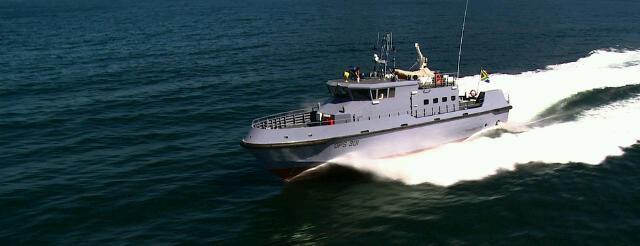
Ports.co.za reports that Nigerian Customs Service has signed an agreement for the delivery of two 24 metre P249 patrol craft, which will use them to combat smuggling and piracy.The supplier is a Cape Town based outfit called Kobus Naval Design (KND). In the context of intra-Africa trade this deal should be considered a real scoop. Kobus Potgieter, CEO of Kobus Naval Design (KND), confirmed that his company had received the order and would deliver the vessels in ten months’ time. The aluminium vessels will be built in Cape Town. This will be the sixth KND designed vessel in the Nigerian waters delivered over the last couple of years. The company is also busy with a dive boat contract for the oil and gas industry in Nigeria.

Nigeria’s Federal Executive Council (FEC) also recently approved N1.7 billion (US$11 million) for the purchase of a Cessna Citation CJ4 aircraft for the Customs Service. The aircraft would be used for surveillance missions along Nigeria’s borders and would help combat economic sabotage and cross-border crimes. Alhaji Mohammed Dikko, the Comptroller-General of the Nigerian Customs Service, said that his agency had already acquired the helicopters for surveillance of Nigeria’s borders and added that President Goodluck Jonathan had approved the purchase of 400 Toyota Hilux vehicles for border patrol.

Border control is an increasingly important issue in Nigeria. Militant groups in the oil-producing Niger Delta have been illegally supplying weapons for years and Boko Haram is also believed to have received illegal arms, raising questions about border surveillance, especially after reports that weapons looted from Libya have turned up in Nigeria. Source: Ports.co.za and Defenceweb.co.za

SEZ – Lessons for South Africa from international evidence and local experience

A bold paradigm shift in South Africa’s economic policy is required to ensure the success of the country’s new special economic zones (SEZs) programme, according to Centre for Development and Enterprise (CDE) executive director Ann Bernstein.At the launch of the new CDE report on SEZs, she explained that South Africa’s current economy favoured skill and capital-intensive industry, which was not making the cut in terms of job creation.

“South Africa needs to create the right kind of environment for the emergence of businesses that can employ large numbers of unskilled people. That is what we should use the SEZs to do.“This will require bold leadership and engagement with the difficult choices on labour costs and flexibility that must be made. The alternative is to waste resources and energy yet again on a policy that fails,” Bernstein urged.

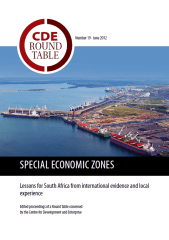
The report, titled ‘Special Economic Zones: Lessons for South Africa from international evidence and local experience’ suggested that South Africa should establish at least two large SEZs that were focused on low-skill, labour-intensive industries such as the clothing and textile sectors and enable them to compete globally. “Without reform, the only way South African companies can compete with Chinese, Vietnamese and Indian companies is by mechanisation, which results in fewer people being employed, and a greater reliance on skills,” Bernstein pointed out. “International evidence shows that the most successful SEZs were public–private partnerships,” Bernstein noted. Further, the report showed, as recognised by government, that South Africa’s industrial development zones (IDZs) that include Coega, East London and Richards Bay, had largely failed to boost economic growth, create jobs, promote industrialisation or accelerate exports.

Bernstein attributed this to the lack of a clear definition for what these zones should entail, as well as a strategy for attracting investors. “The IDZs are basically just industrial parks – it’s no wonder they have not been successful in attracting new investors and creating jobs.” Although the Department of Trade and Industry (DTI) had spent R5.3-billion on developing these zones, the vast majority of the 33 000 jobs created were short-term construction jobs, with only 5 000 permanent jobs created.

Bernstein said countries such as China, Costa Rica, Mauritius and Latin America countries could be viewed as benchmarks for South Africa in terms of IDZs. Rising costs in Asia, especially China, where labour-intensive firms were looking for new regional locations, were creating opportunities for IDZs in South Africa. The CDE argued that South Africa should seize the opportunity to compete for a sizable portion of the jobs that could sprout from this.

“A bold new SEZ strategy could become a platform for new companies and new investors that use unskilled labour rather than machines,” Bernstein indicated. “South Africa’s new SEZ programme needs to be a presidential priority. The DTI needs to be fully supported by all other departments of government. Unless the whole of government gets behind the effort, we’re not going to see the kind of investor uptake that would actually make a difference,” CDE research and programme director Antony Altbeker said. Trade and Industry Minister Rob Davies is set to table the draft SEZ Bill in Parliament later this year, while Finance Minister Pravin Gordhan announced that R2.3-billion would be allocated to the establishment of SEZs were in the 2012/13 Budget.

However, the CDE’s report warned that the Bill provided no clarity about what would differentiate SEZs from industrial parks, its envisaged governance arrangements for SEZs was confusing and said the role of the private sector was unclear. Source: Engineering News

A study in Corruption and Firm Behavior

Extensive literature argues that reducing trade costs can substantially increase income and improve welfare in trading countries, particularly in the developing world where these costs are highest. In 2007, a shipping a container from a firm located in the main city of the average country in Sub-Saharan Africa was still twice as expensive, and six times more time-consuming, than shipping it from the US. It was also twice as expensive and just as time-consuming as shipping a similar container from India or Brazil, according to the World Bank. As a result, a significant portion of international aid efforts has in recent years been channeled to reducing trade costs and improving logistics in the developing world. Evidence is growing on how corruption in transport networks can significantly increase the cost of moving goods across borders.

A recent paper “Corruption and Firm Behaviour” investigates how different types of corruption affect company behavior. Firms can face two types of corruption when seeking a public service: cost-reducing, “collusive” corruption and cost-increasing “coercive” corruption. Using an original and unusually rich dataset on bribe payments at ports matched to firm-level data, the authors observe how firms respond to each type of corruption by adjusting their shipping and sourcing strategies. Cost-reducing “collusive” corruption is associated with higher usage of the corrupt port, while cost-increasing “coercive” corruption is associated with reduced demand for port services. Data suggests that firms respond to the opportunities and challenges created by different types of corruption, organizing production in a way that increases or decreases demand for the public service. This can have important implications for how we identify and measure the overall impact of corruption on economic activity. The data further allows us to understand the bribe setting behavior of different types of public officials with implications for the design of anti-corruption strategies.

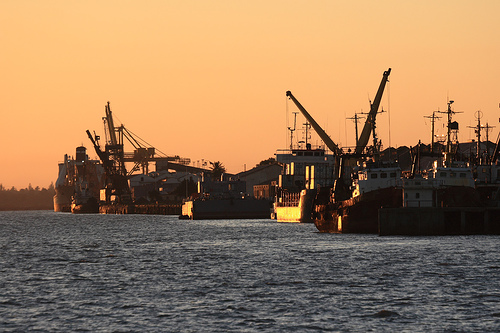
In our setup, firms have the choice to ship through two ports: Maputo in Mozambique, and Durban in South Africa. The majority of firms in our sample are equidistant to both ports while a subset of firms will be significantly closer to the more corrupt port of Maputo. Survey data revealed that the choice of port is driven primarily by the interaction between transport and corruption costs at each port. Transport costs are linear to the distance between each rm and the ports, while corruption costs are determined by the type of product the firm ships. Our main measure of the distortion caused by corruption is how rms shipping products that are more vulnerable to corruption will opt to go the long way around to avoid a closer, but more corrupt port. We also nd suggestive correlations between the level and type of corruption rms face at each port, which directly affects the cost of using port services, and firms’ decision to source inputs from domestic or international markets.

Source: Corruption and Firm Behavior (December 2011) by Sandra Sequeira and Simeon Djankov.

Related articles

Trade costs and corruption in Ports of Durban and Maputo

Recent years have brought an increased awareness of the importance of trade costs in hindering trade, particularly in the developing world where these costs are highest, says a report in the latest edition of Port Technology. The most salient type of trade costs have often been tariff duties and costs associated with the physical transportation of goods. As a result, several countries embarked on extensive programmes of tariff liberalisation and a significant portion of aid effort was channelled to investments in hard transport infrastructure, such as rebuilding railways and ports (the World Bank alone devotes more than 20 percent of its budget to transport infrastructure projects worldwide).

More recently, new light has been cast on the importance of a different type of trade cost: the cost imposed by the soft infrastructure of transport, defined as the bureaucratic infrastructure handling the movement of goods across borders. While there are many possible sources of inefficiencies stemming from the soft infrastructure of transport, recent research is beginning to document the role played by corruption in transport bureaucracies in driving trade costs. This article provides an overview of this research.

Research into corruption

Corruption can take many forms and emerge in many different phases of the process of clearing goods across borders. Sequeira and Djankov (2011) documented in great detail the ways in which port corruption emerges in Durban and Maputo in Southern Africa – this report is featured in my next post. This research was based on a unique dataset of directly observed bribe payments to each port bureaucracy for a random sample of 1,300 shipments.

The study began by defining two broad categories of port officials that differed in their administrative authority and in their discretion to stop cargo and generate opportunities for bribe extraction: customs officials and port operators. In principle, customs officials hold greater discretionary power to extract bribes than regular port operators, given their broader bureaucratic mandate and the fact that they can access full information on each shipment, and each shipper, at all times. Customs officials possess discretionary power to singlehandedly decide which cargo to stop and whether to reassess the classification of goods for tariff purposes, validate reported prices of goods, or request additional documentation from the shipper.

Regular port operators, on the other hand, have a narrower mandate to move or protect cargo on the docks, and at times even lack access to the cargo’s documentation specifying the value of the cargo and the client firm. This category of officials includes those receiving bribes to adjust reefer temperatures for refrigerated cargo stationed at the port; port gate officials who determine the acceptance of late cargo arrivals; stevedores who auction off forklifts and equipment on the docks; document clerks who stamp import, export and transit documentation for submission to customs; port security who oversee high value cargo vulnerable to theft; shipping planners who auction off priority slots in shipping vessels, and scanner agents who move cargo through non- intrusive scanning technology.

The organisational structure of each port created different opportunities for each type of port official to extract bribes: the high extractive types -customs agents- or the low extractive types -port operators. These opportunities were determined by the extent of face to face interactions between customs officials and clearing agents, the type of management overseeing port operations, and the time horizons of each type of official.

Durban and Maputo

In Durban, direct interaction between clearing agents and customs’ agents was kept to a minimum since all clearance documentation was processed online. In contrast, all clearance documentation was submitted in person by the clearing agent in the Port of Maputo. The close interaction between clearing agents and customs officials in Maputo created more opportunities for corrupt behaviour to emerge in customs relative to Durban.

In Maputo, port operators were privately managed but in Durban, most terminals (for containerised cargo) were under public control, with very lax monitoring and punishment strategies for those engaging in corrupt behaviour. Private management in Maputo was associated with fewer opportunities for bribe payments due to better monitoring and stricter punishment for misconduct. As a result, the organisational features of each bureaucracy determined that the high extractive types in customs had more opportunities to extract bribes in Maputo, while the low extractive types in port operations had more opportunities to extract bribes in Durban. While corruption levels were high in both ports, bribes were higher and more frequent in Maputo relative to Durban.

Finally, port officials with opportunities to extract bribes at each port differed in their time horizons. Customs in Maputo adopted a policy of frequently rotating agents across different terminals and ports, and since bribes varied significantly by the type of terminal at the port, customs agents were aware of the risk of being assigned to terminals with lower levels of extractive potential. On the other hand, port operators in Durban had extended time horizons given the stable support received from dock workers’ unions. Customs officials were therefore the high extractive types with the shortest time horizons, the broadest bureaucratic mandates and more opportunities to interact face to face with clearing agents. As a result, they extracted higher and more frequent bribes, relative to port operators in Durban (the low extractive types) who had longer time horizons and narrower bureaucratic mandates. Source: Port Technology.

ZIMRA, Business to form Customs Forum

The Zimbabwe Revenue Authority (ZIMRA) is working in partnership with organised businesses associations in crafting a Memorandum of Understanding, creating the Zimbabwe Customs to Business Forum, an official has said. ZIMRA’s commissioner for customs and excise Mr Happias Kuzvinzwa said last week that the forum was a platform for his organisation and business to collaborate on issues of compliance, policy, capacity building, integrity and technical engagements. He was addressing delegates at the Shipping and Forwarding Agents’ Association of Zimbabwe 8th annual conference held in Beitbridge last week. Mr Kuzvinzwa said the interim steering committee was finalising the draft MoU and terms of reference.

“The forum is a prelude to the implementation of the authorised economic operator scheme. Membership of this forum is open to the businesses affiliated to recognised associations and shall be governed through a steering committee which is a higher committee, and standing committees which are lower committees chaired and constituted by both ZIMRA and business.

“The standing committees are organised in clusters for easy management of programmes. We expect all the concerned parties to sign the MoU soon upon its finalisation” he said.

Mr Kuzvinzwa added that in line with the SAFE framework of standards, ZIMRA would soon be plotting the authorised economic operators. He said the scheme sought to reward all compliant operators in the supply chain who meet the set criteria. He added that groundwork had been done and teams will be conducting stakeholder consultations and awareness workshops next month. “I would also want to urge the freight industry to embrace as a culture and operation ethos integrity, voluntary compliance, relevant competencies, and information technology.

“Missing these industry risks is being packed into the dustbin of history as you become irrelevant and classified as non-tariff barriers.” he said. Mr Kuzvinzwa added that ZIMRA was also in the process of putting in place a border agency single window through ASYCUDAworld. He said all border agencies would be connected to the workflow process through ASYCUDAworld to ensure that respective mandates are coordinated and streamlined.

“Discussions are at an advanced stage with other border agencies on the implementation of the single window and Beitbridge has been selected to pilot the programme with ZIMRA providing computer workstations at their respective offices,” he said.

Source: The Herald (Zimbabwe)

Namibia buys into ‘Single Window’ concept

From April 12-13, Southern African Trade Hub (aka USAID) presented Single Window as a cutting-edge tool for trade facilitation to the Ministry of Industry and Trade, Ministry of Finance, Customs and other private sector organizations, explaining how a NSW for Namibia could improve the Trading Across Borders index ranking, which currently stands at 142 out of 183 countries. Single Window is a crucial instrument that will eliminate inefficiency and ineffectiveness in business and government procedures and document requirements along the international supply chain, reduce trade transaction costs, as well as improve border control, compliance, and security.

Benefits for Government: A Single Window will lead to a better combination of existing governmental systems and processes, while at the same time promoting a more open and facilitative approach to the way in which governments operate and communicate with business. Traders will submit all the required information and documents through a single entity, more effective systems will be established for a quicker and more accurate validation and distribution of this information to all relevant government agencies. This will also result in better coordination and cooperation between the Government and regulatory authorities involved in trade-related activities.

Benefits for trade: The main benefit for the trading community is that a Single Window will provide the trader with a single point for the one-time submission of all required information and documentation to all governmental agencies involved in export, import or transit procedures. As the Single Window enables governments to process submitted information, documents and fees both faster and more accurately, traders would benefit from faster clearance and release times, enabling them to speed up the supply chain. In addition, the improved transparency and increased predictability would further reduce the potential for corrupt behaviour from both the public and private sector.

If the Single Window functions as a focal point for the access to updated information on current trade rules, regulations and compliance requirements, it will lower the administrative costs of trade transactions and encourage greater trader compliance. The Permanent Secretary for the Ministry of Industry and Trade underscored the need for Namibia to proceed with the Single Window concept, and advised participants that his Ministry, together with the Ministry of Finance, would jointly package the Single Window concept and submit it to Cabinet for Government approval.

In Southern Africa, Mauritius already has an effective Single Window, which is reflected in its “Trading Across Borders” ranking of 21. Mozambique recently launched its pilot Single Window. SATH will support and facilitate the processes for the establishment of a Botswana National Single Window system to streamline cross border trade. The current SATH Trans Kalahari Corridor (TKC) Cloud Computing Connectivity program, which is being piloted between Botswana and Namibia, provides an ideal technology platform for linking Botswana and Namibia Single Windows, leveraging the investment by BURS, Namibia Customs and SATH to date in the development of this system. SATH is currently in the process of gauging support for National Single Window in South Africa.

Excuse my cynicism, but the SA Trade HUB  has yet to demonstrate the viability of its Cloud Computing solution between Namibia and Botswana Customs. What is reported above is the usual sweet and fluffy adjectives which accompany most international customs and trade ICT offerings, ignoring prerequisite building blocks upon which concepts such as Cloud and Single Window may prove beneficial and effective. Past project failures in Africa are usually blamed on the target country in not bedding down or embracing the new process/solution – never the vendor. Given the frequency of technology offerings being presented by donor agencies on unwitting national states, there seems little foreign interest in ‘bedding down’ or ‘knowledge transfer’ than the ‘delivery of expensive technology’.

Related articles and references

‘State of Logistics’ survey – SA’s progress revealed

The 8th Annual State of Logistics Survey, a joint project by Imperial Logistics, the University and Stellenbosch and the CSIR reveals good news for South Africa. Logistics costs – as a percentage of GDP – have dropped to the lowest level ever at 12.7%. The in-depth report, which is available online at http://www.csir.co.za/sol/, provides some fascinating insights from some of the industry’s logistics thought leaders.

Transport costs are singled out as the most significant factor impacting the country’s logistics costs, comprising 53.2% of the logistics bill. “The marked impact of the 11% fuel price increase between 2009 and 2010 is no surprise considering the fuel price is the primary transport cost driver,” says Zane Simpson of the University of Stellenbosch. “Had the fuel price remained as it was in 2009, total transport costs in 2010 would have been R5.8billion less, consequently putting logistics costs as a percentage of GDP at an even more favourable 12.5%.” Transport costs as a percentage of total logistics costs would then have been 52% instead of 53%.

Globally, transport costs as a percentage of logistics costs are less than 40% which makes South Africa’s percentage relatively high. “For logistics to become a competitive weapon for South Africa, change is required,” said Cobus Rossouw, chief integration officer of Imperial Logistics. “South Africa is a leader in complex, dynamic logistics and has achieved success despite geographical impediments, severe skills shortages and lack of economies of scale “South Africans need to recognise that we are and can be counted among the best in logistics. And while we will always have much to learn from others, we need to recognise that we also have a lot to offer.” Source: CargoInfo.co.za

South Africa – Cyber thunder in the clouds

The following article is very pertinent to any organisation or group considering cloud computing. Soft-marketing tends to delude would-be users into believing they will have full control over their data, and as such, is fully secure. Even in the international Customs and Border Management space there is lots of talk on this subject, yet very little substance. Unfortunately, organisations and individuals are slaves to the technology they use which fashions not only their work ethic but attitudes as well. It is no longer true that technology is a ‘tool’. More time and money is spent these days on technology choice than on training and education. In fact technology is so important it influences law-making and business operations, rendering human discretion obsolete in many instances. Therefore it is imperative that organisations involve business and legal experts in their systems development. 

The recent spate of hackings and electronic security breaches serves to highlight the endemic threat and associated cost of cyber crime. Globally, organisations are forced to reconsider their cyber security measures as cyber criminals become more audacious and technologically innovative. Crimes can take place in both the physical and the electronic medium, with the possibility of technology infrastructure being used as both a “subject” and an “object” of a crime.

The criminal justice system faces a number of challenges in the successful prosecution of cyber crimes. While the Electronic Communications and Transactions Act of 2002 does create a framework for criminalising cyber crimes, including hacking, it does not provide any concrete preventative measures to combat cyber crime. The technical and often remote nature of cyber crimes, including multi-jurisdictional issues where cyber criminals are operating abroad, often prevents prosecutors from being able to present viable cases and bring cyber criminals to book.

Fortunately, the South African government has acknowledged that more proactive measures are required to address the scourge of cyber crime. Cabinet has recently approved a National Cyber Security Policy published by the Department of Communication. The policy creates, among other things, a platform for the creation of a number of structures that would be responsible for analysing and responding to the threat of cyber crime with the ultimate objective of mitigating the effects of cyber crime in South Africa. The State Security Agency has been tasked with responsibility and accountability for the implementation of cyber security measures. It is hoped that this policy and the measures it intends to implement results in the prevalence of cyber crime in South Africa being effectively addressed and countered. Organisations should, in addition to any measures being taken by government, continue to carefully assess their cyber security measures proactively, including by implementing robust systems, particularly in instances where personal data is processed (which includes the collection, recording, transferring or storing of such personal information). The Protection of Personal Information Bill requires the implementation of “appropriate” security safeguards where an individual’s personal information is processed. What will be considered appropriate will need to be determined on a case by case basis and with reference to steps taken in foreign jurisdictions, which may provide guidance in interpreting this requirement.

On account of the fact that there is no way to precisely document the far reaching effects of cyber crime, individuals, organisations and government must ensure that a more cautious and prudent approach is adopted to manage security in any electronic environment. Source: SAPA

South Africa – Considering Rhino Horn Trade

South Africa is considering whether to approach the international community with a proposal to trade in rhino horn, Environment Minister Edna Molewa told MPs on Wednesday. Opening debate in the National Assembly on her department’s budget, she said this included engaging “major role players, including international and regional partners [and] potential consumer states”.

Molewa’s remarks come 10 months ahead of the 16th congress of the Convention on International Trade in Endangered Species (Cites), set to take place in Bangkok, Thailand, in March next year. According to reports, South Africa is sitting on an estimated 20-ton stockpile of rhino horn; some of it in private hands, some stored by conservation authorities. The price of the horn, should the Cites moratorium on trade be lifted, has been estimated at more than R500,000 a kilogram.

Molewa has declined to say how much rhino horn is held by government-managed parks and reserves.”Due to security risks, the department cannot publicly announce the amount of stocks being held by these agencies”. On Wednesday, she said her department was involved in an “extensive” preparatory process ahead of the Cites congress.

“This will include discussions on whether or not to approach the international community with a proposal to trade in rhino horn.” On the rhino poaching crisis in South Africa, Molewa said 199 rhino had been killed so far this year. “We are very, very deeply concerned,” she told the House. Earlier, briefing journalists at Parliament, Molewa said South Africa would not table a document at the next Cites meeting calling for the rhino horn trade moratorium to be lifted.

“No, not this time around. We are still considering all options, as well as probabilities towards that direction. We have not decided yet. Let it be clear. “We are still doing some very serious work in analysing whether we need to move in that direction or not.”

Among the things that needed to be done before trade could be resumed was “to ensure we get to know who the partners are on the other side”.Policies had to be in place “that do not allow any shenanigans to operate in the system,” Molewa said. “There are just too many things to do before we can place the discussion before the conference of parties. We are not yet there.”

Hmmmm! Would seem that the temptation for monetary profit is so compelling – R500,000/kg. Given the frequent outbursts at incidence of poaching and the horror pictures which normally accompany such reports how about burning the rhino horn reserves? That will send a clear message on government’s concern and intent.There exists a similar parallel where the importation of second-hand motor vehicles are banned in South Africa, but condoned because certain neighbouring countries want them. The old adage – ‘laws are meant to be broken’ comes to mind.  Source: SAPA

Zimbabwe: Dependence on SA Imports ‘Risky’

ZIMBABWE’S export trade promotion body, ZimTrade, has warned against over-reliance on South African imports, stressing that Harare could plunge into a serious economic crisis should its southern neighbour experience unexpected production and supply challenges. South African producers of basic commodities, automobile services, chemicals, agricultural inputs and farm produce have taken advantage of a significant weakness in Zimbabwean firms’ capacity to service the domestic market, which has triggered widespread shortages of locally manufactured goods.

South Africa and Zimbabwe have intensified trade relations, but the balance of trade has always been in favour of South Africa, Africa’s largest economy. In March, South Africa’s Deputy Minister of the Trade and Industry, Elizabeth Thabethe, flew into Zimbabwe with a delegation of 45 businesspeople to intensify the hunt for new markets for her country’s companies north of the Limpopo. The business delegation comprised companies in the infrastructure (rail, telecommunication and energy), manufacturing, agriculture and agro-processing, mining and mining capital equipment, as well as information and communication technology.

Zimbabwe labour unions are reportedly facing tremendous pressure from workers to campaign against an overflow of South African products into Zimbabwe to allow for the resuscitation of local industries to create jobs, have said Harare had “turned into a supermarket” for South African products. (Huh? strange since so many of the eligible working Zimbabweans have gainful employment in South Africa. Sounds more like labour union politicking)

If South Africa, for example, is to experience a supply hitch, this will be transmitted directly into Zimbabwe’s production and consumption patterns. The appreciation of the rand in the second quarter of 2011, for instance, resulted in price increases on the domestic market.In other words, heavy dependency on imports will leave an economy susceptible to world economic shocks, according to ZimTrade.

Statistics provided by the Department of Trade and Industry (dti) of South Africa in March, indicated that exports to Zimbabwe increased to R15,5 billion in 2011, from R15,1 billion in 2010, while Zimbabwe’s exports to that country increased to R2,9 billion in 2011, from R1,3 billion in 2010. The statistics indicate that South Africa imported US$1 billion worth of goods and services from the Southern African Development Community trade bloc, with 37 percent of the imports coming from Zimbabwe. The dti said imports from South Africa represented 45 percent of Zimbabwe’s total imports. Therefore, according to ZimTrade, “A growing trade deficit could increase the country’s risk of imported inflation and a direct transmission of shocks into the economy.

South Africa has also been Zimbabwe’s major source market for industrial inputs. The United States, Kuwait, China, Botswana and Zambia were Zimbabwe’s other major trading partners in 2011.However, the dti statistics indicated that Harare had narrowed its trade deficit with Africa’s largest economy in 2011 to R12,6 billion, from R13,7 billion in 2010. This translates to about US$12 million and US$13 million respectively

The dti deputy minister, Thabethe acknowledges that “South Africa and Zimbabwe are not only geographical neighbours. The two countries share historical and cultural linkages. Furthermore, South Africa’s economy is inextricably linked to Zimbabwe’s economy due to its geographical proximity to Zimbabwe whose political and economic welfare has a direct impact on South Africa”. Source: The Herald (Zimbabwe)

African countries top tobacco exports

African countries have taken up a combined 43 percent of tobacco exports with South Africa topping the list, the Tobacco Industry and Marketing Board has said. This is an increase from the same period last year when African countries consumed only 18 percent of the total exports. Latest statistics from TIMB show that current seasonal tobacco exports to the Far East rose by 4 percent from last season’s 26 percent.

The increase in exports has been attributed to improved exports in China. The Middle East, which used to take more than 15 percent of total tobacco exports, made a huge slump to 2 percent in March this year.According to TIMB, this is a result of an 81 percent decrease in exports to the region. United Arab Emirates is the major player in the region with current monthly imports pegged at 133 000kgs.The UAE consumes cutrag tobacco, which has firmed up both in volume and price over the past two years.

Exports to the European Union have decreased from 36 percent to 18 percent. As at April 13, South Africa had imported 2,4 million kg of tobacco worth US$7,5 million from Zimbabwe at an average price of US$3,16 per kg followed by China which bought 2,3million kg at US$US$6,35 per kg and Belgium 1,6million kg at US$1,43 per kg.

Hong Kong was offering the highest price buying 415 800 kg of tobacco at US$6,70 per kg.Countries also offering high prices were Poland US$6,62 per kg, and Azerbaijan which bought 19 800kg at US$6 per kg. Zimbabwe exports tobacco to African countries which include Mozambique, Angola, Kenya, Congo, Malawi, Tanzania and Lesotho.

Tobacco stocks on hand are expected to go up as a result of increased stocks from the current crop.Flue cured tobacco imports remained stagnant at 515 152kg at an average price of US$2,70 per kg.

However, seasonal import permits issued increased to almost 12 million kgs as a result of authorisation granted to import 11 million kgs of tobacco. Tobacco production has been on the increase due to the favourable prices being offered on the market. The land reform programme has also contributed towards the increase in production with more than 80 percent of tobacco producers coming from the A1 and small-scale sectors. Source: The Herald (Zimbabwe).

For related information visit: All you need to know about Tobacco

Vetch’s Pier – a relic of floored planning

With recent developments regarding the proposed Durban dug-out port, a colleague of mine shared this gem of an article.

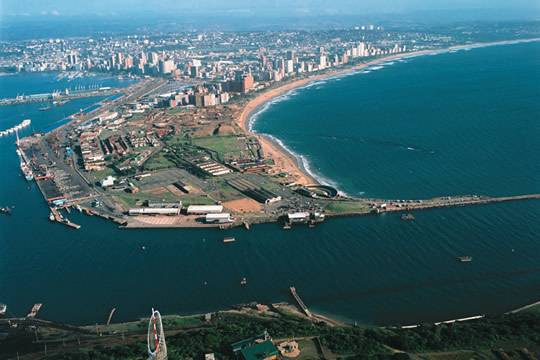
Vetch’s pier (Durban, South Africa) has redeemed itself by becoming a marine sanctuary. Historically, however, it is an expensive relic, a monument to flawed planning, poor workmanship and economic frustration.

Although potentially a major seaport, Durban’s bay was little more than an inaccessible lagoon before dredging and the construction of the north and south piers over a century ago unlocked its real worth. Nature guarded its entrance in the form of shifting sandbanks which made access to the safety of the inner harbor unpredictable and hazardous. As a result entry was restricted to small vessels drawing less than three metres of water. All other shipping had to anchor offshore and endure the extremes of wind and sea. Not surprisingly 66 ships were blown ashore on Durban’s beachfront between 1845 and 1885.

It was obvious from the outset to the British settlers that Natal’s economic prospects depended on the development of Durban harbour. For almost 50 years from 1850 the ‘harbour issue’ was the hardy annual of Natal politics and the correspondence columns of newspapers. Various plans were put forward, that of Captain James Vetch gaining the approval of Governor John Scott in 1857. Vetch, an engineer attached to the Admiralty in London, never actually visited Durban, yet he produced a report and plan to improve the harbour. Despite misgivings, it was rushed through the Natal legislature in October 1859 along with its hefty price tag -£165,000.
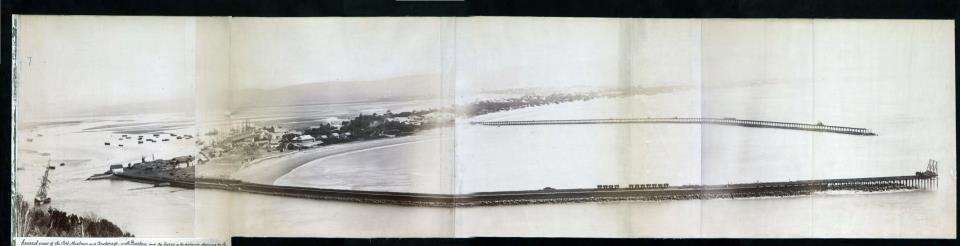
Vetch’s solution was to enclose the natural entrance to the harbour by means of two breakwaters, one curving northwards from the base of the Bluff headland and the other curving southwards from present day Ushaka beach. Besides the engineering challenge which that posed, Vetch’s plan ignored the prevailing wind an ocean current directions. But in August 1861 when construction of the northern breakwater commenced, such concerns were lost amidst the optimism of a growing economy and the belief that Vetch’s plan would resolve the frustrations of navigating the entrance to the harbour. A comment in the Natal Mercury on 13 July 1861 summed up the buoyant mood of colonists when it stated that Vetch’s plan would herald ‘new circumstances and be the scene of a busy, all pervading and prosperous industry.

The site engineer, George Abernethy, encountered difficulties with Vetch’s plan from the outset. The method of construction was impractical: sections of wooden framework filled with rubble simply collapsed in the surf, moreover, the contractor, Thomas Jackson, lacked the capacity to carry out the construction. Early in 1863 it was apparent that the six year project was stalled. Yet £90,000 of the budgeted £165,000 had been spent while less than ten percent of the work had been completed. Financial reasons and poor construction methods saw  Vetch’s pier abandoned in 1864. In time the ocean reduced it to what it is today. Both in design and placement, the small craft harbour now being proposed ignores the same natural forces that made Vetch’s plan impractical. Besides, it specifically ignores the pounding effects of the cyclone swells which emanate occasionally from the Mozambique channel.

In May 1864 a furious Natal Legislative Council demanded a detailed report on the Vetch project. In June the contractor walked off the job and left Natal. The Report tabled in August proved an embarrassing indictment. It found that no oversight had been exercised by Treasury officials on certificates for amounts payable and that the contractor had received payments in excess to that which he was entitled. It was also noted that freight for some materials had been paid for twice; that material had been ordered which was in excess of actual needs. To top it all, £113,500 or 70 percent of the allocated budget, had been spent on a project that was scarcely 20 percent complete and the problem of accessing Durban harbour was no closer to resolution.

Far from invigorating Natal’s economy, the submerged finger of an incomplete pier named after its designer, Captain Vetch, proved a drain on the colonial treasury for years to come, interest on the loan for the project amounting to about 17 percent of total revenue. A project born out of economic frustration left a legacy of even greater economic frustration. Until the 1880s Durban harbour languished having gained a reputation as a port of high charges and long delays. But from 1886 when dredging operations began, followed by extension of the breakwaters, the depth of the entrance channel improved. By 1892 it averaged over four metres allowing larger ships to cross the bar.

But the way forward was dogged by controversy. Two camps developed: one which saw the solution in dredging, the other in the extension of the north pier. So great was the agitation that it led to the fall of the government of Harry Escombe in October 1897. Ultimately, a combination of the scour facilitated by the north and south piers and the effects of dredging resolved access to Durban harbour. In 1904, the Armadale Castle, drawing 6,7 metres of water, became the first mail-steamer to enter the port.

Although incomplete and a non-starter, the remains of Vetch’s pier should serve as a reminder of the power of the ocean and the need for fearless scrutiny of public projects. Source: Duncan Du Bois (Ward Councillor) and Facts About Durban

New Durban dug-out Port – tenders released

State-owned freight logistics group Transnet has followed up its recent R1.8-billion purchase of the old Durban International Airport site, in KwaZulu-Natal, with the release of a number of separate tenders in support of its proposal to develop, in phases, a new dig-out port on the property.

The first phase, which was currently scheduled for completion in 2019, was expected to require an initial investment of R50-billion, with the balance of the project to be completed by 2037.

The first request for proposals (RFP) relates to the appointment of a transaction adviser for the project. The adviser will provide technical assistance relating to the establishment of a business model for the development of the harbour.

Transnet currently envisages a phased development of a facility comprising 16 container berths, five automotive berths and four liquid bulk berths. Its high-level infrastructure plan indicated that the container terminals would have the collective capacity to handle 9.6-million twenty-foot equivalent units, or TEUs, once all four phases were completed. That, the group argued, would be sufficient to address South Africa’s container capacity requirements to 2040.

The transaction adviser would be expected to complement and supplement the work, resources and expertise that Transnet had dedicated to the project internally. The consultant was expected to cover the legal, financial, environmental, economic and technical aspects of the proposed development. In order to facilitate the opportunity for financial planning and policy engagement, it is necessary to complete the assignment within an 18-month period.

The second RFP invites consultants to conduct conceptual and prefeasibility studies for the development . Transnet will employ a four-stage project lifecycle process for its capital expansion projects, with the two front-end loading (FEL) studies making up the first two stages. FEL implies upfront planning and engineering in order to reduce, as much as possible, the risk of scope creep and to ensure financial accuracy for the project. The FEL-1, or conceptual study, is scheduled to be completed by the end of March 2013, while the FEL-2 study should be finalised by the end of March 2014. Source: Creamer Media