SA identifies ten potential ‘special economic zones’

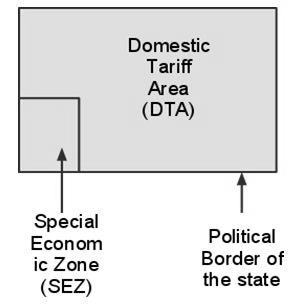
sez-figure-1The Minister of Trade and Industry, Dr Rob Davies says ten potential Special Economic Zones (SEZs) have been agreed upon with provinces. He told the Portfolio Committee on Trade and Industry in Parliament on Friday, that these potential SEZs must still go through a feasibility study to determine their viability. The Department of Trade and Industry was presenting the Special Economic Zones (SEZs) Bill to the Portfolio Committee.

The main objectives of the SEZ Bill, amongst others, are to provide for the designation, development, promotion, operation and management of Special Economic Zones; and to provide for the establishment of the Special Economic Zones Board. The SEZs are designed to promote socio-economic benefits and creation of decent work.

The purposes of the SEZs include facilitating creation of an industrial complex with strategic economic advantage for targeted investment and industries in manufacturing sector and tradable services. This will also focus on developing infrastructure to support development of targeted industrial activities and attracting foreign and domestic direct investment.

There are different categories of the SEZs that South Africa will make use of, namely:

  • A free port;
  • A free trade zone;
  • An industrial development zone; and
  • A sector development zone.

Hopefully Trade and Industry will clarify for both public and investors the differentiation between the four options. From a Customs and Tax perspective there could be divergent legal requirements, formalities and processes. The sooner that this can be finalised all the better for the various ‘zones’ to commence with their vigorous marketing campaigns.

Davies told the Committee that the Industrial Development Zones (IDZs) will continue to be one of the elements of the Special Economic Zones (SEZs). The IDZ programme was initiated in 2000 and four zones were designated, with three currently operational: Coega (Port Elizabeth), East London and Richards Bay. The IDZs including the current ones are types of the SEZs and once the new the Act is passed they will form part of the Special Economic Zone programme, according to the minister.

The existing industrial development zones (IDZs) were beginning to gain traction because of the way they were managed and promoted. He cited the example of the East London IDZ, which had a private sector investment of R600 million in 2009 compared to R4bn in 2012/2013.

Work under the current IDZ regulations include the Saldanha Bay which is about to be designated. The Saldanha Bay Feasibility Study published in October 2011, found that there was sufficient non-environmentally sensitive land upon which an IDZ development could take place. Total direct and indirect jobs are expected to amount to 4 492 in the first year, 8 094 in the second year, 7 274 in the third year, 10 132 in the fourth year and 14 922 in the fifth year. From the seventh year around 14 700 direct and indirect jobs would be sustained in the province as a result of the IDZ. Saldanha Bay is an ideal location for the development of an Oil & Gas and Marine Repair Cluster. The Port of Saldanha Bay is also competitively located between the oil and gas developments on the West Coast of Africa, as well as the recent gas finds on the East Coast of Africa.

The SEZ bill would provide a legal framework for the zones and for granting special incentives for businesses operating there such as duty free inputs. He said major areas of agreement had been reached between business‚ labour and community representatives in the National Economic Development and Labour Council. Labour wanted to have three Nedlac representatives on the 15 member SEZ boards and the department had agreed to this on condition they met the criteria in terms of qualifications and knowledge. Nine representatives would be from government and there would be three independent experts.

Business argued against municipalities having the right under the bill to propose SEZs as it said this was not their core business and they lacked the capacity for this. The department however decided to retain this clause‚ October said‚ because there were municipalities which did have this capacity and in any event the applications for SEZs would undergo rigorous evaluation.

The department also decided to go ahead with the idea of these SEZs being operated on a triple PPP basis (public private partnerships) even though labour disapproved of this on the grounds that it would be a form of private ownership. Sources: Engineering News & businessnews.howzit.msn.com

Airport Cities – a view to a different trading environment for South Africa?

ace_skyscraper_237x352aerotropolisThis past week witnessed the first Airport Cities Convention in South Africa. It came at the timely announcement of the country’s first aerotropolis earmarked for development around Oliver Tambo International airport (ORTIA) and the surrounding industrial complex. While the City of Ekurhuleni gets prized possession of the ‘aerotropolis’ (in title) by virtue of the location of ORTIA, Johannesburg is set to benefit perhaps more greatly due to it being the epi-centre of South African commerce and trade. This represents significant ‘hinterland’ development which bodes well for future multi-modal transport and shipping activity for the Gauteng region and the country as a whole.

In support of government’s National Infrastructure Plan, is Strategic Integrated Project (SIPs) 2, otherwise known as the Durban-Free State-Gauteng logistics and industrial corridor. Infrastructure upgrades are already occurring to road and rail networks linking to the key cargo and distribution hub, City Deep. While the express purpose of an inland port, terminal or logistics hub is to provide relief for congested seaports, it likewise creates possibilities and opportunities to synergise with other transport forms. This serves to maximise capacity through integration offering local suppliers and foreign customers a host of trade, shipment and logistics options.

Foremost, an inland port is a hub designed to move international shipments more efficiently and effectively from maritime ports inland for distribution throughout the heartland. Think of the logistics of inbound freight as a barbell. At one end, inbound containers flood into a seaport, spreading across local storage facilities as they are unloaded. If they aren’t moved quickly enough from the port, they create a bottleneck that bogs down the entire distribution cycle as containers wait longer to get off ships, to get into warehouses, and to get back out and onto trucks and trains for final shipment. The Emergence of the Inland Port (credit: Jones, Lang, LaSalle)

In a world of increasing global integration, focussing more on global distribution of goods and services, it behoves our country to understand the dynamics of global trade and what in fact makes commerce tick. Today’s number 1 spot is not going to remain intact without continuous re-evaluation and innovation. It would indeed be arrogant (if not suicidal) of us to think that our current prominence and strength in the sub-saharan region will remain without innovation for the future. At the same time South Africa should welcome increased competition from its neighbours, both immediate as well as further north in Africa. The latest fDI 2013 Report indicates a decrease in foreign direct investment in South Africa (-5%) and Kenya (-9%), while at the same time a significant increase in foreign investment in Nigeria (+20%) and Egypt (+20%), respectively. True, the latter countries are far removed from South Africa’s immediate ‘playing field’, however do we fully understand the drivers which cause the named countries to attract FDI at such an increasing rate – are they capitalising somehow on our deficiencies, shortcomings, or lack of opportunism?

The National Infrastructure Plan can only be seen as a single cog in the machinery to keep South Africa competitive. And, while it is encouraging to witness these developments, a corresponding economic and commercial enterprise on both government and private sector is required to maximise these developments. Some smidgen of hope could lie in the Department of Trade and Industry’s economic principles which support Industrial Policy Action Plan (IPAP) and Special Economic Zones (SEZs), for example, however, several business commentators have already voiced concerns on exactly how these support the Infrastructure Plan. A further question lies in our country’s ability to facilitate trade, not only at our ports, but more importantly the ‘hinterland’ of our country and the neighbouring regions. Do our existing and future laws adequately provide for expeditious and facilitative procedures in the treatment of import and export goods? Are we sure that we are addressing all real and potential trade barriers?

Anyone desiring more information on the ‘aerotropolis’ concept should find some interest at the following websites – Aerotropolis.com, and the City of Ekurhuleni

Durban Dig-Out Port – First Stakeholder Engagement Concluded

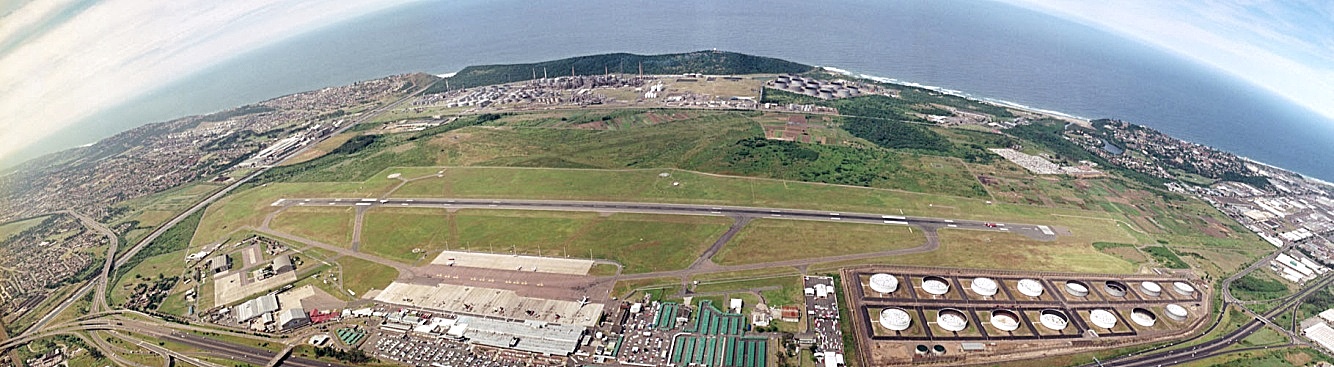
Old Durban airport - site for new Dig Out Port (Picture credit: ACSA)

Old Durban airport – site for new Dig Out Port (Picture credit: ACSA)

Transnet has concluded the first in a series of early stakeholder engagement sessions with local organisations on the proposed Durban dig-out port project. If built, the new port will be to the south of Durban on the site of the former Durban International Airport and 15 minutes by car from the existing port. It has been proposed that it will consist of 16 container berths, three Ro-Ro berths for the automotive business, and several oil and product tanker berths.

The engagement sessions just concluded form an integral part of the project’s concept phase which includes the development of a Sustainable Port Development Framework (SPDF) that will inform all future designs as well as operations. Transnet commenced with high-level technical and environmental studies in 2012 as part of the proposed Durban dig-out port project process. The current concept phase is scheduled to conclude in July this year, and comprises the generation of a number of technical design options.

The engagement sessions involved key representatives from local business, property, environmental and civic associations who met in order to comment on a discussion document which was distributed to them in mid-February 2013. The discussion document included important information on the background to, and process involved in, validating the viability of constructing a major container port on the site of the old Durban International Airport.

The sessions were held at various public venues and were facilitated by an independent sustainability consultancy. All feedback obtained during the engagement sessions was captured and will be factored into the development of the SPDF which will ensure the effective implementation of sustainability objectives throughout the life cycle of the proposed port project.

Along with promoting the long-term sustainability and operational excellence of the port, the framework also seeks to integrate environmental and social principles into the planning process. The series of engagement sessions, which will continue throughout the project’s lifespan, will also form part of the Department of Transport’s requirement for engagement during the strategic level environmental assessment as part of the legislative requirement for the promulgation of the port.

The process of moving from the current concept phase through the pre-feasibility and feasibility phases, and finally to actual implementation is anticipated to take approximately four years. The next phase, which is the pre-feasibility phase, is expected to proceed in July this year when the viability of the preferred design option will be thoroughly investigated.

The proposed port forms a key pillar of Government’s Strategic Integrated Projects (SIPs) to upgrade the Durban-Free State-Gauteng Freight Corridor (otherwise known as SIP2 in the National Infrastructure Plan). Source: Ports.co.za

Parallel imports in South Africa – Some sound advice

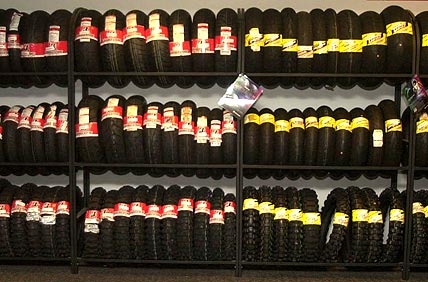
newTyres_m_mThe following article was penned by lawfirm Edward Nathan Sonnenberg and featured on Lexology.com. It was reported recently that bikers had protested outside Parliament about proposed measures which would have the effect of making life very difficult for those businesses who are involved in the parallel importation of motorbikes. The report did not make it clear exactly what the proposed measures comprised, but it did suggest that they involved special testing of bikes that are brought into the country by parallel importers, together with some system of issuing certificates for such bikes. Measures that, the report suggested, would not only require parallel importers to raise their prices, but might even put them out of business altogether, leaving authorised suppliers as the only source of motorbikes in the future. Amongst the protesters were the Parallel Importer of Motorcycles Traders Association of SA and Cosatu, which said that it was worried about job losses.

So just what are parallel imports, or ‘grey goods’ as they are sometimes known? Well, a foreign manufacturing company will normally appoint an authorised distributor for its product in South Africa. That distributor is then responsible for sales of the product, after-sales service and, of course, marketing, advertising and all those other good things that go into brand-building. A parallel importer is someone who buys that same manufacturer’s product in another country and imports it into South Africa for resale. The reason why the parallel importer bothers to do this is quite simple- the product is often so much cheaper abroad that the parallel importer can undercut the authorised distributor and still make a profit.

Needless to say the authorised distributor does not like the parallel importer, because the parallel imports threaten the authorised distributor’s business. The manufacturer generally doesn’t like the parallel importer much either – not only does it have to deal with complaints from an unhappy authorised distributor, but it also has no control over what the parallel importer does with the brand. But can the manufacturer or the authorised distributor actually do anything to stop the parallel imports?

Parallel importation is certainly legal under trade mark law. That’s because Section 34 (2) (d) of the Trade Marks Act provides that a trade mark registration is not infringed by ‘the importation into, or distribution, sale or offering for sale in the Republic, of goods to which the trade mark has been applied by or with the consent of the proprietor.’ This makes perfect sense if you bear in mind that a trade mark is essentially an indicator of origin, and that trade mark law is basically there to ensure that there is no consumer confusion. In the case of a parallel import, the consumer gets exactly what they expected, namely a product that was made by or under the control of the company that owns the trade mark – contrast this with the situation where the consumer buys a rip-off or counterfeit, where they get something very different from what they expected.

There is a proviso to this, and that is that the parallel importer must be quite open about the fact it is not an authorised distributor. That’s because Section 25 (2) of the Consumer Protection Act provides that ‘a person who markets any goods that bear a trade mark, but have been imported without the approval or licence of the registered owner of that trade mark, must apply a conspicuous notice to those goods in the prescribed manner and form.’

So, if you’re a parallel importer you should be OK provided that you make it clear that you are not the authorised distributor of the product. But there are other legal matters to consider, and the first of these is copyright. Copyright might be an issue where the product that’s being imported bears a trade mark that consists of more than just a name, but also something that could be described as an artistic work – this might be a logo, or it might simply be a stylised form of a name. There was a case a number of years back where a foreign manufacturer successfully used copyright law to stop parallel importation of cassette tapes. But it was an extraordinarily contrived thing: time to concentrate hard…

The Copyright Act provides that copyright is infringed where someone imports an article into South Africa in circumstances where they knew that the making of that article would have been an infringement if the company that made it had in fact made it in South Africa. To use this provision, the cassette tape manufacturer had to go through a number of hoops: it had to assign the South African copyright in the label to the authorised distributor; it then had to warn the parallel importer that it was importing articles that – had they been made by the manufacturer in South Africa – would have infringed the authorised distributor’s copyright; finally when the parallel importer ignored the warning (probably because it didn’t understand it!) it could sue for infringement. There has, as far as I’m aware, never been another case like this and one wonders whether – in an age where intellectual property law is considered in the light of constitutional and competition law and policy – the same result would be achieved if a similar case ever went to the highest court.

Finally it’s worth remembering that, in the fairly rare event of the product that’s imported being covered by a patent or a design registration, there may well be an issue. Section 45 of the Patents Act says that a patentee has the ‘right to exclude others.. from importing the invention’, whereas Section 20 (1) of the Designs Act says that the owner of a design registration has the right to exclude ‘other persons from …importing … any article included in the class in which the design is registered and embodying the registered design.’

Storm in a Teacup – South Africa to apply “the system” to protect Rooibos

South African rooibos (Afrikaans for red bush) is caffeine-free, high in anti-oxidants and minerals, and traditionally grown in the Cederberg region, 250 kilometres to the north of Cape Town. Credit: John Fraser/IPS

South African rooibos (Afrikaans for red bush) is caffeine-free, high in anti-oxidants and minerals, and traditionally grown in the Cederberg region, 250 kilometres to the north of Cape Town. Credit: John Fraser/IPS

A trademark system which is used to protect Europe’s finest wines, cheeses and hams could soon brew up benefits for a humble tea from a remote region of South Africa.

The trade protection system called Geographic Indications (GIs), which is highly favoured by the eurocrats of Brussels, could be used to protect a South African red tea, locally known as rooibos (Afrikaans for red bush) as French firm Compagnie de Trucy is trying to secure the exclusive rights to market it in France.

GIs are increasingly important in the global trade arena, although it is wrong to think they offer enormous bulk trade opportunities. This form of food copyright already applies widely to specialty products, which can be linked to a specific region – such as French champagne, Parma ham and many types of cheese.

They (GIs) open-up niche markets for increased value add products, which taken together can total something significant. In addition, they involve cutting-edge frontiers in trade that largely rely on intellectual property rights for value, and are also linked to trade issues regarding brands and logos.

South African rooibos is caffeine-free, high in anti-oxidants and minerals, and traditionally grown in the Cederberg region, 250 kilometres to the north of Cape Town. It is growing in popularity worldwide due to its healthy properties, which helps to explain Compagnie de Trucy’s move to obtain marketing rights.

The issue has been elevated to diplomatic level between the European Union and South Africa at a time when both parties hope to finally conclude negotiations on updating their wide-ranging trade framework, after more than a decade of discussion. The GI system has enabled EU countries to clinch niche markets for brands such as champagne, which have enormous growth potential on a global basis.

While China as a country is South Africa’s biggest trading partner, the EU as a bloc is more important in value terms, and there are powerful arguments that both sides should expand GIs in their future relations. Soekie Snyman, the spokeswoman for the South African Rooibos Council, which represents rooibos producers, told IPS that the red tea needed to receive official trademark status in South Africa itself before it could qualify as a GI.

Rooibos, Aspalathus linearis (N.L.Burm.) R.Dah...

Rooibos, Aspalathus linearis (N.L.Burm.) R.Dahlgr., Clanwilliam, Western Cape, South Africa (Photo credit: Wikipedia)

The EU supports the protection of indigenous crops, with one of the main requirements being that the product must be protected in its country of origin, and we are nearly ready to file for trademark protection in South Africa. Rooibos is a unique plant, coming from the Cederberg mountain area. It is a caffeine-free beverage.

The EU ambassador in Pretoria, Roeland van de Geer, confirmed in a news release in March that he received a request from South Africa’s Minister of Trade and Industry Rob Davies “for the protection of South African food product names as Geographic Indications in the EU.

As well as rooibos, there have been requests for Honeybush, which is another type of tea, and for lamb from the Karoo desert region. The development of a GI system for South African farmers will reinforce the uniqueness and quality of South African products. South African wine makers have used the GI system for many years and have found it an effective way to protect famous names like Paarl and Stellenbosch.

There is a range of other South African products that might also be eligible for GI protection, such as ostrich and springbok meat, and the marula fruit from which the Amarula liquor is made. Meanwhile, the same criteria could apply to produce from other countries of the Southern African region – such as Mozambican prawns, Botswana beef and Namibian oysters. Source: AllAfrica.com

MSC ship sets Durban Container Terminal record

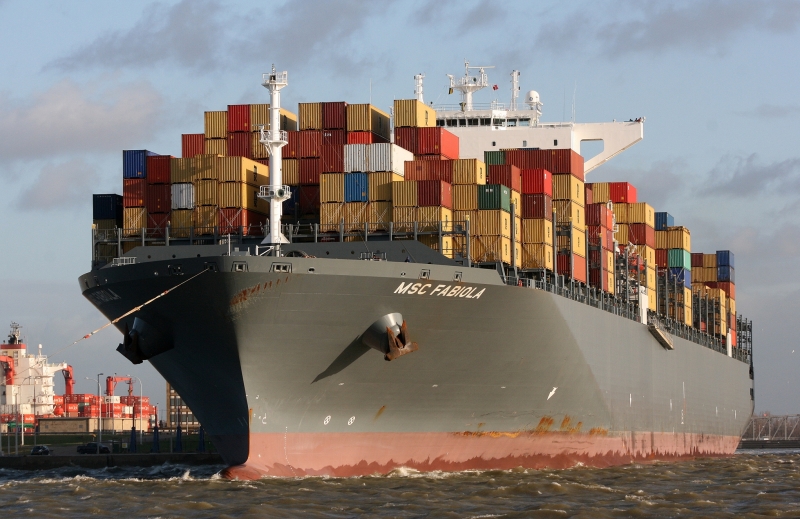
MSC Fabiola - sets new record for Durban container vessel capacity

MSC Fabiola – sets new record for Durban container vessel handling capacity


The visit to Durban, a fortnight ago, of the MSC FABIOLA has again raised the limit in terms of container ship sizes to call at the port. The previous largest box ship to call at Durban was the 11,660-TEU MSC Luciana, whereas MSC Fabiola can carry up to 12,562-TEU.

Obviously the ship was not fully laden otherwise the port would not have been able to accommodate the ship. The deepest berths at the Durban Container Terminal are 12.8m and those at Pier 1 are about the same.

MSC Fabiola is a charter vessel and is currently deployed on MSC’s pendulum service between Northern Europe and Singapore via Durban, Cape Town and Ngqura. The rotation is Northern Europe ports, Cape Town, Ngqura, Durban, Singapore, Durban, Ngqura, Northern Europe.

The next objective to aim at is to have the 14,000-TEU box ships deployed on the South African service, defying all previous projections, as indeed has been the case with the 12,500-TEU MSC Fabiola.

Of course, the main obstacle in having these post panamax ships calling at Durban is that the country’s main container port lacks a deepwater berth. This is despite the entrance channel having been dredged and widened several years ago to -19m decreasing to – 16.5m in the harbour inside entrance. In the process South Africa has once again been exposed by rapidly moving circumstances and questions need to be asked as to why the process of providing Durban with deep water berths is being delayed. Source: SAPorts.co.za

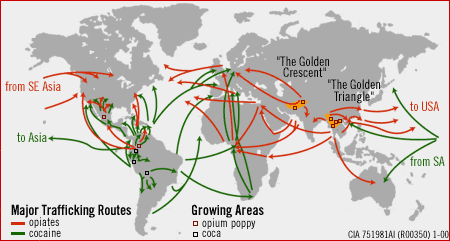
Southern African Narcotic Trafficking Landscape

Drugroutemap

See what the CIA’s Factbook has to say about Southern African countries and their role in the international narcotics supply chain –

Zimbabwe A transit point for cannabis and South Asian heroin, mandrax, and methamphetamines en route to South Africa
Zambia A transshipment point for moderate amounts of methaqualone, small amounts of heroin, and cocaine bound for southern Africa and possibly Europe; a poorly developed financial infrastructure coupled with a government commitment to combating money laundering make it an unattractive venue for money launderers; major consumer of cannabis
South Africa A Transshipment center for heroin, hashish, and cocaine, as well as a major cultivator of marijuana in its own right; cocaine and heroin consumption on the rise; world’s largest market for illicit methaqualone, usually imported illegally from India through various east African countries, but increasingly producing its own synthetic drugs for domestic consumption; attractive venue for money launderers given the increasing level of organized criminal and narcotics activity in the region and the size of the South African economy
Mozambique Southern African transit point for South Asian hashish and heroin, and South American cocaine probably destined for the European and South African markets; producer of cannabis (for local consumption) and methaqualone (for export to South Africa); corruption and poor regulatory capability make the banking system vulnerable to money laundering, but the lack of a well-developed financial infrastructure limits the country’s utility as a money-laundering center
Angola Used as a transshipment point for cocaine destined for Western Europe and other African states, particularly South Africa

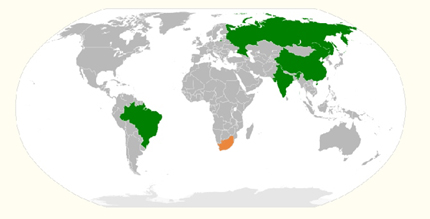
Supply Chain Foresight – a Perspective on BRICS and the South African Supply Chain

To reap the benefits of its recent membership of BRICS, South African businesses are looking at gaining a competitive edge through achieving global-standard supply chain performance, according to Supply Chain Junction, Manhattan Associates' Geo Partner in South Africa.

To reap the benefits of its recent membership of BRICS, South African businesses are looking at gaining a competitive edge through achieving global-standard supply chain performance, according to Supply Chain Junction, Manhattan Associates‘ Geo Partner in South Africa.

To reap the benefits of its recent membership of BRICS, South African businesses are looking at gaining a competitive edge through achieving global-standard supply chain performance, reports Supply Chain Junction, Manhattan Associates’ Geo Partner in South Africa. Unlike many other countries, South Africa was cushioned from the full impact of the world financial crisis thanks to the strict pre-existing credit controls it had in place. There were some knock on affects from close trading economies but over the last 15 months South Africa has enjoyed a growth economy. The International Monetary Fund (IMF) say this group will account for 61 per cent of global growth in three years time.

While South Africa’s economy (£506.91bn GDP) is dwarfed by those of the original BRIC constituents, the country is seen as the gateway to the continent of Africa, which as a whole has an equivalent sized economy ($2,763bn GDP), a population of one billion and rich resources. This has all made it a valued investment region for China in particular.

However, there are many cultural, logistical and geographical challenges the further one travels North from South Africa towards the Sahara. As an example, while there is 24,487 km of rail track in South Africa, there is just 259 km in Uganda; there are 92 mobile phones per 100 people in South Africa but just two per 100 in Eritrea. However, there is a great deal of raw potential, especially in countries such as Angola and Nigeria.

Participation in BRICS will drive a new competitiveness for South Africa and a key factor will be developing world-class supply chain management. Unlike in Europe, the US and Australia, few supply chain directors in South Africa sit on the board, which makes it harder for them to demonstrate how effective management of the supply chain can deliver competitive advantage. But this is likely to change as companies realise that they must align their supply chain and business strategies. If the recession failed to drive home the need for this, then the presence of Chinese companies in Africa will create significant pressure to do so.

This was an observation of the 2011 Supply Chain Foresight survey, conducted by Frost & Sullivan, which annually samples the opinions of South African supply chain executives. It found that while over three quarters of the respondents feel that the supply chain and business strategies of their companies are aligned, less than a third felt that the supply chain and logistics operations are fully optimised. Businesses are looking at how to optimise their distribution networks through building new facilities, streamlining existing processes or collaboration between trading partners. This has seen a lot of current activity surrounding warehouse management systems, forecasting, planning, replenishment and collaboration technologies, in particular.

Two thirds of respondents are considering investment in technology to enable collaboration with service providers. With the recession claiming many key suppliers the environment is changing from one where major companies squeeze suppliers on cost to one where they adopt a more collaborative approach. Cost reduction was the focus of the past recession, but now the objective is to satisfy customer expectations and to deliver value. Just over half of respondents to the Supply Chain Foresight survey cited customer service as the top supply chain objective. Reducing waste and improving efficiency in the supply chain are the perennial shorter term challenges with companies looking for better forecasting and planning tools to bring down inventory and shorten lean times. One interesting aspect of South African supply chain technology is the large number of in-house designed legacy systems, which is a consequence of the country’s isolation during the times of Apartheid. A propensity towards in-house designed systems remains today.

In terms of industry sectors, retail dominates but it remains firmly entrenched in the traditional channels. While some retailers have online retail websites, online and multi-channel is by no means a significant part of the current retail picture. Internet use is still quite low compared to other countries there are 4.42 million internet users in a population of 49 million and this figure is expected to remain low for some time yet. A further obstacle to the expansion of online sales is a high crime rate which leads to security issues in delivering goods to customers.

Wholesale distribution is quite small in size and complexity so the supply chain challenges tend not to be too complicated. There remain companies that feel they have been reasonably successful – being self-sufficient – and want to maintain that approach, along with a general tendency to look within, when it comes to benchmarking supply chains. However, a growing number of companies in South Africa recognise that there are other organizations across the globe doing similar things, but perhaps, a lot more efficiently.

Supply chain managers within these businesses are evolving a mindset focused on global best practice and the means of achieving it. These South African companies want to be best in their class. By building knowledge, benchmarking and improving against those benchmarks the win for this retailer is a supply chain that gives competitive advantage. As in other countries, companies looking to benefit from external expertise and a reduction in their capital costs will often outsource their logistics to third party logistics (3PL) operators. South Africa has numerous small local players and a handful of large lead logistics providers who tend to drive innovation. It is a small but highly competitive market. Logistics infrastructure and skills shortage in the supply chain continue to be huge issues in South Africa. The Supply Chain Foresight survey found that to deal with the skills shortage, in almost all areas companies either expose employees to new jobs through rotation, or development programs, or mentoring. These are generally in-house driven schemes. South Africa is an emerging market that is growing fast and offers a tremendous wealth of opportunities. In fact, the country has a great many successful businesses, and while many talk about becoming world class, many have already achieved it. Source: Supply Chain Junction

City Deep Inland Terminal [port] to be hit hard by Customs Bill

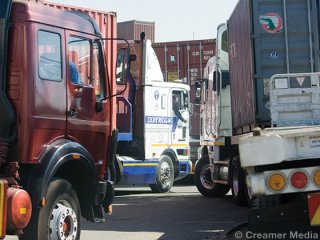
Trucks at Transnet Freight Rail's City Deep Terminal (Engineering News)

Trucks at Transnet Freight Rail’s City Deep Terminal (Engineering News)

Following up on last year’s meeting (click here!) of the minds, convened by the JCCI, a recent meeting in Johannesburg placed fresh emphasis on the dilemma which impending changes contemplated in Customs Draft Control Bill will have for the import and logistics industry in particular. The following report carried by Engineering News highlights trade’s concerns which are by no means light weight and should be addressed with some consideration before the Bills come into effect. Gauging from the content below, there is a clear disconnect between business and policy makers.

The closure of Johannesburg’s inland port seemed to be a “done deal” as Parliament deliberated the recently tabled Customs Control Bill that would leave the City Deep container depot invalid, Chamber of Commerce and Industry Johannesburg (JCCI) former president Patrick Corbin said on Friday.

The promulgation of the South African Revenue Services’ (Sars’) newly drafted Customs Control Bill, which, in conjunction with the Customs Duty Bill, would replace the current legislation governing customs operations, would have a far-reaching impact on the cost and efficiencies of doing business in South Africa and other fellow Southern African Customs Union (Sacu) countries, he added.

The Bill, which was the product of a three-year development process within the National Economic Development and Labour Council, declared that all imported goods be cleared and released at first port of entry. This was part of efforts by customs officials and government to root out any diversion and smuggling of goods, ensure greater control of goods moving across borders and eliminate risks to national security.

Speaking at the City Deep Forum, held at the JCCI’s offices in Johannesburg, Corbin noted, however, that City Deep had operated as an inland port for the past 35 years, easing the load on the country’s coastal ports, which were already strained to capacity. Despite customs officials assuring the chamber that the operations and facilities in City Deep/Kaserne would retain its licence as a container depot, he believed customs had failed to recognise the critical role City Deep had played in lowering the cost of business, easing the burden on South Africa’s ports and ensuring ease of movement of goods to neighbouring countries. As customs moved full responsibility of container clearances to the ports, port congestion, inefficiencies, shipping delays and costs would rise, and jobs would be lost and import rail volumes decreased, he noted.

Economist Mike Schussler added that the closure of the City Deep inland port operations would add costs, increase unreliability and induce “hassles”, as the Durban port did not have the capacity to handle the extra volumes and its productivity and efficiencies were “questionable” compared with other ports.

“The volume of containers going to overstay or being stopped for examination in City Deep [will] need to be handled by [the coastal] ports. If they can’t cope with the volume at the moment, how are they going to handle increased volumes,” Iprop director Dennis Trotter questioned. He noted that only the containers cleared 72 hours prior to arrival would be allocated to rail transport. Those not cleared three days before arrival would be pushed onto road transport to prevent blocking and delaying rail operations.

This, Schussler said, would also contribute – along with port tariffs and the cost of delays – to higher costs, as road transport was more expensive than rail.

He pointed out that South Africa was deemed third-highest globally in terms of transport pricing. It would also result in less rail capacity returning for export from Johannesburg, further leading to increased volumes moving by road from City Deep to Durban.

Sacu countries, such as Botswana, would also be burdened with higher costs as they relied on City Deep as an inland port. Trotter noted that the region would experience loss of revenue and resultant job losses. Over 50% of South Africa’s economy was located closer to Gauteng than the coastal ports. Johannesburg alone accounted for 34% of the economy, said Schussler, questioning the viability of removing the option of City Deep as a dry port.

However, unfazed by the impending regulations, Transnet continued to inject over R1-billion into expansion and development opportunities at City Deep/Kaserne. Corbin commented that Transnet had accepted the assurances from customs that “nothing would change and the boxes would still be able to move seamlessly once cleared.” The City of Johannesburg’s manager of transport planning Daisy Dwango said the State-owned freight group was ramping up to meet forecast demand of the City Deep/Kaserne depot.

The terminal’s capacity would be increased from the current 280 000 twenty-foot equivalent units (TEUs) a year, to 400 000 TEUs a year by 2016, increasing to 700 000 TEUs a year by 2019. Transnet aimed to eventually move to “overcapacity” of up to 1.2-million TEUs a year. Dwango said projections have indicated that by 2021, the City Deep/Kaserne terminals would handle between 900 000 and one-million TEUs a year. Source: Engineering News

Should the Rhino horn trade be legalized?

black-rhino-2Rampant poaching in Africa is a cause of major concern to wildlife organizations. Many rhinos are killed every year mainly for Asian markets. In Vietnam, rhino horn is believed to be miraculous, able to heal cancer.

A total of 158 rhino have been poached since the beginning of the year, according to the South African Department of Environmental Affairs. Over 630 rhino were killed by poachers in South Africa during 2012.

If the killing of rhinos continues to increase, African wild rhinos could disappear within a few years. The best protected rhinos live in Kenya. Four of them, known as northern white rhinos, are the last of their kind. Each one of them has four bodyguards to guarantee its survival. But most of the other 25,000 rhinos in Africa do not enjoy such protection. The trade in rhino horn is illegal. However it is flourishing, most of the horn coming from South Africa, where most rhinos live. Hunters are willing to pay up to 20,000 euros ($26,000) to shoot a rhino and take the trophy home.

Rhino poaching on the rise

Rhino poaching has increased tenfold in the last five years, according to the nature and animal protection organization World Wide Fund for Nature (WWF). The conference singled out Vietnam as the main importing country and Mozambique as a major transit country for rhino trafficking. This is the first time that countries were named at CITES.

Vietnamese believe that rhino horn powder can cure cancer

The two countries now have a few months’ time to address the problem constructively. Mozambique is poor but CITES’ regulations are also valid there. To learn how to fight against poachers effectively, the country may seek advice from environmental and conservation organizations. In the case of Vietnam, lack of political will seems to be the major problem. Even Vietnamese embassy staff were involved in the illegal horn trade. Vietnam is now under pressure. By January 2014, Vietnam as well as Mozambique have to prove that they are able to fight against horn trafficking from southern Africa, or else sanctions will be imposed.

Superstition hikes the price

In addition to stricter controls, the WWF and other animal welfare organizations are implementing awareness campaigns. In Vietnam there is a belief that the powder from the horn of the rhinoceros can help against fever, prevent a hangover or even cure cancer. These claims however, are dismissed by scientists. The horn consists of the same material as fingernails and hair. Nevertheless, Vietnamese are willing to pay more than 40,000 euros per kilogram, more than the price of gold.

Thousands of wild rhinos have been killed and their horns trafficked to Asia

South African biologist Duan Biggs says awareness campaigns and banning illegal trade control will not help to solve the problem. Shortly before the CITES conference, Biggs, together with three other scientists, wrote in the journal “Science”, calling for the legalization of the horn trade. “We have a buffer of a very healthy population of rhinos to work with,” Biggs said. He is convinced legalization is the right course to take. If that doesn’t work, it can always be stopped again. “If we wait longer and the current situation continues, we will lose the opportunity to try an alternative strategy.”

Legal breeding instead of illegal slaughter

Since horn grows like fingernails, rhinos should be bred specifically for the horn trade. The horn could be cut off when the animal is under anaesthetic. That way the animal doesn’t suffer pain. This is done to a quarter of the animals living in South African private game reserves, where dead animals’ horns are not allowed to be sold. If these horns are legally harvested and put on the market, prices and poaching would decrease, argues Biggs.

The WWF and many other organizations vehemently opposed the legalization theory. A boom in demand and even worse poaching could result if horns are on the market in large quantities and at cheaper prices. “A change from the elite-trend to mass-trend will be like lighting a fire that will be difficult to extinguish”, said a WWF spokesperson.

The dynamics of illegal rhino poaching paint a vivid reality. Is this really any different of narcotics and money-laundering, human-trafficking and counterfeiting? I think not. In many instances its the same ‘operators’ at play preying on weak human instinct and a complete lack of morals!  On the other hand I suppose, based on the reasoning of scientist Biggs, one could say legalising narcotics and prostitution would be the ‘right thing to do’ since we have a “buffer of healthy unemployed woman and youth” ???

First BRICS Heads of Customs Meeting

Delegates who attended the first BRICS Customs Heads of Customs Meeting [SARS]

Delegates who attended the first BRICS Customs Heads of Customs Meeting [SARS]

At a meeting hosted by the Commissioner near Bela Bela, South Africa from 7 to 8 March 2013, delegations from the Customs Administrations of Brazil, Russia, India, China and South Africa (BRICS) met for the first time. The BRICS Customs administrations exchanged experience and ideas in a spirit of openness so as to identify areas for cooperation so that they can most effectively and efficiently facilitate legitimate trade and combat illicit trade and Customs fraud. From 27 to 28 March, South Africa will also host the BRICS Summit in Durban, to be attended by various Ministers and the BRICS Heads of State.

Key points of discussion, focus and future cooperation –

Customs cooperation
The Heads of Customs committed themselves to consolidating and building on the cooperation that has already been established so that they can collectively curb Customs offences, safeguard the international supply chain and achieve effective enforcement of Customs legislation, while facilitating legitimate trade,both among BRICS countries and also globally.

Capacity building
As part of their cooperation to build Customs capacity in relation to human resources, technologies and procedures,the administrations would look into various practical and innovative solutions and endeavour to share their resources, knowledge and best practices with each other.

Cooperation at multilateral forums
A BRICS Customs mechanism will be established, including attachés networks based in Brussels and other strategic places, to identify issues of common interest, develop common responses and ensure regular engagement and interaction, including before important multilateral meetings.

Customs Mutual Administrative Assistance and the Exchange of Customs Information
The administrations also agreed to ensure that there is an enabling legal basis between them to support intra-BRICS Customs mutual administrative assistance and the exchange of Customs information. Such assistance and exchange will assist in combating illicit trade and protecting revenues and societies.

Facilitation of legitimate trade between BRICS countries
To further facilitate trade and reduce the Customs administrative burden on both trade and the administrations themselves, the administrations will exchange information in various areas of common interest and concern, including on the simplification of Customs procedures and the use of modern technologies and techniques.

The administrations will also work towards possible solutions for achieving mutual recognition of Customs controls and of trader management programs aligned to the Authorised Economic Operator (AEO) concept of the World Customs Organization (WCO), establishing Customs interconnectivity and supporting the WCO’s work on developing the Globally Networked Customs (GNC) model.

Opportunities for enforcement cooperation will also be explored, including possible joint actions, information sharing and other enforcement assistance. The use of international instruments developed by the WCO, including Conventions, Recommendations, Decisions and Declarations that support Customs trade facilitation, compliance and enforcement will be actively promoted.

Governance issues
A Governance Framework aligned to the overall BRICS commitments will be established. An annual BRICS Customs Heads meeting has been proposed whose deliberations would be informed to other BRICS forums, including in particular the Summit. Such a BRICS Customs Heads Meeting would be supported by a Customs working group under the guidance of the BRICS Heads of Customs. Source: SARS

Namibia – Weak Rand Plays Havoc With Trade Balance

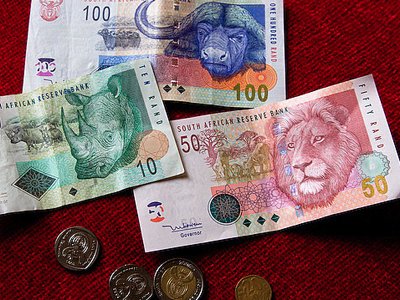
south-african-rand-zar-bearishThe continued weakening of the Rand and an increase in the volume of imports has seen Namibia’s trade deficit widen to N$17 billion, the Namibia Statistics Agency (NSA) has said.

The country’s import bill jumped 24% in 2012 to N$59 billion widening the trade deficit to N$17 billion compared to N$11 billion in 2011. Despite a fall in the share of some of the major imports to the total import bill, the value of imports still increased to N$59 billion compared to N$48 billion in the previous year.

Major imports for 2012 included mineral fuels, mineral oils, vehicles, boilers and machinery. Fuel dominated the list of imports with a share of 13% up from 9% in the previous year. Vehicles were in second place with a share of 11% (compared to 12% in 2011) of total imports. Boilers, machinery and mechanical appliances occupied third place with 9% a slight decline from 10% in 2011.

The Statistics Agency said an 80% increase in the value of oil imports (at N$7.8 billion) can be explained by a 14% depreciation of the Namibia Dollar/Rand against the US$ in the period under review since the 2012 average price of oil in US dollars was almost the same as in 2011. In addition, an increase in the volume of imports especially ships, boats and floating structures that recorded the strongest increase of almost 2100%, also contributed to the widening deficits.

South Africa remains Namibia’s most important trading partner with combined trade between the two countries amounting to N$48.6 billion in 2012. However, the direction of trade between the two countries remain skewed with Namibia importing N$41.6 billion worth of goods from South Africa, while exporting goods worth only N$7 billion to South Africa.

Analysts say while a weaker local currency boosts earnings of companies that sell their goods overseas, it adds to import costs, making food and fuel more expensive. With a relatively low industrial base, and a saturation in the mining sector, Namibia’s exports only grew marginally to N$42 billion up from N$37 billion in 2011. This growth is too small to have a meaningful impact on the widening trade deficit.

In 2013, the construction of the multi-billion dollar Husab Project, the Grove Mall and Square, Strand Hotel, the container terminal at Walvis Bay, and the Neckartal Dam is likely to put further pressure on the import bill worsening Namibia’s trade deficit even further. An estimated 80% of capital goods for these projects will be imported. Source: The Economist (Namibia)

Mozambique – Huge Heroin Seizure with South African Connection

00013ee0-314The Mozambican police claims that it has seized almost 600 kilos of heroin, at Namoto, in the northern province of Cabo Delgado, on the border with Tanzania.

The drugs were found on Sunday in the possession of two citizens of Guinea-Conakry, who are now under detention in the Cabo Delgado, provincial capital, Pemba. The drugs are being stored in the warehouses of the provincial attorney’s office.

According to Malva Brito, the spokesperson of the provincial police command, cited in Wednesday’s issue of the Maputo daily “Noticias”, the final destination of the heroin was South Africa.

Brito said the drug was concealed in an otherwise empty seven tonne pick-up truck. The Guineans had improvised a type of hold within the truck’s bodywork. But alerted by a strange smell and the odd size of the stowage area, the police searched the truck, and found the heroin in 118 plastic bags of about five kilos each (which is a total of 590 kilos).

When the heroin was found, the Guineans first claimed that it was fertilizer that they were taking to South Africa. When that didn’t work, they tried to bribe the frontier guards, offering them 60,000 US dollars. The bribe was not accepted.

The Guineans had started their journey in the Kenyan capital, Nairobi, last Friday, and crossed Tanzania before entering Mozambique. The Toyota pick-up bore a number plate from the Democratic Republic of Congo, and supposedly belongs to a Congolese named Sidiki Sano, who is resident in Mozambique. The owner of the heroin is believed to live in Johannesburg.

If the police figures are accurate, this is an enormous drugs bust. According to the United Nations, heroin was selling in South Africa in 2012 for 35 dollars a gram. So 590 kilos would sell in Johannesburg for 20.65 million dollars. Source: Mozambique News Agency (Agência de Informação de Moçambique).

Port Tariffs to Drop on Export Containers

cargo-container-shippingThe Ports Regulator of South Africa will soon announce anew port tariffs structure that will include a cut of about 40% in the tariff on exported containers. This step is part of the Transnet National Ports Authority‘s strategy to reduce South African port charges, which are seen as among the highest in the world, because it erodes the competitiveness of South Africa’s exports.

This announcement was made during a colloquium on the impact of administered prices on the manufacturing sector. The purpose of the colloquium was to get all the stakeholders together to try and find a solution to the challenges. It had become clear that the stakeholders did not have a regular opportunity to engage on the issue of administered prices.

In addition to the new tariffs, the authority is proposing a reworking of its tariff structure, which if accepted by the regulator, will see higher charges for bulk commodities, up to 68%. South African port tariffs were at least 8.7 times more than the global average for containers and 7.4 times the global average for automotive cargo.

Transnet’s CEO said the shift in the tariff burden was aligned with the government’s manufacturing growth strategy. The mining sector had been hugely subsidised by a tariff structure weighted in favour of raw exports, at the expense of the manufacturing and agricultural sectors. Department of Trade and Industry has also welcomed the expected tariff reduction, saying it would be a major boost for exporters. 

One would therfore like to believe that these tariff reductions will be extended to agriculture and agro-processing. Hopefully ocean carriers will not see this as an opportunity to increase their tariffs!

Botswana Tightens Car Exports to Namibia

2nd hand carsThe New Era (Windhoek) reports that Botswana has tightened the screws on the importation of second-hand vehicle older than five years, effectively removing the loophole exploited by Namibian motorists to import such vehicles.

Botswana’s customs, the Botswana Unified Revenue Service (BURS), is now enforcing the Southern Africa Customs Union (SACU) agreement that prohibits the registration of imported second-hand vehicles older than five years. Previously Namibian traders in imported second-hand cars would register vehicles in Botswana, from where they would enter Namibia as Botswana registered vehicles instead of imported vehicles.

The process had made it easy to register such cars in Namibia and in other SACU member states, which prohibit the registration of imported vehicles older than five years.

“BURS, in the spirit of good neighbourliness and adherence to the provision of the SACU agreement, wishes to assist Namibia in curtailing the irregularities prevalent in the movement of second-hand vehicles through the two countries,” reads a statement from the Namibian Ministry of Finance’s customs that relayed the decision by the Botswana customs authorities.

However, ingenious Namibian traders in second-hand vehicles told New Era yesterday that the decision by Botswana customs is simply a temporary deterrent as they are now considering using Swaziland’s leniency on the matter to circumvent the very same SACU provisions. Besides the SACU provisions, Angola – a non-SACU member – has also banned the importation of second-hand vehicles older than five years. Second-hand vehicle imports contributed at least N$150 million to the economy during 2012, with a record 20 000 vehicles recorded.

Some of the vehicles have also gone through to neighbouring countries. South Africa does not allow imported second-hand vehicles older than five years to drive on its road network. Importers of such cars are forced to load vehicles on trucks or use the port of Walvis Bay. To register the cars in Namibia, the traders would take the vehicles to Botswana where they would be registered for a short period of time and bring them back to Namibia as Botswana registered vehicles.

The process enables the cars to be registered on the Namibian vehicle registration system, which ordinarily would not allow the cars to be registered for local use within SACU states. Botswana customs says persons attempting to circumvent the SACU provisions would be subject to a fine of P40 000 (N$44 579.85) or three times the value of the vehicles or imprisonment of not more than ten years. Source: New Era

Simple solution – SACU countries should unilaterally invoke the prohibition on the importation and registration of second-hand motor vehicles at all external borders of the customs union. Is it not time for the member states to act for once like a custom union?