SARS – Modernisation milestone materialising

Interfront logo2

Its been some time since I’ve penned an article on the South African Customs Modernisation Programme. Aside from it being the SA Revenue Service’s prerogative to communicate and publish notice of its internal developments and plans, some caution always needs to be exercised observing bureaucratic protocol, ensuring that the official message is forthcoming from SARS. Given the widespread interest in the programme as well as the development of the Interfront [formerly Tatis] integrated customs border management solution (iCBMs) as a wholly owned development of South Africa, I think it not out of place to inform the public interest on this matter. Readership of this blog has an extensive global following and a specific interest in Interfront developments.

Unlike ASYCUDA, Sofix, e-Biscus, and a host of other integrated Customs-tailored business solution offerings, Interfront’s solution for SARS will not include a client user frontend. In other words, the Interfront system (iCBMs) will essentially drive declaration backend processing. This comprises a fully integrated declaration validation and processing engine, supported by a sophisticated tariff engine and duty calculator; the latter offering future web-based services for customs users. In order to compliment the SARS corporate and standardised user interface approach, the iCBMs interfaces with SARS’s revenue accounting, trader registration, risk management, and case management workflow systems. Not only does this leverage cost savings and efficiencies, but ensures a unified ‘workspace’ for all of SARS employees.

Much of the Interfront technology is therefore hidden to the customs user, with traders experiencing an identical interface with SARS Customs, as it does today. From the outset of the Customs Modernisation Programme (July 2010), the approach has followed pragmatic migration of customs electronic clearance processing – across its 30 odd legacy systems – towards an integrated clearance process that could mimic the functionality featured on the new iCBMs. The modern technology and scalability of Interfront offers the ability and agility to enhance service levels and efficiencies to another level. At the same time, operational policies and procedures have been modernised with the aim and intent of meeting the requirements contained in Customs new Control and Duty Bills.

Much of the ‘change’ experienced by both customs officers and the trade over the last 2 years has prepared the country for the eventual migration to the new system. These have been significant, and at times painful changes, not without anxiety and apprehension. Over the last 6 months an even more painstaking and taxing effort has been expended by the Customs Modernisation Team, Interfront and other service providers in addressing a seamless harmonisation and switchover of customs business from disparate legacy systems to a new customs technology platform. The “Parallel Run” has witnessed the daily comparison of customs clearance data between the old and new systems, identification and logging of disparities (bugs), modification of the two environments to ensure the same result is achieved. This has not been an easy and simple process, as any country having undergone a system switchover can attest to.

This month, February 2013, service providers to the customs industry are readying their resources to commence user testing. This implies that service providers (computer bureaus) will engage their clients to prepare test cases for submission to customs to test the new Interfront process. Given that Customs legacy systems and Interfront have been synchronised to a high level of compatibility, the process for traders should not reveal much difference to what they have experienced over the period of modernisation over the last 2 years. One area of note will be the structure and content of Customs Response messages. Traders will have to familiarise themselves and test their interpretation of these messages to ensure they perform or respond appropriately to the instructions.

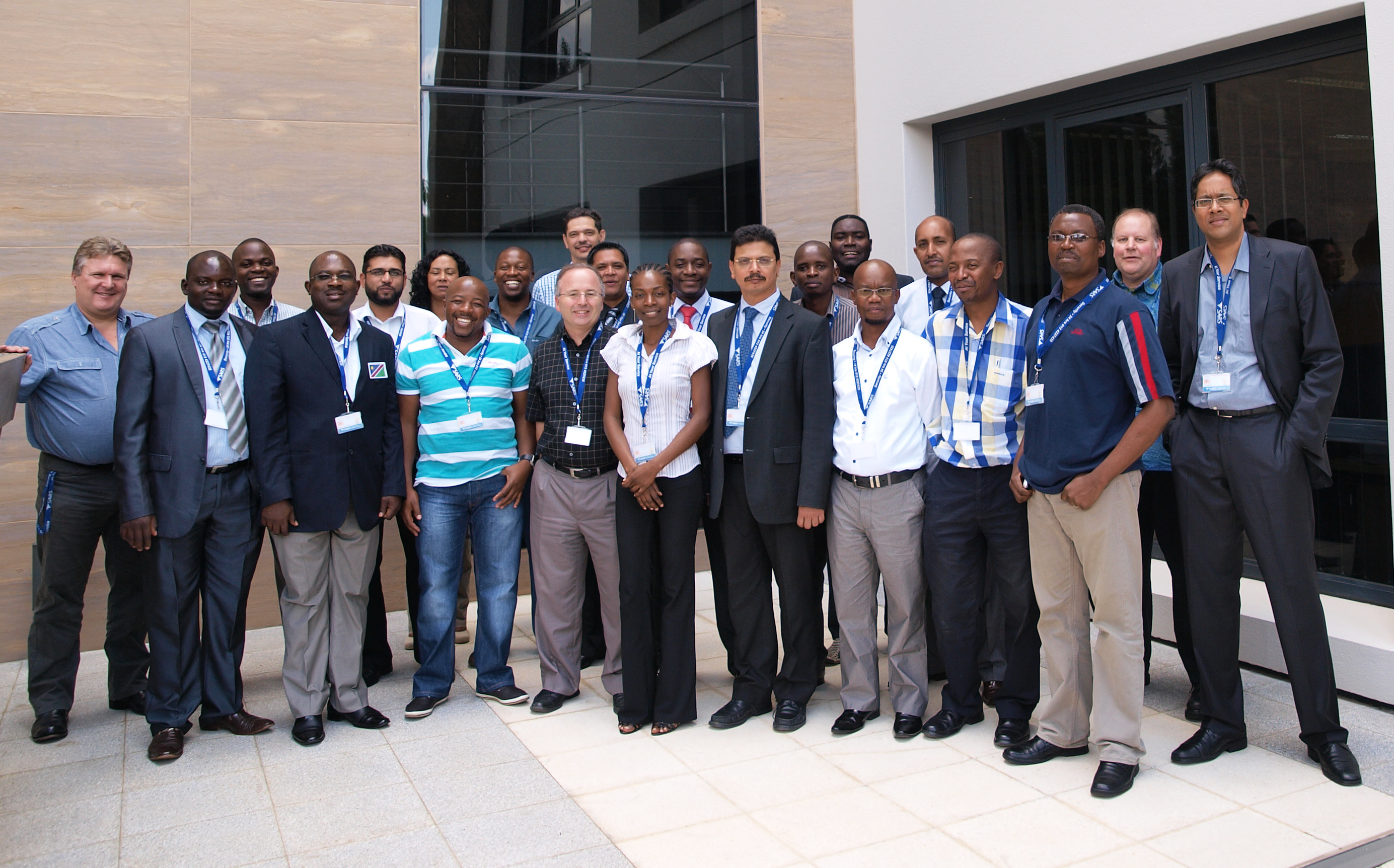
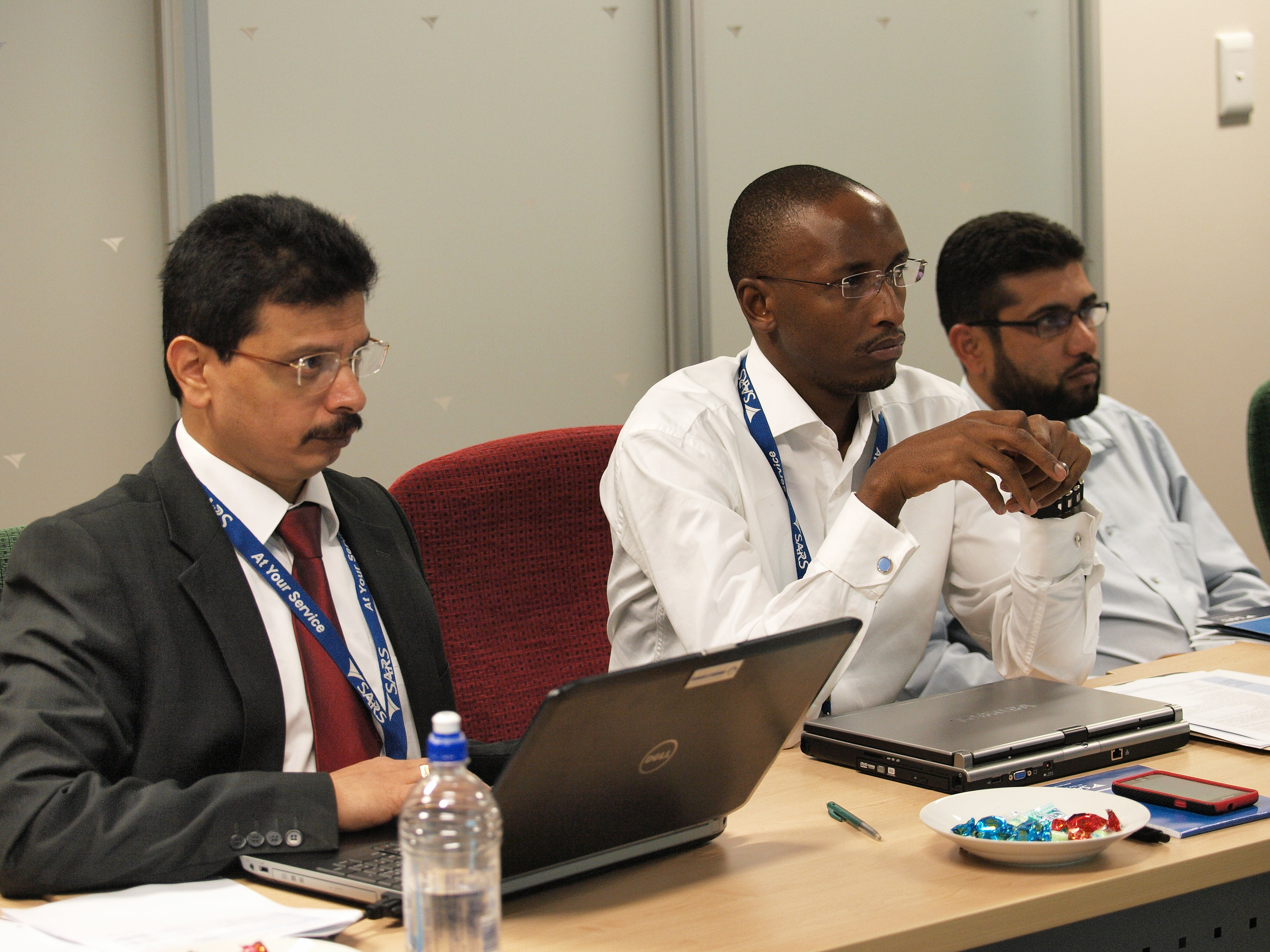
Satya Prasad Sahu - Technical Officer at the WCO provided members of SACU, SADC and the EAC comprehensive guidelines for the development of the GNC Utility Block concept in Africa (February 2012)

Satya Prasad Sahu – Senior Technical Officer at the WCO provided members of SACU, SADC and the EAC comprehensive guidelines for the development of the GNC Utility Block concept in Africa (February 2012)

In terms of compliance and compatibility with international developments, the new iCBMs is engineered on the WCO Data Model. All relevant simplification processes as exemplified in the Revise Kyoto Convention are likewise factored into its design, although not all of these will be immediately available with the initial rollout. Introduction of the new Customs Control and Duty Acts will require these principles to be fully functional and operational, however.

The WCO Data Model is the pivotal design component around which most of the new system’s business and validation rules are centred. This in itself is a major achievement as it bodes well for all future ‘cross border’, customs-2-customs connectivity initiatives. In this regard SARS is well advanced in bilateral and multilateral projects with key trading partners, for example IBSA (cross-global trilateral initiative), and in Africa, we are working with SACU, SADC, COMESA and the EAC to bring about regional customs connectivity. On a bilateral basis, initiatives with Swaziland, Mozambique and Zimbabwe are developing nicely. A significant contributor to cross border/cross global customs connectivity is undoubtedly the excellent work brought about by the dedicated members of the WCO’s Globally Networked Customs adhoc workgroup. In June last year, the WCOs policy Commission unanimously endorsed the GNC architecture and Utility Block approach. African customs connectivity efforts have likewise adopted this model which ensures harmonisation and uniformity in approach, legal dispensation, data exchange, risk management and procedure. The WCO moreover plays a overseeing role in many of these GNC and capacity building initiatives across the globe – this assists greatly in sharing and learning of experiences.

I would think that the above should be sufficient to wet the appetites of customs practitioners, traders, ICT technocrats, and perhaps even legislators and bureaucrats on developments in South Africa. Subsequent to the launch of Interfront SARS will make its ideas and strategy relating to forthcoming initiatives known to trade and the business community. A Year of Innovation? Yes, and hopefully a happy tale that will bode well for the South African trade and supply chain logistics community, and some good fortune for Interfront in its business development in the region and beyond!

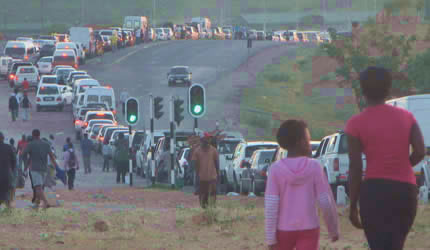
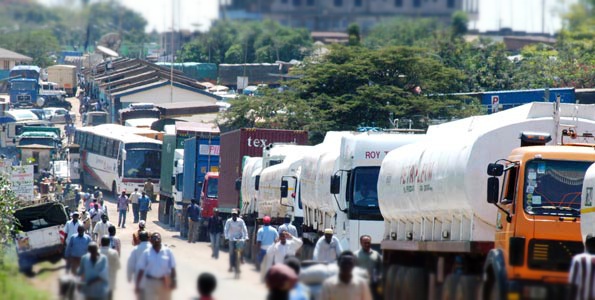
Beitbridge handles half a million travellers over festive season

The queues at Beit Bridge

The queues at Beit Bridge

Beitbridge Border Post recorded a sharp increase in the number of travellers who passed through during the festive season with statistics indicating that 524 511 people passed through the port of entry between 14 December last year and 7 January this year compared to 392 660 during the same period the previous year. The assistant regional immigration manager in charge of Beitbridge Border Post, Mr Charles Gwede, said they handled  229 023 travellers on the exit side, an 11 percent increase compared to the last festive season when 202 348 people left the country.

On the arrivals side, 295 488 travellers entered the country, a 35 percent surge compared to the last festive season when immigration officials handled 190 312 travellers. The highest number of travellers on the entry side was recorded on 23 December when 42 435 people entered the country through the country’s busiest port of entry. On the departure side, the highest number was recorded on 3 January when 22 625 people left the country.

“This festive season between 14 December and 7 January, we handled 524 511 travellers, marking a 25 percent increase in the number of people who passed through Beitbridge during the festive season compared to the previous year when we handled 392 660 travellers,” said Gwede. Most of the travellers that they handled were Zimbabweans working in South Africa commonly known as injiva, who had visited home for the Christmas holidays. He attributed the increase in the number of travellers to the South African documentation exercise, which saw many Zimbabweans working in that country acquiring permits.

Many of Zimbabweans staying and working in South Africa are now documented after they acquired authentic permits during the regularisation exercise in that country hence they could now travel freely. The documents also enabled them to drive foreign registered vehicles, which is another factor that resulted in an increase in the volume of vehicular traffic during this festive period compared to the previous years. The South African government embarked on the process of documenting Zimbabweans illegally staying in that country between 5 May 2009 and 31 July 2010 during which over 275 000 applications from Zimbabweans were processed while several others were turned down and some are still pending. Source: The Chronical, Zimbabwe

Building hard and soft infrastructure to minimise regional costs

I post this article given it ties together many of the initiatives which I have described in previous articles. The appears to be an urgency to implement these initiatives, but the real question concerns the sub-continent’s ability to entrench the principles and maintain continuity. At regional fora its too easy for foreign ministers, trade practitioners and the various global and financial lobbies to wax lyrical on these subjects. True there is an enormous amount of interest and ‘money’ waiting to be ploughed into such programs, yet sovereign states battle with dwindling skills levels and expertise. Its going to take a lot more than talk and money to bring this about.

South Africa is championing an ambitious integration and development agenda in Southern Africa in an attempt to advance what Trade and Industry Minister Rob Davies describes as trade and customs cooperation within the Southern African Customs Union (SACU), the Southern African Development Community (SADC) and other regional trade organisations.

Central to pursuing this intra-regional trade aspiration are a series of mechanisms to combine market integration and liberalisation efforts with physical cross-border infrastructure and spatial-development initiatives. Also envisaged is greater policy coordination to advance regional industrial value chains. “Trade facilitation can be broadly construed as interventions that include the provision of hard and soft infrastructure to facilitate the movement of goods, services and people across borders, with SACU remaining the anchor for wider integration in the region,” Davies explains.

This approach is also receiving support from the US Agency for International Development (USAid), which recently hosted the Southern African Trade Facilitation Conference, held in Johannesburg.

Trade programme manager Rick Gurley says that virtually every study on trade in sub- Saharan Africa identifies time and cost factors of exporting and importing as the most significant constraints to regional trade potential. Limited progress has been made by SADC member States and SACU partners to tackle the factors undermining trade-based growth, limiting product diversification and increasing the price of consumer goods, including of foodstuffs. However, far more would need to be done to realise the full potential of intra-regional trade.

Regional Alliance
One high-profile effort currently under way is the Tripartite Free Trade Area (T-FTA), which seeks to facilitate greater trade and investment harmonisation across the three existing regional economic communities of the SADC, the Common Market of Eastern and Southern Africa and the East African Community.

The existing SADC FTA should be fully implemented by the end of the year, with almost all tariff lines traded duty-free and, if established, the T-FTA will intergrate the markets of 26 countries with a combined population of nearly 600-million people and a collective gross domestic product (GDP) of $1-trillion. At that size and scale, the market would be more attractive to investors and could launch the continent on a development trajectory, Davies avers. It could also form the basis for a later Africa-wide FTA and a market of some $2.6-trillion.

However, as things stand today, intra- regional trade remains constrained not merely by trade restrictions but by a lack of cross-border infrastructure, as well as poor coordination and information sharing among border management agencies such as immigration, customs, police and agriculture.Cross-national connectivity between the customs management systems is also rare, often requiring the identical re-entry of customs declarations data at both sides of the border, causing costly and frustrating delays.

USAid’s regional economic growth project, the Southern African Trade Hub, is a strong proponent of the introduction of several modern trade-facilitation tools throughout the SADC – a number of which have already been successfully pioneered. These tools, endorsed by the World Customs Organisation (WCO) Framework of Standards, which offers international best-practice guidelines, are aimed at tackling the high costs of exporting and importing goods to, from, and within Southern Africa, which has become a feature of regional trade and discouraged international investment.

Bringing up the Rear
A country’s competitiveness and the effec- tiveness of its trade facilitation regime are measured by its ranking on World Bank indices and, with the exception of Mozambique, Southern African States perform poorly – with most in the region settling into the lowest global quartile of between 136 and 164, out of a total of 183. “Our transaction costs in Africa across its borders are unacceptably high and inhibit trade by our partners in the private sector,” says WCO capacity building director Erich Kieck. “We need our States to develop good ideas and policies, but the true test lies in their ability to implement them,” he notes.

He adds that not only does trade facilitation require efficient customs-to-customs connectivity, but also demands effective customs-to-business engagement, adding that, while customs units are responsible for international trade administration, they are not responsible for international trade. “The private sector is the driver of economic activity and international trade, and government’s responsibility is to understand the challenges faced by the business community and develop symbiotic solutions,” Kieck notes.

Despite the establishment of regional trade agreements and regional economic communities in Southern Africa, many partner- ships have failed to deliver on their full potential to increase domestic competitiveness.

In a report, African Development Bank (AfDB) senior planning economist Habiba Ben Barka observes that, despite the continent’s positive GDP growth record – averaging 5.4% a year between 2005 and 2010 – it has failed to improve its trading position or integration into world markets. In 2009, Africa’s contribution to global trade stood at just under 3%, compared with nearly 6% for Latin America and a significant 28% for Asia.

“Since 2000, a new pattern of trade for the continent has begun to take centre stage, as Africa has witnessed an upsurge in its trade with the emerging Brazil, Russia, India and China economies. Overall, Africa is trading more today than in the past, but that trade is more with the outside world than internally,” says Ben Barka. She adds that while many African regional economic communities have made some progress in the area of trade facilitation, much greater effort is required to harmonise and integrate sub-regional markets.

To address enduring trade barriers, consensus among business, government and trade regulators appears to lean towards the adoption of one or a combination of five facilitation tools. These include the National Single Window (NSW), the One-Stop Border Post (OSBP), cloud-based Customs Connectivity, Coordinated Border Management (CBM) and Customs Modernisation Tools.

A National Single Window
NSWs connect trade-related stakeholders within a country through a single electronic-data information-exchange platform, related to cross-border trade, where parties involved in trade and transport lodge standardised trade-related information or documents to be submitted once at a single entry point to fulfil all import, export and transit-related regulatory requirements.Mauritius was the first SADC country to implement the NSW and consequently improved its ranking on the ‘Trading Across Borders Index’ to 21 – the highest in Africa. It was closely followed by Ghana and Mozambique, which have also reported strong improvements.

Developed in Singapore, the benefits of government adoption include the reduction of delays, the accelerated clearance and release of goods, predictable application, improved application of resources and improved transparency, with several countries reporting marked improvement in trade facilitation indicators following the NSW implementation.

In South Africa, the work on trade facili-tation is led by the South African Revenue Service (SARS), which focuses on building information technology (IT) connectivity among the SACU member States, and strengthen- ing risk-management and enforcement measures. However, SARS’ approach to the NSW concept remains cautious, Davies explains. “SARS has considered the viability of this option as a possible technological support for measures to facilitate regional trade, but considers that this would fall outside the scope of its current approach and priorities in the region,” he said.

One-Stop Border Posts
As reported by Engineering News in December last year, effective OSBPs integrate the data, processes and workflows of all relevant border agencies of one country with those of another, which culminates in a standardised operating model that is predictable, trans- parent and convenient. An OSBD success story in Southern Africa is the Chirundu border post, where a collaboration between the Zambia and Zimbabwe governments has culminated in a single structure, allowing officers from both States to operate at the same location, while conducting exit and entry procedures for both countries.

Launched in 2009, this OSBP model is a hybrid of total separation, joint border operations and shared facilities in a common control zone. Implementation of the model has reduced clearance times to less than 24 hours, significantly reduced fraudulent and illegal cross-border activity, enabled increased information sharing between border agencies and reduced the overall cost of export and import activities in the area.

Earlier this year, former South African Transport Minister Sibusisu Ndebele indicated that Cabinet was looking into establishing a mechanism that would bring all border entities under a single command and control structure to address the fragmentation in the country’s border operations, particularly at the high-traffic Beitbridge post between South Africa and Zimbabwe. “The ultimate vision is to create one-stop border operations to facilitate legitimate trade and travel across the borders,” he said.

Customs Connectivity and Data Exchange
Improved connectivity between customs limbs in sub-Saharan Africa has perhaps made the most indelible strides in the region, with improved IT connectivity between States identified as a priority by Sacu.

This includes customs-to-customs inter- connectivity, customs-to-business inter- connectivity and interconnectivity between customs and other government agencies. SACU members have agreed to pursue the automation and interconnectivity of their customs IT systems to enable the timely electronic exchange of data between administrations in respect of cross-border movement of goods. “As a consequence of this acquiescence, we have identified two existing bilateral connectivity programmes as pilot projects to assess SACU’s preferred connectivity approach, cloud computing between Botswana and Namibia and IT connectivity between South Africa and Swaziland,” says SACU deputy director for trade facilitation Yusuf Daya. He adds that a regional workshop was recently convened to explore business processes, functions, data clusters and the application of infrastructure at national level to improve and develop intra-regional links.

Coordinated Border Management
The SADC has been a strong proponent of CBM efforts in the region, which promotes coordination and cooperation among relevant authorities and agencies involved in, specifically, the protection of interests of the State at borders. “The union has drafted CBM guidelines for its members on implementation, based on international best practice, and has received indications of interest from several member States,” explains SADC Customs Unit senior programme officer Willie Shumba.He adds that CBM is a key objective of regional integration, enabling the transition from an FTA to a customs union and, eventually, to a common market, through effective controls of the internal borders.

Customs Modernisation
South Africa’s customs modernisation initiative is well advanced and came about following Sars’ accession to the WCO’s revised Kyoto Convention in 2004, which required customs agencies to make significant changes to it business and processing models. These changes included the introduction of simplified procedures, which would have fundamental effects on and benefits for trade and would require a modern IT solution.

Since its inception, the SARS Customs Modernisation Programme has gained tremendous momentum, with amendments to the Passenger Processing System and the replacement of SARS’s Manifest Acquittal System in the Automated Cargo Management system. Further adjustments were made to enable greater ease of movement of goods, faster turnaround times and cost savings, as well as increased efficiency for SARS. This phase included the introduction of an electronic case-management system, electronic submission of supporting documents, the centralisation of back-end processing in four hubs and an electronic release system and measures to enhance the flow of trucks through borders – in particular at the Lebombo and Beitbridge borders.

Proper Planning
AfDB’s Ben Barka warns that, prior to the implementation of any border improvement efforts by countries in Southern Africa, a thorough analysis and mapping of each agency’s existing procedures, mandate and operations should be undertaken.“Based on these findings, a new set of joint operational procedures need to be agreed upon by all involved agencies and must comply with the highest international standards,” she says.

Development coordination between States is essential, as the largest disparity among regional groupings, in terms of intra-regional trade, is clearly attributable to their differentiated levels of progress in various areas, including the removal of tariffs and non-tariff barriers, the freedom of movement of persons across borders and the development of efficient infrastructure. Source: Engineering News.


Customs Modernisation – positive impact on Doing Business in South Africa!

South Africa ranks 39th out of 185 countries surveyed in the latest International Finance Corporation (IFC)-World Bank ‘Doing Business’ report, which was published on Tuesday.Last year, South Africa ranked 35 out of 183 countries assessed.

The country is placed above Qatar and below Israel in the Doing Business 2013 report, which covers issues such as starting a business, dealing with construction permits, getting electricity, registering property, accessing credit, protecting investors, paying taxes, trading across borders, enforcing contracts and resolving insolvency.

Singapore remains at the top of the ease-of-doing-business ranking for the seventh consecutive year, followed by Hong Kong and New Zealand. Poland improved the most in making it easier to do business, by implementing four regulatory reforms in the past year.

South Africa led the pack in terms of improving in the ease of trading across borders through its customs modernisation programme, which reduced the time, cost and documents required for international trade. “We hope that through the streamlining of procedures, we will see the growth of commerce in the country,” said coauthor of the report Santiago Croci Downes.

The Doing Business 2013 report stated that improvements in South Africa have effects throughout Southern Africa. “Since overseas goods to and from Botswana, Lesotho, Swaziland and Zimbabwe transit through South Africa, traders in these economies are also enjoying the benefits,” it stated.

Another 21 economies also implemented reforms aimed at making it easier to trade across borders in the past year. Trading across borders remains the easiest in Singapore, while it is the most difficult in Uzbekistan.

Out of the 185 economies assessed in the 2013 report, South Africa ranked 53rd for starting a business, 39th for dealing with construction permits, 79th for registering property, 10th for protecting investors, 32nd for paying taxes, 82nd for enforcing contracts and 84th for resolving insolvency.

The country ranked low, at 150, for ease of access to electricity, while it tied at the top with the UK and Malaysia for ease of access to credit. Croci Downes added that it was still too early to tell whether the recent labour unrest in the mining and transport industries would have an impact on South Africa’s ranking or on foreign direct investment .

Meanwhile, the IFC and World Bank reported that of the 50 economies making the most improvement in business regulation for domestic firms since 2005, 17 were in sub-Saharan Africa.

From June 2011 to June 2012, 28 of 46 governments in sub-Saharan Africa implemented at least one regulatory reform making it easier to do business – a total of 44 reforms.

Mauritius and South Africa were the only African economies among the top 40 in the global ranking. World Bank global indicators and analysis director Augusto Lopez-Claros said Doing Business was about smart business regulations, not necessarily fewer regulations. “We are very encouraged that so many economies in Africa are among the 50 that have made the most improvement since 2005 as captured by the Doing Business indicators.”

IFC human resources director Oumar Seydi added that lower costs of business registrations encouraged entrepreneurship, while simpler business registrations translated to greater employment opportunities in the formal sector.

“Business reforms in Africa will continue to have a strong impact on geopolitical stability. We encourage governments to go beyond their rankings. Ranking does matter, and competition is important, but that is not all that counts. What truly matters is how reforms are positively impacting growing economies,” he said.

African economies that have improved the most since 2005 include Rwanda, Burkina Faso, Mali, Sierra Leone, Ghana, Burundi, Guinea-Bissau, Senegal, Angola, Mauritius, Madagascar, Mozambique, Côte d’Ivoire, Togo, Niger, Nigeria, and São Tomé and Príncipe. Source: http://www.polity.org.za

Mauritius Customs turns 200

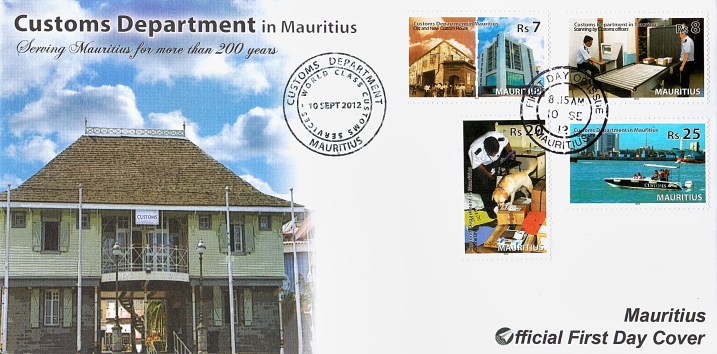
Mauritius Customs 1st Day CoverOn the ocassion of my 300th post, join me in raising the Portcullis for Mauritius Customs! During September, the Mauritius Revenue Authority (MRA) marked the bicentenary celebrations of Customs services in Mauritius by launching a special First Day Cover with four stamps on the Customs Department to mark the bicentenary celebrations of Customs Services in Mauritius. The issue of these new stamps is an acknowledgement of the significant contribution of the Customs services to the economic and social life of the country for more than 200 years. The four stamps depict the Customs Services in different fields with denotation of Rs 7, Rs 8, Rs 20 and Rs 25 illustrating some of the areas where the customs services are involved in their fight against crime and fraud prevention through the use of people, animals and state-of-the-art technology.

On 18 August 1797, a ‘bureau de Douane’ was established for the purpose of raising revenue in a context of war and blockade. It became a major financial institution contributing towards 50% of total revenue. The British took over in 1811 and installed the first Collector of Customs.British Customs practices were gradually introduced in the colony in line with British commercial law.

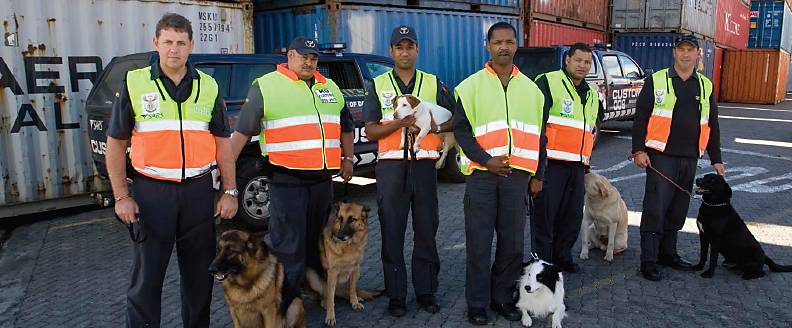
In modern times, the MRA Customs Department has set as one of its main objective to combat the illicit trade of drug and other illicit substances. The MRA has a team of 6 drug detector dogs handled by certified dog handlers trained by the French Customs and the South African Revenue Services (SARS). Our dogs have been selected carefully from examined litters and were declared competent drug detector dogs as per SAQA Unit Standard in the handling of a service to detect illicit substances.

Since 2008, our sniffer dogs have detected drugs in 25 instances involving the import of Cannabis, Heroin, Hashish, Subutex and other illegal substances worth around Rs 42,530,543. The Drug Detector Dog squad operates at the courier services, Parcel Post Office, Vehicle Search at Airport, Port and Freight Stations, Port area, Airport (Plaisance Air Transport Services & Luggage on carrousels at SSR Int. Airport and Aircraft search) as well as at the seaport for search of vessels. Source: Mauritius Revenue Authority

Detector dog unit expanding its paw print across the country!

On a subject close to my heart. The National Detector Dog Unit of the South African Revenue Service (SARS) is getting a boost with more than 70 new dogs and handlers being trained to make up a number of new dog units around the country. Apart from filling a couple of current vacancies, the new recruits will form part of Detector Dog Units in Port Elizabeth, Zeerust, Mahamba, Vioolsdrift, Nakop, Maseru Bridge and an expanded Mpumalanga unit. All the additional units are expected to become operational in the first quarter of 2013.

“By next year, most of the major land, sea and air ports should have their own detector dog units (DDU),” said the senior manager of the DDU, Hugo Taljaard. “The ultimate aim is to have dog units at every port, with a total of 500 new handlers and dogs needed. However, this is a long-term (four-year) project, aimed at enhancing our non-intrusive capabilities at ports of entry to prevent cross-border smuggling.”

The SARS Detector Dog Unit has also been asked recently to assist with training in Namibia and Angola, following the assistance we gave the Mauritius Revenue Authority (MRA) to establish a Detector Dog capability. The DDU continues to see major successes countrywide, with a recent copper bust in the news last weekend.

Detector dog Umaga, an 18-month old German Shepherd, sniffed out 84kg of copper at the Beit Bridge border post during his first operation. Umaga recently completed his training as a copper sniffer dog. The copper was concealed in luggage in a trailer entering South Africa. Umaga is the second sniffer dog to be trained to sniff out copper. Milo, a five-year-old Labrador, has also already nosed out his first contraband copper. There has been an increase in the smuggling of copper wire across the border into South Africa, since copper has a much higher value here than in the other member states of the Southern African Development Community. The increase has meant that Customs has had to beef up its ability to detect contraband copper. The wire is usually concealed in compartments under trucks.

The Detector Dog Unit was the first in the world to train “dual application dogs”, Hugo explained. So instead of being trained or “imprinted” to detect only one scent, they are able to detect a combination of scents, e.g. narcotics and currency, tobacco and endangered species. Both Milo and Umaga are dual dogs and they can detect narcotics/tobacco and copper wire. The explosives detector dogs are the only dogs not dual trained due to the safety risk.

The dogs are an integral part of our Customs workforce and are seen as officers in their own right. They are therefore looked after with the utmost care and attention and are even provided with special reflector jackets, cooler jackets for the heat and dog shoes made to protect their feet from hot surfaces. Source: SARS Communications Division

New Tax law to give SARS upper hand

Taxes

News24.com reports that legislation allowing the SA Revenue Service (Sars) to search business premises without a warrant is expected to come into operation within the next three months. The Tax Administration Bill was promulgated into law on Wednesday in the Government Gazette, Sars said in a statement on Thursday.

The act will come into operation on a date to be determined by the President  by proclamation in the gazette.

“Sars’s preparations for the implementation of the act are at an advanced stage and it is anticipated that it will come into operation within the next three months,” it said.

The act was intended to simplify and provide greater coherence in South African tax administration law. It eliminated duplication, removed redundant requirements, and aligned existing disparate requirements in different tax acts ranging in age from four to 63 years old. It created a single, modern framework for the common administrative provisions of the tax acts.

“Most taxpayers are compliant, and the act should ensure better service and a lower compliance cost for them,” Sars said. “Sars is, however, duty-bound to actively pursue tax evaders in order to maintain compliant taxpayers’ confidence in the integrity of the tax system.”

Key features of the act include:

  • A move to a single registration process and number across taxes to reduce red-tape and streamline the system, and self-assessment of taxes so taxpayers need not wait for a Sars assessment;
  • Greater access to third-party data to underpin Sars initiatives, such as the pre-population of individual tax returns;
  • Clearer rules on Sars access to information, so tax liabilities can be determined more quickly and accurately;
  • The ability to search business premises without a warrant in narrowly-defined situations, where the general requirement for a warrant will defeat the object of the search, so Sars can act when tax is at serious risk and time is of the essence;
  • Clear requirements and timelines for issuing tax clearance certificates to provide greater certainty and responsiveness to business;
  • Feedback on audit progress and findings to engage more fully with taxpayers and ensure they understand the reasons for any adjustments;
  • Specific timeframes for decisions of the Tax Board (a “small claims court” for tax) and wider reporting of Tax Court decisions to improve access to justice; and
  • The appointment of a Tax Ombud, informed by international experience, to provide taxpayers with a low-cost mechanism to address administrative issues that cannot be resolved through Sars’s normal channels.

Although the act provided for a year from its commencement for the appointment of the Tax Ombud, Finance Minister Pravin Gordhan announced in his 2012 Budget speech that the ombud would be appointed this year. Source: News24.com

“Sars is, however, duty-bound to actively pursue tax evaders in order to maintain compliant taxpayers’ confidence in the integrity of the tax system.” 

Who is going to pursue corruption and wasteful expenditure in order to maintain the citizens confidence in paying tax in the first place?

SARS issues Compliance Programme 2012/13 – 2016/17

SARS has issued its inaugural SARS Compliance Programme, a high-level overview of its plans for the next five years to further grow compliance with tax and customs legislation. More so than perhaps any other time in history, the current global economic conditions have thrust domestic resource mobilisation into the spotlight, highlighting sustainability built on a foundation of tax compliance. Countries lacking this solid base have found their room for manoeuvre in these uncertain times severely curtailed and, in some cases, completely absent. The impact of self-reliance on self-determination is self-evident.

Many tax administrations publish similar compliance programmes (including Australia, Brazil, Canada, Denmark, Netherlands, New Zealand, Poland, Spain, Sweden, Turkey, USA, UK) and SARS has based it’s Compliance Programme on their ground-breaking work. To download and read the SARS Compliance Programme, click here! For Customs specialists and trade practitioners no less than 3 priority areas involve Customs –

Illicit cigarettes: the trade in and consumption of illicit cigarettes is detrimental to the fiscus and to the health of South Africans. SARS interventions will continue to focus on clamping down on cigarettes smuggled via warehouses as well the diversion of cigarettes destined for export back into the local market. SARS also plans to modernise it’s warehousing management and acquittal system.

Undervaluation of imports in the clothing and textile industry: Undervalued imports pose a significant risk not only to the fiscus but to local industry and job creation. SARS will continue to work together with other government agencies and industry stakeholders to clamp down on this practice including through the establishment and frequent revision of a reference pricing database to detect undervaluation, increasing inspections as well as supporting an integrated border management model.

Tax Practitioners and Trader Intermediaries: Regulation of this industry will be pursued to ensure that tax practitioners and trade intermediaries are all persons of good standing, are fully tax compliant in their personal capacity and provide a high quality service and advice to their clients. SARS will also develop a rigorous risk profiling system to identify high risk practitioners and trade intermediaries.

Durban – Harbour mafia busted!

A 3-year covert investigation into a multi-billion rand racket at the Durban harbour has exposed an international mafia, allegedly bribing customs and police officials to allow in container-loads of contraband.

This week, a former Sars customs official was taken by surprise when Hawks and Sars investigators swooped on his Umbilo home and arrested him on 80 counts of alleged corruption. Etienne Kellerman, 47, a former Sars anti-corruption task team member, appeared in the Durban Regional Court on Tuesday. He was released on R100 000 bail and the matter was adjourned to next week. Kellerman is suspected of receiving substantial benefits for allowing contraband through. It is alleged that Sars lost millions of rand in revenue as a result. He resigned from Sars three years ago, days after he was quizzed by Sars investigators about his alleged role in the racket. His job had been to profile and identify high risk companies and containers entering the country.

A further seven Sars officials from Durban and Johannesburg were suspended for their alleged roles in the smuggling racket. Hawks investigator and project manager of this undercover operation, Colonel Brian Dafel, said that in coming weeks they would swoop on 100 more suspects in the country, including Sars officials, police and syndicate members, on charges ranging from racketeering, corruption, money laundering, extortion, murder and attempted murder.

Warrant Officer - Johan NortjeHe said the investigation was triggered by informers who tipped them off about the alleged crooked activities and racketeering at the harbour. The undercover investigation was a joint operation by the Hawks, Sars, independent law enforcement agencies and other key role players, Dafel said. He said they were also closing in on suspects believed to have ordered the hit on Warrant Officer Johan Nortjé, an officer in the police’s protection security service. He was responsible for investigating smuggling of goods and drugs through Durban harbour. A hit was allegedly ordered on his life days after he made a R100m counterfeit bust at the harbour. Nortjé was gunned down outside his Montclair home on January 17 last year, 10 days after he had made the bust.

“Nortjé was one of the few honest cops. He was aware of the container racket and was determined to expose it. He was killed because he was hampering the operation of the syndicate members,” Dafel said.

“This is a very dangerous investigation that involves extremely high levels of corruption. “Durban harbour is the biggest port authority that handles 40 percent of the containers nationally. In the past two years, during this investigation, we have seized over R1 billion worth of counterfeit goods and contraband.” He said that several witnesses had been placed in witness protection programmes as they feared for their lives. “People’s lives have been threatened and hits have been ordered. But, none of this will deter this investigation.

Dafel told the Daily News that investigations had revealed that certain SARS and police officials were working in teams between KZN and Gauteng. “This could not be done alone. They worked in groups, including those who cleared the documentation to those who inspected the containers and gave them the final clearance.

Thousands of containers pass through the harbour daily and it is impossible to check each and every one. That is how the counterfeit goods and contraband got through so easily. The syndicate members also communicate through cellphones making it a very smooth operation. He said every member of the syndicate was paid for his or her role in allowing the illegal goods through. The potential value of the illegal commodities was between R10 and R20 million for each container. The international mafia pays bribes of up to R30 000 per container that is allowed to pass through customs undetected. It is reported that one of the biggest problems is the clearing agents who work in cahoots with the police and syndicate members.

Dafel said many of the SARS and SAPS officials who were being investigated stood accused of allowing counterfeit goods or contraband to enter the country illegally, or under-evaluating containers. Since the investigation started, much stricter measures are in place at the harbour making it difficult to smuggle goods into the country. “We have closed the gap significantly for any form of corruption to take place. Also, staff know that they will be arrested and charged if they break the law,” Dafel said.

He said they were also working closely with people abroad and international law enforcement agencies to close in on the racketeers. “There are big name international companies, mainly from China, that are also being investigated. In fact, the goods imported from China are the biggest problem.” Source: Daily News E-edition

Related articles

Advancing the argument for sealing cargo and tracking conveyances

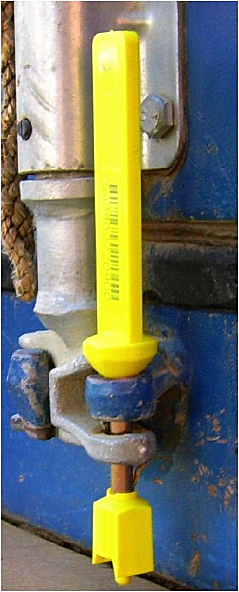
South African Customs law provides for a seal integrity regime. This consists in provisions for the sealing of containerised sea cargo as well as sealable vehicles and trailers. These requirements have, however, not been formally introduced into operation due to the non-availability (until recently) of internal systems and cross-functional procedures that would link seal integrity to known entities. To explain this in more layman’s terms, it is little use implementing an onerous cargo sealing program without systems to perform risk assessment, validation of trader profiles and information exchange. It’s  like implementing non-intrusive inspection (X-ray scanning) equipment without backward integration into the Customs Risk Management  and Inspection environment and systems. It has often been stated that a customs or border security programme is a layered approach based on risk mitigation. None of the individual elements will necessarily address risk, and automation alone will likewise not accomplish the objective for safe and secure supply chains. Moreover, neither will measures adopted by Customs or the Border Agency succeed without due and necessary compliance on the part of entities operating the supply chain. It therefore requires a holistic strategy of people, policy, process and technology.

In the African context, it is surmised that the business rationale will be best accomplished with a dual approach on IT connectivity and information exchange. Under the political speak there are active attempts within SACU, SADC, COMESA and the EAC to establish electronic networks to facilitate and safeguard transit goods. Several African states are landlocked and are not readily accessible, some requiring multiple transit trips through countries from international discharge in the continent to place of final destination. National laws of each individual country in most instances provide obstacles to carriers achieving cost effective means in delivering cargoes. Over and above the laws, there exists (regrettably) the need to ‘grease palms’ without which safe passage in some instances  will not be granted. Notwithstanding the existence of customs unions and free trade areas, internal borders remain the biggest obstacle to facilitation.

Several African logistics operators already implement track and trace technology in the vehicle and long-haul fleets. This has the dual purpose of safeguarding their assets as well as the cargoes of their clients which they convey. Since 9/11, a few customs administrations have formally adopted ISO PAS 17712 within their legislation to regulate the use of high security seals amongst cargo handlers and carriers. In most cases this mandates the use of high security ‘mechanical’ bolt seals. However, evidence suggests there is a growing trend to adopt electronic seals. Taiwan Customs for one has gone a significant way in this regard. Through technological advances and increased commercial adoption of Radio Frequency Identification (RFID) technology the costs are reducing significantly to warrant serious consideration as both a viable and cost-effective customs ‘control’ measure.

Supply chain custody using RFID as an identifier and physical security audit component – as provided for in ISO 17712 – is characterized by the following:

  • it uniquely identifies seals and associates them with the trader.
  • the seal’s unique identity and memory space can be used to write a digital signature, unique to a trader on the seal, and associating that seal with a customs declaration.
  • using customs trader registration/licensing information, together with infrastructure to read seal information at specified intervals along a route to create a ‘bread-crumb’ audit trail of the integrity of the cargo and conveyance.
  • using existing fleet management units installed in trucks to monitor seal integrity along the high risk legs of a cargo’s transit.
  • record the seal’s destruction at point of destination.

Looking forward to the future, it is not implausible for customs and border authorities to consider the use of RFID:

  • as a common token between autonomous customs systems.
  • to verify and audit that non-intrusion inspections have taken place en-route, and write that occurrence to the seal’s memory with the use of an updated digital signature issued to the customs inspection facility.
  • to create a date and time stamp of the cargo’s transit for compliance and profile classification – to confirm that transit goods have actually left the country as well as confirm arrival at destination (to prevent round tripping).
  • Lastly to archive a history of carrier’s activities for forensic and/or trend analysis.
This is a topic which certainly deserves more exposure in line with current regional developments on IT-connectivity and information exchange. A special word of thanks to Andy Brown for his contribution and insight to this post.
Related articles

WCO/SACU – IT Connectivity and Data Exchange

WCO-SACU IT Interconnectivity and Data Exchange Conference

On the occasion of International Customs Day, in January earlier this year, the World Customs Organisation dedicated 2012 as the year “Connectivity”, which encapsulates people connectivity, institutional connectivity and information connectivity among the members of the global Customs community.

Over the last week and a half delegates from the WCO, SACU, UNCTAD, SADC and COMESA have been hosted at SARS, Pretoria to discuss and deliberate over an approach to implement ‘IT connectivity’ within the Southern African region. During the first week representatives from UNCTAD, SACU and SARS were briefed on important developments at the WCO on IT-Interconnectivity and Information Exchange. We were privileged to have Mr. Satya Prasad Sahu, Technical officer from the WCO – a leading expert in all matters of ICT in international customs matters – present the developments towards finalisation of a future international customs standard called “Globally Networked Customs” (GNC). It entails a structured approach that will enable customs authorities to formulate and document bilateral or regional ‘standards’ on a variety of Customs-to-Customs topics, for instance Authorised Economic Operators, Cross Border Information Exchange, Risk Management, etc. A representative from UNCTAD presented a synopsis of the proposed ‘cloud computing solution’ which the Trans Kalahari Corridor (TKC) plans to pilot between Namibia and Botswana along the TKC route in the next few months. During the course of this week, delegates , under the guidance of Satya, prepared a proposed approach for information exchange between members of the Southern African Customs Region. This document is based on the GNC Utility Block structure (defined by the ad Hoc Committee on Globally Networked Customs at the WCO) and served as the basis for discussion for Week 2.

Mr. SP Sahu (WCO) and delegates from SACU SecretariatWeek 2 saw the arrival of customs and IT representatives from COMESA, SADC, UNCTAD, SACU as well as a delegation from Mozambique Customs. Mr. Sahu was invited to chair the session, given his vast experience on the subject matter as well as international experience in national and regional customs ICT programmes. Delegates were treated to various lectures on the GNC, a comprehensive overview of developments on ASYCUDA (Customs solution developed by UNCTAD), various updates from within the customs region – Botswana, Namibia, Lesotho, Swaziland, Mozambique and SARS. Beyers Theron informed delegates of ongoing developments of the SARS Customs Modernisation Programme as well as key implications for neighbouring countries. SARS presented a live demonstration of SARS’ Service Manager solution, navigating through all the functionality now available to SARS Customs officials. Of significant interest to all was the new iPod inspection tool. This technology is given prominent feature in the latest edition of WCO News.

A large portion of the week was, however, spent on deliberating the proposed scope and content of the draft Utility Block on Information Exchange in the Southern African Region. Significant progress was been made to attain first, a common understanding of the scope as well as the implications this has for participating countries. Delegates will return home with a product with which to create awareness and solicit support in their respective countries. Over the next few months SARS will engage both SACU and SADCOM (combined SADC and COMESA trading blocs) to establish firm commitments for information exchange with customs administrations in these regions. This conference is significant for SARS and South Africa as a whole as it provides a uniform, standardised and practical approach for engagement with other international trading partners. To view photographs of the conference please click here!

Customs Modernisation Release 3 – SACU

Saturday 11 February 2012 sees the implementation of new modernised customs procedures and formalities at South Africa’s first SACU land frontier office – Kopfontein – border between South Africa and Botswana.  While enhancements are slanted more in terms of internal SARS customs procedure, SACU traders will no doubt experience some anxiety with the transition. For the first time SARS Customs Modernisation impacts directly on traders and neighbouring Botswana Customs operational procedures in a significant way, which will fashion operations at all remaining inland border posts of the Customs Union. Over the last few months SARS has worked with trade, the Botswana customs authority as well as the business chamber in Botswana concerning the intended changes and their impact on stakeholders. The implementation ushers in cross-cutting changes for customs staff operationally, new technology as well as legal and policy changes. In the case of the latter, a further element of the draft Customs Control Bill is introduced whereby foreign business operators (importers, exporters and road carriers) must be registered with SARS to perform customs transactions in South Africa. This is perhaps the single issue which has had ramifications for parties who regularly cross the border between Botswana and South Africa. Hopefully recent iterations of notices and explanations have helped clarify the SARS requirements. (See the SARS Customs Modernisation webpage).

Other modifications and changes include –

Elimination of paper clearance documents – this is a significant departure from traditional SACU processing where all member countries have relied on the Single Administrative Document (SAD) to facilitate intra-SACU clearance. With the bulk of clearances expected to be electronic, SARS will now only print a customs notification (CN1) which will specify the status and outcome for each clearance. This the trader will use in support of customs clearance in Botswana. SARS will therefore no longer stamp and authorise hardcopy SAD500 clearance documents. Of course, there is nothing which stops a trader printing the SAD500 for cross border purposes, only SARS will no longer attest these. As concerns SARS VAT requirements, arrangements will be made for traders to submit the CN1 for purposes of VAT returns. Details on this to follow.

Electronic supporting documents – already tried and tested at sea and airports across South Africa, traders no longer need to carry on their person hard copy clearance supporting documentation , i.e. invoices, worksheets and packing lists. These are only required should SARS indicate via electronic message that a consignment requires further scrutiny. Customs brokers and traders using EDI will in most cases have the SARS e@syScan facility available on their computer systems which makes it relatively simple and easy to scan, package and submit to SARS. In the event a trader cannot perform this electronically, he may approach any of the 4 Customs Hubs (Alberton, Cape Town, Durban, and Doringkloof) across the country, to have these scanned and uploaded by SARS. Alternatively, these can of course be delivered to the border post for manual processing and finalisation of a customs intervention. Supporting documents are linked to a unique case number which SARS notifies to the trader in the event of a risk.

Clearance processing – SARS has centralised its backend processing of clearances where goods declarations are now processed off-site at one of the 4 Hubs. No longer are clearances processed at customs branch office. All goods declarations – whether electronically submitted or manually captured – are routed to a central pool for validation, verification and assessment if flagged by the risk engine. In the case of land borders all clearances once successfully processed will receive a ‘Proceed-to-border’ message implying that the road carrier may commence delivery to the border. A key feature of the new clearance process is the availability of Customs Status Codes. These codes are initiated by the customs system at specified points in the process to alert the declarant of the status of his/her transaction. These status’s also indicate the follow-up required of the declarant to bring the transaction to a state of finality.

Automated Cargo Management (ACM) – All road carriers are now required to submit their road manifests electronically, via EDI, to the Customs ACM system. For now, SARS will not electronically match the manifest against the declaration, but will monitor compliance and data quality of electronic manifest  for a period of time before initiating real-time matching and acquittal. This will invoke a significant responsibility on both trader and road remover to ensure that they both provide credible data to customs otherwise delays will occur. Upon arrival of the cargo at the border, the driver presents a printout of his electronic manifest. The manifest number is ‘checked in’ by a customs official which in seconds brings up all associated goods declarations linked to the manifest number on the system. The customs officer is able to determine the overall risk status of the vehicle. Where no risks are present a status notification (CN1) is printed for each goods declaration, and a gate pass (CN2) is handed to the driver permitting him to exit the customs controlled area. The future real-time matching will comprise a combined risk assessment of both manifest and declaration information that will result in a single risk outcome. Such risk assessment will include both fiscal and security compliance features thereby bringing SARS in line with international supply chain security standards. Going forward, risk assessment will accommodate ‘all-of-government’ requirements ensuring that all regulatory measures and associated risks are administered in a single instance obviating the need for successive, time-consuming inspections and costly delays.

Automated Customs Inspection – Following its recent introduction at the Beit Bridge border post, the new hand-held inspection tool, conveniently developed on an iPod, allows the customs border control official to electronically access, capture and upload an inspection outcome to the central customs system. This significantly improves the efficiency for this time-intensive activity where the officer can initiate a status up date electronically at the inspection site, where previously the declarant would have to wait for the outcome of the manual inspection report and release note. What’s more, the customs officer has access to the underlying clearance data and can even activate the camera function and capture visuals of suspect cargo which can be appended to an inspection case for verification by higher authority or historical reference value.

There are additional features and functionality to be introduced at Kopfontein and all remaining border posts over the next few months. These relate to improved revenue accounting, new trader registration and licensing system offering online application and approval, and a new traveller and temporary import/export processing. More about this in a future post.  For traders, the benefits of the new solution at SACU land borders aim to remove random and unwarranted intervention by customs. All activities are risk driven via a secure ‘get next’ selection function ensuring that internal integrity is maintained and only ‘risk-related’ consignments/transactions are dealt with. Please visit the SARS Modernisation webpage for all the latest updates and notices on modernisation releases.

Customs Connect 2 – SA Customs Modernisation

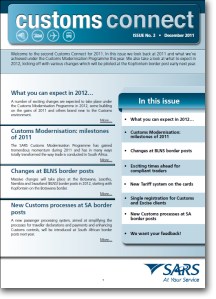
Customs Connect 2The year 2011 has proven both challenging and beneficial for many in the South African Customs community. New business opportunities offered via the Customs Modernisation Programme materialised and provided the service providers ample scope to improve their service offerings to clients in the freight forwarding and clearance space. Leveraging off tried and tested technology tools already employed by SARS in the Tax business, the implementation of E@syScan provided significant efficiencies in the customs clearance processing response times, although the jury is still out on whether such efficiencies have in fact translated into cost-savings for the customs trade. In this regard it is up to trade itself to assess if the traditional cost of printing reams of paper and employing a runner to deliver manual documents to Customs is significantly reduced by the new electronic supporting document process. Could be an interesting exercise.

On the SARS front, the implementation of a new automated case management, and inspection workflow is nothing short of a revelation in so far as traceability and improved efficiency. Similarly, such efficiency needs to translate into cost savings. Certainly there are less manual interventions in the process, the emphasis now moves to working more smartly as regards the booking and conducting of physical inspections. True this has been a huge learning curve for all. Refinements and fine-tuning of the process moving forward will undoubtedly release the expected results to the point where most will wonder how they ever managed in ‘manual mode’ in the past.

To close off the year, SARS has just published its second edition of its electronic Customs bulletin – Customs Connect. Please take the time to read and digest.

SARS now ‘officially’ on Facebook

SARS Facebook Page

SARS has recognised the value of social media and its contribution towards getting the message out to the user. It’s Facebook page is intended to improve communication with taxpayers and other stakeholders, thus will have an external focus. Interested parties can now access SARS’ Facebook page at the following link –  www.facebook.com/sarstax . SARS internal staff will however have to make use of a private PC or iPhone or iPad to access the page.

SARS “Trusted Trader” programme under the spotlight

With the implementation of the SARS Customs Modernization Program, accreditation has been revisited and SARS has taken a more robust approach.

South Africa is currently focusing on accreditation for customs procedures only. The Self-assessment Questionnaire was reworked and sent to a number of large importers, inviting them to participate in the “Preferred Trader Pilot Program.” Now more customs accreditation initiatives are underway.

In terms of a future focus on mutual recognition, bilateral discussion between EU and South Africa has commenced. The parties recently agreed to launch a customs project, financed under the Trade, Development and Cooperation Agreement (TDCA) facility, covering the implementation of the WCO SAFE Framework in South Africa. South Africa intends to align its Authorized Economic Operator (AEO) strategy with that of the EU to ensure that standards for both compliance and security match those of the EU.

The EU is South Africa’s main trading partner. The TDCA is the legal basis for relations between the EU and South Africa and provides the framework for cooperation in the social, economic, political and cultural field. Please click here for the full report – refer to  pages 32 -33 for South African AEO article. Source: Ernst & Young