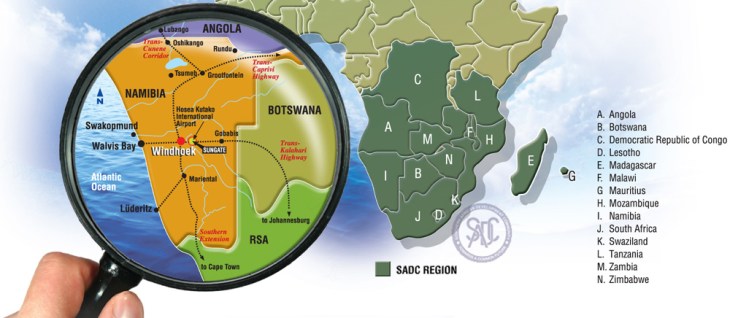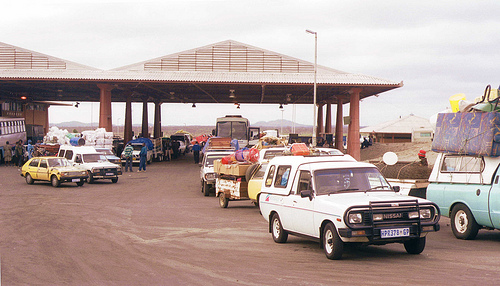
Crossing the SACU bridge

600px-Flag_of_Swaziland.svgMartin Gobizandla Dlamini, the new Minister of Finance, is aware of the challenges of the country’s economy in case South Africa pulls out of the Southern African Customs Union (SACU).

However, the minister warned against pressing the panic button. He said there were no pellucid pointers that South Africa might pull out of the union.

Asked what measures were in place to sustain the country economically if South Africa pulled out or reviewed the revenue sharing formula to the negative, he said: “Let us cross the bridge when we get there. I am aware that South Africa calls for changes in the revenue sharing formula. This is a matter that has been on the table for quite some time.”

“I can’t comment now on how to survive with or without SACU receipts but I can mention that we are a sovereign state.” He did not expand on the sovereignty of Swaziland. Dlamini said SACU member states would meet in February 2014 for a strategic session.

These are South Africa, Namibia, Swaziland and Lesotho. “We were to meet in February in the first place, to discuss strategies on how to modernise SACU and make it relevant to our needs. It’s not like we are going there for shocks or breaking news about South Africa’s position on SACU,” said Dlamini, the former Governor of the Central Bank of Swaziland.

The country’s Gross Domestic Product (GDP) stands at E37 billion for 2012 while that of South Africa is E3.8 trillion as at 2012. In the absence of SACU, Swaziland is left with a few companies that add value to the economy in terms of taxes. They include among others Conco Swaziland which is understood to be contributing 40 per cent to the GDP, which translates to E14.9 billion and the sugar belt companies; Royal Swaziland Sugar Corporation (RSSC) which makes a turnover in excess of E1 billion and Illovo Group’s subsidiary Ubombo Sugar Limited (USL). Illovo Sugar has a 60 per cent shareholding at Ubombo Sugar while the remaining 40 per cent is held by Tibiyo Taka Ngwane, a royal entity held in trust for the Swazi nation. To Illovo Group’s profits, Ubombo Sugar contributed E272 million.

Bongani Mtshali, the acting Chief Executive Officer (CEO) of the Federation of Swaziland Employers and Chamber of Commerce (FSE&CC), said the country could be in a very bad economic situation if South Africa were to pull out of SACU. He said the economic problem could still persist even if the revenue derived from the union was decreased. Mtshali advised Swazis to expand the revenue base and work hand in hand with the Swaziland Revenue Authority (SRA) in its collection of domestic taxes.

The taxes include company tax, pay-as-you-earn, sales tax, casino tax and value added tax. He said people and companies should be encouraged to honour tax obligations. He also called for business innovation. “We will be able to produce and sell if we innovate,” he said. He said there was a need to have an innovation institution of some sort to produce talent, nurture and release it for productivity.

As it were, he said, it was suicidal to depend entirely on SACU revenue. It can be said that over 60 per cent of the country’s budget comes from the union. The SRA collects over E3 billion and this money cannot finance the national budget of E11.5 billion.

Ministries that can save Swaziland from an economic crisis are the Ministry of Commerce, Trade and Industry; Ministry of Agriculture, Ministry of Natural Resources and Energy and the Ministry of Economic Planning and Development.

It can be said that Swaziland is an agricultural economy but the closure of the factory at SAPPI Usuthu and destruction of timber at Mondi by veld fires, spelled doom to the economic outlook of the country. It can also be said that the country’s mainstay product is now sugar.

Despite maize being the country’s staple food, government spent E123 million on maize imports from South Africa last year. This year, preliminary figures indicated that government could spend E95 million on maize imports.

The import price has decreased because the country recorded a higher maize harvest of 82 000 metric tonnes compared to 76 000 tonnes recorded the previous year.

Swaziland is still clutching at straws in terms of food security. The unemployment rate is also high as there had been no massive investments witnessed on the shores.

Jabulile Mashwama, Minister of Natural Resources and Energy, said there were plans to expand the mining sector and reopen closed ones like Dvokolwako Diamond Mine.

There are only two official mines currently operational; Maloma Colliery, which made an export revenue of E126 million in the 2011/2012 financial year and Salgaocar which extracts iron ore from dumps at Ngwenya Iron Ore Mine.

Mashwama, the minister, said she would give details on the programme to revive the mining sector at a later stage. She hinted that the nation could also bank its hopes on her ministry for job creation and revitalisation of the economy.

Gideon Dlamini, the Minister of Commerce, Trade and Industry, has been given a task to industrialise the economy as one of the five-point plan by SACU. The industry minister was reported out of the country and was not reachable through his mobile phone. Source: Times of Swaziland
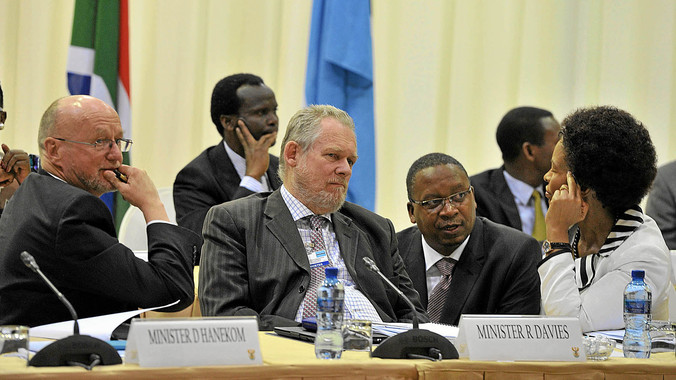
SACU – the Day of Reckoning has Arrived

South Africa has been courting major player Botswana’s support for changes to SACU.

South Africa has been courting major player Botswana’s support for changes to SACU. (Mail & Guardian)

The Mail & Guardian reveals that South Africa has requested an urgent meeting with members of the Southern African Customs Union (SACU) for as early as ­February next year in what could be a make-or-break conference for the struggling union.

In July this year, a clearly frustrated Trade and Industry Minister Rob Davies told Parliament that there had been little progress on a 2011 agreement intended to advance the region’s development integration, and it was stifling its real ­economic development.

South Africa’s payments to SACU currently amount to R48.3-billion annually – a substantial amount, considering the budget deficit is presently R146.9-billion, an estimated 4.5% of gross domestic product.

In the past, South Africa has had some room to reposition itself, but as Finance Minister Pravin Gordhan has pointed out, the South African fiscus has come under a lot of pressure as a result of factors such as the global slowdown, reduction in demand from countries such as China for commodities, and reduced demand from trade partners such as the European Union.

South Africa, which according to research data, last year contributed 1.26% of its GDP, or about 98% of the pool of customs and excise duties that are shared between union countries including Swaziland, Botswana, Lesotho and Namibia, wants a percentage of this money to be set aside for regional and industrial development.

The four countries receive 55% of the proceeds, and are greatly dependent on this money, which makes up between 25% and 60% of their budget revenue. South Africa has very little direct benefit, except when it comes to exporting to these countries. It receives few imports.

Changing the revenue-sharing arrangement

Efforts to change the revenue-sharing arrangement so that money can be set aside for regional development would result in less money going into the coffers of these countries.

It would also mean that a portion of the revenue that South Africa’s SACU partners now receive with no strings attached would in future include restrictions on how it is spent.

A source close to the department said adjustments to the revenue-sharing arrangement and the promotion of regional and industrial development were issues on which the South African government was not willing to budge.

So seriously is South Africa viewing the lack of progress on the 2011 agreement, a document prepared for Cabinet discussion includes pulling out of SACU as one of its options, a source told the Mail & Guardian.

This could not be confirmed by the government, but two senior sources said South Africa was very aware of the dependence of its neighbours on income from the customs union, in particular Swaziland and Lesotho, and the impact its collapse could have on these economies.

Professor Jannie Rossouw of the University of South Africa’s department of economics believes a new revenue-sharing arrangement is essential for the long-term sustainability of SACU countries.

South Africa’s contribution

He also said that South Africa’s contribution as it presently stands should be recognised as development aid and treated as such by the international community.

Between 2002 and 2013, total transfers amounted to 0.92% of South Africa’s GDP, which exceeds the international benchmark of 0.7% set by the Organisation for Economic Co-operation and Development, he said in his research.

“It is noteworthy that South Africa transfers nearly all customs collections to SACU countries. Total collection since 2002 amounted to about R249-billion, while transfers to SACU were about R242-billion,” Rossouw said. The South African Revenue Service (SARS) recognises that inclusion of trade with Sacu would have a substantial impact on South Africa’s ­official trade balance.

South Africa’s total trade deficit for 2012 was R116.9-billion and, according to SARS, had trade with the union been included, it would have been much reduced to R34.6-billion.

South Africa has budgeted to increase its allocation to SACU from R42.3-billion in the 2012-2013 financial year to R43.3-billion this financial year and in the 2014/2015 financial year.

In 2002, the SACU agreement was modified to include higher allocations for the most vulnerable countries, Swaziland and Lesotho, and it established a council of ministers, which introduced a requirement for key issues to be decided jointly. In 2011, a summit was convened by President Jacob Zuma in which a five-point plan was established to advance regional integration.

Review of the revenue-sharing arrangement

This involved a review of the revenue-sharing arrangement; prioritising regional cross-border industrial development; making cross-border trade easier; developing SACU ­institutions such as the National Bodies (entrusted with receiving requests for tariff changes) and a SACU tariff board that would eventually take over the functions of South Africa’s International Trade Administration Commission (ITAC); and the development of a unified approach to trade negotiations with third parties.

Davies told Parliament that there had been little progress in the past three years on these five issues.

Xavier Carim, the director general of the international trade division of the department of trade and industry, said there had been positive developments regarding agreements on trade negotiations, such as those with the European Union and India on trade, and progress had been made on the development of SACU institutions, but progress was slow on the other issues.

Davies told Parliament it was difficult to develop common policy among countries that varied dramatically in economic size, ­population and levels of economic, legislative and institutional development.

He cited differences over approaches to tariff settings as an example.

“South Africa views tariffs as tools of industrial policy, while for other countries tariffs are viewed as a source of revenue,” Davies said.

A proposal that cause all the problem

“A key problem that led to differences was the proposal by one member for lower tariffs to import goods from global sources that were cheapest, which ultimately undermined the industry of another member. This was primarily an issue of countries who viewed themselves as consumers rather than producers.”

The South African government is trying diplomacy as its first option. A senior government source said issues around SACU made up a large part of talks last week between Botswana and South Africa on the establishment of co-operative agreements on trade, transport and border co-operation.

Catherine Grant of the South African Institute of International Affairs said Botswana had long been considered the leader of the four countries. It would make sense for South Africa to bring Botswana on board before the meeting.

Grant said the SACU agreement needed to be re-examined and modernised.

“There needs to be a review of the revenue-sharing formula that is less opaque and is easier to understand. The present system is complicated, making it hard to work out exactly how much countries are getting. It’s clear that Rob Davies feels hamstrung by SACU and has done for some time, because decisions cannot be made without the agreement of all five members, who have different needs and requirements.”

The trade balance is one of the elements that resulted in South Africa’s current account, which has recorded significant deficits in recent months, coming in as high as 6.5% of GDP in the second quarter of 2013.

Trade between South Africa and SACU has always been recorded, but for historical reasons it has been kept separate from official international trade statistics. Source: Mail & Guradian


Africa’s first regional Customs – Trade Forum

On the 8th of November 2013 in Maseru, Lesotho, the Southern African Customs Union (SACU) launched the first regional Customs – Trade Forum in Africa. The theme of the historical event was “Government and Business: partners for economic development through regional trade”. At the launch, the Minister of Finance and Chairperson of the SACU Council Leketekete V. Ketso and Minister of Trade and Industry, Cooperatives and Marketing, Sekhulumi P. Ntsoaole addressed the attendees as well as Director Capacity Building Erich Kieck from the WCO. Both ministers mentioned the funding from the Swedish International Development Cooperation Agency as a big contributor to undertake this event.

More than 30 representatives from the private sector in the SACU region attended the forum together with the five Heads of Customs and one delegate from each Member’s private sector presented their expectations on the continuous work within the Forum framework. The first working meeting of the Forum is tentatively scheduled to be held in April 2014. The event was acknowledged also by media and representatives from Lesotho Revenue Authority would discuss its importance in papers, radio and TV.

On the previous day, the 7th of November, the Steering Committee for the SACU – WCO Customs Development Program held its ninth meeting, providing guidance to the project. All project components, Interconnectivity, Risk Management/Enforcement, Legislation and Trade Partnerships were on the agenda. Source: World Customs Organisation

SACU prepares for launch of regional preferred trader scheme

handshakeThe Southern African Customs Union (SACU) consisting of Botswana, Lesotho, Namibia, South Africa and Swaziland collaborates with the World Customs Organization (WCO) in a trade facilitation initiative funded by the Swedish International Development Cooperation Agency (Sida). The initiative in which also the SACU Secretariat participates, aims among others at developing a regional Preferred Trader (PT) scheme.

From 30th of September to 4th of October a core team consisting of National Project Managers, audit experts, PT-experts and site managers met in Windhoek, Namibia, with WCO experts to further prepare for the launch of the PT-scheme by developing regional processes to be applied related to the benefits selected and designed for the SACU regional PT.

The selected pilot operators have been engaged, and in the near future also the relevant cross border regulatory agencies and Customs officials at the selected border posts will be sensitized on the regional PT-scheme.

During the intense working week, all participants actively contributed to the preparations for the launch of the PT-scheme, planned for the first half of 2014. Source: www.4-traders.com

Namibia – South Africa Remains Major Trading Partner

Namibia flagSouth Africa remained Namibia’s leading trading partner, particularly on the imports front during the second quarter of 2013.

South Africa accounted for 70,1% of Namibia’s imports, followed by the Euro zone, Switzerland, Botswana and China; accounting for 3,6%, 3,5%, 2,9% and 2,8% respectively.

The remaining 17,1% was sourced from other countries such as the United Kingdom, Tanzania, United States of America, Zambia and other countries around the world, according to the September issue of the Bank of Namibia Quarterly Bulletin.

With regard to exports, Botswana, emerged the leading destination for Namibia’s exports during the second quarter. Botswana absorbed 19,6% of Namibian exports, overly dominated by rough diamonds. In the past, this position was exchanged between South Africa and the UK.

This followed a 10 year sales agreement between Botswana and De Beers that was signed in September 2011. South Africa, the Euro Area, UK, Switzerland, Angola and the US also remained prominent destinations for Namibia’s exports during the second quarter.

Namibia exported 14,4% of products to South Africa, 13, 2% to the Euro Area, 8,4% to Switzerland, 7,7% to Angola and 5,6% to the US. Countries such as China, Singapore, United Kingdom, Zambia and others also absorbed a noticeable portion of the Namibian exported commodities during the quarter under review.

Net services receipts recorded a net outflow on a quarterly and yearly basis during the second quarter of 2013, largely on account of net payments in other private services. The net services registered a deficit of N$88 million, year on year, during the quarter under review from a surplus of N$39 million.

The quarterly deficit balance was mainly reflected in the higher net outflows of other private services sub-category, which surged by four percent, quarter on quarter, to N$515 million and by 22,8% year on year. The outward movements of net services was however offset by the increased net inflows of travel services category that rose slightly by 1,1% and 11,6% quarter on quarter and year on year, respectively to N$761 million. Source: New Era (Namibia)

SACU in danger of collapse

Rob Davies Frustrated with lack of progress (Business Day)

Rob Davies Frustrated with lack of progress (Business Day)

Trade & industry minister Rob Davies did not mince his words when he briefed parliament late last month on the Southern African Customs Union (Sacu), the world’s oldest. The union was formed in 1910 and comprises SA, Botswana, Lesotho and Swaziland.

Exasperated, Davies complained to MPs that SA’s partners were hardly moving in the direction of harmonising trade and industrial policies. He said if this did not happen soon, the viability of Sacu itself might be called into question.

Sacu was initially formed as a colonial-era instrument to control the flow of goods into and out of the then British colonies, an arrangement that was retained with a new agreement in 1969. In essence, SA collects customs and excise revenue on behalf of all four countries and distributes 98% of all this money to the three other members as a form of aid, retaining only 2% that should accrue to itself. It is a formula that has both worked and been fraught with difficulties over the past century.

The agreement was modified with a more distributive formula in 2002 which came into effect into 2004. Under the new agreement the most vulnerable countries, Swaziland and Lesotho, would get a larger share of the excise portion.

The Sacu distributions are also the instrument through which Swaziland was to get R2,4bn in assistance from SA in 2011. Under that agreement SA would have advanced the landlocked kingdom the money from its future Sacu distributions, but it came with fiscal and technical conditions from SA.

In January 2013, Swazi finance minister Majozi Sithole said the loan arrangement was “not working out”. He complained about additional conditions set by SA before the first tranche of R800m could be paid to Swaziland.

The kingdom’s financial woes arose mainly from reduced customs and excise collections in 2010 which reflected reduced trade to and from the region. With up to 60% of Swaziland’s national budget dependent on Sacu funds, the reduction from a total pool of R27bn to just over R17bn left Swaziland cash strapped.

Though he didn’t explicitly say so in his briefing to parliament, Davies’ frustration with the Sacu arrangement was palpable. He took particular issue with the Sacu payments merely serving as a guaranteed source of revenue for the treasuries of Sacu member states. “There are no cross-border development initiatives out of the revenue collected when there are opportunities for the members to invest in joint projects,” he told parliament.

Sacu has other problems. While the 2002 agreement calls for harmonised trade and industrial policies, it also makes provision for the countries to have different fiscal and other regimes. As a consequence Sacu members’ corporate and personal income tax rates are different. This means some members realise lower internal tax revenues than they otherwise could, increasing dependency on the Sacu distributions.

A sense of entitlement has also crept into the arrangement. In a case that generally escaped media attention, in 2009 the other members asked for an international tribunal to seek arbitration on what they believed to be “short” payments from SA. The tribunal convened in the supreme court of Namibia in Windhoek.

The matters in dispute were resolved with the signing of the latest agreement in 2009, but the fundamental complaint demonstrated both the entitlement and the vulnerability of the most dependent members.

At the time SA was expected to make four quarterly distributions which were based on an estimate of revenues collected. As often happened, there was an overestimation which resulted in a payment surplus of just over R2bn, which SA deducted from future payments. This precipitated a dispute which, given the vulnerability of Swaziland and Lesotho, was almost inevitable as their entire fiscal planning for that year had been premised on the inaccurate Sacu estimates.

SA’s counsel in the hearing, Michael Kuper, argued that the arrangement was so inefficient that it forced SA to sometimes look for alternative sources of funding just to fulfil the Sacu revenue-sharing formula.

Officials of the department of trade & industry and national treasury have for some time been unhappy about the disruptive nature of the formula, given the volatility of customs revenue. Davies alluded to this in parliament, using the wild fluctuations in revenue before, during and after the global financial crisis.

Now Davies wants the union to shape up or make a decision on its future. He told parliament that Sacu had to live up to the outcomes of its second summit, held in 2011, where member states undertook to work on cross-border industrial development, development of Sacu institutions, unified engagement in trade negotiations and a review of the revenue-sharing arrangements.

As if to emphasise its historical and present inertia, Davies said that not much work had advanced in this regard – such as the formation of national tariff bodies, a Sacu tariff board, common antitrust regulations and co-operation in agriculture.

“Some members have proposed that the Sacu tariff board be formed even if the states’ national tariff boards have not been formalised yet,” he said, in an indication that some of the members do not have the technical wherewithal to install the necessary institutions.

Lesotho and Swaziland in particular are hampered by structural economic difficulties, including low prospects for meaningful economic growth and reliance on external aid. A recent IMF report on Lesotho complimented the new government on its fiscal discipline and recommended further aid. It also noted new measures to improve supervision over the financial and other sectors.

As Africa’s last remaining absolute monarchy, known for its profligate spending on the comforts of its king, Swaziland remains a political hot potato which has increased pressure on the SA government to attach conditions to any assistance given. Though written in diplomatic language, the 2011 IMF report on Swaziland also listed a number of areas that needed strengthening.

It recommended the cutting of public-sector wages to ease fiscal pressures, a decision that brought the kingdom to the brink of instability, precipitating the appeal to SA for help. MPs raised the Swaziland loan issue with Davies, demonstrating the internal and regional political difficulties of the arrangement.

While SA remains determined to assert its voice over its junior partners in Sacu, it still has to tread carefully lest it be seen as a bully. Providing some cover have been the conditions set by the IMF before Swaziland can receive further assistance. Some of these common conditions include the protection of the peg between the Swazi ilangeni and the rand, the implementation of a fiscal adjustment roadmap and a prioritisation of social spending over the reported excesses of King Mswati III.

Early this month Australian newspapers reported the arrival of several of King Mswati’s queens and their aides in Australia on an apparent shopping trip. It is such extravagance that has put both SA and the kingdom in a difficult position – the former in its internal political environment and the latter through the loss of credibility with international development finance institutions.

It now appears that SA is choosing the route of common economic development over the aid-like structure of the Sacu payments. It remains to be seen whether the partners will be in a position to make good on Davies’ intentions or keep talking as the member states have been doing for over a decade. Source: Financial Mail

SACU’s Choice – ‘Common policy or irrelevance’

imagesCA31PQJGThe Minister of Trade and Industry, Dr Rob Davies briefed the Parliamentary Portfolio Committee on Trade and Industry regarding the progress on the implementation of the five-point plan in Cape Town. This is a work programme which was approved by the 2nd Southern Africa Customs Union (SACU) Summit convened by President Zuma in 2011 premised on the following pillars;

  1. Work programme on cross-border industrial development;
  2. Trade facilitation;
  3. Development of SACU institutions;
  4. Unified engagement in trade negotiations and
  5. The review of the revenue sharing arrangement.

The five-point plan emerged from realization by SACU Member States of a need to move SACU beyond an arrangement held together only by the common external tariffs and the revenue sharing arrangement to an integration project that promotes real economy development in the region.

Minister Davies noted that progress on the implementation of pillars of the five- point plan is uneven. SACU has registered good progress on trade facilitation and there is greater unity of purpose in negotiations with third parties (Economic Partnership Agreement (EPA), SACU-India and Tripartite Free Trade Area).

However, there is limited progress on the review of the revenue sharing arrangement and hence lack of adequate financial support for the implementation of cross-border industrial and infrastructure development projects. The SACU revenue pool is raised by South Africa from customs and excise duties. Mr Davies told MPs that in 2013-14 the total disbursement from the revenue pool would be about R70bn of which the BLNS countries would receive about R48bn. There is also lack of progress on the development of SACU institutions as a result of divergences in policy perspectives and priorities of Member States.

Enabling provisions provide for the establishment of National Bodies and a SACU Tariff Board. The SACU Tariff Board will make recommendations to Council on tariffs and trade remedies. Davies added that, until these institutions are established, functions are delegated to the International Trade Administration Commission (ITAC) in SA.

The minister warned that the lack of agreed policies would hinder effective decision-making on regional integration and industrialisation, which had made little progress since the 2011 summit convened by President Jacob Zuma. South Africa believes SACU needs to move “firmly towards a deeper development and integration”.

Minister Davies said SACU risked becoming “increasingly irrelevant” as an institution if it did not develop beyond operating a common external tariff, and a “highly redistributive” revenue-sharing arrangement. The lack of progress in developing new SACU institutions was primarily due to policy and priority differences among members. “Against this background South Africa needs to reassess how best to advance development and integration in SACU.”

Among the disagreements on tariff setting between South Africa and its neighbours highlighted by Mr Davies, was that South Africa saw tariffs as a tool of industrial policy while they regarded them as a means of raising revenue. For example, the other Sacu members wanted to include the revenue “lost” on import tariff rebates offered by South Africa into the revenue pool.

The pool provides these countries with a major source of their national budget. Rebates were seen as revenue foregone for which additional compensation should be sought. South Africa, on the other hand, argues that the rebates (for example on automotive imports) are part of its total tariff package and serve to attract investment and boost imports and therefore, contribute to expanding the revenue pool, not diminishing it.

He emphasised the development of a common approach on trade and industrial policy as the prerequisite for establishing effective SACU institutions in future.

He highlighted that a discussion on appropriate decision-making procedures on sensitive trade and industry matters that takes into account SACU-wide impacts is required. Source: The Department of Trade & Industry, and BD Live.

WCO/SACU Regional IT Connectivity Conference 2013

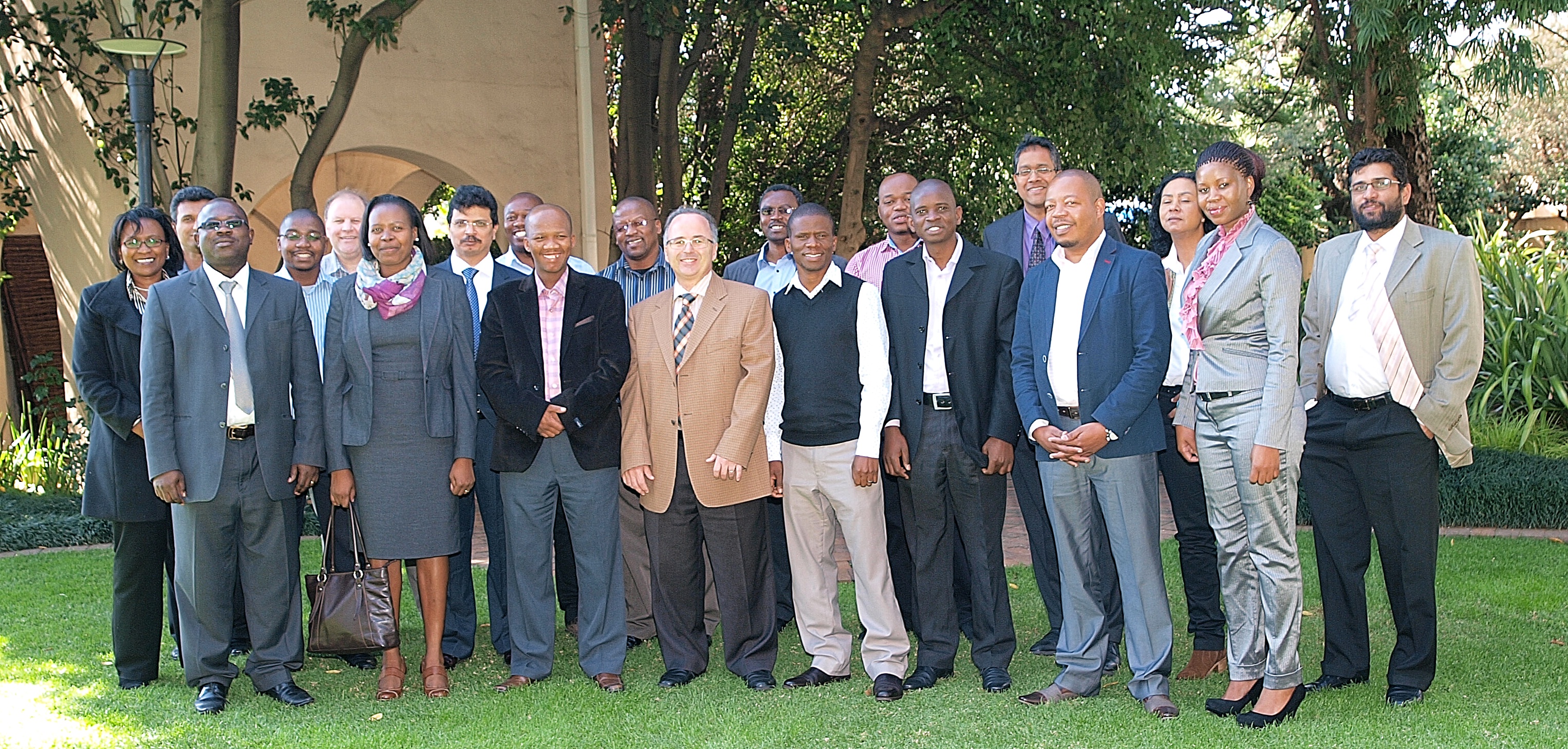
Delegates attending the WCO/SACU IT Connectivity Conference - May 2013

Delegates attending the WCO/SACU IT Connectivity Conference – May 2013

Representatives of the SACU member states recently met in Johannesburg to progress developments concerning IT Connectivity and Customs-to-Customs data exchange in the region. The session served as a follow up to the session held last year in February 2012 in Pretoria. The conference was convened by the SACU secretariat under the sponsorship of the Swedish International Development Agency (SIDA), and was once again pleased to have SP Sahu, senior technical expert from the World Customs Organisation, to facilitate the work session over 3 days. Representatives of UNCTAD ASYCUDA were also in attendance to observe developments. UNCTAD currently supports three (soon to be four) of the five SACU Customs administrations. The session provided an opportunity for delegates to progress this work as well as develop a terms of reference for an independent assessment of the two connectivity pilot projects that are currently being pursued between Botswana-Namibia and South Africa-Swaziland, respectively.

IT Connectivity serves as a catalyst for various customs-to-customs cooperation initiatives seeking to bring about a seamless end-to-end flow of information between point of departure and destination. Some examples include export/transit data exchange, approved economic operator, commercial fraud, eATA and at least 5 other key areas of customs mutual exchange.  The concept is driven out of the newly establish WCO model known as Globally Networked Customs (GNC). GNC was formally adopted by the WCO Council in June 2012 where a capacity building approach based on protocols, standards and guidelines (PSG) using utility blocks was recognised to provide the most realistic means to achieve efficiency gains, and a more effective way to manage the negotiation of international agreements between customs administrations.

There exist several pilot projects across the globe wherein customs agreements are being piloted under the GNC approach. Development of a Utility Block and supporting data clusters for interconnectivity within SACU and the broader Southern Africa sub-region already commenced at last year’s session. The concept gained sufficient traction and was soon adopted by both SACU and SADC  member states as the means to implementing IT connectivity within the respective regions.

A review of the Utility Block and data clusters was conducted to ensure alignment of customs data requirements across the member states. The resulting product now provides a standard ‘data set’ which members agree as the minimum data required to facilitate data exchange and advance risk management needs. It covers export and transit declaration requirements. Two important criteria exist for successful data exchange and data matching. The first being the availability of appropriate legal provision for two countries to exchange data. The second requires the use of an agreed unique identifier. The identifier is important for Customs as well as the trade community.

Delegates were also presented with current and future developments occurring at the WCO, in particular the on-going work being done to formalise standards for the “My Information Package” concept as well as the WCO Data Model, currently at version 3.3. Another interesting on-going development involves a unique Trader ID.  

Member states involved in respective pilot programmes are now preparing themselves for an up-coming evaluation, later this year.

Enforcement, Risk Management and Preferred Trade come together in the SACU Region

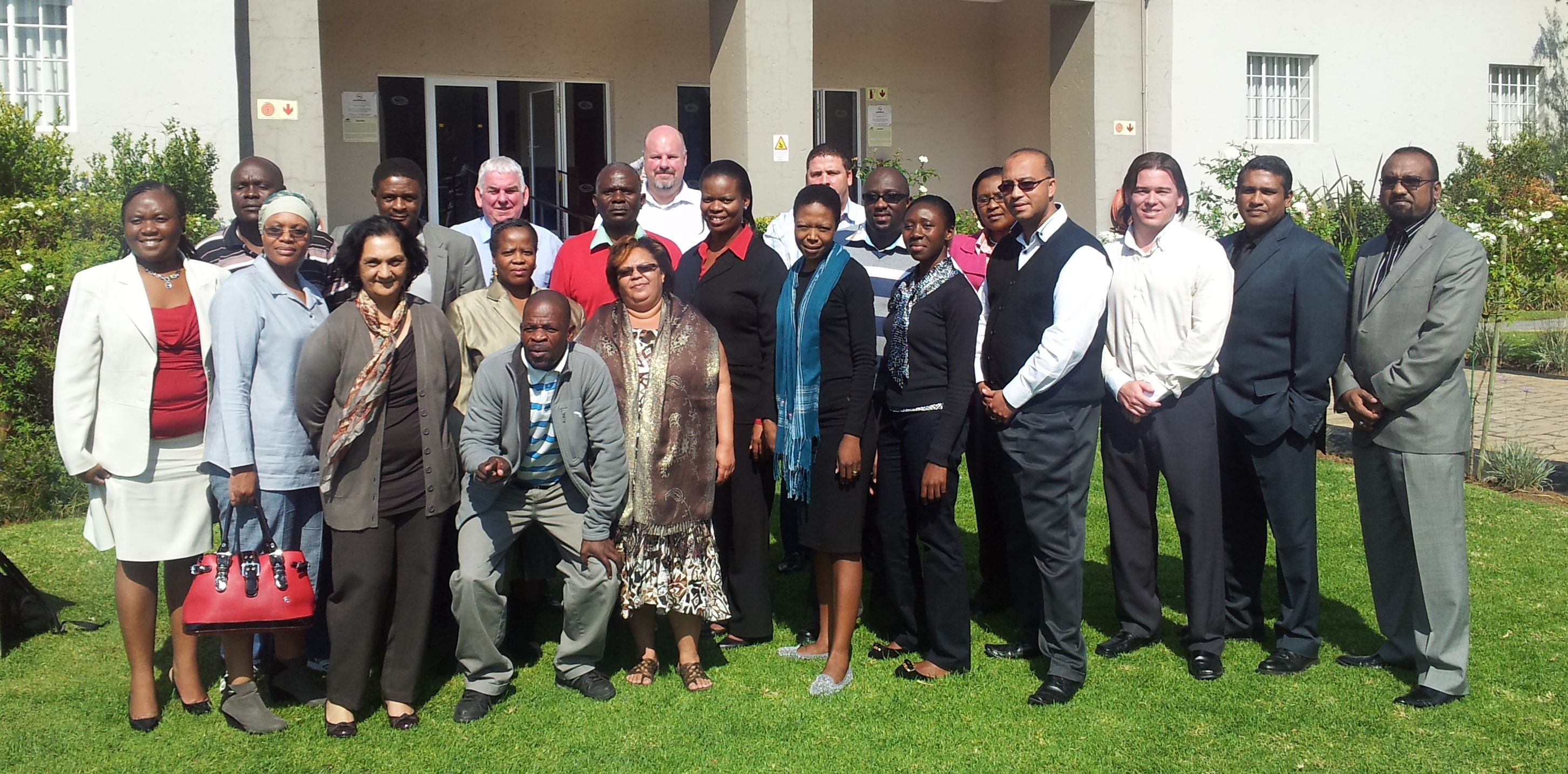
Enforcement, Risk Management and Preferred Trade come together in the SACU Region

Enforcement, Risk Management and Preferred Trade come together in the SACU Region

A WCO workshop on the topics of Enforcement, Risk Management and Preferred Trader was conducted in April in Johannesburg, South Africa, with the involvement of the WCO Secretariat, UK Customs and the member countries of the Southern African Customs Union – SACU (Botswana, Lesotho, Namibia, South Africa and Swaziland). Capacity Building in the mentioned areas in the SACU Region is part of the WCO Sub-Saharan Customs Capacity Building Programme financed by the Swedish Government through the Swedish International Development Cooperation Agency, SIDA.

An assessment including lessons learned was conducted concerning Operation Auto, targeted at second hand motor vehicles. This first ever regional enforcement operation in the 102 years of history of SACU presented good results as around 250 vehicles were seized by the Customs administrations. The Regional Intelligence Liaison Office contributed actively in the assessment process, ensuring that also future enforcement operations will benefit from the experiences gained.

The development of further risk management capacity is ongoing at the regional level and discussions were held concerning the establishment of common risk profiles. A number of high risk products have been identified and the formulation of profiles to engage illegal trade in these areas is ongoing.

Regarding the Preferred Trader program, progress can also be reported as SACU Members are approaching implementation at operational level. This project component fits very well with the risk management component as the latter is the foundation of the Preferred Trader approach. The process of selecting high compliant, low risk economic operators for the upcoming pilot scheme is well underway while capacity in verification and post clearance audit is being enhanced. A launch of (a pilot of) the regional Preferred Trade program is tentatively envisaged for the second half of 2013. Source: WCO

Botswana Tightens Car Exports to Namibia

2nd hand carsThe New Era (Windhoek) reports that Botswana has tightened the screws on the importation of second-hand vehicle older than five years, effectively removing the loophole exploited by Namibian motorists to import such vehicles.

Botswana’s customs, the Botswana Unified Revenue Service (BURS), is now enforcing the Southern Africa Customs Union (SACU) agreement that prohibits the registration of imported second-hand vehicles older than five years. Previously Namibian traders in imported second-hand cars would register vehicles in Botswana, from where they would enter Namibia as Botswana registered vehicles instead of imported vehicles.

The process had made it easy to register such cars in Namibia and in other SACU member states, which prohibit the registration of imported vehicles older than five years.

“BURS, in the spirit of good neighbourliness and adherence to the provision of the SACU agreement, wishes to assist Namibia in curtailing the irregularities prevalent in the movement of second-hand vehicles through the two countries,” reads a statement from the Namibian Ministry of Finance’s customs that relayed the decision by the Botswana customs authorities.

However, ingenious Namibian traders in second-hand vehicles told New Era yesterday that the decision by Botswana customs is simply a temporary deterrent as they are now considering using Swaziland’s leniency on the matter to circumvent the very same SACU provisions. Besides the SACU provisions, Angola – a non-SACU member – has also banned the importation of second-hand vehicles older than five years. Second-hand vehicle imports contributed at least N$150 million to the economy during 2012, with a record 20 000 vehicles recorded.

Some of the vehicles have also gone through to neighbouring countries. South Africa does not allow imported second-hand vehicles older than five years to drive on its road network. Importers of such cars are forced to load vehicles on trucks or use the port of Walvis Bay. To register the cars in Namibia, the traders would take the vehicles to Botswana where they would be registered for a short period of time and bring them back to Namibia as Botswana registered vehicles.

The process enables the cars to be registered on the Namibian vehicle registration system, which ordinarily would not allow the cars to be registered for local use within SACU states. Botswana customs says persons attempting to circumvent the SACU provisions would be subject to a fine of P40 000 (N$44 579.85) or three times the value of the vehicles or imprisonment of not more than ten years. Source: New Era

Simple solution – SACU countries should unilaterally invoke the prohibition on the importation and registration of second-hand motor vehicles at all external borders of the customs union. Is it not time for the member states to act for once like a custom union?

TRALAC – What has happened since customs duties on 124 clothing tariff lines were increased in 2009?

I really enjoy TRALAC’s Newsletter – their analysis is always concise and down-to-earth. This Hot Seat Comment is no exception. One often wonders about the impact and nett result of tariff changes and trade remedies. Here we get some insight.

The clothing and textile industry has a long history in South Africa and is still a very important source of employment, especially for women and in poorer communities. The industry is geographically bound to specific provinces, including the Western Cape, KwaZulu-Natal, the Free State and Gauteng. In many rural areas the clothing and textile sector is often the only source of formal employment. Since about 2002 the Rand appreciated substantially and South African exports became less competitive in the global market. Coupled with the trade liberalisation, in terms of South Africa’s WTO offer, the clothing and textile industry has experienced sustained import competition due mostly from Asian imports. In order to try and remedy large-scale factory closures and employment losses in the industry the Southern Africa Clothing and Textile Workers Union (SACTWU) applied for an increase in the import tariffs of 124 clothing tariff lines to the WTO bound rates of 45 percent in 2009. These clothing tariff lines are classified under Chapter 61 and 62 of the South African Tariff Book and include various clothing items, including men’s woven and knitted shirts, jackets and trousers; babies’ garments; and women’s woven and knitted jackets, skirts, dresses and trousers. Although the retailers objected to an increase in import duties the International Trade Administration Commission (ITAC) granted the application and general customs duties on 121 clothing tariff lines were increased from 40 percent to 45 percent, while the general customs duties on three tariff lines (hosiery) was increased from 20 percent to 45 percent.

imagesIn its application SACTWU stated three reasons for the application: there has been a significant increase in imports under these 124 tariff lines flowing into South Africa; market disruptions in the SACU industry which have resulted in factory closures and retrenchments warranted increased protection for the domestic industry; and increased tariffs will provide both relief and show increased confidence in the industry. The retail industry objected to the application on the following grounds: the loss of business in the manufacturing industry can not only be attributed to price competition, but also inefficiency in the local industry; increased duties will have an inflationary effect impacting the ability of consumers to buy clothing at competitive prices; and increased duties will have a punitive effect on the rail sector and the end consumers. In its decision the Commission found the declining rate of investment and employment in the clothing sector coupled with increased imports a disturbing trend. The Commission decided that an increase in customs duties will enable manufacturers to protect existing jobs, increase market penetration and price competition and growth the domestic manufacturing sector in the export market. However, the question of whether the increase in these customs duties have been successful in reaching its goal of decreased imports and increased domestic production, sales and exports still remain.

Import and export data sourced from the World Trade Atlas (2013) and production and sales data sourced from Statistics South Africa (2013) show the following patterns in the clothing industry between 2009 and 2012:

  • Over the time period imports of the 124 clothing tariff lines increased by 15 percent, from approximately US$ 834 million in 2009 to approximately US$ 1.2 billion in 2012.
  • The top five importing countries were China, Mauritius, India, Madagascar and Bangladesh, accounting for 89 percent of the total imports of these clothing articles into South Africa over the time period.
  • China mainly exported men’s, boy’s, women’s and girl’s cotton trousers; knitted sweaters and pullovers; cotton and knitted t-shirts; and knitted babies’ garments to South Africa between 2009 and 2012.
  • South Africa’s exports of these clothing tariff lines increased by 6 percent, from approximately US$ 71 million in 2009 to approximately US$ 84 million in 2012.
  • These clothing articles were mainly exported to African countries, including Zambia, Mozambique and Zimbabwe.
  • The production index of the physical volume of production (base year is 2005) show there has been a significant decrease in the volume of production of knitted and crocheted articles and wearing apparel in South Africa. The index decreased from an average of 108.11 in 2009 to an average of 79.82 in 2012.
  • The sales of knitted and crocheted articles and wearing apparel also declined over the time period. Actual value of sales declined by 3 percent, from approximately US$ 18 billion in 2009 to approximately US$ 16 billion in 2012.

Although there has not been a significant lapse of time since the increase of import tariffs the data gives the short term response of imports, exports, and production to the change in import duties in November 2009. Immediately after the increase in tariffs there was an initial decrease in exports, production and sales.  However, exports recovered by the end of 2012, while production and sales are still significant lower than pre-2009 levels. SACTWU has also recently indicated that employment in the clothing, textiles and leather sector seems to be more stable over the last two years. However, one of the main objectives of the increase in import duties, to deter lower priced imports mainly from Asia, has not been accomplished. Source and content credit – Willemien Viljoen, TRALAC Researcher.

SARS – Modernisation milestone materialising

Interfront logo2

Its been some time since I’ve penned an article on the South African Customs Modernisation Programme. Aside from it being the SA Revenue Service’s prerogative to communicate and publish notice of its internal developments and plans, some caution always needs to be exercised observing bureaucratic protocol, ensuring that the official message is forthcoming from SARS. Given the widespread interest in the programme as well as the development of the Interfront [formerly Tatis] integrated customs border management solution (iCBMs) as a wholly owned development of South Africa, I think it not out of place to inform the public interest on this matter. Readership of this blog has an extensive global following and a specific interest in Interfront developments.

Unlike ASYCUDA, Sofix, e-Biscus, and a host of other integrated Customs-tailored business solution offerings, Interfront’s solution for SARS will not include a client user frontend. In other words, the Interfront system (iCBMs) will essentially drive declaration backend processing. This comprises a fully integrated declaration validation and processing engine, supported by a sophisticated tariff engine and duty calculator; the latter offering future web-based services for customs users. In order to compliment the SARS corporate and standardised user interface approach, the iCBMs interfaces with SARS’s revenue accounting, trader registration, risk management, and case management workflow systems. Not only does this leverage cost savings and efficiencies, but ensures a unified ‘workspace’ for all of SARS employees.

Much of the Interfront technology is therefore hidden to the customs user, with traders experiencing an identical interface with SARS Customs, as it does today. From the outset of the Customs Modernisation Programme (July 2010), the approach has followed pragmatic migration of customs electronic clearance processing – across its 30 odd legacy systems – towards an integrated clearance process that could mimic the functionality featured on the new iCBMs. The modern technology and scalability of Interfront offers the ability and agility to enhance service levels and efficiencies to another level. At the same time, operational policies and procedures have been modernised with the aim and intent of meeting the requirements contained in Customs new Control and Duty Bills.

Much of the ‘change’ experienced by both customs officers and the trade over the last 2 years has prepared the country for the eventual migration to the new system. These have been significant, and at times painful changes, not without anxiety and apprehension. Over the last 6 months an even more painstaking and taxing effort has been expended by the Customs Modernisation Team, Interfront and other service providers in addressing a seamless harmonisation and switchover of customs business from disparate legacy systems to a new customs technology platform. The “Parallel Run” has witnessed the daily comparison of customs clearance data between the old and new systems, identification and logging of disparities (bugs), modification of the two environments to ensure the same result is achieved. This has not been an easy and simple process, as any country having undergone a system switchover can attest to.

This month, February 2013, service providers to the customs industry are readying their resources to commence user testing. This implies that service providers (computer bureaus) will engage their clients to prepare test cases for submission to customs to test the new Interfront process. Given that Customs legacy systems and Interfront have been synchronised to a high level of compatibility, the process for traders should not reveal much difference to what they have experienced over the period of modernisation over the last 2 years. One area of note will be the structure and content of Customs Response messages. Traders will have to familiarise themselves and test their interpretation of these messages to ensure they perform or respond appropriately to the instructions.

Satya Prasad Sahu - Technical Officer at the WCO provided members of SACU, SADC and the EAC comprehensive guidelines for the development of the GNC Utility Block concept in Africa (February 2012)

Satya Prasad Sahu – Senior Technical Officer at the WCO provided members of SACU, SADC and the EAC comprehensive guidelines for the development of the GNC Utility Block concept in Africa (February 2012)

In terms of compliance and compatibility with international developments, the new iCBMs is engineered on the WCO Data Model. All relevant simplification processes as exemplified in the Revise Kyoto Convention are likewise factored into its design, although not all of these will be immediately available with the initial rollout. Introduction of the new Customs Control and Duty Acts will require these principles to be fully functional and operational, however.

The WCO Data Model is the pivotal design component around which most of the new system’s business and validation rules are centred. This in itself is a major achievement as it bodes well for all future ‘cross border’, customs-2-customs connectivity initiatives. In this regard SARS is well advanced in bilateral and multilateral projects with key trading partners, for example IBSA (cross-global trilateral initiative), and in Africa, we are working with SACU, SADC, COMESA and the EAC to bring about regional customs connectivity. On a bilateral basis, initiatives with Swaziland, Mozambique and Zimbabwe are developing nicely. A significant contributor to cross border/cross global customs connectivity is undoubtedly the excellent work brought about by the dedicated members of the WCO’s Globally Networked Customs adhoc workgroup. In June last year, the WCOs policy Commission unanimously endorsed the GNC architecture and Utility Block approach. African customs connectivity efforts have likewise adopted this model which ensures harmonisation and uniformity in approach, legal dispensation, data exchange, risk management and procedure. The WCO moreover plays a overseeing role in many of these GNC and capacity building initiatives across the globe – this assists greatly in sharing and learning of experiences.

I would think that the above should be sufficient to wet the appetites of customs practitioners, traders, ICT technocrats, and perhaps even legislators and bureaucrats on developments in South Africa. Subsequent to the launch of Interfront SARS will make its ideas and strategy relating to forthcoming initiatives known to trade and the business community. A Year of Innovation? Yes, and hopefully a happy tale that will bode well for the South African trade and supply chain logistics community, and some good fortune for Interfront in its business development in the region and beyond!

NRA/BURS – Customs Connectivity Passes Test

TKCThe first live demonstration of an end-to-end customs connectivity solution was successfully completed in Windhoek, Namibia on December 12, 2012. Customs Connectivity enables customs administrations from different countries to share information seamlessly and instantly across borders: reducing processing time and improving access to reliable, real-time trade statistics.

The demonstration was witnessed by the Commissioners of Botswana (BURS) and Namibia Customs (NRA), senior managers and operational teams. The demonstration involved moving information from an ASYCUDA++ entry in Botswana via the Cloud-based User Portal to an ASYCUDA++ entry in Namibia, and vice-versa from Namibia to Botswana. It demonstrated how clearing agents/traders would manage the flow of their information via the secure online User Portal.

The demonstration marked a “watershed moment” in turning Customs Connectivity into reality. The next steps for the pilot project include full system testing and documentation before end-user training commences. Full implementation is scheduled to take place during the first half of 2013.

Customs Connectivity offers countries in the region a historic opportunity to engage cutting-edge technology and modern tools to facilitate trade throughout Southern Africa, enhancing economic growth and promoting food security. The pilot project is being implemented by Botswana and Namibia, supported by the USAID Southern Africa Trade Hub. Source: SATH

Request – Perhaps some of the TKC clearing agents, NRA and BURS customs staff would like to comment on their experience thus far? 

South Africa – Stalling Regional Integration

Yes, you’ll be forgiven if you thought this was some belated April-fools joke. South Africa has been accused of frustrating plans to create a regional customs union and instead preferring to bolster the South African Customs Union (Sacu), where it holds sway. 

A customs union is a trade agreement by which a group of countries charge a common set of tariffs to the rest of the world, while granting free trade among members. Regional Integration minister, Priscilla Misihairabwi-Mushonga, said there was a feeling that South Africa wanted to use Sacu as its basis to form a regional customs union, instead of working towards creating a new one.

“What we see is that South Africa wants to use Sacu as the basis for forming a regional customs union and sometimes, this is viewed as having a big brother mentality,” she said. Misihairabwi-Mushonga said, for this reason, negotiations towards a holistic Southern African Customs Union (Sadc) had not gone very far. Botswana, Lesotho, Namibia, Swaziland and South Africa make up Sacu, with the four countries having benefited by aligning themselves to South Africa, Africa’s largest economy. A Sadc customs union would involve the 15 countries of the region, instead of Sacu, which is considered narrow.

But Catherine Grant, the head of economic diplomacy at the South African Institute of International Affairs, reckons the smaller nations in Sacu, like Lesotho, may be opposed to Sacu morphing into a regional customs union. “This will be opposed by other Sacu members, not necessarily just South Africa, as this (Sacu) is not just a trade agreement, but involves a broader range of economic issues,” she said.

“Up to 60% of the Lesotho budget is Sacu revenue, so the vested issues, whether Sacu is the basis of a customs union, are not just South African.” Grant felt that it was impossible to expand Sacu in its current form, as it would cost South Africa too much and would dilute the resources that were meant for other projects.

The head of the trade and policy think-tank said instead, South Africa preferred to see the implementation of a free trade area (FTA) as a first step, since customs union negotiations were usually lengthy and time-consuming. “The preference is to first channel scarce resources to existing commitments and trying to make them as beneficial as possible,” she explained.

Grant said while South Africa was the dominant player in the region, hence engendering a feeling that it was imposing itself as the big brother, the country was actually holding back from taking a leading role and this cost the region.

“Sometimes South Africa holds back because they are conscious of not being a big brother and that could be detrimental to the region,” she explained. However, Grant said energies should be directed towards the conclusion of negotiations to set up the Tripartite Free Trade Area (TFTA), which includes the Common Market for East and Southern Africa, the East African Community and Sadc.

“The TFTA will resolve some of the overlapping issues that can be difficult to solve when it comes to a customs union,” she said. Since Zimbabwe adopted multicurrencies in 2009, there has been a call that the nation either join Sacu or push for the formation of a regional customs union. Zimbabwe remains wary of joining Sacu, as it fears for its economic independence, yet negotiations for a regional customs union are moving at a snail’s pace.

Sacu was established in 1910, making it the world’s oldest customs union. It consists of Botswana, Lesotho, Namibia, South Africa and Swaziland. Source: AllAfrica.com

How to resolve regional transport problems?

The Freight-Intra Africa Trade Conference in Pretoria, this week, has featured several news articles in the local media, and no doubt some foreign tabloids as well. The Minister of Transport has cleared up the cause of the ills plaguing cross border and regional transport. At least we are now fully informed that [historical] design issues and operational inefficiencies at South Africa’s landborders, and Beit Bridge in particular, are the fundamental causes of under-performance in intra-Africa trade.

“In most cases, the delays at the borders are caused by operational inefficiencies, which result in the duplication of processes. This is a serious cost to the economies of the countries that conduct their trade through such border posts,” the Minister said.

One has to seriously question who advises the minister which leads to such statements, and whether or not these advisers have visited any land borders in recent months.

Now the remedy – Government has budgeted and approved R845-billion for infrastructure development over the medium-term, with a significant proportion, about R262-billion of this investment being earmarked for transport infrastructure and logistics projects. Can anyone question government’s commitment in this respect? Not really. However, the Minister was quick to point out government would resolve inefficiencies at the borders by establishing a mechanism that will bring all border entities under a single command and control structure to address the fragmentation in border operations. “The ultimate vision is to create one-stop border operations to facilitate legitimate trade and travel across the borders”.

The proliferation of border management agencies (integration of enforcement and regulatory authorities under one umbrella) – which has seen the demise of many customs administrations over the last decade – has not proven an effective vehicle to manage cross border travel and trade. It is difficult to see how facilitation procedures can co-exist under a command and control environment. What the situation does create is the opportunity to consolidate a budget for security expenditure. Various Sources: Engineering News, Business Live, Fin24.com and personal opinion.