SACU revenue dependence raises concerns

Namibia-coat-of-armsA financial analyst has expressed concern about Namibia’s reliance on revenue from the Southern Africa Customs Union (SACU), saying the government needs to diversify its source of revenue.

James Cumming, Head of Research at Simonis Storm Securities told a Namibia Chamber of Commerce and Industry post budget meeting that he is concerned about over reliance of budget revenue from the SACU pool, saying 35% to 40% of tax revenue is from the SACU.

He explained that government needs to diversify its revenue sources as future adjustments to the SACU revenue formula could lead to lower revenue from this agreement.

The Minister of Finance, Saara Kuugongelwa-Amadhila, told the meeting that sources of revenue have been increasing and are expected to grow over the next three years. She said new sources of revenue have been identified with preliminary studies already underway in order to secure a consistent revenue stream in the future.

Leonard Kamwi, head of advocacy and research at the Chamber, said he was disappointed that previous budgets had failed to reconcile expenditure on education with the resulting output, which has been below par. He said it is not enough for the government to target sectors in their wholesome but rather target the prospective beneficiaries. “The budget should target specific necessary skill sets as opposed to the whole sector,” said Kamwi.

Kuugongelwa-Amadhila defended the proposed export tax on natural resources, indicating it was meant to minimise the disparities that arise from the exploitation of Namibia’s naturally endowed resources. Source: The Namibian

Massive SADC Gateway port for Namibia

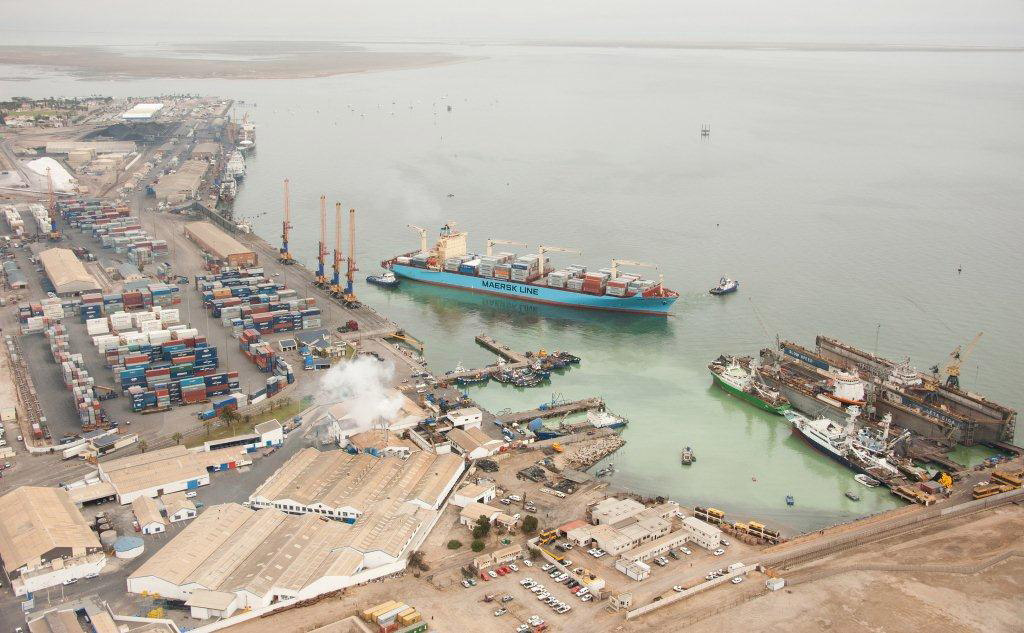
An aerial view of the port of Walvis Bay. NamPort is seeking a green light from Cabinet to spend over N$3 billion on the expansion of the harbour (Namibian Sun)

An aerial view of the port of Walvis Bay. NamPort is seeking a green light from Cabinet to spend over N$3 billion on the expansion of the harbour (Namibian Sun)

NamPort has recently commenced a massive N$3 billion construction project to build a new container terminal, but plans even more extravagant expansion in the years to come, according to its executive for marketing and strategic business development, Christian Faure. He expanded on the planned multi-billion dollar Southern Africa Development Community (SADC) Gateway Terminal envisioned for the area between Swakopmund and Walvis Bay this week.

“The SADC Gateway terminal is still in the concept phases,” stressed Faure. “This development was considered the long term plan for the Port of Walvis Bay’s expansion, but plans have been brought forward mainly due to the construction of the new fuel tanker berth facility and the Trans-Kalahari railway line initiative for the export of coal from Botswana. This development is not to be confused with the new container terminal currently under construction at the port,” he said.

Already NamPort has completed pre-feasibility studies and is currently busy with geo-technical evaluations to determine the structure of the ground in the area to be dug out, he said. NamPort is also positively engaging the Municipality of Walvis Bay on the land itself, and other role players that may be impacted, he said. “This is a massive development and to put it into perspective, the current port is 105 hectares in size. The SADC Gateway port is 10 times that with a size of 1 330 hectares. The new container terminal will add 40 hectares,” said Faure.

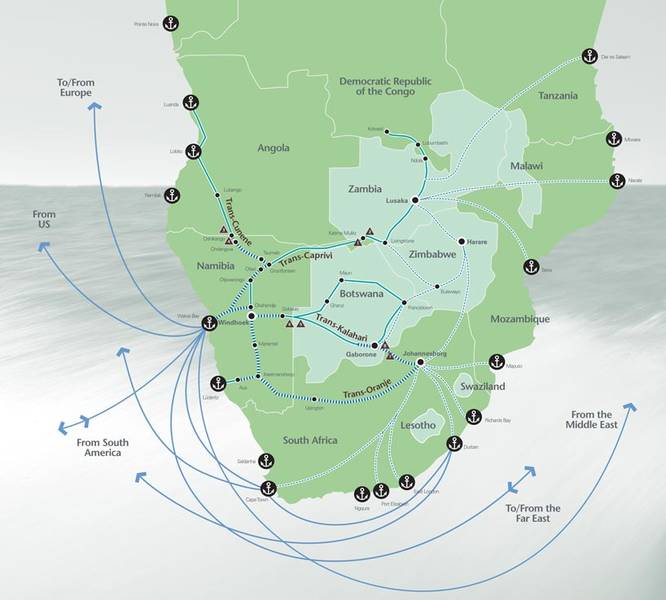
With Namibia’s reach to more than 300 million potential consumers in the SADC region, the port of Walvis Bay is ideally positioned as the preferred route to emerging markets in Botswana, Zambia, Zimbabwe, Angola, Malawi and the Democratic Republic of Congo.

Faure explained that several mega projects have surfaced in the last few years that will not be feasible without the SADC Gateway terminal, including the Trans-Kalahari Railway Line, Botswana coal exports through Namibia, mega logistics parks planned in NDP4, the budding crude oil industry, large scale local mining product exports, as well as magnetite, iron ore and coal exports from Namibia.

The SADC Gateway Port project (also sometimes called the North Port) will extend the existing harbour to the north of Walvis Bay between Bird Island and Kuisebmond. It will cover a total for 1330 hectares of port land with 10 000 meters of quay walls and jetties providing at least 30 large berths. The new port will also feature world class ship and rig repair yards, and oil and gas supply base, more than 100 million tons worth of under cover dry bulk terminal, a car import terminal and a passenger terminal, he explained.

The SADC Gateway Port will also feature a liquid bulk terminal for very large crude carriers, dry ports and backup storage areas, break bulk terminals, small boat marinas and a new high capacity rail, road, pipeline and conveyor link to the area behind Dune 7. Source: Informate, Namibia

Comesa chips in with $1,4m for ZIM dry port in Nambia

Walvis Bay - making headway (www.transportworldafrica.co.za)

Walvis Bay – making headway (www.transportworldafrica.co.za)

The Common Markets for Eastern and Southern Africa has agreed to avail US$1,4 million for phase one of the construction of the country’s Walvis Bay dry port. The government of Namibia in September 2009 granted Zimbabwe 19 000 square metres of land to construct its own dry port that is expected to boost the country’s trade. The project is being spearheaded by the Road Motor Services, a subsidiary of the National Railways of Zimbabwe.

In an interview, RMS managing director Mr Cosmos Mutakaya said the Ministry of Industry and Commerce last month held a consultative meeting with Comesa to strategise on how to fund the project.

“Comesa is looking at funding projects with a regional integration element that countries within the Southern African Development Community would benefit from. In the last meeting we held, Comesa indicated their willingness to finance the first phase of the facility which will cost US$1,4 million,” he said.

He said all the relevant documentation had been submitted and they are now waiting for a response from Comesa.

Mr Mutakaya said construction of the dry port would be done in two phases. The first phase involves the civil works which includes construction of the drive-in weighbridge, storage shades, palisade fencing as well as installation of electric catwalks. Phase two involves the putting up of administration blocks. He said once phase one is completed, then the dry port operations will start.

“We are now waiting for the unlocking of funds from Treasury and Comesa for us to start construction. The Namibian contractor, Namport, will also start working on the port once the funds are made available. According to the contractor, phase one of the project is going to take five working months to complete,” Mr Mutakaya said.

He said the project, which was supposed to have been completed by May this year, had been stalled by the lack of funding.

An official at the Namibian desk office in the Foreign Affairs Ministry confirmed that operations at the port had stopped for a while due to a lack of funding. “Government has been facing challenges in making payments to the Walvis Bay Corridors Group, responsible for the construction at the port and operations had to be stopped for some time pending clearance of some outstanding fees by Government,” he said.

Trade for Zimbabwe via Walvis Bay has increased for the past few years and a large percentage of commodities are transported along this corridor. Zimbabwe’s trade volumes through the Port of Walvis Bay have grown significantly to more than 2 500 tonnes per month.

In a related development, the Namibian Ports Authority is also working on expanding Walvis Bay port and recently secured a US$338 million loan from the African Development Bank to finance the construction of a new container terminal at Port of Walvis Bay. The Namibian government also received US$1,5 million for logistics and capacity building complementing the port project loan. Source: The Herald (Zimbabwe)

SACU – the Day of Reckoning has Arrived

South Africa has been courting major player Botswana’s support for changes to SACU.

South Africa has been courting major player Botswana’s support for changes to SACU. (Mail & Guardian)

The Mail & Guardian reveals that South Africa has requested an urgent meeting with members of the Southern African Customs Union (SACU) for as early as ­February next year in what could be a make-or-break conference for the struggling union.

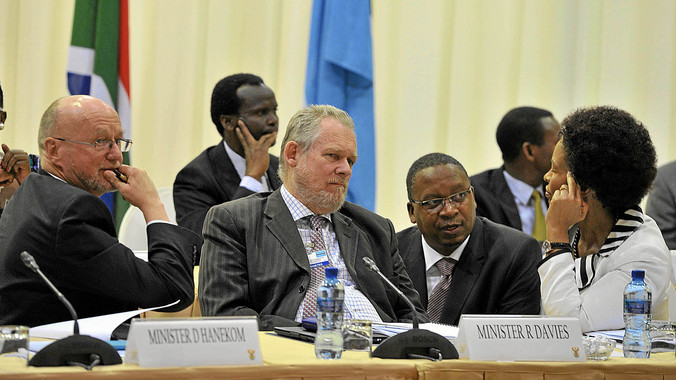
In July this year, a clearly frustrated Trade and Industry Minister Rob Davies told Parliament that there had been little progress on a 2011 agreement intended to advance the region’s development integration, and it was stifling its real ­economic development.

South Africa’s payments to SACU currently amount to R48.3-billion annually – a substantial amount, considering the budget deficit is presently R146.9-billion, an estimated 4.5% of gross domestic product.

In the past, South Africa has had some room to reposition itself, but as Finance Minister Pravin Gordhan has pointed out, the South African fiscus has come under a lot of pressure as a result of factors such as the global slowdown, reduction in demand from countries such as China for commodities, and reduced demand from trade partners such as the European Union.

South Africa, which according to research data, last year contributed 1.26% of its GDP, or about 98% of the pool of customs and excise duties that are shared between union countries including Swaziland, Botswana, Lesotho and Namibia, wants a percentage of this money to be set aside for regional and industrial development.

The four countries receive 55% of the proceeds, and are greatly dependent on this money, which makes up between 25% and 60% of their budget revenue. South Africa has very little direct benefit, except when it comes to exporting to these countries. It receives few imports.

Changing the revenue-sharing arrangement

Efforts to change the revenue-sharing arrangement so that money can be set aside for regional development would result in less money going into the coffers of these countries.

It would also mean that a portion of the revenue that South Africa’s SACU partners now receive with no strings attached would in future include restrictions on how it is spent.

A source close to the department said adjustments to the revenue-sharing arrangement and the promotion of regional and industrial development were issues on which the South African government was not willing to budge.

So seriously is South Africa viewing the lack of progress on the 2011 agreement, a document prepared for Cabinet discussion includes pulling out of SACU as one of its options, a source told the Mail & Guardian.

This could not be confirmed by the government, but two senior sources said South Africa was very aware of the dependence of its neighbours on income from the customs union, in particular Swaziland and Lesotho, and the impact its collapse could have on these economies.

Professor Jannie Rossouw of the University of South Africa’s department of economics believes a new revenue-sharing arrangement is essential for the long-term sustainability of SACU countries.

South Africa’s contribution

He also said that South Africa’s contribution as it presently stands should be recognised as development aid and treated as such by the international community.

Between 2002 and 2013, total transfers amounted to 0.92% of South Africa’s GDP, which exceeds the international benchmark of 0.7% set by the Organisation for Economic Co-operation and Development, he said in his research.

“It is noteworthy that South Africa transfers nearly all customs collections to SACU countries. Total collection since 2002 amounted to about R249-billion, while transfers to SACU were about R242-billion,” Rossouw said. The South African Revenue Service (SARS) recognises that inclusion of trade with Sacu would have a substantial impact on South Africa’s ­official trade balance.

South Africa’s total trade deficit for 2012 was R116.9-billion and, according to SARS, had trade with the union been included, it would have been much reduced to R34.6-billion.

South Africa has budgeted to increase its allocation to SACU from R42.3-billion in the 2012-2013 financial year to R43.3-billion this financial year and in the 2014/2015 financial year.

In 2002, the SACU agreement was modified to include higher allocations for the most vulnerable countries, Swaziland and Lesotho, and it established a council of ministers, which introduced a requirement for key issues to be decided jointly. In 2011, a summit was convened by President Jacob Zuma in which a five-point plan was established to advance regional integration.

Review of the revenue-sharing arrangement

This involved a review of the revenue-sharing arrangement; prioritising regional cross-border industrial development; making cross-border trade easier; developing SACU ­institutions such as the National Bodies (entrusted with receiving requests for tariff changes) and a SACU tariff board that would eventually take over the functions of South Africa’s International Trade Administration Commission (ITAC); and the development of a unified approach to trade negotiations with third parties.

Davies told Parliament that there had been little progress in the past three years on these five issues.

Xavier Carim, the director general of the international trade division of the department of trade and industry, said there had been positive developments regarding agreements on trade negotiations, such as those with the European Union and India on trade, and progress had been made on the development of SACU institutions, but progress was slow on the other issues.

Davies told Parliament it was difficult to develop common policy among countries that varied dramatically in economic size, ­population and levels of economic, legislative and institutional development.

He cited differences over approaches to tariff settings as an example.

“South Africa views tariffs as tools of industrial policy, while for other countries tariffs are viewed as a source of revenue,” Davies said.

A proposal that cause all the problem

“A key problem that led to differences was the proposal by one member for lower tariffs to import goods from global sources that were cheapest, which ultimately undermined the industry of another member. This was primarily an issue of countries who viewed themselves as consumers rather than producers.”

The South African government is trying diplomacy as its first option. A senior government source said issues around SACU made up a large part of talks last week between Botswana and South Africa on the establishment of co-operative agreements on trade, transport and border co-operation.

Catherine Grant of the South African Institute of International Affairs said Botswana had long been considered the leader of the four countries. It would make sense for South Africa to bring Botswana on board before the meeting.

Grant said the SACU agreement needed to be re-examined and modernised.

“There needs to be a review of the revenue-sharing formula that is less opaque and is easier to understand. The present system is complicated, making it hard to work out exactly how much countries are getting. It’s clear that Rob Davies feels hamstrung by SACU and has done for some time, because decisions cannot be made without the agreement of all five members, who have different needs and requirements.”

The trade balance is one of the elements that resulted in South Africa’s current account, which has recorded significant deficits in recent months, coming in as high as 6.5% of GDP in the second quarter of 2013.

Trade between South Africa and SACU has always been recorded, but for historical reasons it has been kept separate from official international trade statistics. Source: Mail & Guradian
 

Walvis Bay Container Terminal – AfDB and Namibia sign loan agreement

NamPort ExpansionThe African Development Bank Group (AfDB) and Namibia on Friday, November 8, 2013 signed a ZAR 2.9 billion (US $338 million) sovereign guaranteed loan to the Nambian Ports Authority (Namport) to finance the construction of the new container terminal at Port of Walvis Bay and a UA 1.0 million grant (US $1.5 million) to the Government of Namibia for logistics and capacity building complementing the port project loan. The project was approved by the AfDB Group in July 2013.

The project is expected to enable Namport to triple the container-handling capacity at the Port of Walvis Bay from 350,000 TEUs to 1,050,000 TEUs per annum. It will also finance the purchase of up-to-date port equipment and the training of pilots and operators for the new terminal. The grant component will fund the preparation of the National Logistics Master Plan study, technical support and capacity-building for the Walvis Bay Corridor Group and training of freight forwarders.

According to the AfDB Director of Transport and ICT, Amadou Oumarou: “Through this project which potentially serves up to seven major economies in the SADC region, the Bank is assisting in the diversification and distribution of port facilities on the southwest coast of Africa, and provides the much-needed alternative for the region’s landlocked countries.”

The project will stimulate the development and upgrade of multimodal transport corridors linking the port to the hinterland while improving the country’s transport and logistics chains. It will also boost competition among the ports and transport corridors in the region with the ripple effect on reductions in transportation costs and increased economic growth.

The projected project outcomes include improvement in port efficiency and increase in cargo volumes by 70% in 2020 as a result of increased trade in the region. The benefits of the project will include among others, the stimulation of inter-regional trade and regional integration, private sector development, skills transfer and most importantly employment creation, leading to significant economic development and poverty reduction in Namibia, and the SADC region. Source: African Development Bank

Related articles

SACU prepares for launch of regional preferred trader scheme

handshakeThe Southern African Customs Union (SACU) consisting of Botswana, Lesotho, Namibia, South Africa and Swaziland collaborates with the World Customs Organization (WCO) in a trade facilitation initiative funded by the Swedish International Development Cooperation Agency (Sida). The initiative in which also the SACU Secretariat participates, aims among others at developing a regional Preferred Trader (PT) scheme.

From 30th of September to 4th of October a core team consisting of National Project Managers, audit experts, PT-experts and site managers met in Windhoek, Namibia, with WCO experts to further prepare for the launch of the PT-scheme by developing regional processes to be applied related to the benefits selected and designed for the SACU regional PT.

The selected pilot operators have been engaged, and in the near future also the relevant cross border regulatory agencies and Customs officials at the selected border posts will be sensitized on the regional PT-scheme.

During the intense working week, all participants actively contributed to the preparations for the launch of the PT-scheme, planned for the first half of 2014. Source: www.4-traders.com

Namibia – Dry Port for Keetmashoop

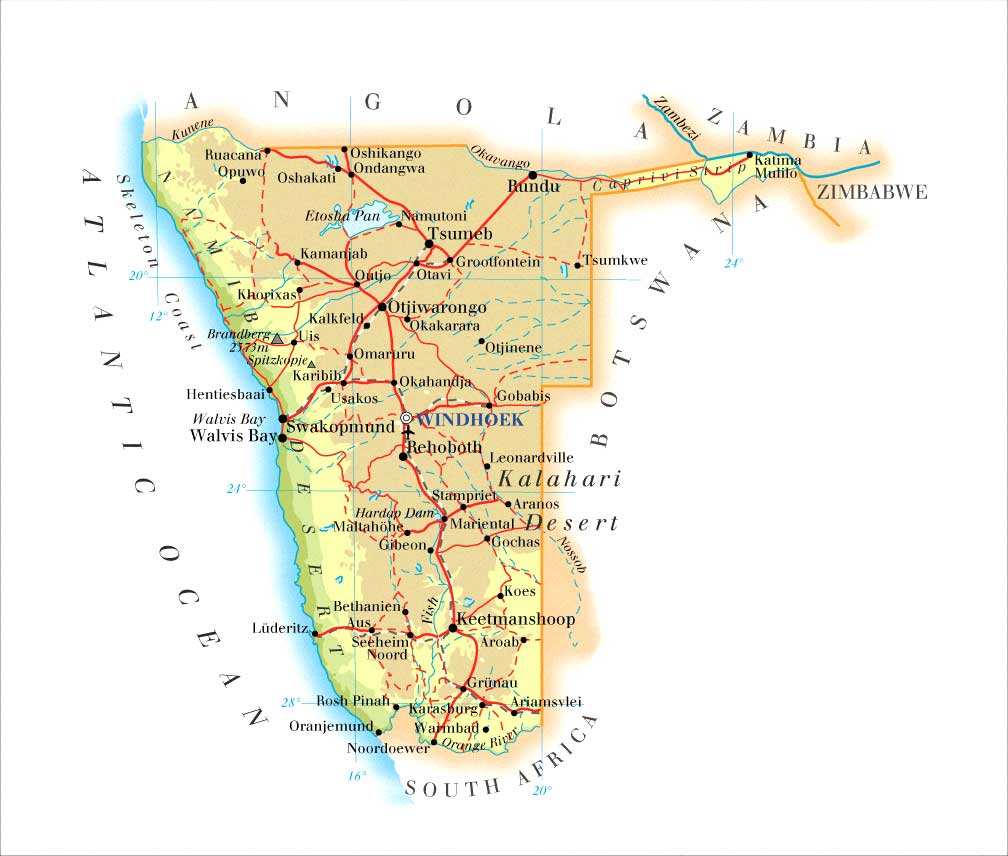
Namibia Map (www.fao.org)

Namibia Map (www.fao.org)

Namibia – Plans by Governor of the Karas Region, Bernardus Swartbooi, to establish a dry port facility at Keetmanshoop have been hailed as a “brilliant idea” by experts who are in unison that the idea is overdue. (Maybe it is just plain common sense! Will be interesting to see how the Namibian Revenue Authority facilitate the inland movement of transit containers from Walvis Bay.)

Swartbooi presented his proposal to change the face of Keetmanshoop by making it the pivot of trade between Namibia, South Africa and possibly the rest of Africa at the Annual Logistic and Transport Workshop last week.

According to him the new venture, estimated at roughly N$10million, will see Keetmanshoop linked directly by sea, rail and road with Namibia’s capital Windhoek, Africa’s largest economy, South Africa, and the rest of the Southern African Development Community in the form of a central north-south transport corridor.

Keetmanshoop is the only town in Namibia with eight border posts and has a working relationship with the North Cape Province in South Africa.

Swartbooi said the second phase of this development will stream into the creation of a free trade zone on the eastern side of Keetmanshoop that will not only attract foreign investors but create a wealth of jobs that will significantly reduce the country’s unemployment statistics.

He also mentioned that with a free trade zone the region can eventually venture into light manufacturing that will bring about positive spin-offs for the region and the entire Namibia as a whole.

“We fight against a trend that the south was left out.. If you close down the Walvis Bay port today we will feel it later, but if Lüderitz port is to be closed today the effect will be felt within hours. There is no argument about our strategic location. No-one can compete against our land availability,” he enthused.

Twenty hectares of serviced land have so far been secured for the project that will include two weighbridges, offload facilities and accommodation facilities for truck drivers and recreation.

“We are looking at enhancing road safety and to cut down on driver fatigue,” he explained adding that key stakeholders have not yet been identified and anchor participants are being sought.. “We are looking at a private public equity where we can give someone a lease of ninety years,” he stated.

According to the Director for the Namibia German Centre for Logistics, Neville Mbai, Keetmanshoop as a regional hub is a brilliant idea and will not only serve as a buffer during labour strikes in South Afica, but will surely ease the burden on Walvis Bay port and corridors.

“It is absolutely brilliant. Kharas is adjacent to the great Gauteng region, the breadbasket of Southern Africa if not the whole of Africa. What we want to see is a shorter road from Johannesburg to Namibia. Look at the road infrastructure of Walvis Bay, if we are to add more that road will be in trouble,” he said adding that with Keetmanshoop providing a hub Namibia will no longer be severely impacted by labour strikes in South Africa, as goods can be stored to cater for the Namibian market.

“The idea must be to have a concentration of logistics hubs scattered across the country and with the port of Lüderitz and the quantity of fish production the region certainly is deserving of a hub,” he noted.

At least 1 600 trucks pass through Keetmanshoop on a monthly basis with 80 percent of Namibia’s goods being are transported through this route.

Operations Manager for Logistics Support Services Quintin Simon argues that this is indeed a positive idea and with Keetmanshoop located in the centre, distribution will become easier and faster. Source: www.newera.com

Namibia – South Africa Remains Major Trading Partner

Namibia flagSouth Africa remained Namibia’s leading trading partner, particularly on the imports front during the second quarter of 2013.

South Africa accounted for 70,1% of Namibia’s imports, followed by the Euro zone, Switzerland, Botswana and China; accounting for 3,6%, 3,5%, 2,9% and 2,8% respectively.

The remaining 17,1% was sourced from other countries such as the United Kingdom, Tanzania, United States of America, Zambia and other countries around the world, according to the September issue of the Bank of Namibia Quarterly Bulletin.

With regard to exports, Botswana, emerged the leading destination for Namibia’s exports during the second quarter. Botswana absorbed 19,6% of Namibian exports, overly dominated by rough diamonds. In the past, this position was exchanged between South Africa and the UK.

This followed a 10 year sales agreement between Botswana and De Beers that was signed in September 2011. South Africa, the Euro Area, UK, Switzerland, Angola and the US also remained prominent destinations for Namibia’s exports during the second quarter.

Namibia exported 14,4% of products to South Africa, 13, 2% to the Euro Area, 8,4% to Switzerland, 7,7% to Angola and 5,6% to the US. Countries such as China, Singapore, United Kingdom, Zambia and others also absorbed a noticeable portion of the Namibian exported commodities during the quarter under review.

Net services receipts recorded a net outflow on a quarterly and yearly basis during the second quarter of 2013, largely on account of net payments in other private services. The net services registered a deficit of N$88 million, year on year, during the quarter under review from a surplus of N$39 million.

The quarterly deficit balance was mainly reflected in the higher net outflows of other private services sub-category, which surged by four percent, quarter on quarter, to N$515 million and by 22,8% year on year. The outward movements of net services was however offset by the increased net inflows of travel services category that rose slightly by 1,1% and 11,6% quarter on quarter and year on year, respectively to N$761 million. Source: New Era (Namibia)

SACU in danger of collapse

Rob Davies Frustrated with lack of progress (Business Day)

Rob Davies Frustrated with lack of progress (Business Day)

Trade & industry minister Rob Davies did not mince his words when he briefed parliament late last month on the Southern African Customs Union (Sacu), the world’s oldest. The union was formed in 1910 and comprises SA, Botswana, Lesotho and Swaziland.

Exasperated, Davies complained to MPs that SA’s partners were hardly moving in the direction of harmonising trade and industrial policies. He said if this did not happen soon, the viability of Sacu itself might be called into question.

Sacu was initially formed as a colonial-era instrument to control the flow of goods into and out of the then British colonies, an arrangement that was retained with a new agreement in 1969. In essence, SA collects customs and excise revenue on behalf of all four countries and distributes 98% of all this money to the three other members as a form of aid, retaining only 2% that should accrue to itself. It is a formula that has both worked and been fraught with difficulties over the past century.

The agreement was modified with a more distributive formula in 2002 which came into effect into 2004. Under the new agreement the most vulnerable countries, Swaziland and Lesotho, would get a larger share of the excise portion.

The Sacu distributions are also the instrument through which Swaziland was to get R2,4bn in assistance from SA in 2011. Under that agreement SA would have advanced the landlocked kingdom the money from its future Sacu distributions, but it came with fiscal and technical conditions from SA.

In January 2013, Swazi finance minister Majozi Sithole said the loan arrangement was “not working out”. He complained about additional conditions set by SA before the first tranche of R800m could be paid to Swaziland.

The kingdom’s financial woes arose mainly from reduced customs and excise collections in 2010 which reflected reduced trade to and from the region. With up to 60% of Swaziland’s national budget dependent on Sacu funds, the reduction from a total pool of R27bn to just over R17bn left Swaziland cash strapped.

Though he didn’t explicitly say so in his briefing to parliament, Davies’ frustration with the Sacu arrangement was palpable. He took particular issue with the Sacu payments merely serving as a guaranteed source of revenue for the treasuries of Sacu member states. “There are no cross-border development initiatives out of the revenue collected when there are opportunities for the members to invest in joint projects,” he told parliament.

Sacu has other problems. While the 2002 agreement calls for harmonised trade and industrial policies, it also makes provision for the countries to have different fiscal and other regimes. As a consequence Sacu members’ corporate and personal income tax rates are different. This means some members realise lower internal tax revenues than they otherwise could, increasing dependency on the Sacu distributions.

A sense of entitlement has also crept into the arrangement. In a case that generally escaped media attention, in 2009 the other members asked for an international tribunal to seek arbitration on what they believed to be “short” payments from SA. The tribunal convened in the supreme court of Namibia in Windhoek.

The matters in dispute were resolved with the signing of the latest agreement in 2009, but the fundamental complaint demonstrated both the entitlement and the vulnerability of the most dependent members.

At the time SA was expected to make four quarterly distributions which were based on an estimate of revenues collected. As often happened, there was an overestimation which resulted in a payment surplus of just over R2bn, which SA deducted from future payments. This precipitated a dispute which, given the vulnerability of Swaziland and Lesotho, was almost inevitable as their entire fiscal planning for that year had been premised on the inaccurate Sacu estimates.

SA’s counsel in the hearing, Michael Kuper, argued that the arrangement was so inefficient that it forced SA to sometimes look for alternative sources of funding just to fulfil the Sacu revenue-sharing formula.

Officials of the department of trade & industry and national treasury have for some time been unhappy about the disruptive nature of the formula, given the volatility of customs revenue. Davies alluded to this in parliament, using the wild fluctuations in revenue before, during and after the global financial crisis.

Now Davies wants the union to shape up or make a decision on its future. He told parliament that Sacu had to live up to the outcomes of its second summit, held in 2011, where member states undertook to work on cross-border industrial development, development of Sacu institutions, unified engagement in trade negotiations and a review of the revenue-sharing arrangements.

As if to emphasise its historical and present inertia, Davies said that not much work had advanced in this regard – such as the formation of national tariff bodies, a Sacu tariff board, common antitrust regulations and co-operation in agriculture.

“Some members have proposed that the Sacu tariff board be formed even if the states’ national tariff boards have not been formalised yet,” he said, in an indication that some of the members do not have the technical wherewithal to install the necessary institutions.

Lesotho and Swaziland in particular are hampered by structural economic difficulties, including low prospects for meaningful economic growth and reliance on external aid. A recent IMF report on Lesotho complimented the new government on its fiscal discipline and recommended further aid. It also noted new measures to improve supervision over the financial and other sectors.

As Africa’s last remaining absolute monarchy, known for its profligate spending on the comforts of its king, Swaziland remains a political hot potato which has increased pressure on the SA government to attach conditions to any assistance given. Though written in diplomatic language, the 2011 IMF report on Swaziland also listed a number of areas that needed strengthening.

It recommended the cutting of public-sector wages to ease fiscal pressures, a decision that brought the kingdom to the brink of instability, precipitating the appeal to SA for help. MPs raised the Swaziland loan issue with Davies, demonstrating the internal and regional political difficulties of the arrangement.

While SA remains determined to assert its voice over its junior partners in Sacu, it still has to tread carefully lest it be seen as a bully. Providing some cover have been the conditions set by the IMF before Swaziland can receive further assistance. Some of these common conditions include the protection of the peg between the Swazi ilangeni and the rand, the implementation of a fiscal adjustment roadmap and a prioritisation of social spending over the reported excesses of King Mswati III.

Early this month Australian newspapers reported the arrival of several of King Mswati’s queens and their aides in Australia on an apparent shopping trip. It is such extravagance that has put both SA and the kingdom in a difficult position – the former in its internal political environment and the latter through the loss of credibility with international development finance institutions.

It now appears that SA is choosing the route of common economic development over the aid-like structure of the Sacu payments. It remains to be seen whether the partners will be in a position to make good on Davies’ intentions or keep talking as the member states have been doing for over a decade. Source: Financial Mail

Trade Information Portal to Improve Trade Facilitation in Namibia

Namibia flagThe World Trade Organization General Agreement on Tariff and Trade (GATT) 1994 Article X on Trade Facilitation calls for member country trade regulations to be clearly published. The WTO Self-Assessment Guide (2009) outlines the basic standard for internet Publication as: “A Member shall publish all trade related legislation, procedures and documents on a national official internet site or sites”. Usually called a “Trade Repository” or a “Trade Information Portal” the site facilitates awareness, via the internet, of requirements to enable compliance with customs and other agency requirements for the import or export of goods, using the HS classification of goods as the primary organizing principle for cataloguing and retrieving information

USAID Southern African Trade Hub reports that the government of Namibia expects to have its Trade Information Portal up and running by early 2014. The development of portal is supported by the USAID Southern Africa Trade Hub, under its Partnership for Trade Facilitation facility. The Trade Hub recently supported Namibia in a detailed legislative review of the country’s Customs and Excise Act to align it with global and regional legislation and to provide the legislative foundations for electronic trade facilitation measures, including the Trade Information Portal.

Currently trade-related information is made available across number of websites maintained by each government agency responsible for a particular aspect of trade regulation. The Trade Information Portal will provide a single platform where all trade related information for Namibia is collected in one system and readily available for searching and viewing, which will save time and expense for the trading community. The Trade Information Portal uses the latest technology to provide a comprehensive, accurate and up-to-date source for all regulatory information, which will result in tangible benefits for trade facilitation. No longer will it be necessary to seek advice in person from multiple agencies. Furthermore, conflicting advice and guidelines will be avoided by creating a single authoritative reference point. The savings in time and expense will lessen the overall cost of doing business and reduce the time to import or export goods, contributing to Namibia’s improved standing in doing business indexes and transparency.

A significant part of the coordination and development work in setting up the Trade Information Portal will facilitate and shorten the road map towards implementing an electronic National Single Window which is also under consideration by the Namibia government. Source: satradehub.org

Enforcement, Risk Management and Preferred Trade come together in the SACU Region

Enforcement, Risk Management and Preferred Trade come together in the SACU Region

Enforcement, Risk Management and Preferred Trade come together in the SACU Region

A WCO workshop on the topics of Enforcement, Risk Management and Preferred Trader was conducted in April in Johannesburg, South Africa, with the involvement of the WCO Secretariat, UK Customs and the member countries of the Southern African Customs Union – SACU (Botswana, Lesotho, Namibia, South Africa and Swaziland). Capacity Building in the mentioned areas in the SACU Region is part of the WCO Sub-Saharan Customs Capacity Building Programme financed by the Swedish Government through the Swedish International Development Cooperation Agency, SIDA.

An assessment including lessons learned was conducted concerning Operation Auto, targeted at second hand motor vehicles. This first ever regional enforcement operation in the 102 years of history of SACU presented good results as around 250 vehicles were seized by the Customs administrations. The Regional Intelligence Liaison Office contributed actively in the assessment process, ensuring that also future enforcement operations will benefit from the experiences gained.

The development of further risk management capacity is ongoing at the regional level and discussions were held concerning the establishment of common risk profiles. A number of high risk products have been identified and the formulation of profiles to engage illegal trade in these areas is ongoing.

Regarding the Preferred Trader program, progress can also be reported as SACU Members are approaching implementation at operational level. This project component fits very well with the risk management component as the latter is the foundation of the Preferred Trader approach. The process of selecting high compliant, low risk economic operators for the upcoming pilot scheme is well underway while capacity in verification and post clearance audit is being enhanced. A launch of (a pilot of) the regional Preferred Trade program is tentatively envisaged for the second half of 2013. Source: WCO

Ambitious Port Plan for Walvis Bay


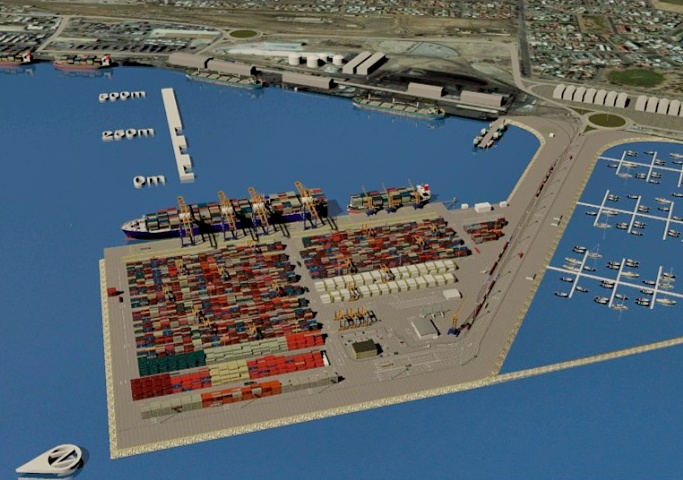
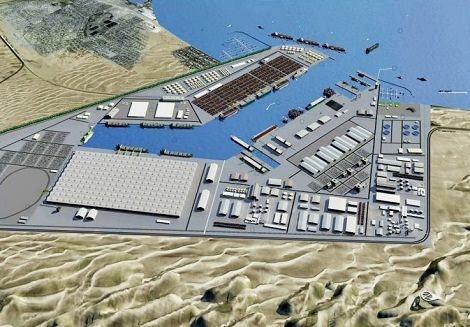
Computer-generated imagery of what the Walvis Bay North Port will look like when built. Image courtesy Namport.

Computer-generated imagery of what the Walvis Bay North Port will look like when built. Image courtesy Namport.

Far from simply developing a new container terminal, Namport could be bringing forward plans to build an ambitious new port at Walvis Bay to accommodate an expected increase in container and other traffic in the near future.

Originally intended as a long-term proposal for the Port of Walvis Bay, the plans may have to be brought forward and, coupled with finance that could come from China, the Namibian port is set to become a real rival for business in the southern and central African region.

According to reports in The Namib Times the cabinet has discussed and in principle given the go-ahead to create a new harbour on the northern side of the existing port. It said the new harbour is part of Namport’s strategy of positioning Walvis Bay as the premier port in the region. The plans will require dredging of a deep entrance channel and excavating the land to clear space for the new deepwater basin along with 10 kilometres of quayside for ships to berth.

If it was necessary to have proof that this development has the potential of shaking up the southern African region, it came in the form of a warning given yesterday by Transnet Chief Executive Brian Molefe at a community briefing session in Durban, in which he said, while justifying the need for the Durban dig-out port to go ahead, that if it was delayed or not built then Durban would lose out to other African ports. As an example he cited Walvis Bay where he said ambitious plans to build a large container port had been given the go-ahead. Source: Ports.co.za

Namibia – Weak Rand Plays Havoc With Trade Balance

south-african-rand-zar-bearishThe continued weakening of the Rand and an increase in the volume of imports has seen Namibia’s trade deficit widen to N$17 billion, the Namibia Statistics Agency (NSA) has said.

The country’s import bill jumped 24% in 2012 to N$59 billion widening the trade deficit to N$17 billion compared to N$11 billion in 2011. Despite a fall in the share of some of the major imports to the total import bill, the value of imports still increased to N$59 billion compared to N$48 billion in the previous year.

Major imports for 2012 included mineral fuels, mineral oils, vehicles, boilers and machinery. Fuel dominated the list of imports with a share of 13% up from 9% in the previous year. Vehicles were in second place with a share of 11% (compared to 12% in 2011) of total imports. Boilers, machinery and mechanical appliances occupied third place with 9% a slight decline from 10% in 2011.

The Statistics Agency said an 80% increase in the value of oil imports (at N$7.8 billion) can be explained by a 14% depreciation of the Namibia Dollar/Rand against the US$ in the period under review since the 2012 average price of oil in US dollars was almost the same as in 2011. In addition, an increase in the volume of imports especially ships, boats and floating structures that recorded the strongest increase of almost 2100%, also contributed to the widening deficits.

South Africa remains Namibia’s most important trading partner with combined trade between the two countries amounting to N$48.6 billion in 2012. However, the direction of trade between the two countries remain skewed with Namibia importing N$41.6 billion worth of goods from South Africa, while exporting goods worth only N$7 billion to South Africa.

Analysts say while a weaker local currency boosts earnings of companies that sell their goods overseas, it adds to import costs, making food and fuel more expensive. With a relatively low industrial base, and a saturation in the mining sector, Namibia’s exports only grew marginally to N$42 billion up from N$37 billion in 2011. This growth is too small to have a meaningful impact on the widening trade deficit.

In 2013, the construction of the multi-billion dollar Husab Project, the Grove Mall and Square, Strand Hotel, the container terminal at Walvis Bay, and the Neckartal Dam is likely to put further pressure on the import bill worsening Namibia’s trade deficit even further. An estimated 80% of capital goods for these projects will be imported. Source: The Economist (Namibia)

Botswana Tightens Car Exports to Namibia

2nd hand carsThe New Era (Windhoek) reports that Botswana has tightened the screws on the importation of second-hand vehicle older than five years, effectively removing the loophole exploited by Namibian motorists to import such vehicles.

Botswana’s customs, the Botswana Unified Revenue Service (BURS), is now enforcing the Southern Africa Customs Union (SACU) agreement that prohibits the registration of imported second-hand vehicles older than five years. Previously Namibian traders in imported second-hand cars would register vehicles in Botswana, from where they would enter Namibia as Botswana registered vehicles instead of imported vehicles.

The process had made it easy to register such cars in Namibia and in other SACU member states, which prohibit the registration of imported vehicles older than five years.

“BURS, in the spirit of good neighbourliness and adherence to the provision of the SACU agreement, wishes to assist Namibia in curtailing the irregularities prevalent in the movement of second-hand vehicles through the two countries,” reads a statement from the Namibian Ministry of Finance’s customs that relayed the decision by the Botswana customs authorities.

However, ingenious Namibian traders in second-hand vehicles told New Era yesterday that the decision by Botswana customs is simply a temporary deterrent as they are now considering using Swaziland’s leniency on the matter to circumvent the very same SACU provisions. Besides the SACU provisions, Angola – a non-SACU member – has also banned the importation of second-hand vehicles older than five years. Second-hand vehicle imports contributed at least N$150 million to the economy during 2012, with a record 20 000 vehicles recorded.

Some of the vehicles have also gone through to neighbouring countries. South Africa does not allow imported second-hand vehicles older than five years to drive on its road network. Importers of such cars are forced to load vehicles on trucks or use the port of Walvis Bay. To register the cars in Namibia, the traders would take the vehicles to Botswana where they would be registered for a short period of time and bring them back to Namibia as Botswana registered vehicles.

The process enables the cars to be registered on the Namibian vehicle registration system, which ordinarily would not allow the cars to be registered for local use within SACU states. Botswana customs says persons attempting to circumvent the SACU provisions would be subject to a fine of P40 000 (N$44 579.85) or three times the value of the vehicles or imprisonment of not more than ten years. Source: New Era

Simple solution – SACU countries should unilaterally invoke the prohibition on the importation and registration of second-hand motor vehicles at all external borders of the customs union. Is it not time for the member states to act for once like a custom union?

SARS Customs launches its Water Wing

SARS Customs Waterwing

SARS plans to operate jet skis (such as pictured above) along its vast river borders. [Picture – SARS]

Last week four Customs officers received their qualifications from the South African Maritime Safety Authority (SAMSA) after having successfully completed their written and practical examinations. The officers who hail from the Northern Cape region will commence active patrol and enforcement operations along the northern border between South Africa and Namibia.

The SARS Water Wing skippers received their SAMSA category R certificates after completing a four-day training course at the Van Rhyn Dam in Benoni.

The officers will from next week begin patrolling the Orange River, the border between South Africa and Namibia, where there are suspected illegal trans-border transactions taking place, especially in abalone, diamonds, narcotics and rhino horn.

“These officials are now qualified skippers with category R licences which will enable them to patrol inland waters such as rivers, dams and harbours. The success of this pilot programme now enables us to actively assist in enforcing the Customs and Excise Act without being totally dependent on other departments,” said Hugo Taljaard, Senior Manager: Detector Dog Unit (Oversight).

He said that although the two jet skis will mostly be used in the Nakop area, they will also be utilised as far as Cape Town harbour in the small craft side of the harbour. There are plans to expand the unit. Customs’ first water wing boat is currently being constructed and more details about its deployment will be communicated in due course.  The jet skippers all agreed that it was quite exciting to be part of this pilot programme. “I never in my wildest dreams thought that one day I would be doing something like this,” remarked one candidate.  “Having jet skis will increase our visibility and this will serve as a deterrent to illegal trans-border traders,” added another.

Over the last 6 years SARS has steadily been increasing its visible policing and enforcement capability across the country’s vast land and sea borders. The hugely successful Detector Dog programme has attracted much national and regional attention. SARS also has plans to increase its existing non-intrusive inspection (NII) capability. Currently Durban, South Africa’s sole CSI port, is the only port with a dedicated X-ray scanning facility. Source: SARS Communications Division and self.