Faster EAC Cargo Movement as Kenya Launches New Single Window System

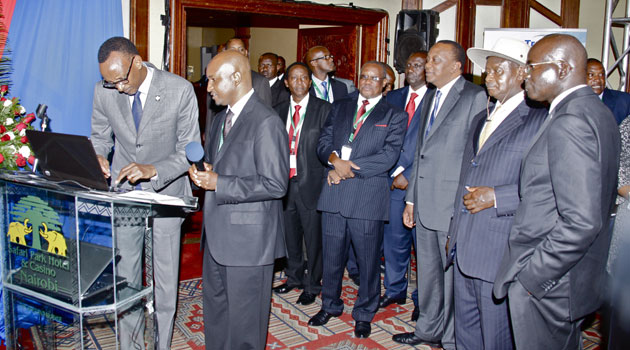
PAUL-KAGAME-WINDOW-SYSTEMPresident Paul Kagame yesterday launched Kenya National Electronic Single Window System seen as a major boost for regional trade since it will simplify clearance processes of goods.

The launch was part of the activities of the 5th Northern Corridor Integration Projects Summit held in Nairobi, and was attended by Presidents Kagame, Uhuru Kenyatta of Kenya and Yoweri Kaguta of Uganda, as well as the second vice president of Burundi and Tanzania’s prime minister.

Rwanda, Uganda and Kenya – which heavily rely on the Kenyan port of Mombasa – are spearheading a series of joint projects aimed at fast tracking regional development through joint infrastructure, trade and political and economic integration.

The use of Electronic Single Window System is expected to centralise trade services such as tracking of goods, custom clearance, and electronic payment including through mobile money.

The system will also integrate with Kenya Revenue Authority, making the clearance at Kenyan ports a lot faster and easier.

“I just want to reiterate how this is one of many important projects that the East African Community partner states have undertaken to deepen integration that we have been seeking, make business more efficient, and lower the cost of doing business as we move forward,” Kagame said at the launch.

Making tech tick

He reiterated Rwanda’s “continued active participation towards making integration a reality.” President Kenyatta and his deputy William Ruto described the Single Window System as yet another building bloc in the EAC integration process.

“Our ultimate vision should be to implement an EAC Regional Single Window platform. The benefits from this initiative may not be fully realised unless all of us in the region adopt National Single Window Systems.

“Our brothers in Rwanda are already implementing a Single Window System and similar efforts are underway in Tanzania and Uganda,” Kenyatta said.

The Kenyan leader said the technology will make it possible for traders to submit information about their goods to multiple government agencies in multiple locations, making business faster and more efficient.

After the launch of the Kenya National Electronic Single Window System, also known as Kenya TradeNet, the Heads of State and Government discussed the progress of several other projects under the Northern Corridor initiative. Source: AllAfrica.com

Membership to several blocs hurts trade in EAC

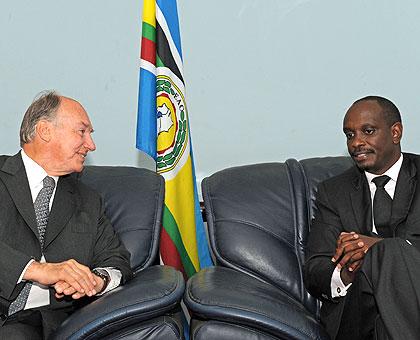
Dr Richard Sezibera meets His Highness the Agha Khan at the EAC Headquarters in Arusha. (Sunday Times Rwanda)

Dr Richard Sezibera meets His Highness the Agha Khan at the EAC Headquarters in Arusha. (Sunday Times Rwanda)

Overlapping membership in several trade areas is impeding “free circulation of goods” within the East African Community-members states, a regional integration and trade expert has said.

Alfred Ombudo K’Ombudo, the Coordinator of the EAC Common Market Scorecard team, has told The News Times that belonging to other trade blocs outside the EAC makes members reluctant to remove internal borders to allow goods to move more freely.

According to K’Ombudo, a Common External Tariff (CET) is critical to ensure free circulation of goods through the application of equal customs duties. The EAC Customs Union protocol has a three-band structure of 0 per cent duty on raw materials, 10 per cent on intermediate goods and 25 per cent on for finished goods.

However, of the five partner states, Tanzania is a member of the SADC and subscribes to a different structure while Burundi, Kenya, Rwanda, and Uganda, are members of the Common Market for Eastern and Southern Africa (Comesa). On the other hand, Burundi belongs to the Economic Community of Central African States (ECCAS).

This, according to the expert is “perforation of the bloc’s CET,” drilling a hole in the regions tariff structure as member- states trade with other countries below the agreed tariffs.

“This makes EAC countries less willing to remove internal borders because they are not sure whether goods may have come from other blocs. This is a serious structural problem that is difficult to solve because the customs union legally recognises other blocs that members belong to,” K’Ombudo noted.

Burundi, Kenya, Rwanda and Uganda’s participation in Comesa and Tanzania’s membership to SADC is recognised by the EAC, but no exception is granted to Burundi for participating in the ECCAS.

Article 37 of the bloc’s Customs Union Protocol recognises other free trade obligations of partner states but it requires them to formulate a mechanism to guide relationships between the protocol and other free trade arrangements.

EAC Secretary General, Richard Sezibera, told The New Times during the launch of the Scorecard in Arusha, that there have been efforts to address the issue of overlapping membership.

“They [EAC leaders] have done two things to [try] addressing it: One is to harmonize the CET of the EAC and that of COMESA. This makes it easier for COMESA states to reduce the level of perforation,” he explained.

He added that in 2008, the heads of state decided to negotiate a free trade area between the EAC, COMESA and SADC as another way of fixing the problem.

Dr Catherine Masinde, the Head of Investment Climate, East and southern Africa at the International Finance Corporation (IFC), said: “If we were not to perforate the EAC would end up with a bigger volume of trade figures”.

She noted that since the launch of the EAC Customs Union, in 2005, the region has witnessed strong growth in intra-regional trade, rising from $1.6 billion to $3.8 billion between 2006 and 2010. Intra-EAC trade to total EAC trade grew from 7.5 per cent in 2005 to 11.5 per cent in 2011.

“This is significant growth but, I am told that this is, in fact, a drop in the ocean. That it is far from the potential of the market. I was given a figure, that $22.7 billion [in inter-regional trade] was actually lost to other regional blocs, from this region, [between 2005 and 2012] because of non-compliance with the common market protocol.” The Scorecard, Masinde hopes, will solve various EAC compliance issues as well as energize reforms to spur the bloc’s development. Source: The Sunday Times (Rwanda)

EAC Single Customs Territory launch postponed to June

Presidents Uhuru Kenyatta (Kenya), Paul Kagame (Rwanda) and Yoweri Museveni after the trilateral talks in Entebbe, Uganda. President Jakaya Kikwete of Tanzania and Pierre Nkurunziza of Burundi stayed out of the loop of the third infrastructure summit in Kigali, Rwanda on Monday. [Photo/PPS]

Presidents Uhuru Kenyatta (Kenya), Paul Kagame (Rwanda) and Yoweri Museveni after the trilateral talks in Entebbe, Uganda. President Jakaya Kikwete of Tanzania and Pierre Nkurunziza of Burundi stayed out of the loop of the third infrastructure summit in Kigali, Rwanda on Monday. [Photo/PPS]

Kenya, Uganda and Rwanda have postponed the single customs territory (SCT) roll-out, giving Burundi and Tanzania more time to prepare for the shift.

East Africa Community (EAC) secretariat custom officer Ally Alexander told the committee on Communication, Trade and Investment in Mombasa that the implementation of the model would begin in June.

“We are looking at reducing the costs and number of days to clear the cargo from Mombasa to Kampala to take three days instead of the previous 18 days,” Mr Alexander said.

The SCT was initially planned to begin in January with the three countries moving their revenue staff to common entry and exit points to begin goods clearance. But Tanzania and Burundi protested their exclusion in the arrangement after Kenya announced in January that it was ready to start accommodating revenue officials from the two landlocked states in Mombasa, prompting the three States to go slow on their plans.

On Monday, Mr Alexander told East African Legislative Assembly that SCT would reduce the cost of doing business and bring efficiency in trade. He said for exports within the region, a single regional bond for cargo would be issued to cater for goods from the port of Mombasa to different destinations.

An electronic cargo tracking system would also be used to avoid diversion of goods into the transit market. Under the model, goods will be checked by a single agency on compliance to regional standards and instruments.

“We want to avoid agencies replicating checking on standards, when it is done once this will not be repeated,” he said.

Mr Alexander said goods would be released upon confirmation that taxes have been paid and customs procedures fulfilled.

However goods heading to the Democratic Republic of Congo which is not a member of EAC will be cleared on a transit basis.

The establishment of SCT has raised concerns among stakeholders, key among them the registration of clearing agents and job losses. Kenya Revenue Authority deputy commissioner customs Nicholas Kinoti said the concerns would be addressed through legislations. Source: http://www.businessdailyafrica.com

Africans roast South Africa for lack of openness

Chris Kirubi is a leading Kenyan businessman [www.kenyan-post.com]

Chris Kirubi is a leading Kenyan businessman [www.kenyan-post.com]

Frustration over Africa’s disparate tax, travel, investment and trading regimes boiled over yesterday as Chris Kirubi, a leading Kenyan businessman and one of the wealthiest people on the continent, tore into South Africa’s failure to be a leading light in opening up the continent for business. Kirubi was a participant in a panel discussion at the “Africa: The Outlook, the Opportunity” event hosted by former New York City mayor Michael Bloomberg in downtown Johannesburg.

To underscore his frustration, the outspoken Kirubi questioned why African travel businesses kept going to Europe and North America to sell African tourism, leaving behind Africans like him who needed no further convincing about visiting Africa. “Open markets are not happening yet. We must open markets for people, goods and services,” Kirubi said. “South Africa needs to take leadership by opening up for smaller countries. How many of us have been allowed to invest here?”

His sentiments on the issue of openness were echoed by Reserve Bank governor Gill Marcus, who said the focus in Africa should be about co-operation and less about competition. Marcus, who seemed rather at ease five days after a slide in global emerging market currencies prompted her to hike interest rates, said the issue was “how do we use our different strength to benefit Africa as a whole”. She said co-operation would be particularly critical in dealing with three core challenges facing the continent: water, food and energy.

To illustrate what was possible if African governments worked together to create a more open investment environment, Aigboje Aig-Imoukhuede, the vice-president of the Nigerian Stock Exchange (NSE), said there was an emerging notion in west Africa, in terms of which Ghana was seen as the gateway and Nigeria as the destination.

He added that the NSE was planning to visit the JSE in the coming months to explore areas of possible co-operation. In that regard, as an economic powerhouse, South Africa had an important role to play in reshaping how Africa did business, not only with the rest of the world but more importantly with itself.

“There are major issues we are not addressing and it is an issue of laws,” added Kirubi, who is also the east Africa chairman of a joint venture with Tiger Brands, South Africa’s biggest consumer goods company.

On tax, he asked why South Africa and Kenya did not have a tax agreement and why he needed to go via Mauritius each time he needed to open a holding company. “We have a problem. We’ve got to wake up.”

Finance Minister Pravin Gordhan was also among the panellists. He acknowledged that there were “huge challenges” in the mining sector, but reiterated the need for perspective on issues relating to labour strikes. “There is a lot of good work being done. In the next few years, skills development and training will be [enhanced] a lot more.” Source: Business Report

China hopes to dominate Africa by boosting trade via Indian Ocean

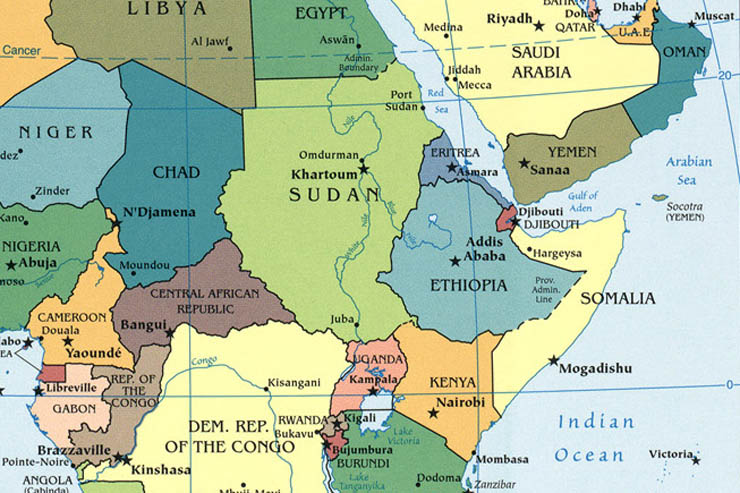
EastAfricaMapPeople’s Republic of China (PRC) officials are becoming increasingly apprehensive about the rise in the use of the westward corridor to export oil, diamonds, and rare minerals out of South Sudan and the Central African Republic via Cameroon. In other words, this creates a flow to Atlantic sea and air transportation routes, rather than routes eastward to Indian Ocean trade routes. Beijing is also concerned over the growing tension between Sudan and its neighbors – particularly South Sudan – because of the impact this might have on the PRC’s long-term designs to dominate Africa’s resources trade.

A key component of the Chinese long-term strategy has long been to converge all the flow of oil, gas, and minerals to a single export point on the shores of the Indian Ocean; that is, in the direction of China. This vision is getting closer to realization given the progress made toward beginning construction of the maritime complex in Lamu on the northern Kenyan shores of the Indian Ocean. The Lamu mega-port and adjacent industrial and transportation complexes are a major element of the Kenyan Government’s Vision 2030 initiative. Lamu is the key to the long-needed modernization of Kenya’s deteriorating infrastructure and boosting of economic output.

Although Nairobi keeps insisting that there will be international tenders for each and every phase of the Lamu project, the overall design in fact follows Beijing’s proposal, and Nairobi acknowledges that no international consortium has so far been able to remotely compete with the financial guarantees offered by official Beijing in support for proposals presented by Chinese entrants. This is because Beijing considers the Lamu mega-port and transportation complex to be the key to the PRC’s long term domination over African trade and resources.

The initial costs of the first phase of the Lamu project are estimated at $25.5-billion. The name of this first phase – the Lamu Port and New Transport Corridor Development to Southern Sudan and Ethiopia (LAPSSET) – points to the initial objectives. Significantly, the term used is “Southern Sudan” and not the state of South Sudan. When completed, the first phase of the Lamu complex will include a 32-berth port, three international airports, and a 1,500km railway line. As well, the Chinese plan oil pipelines from Juba in South Sudan, and from Addis Ababa via Moyale, Kenya, to converge into Kenya’s Eastern Province and end in a new huge oil refinery in Bargoni, near Lamu. The entire construction and pipelines will be supported by a 1,730km road network. In the longer term, the trans-African pipelines the Chinese plan on building from both Nigeria in the west and south-western Africa (most likely Angola) will also feed into the Lamu complex, thus giving the PRC effective control over the main hydrocarbon exports of Africa.

The strategic cooperation between Beijing and Khartoum constitutes the key to the Chinese confidence that their Sudanese allies be able to contain their Somali jihadist proxies so that the risk of terrorist attacks is minimal. Simply put, Beijing is ready to do anything just to ensure the flow of oil eastwards rather than westwards.

Ultimately, the significance of the Chinese long-term grand design for Africa can be best comprehended in the context of historic transformation in the grand strategy and polity of the PRC. Beijing has been arguing since the fall of the Soviet Union that the decline of the United States was also inevitable and that China was destined to rise as the global hegemon. Presently, Beijing is convinced that the time is ripe for delivering the coup de grace.

On October 13, 2013, the official Xinhua news agency published an official commentary stating that “it is perhaps a good time for the befuddled world to start considering building a de-Americanized world”. The commentary surveyed the “abuse” the entire world had suffered under US hegemony since World War II. The situation had only aggravated since the end of the Cold War, Xinhua argued. “Instead of honoring its duties as a responsible leading power, a self-serving Washington has abused its superpower status and introduced even more chaos into the world by shifting financial risks overseas.” To further its own unbridled ambitions, the US stoked “regional tensions amid territorial disputes, and fighting unwarranted wars under the cover of outright lies”, Xinhua explained.

The Xinhua commentary warned that with US society and economy collapsing, Washington was now tempted to intensify the abuse of the rest of the world in order to save the US. “Such alarming days when the destinies of others are in the hands of a hypocritical nation have to be terminated. A new world order should be put in place, according to which all nations, big or small, poor or rich, can have their key interests respected and protected on an equal footing.” Xinhua concluded by suggesting that the PRC, being inherently a developing country, is the rising power best suited to lead this global transformation and de-Americanization.

Beijing has long recognized that any confrontation with the US would inevitably lead to major economic crises, a series of conflicts world-wide and possibly a global war against the US. To sustain this global conflict, the PRC would need huge quantities of hydrocarbons, rare metals, other natural resources and even agricultural products; and these could only be secured for it as a result of a China-dominated Africa. Source: http://www.tralac.org 

Nairobi Airport gutted by Blaze

A small fire at Kenya‘s main airport swelled into a roaring inferno Wednesday that destroyed part of East Africa’s largest aviation hub and hampered air travel across the continent. Firefighters were desperately short of equipment in an area where the county government apparently lacks a single working fire engine. Crews needed hours to get the flames under control and at one point resorted to a line of officers passing water buckets.

The early morning blaze gutted the arrival hall, forcing authorities to close the entire airport and airlines to cancel dozens of flights. The flames also charred airport banks and foreign exchange bureaus. No serious injuries were reported. Michael Kamau, the cabinet secretary for transport and infrastructure, said the fire began at 5 a.m. in the immigration section of the arrivals hall.

The fire broke out on the 15th anniversary of the bombings by al-Qaida of the U.S. embassies in Nairobi and Dar es Salaam, in neighboring Tanzania. No terror connection to the fire was immediately evident, but the blaze revived long-standing safety concerns about Jomo Kenyatta International Airport.

Kenya’s anti-terror police boss, Boniface Mwaniki, said he was waiting for more information before completely ruling out terrorism. Authorities last week shut down several duty-free shops at the airport, and some Kenyan media reports speculated that disgruntled parties from the forced closings may have had motive to carry out an arson attack. No government official made such an accusation Wednesday.

International airlines, including South African Airways, Etihad and Emirates, cancelled flights to Nairobi. Qatar Air said its Nairobi flights were being rerouted to the Kilimanjaro airport in Tanzania. No U.S. carriers fly direct to Nairobi. Delta Air Lines, based in Atlanta, tried to open such a route in 2009, but the Transportation Security Administration rejected the plan because of security concerns.

The domestic and departure terminals, which are separated from the arrivals hall by a road, were undamaged. By the end of the day, the airport re-opened for domestic and cargo flights but remained closed to international flights. Officials planned to convert a domestic-flight area into an international terminal for the time being.

Nairobi County does not have a single working fire engine, the Daily Nation, a Nairobi newspaper, reported last month. One engine, the paper said, was auctioned in 2009 because the county had not paid a $100 repair bill. An Associated Press reporter at the airport Wednesday saw uniformed officers line up with buckets in hand, apparently to battle the blaze. Many of the units that battled Wednesday’s fire were from private security firms and had to fight airport traffic to get there.

Nairobi is the capital of East Africa’s largest economy, but public-sector services such as police and fire departments are hobbled by small budgets, corrupt money managers and outdated equipment or a complete lack of equipment. A top government official at the scene of the fire said an initial assessment shows that a complacent response helped a small fire grow into an uncontrollable conflagration. Some airport fire engines were not filled with water and others did not have personnel to drive them, said the official, who insisted on anonymity because he was not authorized to release details of an ongoing investigation.

Inbound flights were diverted to the coastal city of Mombasa, he said. Other flights were diverted to Dar es Salaam, the Kenyan cities of Eldoret and Kisumu and Entebbe, Uganda, according to Kenya’s Red Cross.

Kenya Airways, the country’s flagship carrier, diverted five flights to Mombasa and said all of its passengers in transit were being moved to hotels. The airline reported that one passenger and one employee suffered from smoke inhalation. Source: The Huffington Post

East African Single Customs Territory Will Cut Delays

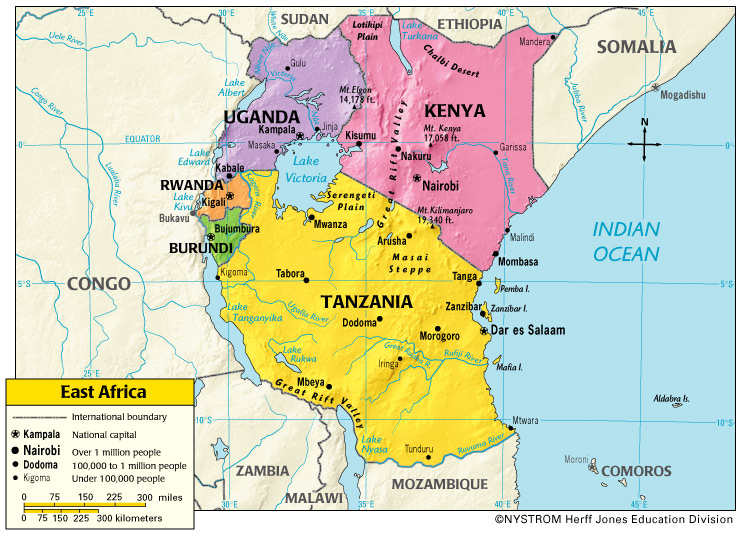
East%20Africa%20mapIn the spirit of stronger East African integration, the revenue authorities of Kenya, Uganda and Rwanda have started preparations for the implementation of a Single Customs Territory. The Commissioners’ General of the three East African countries deliberated on the mechanisms to operationalize the decisions of the heads of state who have continuously called for its fast tracking.

On June 25, 2013 at the Entebbe State House in Uganda, a Tripartite Summit involving the three heads of state issued a joint communiqué directing among other things the collection of customs duties by Uganda and Rwanda before goods are released from Mombasa. The leaders also agreed that traders with goods destined for warehousing should continue executing the general bond security.

During the meeting, the Commissioners’ General of the three countries put in place joint technical committees on ICT, Business Process, enforcement, change management, legal and human resource to discuss the implementation road map.

In a statement signed by the three Commissioners’ General, they said that the development of a Single Customs Territory will positively impact on the trading activities of the three countries as it will ensure that assessment and collection of taxes is done at the country of destination before cargo moves out of the port.

“As a result, the East African Community Customs Union will join the ranks of other Customs Union such as South African Customs Union and the European Union among others. Under this arrangement, restrictive regulations are eliminated as the corridor is now considered for customs purposes. For clarity, circulation of goods will happen with no or minimal border controls,” reads the statement in part.

Kenya said it would cut red tape holding up millions of dollars of imports into its landlocked neighbours Rwanda and Uganda, by letting the countries collect customs on goods as they arrive in its port at Mombasa. Goods can currently face long delays as agents process the paperwork to release cargoes from warehouses at east Africa’s biggest port, and later make separate arrangements to pay import duties at Kenya’s borders with Uganda and Rwanda.

Officials said the new system, due to be introduced in August, would clear inefficiencies and blockages seen as a major barrier to trade in the region. But clearing agents in Kenya said it could also cost thousands of jobs in warehouses, freight firms and almost 700 clearing and forwarding companies operating in the country.

Kenya, Uganda and Rwanda, together with Burundi and Tanzania, are members of the regional East African Community trade bloc, with a joint gross domestic product of $85 billion.

Kenyan tax officials said the new system would allow a “seamless flow of goods” and make it easier to stop goods getting through the system without customs payments. “Once cleared at the port, there will be no stoppages at borders and checkpoints along the corridor,” the Kenya Revenue Authority’s commissioner of customs, Beatrice Memo, told a news conference.

Under the system, Rwandan and Ugandan clearing agents and customs officials would be able to set up their own offices to clear cargo and collect taxes directly at the port. The Kenya International Freight and Warehousing Association said that meant up to half a million jobs could be lost to Uganda and Rwanda. “The Government has not consulted us … and we totally reject it,” said  Association chairman Boaz Makomere. Sources: East African Business Week (Kenya) & The New Vision (Uganda).

Clearing Agents Cautious About EAC Single Customs Territory

The following article featured in The New Times (Rwanda) provides a snap shot of developments towards a future “Customs Union” in East Africa. While valid concerns are being expressed by traders, how close are the respective Customs administrations in terms of common standards (tariff, regimes, etc), and the application of common external border procedures? The rest of Africa should follow this process closely. Unlike the EU, where it is incumbent of prospective Customs Union members to first attain and implement minimum customs standards prior to accession, here you have a pot-pourri of member states who apply national measures aspiring to an ultimate regional standard. Who determines this standard? Who is going to maintain ‘watch’ over the common implementation of such standards? Forgive the long article – this is a very significant development for the African continent.

0c8d8_logo_of_east_african_community_eac_-63ae9With the East Africa Community integration process gaining pace rapidly, clearing and forwarding agents have been advised to set up shop at entry ports under the proposed single customs territory.

Angelo Musinguzi, the KPMG tax manager, who is representing traders on the team of experts negotiating the establishment of the single customs territory, challenged the agents to look at the opportunities that the policy brings instead of focusing on how it will harm their businesses. “You need to look at this as an opportunity for business expansion because this policy will remove trade tariff barriers, duplication of time-consuming and costly processes and corruption. This will improve efficiency and reduce the cost of doing business,” he said.

The advice follows a deal reached by Uganda, Kenya and Rwanda where top customs officials from landlocked Rwanda and Uganda will be stationed at Mombasa port to ensure quick clearing of goods and curb dumping of cheap products in the region. Under the deal, Kenya will create space for its partners to set up customs clearing units.

Rwanda was given the task of establishing the single customs territory at the recently-concluded meeting between Presidents Paul Kagame of Rwanda, Uhuru Kenyatta of Kenya and Uganda’s Yoweri Museveni held in Entebbe, Uganda. However, local clearing and forwarding agents as well as traders are skeptical about the deal and want the process delayed until Rwandan businesses are supported to become more competitive.

“There are issues we still have to examine critically before the policy is implemented. For example, who will collect revenue and how will it be collected? How will Rwanda share the revenue? Will we have a common legal framework? Will we share Kenya’s or Tanzania’s infrastructure?

Fred Seka, the Association of Freight Forwarders and Clearing Agents of Rwanda president, noted that the move could affect them negatively if it is not studied carefully. “We have already raised the matter with the Minister of Trade. Besides hurting small firms, the country will lose jobs when companies relocate to Mombasa or Dar es Salaam. That is a big concern for us,” Seka said.

He noted that some of the partner states have many trade laws that might affect their operations. “It would be better if a locally-licensed company is not subjected to any other conditions once it relocates to Mombasa,” Seka noted.

Mark Priestley, the TradeMark East Africa country director, said the research firm and other players were currently conducting studies on how the single customs territory can operate without harming any player. “The intention is not only to ensure that we get rid of barriers which have been hampering trade, but also reduce the cost of doing business within the region,” he said. He added, however, that it was too early for traders to be scared of the consequences of operating under the single customs territory.

Last year the Permanent Secretary in the EAC Ministry, stated that the model which will involve shifting customs operations from Rwanda to the ports of Mombasa, and Dar es Salaam, will lead to unemployment, revenue loss and adverse multiplier effects. According to the model, certificates of origin of goods would be scrapped, which, according to Kayonga, would lead to the suffocation of local industries as well as making the region a dumping ground for unnecessary products.

Scovia Mutabingwa, the Aim Logistics East Africa managing director, said there was need for more consultations on the operation of the single customs territory “to understand how it will work”. “We need to know where our bargaining power is in the region?” Mutabingwa said. She noted that there was a need to first harmonise other trade policies if the single customs territory is to benefit all businesses in the region. She pointed out that she had applied for a clearing and forwarding licence in Tanzania over one and half years ago, but she was yet to get it. “How shall we work in such countries?” she wondered.

Another clearing firm, urged those negotiating the deal to ensure uniformity in tax policies across the region. “In Rwanda, there is 100 per cent tax compliancy, but we know this is not the same in other countries. How will we compete favourably if such issues are not addressed?” she wondered.

While one needs at least $300,000 to open a business in Kenya or they have to give a stake in their company to a resident, non-Kenyan companies also pay higher taxes at 35 per cent corporate tax compared to 30 per cent for locals.

Tanzania still has over 63 trade laws, and to operate a clearing firm there you need to be a Tanzanian, according to Musinguzi.

The East African Community (EAC) Customs Union Protocol came into effect in July 2009 after it was ratified by Kenya, Tanzania and Uganda in 2004 and later by Rwanda and Burundi in 2008. The creation of the EAC customs union was the first stage of the four step EAC regional integration process.

When fully implemented, the customs union will consolidate the East Africa Community into a single trading bloc with uniform policies, resulting in a larger economy. By working together to actualise the customs union, partner states will deepen EAC co-operation, allowing their citizens to reap the benefits of accelerated economic growth and social development.

However, the customs union is not yet fully implemented because there is a significant level of exclusions to the common external tariff and tariff-free movement of goods and services.
Uganda says it’s time to talk in Africa

Africa-mombasa-mct-aerial

Port of Mombasa (Credit – Port Strategy)

Not for the first time a landlocked country in Africa is attempting to have a say in a remote port operation which functions as a major gateway for its import and export trade. This time it is Uganda proposing that it has a say in the management of Kenya’s major port, the port of Mombasa. In the recent past it was Ethiopia attempting to secure a dedicated terminal in Djibouti.

The Ugandan initiative surfaced at a recent ‘Validation Workshop on Uganda’s Position on the Single Customs Territory for the East African Community. The Permanent Secretary Ministry of EAC Affairs, Edith Mwanje said that Uganda should have a say in the management of gateway ports because of “the many delays that negatively impacted trade”. Ugandan cargo accounts for the largest body of traffic handled by the port of Mombasa for the landlocked countries surrounding Kenya.

It is unlikely, of course, that any country will give up even partial control of a national asset to another country. It is akin to relinquishing sovereignty in the minds of countries owning port assets and being asked to participate in some form of power sharing. Djibouti fought hard to prevent Ethiopian Shipping Lines gaining control of dedicated terminal assets in the old port of Djibouti and won this battle. It is very unlikely that Kenya will even consider the idea of a foreign power participating in the management of its number one port.

It may, however, be a wise course of action for countries such as Djibouti and Kenya to consider establishing some sort of regular stakeholder dialogue. This is the path to a long and sustainable relationship as opposed to a short opportunistic one.

It is known, for example, that in the past Ethiopia has been frustrated by the high price of gateway container and general cargo operations in Djibouti and this has led to tensions. Since these days, however, Djibouti has put considerable effort into having a sensible dialogue with Ethiopia and this has matured into new projects such as the signing of an agreement with Ethiopia and Djibouti to build an oil pipeline that will reduce South Sudan’s dependence on crude shipments via neighbouring Sudan, and plans for a $2.6bn liquefied natural gas terminal in Djibouti, including a liquefaction plant and a pipeline, that will enable the export of 10m cubic meters of gas from Ethiopia to China annually from 2016.

Source and Picture credit: Portstrategy.com

Chinese President has sealed Tanzania’s Bagamoyo ‘mega-port’ project

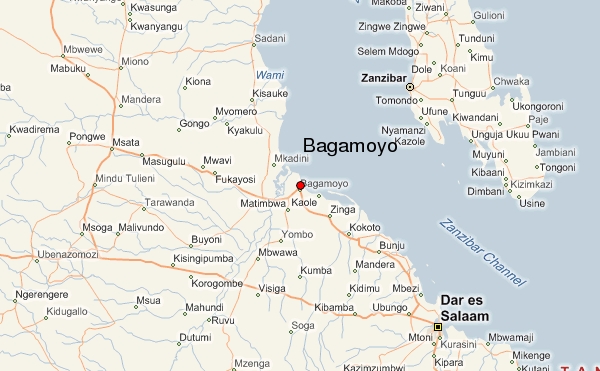
bagamoyo-mapThe Chinese President has sealed Tanzania’s Bagamoyo project. Tanzania has laid down its claim for a future large slice of regional trade through a deal with China to build the new port of Bagamoyo in its Mbegani area, north west of Dar es Salaam, at a total cost of $10bn.

The deal was announced by the President of China, Xi Jinping, while recently visiting Dar es Salaam and forms part of a major investment by the China in the infrastructure of the Mbegani area and East African seaboard – a project to be completed by 2028 with the expectation that Bagamoyo port will supersede Dar es Salaam port as the country’s main port and container handling centre.

The new port will be built with a draft sufficient to accommodate higher capacity container vessels up to 10,000 teu and beyond, as well as possess specialised roll-on roll-off berths and other cargo berths.

The overall scale of the planned development is such that it will provide a highly competitive solution to Kenya’s port expansion plans in Mombasa and Lamu which, as well as catering for national trade, are focused on meeting the needs of surrounding landlocked countries such as Uganda, Rwanda and Burundi.

Kenya has ground out plans for a new deep water container terminal in Mombasa – now under construction – and has embarked upon major new port development at Lamu, but the Bagamoyo port plan has a stronger profile and coherence to it. The money is down and in the background are new offshore gas discoveries for Tanzania which promise to play their part in promoting a strong and enduring relationship with China.

The first-phase development of Bagamoyo port is expected to be in operation by 2017 with construction undertaken by China Merchant Holdings of Hong Kong.

There has been no discussion to-date of whether the new port will feature cargo handling terminals operated by the private or public sector. As in Kenya, this subject remains something of a ‘hot potato’ with some Tanzania Port Authority executives suggesting it was a mistake to introduce the private sector as the operator of the Dar es Salaam Container Terminal. As in Mombasa, there is a belief that the public sector could have done as well as private interests in seeking to achieve efficient container terminal operation.

This belief persists in certain circles despite the TPA taking steps to raise the calibre of executives in its organisation through the introduction of executives from the private sector and a greater overall focus on human resources.

Dar es Salaam currently handles over 9m tons of cargo per year which is equivalent to about 95% of all Tanzania’s import and export volumes. In container trade alone, growth has been over 12% per annum since 2000. Despite this, the cost of shipping to Tanzania is about 25% higher than rates to the larger competing ports in southern Africa. This is mostly attributable to port inefficiencies brought about by inadequate investment in port infrastructure.

These costs are compounded when the effects of congestion and delay are added to the total freight bill, which can account for between 20%-70% of the total delivered price, inflating the price of imports and undermining global and regional export competitiveness.

The rationale for the introduction of major new port capacity in Tanzania is self-evident – demand is outstripping available capacity. It is to be hoped, however, that new capacity will be introduced supported by a modern port management model and institutional arrangements to facilitate optimum use of this capacity at the lowest cost. Source: PortTechnology.com

Kenya’s Mukhisa Kituyi tipped to lead UN trade agency

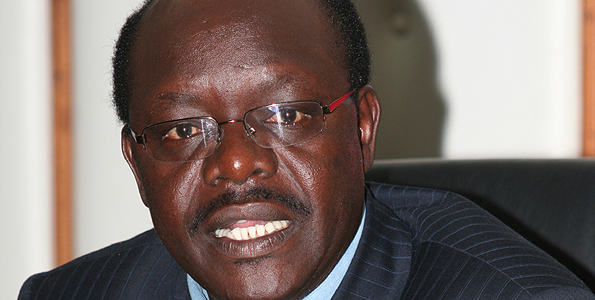
bd-MukhisaKituyiFormer Trade minister Mukhisa Kituyi is set to become the next head of the United Nations Conference on Trade and Development (UNCTAD), taking over from Thailand’s Supachai Panitchpakdi who beat him four years ago.

A statement posted Thursday at the UNCTAD’s website said UN Secretary-General Ban Ki-moon formally nominated Dr Kituyi to head the 194-country member body when Dr Panitchpakdi’s second four-year term ends in August.

If confirmed by the UN General Assembly, Dr Kituyi’s first four-year term as Secretary-General will start on September 1, putting Kenya at the zenith of global trade and investment policy advocacy. For a man widely celebrated for reigniting developing countries’ activism against perceived domination by rich nations during his term as Trade minister, the UNCTAD is likely to benefit immensely from Dr Kituyi’s experience.

The UN agency established in 1964 has a responsibility of promoting development-friendly integration of developing countries into the world economy by ensuring that domestic policies and international actions are mutually supportive in bringing about sustainable development. It is the UNCTAD that publishes the annual world investment reports which show that global investment capital has largely shun African countries except those with abundant natural resources such as minerals and oil.

As head of the UNCTAD secretariat, Dr Kituyi is expected to play up these concerns in his interaction with member Governments, UN agencies and regional commissions. He is also expected to popularise perfectives of poor nations in his interactions with governmental institutions, non-governmental organisations, the private sector, including trade and industry associations, research institutes and universities worldwide. Source: Business Daily Africa

Airport Cities – a view to a different trading environment for South Africa?

ace_skyscraper_237x352aerotropolisThis past week witnessed the first Airport Cities Convention in South Africa. It came at the timely announcement of the country’s first aerotropolis earmarked for development around Oliver Tambo International airport (ORTIA) and the surrounding industrial complex. While the City of Ekurhuleni gets prized possession of the ‘aerotropolis’ (in title) by virtue of the location of ORTIA, Johannesburg is set to benefit perhaps more greatly due to it being the epi-centre of South African commerce and trade. This represents significant ‘hinterland’ development which bodes well for future multi-modal transport and shipping activity for the Gauteng region and the country as a whole.

In support of government’s National Infrastructure Plan, is Strategic Integrated Project (SIPs) 2, otherwise known as the Durban-Free State-Gauteng logistics and industrial corridor. Infrastructure upgrades are already occurring to road and rail networks linking to the key cargo and distribution hub, City Deep. While the express purpose of an inland port, terminal or logistics hub is to provide relief for congested seaports, it likewise creates possibilities and opportunities to synergise with other transport forms. This serves to maximise capacity through integration offering local suppliers and foreign customers a host of trade, shipment and logistics options.

Foremost, an inland port is a hub designed to move international shipments more efficiently and effectively from maritime ports inland for distribution throughout the heartland. Think of the logistics of inbound freight as a barbell. At one end, inbound containers flood into a seaport, spreading across local storage facilities as they are unloaded. If they aren’t moved quickly enough from the port, they create a bottleneck that bogs down the entire distribution cycle as containers wait longer to get off ships, to get into warehouses, and to get back out and onto trucks and trains for final shipment. The Emergence of the Inland Port (credit: Jones, Lang, LaSalle)

In a world of increasing global integration, focussing more on global distribution of goods and services, it behoves our country to understand the dynamics of global trade and what in fact makes commerce tick. Today’s number 1 spot is not going to remain intact without continuous re-evaluation and innovation. It would indeed be arrogant (if not suicidal) of us to think that our current prominence and strength in the sub-saharan region will remain without innovation for the future. At the same time South Africa should welcome increased competition from its neighbours, both immediate as well as further north in Africa. The latest fDI 2013 Report indicates a decrease in foreign direct investment in South Africa (-5%) and Kenya (-9%), while at the same time a significant increase in foreign investment in Nigeria (+20%) and Egypt (+20%), respectively. True, the latter countries are far removed from South Africa’s immediate ‘playing field’, however do we fully understand the drivers which cause the named countries to attract FDI at such an increasing rate – are they capitalising somehow on our deficiencies, shortcomings, or lack of opportunism?

The National Infrastructure Plan can only be seen as a single cog in the machinery to keep South Africa competitive. And, while it is encouraging to witness these developments, a corresponding economic and commercial enterprise on both government and private sector is required to maximise these developments. Some smidgen of hope could lie in the Department of Trade and Industry’s economic principles which support Industrial Policy Action Plan (IPAP) and Special Economic Zones (SEZs), for example, however, several business commentators have already voiced concerns on exactly how these support the Infrastructure Plan. A further question lies in our country’s ability to facilitate trade, not only at our ports, but more importantly the ‘hinterland’ of our country and the neighbouring regions. Do our existing and future laws adequately provide for expeditious and facilitative procedures in the treatment of import and export goods? Are we sure that we are addressing all real and potential trade barriers?

Anyone desiring more information on the ‘aerotropolis’ concept should find some interest at the following websites – Aerotropolis.com, and the City of Ekurhuleni

In for a Penny, In for a Pound

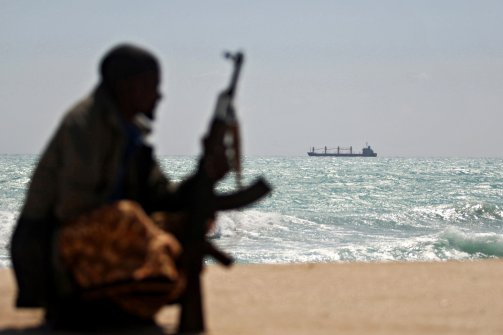
An armed Somali pirate sits along the coastline of Hobyo town in northeastern Somalia on January 7, 2010. (Mohamed Dahir-AFP-Getty)

An armed Somali pirate sits along the coastline of Hobyo town in northeastern Somalia on January 7, 2010. (Mohamed Dahir-AFP-Getty)

Are ‘Somali Pirates’ Real? Some may only be acting. According to Channel 4 the “fixer” offers journalists the opportunity to interview real live pirates – for a fee of US $200. Touting his local knowledge, he promises to reach parts of the community a western journalist never could. He then follows an elaborate scheme to convince journalists that he is legitimate.

The video opens in the slums of Eastleigh, a sprawling suburb of Nairobi in Kenya and home to ‘the fixer,’ a man who the UK’s Channel 4 claims has duped countless western journalists. But it’s a scam, one that has fooled the readers of many top media organizations including Time magazine. Watch the video above for the full details.

Somali pirates have kidnapped hundreds of people and cost millions in ransom payments. Jamal Osman finds journalists keen to interview them do not always get what they bargained for. Click this link to watch the video:

http://www.youtube.com/watch?v=p8BGOyBR7Fk&feature=player_embedded#t=0s

Source: gcaptain.com

China was trading with East Africa Before Europeans arrived?

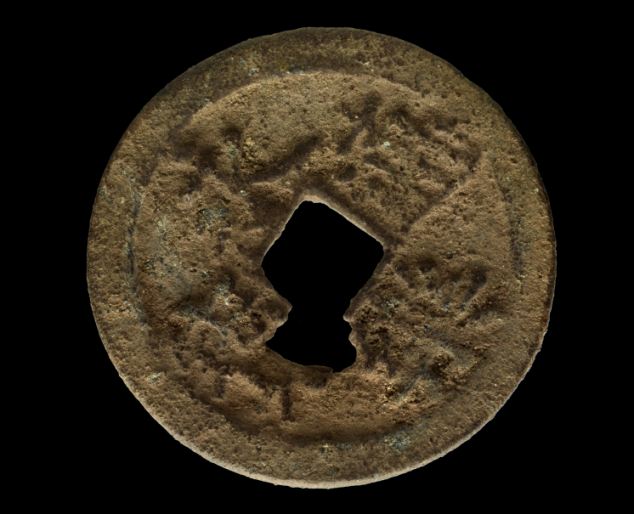
The coin is made of copper and silver and has a square hole in the center so it could be worn on a belt. Scientists say it was issued by Emperor Yongle of China who reigned from 1403-1425 during the Ming Dynasty (AP Photo/Courtesy The Field Museum, John Weinstein)

The coin is made of copper and silver and has a square hole in the center so it could be worn on a belt. Scientists say it was issued by Emperor Yongle of China who reigned from 1403-1425 during the Ming Dynasty (AP Photo/Courtesy The Field Museum, John Weinstein)

Scientists have found a rare, 600-year-old Chinese coin on the Kenyan island of Manda that rewrites the history books on international trading. Researchers say the copper coin, which has a square hole in the center so it could be worn on a belt, proves trade existed between China and eastern Africa decades before European explorers set sail. Scientists say it was issued by Emperor Yongle of China who reigned from 1403-1425 during the Ming Dynasty, and his name is written on the coin.

The island of Manda, off the northern coast of Kenya (marked with a red dot, below), was home to an advanced civilization from about 200AD to 1430AD, when it was abandoned and never inhabited again. Trade played an important role in the development of Manda, and this coin may show trade’s importance on the island dating back to much earlier than previously thought.

A joint expedition of scientists led by Chapurukha Kusimba of The Field Museum and Sloan Williams of the University of Illinois at Chicago found the  600-year-old Chinese coin on the Kenyan island of Manda. Scientists from Kenya, Pennsylvania and Ohio also participated in the expedition. They also found human remains and other artifacts predating the coin.

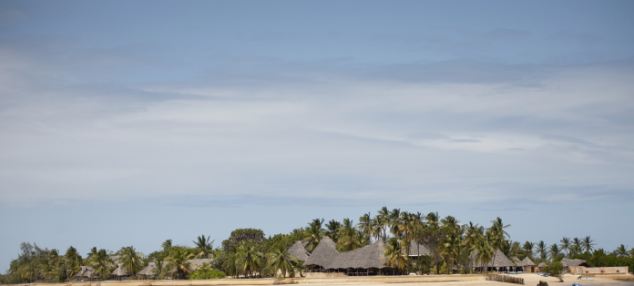
Manda in Kenya, now a popular holiday destination, was home to an advanced civilization from about 200AD to 1430AD, when it was abandoned and never inhabited again - Image by © Keith Levit/Design Pics/Corbis

Manda in Kenya, now a popular holiday destination, was home to an advanced civilization from about 200AD to 1430AD, when it was abandoned and never inhabited again – Image by © Keith Levit/Design Pics/Corbis

Emperor Yongle, who started construction of China’s Forbidden City, was interested in political and trade missions to the lands that ring the Indian Ocean and sent Admiral Zheng He, also known as Cheng Ho, to explore those shores. That relationship stopped soon after Emperor Yongle’s death when later Chinese rulers banned foreign expeditions, allowing European explorers to dominate the Age of Discovery and expand their countries’ empires, the researchers say.

The Portuguese were the first Europeans to explore the region of current-day Kenya, Vasco da Gama having visited Mombasa in 1498. The coast of East Africa was a valuable foothold in the eastern trade routes, and Mombasa was a key port for ivory. Modern European exploration of Kenya wasn’t initiated until 1844 when two German missionaries, Johan Ludwig Krapf and Joahnnes Rebmann ventured into the interior from Mombasa in an attempt to introduce Christianity.

The island of Manda, off the northern coast of Kenya, was home to an advanced civilization from about 200AD to 1430AD, when it was abandoned and never inhabited again. Trade played an important role in the development of Manda, and this coin may show trade’s importance on the island dating back to much earlier than previously thought. Source: dailymail.co.uk

Mastermind Steps Up War Against Counterfeit Goods

cigaretteNow isnt this a surprise? – Mastermind Tobacco has stepped up the fight against counterfeit cigarettes in the Kenyan market, it announced yesterday (February 27, 2013). It said it has set up security teams in Nairobi, North Lake Zone, South Lake Zone, Meru, Central and Rift Valley. Focus will also be on borders such as Malaba, Chepkube and Lokichogio, the airports and ports.

“The investment in supply chain preventive security measures from the point of manufacture to the point of distribution has seen an improvement in preventing legitimate trade from being infiltrated by counterfeits,” said Mastermind in a statement. Quite rich for a company which was persona non-grata in South Africa for instance. Security teams for what? To assist delinquent Customs officials on what they do when the Mastermind truck arrives at the border?

Just a month earlier (January 2013) Mastermind featured a job advert on jobskenya24.com  (click hyperlink to read the job criteria) wherein one of the key criteria under qualifications and experience reads as follows –

“At least 10 years experience in Kenya Police Service, five (5) of which should have been as Assistant Commissioner of Police (ACP) especially in the Criminal Investigations Department or Anti-Bank Fraud Unit.”

So there you have it, somebody on the inside of government ear-marked for the job of overseeing investigations and no doubt border operations. See links below  on Mastermind’s historical exploits –