Mauritius orders military hardware for Customs, Police and Coast Guard

The Mauritius Coast Guard flagship MCGS Vigilant [www.defenceweb.co.za]

The Mauritius Coast Guard flagship MCGS Vigilant [www.defenceweb.co.za]

The island nation of Mauritius has ordered a 50 metre fast patrol vessel from India, as well as machineguns, ammunition, body armour and interceptor boats in a major re-equipment drive.

The government of Mauritius said the order for the $20.5 million fast patrol vessel for the Mauritius Police Force/Coast Guard was signed on May 7 in Port Louis by the Senior Chief Executive of the Prime Minister’s Office and the Chairman and Managing Director of Goa Shipyard Ltd, Shekhar Mital.

The fast patrol vessel will be 50.44 metres long with a speed of 35 knots. It will be used for defence and protection work, surveys, pollution control, coastal patrol, anti-smuggling, anti-poaching, search and rescue, fisheries protection and monitoring of foreign chartered trawlers, amongst other duties. On the same occasion, an addendum valued at $1.4 million was also signed for arms, ammunitions, bullet proof jackets and helmets and medium/heavy machine guns for 10 Interceptor boats.

The contract for the design, construction and delivery of these ten boats was signed on April 9 this year and is worth $6 million. The 14.5 metre long boats will have a cruising speed of 20 knots and a top speed of 35 knots. Furthermore, another contract for the design, construction and delivery of one additional interceptor boat for the Mauritius Revenue Authority (MRA), at a cost of $600 000, was also signed on May 7. This boat will be used by the MRA to carry out harbour/anchorage and coastal patrols. Source: www.defenceweb.co.za

Angola – Freight Forwarder’s Role given a boost

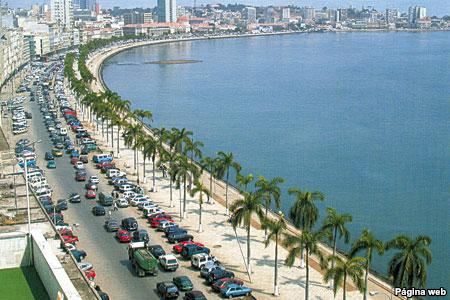
Avenida Marginal, Luanda, Angola

Avenida Marginal, Luanda, Angola

The current activity conducted by forwarding agents is not only limited to inter-mediating the foreign trade or deal with the clearance of goods at customs ports, said Tuesday the economist Osvaldo Luis da Silva.

Speaking to ANGOP on the role of forwarding agents in domestic economy, the economist spoke of the need for the agent to know the entire services chain of operators with whom they work. He stressed that the forwarding agents facilitate, through the service they provide, the relationship of importers and exporters with customs, tax offices, notaries, banks and other entities.

It is also their responsibility to observe and enforce the administrative requirements and law. On the other hand, said the expert, the forwarding agent is a guide or customs consultant for operators, who acts in the field of import and export and plays an important role in the economy.

He noted that these professionals have contributed to the increase in customs revenue and encourage the observance of customs procedures by operators engaged in import and export activity. Osvaldo Luis da Silva underlined that the Angolan Government updated the Customs Tariff to promote domestic production and sustainable economic development of the country.

The entry into force of this law does not cause any inconvenience to the work performed by the forwarding agents, he said. On the other hand, added the economist, the law has come at a good time and is satisfactorily facilitating their work. Source: Angola Press Agency

Related articles

Australian Border Force – Big changes ‘down under’!

Australian Border ForceThe Australian Government has announced changes to the immigration and border protection portfolio in relation to future border protection arrangements.

From 1 July 2015, the Department of Immigration and Border Protection and the Australian Customs and Border Protection Service will be consolidated into a single Department of Immigration and Border Protection. At this time, the Australian Border Force, a single frontline operational border agency, will be established within the department.

The Australian Border Force will draw together the operational border, investigations, compliance, detention and enforcement functions of the two existing agencies. Policy, regulatory and corporate functions will combine within the broader department.

The name, in itself, marks a distinct shift in world customs operation. Unless I’m mistaken, it’s the first customs and border authority called a ‘force’. The demise of traditional ‘Customs & Excise Departments’ in the wake of 9/11 appears set to continue as sovereign states seek new ways to combat cross-border crime. There is in reality no ‘bench mark’ nowadays. Developing countries tend to favour the revenue authority model (as dictated by their sponsors) – mainly due to the fact that customs revenue remains a critical component of their economies. Developed countries are migrating in ever-increasing number to border agencies with more focus on security issues.

For more information about the changes, read the Minister for Immigration and Border Protection’s speech announcing the new arrangements on 9 May 2014 and the Australian Border Force booklet.

Source: Australian Customs Service

Getting to Grips with the Future Customs Control Act

Having recently introduced a whole new integrated customs business solution last year the South African Revenue Service (SARS) has spent the last six months stabilising its system. At the heart of the system is the Interfront Customs and Border management (iCBS) engine which takes care of all customs declaration processing.

CCB

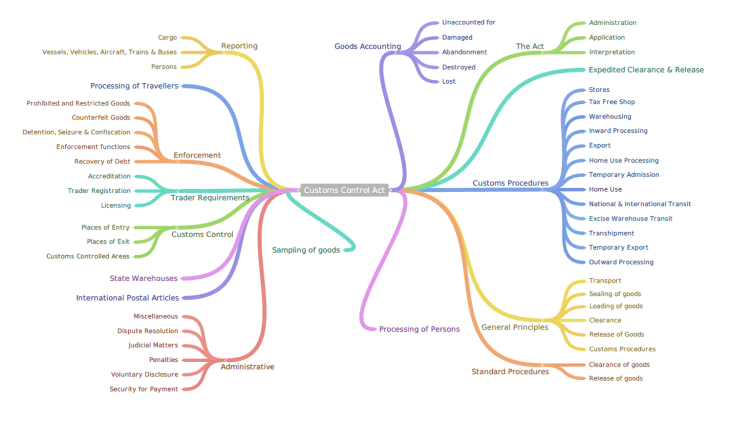
Click on the image to download the Infogram

A new ‘state-of-the-art’ EDI Gateway infrastructure is at an advanced stage of development and configuration, and will be subjected to a series of rigorous testing both internally and with industry service providers over the next few weeks. The gateway is an important component of the organisation’s future aspirations in C-2-C, C-2-B and C-2-G information exchange with it’s stakeholders.

Over the last 2 years, SARS has been a key participant in the WCO’s Globally Networked Customs (GNC) initiative which seeks to develop standardised electronic information exchanges of commercial customs data and common border procedures between customs administrations. This is ‘greenfield development’ and requires innovative thinking between potential customs partners. In this specific area SARS has engaged both Mozambique and Swaziland Customs as willing partners in such an initiative. Developments with Mozambique are at an advanced stage and will shortly become a reality with the conclusion of the bilateral One Stop Border Post (OSBP) agreement that includes provision for electronic data exchange between the two administrations. More on this in a future post.

Technology aside, perhaps the most daunting task on the horizon is the introduction of the new Customs Duty and Control Acts which are currently in the parliamentary process. Much publicity and robust argument was aired in the printed media over the last year, all of which culminated in the parliamentary hearings overseen by parliament’s Standing Committee on Finance (SCoF) during November and December 2013. While an agreement was reached with the freight forwarding sector of the local supply chain and logistics industry on certain aspects of the Control Bill, there still lies much work and clarification to be addressed in these and other areas.

Notwithstanding the signing into law of the Customs Bills, operational enactment thereof can only occur once the ‘rules’ to execute this legislation are circulated for comment, finalised and gazetted. Even considering the legal and approvals process in a simplistic form, the implementation of this new legislation is just too complex to introduce in a once-off, big-bang approach.  Due consideration must be given to a transitional approach taking into account the practicalities thereof as well as economic and logistical consequences of such approach.   It is no understatement that the impact of the new legislation, its incorporation into current automated systems, policies and procedures as well as the necessary re-adjustments to be made by every entity engaged in business with SARS Customs is no small feat.

Furthermore, the implications of the recently concluded WTO Agreement on Trade Facilitation for South African Customs and Trade also needs to be determined and understood. While a large proportion of its content is encapsulated within the Revised Kyoto Convention, it is the first time ever that such requirements are subject to the conditions of a trade agreement.

It’s been some time since I last penned thoughts on the Customs Modernisation initiative. In retrospect and thinking ahead, the underlying bottom line to its longer term success lies in increased ‘communication’ with stakeholders – ironically, the World Customs Organisation’s adopted theme for 2014!

Please feel free to download the infogram on the future Customs Control Act by clicking on the picture above. Official links to the Customs Control and Duty Bills are included below. It would also be wise for parties involved in Excise to consider the contemplated changes contained in the Excise Duty Bill (Customs and Excise Amendment Bill).

Related documents

WCO and UAE Customs launch IPM Mobile

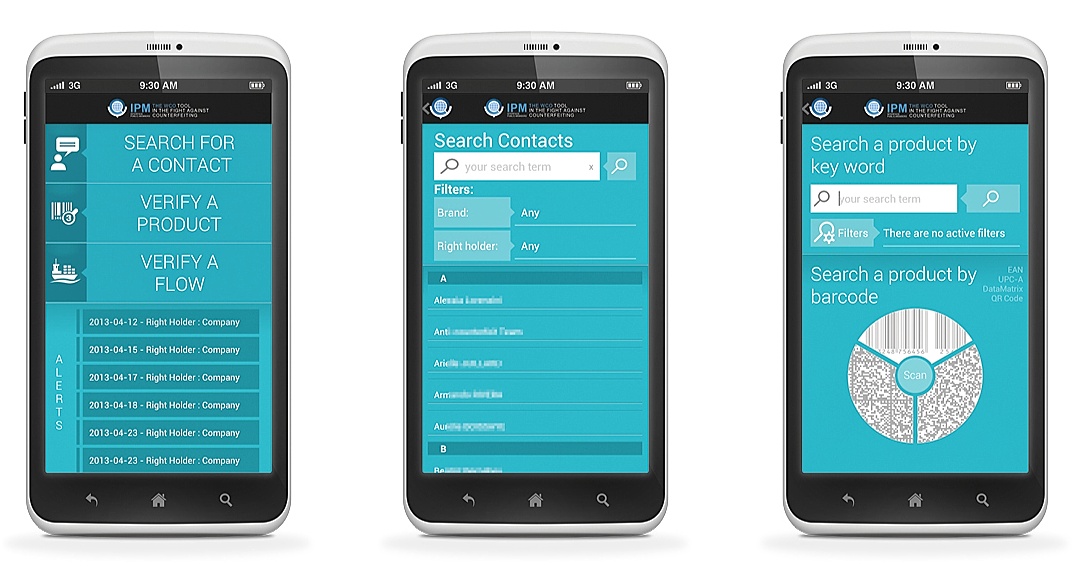
IPM interface GSMaThe World Customs Organization (WCO), in cooperation with the Federal Customs Authority of the United Arab Emirates (FCA), has officially launched the ‘IPM Mobile’ application, enabling Customs officers equipped with a mobile device to access IPM immediately when faced with a suspicious product.

Launched in 2010, the WCO’s online anti-counterfeiting tool IPM provides a communication hub between Customs officers on the ground and the private sector by allowing them to exchange crucial information in real-time in order to intercept counterfeit goods.

With the launch of the mobile application, field Customs officers can now access IPM via their mobile devices and retrieve all relevant information contained in the database. Several new features have been added to the mobile version such as the possibility to send or receive alerts regarding possible shipment of counterfeit goods, and, when faced with suspicious merchandise, Customs officers can contact right holders immediately and upload photos of the products in question.

This new version also allows using mobile devices to scan industry standard GS1 barcodes found on millions of products, enabling to search the products database more quickly. The unique product identifier embedded in the GS1 bar code facilitates access to multiple databases providing trusted sources of product information.

Scanning the barcodes enables automatic connection to any authentication services linked to the product controlled. This new feature is known as IPM Connected – a global network of security features providers (SFP) interfaced with IPM.

In cooperation with the FCA and the private sector, the WCO unveiled the IPM Mobile programme during a two-day workshop held in Dubai on 16-17 April. During this workshop, Customs officers tested the tool on a number of counterfeit and genuine products and were trained to make informed decision with the information contained in the IPM database.

Faced with the growing trade in counterfeit goods, the WCO and its Members are determined to develop the most efficient tools to fight this menace. Safeguarding the health and safety of consumers across the globe is one of the WCO’s priorities, and IPM’s mobile version is a significant step forward” said WCO Secretary General, Kunio Mikuriya.

Secretary General Mikuriya added, “Working with the UAE on this pilot phase was an obvious choice given our previous successful cooperation to launch the PC version back in April 2012. The WCO appreciates the UAE’s ongoing efforts to tackle the illicit trade of counterfeit and pirated goods.”

The UAE is the first country to use the IPM Mobile application and will contribute to developing the tool before the official worldwide launch in June 2014 during the WCO’s General Council Meeting.

“The UAE is keen to support plans for facilitating trade and fighting counterfeit according to the established principles of the federation state including the protection of IPRs and fighting piracy and counterfeiting as they have serious economic and social impacts that may jeopardize the security of the society, consumer and producer altogether” said Khalid Al Bustani, Acting Director General of the Federal Customs Authority.

“The application is launched as a part of fulfilling the requirements of the smart government initiative announced last year by His Highness Sheikh Mohammed bin Rashid Al Maktoum by providing governmental services on mobiles”, continued Al Bustani. Source: WCO

Related articles

Containers conveying Mozambican MiGs stuck in Germany

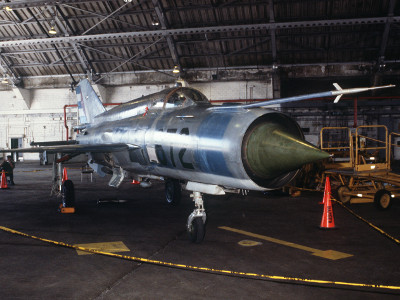
MiG-21_Fishbed_400x300Three MiG-21 fighter jets destined for Mozambique are stuck in Germany due to a lack of necessary permits. They are part of a batch of eight being shipped from Romania. Romanian company Aerostar is overhauling six MiG-21bis and two MiG-21UM trainer aircraft for the Mozambique Air Force and is also providing training for Mozambican MiG-21 pilots. Three MiG-21s were seen flying at Aerostar’s Bacau facility last year.

On Sunday Germany’s Der Spiegel reported that three MiG-21s were transported from the Romanian capital Bucharest by train in six containers and were to have been subsequently shipped to Mozambique from the Germany port of Bremerhaven. However, although the aircraft were declared according to procedure, their transport was done without the necessary permits and they were stopped. Der Spiegel reported that Germany’s public prosecutor will investigate the possible breach of arms control laws. The publication noted that Aerostar was found guilty of a similar incident in 2008. In 2012 German customs officials confiscated MiG-29 engines for Algeria and Tu-142 engines for India over the lack of necessary permits.

The Mozambique Air Force is slowly rejuvenating, considering that until recently it was almost entirely inoperable, suffering poor serviceability since independence from Portugal in 1975 and the collapse of the Soviet Union and its financial support in the early 1990s. The arrival of the MiG-21s will give the Air Force a jet capability not had in years, as its existing MiG-21s have fallen into disrepair and are grounded.

In addition to the MiG-21s, Mozambique has apparently bought two Aerostar Festival side-by-side light aircraft and will get an overhauled Aero Vodochody L-39ZO jet trainer. Late last year it emerged that Mozambique’s Air Force would also receive two second hand Antonov An-26B transport aircraft after they have been refurbished in the Ukraine. Source: Defence Web

New Philippines Customs Chief Cracks Down on Corruption

To fix the Bureau of Customs, President Benigno S. Aquino III needed a numbers guy, someone who could make sense of the thousands of shipments and billions of pesos passing daily through the Philippines’ ports. He turned to John P. Sevilla. Three months after taking over as commissioner in December, Mr. Sevilla told The Wall Street Journal he had been “shocked” by the Bureau’s failure to analyze the rich data it received, information that held vital clues to its endemic corruption problems.

“I’m amazed that nobody bothered to put the data together until about a month ago,” Mr. Sevilla said. “But we found out that we open up less than 1% of [shipping] containers, but of the containers that we open, 90% have problems.”

He was also incredulous that Customs lacked a single reference source to help examiners make complex calculations about duties and fees incurred by traders. One is now being compiled, Mr. Sevilla said, “to make it easier for people to do their jobs…so that they have no excuse” for undercharging importers, a common practice rewarded with illegal payments.

Customs is tasked with collecting revenue at the nation’s 17 major and 43 minor ports. But it has a history of missing targets: It pulled in 304.5 billion pesos ($6.8 billion) in 2013 — over a fifth of all government revenue, but still 35 billion shy of its goal. The under-invoicing of traded goods has cost the country $23 billion in lost tax revenue since 1990, according to a February report by Global Financial Integrity, a U.S. research firm. The Aquino administration’s keynote policy of improving governance thus made Customs a prime target for reform. A far-reaching overhaul was ordered last October, and Mr. Sevilla, a former finance undersecretary, was parachuted in soon after.

Before entering government in 2006, Mr. Sevilla held directorships at investment bank Goldman Sachs and ratings agency Standard & Poor’s, having earned degrees at Cornell and Princeton. His boss, Finance Secretary Cesar Purisima, hailed him as the right person to untangle the mess, “someone who is results-oriented.”

Not everyone was convinced: In January, Senate Minority Leader Juan Ponce Enrile said Mr. Sevilla was “in the dark” about how turn Customs around. Undeterred, the studious-looking commissioner has spent the last three months poring over reams of customs data in which the dealings of smugglers and corrupt officials have long lain hidden.

All import-export transactions were now being published online for public scrutiny, Mr. Sevilla said, “I think we’ve turned from being the most secretive government agency to being by far the most transparent.”

At the Port of Manila, one of three ports in the capital, importers and brokers crowded around glass service windows, an innovation from before Mr. Sevilla’s time designed to block access to officials and make them harder to bribe. Inside, on computers surrounded by mountains of paperwork in what remains a semi-automated operation, customs examiners placed their electronic signature on each shipment after calculating the requisite duties and fees.

The electronic signature system also predates Mr. Sevilla. The difference now, he said, is that he is actively policing it, cross-referencing signatures against undervalued shipments, and punishing the officials responsible. He said the threat of being caught was critical when front-line staff are offered bribes equivalent to their monthly salaries “a couple of times a day.”

Likewise, the credible threat that your container might be physically inspected is the best deterrent against false import declaration, Mr. Sevilla argued. But with 18,000 containers piled up at Manila International Container Port alone, the challenge is to open the right ones.

The Bureau has 3,600 staff, but aims to hire nearly 3,000 more, partly to increase the inspection rate. Around a fifth of shipments are flagged for further examination. Some of these are X-rayed and, if necessary, physically inspected.

Mr. Sevilla said he is seeking an extra 250 million pesos for more inspections after figuring out that Customs collects an average of 125,000 pesos per opened container, against a cost of 10,000 pesos for conducting the inspection — making the process “a no-brainer.”

The Bureau also regularly auctions off seized items to further boost revenues. At one such auction in mid-February, buyers snapped up everything from a smuggled Harley Davidson to batches of animal feed. Other illegal shipments are sent straight back to their point of origin, such as the 50 containers of rotting garbage — declared as “recyclable plastic” -from Canada last month.

The new regime is already producing results, Mr. Sevilla said, citing a 19.3% year-over-year increase in collections to 81.3 billion pesos in November to January. Further improvements will be needed: Customs has been tasked with collecting 408.1 billion pesos this year, far more than it has ever managed before. The true test of the Bureau’s progress under Mr. Sevilla will lie, fittingly, in the numbers. Source: The Wall Street Journal

Customs reform in Nigeria continues after the termination of the Destination Inspection service

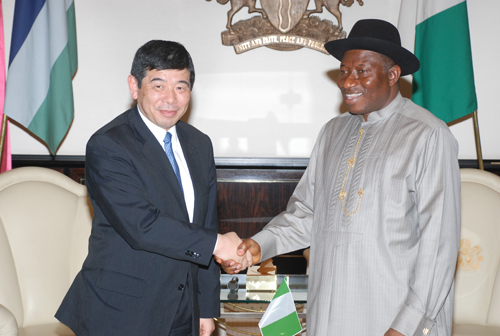
Secretary General Mikuriya during a courtesy visit paid to the President of the Republic of Nigeria, Mr. Goodluck Jonathan (WCO)

Secretary General Mikuriya during a courtesy visit paid to the President of the Republic of Nigeria, Mr. Goodluck Jonathan (WCO)

At the invitation of the Comptroller-General of the Nigeria Customs Service (NCS), Mr. Abdullahi Dikko Inde, the WCO Secretary General Kunio Mikuriya visited Nigeria on 17 and 18 February 2014 to observe Customs transformation activities after the termination of Destination Inspection contracts on 1 December 2013.

In Lagos, the Secretary General went to Apapa Port, Nigeria’s major port, to see Customs operations and also to visit the Customs Training Centre for a mentorship talk with young officers: the NCS has recruited many recent university graduates and trained them in computer and other necessary skills.

Secretary General Mikuriya also presided over a Stakeholder Forum to interact with the private sector. The business community were supportive of the ongoing Customs transformation programme that was enhanced by an improved communication strategy for Customs, the use of information technology – the Nigeria Trade Hub – and the implementation of modern Customs methods, such as risk management.

The private sector also suggested better use of a database for risk management purposes, including valuation, and expressed their hope for the introduction of coordinated border management and a Single Window to simplify the multiplicity of regulations and inspections at borders.

The Secretary General also travelled to Abuja, Nigeria’s capital city, and was joined by three heads of Customs from neighbouring countries, namely Benin, Ghana and Niger, who wanted to learn from NCS’s experience and obtain Nigeria’s support, as well as that of the WCO, for terminating contracts with inspection companies in order to regain ownership of core Customs functions.

The Secretary General also paid a courtesy visit to the President of the Republic, Mr. Goodluck Jonathan.  As a former Customs official early in his career, the President talked fondly of his visit to the WCO to attend the 2012 Council Sessions and particularly noted the WCO’s strong and inspirational leadership. He also acknowledged the economic and social contribution of Customs to the nation, and promised to continue to support Customs reform in Nigeria and provide guidance and influence at the regional level. Source: WCO

Former South African President Mbeki visits WCO to discuss the role of Customs in Africa

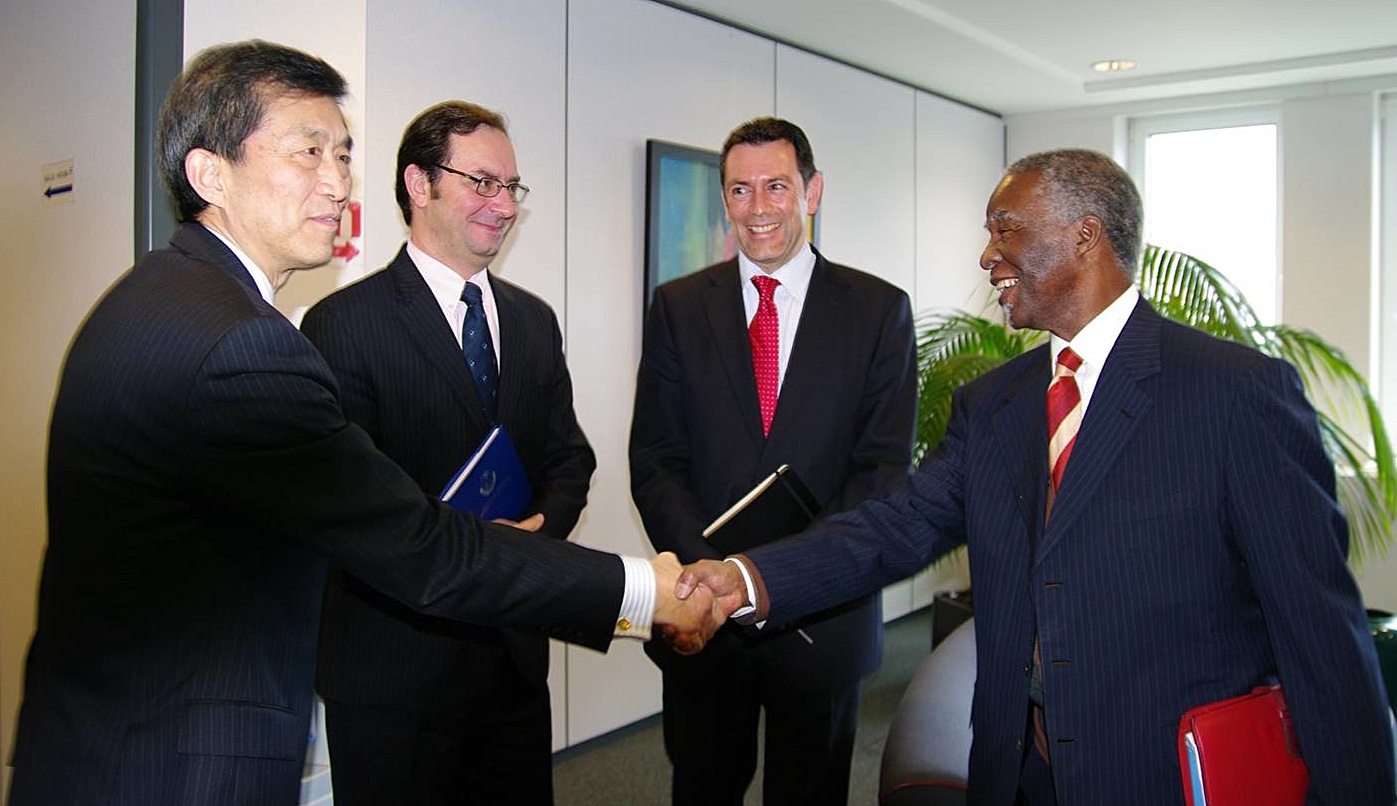
Senior WCO Management welcoming former South African President Thabo Mbeki, who is Chair of the High Level Panel on Illicit Financial Flows from Africa (WCO)

Senior WCO Management welcoming former South African President Thabo Mbeki, who is Chair of the High Level Panel on Illicit Financial Flows from Africa (WCO)

Members of the High Level Panel on Illicit Financial Flows from Africa, headed by former South African President Thabo Mbeki, visited WCO Headquarters on 11 February 2014 to obtain input for their report and recommendations to African countries in order to harness Africa’s hidden resources for development.

Secretary General Kunio Mikuriya explained the problems posed by cash couriers and trade-based money laundering (under-invoicing, over-invoicing, etc.) which had become major risk factors in Africa over the past decade as the continent had experienced economic growth largely based on the mining of its abundant natural resources. The Secretary General also referred to the need for countries to prioritize their policy regarding illicit financial flows and to provide adequate resources and a legal framework for Customs to establish controls in respect of free trade zones, thus enabling the Customs community to combat illicit trade and financial flows.

The discussion also covered, more broadly, the contribution of Customs to economic and social development in Africa, including regional economic integration. Mr. Mbeki and the High Level Panel members acknowledged the crucial part that Customs plays in improving the business climate by ensuring connectivity at borders, evidenced by the recent WTO Agreement on Trade Facilitation, as well as the role of Customs in ensuring transparency and security of the supply chain. They also appreciated the WCO approach of ownership-based capacity building which needed to be backed up by high-level political commitment. Source: WCO

Related articles

SRA to migrate to ASYCUDA World before year end

SRA-logoThe Swaziland Revenue Authority (SRA) will before the end of the year migrate from the Automated System of Customs Declaration Administration Plus (ASYCUDA) to ASYCUDA World. ASYCUDA Plus is about 25 years old and sits on very old technology. The migration to a more modern web based system would improve the processes of customs clearance. Ministry of Commerce, Industry and Trade acting Principal Secretary Titus Khumalo said this change would also improve data collection as well as reconciliation, particularly with the country’s major trading partner South Africa in the context of the Southern African Customs Union (SACU) revenue sharing formula.

He said the Common Market for Eastern and Southern Africa (COMESA) Fund had provided SRA with funding and technical assistance for the migration to take shape and be fully implemented.

“The ministry is eagerly looking forward to full implementation of the migration of ASYCUDA Plus to ASYCUDA World, which will greatly improve our systems of customs clearance. We are looking forward to implementation of the findings of the Time Release Study (TRS) which was funded by the World Bank. The TRS is aimed at improving the movement of trucks and the clearance of goods across our borders as well as in our inland and dry port in Matsapha,” he said during the International Customs Day celebrations hosted by the SRA on Friday evening at the Royal Swazi Convention Centre.

Khumalo said they welcomed the substantial progress made on the trade facilitation negotiations by the World Trade Organisation (WTO) during the ministerial conference that was held in Bali, Indonesia in December 2013. The acting PS said agreements of the meeting included transit of goods as well as fees and formalities in relation to exportation and importation. He said the framework also spoke to issues of publication and administration of trade regulations.

“Another section deals with the necessary technical assistance that may be required by developing members of the WTO including Swaziland to implement the trade facilitation agreement. We were very fortunate as a country that before the ministerial conference in Bali, we hosted a workshop with the assistance of TradeMark Southern Africa (TMSA), which focused on self-assessment and priorities for Swaziland in the area of trade facilitation in the context of the WTO negotiations,” he said.

Khumalo said the report on the workshop identified trade facilitation needs for Swaziland, which would trigger funding from cooperating partners in line with provisions of the Multilateral Trade Facilitation Agreement. Source: Swaziland Observer

Message from the WCO – International Customs Day 26 January 2014

WCO_background image POSTER_CommunicationThis year’s International Customs Day heralds the launch of the WCO Year of Communication, a year in which we, as a Customs community, move to further enhance our communication strategies and worldwide outreach programmes.

Under the slogan “Communication: sharing information for better cooperation,” we are signaling our aspiration to do more at the national, regional and international level to raise awareness of the vital role Customs plays in international trade, economic prosperity and social development.

Communication is a sharing process which fosters cooperation, and as Customs is at the centre of a network of relations, developing a sound internal and external communication strategy promotes transparency, facilitates dialogue, builds trust and ensures mutual understanding.

With our unique expertise, Customs has made great strides over recent years in achieving better visibility with national governments, international organizations, the business sector, the donor community, development banks and other international trade stakeholders.

Good communication practices by WCO Members are abundant: national Customs websites, specialized magazines, media outreach and social networks are trailblazing the way towards greater awareness of the contribution of Customs to a more resilient trade environment.

Complementing these efforts, the WCO Secretariat also has a number of communications tools to help get the word out, including the Organization’s new dynamic website, its popular and insightful WCO News magazine and our growing online social media presence.

Just as important, is the WCO’s efforts to engage as many Presidents, Ministers, leaders and international policy makers as possible in order to defend Customs’ interests, further raise its profile and create better awareness of the opportunities and challenges it faces.

It is equally imperative that we also focus on how we communicate with our stakeholders and partners, how we listen to their feedback and how we decide to respond, as this will encourage stronger support for the work we do and ensure greater buy-in to WCO strategies.

In fact, communication is a two-way process by which information and knowledge are exchanged and shared between individuals – it is not only about sending a message or passing on information, it is also about exploring, discovering, researching and generating knowledge.

As in previous years, I am fully convinced that Customs administrations and the greater Customs community will rise to the occasion, committed to actively taking the communication theme forward and thereby ensuring the success of the WCO Year of Communication.

Wishing you all a joyful International Customs Day!

Kunio Mikuriya Secretary General

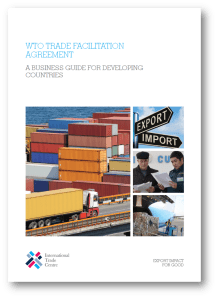
Business Guide for Developing Countries – WTO Trade Facilitation Agreement

Picture2The International Trade Centre has prepared a guide to help businesses take advantage of the WTO Trade Facilitation Agreement. The agreement simplifies customs procedures, allowing businesses to become more competitive. This jargon-free guide explains the provisions with a focus on what businesses need to know to take advantage of the agreement. It will also help policy makers identify their needs for technical assistance to implement and monitor it. To download the guide – click the following link: http://www.intracen.org/wto-trade-facilitation-agreement-business-guide-for-developing-countries/.

For instance, the guide explains how the article on ‘Advance rulings’ aims to address problems with inconsistent classification of goods by customs officials and the uncertainty it creates for traders. ‘Advance rulings are binding decisions by customs…on the classification and origin of the goods in preparation for importation or exportation. Advance rulings facilitate the declaration and consequently the release and clearance process, as the classification has already been determined in the advance ruling and is binding to all customs officers for a period of time,’ the guide explains. It goes on to list in jargon-free language the obligations and the procedure imposed on customs authorities related to advance rulings.

Reducing the on-the-spot decision making authority of individual customs agents thanks to advance rulings will also reduce bribery, the guide says. Corruption continues to be a key problem for developing-country exporters, who identified it as a major constraint on exports in a recent survey conducted by ITC.

The last chapter of the guide describes how the agreement will be implemented, including the special and differential treatment provisions that developing countries may invoke. Developing countries will be able to link the implementation of the commitments to technical assistance and support from donors. WTO member states will have to explicitly apply for delays for each commitment, which will need to be approved by the WTO and the implementation schedule published.

Source: International Trade Centre

What is the value of a slick customs service?

Cahir Castle Portcullis by Kevin King

Cahir Castle Portcullis by Kevin King

The traditional symbol of customs and borders services is the portcullis – the fortification through which a ship used to enter a port. But as developing countries are increasingly asked to recognise the benefits of liberalised trade to the detriment of their import duty revenue, how can they be helped to raise the portcullis? And is it really in their interests to do so?

With world trade growth expanding more than twice as rapidly as gross domestic product (GDP) over the past decade, says Steve Brady, director, Customs and Trade Facilitation for development consultancy Crown Agents, the potential rewards from participating in world trade are significant. “According to figures from WTO, in 2011 world merchandise exports and imports in real terms grew by over 5%. As a result, each reached over $1.8tn, the highest level in history.”

The major players working with developing country governments to help them benefit from this increase in trade include the World Bank, ICC, World Customs Organisation (WCO), IMF, UN Conference on Trade and Development (Unctad), development banks and specialist intermediaries such as Crown Agents.

A number of countries have improved their capacity as a result of international and domestic efforts, yet some are still hesitant to do so. The Centre for Customs and Excise Studies (CCES) at the University of Canberra finds that many developing country governments are heavily dependent on the revenue from import duties – in some cases this can be as high as 70% of a country’s total revenue base. The desire to protect this is understandably strong. Yet this same desire can be used to drive forward modernisation efforts, explains Professor David Widdowson, CEO of CCES. “Revenue leakage resulting from commercial fraud, poor customs and border procedures and corruption represents a major impediment to poverty reduction.”

Similarly time-consuming manual processing systems, over-regulation, or outright corruption, will discourage trade and investment and further undermine a country’s development. “In the worst cases up to 20 signatures are required to obtain customs clearance of goods, all of which require ‘informal payments’,” says Widdowson. “I have also seen examples of 15 different government agencies playing some role at the border, all acting independently.”

Guidelines or blueprints to modernise such customs and borders processes are available, for example, via the revised Kyoto convention (extolling the basic principles of automation, simplification, responsiveness to the regulation, consistency and co-ordination); the “Framework of standards to secure and facilitate global trade” developed by the WCO; and its “Columbus programme.”

Turkey is cited by Sandeep Raj Jain, economic affairs officer at the United Nations Economic and Social Commission for Asia and the Pacific (Escap), as a case study for the successful modernisation of customs systems, having consolidated 18 previously autonomous border gates and introduced a single IT clearance system, leading to an increase in tax revenues and a decrease in clearance time to the benefit of incoming and outgoing trade. Angola increased receipts sixteen-fold from $215.45m in 2000 (£148m) to $3,352m in 2011 through an improved National Customs Service and the introduction of an automated entry processing system and customs clearance Single Administrative Document.

The African Development Bank also supported post-conflict Liberia with the extension of an automated system for customs data, helping to reduce the time to clear goods at the port from 60 days to less than 10 days and increase revenue collection at three ports from about $4m a month to $10m-$12m. This, Ellen Johnson Sirleaf, president of Liberia has said, given the government additional scarce revenues to invest in the projects to improve the livelihoods of people.

Horror stories also abound of revenue loss, acting as a cautionary tale for leaving outdated customs processes untouched. A World Bank report, for example, finds that in Algeria smuggling caused a loss to the public exchequer rising from DA18bn in 2006 ($237m) to over DA61bn in 2011.

The message from the international community is that improved, automated and transparent customs services not only help eradicate theft and corruption, but also increase revenue through increased trade. Any fall in revenue from import tariffs due to signing up to bilateral free trade agreements can also be offset, says Bijal Tanna of Ernst & Young LLP: “One only has to look at the take-up of VAT by countries since the 1980s to understand that there is a consumer tax outlet to offset any loss of revenue from customs duty reductions. Back in the late 1980s, approximately 50 countries had VAT, now it is in place in over 150 countries.”

However, these arguments don’t always reach an appreciative audience. “In my experience”, says Widdowson, “economies may give lip service to the trade facilitation agenda, including entering into free trade agreements, but still expect their customs administration to collect traditional levels of duty. For example, with the introduction of free trade arrangements – hence falling duty rates – and a downturn in international trade, the Philippines continues to increase the ‘revenue targets’ of its bureau of customs, the derivation of which appears to be devoid of any analytical rigour.” (emphasis – mine)

Tanna also points to the collapse of the Doha round of the WTO negotiations heralding a breakdown in efforts to find a single global platform to drive a uniform approach to trade liberalisation. Perhaps it is the obligation of the international community to renew such efforts, alongside projects to improve customs systems in-country. Source: Original article by Tim Smedley of The Guardian

Recent Happenings in the World of Customs Scanning

Herewith a collection of articles on customs non-intrusive inspection around the world. True to form, the acquisition and use of such technology is not without controversy of some sort.

Spanish Customs to use ‘Full-body See-through’ Scanner at Frontier

Backscatter Van

American Science and Engineering’s (AS&E) Z Backscatter Van

July 2013 – The Spanish Government is to deploy a ‘Mobile X-Ray Scanner’ at the frontier to detect cross-frontier smuggling of tobacco. A Panorama Investigation reveals the mobile X-ray scan technology mentioned is one installed and operated in a mobile vehicle (van) – it is system that is potentially dangerous!

These plans are said to be part of a strategy to crack-down on cigarette smuggling across the frontier, which they say is causing untoward damage to the Spanish economy. The regional special representative of ‘La Agencia Tributaria’ (Spanish Tax) Alberto García Valera, says he has found it necessary to spend money and invest heavily on new technologies to combat fraud and tax evasion in places like the Le Linea-Gibraltar Frontier.

‘La Agencia Tributaria’ purportedly placed an order with the American company American Science and Engineering (AS&E) for the delivery of this very sophisticated, hi-tech scan system known as the ZBV S-Class.

The ZBV or Z Backscatter Van, is a mobile X-ray vehicle screening system, it uses technology known as ‘Backscatter’ which provides a photo-like images of concealed objects, such as explosives, drugs, currency trade-fraud items and of course things like cigarettes, but the latter not exclusively so.

The ZBV X-Ray Scanning equipment is integrated into a standard van type vehicle, usually powered by a Mercedes or Chrysler engine. The ZBV creates a photo-like Z Backscatter images showing materials by directing a sweeping beam of X-rays at the object under examination, and then measuring and plotting the intensity of scattered X-rays…if you’re in your car, your body will get zapped by the X-Ray beams!

Read the full report by Panaorama (Gibralter) here!

Axis Cams Integrated with X-ray Scanners Secure Korean Airport Customs
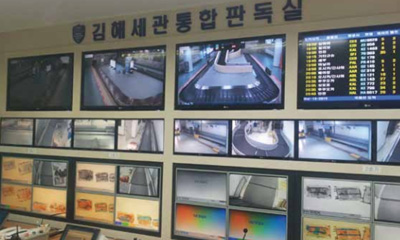
Korean Customs Integrated Control Room - Gimhae International Airport

Korean Customs Integrated Control Room – Gimhae International Airport

November 2013 – Korean Customs at Gimhae International Airport , Busan has introduced Axis network cameras and integrated it with the existing X-ray scanners for checked bags into one location. This has allowed Customs to manage its workforce more efficiently and enhance its monitoring capabilities through the “Choose and Focus” function.

An integrated X-ray viewing room has allowed Korean Custom’s management to divide the workforce into teams of two, and the accuracy of reading and individuals’ reading capabilities have been significantly improved. Since the reading staff has been grouped into teams, their level of fatigue has been reduced, and they can concentrate and read multiple X-ray scans at all times.

Network Cameras with panoramic function in each carousel monitor the CIQ customs, immigration and quarantine area that passengers must go through when departing or arriving. The cameras now permit Customs to accurately track and monitor travellers as they claim their baggage. All stages from Check-in of checked bags to their check-out are carefully recorded, resulting in disputes with travelers about lost or damaged bags can be smoothly resolved. The high-definition network cameras allow the entire route to be monitored for abnormal cargo. It is much easier to identify risks and monitor movement during incidents. Read the full report here! Source: asmag.com

Nigeria Customs takes inventory, evaluates scanning machines ahead of takeover

Nigeria Customs takes inventory, evaluates scanning machines ahead of takeover

Nigeria Customs takes inventory, evaluates scanning machines ahead of takeover

October 2013 – Nigeria Customs Service (NCS) has begun an inventory and evaluation of the scanning machines with a view to ascertaining the state of the machines ahead of the December 1, take over date.

In an exclusive interview with Vanguard at the Customs Headquarters in Abuja, service spokesman, Mr. Adewale Adeniyi, a Deputy Comptroller of Customs said that consultants and experts including the manufacturers of the scanners (Smith of France) were all brought to carry test of the machines.

Adeniyi also said that more than 500 of the newly recruited men and officers of the service will be deployed to both the information technology and scanning departments. He disclosed that in the course of evaluating the machines, it was discovered that maintenance of the scanners had been compromised.

He added that the development will not in any way stop the take over of the scanning machines by the Nigerian Customs Service. The Customs spokesman disclosed that the maintenance of the machines were sub-contracted to other consultants other than the manufacturers.

Adeniyi further disclosed that the integrity of the machines in terms of maintenance have been compromised. Source: www.energymixreport.com

Nicaragua – Fixed Rate to be Charged for Customs Scanning (Fail!)
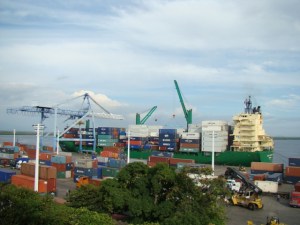
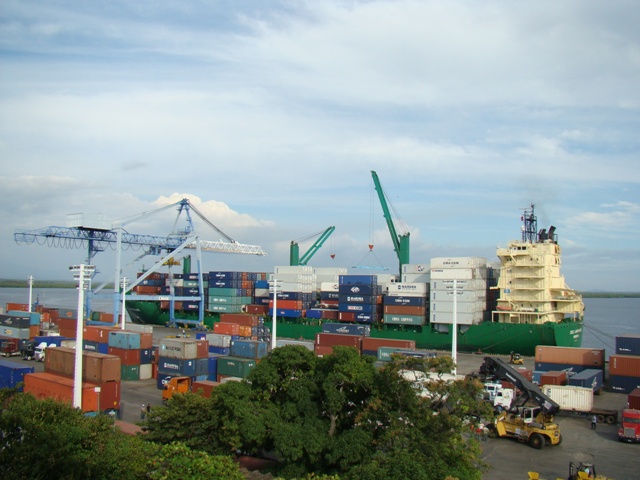
Port of Corinto, Nicaragua (Picture: Wikipedia)

Port of Corinto, Nicaragua (Picture: Wikipedia)

July 2013 – The government has recognized that it was a mistake charging for the scanner service based on the value of the cargo.

The presidential adviser for economic affairs, Bayardo Arce, believes the head of the Directorate General of Customs (DGA), Eddy Medrano, may have overstepped the mark in approving a contract with the company Alvimer Internacional y Compañía Limitada on the right to collect on the declared value of the goods that pass through the scanner system to be installed in the country’s customs offices.

“We have been made aware of this criterion of entrepreneurs and talked with President … and it is clear that a technical error was made,” the official, adding that the fee collected will be at a fixed rate as in the draft Law on Granting of Non Intrusive Inspection Services in National Security Border Controls, prior to the approval of Congress.

The concessionaire in charge of scanning services in Nicaraguan customs offices would recover its investment in 15 months and earn $220 million in the 15 year contract.

From all this money, 10% will go to the Directorate General of Customs (DGA). According to preliminary calculations made ​​by the Nicaraguan private sector, the company will invest about $22.4 million in the seven scanners to be installed in each of the seven Nicaragua customs offices, recovering its investment in just 15 months. Source: centralamericadata.com

The Scary New Technology of Iris Scanners

Picture: Ben Mortimer

Picture: Ben Mortimer

The technology of ‘Minority Report‘ is closer than you think, according to Russell Brandom writing in www.theverge.com.  A company called AOptix recently unveiled its latest creation, pitched as a game-changer in the world of iris recognition. In less grandiose terms, it’s basically an iPhone case for cops, providing military-grade biometric scanning on the move. The AOptix shell is built to provide everything an officer needs to process a suspect on the spot. There’s a fingerprint scanner on the back, the capacity for facial recognition, and the new guest at the party: an iris scanner. The camera’s a little tricky — you have to hold it a little less than a foot away, and keep it steady for a few seconds — but otherwise, using the Stratus is like taking pictures with a heavier, clunkier iPhone. Crucially, it’s small enough to hold with just one hand, so the officer using it can still reach for his gun.

The Stratus has only been on the market a few weeks, but AOptix is already pitching it for use at border crossings and in airport security. The US Department of Defense is interested too, and provided a $3 million grant for AOptix to develop the tech further. Once it’s normalized, scanning your iris could become as routine as swiping a credit card. “We really feel it’s going to be an inflection point in the biometrics industry,” AOptix marketing director Joey Pritikin told The Verge. “We can do business, we can conduct health care, we can go to disaster areas. This will really open up new markets.” After years of lurking in the margins, AOptix thinks iris scanning is ready for the big time.

Outside of the West, it’s already there. Hundreds of millions of Indians have already been iris-printed, along with thousands of Iraqi civilians and anyone who goes through customs regularly in Dubai. It’s the gold standard of a modern ID program, easier than fingerprinting and more stable than facial recognition. All you have to do is look at the camera and open your eyes. And unlike in retinal scans, the scanner doesn’t need to be up close. It’s just a photograph, taken in infrared, which in theory could work if taken from across the room.

If this sounds familiar, it’s probably because you saw something like it in Minority Report, where omnipresent eye-flashers identify everyone who walks through a public plaza, targeting ads at them and feeding the police information about their every move. Even Pritikin acknowledges the precedent, saying, “Tom Cruise did not do us any favors.” But within the industry, the product is less exotic, just the latest and best solution to the persistent problem of quick, reliable identification. What does the world look like when proving ID is as easy as taking a photograph? Like it or not, we’re about to find out.

Iris Scanner (Picture: Ben Mortimer)

Iris Scanner (Picture: Ben Mortimer)

If you find yourself flying into Dubai, you can see it in action. The city’s airport recently made the switch to an automated two-gate customs system, also made by AOptix. Scanning your passport opens the first gate; an iris print opens the second. Once the system is fully deployed, the company says it will bring wait times down from 49 minutes to 22 seconds. A private company called Clear is already trying this on an opt-in basis in the US. In exchange for a quick iris scan, their service will let you skip security in half a dozen American airports.

The bargain is simple enough: In exchange for one more biometric, you get to skip an hour in customs, or the indignity of a TSA checkpoint search. And as an ID technology, it simply works better. It’s less invasive, harder to fake (although still possible), and more effective at everything we want ID tech to be good at. Of course, that same effectiveness makes a Minority Report future all the more plausible.

For countries with national ID programs, this Orwellian scenario is already starting to play out. In collaboration with MorphoTrust, India has already iris-printed 350 million of its citizens as part of its national ID program, and they’re on track to scan all 1.2 billion. This year, Mexico will roll out the first iris-matched ID cards in the world as part of a $25 million program. In both cases, the ID will help stop fraud and provide poverty assistance, helping solve half a dozen urgent humanitarian issues at once. Despite these good intentions, this kind of mass identification has civil libertarians very worried.

“The concern is that biometrics will be used for the mass tracking of individuals,” according to Jay Stanley of the American Civil Liberties Union. “If that kind of ID system becomes routine and widespread, it turns us into a kind of checkpoint society.” Even in India, the system is still only used at police stations and government offices, but once the print is connected to a universal ID, it’s easy to imagine iris scans becoming as commonplace as pulling out a driver’s license.

For now, we’re left with less invasive devices like the Stratus, an iris camera aimed squarely at US law enforcement. The FBI is already building an iris system to track persons of interest, and it’s not hard to see them using a Stratus-like device to collect prints. Iris cameras haven’t landed in the hands of beat cops yet, but AOptix is trying its best to get them there. The path of the technology, from the military to local law enforcement, is almost complete. The only question is what it will look like when it gets here. Source: http://www.theverge.com