USCBP Receives 2nd Unmanned Aircraft System

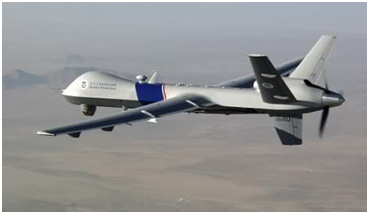
U.S. Customs and Border Protection received a second Unmanned Aircraft System Predator-B at the Naval Air Security Operations Centre in Corpus Christi, Texas—the first of two UAS’s funded through the Southwest Border Security Bill Supplemental. The UAS will provide critical aerial surveillance for U.S. Border Patrol agents stationed along the Texas-Mexico border.

The CBP UAS Program operates Predator-Bs from operation centres in Arizona and Texas which allows CBP to deploy unmanned aircraft along the Southwest border from the eastern tip of California across the common Mexican land borders of Arizona, New Mexico and Texas.

The UAS Operations Centre in Corpus Christi supports counter-drug operations in the Western Caribbean and Eastern Pacific, disaster relief and humanitarian support in the Gulf Coast region, and rapid deployment throughout the southern tier of the U.S. and the Western Hemisphere.

View a videofile – http://www.dvidshub.net/video/embed/105254

Since its inception, the CBP UAS program has flown more than 11,500 UAS hours supporting border security operations and disaster relief and emergency response, including various state governments and the Federal Emergency Management Agency. These border security efforts have led to the seizure of approximately 46,600 pounds of illicit drugs and the detention of approximately 7,500 individuals suspected in engaging in illegal activity along the Southwest Border. Source: CBP

WCO News – October 2011 Edition

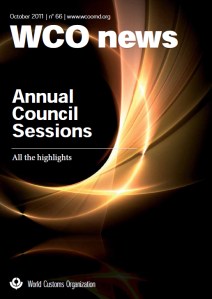
WCOnews October 2011An eagerly awaited edition of the WCO news magazine once again promises loads of insight into the Customs world. This edition includes – per usual – a variety of topics, amongst which –

  • The Secretary General of the WCO shares his thoughts on global threats and the need to remain vigilant and responsive.
  • Latest developments in WCO areas of work: compliance and enforcement, procedures and facilitation, capacity building and tariff and trade affairs.
  • How the WCO and UNCTAD work together to foster international trade.
  • Using controlled deliveries to combat wildlife crime.
  • Knowledge and dialogue – the focus of the Open Day for Trade and the Knowledge Academy.
  • PICARD Conference promotes research-based knowledge.

There also interesting articles from around the world –

  • East and Southern Africa benefits from new MBA with Customs specialization.
  • New Zealand Customs Service’s role in natural disaster relief.
  • Engaging the trading community in Customs modernization: the Brazilian experience.

The WCO’s website now also features some new stuff, and in particular ‘scholars’ are encouraged to try out some of the ‘free’ e-learning courses. These are not just for the privilege of customs officers. The WCO has been working hard with trade organisations to provide ‘industry wide’ courses and programmes for the trade professional. Source: WCO

SADC Free Trade Area requires Integrated Border Management

At least two articles have surfaced within the last week calling for greater urgency towards the development of free trade areas in Africa. How much time, money and effort seem to be expended in futile trade discussions that – to the man in the street – are meaningless. One such article, appearing in the Freight & Trade Weekly (FTW) relates to a speech delivered by the South African Transport Minister imploring SADC members to fast-track an integrated border management framework to enable ‘free flow’ of trade in the region. Before pressurizing foreign countries to embrace such change it should at least be properly considered at home. For more than 15 years, South Africa has failed to implement any meaningful integrated border management of its own. Forget about the so-called economic protectionism amongst individual African countries. We have – on our own soil –an inter-departmental ‘protectionism’ which cares little for free flow of legitimate goods. Admittedly there are moves to ‘integrate’ certain frontline functions such as customs border control and immigration. This, however, still does not mitigate interference from other government agencies in tampering with ‘legitimate trade’. Each department seems hell-bent on enforcing its respective mandate regardless of consequential overlaps in activity, oblivious to the detrimental effect this has for legitimate trade. So what is ‘integrated border management’? In the context of a sovereign state it could imply one of two things:

  • A cooperative inter-departmental approach where ‘individual’ government departments perform combined interventions (according to their respective legal mandate) on people, cargo and conveyances according to a structured operational procedure and workflow; or
  • A Border Management Agency (being a single government entity) comprising the capacity to effect all immigration, customs and border control/security functions at ports of entry and exit.

Secondly, integrated border management at external borders can be further extended to include a streamlined import/export or entry/exit process to facilitate the movement of legitimate travellers, goods, and conveyances in a single transaction. This is described as a ‘one stop border’. A critical success factor here is the ability of two country’s border authorities to be able to co-locate with one another and affect a common clearance/passenger movement process. Theoretically these things are all easy to understand, but a whole lot more difficult to implement – more about this another time.

Therefore, before a successful SADC FTA can ever hope to materialise, the concept of proper risk-based inter-departmental control must be embedded and administered within a home country before attempting a bi- or multilateral initiative. The article “SADC must implement integrated border management” can be found on page 17, of the 28 October 2011 issue of the FTW.

Why Is This Cargo Container Emitting So Much Radiation?

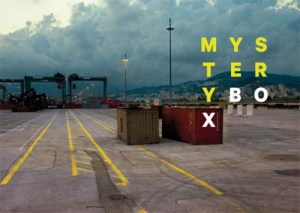
Mystery BoxThe November 2011 edition of Wired.com (magazine) features an interesting read on the question of ‘suspect containers’. Perhaps this sheds some credible light on the dangers of unregulated handling of radioactive materials; and no less the potential hazards faced by cargo handlers and port authorities in the course of their duties. The billions of dollars spent by governments every year  in maintaining national security across multimodal transport modalities and ports of entry are often questioned; nonetheless, it is stories such as this case in the Port of Genoa, Italy, that lend credence to the need for non-intrusive inspection and detection equipment. Source: Wired.com

What is the Framework Convention on Tobacco Control?

The trade in tobacco products is long recognised for its links to the criminal underground and illicit goods.Notwithstanding the efforts of health bodies, it seems that the ‘habit’ is on the increase, and so too is the trade in illicit tobacco products. Enforcement officers will find the Draft protocol to eliminate illicit trade in tobacco products of interest to their profession.

The Framework Convention on Tobacco Control (FCTC) is the world’s first global public health treaty. It is also the first treaty negotiated under the auspices of the World Health Organization (WHO). The treaty entered into force in February 2005. It was signed by 168 of the 192 WHO member states and more than 170 WHO member states have become parties to the convention. List of signatories and parties to the WHO FCTC.

The FCTC provides an internationally co-ordinated response to combating the tobacco epidemic, and sets out specific steps for governments addressing tobacco use, including to:
•    Adopt tax and price measures to reduce tobacco consumption;
•    Ban tobacco advertising, promotion and sponsorship;
•    Create smoke-free work and public spaces;
•    Put prominent health warnings on tobacco packages;
•    Combat illicit trade in tobacco products.

Exports – Dispelling a fallacy

Following my previous post on ’empty container depots’, its time to dispel a long time myth basically perpetuated to safeguard the cargo handler’s imagined responsibility that goods delivered to be packed for export must be first cleared through Customs. There is no current law, rule or policy which supports this notion, and neither is there any liability on stuffers, consolidators, container depot, transit shed operators, empty container depot operators to ensure that goods they receive under instruction to pack for export have been pre-cleared with Customs.

Let’s first consider what a Customs export declaration implies. Generally, a declaration for export is lodged with Customs subsequent to the conclusion of a sales agreement between a local supplier and a foreign buyer via the commercial bank. The forwarding agent will arrange foreign shipment with a carrier, obtain commercial documents (pro forma invoice, required regulatory permits/certificates, etc.) and prepare a declaration for submission to Customs on behalf of the exporter.

The acceptance, by Customs, of an export declaration is no more than a formal notification of an exporter’s intention to exportnothing more. It is therefore untrue that an ‘approval to export’ or ‘release for export’ notification is the last word from Customs. Moreover, it is also incorrect to reason that Customs has no right to intervene in a ‘transaction’ subsequent to clearance. In essence the notion of an export ‘consignment’ only materialises once the goods are packed, sealed and ready for delivery to the point of international cartage ; or, more accurately, when the ‘secured goods’ are reported for delivery to the place/port of export. Only at this point can risk be evaluated in all its dimensions and a final decision by Customs (load/no-load) be pronounced.

The advent of advance information, post 9/11 and subsequent proliferation of ‘secure export’ initiatives means that ‘risk’ in relation to international cargo movements encompasses three key areas – information, conveyance and cargo. To merely accept whats declared on the export is insufficient for Customs. Other potential risks involving a multitude of people with a lesser liability, little appreciation for accuracy, and little or no sensitivity towards the safety and security of goods in their custody may compromise the ‘compliant’ intent of the exporter and clearance broker at time of initial customs clearance.

It is therefore plain to see why SARS Customs is modernising not only its procedures and systems, but also its enabling legislation.  A new export clearance and cargo reporting dispensation is envisaged, to be accompanied by the licensing of cargo handlers and their premises and the implementation of a seal integrity programme.

Empty container depots adding to industry’s costs?

FTW published an article recently in regard to ‘empty container depots’ and their apparent negative impact on cost and response to industry needs. It was duly noted that while so much focus was accorded to Port delays, little is said about the additional costs caused by empty container depots. Many of these in fact hold, clean and distribute empty containers on behalf of shipping lines some of whom are not equipped to service the industry due to ill-equipped facilities.

Shipping lines complain about the turnaround of their vessels at the port, but take little interest in ensuring a quick turnaround of vehicles at their appointed container depots. The report continues: “Transporters are delayed for hours at major depots while waiting for containers to be turned in, cleaned and then released for export cargo. Most of these depots do not work 24 hours in line with the port and transporters, which further limits the ability of transporters and industry to perform”. I think this deserves some further thought and consideration, and for this I’ll provide a customs-slanted view.

Firstly, in other parts of the world, the same mentality prevails whenever a port or customs system is replaced or upgraded – an avalanche of vitriolic sentiment, followed by line operators threatening to institute port delay surcharges and the like. To place matters into true perspective – yes, the port and customs services are there for the benefit and support of the supply chain, and should run and be maintained to offer efficient operation even in the event of catastrophe or a burgeoning logistics market demanding increased capacity and responsiveness. 9/11 provided a catalyst for Customs Inc. to initiate an unheard of demand on trade to increase its internal security mechanisms and even provide information in advance of the lading of a vessel at a foreign port. The US lines were the first to climb on the band wagon in support of heightened security and quickly acted to ensure that their regional offices were able to assist foreign shippers in supplying the required ‘advanced information’ at a nominal charge – varying between $25 and $60 per bill of lading. Sure, this was the cost necessary to ensure lines met their new stringent reporting requirements to the US Homeland Security to obviate possible penalties of $5,000 and up. Nonetheless, the same lines, when asked to provide the local authorities the same courtesy, recoil and look for all sorts of excuses to avoid the subject. Sure, it is understood that only the US has the right to make such demands, not any anyone else. I have followed most other advance cargo reporting requirements with similar amusement.

You see, lines were prepared to make suitable arrangements for US-bound containers such as pre-booking empty containers. Now when the requirement is extended to other parts of the world there is an immediate issue. Simply, and as the article correctly deduces, supply chain security implies that everyone changes – even the empty container depots.

As the local port authorities and your customs service are spending millions in upgrades to meet the demands of the future, so too is the same required of trade. Unlike commercial entities, your customs service remains one of the few who in the world that has not instituted a customs service fee. Certain traders and intermediaries in the industry might complain that recent developments at SARS have seen their costs increase due to new transactional requirements, for example the electronic supporting document issue. This I will discuss on its own in a separate post. The bottom line is that the FTW article is an important cue for those container depots concerned to get their act together. The heat will undoubtedly be turned up on them once SARS introduces its new export clearance and cargo reporting requirements. South Africa needs smaller to medium enterprises offering dedicated services. Perhaps it’s time for the lines (those who operate such facilities) to consider outsourcing these activities to more dedicated enterprises. Read the FTW article here!
SARS experiments with QR Barcodes

With growing adherents to the smart phone and tablet market, the number of technology apps seems endless. Also, as most of us are continually on the move it makes sense to be able to access important documents or files without having to lug around the laptop computer. Both Apple and Android have a vast library of downloadable QR barcode applications – most of them free of charge! While up until recently, many magazines and the like carried the URL for an advertisement or article, it is now possible to scan a QR barcode in any publication/print media merely using the onboard camera on your tablet or smart phone. The software deciphers the barcode and will automatically open up the file, video clip, or other media contained within the URL.

Visit http://www.mobile-barcodes.com where you will find links for readers and software for virtually all available smart phones. Who knows, one day you may be able to download your customs status and release information without having to be at your desktop. It seems that with some innovation and thought such a seemingly simple application can become a powerful information and decision-making tool. Try out the QR-code.

Cargo Dwell Time in Durban

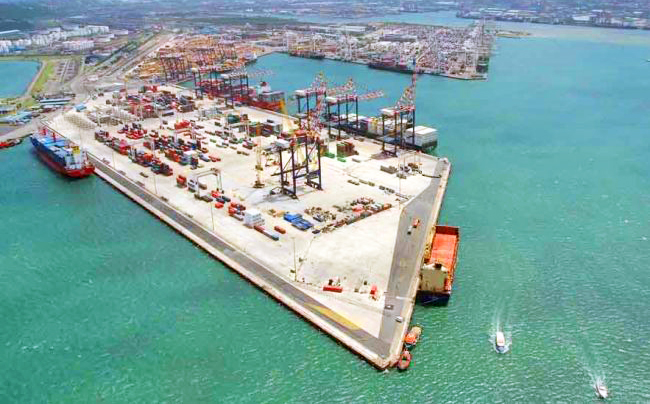
An acquaintance in the forwarding industry brought this working paper to my attention. Titled “Cargo Dwell Time in Durban“, it is very useful reading for logistics operators, Customs and government agencies, and policy makers. The object of the working paper attempts to identify the main reasons why cargo dwell time in Durban port has dramatically reduced in the past decade to a current average of between 3 and 4 days. A major customs reform; changes in port storage tariffs coupled with strict enforcement; massive investments in infrastructure and equipment; and changing customer behavior through contractualization between the port operator and shipping lines or between customs, importers, and brokers have all played a major role. The main lesson for Sub-Saharan Africa that can be drawn from Durban is that cargo dwell time is mainly a function of the characteristics of the private sector, but it is the onus of public sector players, such as customs and the port authority, to put pressure on the private sector to make more efficient use of the port and reduce cargo dwell time. The Working Paper is the product of the World Bank’s Africa Region, Transport Unit, being part of a larger effort  to provide open access to its research and make a contribution to development policy discussions around the world. Policy Research Working Papers are also posted on the Web at http://econ.worldbank.org

Related articles

TPT’s Pre-advice for Export Containers

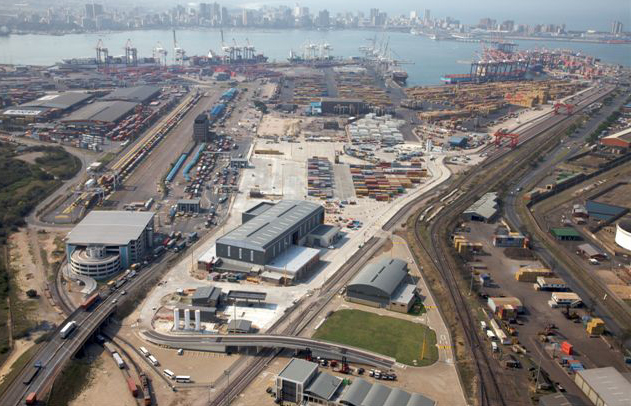
Durban Container TerminalIt has been enquired by some whether or not Transnet‘s Pre-Advice for Export Container’s initiative is aligned with SARS Customs Modernisation. First of all its important to delineate the process and requirement. Transnet Port Terminal’s Pre-Advice is an electronic exchange (COPARN) between the carrier and TPT. As such it is an arrangement which satisfies the Terminal’s advance reporting requirements of impending export container delivery to a container terminal. In time it will feed Customs’ gate-in reporting requirements.

From a Customs perspective, this initiative is an important development which fills another piece of the supply chain puzzle. As such it is not in contradiction to anything planned for by SARS – rather its somewhat ahead of Customs at this point in time. It is just not possible to synchronise inter-departmental and inter-company project developments. Each has its own financial/procurement cycles and operational deliverables, and in certain cases legal prescription. At the same time it is true that supply chain operators bear the brunt of untimely and non-coordinated initiatives. Nonetheless, they are important while at the same time vital for the country’s future economic growth and stability.

Single Window, Corridors and Integrated Borders

Besides all the recent modernisation developments here at home, and abroad, there is both renewed interest and pressure on sovereign governments to push for efficiencies and cost savings relating to regional transport corridors. A case in point is the ambitious initiative involving various states of the East African Community. The Heads of State of the Tripartite (COMESA, EAC and SADC) requested an action plan to improve the efficiency of these corridors to facilitate trade, lower costs for businesses, advance regional integration, and improve the economic livelihoods of all East Africans. The Corridor Diagnostic Study is the technical foundation for that plan. See also the East African Corridors website which provides a comprehensive insight into this regional initiative.

Homeland Security’s Private Sector Resources Catalog v.3

Being an importer, broker, carrier, or even just a plain old citizen in the USA implies you’re always going to get the most comprehensive guidance. Moreover you’re also going to need a fulltime lawyer or trade specialist to delve into and decifer the info – that’s why consultants make so much money.

The DHS has released version 3 of its Private Sector Resources Catalog targeted specifically towards private sector partners and encompassing the entire Department. This document collects the training, publications, guidance, alerts, newsletters, programs, and services available to the private sector across the Department. Recognizing the breadth and diversity of the available resources as well as the Department’s continually evolving work, this catalog will be updated regularly to publicize new resources and increase private sector awareness. Source: DHS

Customs Status Codes – more visibility for traders

An update of Customs Modernisation Release 2 will be implemented at participating Customs branch offices on 24 September 2011. Amongst several enhanced features and bug-fixes, a set of new Customs status codes are included to provide improved visibility for traders as concerns the processing of their goods declarations on the Customs’ system. A year ago, few would have anticipated a fully automated process. This undoubtedly signals less and less human contact between trader and Customs with a gradual, but purposeful intention to re-focus Customs’ effort towards trader management and post clearance audit – in other words before and after the transaction. While some would contest the phasing out of customs human intervention and intuition, this is unfortunately trade-off that needs to be made in order to ensure that scarce resources and skills be freed up to address the new non-transactional facet of the modernisation programme. Another significant fact is that while all these changes occur on current existing systems. Future transition to a more modern integrated technology solution should therefore pose no significant impact to trade as the bulk of the work and effort is being accomplished in these early phases.

Durban Dugout – more about Transnet’s thought process

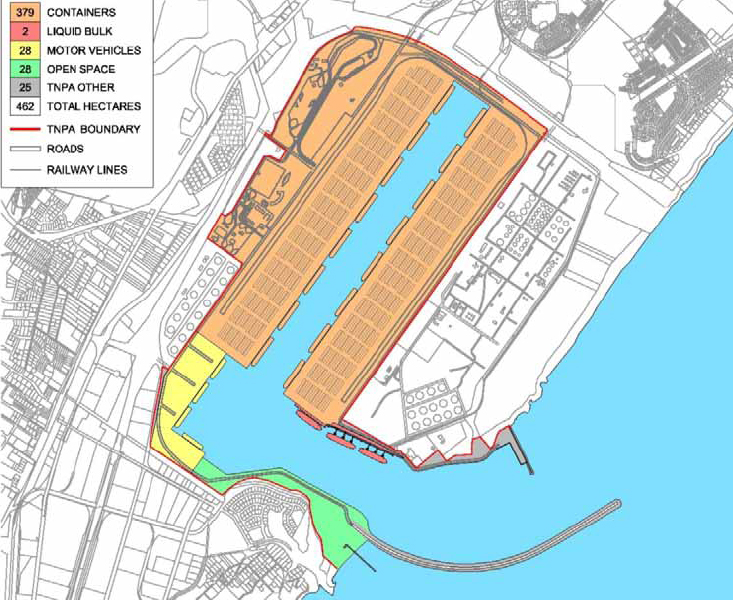
Durban DugoutWhile the ‘bean counters’ at ACSA and Transnet continue to finalise the sale of the old Durban airport, its good to  understand  Transnet’s alternative options in so far as port expansion on the eastern seaboard is concerned. I came across the following document which not only details the current ‘dugout site’, but also includes designs for an equally  impressive container terminal at Richards bay.  Click here!

SARS and SARB – Closing the international trade transaction loop

SA Reserve Bank, PretoriaSince the recent implementation of the Import Verification System (IVS) by the South African Reserve Bank (SARB), local traders would have come to realise that processing a forex transaction at the local bank has come more and more under scrutiny. Why is this? For one, all import and export trade transactions processed through Customs are relayed electronically to the Reserve Bank. Historically, the Bank has been responsible to ensure that South Africa maintains good account in terms of its balance of payments, ensuring that fiscal inflows and outflows are fully and lawfully accounted for. For government to operate accurately, it needs to know exactly what is occurring in this space. On the one hand trade statistical information provides both the Bank and National Treasury vital information which informs its fiscal policies. Trade and Industry (DTI) likewise use trade statistics to maintain a grip in terms of trade policy which governs the duty structure on imported goods as well as oversee the effectiveness of various duty relief (rebate and drawback) schemes. Like all things new,  the South African importer and exporter’s experience with the local commercial bank might prove a bit tedious and painful, given the added scrutiny and awareness of bank officials. These controls are however necessary and in keeping with government’s broader objective to ensure that fiscal and trade control measures compliment new enhanced supply chain security initiatives. To this end, SARB and SARS have initiated a dedicated line of support to facilitate query resolution.