Multimodal inland hubs to add to Gauteng’s container capacity

Engineering News reports that Gauteng will require additional container terminal capacity by 2016, when City Deep, in Johannesburg, will reach its full capacity. Container movements to the province was projected to grow to over three-million twenty-foot equivalent units (TEUs) a year by 2020, she said in her Budget Vote address at the Gauteng Provincial Legislature. Gauteng’s intermodal capacity currently stood at 650 000 TEUs a year and comprised the Pretcon, Vaalcon, Kascon and City Deep hubs.

Gauteng MEC for Economic Development, Qedani Mahlangu said the next generation of inland hubs would create an integrated multimodal logistics capability connecting air, road, rail and sea. Tambo Springs and Sentrarand, in Ekurhuleni, were identified to be developed into the new improved hubs.

By 2018, Tambo Springs would handle 500 000 TEUs and will focus on economic development and job creation, among others. “Tambo Springs will serve as an incubator to stimulate the establishment and growth of new ventures, create opportunities for small, medium-sized and micro enterprises and create 150 000 new jobs,” Mahlangu said.

She added that the department was working towards reaching an agreement with State-owned Transnet in September so that funding could be committed to start implementation by June 2013, for the first phase, which would comprise the railway arrival and departure terminal, to be completed by March 2014.

As per the Gauteng Employment, Growth and Development Strategy, freight and logistics were key drivers in stimulating sustainable growth in the province and the country. “Logistics efficiency will have positive spin-offs to the country‘s ability to export and import goods. In terms of freight, the intention is to move to rail… thereby reducing congestion on roads, air pollution and the impact on the surface of roads. The overall objective is to optimise Gauteng as the gateway to the emerging African market,” Mahlangu said. Source: Engineeringnews.co.za

Interfront – Customs know-how and software

Forgive my exuberance and national pride, for one minute. After some years of intense re-organisation and strategization a new dynamic organization is set to spearhead ICT development in the Customs and Border Management industry. Many will know it by its previous name TATIS or TATIScms. The Cape Town based IT outfit is responsible for the intuitive customs software solution which currently operates in Luxembourg Customs. Let it be known that this is one tough space to operate and succeed in.

Africa, in particular, has  suffered the stigma of UN and World Bank ‘freebies’ by way of customs automated solutions – designed and developed by the west, on western philosophy with little concern for the longer term sustainability and development on the African continent. Before the emergence of commercial Windows-based software, African states (and most developing countries for that matter) had little option but to adopt ASYCUDA. The French colonies in the main sought franco-developed SOFIX. Bull Computers were particularly strong in this space and received great support from the French government in their ventures.

Just as the ‘power’ of the west is waning under financial and political turmoil, so developmental states and economies are looking to their own resources and expertise to fulfil their needs and destinies. A similar phenomenon occurred in the border and port control security space during the first decade of the 21st century, where the Chinese have virtually stolen international market share in NII (Cargo scanning) equipment.  Therefore the emergence of InterFront on the Customs ICT scene is both unique and timely. For more details on the new company and its partners, solutions and expertise please visit their website: http://www.interfront.co.za. Also read their corporate and product profile brochure – click here!

This week, Interfront are show-casing their solution and expertise at the WCO‘s 2012 ICT Conference in Tallinn, Estonia. With the international customs and border management relatively young and seeking stability, Interfront have a great opportunity to develop a regional and international footprint. SARS, in particular, looks forward to its new integrated customs solution; setting a new bench mark in global customs processing.

2012 WCO IT Conference and Exhibition opens in Estonia

The World Customs Organization (WCO) announced the successful opening of its 2012 IT Conference and Exhibition in Tallinn, Estonia which will run from 6-8 June 2012 with the theme: ” IT Transforms Core Business for Customs and its Stakeholders”.

The VIP opening ceremony included a special video welcoming speech by the President of the Republic of Estonia, H.E. Toomas Hendrik Ilves, and addresses by the Secretary General of the WCO, Kunio Mikuriya, and the Director General of the Estonian Tax and Customs Board, Marek Helm, co-hosts of the event.

This 11th WCO IT Conference and Exhibition which dates back to 2002 is the most important IT event on the international Customs calendar, allowing senior Customs executives from over 100 countries to meet with top trade representatives and solution providers in order to consider today’s business challenges as well as modern IT developments.

Gathering over 500 delegates together, the 2012 Conference will focus on “the Customs administration of the future” and includes a wide range of leading speakers from the Government and private sectors who will expand on the main theme of the event.

A dynamic IT exhibition complements the Conference, enabling various global systems aimed at maximum effectiveness and efficiency in modern Customs innovation to be displayed and demonstrated to participants.Source: WCO

Nigerian Customs – a paramilitary display

Ports.co.za reports that Nigerian Customs Service has signed an agreement for the delivery of two 24 metre P249 patrol craft, which will use them to combat smuggling and piracy.The supplier is a Cape Town based outfit called Kobus Naval Design (KND). In the context of intra-Africa trade this deal should be considered a real scoop. Kobus Potgieter, CEO of Kobus Naval Design (KND), confirmed that his company had received the order and would deliver the vessels in ten months’ time. The aluminium vessels will be built in Cape Town. This will be the sixth KND designed vessel in the Nigerian waters delivered over the last couple of years. The company is also busy with a dive boat contract for the oil and gas industry in Nigeria.

Nigeria’s Federal Executive Council (FEC) also recently approved N1.7 billion (US$11 million) for the purchase of a Cessna Citation CJ4 aircraft for the Customs Service. The aircraft would be used for surveillance missions along Nigeria’s borders and would help combat economic sabotage and cross-border crimes. Alhaji Mohammed Dikko, the Comptroller-General of the Nigerian Customs Service, said that his agency had already acquired the helicopters for surveillance of Nigeria’s borders and added that President Goodluck Jonathan had approved the purchase of 400 Toyota Hilux vehicles for border patrol.

Border control is an increasingly important issue in Nigeria. Militant groups in the oil-producing Niger Delta have been illegally supplying weapons for years and Boko Haram is also believed to have received illegal arms, raising questions about border surveillance, especially after reports that weapons looted from Libya have turned up in Nigeria. Source: Ports.co.za and Defenceweb.co.za

New Issue of the World Customs Journal

The latest edition of the World Customs Journal (March 2012) comprises what appears to be a disparate array of topics. Professor David Widdowson invites your attention to the underlying theme of contrasting approaches to universal imperatives which permeates several of the contributions, which includes, for example,

  • a comparative analysis of excise taxation across the ASEAN region and identifies the need for standardisation in readiness for the impending introduction of the ASEAN Economic Community. It’s nice, for a change to have articles which deal with Excise.
  • a research paper concerning the diversity of de minimis arrangements in the APEC region, highlighting their impact on economic benefits and costs.
  • a review of a variety of regional approaches to coordinated border management, and
  • the introduction of the EU’s electronic customs environment as a means of achieving regional standardisation.

The underlying commonality of border management imperatives is also reflected in this edition’s Special Report. In his insightful article ‘Lines and Flows: the Beginning and End of Borders’ Alan Bersin (former Commissioner of the CBP) challenges the traditional concept of international borders, and introduces a paradigm that views global cooperation as a fundamental requirement for effective border management. The next edition of the Journal will focus on excise policy and practice, and will include papers presented at the World Customs Organization’s Global Excise Summit which will be held on 2-3 July at the WCO Headquarters in Brussels. Source: The World Customs Journal.

WHO Tobacco Proposal – Threatened farmers slam ‘outreagous recommendations’

FTW Online recently reported that representatives of hundreds of thousands of African tobacco farmers are gathering at the International Tobacco Growers Association Africa Regional Meeting this week to discuss what they see as outrageous recommendations being developed by international regulators that they believe would destroy their livelihoods.

Farmer leaders attending the meeting from Kenya, Malawi, South Africa, Tanzania, Zambia, and Zimbabwe will focus on the recommendations provided by the Framework Convention on Tobacco Control (FCTC) working group on Articles 17 & 18. The FCTC originally recommended that governments of these countries should help tobacco farmers find viable economic alternative crops, assuming that tobacco demand will decline.

Very little research on alternative, economically viable crops has been undertaken and as the group recognizes, any future research will require lengthy time trials. “However, the FCTC has now put forward unreasonable and absurd measures to phase out tobacco production, without offering the vast African farming community any viable fall-back solutions,” the farmers claim.

Numerous countries, such as Malawi, Zimbabwe, Zambia and Tanzania now face the prospect of seeing millions of jobs lost and a huge decline in the export of tobacco. Tobacco cultivation is critical for the economy in these countries and one of the few agricultural activities to have remained buoyant during the recent worldwide economic crisis. The latest guidelines drafted by bureaucrats in Geneva threaten to undo that for no clear benefit.

“These guidelines are just plain wrong whichever way you look at them. Nobody has explained to me how banning some cigarette products and ignoring others will have any benefit for people’s health,” said Roger Quarles, President of the International Tobacco Growers Association (ITGA). “It will just be a disaster for those growers who grow leaf for traditional blended products.” The ITGA represents more than thirty million tobacco growers across Africa, Asia, Europe, North America and South America. “We call on governments all over the world to support growers by adopting a common sense approach and discarding these irrational and potentially economically devastating guidelines.”

The Case of Malawi

The association says switching from tobacco in Malawi to other crops is unrealistic as it would require huge investments, pointing out that tobacco is by far cheaper to produce and benefits more people than most of the next best alternatives. “For example, investment required for a farmer in Malawi to grow two hectares of flowers is equivalent to the investment required to grow 1 000 hectares of burley tobacco. The difference is that 1 000 hectares of burley tobacco provides a livelihood for 500 farmers. So, given that the average farmer in Malawi only has two hectares at his disposal, switching to flowers is simply unrealistic”.

ITGA says one crop that has been recognised as being more profitable than tobacco in Malawi and other tobacco-growing countries is paprika. But the association says world demand for paprika is only 120 000 tonnes. “A single country like Zimbabwe could cope with this demand but the result would be overproduction of paprika and the impact on exiting paprika growers would be catastrophic,” it says. The association also argues that a farmer that grows burley tobacco cannot switch to Virginia tobacco because Virginia tobacco has an industrial curing process requiring huge investment and needs a much greater area than burley “in order to be profitable.”

Tobacco is Malawi’s most important cash crop, accounting for nearly 60 percent of total export earnings and makes up 13 percent of the country’s gross domestic product (GDP). It is also the single largest employer, with more than two million people directly or indirectly relying on the crop. With such an influence, paralysing the industry could cripple the economy in a way that may take the country decades to recover. Sources: FTW Online, TIMSA, and Buisness Wire.

 Related articles

X-Ray Security Screening – Technologies & Global Market Outlook

Over the next five years, Homeland Security Research Corporation analysts forecast a growth at a CAGR of 10% of the global X-ray screening market, led by a dramatic expansion of the Chinese civil aviation (two out of three new airport projects are in mainland China) and internal security funding. Other key markets are terror-troubled India and the replacement market of the US and Europe.

Despite years of cutting edge weapon and explosives screening technologies RDT&E, there is no competitive modality on the horizon which challenges the cost-performance of 2D X-ray screening technologies. The global X-ray security screening market (including systems sales, service, and upgrades) is forecast to grow from $1.2 billion in 2011 to $1.9 billion by 2016.

The new report is the most comprehensive review of the multibillion dollar global X-ray security screening market available today. It analyses and forecasts the market by application, by geography and by business transaction. The report, segmented into 50 submarkets, offers for each submarket 2010-2011 data and 2012-2016 forecasts and analysis. In more than 300 pages, 90 tables and 150 figures, the report analyses and projects the 2012-2016 market and technologies from several perspectives, including:

  • Market forecast by application: Air cargo, Airport-cabin baggage, Secured facilities, Postal items, Supply chain cargo and People screening AIT
  • National and regional markets
  • X-Ray Technologies: conventional, backscatter, multi-view, coherent and dual energy x-ray
  • Systems sales, post warranty service and upgrade markets
  • Competitive environment: 16 leading vendors and their products
  • Market analysis: e.g., market drivers & inhibitors, SWOT analysis
  • Business environment: e.g., competitive analysis
  • Current and pipeline technologies

Source: Homeland Security Research Corporation

SEZ – Lessons for South Africa from international evidence and local experience

A bold paradigm shift in South Africa’s economic policy is required to ensure the success of the country’s new special economic zones (SEZs) programme, according to Centre for Development and Enterprise (CDE) executive director Ann Bernstein.At the launch of the new CDE report on SEZs, she explained that South Africa’s current economy favoured skill and capital-intensive industry, which was not making the cut in terms of job creation.

“South Africa needs to create the right kind of environment for the emergence of businesses that can employ large numbers of unskilled people. That is what we should use the SEZs to do.“This will require bold leadership and engagement with the difficult choices on labour costs and flexibility that must be made. The alternative is to waste resources and energy yet again on a policy that fails,” Bernstein urged.

The report, titled ‘Special Economic Zones: Lessons for South Africa from international evidence and local experience’ suggested that South Africa should establish at least two large SEZs that were focused on low-skill, labour-intensive industries such as the clothing and textile sectors and enable them to compete globally. “Without reform, the only way South African companies can compete with Chinese, Vietnamese and Indian companies is by mechanisation, which results in fewer people being employed, and a greater reliance on skills,” Bernstein pointed out. “International evidence shows that the most successful SEZs were public–private partnerships,” Bernstein noted. Further, the report showed, as recognised by government, that South Africa’s industrial development zones (IDZs) that include Coega, East London and Richards Bay, had largely failed to boost economic growth, create jobs, promote industrialisation or accelerate exports.

Bernstein attributed this to the lack of a clear definition for what these zones should entail, as well as a strategy for attracting investors. “The IDZs are basically just industrial parks – it’s no wonder they have not been successful in attracting new investors and creating jobs.” Although the Department of Trade and Industry (DTI) had spent R5.3-billion on developing these zones, the vast majority of the 33 000 jobs created were short-term construction jobs, with only 5 000 permanent jobs created.

Bernstein said countries such as China, Costa Rica, Mauritius and Latin America countries could be viewed as benchmarks for South Africa in terms of IDZs. Rising costs in Asia, especially China, where labour-intensive firms were looking for new regional locations, were creating opportunities for IDZs in South Africa. The CDE argued that South Africa should seize the opportunity to compete for a sizable portion of the jobs that could sprout from this.

“A bold new SEZ strategy could become a platform for new companies and new investors that use unskilled labour rather than machines,” Bernstein indicated. “South Africa’s new SEZ programme needs to be a presidential priority. The DTI needs to be fully supported by all other departments of government. Unless the whole of government gets behind the effort, we’re not going to see the kind of investor uptake that would actually make a difference,” CDE research and programme director Antony Altbeker said. Trade and Industry Minister Rob Davies is set to table the draft SEZ Bill in Parliament later this year, while Finance Minister Pravin Gordhan announced that R2.3-billion would be allocated to the establishment of SEZs were in the 2012/13 Budget.

However, the CDE’s report warned that the Bill provided no clarity about what would differentiate SEZs from industrial parks, its envisaged governance arrangements for SEZs was confusing and said the role of the private sector was unclear. Source: Engineering News

A study in Corruption and Firm Behavior

Extensive literature argues that reducing trade costs can substantially increase income and improve welfare in trading countries, particularly in the developing world where these costs are highest. In 2007, a shipping a container from a firm located in the main city of the average country in Sub-Saharan Africa was still twice as expensive, and six times more time-consuming, than shipping it from the US. It was also twice as expensive and just as time-consuming as shipping a similar container from India or Brazil, according to the World Bank. As a result, a significant portion of international aid efforts has in recent years been channeled to reducing trade costs and improving logistics in the developing world. Evidence is growing on how corruption in transport networks can significantly increase the cost of moving goods across borders.

A recent paper “Corruption and Firm Behaviour” investigates how different types of corruption affect company behavior. Firms can face two types of corruption when seeking a public service: cost-reducing, “collusive” corruption and cost-increasing “coercive” corruption. Using an original and unusually rich dataset on bribe payments at ports matched to firm-level data, the authors observe how firms respond to each type of corruption by adjusting their shipping and sourcing strategies. Cost-reducing “collusive” corruption is associated with higher usage of the corrupt port, while cost-increasing “coercive” corruption is associated with reduced demand for port services. Data suggests that firms respond to the opportunities and challenges created by different types of corruption, organizing production in a way that increases or decreases demand for the public service. This can have important implications for how we identify and measure the overall impact of corruption on economic activity. The data further allows us to understand the bribe setting behavior of different types of public officials with implications for the design of anti-corruption strategies.

In our setup, firms have the choice to ship through two ports: Maputo in Mozambique, and Durban in South Africa. The majority of firms in our sample are equidistant to both ports while a subset of firms will be significantly closer to the more corrupt port of Maputo. Survey data revealed that the choice of port is driven primarily by the interaction between transport and corruption costs at each port. Transport costs are linear to the distance between each rm and the ports, while corruption costs are determined by the type of product the firm ships. Our main measure of the distortion caused by corruption is how rms shipping products that are more vulnerable to corruption will opt to go the long way around to avoid a closer, but more corrupt port. We also nd suggestive correlations between the level and type of corruption rms face at each port, which directly affects the cost of using port services, and firms’ decision to source inputs from domestic or international markets.

Source: Corruption and Firm Behavior (December 2011) by Sandra Sequeira and Simeon Djankov.

Related articles

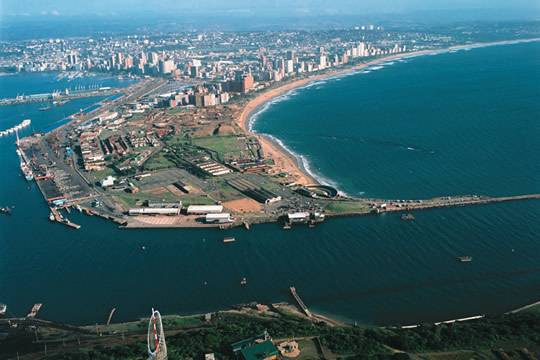
Trade costs and corruption in Ports of Durban and Maputo

Recent years have brought an increased awareness of the importance of trade costs in hindering trade, particularly in the developing world where these costs are highest, says a report in the latest edition of Port Technology. The most salient type of trade costs have often been tariff duties and costs associated with the physical transportation of goods. As a result, several countries embarked on extensive programmes of tariff liberalisation and a significant portion of aid effort was channelled to investments in hard transport infrastructure, such as rebuilding railways and ports (the World Bank alone devotes more than 20 percent of its budget to transport infrastructure projects worldwide).

More recently, new light has been cast on the importance of a different type of trade cost: the cost imposed by the soft infrastructure of transport, defined as the bureaucratic infrastructure handling the movement of goods across borders. While there are many possible sources of inefficiencies stemming from the soft infrastructure of transport, recent research is beginning to document the role played by corruption in transport bureaucracies in driving trade costs. This article provides an overview of this research.

Research into corruption

Corruption can take many forms and emerge in many different phases of the process of clearing goods across borders. Sequeira and Djankov (2011) documented in great detail the ways in which port corruption emerges in Durban and Maputo in Southern Africa – this report is featured in my next post. This research was based on a unique dataset of directly observed bribe payments to each port bureaucracy for a random sample of 1,300 shipments.

The study began by defining two broad categories of port officials that differed in their administrative authority and in their discretion to stop cargo and generate opportunities for bribe extraction: customs officials and port operators. In principle, customs officials hold greater discretionary power to extract bribes than regular port operators, given their broader bureaucratic mandate and the fact that they can access full information on each shipment, and each shipper, at all times. Customs officials possess discretionary power to singlehandedly decide which cargo to stop and whether to reassess the classification of goods for tariff purposes, validate reported prices of goods, or request additional documentation from the shipper.

Regular port operators, on the other hand, have a narrower mandate to move or protect cargo on the docks, and at times even lack access to the cargo’s documentation specifying the value of the cargo and the client firm. This category of officials includes those receiving bribes to adjust reefer temperatures for refrigerated cargo stationed at the port; port gate officials who determine the acceptance of late cargo arrivals; stevedores who auction off forklifts and equipment on the docks; document clerks who stamp import, export and transit documentation for submission to customs; port security who oversee high value cargo vulnerable to theft; shipping planners who auction off priority slots in shipping vessels, and scanner agents who move cargo through non- intrusive scanning technology.

The organisational structure of each port created different opportunities for each type of port official to extract bribes: the high extractive types -customs agents- or the low extractive types -port operators. These opportunities were determined by the extent of face to face interactions between customs officials and clearing agents, the type of management overseeing port operations, and the time horizons of each type of official.

Durban and Maputo

In Durban, direct interaction between clearing agents and customs’ agents was kept to a minimum since all clearance documentation was processed online. In contrast, all clearance documentation was submitted in person by the clearing agent in the Port of Maputo. The close interaction between clearing agents and customs officials in Maputo created more opportunities for corrupt behaviour to emerge in customs relative to Durban.

In Maputo, port operators were privately managed but in Durban, most terminals (for containerised cargo) were under public control, with very lax monitoring and punishment strategies for those engaging in corrupt behaviour. Private management in Maputo was associated with fewer opportunities for bribe payments due to better monitoring and stricter punishment for misconduct. As a result, the organisational features of each bureaucracy determined that the high extractive types in customs had more opportunities to extract bribes in Maputo, while the low extractive types in port operations had more opportunities to extract bribes in Durban. While corruption levels were high in both ports, bribes were higher and more frequent in Maputo relative to Durban.

Finally, port officials with opportunities to extract bribes at each port differed in their time horizons. Customs in Maputo adopted a policy of frequently rotating agents across different terminals and ports, and since bribes varied significantly by the type of terminal at the port, customs agents were aware of the risk of being assigned to terminals with lower levels of extractive potential. On the other hand, port operators in Durban had extended time horizons given the stable support received from dock workers’ unions. Customs officials were therefore the high extractive types with the shortest time horizons, the broadest bureaucratic mandates and more opportunities to interact face to face with clearing agents. As a result, they extracted higher and more frequent bribes, relative to port operators in Durban (the low extractive types) who had longer time horizons and narrower bureaucratic mandates. Source: Port Technology.

ZIMRA, Business to form Customs Forum

The Zimbabwe Revenue Authority (ZIMRA) is working in partnership with organised businesses associations in crafting a Memorandum of Understanding, creating the Zimbabwe Customs to Business Forum, an official has said. ZIMRA’s commissioner for customs and excise Mr Happias Kuzvinzwa said last week that the forum was a platform for his organisation and business to collaborate on issues of compliance, policy, capacity building, integrity and technical engagements. He was addressing delegates at the Shipping and Forwarding Agents’ Association of Zimbabwe 8th annual conference held in Beitbridge last week. Mr Kuzvinzwa said the interim steering committee was finalising the draft MoU and terms of reference.

“The forum is a prelude to the implementation of the authorised economic operator scheme. Membership of this forum is open to the businesses affiliated to recognised associations and shall be governed through a steering committee which is a higher committee, and standing committees which are lower committees chaired and constituted by both ZIMRA and business.

“The standing committees are organised in clusters for easy management of programmes. We expect all the concerned parties to sign the MoU soon upon its finalisation” he said.

Mr Kuzvinzwa added that in line with the SAFE framework of standards, ZIMRA would soon be plotting the authorised economic operators. He said the scheme sought to reward all compliant operators in the supply chain who meet the set criteria. He added that groundwork had been done and teams will be conducting stakeholder consultations and awareness workshops next month. “I would also want to urge the freight industry to embrace as a culture and operation ethos integrity, voluntary compliance, relevant competencies, and information technology.

“Missing these industry risks is being packed into the dustbin of history as you become irrelevant and classified as non-tariff barriers.” he said. Mr Kuzvinzwa added that ZIMRA was also in the process of putting in place a border agency single window through ASYCUDAworld. He said all border agencies would be connected to the workflow process through ASYCUDAworld to ensure that respective mandates are coordinated and streamlined.

“Discussions are at an advanced stage with other border agencies on the implementation of the single window and Beitbridge has been selected to pilot the programme with ZIMRA providing computer workstations at their respective offices,” he said.

Source: The Herald (Zimbabwe)

Making X-ray scanning safer

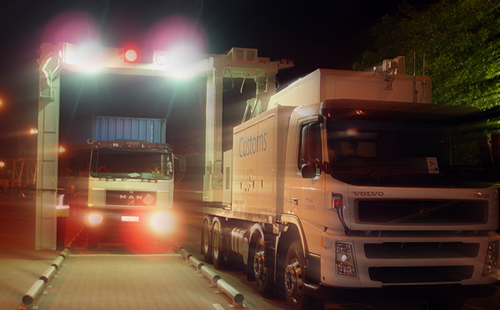
Given recent public outcry regarding airport passenger scanning, I found this scientific report which provides very sensible recommendations in regard to X-ray scanning of vehicle borne commercial cargoes. A recent study commissioned by Economic Commission for Europe provides some key recommendations to ensure improved safety of scanner operators and vehicle drivers. The protection of drivers against sickness and injury arising from their work activities is an important matter, and how to manage the hazards and risks associated with transport activities which are unavoidably connected to the possible exposure of employees to ionising radiation whilst undergoing the cargo/vehicle scanning process was a key question of the study.

Ensuring maximum safety precautions, all stakeholders have a role in enhancing the radiation protection culture within the road transport sector. As it is clear that drivers included in this study are not regarded as occupationally exposed to ionising radiation, the study recommends the following to Customs and Border agencies:

  • Install appropriate information panels, which include pictograms, highlighting that x-ray scanning is being performed and giving clear indications on what the driver should do to avoid unnecessary exposure;
  • At concerned border crossings, make available multi-lingual information leaflets, including pictograms, which describe the x-ray process, risks and safety information;
  • Develop and introduce a mutually recognised x-ray scanning certificate to prevent repeated scanning and thus facilitating and accelerating the control process;
  • Ensure, with the support of the International Atomic Energy Agency (IAEA), the European Commission (EC), the International Labour Organization (ILO) and the World Customs Organization (WCO), the correct implementation of internationally accepted x-ray scanning procedures;
  • Ensure that customs officers and x-ray equipment operators are properly trained on the functioning and risks of x-ray scanning machines enabling them to operate the equipment safely and give adequate safety instructions to drivers; and
  • In cooperation with x-ray machine manufactures, to ensure that x-ray equipment is properly maintained.

Source: UNECE – Scientific Study on External Ionising Radiation Exposure during Cargo / Vehicle Radiographic Inspections

Nigeria – Single Window initiative back on track

After much controversy centering on allegations of corruption and impropriety, the Federal Government terminated the contract awarded to Single Window Systems and Technology Limited. The contract which allowed for a sole submission point for importers and exporters to lodge their documentation was unilaterally awarded by the Federal Ministry of Finance, under the Umaru Yar Adua administration, on behalf of the Nigeria Customs Service to the company registered in June 2010 with N 1m share capital.

The contract was reported to be worth N 4.5 trillion. The decision to discontinue the contract was based on an investigation by the Ministry of Finance which looked into the processes and the terms of the contract. The investigation which was approved by the President revealed that the contract breached the provisions of both the Procurement Act and the ICRC Act. Nigerian Customs received a letter of notification from the supervisory of the ministry of finance that a concession agreement had been entered between the Federal government and the Single Window System Technologies Limited, so where did the customs come into play before the contract was signed?”

Nigeria Customs Service had earlier said on the controversy, “How can a company enter such an agreement without the knowledge of the Nigeria Customs Service?” The Customs was not involved in the execution of the agreement entered by the Federal Ministry of Finance through the Former Honourable Minister of Finance; Olusegun Aganga. Therefore Nigerian Customs was not carried along by the company called Single Window System Technologies Limited. The tender was scuppered.

Recently, the Nigerian Customs Service convened a Single Window National Stakeholder Conference under the slogan – “Collaboration -Towards a Facilitated Trade Environment”. The conference and workshop took place between 23 and 26 April 2012, and was attended by several local and international delegates representing UNECE, UN/CEFACT, and donor companies German Development Company (GIZ), USAID and Crown Agents. Details concerning the launch of this event can be accessed via the following links – Conference Website and Conference Summary Report.

Comment: So what started on shaky ground has finally materialised into a fully-fledged Customs-led programme – the way it should be, and hopefully remain. Moreover, trade representatives and intermediaries will need to be an integral part of this development for it to attain success.

Source: Business News Nigeria and Valentina Mintah (Trade Facilitation Consultant).

Related articles

Africa – ready for rich pickings?

While on the theme of African economic and trade emancipation, it is interesting to consider the detailed analysis and evaluation occurring in regard to African continental readiness for information and communication technologies. One such study is the Transformation Ready or eTransform Africa programme, a joint programme of the African Development Bank and the World Bank, in partnership with the African Union. Bear in mind that the WCO and African Development Bank recently signed a cooperation agreement to enhance the capacity of Customs administrations in Africa. 

The study (Click Here!) is a series of  case studies of certain countries. The aim of the programme as a whole, as set out in the terms of reference, is to:

  • Take stock of emerging uses of ICT across sectors and of good practices in Africa and in other continents, including how ICTs are changing business models in strategic sectors.
  • Identify key ICT applications that have had significant impact in Africa or elsewhere and that have the potential of being scaled up, both from the public and private sectors.
  • Identify binding constraints that impact ICT adoption and scaling-up of effective models, such as the need to develop a regional culture of cyber security, and measures to address these constraints, including in relation to the role of different actors and stakeholders (private, public, development community, civil society, etc).
  • Commission a series of country case studies, to formulate a guide for rolling out and scaling up key applications in Africa, in each of the focus sectors, and thereby to identify opportunities for public/private partnership, as well as identifying areas where intervention can be reduced or eliminated.
  • Develop a common framework for providing support in ICT for development to countries that brings together the operations of the two Bank Groups and their respective departments.

The terms of reference for individual sectors were as follows:

  • Within each sector, identify specific opportunities and challenges in Africa that can possibly be addressed with an increased or better use of ICT. Constraints that are hindering ICT uptake and scale-up will be examined within the context of each sector/industry, including human capacity in IT skills and sustainable business models such as for public private partnerships (PPP). Further, the appropriate role of governments in the provision of priority ICT applications and services will be examined in order to maximize private sector development;
  • Undertake a quick scan of ICT applications in the different sectors and identify a few applications that have had significant impact in Africa or elsewhere and that have the potential of being scaled up. The scan should refer to a matrix of selection criteria on which to select case study countries that are considered ripe for the creation of public/private partnerships. On this basis, specific country case studies will be chosen – two to three per sector — on a representative basis, for deep dive analysis. The selection of case studies should be made in consultation with the partners and the other consultants. A workshop should be organized by the coordinator firm at an early stage in the project to finalise this selection.
  • Analyze and understand the barriers to the greater adoption and mainstreaming of ICTs. Barriers may include, for instance, low purchasing power, illiteracy, infrastructure constraints, lack of regulation, poorly functioning mobile ecosystem, power shortages, political instability etc. Identify cases/examples on how these have been dealt with;
  • Analyze and understand the enabling factors of success, including political economy, policy, institutional, human, financial and operational factors;
  • Consider the option of developing multi-country programs or special facilities that would allow fast-tracking specific programs across countries;
  • Provide guidelines on designing appropriate and sustainable ICT components for sector projects (including building effective public and private partnerships) and on evaluating the impact of these interventions; and
  • Propose a course of action on how to include ICT in policy dialogue and planning with country counterparts on sectoral development goals and priorities. Experiences and best practices from other regions will be drawn upon to define the role of the public sector, bearing in mind that government is increasingly positioned as a lead user of ICTs as well as a regulator of the sector.
Related articles

The following article provides a disturbing – some would call it conspiracy theory – on what lies in store for the continent of Africa. Perhaps the colonial days will be viewed as mild should some of the suggested schemes materialise.

Namibia buys into ‘Single Window’ concept

From April 12-13, Southern African Trade Hub (aka USAID) presented Single Window as a cutting-edge tool for trade facilitation to the Ministry of Industry and Trade, Ministry of Finance, Customs and other private sector organizations, explaining how a NSW for Namibia could improve the Trading Across Borders index ranking, which currently stands at 142 out of 183 countries. Single Window is a crucial instrument that will eliminate inefficiency and ineffectiveness in business and government procedures and document requirements along the international supply chain, reduce trade transaction costs, as well as improve border control, compliance, and security.

Benefits for Government: A Single Window will lead to a better combination of existing governmental systems and processes, while at the same time promoting a more open and facilitative approach to the way in which governments operate and communicate with business. Traders will submit all the required information and documents through a single entity, more effective systems will be established for a quicker and more accurate validation and distribution of this information to all relevant government agencies. This will also result in better coordination and cooperation between the Government and regulatory authorities involved in trade-related activities.

Benefits for trade: The main benefit for the trading community is that a Single Window will provide the trader with a single point for the one-time submission of all required information and documentation to all governmental agencies involved in export, import or transit procedures. As the Single Window enables governments to process submitted information, documents and fees both faster and more accurately, traders would benefit from faster clearance and release times, enabling them to speed up the supply chain. In addition, the improved transparency and increased predictability would further reduce the potential for corrupt behaviour from both the public and private sector.

If the Single Window functions as a focal point for the access to updated information on current trade rules, regulations and compliance requirements, it will lower the administrative costs of trade transactions and encourage greater trader compliance. The Permanent Secretary for the Ministry of Industry and Trade underscored the need for Namibia to proceed with the Single Window concept, and advised participants that his Ministry, together with the Ministry of Finance, would jointly package the Single Window concept and submit it to Cabinet for Government approval.

In Southern Africa, Mauritius already has an effective Single Window, which is reflected in its “Trading Across Borders” ranking of 21. Mozambique recently launched its pilot Single Window. SATH will support and facilitate the processes for the establishment of a Botswana National Single Window system to streamline cross border trade. The current SATH Trans Kalahari Corridor (TKC) Cloud Computing Connectivity program, which is being piloted between Botswana and Namibia, provides an ideal technology platform for linking Botswana and Namibia Single Windows, leveraging the investment by BURS, Namibia Customs and SATH to date in the development of this system. SATH is currently in the process of gauging support for National Single Window in South Africa.

Excuse my cynicism, but the SA Trade HUB  has yet to demonstrate the viability of its Cloud Computing solution between Namibia and Botswana Customs. What is reported above is the usual sweet and fluffy adjectives which accompany most international customs and trade ICT offerings, ignoring prerequisite building blocks upon which concepts such as Cloud and Single Window may prove beneficial and effective. Past project failures in Africa are usually blamed on the target country in not bedding down or embracing the new process/solution – never the vendor. Given the frequency of technology offerings being presented by donor agencies on unwitting national states, there seems little foreign interest in ‘bedding down’ or ‘knowledge transfer’ than the ‘delivery of expensive technology’.

Related articles and references