Consitutional Court confirms invalidity of certain Sections to the Customs Act

ConCourtThe Constitutional Court (South Africa) handed down judgment in the Gaertner & Orion Cold Storage matter today on the unconstitutionality of certain parts of section 4 of the Customs and Excise Act, 1964.

Section 4(4)-(6) had been challenged in the Western Cape High Court in April 2013 and the matter was taken to the Constitutional Court to be challenged further.

The issue before Court was that SARS conducted a search in terms of section 4 at the third applicant’s premises (Orion Cold Storage (OCS)) and at the house of Mr Gaertner, a director of OCS.

The Act does not require SARS officials to obtain a warrant before a search is conducted and the Applicants launched the proceedings in the High Court in which they sought, and were granted, orders declaring parts of section 4 unconstitutional to the extent that they permit targeted non-routine searches without judicial warrant.

The Applicants argued in the Constitutional Court that section 4 is over broad in that it allows for non-routine or targeted searches by SARS without a warrant.

Briefly, the Constitutional Court order provides that –

  • The declaration of constitutional invalidity of sections 4(4)(a)(i)-(ii), 4(4)(b), 4(5) and 4(6) of the Customs and Excise Act 91 of 1964 made by the Western Cape High Court, Cape Town is confirmed.
  • The declaration of invalidity is however not retrospective.
  • The order is suspended for six months to afford the Legislature an opportunity to cure the invalidity.
  • The Constitutional Court also instructed that during the period of suspension, section 4(4) of the Customs and Excise Act must be applied in accordance with alternative wording.

To access the Constitutional Court judgement (November 2013), Click Here!

To access the Western Cape High Court judgement (April 2013), Click Here!

Parliament Postpones Customs Bills

Thaba Mufamadi, chairman of Parliament’s finance committee. Picture - Financial Mail

Thaba Mufamadi, chairman of Parliament’s finance committee. Picture – Financial Mail

Parliment’s standing committee on finance (SCoF) has decided to postpone its deliberations on two draft customs-related bills until next year to allow importers and the freight-forwarding industry more time to comment on the proposals which threaten the status of City Deep as an inland port. This followed an appeal by the South African Association of Freight Forwarders that it had had insufficient time to consider the substantially revised draft Customs Control Bill and Customs Duty Bill, which required that imported goods would have to be cleared at the first point of entry.

The association, supported by a range of other business organisations, including the Johannesburg Chamber of Commerce and Industry, warned that the bills could be challenged on constitutional grounds if the process of consultation was deficient. All political parties supported the proposal by finance committee chairman Thaba Mufamadi on Wednesday that the deliberations on the bills be postponed until next year. He instructed stakeholders to make their submissions to the South African Revenue Service (SARS) by December 15.

Mr Mufamadi also took cognisance of concerns raised by Business Unity South Africa that parliamentary processes did not allow sufficient time to comment, for example, on the medium-term budget policy statement. Industry has warned of port delays and trade disruption if the proposals were to be adopted. The Customs Control Bill proposes that goods be cleared at the first port of entry into South Africa. This will mean that inland ports such as City Deep in Johannesburg would no longer be designated places of entry or exit for customs purposes. In the past, containerised cargo could move directly to inland ports on arrival in the country under cover of a manifest. A new declaration — of the nature, value, origin and duty payable on the goods — would replace the manifests.

SARS said these did not provide sufficient information to undertake a risk assessment. Another bone of contention for industry was the “extremely severe” penalties proposed in the draft Customs Duty Bill. Following the uproar about the proposals SARS offered a compromise earlier this week as a way out of the impasse. Instead of a clearance at the port of entry, a mandatory advance customs clearance of the goods three days before their arrival at the first port of entry would be required. Goods consigned to inland terminals such as City Deep would be released conditionally. The system would be tested for the whole of next year to iron out any problems.

An alternative option would be for the goods to undergo a lesser form of clearance at the first point of entry. This would still entail providing customs authorities with the same level of information on the tariff, value and origin of goods, which would be submitted by electronic data interchange. The importer would be held accountable for the information that was provided. SARS official Kosie Louw said that because this document would not have the formal status of a clearance certificate, it would not disrupt existing legal contractual arrangements, as claimed. The goods would still move CIF (cost insurance and freight) from the port to City Deep. SARS has also proposed softening the penalty provisions so that errors not resulting in any prejudice to customs revenue will be subject to penalties only after three warnings. These penalties will be discretionary and applied leniently in the first 12 months of the bill coming into force to allow business time to properly prepare for the change. An appeal process has been included. Source: Business Day Live. 

Port of Rotterdam develops app to end transport of empty containers

downloadInlandLinks, the port of Rotterdam’s online intermodal platform, has developed an application to substantially reduce the transport of empty containers, the Dutch port announced on Tuesday.

Currently an estimated 25 percent of all containers shipped by road, rail or inland shipping are empty. Empty containers are returned to the owners and subsequently shipped directly back empty into the hinterland.

This results in extra costs, inefficient and unnecessary transport and also affects the environment. InlandLinks claims to have achieved a breakthrough in terms of efficiency and sustainability for the entire logistical chain.

The new online application to reduce the transport of empty containers, called ’empty depot tool,’ inland terminals where shippers and logistical service providers can pick up and deposit empty containers, and later reuse these containers for a new load. The new method allows containers to remain on the inland terminal to be reused for export cargo, instead of being returned empty.

“It is not mandatory to bring containers back immediately but the owners of the containers, the shipping companies, normally want to reuse them as soon as possible,” said Sjaak Poppe, spokesman of the Port of Rotterdam.

“Currently oweners let containers return empty if they stay in the hinterland too long. The longer containers remain unused, the larger the needed amount of containers for shipping companies will be.”

With the new tool leads to lower costs and lower CO2 emissions. A large number of shipping companies have already joined the platform, Poppe added. Source: news.xinhuanet.com

SA-Mozambique One Stop Border, one step closer

ressano-garcia_snapseedParliment’s standing committee on finance (SCoF) on Wednesday finally adopted a bilateral agreement between South Africa and Mozambique that brings the creation of a one-stop border post between the two countries a step closer.

The move has been six years in the making. The facility is expected to expedite the movement of goods and people, reduce congestion and delays, and lower the cost of cross-border trade.

Members of Parliment heard on Wednesday that the World Bank estimated that a one-day reduction in inland travel time in sub-Saharan Africa could result in a 7% increase in exports. Further, reducing export costs 10% through greater efficiency could increase exports 4.7%.

Parliament is in the process of ratifying the bilateral legal framework for the one-stop border post between South Africa and Mozambique at Lebombo-Ressano Garcia. It is the first bilateral framework of its kind for South Africa and is likely to be replicated in other parts of the Southern African Development Community (SADC).

The facility is expected to expedite the movement of goods and people, reduce congestion and delays, and lower the cost of cross-border trade

SADC has made a commitment to implementing such bilateral agreements throughout the region.

South Africa is in discussion with Zimbabwe about having a one-stop border post at Beitbridge, which is notorious for its congestion and long delays. The committee heard from Department of Home Affairs officials that a single visa for the region was also planned once systems have been integrated and secured.

The one-stop border post facility and access roads to Lebombo-Ressano Garcia have already been built and were just awaiting the go-ahead from the South African and Mozambican governments to begin operating. Each country would have a designated area in the combined facility for customs control but housing them in one unit would mean that goods would only have to be offloaded and loaded back onto trucks once for inspection.

South African Revenue Service senior executive Kosie Louw said the benefits of one-stop border posts were reduced border crossing times and reduced logistics costs. Further, they simplified and harmonised border control and administration, and integrated risk and information management.

A reduction in corruption and illegal imports was another benefit, Mr Louw said. Frequent travellers will be processed speedily through the use of fingerprints. A key element of the agreement is to provide for extraterritorial jurisdiction at the commonly held border posts and to deal with arrest, detention and seizure of goods. Both parties will be entitled to apply their own domestic customs laws within the common control zone.

The formal agreement for the project was signed between the two countries in September 2007 and the Cabinet gave its approval in August 2011 for the bilateral legal framework to be finalised and presented to Parliament. Source: BDlive.co.za

French Customs staff numbers shrink as inspections become automated

THE number of French customs officials has fallen 25 per cent over the last 20 years to 16,662 with another 300 expected to go next year as surveillance becomes more computerised. Picture: Seanews Turkey

THE number of French customs officials has fallen 25 per cent over the last 20 years to 16,662 with another 300 expected to go next year as surveillance becomes more computerised. Picture: Seanews Turkey

The number of French customs officials has fallen 25 per cent over the last 20 years to 16,662 with another 300 expected to go next year as surveillance becomes more computerised. (Comment: by stark contrast French Doeane still have more staff than the South African Revenue Service, where the Customs compliment is around 2500 officers.)

“Ten years ago, 1.2 million containers a year arrived in the Port of Le Havre, with 560 customs staff and three agents of the competition and anti-fraud service,” said Bertrand Vuaroqueux of the National Union of Customs Officers. “Today, it’s 2.5 million containers, but only 400 staff.”

While the trend is EU-wide, it is more acute in France where the number of seizures of counterfeit goods has fallen by half since 2011 while 33 per cent of goods inspected in 2012 did not comply with EU rules, increase of 22 per cent from 2011.

Even the economy ministry, in charge of customs, hints at an official weakening of overall surveillance, Reuters reports. “The priority is no longer systematically to check vessels in coastal waters but to focus on the most important fraud cases,” it said in the draft 2014 budget.

European customs services are under orders to facilitate the flow of trade and make life easier for companies to avoid hobbling economic competitiveness.

Competition for business among European ports and airports has led to what critics call a race to the bottom between national customs services.

The big winners are Europe’s two largest ports, Antwerp and Rotterdam, where China has invested in making the 12-million-container-a-year megaport on the Maas/Rhine Estuary.

As the EU seeks a string of free-trade deals across the globe, Antwerp is building the world’s largest lock, wide as a 19-lane highway, to accommodate a new generation of giant ships.

Like its rival European ports, Antwerp is under pressure from importers to do checks quickly and efficiently. While only one to two per cent of goods entering Europe are physically inspected nowadays, online checks of digital paperwork are carried out on the basis of risk analysis.

The role of customs has also been changed by the single European market, which allows the free movement of goods inside the 28-nation EU and by globalisation which multiplied international supply chains, and by the economic crisis. Such trends may accelerate with new customs rules having customs declarations made at an office remote from the point of entry of the goods starting next month. “We will have to establish rules of engagement to ensure it doesn’t become a big sieve,” a European Commission source told Reuters. Source: Seanews.com

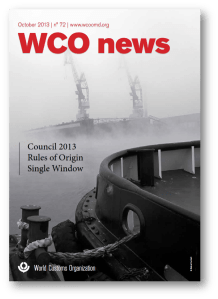
WCO News – October 2013 Edition

wco news 2013The latest edition of WCO News reflects on the Secretary General’s thoughts on what the WCO has done, what it will be doing, and what will impact on its work in the coming months. The WCO will actively focus its energies on it’s four strategic packages concentrating on revenue, compliance and enforcement, economic competitiveness and organizational development. Together, these packages support the adoption and application of modern Customs practices and raise awareness on the vital role of Customs in international trade.

Featured articles include –

  • From borders to boundless: the digital dilemma in Customs – it discusses two questions – How does an industry traditionally focused on physical borders remake itself for digital commerce, which inherently circumvents such borders? and, Why must Customs agencies transform to address the rise in digital goods and services?
  • Intercepting next generation threats

    For those responsible for the security of our borders, transit networks, VIPs and high-profile sites, the threat posed by more creative adversaries is compounded by the increasing frustrations of passengers and visitors, when subjected to existing security checks. The article discusses a range of ingenuity which technology nowadays provides to these adversaries, and the elements of new Terahertz imaging equipment to assist border agencies in the combat thereof.

  • Beyond the Single 

    Window (SW) – In the 20-plus years since they first opened in Singapore and Sweden, SWs have remained a central focus of border clearance strategies, even though the majority of Customs administrations have not implemented them. Although design plans vary considerably, most SW systems support an electronic data exchange model which allows for (i) Single submission of data and information; (ii) Single and synchronous processing; and (iii) Single decision-making for release and clearance. This article considers 4 best practices which governments should consider when implementing Single Window programs.

The publication also includes country case study’s on Single Window featuring Nigeria and New Zealand, Sri Lanka Customs 20 years of dedication towards conservation, a feature on Argentine Customs and many other interesting articles. To access the publication – click here! Source: WCO

India Seeks Binding Trade Facilitation Agreement and Mandatory Exchange of Customs Information

TFPrinciples tfig.unece.org

India has proposed changes in the trade facilitation agreement to address the concerns of developing countries in the proposal that tops the agenda of the WTO‘s Bali ministerial scheduled for early December.

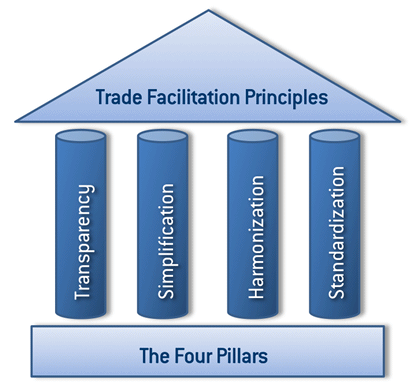
The trade facilitation agreement aims to smoothen cross-border trade by removing red tape, improving infrastructure and harmonising Customs procedures. Seen as the developed countries’ agenda, the emerging economies have sought relaxations in the legally binding clauses like clearing shipments within three hours.

“We have informed WTO that there needs to be some restriction on the scope of expediting shipment, and should be only limited to air cargo and that too very urgent ones,” a commerce department official told ET.

The country should also be allowed to restrict it to courier services, as the ones very urgent. WTO has subsequently agreed to relax the clause to make expediting shipments within six hours or as rapidly as possible instead of three hours.

Negotiators from 159 countries have held several rounds of talks since September in Geneva to forge a consensus on the multilateral agreement.

Although talks started in 2001 in Doha, lack of consensus between the developed and developing countries has lead to an impasse.

The ninth ministerial round in Bali is being seen as the last attempt to renew the global trade agreement agenda by focusing on the low hanging fruit such as trade facilitation.

India’s commerce & industry minister Anand Sharma told WTO director-general Roberto Axevedo during his Delhi visit in October that India was in support of the trade facilitation agreement, “but needs a balance in the pact”.

India along with other developing countries had raised objection to the clause, which calls for a sufficient time gap between the announcement of change in tariff to its coming into effect. This would be against India’s constitution, since most of the budget announcements related to tariffs come into effect within 24 hours. “We cannot change our constitution for WTO,” said the official, adding that India has submitted an alternative proposal to this effect, wherein, budget-related announcement should be kept out of this clause since they need to become applicable immediately. “Deliberations are still on, we need to be given flexibility,” he added.

Besides, India has sought a binding agreement on Customs cooperation under trade facilitation, which will ensure mandatory exchange of information between Customs administrations (on request) so as to prevent under-invoicing, overvaluation, tax evasion and illicit capital flows.

However, the developed countries want to agree to it only on ‘best endeavour basis’. “It is important for us, and has been on the table for over 20 year. It is only for cross checking, as information is available at both ends. However, developed countries are putting in so many conditions, confidentiality laws, secrecy. So, we are not sure in what form it will finally look like,” said the official.

India has also been pushing for a binding technical and financial assistance by the developed countries to the developing countries to accept TF agreement. Source: Economic Times (India)

Draft Customs Bills in Parliment

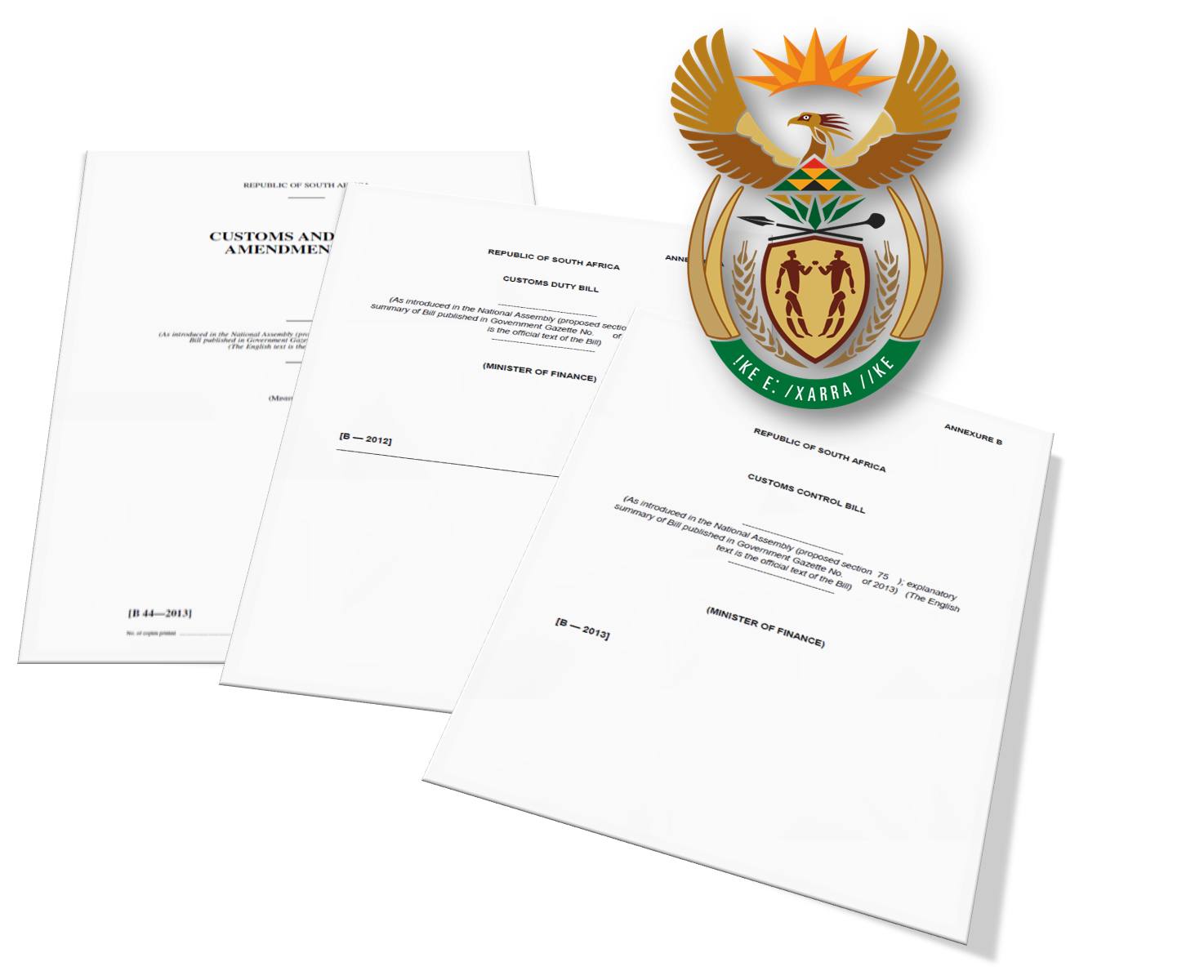
Customs BillsParliament’s Standing Committee on Finance (SCoF) has issued an invitation (17 October 2013) to stakeholders and interested parties to submit written submissions and any indication to make oral presentation for the public hearings in regard to the Customs Control and Customs Duty Bills. The public hearings are set to take place on 30 October 2013. The draft Bills set out a new legal and regulatory framework for Customs controls over the movement of people goods and conveyance in the Republic of South Africa. The proposed new laws will in effect replace the existing Customs and Excise Act, no.91 of 1964 once in force. Copies of the bills can be located on the following website – www.parliament.gov.za – or via the following links:

What Shoprite and Woolworths can tell us about Non-tariff Barriers

SAIIA PaperGauging from the title of this SAIIA report, it is the first time I ever saw the use of private sector entities as the vehicle for delivery. A nice and welcomed approach. While the report tends towards technical analysis, it does provide some sound thoughts on the extent of non-tariff barriers (NTBs) outside of the traditional barriers such as antidumping duties, quantitative restrictions, import levies. In fact the report focusses on licensing rules, import permits, standards as well  and customs procedures.These NTBs are likely to be less transparent but more prevalent and representative of the constraints Southern African traders face in selling merchandise across borders on a day-to-day basis.

It is interesting to see that corruption features in at least 3 out of the 4 NTBs by category identified by the private sector. While the quest for more automation at borders is definitely feasible, the question of limitation of human intervention at the border will undoubtedly be a stumbling block in many countries. It requires some political will to actually do something about the “rot” at borders. To access the report please visit the SAIIA website

The paper provides an overview of the incidence and impact of non-tariff barriers (NTBs) in the Southern African Development Community (SADC) region. The analysis draws on the growing body of literature on NTBs pertaining to regional trade in Southern and Eastern Africa, but importantly it supplements this with the experience of the private sector in the region. It reviews the current processes and achievements in addressing NTBs within Southern Africa. Practical measures are proposed to facilitate the removal of NTBs within Southern Africa, informed by the lessons from other regions. Source: South African Institute of International Affairs.

Will Africa’s Leaders Finally ‘WALK’ the Talk?

Kenya's capital Nairobi, September 23, 2011. The road, which is being built by China Wuyi, Sinohydro and Shengeli Engineering Construction group, is funded by the Kenyan and Chinese government and the African Development Bank (AFDB). The project will cost 28 billion Kenyan shillings ($330million), according to the Chinese company. AfDB has cut the expected economic growth rate for Kenya in 2011 to 3.5-4.5 percent from an earlier forecast of 4.5-5 percent due to high inflation and a volatile exchange rate, the bank's country economist for Kenya said on Friday. REUTERS/Thomas Mukoya

Kenya’s capital Nairobi, September 23, 2011. The road, which is being built by China Wuyi, Sinohydro and Shengeli Engineering Construction group, is funded by the Kenyan and Chinese government and the African Development Bank (AFDB). REUTERS/Thomas Mukoya

The citizens of the African continent have been introduced to one grand vision of development after the other – from OAU to AU. However, there is a tendency by some of the member countries to retreat from fulfilling regional treaty commitments, which, in some cases, would entail losing a degree of sovereignty.

What is the biggest stumbling block to achieving the African Integration Vision?

But after more than 50 years of solemn regional integration declarations these rhetorical and symbolic efforts still haven’t made the regional integration schemes any more inclusive. For example, when analysing the ‘inclusiveness’ trends as measured by Poverty and Income Distribution Indicators, most Sub-Saharan African countries won’t achieve the MDG target of reducing extreme poverty rates by half ahead of the 2015 deadline. This is despite the increasing total merchandise export as well as within most of the regional economic communities (RECs).

Some have tried to absolve policy-makers of the lack of progress with regards to achieving the milestones of the “linear” integration model based on the European experience and advocated by the Abuja Treaty. They propose an alternative non-trade oriented approach; the so-called functional regional cooperation. This perspective focuses on setting standards for transport such as the SADC recognized driving license; construction of a new regional corridors; an African identity etc. This less ambitious but perhaps more realistic perspective could lead to failure in removal of trade barriers, while at the same time presenting a much more positive outlook of regional integration than what international economic data would otherwise show.

The AfDB is attempting to get to the bottom of this regional integration – inclusive growth conundrum in its 2013 African Development Report, currently under preparation. But we might already get some good answers to this question through an ongoing research project entitled ‘PERISA‘. Led by the ECDPM & SAIIA, it intends to look deeper into what regional integration/cooperation really entails and what the underlying drivers/factors and specific bottlenecks are. In July, we got a hint on what to expect from the research project from a very enriching Dialogue on the Drivers and Politics of Regional Integration in Southern Africa.

National versus Regional

South Africa has developed a ‘2030 vision’ and national strategic plan. It includes some proposals to reposition South Africa hegemon in the region. However, very few of the National Development Plans (NDP) in Southern Africa even mention regional integration. Mauritius being an exception as it benefits from the support of the Regional Integration Support Mechanism (RISM), which is disbursed directly into the budget of the government as untargeted financial assistance. Notwithstanding this support and the disbursement to the nine other Member States of the Common Market for Eastern and Southern Africa (COMESA) and additional donor-supported initiatives in other RECs, there is still a flagrant absence of alignment between commitments taken at the regional level and the actual planning process at the national level.

This discrepancy between the regional and national level is a matter of concern because if these Regional Trade Agreement (RTA) commitments do not feature amongst the country’s national priorities then there is an even greater risk that they will not be implemented in practice. This latent risk perhaps goes a long way in explaining the relative poor record when it comes to the level of domestication of regional integration legal instruments, implementation of trade and regionalintegration-related budgets, implementation of Council of Ministers’ trade-related decisions, which the AfDB will seek to capture through its forthcoming system to measure regional integration in Africa.

During the meeting a call for a community of practice among national planning agencies was made which could assist and drive the integration process through the convening of regular meetings between regional and strategic national planners. It is positive to observe that Southern African countries seem to have warmed up to this idea of an informal community of practice outside the formal institutional structure.

What can Development Finance Institutions do about this inertia?

In addition to the supply-driven collection of regional integration statistics, Multilateral Development Banks (MDBs) could also lend technical and financial support to the formation of Regional Planning entities’ process. Amongst others this could include providing support to the above-mentioned community of practice of national development planners interacting with regional planners. This could eventually ensure that regional integration gets fully mainstreamed within the national planning policy instruments as illustrated in Mauritius’ latest 2013 budget, whose overarching theme rests on six main objectives, including fast-tracking regional integration.

There seems to be a consensus that the RECs must have technical capacity to facilitate the RTA negotiation process and decision-making process. Both the UK Department for International Development (DFID) through its TMSA programme and the AfDB through its forthcoming 2014-2016 Tripartite Capacity Building Programme are attempting to address this deficiency in a coordinated manner in line with fundamental principles of the Paris Declaration on Aid Effectiveness. Source: ECDPM
website (An analysis by Christian Kingombe, Chief Regional Integration & Infrastructure Officer at the AfDB).


China hopes to dominate Africa by boosting trade via Indian Ocean

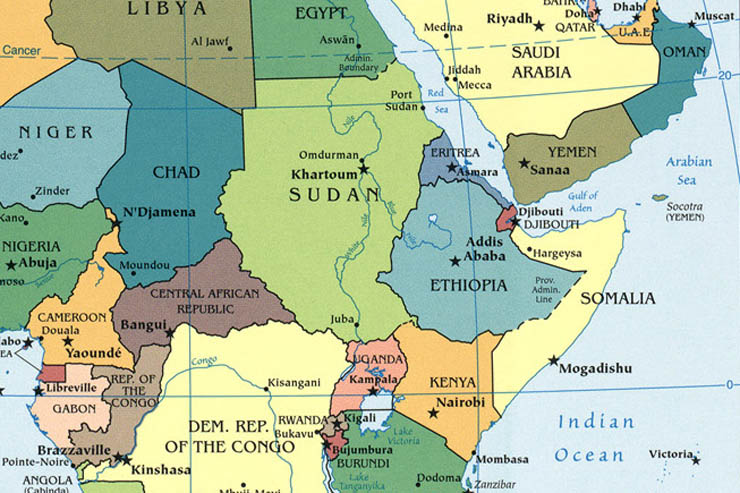
EastAfricaMapPeople’s Republic of China (PRC) officials are becoming increasingly apprehensive about the rise in the use of the westward corridor to export oil, diamonds, and rare minerals out of South Sudan and the Central African Republic via Cameroon. In other words, this creates a flow to Atlantic sea and air transportation routes, rather than routes eastward to Indian Ocean trade routes. Beijing is also concerned over the growing tension between Sudan and its neighbors – particularly South Sudan – because of the impact this might have on the PRC’s long-term designs to dominate Africa’s resources trade.

A key component of the Chinese long-term strategy has long been to converge all the flow of oil, gas, and minerals to a single export point on the shores of the Indian Ocean; that is, in the direction of China. This vision is getting closer to realization given the progress made toward beginning construction of the maritime complex in Lamu on the northern Kenyan shores of the Indian Ocean. The Lamu mega-port and adjacent industrial and transportation complexes are a major element of the Kenyan Government’s Vision 2030 initiative. Lamu is the key to the long-needed modernization of Kenya’s deteriorating infrastructure and boosting of economic output.

Although Nairobi keeps insisting that there will be international tenders for each and every phase of the Lamu project, the overall design in fact follows Beijing’s proposal, and Nairobi acknowledges that no international consortium has so far been able to remotely compete with the financial guarantees offered by official Beijing in support for proposals presented by Chinese entrants. This is because Beijing considers the Lamu mega-port and transportation complex to be the key to the PRC’s long term domination over African trade and resources.

The initial costs of the first phase of the Lamu project are estimated at $25.5-billion. The name of this first phase – the Lamu Port and New Transport Corridor Development to Southern Sudan and Ethiopia (LAPSSET) – points to the initial objectives. Significantly, the term used is “Southern Sudan” and not the state of South Sudan. When completed, the first phase of the Lamu complex will include a 32-berth port, three international airports, and a 1,500km railway line. As well, the Chinese plan oil pipelines from Juba in South Sudan, and from Addis Ababa via Moyale, Kenya, to converge into Kenya’s Eastern Province and end in a new huge oil refinery in Bargoni, near Lamu. The entire construction and pipelines will be supported by a 1,730km road network. In the longer term, the trans-African pipelines the Chinese plan on building from both Nigeria in the west and south-western Africa (most likely Angola) will also feed into the Lamu complex, thus giving the PRC effective control over the main hydrocarbon exports of Africa.

The strategic cooperation between Beijing and Khartoum constitutes the key to the Chinese confidence that their Sudanese allies be able to contain their Somali jihadist proxies so that the risk of terrorist attacks is minimal. Simply put, Beijing is ready to do anything just to ensure the flow of oil eastwards rather than westwards.

Ultimately, the significance of the Chinese long-term grand design for Africa can be best comprehended in the context of historic transformation in the grand strategy and polity of the PRC. Beijing has been arguing since the fall of the Soviet Union that the decline of the United States was also inevitable and that China was destined to rise as the global hegemon. Presently, Beijing is convinced that the time is ripe for delivering the coup de grace.

On October 13, 2013, the official Xinhua news agency published an official commentary stating that “it is perhaps a good time for the befuddled world to start considering building a de-Americanized world”. The commentary surveyed the “abuse” the entire world had suffered under US hegemony since World War II. The situation had only aggravated since the end of the Cold War, Xinhua argued. “Instead of honoring its duties as a responsible leading power, a self-serving Washington has abused its superpower status and introduced even more chaos into the world by shifting financial risks overseas.” To further its own unbridled ambitions, the US stoked “regional tensions amid territorial disputes, and fighting unwarranted wars under the cover of outright lies”, Xinhua explained.

The Xinhua commentary warned that with US society and economy collapsing, Washington was now tempted to intensify the abuse of the rest of the world in order to save the US. “Such alarming days when the destinies of others are in the hands of a hypocritical nation have to be terminated. A new world order should be put in place, according to which all nations, big or small, poor or rich, can have their key interests respected and protected on an equal footing.” Xinhua concluded by suggesting that the PRC, being inherently a developing country, is the rising power best suited to lead this global transformation and de-Americanization.

Beijing has long recognized that any confrontation with the US would inevitably lead to major economic crises, a series of conflicts world-wide and possibly a global war against the US. To sustain this global conflict, the PRC would need huge quantities of hydrocarbons, rare metals, other natural resources and even agricultural products; and these could only be secured for it as a result of a China-dominated Africa. Source: http://www.tralac.org 

SA Trade Policy Goes Against Integration Tide

South African Trade & Industry Minister Rob Davies

South African Trade & Industry Minister Rob Davies

South Africa has adopted a new trade policy approach aimed at looking at its own interest first, despite a drive for more regional integration to sustain Africa’s trade growth with the rest of the world. Importers of several products have been experiencing dramatic increases in tariffs from South Africa, as well as an increase in anti dumping and safeguard measures aimed at protecting South African industries.

Trade and Industry Minister Rob Davies this week approved the increase of tariffs on frozen poultry following an application by the local poultry industry. George Geringer, a senior manager at PwC, said regional trade relations had been put on the back burner in favour of measures to protect South African manufacturing industries against cheaper imports.

“Government realised that manufacturing as a percentage of gross domestic product has declined from about 40% to about 12% in the past 20 years,” Mr Geringer said at the 16th Africa Tax and Business Symposium hosted by PwC in Mauritius.

Trade between Africa and the rest of the world has increased by more than 200% in the past 13 years, with optimism from the World Bank that Africa could be on the brink of an economic takeoff, similar to that of China and India two decades ago.

A key element for Africa to sustain the trade growth is regional integration to build economies of scale and size, in order to compete with other emerging markets – but limited resources, internal conflict and the lack of a mechanism to monitor the integration process is blocking it, says trade analyst from PwC.

South Africa has been regarded as the “champion” of the Southern African Development Community (Sadc). Sadc member countries eliminate tariffs, quotas and preferences on most goods and services traded between them. The member countries include Mauritius, Mozambique, Namibia, Swaziland, Botswana and the Democratic Republic of Congo.

The assistant manager at PwC’s international trade division, Marijke Smit, said less than 10% of African nations’ trade was with each other, compared with 70% between member states of the European Union. Benefits of regional integration include increased trade flows, reduced transaction costs, and a regulatory environment for cross-border networks to flourish. Ms Smit said an unsupportive business environment and cumbersome regulatory framework, weak productive capacity, inadequate regional infrastructure, poor institutional and human capacity, and countries’ prioritising their own interests stood in the way of integration.

Mr Geringer referred to the new action plan endorsed by leaders from the African Union in January last year. The plan will see the creation of a continental free-trade area by 2017. The enlarged free-trade area will include Sadc, the East Africa Community and the Common Market for South and East Africa (Comesa). The trade bloc will include 26 nations in three sub-regions. Source: BDLive.com

SACU prepares for launch of regional preferred trader scheme

handshakeThe Southern African Customs Union (SACU) consisting of Botswana, Lesotho, Namibia, South Africa and Swaziland collaborates with the World Customs Organization (WCO) in a trade facilitation initiative funded by the Swedish International Development Cooperation Agency (Sida). The initiative in which also the SACU Secretariat participates, aims among others at developing a regional Preferred Trader (PT) scheme.

From 30th of September to 4th of October a core team consisting of National Project Managers, audit experts, PT-experts and site managers met in Windhoek, Namibia, with WCO experts to further prepare for the launch of the PT-scheme by developing regional processes to be applied related to the benefits selected and designed for the SACU regional PT.

The selected pilot operators have been engaged, and in the near future also the relevant cross border regulatory agencies and Customs officials at the selected border posts will be sensitized on the regional PT-scheme.

During the intense working week, all participants actively contributed to the preparations for the launch of the PT-scheme, planned for the first half of 2014. Source: www.4-traders.com

Visiting the WCO’s Strategic Plan

Reality Check

The ongoing global financial and economic crisis affects governments,  organisations and citizens in different ways. It would seem that no individual or any organisation has the proverbial ‘silver bullet’ to normalise the situation either. Today, probably most Customs and Border agencies are undergoing ‘modernisation’ or some form of restructuring. Modernisation in itself implies automation or digitization of information changing the lives of the average customs (border) official as well as the expectations and predictability of service to traders and trade intermediaries around the world. 9/11 forever changed the role of Customs and for most of governments, border regulatory authorities as well. Changes in Customs have since been focussed on alignment to policy, standards and guidelines as advocated by the WCO.

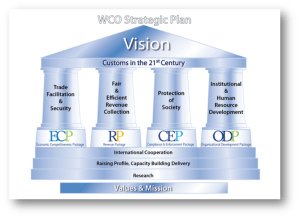
WCO Startegic PlanNational adoption of these remains the foremost critical step in establishing a country’s ability to ‘connect’ with the world. A national administration should seek inclusivity of its trading community lest its modernisation be regarded as self-serving. Simultaneously, regional economic communities also seek radical change, albeit on a regionalisation level. Pressures on national (sovereign) nations develop given high-level political commitment to regionalisation, often without taking into account their respective countries’ state of readiness. This creates a false sense of commitment which results in regional failures. Behind such regional initiatives are normally a host of sponsors, purportedly with the right experts and solutions to rectify the ‘barriers’ which prevent a national state from integrating with its neighbours and global partners. Sound familiar? If so, it wouldn’t do national representatives any harm to refresh themselves with the under mentioned WCO tools and validate this in relation to the direction which their organisation is headed. These form part of the WCO’s Customs’ in the 21st Century Agenda. It is also recommended reading for the various regional economic communities (RECs) – here I refer to the African continent – who are not always au fait or fully appraised on the ‘readiness’ landscape of the member states they represent.

The Economic Competitiveness Package (ECP) (Click the hyperlink for more information) is currently a matter of high priority at the World Customs Organization (WCO). Economic competitiveness starts with trade facilitation and Customs administrations undeniably play an important role in this respect. Indeed, facilitating trade is one of the WCO’s key objectives and the Organization has contributed, through its tools and instruments as well as through technical assistance, to increasing the economic competitiveness and growth of Members.

The Revenue Package (RP) (Click the hyperlink for more information) was developed by the World Customs Organization (WCO) in response to WCO Members’ concerns in regard to falling revenue returns in the light of the global financial crisis and declining duty rates.

Significant progress has been made since the adoption of the WCO Capacity Building Strategy in 2003. However, new and emerging key strategic drivers impact on international trade and the roles and responsibilities of Customs administrations. This requires that all our capacity building efforts remain responsive and needs-driven to ensure beneficiary Customs administrations can obtain the support they need to pursue their reform and modernization. This Organisational Development Package (ODP) (Click the hyperlink for more information) outlines the basic approach of the WCO towards organizational development. It provides a simple and accessible overview of the texts, tools and instruments that relate to this topic. It refers and offers access to these resources but does not purport to capture all knowledge and practices within this extensive area.

The Compliance and Enforcement Package (CEP) (Click the hyperlink for more information) has been developed in order to assist Members to address the high-risk areas for Customs enforcement. The Customs in the 21st Century Strategy calls on Customs administrations to implement modern working methods and techniques. In this context, Customs should be equipped with the necessary tools that allow it to effectively manage supply chain risks and enforce laws and regulations in cases of non-compliance. In discharging this mandate, the WCO, in close co-operation with Members, has created an extensive library of instruments, tools, guidance materials and operational co-ordination activities to support Customs compliance and enforcement actions. These tools new form part of the CEP.


Mastermind and KRA Feud Over Tobacco Imports

Cigarettes+XXX+smokingWhile many nations are mulling over health legislation to curb tobacco use, it would seem the Kenyan authorities have opted for a conventional ‘delay-and-stall’ approach. From a trade facilitation perspective it is a disaster, but no doubt the ‘health propeller heads’ will be happy.

The Star (Kenya) reports that Mastermind Tobacco Kenya has accused the Kenya Revenue Authority of detaining its vehicles bringing in unprocessed tobacco from the Democratic Republic of Congo at the Malaba border for the last one month.

MTK Malaba liaison officer Robert Kiru said three trucks for its processing plant in Nairobi had been detained at the border since August 30 (2013) with no explanation coming from KRA.

“KRA Malaba station manager Philip Chirchir has not given concrete reasons why the trucks are held and neither have we been invoiced for any payment. Our three other trucks are still parked at Malaba Uganda with storage charges now totalling Sh300,000,” Kiru said. Addressing journalists at Malaba border Kiru dismissed as false claims by KRA that no bond had been paid on the impounded trucks. He however failed to show copies of the bond to prove payment.

MTK Corporate Affairs manager Josh Kirimania said he had talked to KRA top officers in Nairobi and wondered why none of them has ordered their officers in Malaba to release the trucks. “KRA have no tangible reasons to hold our trucks in Malaba. This is killing our business since we rely on imports from DRC and Uganda to sustain our business,” he said. Kirimania said KRA was ‘blocking’ their trade by continuously detaining their trucks at the Malaba border and called for an end to the practice. Chirchir could not be reached for comment as he was said to be in a security meeting. Source: The Star (Kenya)