Port of Antwerp calls for global ‘port-ranking’ standards

Port of Antwerp [Picture -  Porttechnology.com]

Port of Antwerp [Picture – Porttechnology.com]

Port of Antwerp has issued its 2013 Annual Report which contains an interesting ranking of the largest ports worldwide.

According to the Port of Antwerp, throughput figures of different ports cannot be compared as ports do not use uniform definitions: some ports (most importantly Singapore) apparently use freight tons (metric tons or volume tons, whichever is higher).

According to Antwerp’s estimates, Singapore handles slightly more than 400m tons, instead of the 560m tons reported by the Maritime and Ports Authority of Singapore. However, their ‘correction factor’ may not be accurate.

Port of Antwerp’s definition of throughput is focused on ‘international throughput’. That is a debatable definition, as it leads to the exclusion of domestic traffic by seagoing vessels. For this reason, and partly because the Chinese ports apparently also include barge traffic in total volumes, the Chinese ports of Shanghai and Ningbo are substantially smaller in Antwerp’s figures than in their own statements.

So, surprisingly, the largest port of the world according to Antwerp’s annual report is Rotterdam! This goes to show that their effort is not intended as a marketing effort to favour Antwerp. If that was the case, they could have taken the port area to identify the largest port. This indicator puts Antwerp firmly on top as Europe’s largest port, with about 13,000 hectares, compared with Rotterdam’s more than 10,000 hectares. But clearly, the port area is an indicator of limited value, both due to differences in the definitions and for its limited relevance.

The Antwerp ranking does demonstrate the variety of definitions used in measuring port throughtput. For instance, in Europe ports throughput numbers do not fully match with Eurostat’s throughput data. This variety of definitions does not only apply to throughput, but also for other indicators such as modal split and employment in ports. That hampers international comparisons, benchmarking as well as academic research.

An authorative effort to create global standards would be good news for the port industry. Source: Porttechnology.com

EAC – Business Leaders demand shift to New Trade Rules

eabc-flagsThe East African Business Council, the umbrella body of the region’s private sector, has asked governments in the five-member East African Community (EAC) to expedite implementations of the new WTO trade facilitation agreement.

Council chairperson, Felix Mosha, made the appeal on Tuesday during a breakfast meeting with trade facilitation institutions and the business community in Arusha, Tanzania.

WTO members in December 2013 adopted the Agreement on Trade Facilitation during the Ninth Ministerial Conference in Bali, Indonesia after 10 years of negotiations. The Bali deal aims at boosting poor countries’ ability to trade and allow them more flexibility in food security. The agreed text is currently under review by legal experts and will come into force once two thirds of the 159-member World Trade Organisation accept it.

Trade and Industry minister, Francois Kanimba, told The New Times that implementation of the agreement cannot be done immediately because WTO is yet to give member countries the requisite legal implementation modalities.

“By July, we’ll have got it, so that the process can start,” Kanimba said. He added that Rwanda, after a recent self-assessment on how it stands on the implementation road map, realised most requirements had been attained.

Steps made in facilitating cross-border trade such as the ongoing EAC one-stop border posts, and the 2012 launch of the electronic single window system, were some of the steps taken by Rwanda.

Benefits

“Everything, by nature of trade facilitation is always good. The trade balance for Rwanda is negative and if the Bali agreement helps us improve, it will help us address our development challenges,” the minister said.

“Rwandan traders will also benefit as trade facilitation is about easing things for them. For example, improvements in communication will ease access to vital information they need in different member countries and this will enable many to conduct trade more efficiently.”

With the agreement, WTO members established a new legal framework that fills gaps in the existing General Agreement on Tariffs and Trade (GATT), in effect since in 1947. The new agreement stipulates obligations and provisions on special and differential treatment for developing and least developed country members as well as the provision of technical assistance and capacity building. Obligations include publication and access to trade related information, appeal procedures, simplification of trade procedures and goods clearance processes, agency cooperation, as well as cross-border customs cooperation.

Calling for the “swift” implementation the WTO Bali Agreement on Trade Facilitation, Mosaha said: “This will go a long way in lowering transaction costs, enhancing competitiveness of the businesses as well increasing intra EAC trade”.

Mosha said that while some progress had been made in ensuring free movement of goods, persons, labour, services and capital, challenges continued to constrain full realisation benefits from integration. Among them he cited 33 non-tariff barriers, non-recognition of the certificate of rules of origin, additional taxes and charges and lack of harmony in domestic tax regime such as excise duty, VAT and income taxes. Source: The New Times.

Heads of Customs Governing Council Meeting for the ESA Region

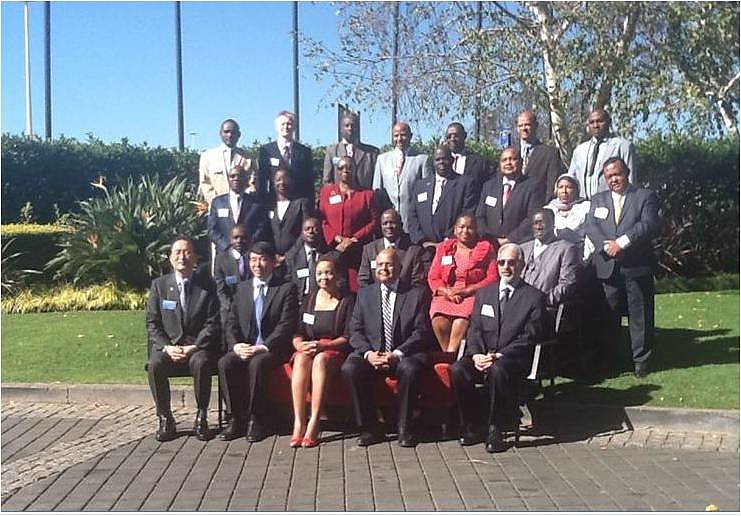
Heads of Customs Governing Council for the ESA Region with WCO Secretary General Kunio Mikuriya

Heads of Customs Governing Council for the ESA Region with WCO Secretary General Kunio Mikuriya

At the invitation of the Vice-Chair of the East and Southern Africa (ESA) Region, Mrs. Agnes Katsonga Phiri, Commissioner of Customs and Excise, Malawi, the Secretary General, Mr. Kunio Mikuriya attended the 19th Meeting of the Heads of Customs Governing Council ESA Region, on 15 and 16 May 2014. The meeting was hosted by the South African Revenue Service (SARS) in Johannesburg.

The Commissioner of SARS, Mr. Ivan Pillay welcomed delegates from the Members of the Region on the 20th Anniversary of democracy in South Africa, a period during which much had been achieved. He highlighted the importance of the WTO Agreement and its impact on Customs and the growth in African trade.

Addressing the Governing Council, the Minister of Finance, Mr. Pravin Gordhan emphasized the evolving role of Customs in a changing and challenging environment. The continued growth of economic activity in Africa required innovative Customs procedures to secure and facilitate trade, particularly in the context of regional integration. The WTO Agreement on Trade Facilitation (ATF) offered a golden opportunity as Customs would have a central role in its implementation. Customs must continue to enhance its operational capacity by increased automation, embracing other agencies and harmonization and simplification of procedures. The importance of Capacity Building was emphasized.

Secretary General Kunio Mikuriya gave a comprehensive report on recent WCO activities. He referred to the many developments on the WTO ATF agenda. The WCO had established a web tool dedicated to this topic, including an analysis of the ATF Articles and relevant WCO instruments with a self assessment aspect. Mr. Mikuriya recalled that the WCO theme for this year is “Communication” and asked all Members and agencies present to ensure that all were aware of each other’s activities.

Secretary General Mikuriya also met with the Minister of Finance, Mr Pravin Gordhan, to discuss a number of issues of mutual interest including implementation of the ATF, information exchange and the evolving role of Customs. The Governing Council discussed the way forward as regards ATF implementation, and expectations of trade input to WCO activities. Source: WCO

Angola – Freight Forwarder’s Role given a boost

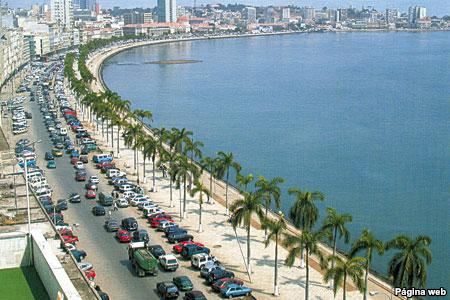
Avenida Marginal, Luanda, Angola

Avenida Marginal, Luanda, Angola

The current activity conducted by forwarding agents is not only limited to inter-mediating the foreign trade or deal with the clearance of goods at customs ports, said Tuesday the economist Osvaldo Luis da Silva.

Speaking to ANGOP on the role of forwarding agents in domestic economy, the economist spoke of the need for the agent to know the entire services chain of operators with whom they work. He stressed that the forwarding agents facilitate, through the service they provide, the relationship of importers and exporters with customs, tax offices, notaries, banks and other entities.

It is also their responsibility to observe and enforce the administrative requirements and law. On the other hand, said the expert, the forwarding agent is a guide or customs consultant for operators, who acts in the field of import and export and plays an important role in the economy.

He noted that these professionals have contributed to the increase in customs revenue and encourage the observance of customs procedures by operators engaged in import and export activity. Osvaldo Luis da Silva underlined that the Angolan Government updated the Customs Tariff to promote domestic production and sustainable economic development of the country.

The entry into force of this law does not cause any inconvenience to the work performed by the forwarding agents, he said. On the other hand, added the economist, the law has come at a good time and is satisfactorily facilitating their work. Source: Angola Press Agency

Related articles

Australian Border Force – Big changes ‘down under’!

Australian Border ForceThe Australian Government has announced changes to the immigration and border protection portfolio in relation to future border protection arrangements.

From 1 July 2015, the Department of Immigration and Border Protection and the Australian Customs and Border Protection Service will be consolidated into a single Department of Immigration and Border Protection. At this time, the Australian Border Force, a single frontline operational border agency, will be established within the department.

The Australian Border Force will draw together the operational border, investigations, compliance, detention and enforcement functions of the two existing agencies. Policy, regulatory and corporate functions will combine within the broader department.

The name, in itself, marks a distinct shift in world customs operation. Unless I’m mistaken, it’s the first customs and border authority called a ‘force’. The demise of traditional ‘Customs & Excise Departments’ in the wake of 9/11 appears set to continue as sovereign states seek new ways to combat cross-border crime. There is in reality no ‘bench mark’ nowadays. Developing countries tend to favour the revenue authority model (as dictated by their sponsors) – mainly due to the fact that customs revenue remains a critical component of their economies. Developed countries are migrating in ever-increasing number to border agencies with more focus on security issues.

For more information about the changes, read the Minister for Immigration and Border Protection’s speech announcing the new arrangements on 9 May 2014 and the Australian Border Force booklet.

Source: Australian Customs Service

More Border Patrol Gadgets – ‘R-Bat’ unmanned helicopter

Northrop Grumman and Yamaha Motor Corporation, USA, are teaming up to develop a small, unmanned autonomous helicopter system. The Rotary-Bat (R-Bat) is aimed at a range of applications in both urban and rural areas, including search and rescue, power line inspection, border patrol and forest fire observation.

Although Yamaha might be better known for outboard motors and ground-based transportation of the two-wheeled variety, it has been producing remotely-piloted unmanned helicopters for over 25 years. Its RMAX unmanned helicopters have been dusting Japanese crops for over 20 years and have recently been studied for potential use in US agriculture.

It is Yamaha’s RMAX platform that the R-Bat helicopter will be based upon, while Northrop Grumman will supply the aircraft’s autonomous control systems and sensors. Its name signals that it will join the ranks of Northrop Grumman’s existing line of Bat unmanned aircraft systems (UAS) that are used for tactical intelligence, surveillance and reconnaissance applications.

Neither company has released technical details of the R-Bat, but being based on the RMAX it should follow that vehicle’s measurements of 2,750 mm (9 ft) long (3,630 mm (11.9 ft) with the rotor), 730 mm (2.4 ft) wide and 1,080 mm (3.5 ft) high.

A test flight of the R-Bat unmanned helicopter system can be seen in the following video. Source: Northrop Grumman

Export Tax in the South African Context

made_in_south_africa___barcode_and_flag_by_netsrotj-d5cmbq9Export taxes are increasingly becoming a focus of attention in South African trade policy, and the objective of this paper is to review the trade and economic issues associated with these taxes. While they are similar to import tariffs in their effects, export taxes remain very much the ‘poor cousins’ of import tariffs in trade policy circles. While attention is paid to them in many bilateral and regional agreements, the multilateral World Trade Organisation (WTO) has little to say about them other than an awakening to their importance when it comes to negotiating a new member’s accession to the world body.

South Africa currently levies an export tax on unpolished diamonds in an attempt to develop local skills and promote the domestic industry, and it is considering a recent department of trade and industry report that recommends that consideration be given to an export tax on iron ore and steel. South Africa has some of the prerequisite market power in the global iron ore trade but not enough to ensure an outcome entirely beneficial to its export trade. The salutary example of South Africa’s competitor India is discussed, as India recently increased its export tax in this sector to 30% and has seen its global market shares plummet. The more interesting sector for South Africa is the ferrochrome and ferrochrome ore trade, as here South Africa does have significant market shares. South Africa has had about a 45% market share over the last three years in global exports, while China has imported around 70% to 85% of this global trade in recent years. Advocates argue that a tax on chromite ore exports will shift the relative economics back to empower South African producers of processed ferrochrome. This sets the stage for an interesting battle between South Africa and China, and one set against the background of South Africa’s recent admission to the BRICS club. If such an export tax is invoked, South Africa needs to be conscious that it at best provides a window of opportunity for the domestic sector to improve its technological efficiency and that it is not a long or even medium-term solution.

For an in-depth appraisal on export tax in South Africa, please read Ron Sandrey’s report “Export tax in the South African context

Source: Tralac & Author -Ron Sandrey

WCO Releases Online WTO/ATF Implementation Guideline

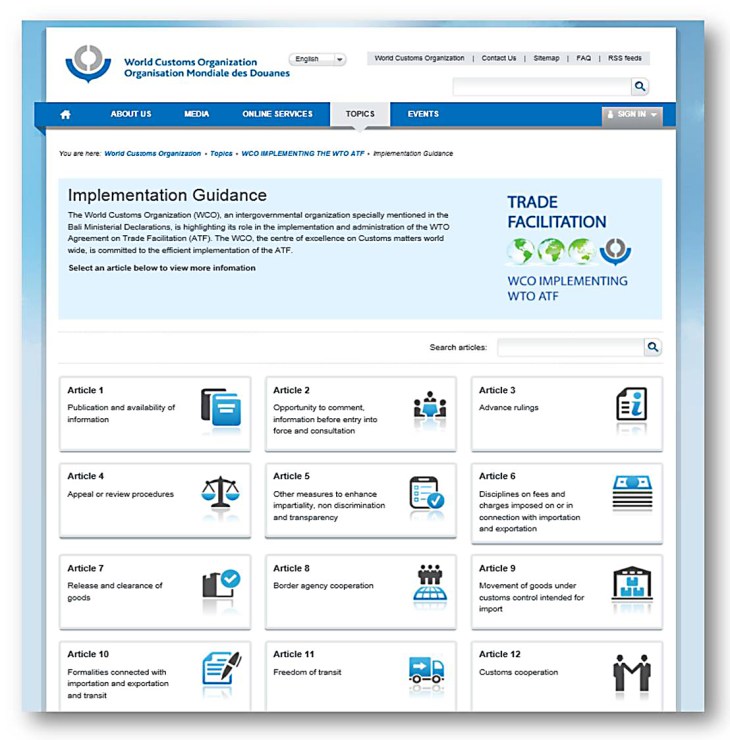
WCO Trade Facilitation Implementation Guidance 1The World Customs Organization (WCO) has launched on its website the WCO Implementation Guidance for the World Trade Organization (WTO) Agreement on Trade Facilitation (ATF) to support WCO Members in their efforts to implement the ATF.

The Guidance presents the importance of WCO instruments and tools such as the Revised Kyoto Convention for ATF implementation.

The Guidance contains the following categories of information for each ATF Article:

  • Overview
  • Text of ATF
  • Relevant RKC standards and RKC Guidelines
  • Other relevant WCO tools
  • Member practices
  • Performance indicators

The Guidance will be updated on a regular basis and a French version will be released shortly.

Source: WCO

State-of-Art Port Control Centre opens in Cape Town

Inter-Departmental CooperationSouth Africa’s first maritime port of entry control centre represents a milestone in the country’s journey to secure, modernise and control its borders, Finance Minister Pravin Gordhan said at the opening of the centre at Cowrie Port in Cape Town harbour last week on Friday.

The centre puts all the government departments and agencies involved in immigration and border control under one roof. These include the departments of home affairs, health, agriculture and fisheries, the SA Police Service (border police and crime intelligence), and the SA Revenue Service (Customs). The state-of-the-art centre would not only improve security and immigration issues, but would also serve to enhance trade and South Africa’s status as a logistical gateway to Africa, Gordhan said.

Trade

The rationale behind the centre was in line with the National Development Plan, the minister said. Among other things, the NDP aims to stimulate growth by lowering the cost of doing business in South Africa, improving the country’s competitiveness and exports, and linking local products with other emerging markets. Gordhan said the fast-growing markets of Africa represented important new markets, and the NDP was committed to increasing South Africa’s trade with its regional neighbours from 15% to 30%.

‘Complex borders’

Home Affairs Minister Naledi Pandor, also speaking at Friday’s opening, said the centre had been designed “to accommodate in one spot not only customs, excise and immigration, but also health, safety and intelligence.

“Ports are complex borders to manage. Cowrie Place will provide the space and facilities to manage passengers and cargoes more efficiently than before.” Pandor said the government hoped to establish a border management agency by the end of 2016, taking advantage of the lessons learnt from Cowrie Place. A flagship feature of Cowrie Place is the co-ordination monitoring centre, where the data and information will be fed, assimilated and made available to all government department and agencies involved in the maritime border management.

“For the bona fide tourist or member of the trade community, this will mean better service,” Gordhan said. “For those who intend to challenge the laws of our country, be warned, as we intend to raise the bar of compliance by an order of magnitude.”

Important port

Cape Town’s port is oldest in South Africa, but despite changes to its maritime culture brought by air travel and containerisation, it is still an important point of entry. The port processes more than 870 000 containers as well as nearly 730 000 tons of dry bulk per annum, Pandor said.

A total of 6 173 commercial vessels and 55 passenger vessels entered and/or left the port in 2013, while more than 62 000 people entered and/or departed from Cape Town harbour. Pandor said E-berth at the harbour would be developed into a fully fledged passenger liner terminal to complement Cowrie Place.

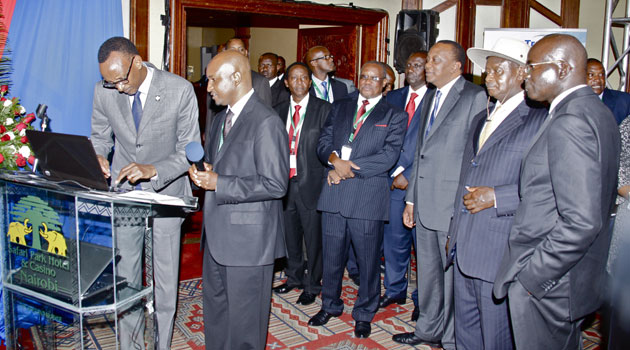
Faster EAC Cargo Movement as Kenya Launches New Single Window System

PAUL-KAGAME-WINDOW-SYSTEMPresident Paul Kagame yesterday launched Kenya National Electronic Single Window System seen as a major boost for regional trade since it will simplify clearance processes of goods.

The launch was part of the activities of the 5th Northern Corridor Integration Projects Summit held in Nairobi, and was attended by Presidents Kagame, Uhuru Kenyatta of Kenya and Yoweri Kaguta of Uganda, as well as the second vice president of Burundi and Tanzania’s prime minister.

Rwanda, Uganda and Kenya – which heavily rely on the Kenyan port of Mombasa – are spearheading a series of joint projects aimed at fast tracking regional development through joint infrastructure, trade and political and economic integration.

The use of Electronic Single Window System is expected to centralise trade services such as tracking of goods, custom clearance, and electronic payment including through mobile money.

The system will also integrate with Kenya Revenue Authority, making the clearance at Kenyan ports a lot faster and easier.

“I just want to reiterate how this is one of many important projects that the East African Community partner states have undertaken to deepen integration that we have been seeking, make business more efficient, and lower the cost of doing business as we move forward,” Kagame said at the launch.

Making tech tick

He reiterated Rwanda’s “continued active participation towards making integration a reality.” President Kenyatta and his deputy William Ruto described the Single Window System as yet another building bloc in the EAC integration process.

“Our ultimate vision should be to implement an EAC Regional Single Window platform. The benefits from this initiative may not be fully realised unless all of us in the region adopt National Single Window Systems.

“Our brothers in Rwanda are already implementing a Single Window System and similar efforts are underway in Tanzania and Uganda,” Kenyatta said.

The Kenyan leader said the technology will make it possible for traders to submit information about their goods to multiple government agencies in multiple locations, making business faster and more efficient.

After the launch of the Kenya National Electronic Single Window System, also known as Kenya TradeNet, the Heads of State and Government discussed the progress of several other projects under the Northern Corridor initiative. Source: AllAfrica.com

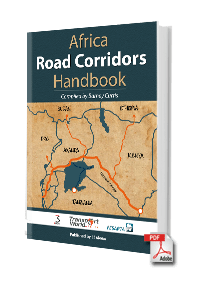
New Publication – Africa Corridors Handbook

Africa_Road_Corridors_HandbookAs countries across Africa gear themselves towards growing and stimulating inter-regional trade, the transport corridors being developed across the continent are important passageways for the movement of freight.

Though the growth and development of rail across Africa is in the pipeline over 80 percent of all freight being transported is on road.

Transporting goods on trucks is an expensive business. Africa can be challenging at the best of times due to non-tariff barriers even though governments across the continent are trying to make it easier for the flow of goods from one country to another.

The logistics of transporting freight can be a harrowing and expensive exercise.Especially if a transport manager is not armed with key and pertinent information – regarding the route, border posts, costs, relevant documentation required at borders, waiting times at the border posts, location of wellness centres,road conditions and where the tolls and weighbridges are situated.

3S Media in association with FESARTA have released the Africa Corridors Handbook which gives transport and logistics managers all the key information they need before drivers embark on a journey.

Having the correct information on hand is critical for every transport operator that is moving freight across Africa and now it is available in one concise handbook. Click the following hyperlink to purchase the book.

Implementing the WTO Agreement on Trade Facilitation

WTO Agreement on Trade Facilitation

Click on the image to download the Infogram

It is anticipated that most Customs and Border Authorities have at least one common item on their national capacity building agenda’s for 2014 – the Agreement on Trade Facilitation. Many countries, being members of the WCO, would have already acceded to a level of commitment to the Revised Kyoto Convention (RKC). This requires of them to introduce, at an agreed time, the principles of WCO standards and policies according to the level of their sovereign commitment.

The General Annex to the RKC is the bare minimum a country would be expected to implement in order to for it to be considered compliant with the RKC. From a trade perspective, this also indicates the extent to which your country’s leaders have committed itself towards ‘global integration’.

What the recent Trade Facilitation Agreement (ATF) in Bali does is bind member states to a compendium of requirements necessary for the enactment of certain conditions and obligations as set out in the various articles contained in the agreement. Countries should also note that certain of the ATF provisions include items under the Specific Annexes to the RKC. For a quick reference to see how the RKC and other WCO standards and conventions stack up to the ATF, refer to the WTO Trade Facilitation Toolkit by clicking the hyperlink.

In addition to this, the ATF also makes provision for ‘special and differential treatment’ in regard to developing and least developed countries (Refer to Section II to the WTO ATF).

In essence this allows those countries and opportunity of identifying their (capacity building) needs and setting themselves realistic targets for implementation and compliance to the ATF. To this end 3 Categories are identified for national states to consider in the event they are not at present in a position to accede to some or all of the ATF conditions.

The WCO has also prepared various tools which aim at assisting its members in assessing their national position in regard to the ATF. Members are likewise encouraged to regularly visit the WCO website for updates in this regard.

The following working papers are available from the WCO website and, for ease of access, are listed below together with their hyperlink to the WCO site –

Other related Trade Facilitation documentation can be found at the following link – WTO Trade Facilitation Negotiations

Text of the WTO Free Trade Agreement

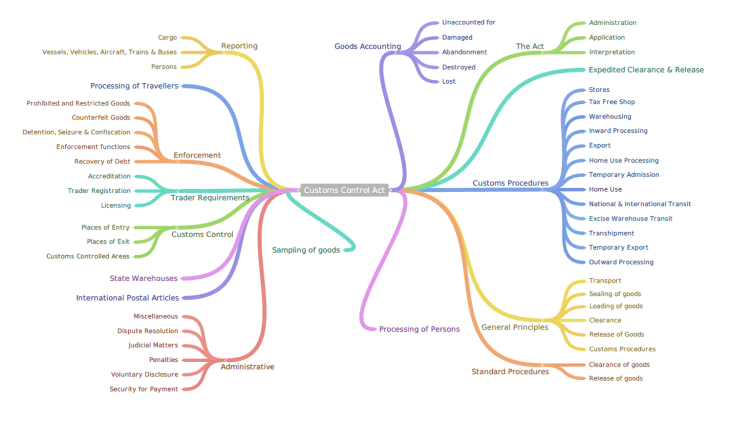
Getting to Grips with the Future Customs Control Act

Having recently introduced a whole new integrated customs business solution last year the South African Revenue Service (SARS) has spent the last six months stabilising its system. At the heart of the system is the Interfront Customs and Border management (iCBS) engine which takes care of all customs declaration processing.

CCB

Click on the image to download the Infogram

A new ‘state-of-the-art’ EDI Gateway infrastructure is at an advanced stage of development and configuration, and will be subjected to a series of rigorous testing both internally and with industry service providers over the next few weeks. The gateway is an important component of the organisation’s future aspirations in C-2-C, C-2-B and C-2-G information exchange with it’s stakeholders.

Over the last 2 years, SARS has been a key participant in the WCO’s Globally Networked Customs (GNC) initiative which seeks to develop standardised electronic information exchanges of commercial customs data and common border procedures between customs administrations. This is ‘greenfield development’ and requires innovative thinking between potential customs partners. In this specific area SARS has engaged both Mozambique and Swaziland Customs as willing partners in such an initiative. Developments with Mozambique are at an advanced stage and will shortly become a reality with the conclusion of the bilateral One Stop Border Post (OSBP) agreement that includes provision for electronic data exchange between the two administrations. More on this in a future post.

Technology aside, perhaps the most daunting task on the horizon is the introduction of the new Customs Duty and Control Acts which are currently in the parliamentary process. Much publicity and robust argument was aired in the printed media over the last year, all of which culminated in the parliamentary hearings overseen by parliament’s Standing Committee on Finance (SCoF) during November and December 2013. While an agreement was reached with the freight forwarding sector of the local supply chain and logistics industry on certain aspects of the Control Bill, there still lies much work and clarification to be addressed in these and other areas.

Notwithstanding the signing into law of the Customs Bills, operational enactment thereof can only occur once the ‘rules’ to execute this legislation are circulated for comment, finalised and gazetted. Even considering the legal and approvals process in a simplistic form, the implementation of this new legislation is just too complex to introduce in a once-off, big-bang approach.  Due consideration must be given to a transitional approach taking into account the practicalities thereof as well as economic and logistical consequences of such approach.   It is no understatement that the impact of the new legislation, its incorporation into current automated systems, policies and procedures as well as the necessary re-adjustments to be made by every entity engaged in business with SARS Customs is no small feat.

Furthermore, the implications of the recently concluded WTO Agreement on Trade Facilitation for South African Customs and Trade also needs to be determined and understood. While a large proportion of its content is encapsulated within the Revised Kyoto Convention, it is the first time ever that such requirements are subject to the conditions of a trade agreement.

It’s been some time since I last penned thoughts on the Customs Modernisation initiative. In retrospect and thinking ahead, the underlying bottom line to its longer term success lies in increased ‘communication’ with stakeholders – ironically, the World Customs Organisation’s adopted theme for 2014!

Please feel free to download the infogram on the future Customs Control Act by clicking on the picture above. Official links to the Customs Control and Duty Bills are included below. It would also be wise for parties involved in Excise to consider the contemplated changes contained in the Excise Duty Bill (Customs and Excise Amendment Bill).

Related documents

WCO and UAE Customs launch IPM Mobile

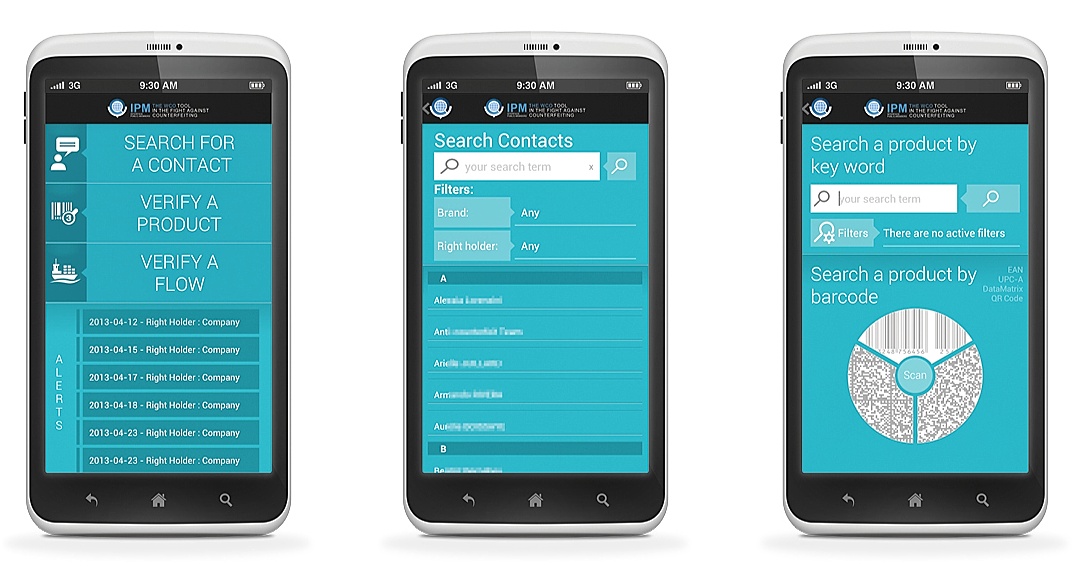
IPM interface GSMaThe World Customs Organization (WCO), in cooperation with the Federal Customs Authority of the United Arab Emirates (FCA), has officially launched the ‘IPM Mobile’ application, enabling Customs officers equipped with a mobile device to access IPM immediately when faced with a suspicious product.

Launched in 2010, the WCO’s online anti-counterfeiting tool IPM provides a communication hub between Customs officers on the ground and the private sector by allowing them to exchange crucial information in real-time in order to intercept counterfeit goods.

With the launch of the mobile application, field Customs officers can now access IPM via their mobile devices and retrieve all relevant information contained in the database. Several new features have been added to the mobile version such as the possibility to send or receive alerts regarding possible shipment of counterfeit goods, and, when faced with suspicious merchandise, Customs officers can contact right holders immediately and upload photos of the products in question.

This new version also allows using mobile devices to scan industry standard GS1 barcodes found on millions of products, enabling to search the products database more quickly. The unique product identifier embedded in the GS1 bar code facilitates access to multiple databases providing trusted sources of product information.

Scanning the barcodes enables automatic connection to any authentication services linked to the product controlled. This new feature is known as IPM Connected – a global network of security features providers (SFP) interfaced with IPM.

In cooperation with the FCA and the private sector, the WCO unveiled the IPM Mobile programme during a two-day workshop held in Dubai on 16-17 April. During this workshop, Customs officers tested the tool on a number of counterfeit and genuine products and were trained to make informed decision with the information contained in the IPM database.

Faced with the growing trade in counterfeit goods, the WCO and its Members are determined to develop the most efficient tools to fight this menace. Safeguarding the health and safety of consumers across the globe is one of the WCO’s priorities, and IPM’s mobile version is a significant step forward” said WCO Secretary General, Kunio Mikuriya.

Secretary General Mikuriya added, “Working with the UAE on this pilot phase was an obvious choice given our previous successful cooperation to launch the PC version back in April 2012. The WCO appreciates the UAE’s ongoing efforts to tackle the illicit trade of counterfeit and pirated goods.”

The UAE is the first country to use the IPM Mobile application and will contribute to developing the tool before the official worldwide launch in June 2014 during the WCO’s General Council Meeting.

“The UAE is keen to support plans for facilitating trade and fighting counterfeit according to the established principles of the federation state including the protection of IPRs and fighting piracy and counterfeiting as they have serious economic and social impacts that may jeopardize the security of the society, consumer and producer altogether” said Khalid Al Bustani, Acting Director General of the Federal Customs Authority.

“The application is launched as a part of fulfilling the requirements of the smart government initiative announced last year by His Highness Sheikh Mohammed bin Rashid Al Maktoum by providing governmental services on mobiles”, continued Al Bustani. Source: WCO

Related articles

19,000 TEU boxships – thats the capacity for now say Ship Owners

According to observers, some of the ships that appear in the table above (Alphaliner) with a flow rate of 19 official thousand TEUs could  in fact could also load a thousand more. [http://www.lagazzettamarittima.it/]

According to observers, some of the ships that appear in the table above (Alphaliner) with a flow rate of 19 official thousand TEUs could in fact could also load a thousand more. [http://www.lagazzettamarittima.it/]

Containership capacity growth appears to have reached a plateau for now, with no owners or operators looking to go beyond 19,000 teu. Nevertheless, technical experts expect larger containerships to eventually enter service, once infrastructure constraints have been overcome.

At the moment, though, the biggest ships in the pipeline are for China Shipping, with CSCL Globe due for delivery in November reported to have a nominal capacity of 19,000 teu. United Arab Shipping Co has 18,800 teu vessels on order; Mediterranean Shipping Co will soon be receiving 18,400 teu ships, while Maersk’s Triple-Es have a nominal intake of 18,270 teu. CMA CGM has recently upgraded ships on order, which will now be around 17,800 teu. What they all have in common is their length, just under 400 m, which is regarded as the practical maximum for now, according to Marcus Ihms, containership expert at classification society DNV GL.

Beam is another potential limiting factor, with cranes needed to handle broader ships, and the greater rolling forces of a very wide vessel making it inadvisable to load cargo on deck. Where designers can obtain additional capacity within those limitations is through the siting of the engine room or accommodation block. Moving the engine room, for example, can create as much as 250 teu of extra cargo space.

What is clear, he told the Containerisation International-Lloyd’s List Global Liner Shipping conference in Hamburg, are the economies of scale of the larger ships that are now being delivered. The slot costs of, say, a 21,000 teu ship, are as much as 10% lower than for a 14,000 teu vessel.

An 18,000 teu ship would still have cheaper slot costs than a 14,000 teu vessel even at 90% rather than 100% utilisation. Although ship designers have been talking about vessels of up to 24,000 teu, Mr Ihms told delegates that no carriers were thought to be looking beyond 19,000 teu right now.

However, ships of more than 400 m have been built in the past, most notably the 564,650 dwt ultra large crude carrier Jahre Viking, which was 458 m long. ER Schiffahrt chief executive Hermann Klein told Containerisation International that he expected ship sizes to continue growing, albeit not as rapidly as in recent years Dr Klein, the former head of Germanischer Lloyd and one of the first in the world to predict the arrival of 18,000 teu ships, anticipates that containerships will eventually exceed 400 m in length and so go beyond 19,000 teu. “There is no technical limitation,” he said.

But first, the ports need to be ready to handle the next generation of containerships. That will require larger cranes, dredging, higher bridges in some cases, and other infrastructure investments. Source: Lloydsloadinglist.com