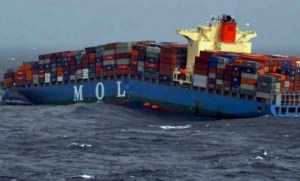
 The responsibility for verifying the gross weight of loaded containers under next year’s new box-weighing rules will in many cases rest with freight forwarders, logistics operators or NVOCCs, according to freight transport insurance specialist TT Club.
Welcoming the initiative of the World Shipping Council (WSC) in its recent publication of guidelines to the industry in relation to implementing the SOLAS requirements that become mandatory on 1 July 2016, TT Club noted that unlike the CTU Code, which forensically seeks to identify the chain of responsibility for everyone involved in the movement of freight, the amendment to the Safety of Life at Sea Convention (SOLAS) mandating the verification of gross mass of container overtly only names the ‘shipper’, the ‘master’ and the ‘terminal representative’, and – by implication – the competent authorities.
TT Club said the complex nature of logistics means that the term ‘shipper’ may encompass a range of people involved in the contracting, packing and transporting of cargo. However, as stated in the WSC guidance, it said the key commercial relationship in question is with the person whose name is placed on the ocean carrier’s bill of lading.
“Thus, in many cases, the responsibility for actual ‘verified’ declaration will rest with a freight forwarder, logistics operator or NVOC. This means that often reliance will have to be placed on others to have adequate certified methods to provide verified gross mass – particularly for consolidation business,” TT Club said.
It noted that of course many suppliers of homogenous shipments will already have advanced systems, which merely require some form of national certification, adding: “Apart from having a sustainable method by which the gross mass is verified, the shipper also needs to communicate it (‘signed’ meaning that there is an accountable person) in advance of the vessel’s stow plan being prepared.
“The information will be sent by the shipper to the carrier, but with joint service arrangements there may be a number of carriers involved, with one taking responsibility to consolidate the manifest information, in addition to communication with the terminal.”
It said the ‘master’ comprises a number of functions within the carrier’s organisation.
“Implicit in the SOLAS amendment is that the carrier sets in place processes that ensure that verified gross mass is available and used in planning the ship stow,” TT Club said. “Arguably, each carrier will need to amend systems and processes to capture ‘verified’ information.
“However, the simplest might be to amend the booking process, so that the gross mass information is left blank in the system until ‘verified’ data are available. This will be effective if it is clearly understood by all partner lines and terminals with whom the line communicates.”
TT Club said the explicit obligation of the master was simply that he shall not load a container for which a verified gross mass is not available. “This does not mean that one with a verified gross mass is guaranteed to be loaded, since that would derogate from the traditional rights of a master,” the insurance specialist added.
Recognising the pivotal nature of the port interface, it noted that the ‘terminal representative’ has been drawn into the new regulation as a key recipient of information for ship stow planning “and, critically, in a joint and several responsibility not to load on board a ship if a verified gross mass is not available”.
It added: “There has been considerable debate as to whether terminals need to position themselves to be able to weigh containers, not least because of the cost of creating appropriate infrastructure, and amending systems and procedures, with uncertain return on investment. In addition there are commonly incidences of containers packed at the port, in which case the terminal activities could include assisting the shipper in producing the verified gross mass.
“The SOLAS amendment places responsibility on national administrations to implement appropriate standards for calibration and ways of certifying. The overtly named parties rely on this to work smoothly and, preferably, consistently on a global basis.”
TT Club said clarity of such processes needed to be matched by consistency in enforcement. “Talk of ‘tolerances’ is disingenuous,” it said. “SOLAS calls for accuracy. Everyone appreciates that some cargo and packing material may be hygroscopic, thereby potentially increasing mass during the journey, but that need not mask fraudulent activity, nor entice over-zealous enforcement.”
It said the UK Marine Guidance Note may be instructive here, stating that enforcement action will only be volunteered where the difference between documented and actual weight exceeds a threshold. TT Club concluded: “It is suggested that key measures of success of the revised SOLAS regulation will include not only safety of containerised movements, but also free movement of boxes through all modes of surface transport, and a shift in behaviour and culture throughout the unit load industry.”
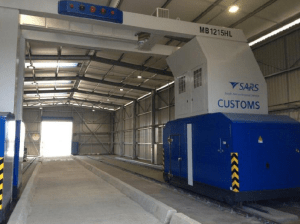 The following article suggests the need for greater consultation and collaboration between all supply chain parties. While the associated costs relating to supply chain movements is not the purview of SARS, these should be considered as part of the overall impact assessment in the lead up to such an implementation. For all intents and purposes this is an unintended consequence. Stakeholders should also note that the SA government has not imposed any fee for the scanning of cargoes to re-coup costs. Non-intrusive inspection (NII) capability is a tenet of international customs control intended to mitigate security threats and incidents of cargo misdeclaration, even legitimate cargo that can be used to mask harmful products stowed in vehicles/containers. The issue of increased cost of compliance has unfortunately been a trait of many international customs developments ever since the advent of ‘heightened security’ – post 9/11 and seems destined to remain a ‘challenge’ as we supposedly move into an era of increased trade facilitation.Joint collaboration between all parties not only assists in better understanding of the broader supply chain landscape but can also contribute to positive measures on the ‘ease of doing business’.
 Global pharmaceutical companies paid tax of just $85 million in Australia on revenues of more than $8 billion, including $3.5bn from taxpayer-subsidised drugs, Labor senator Sam Dastyari says.
 Zimbabwe’s manufacturing firms want government to consider banning the import of second-hand clothes as part of reforms to protect the local industry, Parliament heard on Tuesday.
 The Indian Customs department and international airlines have locked horns over providing confidential data of passengers to the former.
 U.S. Customs and Border Protection (CBP) published a
 ![Port of Singapore [Picture credit - singaporevisablog.wordpress.com]](https://mpoverello.com/wp-content/uploads/2015/06/port-of-singapore-picture-credit-singaporevisablog-wordpress-com.jpg?w=300&h=201)

![[Picture Credit: John Moore - Getty Images]](https://mpoverello.com/wp-content/uploads/2015/06/zim-rsa-border-john-moore-getty-images.jpg?w=300&h=187)


 A gruelling four months of training came to an end during May 2015 as 33 Customs officers and their detector dogs graduated from the SARS Detector Dog Training Academy. A graduation ceremony was held in Pretoria. It was the culmination of a training course where officers were, together with their canine charges, were trained in the finer aspects of the detection of illegal substances and goods in vehicles, vessels, aircraft, containers, cargo, mail, rail, luggage and buildings.
 What Happened to the Portcullis?
You must be logged in to post a comment.