Transnet Seeks Private Sector Participation for new Inland Terminal

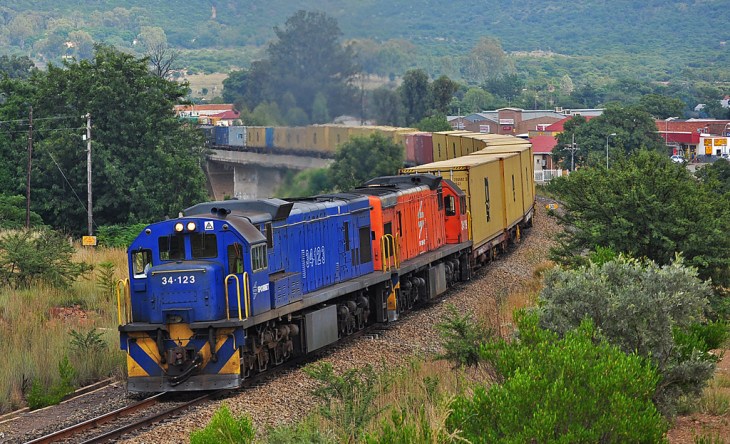
Tambo SpringsSouth Africa’s freight and logistics company Transnet this week launched its massive drive to bring private sector operators into the country’s freight system.

The company has issued a request for proposals inviting suitably qualified global logistics service providers to design, build, operate, maintain and eventually hand over its proposed inland container terminal in Tambo Springs, East of Johannesburg – a 630ha site located on land originally known as Tamboekiesfontein farm.

The concession will be over a 20-year period and will be Transnet’s biggest private sector participation project to date.

The proposed terminal is in line with Transnet’s drive to migrate rail friendly cargo off the country’s road network.

The terminal is expected to be in operation by 2019 and will have an initial capacity of 144 000 TEUs per annum, with an option to ramp it up to 560 000 TEUs, depending on demand.

The project entails the following:

  • Arrival and departure yard for handling cargo trains
  • Terminal infrastructure;
  • Terminal equipment;
  • Stacking area;
  • Warehousing space
  • Distribution centre
  • Inland Reefer facilities

Transnet Freight Rail will be responsible for the operation of the arrival and departure yard required to service the terminal.

The operator will be responsible for loading and offloading of containers and marketing of the facility. The winning bidder is expected to introduce new entrants – particularly black players – must have demonstrated technical expertise, a minimum of level 4 BBBEE status with a commitment to reach level 2 by the third year of operation.

Transnet currently operates 5 inland terminals in Gauteng, including the City Deep Container Terminal in Johannesburg, Africa’s largest inland port.

The proposed terminal is an integral part of the Presidential Infrastructure Co-ordinating Committee’s SIP 2, aimed at unlocking the country’s industrial development while boosting export capability. It is designed to complement Transnet’s container-handling capacity in the province.

This is the culmination of years of hard work and a demonstration of cooperative governance between Transnet, representing the national competence, and both the Gauteng Provincial Government and the Ekurhuleni Municipality.

The Tambo Springs terminal is one of three mega terminals that Transnet is planning to build in Gauteng over the next 20 years. It will be located in Ekurhuleni along the N3, just off the Natal Corridor.

The project is expected to create 50 000 jobs, and has stringent requirements for supplier development and skills transfer. Source: Transnet
SAMSA Guidelines on the implementation of SOLAS VI Regulation 2 Amendment: Verification of the Gross Mass of Packed Containers

SAMSA logoThe following amended marine notice – click here, issued by the South African Maritime Safety Authority (SAMSA), provides guidance for the implementation of SOLAS Chapter VI Regulation 2 regarding the Verification of the Gross Mass of packed containers. It outlines the Republic of South Africa’s guidelines for the implementation of the mandatory amendments to the International Convention for the Safety of Life at Sea (SOLAS) Chapter VI, Part A, Regulation 2. The SOLAS requirements regarding the Verification of the Gross Mass of packed containers carrying cargo (SOLAS regulation VI/2) will enter into force in July 2016. Amendments to this marine notice include:

  • The implementation of an enforcement tolerance.
  • Containers that are loaded on a ship before 1 July 2016 and are transhipped on or after 1 July 2016.

Source: SA Maritime Safety Authority (SAMSA)

Transnet Freight Rail to provide VGM Service for customers

Transnet Freight RailAs from 1 July 2016, Transnet Freight Rail (TFR), as a transporter, must obtain proof of sea export container weights for rail to a Transnet Port Terminals (TPT) port facility. TPT has already engaged with all its shipping line customers and all respective bodies. Customers working on average mass will not be allowed to do so as from 1 July 2016 and must provide verified proof of the mass loaded into a container.
After reviewing the requirements of SOLAS, TFR has come to the conclusion that it is able to offer the service to provide the Verified Gross Mass (VGM) for Method 1 to customers who make use of Transnet rail services for export containers railed from TFR terminals equipped with weighbridges – click here to read TFR’s requirements for VGM.

The following links provide examples of the documentation and declaration which must be made available to TFR either as part of the documentation or as a separate attachment –

Source: Transnet Freight Rail

New WCO Study Report on Customs Brokers

WCO Study Report on Customs BrokersThe WCO has just published a newly developed Study Report on Customs Brokers. The Study Report provides a general background and overview of Customs Brokers’ role in the international supply chain together with some suggested policy and organisational considerations on Customs Brokers regime and a model checklist for licensing/regulating brokers.
Additionally, the Report provides a range of cooperation opportunities between Customs and Brokers including the joint capacity building.

Customs administrations, Brokers, and Brokers Associations are encouraged to make maximum use of the Study Report as a reference/guideline, where needed, in establishing and/or maintaining/adjusting Brokers regime, keeping in view their national circumstances and specificities.

The Study Report on Customs Brokers is available via the following link: Click here

Source: WCO

3D-printed fake seals being used to mask cargo thefts

Cargo thieves have used 3D printers to make fake security seals to hide when a shipment has been compromised.

In some cases the cloned seals are so ingenious they even match the identification numbers on the original, according to third-party logistics organisation SpedLogSwiss, which reports an incident in which the scam was used in the theft of a pharmaceutical shipment.

In 3D printing, three-dimensional work pieces are built up in layers on relatively cheap devices. This construction is done by computer control of one or more liquid or solid materials. Typical materials are synthetic resins, plastics, ceramics and metals. This new technology opens up new possibilities in the manufacture of products. The advantages of this technology have now been discovered by organized crime.

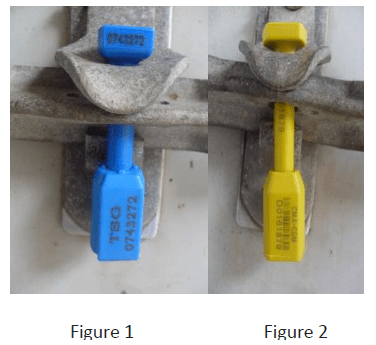
A victim of seal counterfeiting has provided the following images to raise the awareness of other freight forwarders and shippers. In the below incident, a shipment of pharmaceutical goods loaded in a container was sealed with an intact shipper seal (Figure 1) and a seal from the shipping transport company was also applied to the container (Figure 2):


Security seals

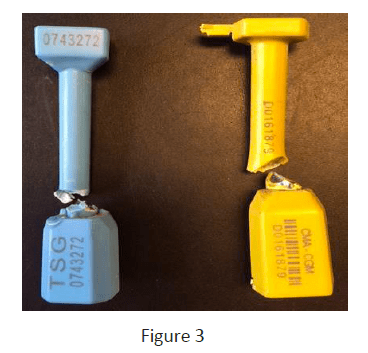
Upon arrival of the container at the end customer dock, the seals were removed and the container opened. It was then found that most of the load had been stolen in transit. The original seals had been removed during transport, the goods were removed, and the container was resealed with new, but fake seals. (Figure 3)

Security seals1

“The advantages of this technology have already been discovered by the organized crime,” says SpedLogSwiss, which notes that some 3D printers can prepare the fake seals in as little as 10 minutes.

The organization has issued a circular describing the incident in order to raise awareness of the issue.

According to freight security specialist Freightwatch International, there were just over 500 thefts in the Europe, Middle East and Africa (EMEA) in the second quarter of 2015.

Belgium, Germany, the Netherlands, France, the UK, Austria, South Africa, Spain and Russia topped the list of countries affected, with electronics, clothing and accessories, food and drink the most stolen product categories. Source: www.securingindustry.com

Futuristic plan for Sea Ports – a Hyperloop System

Forbes.com hyperloop diagram

Picture courtesy Forbes.com

Hyperloop One, a Los Angeles company working to develop the futuristic transportation technology, has announced the closing of $80 million in financing and said it plans to conduct a full system test before the end of the year.

A Hyperloop would whisk passengers and cargo in pods through a low pressure tube at speeds of up to 750 miles per hour (1,207 km per hour). It has been likened to a mix between the Concorde plane, a rail gun and an air-hockey table.

Early applications could center around ports – possibly replacing the trucks and trains that carry cargo from ships to factories and stores. Some anticipate that it could start operation in Los Angeles, close to some of the biggest port in the U.S.

Hyperloop One builds off a design by Tesla and SpaceX CEO Elon Musk, who has suggested it would be cheaper, faster and more efficient than high speed rail projects, including the one currently being built in California.

A test of the Hyperloop One system was conducted on Wednesday when a car-sized sled powered by electromagnets rocketed to more than 100 miles (160 kph) an hour through the Nevada desert.The sled began on a train track and then was rocketed to 105 miles per hour by electromagnets as electricity was shot into copper coils. After a short ride, the sled ran into a sand trap, sending out silicon sprays. If all goes according to plan, sleds will levitate and carry pods in a test later this year. Gigantic tubes already are scattered around the Las Vegas area test site.

Maglev technology would levitate the pods to reduce friction in the system, which would be fully autonomous and electric powered. Magnetic fields in the tunnel will lift the pod before a “thrust force” is applied, which will then accelerate it to speeds of up to 1230km/h. When the same force is applied for breaking the pod, the system’s battery is recharged through regenerative braking.

Using such a passive levitation system would eliminate the need for power stations along the Hyperloop track, and if any type of power failure occurs, Hyperloop pods would continue to levitate and only after reaching minimal speeds touch the ground, says the company.

The open source technology would, according to the initial “Alpha” design released in 2013, enable travel from the Los Angeles region to the San Francisco Bay Area in 35 minutes, meaning that passengers would traverse the proposed 569 kilometer (354 mile) route at an average speed of just under 962 km/h (598 mph) and a top speed of 1,223 km/h (760 mph).

Hyperloop One CEO Rob Lloyd likened hyperloop technology to the emergence of the U.S. railroad system and the era of prosperity it ushered in.

Lloyd also announced a competition to determine where the first Hyperloop One system should be built, with an announcement expected next year.

Hyperloop One has competition including Hyperloop Transportation Technologies, a crowdsourced company that last month signed an agreement with the Slovakian government to build a hyperloop connecting Slovenia with Austria and Hungary.

Skeptics say real-world challenges ranging from construction permits to making the new technology work mean the costs are likely to be far greater. Source: Martime Executive.

New WCO Instrument on Transfer Pricing and Customs Valuation

New WCO InstrumentAn important new instrument was finalised at the 42nd Session of the Technical Committee on Customs Valuation which took place in Brussels from 18 to 22 April 2016 under the Chairmanship of Ms. Yuliya Gulis of the United States.
The instrument contains a case study illustrating a scenario where Customs took into account transfer pricing information in the course of verifying the Customs value.

The WTO Valuation Agreement sets out the methodology for establishing the Customs value, used as the basis for calculating Customs duties. The Agreement foresees that Customs may examine transactions between related parties where they have doubts that the price has been influenced by the relationship.

The Organisation for Economic Cooperation and Development (OECD) has developed Guidelines for establishing the transfer price, that is the price for goods and services sold between controlled or related legal entities, in order to determine business profit taxes where businesses are related.

Over recent years, the similar objectives but different methodologies of transfer pricing and Customs valuation have been noted, and it has been recognised that business documentation developed for transfer pricing purposes may contain useful information for Customs. An earlier instrument of the Technical Committee, Commentary 23.1, confirmed this principle.

The new case study provides an example of Customs making use of transfer pricing information based on the transactional net margin method. On the basis of this information, Customs accepted that the sale price in question had not been influenced by the relationship.

The OECD has provided valuable input to the Technical Committee discussions in the development of the new instrument which provides helpful guidance to both Customs administrations and the business community.

Both the WCO and the OECD advocate closer cooperation between Customs and tax administrations in order to strengthen governments’ ability to identify the correct tax and duties legally due and enhance trade facilitation for the compliant business sector.

WCO Secretary General, Mr. Kunio Mikuriya, has congratulated the Technical Committee on the work achieved : “This new instrument is an important step for the WCO and demonstrates its relevance by providing guidance on the management of Customs valuation in an increasingly complex trade landscape, whilst maintaining consistency and strengthening cooperation with Tax authorities.”

The case study (Case Study 14.1) will be made available in the WCO Valuation Compendium, subject to approval by the WCO Council in July 2016.

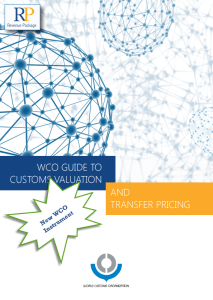
Further information on this topic can be found in the WCO Guide to Customs Valuation and Transfer Pricing, available via this link

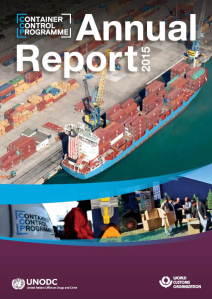
UNODC-WCO Container Control Programme – 2015 Annual Report online

Container Control ProgrammeThe year 2015 has been the most active one ever for this joint WCO – UNODC initiative, which tackles illicit trade in containerized transport.
A number of new countries joined the Container Control Programme (CCP), more than 130 training events, private sector meetings and study visits were implemented and significant seizures of drugs, counterfeit goods, cigarettes etc. were made by the Port Control Units established in the framework of this programme.

The 2015 CCP Annual Report also contains interviews with the Directors General of Georgia and Azerbaijan Customs as well as several statements by Customs’ and Private Sector stakeholders. Source: WCO

UK drops VGM accuracy requirement

MCA LogoThe UK Maritime and Coastguard Agency has dropped the tolerances it was considering for weighing equipment used to weigh a container for the new SOLAS VGM requirement.
One of the issues that has been holding some terminals back from investing in equipment to weigh containers is the lack of any clarity over the accuracy standards that equipment must meet. SOLAS says only that equipment must “meet the applicable accuracy standards and requirements of the State in which the equipment is being used”.

The UK Maritime and Coastguard Agency (MCA) had been consulting on a proposal for two weighing tolerances for equipment used to generate a Verified Gross Mass (VGM) using method 1 (weighing the container):

  • +/- 400kg up to 20T then +/- 2%
  • +/- 300kg up to 15T then +/- 2%

Sources involved in the process say some port operators and weighing equipment suppliers had expressed concerns these tolerances were unreasonable. MCA has this week issued new guidance on the VGM requirement, including a procedure for applying for approval to use Method 2 (weighing cargo items and calculating the total weight of a container).

The MCA has dropped any requirement for a specific accuracy level, opting instead to set an enforcement level. It stated: “The verified gross mass should be as accurate as reasonably practical taking into account methodology and operational variances. The MCA has set an enforcement tolerance of ±5% or ±500kg, whichever is the greater value to avoid disruption within the supply chain, however this value is for enforcer’s guidance only and it is the shipper’s responsibility to be as accurate as possible”.

Method 1 equipment includes “weighbridges, or lifting equipment fitted with load cells, or other approved weighing equipment to determine a loaded container’s Verified Gross Mass (VGM)”. Unlike other jurisdictions the MCA has not stated that it requires two 20ft containers on a trailer to be weighed separately, or said anything about how the weight of the truck and trailer is to be obtained. It stated only that “Calculations may be used as part of the method 1 process”, so these items do not in fact need to be weighed as part of the VGM process.

With regard to certification and enforcement, the MCA states: “ Method 1 users are required, on request by the MCA or other body, to provide both of the following:

  • Evidence that the weighing equipment has been supplied/maintained for the purpose of determining the VGM of a loaded container and is capable of producing a ticket (electronic record). Each ticket must include the container number, the VGM of the container, and the procedures for, and records of, any calculations which have been made. If this information is produced as an electronic record, it is essential that it is able to be produced without delay as a paper document.
  • Records kept of maintenance and verification (calibration) procedures, including any corrective / remedial actions taken.

The full guidance and other documentation can be found at this link. Source: WorldCargoNews

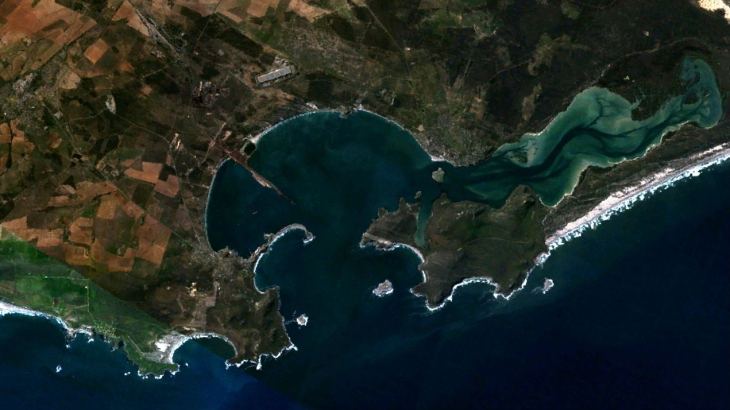
A Super Transhipment Port for South Africa?

Saldanha Bay South AfricaRecently while reading of Transnet’s terminal capex expansion plans, I came across this interesting if not highly improbable plan featured in an article by Harry Valentine on Maritime Executive. I say improbable given the current economic and labour situation prevailing in South Africa at this time, not to mention the fact that the Transnet controlled Port of Ngqura is considered South Africa’s transhipment hub. Nonetheless, I think its admirable that such ideas are conceived and with a bit of thought and application are presented for consideration. From a Customs’ perspective such plans – in particular the notion of a floating terminal – could pose some interesting challenges (err opportunities) for SARS particularly given impending new compliance, licensing and reporting requirements contained in the new Customs Control Act. 

The Port of Los Angeles has welcomed its first 18,000-TEU ultra-large container ship, and Brazil, with a population almost as large as the U.S. and with future prospects of increased trade with Asia, could see such ships arriving via South Africa.

The projected future volume of container traffic that will pass through Brazilian ports would warrant future operation of ultra-large container ships between Brazil and major Asian transshipment terminals. However, it would take much investment and likely many years before a Brazilian port and terminal would be able to berth and service these vessels. One option would be to develop a transshipment port in South Africa that could serve as a terminal for ultra-large container ships that sail from such ports as Busan, Inchon, Shanghai and Hong Kong carrying containers destined for South America.

South Africa offers two bays capable of accepting ultra-large container ships. Richards Bay in the Northeast offers a draft clearance of 19 meters, while Saldanha Bay just north of Cape Town offers a draft of 21 meters. Bulk and ore freight terminals operate at both locations. Saldanha Bay is larger than Richard’s Bay, located near the large City of Cape Town and is closer to the shipping lane between South America and the Far East. It is also close to St. Helena Bay where waiting vessels may drop anchor.

When Richards Bay is at capacity, alternative areas where waiting vessels may drop anchor with a measure of protection from stormy seas are located at much greater distances. The Port of Durban is still Africa’s busiest container port and regularly operates at near-capacity. However, Durban and companion ports at Maputo, Port Elizabeth, Coega, East London and Cape Town have insufficient depth to accommodate ultra-large container ships. Saldanha Bay is a natural inlet that offers the necessary depth and has available space to develop a transshipment terminal to the south of the ore terminal.

There are tentative plans to borrow a precedent from Egypt and anchor a floating LNG storage tanker in Saldanha Bay, perhaps near the southern end of the inlet, to serve a variety of customer requirements. Tanker vessels could regularly carry LNG from Mozambique, Tanzania and Angola to the floating storage terminal. Operational precedents established at the Port of Durban could ensure smooth operation of maritime vessels entering and leaving Saldanha Bay, especially with excess vessels being able to drop anchor in St. Helena Bay as well as nearby Table Bay at Cape Town some 60 nautical miles away.

Future ultra-large container ships of 22,000 TEUs would offer savings in terms of average cost per container on the segment between Saldanha Bay and distant East Asian ports at or near the South China Sea. Automated terminal operations that include transfer of containers among vessels could contribute to competitive transportation costs to a variety of destinations along South America’s Atlantic coast as well as several South African ports, perhaps extending as far north as Nigeria on the Atlantic Coast (Asia – Africa trade), Tanzania on the East Coast (Africa – South America trade), as well as domestic Africa -Africa trade.

While South Africa’s economy may presently be under-performing, South African authorities have the option of inviting foreign investors and developers to explore the option of developing a transshipment super port at Saldanha Bay. Future trade through Saldanha Bay would include containers sailing to and from East Asian transshipment terminals such as Port of Colombo and Port of Singapore to connect into the combination of West Coast Africa – Asia and Atlantic Coast South America -Asia trade. Such combined trade enhances prospects for potentially viable transshipment port and terminal operations at a South African bay.

A transshipment super port at the southern end of the African continent would mostly transfer containers that originate from and be destined for foreign ports. Only a minority of the containers would originate from or be destined for domestic South African ports. South African exporters and importers would benefit from lower transportation costs per container compared to the transportation costs per container aboard smaller vessels.

It’s an idea worth considering.

Floating Islands

Cape Town is at the crossroads of ships that carry the trade between Asian nations and nations along the Atlantic Coast of South America and sub-Sahara West Africa. There may be future scope for an offshore, floating transshipment terminal built at Saldanha Bay and assembled either at Cape Town or St Helena Bay to reduce per-container transportation costs along this trade route. Such a terminal would attract interest from overseas. A floating hotel partially surrounded by breakwaters and permanently anchored offshore near a coastal city could be connected to the mainland using floating bridges and water taxi service.

There may be scope to expand upon the technology to develop multiple floating structures in a calm water area, with bridges connecting between them at strategic locations to maintain navigable canals between them. While water taxis could shuttle visitors between mainland and an offshore floating island, semi-floating bridges could also connect between mainland and such islands that may include business districts and even residential areas.

Coupled floating structures may also serve as an airport with a runway for commuter size of aircraft and perhaps even comparable size of wing-in-ground effect vehicles that provide service between coastal cities.

Source: article by Harry Valentine.

Walvis Bay rail upgrade ready to service new container terminal

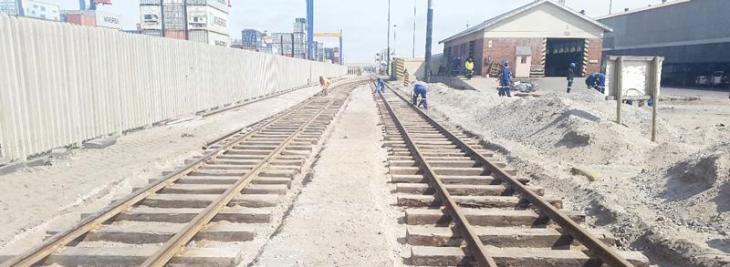
Namport-rail-upgradeThe Namibian Ports Authority has completed the upgrade of all railway infrastructure at the Port of Walvis Bay at a cost of N$20M (US$1.3M)

The work was included in Namports maintenance programme in 2010, but is now part of wider plans to upgrade facilities at Walvis Bay in preparation for the completion of the new container terminal.

A total of 4.5kms of track inside the port and the section of railway running from the city into the port have been replaced using material that can cope with heavier loads.

A spokesperson for Namport said: “Although the project was of relatively low value, its execution was complex as we had to ensure minimum operational interruption to the track, which is in daily use.”

The new container terminal is being constructed on 40-ha of reclaimed land and will add 700,000 TEU of annual handling capacity to the existing 350,000 TEU. Walvis Bay is already attracting bigger ships and recently handled its biggest ever container vessel the CMA CGM DANUBE, a 112,580 dwt vessel with a nominal intake of 9200 TEU.

A statement from Namports read: “The visit of CMA CGM DANUBE complements our port expansion project, which accommodates greater carrying capacity. Following the completion of the port expansion project vessels such as this will be accommodated at the new container terminal.”

The Walvis Bay Corridor Group, which was set up to promote the use of the port among neighbouring states, is keen to improve ancillary infrastructure at Walvis Bay to make the most of the new terminal.

Namport manager for corporate communication Taná Pesat said: “The benefits are our safe and secure corridors to and from landlocked SADC markets. The frequency of direct ship calls and flexibility of doing business with ease.”

However, the plot of land at the port given to Zimbabwe in 2009 for the construction of a dedicated dry port has still not been developed. Source: World Cargo News

Singapore Builds Transshipment Capacity

PSA Singapore Terminals

Two new container berths capable of serving large container ships will be operated by COSCO-PSA Terminal in Singapore in 2017.

COSCO-PSA Terminal (CPT), a joint venture company formed by COSCO Pacific Limited and PSA Corporation, is investing in the new berths, and will move from its current two-berth terminal to three new mega berths as part of a Pasir Panjang Terminal expansion project.

A few of the planned 15 berths in Phases 3 and 4 of the Pasir Panjang Terminal are already operational. The rest of the S$3.5 billion ($2.6 billion) project is scheduled to be completed by the end of 2017, pushing Singapore’s annual container handling capacity to 50 million TEUs.

All the new berths at Pasir Panjang Terminal are designed to be able to handle container ships with capacities larger than 10,000 TEUs.

PSA Singapore currently operates 57 berths at its container terminals in Tanjong Pagar, Keppel, Brani and Pasir Panjang. The terminals at Pasir Panjang are PSA’s most advanced. The berths at Pasir Panjang Phases 3 and 4 are up to 18 meters deep and equipped with quay cranes able to reach across 24 rows of containers to serve the world’s largest container ships. They also feature the latest port innovations such as a zero-emission, fully-automated electric yard crane system.

Singapore is the world’s second busiest container port after Shanghai in China, which took over Singapore in 2010. Source: Maritime Executive

US goes its own way on container weighing

World Cargo News reports  – While the Coast Guard maintains the US will be compliant with the SOLAS amendment on container weighing, US Shippers are interpreting guidance from US Coast Guard Rear Admiral Paul Thomas as confirmation they can continue with existing practice to declare the weight of their goods rather than weigh containers.

Following to the fallout over his comments at the Trans Pacific Maritime conference in Long Beach this month, Rear Admiral’s Thomas issued further guidance on the SOLAS amendment that requires containers to have a Verified Gross Mass before they are loaded on a vessel from 1 July.

The US Coast Guard (USCG) has since confirmed that SOLAS is binding on US shippers, but stated that how shippers work with carriers to obtain and report a VGM is a commercial matter for those parties to determine.

Some US shippers, including the US Agriculture Transport Coalition (ATC), have made it known it is not practical for them to supply, and be responsible for anything other than the weight of the cargo, as they do today. The Coast Guard appears to be facilitating this approach, and the ATC last month told its members it “received confirmation” from USCG that shippers can continue to verify the weight of the goods they own, while lines remain responsible for the weight of the container.

On March 14 some 49 groups and associations representing US primary producers, manufacturers, importers and shipper groups wrote to Coast Guard Commandant Paul Zukunft saying they support its “interpretation” of the SOLAS amendment, as presented by Rear Admiral Tomas in his blog.

“Specifically, we support the Admiral’s view that if the shipper provides the cargo mass weight, to which the carrier adds the weight of the container, then the intent of SOLAS is achieved. In fact, several ocean carrier executives have advised that such a process would be practical.”

Some carriers, however, have rightly pointed out that this does not meet the SOLAS requirement, as the letter then notes: “The reason for our concern, and appreciation of Admiral Thomas’ guidance, is that some ocean carriers, citing this SOLAS amendment, are demanding that the shipper certify both the cargo and the carrier’s container. This is contrary to the practical realities of our US export maritime commerce and fundamentally flawed conceptually. (It would be similar to demanding that a soybean shipper certify to the railroad the weight of the railcar itself.)”

The groups maintain that they “fully understand our responsibility to accurately disclose the weights of cargo tendered to the ocean carriers. In fact, advance submission of accurate gross cargo weight is a well-established practice mandated by US Customs and Border Protection, by numerous intermodal (trucking and rail) weight requirements, and presently found in Shipper’s Instructions to carriers to meet so-called “no doc, no load” cargo cutoffs for entry into marine terminals. In addition, an Occupational Safety and Health Administration (OSHA) Rule, in place since 1983, assures that the accurate weight of combined cargo and container be known to the carrier prior to loading.”

Despite SOLAS, the shipper groups do not see a need to weigh individual containers and suggest other solutions can be found: “for instance, shippers are willing to provide to their carriers an annual written confirmation in the service contract (or other mutually-agreed document) that our cargo weights are accurate”.

One of the major concerns is liability, in particular the requirement that someone now sign a VGM document. Shippers say carrier demands for this are being rejected. Many US Corporations will not allow their employee to certify the weight of and assume liability for equipment that the corporation does not own, manage, control and in fact may not even see.”

The Coast Guard, for its part, does not appear to be pushing the issue of current practice not meeting the new SOLAS requirements.

In his testimony at the US House Committee on Transport and Infrastructure’s hearing for the Coast Guard’s 2017 Budget request Admiral Paul F. Zukunft, Commandant, USG made the following statement: “Foreign carriers are pretty much all in compliance today. When I was at the container terminal in Long Beach a month and half ago all the containers that come on to that yard are already weighed before they go in. So I am not seeing a sky is falling panacea playing out around us, but we need to make sure that there aren’t unintended consequences. That is why we are continuing to reach out with the many exporters…that container shows up on a manifest before it is loaded on a ship. What is needed is that final weight, but by and large most of these manifests already have that weight filled in in that column.”

The US, it appears, intends to continue to follow current practice where the shipper provides a declared weight of the cargo, leaving it to the carrier to determine the final weight of the container. Source: World Cargo News

WCO Regional Workshop on Coordinated Border Management, Single Window and the Data Model

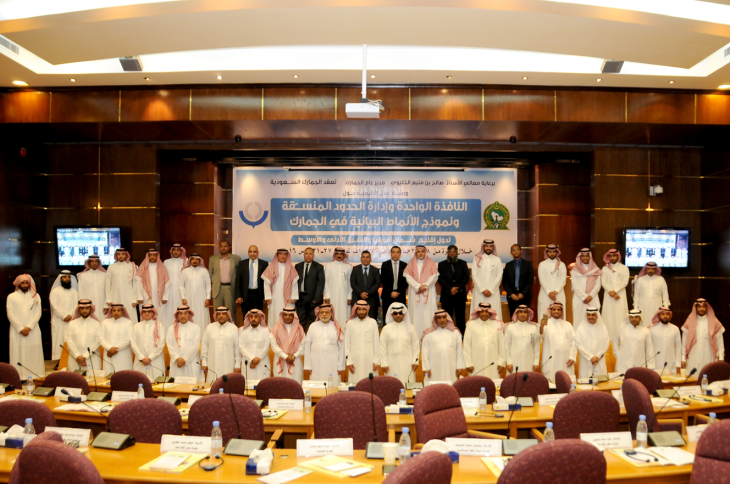
Wco CBM & Single Window WorkshopThe World Customs Organization (WCO), with the financial support of the Customs Administration of Saudi Arabia, successfully held a Regional Workshop on Coordinated Border Management (CBM), Single Window and the WCO Data Model in Riyadh, Saudi Arabia from 27 to 31 March 2016. Thirty seven middle management officials of the Customs Administrations from the MENA Region, namely Saudi Arabia, Egypt, Lebanon, Jordan, Morocco, Tunisia, Sudan, Bahrain and the United Arab Emirates participated in the Workshop. In addition, twelve officials of Customs’ Partner Agencies and two representatives from the private sector attended the event.
Mr. Abdulah AlMogehem, the Deputy Director General of the Customs Administration of Saudi Arabia in his opening remarks highlighted the importance of Single Window development by governments to simplify cross-border trade regulatory procedures which will reduce inefficiency and redundancy of border management processes.

The event highlighted the importance of CBM principles as the basis for the development of a Single Window Environment to enable coordination and cooperation between all relevant government agencies involved in border management. The Workshop also focused on the importance of strategic planning and formal governance structures in establishing a Single Window Environment. SA Revenue Service’s Intikhab Shaik incidentally facilitated the session and discussion on Single Window.

Other important topics included Business Process Re-engineering as well as Data Harmonization, using the WCO Data Model as the inter-operability framework to lay the foundation for CBM and Single Window. Source: WCO

Africa to Get First Automated Container Terminal

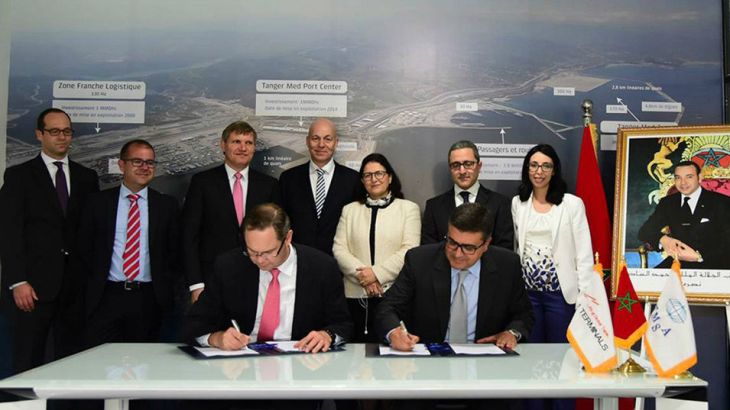
MarEx APM Tangier 2016Maritime Executive reports that the world’s third largest port operator APM Terminals said it will invest 758 million euros ($858.3 million) in a new transhipment terminal in Tangier, Morocco, that will be the first automated terminal in Africa.

APM Terminals, a unit of Denmark’s shipping and oil group A.P. Moller-Maersk, has been named as the operator of the new container transshipment terminal at the Tanger Med 2 port complex. The group already operates the APM Terminals Tangier facility at Tanger Med 1 port, which started operations in July of 2007 and handled 1.7 million TEUs in 2015. The new terminal will have annual capacity of five million TEUs.

Maersk Line, also a part A.P. Moller-Maersk, will be an important customer of the new terminal. The new terminal is scheduled to open in 2019, under the terms of a 30-year concession agreement with the Tanger Med Special Agency (TMSA), which has responsibility for the development and management of the Tanger Med port complex.

The Tanger-Med port complex is strategically located on Africa’s northwest coast near the mouth of the Mediterranean Sea on the Strait of Gibraltar, where the Atlantic Ocean and Mediterranean Sea meet. Tanger-Med is the second-busiest container port on the African continent after Port Said, Egypt. The new APM Terminals MedPort Tangier terminal will increase the port’s total annual throughput capacity to over nine million TEUs.

APM Terminals MedPort Tangier will have up to 2,000 meters of quay length and will feature the technology pioneered at the APM Terminals Maasvlakte II Rotterdam terminal which opened in 2015.

For APM Terminals the Western Mediterranean is an important market. APM Terminals Algeciras, on the Spanish side of the Strait of Gibraltar, operates in tandem with APM Terminals Tangier as an integrated Western Mediterranean transshipment hub. APM Terminals Algeciras handled more than 3.5 million TEUs in 2015, and has completed a major upgrading of its cranes and quay infrastructure to accommodate ultra-large container Ships of 18,000 TEU capacity and above.

The location of the Tangier and Algeciras facilities provide a natural transshipment location for cargoes moving on vessels to and from Africa from Europe and the Far East on the primary East/West shipping route through the Mediterranean Sea; over 200 cargo vessels pass through the Strait of Gibraltar daily on major liner services linking Asia, Europe, the Americas and Africa.

While African ports at present account for only 4.5 percent of global port throughput (including transshipment cargoes), the United Nations 2015 World Population Prospects Report projects that more than half of the world’s population growth between 2015 and 2050 will occur in Africa, with the African population more than doubling from 1.1 billion to 2.4 billion over the next three and a half decades.

Significant investment in port and transportation infrastructure will be required to meet the anticipated needs of the expanding African population and corresponding economic growth.

APM Terminals is the largest port and terminal operating company in Africa by equity-weighted container volume, with 12 facilities operating in 10 countries and three more terminals under construction. Source: Maritime Executive