Event – Role of the Private Sector in Support of the Trade Facilitation Agreement

international-trade1The role of the private sector in the implementation of the World Trade Organization’s (WTO) Trade Facilitation Agreement (TFA) will be the focus of the 2015 edition of the Global Facilitation Partnership for Transportation and Trade (GFP) meeting. With the world’s customs administrations currently identifying their respective TFA  implementation commitments and setting up National Trade Facilitation Committees, trade and logistics operators can learn how they can participate in such initiatives by attending these sessions.

The GFP meeting will be held at Palais des Nations, Geneva, on 22 April, and will be divided into three thematic sessions.

The first session, ‘Governments’ Priorities: Strategies for Fostering Private Sector Participation in the TFA Implementation Process’ will look at how governments are planning to implement the TFA.

It will focus on how the private sector is consulted and how an effective participation of the private sector can be facilitated to implement the Agreement.

The second session, ‘Priorities, Perspectives, and Expectations from the Private Sector on TFA Implementation’ will assess how the private sector – including large corporates and small and medium-sized enterprises – view TFA implementation. It will look at the potential benefits from a private-sector perspective, and how the sector can contribute to national and international initiatives to implement the agreement.

The third session, ‘International Organizations’ Co-ordination and Partnership for Supporting TFA Implementation’, will provide an opportunity to share information and experiences on how the TFA can be implemented with public-private partnerships in mind, as how national trade facilitation committees can better support this process.

ITC invites all interested stakeholders to join the GFP meeting at the Palais des Nations on 22 April from 9:00. Click here for link to online registration.

Source: International Trade Centre (Geneva)

Important Implications of the WTO TFA on Landlocked Countries

WTO TFA implications for LLDCBackground

The Almaty Programme of Action (APoA): Addressing the Special Needs of Landlocked Developing Countries within a New Global Framework for Transit Transport Cooperation for Landlocked and Transit Developing Countries was adopted in 2003 as a response to the growing recognition by the international community of the special needs and challenges faced by the LLDCs. The Programme of Action emphasised five priority policy areas that landlocked and transit countries need to address to resolve the access problems of LLDCs: Transit policy and regulatory frameworks; Infrastructure development; International trade and trade facilitation; International support measures, and Implementation and review.

As one of the priority areas of the APoA, international trade and trade facilitation (streamlining customs and other border procedures) has taken on renewed focus, especially in light of the WTO Bali Ministerial Conference in December 2013, at which WTO members reached consensus on a Trade Facilitation Agreement, as part of the wider ‘Bali package’. As the end of the first ten years of the APoA is drawing to a close, the General Assembly of the United Nations decided to hold a comprehensive Ten-Year Review Conference of the APoA in 2014.

WCO TFA and Landlocked Countries

The WTO Trade Facilitation Agreement sets out commitments that promote clear rules and procedures, many of which are of particular interest to LLDCs. The three most important provisions for LLDCs are Articles 11, 10,and 8. The first one deals specifically with freedom of transit, the second sets out obligations in relation to trade procedures including transit, and the third requires WTO members to cooperate with other members with which they share a common border.

Other TFA provisions of interest to the LLDCs include Articles 1-5 which addresses Publication and Transparency, including the availability of information; Article 2 which provides specific guidance on Consultations before Entry into Force; Article 6, which sets out Disciplines on Fees and Charges imposed on or in Connection with Import and Export and Article 7 which provides rules on Release and Clearance of Goods, including Trade Facilitation Measures for Authorised Operators. In the new Agreement, the obligations take three forms: Binding, Best Endeavour, or a Combination of both.

The TFA presents an opportunity for LLDCs to upgrade their systems, infrastructure and procedures as the Agreement encourages national trade facilitation improvements. Policymakers should therefore ensure that trade facilitation is included in national development plans given the cross cutting nature of trade facilitation. Using this approach, LLDCs will increase their ability to access resources tied to different funding windows, for example, assistance for general trade policy and regulations.

There are 16 Landlocked countries in Africa, which signifies the importance of the WTO TFA and its consequential impact on regional trade groupings.

The WTO TFA is an innovative agreement as it will provide capacity building to developing countries to allow them to undertake the implementation of the agreement where necessary. The Agreement addresses concerns about the implementation costs and capacity building constraints in developing and least developed countries that would be required to implement these rules. The Agreement allows each LLDC to design its TFA implementation plan and choose a timetable of compliance in accordance with its needs, capabilities and confirmed funding and technical assistance from development partners. Further, guidance is provided to WTO members on the domestic institutional arrangements that should be established to maximise the resources to be made available by donors, as well as the structures and systems that should be adhered to at the WTO Secretariat itself to ensure that the process of accessing TFA implementation support is transparent and inclusive.

It is essential to note that the Agreement specifies a strict national approach to implementation and makes no provision to resolve the issues which are closest to LLDCs interests, such as regional economic corridors, which fall outside the purview of the WTO’s multilateral disciplines. Despite this shortcoming, LLDCs will benefit from deepening their links and their involvement in fora supported by the development banks and bilateral agencies which fund these regional programmes. This will ensure that their interests are adequately reflected in the design of development plans for regional infrastructure improvements, regulatory reforms, technical assistance and capacity building.

Although the language of the TFA is legally binding in relation to some key aspects of freedom of transit, it has one important proviso. If an LLDC developing country neighbour denotes freedom of transit as a Category C obligation, it will only become justiciable and fully legally binding after the expiration of the transition date determined by that country and the delivery of suitable technical assistance by donors. Against this background, an optimal outcome for LLDCs would be that as many transit countries as possible register freedom of transit as a Category A obligation, as this would come into force immediately.

Read the full preparatory report on the Implications of the WTO ATF on Landlocked Developing Countries, available on the United Nations Conference on Landlocked Developing Countries website.

Related articles

US-India agreement to pave the way to implementation of the WTO “Bali Agreement” on trade facilitation?

India_USA-3The U.S. and India have reached an agreement that promises to pave the way toward global implementation of the WTO Trade Facilitation Agreement (TFA). The breakthrough agreement between India and the U.S. should now make it possible for member countries to begin implementing the requirements of the agreement, providing potentially significant financial benefits to businesses trading goods around the world as local customs procedures are streamlined. The target date for ratification of the agreement is 31 July 2015. Upon ratification by two-thirds of the membership, the agreement will enter into force for all WTO states. Member state will then begin the process of adopting conforming legislation.

The Trade Facilitation Agreement

Concluded in December 2013, the TFA is intended to streamline, and to some extent harmonize, customs clearance procedures around the world by imposing new multilateral disciplines on customs procedures in all member countries. The agreement imposes basic globally applicable principles for transparency, due process, and reasonableness in the development and implementation of customs clearance requirements across a broad spectrum of activities related to importing, exporting, and transiting of goods.

The U.S.-India agreement

While the specific details of the bilateral agreement are not publicly available at this time, a press release from the Office of the U.S. Trade Representative states that there are two key elements of the deal:

  • the U.S. and India agree that the multilateral TFA should be implemented without conditions, on the basis of a standard legal instrument for implementing new WTO agreements; and
  • the “peace clause” agreed upon by WTO members in December 2013, under which WTO members will refrain from initiating challenges to certain food security programs under the WTO dispute settlement process, will remain in place “until a permanent solution is found.”

Since announcement of the agreement last December, India has raised concerns that developing countries need greater assurances regarding their ability to maintain government agricultural buying programs and other farm subsidies until an agreement could be reached among WTO members on how to bring such programs into conformity with the body’s trade rules. The U.S. and India had previously disagreed on the form such assurances should take.

Under the new bilateral agreement, the U.S. and India will seek a General Council decision on the two key elements outlined above. A General Council decision will require the consensus of all WTO members. Source: Hogan Lovells International Trade Alert

WTO Trade Facilitation Agreement – Dead!

The World Trade Organisation headquarters in Geneva [AFP Photo]

The World Trade Organisation headquarters in Geneva [AFP Photo]

The World Trade Organization got a surprise setback on Thursday when India, pushing for concessions on agricultural stockpiling, vetoed plans for universal customs rules. The deal could have added $1 trillion and 21 million jobs to the world economy.

The July 31 deadline on the first proposal for major global economic reform in two decades – a series of customs procedures known as “trade facilitation” – left negotiators empty-handed after India refused to sign up to it.

India, with its large number of poor and new nationalist government, had demanded the exclusive right to subsidize and stockpile grains which is not permitted by WTO rules.

The WTO, experiencing what may be its worst setback in its 19-year history, reluctantly admitted defeat.

We have not been able to find a solution that would allow us to bridge that gap,” WTO Director-General Roberto Azevedo told negotiators in Geneva just hours before the deadline was set to lapse.

Some analysts are of the opinion the failure represents the beginning of a new era of trade deals, which will depend more on individual economies forging their own initiatives, as opposed to attempting to force global reform.

Today’s developments suggest that there is little hope for truly global trade talks to take place,” Jake Colvin at the National Foreign Trade Council, a leading US business group, told Reuters.

The vast majority of countries who understand the importance of modernizing trade rules and keeping their promises will have to pick up the pieces and figure out how to move forward.

Whether or not other countries will pick up the dropped ball and try to move forward despite the loss is not yet clear, but the present mood is noticeably downbeat.

We’re obviously sad and disappointed that a very small handful of countries were unwilling to keep their commitments from the December conference in Bali, and we agree with the Director-General that action has put this institution on very uncertain new ground,” US Ambassador to the WTO Michael Punke told reporters.

Meanwhile, there is speculation that some countries may decide to go ahead with the plan without India’s support.

However, Azevedo said that while the world’s largest economies had choices on how to respond to the failed talks, the poorest economies would suffer the brunt of the fallout.

If the system fails to function properly then the smallest nations will be the biggest losers,” he said. “It would be a tragic outcome for those economies – and therefore a tragic outcome for us all.

Source: Russia Today (contributed by V Singh)

Related articles

WTO launches new Trade Facilitation ‘Facility’

Azevêdo launches new WTO Facility [Photo: WTO]

Azevêdo launches new WTO Facility [Photo: WTO]

A new initiative unveiled at the WTO on 22 July 2014 will help developing countries and least-developed countries reap the benefits of the WTO’s new Trade Facilitation Agreement, which was agreed at the Bali Ministerial Conference in December 2013.

The new Facility will complement existing efforts by regional and multilateral agencies, bilateral donors, and other stakeholders to provide Trade Facilitation-related technical assistance and capacity-building support. It will act as a focal point for implementation efforts. It will become operational when the protocol to insert the Trade Facilitation Agreement into the existing regulatory framework is adopted by WTO Members. The functions of the Facility will include:

  • supporting LDCs and developing countries to assess their specific needs and identify possible development partners to help them meet those needs
  • ensuring the best possible conditions for the flow of information between donors and recipients through the creation of an information sharing platform for demand and supply of Trade Facilitation-related technical assistance
  • disseminating best practice in implementation of Trade Facilitation measures
  • providing support to find sources of implementation assistance, including formally requesting the Director-General to act as a facilitator in securing funds for specific project implementation
  • providing grants for the preparation of projects in circumstances where a Member has identified a potential donor but has been unable to develop a project for that donor’s consideration, and is unable to find funding from other sources to support the preparation of a project proposal
  • providing project implementation grants related to the implementation of Trade Facilitation Agreement provisions in circumstances where attempts to attract funding from other sources have failed. These grants will be limited to “soft infrastructure” projects, such as modernization of customs laws through consulting services, in-country workshops, or training of officials.

South Africa, on the other hand has warned of the concerns of developing countries being sidelined under a global trade deal, adding to fears India and some African states may block the landmark Bali agreement. South African Minister for Trade and Industry further intimated that the country would have no difficulty in implementing the trade facilitation agreement but said it would “go along with” the decisions made by its allies within the WTO. Source: WTO

Related articles

US loses multi-billion dollar court cases against China and India

India, China, US [Picture: www.wespeaknews.com]

India, China, US [Picture: http://www.wespeaknews.com]

The World Trade Organization agreed on Monday this week to side with claims against the United States made by both China and India concerning US-imposed tariffs on products exported to America.

In both instances, the WTO ruled against the US and decided in favor of the major BRICs countries, who for two years now have each asked the organization to intervene and weigh in on America’s use of tariffs to tax certain imports dating back to 2007.

With regards to both cases, the WTO’s judges ruled that the US acted “inconsistent with its agreement on subsidies and countervailing duties,” or taxes imposed on goods sold by “public bodies.”

In China, the panel agreed, US officials improperly levied those taxes against state-owned enterprises that the WTO does not consider to be “public bodies.” Instead, the WTO said, those entities were majority-owned by the Chinese government, but did not perform “government function” or exercise “government authority,” according to the Financial Times. With respect to India, the WTO again agreed that the US was wrong to similarly treat state-owned National Mineral Development Corporation as a public body, according to the International Business Times.

At issue were billions of dollars’ worth of Chinese steel products, solar panels, aluminum, paper and other goods shipped to the US after being taxed as originating from public bodies. The panel’s decision, Reuters reported, “reflected a widespread concern in the 160-member WTO over what many see as illegal U.S. protection of its own producers.”

“China urges the United States to respect the WTO rulings and correct its wrongdoings of abusively using trade remedy measures, and to ensure an environment of fair competition for Chinese enterprises,” China’s commerce ministry said in a statement.

Mike Froman, the US trade representative, responded by saying Washington was “carefully evaluating its options, and will take all appropriate steps to ensure that US remedies against unfair subsidies remain strong and effective”.

Nevertheless, Froman added that the WTO’s ruling in the Indian case constituted at least a partial victory for the US.

“The panel’s findings rejecting most of India’s numerous challenges to our laws and determinations is a significant victory for the United States and for the (US) workers and businesses making these steep products,” he told Reuters. Source: Russia Today.

Export Tax in the South African Context

made_in_south_africa___barcode_and_flag_by_netsrotj-d5cmbq9Export taxes are increasingly becoming a focus of attention in South African trade policy, and the objective of this paper is to review the trade and economic issues associated with these taxes. While they are similar to import tariffs in their effects, export taxes remain very much the ‘poor cousins’ of import tariffs in trade policy circles. While attention is paid to them in many bilateral and regional agreements, the multilateral World Trade Organisation (WTO) has little to say about them other than an awakening to their importance when it comes to negotiating a new member’s accession to the world body.

South Africa currently levies an export tax on unpolished diamonds in an attempt to develop local skills and promote the domestic industry, and it is considering a recent department of trade and industry report that recommends that consideration be given to an export tax on iron ore and steel. South Africa has some of the prerequisite market power in the global iron ore trade but not enough to ensure an outcome entirely beneficial to its export trade. The salutary example of South Africa’s competitor India is discussed, as India recently increased its export tax in this sector to 30% and has seen its global market shares plummet. The more interesting sector for South Africa is the ferrochrome and ferrochrome ore trade, as here South Africa does have significant market shares. South Africa has had about a 45% market share over the last three years in global exports, while China has imported around 70% to 85% of this global trade in recent years. Advocates argue that a tax on chromite ore exports will shift the relative economics back to empower South African producers of processed ferrochrome. This sets the stage for an interesting battle between South Africa and China, and one set against the background of South Africa’s recent admission to the BRICS club. If such an export tax is invoked, South Africa needs to be conscious that it at best provides a window of opportunity for the domestic sector to improve its technological efficiency and that it is not a long or even medium-term solution.

For an in-depth appraisal on export tax in South Africa, please read Ron Sandrey’s report “Export tax in the South African context

Source: Tralac & Author -Ron Sandrey

WCO Releases Online WTO/ATF Implementation Guideline

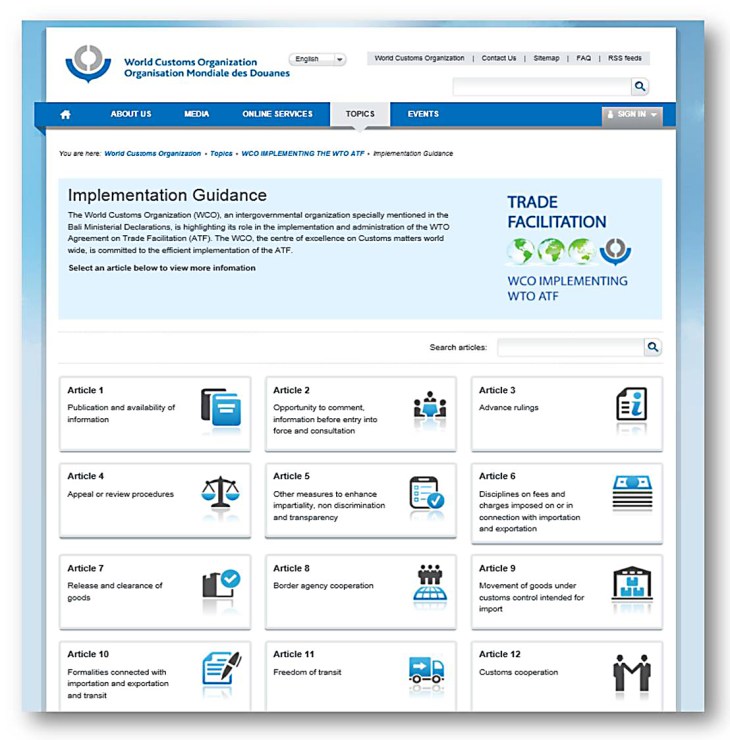
WCO Trade Facilitation Implementation Guidance 1The World Customs Organization (WCO) has launched on its website the WCO Implementation Guidance for the World Trade Organization (WTO) Agreement on Trade Facilitation (ATF) to support WCO Members in their efforts to implement the ATF.

The Guidance presents the importance of WCO instruments and tools such as the Revised Kyoto Convention for ATF implementation.

The Guidance contains the following categories of information for each ATF Article:

  • Overview
  • Text of ATF
  • Relevant RKC standards and RKC Guidelines
  • Other relevant WCO tools
  • Member practices
  • Performance indicators

The Guidance will be updated on a regular basis and a French version will be released shortly.

Source: WCO

Implementing the WTO Agreement on Trade Facilitation

WTO Agreement on Trade Facilitation

Click on the image to download the Infogram

It is anticipated that most Customs and Border Authorities have at least one common item on their national capacity building agenda’s for 2014 – the Agreement on Trade Facilitation. Many countries, being members of the WCO, would have already acceded to a level of commitment to the Revised Kyoto Convention (RKC). This requires of them to introduce, at an agreed time, the principles of WCO standards and policies according to the level of their sovereign commitment.

The General Annex to the RKC is the bare minimum a country would be expected to implement in order to for it to be considered compliant with the RKC. From a trade perspective, this also indicates the extent to which your country’s leaders have committed itself towards ‘global integration’.

What the recent Trade Facilitation Agreement (ATF) in Bali does is bind member states to a compendium of requirements necessary for the enactment of certain conditions and obligations as set out in the various articles contained in the agreement. Countries should also note that certain of the ATF provisions include items under the Specific Annexes to the RKC. For a quick reference to see how the RKC and other WCO standards and conventions stack up to the ATF, refer to the WTO Trade Facilitation Toolkit by clicking the hyperlink.

In addition to this, the ATF also makes provision for ‘special and differential treatment’ in regard to developing and least developed countries (Refer to Section II to the WTO ATF).

In essence this allows those countries and opportunity of identifying their (capacity building) needs and setting themselves realistic targets for implementation and compliance to the ATF. To this end 3 Categories are identified for national states to consider in the event they are not at present in a position to accede to some or all of the ATF conditions.

The WCO has also prepared various tools which aim at assisting its members in assessing their national position in regard to the ATF. Members are likewise encouraged to regularly visit the WCO website for updates in this regard.

The following working papers are available from the WCO website and, for ease of access, are listed below together with their hyperlink to the WCO site –

Other related Trade Facilitation documentation can be found at the following link – WTO Trade Facilitation Negotiations

Text of the WTO Free Trade Agreement

Time to modernise trade rules for digital era

digital-ownershipIn the past, nations with the best ships and ports were able to establish global trade leadership and the growth that came along with it. Today, global trade has gone digital.

In the digital economy software-enabled products and services such as cloud computing and data analytics are the key drivers of growth and competitiveness. In fact, the world now invests more than $3.7 trillion (R40 trillion) on information and communications technologies a year.

In South Africa, we spend $26 billion a year and the total for the Middle East/Africa region is $228bn. However, to maximise our return on that investment, it is important for policymakers to eliminate barriers that could inhibit the continued expansion of digital trade.

It is clear that software-driven technology is transforming every sector of the global economy. For example, thanks to unprecedented processing power and vast data storage capabilities, banks can detect and prevent fraud by analyzing large numbers of transactions; doctors are now able to study historical trends in medical records to find more effective treatments; and manufacturers can pinpoint the sources of delays in global supply chains.

Against the backdrop of this kind of innovation, any country that wants to compete in today’s international marketplace must have a comprehensive digital agenda at the core of its growth and development strategy. In addition to domestic initiatives such as investment in education and skills training, or development of information technology infrastructure, policymakers can succeed in laying the groundwork for broad-based growth in the digital age if they focus on three big priorities.

First, any bilateral or multilateral trade agreement needs to facilitate the growth of innovative services such as cloud computing. As part of this, there should be clear rules that allow information to move securely across borders and prevent governments from mandating where servers must be located except in very specific situations.

Second, to promote innovation and foreign investment, continued intellectual property protection is vital and the use of voluntary, market-led technology standards – instead of country-specific criteria that force firms to jump through different technical hoops every time they enter a new local market – should be encouraged.

Third, all governments should ensure there are level playing fields for all competitors so customers have access to the best products and services the world has to offer.

At the same time, disclosures about government surveillance programmes in the US and other countries have sparked a renewed focus on data protection and personal privacy. Those concerns are worthy of debate and careful reform. But it is critically important not to conflate separate issues: We can’t let national security concerns derail digital trade.

There is precedent for navigating periods of change such as this in the global trade arena. Policymakers stood at a similar inflection point in the 1980s when they recognised the keys to growth in the coming decades would be intellectual property, services and foreign direct investment.

With foresight and hard work, they updated trade rules in the Uruguay Round of multilateral negotiations to ensure commitments were in place to provide a check against protectionist impulses. Now, as governments pursue robust growth agendas for the digital economy, it is critical we modernise trade rules again. Source: The Software Alliance (South Africa).

UNCTAD and International Trade Centre forge deal to assist LDCs attain Trade Facilitation compliance

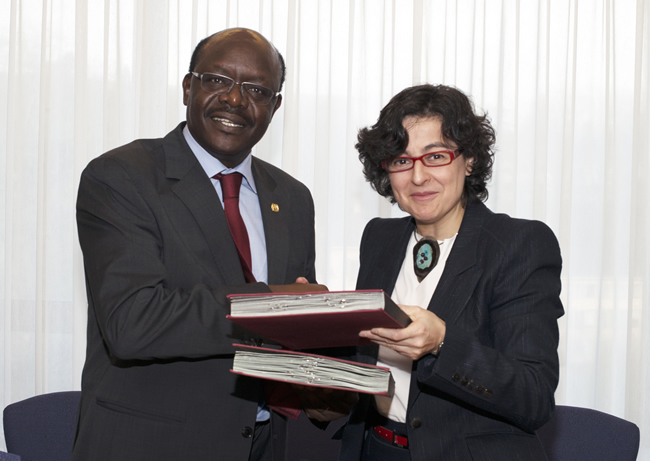
UNCTAD Secretary-General Mukhisa Kituyi (left) and the ITC"s Executive Director Arancha González, shake hands upon signing the Memorandum of Understanding. (UNCTAD)

UNCTAD Secretary-General Mukhisa Kituyi (left) and the ITC”s Executive Director Arancha González, shake hands upon signing the Memorandum of Understanding. (UNCTAD)

The United Nations Conference on Trade and Development (UNCTAD) and the International Trade Centre (ITC) have joined forces to assist developing countries in the implementation of the recent WTO Trade Facilitation Agreement reached in Bali, Indonesia. The two agencies signed a Memorandum of Understanding 4 March reaffirming this collaboration.

“The Trade Facilitation Agreement is a real opportunity for developing countries, but only if they can put its provisions into practice,” said Arancha González, ITC’s Executive Director.

“The two agencies complement each other very well and can offer meaningful support to developing countries together,” said UNCTAD Secretary-General Mukhisa Kituyi. UNCTAD already has a successful programme in building institutional capacity around effective trade facilitation, while ITC has experience in building the capacity of the private sector and increasing their export competitiveness”, he added.

The programme which the agencies will develop will focus particularly on Least Developed Countries.

Initially, the cooperation will concentrate on helping countries to identify and categorise the commitments under the Agreement in categories A, B and C and ensuring support for implementing the transparency provisions of the Agreement. These include ensuring better and easier access to information for traders; helping to develop advance rulings and rights of appeal legislation; facilitating greater predictability and reliability of procedures through simplified formalities and documentation and the use of international standards; and the adoption of single windows for traders.

“These are just some of the areas where the ITC and UNCTAD have identified clear needs in developing countries based on UNCTAD”s needs assessment programmes and the surveys undertaken by the ITC of its SME clients,” Mr. Kituyi said.

“In some cases we will need to ensure better cooperation between the public and private sector,” Ms. González said. “This is the ITC”s bread and butter: supporting a trade dialogue between business and policy makers.”

The collaboration between the two agencies is in response to a critical issue identified by developing countries in the lead-up to December’s WTO conference: whether there was enough financing and to support the necessary reforms, particularly in LDCs. This partnership will provide an opportunity to donors and other development partners to demonstrate their commitment to the implementation of global trade facilitation reform by working with UNCTAD and ITC. The agencies will collaborate with other organisations and the private sector to advance implementation of the WTO Trade Facilitation Agreement.

“The hope is that donors will see this collaborative venture between the ITC and UNCTAD, as an effective and efficient platform for helping developing countries, especially LDCs, to take advantage of the benefits an effective facilitating architecture can bring,” Mr. Kituyi said.

The private sector is also urged to explore ways that they can partner with the ITC and UNCTAD to provide their expertise to SMEs in developing countries. “Making the process of trade easier in developing countries is a plus for the global trade reality,” concluded Ms. Gonzalez, “It is a win-win situation”. Source: UNCTAD

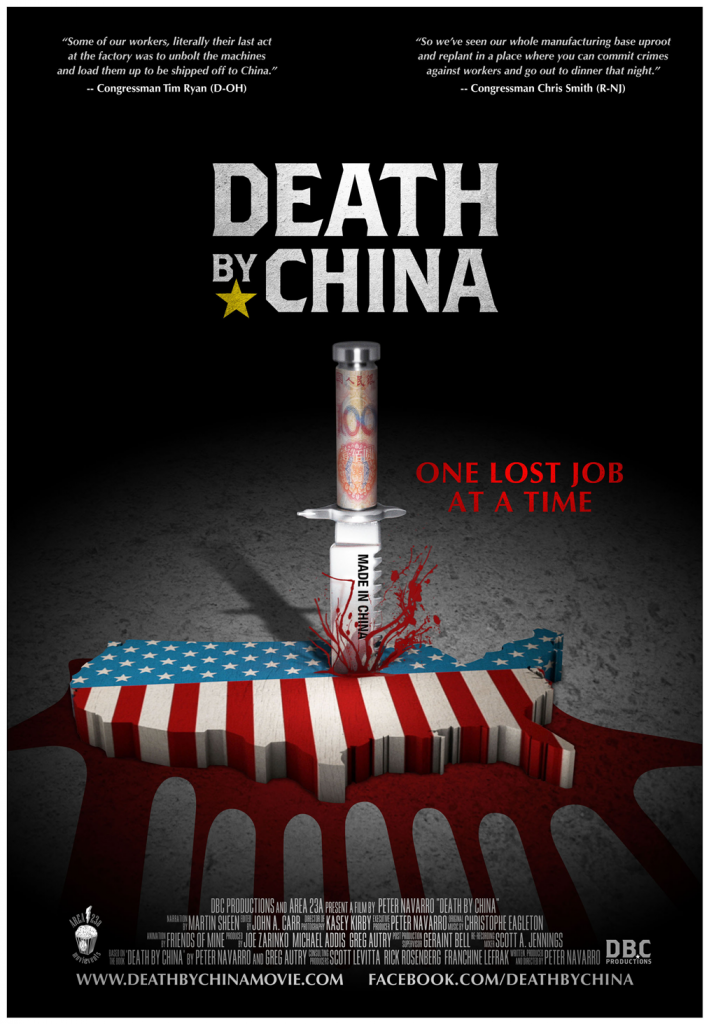
Death by China

DeathByChina1013x1463-709x1024The featured documentary should be mandatory viewing for all small to medium company owners, economic and foreign trade advisers. While we are inclined to blame the Chinese for all prevailing economic woes, it is in fact the blatant greed of western CEO’s – multinational companies in particular – who have placed profit above prosperity of their country. The film clearly spells out the causes for the systematic destruction of the american economy and manufacturing base, all for the sake of shareholders and outrageous CEO bonuses. The rampant expansion of China in Africa should raise serious concerns for all sub-Saharan African citizens whose elected leaders appear happy, but oblivious, in courting the Chinese with little or no consideration of the realities of their economic and human rights track record.

DEATH BY CHINA is a documentary feature that pointedly confronts the most urgent problem facing America today – its increasingly destructive economic trade relationship with a rapidly rising China. Since China began flooding U.S. markets with illegally subsidized products in 2001, over 50,000 American factories have disappeared, more than 25 million Americans can’t find a decent job, and America now owes more than 3 trillion dollars to the world’s largest totalitarian nation. Through compelling interviews with voices across the political spectrum, DEATH BY CHINA exposes that the U.S.-China relationship is broken and must be fixed if the world is going to be a place of peace and prosperity. Visit – www.deathbychina.com for details on acquiring this powerful documentary.

“A truly life-changing, mouth-dropping documentary film…Peter Navarro’s ‘Death by China’ grabs you by the throat and never lets go.” Francesca McCaffery, Blackbook Magazine

WCO to develop Implementation Tool for WTO ATF

WCO and WTO leaders meet in Geneva (WCO)

WCO and WTO leaders meet in Geneva (WCO)

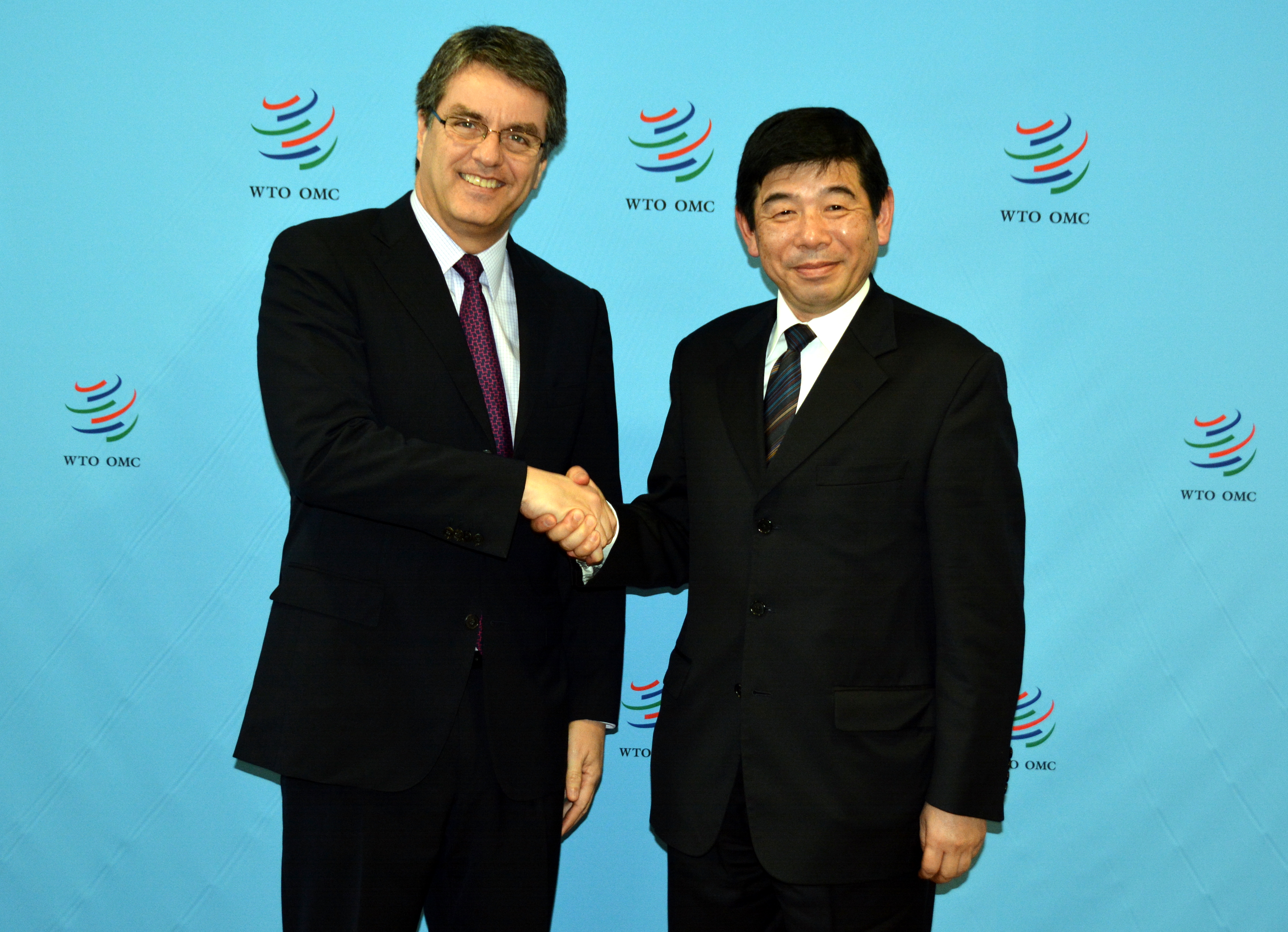
At the invitation of WTO Director General Roberto Azevedo, WCO Secretary General Kunio Mikuriya met with Mr. Azevedo at WTO headquarters in Geneva, Switzerland on 20 January 2014. They agreed that close cooperation between the two organizations is vital for successful implementation of the WTO Agreement on Trade Facilitation (ATF).

Secretary General Mikuriya emphasized the consistent and complementary nature between the ATF and the WCO Revised Kyoto Convention (RKC). He also described how the WCO Economic Competitiveness Package, that includes the RKC and all other Customs trade facilitation instruments, guidelines and best practices, will support implementation of ATF. Mr. Mikuriya also confirmed his readiness to involve other international organizations, development banks, donors and other stakeholders at a WCO forum to contribute to cooperation in support of the ATF.

Director General Azevedo was pleased to hear that the WCO was planning to publish an implementation tool to connect each provision of the ATF to WCO tools as well as a briefing document enabling Customs administrations to communicate with trade ministries. He expressed his willingness to leverage WCO expertise and experts for the WTO Preparatory Committee on Trade Facilitation as well as ATF needs assessment and implementation. Mr. Azevedo also suggested that the ATF provides another opportunity for the two organizations to enhance the good working relations that already exist in many areas beyond trade facilitation.

The two leaders also discussed how multilateral institutions could work on regional integration matters and agreed on the importance of adopting global standards and best practices to ensure connectivity at borders. Source: WCO

Business Guide for Developing Countries – WTO Trade Facilitation Agreement

Picture2The International Trade Centre has prepared a guide to help businesses take advantage of the WTO Trade Facilitation Agreement. The agreement simplifies customs procedures, allowing businesses to become more competitive. This jargon-free guide explains the provisions with a focus on what businesses need to know to take advantage of the agreement. It will also help policy makers identify their needs for technical assistance to implement and monitor it. To download the guide – click the following link: http://www.intracen.org/wto-trade-facilitation-agreement-business-guide-for-developing-countries/.

For instance, the guide explains how the article on ‘Advance rulings’ aims to address problems with inconsistent classification of goods by customs officials and the uncertainty it creates for traders. ‘Advance rulings are binding decisions by customs…on the classification and origin of the goods in preparation for importation or exportation. Advance rulings facilitate the declaration and consequently the release and clearance process, as the classification has already been determined in the advance ruling and is binding to all customs officers for a period of time,’ the guide explains. It goes on to list in jargon-free language the obligations and the procedure imposed on customs authorities related to advance rulings.

Reducing the on-the-spot decision making authority of individual customs agents thanks to advance rulings will also reduce bribery, the guide says. Corruption continues to be a key problem for developing-country exporters, who identified it as a major constraint on exports in a recent survey conducted by ITC.

The last chapter of the guide describes how the agreement will be implemented, including the special and differential treatment provisions that developing countries may invoke. Developing countries will be able to link the implementation of the commitments to technical assistance and support from donors. WTO member states will have to explicitly apply for delays for each commitment, which will need to be approved by the WTO and the implementation schedule published.

Source: International Trade Centre

What is the value of a slick customs service?

Cahir Castle Portcullis by Kevin King

Cahir Castle Portcullis by Kevin King

The traditional symbol of customs and borders services is the portcullis – the fortification through which a ship used to enter a port. But as developing countries are increasingly asked to recognise the benefits of liberalised trade to the detriment of their import duty revenue, how can they be helped to raise the portcullis? And is it really in their interests to do so?

With world trade growth expanding more than twice as rapidly as gross domestic product (GDP) over the past decade, says Steve Brady, director, Customs and Trade Facilitation for development consultancy Crown Agents, the potential rewards from participating in world trade are significant. “According to figures from WTO, in 2011 world merchandise exports and imports in real terms grew by over 5%. As a result, each reached over $1.8tn, the highest level in history.”

The major players working with developing country governments to help them benefit from this increase in trade include the World Bank, ICC, World Customs Organisation (WCO), IMF, UN Conference on Trade and Development (Unctad), development banks and specialist intermediaries such as Crown Agents.

A number of countries have improved their capacity as a result of international and domestic efforts, yet some are still hesitant to do so. The Centre for Customs and Excise Studies (CCES) at the University of Canberra finds that many developing country governments are heavily dependent on the revenue from import duties – in some cases this can be as high as 70% of a country’s total revenue base. The desire to protect this is understandably strong. Yet this same desire can be used to drive forward modernisation efforts, explains Professor David Widdowson, CEO of CCES. “Revenue leakage resulting from commercial fraud, poor customs and border procedures and corruption represents a major impediment to poverty reduction.”

Similarly time-consuming manual processing systems, over-regulation, or outright corruption, will discourage trade and investment and further undermine a country’s development. “In the worst cases up to 20 signatures are required to obtain customs clearance of goods, all of which require ‘informal payments’,” says Widdowson. “I have also seen examples of 15 different government agencies playing some role at the border, all acting independently.”

Guidelines or blueprints to modernise such customs and borders processes are available, for example, via the revised Kyoto convention (extolling the basic principles of automation, simplification, responsiveness to the regulation, consistency and co-ordination); the “Framework of standards to secure and facilitate global trade” developed by the WCO; and its “Columbus programme.”

Turkey is cited by Sandeep Raj Jain, economic affairs officer at the United Nations Economic and Social Commission for Asia and the Pacific (Escap), as a case study for the successful modernisation of customs systems, having consolidated 18 previously autonomous border gates and introduced a single IT clearance system, leading to an increase in tax revenues and a decrease in clearance time to the benefit of incoming and outgoing trade. Angola increased receipts sixteen-fold from $215.45m in 2000 (£148m) to $3,352m in 2011 through an improved National Customs Service and the introduction of an automated entry processing system and customs clearance Single Administrative Document.

The African Development Bank also supported post-conflict Liberia with the extension of an automated system for customs data, helping to reduce the time to clear goods at the port from 60 days to less than 10 days and increase revenue collection at three ports from about $4m a month to $10m-$12m. This, Ellen Johnson Sirleaf, president of Liberia has said, given the government additional scarce revenues to invest in the projects to improve the livelihoods of people.

Horror stories also abound of revenue loss, acting as a cautionary tale for leaving outdated customs processes untouched. A World Bank report, for example, finds that in Algeria smuggling caused a loss to the public exchequer rising from DA18bn in 2006 ($237m) to over DA61bn in 2011.

The message from the international community is that improved, automated and transparent customs services not only help eradicate theft and corruption, but also increase revenue through increased trade. Any fall in revenue from import tariffs due to signing up to bilateral free trade agreements can also be offset, says Bijal Tanna of Ernst & Young LLP: “One only has to look at the take-up of VAT by countries since the 1980s to understand that there is a consumer tax outlet to offset any loss of revenue from customs duty reductions. Back in the late 1980s, approximately 50 countries had VAT, now it is in place in over 150 countries.”

However, these arguments don’t always reach an appreciative audience. “In my experience”, says Widdowson, “economies may give lip service to the trade facilitation agenda, including entering into free trade agreements, but still expect their customs administration to collect traditional levels of duty. For example, with the introduction of free trade arrangements – hence falling duty rates – and a downturn in international trade, the Philippines continues to increase the ‘revenue targets’ of its bureau of customs, the derivation of which appears to be devoid of any analytical rigour.” (emphasis – mine)

Tanna also points to the collapse of the Doha round of the WTO negotiations heralding a breakdown in efforts to find a single global platform to drive a uniform approach to trade liberalisation. Perhaps it is the obligation of the international community to renew such efforts, alongside projects to improve customs systems in-country. Source: Original article by Tim Smedley of The Guardian