100% Container Scanning in Ports – a solution on the horizon?

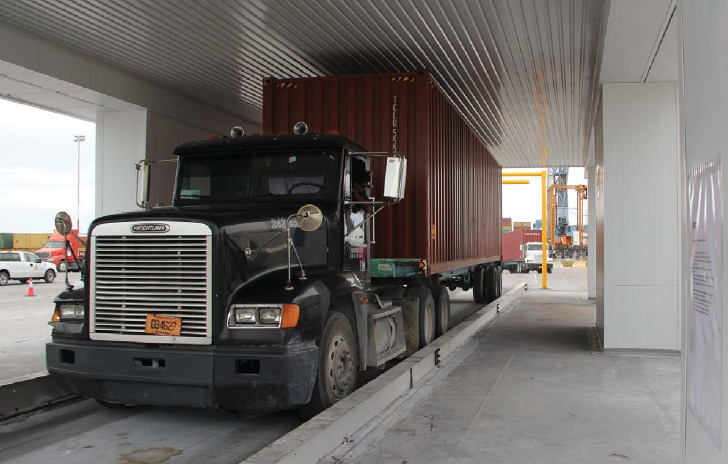
Decision Sciences maintains that 100% container scanning is possible without bringingcommerce to a crawl (Credit: Maritime Professional)

Decision Sciences maintains that 100% container scanning is possible without bringing
commerce to a crawl (Credit: Maritime Professional)

The following article published by Maritime Professional describes a new technology, already in use by a major terminal operator, which appears to put the requirement for 100% scanning of all inbound containers back on track. The article has been doing the rounds on a social media platform with some sceptism still being shared on its viability as a ‘100%’ scanning solution. All the same its always interesting to learn of new innovations. I guess the US Treasury has spent billions sponsoring these types of tech-development so as to vindicate its original threat to the rest of the world! (For the PDF version please click here!)

In July 2007, U.S. legislators passed a law requiring 100% scanning of U.S. bound containers at their last foreign ports by the year 2012. That federal requirement nearly died a quick death recently but has received a reprieve of sorts. Originally scheduled to take effect July 1, Homeland Security Secretary Janet Napolitano in May of 2012 notified Congress that she would use her authority under the 2007 law to delay implementation by two years. Napolitano said systems available to scan containers would result in a negative impact on trade capacity and the flow of cargo, and that some foreign ports do not have the physical characteristics needed to install such systems. If the last part was true then, however, it may not necessarily be the case now.

As reported in our 1Q 2012 edition of MarPro, pilot efforts were established at several foreign ports under the Secure Freight Initiative (SFI) targeting in-bound containers for weapons of mass destruction (WMD) prior to loading. Objections by trading partners surfaced and were confirmed by the Government Accounting Office (GAO).

In her testimony before the Senate Commerce, Science and Transportation Committee, DHS Secretary Janet Napolitano said in part, “DHS has learned a great deal from these pilots, but it has also encountered a number of steep challenges. Some of these issues relate to the limits on current technology. Technology doesn’t exist right now to effectively and automatically detect suspicious anomalies and cargo. This makes scanning difficult and time-consuming. …Therefore, DHS is compelled to seek the time extensions authorized by law with respect to the scanning provision.” At the time DHS’s Science & Technology Directorate (S&T) had already spent nearly $10 million on efforts to develop a container security device; to no avail.

New Technology: New Hope for Compliance
As the U.S. government continues to try to find a solution to its own scanning requirements, it also continues to fund testing when a promising solution comes to light. In September of last year, Decision Sciences International Corporation (DSIC), a provider of security and detection systems, announced that it was awarded a $2.7 million contract by the DHS Domestic Nuclear Detection Office (DNDO) for an Advanced Technology Demonstration (ATD) of its Multi-Mode Passive Detection System (MMPDS). Under the contract, DSIC supports government testing of MMPDS intended to evaluate the system’s effectiveness and readiness for transition to production. Before that, Decision Sciences was awarded another contract – this one worth $400,000 – by the U.S. Department of Defense to test muon tomography based scanning systems capable of detecting explosives. 

The Multi-Mode Passive Detection System – how it works
Based in Chantilly, VA, with a development/production facility in Poway, CA, DSIC and its 27 employees and contractors hope to bring together hardware and software development, systems integration and cutting edge science to improve the safety and security of global commerce. Based on patented technology invented by scientists at the Alamos National Laboratory, the Multi-Mode Passive Detection System (MMPDS) was developed with private sector investment and expertise. MMPDS is billed as a safe, effective and reliable automated scanning device for detecting unshielded to heavily shielded nuclear and radiological threats. In reality, and as MarPro found out during a focused site visit in Freeport, Bahamas, the system does so much more.

DSIC’s passive scanning technology uses naturally occurring cosmic ray muons to detect potential threats in cargo, vehicles and other conveyances. DSIC President and CEO Dr. Stanton D. Sloane explains, “Equipment can generally be classified into two main categories; active and passive. Active systems include x-ray and/or radiation technologies. In other words, they add some sort of radiation or energy to the environment. Our system is 100 percent passive; we don’t generate any additional energy. We simply use the existing cosmic ray ‘muons’ to do the scanning. When cosmic rays hit the upper atmosphere, they create showers of atomic particles. One of the particles is a muon. High in mass, muons travel at near the velocity of light. Because of this, muons penetrate materials … even very dense materials … readily.

Normal cosmic radiation is 5000 muons per minute and penetrates through lead, steel, concrete and just about anything else. Sloane adds, “That’s really the breakthrough technology. We have upper and lower detectors. As the muons go through the upper detector we calculate their trajectory. As they go through the bottom detector, we calculate their trajectory and we look for a change in that track. The angular change of the track is a function of the density of the material that the muons go through. The denser the material that the muons penetrate, the larger the angular change.”

Beyond the efficacy of the system is its vivid imagery of the inside of the container it is scanning. With x-ray machines, if something is found, the container must be taken to the side, analysis performed and delays to the container magnified. Not so with Decision Sciences technology: false positives are eliminated because the density of typical items – and the dangerous ones too – can be catalogued.
Continue reading →

Cracking Down on Cheating by Foreign Companies

Customs LawThe following article and its ensuing piece of legislation would seem to suggest that current Customs’ automated risk management is not doing its job, or at least is not as successful as authorities would often have one believe. Will this legislation signal a return to good old-fashioned ‘manual’ customs investigative work based on human intelligence? What the Congressman appears to overlook is that it is the US importers who are liable for correct clearance of foreign supplied goods. If CTPAT (and any other AEO scheme for that matter) have any worth, then surely the USCBP would look at de-accrediting US importers who fall foul of its import compliance levels? For many, the question remains – how successful (or even relevant) are the post 9/11 Customs Security measures? Besides creating significant expense budgets for Customs administrations, lucrative business opportunities for scientists, technology vendors, standards bodies, and of course consulting opportunities for the hundreds of audit firms and donor agencies – are the benefits, cost-savings and efficiencies in our current era of “Security” that visible? For many traders, all of this has been accepted as little more than the cost of doing and remaining in business. Period!

Congressman Dan Lipinski introduced legislation that will help American manufacturers grow their businesses and add jobs by cracking down on foreign companies that illegally avoid paying millions of dollars in customs duties. The Customs Training Enhancement Act (click on hyperlink to view the Bill) will facilitate the sharing of information between the private sector and U.S. Customs and Border Protection, enabling the government to do a better job of identifying schemes that cheat American taxpayers by importing foreign goods without paying duties.

The bill, which was folded into Democratic and Republican versions of more comprehensive Customs legislation in the previous Congress, further advances the goal of levelling the playing field so American businesses have a fairer shot against their foreign competitors.

“Blatant cheating by foreign firms has become more widespread at a time when American employers and workers are already at a serious disadvantage. This is not only bad for American business, but it hurts taxpayers by robbing the federal government of taxes it is rightfully owed,” Rep. Lipinski said. “The Customs Training Enhancement Act offers a common-sense approach by allowing impacted industries to  provide our Customs agents the critical intelligence they need to spot the cheaters.”

Since 2001, importers and exporters of goods into the United States have avoided paying $600 million in duties, according to the U.S. Government Accountability Office, which estimates that 90 percent of all transhipped or mislabelled items originated in China. Foreign companies have avoided duties by misclassifying and undervaluing products or by shipping goods from one country to another on their way to the United States in order to disguise the country of origin.

Under Rep. Lipinski’s bill, Customs and Border Protection would be required to seek out companies and trade groups that have information that can identify misrepresented shipments. That information, in turn, would be shared directly from these industry experts to Customs agents working on the front lines.

The Customs Training Enhancement Act is modelled on a successful program forged between the steel industry and Customs and Border Protection in which company and industry officials have taught Customs agents how to spot products that have been deliberately mislabelled.

“The steel industry has shown us a public-private partnership that saves taxpayers millions of dollars while costing the federal government very few, if any, resources,” Lipinski said. “We need to expand this program and fight back against the lying and cheating by foreign companies that are hurting American taxpayers, businesses, and workers. The Customs Training Enhancement Act is an important first step.” Source: www.lipinski.house.gov

CBP Maritime Operations resume after hurricane ‘Sandy’

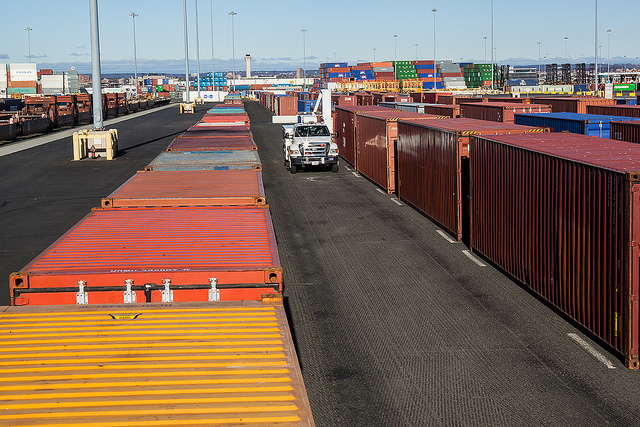
A U.S. Customs & Border Protection Mobile Radiation Portal Monitor (MRPM) drives down a row of containers checking them for radiation.The truck will drive down an entire row of containers, scan one side of them and then it will drive down and scan the other side of them.

U.S. Customs and Border Protection’s maritime mission is now back on-line with today’s processing of cargo vessels and containers. “In the aftermath of Hurricane Sandy the people of New York and New Jersey have faced great adversity, the men and women of CBP have been with them each step of the way,” said Robert E. Perez, CBP’s Lead Field Coordinator for CBP in FEMA Region II. “Today’s processing of cargo ships into the Port of New York/Newark marks the next step in CBP restoring its maritime operations here in the greater New York City area and returning to business as usual.”

CBP personnel are on site today processing 161 expected international flights with approximately 31,500 passengers at JFK and 92 expected international flights with approximately 14,500 passengers at Newark International Airport.

To facilitate the flow of goods into the New York area, CBP officers conducted cargo container inspections this morning at the Port of New York/Newark for the first time since Hurricane Sandy battered the New York/New Jersey area. CBP import and entry specialists were back to work as soon as their facility opened last week, processing merchandise to help facilitate the flow of much needed supplies and supporting the United States economy.

CBP worked very closely with the U. S. Coast Guard and the NY/NJ Port Authority to lift waterway restrictions and open marine terminals to cargo vessels. Officers were on site and ready to process shipments as soon as cargo was off loaded. CBP deployed officers to JFK and Newark Liberty International Airport from other parts of the country to assist with the processing of international passengers. Source: FEMA

Homeland Security’s “Pluto” sub designed to imitate narco subs

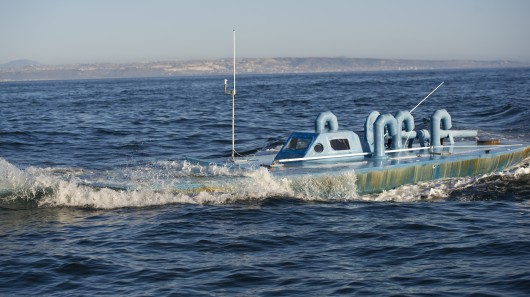
When someone mentions drug running, most people probably picture a person coming through an airport carrying a suitcase with a false bottom or with balloons stuffed up their nether regions. We don’t usually imagine things like submarines. Unfortunately, the South American drug cartels not only imagine them, but they build and operate them. To help combat these underwater smugglers, the Department of Homeland Security Science and Technology Directorate (S&T) is operating their own drug-running submarine called PLUTO to develop and test a new generation of detection equipment.

Named after the hard to detect (former) planet, PLUTO reproduces the characteristics of what are commonly called “narco subs.” When rumors of their existence began to circulate in the 1990s, narco subs were dismissed as something out of a James Bond film and nicknamed “Bigfoot” because everyone in drug enforcement heard about them, but no one had seen one. Then one was captured in 2006 by the U.S. Coast Guard in the Eastern Pacific Ocean.

Narco subs are not true submarines. Instead, they’re a form of semi-submersible or, to give them their official designation, self-propelled, semi-submersibles (SPSSs). They ride very low in the water with only about three inches (7.62 ) of freeboard above the waterline and are designed to give only a tiny radar profile. They also ride very rough and their crews of three or four have little to eat, bad air and no toilet facilities as well as sometimes having an armed guard as a supervisor.

The subs are also meant to be expendable at the end of a delivery “Drug-running is lucrative. It is cheaper to simply build another vessel than to run the risk of trying to get a vessel and its crew home,” said Tom Tomaiko of S&T’s Borders and Maritime Security Division.

PLUTO was built in 2008 and is home-ported at Eglin Air Force Base near Fort Walton Beach, Florida, where it is maintained by the Air Force’s 46th Test Squadron, though it operates in the Gulf of Mexico, and Atlantic and Pacific Oceans. Forty-five feet (13.71 m) long and running at a maximum speed of ten knots (11.52 mph/18.52 kph), though it only cruises at four to eight knots (4.60 mph/7.4 kph to 9.20 mph/14.81 kph), PLUTO can carry up to four crew, but usually only operates with one due to safety.

It’s used by the U.S. Coast Guard, Customs and Border Protection/Air and Marine (CBP/OAM), U.S. Navy, U.S. Air Force and other national agencies as a target submarine capable of mimicking a narco sub for the purpose of testing detection systems from ships, planes and even satellites at various angles and under different sea conditions.

Customs and Border Protection used PLUTO to test its Dash 8 maritime surveillance aircraft’s SeaVue radar to determine detection distances and aspect angles for optimal mission performance and the U.S. Navy tested its P-3 aircraft’s maritime surveillance radar system against the pseudo narco-sub.

PLUTO is only one part of an escalating war between drug cartels and law enforcement agencies. Recently, the cartels have started using true submarines that travel submerged, which means that PLUTO may now be fighting yesterday’s war.

According to Admiral James Stavridis, former Joint Commander for all U.S. forces in the Caribbean, Central and South America, “criminals are never going to wait for law enforcement to catch up. They are always extending the boundaries of imagination, and likewise, we must strive to push forward technology and invest in systems designed specifically to counter the semi-submersible. We need to be able to rapidly detect and interdict this new type of threat, both for its current effects via the drug trade, and – more troublingly – for its potential as a weapon in the hands of terrorists.” Source: Department of Homeland Security

WTC developer says United and American airlines negligent

While American’s are accustomed to a period of mourning and remembrance over this time, it seems as though property mogul – Larry Silverstein – is more concerned with lost profits than the fate of a few thousand lost souls resulting from the 9/11 tragedy. Perhaps the US Airforce should be cited for not scrambling fighter jets quick enough to intercept the rogue planes. Moreover, why not cite the ‘negligent’ customs and immigration officials of the DHS for failing to intercept the rogue hijackers. A strange case of selective blame, indeed!

Most of the lawsuits arising from the hijacked plane attacks on the World Trade Center 11 years ago have been settled, but one demanding that United Airlines and American Airlines be held liable for loss of property and business could go to trial.

Two recent rulings by a federal judge in New York denying the airlines’ bid to dismiss the lawsuit over a narrow insurance dispute have opened the door to the entire case ending up in the hands of a jury. At issue is whether the two airlines and other defendants should pay additional damages to Larry Silverstein, the leaseholder of the World Trade Center property, beyond what he has already received from his own insurer.

Silverstein’s World Trade Center Properties blamed United, now United Continental Holdings Inc, and American Airlines, for breaches of security. The 2008 lawsuit also named aircraft manufacturer Boeing Co, the Massachusetts Port Authority, which manages Logan International Airport, and security companies.

The lawsuit claimed that negligence allowed hijackers to board two planes at the Boston airport and use them as missiles to destroy the 110-story twin towers and cause other buildings on the site in lower Manhattan to burn down. Before Sept. 11, the airlines and the security companies they hired oversaw security at airports and on planes. That responsibility now lies with the Transportation Security Administration, a government agency.

Silverstein is seeking $8.4 billion in damages for loss of property and lost business, even though U.S. District Judge Alvin Hellerstein has limited the amount to the $2.8 billion Silverstein paid for the leases. The lawsuit is among the last pieces of litigation resulting from the attacks of Sept. 11, 2001, which killed more than 3,000 people in New York, the Pentagon outside Washington, and Pennsylvania. Read the full article here! Source: Reuters.

Related articles

America – shees verry beeeeg!

Publication of the latest USCBP Border Patrol Strategic Plan reflects and builds on the transformation of the United States’ relationships with Mexico and Canada, particularly in the areas of border management and security. The joint Declaration of Principles for the 21st-century border represents an enhanced and strengthened commitment to fundamentally restructure the way we manage our shared border. The depth and breadth of cooperation that occurs now between the United States and Mexico was unthinkable even a few years ago. Similarly, the Beyond the Border declaration between Canada and the United States has an equally significant potential in what is already our historically extraordinary relationship with Canada. These developments have created unprecedented opportunities with both Mexico and Canada, in which DHS and CBP will play a defining role, to improve our security and economic competitiveness – and CBP will play a defining role in taking advantage of those opportunities. The Border Patrol in turn is key to advancing CBP’s security agendas with Mexico and Canada, working with its law enforcement counterparts in each country to identify and mitigate threats.

The U.S. Border Patrol is a premier law enforcement organization, recognized around the world for expertise, capabilities, and professionalism. CBP’s officers and agents are the frontline, the guardians of the Nation’s borders. We honor and are proud of them, and we thank them for everything that they do to protect America and the American people. Source: CBP.gov

So there you have it – for a real dose of commercialized Customs and what it can do for the good folks in America, and anywhere else in the world for that matter, check out the strategic plan by clicking here! You’ll be forgiven if you thought you were reading an edition of Jane’s Defense & Security Intelligence & Analysis. Most customs and border management agencies around the world can only dream about such impressive kit! 

Related items

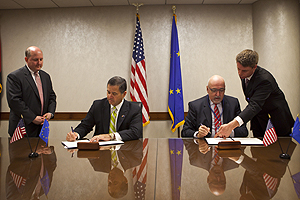
USCBP and EU sign C-TPAT Mutual Recognition

U.S. Customs and Border Protection (CBP) and the European Union (EU) signed today a Mutual Recognition Decision between CBP’s Customs-Trade Partnership Against Terrorism (C-TPAT) program and the EU’s Authorized Economic Operator (AEO) program.

U.S. Customs and Border Protection Acting Commissioner David V. Aguilar and European Union Taxation and Customs Union Directorate Director-General Heinz Zourek sign the Mutual Recognition Decision between CBP’s Customs-Trade Partnership Against Terrorism program and the EU’s Authorized Economic Operator Program.

CBP Acting Commissioner David V. Aguilar and Director-General Heinz Zourek, European Union Taxation and Customs Union Directorate (TAXUD) signed the decision, which recognizes compatibility between the EU and the U.S. cargo security programs.

“Today’s decision on the mutual recognition of the EU and U.S. trade partnership programmes is a win-win achievement: It will save time and money for trusted operators on both sides of the Atlantic while it will allow customs authorities to concentrate their resources on risky consignments and better facilitate legitimate trade,” said Director-General Zourek.

C-TPAT is a voluntary government-business initiative to build cooperative relationships that strengthen and improve overall international supply chain and U.S. border security. C-TPAT recognized that U.S. Customs and Border Protection can provide the highest level of cargo security only through close cooperation with the ultimate owners of the international supply chain such as importers, carriers, consolidators, licensed customs brokers, and manufacturers. Source: US CBP

Related article

US Customs – Testing new way to decrease border dwell-time for travellers

In an ongoing effort to reduce wait times at the International Bridge, U.S. Customs and Border Protection Office of Field Operations will pilot a project to bring vehicles to the inspection booths in less time.
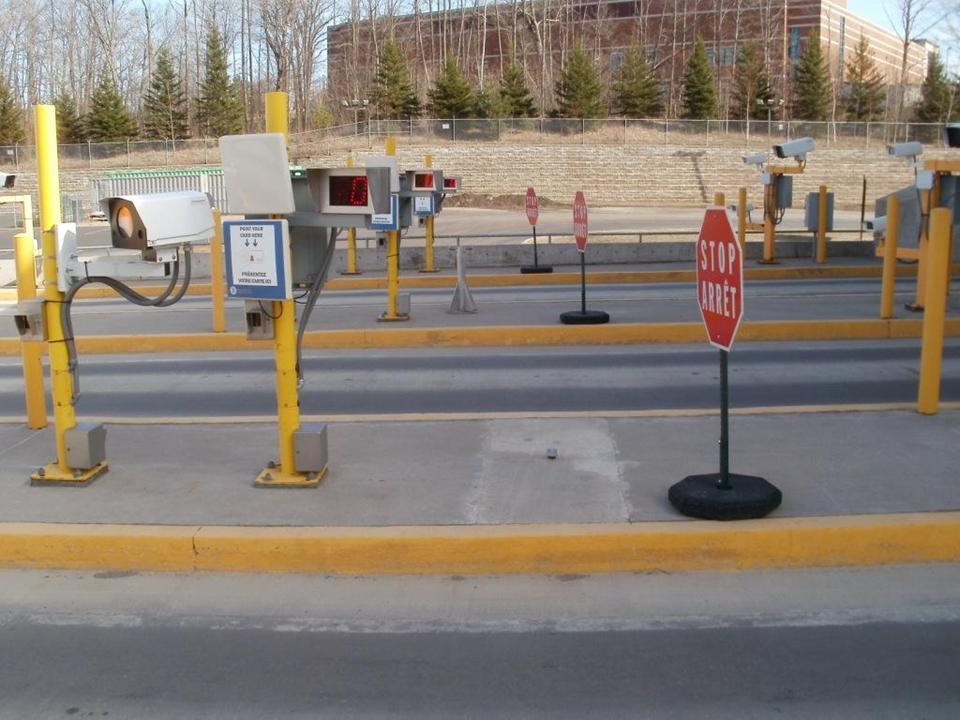
The stop signs will be placed in all three upper lanes and will shorten the “pull up” distance to the booth. This allows vehicles to queue up quicker. “Efficacy in movement is paramount to this project’s success. We are always trying to improve the flow of legitimate traffic while enforcing the laws of the United States,” said Patrick Wilson, CBP Sault Ste. Marie Assistant Port Director.

The Sault Ste Marie port of entry has a unique design that separates commercial traffic from car traffic, creating an upper and lower plaza. The focus of this project will be on the upper plaza only and will not affect the flow of traffic on the lower plaza.

Stop signs will be placed in all three upper lanes beginning Friday, April 20. The stop signs will shorten the “pull up” distance to the booth. This allows vehicles to queue up quicker. The stop signs will be placed near Radio Frequency Identification readers where the traveling public can display their Western Hemisphere Travel Initiative RFID-enabled document to pre-populate the officer’s computer screens.

CBP is testing the theory that they can process more travelers each hour by reducing the amount of time it takes each vehicle to get to the inspecting officer. This pilot project will incorporate a two-stop sign process. Upon entering the upper plaza, vehicles will be required to stop at the first existing stop sign. As the vehicle ahead clears, travelers will move to the next new stop sign and present their ID to the RFID reader. Once the vehicle at the inspection booth clears, travelers will proceed to the inspection booth.

Vehicles with trailers/campers are asked to use the lower plaza lanes so as not to impede the functionality of installed equipment. LED signage will be adjusted to notify motorists of this change.

CBP officers will direct traffic periodically during this project to help educate travelers on this new process. “We continue to look for efficiencies in our processes to improve the border crossing experience. If we can save a couple of seconds of inspection time per vehicle, the time savings should reduce each traveler’s wait,” said Assistant Port Director Wilson. Source: http://www.cbp.com

Financial pinch affects CBP’s modernisation and developmental capacity

The US Bureau for Customs and Border Protection  has money to run commercial trade processing system (ACE) but not expand it. Customs and Border Protection has US $140 million to operate and maintain a commercial trade processing system, but there’s no money in the 2012 budget to further develop the program. The lack of development money, particularly for the simplified entry process, has caused concern amongst business community members. Simplified entry is something that Customs and the trade community are looking for to further automate import processing and lower transaction costs. Source: USCBP

CBP – An ode in modesty

There’s nothing like beating the breast and extolling the homeland’s unselfish generosity for the benefit of mankind, or am I being facetious? Today’s post on the US Customs and Border Protection‘s website titled “CBP Leads World Customs Organization on Natural Disaster Responsiveness” , is a case in point. The reader is left in no doubt as to who was responsible for recent developments that provide for a Customs role in natural disasters. I read with interest New Zealand Customs‘ role in the Christchurch earthquakes last year – very understated and with empathy for the survivors. The WCO consists over 177 affiliated customs administrations / border agencies each of whom make some form of contribution to it’s various committees and resulting accords or standards. So what if CBP made a major contribution, its a cheap shot to boast at the expense of others who might also have contributed, if not to the same extent. Read the article here!

U.S. Customs may get more involved with export security

A top U.S. Customs and Border Protection (CBP) official said the agency is considering expanding its role to include verifying U.S. exporters’ security compliance, with any future program likely to be modeled after the agency’s Customs-Trade Partnership Against Terrorism (C-TPAT) program. C-TPAT sets security standards for imports and verifies compliance with those standards.

“The idea is being noodled around now” at CBP’s headquarters in Washington, said Dan Baldwin, executive director for cargo and conveyance security in CBP’s Office of Field Operations, during a Nov. 3 presentation at the Coalition of New England Companies for Trade (CONECT) 10th Annual Northeast Cargo Symposium in Foxborough, Mass.

The impetus for adding export security to CBP’s portfolio comes partly from the Obama Administration’s push to increase exports as a means of strengthening the U.S. economy. But much of the motivation traces back to exporters themselves.

Large exporters have been asking for a program that would verify their compliance with foreign governments’ cargo security programs, some of which are based on C-TPAT, Baldwin said. CBP plans to sign an agreement with the European Union regarding coordination between C-TPAT and the EU’s Authorised Economic Operator (AEO) security program by the end of this year, he said.

CBP already has some involvement with export security, notably on the U.S. borders with Mexico and Canada. The agency could play a bigger role than it currently does in enforcing limits on technology and licensed goods, Baldwin said.

“I think … the same process we use on the import side should be emulated on the export side,” he concluded. “I don’t think that’s going to be a heavy lift.”  Source: DCVelocity.com Comment: not likely if it means the CBP has to condescend to adapt its system to those of a foreign sovereignty!

Related articles

USCBP Receives 2nd Unmanned Aircraft System

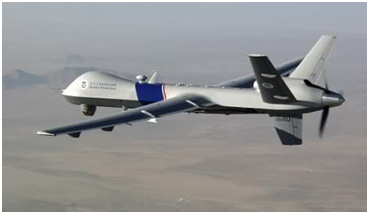
U.S. Customs and Border Protection received a second Unmanned Aircraft System Predator-B at the Naval Air Security Operations Centre in Corpus Christi, Texas—the first of two UAS’s funded through the Southwest Border Security Bill Supplemental. The UAS will provide critical aerial surveillance for U.S. Border Patrol agents stationed along the Texas-Mexico border.

The CBP UAS Program operates Predator-Bs from operation centres in Arizona and Texas which allows CBP to deploy unmanned aircraft along the Southwest border from the eastern tip of California across the common Mexican land borders of Arizona, New Mexico and Texas.

The UAS Operations Centre in Corpus Christi supports counter-drug operations in the Western Caribbean and Eastern Pacific, disaster relief and humanitarian support in the Gulf Coast region, and rapid deployment throughout the southern tier of the U.S. and the Western Hemisphere.

View a videofile – http://www.dvidshub.net/video/embed/105254

Since its inception, the CBP UAS program has flown more than 11,500 UAS hours supporting border security operations and disaster relief and emergency response, including various state governments and the Federal Emergency Management Agency. These border security efforts have led to the seizure of approximately 46,600 pounds of illicit drugs and the detention of approximately 7,500 individuals suspected in engaging in illegal activity along the Southwest Border. Source: CBP

Homeland Security’s Private Sector Resources Catalog v.3

Being an importer, broker, carrier, or even just a plain old citizen in the USA implies you’re always going to get the most comprehensive guidance. Moreover you’re also going to need a fulltime lawyer or trade specialist to delve into and decifer the info – that’s why consultants make so much money.

The DHS has released version 3 of its Private Sector Resources Catalog targeted specifically towards private sector partners and encompassing the entire Department. This document collects the training, publications, guidance, alerts, newsletters, programs, and services available to the private sector across the Department. Recognizing the breadth and diversity of the available resources as well as the Department’s continually evolving work, this catalog will be updated regularly to publicize new resources and increase private sector awareness. Source: DHS

9/11 – The Significance for Customs

The tenth anniversary of 9/11 recalls a day of infamy for many, particularly those who lost loved ones, not to mention the sheer audacity and questionable motives of the respective attacks. It also marked a distinct period of change in the Customs, international travel and trade environments. For one, there is a not a single person involved in any of the above who has not felt the effects of a ‘shake up’. It is therefore relevant to recount this event and reflect on the explicit impact which the attacks in New York would have for Customs officers, worldwide.

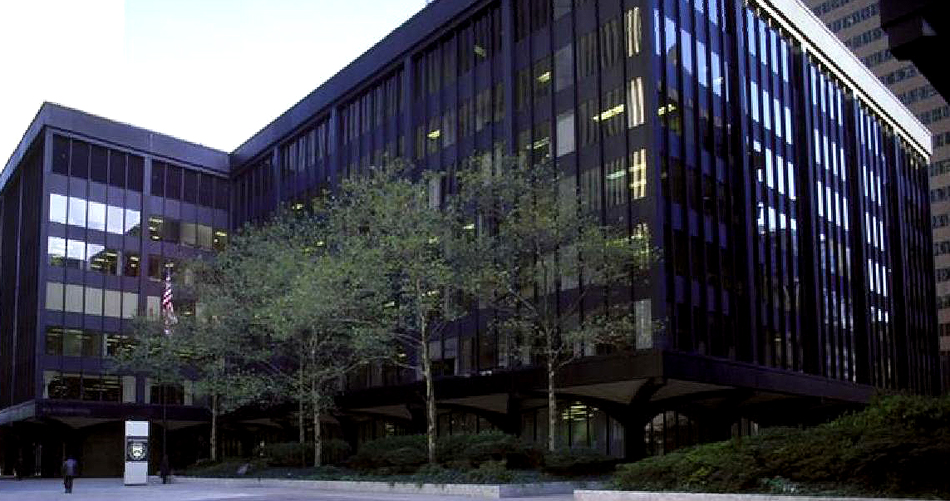
WTC 6, an eight storey building –known as Custom House – was home to 760 officers of the US Customs Service. It was situated adjacent to the North Tower. Within 12 minutes of the first plane hitting the North Tower at about 8:46 am, all occupants (WTC 6) were safely evacuated. Stephen Barr of the Washington Post noted in an article titled, “Knowing the Drill Saved Lives at New York’s Customs House” on 18 September 2001 that ‘Federal agencies demonstrated coolheaded leadership during the crisis. Because of practice sessions held several times a year, employees knew what to do and where to go. In a day marked by unbelievable horror and confusion, old-fashioned fire drills helped one band of office workers to escape’.

Beneath the plaza level of US Customs House (WTC 6) was a large underground garage, separated off from the rest of the complex’s underground area and guarded under tight security. This was where the various government services parked their bomb-proofed cars and armoured limousines, counterfeit taxi cabs and telephone company trucks used for undercover surveillance and covert operations, specialized vans and other vehicles.

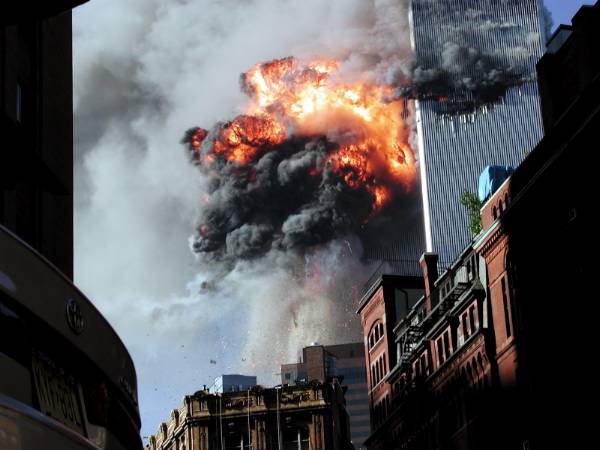
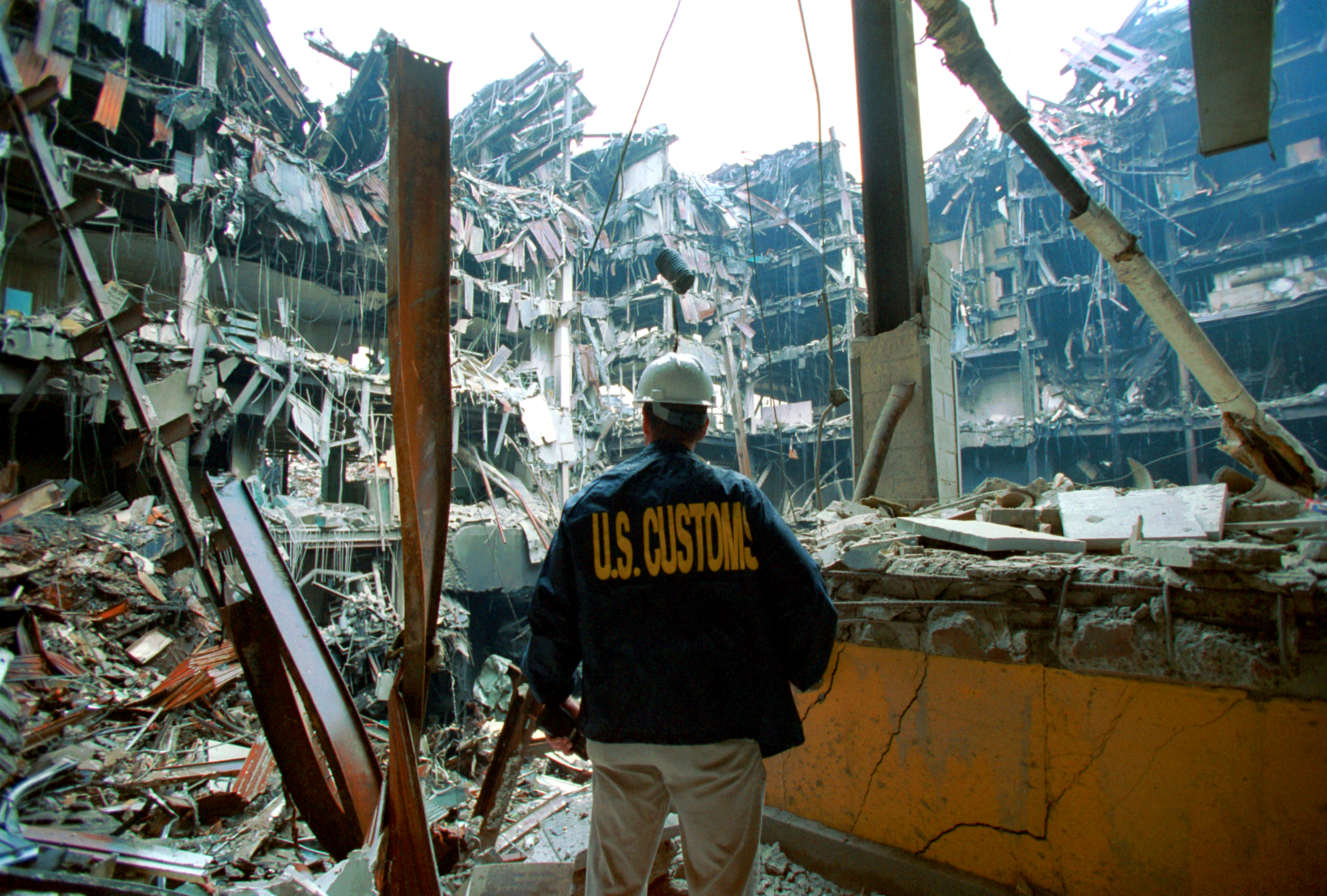
New York Customs House (WTC6) - AfterThe evacuation of WTC 6 was indeed timely, because at 9:04am a massive explosion shook the building, bellowing a huge plume of smoke 550 feet into the air. When the North Tower fell, the US Customs House (WTC 6) was crushed and totally incinerated. Much of the underground levels beneath it were also destroyed.

The Commissioner designate, Robert C. Bonner, commented “The sudden disruption to such a large and important area of Customs’ operations threatened to compromise the immediate security of ports of entry in the New York area and the integrity of ongoing Customs investigations and trade and enforcement activities. We faced an immediate need to relocate all 800 employees and to allow them to resume their work quickly so they could focus on border security. These men and women responded heroically to the challenge, setting up a temporary operations center within hours at nearby JFK airport. And, within three weeks of the attacks, they succeeded in relocating our New York Customs Office into new office space in Manhattan”. Click here to view the full testimony of Robert Bonner to the National Commission on Terrorist Attacks.

Customs evidence amongst the rubbleIn the months to follow, significant developments resulted in the institution of the Department of Homeland Security – the merger of the US Customs and Immigration Services – a gargantuan displacement of some 140 000 federal officials. (For SARS Customs officials – ours is but a picnic!). The full implications of 9/11 were to be felt by the international community in 2002 with the implementation of several ‘security/anti-terrorism’ measures that have undoubtedly changed the focus, intent of all customs administrations worldwide. Click here to visit the 9/11 image gallery.