![At the launch of Transnet National Ports Authority's new Integrated Port Management System (IPMS) [Transnet]](https://mpoverello.com/wp-content/uploads/2015/08/at-the-launch-of-transnet-national-ports-authoritys-new-integrated-port-management-system-ipms.png?w=300&h=199)
At the launch of Transnet National Ports Authority’s new Integrated Port Management System (IPMS) [Transnet]
Transnet National Ports Authority’s new web-based Integrated Port Management System (IPMS) went live on 26 July at the pilot site, the Port of Durban, with the crude oil tanker, Colorado, the first to be brought into the port using the new system.
Developed by Navayuga Infotech, a company based in India, in collaboration with their South African partner Nambiti Technologies, the IPMS is a strategic project that aims to support the broader objectives of the Transnet Market Demand Strategy (MDS) in terms of efficiency and productivity.
The project will cost TNPA around R79 million for the entire system, for all eight South African ports, covering concept development, architecture, implementation and rollout.
TNPA Chief Executive, Richard Vallihu, said: “Since 2008, various feasibility studies were undertaken where we identified the need for an automated and web-based system to improve port operations, strengthen efficiencies and enhance competitiveness. This online system will help transform our ocean gateways into smartPORTs by using advanced information technology that will make them more intelligent and sustainable, while conserving resources, time, space and energy.”
The system replaces manual processes, with key port operations now set to be automated, online and in real time.
Vallihu said the IPMS was benchmarked against Malaysian and Singaporean ports which were among the world’s most efficient. The IPMS system will be a groundbreaking initiative in that for the first time in the world a system such as this is integrated across multiple ports on a single platform.
“For us as a customer-focused organisation this state-of-the-art information technology will ensure that port information and processes are transparent and easily accessible to users throughout the South African port logistics chain,” he said.
Yugen Reddy of Sharaf Shipping Agency was excited about being able to work more efficiently. “My role as an agent is to make sure that ships are in and out of the port as quick as possible because time is money. With IPMS we will be able to use our smart phones or tablets while we’re out and about to update the system and get acknowledgment from TNPA on the spot with regards to sailing or berthing of vessels,” he said.
Vessel agent, Londa Small of Thembani Shipping agreed. “I am optimistic about the IPMS system because everything’s going to be in real-time enabling quicker turnaround,” he said.
IPMS will link to Transnet Freight Rail’s Integrated Train Plan (ITP) and Train Execution Management System (TEMS). It is also integrated with global systems such as Lloyds Register, AIS (for vessel traffic management), IPOSS (for weather), EDI (Electronic Data Interchange) and SAP (for business operations, customer relations and finance).
From Durban the project team will move on to Cape Town and Saldanha, then Port Elizabeth, Ngqura and East London and finally to Richards Bay and Mossel Bay.
TNPA conducted daily intensive training for internal and external users at the Maritime School of Excellence in Durban during June. Source: Transnet
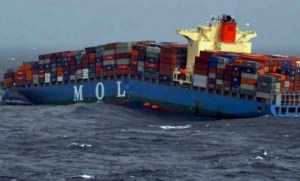 The responsibility for verifying the gross weight of loaded containers under next year’s new box-weighing rules will in many cases rest with freight forwarders, logistics operators or NVOCCs, according to freight transport insurance specialist TT Club.
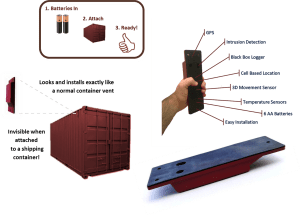 Technology once again demonstrates that it not only ‘enables’ but can also provide companies a ‘differentiator’ to get ahead of the competition – at least for a while. This is the second such innovation in recent weeks which addresses the needs of international shippers and logistics operators in meeting stringent security requirements while at the same time offering a compelling solution for supply chain auditability and the management of their assets. Furthermore, with more and more countries offering authorised economic operator (AEO) programs these same shippers and logistics operators will in the longer term enjoy a certain comfort from such technology investments through swifter customs clearance or green-lane treatment.


 In a bid to tackle overweight containers at its ports, Vietnam is seeking to address this issue with domestic legislation on container weighing practices. This is in contrast to the International Maritime Organisation, which had agreed on an amended rule that would see shipping containers being weighed before they are loaded onto ships – a rule which will come into effect in 2016.
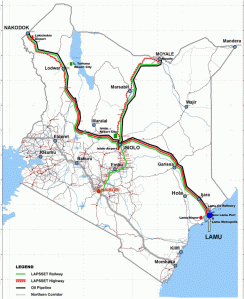 Kenya’s high court on Friday ordered a halt to the long-delayed development of a mega-port on the country’s northern coast for at least two weeks to allow a lawsuit lodged by local landowners over compensation to move forward.


 The International Maritime Bureau has been alerted to a fraud involving a shipping container’s weight and size that is atypical of what one might out of a container weight fraud case; the tare weight, or unladen weight of the container itself was unrealistically falsified and much higher than the actual, correct weight of the container.
![Cargo Screening [www.aircargonews.net]](https://mpoverello.com/wp-content/uploads/2014/08/cargo-screening-www-aircargonews-net.jpg)














 What Happened to the Portcullis?
You must be logged in to post a comment.