MSC ship sets Durban Container Terminal record

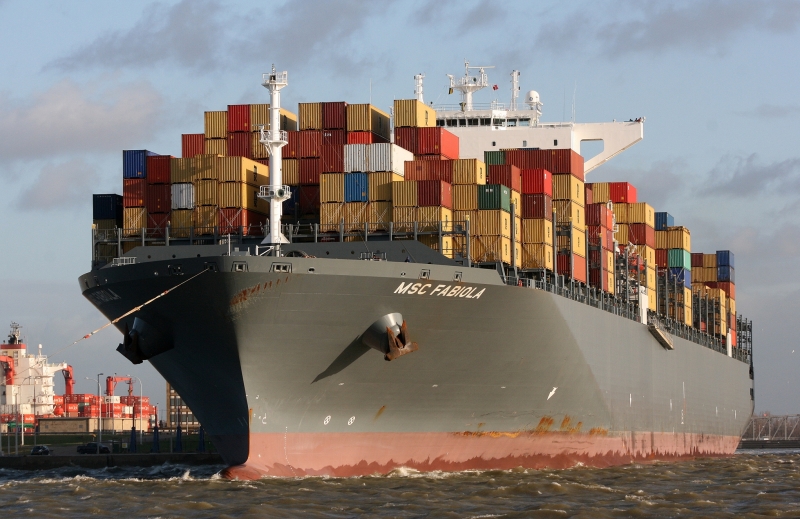
MSC Fabiola - sets new record for Durban container vessel capacity

MSC Fabiola – sets new record for Durban container vessel handling capacity


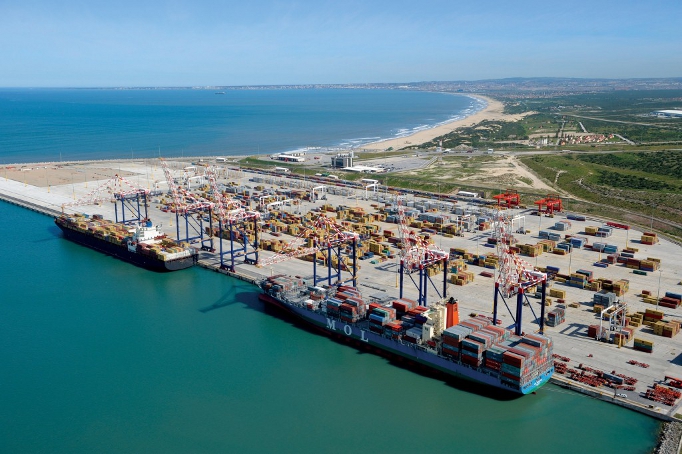
The visit to Durban, a fortnight ago, of the MSC FABIOLA has again raised the limit in terms of container ship sizes to call at the port. The previous largest box ship to call at Durban was the 11,660-TEU MSC Luciana, whereas MSC Fabiola can carry up to 12,562-TEU.

Obviously the ship was not fully laden otherwise the port would not have been able to accommodate the ship. The deepest berths at the Durban Container Terminal are 12.8m and those at Pier 1 are about the same.

MSC Fabiola is a charter vessel and is currently deployed on MSC’s pendulum service between Northern Europe and Singapore via Durban, Cape Town and Ngqura. The rotation is Northern Europe ports, Cape Town, Ngqura, Durban, Singapore, Durban, Ngqura, Northern Europe.

The next objective to aim at is to have the 14,000-TEU box ships deployed on the South African service, defying all previous projections, as indeed has been the case with the 12,500-TEU MSC Fabiola.

Of course, the main obstacle in having these post panamax ships calling at Durban is that the country’s main container port lacks a deepwater berth. This is despite the entrance channel having been dredged and widened several years ago to -19m decreasing to – 16.5m in the harbour inside entrance. In the process South Africa has once again been exposed by rapidly moving circumstances and questions need to be asked as to why the process of providing Durban with deep water berths is being delayed. Source: SAPorts.co.za

City Deep Inland Terminal [port] to be hit hard by Customs Bill

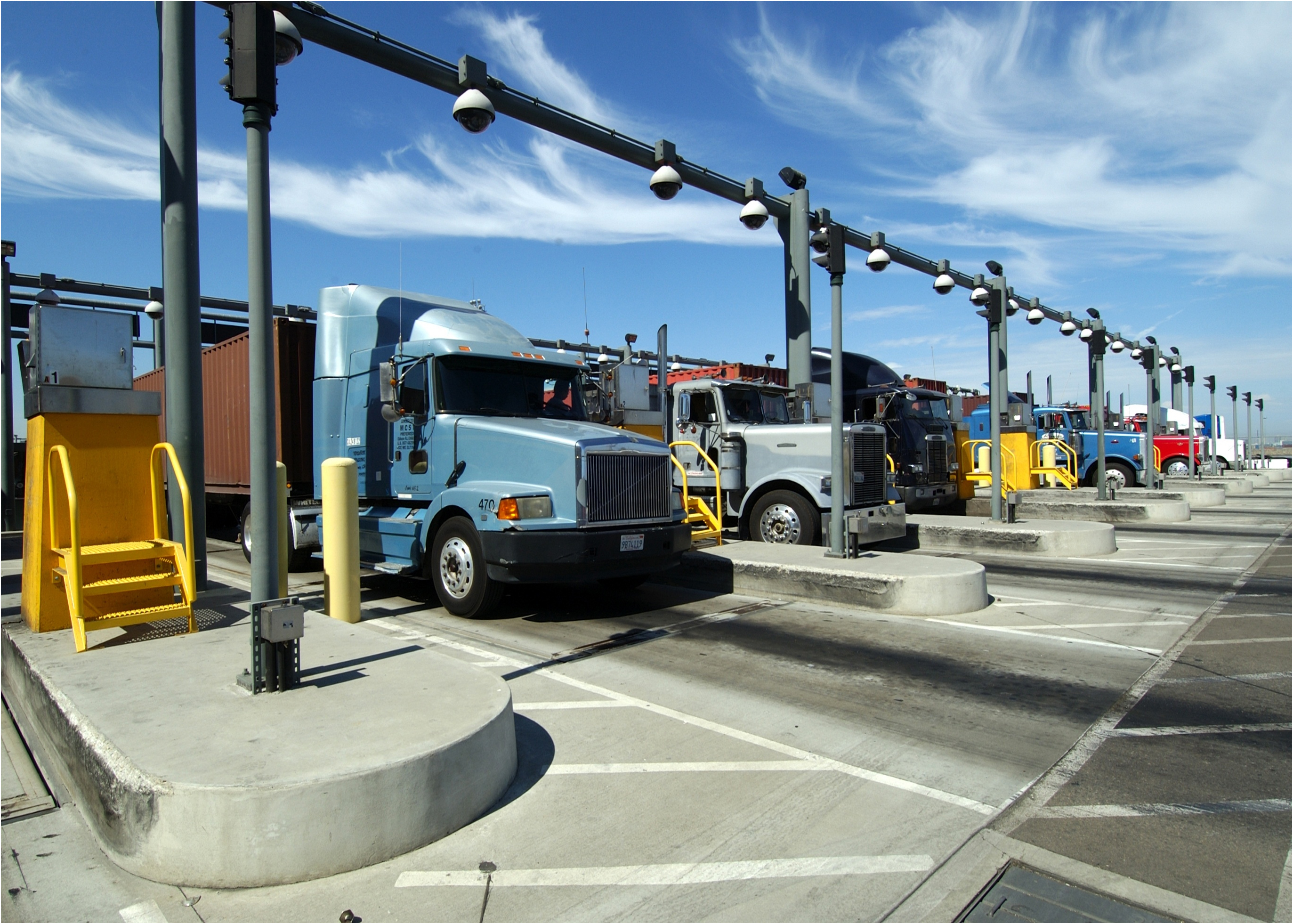
Trucks at Transnet Freight Rail's City Deep Terminal (Engineering News)

Trucks at Transnet Freight Rail’s City Deep Terminal (Engineering News)

Following up on last year’s meeting (click here!) of the minds, convened by the JCCI, a recent meeting in Johannesburg placed fresh emphasis on the dilemma which impending changes contemplated in Customs Draft Control Bill will have for the import and logistics industry in particular. The following report carried by Engineering News highlights trade’s concerns which are by no means light weight and should be addressed with some consideration before the Bills come into effect. Gauging from the content below, there is a clear disconnect between business and policy makers.

The closure of Johannesburg’s inland port seemed to be a “done deal” as Parliament deliberated the recently tabled Customs Control Bill that would leave the City Deep container depot invalid, Chamber of Commerce and Industry Johannesburg (JCCI) former president Patrick Corbin said on Friday.

The promulgation of the South African Revenue Services’ (Sars’) newly drafted Customs Control Bill, which, in conjunction with the Customs Duty Bill, would replace the current legislation governing customs operations, would have a far-reaching impact on the cost and efficiencies of doing business in South Africa and other fellow Southern African Customs Union (Sacu) countries, he added.

The Bill, which was the product of a three-year development process within the National Economic Development and Labour Council, declared that all imported goods be cleared and released at first port of entry. This was part of efforts by customs officials and government to root out any diversion and smuggling of goods, ensure greater control of goods moving across borders and eliminate risks to national security.

Speaking at the City Deep Forum, held at the JCCI’s offices in Johannesburg, Corbin noted, however, that City Deep had operated as an inland port for the past 35 years, easing the load on the country’s coastal ports, which were already strained to capacity. Despite customs officials assuring the chamber that the operations and facilities in City Deep/Kaserne would retain its licence as a container depot, he believed customs had failed to recognise the critical role City Deep had played in lowering the cost of business, easing the burden on South Africa’s ports and ensuring ease of movement of goods to neighbouring countries. As customs moved full responsibility of container clearances to the ports, port congestion, inefficiencies, shipping delays and costs would rise, and jobs would be lost and import rail volumes decreased, he noted.

Economist Mike Schussler added that the closure of the City Deep inland port operations would add costs, increase unreliability and induce “hassles”, as the Durban port did not have the capacity to handle the extra volumes and its productivity and efficiencies were “questionable” compared with other ports.

“The volume of containers going to overstay or being stopped for examination in City Deep [will] need to be handled by [the coastal] ports. If they can’t cope with the volume at the moment, how are they going to handle increased volumes,” Iprop director Dennis Trotter questioned. He noted that only the containers cleared 72 hours prior to arrival would be allocated to rail transport. Those not cleared three days before arrival would be pushed onto road transport to prevent blocking and delaying rail operations.

This, Schussler said, would also contribute – along with port tariffs and the cost of delays – to higher costs, as road transport was more expensive than rail.

He pointed out that South Africa was deemed third-highest globally in terms of transport pricing. It would also result in less rail capacity returning for export from Johannesburg, further leading to increased volumes moving by road from City Deep to Durban.

Sacu countries, such as Botswana, would also be burdened with higher costs as they relied on City Deep as an inland port. Trotter noted that the region would experience loss of revenue and resultant job losses. Over 50% of South Africa’s economy was located closer to Gauteng than the coastal ports. Johannesburg alone accounted for 34% of the economy, said Schussler, questioning the viability of removing the option of City Deep as a dry port.

However, unfazed by the impending regulations, Transnet continued to inject over R1-billion into expansion and development opportunities at City Deep/Kaserne. Corbin commented that Transnet had accepted the assurances from customs that “nothing would change and the boxes would still be able to move seamlessly once cleared.” The City of Johannesburg’s manager of transport planning Daisy Dwango said the State-owned freight group was ramping up to meet forecast demand of the City Deep/Kaserne depot.

The terminal’s capacity would be increased from the current 280 000 twenty-foot equivalent units (TEUs) a year, to 400 000 TEUs a year by 2016, increasing to 700 000 TEUs a year by 2019. Transnet aimed to eventually move to “overcapacity” of up to 1.2-million TEUs a year. Dwango said projections have indicated that by 2021, the City Deep/Kaserne terminals would handle between 900 000 and one-million TEUs a year. Source: Engineering News
Port Tariffs to Drop on Export Containers

cargo-container-shippingThe Ports Regulator of South Africa will soon announce anew port tariffs structure that will include a cut of about 40% in the tariff on exported containers. This step is part of the Transnet National Ports Authority‘s strategy to reduce South African port charges, which are seen as among the highest in the world, because it erodes the competitiveness of South Africa’s exports.

This announcement was made during a colloquium on the impact of administered prices on the manufacturing sector. The purpose of the colloquium was to get all the stakeholders together to try and find a solution to the challenges. It had become clear that the stakeholders did not have a regular opportunity to engage on the issue of administered prices.

In addition to the new tariffs, the authority is proposing a reworking of its tariff structure, which if accepted by the regulator, will see higher charges for bulk commodities, up to 68%. South African port tariffs were at least 8.7 times more than the global average for containers and 7.4 times the global average for automotive cargo.

Transnet’s CEO said the shift in the tariff burden was aligned with the government’s manufacturing growth strategy. The mining sector had been hugely subsidised by a tariff structure weighted in favour of raw exports, at the expense of the manufacturing and agricultural sectors. Department of Trade and Industry has also welcomed the expected tariff reduction, saying it would be a major boost for exporters. 

One would therfore like to believe that these tariff reductions will be extended to agriculture and agro-processing. Hopefully ocean carriers will not see this as an opportunity to increase their tariffs!

Port Natal – Durban Harbour 40s, 50s and 60s

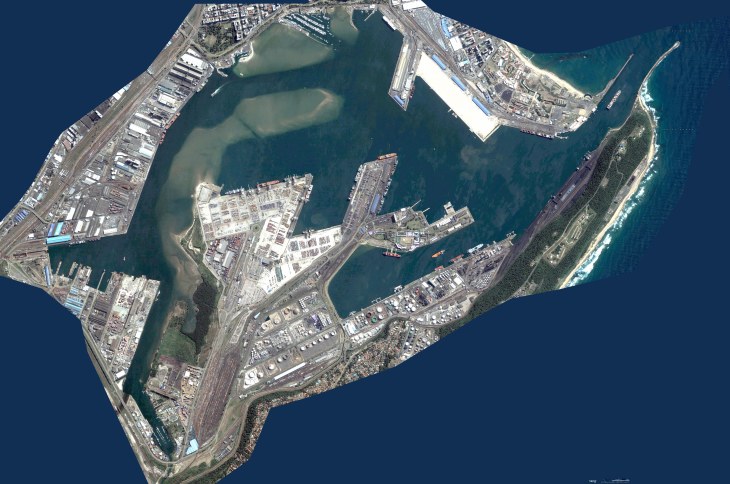
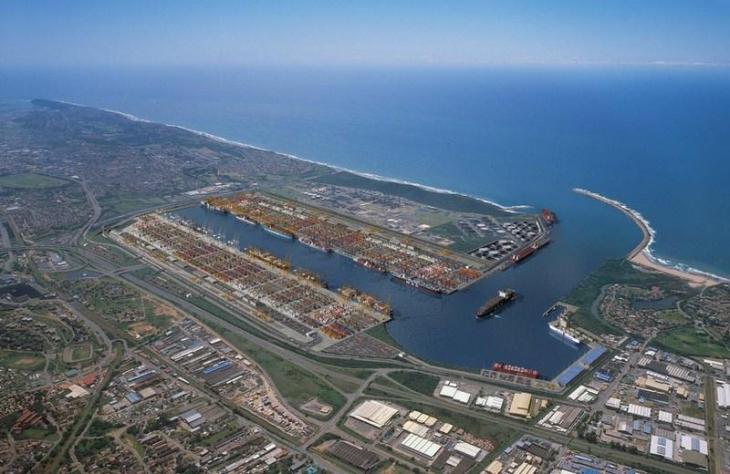
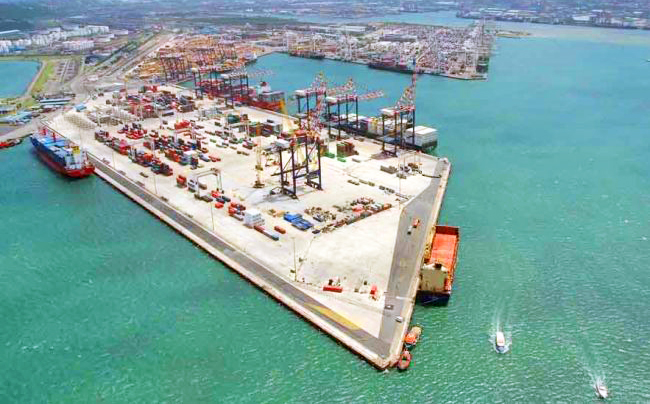
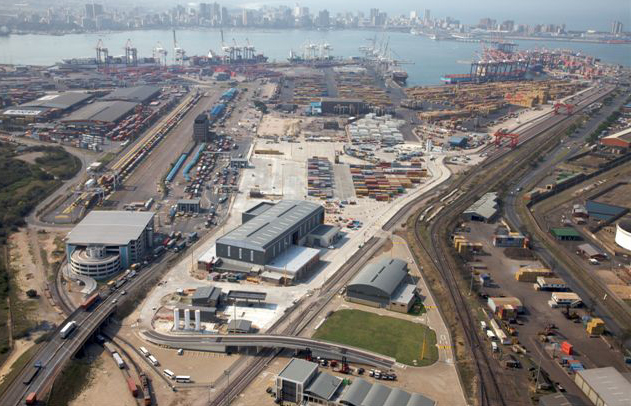
Durban_Harbour_Photo Hi-ResA tad of nostalgia? No, this is relevant and historic. Look what Africa’s busiest seaport looked like 60 (or more) years ago. I am very grateful to Lois Crawley and Cecil Gaze (fellow customs colleagues in Durban) for sharing these historic gems. For purposes of contrast see the modern-day harbour (above). Real estate in the harbour area is in short-supply and significant operational expansion over the last 10 years has placed huge strain on the road and rail networks and the surrounding industrial areas. In recent times the expansion of containerised handling facilities has radically affected the traffic flows, even in nearby residential areas such as the Bluff. With increasing demand for premium containerised port handling facilities, the old Durban airport has been sited for development of a new port, perhaps the biggest and most ambitious construction project yet in South Africa. While one can marvel at the development over what is a relatively short period of time (a generation), spare a moment and view the seemingly archaic slideshow of Durban harbour purportedly between 1940 and 1960 – which some amongst us can even remember. Enjoy!

This slideshow requires JavaScript.

What’s in a name – Transnet Rail Engineering undergoes more change

English: Spoornet Class 18E Series 1 18-503

Transnet Class 18E Series 1 18-503 (Photo credit: Wikipedia)

One of Transnet’s many faults (it has many good points too) is that it keeps changing its branding. For about 60 years just about everyone was familiar with the South African Railways & Harbours or SAR&H or its Afrikaans equivalent – well, okay, maybe not so happy with the absolute monopoly but we all knew the name and what it represented. Then for some reason the SAR&H was evolved into SATS – South African Transport Services but soon that wasn’t good enough and the group became Transnet, with its various offshoots and divisions.

One of these that we all remember was Portnet – which actually wasn’t a bad choice for the old Harbours Service. But still not satisfied with things, someone decided that Portnet must be absorbed back into Transnet with the divisions taking on separate identities – Transnet National Ports Authority (TNPA) and Transnet Ports Terminals (TPT). Lest we forget however, in between we had South African Ports Operators (SAPO) whose acronym clashed with that of the South African Post Office.

Nor was the railways spared this confusion in the haste to rebrand. It became Spoornet, a name which surprisingly stuck in the early days of post-1994. But eventually that had to change, becoming Transnet Freight Rail as the division went about attempting to convince itself that it could survive as a main line carrier of freight only – no more parcel trains and definitely no more branch lines.

Another of the older divisions to suffer this loss of identity was the old workshop division, well established at places like Germiston, Salt River, Durban, Pretoria, Bloemfontein, Uitenhage and so on. Those that weren’t shut down or emasculated became Transwerk –again a name that surprisingly hung around for longer than expected. But change comes to all and Transwerk evolved into Transnet Rail Engineering, or TRE by its acronym – another of those habits we seem fascinated with.

And now, once more the passion for name-changing has taken hold. The engineering business is now called Transnet Engineering (TE), which we are forced to admit is actually quite a good choice for a change. In fact, we wonder, why on earth wasn’t it called that in the first place? (Source: Ports.co.za)

All of the above pales into insignificance when compared to the embarrassing realisation of the acronym for the South African Border Police’s division – Port Of Entry Security!

Durban “Dig-out” port – a flagship PPP initiative?

Artistic impression – Durban Dig-out Port

Freight and Trade Weekly (FTW) reports that a team has been assembled to sort out the funding for the new dig-out port on the old Durban International Airport site (FTW November 9, 2012) – a project that represents a potential major shot in the arm for the economy of the region and the country. The consortium is composed of the well-known Dutch port consultants, MTBS; the highly respected international engineering firm, Arup; and Durban-based lawyers,Van Velden Pike Incorporated, in association with Nichols Attorneys.

This consortium is to act as transaction advisers to Transnet, on what is, according to government, likely to be SA’s flagship public/private sector partnership initiative.That will be part of the team’s studies, according to Andrew Pike, partner in Van Velden Pike. However, the study, although started, is still very much in pre-feasibility stage, and there is obviously still no firm comment to be made on what direction the public/private element will take, he told FTW.

Further abroad, AECOM has announced (Oct 2012) that Transnet has awarded the company a US$3.4-million contract to initiate the design of the Durban Dig Out Port in South Africa. AECOM’s has experience delivering creative design services for major ports around the world, such as the New Port Project in Doha, Qatar. As part of the contract, AECOM will provide concept and pre-feasibility design services for the new port and container terminals, including all associated infrastructure relating to its operation. A critical aspect of the design will be ensuring the sustainability of the port throughout the construction phase as well as all of the operational phases of its development.

The Mercury reports that work on the multi-billion rand project is expected to commence in July 2016, with the first phase of the project completed by 2019. Development of the project is to be over a 30-year period. The construction phase will provide an estimated 64,000 jobs, while 25,000 permanent jobs are envisaged in the functioning port.

The scale and details of the project are staggering. The port will involve liquid fuel, automotive and container cargoes. The siting of the entrance to the port will require the relocation of the Shell and BO Refinery’s (Sapref) single buoy mooring. The construction of the southern breakwater alone will absorb 16% of the total cost and will require special sources of quarry stone. Environmental concerns are being taken very seriously. For example R85-million has been budgeted to relocate some 2,000 chameleons which inhabit a part of the northern section of the airport site.

Of particular significance is that without the dig-out port, Durban will stagnate as a port of call and experience decline. Already Cape Town does not have the capacity or berths deep enough to handle the new generation of 18,000 TEU ships that are due soon. Durban’s proximity to the Witwatersrand makes it the logical and preferred destination for container shipping. Studies have shown that the old airport site is ideal for the construction of a new harbour designed specifically to manage the size and volume of container shipping. Durban’s geographical location in the southern hemisphere is particularly advantageous as regards intercontinental shipments from the east to South America and beyond to the north Atlantic. Sources: FTW, AECOM, and The Mercury.


Revisiting the national transit procedure – Part 2

You will recall a recent challenge by trade to SARS’ proposed implementation of mandatory clearance of national transit goods inland from port of initial discharge – refer to Revisiting the national transit procedure – Part 1.

First, some background

Now lets take a step back to look at the situation since the inception of containerisation in South Africa – some 30 years ago. Customs stance has always been that containerised goods manifested for onward delivery to a designated inland container terminal by rail would not require clearance upon discharge at initial port of entry. Containers were allowed to move ‘against the manifest’ (a ‘Through Bill’) to its named place of destination. This arrangement was designed to expedite the movement of containers from the port of discharge onto block trains operated by Transnet Freight Rail, formerly the South African Railways and Harbours (SAR&H) to the inland container terminal at City Deep. Since SAR&H operated both the national railway and the coastal and inland ports, the possibility of diversion was considered of little import to warrant any form of security over the movement of containers by rail. Moreover, container terminals were designed to allow the staging of trains with custom gantry cranes to load inland manifested containers within a ‘secure’ port precinct.

Over the years, rail freight lost market share to the emergence of cross-country road hauliers due to inefficiencies. The opening up of more inland terminals and supporting container unpack facilities, required Customs to review the matter. It was decided that road-hauled containers moved ‘in bond’ by road would lodge a customs clearance (backed with suitable surety) for purposes of national transit. Upon arrival of the bonded freight at destination, a formal home use declaration would be lodged with Customs. Notwithstanding the surety lodged to safeguard revenue, this has the effect of deferring payment of duties and taxes.

Diversification of container brokering, stuffing and multi-modal transport added to the complexity, with many customs administrations failing to maintain both control and understanding of the changing business model. Equally mystifying was the emergence of a new breed of ‘players’ in the shipping game. Initially there were so-called ‘approved container operators’ these being ocean carriers who at the same time leased containers. Then there were so-called non-approved container operators who brokered containers on behalf of the ocean carrier. These are more commonly known as non-vessel operating common carriers or NVOCCs. In the early days of containerisation there were basically two types of container stuffing – full container load (FCL) and less container load (LCL). The NVOCCs began ‘chartering’ space of their containers to other NVOCCs and shippers – this also helped in knocking down freight costs. This practice became known as ‘groupage’ and because such containers were filled to capacity the term FCL Groupage became a phenomenon. It is not uncommon nowadays for a single FCL Groupage container to have multiple co-loaders.

All of the above radically maximised the efficiency and distribution of cost of the cellular container, but at the same time complicated Customs ‘control’ in that it was not able to readily assess the ‘content’ and ownership of the goods conveyed in a multi-level groupage box. It also became a phenomenon for ‘customs brokers/clearing agents’ to enter this niche of the market. Customs traditionally licensed brokers for the tendering of goods declarations only. Nowadays, most brokers are also NVOCCs.  The law on the other hand provided for the hand-off of liability for container movements between the ocean carrier, container terminal operator and container depot operator. Nowhere was an NVOCC/Freight Forwarder held liable in any of this. A further phenomenon known as ‘carrier’ or ‘merchant’ haulage likewise added to the complexity and cause for concern over the uncontrolled inland movements of bonded cargoes. No doubt a disconnect in terms of Customs’ liability and the terms and conditions of international conveyance for the goods also helped create much of the confusion. Lets not even go down the INCOTERM route.

Internationally, customs administrations – under the global voice of the WCO – have conceded that the worlds administrations need to keep pace and work ‘smarter’ to address new innovations and dynamics in the international supply chain. One would need to look no further than the text of the Revised Kyoto Convention (RKC) to observe the governing body’s view on harmonisation and simplification. However, lets now consider SARS’ response in this matter.

SARS response to the Chamber of Business

Right of reply was subsequently afforded by FTW Online to SARS.

Concerns over Customs’ determination to have all goods cleared at the coast – expressed by Pat Corbin, past president of the Johannesburg Chamber of Commerce and Industry in last week’s FTW – have been addressed by SA Revenue Service.  “One of the main objectives of the Control Bill is the control of the movement of goods across South Africa’s borders to protect our citizens against health and safety risks and to protect the fiscus. “In order to effectively determine risk, SARS has to know the tariff classification, the value and the origin of imported goods. This information is not reflected on a manifest, which is why there is a requirement that all goods must be cleared at the first port of entry into the Republic.“It appears that Mr Corbin is under the impression that the requirement of clearance at the first port of entry has the effect that all goods have to be consigned to that first port of entry or as he puts it “to terminate vessel manifests at the coastal ports in all cases”. This is incorrect. “The statutory requirement to clear goods at the first port of entry and the contract of carriage have nothing to do with one another. Goods may still be consigned to, for example, City Deep or Zambia (being a landlocked country), but they will not be released to move in transit to City Deep or Zambia unless a declaration to clear the goods, containing the relevant information, is submitted and release is granted by Customs for the goods to move. The release of the goods to move will be based on the risk the consignment poses to the country.“It is definitely not the intention to clog up the ports but rather to facilitate the seamless movement of legitimate trade. If the required information is provided and the goods do not pose any risk, they will be released.”

So, where to from here?

The issue at hand concerns the issue of the ‘means’ of customs treatment of goods under national transit. In Part 3 we’ll consider a rational outcome. Complex logistics have and always will challenge ‘customs control’ and procedures. Despite the best of intentions for law not to ‘clog up the port’, one needs to consider precisely what controls the movement of physical cargo – a goods declaration or a cargo report? How influential are the guidelines, standards and recommendations of the WCO, or are they mere studies in intellectual theories?

TPT to operationalise new Post Panamax cranes at Ngqura

Transnet Port Terminals has successfully completed testing of two Liebherr Super Post Panamax cranes at Ngqura Container Terminal, just north of Port Elizabeth. The Ship-to-Shore cranes (STS), which were delivered in January bringing the terminal’s fleet of STS cranes to eight, represent an investment of R150 million by the port operator.

The cranes will improve productivity by increasing Ship Working Hour (SWH) – the number of containers moved by the number of cranes working a vessel in one hour. A total of 78 additional operators have been trained and are ready to operate the equipment. Transnet’s newly formulated Market Demand Strategy will see Transnet SOC Limited invest R300 billion on freight infrastructure over the next seven years. Of this, TPT will invest R33 billion to boost port operations.

The portion allocated for the 600,000 m2 Ngqura Container Terminal includes just under R1.1 billion for its Phase 2 A expansion, which will increase container handling capacity from the current 800,000 TEU to 1.5 million TEU by 2013/14. A further R 808 million will be spent between 2015 and 2019 on the terminal’s Phase 2 B expansion to increase the terminal’s capacity to two million TEU. Source: Porttechnology.org

Transnet’s loco acquisition programme gaining traction

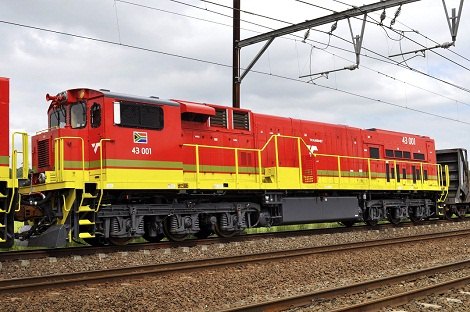
Ports.co.za reports that the US-based General Electric (GE) Transportation has announced that another locomotive, which forms part of a deal sealed with state-owned Transnet, was delivered with local content that exceeds the commitment from GE’s initial Transnet order of 100 locomotives.

The locomotive is the 42nd and is the most advanced diesel-electric locomotive ever built-in South Africa. Its official unveiling took place at an event held at Transnet Rail Engineering’s facilities in Koedoespoort, Pretoria, on Wednesday.

With this order, GE overshot its self-imposed target of 30% local content. The locomotives assembled in South Africa now have 37% local content.Transnet concluded an agreement with GE for a further 33 diesel-electric locomotives, over and above the 100 already being purchased under a deal concluded in 2009. In terms of the contract, 10 of the locomotives were manufactured in Erie and Grove City, Pennsylvania, USA and 133 are being assembled locally at Transnet Rail Engineering’s site in South Africa.

A total of 53 will be deployed in the Phalaborwa-Richards Bay corridor, 30 on the Sishen-Saldanha iron-ore corridor, 32 on the Witbank-Nelspruit-Komatipoort line and the remaining 28 will be used to transport coal to Eskom power stations. Source: ports.co.za

Revisiting the national transit procedure – Part 1

FTW Online last week ran an interesting article in response to a proposed change in Customs’ policy concerning the national transit movement of containers from coastal ports to inland container terminals and depots. In February 2011, I ran an article Customs Bill – Poser for Cargo Carriers, Handlers and Reporters alluding to some of the challenges posed by this approach. The following article goes a step further, providing a trade reaction which prompts a valid question concerning the practicality and viability of the proposed change given logistical concerns. I believe that there is sufficient merit in the issues being raised which must prompt closer collaboration between the South African Revenue Service and trade entities. For now it is sufficient to present the context of the argument – for which purpose the full text of the FTW article is presented below. In Part 2, I will follow-up with SARS’ response (published in this week’s edition of the FTW) and elaborate on both view points; as well as consider the matter  on ‘raw’ analysis of the ‘cargo’ and ‘goods declaration’ elements which influence this matter. Furthermore, one needs to consider in more detail what the Revised Kyoto Convention has to say on the matter, as well as how other global agencies are dealing and treating the matter of ‘security versus facilitation’.

Customs’ determination to have all goods cleared at the coast does not bode well for the South African trade environment, Pat Corbin, past president of the Johannesburg Chamber of Commerce and Industry (JCCI), said. Speaking at the Transport forum in Johannesburg Corbin said the Customs Bills have been on the cards for several years now and while consensus had been reached on most issues in the Nedlac process, the determination of Customs to not allow for any clearing to take place at inland ports will only add more pressure to the already overburdened ports in the country. “Customs maintains that despite the changes they propose it will be business as usual. We disagree. We have severe reservations about their intention to terminate vessel manifests at the coastal ports in all cases and have called for further research to be undertaken in this regard,” said Corbin. “By terminating the manifest at the coast it has severe ramifications for moving goods from road to rail. International experience has shown when you have an inland port and you have an adequate rail service where the vessel manifest only terminates at the inland port, up to 80% of the boxes for inland regions are put on rail while only 12% land on rail if the manifest terminates at the coastal port.” Corbin said the congestion at both the port and on the road would continue and have an adverse impact on quick trade flows. “It also raises issues around the levels of custom security and control at inland ports and then the general implications on the modernisation project.” According to Corbin, government’s continued response has been that no provision exists for inland ports and that goods must be cleared at the first port of entry. “They maintain that it is about controlling goods moving across our borders and thus the requirement that all goods must be cleared at the first port of entry. The security of the supply chain plays an important role to avoid diversion or smuggling of goods,” said Corbin. “Government says that the policy change will not clog up the ports or prohibit the seamless movement of trade. Labour organizations and unions seem to agree with them.” But, Corbin said, the Johannesburg Chamber of Commerce differs and is worried about the ramifications of this dramatic change to the 35-year-old option of clearing goods at an inland port or terminal. “With this policy change all containers will have to be reconsigned after not only Customs clearance on copy documents but also critically, completion of shipping lines’ requirements ie, payment of freight, original bill of lading presentation and receiving delivery instructions prior to their issuing a delivery order.” Corbin said the issue had been addressed directly with Transnet CEO Brian Molefe on two occasions, but that he had said he accepted Customs’ assurance that nothing would change and the boxes would still be able to move seamlessly once cleared. “It is not understood that the manifest will terminate at the coast where all boxes will dwell until they can be reconsigned,” said Corbin. Source: FTW Online – “New Customs Bill ruling will put pressure on port efficiency.”

New Durban dug-out Port – tenders released

State-owned freight logistics group Transnet has followed up its recent R1.8-billion purchase of the old Durban International Airport site, in KwaZulu-Natal, with the release of a number of separate tenders in support of its proposal to develop, in phases, a new dig-out port on the property.

The first phase, which was currently scheduled for completion in 2019, was expected to require an initial investment of R50-billion, with the balance of the project to be completed by 2037.

The first request for proposals (RFP) relates to the appointment of a transaction adviser for the project. The adviser will provide technical assistance relating to the establishment of a business model for the development of the harbour.

Transnet currently envisages a phased development of a facility comprising 16 container berths, five automotive berths and four liquid bulk berths. Its high-level infrastructure plan indicated that the container terminals would have the collective capacity to handle 9.6-million twenty-foot equivalent units, or TEUs, once all four phases were completed. That, the group argued, would be sufficient to address South Africa’s container capacity requirements to 2040.

The transaction adviser would be expected to complement and supplement the work, resources and expertise that Transnet had dedicated to the project internally. The consultant was expected to cover the legal, financial, environmental, economic and technical aspects of the proposed development. In order to facilitate the opportunity for financial planning and policy engagement, it is necessary to complete the assignment within an 18-month period.

The second RFP invites consultants to conduct conceptual and prefeasibility studies for the development . Transnet will employ a four-stage project lifecycle process for its capital expansion projects, with the two front-end loading (FEL) studies making up the first two stages. FEL implies upfront planning and engineering in order to reduce, as much as possible, the risk of scope creep and to ensure financial accuracy for the project. The FEL-1, or conceptual study, is scheduled to be completed by the end of March 2013, while the FEL-2 study should be finalised by the end of March 2014. Source: Creamer Media

Port Community Systems – a voyage of discovery

Port Community SystemSince the mid-1980’s the concept of port community systems have abounded in various guises. Portnet (now Transnet Port Terminals / National Ports Authority) initiated a drive around this time as well, however the maturity of B-2-B e-commerce, at the time, was in its infancy and there were simply not enough ‘takers’ due to the unknowns such as ‘cost’ and ‘what’s in it for me’. Similarly, the air cargo community – in Europe especially – operated what was called ‘cargo community systems’ (CCS), most of which were operated by a value added network operator who provided the infrastructure and together with an ‘industry/community’ project team developed all the necessary transaction interchanges to facilitate data exchange between participating trade and logistics entities. Some of these CCS’s interfaced with Customs, but mainly serviced the forwarding and cartage community. Towards the end of 1998, South Africa established its very own known as ZA-CCS. Like Portnet’s endeavour, it was perhaps ahead of its time with very few participants to support the anchor sponsor, being the South African Airways. Two years later SARS implemented its EDI programme, and so developed a new era in information exchange for the customs clearing fraternity. The number of service providers also increased to support a burgeoning need for ICT capability. Mainframe systems gave way to thin client and PC-based solutions making it all the more affordable and accessible to the greater trading community.

In the US, Los Angeles has spent considerably more installing security cameras than ports have spent in other countries on setting up a Port Community System. However these have yet to prove their worth in the lucrative US market. Much like the voyages of discovery to the New World 500 years ago, Port Community Systems are taking their time to spread beyond Asia and Europe. In the US, they are virtually unknown outside their uses in security and safety.

European ports have undoubtedly benefitted from PCS in varying forms. An outstanding system is Portbase, linking Rotterdam and Amsterdam in virtually every activity. So far, 40 different services are offered, with Notification of Dangerous Goods next in line. The big test in extending Portbase lies in fitting the programme into less homogenous conditions elsewhere.

At Gothenburg in Sweden, the most significant aspect was integrating with the government systems, regulations and requirements – especially in areas such as control of dangerous goods and waste disposal. The single window application is a key to success. Based on a module approach, three sub-programs – the Vessel Clearance System, Marine Service System, and Cargo Management System – cover the spectrum of operations linking port customers, users, management and government authorities.

In developed countries the differences are marginal when new systems are set up, because every port is already heavily computerised. In emerging markets even the most basic computer system can mean a huge step forward. It’s also a big plus when free trade agreements are signed. Customs administrations will zero in on the most efficient port as the designated Trade Zone or bonded manufacturing facility. The more efficient a port, the more likely that it will be used as a trade lane.

In the US, the focus of information exchange is almost solely on safety and security, a consequence of the 2001 terrorist attacks. Commercial and operational information sharing is almost non-existent, and the reason is the extremely competitive culture that pervades business.

The universal opinion is that terminal operators and port authorities jealously guard their business models and details from rivals. It’s all a case of ‘you jump in first’. There is a total refusal to be the first to set up a system – the competitors would be only too happy to plunder the information without giving anything back in return. In complete contrast, the approach to security and safety is “the more the better“. (In South Africa we refer to it as a ‘data rich’ environment). These are undoubtedly interesting times we live in. Source: PortStrategy.com.

Empty container depots adding to industry’s costs?

FTW published an article recently in regard to ‘empty container depots’ and their apparent negative impact on cost and response to industry needs. It was duly noted that while so much focus was accorded to Port delays, little is said about the additional costs caused by empty container depots. Many of these in fact hold, clean and distribute empty containers on behalf of shipping lines some of whom are not equipped to service the industry due to ill-equipped facilities.

Shipping lines complain about the turnaround of their vessels at the port, but take little interest in ensuring a quick turnaround of vehicles at their appointed container depots. The report continues: “Transporters are delayed for hours at major depots while waiting for containers to be turned in, cleaned and then released for export cargo. Most of these depots do not work 24 hours in line with the port and transporters, which further limits the ability of transporters and industry to perform”. I think this deserves some further thought and consideration, and for this I’ll provide a customs-slanted view.

Firstly, in other parts of the world, the same mentality prevails whenever a port or customs system is replaced or upgraded – an avalanche of vitriolic sentiment, followed by line operators threatening to institute port delay surcharges and the like. To place matters into true perspective – yes, the port and customs services are there for the benefit and support of the supply chain, and should run and be maintained to offer efficient operation even in the event of catastrophe or a burgeoning logistics market demanding increased capacity and responsiveness. 9/11 provided a catalyst for Customs Inc. to initiate an unheard of demand on trade to increase its internal security mechanisms and even provide information in advance of the lading of a vessel at a foreign port. The US lines were the first to climb on the band wagon in support of heightened security and quickly acted to ensure that their regional offices were able to assist foreign shippers in supplying the required ‘advanced information’ at a nominal charge – varying between $25 and $60 per bill of lading. Sure, this was the cost necessary to ensure lines met their new stringent reporting requirements to the US Homeland Security to obviate possible penalties of $5,000 and up. Nonetheless, the same lines, when asked to provide the local authorities the same courtesy, recoil and look for all sorts of excuses to avoid the subject. Sure, it is understood that only the US has the right to make such demands, not any anyone else. I have followed most other advance cargo reporting requirements with similar amusement.

You see, lines were prepared to make suitable arrangements for US-bound containers such as pre-booking empty containers. Now when the requirement is extended to other parts of the world there is an immediate issue. Simply, and as the article correctly deduces, supply chain security implies that everyone changes – even the empty container depots.

As the local port authorities and your customs service are spending millions in upgrades to meet the demands of the future, so too is the same required of trade. Unlike commercial entities, your customs service remains one of the few who in the world that has not instituted a customs service fee. Certain traders and intermediaries in the industry might complain that recent developments at SARS have seen their costs increase due to new transactional requirements, for example the electronic supporting document issue. This I will discuss on its own in a separate post. The bottom line is that the FTW article is an important cue for those container depots concerned to get their act together. The heat will undoubtedly be turned up on them once SARS introduces its new export clearance and cargo reporting requirements. South Africa needs smaller to medium enterprises offering dedicated services. Perhaps it’s time for the lines (those who operate such facilities) to consider outsourcing these activities to more dedicated enterprises. Read the FTW article here!

Cargo Dwell Time in Durban

An acquaintance in the forwarding industry brought this working paper to my attention. Titled “Cargo Dwell Time in Durban“, it is very useful reading for logistics operators, Customs and government agencies, and policy makers. The object of the working paper attempts to identify the main reasons why cargo dwell time in Durban port has dramatically reduced in the past decade to a current average of between 3 and 4 days. A major customs reform; changes in port storage tariffs coupled with strict enforcement; massive investments in infrastructure and equipment; and changing customer behavior through contractualization between the port operator and shipping lines or between customs, importers, and brokers have all played a major role. The main lesson for Sub-Saharan Africa that can be drawn from Durban is that cargo dwell time is mainly a function of the characteristics of the private sector, but it is the onus of public sector players, such as customs and the port authority, to put pressure on the private sector to make more efficient use of the port and reduce cargo dwell time. The Working Paper is the product of the World Bank’s Africa Region, Transport Unit, being part of a larger effort  to provide open access to its research and make a contribution to development policy discussions around the world. Policy Research Working Papers are also posted on the Web at http://econ.worldbank.org

Related articles

TPT’s Pre-advice for Export Containers

Durban Container TerminalIt has been enquired by some whether or not Transnet‘s Pre-Advice for Export Container’s initiative is aligned with SARS Customs Modernisation. First of all its important to delineate the process and requirement. Transnet Port Terminal’s Pre-Advice is an electronic exchange (COPARN) between the carrier and TPT. As such it is an arrangement which satisfies the Terminal’s advance reporting requirements of impending export container delivery to a container terminal. In time it will feed Customs’ gate-in reporting requirements.

From a Customs perspective, this initiative is an important development which fills another piece of the supply chain puzzle. As such it is not in contradiction to anything planned for by SARS – rather its somewhat ahead of Customs at this point in time. It is just not possible to synchronise inter-departmental and inter-company project developments. Each has its own financial/procurement cycles and operational deliverables, and in certain cases legal prescription. At the same time it is true that supply chain operators bear the brunt of untimely and non-coordinated initiatives. Nonetheless, they are important while at the same time vital for the country’s future economic growth and stability.