Namibia buys into ‘Single Window’ concept

From April 12-13, Southern African Trade Hub (aka USAID) presented Single Window as a cutting-edge tool for trade facilitation to the Ministry of Industry and Trade, Ministry of Finance, Customs and other private sector organizations, explaining how a NSW for Namibia could improve the Trading Across Borders index ranking, which currently stands at 142 out of 183 countries. Single Window is a crucial instrument that will eliminate inefficiency and ineffectiveness in business and government procedures and document requirements along the international supply chain, reduce trade transaction costs, as well as improve border control, compliance, and security.

Benefits for Government: A Single Window will lead to a better combination of existing governmental systems and processes, while at the same time promoting a more open and facilitative approach to the way in which governments operate and communicate with business. Traders will submit all the required information and documents through a single entity, more effective systems will be established for a quicker and more accurate validation and distribution of this information to all relevant government agencies. This will also result in better coordination and cooperation between the Government and regulatory authorities involved in trade-related activities.

Benefits for trade: The main benefit for the trading community is that a Single Window will provide the trader with a single point for the one-time submission of all required information and documentation to all governmental agencies involved in export, import or transit procedures. As the Single Window enables governments to process submitted information, documents and fees both faster and more accurately, traders would benefit from faster clearance and release times, enabling them to speed up the supply chain. In addition, the improved transparency and increased predictability would further reduce the potential for corrupt behaviour from both the public and private sector.

If the Single Window functions as a focal point for the access to updated information on current trade rules, regulations and compliance requirements, it will lower the administrative costs of trade transactions and encourage greater trader compliance. The Permanent Secretary for the Ministry of Industry and Trade underscored the need for Namibia to proceed with the Single Window concept, and advised participants that his Ministry, together with the Ministry of Finance, would jointly package the Single Window concept and submit it to Cabinet for Government approval.

In Southern Africa, Mauritius already has an effective Single Window, which is reflected in its “Trading Across Borders” ranking of 21. Mozambique recently launched its pilot Single Window. SATH will support and facilitate the processes for the establishment of a Botswana National Single Window system to streamline cross border trade. The current SATH Trans Kalahari Corridor (TKC) Cloud Computing Connectivity program, which is being piloted between Botswana and Namibia, provides an ideal technology platform for linking Botswana and Namibia Single Windows, leveraging the investment by BURS, Namibia Customs and SATH to date in the development of this system. SATH is currently in the process of gauging support for National Single Window in South Africa.

Excuse my cynicism, but the SA Trade HUB  has yet to demonstrate the viability of its Cloud Computing solution between Namibia and Botswana Customs. What is reported above is the usual sweet and fluffy adjectives which accompany most international customs and trade ICT offerings, ignoring prerequisite building blocks upon which concepts such as Cloud and Single Window may prove beneficial and effective. Past project failures in Africa are usually blamed on the target country in not bedding down or embracing the new process/solution – never the vendor. Given the frequency of technology offerings being presented by donor agencies on unwitting national states, there seems little foreign interest in ‘bedding down’ or ‘knowledge transfer’ than the ‘delivery of expensive technology’.
Related articles and references

Open Borders and Integrated Supply Chains break down Global Trade Barriers

East Asian economies have recorded marked improvements in their ability to enable trade, while traditional frontrunners Singapore and Hong Kong retain a clear lead at the top of the global rankings, according to the Global Enabling Trade Report 2012, released today by the World Economic Forum.

The report, which is published every two years, also confirms strong showings for Europe’s major economies, with Finland and the United Kingdom both advancing six places to 6th and 11th, respectively, and Germany and France remaining stable at 13th and 20. Other large economies fare less well: the US continues its decline to 23rd, as does China (56th) and India (100th). Among emerging economies, Turkey (62nd) and Mexico (65th) remain stable while Chile (14th), Saudi Arabia (27th) and South Africa (63rd) climb in the ranking. ASEAN members Thailand (57th), Indonesia (58th) and the Philippines (72nd) also improve. Perhaps the proponents of OSBPs and a BMA in South Africa have not read this or have deeper insight into the matter.

As well as ranking nations’ trade openness, the report finds that traditional notions of trade are increasingly outdated as global value chains require new measurements, policies and cooperation. The report also finds that security, quality and trade can be mutually reinforcing through supply chain integrity efforts, but a knowledge gap in identifying buyers remains an important barrier. The biennial report, covering 132 economies worldwide, measures the abilities of economies to enable trade and highlights areas where improvements are most needed. A widely used reference, it helps countries integrate global value chains and companies with their investment decisions.

At the core of the report is the Enabling Trade Index, which measures institutions, policies and services facilitating the free flow of goods over borders and to destination. It breaks the enablers into four issue areas: market access, border administration, transport and communications infrastructure, and business environment. The Index uses a combination of data from publicly available sources, as well as the results of the Executive Opinion Survey, a comprehensive annual survey conducted by the World Economic Forum with its network of partner research institutes and business organizations in the countries included in the report. The 2012 results demonstrate that the ASEAN Trade in Goods Agreement has facilitated trade since its entry into force in 2010. This year, the report also directly captures the most important obstacles to exporting and importing in each country, and notes the strong links between import and export success. Source: AllAfrica.com / WEF

Enhancing South Africa’s and Africa’s development through Regional and Continental Integration

Hardly a week goes by without some or other African politician waxing lyrical about continental integration, continental trade diversification, and a wholesome analysis of the ‘barriers’ which prevent the African continent  from reaching its full economic potential. No doubt I’m a bit biased in relaying the recent ‘public lecture’ of our deputy President Kgalema Motlanthe at the University of Finlandread the full speech here! Plenty of insight clearly delineating a plethora of barriers; yet, are we African’s so naive not to have identified these barriers before? Evidently yes.

In recent weeks, on the local front, we have learnt that One Stop Border Posts (OSBPs) is the solution to non-tariff barriers. This topic was drilled amongst the press till it got boring. The focus soon thereafter shifted to the implementation of a border management agency (BMA) – all of government under one roof – so simple. The reality is that there is no silver-bullet solution to African continental integration. Of this, affected business, Customs administrations and the international donor community is acutely aware. While the WTO and the multitude of trade lawyers will ‘yadder’ on about ‘diversification’ in trade, the reality is that Africa’s raw materials are even more sought after today than at an any time before. Certainly those countries which contain vast resources of oil and strategic minerals are about to reap the benefits. So why would African countries be concerned about diversification when the petro-dollars are rolling in? Perhaps greed or lack of foresight for the medium to long-term well-being of countries and their citizens? The fact remains, without homegrown industries producing goods from raw materials, most of  Africa’s eligible working class will continue to be employed by foreign mineral moguls or the public service.

Several customs and infrastructure solutions have over the last few years emerged with the usual credential of “WCO or WTO compliant”. Africa has been a guinea pig for many of these solutions – ‘experiments’ if you prefer. Literally millions of dollars are being spent every year trying out so-called ‘best-of-breed’ technology which users unfortunately accept without much questioning. The cart is being placed before the horse. Why? because the underlying route cause/s are not being identified, understood (sufficiently) and prioritized. Insofar as there exists no silver bullet solution, neither is there a single route cause in most cases. Unfortunately, donor aid often comes with its own pre-conceived outcomes which don’t necessarily tie in with those of the target country or the well-being of the continent.

While governments like to tout the ‘big-hitting’ projects, there are several ‘less exciting’ (technical) areas which countries can address to kick-start the process. One of these has even been recognised by the likes of the World Bank and OECD notwithstanding capital-intensive programs which promised much and have not delivered fully on their promise.  The issue at hand is the harmonisation of customs data. It might at first sound irrelevant or trivial, yet it is the key enabler for most Customs Modernisation initiatives. While there is still much anticipation in regard to the forthcoming deliberation and outcome of the WCO’s Globally Networked Customs (GNC) initiative at June’s WCO Policy Commission session in Brussels, there is significant support for this approach on the African continent. The momentum needs to be maintained.

 Related articles

Hong Kong Customs Moves Forward With E-Lock Plans

The Hong Kong Customs and Excise Department (C&ED) reports that RFID-based container locks can effectively improve the security, convenience and visibility of the customs process for cargo entering the airport. In November 2011, C&ED began testing three types of electronic locks (e-locks) in order to speed up the process of performing customs checks on containers filled with cargo. The solution, known as the Intermodal Transhipment Facilitation Scheme (ITFS), was implemented as a way to streamline the clearance of cargo passing through customs at Hong Kong International Airport for cargo destined for areas both domestic and outside of Hong Kong. The installation and consulting services were provided by the Hong Kong R&D Center for Logistics and Supply Chain Management Enabling Technologies (LSCM), according to Frank Tong, LSCM’s director of research and technology development.

An electronic lock with an active RFID tag is being used to secure freight passing through
customs and Hong Kong International Airport, ensuring that the cargo remains tamper-free,
while also expediting the clearance process.

The Hong Kong C&ED estimates that the system reduces the amount of time required for clearing each container through customs, from two to three hours down to five minutes, since customs officials can now be assured that the containers have not been opened between their inspection at the border control point and their arrival at the airport. What’s more, the agency can now collect a digital record of where each container has been, along with when it was inspected.

Cargo is loaded into freight containers or directly onto trucks—such as those operated by United Parcel Service (UPS)—in Mainland China, and is then transported to a customs control point located at the border with Hong Kong, where C&ED officials inspect the cargo and clear it for entry into Hong Kong. Following that clearance, the shipment continues on to Hong Kong International Airport’s cargo terminal, where the goods are unloaded from the container or vehicle, and are placed into an air cargo container. Once this has occurred, the cargo is moved through another customs control point at the airport, where C&ED again inspects and approves or rejects its passage.

To speed up this process, the R&D Center implemented the use of an e-lock for the customs agency, consisting of a physical lock activated by a built-in active RFID tag, designed to receive a transmission from an RFID reader that allows the lock to be opened or closed. Three types of e-locks are currently being used, provided by three different vendors: Long Sun Logistics Development Ltd, CIMC Intelligent Technology Co. and CelluWare Research Laboratory. Each of the three products employs a different frequency—433 MHz, 315 MHz and 2.4 GHz—but all comply with the ISO 17712 standard for mechanical seals designed for freight containers.

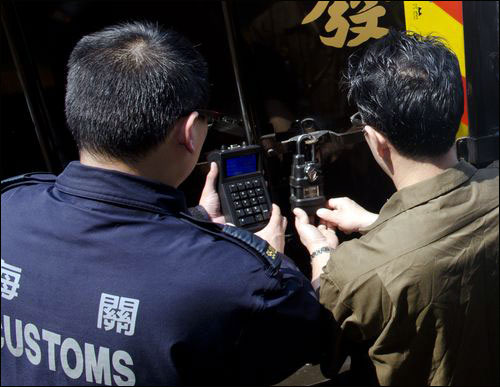
LSCM has installed fixed RFID readers (provided by the three e-lock vendors) at two border control points—Lok Ma Chau and Shenzhen Bay—as well as at Hong Kong International Airport. When a shipment first arrives at either border control point, C&ED’s staff attaches an e-lock, reads the ID number encoded on its built-in RFID tag via a handheld reader, and links that ID with the vehicle registration number of the truck transporting the container. The transporting company must pre-register each vehicle with the Hong Kong C&ED prior to its arrival; the truck’s ID number is listed in the agency’s database, and the customs official can confirm that the vehicle is, in fact, the one expected.

That data, along with the specific cargo being transported, is then stored on the Hong Kong C&ED’s integrated tracking software platform, developed by LSCM, which collects and processes the data and then displays it for customs officials when necessary. The system stores the e-lock ID number linked to the vehicle ID, and transmits instructions to the e-lock, along with a password, thereby causing it to lock. The device also requires a physical key, which remains in the driver’s possession. In this way, two actions must be completed before the container or vehicle can be unlocked: The e-lock must be electronically unlocked via a password from a customs official, and the driver must use a key to physically open the padlock.

The shipment is then transported approximately 42 kilometers (26 miles) to the airport. The e-lock comes with a built-in GPS device that tracks the vehicle’s location as it moves. In that way, the e-lock stores a record of where the vehicle has been. When the lock is later read at the airport, the back-end software compares the actual GPS data against the container’s expected route. The system can issue alerts in circumstances in which an e-lock is found to have lost a GPS signal, or, based on GPS data, the truck appears to have deviated from the intended route.

At Hong Kong International Airport, a C&ED official either selects the container for inspection, or simply instructs the system to issue an unlocking command with the matching password; the container is then brought to a site where the cargo is removed and then loaded onto an aircraft, says Steve Wai-chiu Chan, a C&ED special duties officer. If the container is selected for inspection, the e-lock remains locked. In this scenario, a truck driver would be instructed to await a C&ED officer, and would be unable to unlock the container without providing the proper password. The C&ED officer, upon arrival, would then use a handheld device to read the e-lock, instructing it to unlock by providing the necessary password.

LSCM installed a total of 38 readers at the two land border control points, five logistic hubs at the airport and a marine control point known as the Kwai Chung Customhouse, for items arriving by sea (at the Marine Cargo Terminal located at the airport). Altogether, by February of this year, 109 containers had been equipped with the e-lock device. An average of 100,000 consignments pass through the border daily, and the ITFS e-lock system is utilized for about 17 percent of that cargo.

The solution has enabled a faster customs clearance process, as well as providing a digital record of what was unlocked, and thus inspected, and when this occurred. The system also improves security, since only officers who know the proper password can access the container. Ultimately, Chan says, “it enhances the Hong Kong logistic industry’s competency and reinforces Hong Kong’s position as a world-class logistics hub.” Source: RFID Journal and a word of thanks to Andy Brown (Tenacent) for bringing the article to my attention.

USCBP and EU sign C-TPAT Mutual Recognition

U.S. Customs and Border Protection (CBP) and the European Union (EU) signed today a Mutual Recognition Decision between CBP’s Customs-Trade Partnership Against Terrorism (C-TPAT) program and the EU’s Authorized Economic Operator (AEO) program.

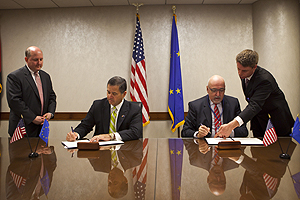
U.S. Customs and Border Protection Acting Commissioner David V. Aguilar and European Union Taxation and Customs Union Directorate Director-General Heinz Zourek sign the Mutual Recognition Decision between CBP’s Customs-Trade Partnership Against Terrorism program and the EU’s Authorized Economic Operator Program.

CBP Acting Commissioner David V. Aguilar and Director-General Heinz Zourek, European Union Taxation and Customs Union Directorate (TAXUD) signed the decision, which recognizes compatibility between the EU and the U.S. cargo security programs.

“Today’s decision on the mutual recognition of the EU and U.S. trade partnership programmes is a win-win achievement: It will save time and money for trusted operators on both sides of the Atlantic while it will allow customs authorities to concentrate their resources on risky consignments and better facilitate legitimate trade,” said Director-General Zourek.

C-TPAT is a voluntary government-business initiative to build cooperative relationships that strengthen and improve overall international supply chain and U.S. border security. C-TPAT recognized that U.S. Customs and Border Protection can provide the highest level of cargo security only through close cooperation with the ultimate owners of the international supply chain such as importers, carriers, consolidators, licensed customs brokers, and manufacturers. Source: US CBP

Related article

SARS issues Compliance Programme 2012/13 – 2016/17

SARS has issued its inaugural SARS Compliance Programme, a high-level overview of its plans for the next five years to further grow compliance with tax and customs legislation. More so than perhaps any other time in history, the current global economic conditions have thrust domestic resource mobilisation into the spotlight, highlighting sustainability built on a foundation of tax compliance. Countries lacking this solid base have found their room for manoeuvre in these uncertain times severely curtailed and, in some cases, completely absent. The impact of self-reliance on self-determination is self-evident.

Many tax administrations publish similar compliance programmes (including Australia, Brazil, Canada, Denmark, Netherlands, New Zealand, Poland, Spain, Sweden, Turkey, USA, UK) and SARS has based it’s Compliance Programme on their ground-breaking work. To download and read the SARS Compliance Programme, click here! For Customs specialists and trade practitioners no less than 3 priority areas involve Customs –

Illicit cigarettes: the trade in and consumption of illicit cigarettes is detrimental to the fiscus and to the health of South Africans. SARS interventions will continue to focus on clamping down on cigarettes smuggled via warehouses as well the diversion of cigarettes destined for export back into the local market. SARS also plans to modernise it’s warehousing management and acquittal system.

Undervaluation of imports in the clothing and textile industry: Undervalued imports pose a significant risk not only to the fiscus but to local industry and job creation. SARS will continue to work together with other government agencies and industry stakeholders to clamp down on this practice including through the establishment and frequent revision of a reference pricing database to detect undervaluation, increasing inspections as well as supporting an integrated border management model.

Tax Practitioners and Trader Intermediaries: Regulation of this industry will be pursued to ensure that tax practitioners and trade intermediaries are all persons of good standing, are fully tax compliant in their personal capacity and provide a high quality service and advice to their clients. SARS will also develop a rigorous risk profiling system to identify high risk practitioners and trade intermediaries.

Economic sanctions and international trade

Despite global automation and harmonisation of trade, customs operations and procedures, the following article exemplifies the continued need and importance of knowledgeable trade practitioners and customs specialists. Human intellect and ‘expertise’ will forever play a critical role in the interpretation international trade law and national customs procedure.

Long used by governments to punish rogue countries, regimes, entities and individuals, trade and economic sanctions impact an ever-widening range of goods, technology and services. Recent developments in Iran, Syria and Libya, for example, resulted in far-reaching sanctions by Australia, Canada, the European Union and its 27 Member States, the United Nations, the United States and others. The complexity of sanctions and the speed with which governments implement them to address rapidly changing political situations create serious compliance challenges.

Companies are therefore well advised to implement compliance from management through all levels of sales, logistics and finance. The stakes are extremely high because compliance failures—even unintentional ones—can result in the imposition of substantial fines, debarment from government contracts, damage to public reputation and even imprisonment. Recent penalties illustrate the risks and the high governmental enforcement priority for trade sanctions. These include fines of up to US$536 million imposed by US and UK regulators against financial institutions and major businesses. Individuals may also be subject to prison sentences of up to 10 years in the United States and the United Kingdom.

Anyone involved in cross-border transactions therefore needs to determine if their conduct and that of persons acting on their behalf is regulated by trade sanctions. At a minimum, businesses must understand: which countries, regimes and individuals are targeted by trade sanctions; who is obliged to comply; which transactions are prohibited or restricted; and which authorisations may be available or required for any restricted action.

Businesses should also consider the long reach of US and EU sanctions. US sanctions generally apply to “US persons” wherever they are located in the world and to anyone located in the United States. Similarly, EU sanctions apply to “EU persons” wherever they are located in the world and to anyone located in the European Union. Adding to the breadth of coverage, US rules prohibit “facilitation”, which means neither persons nor companies subject to the rules may support a transaction undertaken by another party, including a foreign affiliate, from which a US person would be prohibited from engaging in directly. EU rules likewise prohibit covered persons from infringing sanctions rules indirectly – so much for economic freedom!

Law firm McDermott Will & Emery recommends that companies should take appropriate steps to minimise the risk of infringing trade sanctions by introducing the following safeguards:

  • Require due diligence in connection with all transactions. This should involve at least the screening of all counterparties against the ever-changing sanctions lists that identify the countries, regimes, entities and persons blacklisted. Trade sanctions can apply to goods, technology licensing and the provision of technical assistance, and to ancillary services such as financing, insurance and transport.
  • Establish internal procedures to ensure prompt legal review in the event a transaction with a sanctioned party is identified.
  • Check that the due diligence checklist for merger or acquisition transactions includes an assessment for compliance with trade sanctions.

Source: McDermott Will & Emery 

GNC – not just another acronym, but the latest Customs buzz-word

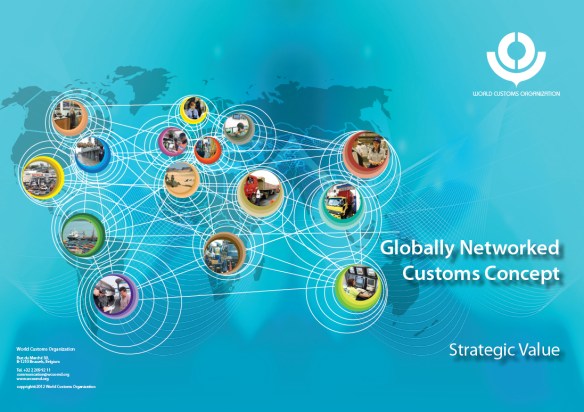
WCO - Globally Networked Customs

With the WCO Council Sessions later in June this year, it is opportune to discuss perhaps one of the single most important developments in Customs Inc, the “Globally Networked Customs (GNC)” concept which aims to realize connectivity, data exchange, and cooperative work amongst the world’s customs administrations.

GNC is set to play a very important role in promoting trade facilitation, enhancing trade efficiency and safeguarding trade security; it will also greatly influence international rules and the development of the customs end-to-end operational process. By and large the SAFE Framework, WCO Data Model and the Revised Kyoto Convention provide specific standards for the development and implementation of national customs legal, procedural and automated systems. It is the GNC that will in future “industrialise” and harmonise Customs-2-Customs (C2C) information exchange requirements which underpin a country’s bilateral and multilateral trade agreements.

Briefly the need for GNC arises from the exchanges of information underpinning International Agreements in the commercial domain. These take time and are costly to implement. They are all different from each other creating diversity both for Members and trade. This is because each one of these agreements is built anew, handcrafted and tailor-made to meet the needs at hand. This approach will not scale up and countries broking an increasing number of International Customs Agreements are already encountering difficulty to maintain their delivery plan in line with their international policy ambitions. Below you will find links to 2 documents explaining the GNC. More information on the GNC will be provided once approved by the WCO’s Policy Commission later on in June 2012. Source: WCO.

Related articles

How to resolve regional transport problems?

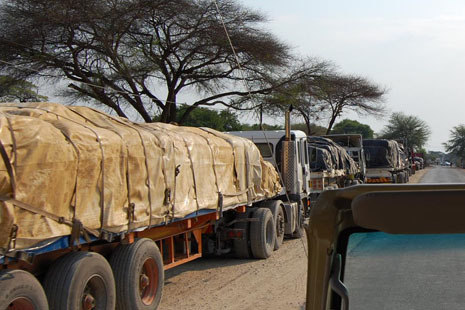
The Freight-Intra Africa Trade Conference in Pretoria, this week, has featured several news articles in the local media, and no doubt some foreign tabloids as well. The Minister of Transport has cleared up the cause of the ills plaguing cross border and regional transport. At least we are now fully informed that [historical] design issues and operational inefficiencies at South Africa’s landborders, and Beit Bridge in particular, are the fundamental causes of under-performance in intra-Africa trade.

“In most cases, the delays at the borders are caused by operational inefficiencies, which result in the duplication of processes. This is a serious cost to the economies of the countries that conduct their trade through such border posts,” the Minister said.

One has to seriously question who advises the minister which leads to such statements, and whether or not these advisers have visited any land borders in recent months.

Now the remedy – Government has budgeted and approved R845-billion for infrastructure development over the medium-term, with a significant proportion, about R262-billion of this investment being earmarked for transport infrastructure and logistics projects. Can anyone question government’s commitment in this respect? Not really. However, the Minister was quick to point out government would resolve inefficiencies at the borders by establishing a mechanism that will bring all border entities under a single command and control structure to address the fragmentation in border operations. “The ultimate vision is to create one-stop border operations to facilitate legitimate trade and travel across the borders”.

The proliferation of border management agencies (integration of enforcement and regulatory authorities under one umbrella) – which has seen the demise of many customs administrations over the last decade – has not proven an effective vehicle to manage cross border travel and trade. It is difficult to see how facilitation procedures can co-exist under a command and control environment. What the situation does create is the opportunity to consolidate a budget for security expenditure. Various Sources: Engineering News, Business Live, Fin24.com and personal opinion.

Global Free Zones of the Future 2010/11 Winners

Dubai Airport Free ZonefDi Magazine’s first global ranking of economic zones has awarded Shanghai Waigaoqiao Free Trade Zone the title of Global Free Zone of the Future 2010/11.

Shanghai Waigaoqiao Free Trade Zone (WFTZ), the largest free-trade zone in China, has been recognized by fDi Magazine as the ‘Global Free Zone of the Future 2010/11’. This is in part due to the large number of companies that have set up operations in Shanghai WFTZ; more than 9000 companies – accounting for one-third of all foreign companies moving into Shanghai – have set up in this zone. Shanghai WFTZ also came top in the categories of ‘Best Facilities’ and ‘Best Port Zone’.

Economic zones based in the United Arab Emirates dominated the Free Zones of the Future 2010/11 ranking, with seven of the top 25 zones coming from the UAE. Not only did Dubai Airport Free Zone rank as second overall, it also ranked second in the ‘Best FDI Promotion Strategy’ and ‘Best Transportation’ categories.

The top three in the ‘Best Economic Potential’ category was led by the city of San Luis Potosi in Mexico, followed closely by Industrial Estates in Thailand and the Jebel Ali Free Zone in the UAE. Clark Freeport in the Philippines, Togo Export Processing Zone, and Chittagong Export Processing Zone in Bangladesh were the top three in the ‘Best Cost Effectiveness’ category.

fDi Magazine’s rankings, which took more than four months to compile, ranked eight UAE zones in the ‘Best Transportation’ top 10, with Jebel Ali Free Zone and Dubai Airport Free Zone taking the top two positions and Dubai Media City and Dubai Knowledge Village ranking joint in third position. Dubai Media City, Dubai Airport Free Zone and Dubai Knowledge Village also claimed the top positions in the ‘Best FDI Promotion Strategy’ category.

The independent judging panel scored Dubai Knowledge Village, Dubai Media City and Ajman Free Zone (UAE) as the top three zones in ‘Best Incentives’.

South Carolina Foreign Trade Zones 21 & 38, topped the ‘Best Airport Zone’ category, followed by Aqaba Special Economic Zone (Jordan), Tanger Free Zone (Morocco), El Paso FTZ 68 (US) and Bahrain International Airport. Source: FDIntelligence.com

Moving goods efficiently to inland cities – a case for inland container depots

Port of Agapa, NigeriaNearly one in three African countries is landlocked, accounting for 26% of the continent’s landmass, and 25% of the population, or more than 200 million people, indicating that current population growth trends, including the development of population megacities distant from coastal locations will become powerful drivers of inland markets.

At the 3rd Annual Africa Ports, Logistics & Supply Chain Conference, APM Terminals’ Director of Business Development and Infrastructure Investments for the Africa-Middle East Region, Reik Mueller stated that “Ports will compete to become preferred gateways to move goods efficiently to inland cities and landlocked countries” Mr. Meuller added that “The future prosperity of these nations depends on access to the global economy and new markets; high-growth markets need inland infrastructure and logistics capabilities along development corridors. The ports that can provide the best and most efficient connectivity to those Inland markets will be the winners”.

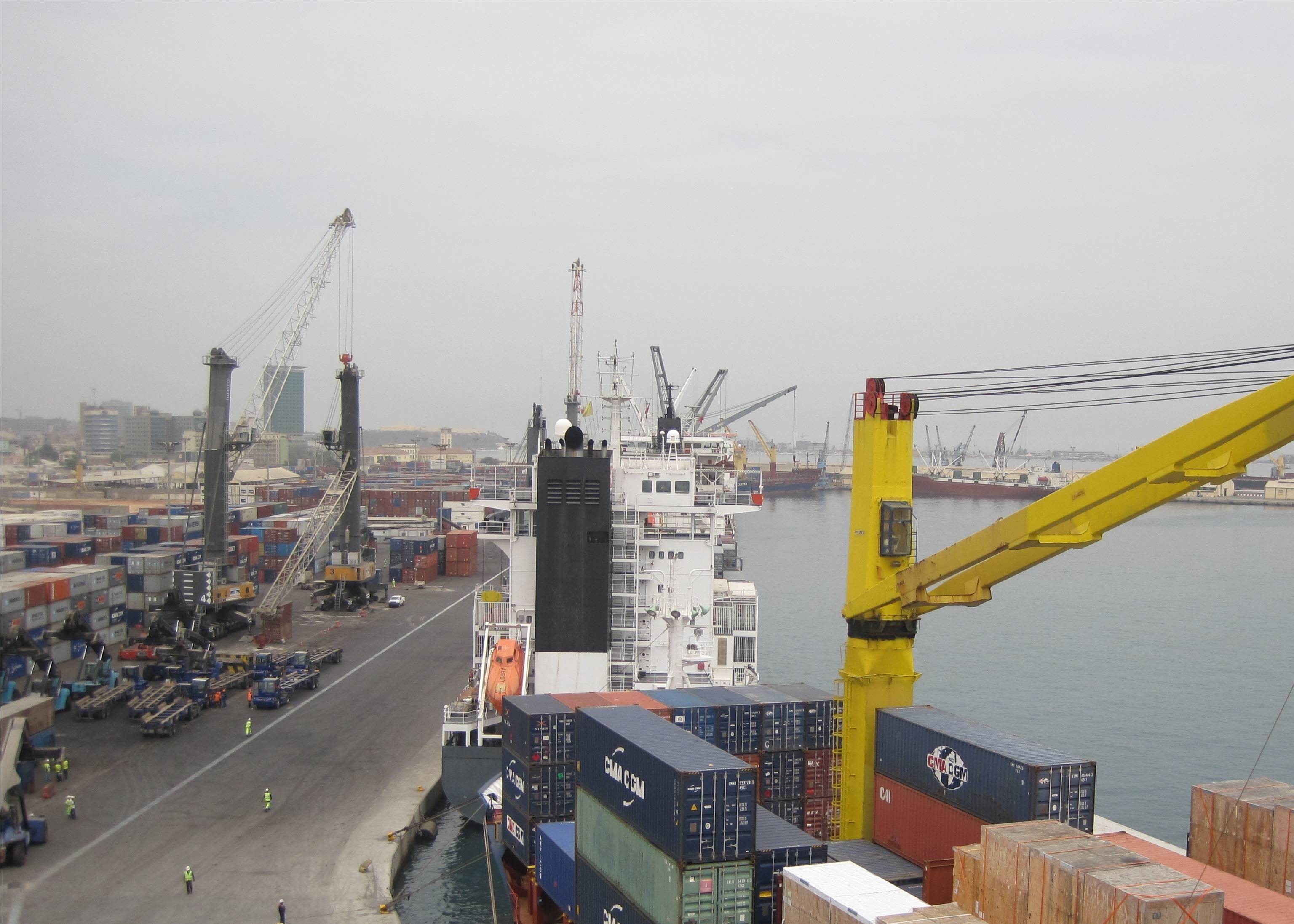
Citing the recent success in reducing port congestion through Inland Container Depots (ICDs) now in operation outside of the APM Terminals operated port of Luanda, Angola, the Meridian Port Services joint venture in Tema, Ghana, and the ICD which was opened four km from APM Terminals Apapa, the busiest container terminal in Nigeria and all of West Africa, Mr. Mueller made the case for integrated transportation solutions, “Importers are not going to wait for improved infrastructure; the cargo will simply move to other ports” said Mr. Mueller.

Mueller described a new model for transportation planning and development in West Africa in which port and terminal operations shift focus from “container lifts” toward “integrated container transport solutions. Dry ports and inland markets are the untapped, overlooked opportunity markets of the future in Africa”. Now ain’t this a contrast to views on the southern tip of the continent – the continent’s biggest port without efficient inland corridors and networks must jeopardize investor confidence not to mention export profitability.   Sources: DredgingToday.com, PortStrategy.com and Greenport.com.

Who Will Be Africa’s Brazil?

Will there ever be an “African Brazil”? Who will that be? Angola? Congo? Ethiopia? Nigeria? South Africa? Flip that question: what will it take for an African country to become a new Brazil? A lot. First, it will take governments that do not spend or borrow too much, and independent central banks that keep inflation low. That is, the first order of business is a stable “macroeconomic framework.” Brazil managed to do that, but only after decades of rampant inflation and financial crises. Many African countries are making progress in that direction, but none is quite there. Read this objective review by Marcelo Giugale, World Bank’s Director of Economic Policy and Poverty Reduction Programs for Africa. Source: The Huffington Post

Advancing the argument for sealing cargo and tracking conveyances

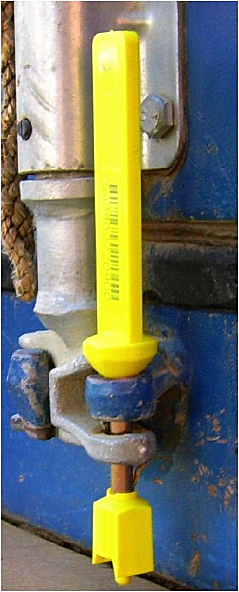
South African Customs law provides for a seal integrity regime. This consists in provisions for the sealing of containerised sea cargo as well as sealable vehicles and trailers. These requirements have, however, not been formally introduced into operation due to the non-availability (until recently) of internal systems and cross-functional procedures that would link seal integrity to known entities. To explain this in more layman’s terms, it is little use implementing an onerous cargo sealing program without systems to perform risk assessment, validation of trader profiles and information exchange. It’s  like implementing non-intrusive inspection (X-ray scanning) equipment without backward integration into the Customs Risk Management  and Inspection environment and systems. It has often been stated that a customs or border security programme is a layered approach based on risk mitigation. None of the individual elements will necessarily address risk, and automation alone will likewise not accomplish the objective for safe and secure supply chains. Moreover, neither will measures adopted by Customs or the Border Agency succeed without due and necessary compliance on the part of entities operating the supply chain. It therefore requires a holistic strategy of people, policy, process and technology.

In the African context, it is surmised that the business rationale will be best accomplished with a dual approach on IT connectivity and information exchange. Under the political speak there are active attempts within SACU, SADC, COMESA and the EAC to establish electronic networks to facilitate and safeguard transit goods. Several African states are landlocked and are not readily accessible, some requiring multiple transit trips through countries from international discharge in the continent to place of final destination. National laws of each individual country in most instances provide obstacles to carriers achieving cost effective means in delivering cargoes. Over and above the laws, there exists (regrettably) the need to ‘grease palms’ without which safe passage in some instances  will not be granted. Notwithstanding the existence of customs unions and free trade areas, internal borders remain the biggest obstacle to facilitation.

Several African logistics operators already implement track and trace technology in the vehicle and long-haul fleets. This has the dual purpose of safeguarding their assets as well as the cargoes of their clients which they convey. Since 9/11, a few customs administrations have formally adopted ISO PAS 17712 within their legislation to regulate the use of high security seals amongst cargo handlers and carriers. In most cases this mandates the use of high security ‘mechanical’ bolt seals. However, evidence suggests there is a growing trend to adopt electronic seals. Taiwan Customs for one has gone a significant way in this regard. Through technological advances and increased commercial adoption of Radio Frequency Identification (RFID) technology the costs are reducing significantly to warrant serious consideration as both a viable and cost-effective customs ‘control’ measure.

Supply chain custody using RFID as an identifier and physical security audit component – as provided for in ISO 17712 – is characterized by the following:

  • it uniquely identifies seals and associates them with the trader.
  • the seal’s unique identity and memory space can be used to write a digital signature, unique to a trader on the seal, and associating that seal with a customs declaration.
  • using customs trader registration/licensing information, together with infrastructure to read seal information at specified intervals along a route to create a ‘bread-crumb’ audit trail of the integrity of the cargo and conveyance.
  • using existing fleet management units installed in trucks to monitor seal integrity along the high risk legs of a cargo’s transit.
  • record the seal’s destruction at point of destination.

Looking forward to the future, it is not implausible for customs and border authorities to consider the use of RFID:

  • as a common token between autonomous customs systems.
  • to verify and audit that non-intrusion inspections have taken place en-route, and write that occurrence to the seal’s memory with the use of an updated digital signature issued to the customs inspection facility.
  • to create a date and time stamp of the cargo’s transit for compliance and profile classification – to confirm that transit goods have actually left the country as well as confirm arrival at destination (to prevent round tripping).
  • Lastly to archive a history of carrier’s activities for forensic and/or trend analysis.
This is a topic which certainly deserves more exposure in line with current regional developments on IT-connectivity and information exchange. A special word of thanks to Andy Brown for his contribution and insight to this post.
Related articles

Global Preferential Trade Agreement Database (GPTAD)

world-bank-logoThe World Bank International Trade Department has just launched it’s Global Preferential Trade Agreement Database (GPTAD). The GPTAD provides information on preferential trade agreements (PTAs) around the world, including agreements that have not been notified to the World Trade Organization (WTO). It is designed to help trade policy makers, scholars, and business operators better understand and navigate the world of PTAs.

The GPTAD Database contains the original text of PTAs that have been notified to the WTO as well as agreements that have not yet been notified. The database is updated on a regular basis and currently comprises more than 330 PTAs. Agreements in the database have been indexed using a classification consistent with the WTO criteria. The GPTAD is a unique online tool that allows users to search PTAs around the world by provisions or keywords and to compare provisions across multiple agreements. The database can be searched according to the following categories:

  • Duties and charges on imports
  • Quantitative restrictions on imports
  • Rules of origin
  • Sanitary and phytosanitary measures
  • Agriculture
  • Investment
  • Services
  • Dispute settlement procedures
  • Intellectual property
  • Labor
  • Environment

The Library provides the text of all agreements in their original language and archives them by key criteria. It enables users to sort PTAs by membership, date of signature, in-force status, and other key criteria. It also allows users to download and print PDF files of entire agreements.

The GPTAD is designed to be a valuable resource on PTAs for trade policy makers, scholars, and business operators around the world. To that end, the World Bank International Trade Department welcomes your input. If you are aware of bilateral or regional PTAs that are not included in the library or database, please contact us. The GPTAD is work in progress and we actively welcome and solicit your views and suggestions on how the site might be further improved and made more useful. Source: World Bank

Related website:

Special Economic Zones – how special?

Despite having burned its fingers with Industrial Development Zones (IDZs), which involved a few fiscal benefits (shrouded in legalese) and billions in infrastructure, Trade and Industry has gone into overdrive to push its new policy on special economic zones (SEZs). It has relaxed ‘locality’ for one, i.e. such zones need not be located in close proximity to an international port or airport. Moreover, SEZs are now being promoted to ‘compliment’ existing IDZs and not replace them as was erroneously suggested in an earlier post.

While the South African Department of Trade and Industry (the dti) is conducting public hearings on the matter, it is perhaps relevant to consider what the Free Market Foundation (FMF) – a think-tank on limited government and economic freedom – has to say on the matter. The content of the report might well attract support from some in the business community involved with manufacturing, distribution and logistics. Read the FMF’s evaluation of the dti’s SEZ Policy here!

While there are not many trade remedies available to local business many prospective requests have over the last decade been presented to establish so-called distribution centres/hubs and ‘virtual bonded warehouses’, which have not borne much fruit mainly due to the lack of a legal framework for their operation. Moreover, in government there is always a cautious resistance to liberalisation in customs and trade laws (they directly impact the fiscus) in the absence of viable risk mitigation strategies or remedies. Perhaps it has something to do with the dwindling public sector skills and experience levels available to conduct effective audits; although, the big audit firms would readily contest this and advocate the outsourcing of such function to the private sector. As the development of more sophisticated systems in SARS come on stream, ICT will no longer be an obstacle. Through increased automation comes the availability of additional human resources who can be up-skilled to perform audit work. Both Tax and Customs Modernisation programmes bare testimony to this.

The establishment of the IDZ programme (circa 2000) was fraught with inter-departmental tensions around the so-called benefits and concessions to be made available to foreign investors. The lack of a clear framework did not allow for much ‘liberalisation’ of controls and fiscal benefits. In fact the customs dispensation offered procedures and facilities to IDZs identical to that available in the national customs territory. Tax holidays and relaxed red tape are characteristic of some of the more successful SEZs around the world, as the article will attest. The dti’s latest SEZ Bill and Policy do not hint to any great length how things will be different this time round. There is however some firm calls within government to consider relaxed labour regulations – the test however lies in whether the policy makers have the appetite (or vision) to permit liberalisation in this area. I have a simple view on this matter – (i) create a favourable economic environment focusing development on SMMEs and entrepreneurship, and (ii) get the standard customs procedures and controls right through modernisation and there will be no need for ‘tax holidays’ and economic zones in this country!