SADC launches National Customs Business Forums

The SADC Sub-Committee on Customs Cooperation (SCCC) emphasizes great importance in strengthening cooperation between Customs and the private sector in order to give Customs Administrations in the SADC region an opportunity to offer a more efficient and effective customs service to their clients. The overall purpose of Customs to business partnerships is to ensure a partnership and dialogue structure of key stakeholders in the trading chain that contributes to trade facilitation, improvements in customs operations and higher compliance by the trading community.

The SCCC during its 20th meeting made the recommendation to establish National Customs Business Forums (NCBF) in all SADC Member States. Recently National Customs Business forums were established and launched in Malawi (September 2012), Zambia (April 2013) and Namibia (May 2013).  The NCBFs are meant to facilitate a stronger partnership between Customs and business at national level, promoting a regular and results oriented dialogue, and taking action on existing challenges in the supply chain of goods.

The Zambia Customs to Business Forum (ZCBF) was launched on April 26th, 2013 by the Deputy Minister of Commerce Trade & Industry in the presence of Commissioner General of the Zambia Revenue Authority (ZRA), Commissioner Customs (ZRA) and several public sector and business representative organizations which are important players in the Trading chain. In his keynote address, the Minister said “As a minister responsible for trade, i am profoundly delighted at seeing such initiatives being brought to the fore as this will help in improving the ease of doing business in Zambia. Furthermore, it is important to state that such initiatives are in line with best practices as stipulated under both multilateral organisations namely; the World customs organisation and the World trade organisation”.

The Namibia Customs Business Forum was launched by the Finance Minister Saara Kuugongelwa-Amadhila on the 22nd May 2013 in Windhoek, Namibia. The forum is envisaged to become “a bi-annual dialogue forum that brings together public and private sector [actors] in the trading chain to continually assess and adopt measures that promote effective trade facilitation, as well as enhance customs operations and higher compliance,” a statement from the Finance Ministry says.

In May 2013, the SCCC endorsed a Private Sector involvement strategy which additionally recommends the establishment of a Regional Customs Business Forum (between Customs and its stakeholders) in a bid to facilitate the implementation of the SADC Protocol on Trade. Source: SADC Secretariat.

Preparing ports for the future –

Siim Kallas - Europe’s ports must be better connected across the wider transport network.

Siim Kallas – Europe’s ports must be better connected across the wider transport network.

The following article featured in Port Stratetgy and penned by Siim Kallas, Vice-President of the European Commission in charge of transport policy, offers some sound views on how ports and regional networks ought to harmonise to ensure their competitiveness.

Europe’s prosperity has always been linked to sea trade and ports, which have great potential for sustaining growth in the years ahead. As gateways to the EU’s entire transport network, they are engines of economic development. And more cargo, cruise ships and ferries in our ports mean more jobs.

Europe depends heavily on its seaports, which handle 74% by volume of the goods exported or imported to the EU and from the rest of the world. Not only are they important for foreign trade and local growth, ports are the key for developing an integrated and sustainable transport system, as we work to get trucks off our saturated land transport corridors and make more use of short sea shipping.

Need to adapt

Even with only modest assumptions of economic growth, port cargo volumes are expected to rise by 57% by 2030, almost certainly causing congestion. In 20 years, Europe’s hundreds of seaports will face major challenges in performance, investment needs, sustainability, human resources and integration with port cities and regions.

So our ports need to adapt. Take the next generation of ultra-large vessels that carry 18,000 containers. Put onto trucks, these containers would stretch in a single line from Rotterdam to Paris. To accommodate them, ports need to provide the adequate depth, crane reach and shipyard space. There is also a growing need for gas carriers and gasification facilities.

Efficiency and performance vary a great deal around Europe. Many EU ports perform very well – take Rotterdam, Antwerp and Hamburg, which handle 20% of all goods. But not all ports offer the same high-level service. Port network connections and trade flows are well developed in northern Europe, but much less so the south.

A chain is only as strong as its weakest link: if a few ports do not perform well, it affects the sustainable functioning of Europe’s entire transport network and economy – which needs to recover and see long-term growth.

Preparing for the future

Ports must be prepared for the future. This means improving local connections to the wider road, rail and inland waterways networks; fully optimising services to make the best use of ports as they are now; and creating a business climate to attract the investments that are so badly needed if capacity is to expand, as it must do.

Unlike other transport sectors, there is almost no EU ports legislation, on access to services, financial transparency or charging for infrastructure use. Experience from the last 15 years shows that the market cannot solve the problem itself; the lack of equal competition conditions and restrictions to port market access are barriers to improving performance, attracting investments and creating jobs. We need to act.

Our proposal to review EU ports policy focuses on the ports of the trans-European Transport Network, which accounts for 96% of goods and 95% of passengers transiting through the EU ports system. Firstly, if ports are to adapt to new economic, industrial and social requirements, they must have a competitive and open business environment.

Freedom to provide services, with no discrimination, should be a general principle; although in cases of space constraints or public interest, the responsible port authority should ensure that decisions granting market access are transparent, proportionate and non-discriminatory. Transparency of public port financing should also be improved, to avoid distortions of competition and make clear where public money is going. This will encourage more private investors, who need long-term stability and legal certainty.

On charging for using infrastructure, where there is no uniform EU model, port authorities should be more autonomous and set charges themselves. But this must be done based on objective, non-discriminatory and transparent criteria. Ports should also be able to reduce charges for ships with better environmental performance.

Staying competitive

We also plan to help our ports stay competitive by cutting more red tape and administrative formalities to boost their efficiency even further. As in many other economic sectors, staffing needs in ports are changing rapidly and there is a growing need to attract port workers. Without a properly trained workforce and skilled people, ports cannot function. The Commission estimates that up to 165,000 new jobs will be created in ports by 2030.

Modern port services and a stable environment must also involve modern organisation of work and social provisions. Many countries have reformed and the benefits of doing so can be clearly seen. Experience in Member States which have implemented ports reforms show that open and proper discussions between the parties involved can make a real difference. So we want to give this a chance first, over three years, to see what can be achieved. If that does not produce results, we will have to consider taking action.

To stimulate resource-efficient growth and trade, Europe’s ports must be better connected across the wider transport network. They must make sure they are able to develop and respond to change. This is what the European Commission aims to achieve, for the long-term benefit of the ports sector, local business and the environment. Source: Portstrategy.com

Non-Tariff Barriers – SADC Secretariat requested to intervene in Mozambique

0b8a0ce6140c04b4f629a97cb5e8d8f34e69d4a1The SADC, COMESA and EAC Tripartite alliance has been urged by various Zimbabwean, Zambian and Malawian exporters to salvage a potential crippling situation occurring at Mozambique borders. This follows the recent implementation of a new transit bond guarantee system which in conjunction with the Single Window system is allegedly causing significant delays, including loss of business and spiralling demurrage for transit goods emanating from these landlocked countries, en route for export from various Mozambique ports, Beira in particular.

Complaint no. NTB-000-578 in terms of ‘Lengthy and costly customs clearance procedures’ was lodged and can be viewed in full on the Tripartite’s NTB portal. Amongst the various problems sited, the complainants request the following of Mozambique –

  • Mozambique Ministry of Finance is requested to get customs to consider a parallel system to run with the electronic single window programme to clear the backlog in Beira port now and also consider providing release against Report orders to reduce further downtime in port . This will be a stop-gap measure until the customs staff are well versed , fully trained and that the new system can work well.
  • Mozambique authorities to facilitate arrangements with Cornelder to consider waiving storage for this special situation or at least offer 75% credit on the bills due which I must say are now astronomical based on the days the cargo has stayed in port both imports and exports.
  • Mozambique authorities to facilitate arrangements with shipping lines to consider waiving completely the demurrage due on the empty containers or at least give say 15-21 more days grace period before demurrage starts accruing.
  • Mozambique authorities to facilitate arrangements that Mozambique customs get technical assistance to assist roll this new programme out without causing huge catastrophes like this.

Mozambique has acknowledged the complaint and expressed regret over the developments. Mozambique reported that the issue was receiving urgent attention and they would provide feed back shortly.

Airport Cities – a view to a different trading environment for South Africa?

ace_skyscraper_237x352aerotropolisThis past week witnessed the first Airport Cities Convention in South Africa. It came at the timely announcement of the country’s first aerotropolis earmarked for development around Oliver Tambo International airport (ORTIA) and the surrounding industrial complex. While the City of Ekurhuleni gets prized possession of the ‘aerotropolis’ (in title) by virtue of the location of ORTIA, Johannesburg is set to benefit perhaps more greatly due to it being the epi-centre of South African commerce and trade. This represents significant ‘hinterland’ development which bodes well for future multi-modal transport and shipping activity for the Gauteng region and the country as a whole.

In support of government’s National Infrastructure Plan, is Strategic Integrated Project (SIPs) 2, otherwise known as the Durban-Free State-Gauteng logistics and industrial corridor. Infrastructure upgrades are already occurring to road and rail networks linking to the key cargo and distribution hub, City Deep. While the express purpose of an inland port, terminal or logistics hub is to provide relief for congested seaports, it likewise creates possibilities and opportunities to synergise with other transport forms. This serves to maximise capacity through integration offering local suppliers and foreign customers a host of trade, shipment and logistics options.

Foremost, an inland port is a hub designed to move international shipments more efficiently and effectively from maritime ports inland for distribution throughout the heartland. Think of the logistics of inbound freight as a barbell. At one end, inbound containers flood into a seaport, spreading across local storage facilities as they are unloaded. If they aren’t moved quickly enough from the port, they create a bottleneck that bogs down the entire distribution cycle as containers wait longer to get off ships, to get into warehouses, and to get back out and onto trucks and trains for final shipment. The Emergence of the Inland Port (credit: Jones, Lang, LaSalle)

In a world of increasing global integration, focussing more on global distribution of goods and services, it behoves our country to understand the dynamics of global trade and what in fact makes commerce tick. Today’s number 1 spot is not going to remain intact without continuous re-evaluation and innovation. It would indeed be arrogant (if not suicidal) of us to think that our current prominence and strength in the sub-saharan region will remain without innovation for the future. At the same time South Africa should welcome increased competition from its neighbours, both immediate as well as further north in Africa. The latest fDI 2013 Report indicates a decrease in foreign direct investment in South Africa (-5%) and Kenya (-9%), while at the same time a significant increase in foreign investment in Nigeria (+20%) and Egypt (+20%), respectively. True, the latter countries are far removed from South Africa’s immediate ‘playing field’, however do we fully understand the drivers which cause the named countries to attract FDI at such an increasing rate – are they capitalising somehow on our deficiencies, shortcomings, or lack of opportunism?

The National Infrastructure Plan can only be seen as a single cog in the machinery to keep South Africa competitive. And, while it is encouraging to witness these developments, a corresponding economic and commercial enterprise on both government and private sector is required to maximise these developments. Some smidgen of hope could lie in the Department of Trade and Industry’s economic principles which support Industrial Policy Action Plan (IPAP) and Special Economic Zones (SEZs), for example, however, several business commentators have already voiced concerns on exactly how these support the Infrastructure Plan. A further question lies in our country’s ability to facilitate trade, not only at our ports, but more importantly the ‘hinterland’ of our country and the neighbouring regions. Do our existing and future laws adequately provide for expeditious and facilitative procedures in the treatment of import and export goods? Are we sure that we are addressing all real and potential trade barriers?

Anyone desiring more information on the ‘aerotropolis’ concept should find some interest at the following websites – Aerotropolis.com, and the City of Ekurhuleni

Singapore and China’s Mutual Recognition Becomes a Reality

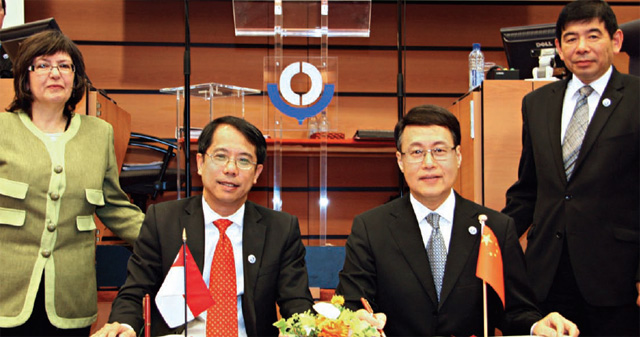
Director-General of Singapore Customs Fong Yong Kian and Vice Minister of the General Administration of China Customs Sun Yibiao (both seated), signed the China-Singapore MRA at the WCO Council Sessions in June 2012. The signing was witnessed by Chairperson of the WCO Council and Chairman of the Revenue Commissioners of Ireland, Josephine Feehily and WCO Secretary-General   Kunio Mikuriya.

Director-General of Singapore Customs Fong Yong Kian and Vice Minister of the General Administration of China Customs Sun Yibiao (both seated), signed the China-Singapore MRA at the WCO Council Sessions in June 2012. The signing was witnessed by Chairperson of the WCO Council and Chairman of the Revenue Commissioners of Ireland, Josephine Feehily and WCO Secretary-General Kunio Mikuriya.

General Administration of Customs of Singapore has announced that the Mutual Recognition Arrangement (MRA), signed with Customs of the People’s Republic of China went into effect on March 15, 2013.  Following the effective date, both Singapore’s STP-Plus companies and China’s Class AA accredited companies will be recognized as Authorized Economic Operators (AEOs) of the respective countries.

This recognition as AEOs allows Customs from both countries to grant clearance facilitation for accredited AEOs such as lower examination rates, priority inspections, and priority handling of customs clearance documents at each country’s port.  Included in the announcement were specific instructions for how importers in both Singapore and China should fill out customs forms when receiving exported goods from one of their respective AEOs.

For goods exported directly to Singapore from a Chinese Class AA company, the Chinese exporter would need to provide the Singapore importer with the 10-digit Customs Registration Code to place on their import declarations to Singapore along with inputting the “AEO code” into the portal for mutual recognition purposes and benefits of AEO.  The AEO code is comprised of “AEO”, “CN” and the 10-digit Customs Registration Code.

For goods exported to China from a Singapore STP-Plus company, the Chinese importer must fill in the “AEO code” of the Singapore’s exporter in the “remark column” in their import declarations to receive mutual recognition benefits.  The format for the AEO code is as follows:  “AEO (written in English half-width characters and capital letters)” plus “<” plus “SG” plus “12-digit AEO code” plus “>”.  For instance, if the AEO code of one Singapore STP-Plus company is AEOSG123456789012, then the remark column filled in by the Chinese importer would read as “AEO”.

The MRA signed between China and Singapore is but one example of several security programs in different countries making it easier for trusted traders to move goods through the supply chain. Other countries that also participate in MRAs include:

  • US Customs & Trade Partnership Against Terrorism (C-TPAT) which has MRAs in place with Canada’s Partners in Protection (PIP), New Zealand’s Secure Export Scheme Program (SES), Jordan’s Golden List Program (GLP), Japan’s Authorized Economic Operator Program (AEO), Korea’s AEO, and the European Union’s ( EU) AEO
  • European Union (EU) AEO which has MRAs in place with Canada’s PIP, Japan’s AEO, Australia’s AEO, New Zealand’s SES, and US C-TPAT
  • Japan Customs has MRAs in place with New Zealand’s SES, EU’s AEO, Canada’s PIP, Korea’s AEO, and Singapore’s STP-Plus
  • Singapore Customs has signed MRAs in place with Canada’s PIP, Korea’s AEO, Japan’s AEO, and China’s Class AA

Part of participating in any security program is the ability to assess and manage risk across the supply chain.  This includes soliciting and analysing information received from every partner within the supply chain to corrective actions and best practices.  While are security programs are still voluntary in nature, companies that take advantage of them are reaping benefits such as faster customs clearance and less inspections. Source: Integration Point

EAC Traders Encouraged to Grab AEO Business Opportunities

EACThe EAC business community has been asked to take advantage of the Authorized Economic Operator (AEO) scheme that seeks to cut down costs of doing business in the East African member states.

The AEO programme, launched in Dar es Salaam on Wednesday, is an entity involving importers, clearing agents, transport companies authorized to import and move cargo within the EAC region with minimal inspections and other customs interventions at checkpoints.

The Permanent Secretary in the Ministry of East African Cooperation Dr Stergomena Tax, launching the World Customs Organisation (WCO)-AEO pilot programme said, “The AEO status can provide companies with significant competitive advantages in terms of supply chain certainty and reduced import costs and finally to the final consumer.”

Apart from reduced transport costs, Dr Tax said the programme would also pull down storage charges because of minimal customs border inspections as well as few checkpoints or road blocks for transit goods.

The Swedish Ambassador to Tanzania Mr Lennarth Hjelmåker said the AEO scheme is a broader compliance strategy to reward compliant traders with simplification benefits which are concrete and predictable.

“Regional integration and cooperation are factors which are important for development, including creation of favourable conditions under which private sector can operate and provide for economic growth with focus on sustainability,” he said.

Sweden, through the Swedish International Development Cooperation (SIDA), has been supporting the work carried out by the WCO-EAC-AEO programme since 2008. Speaking on behalf of the Tanzania Revenue Authority (TRA) Commissioner General Mr Saleh Mshoro, the revenues body’s Finance Director said efficiency and effectiveness of customs procedures can significantly boost the nation’s economic competitiveness.

The launching of AEO programme marks the beginning of a journey between the region’s revenues authorities and the business communities in facilitating smooth and win win trading activities. Source: Tanzania Daily News

Why 2013 Is the Time to Adopt e-Invoicing

e-Invoicing INTTRA

Rod Agona, Managing Director, Electronic Invoicing, INTTRA explains three reasons why it is time for ocean carriers and shippers to say goodbye to paper. This follows the recent announcement by IATA on the introduction of its eAWB initiative.

In a digital age where a delay of seconds or one human error can be the cause of lost revenue, wasted resources or unhappy customers, good technology becomes critical to run a business.

Twelve years after the ocean shipping industry adopted e-commerce tools that resulted in an average savings of $100,000 per year and hundreds of thousands of labor hours per week, the final step in the shipping process – invoicing and payment – are still catching up. Surprisingly, invoices are still largely processed by hand in the ocean shipping sector. Considered the most tedious and costly step in the shipping process, manual invoicing can take days to complete and is often riddled with disputes and errors. And the amount of time it takes to manage disputes is more than anyone is comfortable admitting – knowing each delayed payment impacts carrier cash flow and creates dissatisfied shipping customers.

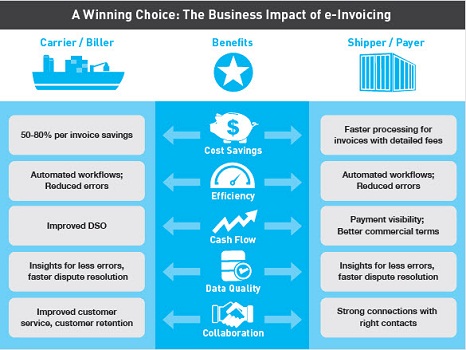
With electronic invoicing (e-Invoicing), there is a potential 50-80 percent cost savings according to the E-Invoicing/E-Billing 2012 Report from the international e-billing firm, Billentis, and the payment process is significantly shortened with DSO (days sales outstanding) typically decreasing by up to 10 days. Error rates are also greatly reduced, and customer satisfaction increased.

Although e-Invoicing as a trend has picked up rapidly in government and commercial sectors in the past three years (growing at a rate of 20 percent last year, according to the Billentis report), many in the ocean shipping sector are just catching wind of the benefits. Popularity among players is expected to grow this year – both on the biller and payer sides. Three reasons for the industry’s recent e-Invoicing surge are:

1. Demand Is at a Record High

At least 81 percent of the world’s largest shippers are requesting electronic invoices from their carriers in 2013, says a 2012 global shipping study conducted by INTTRA, the world’s largest ocean shipping network. The demand to move away from paper invoicing has never been greater, with shippers claiming to be “ready now and actively seeking e-Invoicing from their business partners.”

2. Proven to Lower Costs and Speed Internal Operations

Shippers’ biggest complaints with paper invoicing are 1) managing disputes, 2) the time and costs required to process invoices, and 3) correcting invoice inaccuracies. e-Invoicing is proven to alleviate these concerns by streamlining the entire settlement process, improving accuracy, and reducing the costs and labor required to process manual invoices. Payers end up happier as a result, receiving faster and improved communications and lowering the true total cost of doing business. For carriers, e-Invoicing is proven to cut costs and improve cash flow and working capital – and investments are often gained back within six months.

Both shippers and carriers want a solution to better manage high-volume transactions. Imagine spending millions of dollars on a global SAP (or equivalent) rollout and still manually keying in a half-million invoices per year. There is a better way.

3. It May Soon Be Mandatory (if it isn’t already)

Shipping companies are trying to keep up with rapidly changing local and international trade regulations, and e-commerce shipping is the smart way to stay compliant. Countries like Mexico, Brazil, Norway, Sweden, Finland and Denmark have already made electronic invoicing mandatory for all business-to-government transactions. Most others in Europe, North America and Australia are increasingly adopting electronic invoicing due to its cost-saving benefits.

Companies that act today put themselves at a competitive advantage as they are able to put their savings back to work and redirect employees engaged in manual processing to higher value tasks.

Looking Forward – 2013 and Beyond

The tipping point for when a technology ‘best practice’ becomes a ‘must have’ is never clear-cut – until an industry struggles as much as ours has. Change is hard, but for an industry with few proven solutions to remove costs, e-Invoicing is a viable, must-have solution.

2013 is a critical year for the ocean shipping industry. It is expected to be a year of major change in the way carriers and shippers do business. Competition is growing fiercer, and the industry continues to consolidate. e-Invoicing is one way to cut costs and reallocate dollars to where they are needed most in today’s challenging environment. Source: Maritime-Executive.com

For information, visit http://www.inttra.com/e-invoicing.

Nigerian Customs Develops Trade Facilitation Portal

NigerianCustoms-BadgeAs part of plans to consolidate on its modernisation efforts for eventual take-over from the service providers at the expiration of the extended contract by June 2013, the Nigeria Customs Service (NCS) says it has developed a web-based application to provide information and guidance for international trade business processors in the areas of import, export and transit trade.

The portal is a non-restrictive online medium and an intuitive and interactive platform for classifying goods, a statement from the Customs spokesman, Wale Adeniyi said yesterday. The portal was developed by the service’s technical partners, nominated officers as well as other stakeholders, it said.

Through the platform, trade processors are enabled to find exact Harmonized System Codes (HS Codes) required for related tariffs and duties. It is expected that the platform will enhance compliance by traders and avail them the required information on tariff, prohibited items as well as taxes/levies due for payment upon importation.

Adeniyi explained also that the application has been designed to boost trade facilitation by granting trade processors access to information from all related government agencies. “Guidelines and procedures for obtaining permits, licences and certificates of specified commodity and country of origin that a trade will require for business processing is available on the portal,”he said. He added that the portal further allows traders to convert currencies to exchange rates set by the Central Bank of Nigeria on a monthly basis, make payments and simulate tax. Source: The Daily Trust

City Deep Inland Terminal [port] to be hit hard by Customs Bill

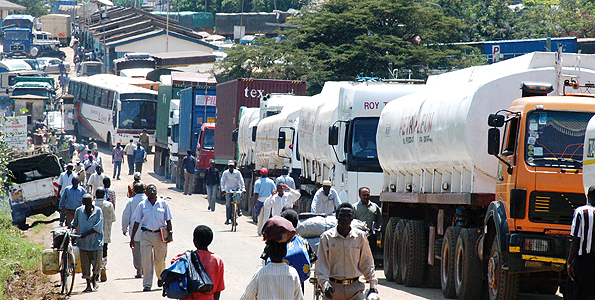
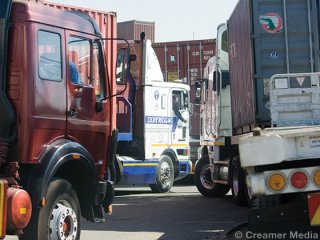
Trucks at Transnet Freight Rail's City Deep Terminal (Engineering News)

Trucks at Transnet Freight Rail’s City Deep Terminal (Engineering News)

Following up on last year’s meeting (click here!) of the minds, convened by the JCCI, a recent meeting in Johannesburg placed fresh emphasis on the dilemma which impending changes contemplated in Customs Draft Control Bill will have for the import and logistics industry in particular. The following report carried by Engineering News highlights trade’s concerns which are by no means light weight and should be addressed with some consideration before the Bills come into effect. Gauging from the content below, there is a clear disconnect between business and policy makers.

The closure of Johannesburg’s inland port seemed to be a “done deal” as Parliament deliberated the recently tabled Customs Control Bill that would leave the City Deep container depot invalid, Chamber of Commerce and Industry Johannesburg (JCCI) former president Patrick Corbin said on Friday.

The promulgation of the South African Revenue Services’ (Sars’) newly drafted Customs Control Bill, which, in conjunction with the Customs Duty Bill, would replace the current legislation governing customs operations, would have a far-reaching impact on the cost and efficiencies of doing business in South Africa and other fellow Southern African Customs Union (Sacu) countries, he added.

The Bill, which was the product of a three-year development process within the National Economic Development and Labour Council, declared that all imported goods be cleared and released at first port of entry. This was part of efforts by customs officials and government to root out any diversion and smuggling of goods, ensure greater control of goods moving across borders and eliminate risks to national security.

Speaking at the City Deep Forum, held at the JCCI’s offices in Johannesburg, Corbin noted, however, that City Deep had operated as an inland port for the past 35 years, easing the load on the country’s coastal ports, which were already strained to capacity. Despite customs officials assuring the chamber that the operations and facilities in City Deep/Kaserne would retain its licence as a container depot, he believed customs had failed to recognise the critical role City Deep had played in lowering the cost of business, easing the burden on South Africa’s ports and ensuring ease of movement of goods to neighbouring countries. As customs moved full responsibility of container clearances to the ports, port congestion, inefficiencies, shipping delays and costs would rise, and jobs would be lost and import rail volumes decreased, he noted.

Economist Mike Schussler added that the closure of the City Deep inland port operations would add costs, increase unreliability and induce “hassles”, as the Durban port did not have the capacity to handle the extra volumes and its productivity and efficiencies were “questionable” compared with other ports.

“The volume of containers going to overstay or being stopped for examination in City Deep [will] need to be handled by [the coastal] ports. If they can’t cope with the volume at the moment, how are they going to handle increased volumes,” Iprop director Dennis Trotter questioned. He noted that only the containers cleared 72 hours prior to arrival would be allocated to rail transport. Those not cleared three days before arrival would be pushed onto road transport to prevent blocking and delaying rail operations.

This, Schussler said, would also contribute – along with port tariffs and the cost of delays – to higher costs, as road transport was more expensive than rail.

He pointed out that South Africa was deemed third-highest globally in terms of transport pricing. It would also result in less rail capacity returning for export from Johannesburg, further leading to increased volumes moving by road from City Deep to Durban.

Sacu countries, such as Botswana, would also be burdened with higher costs as they relied on City Deep as an inland port. Trotter noted that the region would experience loss of revenue and resultant job losses. Over 50% of South Africa’s economy was located closer to Gauteng than the coastal ports. Johannesburg alone accounted for 34% of the economy, said Schussler, questioning the viability of removing the option of City Deep as a dry port.

However, unfazed by the impending regulations, Transnet continued to inject over R1-billion into expansion and development opportunities at City Deep/Kaserne. Corbin commented that Transnet had accepted the assurances from customs that “nothing would change and the boxes would still be able to move seamlessly once cleared.” The City of Johannesburg’s manager of transport planning Daisy Dwango said the State-owned freight group was ramping up to meet forecast demand of the City Deep/Kaserne depot.

The terminal’s capacity would be increased from the current 280 000 twenty-foot equivalent units (TEUs) a year, to 400 000 TEUs a year by 2016, increasing to 700 000 TEUs a year by 2019. Transnet aimed to eventually move to “overcapacity” of up to 1.2-million TEUs a year. Dwango said projections have indicated that by 2021, the City Deep/Kaserne terminals would handle between 900 000 and one-million TEUs a year. Source: Engineering News

First BRICS Heads of Customs Meeting

Delegates who attended the first BRICS Customs Heads of Customs Meeting [SARS]

Delegates who attended the first BRICS Customs Heads of Customs Meeting [SARS]

At a meeting hosted by the Commissioner near Bela Bela, South Africa from 7 to 8 March 2013, delegations from the Customs Administrations of Brazil, Russia, India, China and South Africa (BRICS) met for the first time. The BRICS Customs administrations exchanged experience and ideas in a spirit of openness so as to identify areas for cooperation so that they can most effectively and efficiently facilitate legitimate trade and combat illicit trade and Customs fraud. From 27 to 28 March, South Africa will also host the BRICS Summit in Durban, to be attended by various Ministers and the BRICS Heads of State.

Key points of discussion, focus and future cooperation –

Customs cooperation
The Heads of Customs committed themselves to consolidating and building on the cooperation that has already been established so that they can collectively curb Customs offences, safeguard the international supply chain and achieve effective enforcement of Customs legislation, while facilitating legitimate trade,both among BRICS countries and also globally.

Capacity building
As part of their cooperation to build Customs capacity in relation to human resources, technologies and procedures,the administrations would look into various practical and innovative solutions and endeavour to share their resources, knowledge and best practices with each other.

Cooperation at multilateral forums
A BRICS Customs mechanism will be established, including attachés networks based in Brussels and other strategic places, to identify issues of common interest, develop common responses and ensure regular engagement and interaction, including before important multilateral meetings.

Customs Mutual Administrative Assistance and the Exchange of Customs Information
The administrations also agreed to ensure that there is an enabling legal basis between them to support intra-BRICS Customs mutual administrative assistance and the exchange of Customs information. Such assistance and exchange will assist in combating illicit trade and protecting revenues and societies.

Facilitation of legitimate trade between BRICS countries
To further facilitate trade and reduce the Customs administrative burden on both trade and the administrations themselves, the administrations will exchange information in various areas of common interest and concern, including on the simplification of Customs procedures and the use of modern technologies and techniques.

The administrations will also work towards possible solutions for achieving mutual recognition of Customs controls and of trader management programs aligned to the Authorised Economic Operator (AEO) concept of the World Customs Organization (WCO), establishing Customs interconnectivity and supporting the WCO’s work on developing the Globally Networked Customs (GNC) model.

Opportunities for enforcement cooperation will also be explored, including possible joint actions, information sharing and other enforcement assistance. The use of international instruments developed by the WCO, including Conventions, Recommendations, Decisions and Declarations that support Customs trade facilitation, compliance and enforcement will be actively promoted.

Governance issues
A Governance Framework aligned to the overall BRICS commitments will be established. An annual BRICS Customs Heads meeting has been proposed whose deliberations would be informed to other BRICS forums, including in particular the Summit. Such a BRICS Customs Heads Meeting would be supported by a Customs working group under the guidance of the BRICS Heads of Customs. Source: SARS

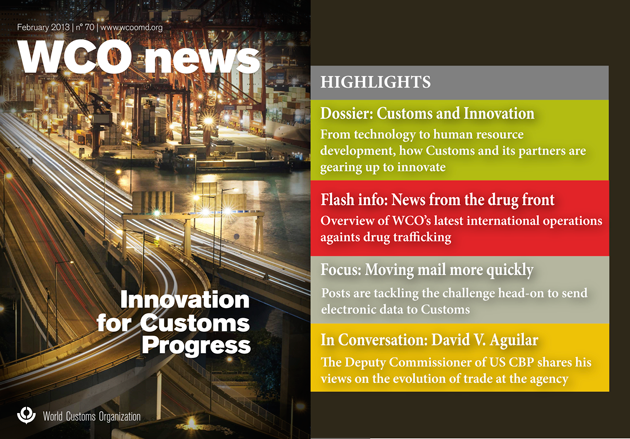
WCO News – Innovation for Customs Progress

WCO News - No.70 February 2013No introduction needed here. This Edition of WCO News focusses on innovation with a collection of articles from around the globe. In addition to the highlights listed above, check out what’s happening in the world of Non-Intrusive Inspection.

  • Serbian Customs showcases its new Command and Control centre and anti-smuggling capability demonstrating efficient distribution of information between its head quarters and border-crossings and use of mobile X-ray scanners.
  • Dutch Customs discusses its foray into the unique territory of rail scanning, having recently acquired the worlds fastest X-ray rail scanner.
  • The head of Rapiscan Systems presents the changing requirements of customs cargo screening, particularly the emergence of ‘fused technologies’ that maximise the capabilities of non-intrusive detection and material discrimination.

Singapore Customs leads the way in the exploration and promotion of ‘green’ technologies having facilitated two R&D projects on eco-friendly vehicles.

Certificates of origin also feature. As part of its commitment to further facilitate trade by strengthening origin compliance through innovative thinking, the International Chamber of Commerce World Chambers Federation (ICC WCF) recently created an international certificate of origin certification and accreditation chain which will, as a first step, concentrate on non-preferential certificates of origin (COs) – the most common certificates issued by Chambers, and the only ones Chambers are authorized to issue in most countries. Learn how they intend to implement the Certificate of Origin (CO)  certification and accreditation chain scheme and what the underlying benefits are.

Also, learn how the EU proposes to strengthen supply chain security. Click Here! to access the magazine.

Aerotropolis for Gauteng…stuff’s about to happen

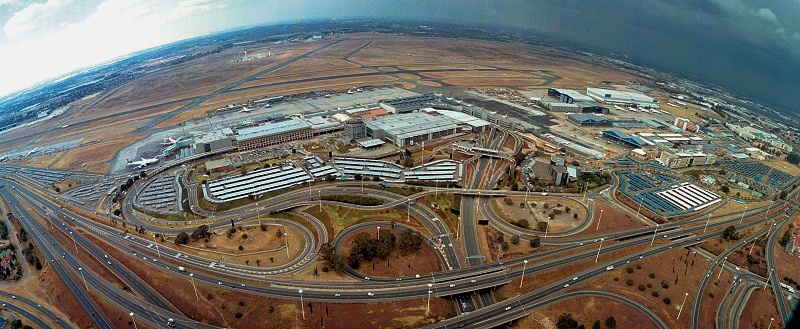
Oliver Reginald Tambo International Airport (east of Johannesburg) to become Africa's first aerotropolis

Oliver Reginald Tambo International Airport (east of Johannesburg) to become Africa’s first aerotropolis

The Gauteng Provinicial government has announced that Africa’s busiest airport, OR Tambo International Airport is set to become the location for the continent’s first aerotropolis. Work on the development of the aerotropolis, centred at OR Tambo International Airport, seeks to leverage public and private sector investment at the airport and surrounding areas. In supporting industrial development in this precinct, approval has been granted for the creation of an Industrial Development Zone (IDZ) in the area surrounding the airport. Heard this all before, but what’s different this time around?

An aerotropolis is an urban plan in which the layout, infrastructure, and economy is centered around an airport, existing as an airport city. It is similar in form and function to a traditional metropolis, which contains a central city core and its commuter-linked suburbs.The term was first proposed by New York commercial artist Nicholas DeSantis, whose drawing of a skyscraper rooftop airport in the city was presented in the November 1939 issue of Popular Science.The term was revived and substantially extended by academic and air commerce expert Dr. John D. Kasarda in 2000, based on his prior research on airport-driven economic development. Wikipedia

Jack van der Merwe, who successfully oversaw the development of the Gautrain project, has been appointed to lead the initiative of developing the aerotropolis. The proposal for the airport to become a terminal city with air, rail and road networks fuelling economic development. It is envisaged to include a commercial component, hotel, conferences, exhibitions and a residential component.

One of the key initiatives of the national government is the e-Thekwini-Free State-Gauteng freight and logistics corridor, known as the Strategic Infrastructure Project 2 (SIP2), which seeks to improve the movement of goods from the Durban port to Gauteng, and to business enterprises nationally as well as in southern Africa.

City Deep/Kazerne cargo terminals and the planned Tambo-Springs Freight and Logistics Hub are to be the focal points for the movement of goods for the export market. Phase 1 of the City Deep/Kazerne Terminal expansion and roads upgrade was underway at the continent’s largest and busiest in-land container terminal. This includes a redesign and upgrading of the roads network in and around the City Deep Terminal to provide for better flow of freight traffic and linkages with the national highways – the cost of the road works would amount to R122 million. At some point the issue of non-tariff barriers to import/export trade will need to be discussed…..and overcome.

Transnet has completed the first phase in the actual improvements of the terminal. It will be investing R900 million in upgrading the terminal. A detailed road design work, including feasibility studies and the development of a master plan, are underway for the Tambo-Springs Inland Port. Now, we’re talking…….

Gauteng  Province is to get 2 484 new modern trains as part of the Passenger Rail Agency of South Africa (PRASA) rolling stock for fleet recapitalisation and refurbishment programme.

The province will be making major investments in road infrastructure in the coming financial year and these include reconstruction and upgrading of the R55 (Voortreker Road) to a dual carriageway road between Olievenhoutbosch and Pretoria West; rehabilitation of the remaining section between Main Road and Maunde Street in Atteridgeville; reconstruction and upgrading of William Nicol Drive (K46) between Fourways and Diepsloot as well as reconstruction and improvement of the remaining section of the Old Pretoria to Cullinan Road between the Chris Hani Flats and Cullinan, among others. Wow, and the toll fees?

The department has been allocated a budget of R4.77 billion for the 2013/14 financial year. Of this amount R1.4 billion has been earmarked for roads maintenance and upgrading, R1.7 billion for public transport operations and R802 million for the running cost of the Gautrain Management Agency. Source: EngineeringNews

So, all-in-all, the above together with other recent noises of incentives and benefits for foreign and local investors in SEZs, the future holds some promise and interest…..

Finding the best solution for 100% container weight verification

Bromma load verification sensing technology (www.bromma.com)

Bromma load verification sensing technology (www.bromma.com)

The International Association of Ports and Harbours (IAPH) has helped the container handling industry to put focused attention on the issue of container weight verification. The IAPH and the International Shipping Organization have called for near 100 per cent container weight verification as a standard industry ‘best practice’. IAPH has recognised the value of container weight verification for both safety and operational reasons. Accurate container weights can help guide critical plans regarding stowage, and verifiable load data also serves to ensure worker safety. Lifting containers within an acceptable weight range also prevents accelerated stress on the spreader, thus extending equipment life.

The issue that organisations such as IAPH and the World Shipping Council have raised is not merely an academic one, studies of container weight indicate that there is often significant variation between listed and actual container weight. The problem is a familiar one: not everyone tells the truth about their weight, as the consequences of inaccurate weight can include equipment damage in ports, injury to workers and collapsed container stacks, among others.

The question is ‘how’, not ‘should’?

The general consensus has grown that universal container weight verification is a worthy standard, the key question has quickly begun to shift from whether we should we have a universal requirement to how we can best implement this commitment. Along these lines three general approaches might be possible.

The container crane option

The first possible approach is to utilise container cranes to meet the weighing requirement. The advantage of weight verification by cranes is that weighing occurs during the normal course of handling operations. The disadvantage of a crane-based approach is that weighing accuracy is only approximately 90-95 per cent, and cranes cannot distinguish between the weights of two containers when lifting in twin-mode. Since many terminals load and unload container ships using twin-lift/twin-20 foot spreaders, the actual weight of each of these individual containers will remain in doubt if there is a reliance on container cranes to yield this data. Also, with the emergence of the mega-ship era, more and more terminals will be looking for productivity solutions that enable more containers to be handled in each lift cycle, and so twin-handling of 40 and 20 foot containers is likely to expand in the future, thus adding to the number of containers with an uncertain weight.

The weigh bridge option

A second option for terminals would be to meet the container weight requirement through the use of weigh bridges. Unfortunately, there are multiple weaknesses in this approach.Containers can be weighed from the weigh bridge, but driving every container onto a weigh bridge will obviously add another operational step, and slow productivity. It also requires, especially at larger and busier transhipment terminals, that considerable land and transit lanes be set aside for weighing activities. In addition, there are two weight variables on the weigh bridge – the variable weight of up to 300 litres of truck fuel and the weight of the driver. Further, as with a container crane, a weigh bridge cannot distinguish between the weights of two containers, and so the weight of each individual container will always be inexact. The only way to gain a precise weight is to weigh one container at a time, and to adjust for fuel weight and driver weight variables.

The spreader twist lock option

The third option is to ascertain container weight from the spreader twist locks. For container terminals, a spreader-based weighing approach has several key advantages. Firstly, weighing from the spreader twist locks yields much more accurate information, as container weight precision is greater than 99 per cent. Secondly, unlike weigh bridges or crane-based container weighing, spreaders weigh each container separately when operating in twin-lift mode. When a Bromma spreader lifts two 20 foot containers or two 40 foot containers at a time, the spreader can provide highly accurate data on the weight of each separate container, and without any of the variables (fuel, driver) associated with the weigh bridge approach.

In addition, with a spreader-based approach you weigh containers from the spreader twist locks without adding any extra operational steps or requiring any extra space or transit lanes. Terminals simply log container weights in the normal course of lifting operations – with a warning system alerting the terminal to overloaded and eccentric containers. Container weight verification during the normal course of terminal operations is a way to accomplish the weighing mission without impairing terminal productivity, and especially at busy transhipment terminals. To read the full report, Click Here!

Source: www.porttechnology.org

Box Innovation – More Volume and Higher Payloads

A revolutionary new container design is set to change the economics of shipping palletised cargo, allowing cargo owners and consolidators to increase significantly the volume of cargo shipped at any one time.

A revolutionary new container design is set to change the economics of shipping palletised cargo, allowing cargo owners and consolidators to increase significantly the volume of cargo shipped at any one time.

Maritime-Executive.com recently featured the following article. UK-based container design company Container Group Technology (CGT) Ltd has announce the availability of the 20-20 SeaCell Container. From the outside the patented ‘20-20’ looks little different from a conventional ISO 20ft shipping container. However, subtle innovations on the outside and inside of the container enable the unit to provide for 36% greater pallet space.

In practical terms, this means that for each tier, 15 Euro-pallets (1200mm x 800mm) can be loaded into the container instead just 11 Euro-pallets in a standard ISO 20ft dry container. With standard ISO pallets (1200mm x 1000mm), the 20-20 can load 12 units, two more than in a conventional 20ft container (see graphic).

And by using 100% of the floor area, pallets fit snugly together inside the container making the 20-20 ideal for using lightweight slip-sheets or paper pallets, thereby reducing costs and increasing useable volume and payload at the same time.

The 20-20 SeaCell Container achieves this feat by being exactly 20ft (6096mm) in length and 2426mm wide internally. Standard 20ft containers are, in fact, 19ft 10½ ins (6058mm) long x 7ft 7¾ ins (2330mm) wide internally. Thus the internal length of the 20-20 allows it to accommodate the additional four Euro-pallets or two ISO pallets per tier. The door opening width is 2408mm which allows fork-lift trucks to load pallets two or three at a time.

However, the innovation does not stop there. Two 20-20 containers can be easily locked together from the outside with no special tools to make a 40ft container, but again with significantly greater internal volume than standard. Two 20-20 containers will carry six more pallets than one standard 40ft container. It is also possible to mix Euro & Standard pallets in the same 20-20 and still have 100% pallet utilisation.

The 20-20 is fitted with larger corner castings of the type typically used in flat rack containers, enabling them to be lifted by standard 20ft or 40ft spreaders, loaded singly or as a pair into a container ship’s 40ft cells or onto any current road chassis and rail wagon.

An integral locking mechanism in the corner casting is activated from the outside of the container. In just a few minutes, the two 20-20 containers can be securely locked together and lifted as a single ‘40ft’ unit. In the standard configuration, two 20-20s are joined at the front ends, i.e., with the doors accessible at each end of the combined containers. However, if requested CGT can also position the locking mechanism at the door-end corner castings so that the two 20-20 units are effectively sealed until reaching their final destination. This is an important feature for high value or sensitive cargoes.

Lifting two 20ft containers together has been made possible in the past decade by innovations in container lifting technology, and it has become increasingly popular with shipping lines and container port terminals as a way of loading and discharging ships faster and more efficiently.

However, it is only now, with the introduction of the 20-20 SeaCell Container, that the ability to lock and lift two 20ft containers and handle them as a single 34 ton maximum gross weight (MGW) unit has been made possible. The benefits of this innovation are numerous, including:

  • It can significantly reduce ship loading times and the time needed to lash containers on deck.
  • Estimates suggest it could reduce handling and transportation costs by 25% to 35%.
  • The fact that 20-20 containers can be linked or unlinked at any stage of the logistics’ chain should also reduce the need for empty repositioning, thereby optimising each container’s usage.

Prototypes of the 20-20 container have been built and fully tested in China, and the new design is being made available for sale or lease.

AU considers continental Customs Connectivity

500px-Emblem_of_the_African_Union_svgThe African Union (AU) Technical Working Group on Interconnectivity has developed a ‘draft’ Strategy and Roadmap for Customs-2-Customs IT Connectivity on the continent. This strategy will effectively guide the process of the continental Interconnectivity of Computerized Customs Clearance and Information Systems in Africa. The ‘draft’ Roadmap envisages that the process of interconnectivity will take a period of 11 years with a total of four stages.

Stage 1 – by 2014, National states should have engaged one another (within their respective regions) on the matter of Customs connectivity.

Stage 2 – between 2013 and 2017, the AU has an extremely ambitious expectation that national Customs Administrations would have (at least commenced) if not completed Customs ‘connectivity’ within the various Regional Economic Communities (RECs) in Africa.

Stage 3 – between 2017 and 2020, the suggestion that Customs interconnectivity will be occurring between RECs across the African continent – North Africa: AMU; West Africa: ECOWAS and UEMOA; Central Africa: ECCAS and CEMAC; East Africa: COMESA, EAC, IGAD; and South Africa: SADC and SACU.

Stage 4 – between 2020 and 2025, consolidation of Customs IT-Connectivity across the RECs.

The ‘draft’ Strategy spells out the strategic objectives and activities at the national, regional and continental level that will need to be taken for this to be realized. The strategy also indicates the roles of all the major stake holders in the process.  This comes in the wake of several regional and bi-lateral initiatives to bridge the ‘cross-border divide’ through electronic exchange of structured customs information.

All in all an ambitious plan structured to meet the equally ambitious deadlines of the coming into being of an African Union. The real challenge in all of this lies with the Member States in being able to set aside and commit to regional and continental ambitions, over and above the already pressing and complex national agenda’s of their respective sovereign countries. In context of the African Union, the multiplicity of RECs in themselves add a layer of duplication…..is an “integrated Customs Union” in Africa going to continue to permit the existence of the respective RECs or will they be absorbed into the African Union? Member states need to begin speaking up on this issue otherwise accept being swamped by onerous commitments. No doubt the ‘international donor agencies’ wait eagerly in the wings to capitalise on Africa’s deficiencies.