Revisiting the national transit procedure – Part 1

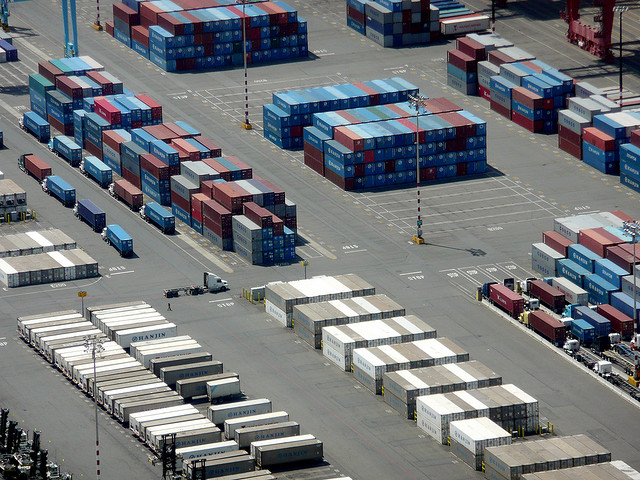
FTW Online last week ran an interesting article in response to a proposed change in Customs’ policy concerning the national transit movement of containers from coastal ports to inland container terminals and depots. In February 2011, I ran an article Customs Bill – Poser for Cargo Carriers, Handlers and Reporters alluding to some of the challenges posed by this approach. The following article goes a step further, providing a trade reaction which prompts a valid question concerning the practicality and viability of the proposed change given logistical concerns. I believe that there is sufficient merit in the issues being raised which must prompt closer collaboration between the South African Revenue Service and trade entities. For now it is sufficient to present the context of the argument – for which purpose the full text of the FTW article is presented below. In Part 2, I will follow-up with SARS’ response (published in this week’s edition of the FTW) and elaborate on both view points; as well as consider the matter  on ‘raw’ analysis of the ‘cargo’ and ‘goods declaration’ elements which influence this matter. Furthermore, one needs to consider in more detail what the Revised Kyoto Convention has to say on the matter, as well as how other global agencies are dealing and treating the matter of ‘security versus facilitation’.

Customs’ determination to have all goods cleared at the coast does not bode well for the South African trade environment, Pat Corbin, past president of the Johannesburg Chamber of Commerce and Industry (JCCI), said. Speaking at the Transport forum in Johannesburg Corbin said the Customs Bills have been on the cards for several years now and while consensus had been reached on most issues in the Nedlac process, the determination of Customs to not allow for any clearing to take place at inland ports will only add more pressure to the already overburdened ports in the country. “Customs maintains that despite the changes they propose it will be business as usual. We disagree. We have severe reservations about their intention to terminate vessel manifests at the coastal ports in all cases and have called for further research to be undertaken in this regard,” said Corbin. “By terminating the manifest at the coast it has severe ramifications for moving goods from road to rail. International experience has shown when you have an inland port and you have an adequate rail service where the vessel manifest only terminates at the inland port, up to 80% of the boxes for inland regions are put on rail while only 12% land on rail if the manifest terminates at the coastal port.” Corbin said the congestion at both the port and on the road would continue and have an adverse impact on quick trade flows. “It also raises issues around the levels of custom security and control at inland ports and then the general implications on the modernisation project.” According to Corbin, government’s continued response has been that no provision exists for inland ports and that goods must be cleared at the first port of entry. “They maintain that it is about controlling goods moving across our borders and thus the requirement that all goods must be cleared at the first port of entry. The security of the supply chain plays an important role to avoid diversion or smuggling of goods,” said Corbin. “Government says that the policy change will not clog up the ports or prohibit the seamless movement of trade. Labour organizations and unions seem to agree with them.” But, Corbin said, the Johannesburg Chamber of Commerce differs and is worried about the ramifications of this dramatic change to the 35-year-old option of clearing goods at an inland port or terminal. “With this policy change all containers will have to be reconsigned after not only Customs clearance on copy documents but also critically, completion of shipping lines’ requirements ie, payment of freight, original bill of lading presentation and receiving delivery instructions prior to their issuing a delivery order.” Corbin said the issue had been addressed directly with Transnet CEO Brian Molefe on two occasions, but that he had said he accepted Customs’ assurance that nothing would change and the boxes would still be able to move seamlessly once cleared. “It is not understood that the manifest will terminate at the coast where all boxes will dwell until they can be reconsigned,” said Corbin. Source: FTW Online – “New Customs Bill ruling will put pressure on port efficiency.”

SARS issues Compliance Programme 2012/13 – 2016/17

SARS has issued its inaugural SARS Compliance Programme, a high-level overview of its plans for the next five years to further grow compliance with tax and customs legislation. More so than perhaps any other time in history, the current global economic conditions have thrust domestic resource mobilisation into the spotlight, highlighting sustainability built on a foundation of tax compliance. Countries lacking this solid base have found their room for manoeuvre in these uncertain times severely curtailed and, in some cases, completely absent. The impact of self-reliance on self-determination is self-evident.

Many tax administrations publish similar compliance programmes (including Australia, Brazil, Canada, Denmark, Netherlands, New Zealand, Poland, Spain, Sweden, Turkey, USA, UK) and SARS has based it’s Compliance Programme on their ground-breaking work. To download and read the SARS Compliance Programme, click here! For Customs specialists and trade practitioners no less than 3 priority areas involve Customs –

Illicit cigarettes: the trade in and consumption of illicit cigarettes is detrimental to the fiscus and to the health of South Africans. SARS interventions will continue to focus on clamping down on cigarettes smuggled via warehouses as well the diversion of cigarettes destined for export back into the local market. SARS also plans to modernise it’s warehousing management and acquittal system.

Undervaluation of imports in the clothing and textile industry: Undervalued imports pose a significant risk not only to the fiscus but to local industry and job creation. SARS will continue to work together with other government agencies and industry stakeholders to clamp down on this practice including through the establishment and frequent revision of a reference pricing database to detect undervaluation, increasing inspections as well as supporting an integrated border management model.

Tax Practitioners and Trader Intermediaries: Regulation of this industry will be pursued to ensure that tax practitioners and trade intermediaries are all persons of good standing, are fully tax compliant in their personal capacity and provide a high quality service and advice to their clients. SARS will also develop a rigorous risk profiling system to identify high risk practitioners and trade intermediaries.

Durban – Harbour mafia busted!

A 3-year covert investigation into a multi-billion rand racket at the Durban harbour has exposed an international mafia, allegedly bribing customs and police officials to allow in container-loads of contraband.

This week, a former Sars customs official was taken by surprise when Hawks and Sars investigators swooped on his Umbilo home and arrested him on 80 counts of alleged corruption. Etienne Kellerman, 47, a former Sars anti-corruption task team member, appeared in the Durban Regional Court on Tuesday. He was released on R100 000 bail and the matter was adjourned to next week. Kellerman is suspected of receiving substantial benefits for allowing contraband through. It is alleged that Sars lost millions of rand in revenue as a result. He resigned from Sars three years ago, days after he was quizzed by Sars investigators about his alleged role in the racket. His job had been to profile and identify high risk companies and containers entering the country.

A further seven Sars officials from Durban and Johannesburg were suspended for their alleged roles in the smuggling racket. Hawks investigator and project manager of this undercover operation, Colonel Brian Dafel, said that in coming weeks they would swoop on 100 more suspects in the country, including Sars officials, police and syndicate members, on charges ranging from racketeering, corruption, money laundering, extortion, murder and attempted murder.

Warrant Officer - Johan NortjeHe said the investigation was triggered by informers who tipped them off about the alleged crooked activities and racketeering at the harbour. The undercover investigation was a joint operation by the Hawks, Sars, independent law enforcement agencies and other key role players, Dafel said. He said they were also closing in on suspects believed to have ordered the hit on Warrant Officer Johan Nortjé, an officer in the police’s protection security service. He was responsible for investigating smuggling of goods and drugs through Durban harbour. A hit was allegedly ordered on his life days after he made a R100m counterfeit bust at the harbour. Nortjé was gunned down outside his Montclair home on January 17 last year, 10 days after he had made the bust.

“Nortjé was one of the few honest cops. He was aware of the container racket and was determined to expose it. He was killed because he was hampering the operation of the syndicate members,” Dafel said.

“This is a very dangerous investigation that involves extremely high levels of corruption. “Durban harbour is the biggest port authority that handles 40 percent of the containers nationally. In the past two years, during this investigation, we have seized over R1 billion worth of counterfeit goods and contraband.” He said that several witnesses had been placed in witness protection programmes as they feared for their lives. “People’s lives have been threatened and hits have been ordered. But, none of this will deter this investigation.

Dafel told the Daily News that investigations had revealed that certain SARS and police officials were working in teams between KZN and Gauteng. “This could not be done alone. They worked in groups, including those who cleared the documentation to those who inspected the containers and gave them the final clearance.

Thousands of containers pass through the harbour daily and it is impossible to check each and every one. That is how the counterfeit goods and contraband got through so easily. The syndicate members also communicate through cellphones making it a very smooth operation. He said every member of the syndicate was paid for his or her role in allowing the illegal goods through. The potential value of the illegal commodities was between R10 and R20 million for each container. The international mafia pays bribes of up to R30 000 per container that is allowed to pass through customs undetected. It is reported that one of the biggest problems is the clearing agents who work in cahoots with the police and syndicate members.

Dafel said many of the SARS and SAPS officials who were being investigated stood accused of allowing counterfeit goods or contraband to enter the country illegally, or under-evaluating containers. Since the investigation started, much stricter measures are in place at the harbour making it difficult to smuggle goods into the country. “We have closed the gap significantly for any form of corruption to take place. Also, staff know that they will be arrested and charged if they break the law,” Dafel said.

He said they were also working closely with people abroad and international law enforcement agencies to close in on the racketeers. “There are big name international companies, mainly from China, that are also being investigated. In fact, the goods imported from China are the biggest problem.” Source: Daily News E-edition

Related articles

Special Economic Zones – how special?

Despite having burned its fingers with Industrial Development Zones (IDZs), which involved a few fiscal benefits (shrouded in legalese) and billions in infrastructure, Trade and Industry has gone into overdrive to push its new policy on special economic zones (SEZs). It has relaxed ‘locality’ for one, i.e. such zones need not be located in close proximity to an international port or airport. Moreover, SEZs are now being promoted to ‘compliment’ existing IDZs and not replace them as was erroneously suggested in an earlier post.

While the South African Department of Trade and Industry (the dti) is conducting public hearings on the matter, it is perhaps relevant to consider what the Free Market Foundation (FMF) – a think-tank on limited government and economic freedom – has to say on the matter. The content of the report might well attract support from some in the business community involved with manufacturing, distribution and logistics. Read the FMF’s evaluation of the dti’s SEZ Policy here!

While there are not many trade remedies available to local business many prospective requests have over the last decade been presented to establish so-called distribution centres/hubs and ‘virtual bonded warehouses’, which have not borne much fruit mainly due to the lack of a legal framework for their operation. Moreover, in government there is always a cautious resistance to liberalisation in customs and trade laws (they directly impact the fiscus) in the absence of viable risk mitigation strategies or remedies. Perhaps it has something to do with the dwindling public sector skills and experience levels available to conduct effective audits; although, the big audit firms would readily contest this and advocate the outsourcing of such function to the private sector. As the development of more sophisticated systems in SARS come on stream, ICT will no longer be an obstacle. Through increased automation comes the availability of additional human resources who can be up-skilled to perform audit work. Both Tax and Customs Modernisation programmes bare testimony to this.

The establishment of the IDZ programme (circa 2000) was fraught with inter-departmental tensions around the so-called benefits and concessions to be made available to foreign investors. The lack of a clear framework did not allow for much ‘liberalisation’ of controls and fiscal benefits. In fact the customs dispensation offered procedures and facilities to IDZs identical to that available in the national customs territory. Tax holidays and relaxed red tape are characteristic of some of the more successful SEZs around the world, as the article will attest. The dti’s latest SEZ Bill and Policy do not hint to any great length how things will be different this time round. There is however some firm calls within government to consider relaxed labour regulations – the test however lies in whether the policy makers have the appetite (or vision) to permit liberalisation in this area. I have a simple view on this matter – (i) create a favourable economic environment focusing development on SMMEs and entrepreneurship, and (ii) get the standard customs procedures and controls right through modernisation and there will be no need for ‘tax holidays’ and economic zones in this country!

WCO/SACU – IT Connectivity and Data Exchange

WCO-SACU IT Interconnectivity and Data Exchange Conference

On the occasion of International Customs Day, in January earlier this year, the World Customs Organisation dedicated 2012 as the year “Connectivity”, which encapsulates people connectivity, institutional connectivity and information connectivity among the members of the global Customs community.

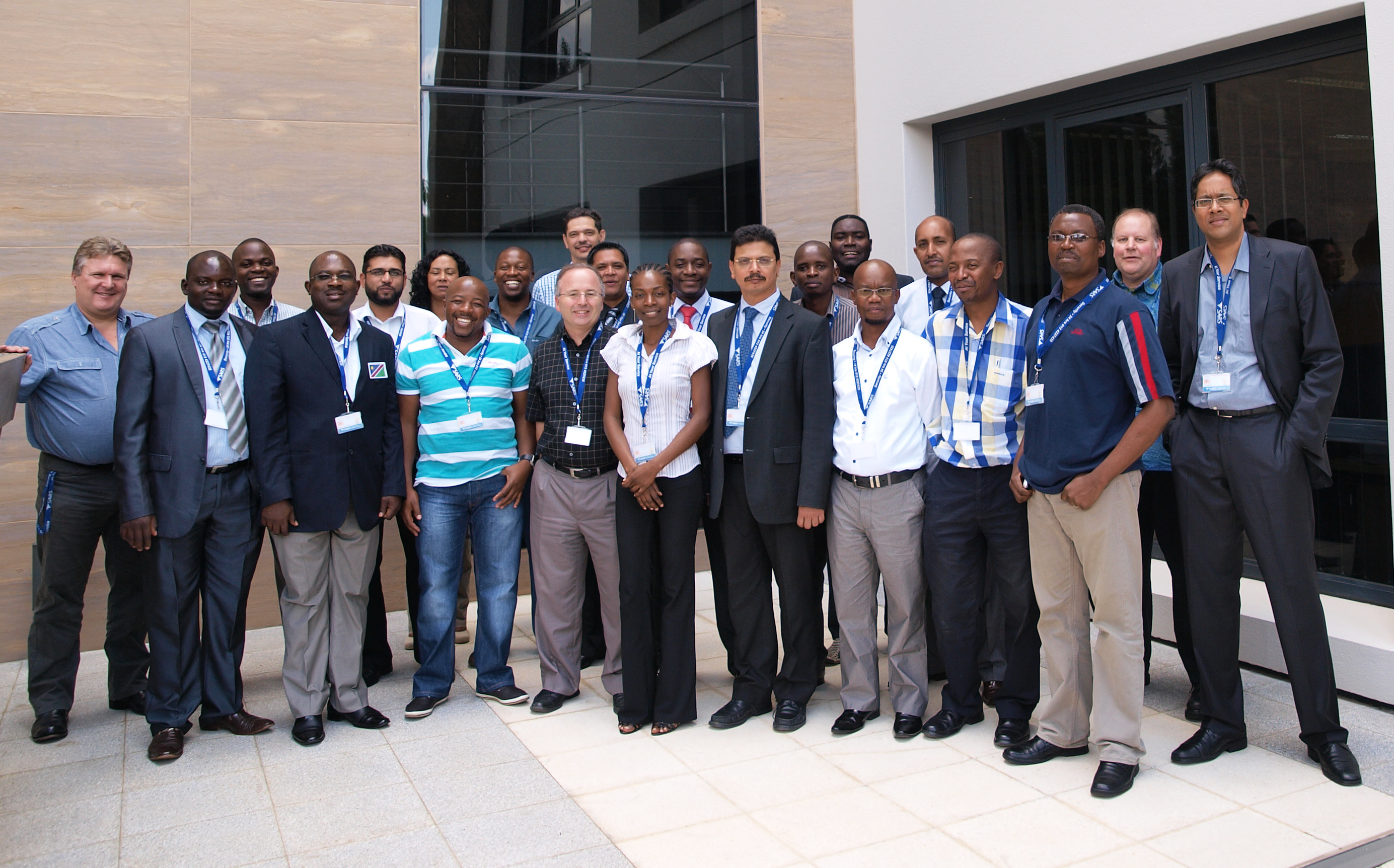
Over the last week and a half delegates from the WCO, SACU, UNCTAD, SADC and COMESA have been hosted at SARS, Pretoria to discuss and deliberate over an approach to implement ‘IT connectivity’ within the Southern African region. During the first week representatives from UNCTAD, SACU and SARS were briefed on important developments at the WCO on IT-Interconnectivity and Information Exchange. We were privileged to have Mr. Satya Prasad Sahu, Technical officer from the WCO – a leading expert in all matters of ICT in international customs matters – present the developments towards finalisation of a future international customs standard called “Globally Networked Customs” (GNC). It entails a structured approach that will enable customs authorities to formulate and document bilateral or regional ‘standards’ on a variety of Customs-to-Customs topics, for instance Authorised Economic Operators, Cross Border Information Exchange, Risk Management, etc. A representative from UNCTAD presented a synopsis of the proposed ‘cloud computing solution’ which the Trans Kalahari Corridor (TKC) plans to pilot between Namibia and Botswana along the TKC route in the next few months. During the course of this week, delegates , under the guidance of Satya, prepared a proposed approach for information exchange between members of the Southern African Customs Region. This document is based on the GNC Utility Block structure (defined by the ad Hoc Committee on Globally Networked Customs at the WCO) and served as the basis for discussion for Week 2.

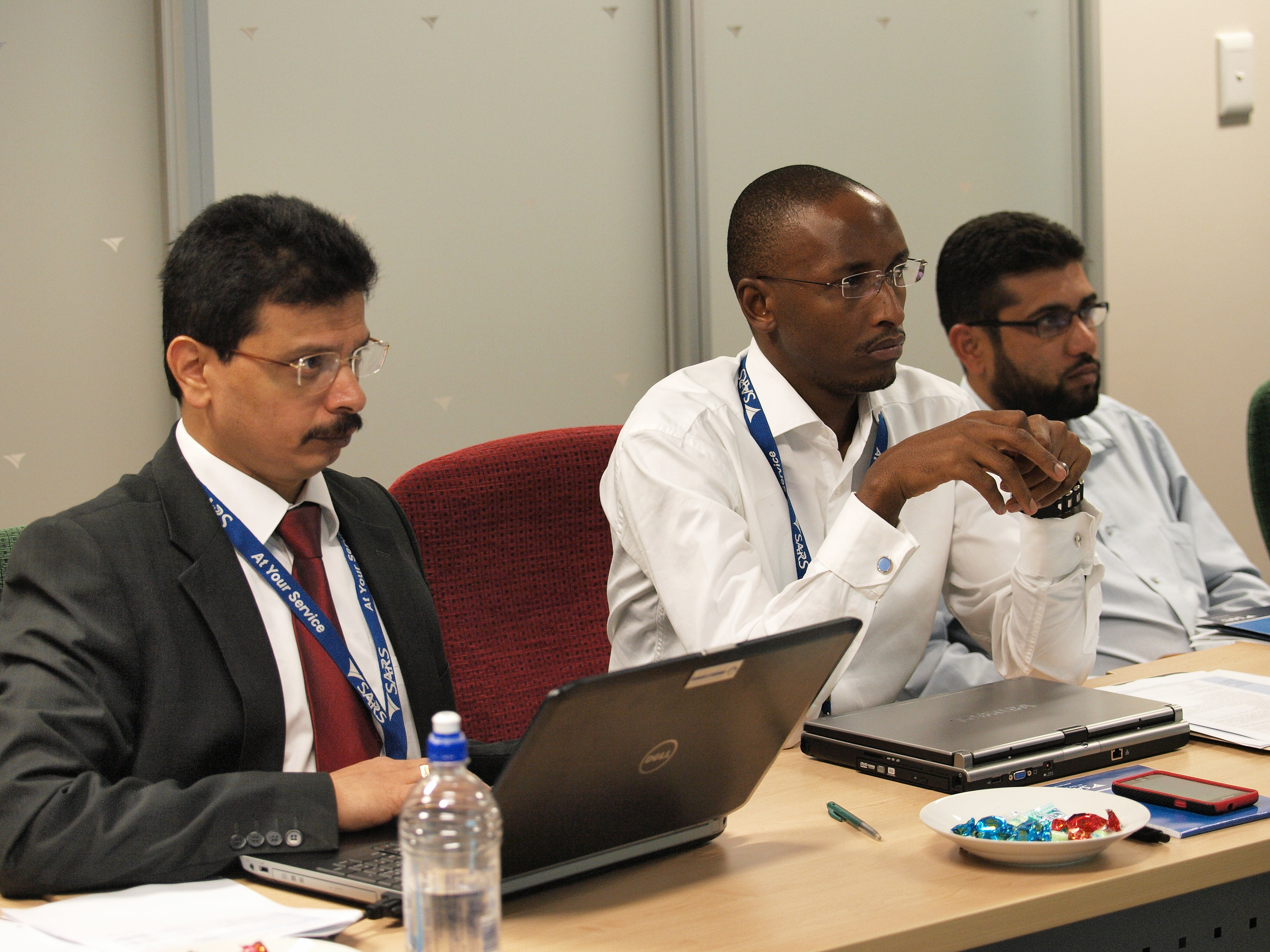
Mr. SP Sahu (WCO) and delegates from SACU SecretariatWeek 2 saw the arrival of customs and IT representatives from COMESA, SADC, UNCTAD, SACU as well as a delegation from Mozambique Customs. Mr. Sahu was invited to chair the session, given his vast experience on the subject matter as well as international experience in national and regional customs ICT programmes. Delegates were treated to various lectures on the GNC, a comprehensive overview of developments on ASYCUDA (Customs solution developed by UNCTAD), various updates from within the customs region – Botswana, Namibia, Lesotho, Swaziland, Mozambique and SARS. Beyers Theron informed delegates of ongoing developments of the SARS Customs Modernisation Programme as well as key implications for neighbouring countries. SARS presented a live demonstration of SARS’ Service Manager solution, navigating through all the functionality now available to SARS Customs officials. Of significant interest to all was the new iPod inspection tool. This technology is given prominent feature in the latest edition of WCO News.

A large portion of the week was, however, spent on deliberating the proposed scope and content of the draft Utility Block on Information Exchange in the Southern African Region. Significant progress was been made to attain first, a common understanding of the scope as well as the implications this has for participating countries. Delegates will return home with a product with which to create awareness and solicit support in their respective countries. Over the next few months SARS will engage both SACU and SADCOM (combined SADC and COMESA trading blocs) to establish firm commitments for information exchange with customs administrations in these regions. This conference is significant for SARS and South Africa as a whole as it provides a uniform, standardised and practical approach for engagement with other international trading partners. To view photographs of the conference please click here!

WCO News – February 2012 Edition

WCONews Edition February 2012Herewith a link to the latest edition of WCO News, providing a wealth of customs news and developments from across the globe. This edition focuses almost entirely on regional initiatives involving C-2-C information exchange. On pages 20 to 22 you’ll read about new developments emerging on customs inter-connectivity and information exchange in the Southern African Region. At this time, a conference lead by the WCO, involving representatives from UNCTAD, SACU, SADC and COMESA and SARS is taking place in Pretoria to establish a firm framework for introduction of customs information exchange. I will devote a dedicated article on these developments shortly, as this has implications for the business community as well. Also, don’t miss the feature on South Africa’s modernisation developments, pages 29 and 30. Besides the usual editorials this edition includes –

  • WCO Secretary General launches Year of Connectivity.
  • Evolving technology landscape and its impact on Customs.
  • Latest developments in Latin America, Southern Africa and Europe.
  • West Africa implements airport task forces to fight drug trafficking.
  • South Africa to roll out mobile Customs controls.
  • Operation “Short Circuit” successes and challenges.
  • WCO Tariff and Trade Affairs Directorate

SAD story – Part 1

Die-hard SAD fan! (Tammy Joubert)We all suffer a little nostalgia at one or other point in our lives. Those die-hard legacy officials – the kind who have more than 20 years service – will most definitely have suffered, recoiled, and even repelled mass change which has occurred in the last 10-15 years in South Africa.  In the mid-2000’s the advent and replacement of the tried and tested DA500/600 series customs declaration forms by the Single Administrative Document – better known as the SAD – was unpopular to most customs officers although it was possibly welcomed by SACU cross-border traders.

A political coup had been won by some BLNS states compelling South Africa to harmonise its declaration requirements with those of fellow members, especially those operating ASYCUDA. At the time, SARS saw this compromise necessary to bring about alignment with Namibia and Botswana to facilitate the implementation of a new customs clearance dispensation for the Trans Kalahari Corridor (TKC).

The SAD is almost universally accepted by virtue of its design according to the UN Layout Key. However, why the fuss. A form is a form. Allied industry in RSA were used to the three decade old DA500/600 declaration forms which were designed infinitely better and more logical than the SAD.

None-the-less, South Africans are adaptable and accommodating to change. Following on from my recent post “SACU now a liability” it is now the SAD’s turn to stare death in the face. As it turns out, through wave upon wave of technological advances, we no longer need the SAD. At least in its paper form. In SARS case it no longer needs the SAD – period. A newer derivative (strangely not too dissimilar to the DA500/600) has now gained favour. It is known as the Customs Declaration 1 (Form CD1). However, unlike the DA and SAD forms, the CD1 will most likely never be required in printed format owing to SARS Customs preference for digitized information. Needless to say, if nothing else, the CD1 will provide a graphic representation of the EDI CUSDEC data for the customs officer. Next time, I’ll discuss the rationale behind ‘customs harmonisation’ and its non-dependency on document format. I feel for the die-hard SAD fan!

Customs Modernisation Release 3 – SACU

Saturday 11 February 2012 sees the implementation of new modernised customs procedures and formalities at South Africa’s first SACU land frontier office – Kopfontein – border between South Africa and Botswana.  While enhancements are slanted more in terms of internal SARS customs procedure, SACU traders will no doubt experience some anxiety with the transition. For the first time SARS Customs Modernisation impacts directly on traders and neighbouring Botswana Customs operational procedures in a significant way, which will fashion operations at all remaining inland border posts of the Customs Union. Over the last few months SARS has worked with trade, the Botswana customs authority as well as the business chamber in Botswana concerning the intended changes and their impact on stakeholders. The implementation ushers in cross-cutting changes for customs staff operationally, new technology as well as legal and policy changes. In the case of the latter, a further element of the draft Customs Control Bill is introduced whereby foreign business operators (importers, exporters and road carriers) must be registered with SARS to perform customs transactions in South Africa. This is perhaps the single issue which has had ramifications for parties who regularly cross the border between Botswana and South Africa. Hopefully recent iterations of notices and explanations have helped clarify the SARS requirements. (See the SARS Customs Modernisation webpage).

Other modifications and changes include –

Elimination of paper clearance documents – this is a significant departure from traditional SACU processing where all member countries have relied on the Single Administrative Document (SAD) to facilitate intra-SACU clearance. With the bulk of clearances expected to be electronic, SARS will now only print a customs notification (CN1) which will specify the status and outcome for each clearance. This the trader will use in support of customs clearance in Botswana. SARS will therefore no longer stamp and authorise hardcopy SAD500 clearance documents. Of course, there is nothing which stops a trader printing the SAD500 for cross border purposes, only SARS will no longer attest these. As concerns SARS VAT requirements, arrangements will be made for traders to submit the CN1 for purposes of VAT returns. Details on this to follow.

Electronic supporting documents – already tried and tested at sea and airports across South Africa, traders no longer need to carry on their person hard copy clearance supporting documentation , i.e. invoices, worksheets and packing lists. These are only required should SARS indicate via electronic message that a consignment requires further scrutiny. Customs brokers and traders using EDI will in most cases have the SARS e@syScan facility available on their computer systems which makes it relatively simple and easy to scan, package and submit to SARS. In the event a trader cannot perform this electronically, he may approach any of the 4 Customs Hubs (Alberton, Cape Town, Durban, and Doringkloof) across the country, to have these scanned and uploaded by SARS. Alternatively, these can of course be delivered to the border post for manual processing and finalisation of a customs intervention. Supporting documents are linked to a unique case number which SARS notifies to the trader in the event of a risk.

Clearance processing – SARS has centralised its backend processing of clearances where goods declarations are now processed off-site at one of the 4 Hubs. No longer are clearances processed at customs branch office. All goods declarations – whether electronically submitted or manually captured – are routed to a central pool for validation, verification and assessment if flagged by the risk engine. In the case of land borders all clearances once successfully processed will receive a ‘Proceed-to-border’ message implying that the road carrier may commence delivery to the border. A key feature of the new clearance process is the availability of Customs Status Codes. These codes are initiated by the customs system at specified points in the process to alert the declarant of the status of his/her transaction. These status’s also indicate the follow-up required of the declarant to bring the transaction to a state of finality.

Automated Cargo Management (ACM) – All road carriers are now required to submit their road manifests electronically, via EDI, to the Customs ACM system. For now, SARS will not electronically match the manifest against the declaration, but will monitor compliance and data quality of electronic manifest  for a period of time before initiating real-time matching and acquittal. This will invoke a significant responsibility on both trader and road remover to ensure that they both provide credible data to customs otherwise delays will occur. Upon arrival of the cargo at the border, the driver presents a printout of his electronic manifest. The manifest number is ‘checked in’ by a customs official which in seconds brings up all associated goods declarations linked to the manifest number on the system. The customs officer is able to determine the overall risk status of the vehicle. Where no risks are present a status notification (CN1) is printed for each goods declaration, and a gate pass (CN2) is handed to the driver permitting him to exit the customs controlled area. The future real-time matching will comprise a combined risk assessment of both manifest and declaration information that will result in a single risk outcome. Such risk assessment will include both fiscal and security compliance features thereby bringing SARS in line with international supply chain security standards. Going forward, risk assessment will accommodate ‘all-of-government’ requirements ensuring that all regulatory measures and associated risks are administered in a single instance obviating the need for successive, time-consuming inspections and costly delays.

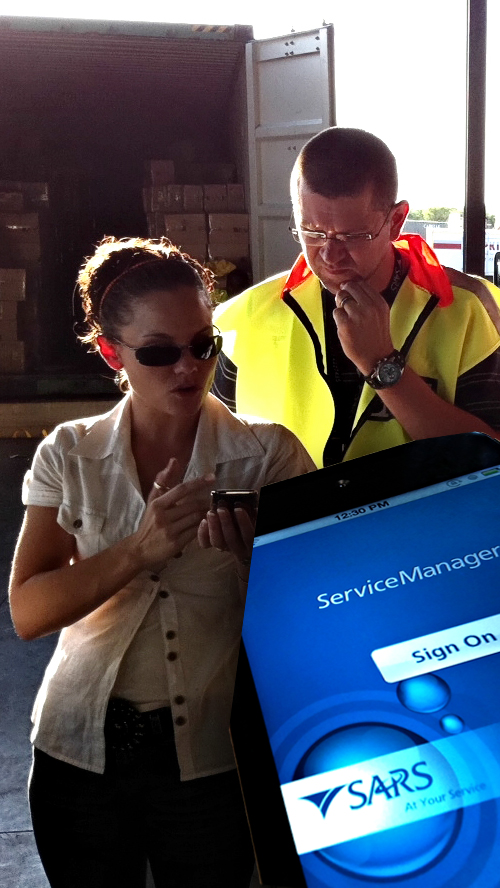
Automated Customs Inspection – Following its recent introduction at the Beit Bridge border post, the new hand-held inspection tool, conveniently developed on an iPod, allows the customs border control official to electronically access, capture and upload an inspection outcome to the central customs system. This significantly improves the efficiency for this time-intensive activity where the officer can initiate a status up date electronically at the inspection site, where previously the declarant would have to wait for the outcome of the manual inspection report and release note. What’s more, the customs officer has access to the underlying clearance data and can even activate the camera function and capture visuals of suspect cargo which can be appended to an inspection case for verification by higher authority or historical reference value.

There are additional features and functionality to be introduced at Kopfontein and all remaining border posts over the next few months. These relate to improved revenue accounting, new trader registration and licensing system offering online application and approval, and a new traveller and temporary import/export processing. More about this in a future post.  For traders, the benefits of the new solution at SACU land borders aim to remove random and unwarranted intervention by customs. All activities are risk driven via a secure ‘get next’ selection function ensuring that internal integrity is maintained and only ‘risk-related’ consignments/transactions are dealt with. Please visit the SARS Modernisation webpage for all the latest updates and notices on modernisation releases.

International Customs Day 2012

Borders Divide, Customs Connects” is the theme for this years international Customs Day celebrations, highlighting the central and integral role of Customs administration in the global trade supply chain. As the World Customs Organization prepares to celebrate its 60th anniversary this year, it is only fitting that  this opportunity is used to acknowledge the heritage that the founders of the Customs Co-operation Council bestowed on us, namely the importance of cooperation, particularly the value of inter-connectedness among Customs and its partners. For the official WCO International Customs Day 2012 poster click here!

For the international Customs community, connectivity connotes a vision of arrangements worldwide that support the smooth and lawful flow of goods, services, people, technologies, capital, culture, and ideas. It galvanizes the establishment of partnerships, the preparation of research, the sharing of knowledge, and the delivery of capacity building. Connectivity thus paves the way for community protection, modernization, and economic development. Connectivity encapsulates strengthened coordination, cooperation, and communication between Customs administrations, with other government agencies and institutions, and with the private sector, at national, regional and international levels.

Because borders are synonymous with division, the main challenge for Customs administrations is to identify and pursue the best methods to increase connectivity, which refers to people-to-people, institutional, and information linkages, that underpin and facilitate the achievement of objectives.

In fact, Connectivity is a natural progression from previous International Customs Day themes: Knowledge in 2011, particularly the sharing of knowledge to enhance the effectiveness and efficiency of Customs authorities; Customs-Business Partnerships in 2010, with a focus on supporting and improving the connective, working relationships between Customs and the private sector; and Environment Protection in 2009, underscoring the need for coordinated border management to save our natural heritage.

It is, of course, important to emphasize that connectivity encompasses three main pillars:

  • people connectivity, which includes a partnership with the business sector, and knowledge and professionalism;
  • institutional connectivity, which includes Customs-to-Customs connectivity and Customs-to-other government agency connectivity; and
  • information connectivity, which acts as an enabler and includes Globally Networked Customs, the electronic Single Window, and technology and knowledge solutions.

Here at home in South Africa, SARS Commissioner Oupa Magashula confirmed SARS’ proud history as a “connected” organisation fulfilling its Customs mandate –

  • We connect with our partners in business, those who drive the international supply chain, to provide them with a world-class service offering that will enhance their competitiveness in the global marketplace.
  • We connect across Government administrations and agencies that collectively form the regulatory and physical frontline of this country, working towards enhanced facilitation and security for the country, its economy and society.
  • We connect with our counterparts in Customs administration around the world on matters ranging from the sharing of best practice to active cooperation on improved Customs administration to the combating of Customs fraud and illicit trade.
  • We connect within our region, on the continent and beyond to work towards greater integration and cooperation, ensuring that the benefits of global trade enhance the economic and social well-being not only of South Africa, but of our neighbours and the continent as well.

Sources: WCO and SARS.

Mobile Customs Control – Great minds think alike

Beitbridge inspection area6 December 2010 saw the rollout of a new electronic tool for customs inspectors at Beitbridge border post. The need for a hand-held device was identified following the rollout of a new workflow system, called Service Manager, to various Customs offices over the past few months. Although the changes introduced recently were aimed at moving Customs to a totally paperless environment, customs inspectors still had to print out their instructions on paper, manually write down the inspection results and then recapture these onto the system back in the office.

The use of an iPod by a Customs officer to conduct a physical inspection at Beitbridge this week introduces significant enhancements over the previous manual process. SARS has been liaising with iPod experts in various countries around the world over the past few months to develop this function and procure the devices.

The solution comprises an Apple iPod Touch which has been configured to operate SARS’ automated inspection workflow application – Service Manager. The introduction of a hand-held device therefore means that all the functions of Service Manager are now at the inspector’s finger-tips. Inspectors receive their instructions on the iPod, capture the results and make recommendations which then go to the finalisation/adjustment inspector. They can even take photographs with the iPod if they need further clarification on the goods they are inspecting. Inspectors no longer have to go back and forth to the office and their next job can be assigned to them on the spot. This is expected to substantially reduce the time spent on physical inspections and minimise human error.

Initially 34 iPods were procured for Beitbridge, WiFi technology was made available at the port and training of affected staff undertaken. All physical inspections at Beitbridge were being conducted with iPods and will be rolled out to the other Customs border posts throughout 2012.

While SARS’ solution is the first known Apple solution of its kind, similar solutions have been introduced recently within the US Bureau for Customs and Border Control and the Australian Border Control Agency offering varying types of functionality, including the integration of RFID technology by the Australians to monitor and track cargo movements. Life for Customs officers is a whole different and will continue to evolve if it expects to remain in touch with modern era fraud and scams.

Customs Connect 2 – SA Customs Modernisation

Customs Connect 2The year 2011 has proven both challenging and beneficial for many in the South African Customs community. New business opportunities offered via the Customs Modernisation Programme materialised and provided the service providers ample scope to improve their service offerings to clients in the freight forwarding and clearance space. Leveraging off tried and tested technology tools already employed by SARS in the Tax business, the implementation of E@syScan provided significant efficiencies in the customs clearance processing response times, although the jury is still out on whether such efficiencies have in fact translated into cost-savings for the customs trade. In this regard it is up to trade itself to assess if the traditional cost of printing reams of paper and employing a runner to deliver manual documents to Customs is significantly reduced by the new electronic supporting document process. Could be an interesting exercise.

On the SARS front, the implementation of a new automated case management, and inspection workflow is nothing short of a revelation in so far as traceability and improved efficiency. Similarly, such efficiency needs to translate into cost savings. Certainly there are less manual interventions in the process, the emphasis now moves to working more smartly as regards the booking and conducting of physical inspections. True this has been a huge learning curve for all. Refinements and fine-tuning of the process moving forward will undoubtedly release the expected results to the point where most will wonder how they ever managed in ‘manual mode’ in the past.

To close off the year, SARS has just published its second edition of its electronic Customs bulletin – Customs Connect. Please take the time to read and digest.

Three tax risks to consider when managing your supply chain

Supply Chain Management (SCM) aims at fulfilling customer demands through the most efficient use of resources, which includes distribution capacity, inventory and labour. Merely locating the assets and risks of one’s supply chain in a favourable tax jurisdiction is not sufficient. The functions, together with the people, must be located in the chosen jurisdiction to manage these particular assets and risks. It is essential that the systems and processes, implemented and applied, support these functions in order to create a sustainable tax benefit.

Local tax authorities will attempt to defend their tax base at all costs. This may result in the local tax authorities seeking substantial taxable capital gains and/or transfer pricing adjustments when restructuring actions (which reduce the ultimate tax they would have received) are implemented.

Therefore, careful planning and documentation substantiating the reasons why certain steps were taken, are essential to ensure most tax risks are mitigated. Transfer pricing documentation also forms an important part of the documentation required. In the absence thereof, a substantial amount of time and resources may need to be set aside in the event that adverse assessments have to be defended. Read the rest of the advice of local tax consultants at the following link: Deloitte Tax identifies three tax risks to consider when managing your supply chain.

SARS now ‘officially’ on Facebook

SARS Facebook Page

SARS has recognised the value of social media and its contribution towards getting the message out to the user. It’s Facebook page is intended to improve communication with taxpayers and other stakeholders, thus will have an external focus. Interested parties can now access SARS’ Facebook page at the following link –  www.facebook.com/sarstax . SARS internal staff will however have to make use of a private PC or iPhone or iPad to access the page.

SARS “Trusted Trader” programme under the spotlight

With the implementation of the SARS Customs Modernization Program, accreditation has been revisited and SARS has taken a more robust approach.

South Africa is currently focusing on accreditation for customs procedures only. The Self-assessment Questionnaire was reworked and sent to a number of large importers, inviting them to participate in the “Preferred Trader Pilot Program.” Now more customs accreditation initiatives are underway.

In terms of a future focus on mutual recognition, bilateral discussion between EU and South Africa has commenced. The parties recently agreed to launch a customs project, financed under the Trade, Development and Cooperation Agreement (TDCA) facility, covering the implementation of the WCO SAFE Framework in South Africa. South Africa intends to align its Authorized Economic Operator (AEO) strategy with that of the EU to ensure that standards for both compliance and security match those of the EU.

The EU is South Africa’s main trading partner. The TDCA is the legal basis for relations between the EU and South Africa and provides the framework for cooperation in the social, economic, political and cultural field. Please click here for the full report – refer to  pages 32 -33 for South African AEO article. Source: Ernst & Young