Preparing ports for the future –

Siim Kallas - Europe’s ports must be better connected across the wider transport network.

Siim Kallas – Europe’s ports must be better connected across the wider transport network.

The following article featured in Port Stratetgy and penned by Siim Kallas, Vice-President of the European Commission in charge of transport policy, offers some sound views on how ports and regional networks ought to harmonise to ensure their competitiveness.

Europe’s prosperity has always been linked to sea trade and ports, which have great potential for sustaining growth in the years ahead. As gateways to the EU’s entire transport network, they are engines of economic development. And more cargo, cruise ships and ferries in our ports mean more jobs.

Europe depends heavily on its seaports, which handle 74% by volume of the goods exported or imported to the EU and from the rest of the world. Not only are they important for foreign trade and local growth, ports are the key for developing an integrated and sustainable transport system, as we work to get trucks off our saturated land transport corridors and make more use of short sea shipping.

Need to adapt

Even with only modest assumptions of economic growth, port cargo volumes are expected to rise by 57% by 2030, almost certainly causing congestion. In 20 years, Europe’s hundreds of seaports will face major challenges in performance, investment needs, sustainability, human resources and integration with port cities and regions.

So our ports need to adapt. Take the next generation of ultra-large vessels that carry 18,000 containers. Put onto trucks, these containers would stretch in a single line from Rotterdam to Paris. To accommodate them, ports need to provide the adequate depth, crane reach and shipyard space. There is also a growing need for gas carriers and gasification facilities.

Efficiency and performance vary a great deal around Europe. Many EU ports perform very well – take Rotterdam, Antwerp and Hamburg, which handle 20% of all goods. But not all ports offer the same high-level service. Port network connections and trade flows are well developed in northern Europe, but much less so the south.

A chain is only as strong as its weakest link: if a few ports do not perform well, it affects the sustainable functioning of Europe’s entire transport network and economy – which needs to recover and see long-term growth.

Preparing for the future

Ports must be prepared for the future. This means improving local connections to the wider road, rail and inland waterways networks; fully optimising services to make the best use of ports as they are now; and creating a business climate to attract the investments that are so badly needed if capacity is to expand, as it must do.

Unlike other transport sectors, there is almost no EU ports legislation, on access to services, financial transparency or charging for infrastructure use. Experience from the last 15 years shows that the market cannot solve the problem itself; the lack of equal competition conditions and restrictions to port market access are barriers to improving performance, attracting investments and creating jobs. We need to act.

Our proposal to review EU ports policy focuses on the ports of the trans-European Transport Network, which accounts for 96% of goods and 95% of passengers transiting through the EU ports system. Firstly, if ports are to adapt to new economic, industrial and social requirements, they must have a competitive and open business environment.

Freedom to provide services, with no discrimination, should be a general principle; although in cases of space constraints or public interest, the responsible port authority should ensure that decisions granting market access are transparent, proportionate and non-discriminatory. Transparency of public port financing should also be improved, to avoid distortions of competition and make clear where public money is going. This will encourage more private investors, who need long-term stability and legal certainty.

On charging for using infrastructure, where there is no uniform EU model, port authorities should be more autonomous and set charges themselves. But this must be done based on objective, non-discriminatory and transparent criteria. Ports should also be able to reduce charges for ships with better environmental performance.

Staying competitive

We also plan to help our ports stay competitive by cutting more red tape and administrative formalities to boost their efficiency even further. As in many other economic sectors, staffing needs in ports are changing rapidly and there is a growing need to attract port workers. Without a properly trained workforce and skilled people, ports cannot function. The Commission estimates that up to 165,000 new jobs will be created in ports by 2030.

Modern port services and a stable environment must also involve modern organisation of work and social provisions. Many countries have reformed and the benefits of doing so can be clearly seen. Experience in Member States which have implemented ports reforms show that open and proper discussions between the parties involved can make a real difference. So we want to give this a chance first, over three years, to see what can be achieved. If that does not produce results, we will have to consider taking action.

To stimulate resource-efficient growth and trade, Europe’s ports must be better connected across the wider transport network. They must make sure they are able to develop and respond to change. This is what the European Commission aims to achieve, for the long-term benefit of the ports sector, local business and the environment. Source: Portstrategy.com
Ambitious Port Plan for Walvis Bay


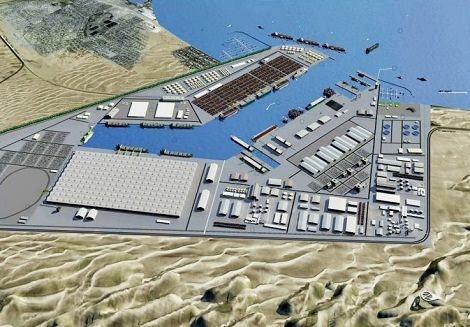
Computer-generated imagery of what the Walvis Bay North Port will look like when built. Image courtesy Namport.

Computer-generated imagery of what the Walvis Bay North Port will look like when built. Image courtesy Namport.

Far from simply developing a new container terminal, Namport could be bringing forward plans to build an ambitious new port at Walvis Bay to accommodate an expected increase in container and other traffic in the near future.

Originally intended as a long-term proposal for the Port of Walvis Bay, the plans may have to be brought forward and, coupled with finance that could come from China, the Namibian port is set to become a real rival for business in the southern and central African region.

According to reports in The Namib Times the cabinet has discussed and in principle given the go-ahead to create a new harbour on the northern side of the existing port. It said the new harbour is part of Namport’s strategy of positioning Walvis Bay as the premier port in the region. The plans will require dredging of a deep entrance channel and excavating the land to clear space for the new deepwater basin along with 10 kilometres of quayside for ships to berth.

If it was necessary to have proof that this development has the potential of shaking up the southern African region, it came in the form of a warning given yesterday by Transnet Chief Executive Brian Molefe at a community briefing session in Durban, in which he said, while justifying the need for the Durban dig-out port to go ahead, that if it was delayed or not built then Durban would lose out to other African ports. As an example he cited Walvis Bay where he said ambitious plans to build a large container port had been given the go-ahead. Source: Ports.co.za

Airport Cities – a view to a different trading environment for South Africa?

ace_skyscraper_237x352aerotropolisThis past week witnessed the first Airport Cities Convention in South Africa. It came at the timely announcement of the country’s first aerotropolis earmarked for development around Oliver Tambo International airport (ORTIA) and the surrounding industrial complex. While the City of Ekurhuleni gets prized possession of the ‘aerotropolis’ (in title) by virtue of the location of ORTIA, Johannesburg is set to benefit perhaps more greatly due to it being the epi-centre of South African commerce and trade. This represents significant ‘hinterland’ development which bodes well for future multi-modal transport and shipping activity for the Gauteng region and the country as a whole.

In support of government’s National Infrastructure Plan, is Strategic Integrated Project (SIPs) 2, otherwise known as the Durban-Free State-Gauteng logistics and industrial corridor. Infrastructure upgrades are already occurring to road and rail networks linking to the key cargo and distribution hub, City Deep. While the express purpose of an inland port, terminal or logistics hub is to provide relief for congested seaports, it likewise creates possibilities and opportunities to synergise with other transport forms. This serves to maximise capacity through integration offering local suppliers and foreign customers a host of trade, shipment and logistics options.

Foremost, an inland port is a hub designed to move international shipments more efficiently and effectively from maritime ports inland for distribution throughout the heartland. Think of the logistics of inbound freight as a barbell. At one end, inbound containers flood into a seaport, spreading across local storage facilities as they are unloaded. If they aren’t moved quickly enough from the port, they create a bottleneck that bogs down the entire distribution cycle as containers wait longer to get off ships, to get into warehouses, and to get back out and onto trucks and trains for final shipment. The Emergence of the Inland Port (credit: Jones, Lang, LaSalle)

In a world of increasing global integration, focussing more on global distribution of goods and services, it behoves our country to understand the dynamics of global trade and what in fact makes commerce tick. Today’s number 1 spot is not going to remain intact without continuous re-evaluation and innovation. It would indeed be arrogant (if not suicidal) of us to think that our current prominence and strength in the sub-saharan region will remain without innovation for the future. At the same time South Africa should welcome increased competition from its neighbours, both immediate as well as further north in Africa. The latest fDI 2013 Report indicates a decrease in foreign direct investment in South Africa (-5%) and Kenya (-9%), while at the same time a significant increase in foreign investment in Nigeria (+20%) and Egypt (+20%), respectively. True, the latter countries are far removed from South Africa’s immediate ‘playing field’, however do we fully understand the drivers which cause the named countries to attract FDI at such an increasing rate – are they capitalising somehow on our deficiencies, shortcomings, or lack of opportunism?

The National Infrastructure Plan can only be seen as a single cog in the machinery to keep South Africa competitive. And, while it is encouraging to witness these developments, a corresponding economic and commercial enterprise on both government and private sector is required to maximise these developments. Some smidgen of hope could lie in the Department of Trade and Industry’s economic principles which support Industrial Policy Action Plan (IPAP) and Special Economic Zones (SEZs), for example, however, several business commentators have already voiced concerns on exactly how these support the Infrastructure Plan. A further question lies in our country’s ability to facilitate trade, not only at our ports, but more importantly the ‘hinterland’ of our country and the neighbouring regions. Do our existing and future laws adequately provide for expeditious and facilitative procedures in the treatment of import and export goods? Are we sure that we are addressing all real and potential trade barriers?

Anyone desiring more information on the ‘aerotropolis’ concept should find some interest at the following websites – Aerotropolis.com, and the City of Ekurhuleni

Durban Dig-Out Port – First Stakeholder Engagement Concluded

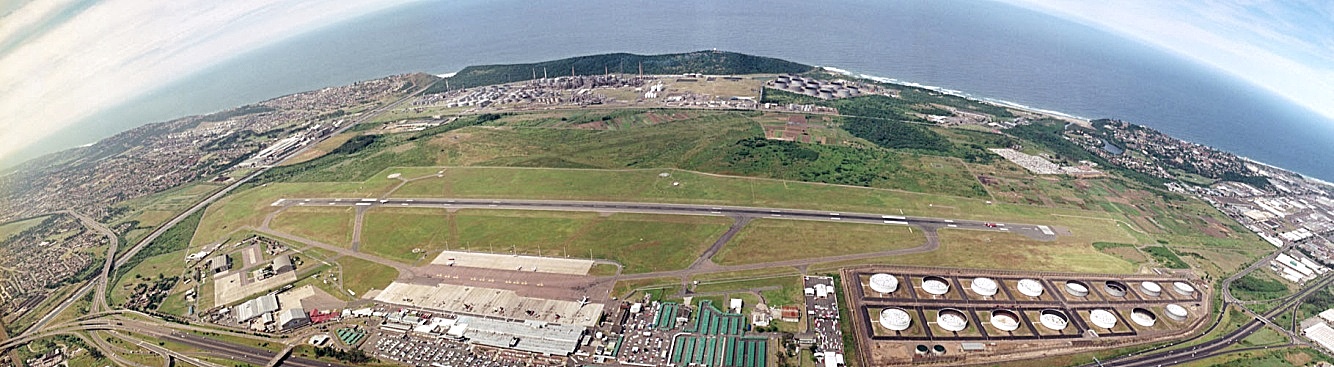
Old Durban airport - site for new Dig Out Port (Picture credit: ACSA)

Old Durban airport – site for new Dig Out Port (Picture credit: ACSA)

Transnet has concluded the first in a series of early stakeholder engagement sessions with local organisations on the proposed Durban dig-out port project. If built, the new port will be to the south of Durban on the site of the former Durban International Airport and 15 minutes by car from the existing port. It has been proposed that it will consist of 16 container berths, three Ro-Ro berths for the automotive business, and several oil and product tanker berths.

The engagement sessions just concluded form an integral part of the project’s concept phase which includes the development of a Sustainable Port Development Framework (SPDF) that will inform all future designs as well as operations. Transnet commenced with high-level technical and environmental studies in 2012 as part of the proposed Durban dig-out port project process. The current concept phase is scheduled to conclude in July this year, and comprises the generation of a number of technical design options.

The engagement sessions involved key representatives from local business, property, environmental and civic associations who met in order to comment on a discussion document which was distributed to them in mid-February 2013. The discussion document included important information on the background to, and process involved in, validating the viability of constructing a major container port on the site of the old Durban International Airport.

The sessions were held at various public venues and were facilitated by an independent sustainability consultancy. All feedback obtained during the engagement sessions was captured and will be factored into the development of the SPDF which will ensure the effective implementation of sustainability objectives throughout the life cycle of the proposed port project.

Along with promoting the long-term sustainability and operational excellence of the port, the framework also seeks to integrate environmental and social principles into the planning process. The series of engagement sessions, which will continue throughout the project’s lifespan, will also form part of the Department of Transport’s requirement for engagement during the strategic level environmental assessment as part of the legislative requirement for the promulgation of the port.

The process of moving from the current concept phase through the pre-feasibility and feasibility phases, and finally to actual implementation is anticipated to take approximately four years. The next phase, which is the pre-feasibility phase, is expected to proceed in July this year when the viability of the preferred design option will be thoroughly investigated.

The proposed port forms a key pillar of Government’s Strategic Integrated Projects (SIPs) to upgrade the Durban-Free State-Gauteng Freight Corridor (otherwise known as SIP2 in the National Infrastructure Plan). Source: Ports.co.za

Serious Regional Competition – China to build Africa’s largest port

Port of Dar es Salaam, Tanzania, West Africa. Image credit: TPA

Port of Dar es Salaam, Tanzania, West Africa. Image credit: TPA

China has announced plans for a new US$10 billion mega port in the Tanzanian town of Bagamoyo.

The new port, boasting an annual capacity of 20 million TEU, will not only become Africa’s largest box facility but will also rival the major ports of the Persian Gulf.

Dwarfing Tanzania’s current largest port in Dar es Salaam, which handles an estimated 800,000 TEU a year, the new port, northwest of the capital, will be used as a transhipment hub for raw materials coming in and out of landlocked Malawi, Zambia, Congo, Burundi, Rwanda,and Uganda.

China will also help to establish new road and rail networks in the area, whilst contributing to the upgrade of existing links. Source: Port Technology International.

Warehouse Operators – Easy prey for HMRC

warehousingThere is growing evidence that HM Revenue & Customs (HMRC) has begun a campaign to target warehouse keepers and hauliers who may unknowingly be handling excise goods on which the duty has yet to be paid.

And the United Kingdom Warehousing Association (UKWA) is warning that any company found guilty of storing goods on which duty is outstanding could face ‘financial ruin’ – even if the storage company was unaware that duty had not been paid.

“While HMRC has had the authority to assess anyone for duty on goods illegally diverted from bonded movements who was ‘aware or should reasonably have been aware’ of the diversion at any point in the supply chain since 2010, action has been spasmodic,” says Alan Powell of Alan Powell Associates, UKWA’s honorary adviser on Customs & Excise Matters.

“However,” he continues, “HMRC is deploying more officers to investigate excise goods supply chains. As a result, we are now increasingly seeing third party service providers, including hauliers, warehouse keepers and lessors of property, such as barns and outbuildings, being penalised by HMRC as a result of their involvement with businesses that have evaded duty on alcohol and have absconded – so called ‘missing traders’.”

Anyone found to have held or dealt in duty-unpaid excise goods, can be fined up to 100% of the duty evaded, as Alan Powell explains: “HMRC had been slow to apply what are called ‘excise wrong-doing penalties’ but are now vigorously applying them.  As a result, many small and medium companies are facing unexpected bills and penalties from HMRC of hundreds of thousands of pounds.”

Allan Powell continues: “In simple terms, if an organisation has been involved at any stage in the supply of goods that have been illicitly diverted from a bonded supply chain, that  organisation could be liable for duty – even if that organisation is not directly responsible for the diversion.

“Essentially, anyone handling duty-unpaid product is classed as being ‘contaminated’ within the supply chain and assessed for the duty.”

In one particular instance, a storage company is facing a duty bill alone for nearly £100,000 after HMRC inspectors found duty-unpaid alcohol stored at the company’s site.

“The storage company was simply unaware about the risks involved in handling loads of duty un-paid alcohol and the director of the company to whom they leased the space has disappeared,” says UKWA’s chief executive officer, Roger Williams.

The message from Alan Powell and UKWA is that if you offer third party logistical services of any kind, you must check what is being handled or stored – do not take storage requirements on face value.

Alan Powell says: “Always be wary and query the business need, checking out with HMRC if possible.  If in any doubt, do NOT become involved – it could end very badly.” Source: www.ukwa.org.uk.

Read a followup article by – UKWA :Don’t be fazed by HMRC move (Lloyds List)

URA Introduces Electronic Cargo Tracking System

ura-logo-fireworks-advertisingA goods-laden vehicle arrives at a Uganda border where a declaration is made for transit to another country. But after clearance by customs officials, it disappears before exiting and the goods are sold on the local market. This causes undue competition as such goods are often low priced. And if that status quo does not change, local industries are affected gradually. Although such practices have occurred in the past, the future is bright owing to the introduction of a system that can track the movement of goods and give real-time updates.

Costing $5.2m, the Electronic Cargo Tracking System (ECTS) has been introduced by URA to improve efficiency and reduce the cost of doing business. The government, World Bank and Trade Mark East Africa, a trade facilitation organization, have supported the project, which is expected to be ready for testing by the end of August, and be fully implemented by end of November. URA Commissioner General Allen Kagina and BSMART Technology boss Stephen Teang this week signed a memorandum of understanding regarding the plan. This was at the URA head office in Nakawa, Kampala.

Kagina, who referred to it as a “landmark initiative”, praised the fact that customs officers would have regular updates regarding merchandise. She also hailed the fact that the provider would train staff, giving them much-needed skills.

The system will facilitate trade through timely execution and cancellation of customs bond guarantees for cargo in transit, making the transit process faster, more efficient and secure. Furthermore, this will enhance trade facilitation and business competitiveness countrywide.

How it works – ECTS relies on a control centre and automatic devices. The devices are attached onto a truck and constantly give feedback to the team at the control centre. Among others, the feedback includes include location of a vehicle, speed and status of the container (truck tampered with or not). If the device gives information that is contrary to that declared earlier, for example, goods being dumped here instead of being exported, customs officials make a decision accordingly. The system will be pioneered on high-risk goods like sugar, wines and spirits, textiles, explosives, and cigarettes. Thereafter, it will be rolled out to other types of merchandise.

Advantages – The system enables parties like customs officials and transporters to receive fulltime and real-time updates. URA has over the years introduced initiatives such as One-Stop Border processes and 24-hour operations at the major entry/exit points but the business community has sometimes not realized the benefits due to the numerous unwarranted stopovers. ECTS makes this a thing of the past. Source: The Observer (Kampala)

Supply Chain Foresight – a Perspective on BRICS and the South African Supply Chain

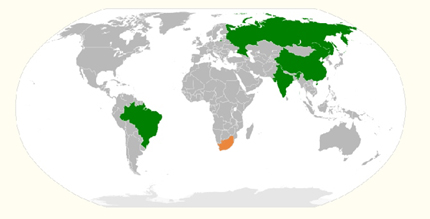
To reap the benefits of its recent membership of BRICS, South African businesses are looking at gaining a competitive edge through achieving global-standard supply chain performance, according to Supply Chain Junction, Manhattan Associates' Geo Partner in South Africa.

To reap the benefits of its recent membership of BRICS, South African businesses are looking at gaining a competitive edge through achieving global-standard supply chain performance, according to Supply Chain Junction, Manhattan Associates‘ Geo Partner in South Africa.

To reap the benefits of its recent membership of BRICS, South African businesses are looking at gaining a competitive edge through achieving global-standard supply chain performance, reports Supply Chain Junction, Manhattan Associates’ Geo Partner in South Africa. Unlike many other countries, South Africa was cushioned from the full impact of the world financial crisis thanks to the strict pre-existing credit controls it had in place. There were some knock on affects from close trading economies but over the last 15 months South Africa has enjoyed a growth economy. The International Monetary Fund (IMF) say this group will account for 61 per cent of global growth in three years time.

While South Africa’s economy (£506.91bn GDP) is dwarfed by those of the original BRIC constituents, the country is seen as the gateway to the continent of Africa, which as a whole has an equivalent sized economy ($2,763bn GDP), a population of one billion and rich resources. This has all made it a valued investment region for China in particular.

However, there are many cultural, logistical and geographical challenges the further one travels North from South Africa towards the Sahara. As an example, while there is 24,487 km of rail track in South Africa, there is just 259 km in Uganda; there are 92 mobile phones per 100 people in South Africa but just two per 100 in Eritrea. However, there is a great deal of raw potential, especially in countries such as Angola and Nigeria.

Participation in BRICS will drive a new competitiveness for South Africa and a key factor will be developing world-class supply chain management. Unlike in Europe, the US and Australia, few supply chain directors in South Africa sit on the board, which makes it harder for them to demonstrate how effective management of the supply chain can deliver competitive advantage. But this is likely to change as companies realise that they must align their supply chain and business strategies. If the recession failed to drive home the need for this, then the presence of Chinese companies in Africa will create significant pressure to do so.

This was an observation of the 2011 Supply Chain Foresight survey, conducted by Frost & Sullivan, which annually samples the opinions of South African supply chain executives. It found that while over three quarters of the respondents feel that the supply chain and business strategies of their companies are aligned, less than a third felt that the supply chain and logistics operations are fully optimised. Businesses are looking at how to optimise their distribution networks through building new facilities, streamlining existing processes or collaboration between trading partners. This has seen a lot of current activity surrounding warehouse management systems, forecasting, planning, replenishment and collaboration technologies, in particular.

Two thirds of respondents are considering investment in technology to enable collaboration with service providers. With the recession claiming many key suppliers the environment is changing from one where major companies squeeze suppliers on cost to one where they adopt a more collaborative approach. Cost reduction was the focus of the past recession, but now the objective is to satisfy customer expectations and to deliver value. Just over half of respondents to the Supply Chain Foresight survey cited customer service as the top supply chain objective. Reducing waste and improving efficiency in the supply chain are the perennial shorter term challenges with companies looking for better forecasting and planning tools to bring down inventory and shorten lean times. One interesting aspect of South African supply chain technology is the large number of in-house designed legacy systems, which is a consequence of the country’s isolation during the times of Apartheid. A propensity towards in-house designed systems remains today.

In terms of industry sectors, retail dominates but it remains firmly entrenched in the traditional channels. While some retailers have online retail websites, online and multi-channel is by no means a significant part of the current retail picture. Internet use is still quite low compared to other countries there are 4.42 million internet users in a population of 49 million and this figure is expected to remain low for some time yet. A further obstacle to the expansion of online sales is a high crime rate which leads to security issues in delivering goods to customers.

Wholesale distribution is quite small in size and complexity so the supply chain challenges tend not to be too complicated. There remain companies that feel they have been reasonably successful – being self-sufficient – and want to maintain that approach, along with a general tendency to look within, when it comes to benchmarking supply chains. However, a growing number of companies in South Africa recognise that there are other organizations across the globe doing similar things, but perhaps, a lot more efficiently.

Supply chain managers within these businesses are evolving a mindset focused on global best practice and the means of achieving it. These South African companies want to be best in their class. By building knowledge, benchmarking and improving against those benchmarks the win for this retailer is a supply chain that gives competitive advantage. As in other countries, companies looking to benefit from external expertise and a reduction in their capital costs will often outsource their logistics to third party logistics (3PL) operators. South Africa has numerous small local players and a handful of large lead logistics providers who tend to drive innovation. It is a small but highly competitive market. Logistics infrastructure and skills shortage in the supply chain continue to be huge issues in South Africa. The Supply Chain Foresight survey found that to deal with the skills shortage, in almost all areas companies either expose employees to new jobs through rotation, or development programs, or mentoring. These are generally in-house driven schemes. South Africa is an emerging market that is growing fast and offers a tremendous wealth of opportunities. In fact, the country has a great many successful businesses, and while many talk about becoming world class, many have already achieved it. Source: Supply Chain Junction

City Deep Inland Terminal [port] to be hit hard by Customs Bill

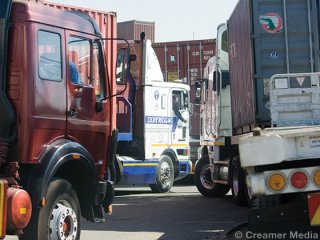
Trucks at Transnet Freight Rail's City Deep Terminal (Engineering News)

Trucks at Transnet Freight Rail’s City Deep Terminal (Engineering News)

Following up on last year’s meeting (click here!) of the minds, convened by the JCCI, a recent meeting in Johannesburg placed fresh emphasis on the dilemma which impending changes contemplated in Customs Draft Control Bill will have for the import and logistics industry in particular. The following report carried by Engineering News highlights trade’s concerns which are by no means light weight and should be addressed with some consideration before the Bills come into effect. Gauging from the content below, there is a clear disconnect between business and policy makers.

The closure of Johannesburg’s inland port seemed to be a “done deal” as Parliament deliberated the recently tabled Customs Control Bill that would leave the City Deep container depot invalid, Chamber of Commerce and Industry Johannesburg (JCCI) former president Patrick Corbin said on Friday.

The promulgation of the South African Revenue Services’ (Sars’) newly drafted Customs Control Bill, which, in conjunction with the Customs Duty Bill, would replace the current legislation governing customs operations, would have a far-reaching impact on the cost and efficiencies of doing business in South Africa and other fellow Southern African Customs Union (Sacu) countries, he added.

The Bill, which was the product of a three-year development process within the National Economic Development and Labour Council, declared that all imported goods be cleared and released at first port of entry. This was part of efforts by customs officials and government to root out any diversion and smuggling of goods, ensure greater control of goods moving across borders and eliminate risks to national security.

Speaking at the City Deep Forum, held at the JCCI’s offices in Johannesburg, Corbin noted, however, that City Deep had operated as an inland port for the past 35 years, easing the load on the country’s coastal ports, which were already strained to capacity. Despite customs officials assuring the chamber that the operations and facilities in City Deep/Kaserne would retain its licence as a container depot, he believed customs had failed to recognise the critical role City Deep had played in lowering the cost of business, easing the burden on South Africa’s ports and ensuring ease of movement of goods to neighbouring countries. As customs moved full responsibility of container clearances to the ports, port congestion, inefficiencies, shipping delays and costs would rise, and jobs would be lost and import rail volumes decreased, he noted.

Economist Mike Schussler added that the closure of the City Deep inland port operations would add costs, increase unreliability and induce “hassles”, as the Durban port did not have the capacity to handle the extra volumes and its productivity and efficiencies were “questionable” compared with other ports.

“The volume of containers going to overstay or being stopped for examination in City Deep [will] need to be handled by [the coastal] ports. If they can’t cope with the volume at the moment, how are they going to handle increased volumes,” Iprop director Dennis Trotter questioned. He noted that only the containers cleared 72 hours prior to arrival would be allocated to rail transport. Those not cleared three days before arrival would be pushed onto road transport to prevent blocking and delaying rail operations.

This, Schussler said, would also contribute – along with port tariffs and the cost of delays – to higher costs, as road transport was more expensive than rail.

He pointed out that South Africa was deemed third-highest globally in terms of transport pricing. It would also result in less rail capacity returning for export from Johannesburg, further leading to increased volumes moving by road from City Deep to Durban.

Sacu countries, such as Botswana, would also be burdened with higher costs as they relied on City Deep as an inland port. Trotter noted that the region would experience loss of revenue and resultant job losses. Over 50% of South Africa’s economy was located closer to Gauteng than the coastal ports. Johannesburg alone accounted for 34% of the economy, said Schussler, questioning the viability of removing the option of City Deep as a dry port.

However, unfazed by the impending regulations, Transnet continued to inject over R1-billion into expansion and development opportunities at City Deep/Kaserne. Corbin commented that Transnet had accepted the assurances from customs that “nothing would change and the boxes would still be able to move seamlessly once cleared.” The City of Johannesburg’s manager of transport planning Daisy Dwango said the State-owned freight group was ramping up to meet forecast demand of the City Deep/Kaserne depot.

The terminal’s capacity would be increased from the current 280 000 twenty-foot equivalent units (TEUs) a year, to 400 000 TEUs a year by 2016, increasing to 700 000 TEUs a year by 2019. Transnet aimed to eventually move to “overcapacity” of up to 1.2-million TEUs a year. Dwango said projections have indicated that by 2021, the City Deep/Kaserne terminals would handle between 900 000 and one-million TEUs a year. Source: Engineering News

Hi-tech shippers switch from air to ocean

sea_freight_trackingCargo traditionally sent by air is increasingly switching to sea as shippers capitalise on the mode’s lower transport costs – a trend expected to continue over the coming years.

Lloyds List reports that several leading freight forwarders reported in their full-year results that certain cargo types — particularly hi-tech and telecoms — switched from air freight to sea freight last year.

DHL Global Forwarding CEO Roger Crook said the switch was the result of a price difference of 10 times between the two modes of transport. He said: “Obviously many companies are under cost pressure and looking to reduce total supply chain costs. Therefore, they are buying and moving by ocean freight, and particularly it is happening in the technology sector.”

Panalpina chief operating officer Karl Weyeneth said he expected the trend to continue. “There is a maximum shift you can achieve, depending on what industry you are talking about,” he said.

“But I believe that now supply chains are used to working with more ocean freight, this impact will stay for at least a couple of years, until the economy has really recovered, then it will start to shift back again.”

“We really see this as an important factor in our market for the next two to three years.”

Kuehne+Nagel (KN) chief executive Reinhard Lange said the decision on whether cargo was suitable to be switched from air to sea partly came down to the weight of the shipment. He said that if two products had the same market value, but one weighed less than the other, the overall cost impact of flying was less for the lighter cargo because air cargo costs were based on weight. He said this explained why hi-tech products had transferred to ocean freight while lighter products, such as pharmaceuticals, had, in the main, continued to utilise air freight.

The forwarders said the impact of the switch from air to ocean freight was partly to blame for a decline in air freight volumes last year, while container volumes continued to grow. In its full-year results, Panalpina saw air freight volumes decline 6% last year while ocean freight volumes grew by the same amount. Meanwhile, DHL Global Forwarding’s air freight volumes slipped 5.3% in 2012 with ocean freight increasing 4.3%, while KN saw its air freight volumes grow by 2% while ocean freight increased 6% year on year. Source: LloydsList

eAWB – Biggest achievement in standard-setting in air freight in 20 years

freightStandardization of the format for the e-AWB is expected to accelerate the industry’s move toward paperless transportation. Before this, Leger says, carriers were confronted with signing hundreds or even thousands of separate bilateral agreements with individual forwarders. He went on to describe e-AWB “the biggest achievement in standard-setting in air freight in 20 years.”

Following a year-long development process culminating in three months of trials that involved 15 carriers and eight forwarders, the IATA/FIATA Consultative Council (IFCC) endorsed the multilateral e-AWB agreement in February with some minor amendments. IATA formally adopted the agreement as its new Resolution 672 at the 35th Cargo Services Conference (CSC/35) in Doha, immediately ahead of the World Cargo Symposium. Click Here! to view the new Resolution.

The agreement was this week filed with governments, from whom IATA is seeking expedited approval in 30 days. “We hope to go live before mid-year,” Leger says. “We see e-Freight as essential for the future competitiveness of air cargo, and the e-AWB is the cornerstone of e-Freight. Agreeing the multilateral e-AWB is a game changer, and should go a long way toward reaching our target of the 20 percent e-AWB adoption rate we have set as our target for 2013.”

While early adopters in the airline community, including Cathay Pacific, Singapore Airlines, Korean Air and Singapore Airlines, overcame the logistical obstacles, they commented that having to draft separate bilaterals with forwarders would prevent wider implementation and delay the e-Freight objective.

“The standard bilateral that we initially developed, which allowed forwarders to make their own amendments, still left the industry facing extra costs but rapidly proved the concept,” Leger says. “Cathay adopted it in 2011 and then, in the middle of last year, we started work on the multilateral agreement.

“There were long discussions between carriers and forwarders as we tried to come up with an acceptable formula. This did not concern technical or operational aspects, but was more to do with what the governing law should be. Each nationality wanted to follow its own jurisdiction and consensus was necessary.”

As soon as trials began in October, Leger says the participants could see the value of the multilateral agreement. IATA hopes it will acts as the springboard for its ultimate target of 100 percent conversion to e-AWB by 2015. Source: Air Cargo World News

Debate or Mitigate?

City Deep1_SnapseedBrowsing my various sources of news I came across this article featured in the FTW Online a few weeks ago. It prompted me to post it as an item for some detailed discussion in a follow-up post. Many followers have enquired what happened to my discussion on Inland Ports and the National Transit procedure. I guess it’s now time to respond, but not just yet – perhaps after what materializes at the event below.

What will be the impact of the new Customs Bill on City Deep’s inland port status?
This is the issue to be debated at a JCCI event scheduled for March 15. “The Johannesburg Chamber has been closely involved with City Deep, our international gateway for containerised cargo, for the past 36 years,” says the JCCI’s Pat Corbin. “We have actively promoted the benefits for traders of a combined transport (multi-modal) bill of lading allowing seamless movement through the coastal ports.

“But diametrically opposed developments are taking place which could have far-reaching impact on not just the future of the dry port, the supporting logistical suppliers and local employment, but also the coastal ports and the transport mode for inland movement.”

The event will examine Transnet’s major investments in City Deep and the Durban corridor, SACD’s expanded facilities and services, and the Customs Bill – with its intended removal of inland port status. Source: FTW Online

Aerotropolis for Gauteng…stuff’s about to happen

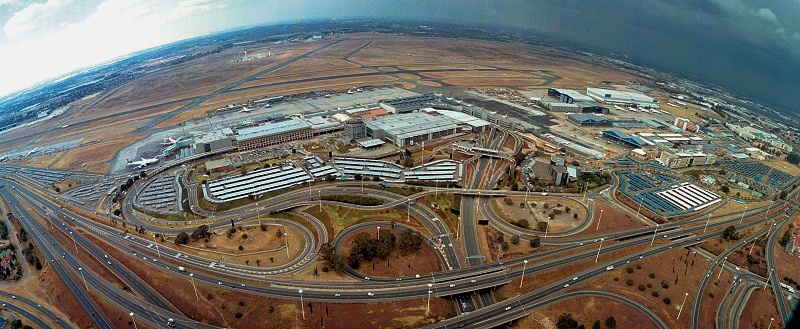
Oliver Reginald Tambo International Airport (east of Johannesburg) to become Africa's first aerotropolis

Oliver Reginald Tambo International Airport (east of Johannesburg) to become Africa’s first aerotropolis

The Gauteng Provinicial government has announced that Africa’s busiest airport, OR Tambo International Airport is set to become the location for the continent’s first aerotropolis. Work on the development of the aerotropolis, centred at OR Tambo International Airport, seeks to leverage public and private sector investment at the airport and surrounding areas. In supporting industrial development in this precinct, approval has been granted for the creation of an Industrial Development Zone (IDZ) in the area surrounding the airport. Heard this all before, but what’s different this time around?

An aerotropolis is an urban plan in which the layout, infrastructure, and economy is centered around an airport, existing as an airport city. It is similar in form and function to a traditional metropolis, which contains a central city core and its commuter-linked suburbs.The term was first proposed by New York commercial artist Nicholas DeSantis, whose drawing of a skyscraper rooftop airport in the city was presented in the November 1939 issue of Popular Science.The term was revived and substantially extended by academic and air commerce expert Dr. John D. Kasarda in 2000, based on his prior research on airport-driven economic development. Wikipedia

Jack van der Merwe, who successfully oversaw the development of the Gautrain project, has been appointed to lead the initiative of developing the aerotropolis. The proposal for the airport to become a terminal city with air, rail and road networks fuelling economic development. It is envisaged to include a commercial component, hotel, conferences, exhibitions and a residential component.

One of the key initiatives of the national government is the e-Thekwini-Free State-Gauteng freight and logistics corridor, known as the Strategic Infrastructure Project 2 (SIP2), which seeks to improve the movement of goods from the Durban port to Gauteng, and to business enterprises nationally as well as in southern Africa.

City Deep/Kazerne cargo terminals and the planned Tambo-Springs Freight and Logistics Hub are to be the focal points for the movement of goods for the export market. Phase 1 of the City Deep/Kazerne Terminal expansion and roads upgrade was underway at the continent’s largest and busiest in-land container terminal. This includes a redesign and upgrading of the roads network in and around the City Deep Terminal to provide for better flow of freight traffic and linkages with the national highways – the cost of the road works would amount to R122 million. At some point the issue of non-tariff barriers to import/export trade will need to be discussed…..and overcome.

Transnet has completed the first phase in the actual improvements of the terminal. It will be investing R900 million in upgrading the terminal. A detailed road design work, including feasibility studies and the development of a master plan, are underway for the Tambo-Springs Inland Port. Now, we’re talking…….

Gauteng  Province is to get 2 484 new modern trains as part of the Passenger Rail Agency of South Africa (PRASA) rolling stock for fleet recapitalisation and refurbishment programme.

The province will be making major investments in road infrastructure in the coming financial year and these include reconstruction and upgrading of the R55 (Voortreker Road) to a dual carriageway road between Olievenhoutbosch and Pretoria West; rehabilitation of the remaining section between Main Road and Maunde Street in Atteridgeville; reconstruction and upgrading of William Nicol Drive (K46) between Fourways and Diepsloot as well as reconstruction and improvement of the remaining section of the Old Pretoria to Cullinan Road between the Chris Hani Flats and Cullinan, among others. Wow, and the toll fees?

The department has been allocated a budget of R4.77 billion for the 2013/14 financial year. Of this amount R1.4 billion has been earmarked for roads maintenance and upgrading, R1.7 billion for public transport operations and R802 million for the running cost of the Gautrain Management Agency. Source: EngineeringNews

So, all-in-all, the above together with other recent noises of incentives and benefits for foreign and local investors in SEZs, the future holds some promise and interest…..

Port Natal – Durban Harbour 40s, 50s and 60s

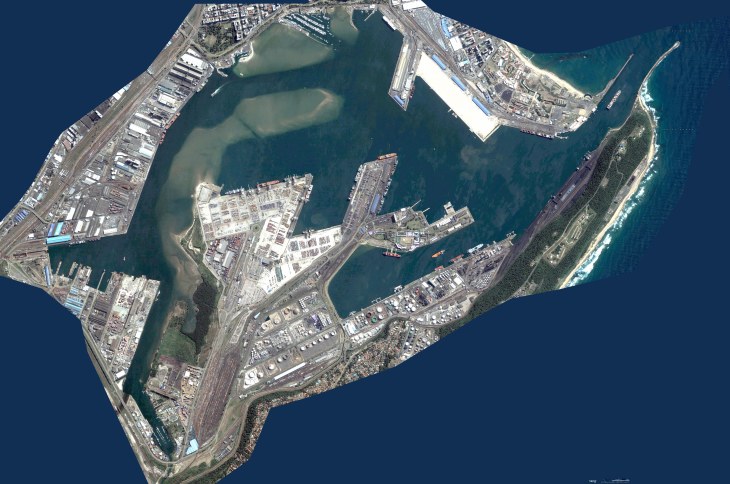
Durban_Harbour_Photo Hi-ResA tad of nostalgia? No, this is relevant and historic. Look what Africa’s busiest seaport looked like 60 (or more) years ago. I am very grateful to Lois Crawley and Cecil Gaze (fellow customs colleagues in Durban) for sharing these historic gems. For purposes of contrast see the modern-day harbour (above). Real estate in the harbour area is in short-supply and significant operational expansion over the last 10 years has placed huge strain on the road and rail networks and the surrounding industrial areas. In recent times the expansion of containerised handling facilities has radically affected the traffic flows, even in nearby residential areas such as the Bluff. With increasing demand for premium containerised port handling facilities, the old Durban airport has been sited for development of a new port, perhaps the biggest and most ambitious construction project yet in South Africa. While one can marvel at the development over what is a relatively short period of time (a generation), spare a moment and view the seemingly archaic slideshow of Durban harbour purportedly between 1940 and 1960 – which some amongst us can even remember. Enjoy!

This slideshow requires JavaScript.

Jamaica plans global logistics hub

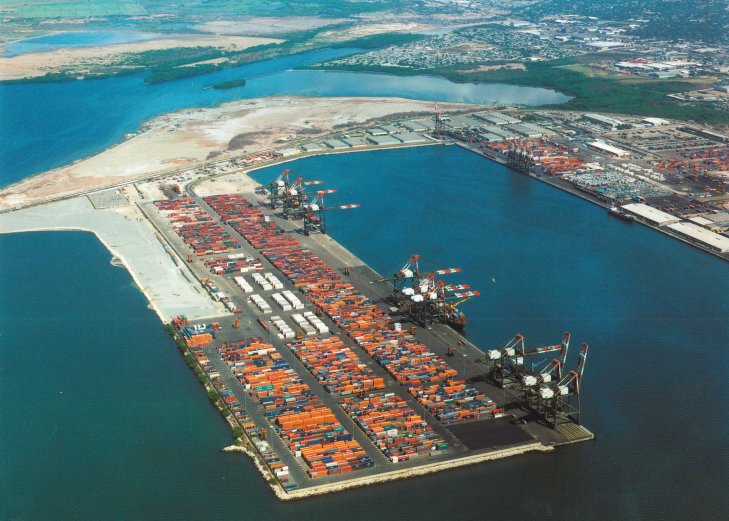
The Port of Kingston – ripe for development

The Port of Kingston – ripe for development

The Government of Jamaica has revealed ambitious plans to turn the Caribbean island in to a global logistics hub – and high level talks have already begun with the aim of increasing volumes of sea cargo.

Projects under discussion include developing the Port of Kingston ahead of the expansion of the Panama Canal and the development of a new commodity port to be built in eastern Jamaica which will specifically handle petroleum products, coal, minerals and grain.

At the same time, there is talk of constructing an air cargo airport to help with increased volume of boxes and the construction of large scale ship repair docks to service the increasing volume of post-panamax vessels.

Dr Eric Deans, chairman of the Logistics Task Force, said a market of 800 million people, including the USA and Brazil, can be accessed readily from Jamaica. He said trade opportunities are due to “burst wide open with the expansion of the Panama Canal scheduled to be completed in 2015; the multi-billion stimulus package by Brazil for World Cup 2014 and Olympics 2016; and the growing middle class in Latin America.”

He added that a critical aspect of the global logistics hub initiative is the broadening of bilateral collaborations with Jamaica’s global partners, and encouraging private sector investment and financing through private-public partnerships (PPPs).

Talks regarding the set-up of special economic zones are already underway with local and foreign investors.

The Jamaica Ministry of Industry, Investment and Commerce, which is spearheading the initiative, says that it will help give the country a global logistics supply chain that is able to compete with the likes of Singapore, Dubai and Rotterdam.

Perhaps this initiative could spur on our local authorities to actually move on ‘logistics hubs’ here in South Africa. While the huge expansion plans for our existing harbours, railroads are pursued, it is high time that the likes of Tamboekiesfontein, for instance, and other privately initiated transit hubs are taken seriously, and in an integrated manner to benefit commerce and trade in the Southern African region.

 Related articles